Tag: Paul Anderson

In the Heart of the Sea (2015)

In the Heart of the Sea (2015)

Hunger, desperation, the sea and a very big whale in this Moby Dick origins story

Director: Ron Howard

Cast: Chris Hemsworth (Owen Chase), Benjamin Walker (Captain George Pollard), Cillian Murphy (Matthew Joy), Tom Holland (Thomas Nickerson), Brendan Gleeson (Old Thomas Nickerson), Ben Whishaw (Herman Melville), Michele Fairley (Mrs Nickerson), Gary Beadle (William Bond), Frank Dillane (Owen Coffin), Charlotte Riley (Peggy Chase), Donald Sumpter (Paul Mason), Paul Anderson (Caleb Chappel), Joseph Mawle (Benjamin Lawrence), Edward Ashley (Barzillai Roy)
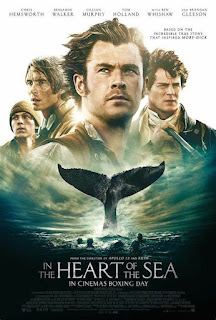
1820 and the world is run by oil. Not the sort you get out of the ground, but the sort you fish out of a whale’s corpse with a bucket. America is the leading exporter of whale oil and Nantucket is the centre of the industry. But it’s a dangerous business: as the crew of the Essex are about discover. Attacked by a whale, their ship sinks in the Pacific Ocean, thousands of miles from land. Passed-over first officer Owen Chase (Chris Hemsworth) and privileged captain George Pollard (Benjamin Walker) must set aside their differences to lead the survivors to safety. But starvation and desperation will lead those survivors to ever more desperate acts. All of this is told to Herman Melville (Ben Whishaw) by final living survivor Thomas Nickerson (Tom Holland and Brendan Gleeson), and it all sounds like a perfect inspiration for that Big Whaling Book Melville wants to write.

That Melville framing device is a good place to start when reviewing the many problems of In the Heart of the Sea, Ron Howard’s misfiring attempt at a survivalist epic. When we should be consumed by concern at whether these men survive, the film keeps trying to get us care as much about whether Melville will write a novel worthy of Hawthorne. The clunky prologue eats up a good sixth of the film, and we keep cutting back for Gleeson to tell us things the script isn’t deft enough to show us. Worse, it keeps ripping us way from the survivalist story that should be film’s heart.

Howard should know this: he directed one of the best survival-against-the-odds films ever in Apollo 13. Maybe the difference is that Apollo 13 is, at heart, a hopeful story. In the Heart of the Sea is about grimy sailors in a trade the film can’t find any sympathy for, eventually drawing lots in a long boat to see who is going to get killed and eaten by the others. It’s the sort of thing Werner Herzog would (pardon the metaphor) eat up for breakfast. For Howard, a fundamentally optimistic film-maker, its an ill fit. No wonder he wants to end the film with the triumph of Moby Dick.

In the Heart of the Sea is the rare instance of a film that is too short. The narration keeps skipping over time jumps in the first hour, that means we don’t get invested in the characters (most of whom are barely distinguished from each other, especially as beards and wasted bodies become the uniform). The sinking doesn’t take place until almost an hour in the film, meaning the time we spend with them lost in boats is a mere 40 minutes or so.

That is nowhere long enough for us to get a sense of either the monotonous time or the ravages hunger and desperation have made. Difficult as that stuff is to film – and I can appreciate its hard to make five men sitting, dying slowly, in a boat visually interesting – it means the film is asking us to make a big leap when it goes in five minutes from the men leaving a stop on an abandoned island to regretfully slicing one of their party up for dinner. We need to really understand how desperation has led to this point, but the film keeps jumping forward, as if its impatient to get to it.

Understanding is a general problem in the film. It can’t get past the fact that, today, we don’t see whaling (rightly so) as a sympathetic trade. But to these men, plunging a harpoon into a whale wasn’t an act of barbarous evil. It was more than even just making a living: it was a noble calling. Several times the film makes feeble attempts to push its characters towards moral epiphanies which seem jarringly out of chase (would Owen Chase, a hardy whaler with multiple kills, really hold his hand when confronted with a whale he thinks is trying to kill him?). Clumsy parallels are drawn between the heartless corporate oil industry of today, and the ‘suits’ back at Nantucket who only care about the bottom line.

Without accepting that, to these men, striving out into the ocean to bring back whale oil was as glorious a cause as landing on the moon, the film struggles to make most of the earlier part of the film interesting. Hard to sympathise with the characters, when the film is holding their profession at a sniffy distance. The film even radically changes the future career of its hero, Owen Chase, claiming he joined the merchant navy and never whaled again (not remotely true).

On top of this, Howard doesn’t manage to make the act of sailing feel as real or as compelling as, say, Peter Weir did in Master and Commander. Everything has a slightly unconvincing CGI sheen. Strange fish-eyed lenses keep popping up zooming in on specific features of pulleys and sails (is it meant to be like a whale’s eye view?). The film never manages to really communicate the tasks taking place or the risks they carry. There is a feeble personality clash between Pollard and Chase that fills much of the second act of the film, but is written and acted with a perfunctory predictability that never makes it interesting.

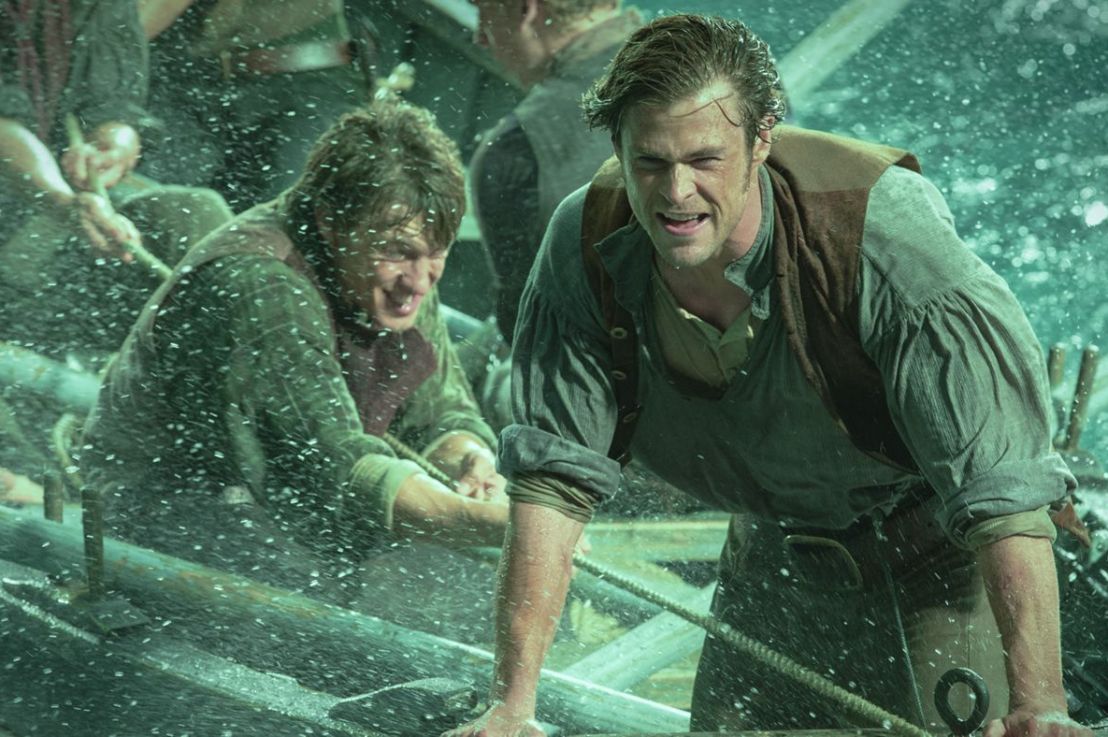
You can’t argue with the commitment of everyone involved. The cast noticeably wasted themselves down to portray these starving dying men. But it all adds up to not a lot. Chris Hemsworth gives a constrained performance as Chase – his chiselled Hollywood bulk looks hideously out of place – while Cillian Murphy makes the most impact among the rest as his luckless best friend. But the film’s main failure is Howard’s inability to make us really feel every moment of these men’s agonising suffering and to really understand the desperation that drove them to lengths no man should go to. Eventually that only makes it a surprisingly disengaging experience.

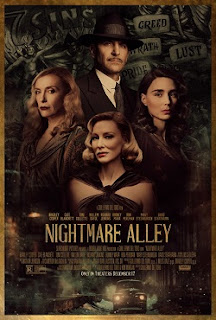
Nightmare Alley (2021)

Nightmare Alley (2021)

A mysterious drifter gets more than he bargained for in del Toro’ flashy but unsatisfying film

Director: Guillermo del Toro

Cast: Bradley Cooper (Stanton Carlisle), Cate Blanchett (Lilith Ritter), Rooney Mara (Molly Cahill), Toni Collette (Zeena Krumbein), Willem Dafoe (Clem Hoatley), Richard Jenkins (Ezra Grindle), Ron Perlman (Bruno), David Strathairn (Pete Krumbein), Mark Povinelli (Major Mosquito), Mary Steenburgen (Felicia Kimball), Peter MacNeill (Judge Kimball), Paul Anderson (Geek), Clifton Collins Jnr (Funhouse Jack), Jim Beaver (Sheriff Jedediah Judd), Tim Blake Nelson (Carny Boss)

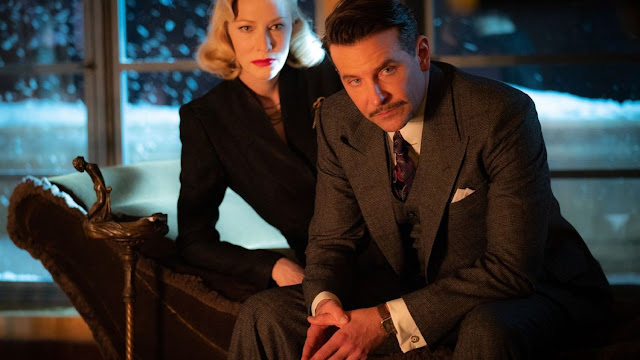
There isn’t any magic left in the world, it’s all show and tricks and no wonder. Nightmare Alley is del Toro’s follow-up to his Oscar-winning The Shape of Water and you can’t not admit it’s a triumph of style. It’s a glorious fusion of film noir and plush, gothic-tinged horror. There is something to admire in almost every frame. But it’s also all tricks and no wonder. There’s no heart to it, just a huge show that in the end makes nowhere near the impact you could expect.

In the late 1930s Stanton Carlisle (Bradley Cooper) is a drifter with a dark past, who is recruited as a labourer in a travelling carnival. Learning the ropes from freak show owner Clem (Willem Dafoe), he’s taken under the wing (in every sense) by mesmerist mind reader Zeena (Toni Collette) and taught the tricks of the art (observation and careful word codes using an assistant to guess names, objects and other facts) by Pete (David Strathairn). Eventually Stanton and his love, circus performer Molly (Rooney Mara), head to the big city where, after two years, Stanton reinvents himself as celebrity mind-reader and medium. There Stanton gets involved with psychiatrist Lilith Ritter (Cate Blanchett) in a long con where he will use the recordings of her sessions with patients to act as a medium to put them in touch with their lost ones. But is there a danger Stanton isn’t ready for in one of his clients, powerful businessman Ezra Grindle (Richard Jenkins)?

Nightmare Alley looks fabulous. But it’s hellishly overlong and curiously uninvolving. It’s like Del Toro fell in love with the whole project and forgot to search for the reason why somebody else would love it. It’s a strangely unshaped film, alternating between long, loving scenes glorying in the dark mood, baroque performances and design but then makes drastic, swift jumps in character psychology that constantly leaves you grasping at engaging with or understanding the personalities of its characters.

Its design is faultless though – it’s no surprise that its only Oscar nominations outside the Best Picture nod were all in technical categories. Dan Lautsen’s cinematography is inky black, with splashes of all-consuming colour. It’s a marvellous updating of film noir, with deep shadows spliced with angles reminiscent of Hammer-style horror. The production design is a labour of love, the carnival sets a hellish nightmare of unsettling shapes, forms and structure contrasting with the art deco grandness of the big city. The design is pretty much faultless, a real labour of love.

But the same effort didn’t go into pacing and story. This is a slow-moving, self-indulgent film, that frequently seems to be holding itself at arm’s length to make it all the easier for it to admire itself. It looks extraordinary, but it’s a frequently empty experience, more interested in mood and striking imagery than character and emotion.

Bradley Cooper gives a fine performance as Stanton. He has an air of cocksure charm, and Cooper skilfully shows this is largely a front of a man who, when push comes to shove, is capable of sudden and unflinching acts of violence. We get an early hint of this when he reacts to being struck by an escaping circus freak with unhesitating brutality. It recurs again and again in the film, and Stanton proudly states his avoidance of alcohol with all the assurance of a man who knows the bottle could unleash dark forces that he could never control. Cooper is vulnerable but selfish and above all becomes more and more arrogantly convinced of his own genius and bulletproof invulnerability, so much so that he drives himself further and further on into self-destruction.

There is some rich material here, so it’s a shame that for all that we never really seem to be given a moment to really understand who he is. Much has to be inferred from Cooper’s performance, since the film seems content to state motivational factors – troubled parental relationships, greed, ambition, a desire to make something of himself – without ever crafting them into a whole. Stanton remains someone defined by what he does.

And Stanton is the only character who gets any real oxygen to breathe, with the others largely ciphers or over-played caricatures. Rooney Mara as his gentle love interest is under-developed and disappears from the film for long stretches. Cate Blanchett gives a distractingly arch performance, somewhere between femme fatale and Hannibal Lector and is so blatantly untrustworthy it’s never clear why Stanton (an expert reader of people!) trusts her completely. Richard Jenkins is miscast as a ruthless businessman, lacking the sense of danger and capacity of violence the part demands.

Most of the rest of the cast are swallowed by the long carnival prologue, that consumes almost a third of the film but boils down to little more than mood-setting and a repeated hammering home of a series of statements that will lead into a final scene twist (and I will admit that is a good payoff). The carnival seems like a self-indulgent exploration of style, and several actors (Perlman, Povinelli and even Collette) play roles that add very little to the film other than ballooning its runtime.

The earlier section would have perhaps been better if it was tighter and more focused on Stanton and his mentor, well played by David Straithairn. I appreciate that would have been more conventional – but it would also have been less self-indulgent and helped the opening third be less of a stylish but empty and rather superfluous experience (since the film’s real plot doesn’t start until it finishes). Drive My Car demonstrated how a long prologue can deepen a whole film – Nightmare Alley just takes a long, handsome route to giving us some plot essential facts, without really telling us anything engaging about its lead character.

It makes for an unsatisfying whole, a cold and distant film packed with arch performances – although Cooper is good – and events that frequently jump with a dreamlike logic. It’s a marvel of design but way too much of a good thing, and constantly seems to stop to admire itself in the mirror and wonder at its own beauty. It becomes a cold and arch study of a film not a narrative that you can embrace. And you can’t the same about many of Del Toro’s other films – from Pan’s Labyrinth to Pacific Rim they’ve got heart. Nightmare Alley doesn’t really have that.

Legend (2011)

Tom Hardy plays with himself in Legend

Director: Brian Helgeland

Cast: Tom Hardy (Ronnie Kray/Reggie Kray), Emily Browning (Frances Shea), Christopher Eccleston (Superintendent Leonard “Nipper” Read), David Thewlis (Leslie Payne), Taron Egerton (Edward “Mad Teddy” Smith), Chazz Palminteri (Angelo Bruno), Paul Bettany (Charlie Richardson), Colin Morgan (Frankie Shea), Tara Fitzgerald (Mrs Shea), Paul Anderson (Albert Donoghue), Sam Spruell (Jack McVitie), John Sessions (Lord Boothby), Kevin McNally (Harold Wilson)

Tom Hardy is the sort of actor who, if you could find a role for him in your film, you certainly would. So how about getting the chance to cast him twice? That’s the happy situation Brian Helgeland was in here, with the chance for Hardy to play not one but both of the Kray twins. The buzz around Hardy taking on both roles was so strong that the film itself was almost completely forgotten in the crush. This was perhaps easy to do since the film is pretty mediocre at best, a confused mess that can’t decide if it wants to wallow in the undeserved glamour of the Krays or whether it wants to explore the darker currents below the surface.

The film covers most of the career of the Kray brothers – the seemingly more grounded, ambitious Reggie and then the more impulsive Ronnie, recently released from psychiatric prison. The Kray brothers balance competing demands: Ronnie is essentially happy where he is, king of a small pond, while Reggie has dreams of expanding a criminal empire across the Atlantic in partnership with the Mafia. Meanwhile, various gangland opponents and the police stalk the brothers, while Reggie’s relationship and later marriage to Frances Shea (Emily Browning) slowly collapses.

Helgeland’s film is a fairly bland piece of film-making that wants to have its cake and eat it. It wants to enjoy the criminal undertakings of the Krays, their clubland cool, charisma and charm. But it also wants to make clear that these are violent criminals who have very few moral qualms about anything they do. It’s a printing and an exploration of the legend, but the problem is that it never actually becomes particularly interesting, despite the best efforts of everyone involved. Perhaps everyone became too blinded by the pyrotechnics and undoubted skill of Hardy’s double performance that the overall film itself got a bit lost.

Hardy is superb, turning the brothers into two highly distinctive personalities who both seem like two halves of the same shattered personality, whose character traits slowly merge and even swap over the course of the film. Hardy also develops a key physicality and style for both characters that is very similar but also clearly different in both cases. So you get Ronnie, Churchill-bulldog like, with a muscular, growling heaviness that stinks of paranoia. And Reggie, smart-suited and slicked back, with a confident thrusting demeanour that falls apart over the film into a weasily fury.

Both these progressions make perfect sense, and Hardy is so skilled at playing both halves of many conversations that you forget while watching the film that you are looking at one actor playing two roles. Astonishingly – and perhaps the biggest trick he pulls – he turns this tour-de-force double role into something that feels so natural you don’t notice it happening. And the bond that ties the two brothers together into a descent into hell is so strong that even when beating the crap out of each other they still seem like two halves of one messed up personality.

Hardy is of course so brilliant, the rest of the skilled cast basically only get a few beats to sketch out various gangland figures and coppers. Excellent actors – Eccleston, Thewlis, Bettany, Anderson – are picked out to do this, but none make much of an impression. The thrust is always the strange dance of personality between the Krays, two brothers who effectively destroy each other with their actions, but are so closely bound together that the one cannot survive without the other.

It’s psychology like this that you wish the film could explore, especially as Hardy takes both brothers to dark and bitter places that makes both of them openly vile and terrifying to imagine meeting. Helgeland chooses to explore much of this – particularly Reggie’s darkness – through a rather tired voiceover led structure via Emily Browning’s Frances Shea. There is nothing wrong with Browning’s performance, but the predictable and rather traditional structure that this gives the story – not to mention the rather clumsy scripting – ends up dragging the film along.

Helgeland makes a decent job of directing this film, and it looks fine, but it is strangely underpowered and unengaging at every turn, a bland piece of gangland history that only really catches fire when both Hardys take the stage and this superstar actor lets rip. Away from him, there is a soft-focus nostalgia in its look back at the sixties, which confuses the attitude the film has towards the Krays, and a ticking off of historical events that gets in the way of creating a compelling narrative.

Hardy overshadows the film and he deserves to as he is more or less the only reason to watch it.

Sherlock Holmes: A Game of Shadows (2011)

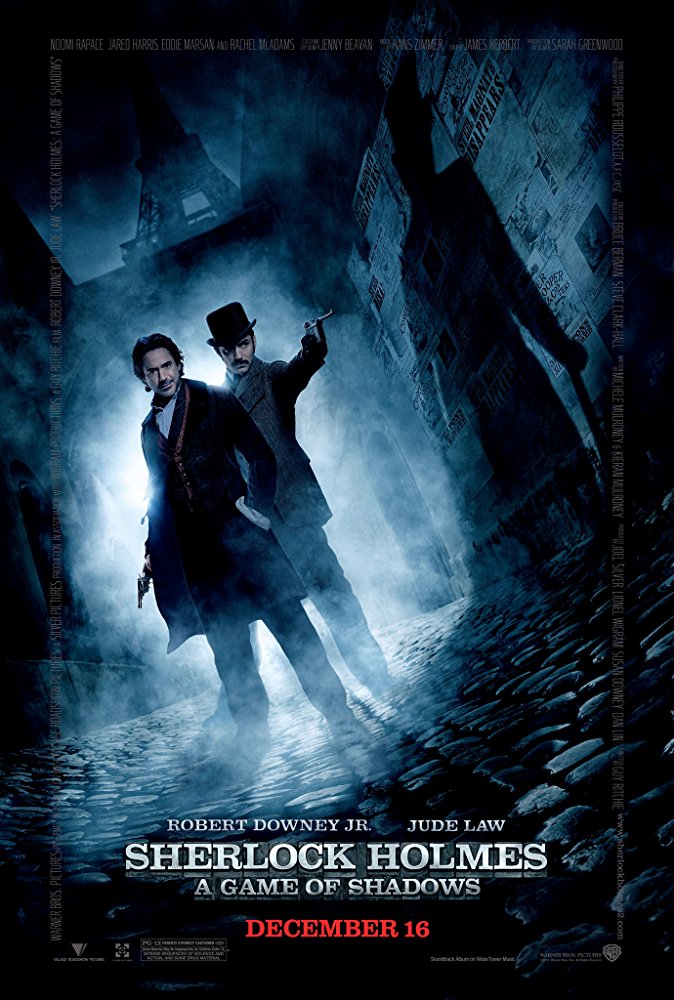
Our heroes are on the run in Sherlock Holmes: A Game of Shadows

Director: Guy Richie

Cast: Robert Downey Jnr (Sherlock Holmes), Jude Law (Dr John Watson), Jared Harris (Professor James Moriarty), Noomi Rapace (Madame Simza Heron), Stephen Fry (Mycroft Holmes), Kelly Reilly (Mary Morstan), Rachel McAdams (Irene Adler), Eddie Marsan (Inspector Lestrade), Paul Anderson (Sebastian Moran), Geraldine James (Mrs Hudson), Thierry Neuvic (Claude Ravache)

Sequels are tricky beasts. You need to work out what people liked about the first film and double down on it, while also expanding the story in new and exciting ways. When I first saw Sherlock Holmes: A Game of Shadows in the cinema, I was very sceptical about whether this film managed that. But actually, viewing it a second time around (and almost seven years later), I enjoyed it a lot more than I remembered.

As Watson (Jude Law) prepares for his wedding to Mary Morstan (Kelly Reilly), Sherlock Holmes (Robert Downey Jnr) is consumed into an investigation targeting the “Napoleon of Crime” Professor James Moriarty (Jared Harris). A series of bombings across Europe is being blamed on anarchists – but is it in fact a scheme launched by Moriarty’s military-industrial complex to instigate a world war (from which he can make a profit)? Well what do you think?

Sherlock Holmes: A Game of Shadows doubles down most strongly on the relationship between Holmes and Watson. Recognising that the things from the first film everyone loved was the brotherly banter between these two, the sequel places it front and centre. While the first film felt the need to introduce a traditional love interest for Holmes, this film kills off Irene Adler in the first few minutes (despite this, poor Rachel McAdams has better material here than most of the first film). Instead the true “romantic” relationship of the film is Holmes and Watson, as they banter, bicker and make huge sacrifices to protect each other. 

It’s helped again by Downey Jnr and Law’s excellent performances and their strong chemistry. Saying this, the first half hour of the film thinks it’s funnier than it is, with its intermixing of Watson’s stag night with a series of Downey fights. There is a little too much brashness to it early on, without sufficient grounding in the warmth between the two characters. But once we hit the real action 40 minutes into the film, the balance between comedy, affection and peril is pretty effectively met.

And Ritchie directs some very fine action sequences here. There is an extraordinary sequence of a chase through the forest, which uses an exquisite mixture of hand held cameras, Steadicam, slow motion and half a dozen other tricks to deliver a series of striking and immersive shots. Yes it’s overblown and in-your-face but it works perfectly. The film is crammed with brash, powerful action scenes like this that really strike you between the eyes. 

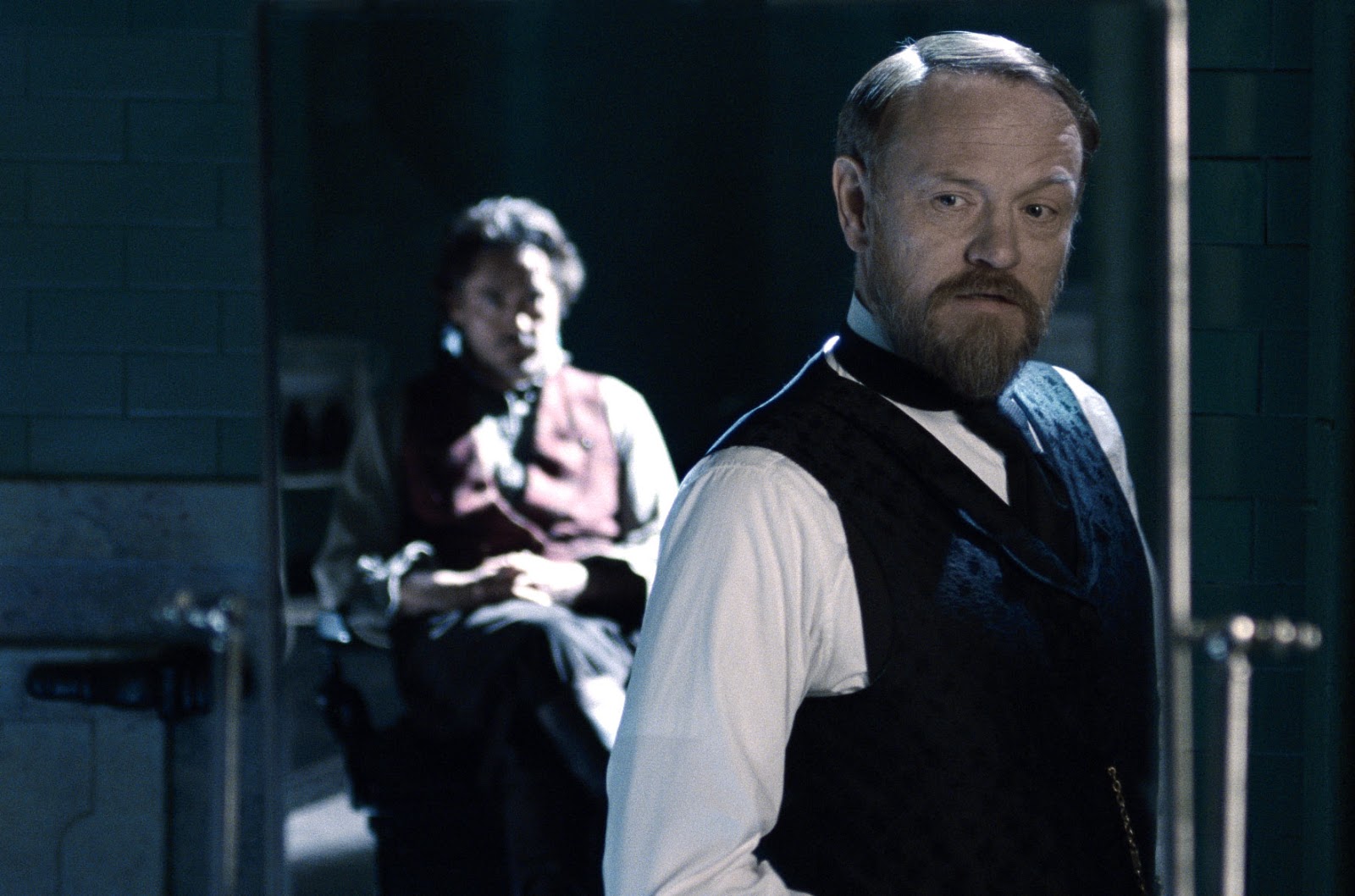
It also still keeps in touch with the original novels in a nice way. Some of the best dialogue scenes are those between Holmes and Jared Harris’ muscular but serpentine Moriarty (Harris is very good, a far stronger villain than the first film). These scenes use dialogue from the original stories extremely effectively. Meanwhile, its build towards its version of the Reichenbach fall is actually very clever, one that twists on the movie’s “calling card” of Holmes predicting every move of a fight before it begins by having Moriarty pull the same trick (which is in itself a neat scene).

Where the film does fall short amidst all this action and explosions and jokes (some good, some bad) is that we don’t get much in the way of investigation or deduction. There is a bit of sleight-of-hand and a touch of pocket picking, but most of the “deductions” are based on highlighting with the camera or dialogue objects that might as well be labelled “Important Plot Device”. Holmes doesn’t so much as investigate here as charge head first from one combat sequence or dangerous situation to another. There isn’t a lot of patience in his method here – and not a lot of patience in the film itself. But then this film is largely based on The Final Problem, probably one of the least “detective” of the stories in the cannon.

But Game of Shadows is very good fun, has some neat action sequences, is well shot and is more or less entertaining, even if some of the comedy suggests it’s a little too pleased with itself. Sure it loses some of the smaller-scale delights of both the books and original film in its rush to make sure you are wowed. But I enjoyed it a lot more the second time round, since I’d watched the original film more recently and was tuned up into what it was trying to do.