Tag: Paul Bettany

A Beautiful Mind (2001)

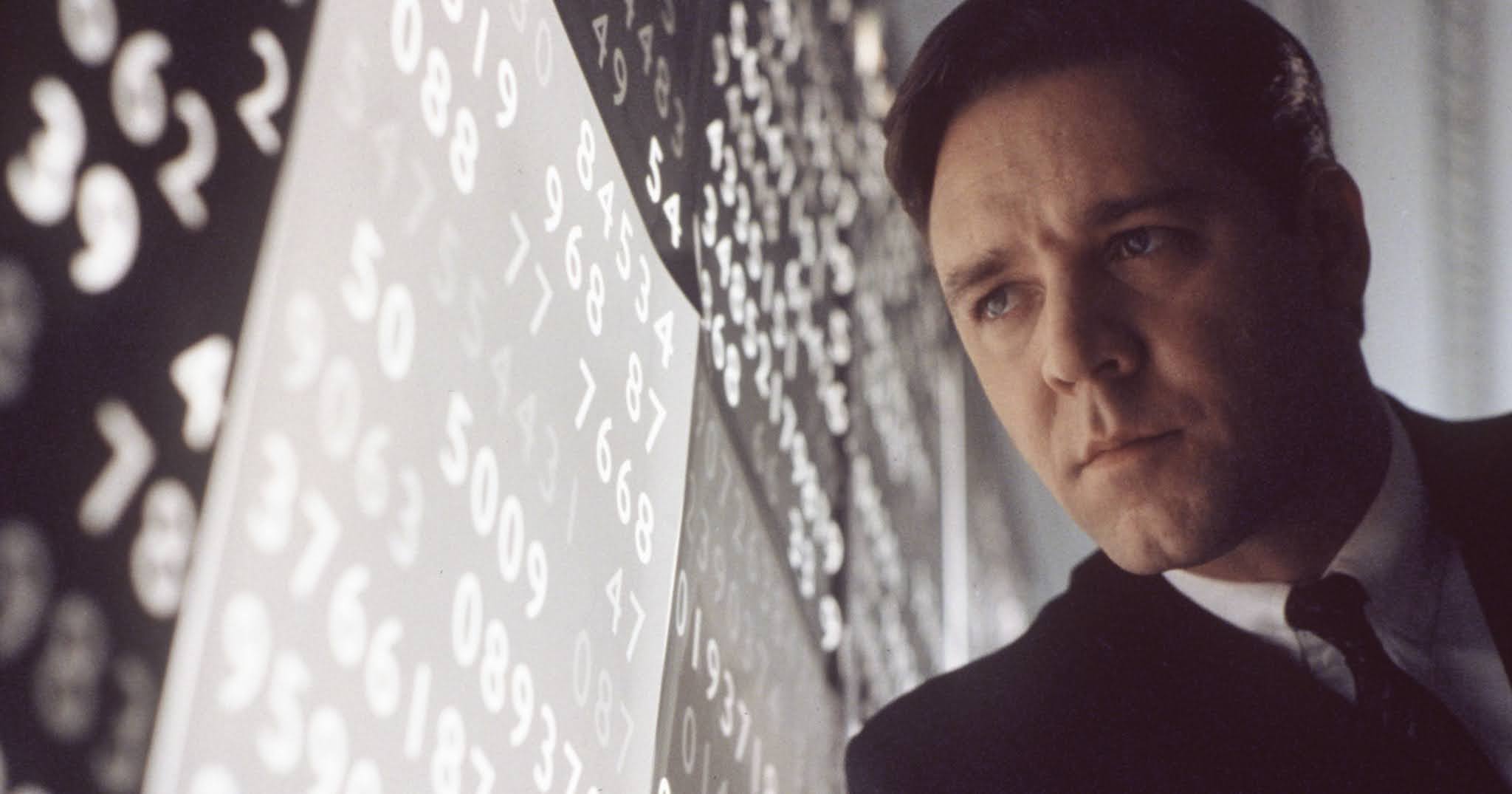
Russell Crowe struggles with reality as Math’s genius John Nash in A Beautiful Mind

Director: Ron Howard

Cast: Russell Crowe (John Nash), Ed Harris (William Parcher), Jennifer Connelly (Alicia Nash), Christopher Plummer (Dr Rosen), Paul Bettany (Charles Herman), Adam Goldberg (Richard Sol), Josh Lucas (Martin Hansen), Anthony Rapp (Bender), Judd Hirsch (Professor Helinger)

There is nothing Hollywood likes more than a man overcoming adversity. Make him a troubled genius and that’s even better. Throw in a supportive wife who bends over backwards to help him and you’ve got the dream Hollywood scenario. You can bet Oscars will follow – and they certainly did for Ron Howard’s A Beautiful Mind, which hoovered up Best Picture, Best Director, Best Adapted Screenplay and Best Supporting Actress (it probably would have also nabbed Best Actor if Russell Crowe’s personal behaviour hadn’t turned him from idol to Hollywood’s most unpopular actor).

The film is a romantically repackaged biography of John Nash (Russell Crowe), a pioneering mathematician whose life was turned upside down by his diagnosis with schizophrenia in the 1960s. Even before then, Nash had become increasingly preoccupied by delusions and fantasies, many of them revolving around “secret government code-breaking work” for a bullying CIA Agent (Ed Harris). Slowly coming to terms with his diagnosis, with the help of his loving wife Alicia (Jennifer Connelly), Nash must learn to put aside the things he knows he are not real, while trying to rebuild his life.

Ron Howard’s film is assembled with his usual assured professionalism. It is never anything less than effective, what it never quite manages to be is inspired. Perhaps because it’s a very standard Hollywood biopic. It effectively presents the life of its troubled genius as something very easily digestible, hitting all the beats of suffering, determination and eventual triumph you could expect when the film starts.

This makes for exactly the sort of middle-brow filmmaking made with absolute professionalism that, if you turn your head and squint a bit, can be made to look like Oscar-winning art. That seems incredibly harsh on the film: but there is really nothing particularly “new” about anything here: in many ways, it could have been made almost exactly the same in the 1940s (and it would probably have won an Oscar then as well).

That’s not to say it’s a bad film. Howard’s direction is sharp and exact, and he stages the film very well, drawing very good performances out of the cast. The film is good at immersing us in Nash’s delusions, particularly in the first hour of the film (it’s not until the hour mark that anyone overtly states there is anything wrong with Nash beyond eccentricity and social awkwardness). Howard shoots the fantasies totally straight: in fact if you had managed to avoid knowing what the film is about, you can totally imagine being tricked into thinking it’s a genuine spy thriller.

With that though, the film gives you just enough hints. Take a beat and look at Nash’s CIA actions and they don’t make much sense. A secret code that involves him tearing pages out of thousands of magazines and pinning them up around his office connected with bits of string (standard filmic language for the obsessive nutter)? The CIA injecting a number implant into his arm? A dead drop at a posh house which requires letters to be sealed with wax? The film gives us the hints that Nash is more troubled than just awkward around people, but doesn’t lay it on too thick. And at least one plot reveal that something we have seen was in fact a Nash-delusion the whole time is so skilfully presented that it surprised me (and I know surprised several other people).

The film is also strong on schizophrenia and delusion. Reworking Nash’s real-life auditory hallucinations into visual fantasies (including imagined buildings and people) works really effectively for film. It also really opens up for us the horror of how difficult living with something like this might be. How would you feel if you could never trust the world you saw around you? What if you discovered things that were central to your life turned out to be fantasies? That people you had built relationships with were not real? That’s a traumatic emotional burden, and the film is very strong at building your empathy with Nash.

It’s also helped by Crowe’s very effective performance in the lead. Shy, buttoned-up, physically awkward, his eyes always cast down, body slouched and voice an embarrassed mumble, Crowe brilliantly embodies a nervous outsider whose problems fitting in only magnify his growing dependence on fantasies that place him at the centre of the world. There is a touching vulnerability about Crowe here that so rarely gets seen. A big part of the film’s success is due to his performance.
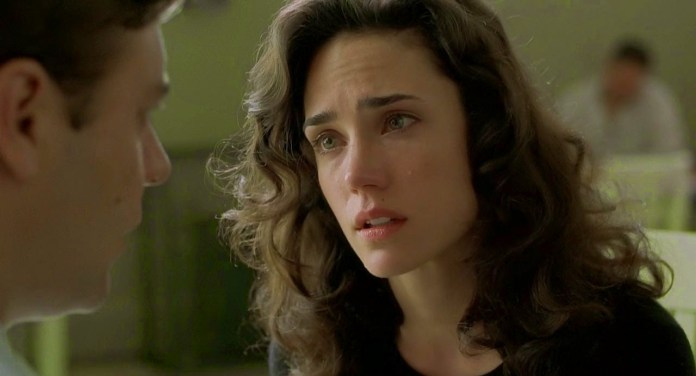
Jennifer Connelly also makes a great deal of her very traditional role as the supportive wife, bringing just the right level of assurance, spark and warmth to the role. Connelly carefully shifts the character from flirtatious confidence to heartbroken but supportive wife. But she doesn’t lose track of Alicia’s own frustrations at living with a medicated, unresponsive husband – even if, of course, any regrets she may have about the way her life turned out are overcome swiftly.

Which of course is completely different from real life where, for all her support, the couple divorced. Nash also had a baby (which he didn’t acknowledge) with a nurse he had an affair with. But these are real life complexities that have no place in a crowd-pleasing biopic like this. Similarly gone are Nash’s possible flirtations with bisexuality, his experiments with drugs or his flashes of violence. Added in are an entirely invented “pen gifting” Princeton ceremony and Nash’s Nobel prize acceptance speech where he gives thanks to his loving wife (in real life no such speech happened and the couple were separated). But that’s not the story this film wants to tell, so truth can go hang.

Perhaps these, post-diagnosis, difficulties are why the final third of the story – which sees Nash casting aside the invasive treatments to overcome the power his delusions have over him through willpower alone – is the least involving part. After all, they had to drop most of the actual real-life events that happened (see above). But there simply isn’t as much drama in watching someone quietly adjust to rebuilding a career in maths as there is in seeing them struggle.

Perhaps as well, because maths is a pretty difficult to bring to the screen. The film falls back into many accepted visual tropes – you’ll see a lot of writing on windows – and explains Nash’s theory of co-operative dynamics with a bar-and-booze based conversation around pulling girls in bars. That’s about as far as engagement with maths and understanding his theories goes – but we take it as read that Nash is a genius because he acts like one, people tells he is and he writes lots of big equations on boards.

A Beautiful Mind offers few real surprises (except for one) and presents a story that Hollywood has basically been making for decades. Things from real-life that don’t fit the story have been cut out, to make this as conventional a film as possible: the troubled genius and the loving wife behind him. It’s very well played (as well as Crowe and Connelly, Paul Bettany is brilliantly charismatic as Nash’s eccentric college roommate) and directed with a professional skill. But it’s also a very safe and even conservative film that has skill but not inspiration.
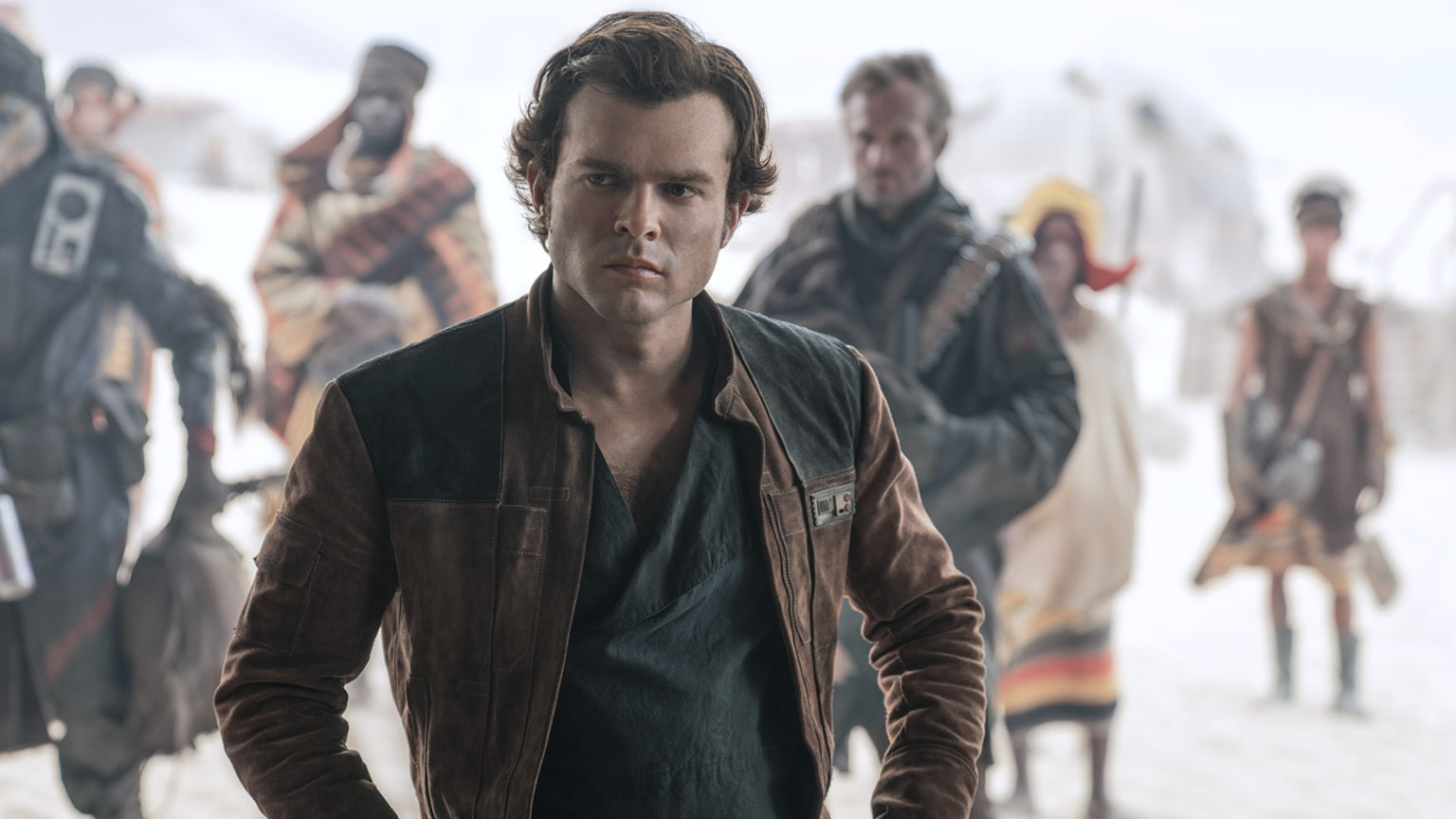
Solo: A Star Wars Story (2018)

Alden Ehrenreich tries his best in Solo: A Star Wars Story

Director: Ron Howard (Phil Lord, Christopher Miller)

Cast: Alden Ehrenreich (Han Solo), Woody Harrelson (Tobias Beckett), Emilia Clarke (Qi’ra), Donald Glover (Lando Calrissian), Thandie Newton (Val), Phoebe Waller-Bridge (L3-37), Joonas Suotamo (Chewbacca), Paul Bettany (Dryden Vos), Erin Kellyman (Enfys Nest), Jon Favreau (Rio Durant)

Solo did the impossible. No not the Kessel Run in 12 parsecs. It showed you could release a Star Wars film that lost money. How could this happen? Well the easy solution is to point at the film’s disastrous shooting. Lego Movie directors Phil Lord and Christopher Miller were originally announced as its directors, making their live-action debuts. But Lord and Miller lacked experience, and a litany of complaints – poor direction, a demand for constant improvisation slowing shooting, failing to get enough angles to allow options in editing – led to them getting fired and replaced with Ron Howard. 

Unfortunately, even though large parts of the film had already been shot, Howard still needed to go back and reshoot large chunks (and recast, with Paul Bettany replacing the Michael K Williams as the film’s villain due to a scheduling clash). The budget ballooned to nearly $300million, a sum (with marketing costs) the film didn’t stand a chance of hitting with its poor initial buzz and mixed word of mouth. Not to mention the general (misguided) poor reaction from the core fanbase to Last Jedi, which had literally only just left theatres as this film prepared to launch.

If it seems a little unfair to open a review of the film with an anecdote about its making, that’s because the film’s tortuous journey to the screen is more interesting than most of the things that actually ended up in it. It’s an origins story for Han Solo (gamely played by a trying-his-best Alden Ehrenreich), which traces his early days towards becoming the smuggler we know, with the background given for virtually every aspect of the character: meeting Chewie, how he got his surname, where he found his blaster, how he did he win the Millennium Falcon from Lando (Donald Glover, who with his charisma and cool is the only one who manages to reinterpret his character to feel both fresh and a natural predecessor of Billy Dee Williams’ interpretation) and just how did he do that Kessel Run in 12 parsecs? 

If that sounds a bit like the film is a series of nostalgic box ticks… that’s kind of because it is. The impact is made worse by the fact that nearly all its events – from Han meeting his “mentor” Beckett through to the end of the film as he jets off to do a job for Jabba the Hutt – seem to take place in a week. As so often, the modern Stars Wars films manage to make its universe as small as possible. The sense of wearying accumulation as every half reference ever made in the old films is given a backstory, makes you wonder how boring the rest of Han’s life must have been if everything he ever talks about is connected to this one job.

The telescoped timeline also has a serious impact on much of the film’s relationships. Han and Chewie get by fine because we’ve already invested in that friendship – and Ehlenreich and Suotamo do a good job of building the regard between these two, one of the best beats from Howard’s direction. But other relationships get short-changed, particularly Beckett. Played with a maverick gusto by Woody Harrelson, this character is meant to be a model of the sort of heartless mercenary Han Solo starts A New Hope as. But the relationship of the two characters never works, because there is no sense of bond – they’ve known each other a week or two at best, and the emotional trust between them doesn’t exist, so the inevitable betrayal (when it comes) means nothing.

The other principle relationship between Solo and his childhood sweetheart, the equally mercenary Qi’ra, similarly suffers from getting lost in the shuffle of ticking off iconic references. It’s not helped by the total lack of chemistry between Ehlenreich and Emilia Clarke. Clarke herself feels painfully miscast in a role that doesn’t use any of her brightness and wit, instead pushing her into the sort of fantasy-genre, fanboy’s-dream woman she might find herself trapped into playing. This links in strongly with a terminally uninteresting criminal gang plot in which a wasted Paul Bettany – playing someone who barely seems to manage to have a personality – is the mysterious crime lord manipulating everyone.

The film goes from set piece to set piece, but none of them really stand out, and all are shot and edited together with a sort of bland competence that perhaps you could expect from a master craftsman like Howard, who works better with actors than he does special effects. The film clearly wants to go for a Firefly vibe (with its heists, mismatched criminal gang, double crosses and damaged hero not wanting to get involved in the problems of others) – and there is something quite sad that this film about an iconic character feels the need to rip off a TV show that ripped off a lot of the vibe of that original iconic character.

But then that’s the problem perhaps. This is a wallowing in nostalgia that depends on your affection for Harrison Ford’s masterful Han Solo – but which will only serve to remind viewers that, for all his work, Ehlenreich is no Ford. It also doesn’t help that the film, by its very nature, can allow no development for Solo. This is a character that spends all of Star Wars as a cynical and selfish hired gun, who acts without thinking and has no interest in helping others if there is nothing in it for him. Since Solo basically starts this origins story like this, he therefore must end the film in the same way – so other than becoming a bit more competent and worldly-wise, he’s stuck not developing in any way. This makes for a film that feels even more like a slightly pointless exercise in nostalgia.

For all that, it has its moments and is fun enough – and certainly not the worst film in the franchise. But it’s the first sign, that Disney should have heeded, that nostalgia and retelling familiar stories over and over again was not a guaranteed box office smash any more. By rooting another film in things introduced in the first two Star Wars, it reminds us again that this is a small and incestuous universe, where we see the same faces over and over again. With a film where every scene is a homage and every possible piece of trivia is laboriously given a back story, that feeling grows even more.

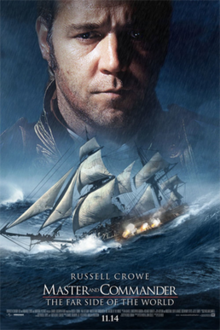
Master and Commander: The Far Side of the World (2003)

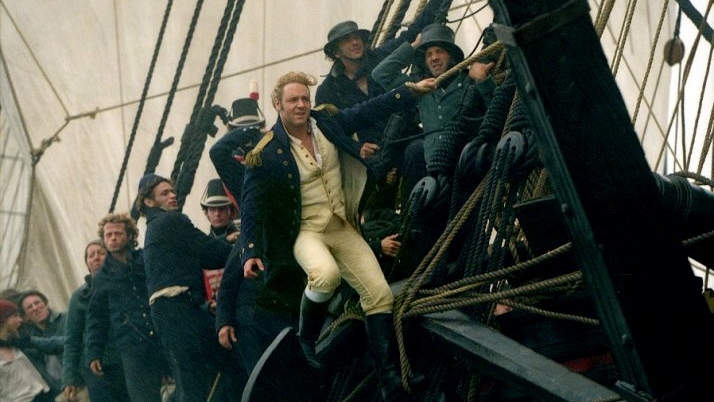
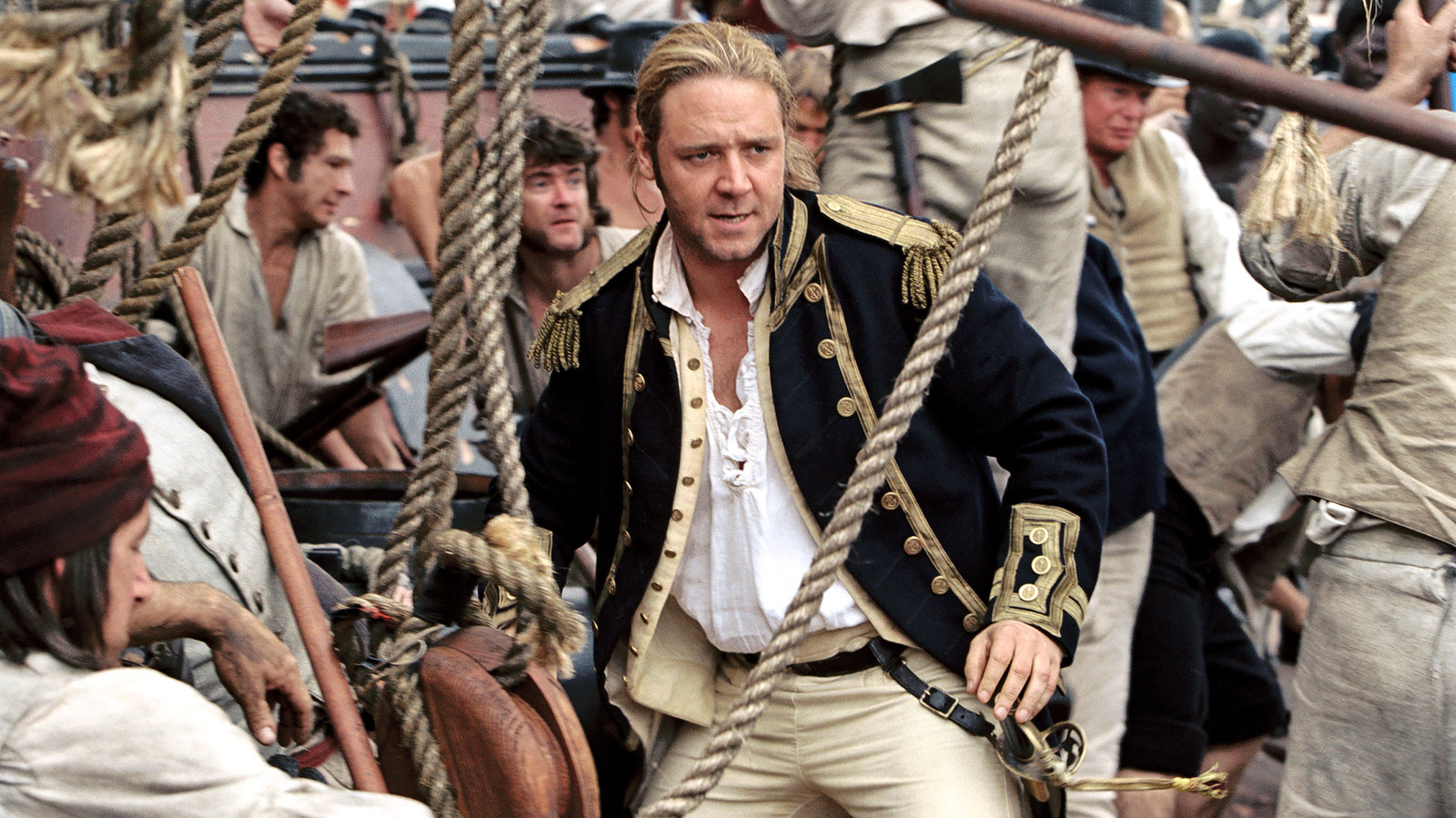
Russell Crowe captains in the marvellous Master and Commander: The Far Side of the World

Director: Peter Weir

Cast: Russell Crowe (Captain Jack Aubrey), Paul Bettany (Dr Stephen Maturin), James D’Arcy (First Lt Thomas Pullings), Robert Pugh (Master John Allen), Max Pirkis (Midshipman Lord William Blakeney), Max Benitz (Midshipman Peter Myles Calamy), Lee Ingleby (Midshipman Hollom), Richard McCabe (Mr Higgins), David Threlfall (Preserved Killick), Billy Boyd (Barret Bonden), Bryan Dick (Joseph Nagle), Joseph Morgan (William Warley), George Innes (Joe Plaice), Mark Lewis Jones (Mr Hogg)

There’s a reason so much of our everyday language comes from naval terms. There was a time when Britannia ruled the waves: and for almost as long we’ve had a history of stories of great fictional sailors. If your archetype is Hornblower, then following close behind is Patrick O’Brian’s 21-novel sequence following the career of Captain Jack Aubrey and his surgeon/spy friend and colleague Stephen Maturin. There have been many, many attempts to bring this series to the screen, but you could never have expected that the eventual film would be as triumphant as this. I saw this film on my birthday years ago – the same day I was thrown a surprise birthday party – and I enjoyed it so much that just seeing that would have been treat enough, even without the surprise party (which was also marvellous).

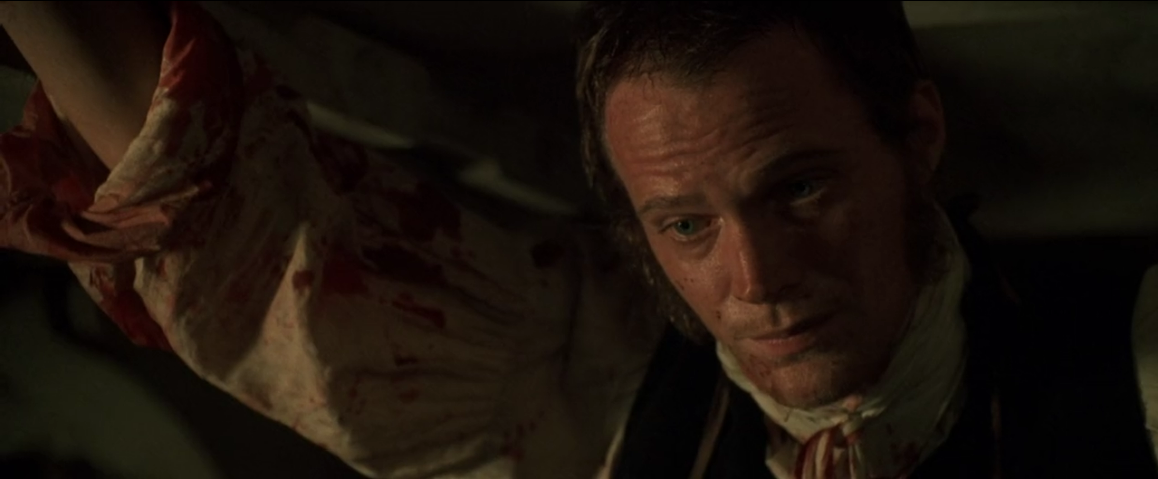
It adapts elements from several O’Brian books – principally elements of the first, Master and Commander,and the tenth, The Far Side of the World, (hence the unwieldy title). The film throws us into the mid-point of Aubrey’s (Russell Crowe) career, with the captain of the Surprise tasked with protecting British interests in the Southern oceans from the onslaught of the French ship Acheron during the Napoleonic wars. Early skirmishes find Aubrey and the Surprise on the back foot, out-matched and out-gunned by the more modern, sleeker, more powerful French ship (quickly known as “the Ghost” by the crew, stunned at her ability to catch the Surprise on the hop). As well as following Aubrey’s struggle to best the Acheron, the film also explores the complex relationships on board during the dangerous mission, and specifically Aubrey’s close friendship with Stephen Maturin (Paul Bettany), ship’s surgeon, naturalist, sceptic and his confident.

Peter Weir’s film is, I’ll say it here, a masterpiece of both boys-own adventure and action, but also of the intriguingly warm and human relationships (and also the stresses and strains) that come when you throw a group of nearly two hundred men in close confines together for months at a time. It’s also a masterclass in authentic world creation. You can see in seconds the time, effort, research and imagination that have gone into recreating the world, the rules and the structure of the ship and its crew – and it has paid off in spades. There is not a foot put wrong, either in the recreation of the ship described in the books (the early shots of the film, the camera panning through the decks of the ship, capture everything from the geography of the ship to the names of the individual cannons) or the world of the navy. 

Weir’s film is technically superb. The photography is beautiful, the sound and editing totally immersive. Weir understands the detail counts for nothing, if the actual action of sailing, the dramatization of man’s struggle with the wind and water, isn’t engrossing. Not a single sequence in the film that shows the ship at sea – struggling with wind, tides, storms, fog and mist – falls flat. You feel like you are there, being buffeted by wind and rain, living every beat of the dangers the men face from the elements. The professionalism and skill of the sailors is brilliantly captured by the actors – who practically lived as sailors for the months of filming – and, with the music superbly worked to complement the adversity the sailors overcome, the scenes of naval skill are brilliantly done. I love them – it almost makes me want to become a sailor (almost). 

Master and Commander also works as a superb study of men, and brilliantly brings to life the two heroes from the book. Russell Crowe is wonderful as Aubrey, the film expertly using his charisma. Aubrey is a natural leader who adjusts and adapts his style to meet the needs of the men he deals with. He’ll share pun-filled gags at the dining table about his personal encounters with Nelson – but follow it up with a sincere anecdote of Nelson’s patriotism when he sees that something else is needed to avoid disappointing a young midshipman. With some men he’ll take a firm line, with others he will try words of encouragement. He’s an inventive and flexible thinker, able to adapt his plans and ways of working to meet new challenges and shows no pride or rigidity in his planning.

We also find out much about him from his genuine, heartfelt friendship with Stephen Maturin, his intellectual surgeon. Embodied damn-near perfectly by Paul Bettany, in one of those performances that feels like the character has literally walked from the pages of the book. Maturin and Aubrey’s friendship gives the film its heart. Genuinely close, with the one often teasing the other (usually around naval rules and regulations, around which Maturin displays a playful lack of understanding) they also speak freely to each other, and with honesty. When Maturin feels Aubrey is pushing the crew too hard in his obsession to best the Archeron he will speak up; when Aubrey feels the need to remind Maturin that a promised naturalist trip to the Galapagos will need to be cancelled due to the demands of war (“We do not have time for your damn hobbies sir!”) he feels no reluctance to say so. It’s a friendship that bobs and weaves through the tensions that come from almost permanent contact, but it’s a true, very strong bond that sees both men going to great lengths in the film to make sacrifices of the things they hold dearest for the sake of each other. 

And we see a lot of how they think in their shared mentorship of young midshipman (barely a teenager) Lord Blakeney, played with a superb assurance by Max Pirkis. From Aubrey, Blakeney learns the confidence, authority and flexibility needed for command. From Maturin he learns the intellectual curiosity and humanity that broadens and widens his horizons. It’s a reflection that, as a team, the two men make one marvellous man. 

Weir’s film also shows that the pressures of command and responsibility, worn so lightly (it seems at times) by Aubrey, can also crush men. As if in contrast to Blakeney’s growing confidence, the film also throws in Midshipman Hollom (played with tragic weakness by Lee Ingleby), a man approaching his thirties who has missed all the opportunities to become the man he would want to be. Nervous, weak, eager to please but insecure and uncertain of himself – exactly the qualities that automatically alienate sailors yearning to put their faith and trust into a leader – Hollom is a man who can listen to everything Aubrey has to say about becoming a leader, but has not the strength of character to implement it. And, strikingly, the film also shows that this weakness alienates not only the men who look to him for leadership, but also his companions and even (to a degree) Aubrey himself. In a single storyline, the weaknesses and dangers of this self-contained world (and the impact it can have on people) are superbly captured.

The film works alongside all this because its sense of adventure, of derring-do, of gripping, fist pumping bravery, skill and excitement of high-seas adventure grip the audience completely. There has never been a better film made about naval warfare or ships at sea (and there probably never will be). Mix that in with a superb story of personal relationships and men under pressure at sea (and the cast is uniformly brilliant), with sacrifice and also good fellowship at every turn, and you’ve got a simply faultless film. Master and Commander failed to launch a new franchise – and that has to be one of the greatest losses to film history that I can imagine. Weir’s direction is simply superb, Crowe and Bettany are perfect and the film is a brilliant adventure. I could watch it every day and never get tired of it.

Legend (2011)

Tom Hardy plays with himself in Legend

Director: Brian Helgeland

Cast: Tom Hardy (Ronnie Kray/Reggie Kray), Emily Browning (Frances Shea), Christopher Eccleston (Superintendent Leonard “Nipper” Read), David Thewlis (Leslie Payne), Taron Egerton (Edward “Mad Teddy” Smith), Chazz Palminteri (Angelo Bruno), Paul Bettany (Charlie Richardson), Colin Morgan (Frankie Shea), Tara Fitzgerald (Mrs Shea), Paul Anderson (Albert Donoghue), Sam Spruell (Jack McVitie), John Sessions (Lord Boothby), Kevin McNally (Harold Wilson)

Tom Hardy is the sort of actor who, if you could find a role for him in your film, you certainly would. So how about getting the chance to cast him twice? That’s the happy situation Brian Helgeland was in here, with the chance for Hardy to play not one but both of the Kray twins. The buzz around Hardy taking on both roles was so strong that the film itself was almost completely forgotten in the crush. This was perhaps easy to do since the film is pretty mediocre at best, a confused mess that can’t decide if it wants to wallow in the undeserved glamour of the Krays or whether it wants to explore the darker currents below the surface.

The film covers most of the career of the Kray brothers – the seemingly more grounded, ambitious Reggie and then the more impulsive Ronnie, recently released from psychiatric prison. The Kray brothers balance competing demands: Ronnie is essentially happy where he is, king of a small pond, while Reggie has dreams of expanding a criminal empire across the Atlantic in partnership with the Mafia. Meanwhile, various gangland opponents and the police stalk the brothers, while Reggie’s relationship and later marriage to Frances Shea (Emily Browning) slowly collapses.

Helgeland’s film is a fairly bland piece of film-making that wants to have its cake and eat it. It wants to enjoy the criminal undertakings of the Krays, their clubland cool, charisma and charm. But it also wants to make clear that these are violent criminals who have very few moral qualms about anything they do. It’s a printing and an exploration of the legend, but the problem is that it never actually becomes particularly interesting, despite the best efforts of everyone involved. Perhaps everyone became too blinded by the pyrotechnics and undoubted skill of Hardy’s double performance that the overall film itself got a bit lost.

Hardy is superb, turning the brothers into two highly distinctive personalities who both seem like two halves of the same shattered personality, whose character traits slowly merge and even swap over the course of the film. Hardy also develops a key physicality and style for both characters that is very similar but also clearly different in both cases. So you get Ronnie, Churchill-bulldog like, with a muscular, growling heaviness that stinks of paranoia. And Reggie, smart-suited and slicked back, with a confident thrusting demeanour that falls apart over the film into a weasily fury.

Both these progressions make perfect sense, and Hardy is so skilled at playing both halves of many conversations that you forget while watching the film that you are looking at one actor playing two roles. Astonishingly – and perhaps the biggest trick he pulls – he turns this tour-de-force double role into something that feels so natural you don’t notice it happening. And the bond that ties the two brothers together into a descent into hell is so strong that even when beating the crap out of each other they still seem like two halves of one messed up personality.

Hardy is of course so brilliant, the rest of the skilled cast basically only get a few beats to sketch out various gangland figures and coppers. Excellent actors – Eccleston, Thewlis, Bettany, Anderson – are picked out to do this, but none make much of an impression. The thrust is always the strange dance of personality between the Krays, two brothers who effectively destroy each other with their actions, but are so closely bound together that the one cannot survive without the other.

It’s psychology like this that you wish the film could explore, especially as Hardy takes both brothers to dark and bitter places that makes both of them openly vile and terrifying to imagine meeting. Helgeland chooses to explore much of this – particularly Reggie’s darkness – through a rather tired voiceover led structure via Emily Browning’s Frances Shea. There is nothing wrong with Browning’s performance, but the predictable and rather traditional structure that this gives the story – not to mention the rather clumsy scripting – ends up dragging the film along.

Helgeland makes a decent job of directing this film, and it looks fine, but it is strangely underpowered and unengaging at every turn, a bland piece of gangland history that only really catches fire when both Hardys take the stage and this superstar actor lets rip. Away from him, there is a soft-focus nostalgia in its look back at the sixties, which confuses the attitude the film has towards the Krays, and a ticking off of historical events that gets in the way of creating a compelling narrative.

Hardy overshadows the film and he deserves to as he is more or less the only reason to watch it.

The Da Vinci Code (2006)

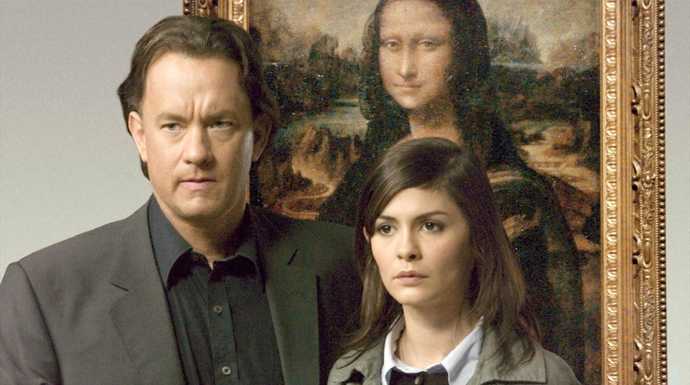
Tom Hanks and Audrey Tautou stumble through the dire The Da Vinci Code, possibly one of the dullest films ever made

Director: Ron Howard

Cast: Tom Hanks (Robert Langdon), Audrey Tautou (Sophie Neveu), Ian McKellen (Sir Leigh Teabing), Jean Reno (Captain Bezu Fache), Paul Bettany (Silas), Alfred Molina (Bisoph Aringarosa), Jürgen Prochnow (André Vernet), Étienne Chicot (Lieutenant Jérôme Collet), Jean-Yves Berteloot (Remy Jean), Jean-Pierre Marielle (Jacques Saunière)

In 2003 the world went a little crazy. Maybe it was all the buzz of conspiracy that seemed to be everywhere. Maybe people wanted a bit of escapism from the misery of our post-9/11 world. Or maybe there is just no accounting for taste. But inexplicably, a staggeringly poorly written thriller by a hack author, peddling a tired old conspiracy, became one of the most popular books of all time. Yup, ladies and gentlemen, it was a time of silliness, paranoia and poor taste. It was the time of The Da Vinci Code.

When the curator of the Louvre (Jean-Pierre Marielle) is found dead in the museum, with his body covered with bizarre self-inflicted wounds and symbols, visiting Professor of Symbology from Harvard Robert Langdon (Tom Hanks) is called in to consult. Langdon quickly finds himself the main suspect and on the run, aided only by the victim’s granddaughter Sophie (Audrey Tautou in a truly thankless part of continual question asking, devoid of any agency). Following a trail of bizarre clues, Langdon ends up investigating a conspiracy that leads to the heart of the Catholic Church – could the Church be founded on a lie? Could Jesus Christ have in fact been married to Mary Magdalene? Could she have been his intended heir? Did she have a child? Has a secret society run (at various times) by the Knights Templar, Leonardo Da Vinci and Isaac Newton worked since the dawn of time to protect the secret? Of course they haven’t, but that’s not going to stop the film.

Okay let’s get the main event out of the way. This is a terrible film. But it’s not terrible for the reason you might think. I mean, sure, it’s poorly scripted bobbins, with poorly developed ciphers for characters, and it peddles a conspiracy theory which is total, illogical nonsense from top to bottom. But that’s not the main reason. The main reason this film is terrible is that it is so unbelievably fucking boring.

The film is an utterly faithful, practically scene-by-scene reproduction of Dan Brown’s book. And it immediately reveals how little Brown knows about how to write a good thriller. The film has two or three action “set pieces” or moments of tension – at least, they would be tense, if only there were any stakes to the situation, or the characters’ motivations or the peril they’re in made the slightest bit of sense. They don’t. You’ll barely remember the car chase, or any of the moments where the heroes are held at gunpoint. None of the characters have any definable personalities, other than what they are invested with by the actors playing them. But then that’s no surprise from a novel where the lead character is defined solely by being brainy, having a Mickey Mouse watch (such a character!) and (film rights pleading ahoy) looking like Harrison Ford.

Just like Dan Brown’s turgid original, this film quickly turns into a series of scenes where characters fling exposition at each other to whizz us through a series of sub-par brainteasers and anagrams, which are only solvable with information the characters have but the audience doesn’t (hardly making it a fun thing to play along with). You’ll find yourself wishing for those anagrams back though, once they move on to spunking the novel’s bizarre conspiracy theory into our ears. The low point of this is when Ian McKellen’s polio-suffering billionaire historian (a billionaire historian! Who has a private plane! Of course he does…) tees up a handy PowerPoint presentation he just happened to have sitting around ready, and regurgitates all the mystic mumbo-jumbo that the film tries to pass off as fact.

I’m sure I don’t need to recap the nonsense of this film, but seeing it boiled down from the book is a real reminder that Brown clearly read widely but with no depth. For starters, most of his understanding of everything from the church, to the Templars, to the history of Europe is bogged down in inaccuracy and misinterpretation. By the time the film is claiming that Isaac Newton’s discovery of gravity angered the church you’ll have lost all ability to take anything the film says seriously (for the record, the Catholic church didn’t have a problem with gravity, and even if they did, as an Anglican living in a Protestant country, Newton wouldn’t have given a damn anyway).

None of the film’s (or book’s) ideas are even that original – it was all spewed forth in a book called Holy Blood, Holy Grail (several characters here have names that are anagrams of the writers and editors of these books) in 1982. The idea of Jesus having a whole line of secret descendants is arrant bollocks. The idea of a secret society working to protect this secret is even more stupid (it was revealed after the publication of Holy Blood, Holy Grail to be a total hoax, swallowed whole by that book’s writers). There is not a shred of reality here – rather, it’s typical paranoia and anti-establishment bollocks repackaged as dark reveal.

This is before we even touch on the – heaven help us – “art analysis”. The dark hints of conspiracy in The Last Supper by Da Vinci boil down to: (a) there is no Grail in this painting, (b) the bloke to the left of Jesus looks a bit like a girl so must be Mary Magdelene (“a hint of bosom” McKellen tells us playfully), (c) there is an inverted triangle between Christ and this man/woman – so surely a sign of the female dominance! The fact that the painting shows only 12 disciples and Jesus – meaning that if Mary was there, it should show 14 people not 13 – isn’t considered worth mentioning. But then that’s par for the course for the film’s bullshit clues “discovered” in works of art to support the film’s bullshit, anti-Catholic agenda (the church being staffed in this film exclusively by shadowy, Bond-villain types, with a ruthless agenda for extremist Catholicism and murderous Albino hit-monks they dispatch at will). Give me a break.

But if the film had packaged this all up in a gleefully silly, high energy story, it could still have been an entertaining watch. Unfortunately, it’s completely and utterly boring. It goes on (and on) for almost two and a half hours, and in between unengaging lectures and tedious dialogue scenes it drags like you wouldn’t believe. It’s almost impossible to get engaged in anything at all, and it’s really not helped by the flat, dimly lit, for-the-money direction from Ron Howard. There is no zip or fun about the film whatsoever, as if the book’s massive popularity made the producers worried that if they treated the book like an action adventure yarn, or a fun bit of nonsense, then it might offend people. Instead they treat this nonsense with a deathly reverence usually reserved for Biblical epics that’s fatal for the viewing experience of the entire film. 

It’s supremely dull, very self-important, and for all the hard work of an interesting cast of actors (who do their very best) it’s a complete, yawn-filled, pile of stinking crap. As the man said: “Holy Blood? Holy shit.”

Avengers: Infinity War (2018)

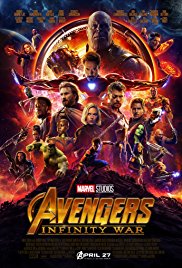
Josh Brolin is hero-villain Thanos in the latest chapter (and it really is a chapter) of the Marvel franchise Avengers: Infinity War

Director: Anthony & Joe Russo

Cast: Robert Downey Jnr (Tony Stark), Chris Hemsworth (Thor), Mark Ruffalo (Bruce Banner), Chris Evans (Steve Rogers), Scarlett Johansson (Natasha Romanoff), Josh Brolin (Thanos), Chris Pratt (Peter Quill), Benedict Cumberbatch (Dr Stephen Strange), Don Cheadle (James Rhodes), Tom Holland (Peter Parker), Chadwick Boseman (T’Challa), Paul Bettany (Vision), Elizabeth Olsen (Wanda Maximoff), Anthony Mackie (Sam Wilson), Sebastian Stan (Bucky Barnes), Tom Hiddleston (Loki), Idris Elba (Heimdall), Peter Dinklage (Eitri), Benedict Wong (Wong), Pom Klementieff (Mantis), Karen Gillan (Nebula), Dave Bautista (Deax), Zoe Saldana (Gamora), Vin Diesel (Groot), Bradley Cooper (Rocket), Gwyneth Paltrow (Pepper Potts), Benecio del Toro (Collector), William Hurt (Thaddeus Ross), Danai Gurira (Okota), Letita Wright (Shuri)

Well this is what it has all been building towards. Or at the very least, this is the start of what it has been building towards, since the film ends on a (slightly underwhelming as soon as you think about it) cliffhanger leadinginto the next film. You never reach the end in these movies – each one, while serving some of the story, is also a jumping-off point for the next one. Marvel’s Cinematic Universe is a triumph of long-form storytelling and juggling characters – but it’s also like a shark moving forward, promising us even more thrills and spills if we tune in next time.

This time the Avengers come together (and overcome inevitable personality clashes) to defeat Thanos (a motion-captured Josh Brolin). Thanos is a lunking purple beast who believes the universe is vastly overpopulated. The solution? Why kill half the universe’s population, so the other half can lead lives of perfect contentment on the remaining resources. How? Well he needs the Infinity Stones, six all-powerful gems that, together, will give him control of time and space. He just needs to wrestle them from their various hiding places.

Avengers: Infinity War has been called less of film and more an episode in a long running TV series. I think that’s fair. This film is in no way designed for anyone new to the saga to step in – half of the expansive cast are not even fully introduced. And actually it’s a good thing: we’re almost 20 films in now into this expanded universe, and if you are one of those critics sniffing that there wasn’t any concession made to the newcomer, well tough. One of the film’s strengths is that it understanding its playing to the galleries of long-established fans. Your enjoyment of the film will only increase the more Marvel films you’ve seen.

Unfortunately this sort of “dive straight in and to hell with the consequences” approach is also the root of the film’s weaknesses. This film’s primary aim is to juggle all its characters successfully, balancing its huge number of events and locations so they remain coherent, throwing in enough set pieces along the way for whoops and cheers. What it manifestly is not for is to tell a story about character or to give us striking visual images.

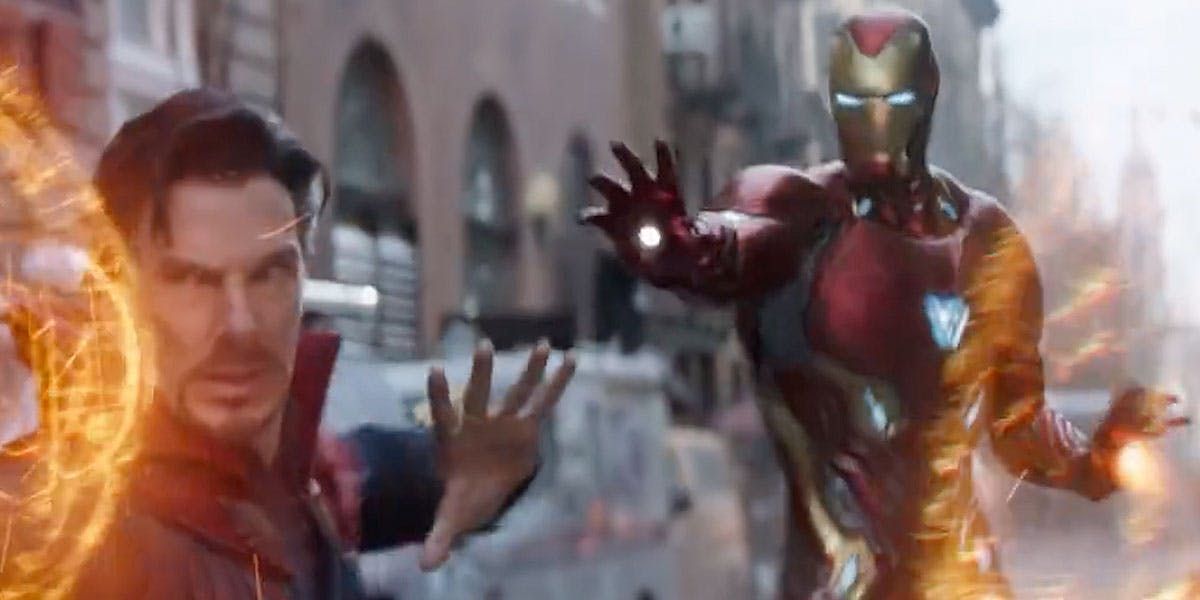
It’s like a mega, mega, mega budget all-action crossover episode of something. The excitement for the viewer is, say, Iron Man and Doctor Strange butting heads or Thor and the Guardians of the Galaxy exchanging comic riffs. It’s not designed for us to learn anything new about these heroes. In fact, the character beats are pretty formulaic. A standard arc generally goes like this: brief individual introduction doing something everyday, a meeting where much plot is quickly exchanged, bickering, a huge battle and some self sacrifice. Repeat. The film does nothing fresh on this formula which Joss Whedon introduced so well in The Avengers. If it ain’t broke, don’t fix it.

The difference with The Avengers was that it felt like a real novelty, and there was a smaller number of characters to bring together (it seems almost timid now to remember the original Avengers gang was only 6-7 strong – it’s almost 20+ now). Each character had more time and we got a much better sense of how their individual personalities affected the other. Here the Russos have to try and deal with the vast number of heroes by effectively breaking them up into 3-4 silos, giving even the most prominent ones probably no more than 20 minutes of screen time.

On top of which, despite the much vaunted “all bets are off” promotion of the movie, the action still has a stakes-free weightlessness to it. Yes some characters die, and while 1-2 of these might well stick, by the end of the film the main question is how many of the deaths will be reversed, not the impact of them. In fact the final sequence (which sees several deaths) slowly carries less and less weight the more you realise these deaths are really serving as a cheeky “how will they get out of that” moment.

Which is the dark secret of Avengers: Infinity War: it’s really nothing more than a trailer for its sequel. At the end of its vast running time – after all the functionally filmed action and odd decent one liner – you realise you have watched an extended prologue for the next film. That’s the one we’ve all been building for. The events of this film, in the long run, are the long road we need to take to get there.

This is not to say the film doesn’t have moments of enjoyment. The spectacle may not be filmed with much more than a derivative traditionalism, but it can’t help but be enjoyable. There isn’t much imagination about the implications of these heroes’ powers, in the way of say X-Men 2, but it’s still impressive to watch. Thor and Captain America get some pretty cool entrances. 

But I got the impression it must have been pretty boring to act in. Most of the vast cast have very little to do except a few one-liners and then punching. The character who most emerges as a three-dimensional figure is Thanos. Josh Brolin’s interpretation of the character as a sort of misguided humanitarian, who feels to do a great right he must do a greater wrong, yearns not for control of the universe but (in a perverse way) to save it. His quest for these stones is built like some sort of Arthurian epic, involving sacrifice and struggle. It would have been easy to make Thanos a sadistic maniac, but making him someone who believes he is doing the right thing is much more interesting. Essentially he’s the main character of the film.

Of the rest those that get the most to do are those with a connection with Thanos. Zoe Saldana as his adopted daughter turned foe Gamora gets some meaty emotional material, as does Chris Pratt as her would-be boyfriend Peter Quill (Pratt is the actor who probably gets the most “actorly” material in the film by far). Paul Bettany as Vision (the robot with an infinity stone in his head) gets to centre a plot that balances self-sacrifice with his love for Wanda Maximoff (Elisabeth Olson pretty good, even if her character oscillates between bad assery and weeping).

For the rest, it’s just their actor’s charisma that carries them through. Robert Downey Jnr gets a touching moment or two (most notably his reaction to another character’s distressed fear on facing death). Benedict Cumberbatch is great value as Strange. Chris Hemsworth gets to continue flexing his comic muscle as Thor. Others like Chris Evans are criminally wasted.

But then their time will come. Because there is another film in the pipeline – and if our heroes still feel slightly like they can survive anything up to and including getting crushed by a moon, it’s because we know that there are still movies to be made, and money for Marvel to take to the bank. And that’s probably the real nemesis of these expansive, bombastic films: the lack of danger is only going to continue while the studio doesn’t want to kill anyone major off. Hopefully that will change, but without it it’s still a film of the invulnerable hitting the inevitable.

Avengers: Infinity War is pretty good – but largely as a spectacle and because it superficially pays off what you were being hyped up to see in its action and character partnerships. But give it a year or so – and repeat viewings – and I think its stock will fall.  Because it doesn’t really do anything that unexpected, and most of its more daring movies are designed with loopholes to undo them. There are enough bright lights to entertain you (and I mostly was) but I don’t think there is much depth for you to swim in when you come back for a second dip.

Captain America: Civil War (2016)

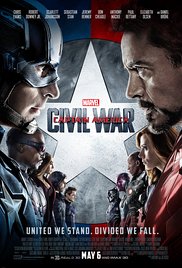
Captain America and Iron Man stand-off in overblown Captain America: Civil War

Director: Anthony and Joe Russo

Cast: Chris Evans (Steve Rogers), Robert Downey Jnr (Tony Stark), Scarlett Johansson (Natasha Romanoff), Sebastian Stan (Bucky Barnes), Anthony Mackie (Sam Wilson), Don Cheadle (James Rhodes), Jeremy Renner (Clint Barton), Chadwick Boseman (T’Challa), Paul Bettany (Vision), Elizabeth Olsen (Wanda Maximoff), Paul Rudd (Scott Lang), Emily VanCamp (Sharon Carter), Tom Holland (Peter Parker), Frank Grillo (Crossbones), William Hurt (Thaddeus “Thunderbolt” Ross), Daniel Brühl (Helmet Zemo), Martin Freeman (Everett K Ross), Marisa Tomei (May Parker), John Kani (T’Chaka), John Slattery (Howard Stark), Hope Davis (Maria Stark), Alfre Woodward (Mariah Dillard)

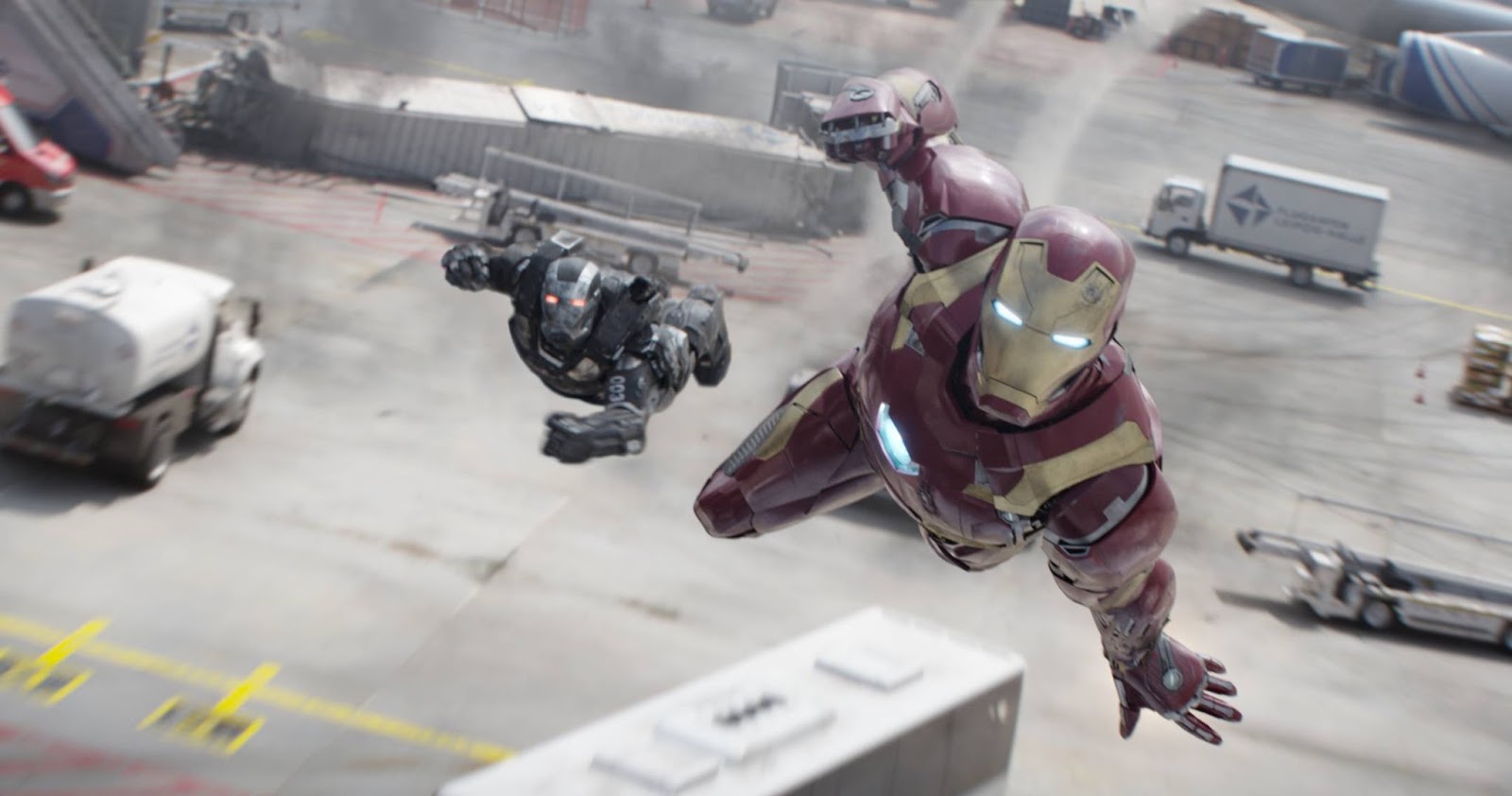
Captain America: Civil War is another explosive entry in the MCU, and is even more stuffed than usual, with nearly all our Avengers thrown into the mix – with the added twist that they fight each other! Yup it’s time for another playground argument: “If X fought Y, which one would win?!” That’s the main thrust of Captain America: Civil War, but it’s actually a distraction from the real plot. The much hyped fight at the airport (and the build-up to it) is a rather dull hour in the middle that distracts from a richer, more interesting film.

There is dissent in the ranks of the Avengers. The UN wants them to sign the “Zukovian Accords” – an agreement that they will work only under the direction of the UN. For Tony Stark (Robert Downey Jnr) this legal framework for their actions is essential – but Steve Rogers (Chris Evans) argues that the Avengers need to have the freedom to go where they are needed, not only where they are told. In this tense situation, a bombing in Vienna is swiftly blamed on Roger’s old friend Bucky Barnes (Sebastian Stan), who has become the brain-washed killer The Winter Soldier. In disagreement with Stark about the Accords and determined to protect Bucky, Steve quickly finds himself on a collision course with Tony.

The central idea here is actually fairly interesting: are superheroes people with a higher duty or just a group of vigilantes? Should they follow the direction of politicians – or be free to go where they are needed, when they are needed? How much accountability should they hold? If, in saving the world, dozens of civilians should die in the aftermath, is that acceptable or not? These are the ideas that lie under the arguments that the characters – principally Captain America and Iron Man – have. 

The first 40 minutes set this up nicely: an operation goes wrong, people are killed and the Avengers are confronted with footage of the collateral destruction they have caused while saving the world. But these ideas get left behind as the film gets caught up with pushing our characters into an artificial-feeling battle so destructive that an entire airport gets trashed by the “let’s cool our actions” team while trying to stop the “we should be independent” faction.

It would have been really nice to have these ideas explored in more depth, rather than a few moments here and there. Essentially, the film hires Alfre Woodard to deliver a top-notch performance as a mother whose son was Avengers collateral damage, to convince Tony things need to change, and leaves it at that. Steve’s counter-argument gets laid out swiftly – though he strangely makes no reference to the fact that the previous film saw a very similar “government organisation” revealed as the source of all evil in the Marvel world. It’s quick beats like this that set up this collision – but only Tony and Steve get any chance to express any form of developed views (in a few very well acted scenes). The motivations of the rest of the Avengers seem under-developed.

But that’s the problem with Captain America: Civil War: it’s seriously overstuffed. With some of these plots and characters removed, we could have actually had a very rich, thematic story.

The whole “Zukovia Accords” plot also has to constantly juggle for space with leftover “Winter Soldier” plotline from the previous two films. Truth be told, the latter is the more interesting, dealing with actual emotions, friendships and loyalties – chiefly the bond between Bucky and Steve (very well illustrated in a few brief, well played scenes). It’s this dilemma of whether Bucky can be held responsible for things he did under mind control that becomes the film’s key question. This plot line works far more effectively as it basically involves only three of the characters and feels like it has genuine things at stake, in a way I just can’t feel about the forced “civil war” angle. 

But it’s that civil war angle that the film is being sold on – and it’s what the middle section of the film is given over to. The big, airport-wrecking battle between the two sides is well shot, has good special effects and throws in plenty of neat one-liners. But what it completely lacks is any sort of dramatic tension or any stakes. As our heroes indestructibly bounce around while swapping light banter you never feel that this battle really amounts to anything. The sides don’t seem that far apart, or really that different – in fact the whole thing feels like playground horseplay.

The big battle is even undermined by the fact that we’ve already seen our heroes fight each other at least twice already in small combinations – and in all these cases, bodies are thrown about mercilessly but no one suffers more than a few scratches. Even after a character falls hundreds of feet to the ground, he’s later shown as basically being absolutely fine. The big battle is supposed to be the exciting showpiece, but it’s basically just big filler. A load of noise, where nothing really happens and no-one really feels at any risk, with no real consequences (all the emotional consequences emerge from the smaller scale final confrontation which would be unchanged if this airport fight was removed).

The film only really recovers again once that fight is benched, and we wind up with three of our heroes squaring off over very personal issues. This also brings to the fore the Daniel Brühl’s fascinating character, a very different type of villain: someone whom the film plays a neat game of misdirection with. The film reveals one of its themes as revenge, and how much it can dominate or twist our lives. This is given voice through a wonderfully written and played scene between Brühl and Boseman (very dynamic as the future Black Panther, dealing with grief over the murder of his father).

That scene gives an insight into the film’s real strengths: the small moments. The bits where the overblown fighting can be put to one side and we can see these characters (and the very good actors who inhabit them) talk. Moments like this carry more humanity, interest and tension than a thousand sequences of a giant Ant-man. In these moments, Downey Jnr and Evans are both terrific. Evans was born to play this part, making Rogers adamantine in his decency and nobility without being wearing, and also demonstrating an increasing streak of an old-soul who is tired of listening to other people and wants to make his own choices. Downey Jnr increasingly makes Stark a man hiding resentments, fears and doubts under a veneer of cool. Several other excellent performances also burst around the margins of the film (I’d single out Mackie who is excellent as the loyal Sam).

It’s just a shame Captain America: Civil War wastes some strong material in the prolonged set-up – and then enactment – of its superhero feud. Enjoyable as it can be to see this sort of stuff from time to time, after a while it’s tedious to watch invulnerable people taking pot shots at each other with no discernible impact. A single conversation with stakes – with a doubt about whether a friendship will hold or not – has more tension and excitement than a hundred sequences of heroes hitting each other. There is a more interesting story here – but between the action and the obligatory set-ups for future Black Panther and Spiderman movies (excellent as Boseman and Holland are in these roles) it doesn’t quite reach its potential.

The Young Victoria (2009)

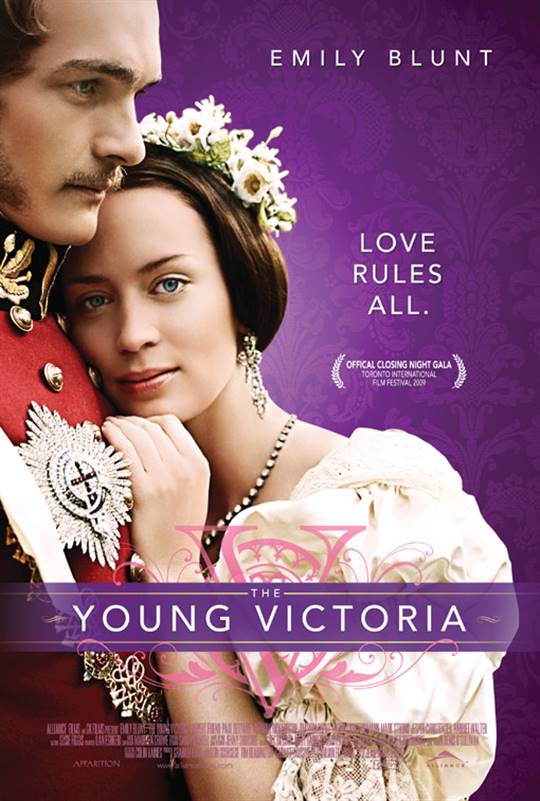
Emily Blunt and Rupert Friend play the royal couple in the cozy The Young Victoria

Director: Jean-Marc Vallée

Cast: Emily Blunt (Queen Victoria), Rupert Friend (Prince Albert), Paul Bettany (Lord Melbourne), Miranda Richardson (Duchess of Kent), Mark Strong (Sir John Conroy), Jim Broadbent (King William IV), Harriet Walter (Queen Adelaide), Thomas Kretschmann (King Leopold), Jesper Christensen (Baron Stockmar), Jeanette Hain (Baroness Lehzen), Julian Glover (Lord Wellington), Michael Maloney (Sir Robert Peel), Michel Huisman (Prince Ernest), Rachael Stirling (Duchess of Sutherland)

Now ITV’s Victoria exists, it’s a bit strange to go back and watch The Young Victoria. With the love today of long-form drama, and the time it can invest in things, it’s funny to see what the drama took almost 8 hours to do being crammed into an hour and a half here. But saying that, The Young Victoria is still an entertaining, luscious viewing experience which, while it has some strange ideas about certain events, is the sort of relaxing Sunday afternoon viewing that will take you out of yourself.

After the death of William IV (a slightly overripe Jim Broadbent), Victoria (Emily Blunt) is elevated to the throne. Finally able to shed the control of her mother’s (Miranda Richardson) domineering secretary Sir John Conway (Mark Strong), Victoria is determined to steer her own course. But she is surrounded by competing influences, not least from the charming arch-politician Lord Melbourne (Paul Bettany). King Leopold of Belgium (Thomas Kretschmann) dispatches his nephew Prince Albert (Rupert Friend) to England with the express interest of marrying Victoria and controlling her – but Albert and Victoria find themselves as kindred spirits, supporting each other to rule.

The Young Victoria is the epitome of prestige costume dramas. It looks fantastic, the cinematography is ravishing, the production and costume design exquisite. It’s pretty clear what the producers thought would sell the picture abroad. The royal regalia is pushed very much to the fore, and we get some wonderfully sweeping scenes, not least an impressively large-scale coronation. The soundtrack brilliantly riffs on Handel, and Julian Fellowes’ script mixes period regal style with a sweeping feeling of romance between Victoria and Albert.

The film actually does a very good job of repositioning Victoria as a young woman, and gives her a strong quality of self-determination and a desire to be herself in a man’s world. It’s really helped in this by the combination of imperial strength, girlish wilfulness and sharp intelligence Emily Blunt brings to the role. Blunt and the film also aren’t afraid to show that, however much Victoria had guts and determination, she was also quite a headstrong woman not above making emotionally led mistaken decisions. In fact, much of the drama spins out of Victoria learning to try and put these youthful crushes and prejudices aside.

Having said that, it’s interesting that the successful conclusion of the film centres on Victoria accepting that she needs the help of Albert to run the kingdom, and that she needs to remove competing influences for her affection – Melbourne and Lehzen – to focus her affection and loyalty on him. The film frames this as a winning romance and a successful partnership (which it was) – but it’s also vaguely creepy if you think about it. Mind you, since all the affectionate influences on Victoria are implied by the script to be at least partly motivated by self-interest, with the possible exception (eventually) of Albert, it manages to suggest this was for the best.

Albert’s background gets some interesting exploration here. He’s very much presented at first as the tool of Leopold as a means of controlling British politics. But he is far too independent, smart and noble to ever be the means of manipulation. Friend is very good here – his performance is quiet, authoritative but also heartfelt. Fellowes guilds the lily a bit to show his devotion by having Albert shot by a would-be assassin late-on in the film. Historically the assassin’s pistol wasn’t loaded, and Albert didn’t get shot (though Fellowes protests Albert didput himself in front of Victoria and that this intent is what’s important, not whether he was shot or not) but the moment does work – it gives the drama a boost and it’s undeniably moving.

While Albert is presented overwhelmingly sympathetically, interestingly Lord Melbourne gets quite a kicking. Paul Bettany is presented far more as a rival love interest than the sort of father-figure Melbourne was in real life (Bettany is probably 20 years younger than the real Prime Minister). Melbourne is shown as cynical, controlling, manipulative and overwhelmingly motivated by self-interest (a few more pushes and he would virtually become the film’s villain). He’s constantly contrasted negatively with Michael Maloney’s upright, honest Sir Robert Peel (one of my favourite statesmen of the 19th century so at least I’m pleased) – and his relationship with Victoria is one of self-promotion, which seems odd seeing as historically the two of them were so close. 

The film introduces other villains for us to hiss at. Kretschmann and Christensen do a good job as arch political schemers. Our real villain though is Mark Strong, who does a great job of scowling, controlling nastiness as the failed-bully Sir John Conroy. Strong’s performance works so well because he makes it clear that Conroy feels that his “Kensington System” (an attempt to manipulate and cow Princess Victoria into being a submissive puppet) is genuinely in her best interest, and that he genuinely cares for her. His partnership with Miranda Richardson as Victoria’s near-love-struck mother works very well.

The Young Victoriathrows in enough interesting character beats like this for it to really work as an enjoyable afternoon period-drama. With some great performances – Emily Blunt carries the movie brilliantly – and while some of the historical characterisation is a bit off, and other moments feel a little too chocolate box it’s a very entertaining, undemanding view., it’s great fun. The hardcore Victorian costume-drama fans will probably prefer Victoriafor the same story in more depth – but this film does it with great sweep (and doesn’t cram in Victoria’s stupid below-stairs plotlines!).

Avengers: Age of Ultron (2015)


The Avengers Assemble to take on robotic villain Ultron

Director: Joss Whedon

Cast: Robert Downey Jnr (Tony Stark), Chris Hemsworth (Thor), Mark Ruffalo (Bruce Banner), Chris Evans (Captain Steve Rogers), Scarlett Johansson (Natasha Romanoff), Jeremy Renner (Clint “Hawkeye” Barton), James Spader (Ultron), Samuel L Jackson (Nick Fury), Don Cheadle (James Rhodes), Aaron Taylor-Johnson (Pietro Maximoff), Elisabeth Olsen (Wanda Maximoff), Paul Bettany (JARVIS/Vision), Cobie Smulders (Maria Hill), Anthony Mackie (Sam Wilson), Hayey Atwell (Peggy Carter), Idris Elba (Heimdell), Stellan Skarsgard (Erik Selvig), Thomas Kretschmann (Baron von Strucker), Linda Cardellini (Laura Barton)

The Marvel Cinematic Universe: with the wrong director, it can be top a heavy mess, but Whedon showed with the first Avengers film that the right writer/director can weave the competing plotlines into a story that win overs an audience and leave them thrilled and entertained. His problem here was repeating that trick with the sequel.

After (it seems) finally defeating HYDRA, the Avengers relax at last – little knowing that Tony Stark (Robert Downey Jnr) is using multi-film-macguffin Loki’s staff to explore the possibility of creating an intelligent army of robots to defend the Earth. Instead, he creates Ultron (James Spader), a deeply flawed robotic version of his own personality, who grows to believe the best way to save the world is to wipe out mankind. Time for the Avengers to saddle up once more!

The greatest nemesis the Avengers faced here was that the first of these superhero smackdown films (2011’s Avengers Assemble) was far better than anyone had a right to expect. It was witty and had a plausible script, a very good villain in Tom Hiddleston (much missed here), and a winning structure that saw our heroes initially far apart and later drawn together into a family. On top of that, it gave all the jaw-dropping action and geeky thrills of watching iconic characters fighting together (in every sense of the word) that the fans expected. It worked so well that, consciously or not, Whedon ended up imitating it its structure here.

Both films open with a piece of shady alien tech: it’s stolen, and our heroes’ noble intentions for its use which   backfire. The villain is an outcast with a personal (familial) connection to one of our heroes (Ultron is, to all intents and purposes, Stark’s son). A first attempt to take on the villains ends in chaos as no-one works together, leaving the gang disheartened. Hulk is unleashed, causes chaos and needs to be restrained. A pep talk from Fury perks the gang back up. They head back into a battle over a city, against overwhelming odds, where they finally work together and turn a weapon of mass destruction into their salvation. With some small thematic twists and some adjustments to the plot they are fundamentally the same movie.

This might be connected to the greater studio interference Whedon dealt with. This conflict of visions results in a wonky balance between pay-off from past films and build up to future ones, and several plot lines being poorly developed. Most obviously most of Thor’s sub-plot ended-up on the cutting room floor. What was meant to be a series of revelations about infinity stones turns into essentially Chris Hemsworth sitting in a puddle. Whedon confirmed that the studio instructed he delete either this sequence or the sequence set at Barton’s log cabin (the emotional heart of the movie) so it’s not surprising that this paid the price. Needless to say, not a frame of the terrifically dull and overextended Iron Man vs. Hulk battle was allowed to hit the cutting room floor.

This confused cutting down of ideas is present throughout the movie. Villain Strucker, introduced with fanfare at the end of the last movie, is unceremoniously bumped off off-screen. Andy Serkis pops up to serve as an introduction to a future movie. The creation of Paul Bettany’s Vision is only vaguely explained. Ultron is never really given time (despite a pitch perfect performance of cold smarm from James Spader) for his plans to fall into shape, or for the audience to really understand him as a character. A backstory for Natasha is fitfully sketched out – but with hardly any time to explore it, the final product was so clumsily done that the film drew heavy (unfairly personal) criticism from the Twitterati, claiming Whedon was denouncing any woman choosing not to have children (“I’m a monster” says Natasha remembering her brutal education, which included GBH, murder and her voluntary sterilisation). He clearly isn’t, but as the plotline is rushed, it becomes easier to read an unintended message in it.

The area Whedon does handle well is juggling the huge number of characters he needs to keep tabs on at any one time – with careful plotting and some decent, fleet-footed scripting, he manages to allow each of the heroes a moment in the sun and a chance for the actors to breathe and perform. Those moments where the film takes five and doesn’t worry about the explosions and comic lore are the ones that work best – and also, perhaps, the ones most warmly embraced by the fans (never the best judges of what they think they will like – in advance they would probably have named the bland Iron Man-Hulk battle as the movie’s big sequence).

There’s a reason why most people would probably remember sequences like the party scene, where our heroes playfully take it in turns to lift Thor’s hammer: they feel real and they deal with emotions and friendships that we can understand and relate to, in a way we can’t with a giant robot man hitting a big green guy for no real eason (can you tell I didn’t like that bit?). It’s why the sequence Whedon fought so hard to keep in the film – Barton’s log cabin – feels genuinely rather sweet and moving. These are sequences where our characters behave like human beings, and they are the sequences that make us connect with the film.

Anyway take a look at these two scenes – which is more interesting and engaging? Make up your own mind!

The best Marvel films have always had an eye for the incongruous insertion of our heroes into a real world. And by placing Barton (an empathetic Jeremy Renner) front and centre as the moral cornerstone of the film, contrasting his (albeit well-trained) normality against the Gods he fights with, Whedon allows elements of relatability to anchor the film. Renner makes an awful lot of Barton’s wistful longing for something away from Avenging, while his relationship with his wife (who “fully supports your Avenging”) is one of the first relationships in these films that feels like it could be from a regular movie.

It’s strengths like this that Whedon brings to these films. It’s not directorial vision – at heart Whedon is quite a televisual director, using simple camera set-ups without much visual flair. The action the film provides is entertaining enough, but in truth we’ve seen all this super action before, and few of the set pieces are really memorable. Even a few days away I’m struggling to remember them all. Which is not to say they are badly staged at all – they’re just nothing new or special, and in many ways just higher budget developments of things from the first film. Whedon’s real visual strength is in his instinct for a comic beat or sight gag – and the film delivers several of these.

Whedon also crucially forced through (against studio objections) the death of Quicksilver. Marvel strongly urged a cop-out final shot of Quicksilver either in a hospital bed or in recuperation, but Whedon wisely stuck to his guns. It was an important struggle, as it forces a sense of peril into this world and gives the viewer the sense that sometimes things might not always turn out well. This is particularly important, since Stark’s entire plot about his fears would make no sense in a world without stakes or consequences. It also allows Whedon to do some very neat audience misdirection with Barton – how many of us, watching Barton solemnly promise his wife that this will be ‘one last mission’, were expecting him to bite the big one later in the film?

Avengers: Age of Ultron is a compromised film, but still a decent one. It’s not in the top five Marvel films, let alone the top five superhero films, but it’s entertaining, has some decent action – and, above all, Whedon manages to put a bit of heart in heart, enough for us to care about the characters. It’s this factor so many of these films miss out on – and it’s a reason that, while Age of Ultron is flawed, it’s not fatally so, and will continue to entertain for a good many years yet.