Tag: Paul Freeman

Raiders of the Lost Ark (1981)

Raiders of the lost ark header
Harrison Ford goes in search for treasure in Raiders of the Lost Ark

Director: Steven Spielberg

Cast: Harrison Ford (Indiana Jones), Karen Allen (Marion Ravenwood), Paul Freeman (René Belloq), Ronald Lacey (Major Arnold Toht), John Rhys-Davies (Sallah), Denholm Elliott (Dr Marcus Brody), Wolf Kahler (Colonel Dietrich), Anthony Higgins (Major Gobler), Alfred Molina (Satipo)

Indiana Jones is now one of the most beloved – and instantly recognisable – film characters ever created. So, it’s strange to think that Raiders of the Lost Ark was released to such little fanfare. That soon changed when the film came out. In some cinemas it was so popular it played for the whole year. It became a box-office smash, turned Harrison Ford into Hollywood’s leading movie star for the next 20 years, and made Steven Spielberg Hollywood’s leading director. And it did all that because I’m not sure there is a more entertaining, tightly made, funny, thrilling and (at times) scary adventure film out there. Spielberg and producer George Lucas may have wanted to make a film that aped B-movie adventure serials – but they ended up reinventing an entire genre.

It’s 1936 and the Nazis are in search of occult relics. Their latest target is the Ark of the Covenant, which Hitler believes will make his armies invincible. What chance is there of stopping him finding it? Well obviously the US government must put its trust in Professor Indiana Jones (Harrison Ford), one of the world’s leading archaeologists who also (fortunately) is pretty handy in a fight. Not only that, but his ex-girlfriend Marian Ravenwood (Karen Allen), daughter of his former mentor, holds one of the keys to finding the Ark. Indy and Marian end up on an adventure that crosses continents, taking on the ruthless Nazis and mixing with profound mysteries that man is not meant to know.

Hollywood wasn’t happy about Spielberg making the film. His previous film – the war comedy 1941 – had bombed, losing millions. The studio was insistent with producer George Lucas: if he wanted to see his dream of making an old-fashioned B-movie with his friend Spielberg come true, then he would need to stick tightly to a budget. After all, Spielberg had a reputation for delivering films overtime and overbudget. Our heroes stuck to this deal – and Spielberg has said it was a blessing, as it forced him to keep the film lean, tight and, above all, free of indulgence. Spielberg’s direction is perfect, so good in fact that he set the template for nearly all big-budget directing (in terms of tone, pace, mood and tempo) to come. Every action film since owes something in its DNA to Raiders.

Raiders is far more entertaining – and brilliant – than it has any right to be. It’s effectively a series of set-pieces, threaded together by screenwriter Lawrence Kasdan into a plot. Kasdan’s dialogue though was spot-on – like the film, lean, tight and perfectly focused. With exceptional brevity and focus it brilliantly creates a small core of characters, and then gives them room to bounce off each other. Its dialogue is quotable, fun and punchy. He – with Lucas and Spielberg – also crafts a central character who is flawed but deeply likeable, and a heroine who is independent and dynamic. The script is a big part of the reason why the film is a success – it makes us care deeply for the characters as they get involved in the death-defying stunts and action set pieces that make up a lot of the film.

And we don’t follow any character more than Indy himself. Thank God Tom Selleck had to withdraw at the last minute. George Lucas had resisted casting Harrison Ford as he was worried about the overlap with Han Solo. But the part fits Ford like a glove. Sure, it comes from the same wheel-house as Solo – although Indy is more taciturn, intellectual and a degree less cocksure than Solo, more a man reluctantly forced into danger than a swaggering pirate – but Ford’s skill is faultless. Ford has an everyday quality to him, and he brings a world-weary tiredness to Indiana. He has the confident grin, but he’s just as likely to see that switch to concerned desperation (there is a perfect moment of this in the opening sequence, when the vine he is grasping on a cliff top suddenly works loose). He may be a bit of a rogue (not averse to shooting a swordsman) but he’s also a good man, with the street smarts of a ruffian, who is frequently exasperated by the errors of his sidekicks. This is the sort of man that men want to be and women want to be with – an impossibly difficult trick to pull off.

We relate to Indy because he’s vulnerable. He’s an underdog. The outstanding opening sequence – basically a little mini-movie in itself – showcases this. As Indy heads into a hidden temple for an idol (dodging spiders, bottomless pits, arrows from walls and most famously a huge boulder – a stunt Ford did for real) we get his entire character showcased. He’s astute, resourceful, trusting (sometimes too trusting) and ingenious. But he also takes a hell of a physical pounding, gets scared and above all goes through huge danger only to end up empty-handed. And of course, we find out he can cope with all this, but definitely not snakes (is there a better action set-piece punch line than “Grow a little backbone, will ya!”). It sets the tone for the rest of the film – in fact with the first five minutes alone, Raiders is already better than 99% of all other adventure films.

But then this is a director working at the top of his game. All the elements come together perfectly here: Spielberg always knows when to keep the tempo up, cuts the action superbly and also presents us with a brilliant mixture of tension, excitement and awe. He and Lucas brilliantly understand the power of images – there is a reason why a rolling boulder has become part of cinema’s language. The design of Raiders (one of its five Oscars) is absolutely perfect. Nothing like these temples could really have existed in real life – but as an evocation of 1930s adventure serials they are perfect. Mix that in with that brilliant sound design (those whip cracks for staters) and John Williams’ majestic score (from the classic Indy march to the haunting strains that tie in with the Ark) and this film is a masterclass for affecting the senses.

Then those set-pieces are told with just the right balance between thrills and wit. Again, Harrison Ford is a big part of this: he’s never smug, his trademark furrowed brow suggesting stress as much as his grin communicates relief at surviving. The truck chase – which sees Indy move from horse to truck, to under a speeding truck to back in the driving seat, half the time with a bullet in his arm – is a masterclass in thrills and superb editing. It’s such damn good fun that the film even gets away with a nonsensical beat where a car-load of Nazis is pushed off a huge cliff (the first and last indication that we are anywhere near a cliff in the whole scene!). Just like the opening sequence our hero’s combination of ingenuity, never-say-die determination and vulnerability is what makes it compelling (the Williams score also plays a huge part in building both the excitement and the triumph).

The whole film is a series of triumphant set-pieces. Spielberg also tinges the film with just enough darkness as well. The Nepal gun battle carries a real sense of danger, Indy’s fight with a tough Nazi air mechanic culminates in a quite gruesome death (although the fight beforehand has plenty of wit to it, as Indy is hopelessly outmatched physically by this giant). That’s all before the film’s famous closing sequence as the Ark finally opens up to reveal the power of God – bad news for the assembled Nazis crowded around it. The face-melting horror (and it’s hard to imagine any action adventure film doing something this horrific today) is impossible to forget, brilliantly executed and carries just the right amount of dread.

The darkness though is counter-balanced throughout by sly wit and a sense of fun. Wonderful jokes – from Major Toht’s nunchucks that become a coat hanger to an exhausted Indy responding to Marian’s kisses by falling asleep – pepper the script. The cast are fabulously chosen. Karen Allen is perfect as the independent Marian. Paul Freeman is chillingly austere and charmingly amoral as Indy’s rival Belloq. Denholm Elliott’s Marcus Brody is excellent as an older, wiser version of Indy very different from the comic buffoon he would become. The same can also be said for John Rhys-Davies Falstaffian but shrewd and loyal Sallah.

Raiders of the Lost Ark sees every element come together perfectly. Spielberg’s direction – the film did come in on time and on budget, going on to be the biggest success of its year – is completely perfect. Ford creates a character who from his first appearance is iconic (the zoom to introduce him is a wonderful tip of the hat to John Wayne’s classic entrance in Stagecoach – continuing the homages, the final shot is also a lovely nod to Citizen Kane). Every action set piece is a brilliant mix of thrills, danger, triumph and even a touch of horror (be it gruesome deaths or dreadful beasts). It’s a film that can not fail to entertain, raise a smile – and still have you hiding behind the sofa at points. Lucas and Spielberg wanted to make a film that would remind them of the adventures of our childhood. They were so successful that their film ended up defining the childhoods of millions of us.
Centurion (2010)

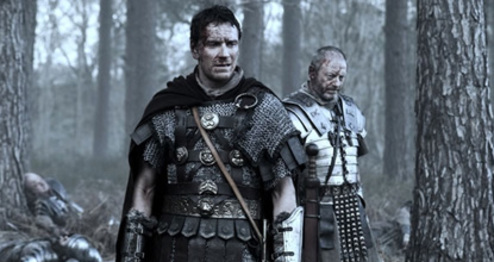
Michael Fassbender surveys the devastation that is Centurion

Director: Neil Marshall

Cast: Michael Fassbender (Quintus Dias), Olga Kurylenko (Etain), Dominic West (General Titus Flavius Virilus), Liam Cunningham (Brick), David Morrissey (Bothos), JJ Feild (Thax), Noel Clarke (Macros), Riz Ahmed (Tarak), Dimitri Leonidas (Leonidas), Ulrich Thomsen (Gorlacon), Imogen Poots (Arianne), Paul Freeman (Gnaeus Julius Agricola), Rachael Stirling (Drusilla), Less Ross (Septus)

It’s an old fable: the “missing” Roman legion, the 9thLegion that allegedly marched to Scotland around 120 AD. We don’t know what happened (if anything) but it usually gets tied into Hadrian’s decision to build his famous wall. Anyway, Neil Marshall’s film tries to plug the gap, with the Legion eradicated on an ill-judged expedition north to settle affairs there once for all. A “ragtag bunch” of survivors (all of whom match expected character tropes) have to run over hostile countryside, led by surviving senior officer Centurion Quintus Dias (Michael Fassbender) to get back to safety and Roman lines.

It’s a Neil Marshall film, so you can expect blood-letting aplenty and high-octane action on a budget. And you more or less get it, mixed with his love for accelerator-hitting chases and against-the-odds action. It’s entertaining enough, but its main problem is that it feels a little too by-the-numbers, as if all the thought about how to make it original and exciting went straight into the look and style of the film – all drained out colours and serious claret – and none at all into storytelling or character.

You sort of end up caring for the characters in a functional way – largely because they are all such familiar types – but their personalities seem to have been designed entirely around the various deaths that have been invented for them. So the enthusiastic meet unjust ends, the likeable fall to cruel chance, the world-weary give their lives for one more stand, the selfish meet justice. At the end, the characters you would basically expect to stumble to the finish line do. It’s a film that lacks any uniqueness.

In fact, what gives the characters life is the professional character actors playing them, all of whom can do what they are doing here standing on their heads and look like they were largely there with an eye on pleasant after-shooting hours in a series of local pubs. It’s hard otherwise to think what attracted them to these cardboard cut-outs and pretty familiar structure.

Not that there is anything wrong with what Marshall does with his film here – it’s a lot of fun when stuff is happening, it’s just that nothing feels like it carries enough weight or originality to survive in the memory. Everything is fine but nothing is really inspired. There is very little sense of Ancient Rome or any other place. The Romans are basically squaddies, an idea that sounds interesting until you remember turning period warriors into versions of modern soldiers is hardly new, while the Brits chasing them are woad-covered psycho stereotypes.

So while it passes the time, Centurion does nothing special with it. It feels like a wasted opportunity – that with a cast this good and a decent premise, plus a nice little historical mystery to pin it onto in order to give it depth, Marshall could have come up with something that was more than the sum of its parts rather than less. Perhaps it needed more time with its ragtag group so they actually became characters rather than plot devices. Perhaps it needed to take more of a rest from its constant chasing to allow quieter moments of reflection and character. Perhaps it’s just a chase film that is never quite compelling enough to make you overlook these things. Either way, Centurion isn’t an all-conquering empire of  film.

The Long Good Friday (1980)

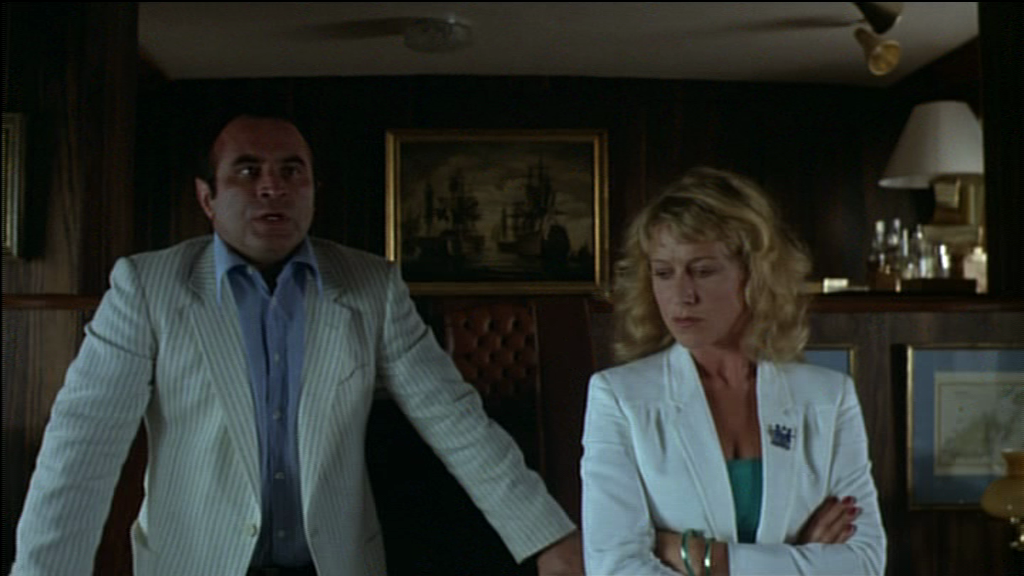
Bob Hoskins rules London – but for how long? – in classic Brit gangster masterpiece The Long Good Friday

Director: John Mackenzie

Cast: Bob Hoskins (Harold Shand), Helen Mirren (Victoria), Derek Thompson (Jeff), Bryan Marshall (Harris), PH Moriarty (Razors), Dave King (Parky), Eddie Constantine (Charlie), Paul Freeman (Colin), Stephen Davies (Tony), Paul Barber (Errol), Pierce Brosnan (Irishman)

The Long Good Friday nearly turned into a one-hour TV special starring a dubbed Bob Hoskins. The fact that it didn’t – and that today it can stand as one of the greatest British films ever made – is thanks to George Harrison’s Handmade Films, which bought the rights and saved the film. Thank God they did, as this is brilliant: thrilling, dangerous, intense but witty, strangely tender, satirical and smart. Fantastically made and wonderfully acted, it’s not just a great gangster film, it’s a great film.

Harold Shand (Bob Hoskins) is the undisputed gangland boss of London, desperate to turn legitimate. He has a plan for development of London’s dockside into a paradise of office blocks and apartments. All he needs is a big investor to support his “corporation” to make the final push. On an Easter weekend he prepares to greet an American investor from a similar “company” to his own. But as Shand prepares for this life-changing weekend, his business is hit by a wave of killings and bombings that seem targeted at shattering his organisation. What’s behind this? Who is “having a go”? And how does this link with a mysterious money shipment we witnessed at the start of the film? Shand’s going to find out – and has to do so without his investors getting cold feet.

The Long Good Friday is a well-written, brilliantly structured mystery mixed with some brutal gangland violence. Mackenzie’s film is lean and mean but laced with dry, biting humour. Everything in the film works perfectly, and it really understands the veneer of culture, class and decency that gangsters like Shand like to put over their crime dealings.

Not that Shand isn’t a decent bloke of course. Bob Hoskins is simply superb as Shand, a likeable, strangely decent guy at first, who seems to somehow shrink and twist as the film progresses and he is less and less able to control the anger he keeps bottled up. Shand clearly cares deeply for those around him, but he’s also clearly stubborn and convinced of his own superiority. Hoskins brings the part a humane gravitas, a force of nature fury that burns through the film. And when confronted with opponents he can’t understand, he still tries to use the rules of gangland to take them on.

Of course these rules are completely unsuited for his IRA opponents. Despite the advice of his pet policeman Parky, Shand is confident that he can deal with these bomb-toting fanatics. Even worse, he thinks that they are basically playing by the same rules that powered his own rise to the top of the gangster tree. Part of the tragedy of the part is seeing someone who essentially appears relatively likeable at the start of the film fall back on the violence and rage that powered his assent to the very top. Needless to say the IRA aren’t intimidated by cockney thugs, and have no intention of letting Shand get away with his attempts to strike back. 

Here is a film brave enough to not only show the IRA at its centre, but to make them as effective and ruthless as this. Not even our geezer gangsters can take them on, and the poor plods seem petrified as soon as they rear their head. Could there be a more cutting criticism of Britain’s policy in Ireland? Terrorism has hardly gone away since – you imagine Shand being equally outmatched by Al-Qaida.

As well as a gripping gangster film, The Long Good Friday is a prescient and intelligent criticism of Thatcherism. Shand is actually pretty much spot-on with his vision of London being redeveloped into a political and economic power-house, one of the major cities of Europe. Many of the locations the film uses would be unrecognisible today, as they are all sites of offices and apartments. Shand has a 1980s swagger to him, a barrow-boy made good who likes to think of himself as a visionary businessman. He’s desperate to grab for himself a bit of the new money he senses could be washing around Thatcher’s Britain. So the film makes a nice satire of the “loadsamoney” generation, as well as of the gangster world of the East End. Shand’s yacht and flat are the quintessential yuppie pads, and Shand’s motivation is raking the cash in.

British hubris actually seems to lie at the heart of the whole film. Shand’s swagger and super-confident, “Britain reborn” attitudes are all based in his firm belief that Britain has its own special destiny. Of course, as events begin to hit home, this sense of British pride (represented by Shand’s determination to reshape London into a city of glass and office complexes) begins to shrivel under the weight of events. Shand is reduced to angrily denouncing everyone from the Irish to his potential American partners to the other nations of Europe.

(In fact it’s interesting watching the film in the light of Brexit – Shand would on the surface seem to be the poster boy for a certain type of UKIPer, but he’s actually passionately excited about the opportunities the Union presents, and the centrality of London to that world. He’d almost certainly loath Farage.)

All this thematic content – and this is a hugely British film, instantly recognisable to anyone who has grown up here – gets swept up in this brilliant gangster flick. The acting is sublime. Helen Mirren is a stand-out as a woman who is a very equal partner in Shand’s business empire, just as smart and just as ruthless. Derek Thompson (him off Casualty!) is good as a slightly sleazy major-domo, as is PH Moriarty as a gangland heavy (he certainly looks the part!). Future stars like Kevin McNally, Paul Freeman, Dexter Fletcher (as a kid) and most notably Pierce Brosnan (in his first acting job as a handsome IRA hitman) fill out the cast.

Brilliantly acted, tightly directed and full of great cultural and political depth, with terrific pace, scintillating action, engrossing tension, a deceptively simple story and a great script: The Long Good Friday surely stands as a landmark British film. And it has one of the finest final sequences you’ll see, which considering it revolves solely around Hoskins sitting in a car is saying something.