
Tag: Paul Henreid

Now, Voyager (1942)

Now, Voyager (1942)

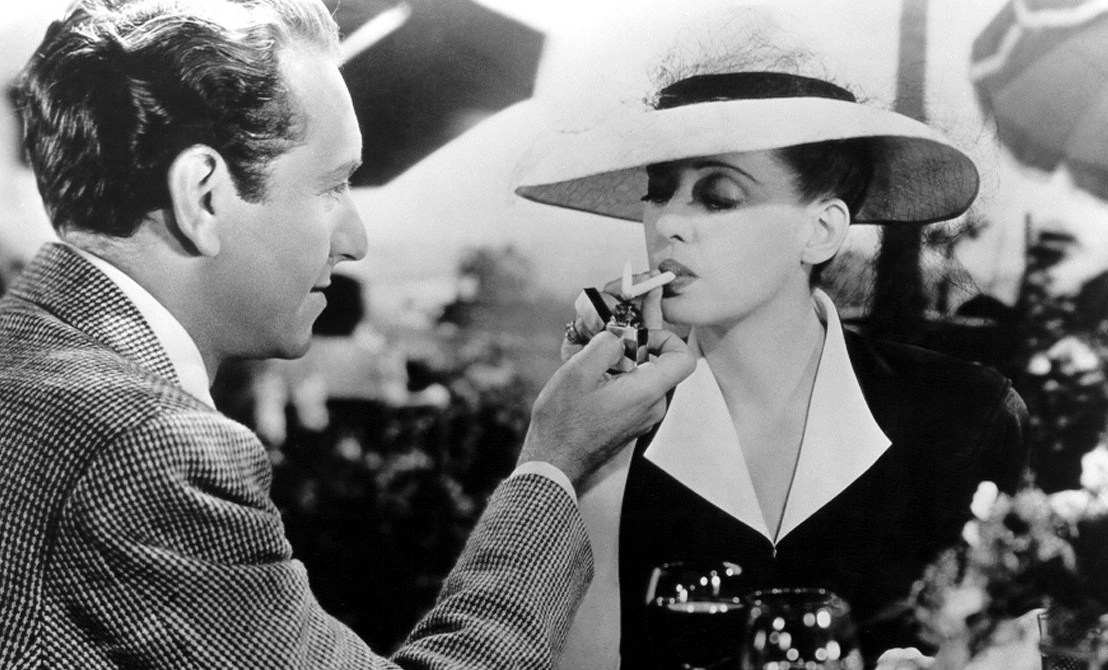
Romance, make-overs and erotic cigarette lighting abounds in this classic luscious romance

Director: Irving Rapper

Cast: Bette Davis (Charlotte Vale), Paul Henreid (Jerry Duvaux Durrance), Claude Rains (Dr Jaquith), Gladys Cooper (Mrs Windle Vale), Bonita Granville (June Vale), John Loder (Elliot Livingston), Ilka Chase (Lisa Vale), Lee Patrick (Deb McIntyre), Janis Wilson (Tina Durrance)
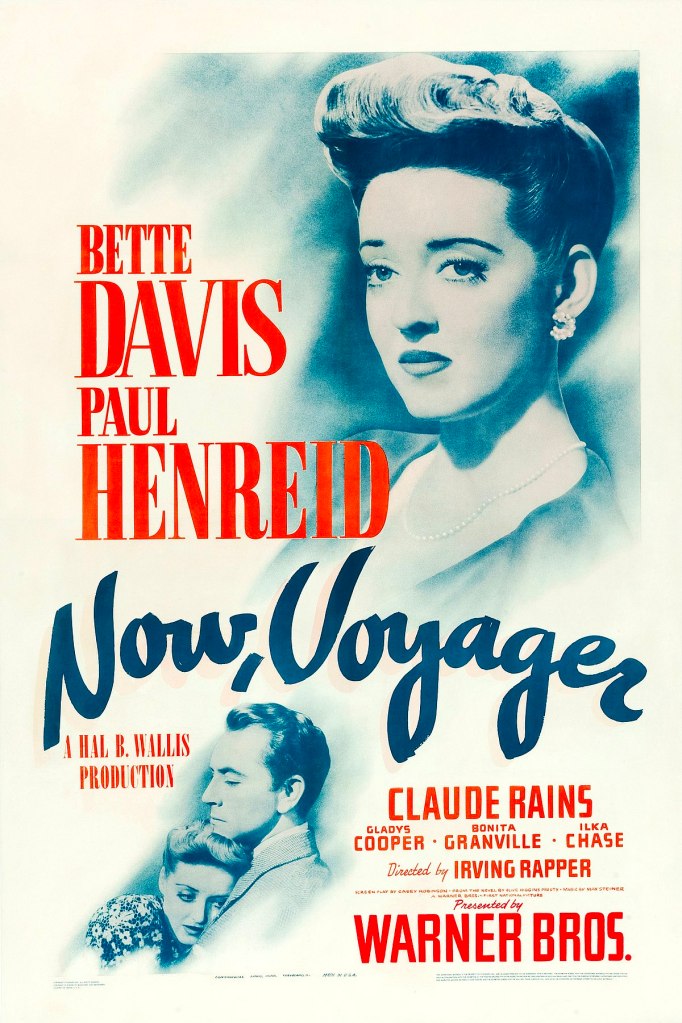
The untold want by life and land ne’er granted, / Now, voyager, sail thou forth, to seek and find”. Walt Whitman’s words are the poetic urging of kindly psychiatrist Dr Jaquith (Claude Rains) to patient Charlotte Vale (Bette Davis) before she embarks on a cruise that will change her life. Crushed under her imperious mother’s (Gladys Cooper) thumb, Charlotte grew-up an unloved ugly-duckling and self-loathing spinster. How will a taste of freedom change her life – and, with that taste, a love affair with unhappily married would-be-architect Jerry Durrance (Paul Henreid)?

It’s easy to see Now, Voyager as a piece of soapy, romantic puff – and there are certainly suds in its DNA – but that’s to do an engaging, heartfelt character-study down. This is a sort of moral rags-to-riches story about a woman who has been mocked her whole life, finding the courage to build her own life. But that life is not the picture-perfect final image you might expect: instead, it’s about compromise and, more importantly, choosing your own compromises. Without knowing it, that is what Charlotte has been striving for. “Don’t let’s ask for the moon: we have the stars” are her famous closing lines, and it’s about the idea that choosing a compromised version of the life she actually wants is better than a life foisted upon her by others.

Now, Voyager works as well as it does, almost exclusively down to Bette Davis. She fought to get the role, hand-picked the director (an old friend) and stars (insisting on Henreid, despite a disastrous test) and reshaped most of the dialogue. It’s all justified by her superb performance. Charlotte Vale, with her ugly-duckling opening appearance, and operatic romance with Jerry, could have been a pantomimic performance. Davis though grounds her in sensitivity, reality and a deep emotional empathy. It’s a complex, heart-stirring performance.

Almost uniquely for stars at the time, Davis was not afraid to get ugly when the part demanded (she practically invented ugging-up). Charlotte Vale’s first appearance – Rapper teases the reveal by focusing first on her hands at her desk, legs as she descends a staircase before allowing her to fully enter frame – is a sight. With an eye-catching, hairy mono-brow, mousy glasses, a flattened haircut and dumpy clothing, she’s a million miles from our idea of 40s glamour. But Davis doesn’t make her a joke or play up to the appearance. She gives Charlotte a steel, born of self-defence – she snaps swiftly at Dr Jaquith when she thinks she is being condescended to – and a deep well of pain and ill-defined longing for a change she can hardly grasp.

Matters are beautifully inverted when she heads off on her cruise (you can criticise the film’s portrayal of therapy, which seems to be easy if you are stinking rich and can afford a cruise). Rapper repeats his intro trick again – this time revealing a physically confident and striking Charlotte, made-up and dressed to the nines. But, just as the self-loathing Charlotte had a defensive steel, so this ‘confident’ Charlotte has the same vulnerability and fear of ridicule and rejection just beneath the surface. Davis brilliantly gives the outwardly changed Charlotte, a different but equally moving vulnerability, a woman still working out who and what she is.

It’s a brilliant performance that gives the entire confection of the film a real emotional heft, as we experience every inch of this seminal voyage with her. And a lot of that life-change is filtered through the bond between her and fellow-passenger Jerry. Skilfully played by Henreid with a euro-charm that barely masks his own sadness, loneliness and guilt, Jerry may look the part but like Charlotte he’s close to succumbing to imposter syndrome. Unloved by his wife (this unseen harridan arguably deserves a film of her own – perfect role for Joan Crawford?) – but trapped into the marriage by his sense of duty and his love for his timid daughter Tina (Janis Wilson).

Jerry and Charlotte’s relationship blossoms from shyness into a genuine love affair. Reading between the lines of its 1940s code, it’s clear our two heroes get-it-on. Stranded in Brazil after a car crash (caused by an uncomfortably dated caricature portrayal of a Hispanic driver), the two of them ‘snuggle up’ for warmth while camping the night in an abandoned building. Any doubts about how far this went is removed when Henreid lights two cigarettes in his mouth in the next scene, passing one to Charlotte who sucks sensually on it. (This was the era when the language of cigarettes was crucial as a stand-in for bumping and grinding).

Of course, an affair could never be explicitly allowed, just as any idea of Henreid divorcing his awful wife was anathema. But its knowing that it-can-never-be which gives the film its romantic force. Charlotte will eventually find herself drawn to helping Jerry’s daughter Tina, their shared love for the child being the thing that will allow them to be married in spirit if not in actuality.

You could argue Charlotte’s decision to semi-adopt Tina as companion is not dissimilar from her own mother’s would-be exploiting of Charlotte as an unpaid nurse. But Charlotte has learned a lot from the cruel fierceness of her mother. Played with a witheringly cold grandeur by Gladys Cooper – at one point she taps her finger on a bed post in a way which captures oceans of barely repressed fury – this woman is selfish, self-obsessed and cruel. Standing up to her expectation that nothing has changed is the major challenge for Charlotte, with Bette Davis skilfully showing it takes all her strength to overcome.

Now, Voyager is an effective romantic film. It’s helped a great deal by Max Steiner’s beautifully romantic score, that perfectly complements and enhances every on-screen image. Superbly acted by its four leads – Claude Rains is also wonderful as the kindly and deeply professional Jaquith – it’s a detailed character study that manages to rise triumphantly above its soapy roots.

Casablanca (1943)

Casablanca (1943)

Bogart and Bergman are a love story for the ages in the ever-young Casablanca

Director: Michael Curtiz

Cast: Humphrey Bogart (Rick Blaine), Ingrid Bergman (Ilsa Lund), Paul Henreid (Victor Laszlo), Claude Rains (Captain Louis Renault), Conrad Viedt (Major Henrich Strasser), Sydney Greenstreet (Signor Ferrari), Peter Lorre (Signor Ugarte), Dooley Wilson (Sam), Madeline Lebeau (Yvonne), Curt Bois (Pickpocker), SZ Sakall (Carl), Leonid Kinsky (Sascha), Marcel Dalio (Emil), Joy Page (Anna)

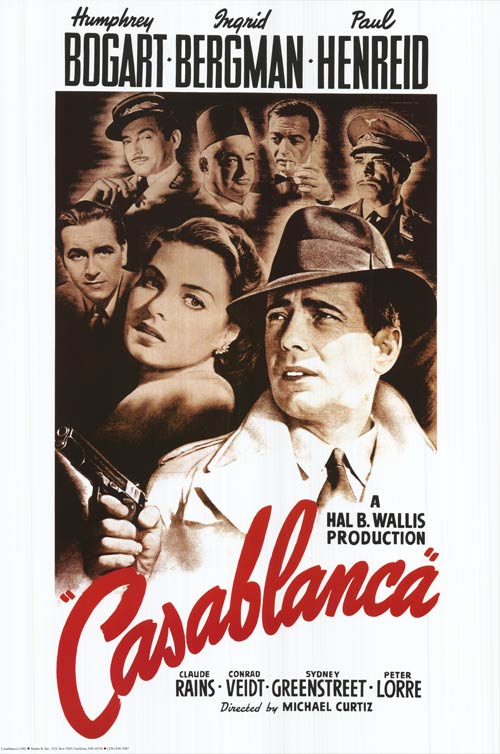
For today, for tomorrow and for the rest of your life. That’s the sort of lifespan Casablanca has: to see it is to fall in love with it. That’s what people have been doing for nearly 80 years. There isn’t a more popular “great” movie. This is vintage, top-notch, prime Hollywood product, made by a group of people at the top of their game that has such impact you’ll know most of its highlights without having ever seen the film. No wonder people have been saying since it was released “Play it again” (famously, a phrase you will never actually hear in the film itself).

Casablanca, December 1941. Corrupt Vichy France officials rule the roost, with the city clinging to neutrality. European refugees and American ex-Pats mix with Nazi officers – everyone trying to get those all-important “letters of transit” you need to climb onto a plane and get out of the warzone. Letters like this will cause a world of trouble for American ex-Pat Rick Blaine (Humphrey Bogart), keeping Rick’s Café going as a place where politics are never discussed. But Rick may be forced to choose sides when his lost love Ilsa Lund (Ingrid Bergman) lands back in his life, on the run from the Nazis with her husband Czech freedom-fighter Victor Laszlo (Paul Henreid). Just before the fall of Paris, Rick and Ilsa had a love affair (she thought Victor was dead at the time) and neither of them has got over it. Will Rick take a stand and help Victor flee to continue the fight against the Nazis? Or is this a chance for Ilsa and he finally to be together?

Like many hugely beloved films, Casablanca combines a host of genres into one superbly digestible, hugely enjoyable, package. This is a star-crossed romance in the middle of a war film, with lashings of everything from espionage to gangsters to comedy of manners. In short, there would have to be something wrong with you not to find something to tick your boxes in Casablanca and it’s all brilliantly packaged together by Michael Curtiz into possibly one of the most purely entertaining and crowd-pleasing films ever made.

Casablanca is a superbly written pinnacle of the hard-edged but strangely romantic dialogue of Hollywood at the time, all delivered with more than a dash of humour. There isn’t a scene that doesn’t have a quotable line in it: and all of them delivered by a brilliant actor. Each scene is a master-class in Hollywood professionalism and skill. From our introduction to the streets of Casablanca – capped with the shooting of a Free-French fighter, who collapses to his death underneath a poster of Petain – to the beautifully evocative set (wonderfully shot by Arthur Edeson) for Rick’s café, where we will spend so much of the movie. In swift economy we see how ruthless Rick can be – not lifting a finger to help to petty crook and friend Ugarte (a wonderful cameo from Peter Lorre) – before understanding fully why he’s like that when he responds with something between shock, horror and desperate longing by the arrival of Ingrid Bergman’s Ilsa.

It’s also a film where the stakes are expertly set out. There are jokes about the cold ruthlessness of the Germans, but we are left in no doubt about their danger. (Conrad Viedt is grimly imperious as head Nazi Stasser). The scar on Victor’s face is a constant reminder of the horrors he escaped in the concentration camp (although, as per the time, the film understands these as jails rather than the hell they were). The refugees are putting on a brave face, but there is desperate practising of English and a willingness to trade anything (including their bodies) for letters of transit speaks volumes.

Nearly all of those actors (and Curtiz) are of course refugees and migrants themselves (only Bogart, Wilson and minor-player Page were American). The film gains a sub-conscious depth from this being more than just a story for so many of them. Fleeing from German advance in Europe (or escaping from Nazi persecution) was no theoretical for Henreid, Veidt or the host of great European actors in small roles. You can see that emotion when Victor cajoles the café’s clientele to sing La Marseillaise. The scene never fails to move because of the genuine power of watching real refugees, playing refugees, defiantly singing in the face of the Nazis who ruined their lives (the shots of Madeline Lebeau genuinely tear-stained face or the increasingly moved Spanish guitar player are beyond memorable). You can’t watch this sequence without a lump in your throat.

Mind you can’t watch most of it without that lump. Bogart and Bergman cemented themselves as icons with this passionate love story. It’s grounded, like so many truly affecting romances, on loss and pain rather than joy. Aside from a brief flashback to their time together in Paris – before Ilsa jilts Rick at the train station, rain washing the ink from her note (the sky shedding the tears Rick cannot) – these are two people essentially at loggerheads, because it’s the only way to keep their hands off each other. Rick deeply resents Ilsa, Ilsa can’t even begin to allow herself to think about her lost love for Rick because she fears it will take control of her. Particularly as, in Bergman’s beautifully judged performance, she clearly has a sort of spiritual (as opposed to romantic) love for the noble Laszlo.

It all helped to make Bogart such an icon for generations to come. Bogart is effortlessly cool here, but he’s also incredibly relatable – who, after all, hasn’t had their heart-broken? Watch him sadly starring in the middle distance, befuddled by drink and demanding Sam play As Times Goes By over and over, and it’s no surprise that he’s so torn for so much of the film about what to do. Paul Henreid could never compete with the mix of vulnerability and misanthropic cynicism Bogart effortlessly brings to the part (one of the all-time great performances in the movies).

Bogart is also a perfect encapsulation of what America wanted (and still wants) to be. Minding his own business, but tread on him and he’ll bite back. Not only that, he’ll pick the right side and always make sure he does the right thing. It’s hinted to us that, for all his shady past, Rick has sided with anti-Fascists in Spain and Ethiopia. We even know he had to flee Paris because there was a price on his head. He might “stick his head out for nobody”, but the genius of Bogart is we don’t quite believe him, even while we see him do just that.

The chemistry between him and Bergman – who claimed never to quite understand why the film had such impact – is breath-takingly good. Helped by some of the wittiest and hard-edged dialogue in the movies, they become Hollywood’s own Lancelot and Guinevere. Bergman’s deceptively soft-edged performance, carries inner grit masking her own pain – she also brilliantly manages to show how she could be in love with two men (in different ways) at once. These two characters go through a long dance of denial before finally confessing all: and the iconic ending has the perfect combination of heartfelt longing and sacrifice they both know needs to be made.

But it’s not the only romance in the movie: having almost as much impact is the chemistry between Bogart and a never-better Claude Rains as jovially corrupt Vichy inspector Renault (merrily trading letters of transit for sexual favours and ticking the boxes of his duty while lining his own pockets). Casablanca also has in it one of the greatest love-hate friendships in the movies, between two people who can’t help liking each other, even when they barely have a single interest combined. Sounds like the beginning of a beautiful friendship.

Critical discussion has often revolved around whether Casablanca can be considered a piece of “high art”. It’s hard to imagine Ingrid Bergman’s famous Swedish compatriot directing it. To be completely honest, Casablanca is one of the finest packaged pieces of Hollywood Hokum ever made. And there is nothing wrong with that. It’s a master craftsman of glorious stand-up-and-applaud films in Curtiz, delivering his masterpiece. Casablanca doesn’t have the revelatory flair of something like Citizen Kane. But no other film in existence so brilliantly exploited the Hollywood formula. And it shows how much power, emotion and joy you mine from Hollywood’s narrative and filmic tropes when they were worked with as much skill and passion as you get here.

It’s a film that not only perfectly encapsulates a whole period of Hollywood professionalism, it also establishes the sort of golden rules – a brittle semi-anti-hero, sacrifice, moral complexities and open-endings – that would increasingly dominate Hollywood in the decades to come. Casablanca is a genuine turning point in Hollywood, a perfect summation of the noirs, love stories and adventures that preceded it, but repackaging them with influential insight. It’s also, above and beyond everything else, a bloody brilliant film that, as Nora Ephon said, you can never see enough.

Goodbye Mr Chips (1939)

Robert Donat is superb (and Oscar winning) as an (eventually) beloved teacher in Goodbye Mr Chips

Director: Sam Wood

Cast: Robert Donat (Mr Chipping), Greer Garson (Katherine), Lyn Harding (Dr John Hamilton), Paul Henreid (Max Staeffel), Terry Kilburn (John Colley/Peter Colley I/Peter Colley II/Peter Colley III), John Mills (Adult Peter Colley), Scott Sunderland (Sir John Colley)

Goodbye Mr Chips is the sort of film that feels ripe for spoofing. The sort of idealised stuff-upper lip, Tom Brown’s Schooldays look at the past that should have you spluttering and chuckling. But it’s done with such warmth, such genuine emotion and tenderness, that instead you can’t help but feel yourself welling up while watching it. I certainly did (although I was watching it at half seven on a Sunday morning…)

The film follows the fortunes of Mr Chipping (Robert Donat) from his first joining the school in 1870 as a naïve young Classics teacher, struggling to exert authority over the children, to a beloved elder statesmen of the school in 1933. Along the way, he deals with a host of personal and worldly trials and tribulations, falls in love with a young suffragette Katherine (Greer Garson) who recognises his tender soul, and eventually helps the school through the national trauma of World War I.

It’s a quite beautifully done piece of old fashioned film-making, crammed with those moments of suppressed emotion and unspoken depths that get me every time. Maybe it’s something peculiarly English, but nothing can touch our repressed souls than seeing a kindred spirit struggle to keep his emotions locked down. Chipping loves his job, he loves the children he teaches and he will work tirelessly to give them the best start in life he can. The schoolchildren across 60 years are his children – can he express any of this before his deathbed? Of course not, he’s British.

It’s a film that celebrates the strength of that indomitable British characteristic of keeping on, of struggling forward, of keeping traditions and decency going. It’s a strongly conservative message, I’ll give you that, but it’s carried by such nobility and morality that it stresses the positives of this patriarchal affection. And Wood’s direction avoids over-sentimentality at nearly every point, helped by a wonderfully constructed script by Journey’s End playwright RC Sheriff (among others).

And Chipping himself is such a gentle, unassuming and kindly character – a decent, compassionate man who does everything he can to help others – that the film never feels forced. Indeed, it gives many scenes a real emotion. The courtship between Chipping and Katherine is all the more affecting for understanding how unnatural and difficult it is for the shy and reserved Chipping to open himself up to love. It’s also deeply sweet and endearing to see how Katherine is able to see past his awkwardness and bashful quietness to understand the caring, deeply humane person below the surface, and how hard she works to help this better man flourish.

This humanity is behind everything that Chipping does in the film: from the start it’s clear he cares deeply for the pupils at the school, even if he struggles to build a connection. It’s there on his first day where he tries – ineffectually – to comfort a new boy. At first he is led to believe domineering discipline is needed to keep his authority. What marriage – and Katherine’s love – teaches him is that he can allow people to see his natural warmth, and that personal affection makes discipline all the easier and natural. And makes him a better teacher.

It’s that romantic subplot between Katherine and Chipping that really gets the cockles warmed at the centre of the film. Beautifully played, with sensitivity and tenderness, by both Donat and Garson this is an extremely sweet relationship, where Katherine has to make most of the running to get round Chip’s shyness. You can enjoy – as Chip’s best friend Max Staefel (a lovely performance by Paul Henried) does – the fact that his colleagues expect Katherine to be some sort of aged harridan rather than a beautiful young woman. And it’s clear to see why the boys become devoted to someone warm, friendly and charming like Katherine. In Greer Garson’s first major role, she is superb – a character you feel as strongly about as Chips does, and feel her loss as deeply. 

The death scene – and its reaction – nails everything perfect about Robert Donat’s Oscar-winning performance. Chipping’s shell-shocked, robotic return to work is a brilliant demonstration of his trauma, his determination to not let it affect his work, and (in his quiet, middle-distance staring) his utter inability to get over the pain of losing the most important person in his life. Donat’s performance is superb throughout, convincingly ageing over 60 years during the film, but never losing that consistent sense of Chips being a man who has to learn how to find the balance between the warmer side of his character and the needs of being in a position of authority.

It’s a balance he finds wonderfully, by slowly allowing his humour to be seen by the boys – winning him a reputation as a sort of beloved eccentric, and surrogate father to hundreds of boys. This comes together beautifully as he guides the school through the horror of World War I. The film captures perfectly the shock and horror – under that English reserve – of so many dying for so little, of entire generations of former pupils being lost. Donat’s speech in the church near the war’s end seems to capture these feelings of reeling at the senseless violence.

But what the film does so well is not to make these moments sickly, but play them straight and let the emotions of these moments speak to themselves. We don’t need sentimental camera tricks or swooping music, or zooms into tear laden faces. Robert Donat’s performance brilliantly plays into this – he’s an absolute pillar of gentle reserve and kindness and every moment (he’s in every scene) rings absolutely true. It’s a beautiful, gentle, star turn at the heart of a film that slowly becomes deeply moving.