Tag: Paul Sorvino

A Touch of Class (1973)

A Touch of Class (1973)

A decent farce gets buried in a film that tries to make a profound point about relationships

Director: Melvin Frank

Cast: George Segal (Steve Blackburn), Glenda Jackson (Vickie Allessio), Hildegard Neil (Gloria Blackburn), Paul Sorvino (Walter Menkes), K Callan (Patty Menkes), Cec Linder (Wendell Thompson), Nadim Sawalha (Hotel manager), David de Keyser (Doctor Alvarez), Eve Kampf (Miss Ramos)

London-based American banker Steve Blackburn (George Segal) and divorced fashion designer Vickie Allessio (Glenda Jackson) feel an instant spark when they literally bump into each other while he’s playing baseball in the park. She loves the idea of some no-strings sex; he’s got more than a little experience of cheating on his wife. They head to Málaga for a dirty weekend, only to find a string of circumstances keep getting in their way of a relaxing (dirty) weekend.

A Touch of Class seems an odd choice as Best Picture nominee – just as Glenda Jackson seems an unlikely Oscar winner for a fairly straight-forward role of comic exasperation. (Surely part of Oscar was the voters surprise that the fiercely serious Jackson even had a sense of humour). But this film has its moments of entertaining farce, particularly in its opening half covering the disastrous trip to Málaga where literally nothing seems to go right. It works less well when A Touch of Class segues later into something trying to be more serious, not least since the film’s attempt to explore genuine feelings works best when it embraces the fact its lead characters realise that, beyond a sexual charge, they pretty much can’t stand each other.

There is something very British about this farce of manners. The first hour chronicles a series of embarrassments, nearly all of them revolving around a constant sense of social obligation and clumsy propriety, much of it coming from Steve’s desperation not to be caught out as an unfaithful husband. From booking tickets for their flight – an arch travel advisor (a very funny Eve Kampf) responding with mocking po-faced seriousness to attempts by Steve to pass Vickie off as his ‘mother’ – to the two awkwardly pretending not to know each other when Steve bumps into film producer friend Walter (Paul Sorvino) – who you suspect wouldn’t care less –  it quickly goes from bad to worse.

Like any classic farce, they end up trading their winning pre-booked car for a juddering mini with a faulty clutch (so Steven can escape Sorvino’s character without having to explain why he can’t give him a lift), arrive at their hotel to be shunted from room-to-toom, Steve putting his back out after a bizarre argument about which side of the bed each will sleep on and eventually both being invited separately to dinner with Walter and his wife (who, unknowingly to them, are awkwardly shadowing part of their holiday). The comedy of this social awkwardness, the terror of saying something that might shock or embarrass someone, genuinely generates some decent comic mileage.

A Touch of Class also generates an entertaining sense that the two have very little in common. George Segal’s Steve is an overgrown, spoilt schoolboy, obsessed with winning who celebrates like he’s scooped The Open when he beats the child (as talented as a young Seve) he’s hired to play golf with him. (Vickie’s look of scornful disgust throughout this match is great.) When it comes to sex, you get the sense he’s demanding and in constant need of praise. Their first major argument kicks off when he responds very poorly to her review of their first tumble as ‘very nice’. Segal mixes this with a frantic desire to constantly be seen as a nice guy by everyone, from his wife to his friends while making minimal sacrifices for a relationship with Vickie.

In fact, the film would work best if it just focused on the disastrous holiday and two people discovering an initial spark disguised feelings clearly closer to mutual loathing. A more nimble film would have allowed more peaks and troughs where strong sexual desire mix with growing dislike outside of the tumbles in the sheet, leading to the affair beginning and ending in Málaga. Instead, A Touch of Class suddenly shifts in its final third to exploring the two attempting a long-term adulterous affair, a beat of seriousness it’s not adept enough to pull off. It’s not helped by the fact it repeats points already made (Steve is interested in booty calls with minimal concentration, Vickie is torn between having some fun and wanting something serious). It becomes a different – and to be honest, not that good, movie (not helped by an in-movie screening of Brief Encounter which really points up how much weaker this films depiction of infidelity is).

Part of the problem is it’s really hard to see what Glenda Jackson’s Vicki could find to respect in this guy once she got to know him. Jackson is a much better comic performer than you might expect – she landed the role after Frank saw her royally take the piss out of her impossibly-serious image on TV’s Morecambe and Wise – but her comedy is one of dry, arch exasperation not flat-out farce. She’s at her most relaxed in the moments where she can barely hide her contempt for Steve, or when laying into his selfishness and immaturity with arch sarcastic monologues. But this strength of character makes it all the more unlikely Vicki would consider continuing the affair in London – or that she would ever tolerate being used as essentially a sex toy by a selfish lover.

A sudden pivot to wider ambitions the film can undermining what could have been a decent comic farce. Expanding the film’s first two thirds and embracing showing the life cycle of a relationship starting as a fling and disintegrating under the pressure of actually spending time together gets lost under a clumsy attempt to say something profound about infidelity. A strange desire to suggest there is in fact real emotion between these two clashes constantly with the comic drive of the film suggesting the exact opposite. As the humour drains awkwardly out the film, so does its purpose and success. It’s as if Frank and team were as embarrassed as Steve to be caught out in a sex farce and felt they needed to add a clumsy social message and character study to make it feel legit. This never meshes with the film’s most successful moments and never rings true.
Reds (1981)

Reds Header
Warren Beatty brings his passion to life in Ken Loachesque Reds

Director: Warren Beatty

Cast: Warren Beatty (John Reed), Diane Keaton (Louise Bryant), Edward Herrmann (Max Eastman), Jerzy Kosinski (Grigory Zinoviev), Jack Nicholson (Eugene O’Neill), Paul Sorvino (Louis C Farina), Maureen Stapleton (Emma Goldman), Nicolas Coster (Paul Trullinger), William Daniels (Julius Gerber), Jan Triska (Karl Rodek), Gene Hackman (Pete van Wherry)

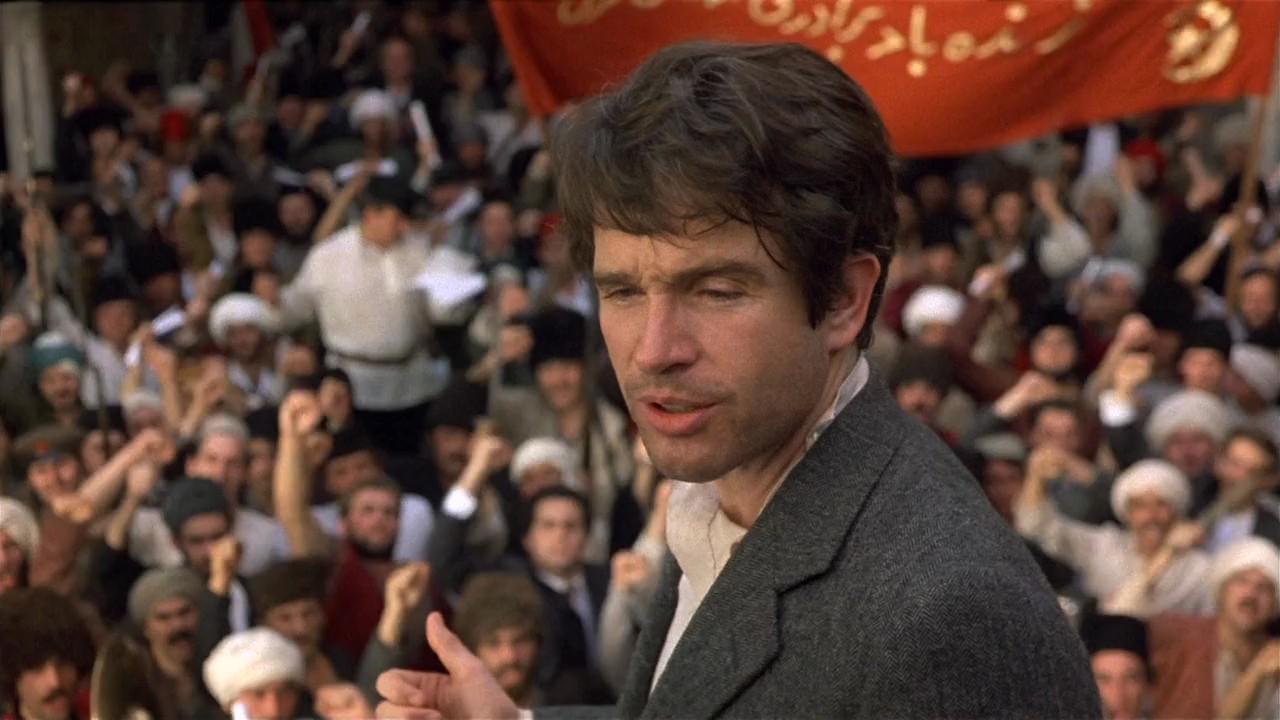
Reds is the film only Warren Beatty could have made. Imagine the pitch meeting: I want to make a three hour long biopic about American communists, with the hero being the only American buried in the Kremlin, and I need $30million dollars to do it. Only Beatty had the force of personality to get major companies to invest greenbacks into a film celebrating a man who would have happily cheered their demise. Reds is a tribute above all to the dedication of its multi-titled director and his refusal to compromise. It’s a big piece of serious minded, educational but also dramatic and romantic storytelling. Not many people could have pulled it off.

In 1915 Louise Bryant (Diane Keaton), a young would-be journalist and suffragette, meets and falls in love with left-wing journalist John Reed (Warren Beatty). The two of them tun off together to Reed’s bohemian circle in Greenwich Village, New York then to Massachusetts, becoming the centre of a community of anarchists, socialists and artists. Their mutual love is damaged by affairs – in particular Bryant’s heartfelt affair with the sensitive Eugene O’Neill (Jack Nicholson) and Reed’s own (off-screen) infidelities – but is rekindled as they are swept up in the Russian Revolution, an event that motivates Reed to try and build a similar communist party in America (with very little success). But, when Reed is trapped in Soviet Russia, how far will Bryant go to reunite with him?

Beatty’s dream of making a film on Reed’s life had been knocking around in his head since the 1960s, but it took the success of Heaven Can Wait in 1978 for him to finally have the muscle to get the film made (when Studio execs, having signed the deal, begged him to consider another subject Beatty stuck to his guns). He originally planned only to produce: that quickly expanded into also writing the script (with Marxist British playwright Trevor Griffiths, a hilarious personality mismatch with the Virginian millionaire Beatty), then directing it and finally, to be completely sure the project went where he wanted it to go, playing Reed as well. It would result in Beatty joining the short list of people nominated in four different categories for one film at the Oscars (but he won only Best Director, Reds losing out the big one to Chariots of Fire).

The real strength of Reds is probably Beatty’s producing. This is a huge epic, filmed across multiple countries in Europe (standing in for each other and for America), marshalling a vast number of sets and locations. Much like Attenborough’s Gandhi, it’s a film directed with a smooth, professional competence, but stage-managed to the screen with the flair of a master producer. Each department was staffed by an expert: Vittorio Storaro shot the film with a Golden Age beauty; Stephen Sondheim contributed to the score; Dede Allen assembled thousands of hours of footage, and dozens and dozens of takes of every scene, into a coherent, pacey movie that effectively balances politics and romance.

In many ways, Reds is like the mirror image of Lean’s Doctor Zhivago (it even has a late train ambush set-piece, chugging through the Spanish wheat fields, that could have come out of Lean’s epic). That film was a romance-for-the-ages that used politics and revolution as a backdrop. Reds uses romance and personal stories as a context-setting background, to push to the forefront politics and revolution. This is perhaps the most earnest and impassioned exploration of the history of American left-wing politics in film history. Giving a lot of time  – particularly in its second half – to scenes made-up entirely of impassioned socialists sitting in a room arguing at each other over the minutia of party rules and ideology, this is the sort of epic Ken Loach would have been proud of making.

The politics are also genuinely interesting, quite a feat in itself. Beatty is unafraid to look at the fundamental weaknesses of Western left-wing politics: its own worst enemy is always itself. People who agree on 90% of the issues, swear themselves to become life-long enemies because of differences over the remaining 10%. In one dynamically filmed sequence, Bryant is a frustrated and resigned observer as Reed oversees the split of the American Socialist Party into no less than three factions, two of which set up rival claims to be the “official” Communist party of America.

Not that Reds has any sentiment for Russia: Beatty is savvy enough to know (I wonder if Griffiths was?) that the USSR is about a million miles away from ideal. Factionalism is just as prevalent there, with the difference being the main faction happily uses, suppresses and crushes the others. Reed’s time in Russia sees him becoming increasingly disillusioned and homesick, as he realises a dictatorship isn’t made palatable just because it’s a Communist Dictatorship. As the representative of that system, author Jerzy Kosinski makes for a grippingly stone-faced and ruthless Zinoviev, brow-beating any deviation from the party line.

Beatty makes all this political theorising and left-wing political infighting palatable, by framing it carefully around a genuine romance between Bryant and Reed. For all the unconventionality of their open-ish relationship (their feelings on this change from infidelity to infidelity), these are two people who share a deep and lasting bond on both an emotional and a political level. Both skilled writers, we are shown time and again that they bring out their best work from the other and that when they are focused on each other, they have a mutual understanding few can hope to match.

As Bryant, Beatty (who was in a relationship with her at the time – which didn‘t survive the epic shooting schedule) cast Diane Keaton. It’s a stroke of genius – and this is certainly Keaton’s finest performance. In a way no other role has allowed her, this looks past Keaton’s comedic skills and allows her to match her intelligence and spark with a woman who challenged norms, as a skilled writer and journalist. Keaton can play heart-rending emotion just as well – her breakdown fury at discovering Reed’s infidelity is fully-committed without being OTT – and she’s perfect as the increasingly disillusioned observer of left-wing failures. She believably flourishes from a woman uncertain of who she is to become a determined intellectual willing to cross continents to find what she wants. It’s a brilliant performance, smart, sharp and moving.

Beatty fronts-and-centres her so much, he slightly short-changes himself – playing Reed he doubles down on the boyish charm and enthusiasm (and he feels really young here), making Reed an enthusiastic, vulnerable, naïve figure. We just don’t quite get a real sense of who he is beyond that. You can’t say the same for Nicholson’s Eugene O’Neill, delivering a remarkably low-key, restrained and sensitive performance. He’s loving, emotionally vulnerable and eventually devastated, in one of his finest acting performances. Maureen Stapleton won the Best Supporting Actress for her Earth-mother anarchist Emma Goldman, the cuddly aunt of firey, confrontational anarchic politics.

Reds is marshalled by Beatty into an epic that powers along effectively. The first half of the film gets its narrative balance right: contrasting personal and political growth with a backdrop of War and Revolution. The second half leaves a little too much to chew, a vast amount of political debate rushed through with a series of increasingly short and sometimes disconnected scenes. Beatty balances the narrative with extensive “witness” interviews, from real-life contemporaries of the characters. (These are never identified, which is a bit of shame as it never allows to really know what their perspective was). It adds a feeling of earnestness to a project that gets an effective balance between politics and the personal, between showmanship and details and between scale and intimacy. While it is more of a producer’s film – and rushed in its second half – than a triumph of directorial imagination, it’s still an impressive – and informative – achievement.

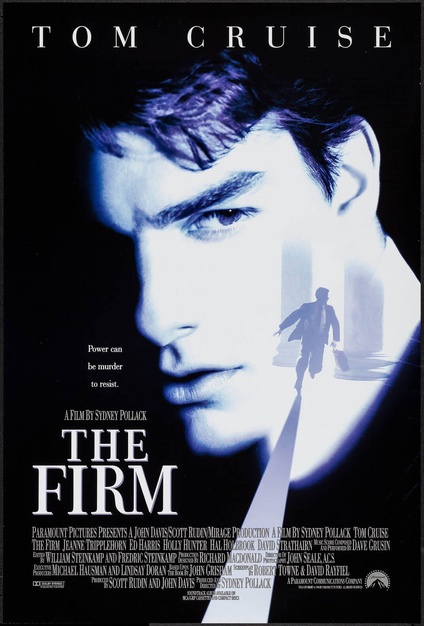
The Firm (1993)

“He can’t handle the truth!” Tom Cruise takes on The Firm. We lose.

Director: Sydney Pollack

Cast: Tom Cruise (Mitch McDeere), Jeanne Tripplehorn (Abby McDeere), Gene Hackman (Avery Tolar), Holly Hunter (Tammy Hemphill), Ed Harris (FBI Agent Wayne Tarrance), Hal Holbrook (Oliver Lambert), Jerry Hardin (Royce McKnight), David Strathairn (Ray McDeere), Terry Kinney (Lamar Quinn), Wilfrid Brimley (Bill DeVasher), Gary Busey (Eddie Lomax), Paul Sorvino (Tony Morolto)

Mitch McDeere (Tom Cruise) is graduating top-of-his-class from Harvard Law. A plucky kid who’s worked for everything he has – and who wants to provide the best he can for wife Abby (Jeanne Tripplehorn) – Mitch has lots of offers but is seduced by a perk-filled offer from a law firm in Memphis. Everything goes wonderfully at first. But then associates at the firm start to die under suspicious circumstances and Mitch discovers no-one everleaves the firm except in a wooden box. Maybe all that off-shore tax-dodging isn’t quite as innocent as it seems – and those big-city clients with Italian-sounding names aren’t so friendly after all…

Adapted from a best-selling novel by John Grisham at the height of his airport-novel flogging days, The Firm is bought to the screen by Sydney Pollack. And what a complete dog’s dinner he makes of it. The Firm is a dreadful film: long, slow and dull with a plot that stretches right through elaborate and comes out the other side as confusing. By the time Mitch is tearing through Memphis, briefcase flapping behind him, you’ll have long-since ceased caring about anything involved in the film at all. Because for a film of such great length, very little seems to happen in it – and what little does happen is wrapped up in a mixture of legalese and curiously flat chase sequences.

Cruise plays Mitch at his most gung-ho, cocky, shit-eating grinnish. He’s preppy, super-smart, arrogant but also loyal, brave and principled. Aside from a brief temptation by money – and that because he wants the best for his family! – and of course a dalliance with a honey-trap on a beach (but it was a set-up, so not his fault!), he’s practically perfect in every way. He’s even a decent athlete, playfully taking part in back-flipping competitions with a break-dancing pre-teen busker (one of the most clumsy and bizarre introductions of a Chekov’s skill in the movies).

To put it bluntly, Mitch is an irritating character and watching him (very slowly) decide to do the right thing doesn’t make gripping viewing. Around him a host of experienced character actors do their thing, none of them stretching themselves. Tripplehorn does her best with the thankless part of “wife”, though she does at least get to do something a little proactive at the end. Hackman grins and coasts as Cruise’s mentor with the lost conscience. Hunter pouts and wisecracks (Oscar-nominated) as Grisham’s twist on an Eve-Ardenish secretary. Holbrook and Brimley scowl behind smiles as high-ups at the Firm. Harris shouts a lot as a permanently angry FBI agent with a heart of gold. Sorvino breaks out his Mob Boss 101.

Pollack marshals all these forces together with minimal effort and then ticks the boxes of all Grisham-cliches. The only thing missing are some courtroom dynamics, but we get the next best thing with wee-Tommy playing the FBI, the Mafia and the Firm off against each other in a desperate attempt to stay one step ahead of the game. I can’t stress enough how turgid and dull this film is. However scintillating you feel the set-up you might be, as the film clocks into the second hour (with 30 minutes still to go), you’ll be amazed how little sense of peril or threat there is.

There is nothing sharp, pointed or pacey about this film. “It has to happen fast” Tom announces at one point, as he kicks his impenetrable plan into gear. “Good luck in this film” my wife commented. She’s spot-on. Pollack fails to bring any sense of pace or peril to the film. For all we are repeatedly told Cruise’s life is at risk, it never really feels like it.

A big part of this massive failure is the terrible musical score that covers every single second of the film. Provided by an Oscar-nominated Dave Grusin (beating out Michael Nyman’s score for The Piano from even being nominated, one of the most inexplicable oversights at the Oscars from the 90s), every single second of the film is overlaid with a plinky-plonky piano score that would not sound out of place in a second-rate jazz bar or a hotel lift. Rather than bring you to edge of your seat, the score actually makes you feel like you should be resting back in it with a large cocktail in hand and a fuzzy sense of upcoming sleepiness clouding your brain. Which to be honest might work: pissed and half-asleep is probably the only way to get anything from the movie.

Nixon (1995)

Anthony Hopkins triumphs as Nixon in Oliver Stone’s surprisingly sympathetic biopic

Director: Oliver Stone

Cast: Anthony Hopkins (Richard Nixon), Joan Allen (Pat Nixon), James Woods (HR Haldeman), Powers Boothe (Alexander Haig), Larry Hagman (“Jack Jones”), Ed Harris (E. Howard Hunt), Dan Hedaya (Trini Cardoza), Bob Hoskins (J. Edgar Hoover), Madeline Kahn (Martha Mitchell), EG Marshall (John Mitchell), David Paymer (Ron Ziegler), David Hyde Pierce (John Dean), Paul Sorvino (Henry Kissinger), Mary Steenburgen (Hannah Nixon), JT Walsh (John Ehrlichman), Sam Waterston (Richard Helms), Brian Bedford (Clyde Tolson), Tom Bower (Francis Nixon), Kevin Dunn (Charles Colson), Annabeth Gish (Julie Nuxon), Tom Goldwyn (Harold Nixon), Saul Rubinek (Herbert G Klein)

In 1995, there was one person the chronicler of the 1970s American experience, Oliver Stone, hadn’t covered: Richard M Nixon. The man who was the embodiment of the dark scar on the American consciousness, the grim, unlovable presence behind the war in Vietnam, the protests and the deep, never-ending wound of Watergate, who seemed to drag the country further and further into the abyss. The man who besmirched the office, the least popular president ever, the national shame. With Stone’s searing attacks on everything from Vietnam policy to the conspiracies behind the Kennedy assassination, you’d expect his film on Nixon to be a condemnation. What people didn’t expect was a film as strikingly even-handed as this, which recasts Nixon not as a gloating villain, but a Shakespearean figure, a Greek tragedy of a man destroyed by chronic character flaws.

Opening with a crushed Nixon, like a drunken Gollum cradling his precious, listening to his precious tapes in the bowels of the White House during his final days in office, the film is told in a fascinatingly non-linear style – loosely falling into two acts, cutting backwards and forwards in time. The first act covers most of Nixon’s career up to the presidency, focusing on his Quaker childhood and the influence of his mother Hannah (Mary Steenburgen), his defeat in the 1960 election to Kennedy and his years rebuilding his political standing. The second half takes a more linear approach, covering a Presidency becoming increasingly bogged down in the inept cover-up of Watergate and increasingly desperate attempts to save his presidency, intermixed with foreign policy successes.

What is really striking is that Stone’s movie finds a great deal of sympathy for this troubled and complex man. He’s a man who has greatness in his grasp, dedicated, intelligent and with vision – but fatally undermined by self-loathing, self-pity and a bubbling resentment about not having the love of the people. Like Lear raging against the storm, or Macbeth bemoaning the impact of his vile deeds, Stone’s Nixon becomes a sympathetic figure, even while the film makes no apologies for his actions, his aggressive bombing of Cambodia (the film notes at its end the bombing led directly to the massacres of the Khmer Rouge) or his failures to claim any responsibility for how he caused his own end.

Stone’s empathetic vision of Nixon is shaped largely by Anthony Hopkins’ titanic performance in the lead role. Hopkins makes no real effort – beyond teeth and hair – to look like Nixon, but brilliantly embodies Nixon’s awkward physicality and, above all, his angry, bitter, resentful personality. It’s not an imitation, but it totally captures him. Hopkins has got it, and the disintegration of Nixon over the course of the film into the shambling, miserable, twitching, even slightly unhinged mess he became in the final days of his presidency is astounding. 

It works because Hopkins never loses sense of the potential for greatness in Nixon – sure he’s socially awkward (Hopkins superbly captures Nixon’s awkward grin, his stumbling nervousness in conversation), but politically he’s assured, confident and has huge insight into realpolitik. His flaw is that he wants to be both the master politician and the people’s champ, to be Nixon and JFK, to have the people cheer him to the rafters. It’s a longing that turns to resentment, fuelling insecurity and fear, that causing him to be so afraid of being cheated that he cheats first and bigger.

It’s that potential for greatness that swims through Stone’s masterfully made, electric film. Stone’s love for mixing film stock, fake newsreel footage, snazzy camerawork, switching colour stock, stylistically eclectic sound and music choices and bombastic lecturing comes to the fore here – and I accept it won’t be for everyone. But for me it works. It’s a big, dramatic movie because it covers an epic theme. From its early echoes of Citizen Kane – the White House as Xanadu, those missing 18 ½ minutes of the tape Nixon’s “Rosebud” – through to the accelerated pace and film stock as events spiral out of the President’s control, it’s an explosion of style that really works, even if there are points which are too on-the-nose (a scene where Nixon’s dinner talk of war is interrupted by a steak that leaks gallons of blood as he cuts into it, is clumsy in the extreme).

Stone’s theories revolve around the true villain being the government-financial power system itself, a grindingly oppressive beast chews up and spits out the men who think they can ride it. Nixon may know about the danger of the system, but he’s as powerless as anyone else. Its tendrils extend everywhere, from the creepily domineering CIA chief Helms (Sam Waterston, unsettlingly intimidating in scenes restored in the director’s cut) to the shady Texan money interests (led by an excellent Larry Hagman of all people) who sure-as-shit want to get rid of that liberal, Cuban surrender monkey Kennedy, by any means necessary (“Say Kennedy dont run in 64?”). 

Nixon wants to control it, to do some good – and the film is excellent at stressing how Nixon’s poverty-filled Quaker background gave him a drive to achieve but also a chippy insecurity and moral standards from his imperious mother he can never hope to meet – but what hope does he have? In any case, his own deep moral failings doom any chance of forging his own goals, sucking him into a quagmire where long-running dirty deeds, shady deals and unedifying company consume him. “When they look at you they see what want to be. When they look at me they see what they are” Nixon complains to the painting of Kennedy, the rival whom he can never eclipse, the man born with all the advantages Nixon never had, the millionaire embraced by the people while the working-class Nixon is reviled. It’s these resentments that consume and destroy Nixon, and Stone presents this as an epic tragedy of a great politician, crushed by his fundamentally human flaws.

Around Hopkins, Stone assembles a brilliant cast. Joan Allen is superb as Nixon’s loving but insightful wife who won’t shy to speak truth to power. James Woods is perfect as the bullishly aggressive, fiercely loyal Haldeman. Paul Sorvino does a wonderfully arch impersonation of Kissinger, always keeping his distance. David Hyde Pierce makes a smoothly innocent but determinedly self-preserving John Dean, Powers Boothe a wonderful cold Alexander Haig. Only Bob Hoskins gives a performance slightly too broad as Hoover – but he still laces the role with a crackling menace.

Nixon is a great film, an explosion of style (perhaps at times a little too much), which painstakingly strips bare the President’s psyche – his doubt, guilt, bitterness, resentments and finally overwhelming self-pity. Powered by a titanically well-observed performance by Anthony Hopkins, who is just about perfect in every frame – every nuance feels real – Nixon is a wallow in the dark underbelly of America, which hints throughout at the even greater dangers that lie under the surface, the powerful system maintaining the status quo that sees presidents come and go, but never allows any real change. It’s a remarkable film.

Goodfellas (1990)

Pesci, Liotta and De Niro embrace the life of crime in Scorsese’s masterpiece Goodfellas

Director: Martin Scorsese

Cast: Ray Liotta (Henry Hill), Robert DeNiro (Jimmy Conway), Joe Pesci (Tommy DeVito), Lorraine Bracco (Karen Hill), Paul Sorvino (Paulie Cicero), Frank Sivero (Frankie Carbone), Frank Vincent (Billy Batts), Tony Darrow (Sonny Bunz), Mike Starr (Frenchy), Chuck Low (Morrie Kessler), Frank DiLeo (Tuddy Cicero), Samuel L. Jackson (“Stacks” Edwards), Catherine Scorsese (Tommy’s mother), Michael Imperioli (Spider), Debi Mazar (Sandy)

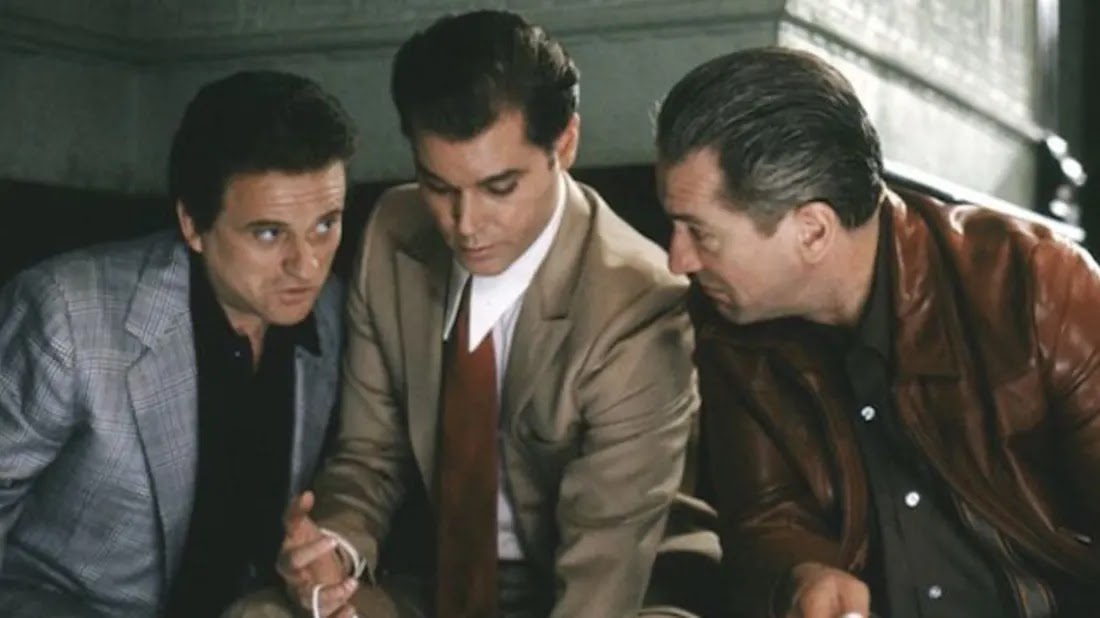
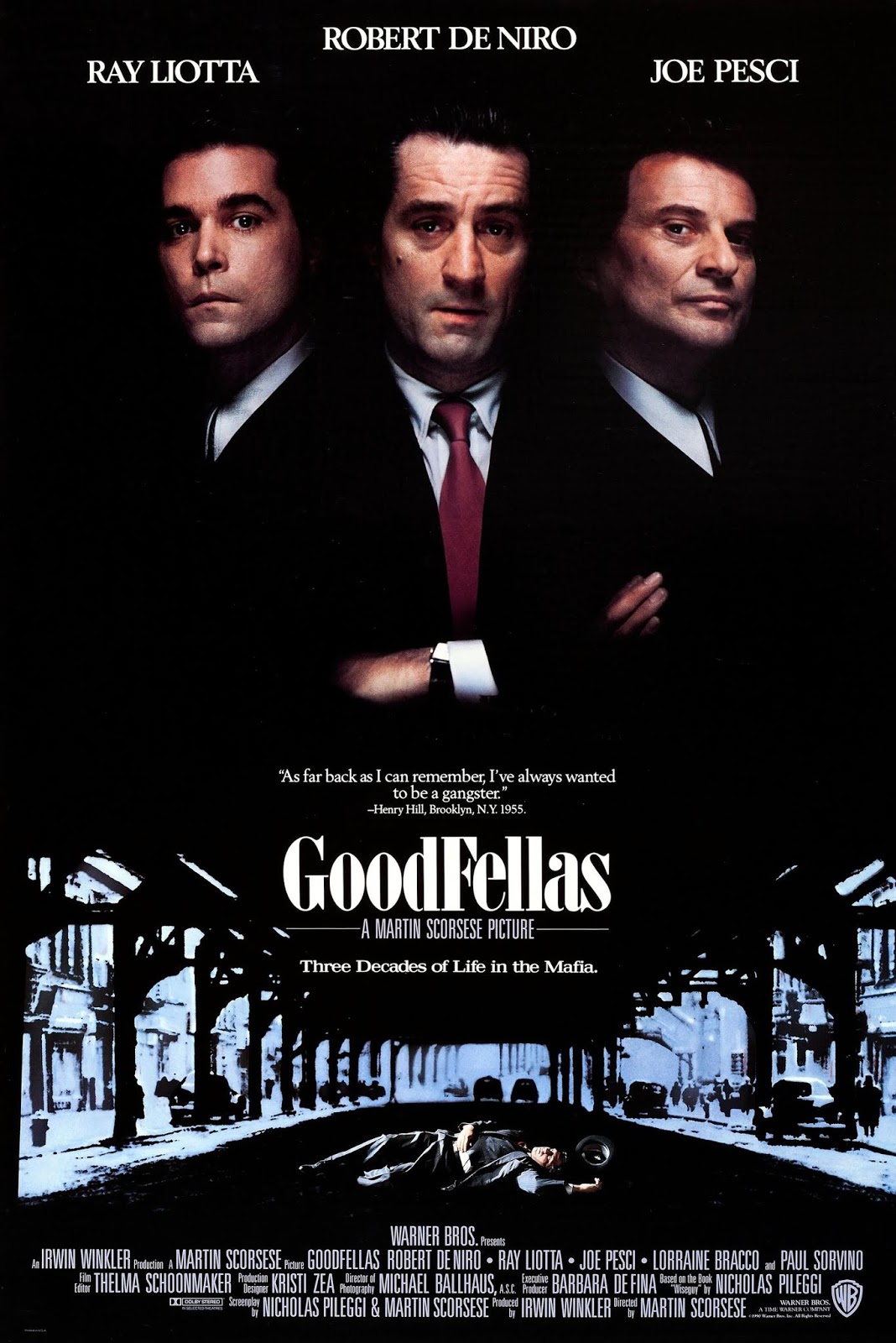
If there is one film loved more than any other in Martin Scorsese’s filmography, it’s probably Goodfellas. It’s a seismic high-point, not just in its genre – the greatest gangster film ever made since The Godfather Part II – but in film-making, it’s influence and legacy seeming to hung over everything ever since, not least the next-great gangster epic The Sopranos (with which it shares a whopping 27 actors, most notably Lorraine Bracco, Michael Imperoli, Frank Vincent and Tony Sirico). But, on top of all that, Goodfellas works so well because it is a masterpiece of both style and substance, a superbly inventive film that uses all the tricks of cinema to tell a fascinating and brilliantly paced morality tale.

“As far back as I can remember I always wanted to be a gangster”. So says Henry Hill (Ray Liotta), our Irish-Italian guide (and those heritage distinctions are very important in this world) who joins the wrong crowd as a teenager in the 1960s and winds up a strung-out, cocaine-addicted wreck in the 1980s caught by the cops and turned for states evidence, fleeing to an obscure life in witness protection with his long-suffering wife and sometime-accomplice Karen (Lorraine Bracco). Along the way though, Hill loves the glamour and greed of the gangster life, it’s excitements and boys-club rules, guided by his mentor the terrifyingly ruthless Irish-Italian Jimmy “the Gent” Conway (Robert DeNiro), psychopathic fellow gangster Tommy DeVito (Joe Pesci) and menacingly quiet capo Paulie Cicero (Paul Sorvino – never better). 

Scorsese’s film is an electric celebration of movie making, partly why it’s so beloved of film buffs. Scorsese marshals all the weapons in his considerable arsenal as filmmaker. We get jump cuts. We get freeze frames (each marking a significant moment in Hill’s life). We get sharp editing. We get unreliable narration. We get dizzyingly brilliant long-shots and tracking shots (none more so famous than Henry and Karen’s arriving at a club – from travelling from the back door, through the kitchen and into the best table at the club all in one wonderful shot). We get Scorsese’s brilliant use of music, his perfectly placed camera, his brilliance in knowing when to hold his shots, his mastery of lighting (an early hit is so bathed in red it feels like digging a grave in hell). This film was the master at his ultimate height, inspired by everything from the New Wave to old-school 1930s gangster films.

He was also perfect for the material, as no one perhaps understood this world better than Scorsese: and that’s the seductive good and the terrifying bad. Back to that shot of Karen and Henry arriving at the club. The whole sequence – the deference with which Henry is treated, his cool comfort with power, the exclusiveness and special treatment of the whole thing – that smacks of the sort of ultimate party we can only dream of. For most of the first half of the film, Scorsese totally understands why this life is so appealing and exciting. Sure there is violence. There’s danger. But there’s also comradeship. There’s doing anything you want all the time (so long as you stick within the clubs rules). There’s being treated by a God by those around you. Who wouldn’t enjoy that? Is there any wonder Henry saw this as he was growing up and, more than anything, wanted a part of it? In voice-over Karen makes it clear, all this violence and power and being asked to hide guns by your boyfriend is sexy. Who cares about the implications, give me a slice of that pie.

Without understanding this glamour, the film could never show the dark depths of the underbelly of gangsterism. Strangely, perhaps because this is a blue-collar film (the highest gangster we see, Paulie, is still only a few steps away from the street), it’s easier for viewers to give these guys a pass for their behaviour (in a way no one did with Scorsese’s spiritual sequel, his white-collar crime movie The Wolf of Wall Street). Don’t be fooled. Scorsese hints at it with the opening prologue, with Henry, Jimmy and Tommy pulling over a car to brutally finish off (with a spade, knife and gun) a body of a yet-to-be-revealed victim in the back of a car. These ain’t good guys, and for all Henry is shocked by the capacity of violence from the other two he does nothing to stop it.

Because violence is what powers this film, it can happen anytime, it can happen to anyone and your killers always come to you smiling as friends. The gangster code preaches all the time about never betraying your friends, never ratting. But these guys stab each other in the back all the time. There is no honour among thieves. Every hit comes seconds after friendly enquiries and laughs. When Jimmy masterminds a brilliant heist, so paranoid and distrusting is he of those he did the crime with that he has them all killed (a masterful cut montage). Later in the film, strung out on cocaine and terrified of the law Henry treats every meeting like it’s the entrée to him being killed. Even Karen isn’t safe – witness the brilliantly oblique scene late in the film when Jimmy offers her some coats ‘they’re just round the corner’ – is it a hit? Are the coats real? Who knows…

Loyalty is only extended at best to one or two figures. Jimmy (Robert DeNiro in imperious form, terrifyingly cold and also generously ceding the best moments to his co-stars) seems to have a never-ending patience for the psychopathic, instinctive violence of his best friend Tommy. Played with a petrifying Oscar-winning flourish by Joe Pesci, Tommy is like a murderous Rumpelstiltskin, a brutal killer and wired murderer who can explode at any moment. Witness the famous “Funny how?” scene – it plays superbly off Tommy’s unpredictability, his hair-trigger possibility to either laugh with you or shoot you. Much of the film’s problems for our ‘heroes’ – not less that body in the boot of the car – stems from Tommy’s capacity for thoughtless violence. 

Scorsese directs these scenes with such unbearable tension, that any romance of the early sequences of the young Henry Hill disappears. How could you even begin to imagine spending time in a room with these violent, soulless men who kill each other at the drop of a hat? Despite all this, never for one moment until the very end does Henry even consider leaving this world behind. Like so many of the characters in The Sopranos the addiction of this world of power is just way, way too much and if that means a short life then, hell, so be it. Even at the end on witness protection, Henry’s punishment is that he is forced to live a normal life like a no-body (or rather like the rest of us) while balancing the guilt of betraying the people he left behind. Loyalty is a complex thing, but always one-sided in the Gangster world.

As Hill Ray Liotta gives the finest performance of his career. Henry is part wide-eyed naïve dreamer unaware that his dream is a nightmare, and loving every minute of it. Liotta’s Hill is an addict to everything he touches – danger, violence, infidelity and most damagingly of all the mountains of cocaine he is consuming by the 1980s. Compared to the other gangsters, he’s a decent guy – but only in the sense he hesitates (slightly) in the face of murder. He’s selfish, greedy, strangely likeable oddly sympathetic but you feel he gets everything he deserves. Just as good is Lorraine Bracco as his wife Karen, too aroused and infatuated with the bonuses the crime life brings her to listen to her conscience. 

Scorsese’s film is a masterpiece that completely understands that the gangster life is, at the end of the day, a series of boys who never grew up who espouse concepts like duty, honour and faith but live lives of greed, petty murder, vengeance and savagery. Sure walking on the dark side can be fun, can be exciting and can bring you some immediate bonuses. But it also leaves your soul as cold as Jimmy’s or as blackly non-existent as Tommy, the sort of guy who can pour affection on his mother while shrugging off her worries about what that terrible smell is in the boot of his car. These guys are having fun for half the film, until they aren’t, but don’t get seduced by the fun of it. Scorsese knows only too well that they’re going where the film started: a red light washed grave in the middle of nowhere.