Tag: Rachel Roberts

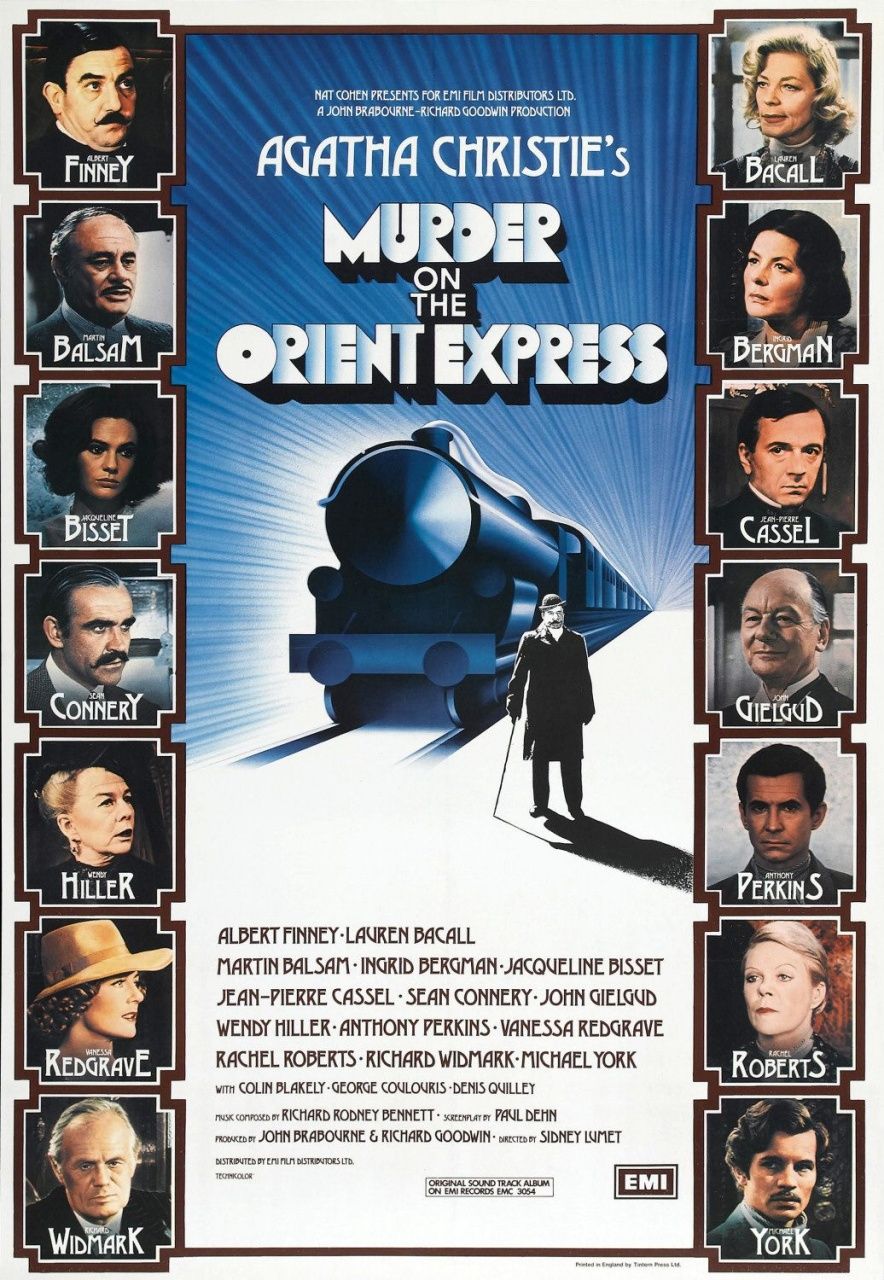
Murder on the Orient Express (1974)

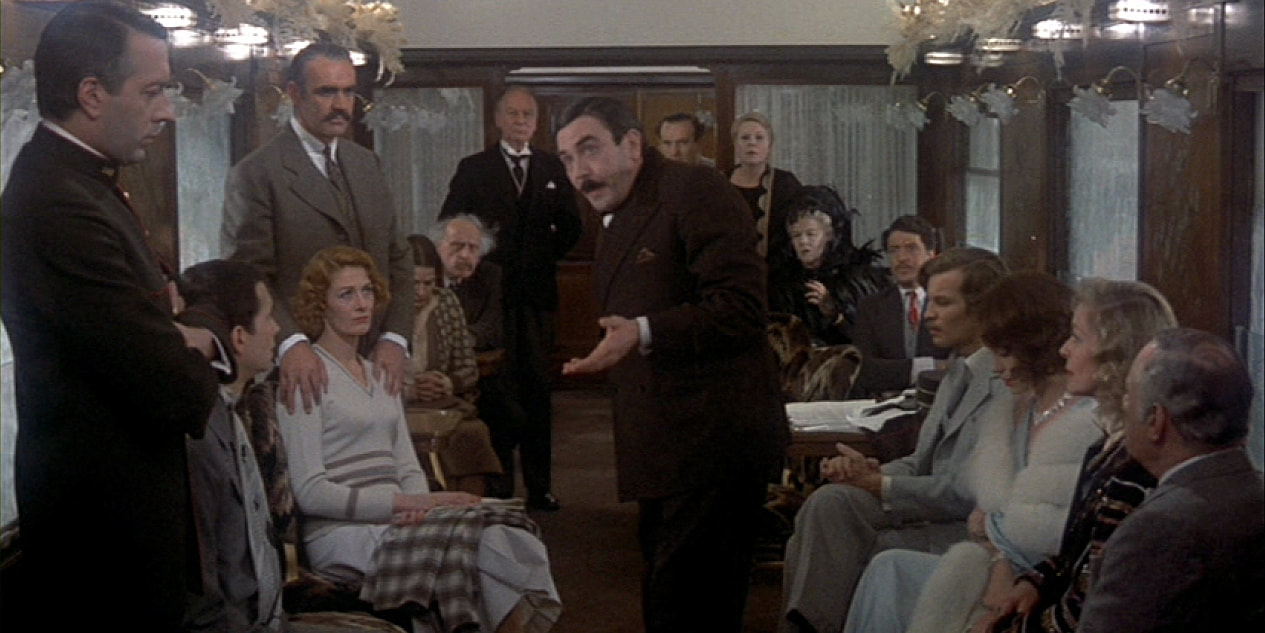
Albert Finney interrogates an all-star cast in Murder on the Orient Express

Director: Sidney Lumet

Cast: Albert Finney (Hercule Poirot), Lauren Bacall (Linda Arden), Martin Balsam (Signor Bianchi), Ingrid Bergman (Greta Ohlsson), Jacqueline Bisset (Countess Helena Andrenyi), Jean-Pierre Cassel (Pierre Paul Michel), Sean Connery (Colonel John Arbuthnot), John Gielgud (Edward Beddoes), Wendy Hiller (Princess Natalia Dragomiroff), Anthony Perkins (Hector McQueen), Vanessa Redgrave (Mary Debenham), Rachel Roberts (Hildegarde Schmidt), Richard Widmark (Ratchett), Michael York (Count Rudolf Andrenyi), Colin Blakely (Cyrus Hardman), George Coulouris (Dr Constantine), Denis Quilley (Antonio Foscarelli)
If there was a film that set the template for our expectations for an Agatha Christie adaptation, it was probably this one. A big starry cast. Luscious period detail. An engrossing plot with clues and double meanings in every corner. A healthy mix of the OTT and the chilling. Marshalled by Sidney Lumet, almost certainly the best director to take on a Christie mystery ever, this film was a massive hit then and remains a hugely enjoyable, rewarding treat now, the sort of masterclass in quality film-making and bravura acting that is guaranteed to leave a smile on your face.

You surely must know the plot by now right? Hercule Poirot (Albert Finney) returning from a successful case in the East hitches a ride on the Orient Express on the way home. During the journey he is asked by American businessman Ratchett (Richard Widmark) if he would take up the role of his bodyguard after threats against his life. Poirot turns him down – and sure enough the next morning Ratchett turns up dead in his compartment, with no less than a dozen knife wounds in his chest. With the train stranded in a snow drift, the killer must be one of the other twelve passengers in the carriage. And so the case begins…

Sidney Lumet’s superb, classy piece of murder mystery is a triumph of design and style. The train looks superb, the period detail is perfect, the costumes are luscious. But what Lumet brings to it all underneath all this Sunday afternoon splendour is a genuine sense of chilling menace. Helped a great deal by Richard Rodney Bennett’s haunting musical cues, this film never lets the viewer forget that the heartless destruction of an entire family is at the root of the crime itself, or that the desires for revenge we find in ourselves can take us to dark places. 

Lumet’s film opens with a brilliantly constructed series of newspaper stills, establishing the horrors of the Daisy Armstrong case that underpins the mystery, the kidnapping and murder of a young child (based on the Lindbergh kidnapping) that led to tragic consequences for an entire family. This chillingly sad and tragic back story is echoed throughout the film, and immediately establishes the stakes for all involved.

So we spend the film then trying to work out how all the suspects might fit it into this story. Lumet’s concept of bringing together an all-star cast was a brilliant idea, not only giving each of the suspects a quickly established personality (partly inspired by the actor’s body of work), but also assembling a group of such talented actors that they can sketch out a character within a few moments. Lumet’s first recruit for the cast was his old collaborator Sean Connery – and the agreement of Connery to take on a supporting role brought a host of actors to follow. It all adds to the fun, an enjoyable star-spotting exercise, and also an amusing game of watching sometime wildly competing acting styles.

Connery plays Arbuthnot with a stiff-upper lip English reserve, but then you also have a wonderfully arch (and very funny) John Gielgud, a dementedly twitchy Anthony Perkins (McQueen seems to have been adapted into a junior brother of Norman Bates), a show-boatingly larger-than-life Lauren Bacall (great fun), a Germanic stern Rachel Roberts and an inscrutable Vanessa Redgrave. That’s just a few of a terrific collection of actors, and arguably only Wendy Hiller’s overly imperious Princess Dragamiroff is a bit of a miss.

Lumet’s strength in depth allowed him to push his actors into demanding places – complex set-ups and, most especially, a series of long takes in his often confined performance spaces. The highlight – in fact it won her an Oscar – is Ingrid Bergman’s five-minute (practically only) scene where the camera slowly rotates around her across five minutes as she tells her story. Bergman’s shy, nervy, gentle and timid missionary comes across as achingly vulnerable. Bergman had been offered the larger role taken by Wendy Hillier, but wisely turned it down for this show-stopping moment.

The advantage of having such accomplished actors was most clear in the burden placed on Finney as Poirot. Watching it now – familiar as we are with decades of David Suchet’s definitive performance – it’s easy to see Finney’s performance as a little too much. Covered with make-up and a fat-suit, his shoulders hunched around his neck, his hair plastered down with grease and his accent frequently heading way out over the top, Finney certainly leaves very little in the dressing room. His Poirot is an amiable showman, a man willing to adjust his personality and approach from suspect to suspect, but in the end a man with a well-being arrogance and a deep sense of personal morality as well as a profound sense of humanity.
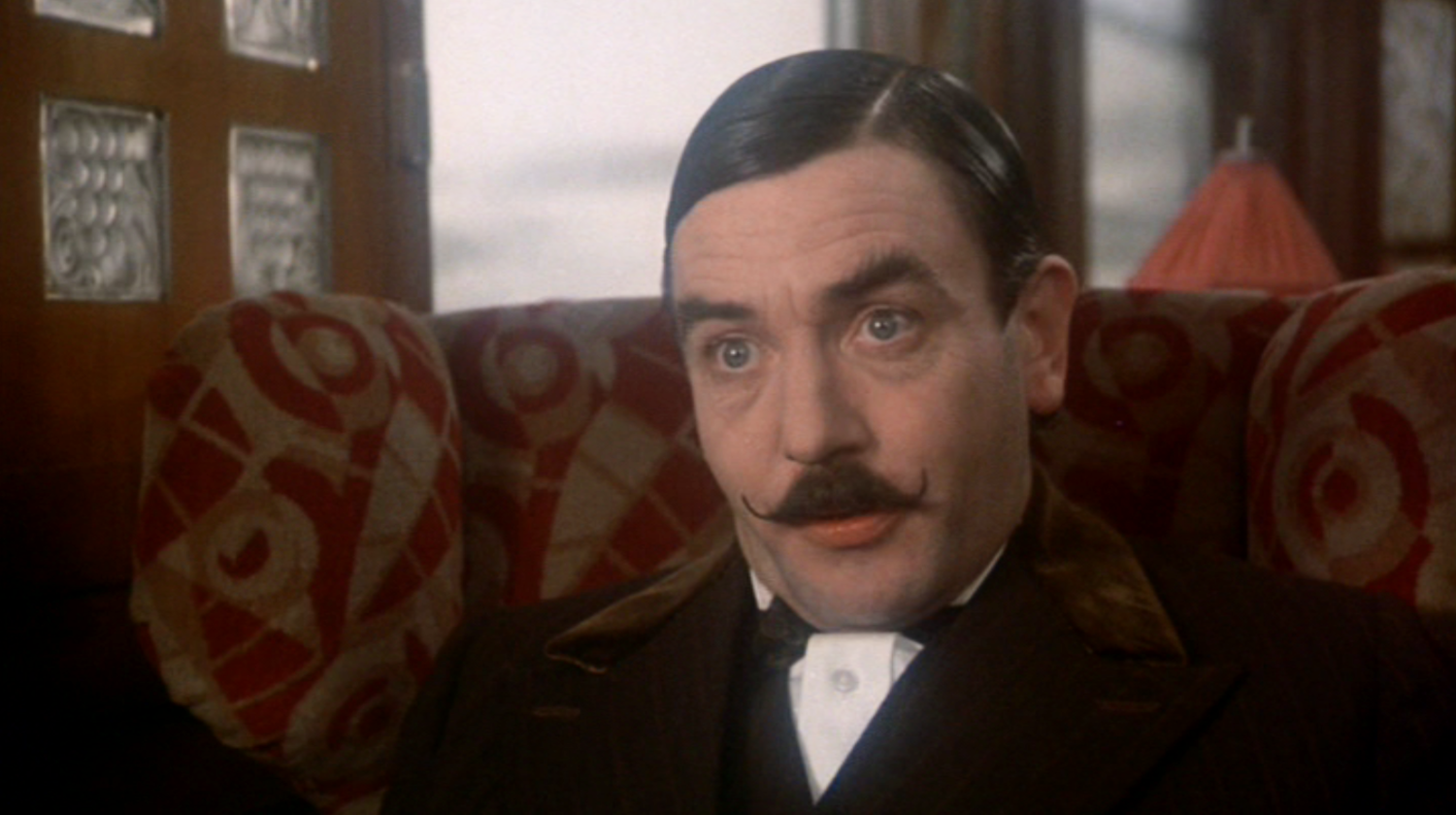
Finney was a surprising Oscar nominee for Best Actor, but he almost certainly owed this to his final speech, an almost thirty-minute tour-de-force. Lumet, operating in small confines, determined that the best way of getting the most dramatic energy from the speech was to use long takes, elegant camera moves, and the minimum of cutting – to let Poirot cast his spell over the audience as much as he does over the suspect. As such Finney – in a tiny, crowded, set – performed the complete monologue several times (each time apparently flawlessly) so that the camera could be positioned in each point in the confined set at a time. The result is seen in the final sequence, which uses dizzying long takes and careful camera moves to draw us brilliantly into the reveals that come thick and fast.

Finney’s performance is magnetic in its theatricality and commitment, and Lumet’s directing decisions throughout the sequence really help to make this sequence as effective as it is. Lumet’s peppers this sequence with a series of brief flashbacks to earlier in the film, which skilfully present snippets of the characters testimonies represented at different camera angles, which is both eerie and also throws a new light on the scenes we have already seen. For all that Finney is a bit much at times, you can’t help but enjoy this piece of showmanship.

The final resolution remains justly famous, and it largely owes a lot to this film. Agatha Christie even was favourable to the film (one of only two films of her work she liked, the other being Billy Wilder’s adaptation of Witness for the Prosecution) although (in words I presume heard by Kenneth Branagh) she bemoaned the smallness of Finney’s moustache. There have been several film and TV adaptations that have followed, but only David Suchet’s version has challenged it for the title of the best. With its gorgeous settings, imaginative direction and wonderful cast I never tire of watching it.

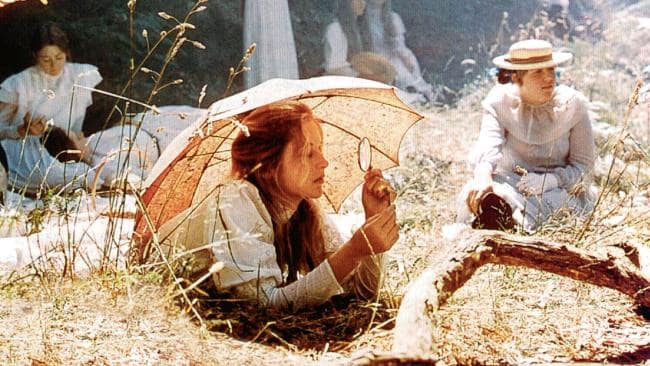
Picnic at Hanging Rock (1975)

Three girls go up a rock and are never seen again in Peter Weir’s masterpiece Picnic at Hanging Rock

Director: Peter Weir

Cast: Rachel Roberts (Mrs Appleyard), Anne-Louise Lambert (Miranda St Clair), Dominic Guard (Michael Fitzhubert), Helen Morse (Mlle de Poitiers), Margaret Nelson (Sara Waybourne), John Jarratt (Albert Crundall), Wyn Roberts (Sgt Bumpher), Karen Robson (Irma Leopold), Christine Schuler (Edith Horton), Jane Vallis (Marion Quade), Vivean Gray (Miss McGraw), Martin Vaughan (Ben Hussey), Kirsty Child (Miss Lumley), Jacki Weaver (Minnie)

Is there any film as haunting and elliptical as Picnic at Hanging Rock? An impenetrable puzzle shrouded in mystery and wrapped in an enigma, it’s the ultimate “mood” film, where everything you understand in the film has be teased out from its sidelines and the unspoken motivations. It’s not going to be for everyone: Peter Weir tells a story on the feature-length Blu-ray documentary (longer than the film) of the response of one US distributor when he saw the film: “[He] threw his coffee cup at the screen at the end of it because he had wasted two hours of his life – a mystery without a goddamn solution!” That’s a fair comment – but accept that this mesmeric film is somewhere between mystery, hynoptic trick and ghost story and you’ll find treasure in it.

Based on Joan Livesey’s novel (which many believed to be true – a fate that also faced the film when it was released), on St Valentine’s Day 1900, a group of girls from a finishing school head to the Hanging Rock in Victoria for a picnic. Three of them (and one of their teachers) walk up to the rock and simply seem to disappear. The subsequent search by the authorities is baffling – and the impact on those left behind is brutal. 

There is barely any real plot in Picnic at Hanging Rock but it’s not a film about that. It’s all about the mood, the creeping sense of menace, and the general uneasy dream nature of the story. Everything follows a woozy dream-like logic – and the atmosphere is built upon by the use of panpipe music and skilful use of classical music. Weir’s film is a masterpiece of ghostly, unsettling spookiness with the rock itself as some unknown mystical source at its centre – the first shot of the film shows it slowly appearing in the mist, as if it has somehow been transported there from some fantasia land outside of the normal.

Weir’s film became the most influential film of Australian cinema, and its tone set many of the key thematic points followed by later films of what became known as the “Australian New Wave”. It explores uneasy balances in Australia between the wildness of the country – and indigenous people’s beliefs and culture – and the social structures from the British residents who had claimed the land. Picnic also explores the beginnings of a split between long-standing Australian residents and those clinging to the upper class Brit lifestyle of the motherland. Weir’s film – with its brilliant photography – lingers on the nature surrounding the rock. Not only the rock itself, with its odd formations and strange structure, but also the animals and the environment about it. There is something unknowable, wild and untamed about these surroundings – something mankind can’t control or understand.

Weir shoots the film with a lush impressionism – everything has a hazy unreality about it – and the dreamy nature of the film is built on with the dark hints of sexual feeling bubbling under the surface. The girls are all on the cusp of discovering their own sexuality – and there are plenty of open suggestions of same-sex crushes, of growing awareness of their sexual natures among the girls. It doesn’t stop with them either – the adults are equally drawn towards unspoken desires (left very much open to interpretation). Weir gets some perfect visual representations of the stonking repression forced on top of all these feelings, not least a wonderful shot which shows several of the girls standing in a line tightly doing up each other’s corsets.

And that perhaps, it’s hinted, is what happens on the rock when the girls disappear. Trance-like, they walk towards a gap in the rock and seem to disappear. What drew them there? Lead girl Marian (a perfect performance of ethereal other-worldliness from Anne-Louise Lambert) even seems dimly aware in the opening scenes that she is bring drawn towards something. The only girl who isn’t drawn towards the mystic is more repressed, dumpy Edith – whatever the force is that calls the other girls, it leaves her panicking and screaming. What’s going on? Something dark, sinister – and you can’t help but think sexual.

And what does that mean for those left behind? A mess. Rachel Roberts (a late casting replacement for Vivien Merchant, and famously awkward around the girls on set) is very good as the distant, draconian headmistress of Appleyard Academy (basically a sort of finishing school for posh girls). The regime she runs at the school is a mixture of oppressive and discriminate, with punishments handed out according to Mrs Appleyard’s personal feelings about the students rather than any reflection of their own behaviour. Part of the film’s story is the fracturing of her own personality that happens as response to the disappearance – her collapse slowly into a sort of paranoid insanity, powered by drink. What dark secrets is she hiding? (The film hints that she has more knowledge than she should have of at least some of the darker events of the story, but never reveals how much or indeed why.) 

But then the whole cast are dealing with problems they scarcely seem to understand. There is a curious – perhaps homosexual bond – between Dominic Guard’s repressed English teen and John Jarrott’s earthy, ultra-Aussie outbacker (a very good performance from Jarrott in a character that could easily have fallen into stereotype). Perhaps that’s why Guard’s character is drawn constantly back to the rock – and also why he too seems to have such an overwhelmed reaction to it.

The sole character in the film who feels most capable of expressing their emotions is the school’s French teacher Mlle de Poitiers. Played exquisitely by Helen Morse – she gives the warmest, most engaging performance in the film – she is the only character who seems able to get in touch with her emotions, unfiltered by too much repression. Perhaps it is no coincidence that as a “double foreigner” (French among the Brits in Australia) she is less affected by the rules around her. Either way, she becomes a perfect audience surrogate, as slowly horrified and confused by the actions she sees around her in the college as the viewer is. Morse is fabulous in these scenes, from a burst of emotion when reunited with a character she thought lost, to quietly watching Mrs Appleyard’s disintegration late in the film.

But the real star is Weir’s masterful direction of the mood of this film. Like that distributor said, there isn’t any plot as such – vital events happen off screen, and there is the distinct feeling that you are only being told half the story – but despite that, the film is compelling. So much is conveyed in the mood, the tensions, the style of the film that you are invited to bring your own interpretation to events. That makes it a continually rewarding piece of cinema – it invites you to make your own answers. 

This juggling of atmosphere to make something so enigmatic is so crucial to the film’s success that the recent mini-series remake effectively continued the trick (with a few extra insights into Mrs Appleyard), and contained arguably even fewer answers over its 5 hours than this did in 2. But Weir’s brilliantly made, beautifully shot, eerily unforgettable film rightly takes its place as (perhaps) the greatest Australian film ever made: it’s a film that is about Australia, and about the tensions, confusions and mysteries of that country. Brilliant.

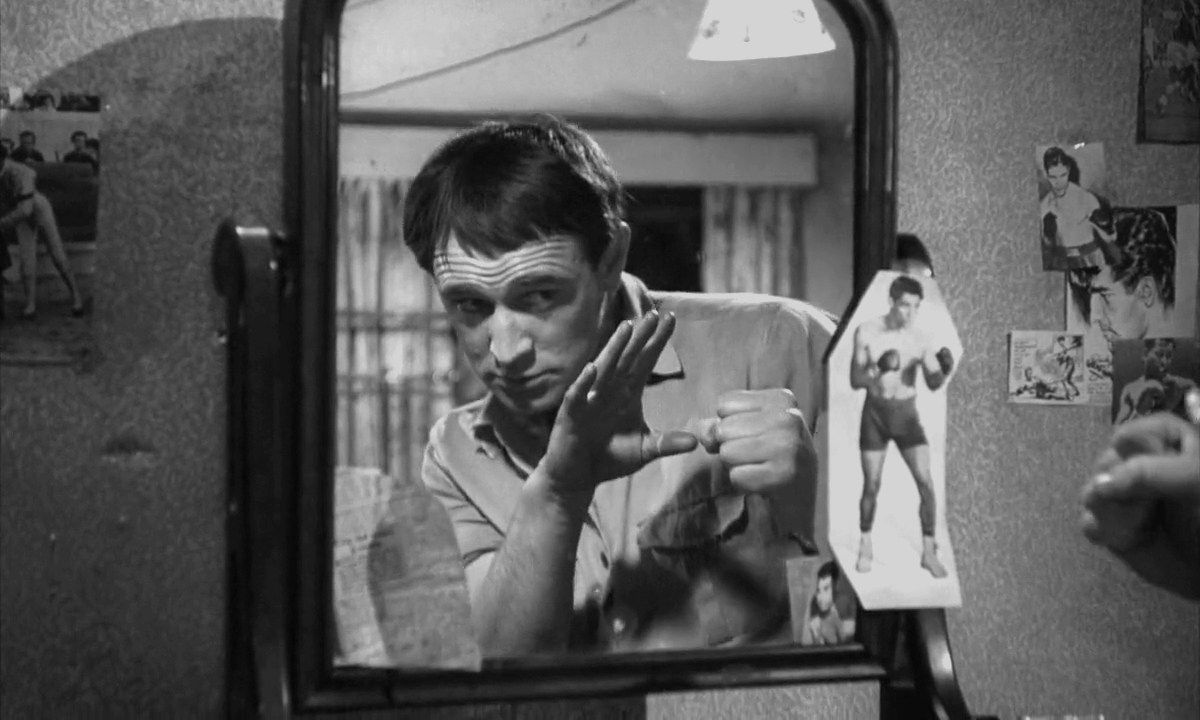
This Sporting Life (1963)

Rachel Roberts and Richard Harris excel in brutal kitchen-sink drama This Sporting Life

Director: Lindsay Anderson

Cast: Richard Harris (Frank Machin), Rachel Roberts (Margaret Hammond), Alan Badel (Weaver), William Hartnell (“Dad” Johnson), Colin Blakely (Maurice Braithwaite), Arthur Lowe (Slomer), Vanda Godsell (Mrs Weaver), Jack Watson (Lennox), Harry Markham (Wade), George Sewell (Jeff), Leonard Rossiter (Phillips), Anne Cunningham (Judith)

The British New Wave of the early 1960s embraced working-class stories. They centred on chippy, confident, crowd-pleasing working-class young men (it was always men) from regional towns, doing blue collar work, thumbing their nose at the establishment and fighting to find their own way. This Sporting Life takes a similar route – but its central character, Frank Machin, is a furious, resentful and selfish man, who seems hellbent on destroying everything he touches. Unlike Arthur Seaton or Billy Fisher, he’s hard to like – and the film hits as hard as scrum of rugby players. 

Frank Machin (Richard Harris) is a miner turned professional rugby player – not that he has any love for the game (“I only enjoy it if I get paid for it!” he contemptuously states). Machin is an articulate brute of a man, a pugilistic whirligig of resentments, barely expressed or understood desires, and a deep-rooted and chronic insecurity that cries out for love while pushing it away. He’s in love with his landlady, widowed mother of two young children Margaret Hammond (Rachael Roberts). They begin an affair of sorts – but it can barely survive her trauma and Machlin’s self-destructive rage.

Lindsay Anderson’s films are notable for their anger and bitter satire, so it’s no surprise he directed the least crowd-pleasing, angriest angry-young-man film of all – or that This Sporting Life killed the genre. The film is a series of hits, aimed far and wide, from the deference of the players to the owners who treat the clubs like playthings (the “amateur fair play” British attitudes to sport from the patronising owners gets a kicking), to the hypocritical judgemental attitudes of the working class. Even its romantic story features two characters so unable to engage with or understand their feelings that they only really seem able to communicate fully when raging at each other. 

Anderson’s new-wave, kitchen sink aesthetic creates a film that feels like a series of battles. From Machlin moving in local clubs to visiting the home of creepy closeted club owner Weaver (a smooth and unsettlingly cruel Alan Badel), whether rebuffing the advances of Weaver’s wife or at a Christmas party, he always seems ready for violence. The rugby matches are filmed like mud covered fights, with players piling into each other like sledgehammers. Even the “romantic” (and I use that word advisedly) scenes between Roberts and Harris feel like conflicts (they frequently tip into nerve-shreddingly raw emotional outbursts). 

Anderson’s film takes everything you expect from the Saturday Night and Sunday Morning expectations and amps up the danger, anger and tension. Machlin barrels through scenes, conversations and relationships in the same way he charges through the rugby pitch. The whole film is a sharp warning of the danger of unrestrained masculinity, pushing all softer emotions to one side. Machlin wants so desperately to be a man that everything must be a battle, at all times displaying his most manly qualities. The tragedy is that you can tell there is a far more sensitive and intriguing personality below the surface.

All this comes together in Richard Harris’ searing performance in the lead role. His career break – he won the Best Actor award at Cannes and was nominated for an Oscar – Harris was possibly never better. He’s a brooding force of nature in this film, utterly convincing as a man who bottles up his feelings until it is way too late. He hits out at everything, but you feel he is really running scared from the vulnerability in his own personality. With children, Machlin is tender and gentle, but with adults he is unable to express his feelings. His emotions for Margaret are based around suggestions of a need for a mother figure, sexual desire – and a desire for an answer to the emptiness he feels in himself. Harris is like an Irish Brando here, a marvellous, emotional, dangerous, brutal figure.

Rachel Roberts (also Oscar-nominated) is just as good, giving another extraordinary performance (to match the similarish role she played in Saturday Night and Sunday Morning) as Margaret. Grieving her husband, terrified of commitment, aware of her own position, as incapable in her own way of expressing her emotions and feelings as Machlin is, Margaret is as much a damaged and combative character. Roberts’ performance suggests years of disappointment and struggle behind the eyes, and she has a rawness and humane anguish in her scenes with Harris that sear the eyeballs. The scenes between these two are difficult to watch but engrossing.

The film is stuffed with excellent performances. William Hartnell is heartbreakingly tragic as the closeted talent scout who spots Machlin, only to be dropped by the new star. Colin Blakely is excellent as Machlin’s more grounded and engaging teammate. Vanda Godsell is the face of female corruption as Weaver’s sexually possessive wife. Arthur Lowe (who went on to work with Anderson several times) is very good as a stuffy but shrewd board member. All of this is beautifully filmed in black and white, with an urgency mixed with flashes of impressionistic grimness.

Anderson’s film, though, is primarily a working-class tragedy, about a man unable (until far too late) to really understand what he wants. Why is this? Because of failings in himself, but also failings in his upbringing, where qualities of self-understanding and expression are not encouraged, where pressure is placed on men to be men, where class and stuffy attitudes look to stamp out any real sense of self-knowledge. It’s an angry young man film that is truly, really angry. No wonder it flopped at the box office. But no wonder it lasts in many ways better than other films from this genre. It feels like a film that wants to say something, that has an urgent message. And it has at two extraordinary performances.

Saturday Night and Sunday Morning (1960)


Albert Finney is an angry young man out for himself in Saturday Night and Sunday Morning

Director: Karel Reisz

Cast: Albert Finney (Arthur Seaton), Shirley Anne Field (Doreen), Rachel Roberts (Brenda), Hylda Baker (Aunt Ada), Norman Rossington (Bert), Bryan Pringle (Jack), Edna Morris (Mrs Bull), Elsie Wagstaff (Mrs Seaton), Fran Pettitt (Mr Seaton)

Whatever people say I am, that’s what I’m not because they don’t know a bloody thing about me! … What I’m out for is a good time – all the rest is propaganda. – Arthur Seaton

The 1960s saw a cultural shift in British cinema. Prior to this, most British films were either Ealing-style comedies or dramas focused on the middle or upper classes. When the working classes did appear, they were usually scamps or “ever so ‘umble”. This all changed in the 1960s with the emergence of “kitchen sink” dramas. The New Wave of British Cinema had arrived – films that looked at the real lives and issues of the working classes, that dared to present the working man (and it generally was men) as a living, breathing human being (warts and all) rather than some sort of latter-day Shakespearean comic turn.

Arthur Seaton (Albert Finney) is a skilled, well-paid worker in a bicycle factory in Nottingham. He’s also your quintessential “angry young man”, contemptuous of his fellow workers, adamantly opposed to being told what to do with his life and only interested in a hedonistic life where he does whatever he wants. As Arthur begins a relationship with aspirant young woman Doreen (Shirley Anne Field), his life is complicated by the wife of a fellow worker, Brenda (Rachel Roberts), whom he’s sleeping with, announcing she’s pregnant.

Saturday Night and Sunday Morning caused such a sensation when it was released. But it’s such a strong capturing of a particular time and moment that it’s hard to look at it today without seeing it as a little bit dated, or finding it hard to work out what all the fuss was about. But Arthur Seaton seemed to capture the mood of generation – and that’s a credit to Alan Sillitoe’s excellent (semi-autobiographical) script, based on his own novel.

Albert Finney gives the part a forceful, primal aggression that seems to capture the spirit of the age. He constantly bubbles with ill-directed resentment, mixed with cynicism and a beery oafishness. He isn’t a “faux” intellectual, like a Jimmy Porter, or a man striving to move up the greasy pole. He’s a chippy, arrogant, slightly lazy man with no interest in self-improvement. He’s also a horrendously selfish character, interested only in his own pleasure – I think it goes without saying his treatment of women doesn’t stand up well. Tied of being preached at about the sacrifices of the war generation (who surround him in the factory), he merely wants to do what he wants, when he wants. Despite his flaws, he seemed to capture the feelings of a post-war generation.

The film was also unique for the themes it addressed. It was pretty much unheard-of for a film to even mention the possibility of abortion. It tackled issues of adultery and pre-marital sex (it’s one of the first films to show a man and woman waking up in the morning in bed together). Its lead character drinks, swears (as much as allowed by the censors) and even takes pot shots at neighbours he doesn’t like with an air gun. All of this of course seems rather tame now – but at the time, it was radical to see someone like this, behaving like this, on screen.

The plot, such as it is, is as aimless in many ways as Arthur himself. Not a lot happens in the film, apart from Arthur constantly pushing to not “let the bastards grind you down”. Of course all the pain in the story actually comes from Arthur’s own actions, not least to Brenda, his occasional mistress. Rachael Roberts is sensational as Brenda – the finest performance in the film – a slightly faded former glamour girl, now older, lonely and whose appeal to Arthur (and his appeal to her) seems as much maternal as it does sexual. Brenda’s a tragic figure, clinging to a fantasy of a life free from her dull husband – but slowly (and sadly) learning that she is looking for something from Arthur he can never give her.

By contrast, Arthur’s other conquest, Doreen, is a far more assured, determined and ambitious woman, closer to his own age. Shirley Anne Field is playful and charming, but in her own way as much besotted with Arthur’s rootless masculinity as Brenda. Unlike Brenda though, she is a determined to get what she wants. Arthur and she eventually seem set to settle down for domesticity on a new-build council estate, a decision Arthur seems to resign himself to (he flings a stone impotently at the new houses, but barely seems to understand why). Even this relationship reinforces Arthur’s emptiness – his aimless rebellion lands him eventually in the very conventional lifestyle he spent the rest of the film pushing back against.

Karel Reisz shoots all this with a documentary realism. Freddie Francis’ brilliant photography gives a new wave, neo-realist romance to the Nottingham streets that reinforces the feeling that we are watching a real slice of life. Of course, today much of this revelatory impact of this is lost – we’ve seen these sort of dramas too many times. Arthur’s rebellion is so ill focused – and his attitudes bordering so heavily on the misogynistic – that it’s a lot harder to sympathise with him today than it would have been back then. However, it captures a moment of history, and a feeling many young people at the time had – that the world they were presented with just didn’t match up with what they wanted from life. A dated classic, but still an important piece of film making.