Tag: Ralph Bellamy

Trading Places (1983)

Trading Places (1983)

Very 80s comedy, full of rude gags and the glories of money still funny in many places

Director: John Landis

Cast: Dan Aykroyd (Louis Winthorpe III), Eddie Murphy (Billy Ray Valentine), Ralph Bellamy (Randolph Duke), Don Ameche (Mortimer Duke), Denholm Elliott (Coleman), Jamie Lee Curtis (Ophelia), Paul Gleason (Clarence Beeks), Kristin Holby (Penelope Witherspoon), Jim Belushi (Harvey)
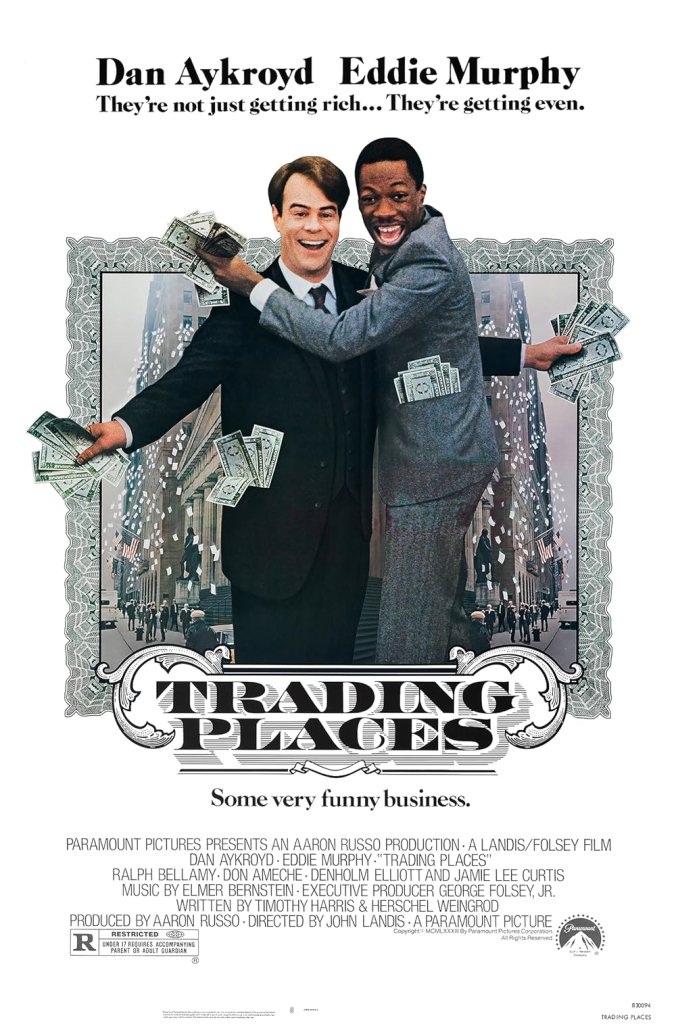
Louis Winthorpe III (Dan Aykroyd) has it all. A house in Philadelphia, glamourous fiancée and high-flying job as Managing Director at Duke & Duke, the leading blue-chip commodities brokers. Billy Ray Valentine (Eddie Murphy) has nothing: penniless, homeless, hustling on the Philly streets. But is their fate due to nature or nurture? Finding that out is the subject of a bet between heartless Duke brothers Randolph (Ralph Bellamy) and Mortimer (Don Ameche). They turn both men’s lives upside-down by swopping their positions – Louis will be disgraced and left with nothing and Billy Ray will get his house and job. Will they fall or rise? And what will they do when they find out their lives are the Duke’s playthings?

Trading Places was one of the big box-office smashes of 1983, a film that changed the lives of virtually the whole cast. It showed the world Aykroyd could carry a comedy without partner Jim Belushi, gave a second career to Bellamy and Ameche, led Curtis to say the role “changed her life” from just a scream queen and, perhaps most of all, turned Murphy into a mega-star. It’s still witty, fast-paced and funny today, even if in places it’s not always aged well.

Landis takes a screwball approach, unsettling the lives of two contrasting people and then throwing them into an unlikely revenge partnership. Trading Places is very strong on the contrasting world of rich and poor. The wood-lined, club-bound world of the Dukes is carefully staged, paintings of financial and political grandees staring down from walls as assured, masters-of-the-universe easily sachet around posh clubs and squash clubs, to the sound of Elmer Bernstein’s Mozart-inspired score. By contrast, the rough, litter-lined squalor of Philadelphia’s poorer neighbourhoods is unflinchingly shown with, under the comedy, the suggestion life is cheap and everyone is for sale.

Of course, a lot of the ensuing laughs come from seeing a rich person who has only known comfort thrown into this life of a tramp and vice versa. Ackroyd’s Winthorpe bristles with disbelief at his situation and the rich man’s blithe assurance that (any moment) someone will say there has been a terrible mistake carries a lot of comic force. Meanwhile, Murphy’s fast-talking Billy Ray assumes he is the subject of an elaborate prank (or perverted sex game) as stuffs the pockets of his first tailored suit with knick-knacks around the house the Duke’s assure him is now his. Hustler Billy Ray turns out, of course, to be well-suited to the blue-collar hustle of financial trading. He also finds himself, much to his surprise, increasingly interested in the culture and artworks around him.

Under all this, Trading Places has a surprisingly negative view of rich and poor. Louis posh friends and shallow fiancée are all status-obsessed snobs who turn on him in minutes when he is framed for theft, embezzlement and drug trafficking. The servants in their posh clubs – all, interestingly, Black men in a quiet statement on race that you still wish the film could take somewhere more interesting – are treated as little better than speaking items of furniture and there is a singular lack of interest or concern for anyone outside their social bubble. Playing fair, every working-class character we see (apart from Curtis and Murphy) is lazy, grasping and shallow, ignoring Billy Ray until they can get something from him, at which point they fall over each other to snatch freebies from his house.

Trading Places is, in many ways, a very 80s screwball. Money is the aim and reward here. Trading Places has respect only for aspirational characters who save and invest their money. (Curtis’ prostitute is marked out as savvy and decent because she has invested nearly $42k from her work in a nest-egg). The film culminates in a financial scam (playing out on the trading floor of the World Trading Centre) designed to reward our heroes with wealth and punish the villains with poverty. For all the film stares at the reality of poverty and riches, the implications and injustices of wealth are ignored, with money ultimately framed as a vindication.

But then, Trading Places is just a comedy so perhaps that’s reading a bit too much in it. There is a frat-house energy to Trading Places under its elaborate framing and a lot of its gags come from a rude, smutty cheek that sometimes goes too far (not least a punchline involving a villain being repeatedly raped by a randy gorilla). Murphy’s energy – every scene has the crackle of improvised wildness to it – is certainly dynamic (this is probably his funniest and – eventually – most likeable role) and while Aykroyd is a stiffer comic presence, he makes an effective contrast with Murphy.

The real stars here though are the four supporting actors. Bellamy and Ameche seize the opportunity to play the villains of the piece with an experienced gusto, brilliantly funny in scene-stealing turns. Outwardly debonair, the seemingly cudily Bellamy and prickly Ameche superbly reveal the greed and casual cruelty of these two heartless Scrooges. Elliot is also extremely funny, and the most likeable character, as a kind butler just about disguising his loathing of the Dukes. Curtis’ vivacity and charm makes a lot of an under-written “hooker with a heart of a Gold” trope – like her co-stars she seizes her chance with a fun role.

Some of Trading Places has of course not aged well. Jokes with gay slurs pop up a little too frequently. While the Duke’s use of racist language makes sense (after all they are vile people who see Billy Ray as nothing but a curious toy), it’s more of a shock to hear our nominal hero Louis do the same. Murphy’s improvised sexual harassing of a woman on the streets (ending with him screaming “bitch!” after her when she walks off) doesn’t look good. Curtis twice exposes her breasts for no reason. The film’s closing heist involves Aykroyd blacking up and affecting a Jamaican accent.

But, dubious as some of this is now (and while you can argue times have changed, surely even then some people would have been unsettled by this sort of stuff framed for good-old-belly laughs), Trading Places is still funny enough to be a pleasure. And, with the performances of Bellamy, Ameche, Elliot and Curtis we have four very good actors providing a humanity and professionalism to ground two wilder comedians. It’s easy to see why this was a hit.
His Girl Friday (1940)

His Girl Friday header
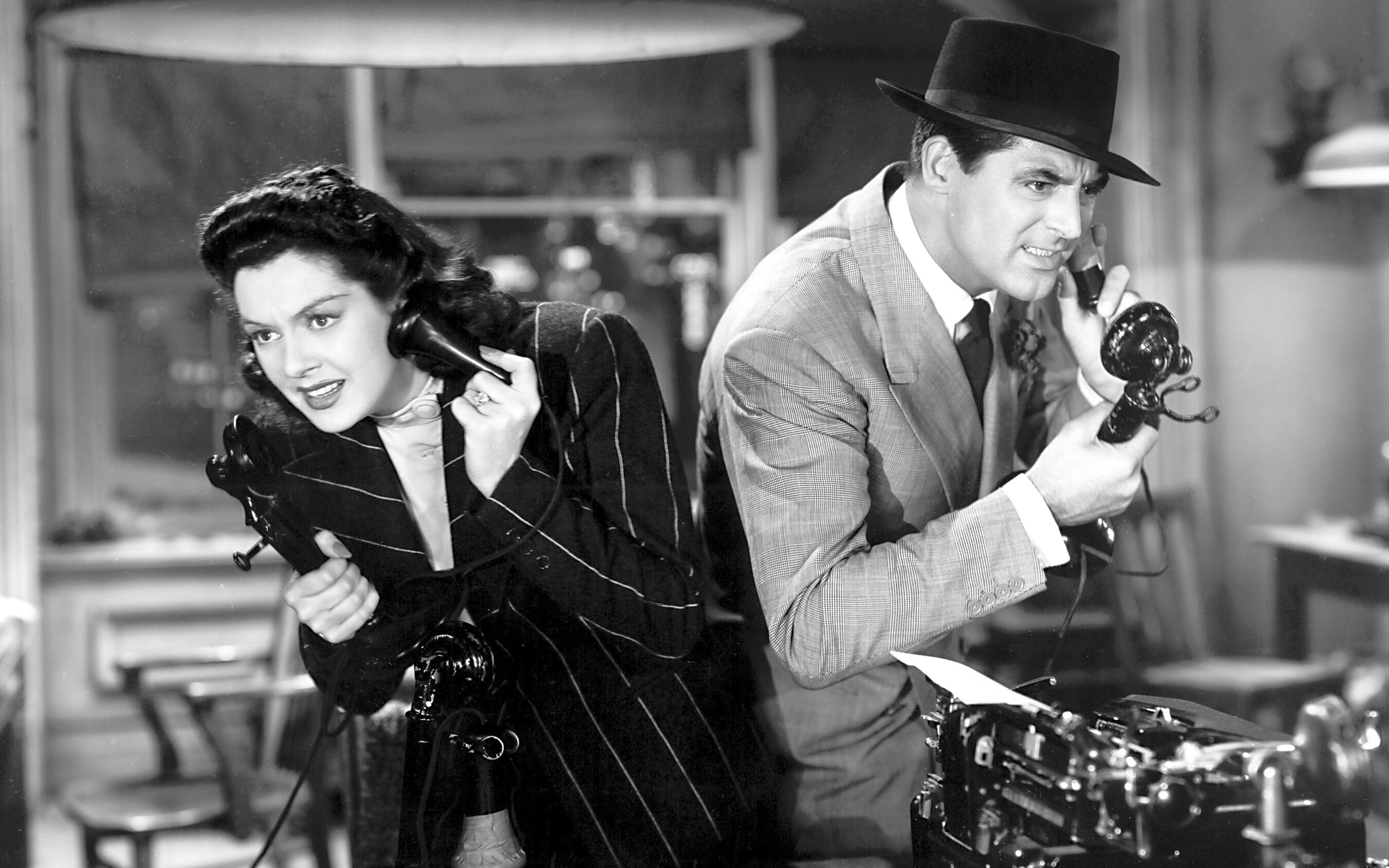
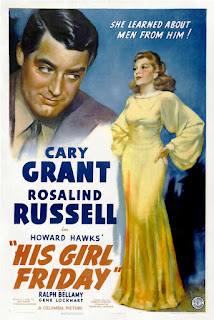
Rosalind Russell and Cary Grant bicker and spar in His Girl Friday, one of the all-time classics I’ve never quite clicked with

Director: Howard Hawks

Cast: Cary Grant (Walter Burns), Rosalind Russell (Hildy Johnson), Ralph Bellamy (Bruce Baldwin), Gene Lockhart (Sheriff Hartwell), Porter Hall (Murphy), Ernest Truex (Bensinger), Cliff Edwards (Endicott), Clarence Kolb (The Mayor), Roscoe Karns (McCue), Frank Jenks (Wilson), Regis Toomey (Sanders), Abner Biberman (Louie), Frank Orth (Duffy), John Qualen (Earl Williams), Helen Mack (Mollie Mallot)

There’s always one film classic that the world and his dog love to bits, but every time you watch it you just don’t get it. That classic for me is His Girl Friday. I’m not sure many films have appeared more than this one on film buffs’ lists of Top Ten Movies of All Time, but while I admire its many, many qualities, every time I’ve watched it – and it’s at least three now – I just don’t love it. More to the point I don’t find it funny (I know, I know I can practically hear your jaws hitting the floor), neither do I engage with or root for its lead characters (please don’t hit me).  I admire a lot of things about this film and how it is made. And I chuckle from time to time when I watch it. But for some reason even I’m not sure of, I’ve got no click with this film. Compared to The Awful Truth or The Lady Eve or The Philadelphia Story (all films this bears a lot of comparison with) I just don’t feel it.

It’s an adaptation of Ben Hecht and Charles MacArthur’s play The Front Page. In quite a modern touch, one of its lead characters is gender flipped. In the play, a newspaper editor tries to persuade his star reporter not to quit the game: in His Girl Friday the star reporter not only becomes a woman but, don’t you know it, the ex-wife of the editor, about to walk out (in more ways than one) to marry her dull fiancé. Cary Grant (who else?) is the fast-talking editor Walter Burns, Rosalind Russell the fast-talking star reporter Hildy Johnson. In fact, everyone is fast-talking, in the film that holds the world record for dialogue speed. Can Burns persuade Hildy to hold off leaving with fiancée Bruce Baldwin (Ralph Bellamy – sportingly playing up to his dull reputation) for one more day so she can cover the story of strangely naïve convict Earl Williams (John Qualen)? Let the madness ensue.

Let’s focus on all the good stuff first. Not least because my general lack of connection to a film loved by all and sundry is so personal, it almost defies analysis. Hawks was, rumour has it, won round to the idea of gender-swapping Hildy by hosting a read-through of the play at a dinner party with a shortage of people, meaning Hildy was read by a woman. That opened up a host of ideas around combining this with the classic re-marriage genre and bang away we go. It is, needless to say, a brilliant idea and adds such a spark to every single interaction between the two characters that it distinctly improves the play (later productions have often carried the idea – and the dialogue – across from this film).

On top of this, Hawks wanted to make this the fastest talking comedy film ever made. And boy does he succeed at that. The dialogue of this film is delivered with such rat-a-tat speed that clock watchers report it hits a rate of over 300 words a minute (try reading that many words out in one minute to see how fast that is). It gives the film a ferocious manic energy and thunder-cracker momentum and keeps the punchlines coming fast. It also needs gifted actors, which it sure-as-hell gets here. Grant possibly hits his comedic peak here, managing to still remain suave, cool and collected, even as he’s ripping through words and shifting verbal goalposts at dazzling speed. This is also Russell’s career highlight, embodying the image of the sort of spunky, arch and no-nonsense professional woman of screwball comedy that all others (even Hepburn) are measured against.

They race through a film that makes excellent use of long-takes, intelligent single-shot camera moves and careful, intelligent editing to highlight the electric speed of the zany dialogue. In particular, Hawks makes a brilliant motif of telephones (those old candlestick phones), which characters are forever hurling instructions down, using as escape tools from awkward moments and juggling conversations with (either from multiple phones or between the phone and people in the room). They are used for short, sharp, punchy lines – and it fits a film that is all momentum and short-hand. The ultra-smart, quotable banter, littered with one-liners, is the ultimate epitome of the popular style of dialogue at the time, which favoured this style over the speeches and deeper content that was seen as more of the preserve of theatre.

Walter and Hildy in this version also become the epitome of “the screwball couple”. The divorced partners who of course still love each other, largely because they recognise that no-one else will share their insane energy and obsession. Not to mention that fighting and feuding with their intellectual equal is a million times sexier (and better foreplay) than a thousand dinners at home with someone average will ever be. Ralph Bellamy does good work here (essentially, like Grant, repeating his role from The Awful Truth) as that dull, trusting man – the only one in the film who vaguely resembles a human being and therefore, obviously, the character the audience likes the least (who goes to the cinema to see someone like themselves on the screen, eh?)

There is so much right about His Girl Friday. The actors are sublime, the dialogue delivered perfectly, Hawks’ direction is pin-point in its mix of old-Hollywood classicism, and it’s very well shot. So why don’t I like it more? It’s that most personal feeling: I just don’t find it funny enough. Maybe that’s because I need to connect with characters more – and I don’t connect with Hildy and Walter. In some ways I don’t even like them. His Girl Friday is frequently an unapologetically cruel film: Hildy and Walter treat several people like crap, largely for their own amusement or as collateral damage in their own war of foreplay. At one point a desperate, lonely woman attempts suicide (she jumps out of a damn window falling a couple of floors) – Hildy and Walter are joking about it in seconds. They are cold, self-obsessed people and for all their superficial charm, there isn’t any touch of warmth to them at all. They are very artificial people in an artificial world. In all, I don’t really like them and I find it hard to careor want them back together (other than recognising that they deserve each other).

Believe me, I understand some comedy is cruel, I don’t have a problem with that. But I don’t think His Girl Friday realises it’s that kind of film. The Awful Truth has a very similar plot – but that had its characters recognise their own faults and also gave us reasons to care for them as human beings. His Girl Friday doesn’t do either of those things, meaning I laughed a lot in The Awful Truth and not so much in His Girl Friday.

Can you still bear to read on after such blasphemy? But there you go. Everyone has that stone-cold classic that they just can’t get on board with. This film is mine. I respect so much about it, but it neither tickles my funny bone nor makes me feel welcomed. I find it a cold and cruelly minded film, that looks down on people with scorn – from Bruce to criminal Earl Williams and most especially to his distraught girlfriend Molly – and invites us to do the same. It wants us to love the popular kids in the class and join them in spitting paper balls at the losers. This doesn’t do it for me. I know everyone loves it. Hell, I know I’m probably wrong. But I just don’t love His Girl Friday.

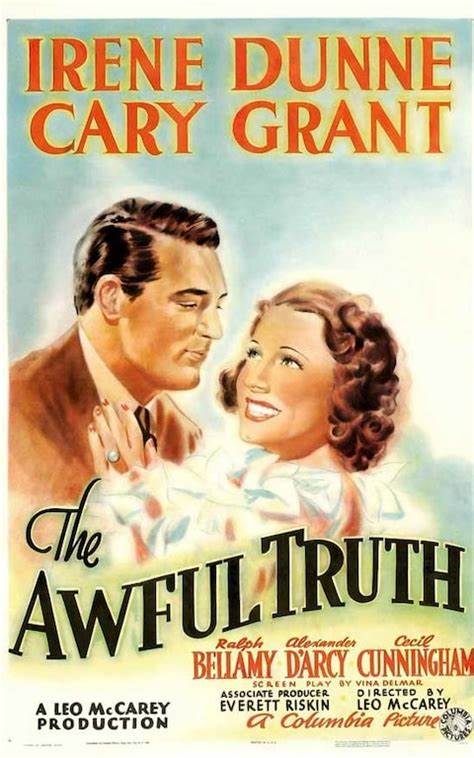
The Awful Truth (1937)

Irene Dunne and Cary Grant flex their comic muscles to outstanding effect in The Awful Truth

Director: Leo McCarey

Cast: Irene Dunne (Lucy Warriner), Cary Grant (Jerry Warriner), Ralph Bellamy (Dan Leeson), Alexander D’Arcy (Armand Duvalle), Cecil Cunningham (Aunt Patsy), Molly Lamont (Babara Vance), Esther Dale (Mrs Leeson), Joyce Compton (Dixie Belle Lee), Robert Allen (Frank Randall), Robert Warwick (Mr Vance), Mary Forbes (Mrs Vance), Skippy (Mr Smith)

Lucy (Irene Dunne) and Johnny (Cary Grant) Warriner divorce because both of them are constitutionally incapable of being faithful. But yet, they also pretty much can’t stand the idea of the other being with anyone else. Can they face The Awful Truth that they are, in fact, perfect for each other? This is a feuding husband and wife who enjoy the horrified looks on the faces of other people as much as they enjoy seeing how far they can push each other.

When winning the Oscar for Best Director for this film, Leo McCarey believed he actually deserved it for his more serious melodrama about the struggles of the elderly, Make Way for Tomorrow. While Make Way for Tomorrow might well be a more serious work, and not the souffle of The Awful Truth, I’m pretty sure far fewer people over the past 80 odd years have found revisiting it such a delight as going back into The Awful Truth. Perhaps the eponymous truth for McCarey was that we are never the best judges of our own work.

The Awful Truth is possibly the best, funniest, remarriage comedy ever made. It was pulled together almost from nothing onset. Nominally an adaptation of a play by Arthur Richman, McCarey effectively dumped almost the entire plot and instead largely improvised the film and its plot on set as he went, throwing in jokes, plot developments and bits of business depending on what worked with the actors on the day. Producer Harry Cohn would arrive on set to find McCarey plinking on a piano, swopping stories and coming up with ideas for what they would shoot that day. From this the director would decide on the structure of the scene, the jokes and most of the dialogue. No wonder Cohn was pulling his hair out.

Sounds like chaos right? The stars certainly thought so. Grant was terrified. Prior to this a reliable Studio actor, used to being given the lines and standing where he was told. Finding out here that McCarey wanted something loose and improvisational, at first he was all at sea – even offering instead to buy himself out of the film. But McCarey saw something in him: in fact what he saw was “Cary Grant”. The Awful Truth is the moment the Grant we all know came to be: sophisticated, arch and a masterfully relaxed light comedian (rumour has it, at least partly based on McCarey himself). From hating the experience, Grant suddenly realised it was inspired. The same went for his co-stars: Dunne, Bellamy and the rest all excitedly contributed their own ideas and business into what became one of the greatest comedies of all time.

The Awful Truth is frequently laugh-out loud funny, a perfect combination of witty lines delivered with pin-point perfection. Many of the best lines fall to Irene Dunne’s Lucy, from denying an affair with her latest beau (“That’s right Armand. No one could ever accuse you of being a great lover. That is, I mean to say…”), to archly responding to Jerry’s “I know how I’d feel if I was sitting her with a girl and her husband walked in” with a “I’ll bet you do”. Grant though gets plenty of his own – “The car broke down? People stopped believe that one before cars started breaking down.” – and only he could make “I only just met her” a laugh-out loud moment. Nearly every scene has a perfect bon mot, brilliantly delivered.

McCarey’s direction also adds hugely to the comic effect. The Awful Truth is so smooth, polished and assured you can overlook how skilfully and brilliantly it’s been put together to accentuate the comic effect. From cuts that reinforce or set up gags, to characters entering and leaving at the edges of frames at the perfect moment for a laugh, the entire film is a masterclass in how to shoot and frame comic business. The film is a triumph of reaction shots: watch Grant, Dunne and Bellamy respond to the appalling singing of Jerry’s new girlfriend Dixie Bell (Lucy: “I guess it was easier for her to change her name than her whole family to change theirs”). Best of all a superb sequence where we hear Jerry and Armand fight off screen (with crashes aplenty) while Lucy attempts to maintain a banal ‘nothing to see here’ conversation with Daniel and his mother.

The entire film is a triumph of comic set-pieces, with Grant and Dunne sparking off each other like two whirligigs of static electricity. Both actors are absolutely sublime. Grant manages to make everything not only funny, but also effortlessly cool and his archness and confidence are hilarious. Dunne throws herself comedy with a full-blooded commitment and a total willingness to look silly. Like Grant, she also has the ability to tip the wink to the camera and flag up just how ridiculous many of these situations are. Ralph Bellamy, on paper, has the dullest role as the straight man but as well as being winningly naïve, he also has two show-stopping moments, most strikingly his hilariously enthusiastic dancing (made even funnier by Dunne’s increasingly uncomfortable efforts to keep up with him).

It’s all wrapped up in a plot light as air, perfect for the jokes to latch themselves onto. You’ll laugh almost from the first, but you’ll also care about these two dotty eccentrics who are clearly perfect for each other. With Grant creating his entire screen persona in front of your eyes and Dunne absolutely radiantly hilarious, The Awful Truth will carry on entertaining the masses for decades to come. Hopefully McCarey doesn’t regret that Oscar decision too much.

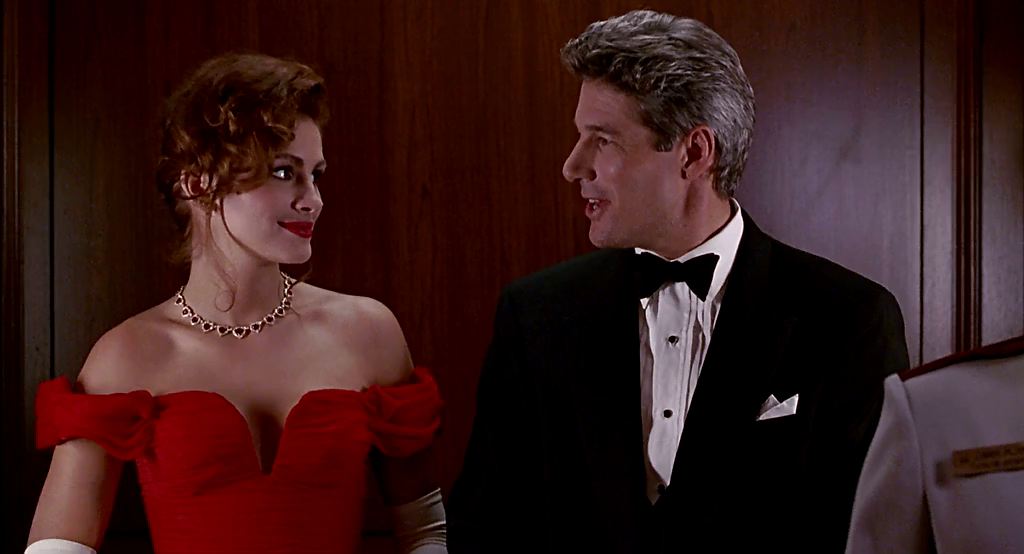
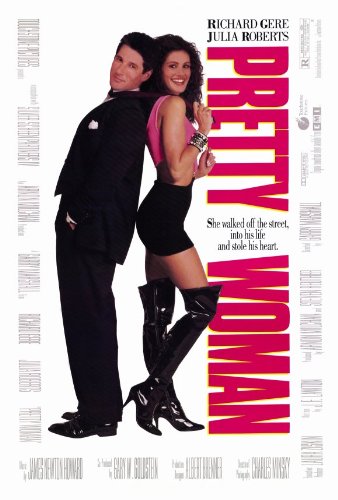
Pretty Woman (1990)


Hard bitten businessman meets prostitute: of course romance blossoms. Happens all the time right?

Director: Garry Marshall

Cast: Richard Gere (Edward Lewis), Julia Roberts (Vivian Ward), Ralph Bellamy (James Morse), Jason Alexander (Phillip Stuckey), Héctor Elizondo (Barney Thompson), Laura San Giacomo (Kit De Luca)

In a parallel universe there exists a gritty prostitution drama Three Thousand. Al Pacino plays a cool, heartless besuited executive who picks up a prostitute, played by Diane Lane. The prostitute is bitter and cynical and addicted to cocaine. Pacino needs a female face and pays her top whack for a weekend’s work with one condition – no crack for a week. However, addiction and bad company are hard to shake off, and Lane’s prostitute succumbs to addiction once again and is turfed out on the street. Realising her life is in the toilet, she closes the movie by catching a bus to Disneyworld (her childhood dream to visit) – hoping that tomorrow “will be another day”.

But that’s a parallel universe, where writer J.F Lawton’s original screenplay Three Thousand emerged onto screens in line with his vision. In this one, Garry Marshall and Hollywood realised that the same story, with a heft of rejigging and a dollop of charm, could become a modern Cinderella story. So in this universe it became Pretty Woman, a charming romantic comedy where a besuited executive (Richard Gere), who has mislaid his soul but is still a charming hero, picks up a wholesome, sweet prostitute (Julia Roberts) – and they both change each other’s lives for the better.

I don’t think such a film would be a hit today. Can you imagine the online backlash? Can you imagine the bashing a film would get that presented prostitution largely as just another possible career choice for a girl in Hollywood? Flipping heck, we’re currently going through a backlash against Ryan Gosling’s character in La La Land, so goodness only knows what the Twitterati would make of Julia Robert’s Vivian Ward in this.

But despite everything, Pretty Woman gets away with it. Julia Roberts oozes so much charisma and joie de vive that you let slide the fact that she is not 1% convincing as a prostitute – or that despite living on the streets and being practiced at selling herself for sex, she remains wholesome and untouched by the nastiness around her. But then that’s par for the course for the entire film – it’s a bizarre fairytale that’s told with such swooping charm and playfulness, and with such an old-fashioned lightness of touch, that it makes you feel churlish to point out that it’s rooted in something profoundly troubling and unpleasant.

Not surprisingly given the character’s initial appearance as a prostitute, Vivian is a role that half of Hollywood turned down before Roberts said yes. But her star-making combination of girl-next-door charm and the perfect amount of sass makes her totally endearing.  She is brilliant. Equally Richard Gere gives a perfect low-key, Cary Grant style performance as the smirking executive. To be honest, he’s no closer to what a hard-bitten businessman would really be like than Roberts is to a real LA prostitute, but hell it doesn’t matter, you still come out of this movie wanting to give him a hug. As the guy sings at the end while our heroes embrace on the stairs, “This is Hollywood!”.

So despite the fact that it should really hit all your outrage buttons, and make you gag on its sentimentality, it’s funny, sweet and lovable enough that you just disengage your brain and go with it. The film does this because it taps brilliantly into the same class unease as we all feel – who hasn’t popped into a high class hotel or (most brilliantly of all) a high-class shop and felt (or been made to feel) “I don’t belong here…”. Despite its subject matter, it all feels endearingly old fashioned, like something from the 1930s. The old fashioned shooting style, the structure that owes a lot to fairy tales, the jaunty old school musical numbers, the restrained sense of sex – it’s all successfully mixed together to make us feel safe.

Away from the wonderful leads, Jason Alexander and Laura San Giacomo have the thankless tasks of showing us what big business sharks and Hollywood Boulevard prostitutes are probably really like, but handle them well. Hector Elizondo is marvellous as a cuddly hotel manager, part a sort of benevolent uncle to Vivian, part a smoothly charming and caring Henry Higgins (although of course, the idea that prostitutes are unknown at high class hotels is equally nonsense).

The film is old fashioned, demands you not think about it and has two perfectly cast, charismatic leads who rarely played these sort of parts better. It’s not remotely rooted in any sense of reality and don’t even begin to think about any sort of message this could send to anyone. Think about it – as millions and millions of people do – as a handsome prince sweeping a normal girl off her feet. Perfect cinematic comfort food.