Tag: Ralph Ineson

Frankenstein (2025)

Frankenstein (2025)

Del Toro’s dream project makes it to the screen in a lavish gothic spectacular

Director: Guillermo del Toro

Cast: Oscar Isaac (Baron Victor Frankenstein), Jacob Elordi (The Creature), Mia Goth (Elizabeth Harlander), Felix Kammerer (William Frankenstein), Lars Mikkelsen (Captain Anderson), Christoph Waltz (Henrich Harlander), David Bradley (Blind Man), Charles Dance (Baron Leopold Frankenstein), Ralph Ineson (Professor Krempe)

When he was a kid del Toro fell in love with James Whale’s Frankenstein. It was his dream project to create his own version of Mary Shelley’s classic. Year of dreaming pay off in this visually gorgeous, and emotionally engaging film – even if it’s also a little overlong and overindulgent. Del Toro throws everything into Frankenstein, creating a grand Gothic epic whose sympathies firmly lie with the abused Creature.

You must be familiar with the plot: in eighteenth century Germany, Frankenstein (Oscar Isaac), driven by never-really-resolved anger over his mother’s death, dreams of conquering death. With the funding of arms dealer Harlander (Christoph Waltz), who is also uncle to the woman he loves: Elizabeth (Mia Goth) who happens to be fiancée to his younger brother William (Felix Kammerer). On a stormy night, he gives life to the Creature (Jacob Elordi) but quickly rejects him. The Creature tries to find a place in the world, only to discover the world is full of prejudice and violence towards him and the Creature’s resentment against his thoughtless creator grows.

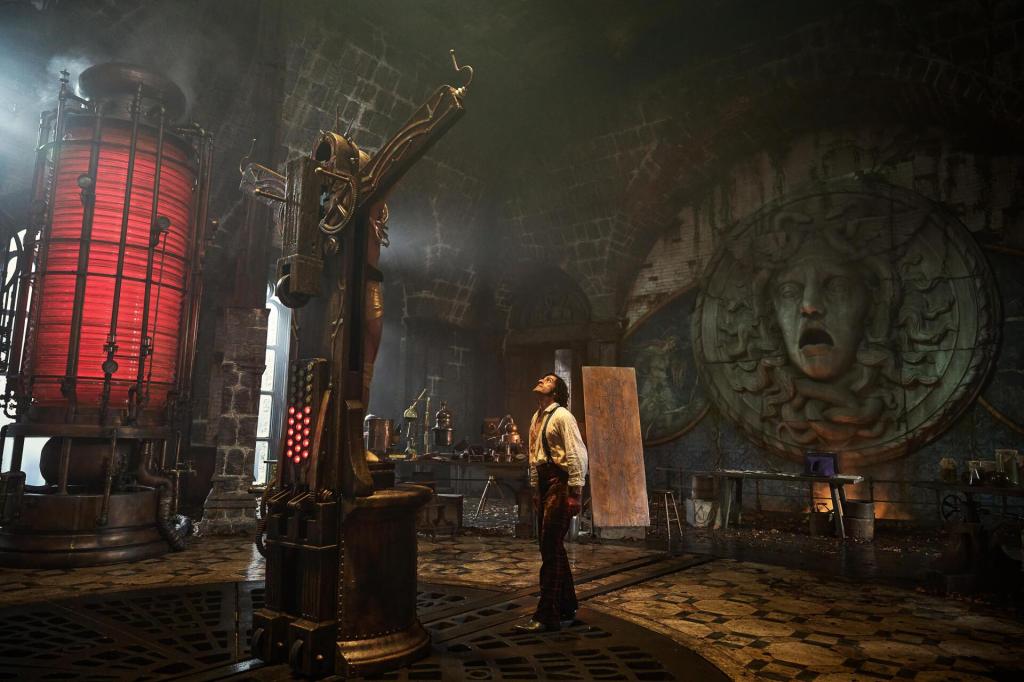
Del Toro’s film looks absolutely stunning, a sumptuously designed Gothic melodrama with extraordinary sets, grand costumes and beautiful cinematography (the Polar-set framing device is particularly striking, covered in lusciously contrasting blues and greens). There are striking echoes of the visual intensity of Pan’s Labyrinth, with Frankenstein’s lab turned into a mix of laboratory and classic temple, including a giant Medusa sculpture. The birthing sequence is a grandiose, operatically Gothic thing of beauty, a version of Whale’s film dialled gloriously up to eleven.

Del Toro’s film goes back to the novel in some ways (in themes and its Polar framing device), but in many ways it’s more of a complex, emotional reimagining of Whale’s film. Isaac’s Frankenstein, an egotist in need of an audience feels very similar to Colin Clive. Whale’s key motif, the Creature’s romantic yearning for the sun, becomes thematically central here. As there, Frankenstein conducts his experiments in a colossal Gothic tower, keeps the Creature chained and makes vague attempts to rear it and takes no responsibility for his actions or the deaths connected to it (in fact Isaacs’s Frankenstein lies and lies in a weasily attempt to protect his reputation). Waltz’s arms dealer funder of Frankenstein’s insanity feels like a version of Pretorious from Bride of Frankenstein, while del Toro goes even further than that film in deepening the bond between the Creature and the Blind Man.

Del Toro also doubles down on Whale’s implicit sympathy for the Creature. Here re-imagined as possessing near super-human strength and durability (his violent responses to being attacked being partially a result of his own strength being uncontrollably great), his child-like vulnerability is as dialled up as his actual physical invulnerability. The Creature feels, first and foremost, like a thought experiment by Frankenstein – and the fact this experiment has effectively rendered the Creature immortal and capable of a Wolverine-like cellular regeneration, condemned to walk the Earth forever alone only heightens the creator’s myopic selfishness.
One of del Toro’s key themes is terrible parenting. Much as he loathed his domineering, brutal father (Charles Dance, in a role perfectly crafted for his austere distance) who caned his face (his hands are too precious) when he flunked remembering anatomy facts, Frankenstein ends up echoing his father’s approach. When the creature constantly fails to say anything other than ‘Victor’, he too reaches for a cane to beat learning into him. Like his father, he resents the creature for being a bad reflection on him. He is, effectively, a dead-beat Dad, casually fathering a child which he has no idea how to treat, who falls back on cruelty.

There can be few Frankenstein’s on film less sympathetic than the version played here by an impressively egotistical Oscar Isaac. He’s full of preening self-importance and self-justification, obsessed with his task but giving no thought to its consequences. Twice he reanimates corpses then callously switches them off without a second thought. Giving birth to Frankenstein – just like in Whale’s film – after an initial interest (that is really self-congratulatory pride) his reaction is to chain him up in the basement and lose patience at him. With his constant milk-drinking there is a sense he’s a little boy who never grew up, and to him love is founded on possession: first of his mother, then his brother, then Elizabeth, all of whom at various points he wants to keep to himself – while his anger at the Creature is rooted in his failing to meet Victor’s expectations.

Frankenstein is at heart an angry mother’s boy, resenting his father for ‘taking’ his mother away from him (del Toro even has him wrapped in his mother’s distinctive red when he wakes to discover the Creature lives). There is more than an echo in that in his love for Elizabeth, the fiancée of his younger brother (who he also subconsciously resents for both ‘killing’ his mother in childbirth and for having the sort of relationship with his father Victor never had). These Freudian feelings are subtly enforced by Mia Goth playing both roles (it’s so subtly done I missed it first time round). Victor’s love for Elizabeth is just as possessive and selfish as that for his mother – and in the same ways his contempt for the Creature is for ‘failing’ him.

By contrast with this monster, the Creature is presented overwhelmingly sympathetically. Played with an outstanding physical and emotional commitment by Jacobi Elordi, he’s framed as a child stumbling towards a painful adolescence. Freshly born, he waddles like a toddler, stares in fascination at leaves floating on a stream and painfully forms the word ‘Victor’. Of course, it never occurs to his creator that this is the equivalent of “mama”. Only Elizabeth, who feels an immediate affinity with the sensitive soul, understands this. Only she tries to speak to him – or asks what his name is.

The poor Creature escapes into a world he quickly full of senseless, prejudiced violence. He bonds with a stag – only for the creature to be shot in front of him by hunters (who instantly turn their guns onto him). In conversation, Elordi presents a man who is sensitive, kind and gentle but capable of anger and fury. Del Toro crafts a tender relationship between the Creature and David Bradley’s Blind Man (the only person, other than Elizabeth, to look past his appearance). The film’s second act, focusing on the Creature’s emotionally painful interaction with the world is its strongest – not least because you feel throughout del Toro’s deep bond with him.

After all this, it’s surprising that Frankenstein ends on a note of hope. Del Toro’s film isn’t always quite nimble enough for this: some of its more optimistic moments can feel as if they have emerged a little thin air (or from the optimistic wishes of the director). In particular, Elizabeth’s bond with the Creature feels so swiftly sketched out it failed to completely convince (more time on this and less time on Waltz’ creepy arms dealer would have been welcome). But this feels like a passionate, committed and perhaps above all beautiful to-look-at piece of work with a real emotional heart. This easily lifts it into the upper echelons of Frankenstein adaptations.
The Fantastic Four: First Steps (2025)

The Fantastic Four: First Steps (2025)

Fun entry in the MCU, bright, pacey and entertaining – but never engages with its deeper issues

Director: Matt Shakman

Cast: Pedro Pascal (Reed Richards / Mister Fantastic), Vanessa Kirby (Sue Storm / Invisible Woman), Ebon Moss-Bachrach (Ben Grimm / The Thing), Joseph Quinn as (Johnny Storm / Human Torch), Julia Garner (Shalla-Bal / Silver Surfer), Ralph Ineson (Galactus), Sarah Niles (Lynne Nichols), Mark Gatiss (Ted Gilbert), Natasha Lyonne (Rachel Rozman), Paul Walter Hauser (Harvey Elder / Mole Man)

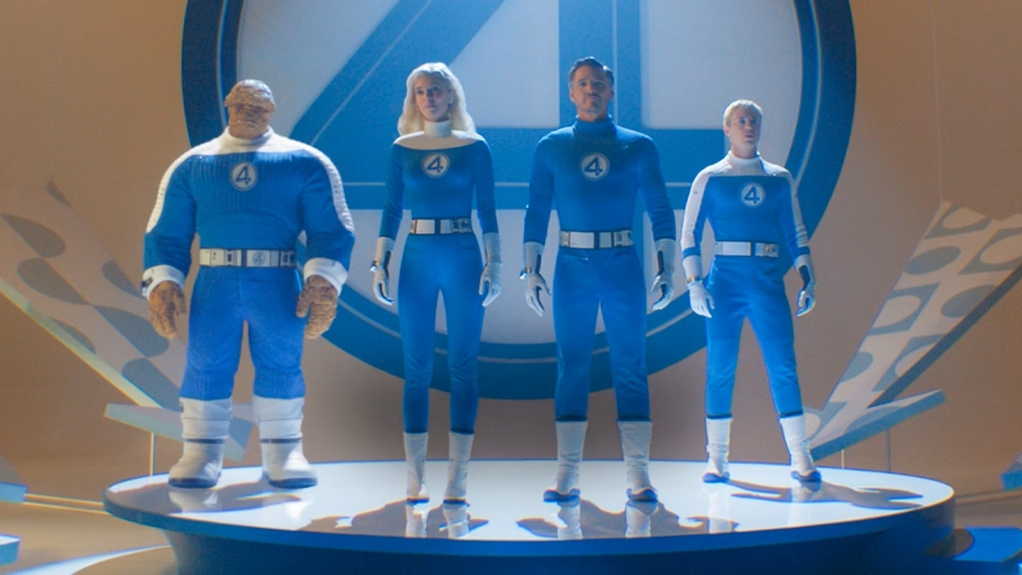
It’s taken almost seventeen years (can you believe the MCU has been going for so long?!) but ‘Marvel’s First Family’ finally make it to the party, escaping one of those legacy rights deals the comic giant signed before working out it could make films itself. Since, for those interested, there are already three Fantastic Four origins-films for you to seek out (they gained their powers from flying through a space storm), Fantastic Four throws us straight into the second Act of our heroes lives, communicating their origins in an in-universe TV show celebration of their achievements (including a montage of them defeating a parade of second tier villains, including Mole Man and an army of super-intelligent chimps) before throwing them up against their biggest challenge yet.

For their unofficial leaders, Reed Richards (Pedro Pascal – whose real life super-power seems to be that he appears in all movies) aka Mr Fantastic science super-genius and master strategist with limbs of rubber and Sue Storm (Vanessa Kirby) aka Invisible Woman, the world’s greatest diplomat, who can create forcefields and make herself (and others) invisible) there is the challenge of impending parenthood. And for the whole gang, also including scientist and wild-child Johnny Storm (Joseph Quinn) – he can set his body on fire – and Reed’s best friend, astronaut and Herculean powered made-of-stone Ben Grimm – it’s the threat of Galacticus (Ralph Ineson) a planet-eating giant whose herald (Julia Garner) arrives on a silver surfboard and announces Earth will be his next snack, unless the Four hand over Sue’s unborn child.

The Fantastic Four’s decision to skip the origins story throws us straight into a story that’s a lot of fun. A very enjoyable romp with some well-sketched out characters (played by engaging and charismatic actors), a few extremely well-made set-pieces, plenty of humour, just enough heart and a decent, city-crushing, smackdown at the end. It’s directed with a lot of bounce and joy by Matt Shakman and despite being about literally earth-shattering events manages to keep the focus tightly on the family at its core (perhaps a little too tightly, but more on that later).

It’s also a delightful triumph of design. Set in a sort of cyber-punk 1960s (the idea being that Richard’s intellect has super-powered mankind’s development), it’s a gorgeously realised world of 60s design, all curving surfaces and primary colours, intermixed with souped-up 60s technology like ingenious androids that run on cassette decks and flying cars, like The Jetsons made flesh (doubly engaging as the film so obviously committed to real sets rather than blue-screen invention). I also rather liked the implied joke that the world has progressed only in the areas Richards’ considered worthwhile: so this world has faster-than-light travel, flying cars and abundant energy sources, but totally lacks hi-def television or social media (and who can blame Richards for that).

There is also a certain charm in how the Four are universally beloved heroes. Everywhere they go, they are flooded by admirers and merchandise wearing children (it’s quietly never explored if the Four paid for their colossal, futuristic tower and private space base with a fortune in image deals). Reed fills time between inventing the future with hosting a TV show about science for kids, while Sue essentially runs the United Nations. Johnny is the star of every social event and Ben bashfully lifts the cars for the kids in his Brooklyn neighbourhood and flirts shyly with a primary school teacher (Natasha Lyonne).

This world is pleasingly shaken up by the arrival of the Silver Surfer, a charismatically unreadable turn from Julia Garner (under a CGI naked silver body). First Steps successfully uses this threat to humanise a group of heroes who otherwise might have proved too good to be true. For starters, their confident assurances all will be well when they head for space turns out to be far from the case when they are comprehensively outmatched by an immortal planet eater and his physics-defying silver herald. First Steps most exciting and thrillingly assembled scene is their retreat from a first encounter with this giant, a brilliantly managed high-octane chase around a black hole with a few extra personal perils thrown in on top, made even more gripping by Michael Giacchani’s pitch-perfect score.

That’s before the devilish conundrum of balancing the fate of seven billion people with Sue’s unborn son. If First Steps refuses to really dive fully into it, it does successfully raise the emotional stakes. It’s also a ‘reasonable’ offer from Galactus, a surprisingly soulful anti-villain, played with a mix of disdainful arrogance and death-dreaming melancholy by Ralph Ineson (there is a lovely moment when he takes a break from imminent city-smashing to pick up and sniff a fistful of Earth as if he’s forgotten the smell) desperate to escape the cycle of endlessly devouring planets to maintain his interminable life.

Horrific as it is to imagine a baby taking his place, First Steps avoids really delving into this intergalactic trolley problem. Because, at heart, it’s a film where superheroes alarmingly make decisions for billions of people with no oversight or pushback. Having unilaterally decided to reject Galactus’ offer, the Four seem surprised the rest of Earth are less than thrilled at their impending demise because the Four won’t make a Sophie’s Choice. There is some rich potential here to really delve into the way the Four are, arguably, benign dictators, reshaping this world in their own image and accepting adulation and unquestioning following. First Steps ignores it – the world’s discontent underdone by a single speech from Sue – and only for a split second is the moral quandary treated as something meriting genuine debate. As the surfer points out, if the kid was an adult he would certainly accept: is it right to take that choice from him?

But it’s a comic book movie, right? So, let’s not overthink it. And Marvel was never going to darken its First Family with hints of elitest oppression, demanding sacrifices from others (and the world makes huge sacrifices to protect their child) but not themselves. First Steps is a fun film. I liked its vibe, like a live-action Incredibles (only not that good), I enjoyed the BB4-like robot Herbie, all four of its leads are highly likeable with excellent chemistry. So, I’m trying to just not think about where this onrushing trolley is going and instead enjoy the view.

Nosferatu (2024)

Nosferatu (2024)

Eggers’ wonderfully atmospheric remake is creepy, haunting and quite extraordinary

Director: Robert Eggers

Cast: Bill Skarsgård (Count Orlock), Lily-Rose Depp (Ellen Hutter), Nicholas Hoult (Thomas Hutter), Aaron Taylor-Johnson (Friedrich Harding), Willem Dafoe (Professor Albin Eberhart von Franz), Emma Corrin (Anna Harding), Ralph Ineson (Dr Wilhelm Sievers), Simon McBurney (Herr Knock)

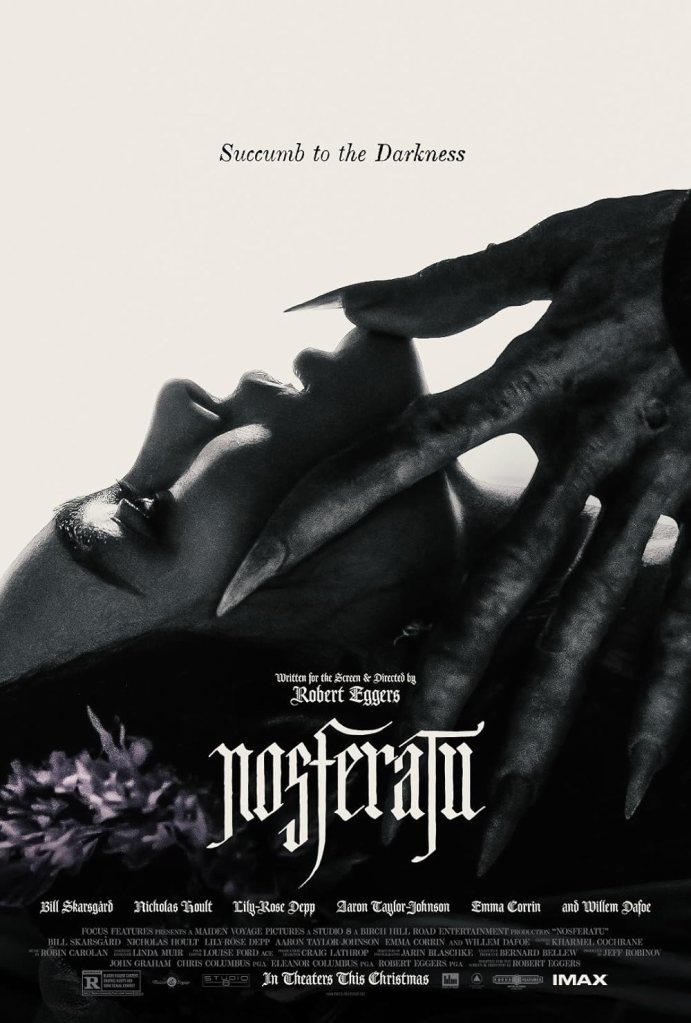
Robert Eggers dreamed so long of his own version of FW Murnau’s seminal vampire film (and Bram Stoker copyright infringement) Nosferatu, it was originally announced as his second film. We had to wait a bit longer, but it was well worth it. Eggers’ experience helped him create a film infinitely richer than I suspect he would have made ten years earlier. Nosferatu is an astonishing, darkly gothic, richly rewarding film, glorious to look at and a fiercely sharp exploration of the subtexts of both sources. It can never match the original’s seminal impact, but celebrates and elaborates it.

The story hasn’t changed dramatically from the one Murnau ripped off from Stoker. In Wisborg, junior solicitor Thomas Hutter (Nicholas Hoult) leaves his beloved wife Ellen (Lily-Rose Depp) for Transylvania and a lucrative land deal with the mysterious Orlock (Bill Skarsgård) that could lead to a comfortable life for him and his new wife. Unfortunately, there are three things he doesn’t know: firstly, the Orlock is a ravenously cruel vampire, with extraordinary supernatural powers; second his employer Knock (Simon McBurney) is an occultist worshiper of Orlock; thirdly, Orlock has used his mental powers for years to terrorise and groom Ellen from afar and Hutter’s presence is the final step in his scheme to control her. It won’t be long until a deadly curse plagues Wisborg.

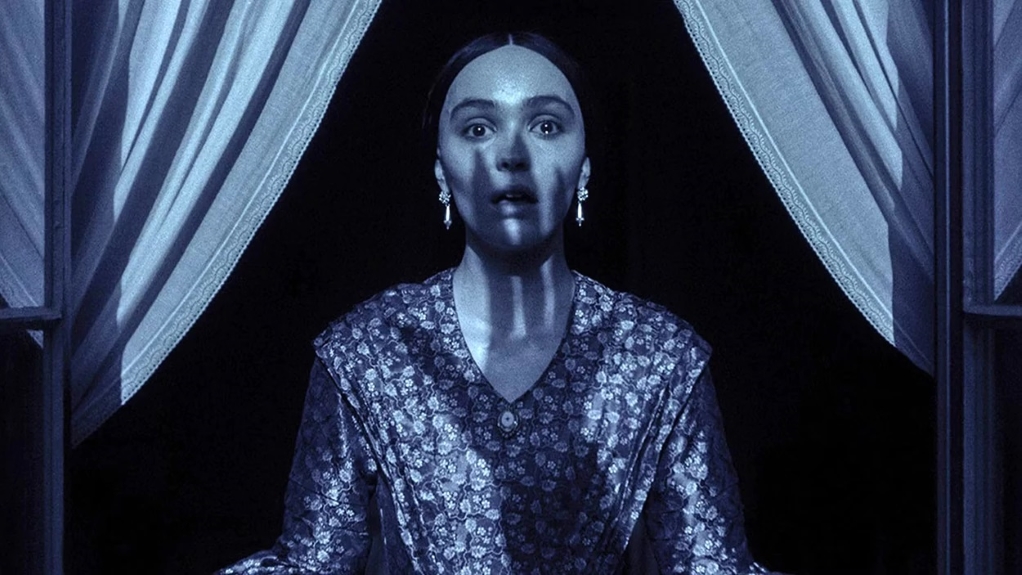
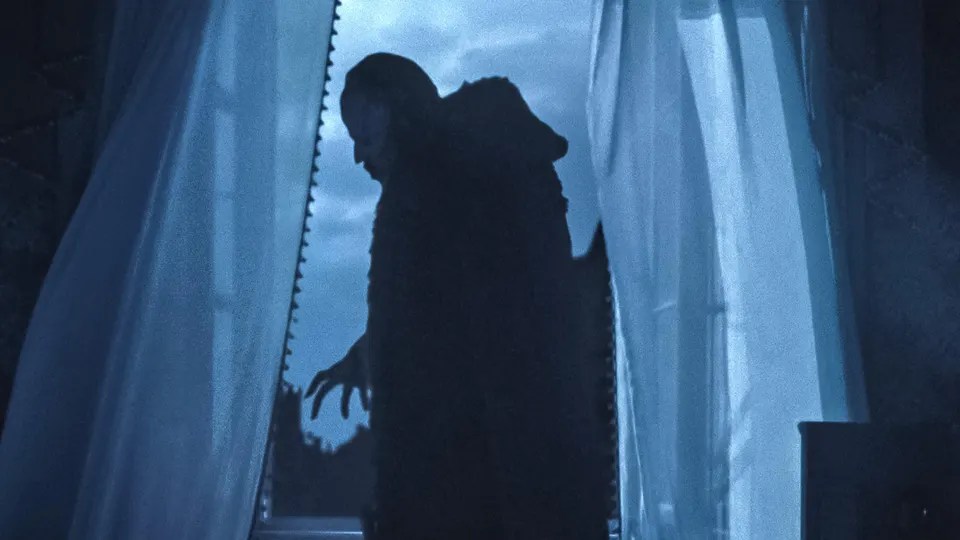
Egger’s dark (but extremely beautiful) gothic film drips with atmosphere, gloomy shadows rolling over its elaborate sets, the drained out night-time shots reminiscent of the tinted black-and-white beauty of the original. The entire film is soaked in love for silent-era horror, with homages to Murnau, Dreyer, Sjöström and so many others I couldn’t begin to spot them all – though I loved Orlock’s gigantic shadowy hand creeping Murnau’s Faustus-like over Wisborg. The film drowns in folk horror, from its snow-capped Transylvanian countryside dripping in unspeakable hidden evils to the unreadable motives of a mysterious Transylvanian village.

At its heart is an exploration of the sexual undertones of the vampire legend. Orlock’s assaults leave his victims are overwhelmingly sexual, with Orlock’s body thrusting forward while he drains the blood of his groaning victims. That’s not to mention Orlock’s revolting sexual manipulation of Ellen. Nosferatu leans heavily into Stoker’s dark sexual awakening subtext. Orlock’s psychological manipulation has left Ellen traumatised, torn between dark sexual desires and romance with Hutter. Nosferatu opens with a dark (dream?) sequence, as Ellen rises with sensual sighs from sleep, drawn towards Orlock’s seductive shadow in sheet curtains, before joining him outside for something that looks an awful lot like sex before Eggers cuts with a jump scare shot, our first glimpse of Orlock.

This is an Orlock radically different from Max Schreck’s original. While he shares his long nails and angular posture, here he is no-more-or-less than a decayed, rotting corpse. His body is covered in sores of decayed skin, with everything (including his penis) halfway to the compost heap, his bony legs and hips positively skeletal. There are homages to his Vlad the Impaler roots, from his fur-lined uniform coat (that like the rest of him has seen better days) to his surprisingly well-groomed moustache. But there isn’t a trace of the handsomeness of so many Draculas – this Orlock is possibly even more repulsive to look at than the rat-faced monstrosity of the original.

Skarsgård’s make Orlock a truly ruthless figure, delighting in his natural cruelty. With Hutter his looming, shadowy menace offers not a jot of home comforts, working to terrify a man who he sees as a perverse romantic rival. (His hallucinatory blood-sucking assault on Hutter is filmed in a manner reminiscent of rape). Throughout, he treats almost everyone he encounters with contempt and lofty disgust and takes a sadistic delight in torturing Ellen’s friend Emma Harding’s family, culminating in a truly shocking scene of grizzly horror. While the original Orlock was almost feral, like his rats, this one is a monstrous decayed sorcerer with a never-ending hunger and sadistic desire to play with his food.

He also has something the original never had: a voice. Skarsgård spent weeks in training to develop this (digitally unaltered) vocal range, a rolling bass-rumble which wraps itself around a raft of Dacian dialogue. Eggers’ gives him immense supernatural skills, in a film dripping with occult magic. Simon McBurney’s Knock (a remarkable performance) is a lunatic drowning in it: covered with dark markings, biting the heads of pigeons and communicating with Orlock by sitting naked in a Pentecostal star. His brain has been flushed out by Orlock’s mental power (who treats him like dirt) and the vampire’s hypnotic voice overwhelms the senses: just a few sentences drains Hutter of willpower (Nicholas Hoult’s fear is so palpable here you could almost touch it). Orlock’s malign influence can twist people or make them suddenly ‘wake’ with no idea of where they’ve been.

The power of his influence twists and distorts emotionally and physically. Lily-Rose Depp captures all this in a remarkable physical and vocal performance, as Ellen falls victim to Orlock’s mental manipulations. Depp throws herself into the most violent fits since Linda Blair: her body spasming, her voice distorted into an Orlock-mirroring gurgle, her eyes rolling back, her inhibitions falling away and blood weeping from deeply disgusting places, especially her eyes. Depp’s performance is extraordinarily committed, her fear and self-disgust at her manipulated sexuality (eekily from childhood) by the Count as tender as he hatred of him is sharp and all-consuming.

It’s never clear how far the vampire wants to screw Ellen, and how far he wants to consume her (Eggers even suggests, towards the end, that Orlock may even welcome his own destruction – perhaps the rapacious hunger is too much?). What is different from the original is Orlock and the plague he brings with him are different. While the original was a destructive force of dark nature, this Orlock is focused exclusively on punishing Ellen, with a literal plague striking down Wisborg.

In the face of this beast, the powers of science and reason are powerless (as Aaron Taylor-Johnson’s delicately performed Harding discovers, refusing to believe until its far too late). Like Murnau’s original, the powers of science and reason (such a key weapon against the vampire in Stoker) are useless. Even rationalist Dr Sievers (a fine performance by Ralph Ineson, channeling Peter Cushing and Michael Hordern) – a man so calm even the insanity of Knock can’t flap him – chucks in the towel and calls in Willem Dafoe’s barnstorming Professor von Franz (here considerably more effective than his counterpart), a scientist turned alchemist with deep occult knowledge.

But it can’t change the fact this is not a war between two sides, but a deeply personal struggle between Orlock and Ellen, with Hutter torn between them. Eggers’ focus on this personal story at the heart of a dark twisted legend adds a genuine freshness – and makes a superb counter-balance to the lashings of gothic horror the film soaks in. It makes for a superb remake that contrasts and comments on the original while telling its own story of dark, corrupted manipulation. Eggers’ direction is faultless in its atmospheric unease and there are superb performances from Skarsgård, Depp, Hoult and the rest. It’s a powerful work, overflowing with silent horror atmosphere while also feeling very modern that has the potential to haunt our nightmares as much as the original.