Tag: Reginald Owen

The House of Rothschild (1934)

The House of Rothschild (1934)

Old-fashioned historical melodrama with a well-meaning, earnest political message

Director: Alfred L Werker

Cast: George Arliss (Nathan Rothschild/Mayer Rothschild), Boris Karloff (Count Ledrantz), Loretta Young (Julie Rothschild), Robert Young (Captain Fitztoy), C. Aubrey Smith (Duke of Wellington), Arthur Byron (Baring), Helen Westley (Gudula Rothschild), Reginald Owen (JC Herries), Florence Arliss (Hannah Rothschild), Alan Mowbray (Prince Metternich), Holmes Herbert (Roweth)

It’s 1814 and things are looking tight for the international banking house of Rothschild. With the Napoleonic Wars over, partly thanks to Rothshild financial support of Wellington’s armies, Nathan Rothschild (George Arliss) is pitching to underwrite the loans to help restore France. Problem is, now the merde is out of the European fan, many of the Powers-That-Be don’t want to continue working with a Jewish bank. Led by scowling antisemitic Prussian Count Ledrantz (Boris Karloff), the Rothschilds bid is unjustly rejected. Rothschild outmanoeuvres his enemies to win the contract back, but it leads to a series of revenge pogroms in Prussia. Things change though, when Napoleon escapes from Elba. As all roads lead to Waterloo, will Rothschild back the Allied powers or throw in his lot with Napoleon?

The House of Rothschild is a very well-meaning, old-fashioned historical melodrama, that takes a strong stance against antisemitism. It clearly has more than half-an-eye on events in Germany in the 1930s. As the film’s Prussia of 1814 sinks into mobs hurling stones through windows, smashing up shops and chanting for the expulsion of Jewish people, while families flee across the body leaving their possessions behind (all while the self-satisfied, archly cold Ledrantz pushes his agents to provoke the people to yet more outbursts), surely many people would have seen parallels with Hitler’s Germany.

Throughout the film, the accusations of antisemites are pointedly broken down and strongly rebutted or placed into context. Why do the Rothschilds work in money? Because they are literally banned from any other profession. And money is the only tool they have to defend themselves against 2000 years of persecution; persecution that has made the Rothschilds feel a true affinity for their fellow Jewish people. Indeed, Nathan Rothschild feels a duty to stand firm and do anything he can to help his people: and if that means a bit of financial chicanery or applying heavy pressure to the European powers, then so be it. There is a greater good here when lives are at stake.

The scourge of racism is strongly displayed throughout the film. It opens with a prologue as Nathan’s father Mayer (George Arliss pulling double duty, under a pile of make-up and a wig) struggles to hide his justly-earned fortune from being stolen by corrupt tax collectors who call him ‘Jew’ and smugly tell him the amount he owes to the government is whatever they say it is. It’s a ferocious piece of open antisemitism, but it has genteel echoes when Nathan is later snubbed for an invite to a ball to celebrate Wellington’s victory (a victory he largely paid for) since Jewish people aren’t welcome at such events.

The House of Rothschild places its laudable anti-persecution aim into a very traditional, old-fashioned, costume drama that wouldn’t look out of place on the Victorian stage. It was a passion project of George Arliss’ (who cared deeply about its message), but also fit wonderfully well inside his wheelhouse. You can see its deep similarities to Arliss’ Oscar-winning vehicle Disraeli. Just as there, he plays a twinkly elder statesman, with a touch of the rogue but overflowing with decency and honour. Despite being seen as a suspicious outsider, he out-plays his rivals in an international conspiracy while casting an avuncular eye over a love affair in the family: in this case between his daughter (Loretta Young) and gentile British cavalry officer Captain Fitzroy (a fairly wooden Robert Young). Both films end with our hero celebrated by royalty at a grand ball, while cementing a loving marriage with his wife (played again by Arliss’ wife Florence).

Arliss is, of course, very good in a role tailor made for his mix of playful charm and speechifying. Much of the film is essentially dominated by Arliss, who delivers with his customary skill (even if his performance as Mayer is more than a little ripe) and if his performance feels more than a little like Disraeli #2, his comfort in front of the camera and the naturalness he brings to the role help enormously. Under the playful exterior, Arliss also finds a strength and determination, powered by a real moral fury at the injustices, slights and (eventual) violence perpetuated upon his people.

Few other actors get much to play with here. House of Rothschild is heavily fictionalised, from its invented nemesis in Count Ledrantz (Karloff is good value as the scowling racist) to the build-up to the Waterloo campaign. However, for history buffs like me, there is a fair bit of delight in seeing a parade of great European statesmen pop up in cameos. From Tallyrand to Metternich to Lord Liverpool, these powerhouses of politics fill out the margins, even if they barely come to life as characters. If there is an exception, it’s the customary gruff no-nonsense military bearing C. Aubrey Smith gives Wellington (here a man firmly on the side of decency and honour).

The romantic sub-plot is very disposable, despite the best efforts of all involved. It briefly overlaps with the film’s main themes – Rothschild is less than happy with his daughter marrying a gentile, while he suffers a parade of humiliations from Fitzroy’s compatriots – but otherwise provides little real drama. The various conspiracies are largely resolved through some ingenious Rothschild speeches. The film’s main success is always the creeping dread of antisemitic violence, a candle it keeps alive throughout its old-school, costume-drama melodrama, with just small drops of directorial and cinematic invention. It’s the main reason for remembering a film that’s entertaining enough, in a gentle, classic Hollywood biopic way. It never reinvents the wheel, but it’s passionate about the people who find themselves ground beneath it.

Note: Considering all that, it’s particularly sickening to note that footage from The House of Rothschild of Arliss in full Mayer Rothschild make-up was pinched and repurposed for Joseph Goebbels’ vile antisemitic epic, The Eternal Jew.

Random Harvest (1942)

Random Harvest (1942)

Two superb leading performances hold together a romantic confection of a film

Director: Mervyn Le Roy

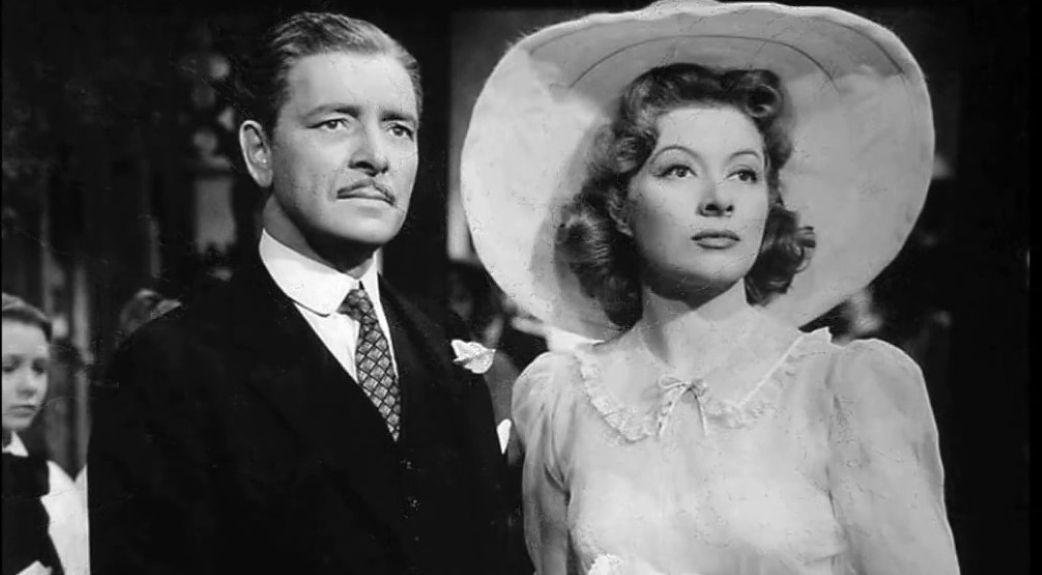
Cast: Ronald Colman (Charles Rainier/”Smithy”), Greer Garson (Paula Ridgeway/ “Margaret Hanson”), Philip Dorn (Dr. Jonathan Benet), Susan Peters (Kitty Chilcet), Henry Travers (Dr. Sims), Reginald Owen (Biffer), Bramwell Fletcher (Harrison), Rhys Williams (Sam), Una O’Connor (Tobacco Shopkeeper), Aubrey Mather (Sheldon), Margaret Wycherly (Mrs. Deventer), Arthur Margetson (Chetwynd Rainier), Melville Cooper (George Rainier), Alan Napier (Julian Rainier), Jill Esmond (Lydia Rainier)

Random Harvest is one of the most fondly remembered romances of Golden Age Hollywood – if you want yearning dedication bought to life, this is the film for you. It might also be one of the barmiest films ever made, stuffed with so many outlandish plot developments, hilarious logic gaps and hand-waved contrivances it would put a Netflix soap to shame. You can see why Syndey Pollack and Anthony Minghella eventually abandoned remakes: you can’t imagine a modern audience going with Random Harvest’s essential loopiness and not laughing somewhere along the line. Which is not to say it isn’t beautifully made and winningly bought to life at times.

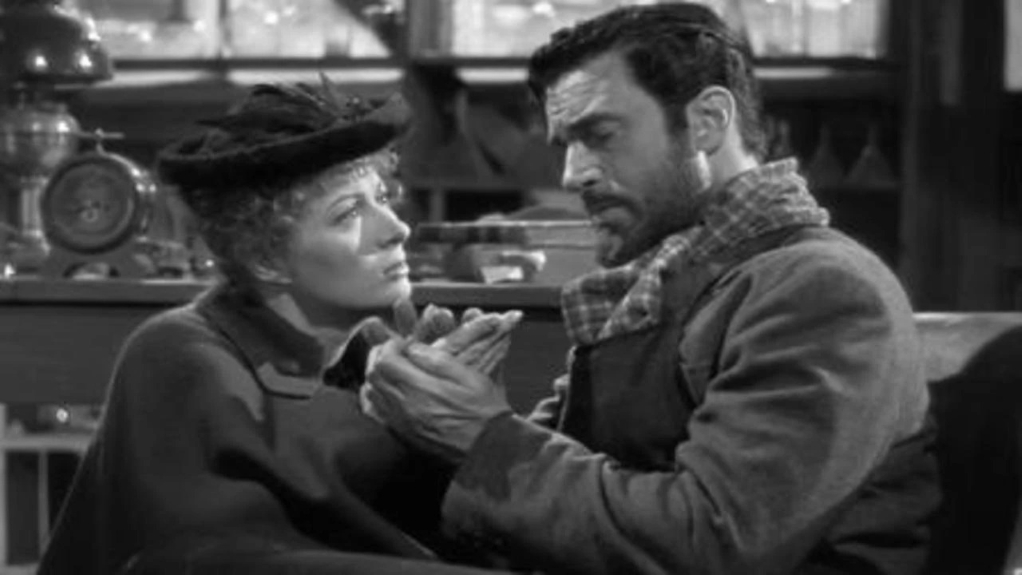
It’s the final days of World War One, and amnesic soldier “John Smith” (Ronald Colman) can’t remember anything about his life. On the final day of the war, he sneaks out of the asylum and runs into music hall performer Paula (Greer Garson). She takes a shine to “Smithy” and decides to save him. They run away to the country, fall in love, get married, have a baby, he starts to write, goes to Liverpool to start a journalism career… and gets hit by a cab. The collision restores his original memory – but also causes him to forget everything about Paula and his life as Smithy. Instead, he restarts his original life as industrial heir Charles Rainier, presumed dead by his family. While he lives this life for years, Paula takes a job as his secretary “Margaret”. Will he remember who she is?

It says a lot that that summary only scratches the surface of a plot that throws in the kitchen sink in attempting to ring as many tear-soaked tissues out of you as possible. Smithy and Paula carry out their little memory dance over the course of over twenty years. It’s the sort of a film where millionaire Charles only thinks about investigating what might have happened to him in Liverpool when nudged to do so after over a decade. Where the couple enter a ‘marriage of convenience’ as the memory-free Charles and fake Margaret. Where Charles’ owns a major factory in the town where our lovers first met, but neither (a) stepped foot there in 15 years (since the moment he does his memory starts to return) and (b) the heir to the town’s major employer wasn’t recognised by anyone while living in an asylum five minutes walk down the road.

Take it on the merits of logic and conventional narrative and Random Harvest crashes and burns. But this isn’t a film about those things. This is a classic weepie that stole the hearts of a war-torn nation in 1942 (it was the biggest hit of the year). Powered by two committed and emotional performances, if it hits you in the right mood its probably irresistible. The sort of long-term adversity that makes Romeo and Juliet’s look like a casual dalliance (so full of tragedy, the death of their son is literally a throwaway moment). It’s framed with a great, sensual beauty by Mervyn LeRoy and powered by an emotionally throbbing score by Herbert Stothart that’s just the right side of sickly.

Ronald Colman’s performance is quiet, measured and vulnerable (especially in his “Smithy” performance). From the start, he has eyes of hesitant, unknown sorrow and stumbles into a relationship with Paula like a new-born discovering life. Threads of his gentleness and excitability work their way into his Charles persona, tinged this time with the natural confidence of wealth. Nevertheless, Colman makes Charles a man who has dealt with unnerving amnesia by actively not thinking about it, carrying on a watch-chain the key to his “Smithy” home as a subconscious reminder. It’s a fine performance – so much so you can overlook he’s twenty-five years too old (the restored Charles forgoes returning to university, something that looks long gone for Colman).

Just as fine is Greer Garson, fully embracing an emotional roller-coaster as Paula. Introduced as a good-natured music hall singer (and Garson sings a high-kicking She’s Ma Daisy number in possibly the shortest skirt the Hays Code ever allowed), Garson’s warm and playful Paula is drawn towards “Smithy” in ways she almost can’t understand. But it’s a wonderfully different side for an actress so often associated with self-sacrificing wives and mothers: Paula is vivacious, forward and seizes the things she wants from life. It’s the second half – the patient, yearning desperation of “Margaret” hoping her husband will remember her – that leans more into her Mrs Miniver wheelhouse, but Garson mixes this with a real lingering, desperate sadness tinged with just enough hope that her husband might just recognise her.

Both performers overwhelmingly lift this otherwise (frankly) slightly contrived film into something rather sweet and endearing. It is, however, a film that would be even more so if it was shorter: the general morass of missed opportunities, misunderstandings and wrong ends of sticks being grasped would be easier to sustain over 90 than 120 minutes. It’s a rare film that covers so much ground over so much time that it’s lead character is declared dead twice.

The second declaration is Paula gaining that status for “Smithy”, dissolving their marriage and removing (you suspect for Hay’s Code reasons) the risk that Charles might accidentally commit bigamy by marrying his young niece. This is a lovely performance of youthful idealism and earnest devotion from Susan Peters (a tragic accident shortly after curtailed her promising career), and if the whole years-long subplot of the possibility of Charles marrying his besotted niece is a narrative cul-de-sac the overall film would be better without, it does at least mean we get the pleasure of Peters, performance captured forever.

But Random Harvest remains a pure romance: where no less than two women spend decades of their life in selfless, one-sided devotion for the lead and he still comes across as the sort of saintly man cheered by his own factory workers for sorting out a strike. The whole confection is a very fragile thing, but LeRoy carries this fully-loaded glass ornament with pure skill and the performances of Colman and Garson set the bar for classic Hollywood tragic romance. Minghella and Pollack were right – our cynical age can’t believe the nonsense – but on its own terms it still works.

Queen Christina (1933)

Queen Christina (1933)

Garbo is at her best in this luscious, romantic, beautifully filmed historical epic

Director: Rouben Mamoulian

Cast: Greta Garbo (Queen Christina), John Gilbert (Antonio Pimental de Prado), Ian Keith (Count Magnus Gabriel De la Gardie), Lewis Stone (Axel Oxenstierna), Elizabeth Young (Countess Ebba Sparre), C. Aubrey Smith (Aage), Reginald Owen (Prince Charles Gustav), David Torrence (Archbishop), Gustav von Seyffertitz (General), Akim Tamiroff (Pedro)

What could be more perfect casting than Garbo as Queen of Sweden? In Queen Christina she plays the eponymous queen, daughter of legendary martial monarch Gustavus Adolphus, killed in the never-ending European bloodbath that was the Thirty Years War. Coming to the throne as a child of six, almost twenty years later she’s ready for peace in Europe. But, after a lifetime of duty, she’s also ready for something approaching a regular life. But her lords need her to do something about providing an heir, ideally by marrying her heroic cousin Charles Gustav (Reginald Owen) despite the fact she’s conducting her latest secret affair with ambitious Count Magnus (Ian Keith). One day Christina sneaks out of town, dressed as a man and meets (and spends several nights with – the disguise doesn’t last long) Spaniard Antonio de Pradro (John Gilbert) in a snowbound inn. Returning to court she has a difficult decision: love, duty or a bit of both?

Queen Christina is a luscious period romance with Garbo in peak-form. It’s a masterful showpiece for a magnetic screen presence and charismatic performer. Queen Christina gives Garbo almost everything she could wish: grand speeches, coquettish romance, Twelfth Night style romantic farce, domineering regal control and little-girl lost vulnerability. Garbo brings all this together into one coherent whole, and is a dynamite presence at the heart of Queen Christina. Garbo nails the show-stopping speeches with regal magnetic assurance, but will be delightfully girlish when giggling with lovers. Her nervousness that her femineity could be unmasked in any moment with Antonio in the inn is played with a charming lightness that’s deeply funny, while the romantic shyness and honesty she displays with him is pitched just right. Garbo also manages to make the queen never feel selfish even as she is torn between desire and duty.

She’s at the centre of a beautifully assembled film, gorgeously shot by William H Daniels, with dynamic camera movements, soaking up the impressive sets and snow-strewn locations. Rouben Mamoulian’s direction is sharp, visually acute and balances the film’s shifts between drama and comedy extremely well – it’s a remarkable tribute that considering it shifts tone and genre so often, Queen Christina never feels like a disjointed film or jars when it shifts from Garbo holding court in Stockholm, to nervously hiding under her hat in a snowbound inn to keep up the pretence she’s just one of the guys. (How anyone could be fooled for even a moment into thinking Garbo was a boy is a mystery).

It’s a relief to Antonio to find she isn’t one of the guys, since he’s more than aware of the chemistry between the two of them when he thinks she is one. There more than a little bit of sexual fluidity in Queen Christina, with Garbo’s Queen clearly bisexual, sharing a kiss with Elizabeth Young’s countess in ‘a friendship’ that feels like a lot more. Even before escaping court, Christina’s clothes frequently blur the line between male and female, as does the way she talks about herself. She is after all, very much a woman in a man’s world. Garbo brilliantly communicates this tension, her face a careful mask that only rarely slips to reveal the strain and uncertainty below the surface. You can see it all released when she stands, abashed, nervous (and unequivocally not a boy) in front of Antonio, as if showing her true self to someone for the first time.

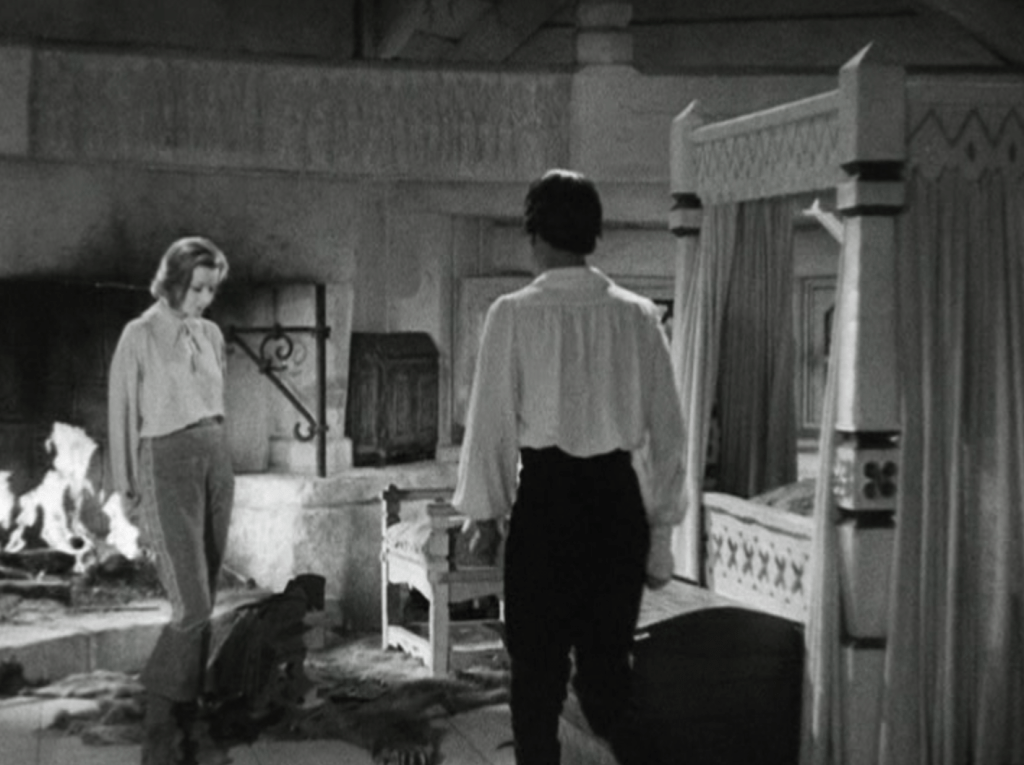
Seizing not being the figurehead of state but her own, real, individual is at the heart of one of Queen Christina’s most memorable sequences. After several nights of passionate, romantic love making with Antonio, Christina walks around the inn room where, for a brief time, she didn’t have to play a role. With metronomic precision, Mamoulian follows Garbo as she gently caresses surfaces and objects in the room, using touch to graft the room onto her memory, so that it can be a place she can return to in her day-dreams when burdened by monarchy. It’s very simply done, but surprisingly effective and deeply melancholic: as far as Christina knows, the last few days have been nothing but in an interim in a life where she must always be what other people require her to be, never truly herself.

But then if she never saw Antonio again, there wouldn’t be a movie would there? He inevitably turns up at court, presenting a proposal from the Spanish king – which he hilariously breaks off from in shock when he clocks he is more familiar with the Queen than he expected. John Gilbert as Antonio gives a decent performance – he took over at short notice from Laurence Olivier, who testing revealed had no chemistry with Garbo – full of carefully studied nobility. He and Garbo – not surprising considering they long personal history – have excellent chemistry and spark off each other beautifully. He also generously allows Garbo the space to relax as Christina in a way she consciously never truly does at any other point in the film.

The rumours of this romance leads to affront in Sweden, from various lords and peasants horrified at the thought of losing their beloved Queen – and to a Spaniard at that! (Queen Christina makes no mention of the issue of Catholicism, which is what would have really got their goat up – an Archbishop shouts something about pagans at one point, but he might as well be talking about the Visigoths for all the context the film gives it). The shit is promptly stirred by Ian Keith’s preening Count Magnus, making a nice counterpart to Gilbert’s restrained Antonio. It also allows another showcase for Garbo, talking down rioting peasants with iron-willed reasonableness only to release a nervous breath after resolving the problem.

Queen Christina concludes in a way that mixes history with a Mills-and-Boon high romance (there is more than a touch of campy romance throughout). Mamoulian caps the film with a truly striking shot, the sort of image that passes into cinematic history. Having abdicated into a suddenly uncertain future, Christina walks to the prow of the ship carrying her away from Switzerland. Mamoulian holds the focus on Garbo and slowly zooms in, while Garbo stands having become (once again) a literal flesh-and-blood figurehead, her eyes gloriously, searchingly impassive leaving the viewer to wonder what is going on in her head? Is she traumatised, hopeful, scared, regretful, determined? It’s all left entirely to your own impression – and is a beautiful ending to the film.

Queen Christina was a big hit – bizarrely overlooked entirely at the Academy Awards, which makes no sense to me. It’s beautifully filmed by Mamoulian who finds new, unique angles for a host of scenes and at its heart has a truly iconic performance by Garbo. If you had any doubts about whether she was a great actress, watch Queen Christina and see how thoughts and deep emotions pass briefly across her face before being replaced by a mask of cool certainty. It’s a great performance from Garbo and a lusciously conceived historical epic.

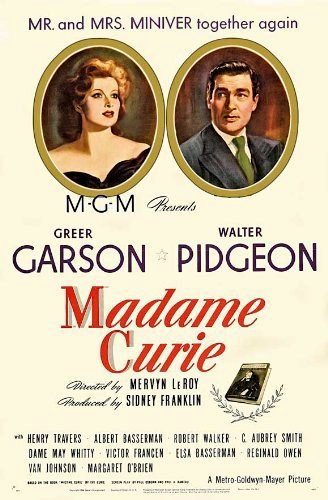
Mrs Miniver (1942)

Greer Garson and Walter Pidgeon hold the homefront together in Mrs Miniver

Director: William Wyler

Cast: Greer Garson (Kay Miniver), Walter Pidgeon (Clem Miniver), Teresa Wright (Carol Beldon), Dame May Whitty (Lady Beldon), Reginald Owen (Foley), Henry Travers (Mr Ballard), Richard Ney (Vin Miniver), Henry Wilcoxon (Vicar), Christopher Severen (Toby Miniver), Brenda Forbes (Gladys), Clare Sanders (Judy Miniver), Helmut Dantine (German pilot)

Mrs Miniver was made when history was in flux: conceived at the height of the Blitz, shot and then parts re-shot either side of Pearl Harbor and released in 1942 after America had entered the war. A patriotic flag-waver, designed to build American sympathy for a Britain standing alone, it was a huge hit, won Best Picture and had a profound impact on Allied morale (Churchill called it more help to the War effort than a flotilla of battleships). It still carries an inspiring, cockle-warming charm and a hefty emotional punch, made even more affecting by the stoic determination (rather than hand-wringing emotion) every setback is met with.

In a small village just outside London, lives the Miniver family. Kay Miniver (Greer Garson) cares for her family in a large country house. She has three children with architect husband Clem (Walter Pidgeon). Their life is contented – and then war breaks out. Oldest son Vin (Richard Ney) joins the RAF – after falling in love with Carol (Teresa Wright), niece of the local grandee Lady Beldon (May Whitty). Clem joins the ships travelling to Dunkirk. Kay holds the domestic fort, protecting her family from air raids, facing down a German pilot and helping shepherd her small village through the trauma of air raids to something approaching a normal life.

Mrs Miniver is all about that stoic, British stiff-upper-lip attitude, of doing your duty uncomplainingly and quietly. As they said “Britain Can Take It”, and the film is a celebration of the nobility of perseverance. It’s designed to inspire and it does: it’s melodrama played with a low-key reserve, which is genuine and heart-felt. There is a reason Goebbels (and he would know) called this a “refined powerful propagandistic [tool]” – it makes you completely emphasise and relate to its characters. We share their moments of joy just as much as the profound tragedy of their losses.

And there is a lot of loss in Mrs Miniver – way more than you might expect, with the film’s final act throwing at least two painful gut punches you don’t expect. Tragedy touches all of us and war carries away the innocent and undeserving with as much eagerness as it does the militaristic. There seems to be no reason or justice to it – but instead the difficult acceptance of fate and the necessity of being part of a struggle larger than ourselves.

In a powerful speech that concludes the film, the vicar stands in the bombed-out ruins of his local church. It mirrors a scene near the beginning, as he regretfully but with quiet reserve announces the outbreak of war. Now he gives a rousing speech that this is war of all the people, against the tyranny that threatens us, where the dead our mourned but not forgotten. It’s a powerful speech (brilliantly delivered by Henry Wilcoxon), of the painful necessity of duty at the time of war that still stirs (it was distributed nationally by Roosevelt’s insistence).

The stoic, good-natured, supportive community, who protect each other and desperately try to maintain hope and nobility when death could strike at any time, contrasts firmly with the only German we see. A wounded pilot who gains entrance to Kay’s home at gunpoint. Kay calmly disarms him, feeds him and tends to his wounds (after all he is the same age as Vin) – he responds with a vicious speech of violent hate, bragging at the deaths the Luftwaffe have inflicted on Europe. It’s the only time her reserve really breaks, as she slaps him – and even for a moment seems to consider dispatching him. Her delayed shock is clear later when she casually smokes one of Clem’s cigarettes – a mixture of restrained shock, relief, horror and confusion across her face. It’s the closest direct danger comes – and the closest she comes to openly expressing rage and anger at the hand the world has dealt her.

The film revolves around Greer Garson’s (Oscar-winning) performance. Though it’s easy to see Kay as a sort of saint, that’s underestimating the huge burden Garson had: she effectively embodies an entire Homefront of scared people doing their duty. It’s a performance of stiff-upper-lipped warmth, her desperation, fear and protective nature clear in every beat. You can see it in her mix of distracted fear and pride when Vin announces he has joined the RAF, and the front of “everything will be alright” she puts on for the children during an air raid that tears her house apart.

Of course, that disaster is met with a “I always wanted to redo that dining room” fortitude by her husband, Clem. Pidgeon and Garson forged a partnership that would run through several movies here, and spark off each other wonderfully. Pidgeon gives a solid grounding to Garson, while she helps find warmth and humanity in an otherwise distant actor (Pidgeon lacks Peck’s – who he resembles in many ways – ability to convey warmth under reserved dignity). Pidgeon’s stirring sense of duty excels, not least during the Dunkirk sequence.

That sequence is very well executed, a small series of boats gradually growing in size until they fill the Thames. When duty calls, people respond with gusto and pride. Alongside this, normal life continues as much as possible: not even the war will stop the flower show. This remains a heart-warming centre piece – pinched for an episode of Downton Abbey – as Lady Beldon overrules the sycophantic judges and gives the prize to the deserving winner, local station manager Mr Ballard (Henry Travers, sweet but receiving a generous Oscar nomination).

The acting is pretty much spot on. Teresa Wright (Oscar winning) is endearingly genuine and vibrant as Vin’s wife to be (and Lady Beldon’s niece) Carol. May Whitty, channelling those grande-old-dames-with-hearts-of-gold, gets every beat right, from comedy to tragedy, Wilcoxon is marvellous. It’s all so heartfelt and earnest you can overlook the fact most of the (largely American and Canadian) cast go for cod-Brit accents or cliched working class vowels – just as you do the fact that neither the towns or countryside in the film looks particularly British (an opening sequence in London looks plain wrong in every sense).

And you can’t fail be stirred by its celebration of quiet determination and unshowy self-sacrifice. You can certainly argue that it’s not a work of art, like other films nominated that year for Best Picture. But, none of them would have (or continue to have) the emotional impact this has. Sure, it feeds off an American nostalgia for English-country-village life – but it does so with a noble cause. Well-acted, very well directed, it still inspires and continues to provoke pride today.

The Great Ziegfeld (1936)

Luise Rainer and William Powell bring the life of The Great Ziegfeld to life in this decent-but-not-great Best Picture winner

Director: Robert Z Leonard

Cast: William Powell (Florenz Ziegfeld Jnr), Myrna Loy (Billie Burke), Luise Rainer (Anna Held), Frank Morgan (Jack Billings), Fannie Brice (Herself), Virginia Bruce (Audrey Dane), Reginald Owen (Sampson), Ray Bolger (Himself), Ernest Coassart (Sidney), Joseph Cawthorn (Dr Ziegfeld), Nat Pendleton (The Great Sandow)

I’d always been led to believe The Great Ziegfeld was one of the low points in Best Picture history – that the Oscar had gone to a plotless, over-long, empty mess. So, watching this film for the first time, I was pleasantly surprised. The Great Ziegfeld may be flawed, but it’s not as bad as all that. In some places it’s even pretty good.

Florenz Ziegfeld Jnr (William Powell) is a showman with big dreams. From the Chicago World Fair of 1893, where his show features strong-man The Great Sandow (Nat Pendleton) – lifting a massive pair of dumb bells inside of each is a “Dumb Belle” (geddit?!) – Ziegfeld heads towards New York. There he puts on a series of variety shows, The Ziegfeld Follies, crammed with popular entertainers and gorgeous babes. Along the way he spends money like water, marries star Anna Held (Luise Rainer), cheats on her a lot (although the film handles this coyly) and finds love with star Billie Burke (Myrna Loy – the real Burke grudgingly agreed she was too old to play herself).

Watching The Great Ziegfeld you can see how it influenced so many later films. A witty, show-piece crammed crowd-pleaser about a impresario, its essentially the grandfather of The Greatest Showman. It’s unpretentious and easy-going – but also impossibly long, far too long for its slight story. It’s sprawling, puffed-up and the musical numbers are often mundane and tedious – but it, just about, manages to stay entertaining.

In real life Ziegfeld was a chancer with a roving eye. He left a mountain of debt and his genius was at least as much about promotion as it was art. You can see why Hollywood has a soft-spot for him: he was all about spectacle (a running gag has him always wanting “higher steps”, a neat short-hand for making things bigger). His rough edges (the affairs and the financial chicanery) are filed down as the film’s Ziegfeld is a charmer with a Wodehousian wit, cheeky and naughty but always a gentleman.

William Powell is perfect casting, and a big part of the film’s charm is tied up in his winningly (and deceptively) casual performance. Powell turns the role into a personality part, smoothly underplaying with a wink to the camera. He delivers the various bon mots with a real skill and provides nearly all the film’s pace and energy and a big barrel of its sense of fun.

He sits at the centre of a film that has genuine moments of directorial flair from Robert Z Leonard. There are some great tracking shots and he handles the ‘acting’ scenes very well – a scene with Ziegfeld chatting with Will Rogers and Fanny Brice (playing herself) is worth the price of admission alone. The performers mostly bounce effectively off each other.

Leonard also gets emotional impact from Ziegfeld’s late romance with Burke (a sequence of the two of them chatting, coyly holding hands is very well done) and creates a superb series of visuals to close the film (a shot of the ageing Ziegfeld sitting in his chair, staring at his name in lights over his theatre, is a wonderful summary of the man’s life – and maybe, when his hand drops down releasing a flower, it even gave Welles a bit of inspiration for Kane’s death five years later).

When The Great Ziegfeld focuses on Powell’s lightness of touch, and character-led moments (Frank Morgan is also great fun as Ziegfeld’s bombastic, long-suffering rival) it works really well. What has suffered over time – and today feel like its weakest parts – are those heavily praised in 1936.

MGM marketed this as the most expensive film ever made, the money splurged on those massive musical numbers, with scores of extras and enormous sets. The centre-piece is the “A Pretty Girl is Like a Melody” number, featuring countless extras on a massive rotating “wedding-cake” set, 175 spiral steps high. Like Ziegfeld’s shows it’s all about the cost, spectacle and size. And they are not even 1% as interesting as watching Astaire and Rogers tap dance in a marquee in Top Hat.

The film’s numerous musical numbers often feel like dull products of yesteryear. Over-long, over-extended, shot to squeeze the set into frame rather than focusing on skill or grace. These numbers – some of which I admit I fast-forwarded through – pad out the running time but contribute nothing to either story or entertainment factor. If anything, you are desperate to get back to Powell’s skilled playing of the biographical scenes, rather than sitting through another over-ripe number.

Similarly much of the acting has aged less well. Myrna Loy is strangely uncomfortable as Burke (perhaps all to aware the real Burke was just off camera). Luise Rainer won the first of her two consecutive Oscars – but her performance is extremely over-played, utterly lacking in nuance. Her famous “telephone” scene (heartbroken, she calls Ziegfeld to congratulate him on his new marriage) was hailed as great acting, but today looks mannered and overblown.

But despite all these flaws – mundane and boring musical numbers, a lack of spark and pace – there is actually a fair bit of wit and charm. Its early sequences – which focus on Powell and Nat Pendleton’s witty turn as Sandow – are surprisingly light and engaging. The moments where the film relaxes and isn’t straining to impress are engaging and fun. There is a decent 90-minute Astaire-Rogers film straining to get out here, crushed under the weight of the Ziegfeld/MGM grandeur. It’s entertaining – better than you might have heard – but can’t hold a candle to the great Hollywood musicals of yesteryear, its charm spread very thin.