Tag: Richard Widmark

The Alamo (1960)

The Alamo (1960)

Wayne’s historical epic is a mediocre labour-of-love that takes a very, very long time to get to its moments of interest

Director: John Wayne

Cast: John Wayne (Col Davy Crockett), Richard Widmark (Col. Jim Bowie), Laurence Harvey (Col. William Barrett Travis), Richard Boone (General Sam Houston), Frankie Avalon (Smitty), Patrick Wayne (Captain James Butler Bohham), Linda Cristal (Graciela), Joan O’Brien (Sue Dickinson), Chill Wills (Beekeeper), Joseph Calleira (Juan Seguin), Ken Curtis (Captain Almaron Dickinson), Carlos Arruza (Lt Reyes), Hank Worden (Parson)

John Wayne believed in America as a Shining City on a Hill and he wanted films that celebrated truth, justice and rugged perseverance. To him, what better story of fighting against all odds and to the bitter end for liberty, than the Battle of the Alamo? There, in 1836, a few hundred soldiers and volunteers from the Republic of Texas bravely stood before an army of over two thousand Mexicans to defend the Texas Revolution’s independence from Mexico. Wayne put his money where his mouth was, pouring millions of his own dollars into bringing the story to the screen. Furthermore, he’d direct and produce himself, convinced only he could protect his vision.

The end result isn’t quite the disaster the film has gained a reputation for being – nor is Wayne’s directorial efforts as useless as his detractors would like. But The Alamo is a long, long slog (almost three hours) towards about fifteen minutes of stirring action, filled with pages and pages of awkward speechifying, hammy acting and painfully unfunny comedy. While a bigger hit than people remember, Wayne lost almost every dime he put in (he said it was a fine investment) and even a muscular series of favour-call-ins that netted it seven Oscar nominations (including Best Picture!) couldn’t disguise that The Alamo is a thoroughly mediocre film that far outstays its welcome.

Wayne collaborated closely with his favourite writer, James Edward Grant. Both had a weakness for overwritten speeches and there is an awful lot of them in The Alamo’s opening half as we await the arrival of the Mexicans. Wayne gets several speeches about the glories of the American way such as (and this is cut down) “Republic. I like the sound of the word…Some words can give a feeling that makes your heart warm. Republic is one of those words” or a musing on duty that takes up a solid five minutes (it’s ironic Widmark’s Bowie refers to Harvey’s Travis as a long-winded jackanapes, since Wayne’s Crockett has them both beat).

There is only so much portentous, middle-distance-starring talk one can take before you start twitching in your seat, even for the most pro-Republican viewer. With complete creative control, there was no one to tell Wayne to pick up the pace and trim down these scenes. So enamoured was Wayne with Grant’s dialogue, whole scenes are taken up with the Cinemascope camera sitting gently in rooms watching the actors pontificate about politics, strategy and duty at such inordinate length you long for the Mexicans to damn well hurry up.

For a film as long as this, there is an awful lot of padding. The first hour shoe-horns in an immensely tedious romantic sub-plot for the increasingly-long-in-the-tooth Wayne (who had been playing veterans for almost 15 years by now) with Linda Cristal’s flamenco-dancing Mexican. We know she’s a hell of a dancer, since we get several showcases for her toe-tapping skills as Crockett’s Tennessee volunteers wile away the evenings. There is a sexless lack of chemistry between Wayne and Cristel, re-enforced by Crockett’s gentleman-like rescuing of Cristel from a lecherous officer, and the whole presence of this sub-plot feels as like a box-ticking exercise to appeal to as many viewers as possible as does the casting of young heart-throb Frankie Avalon in a key supporting role.

This is still preferable to the rather lamentable comic relief from a host of Wayne’s old muckers, playing a collection of Good Old Boy Tennesse volunteers. These jokers swop wise-cracks, prat-falls, good-natured fisticuffs, but (inevitably) also drip with honour and decency. Chief among them is Chill Wills as Beekeeper, a scenery-chewing performance of competent comic timing that inexplicably garnered Wills an Oscar nomination. Wills made real history with an outrageously tacky campaign for the golden man, shamelessly publicly pleading for votes and including a full-page Variety advert (‘The cast of The Alamo are praying harder than the real Texans prayed for their lives in the Alamo for Chill Wills to win!’) that even Wayne denounced as tasteless.

Wayne believed the real Oscar nominee should have been Laurence Harvey as ram-rod stickler-for-form Colonel Travis, commander of The Alamo. He’s probably right (if you were going to honour anyone here), as Harvey’s abrasive style and stiff formality was a good fit for the role and he turns the brave-but-hard-to-like Travis into the most interesting character. He’s more interesting than Widmark’s rough-and-ready Bowie, who looks uncomfortable: he would have been better casting as Crockett. That role went to Wayne, after investors said his presence in a lead role was essential for the box office (reluctant as Wayne was, he still cast himself in the most dynamic, largest role).

There are qualities in The Alamo – and they are largely squeezed into the final thirty minutes as the siege begins in earnest. This sequence is very well done, full of well-cut action and shot on an impressive scale. The money is certainly up-on-the-screen – The Alamo built a set only marginally smaller than the actual Alamo and recruited a cast of actors not too dissimilar from the size of the actual Mexican army. (The only nominations The Alamo deserved were related to production and sound design, both of which are impressive). The relentless final stand is undeniably exciting – whether it’s worth the long wait to get there is another question.

The Alamo largely avoids vilifying the Mexicans. Their commanders may be little more than extras, but Wayne’s was aware that in the Cold War, allies were crucial so the film is littered with praise for the bravery, courage and honour of the Mexicans as battle rages (‘Even as I killed ‘em, I was proud of ‘em’ one volunteer muses). However, in many ways, The Alamo is incredibly simplistic and naïve about American history – especially the ‘original sin’ of slavery, the banning of which in Mexico was one of the main reasons for the Texans revolt. It’s hard not to feel it’s a bit rich for Wayne to make a big speech about freedom, when Crockett and co were literally laying down their lives for the Texan Republic’s right to keep slaves. The only slave in the film is so overwhelmingly happy with Bowie, he literally refuses his freedom and lays down his life to protect his master.

But then that’s because The Alamo is a proud piece of propaganda, celebrating a rose-tinted view of American History that avoids complexity and celebrates everyone as heroes. It’s not the disaster you might have heard about. It has its moments. But its still a dull, tedious trek.
Hell and High Water (1954)

Hell and High Water (1954)

Action below the waves in this dutiful, for-the-money thriller from Samuel Fuller that lacks imagination or freshness

Director: Samuel Fuller

Cast: Richard Widmark (Captain Adam Jones), Bella Darvi (Professor Denise Gerard), Victor Francen (Professor Montel), Cameron Mitchell (“Ski” Brodski), Gene Evans (Chief Holter), David Wayne (Tugboat Walker), Stephen Bekassy (Neumann), Richard Loo (Hakada Fujimori), Wong Artarne (Chin Lee), Henry Kulky (Gunner McCrossin)

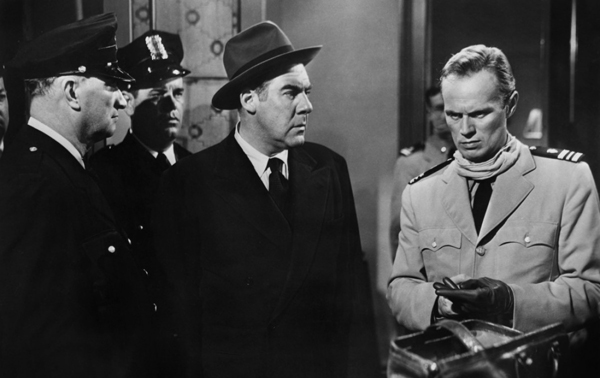
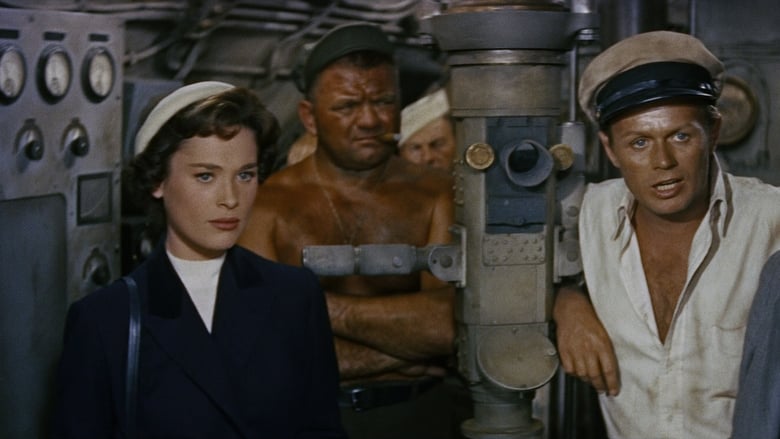
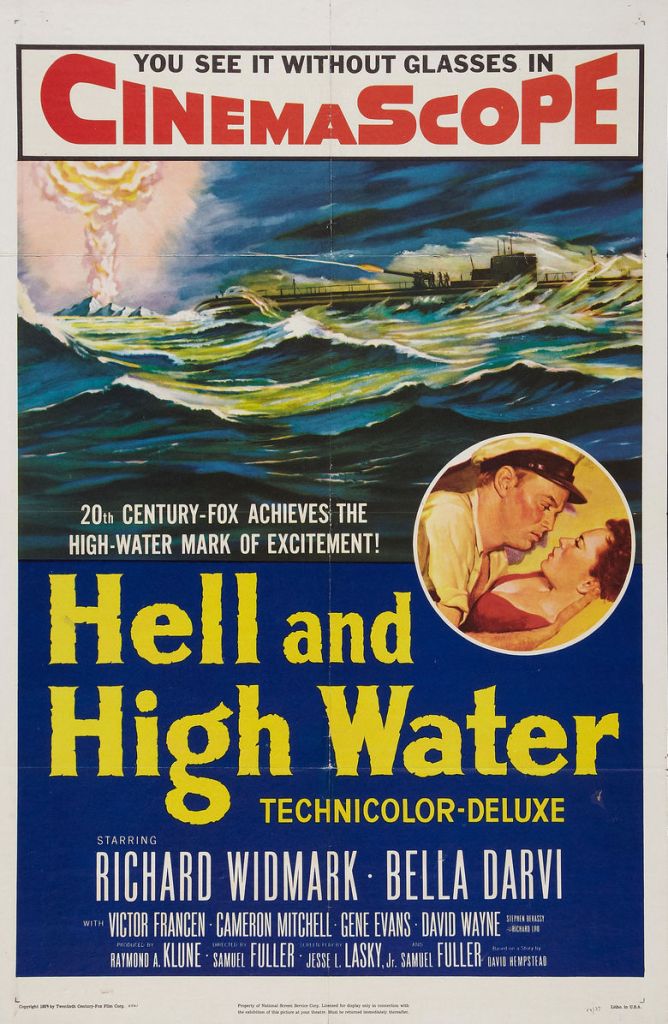
Few films start with a bigger bang than Hell and High Water: a nuclear explosion. What caused it? The film winds back to tell us. Retired submarine captain Adam Jones (Richard Widmark) is hired by a cabal of intellectuals and scientists working to maintain world peace. Somewhere on an island off Japan, the Commies are working on a secret nuclear bomb. Jones – in return for a fee – will shuttle Professors Montel (Victor Francen) and Denise Gerard (Bella Darvi) to investigate. Cue submarine duels, personality clashes, romance and shoot-outs.

To be honest, nothing in Hell and High Water lives up to that bang at the start. Samuel Fuller took on the film as a favour to producer Darryl F Zanuck, but had a low-opinion of the result (labelling it his worst film). Fuller rewrote the script, added a lot of his compulsive drive to the direction and handled it well – but it feels like a “gun for hire” film. Goodness only knows what Fuller made of Spielberg telling him in 1979 he loved it so much he carried a print of it in his car (perhaps “Have you not seen Pickup on South Street?”)

Hell and High Water is a serviceable men-on-a-mission film that sneaks in a few interesting beats, but otherwise goes for well-shot action and predictable events over invention and insight. It’s anchored by a grumpy Richard Widmark (who thought the script was crap and co-star Darvi couldn’t act) as a hard-to-like hero. Never-the-less Jones’ ruthless mercenaryism is the film’s most interesting beat – even if it is a repeat of the same actor’s attitude in Pickup on South Street, right done to mouthing almost the same contemptuous line about ostentatious flag wavers. Jones does his job professionally – and he’s got no truck with his country being dishonoured or attacked by Commies – but his main concern is always the $50,000 fee he’s been promised.

Also paid off are the whole crew who, in the film’s other interesting beat, are a regular united nations all of whom treat each other with equality and respect (the only people not represented here are Black people). We’ve got a German, a Japanese, a Frenchman, several Americans – considering only nine years previously all these nations had been working over-time to kill each other, it’s great to see the team on the ship working as a tension free-unit. We even have a Chinese sailor – who entertains his fellow crew with improvised ditties – becoming a crucial hero.

Fuller also shoots the sub action – a mix of models and trick photography – very well. The angles he uses of the subs underwater, in particular their turns, and the sweaty look of those underwater (and the increasing tensions) influenced several future films. All the submarine lingo you’d expect is trotted out with real commitment (“Right full rudder!”) and every box is carefully ticked, from sinking the bottom, to the costly rush to close a bulkhead. The torpedo fights are well-staged and whenever the film dives it’s at its best.

Where it is less so is whenever the film dwells on its characters. It tries to push the envelope a bit by introducing a female professor who is assured, competent, super-smart and gets stuck in with helping out when things go pear-shaped. She’s played by Bella Darvi, a protégé (and more) of Zanuck, who he was determined to elevate to stardom. Despite Widmark’s criticism, she’s fine here, even if she struggles to convey the charisma the role needs, often falling back on slightly grating over-earnest, head-girl smartness. What fails is the complete lack of chemistry between her and Widmark, their half-hearted, dutiful romance (probably mostly Widmark’s fault).

You’ll feel sorry for her though as the crew – and Jones – eye her up like a piece of meat when she arrives. Of course, this dated sexual leering is par for the course, but is still more than a little uncomfortable. But this is still the era when a sailor taking his top off to push his tattoos into a woman’s face was funny rather than a crime. The film does gives Darvi’s Professor a lot of proactivity and does generally take her side – even if she, inevitably, needs to learn our hero knows best.

Hell and High Water charges through to a decent ending, with just the right mix of self-sacrifice, tension and pay off. Victor Francen gives the films best performance as an illustrious, brave French scientist. But it never feels like anything more than a dutiful, for-the-money film. There is none of Fuller’s fire or feeling here, no real imagination or freshness in the ideas or concepts. It hits all the beats, ties things up with a bow and sends you home – but its very hard to really remember anything distinctive about it when the credits roll.

How the West Was Won (1963)

James Stewart helps us see How the West Was Won

Director: Henry Hathaway, John Ford, George Marshall

Cast: Spencer Tracy (Narrator), Carroll Baker (Eve Prescott Rawlings), Walter Brennan (Colonel Jeb Hawkins), Lee J Cobb (Marshal Lou Ramsey), Henry Fonda (Jethro Stuart), Carolyn Jones (Julie Rawlings), Karl Malden (Zebulon Prescott), Raymond Massey (Abraham Lincoln), Agnes Moorehead (Rebecca Prescott), Harry Morgan (Ulysses S Grant), Gregory Peck (Cleve van Valen), George Peppard (Zeb Rawlings), Robert Preston (Roger Morgan), Debbie Reynolds (Lilith Prescott van Valen), Thelma Ritter (Agatha Clegg), James Stewart (Linus Rawlings), Rus Tamblyn (Confederate deserter), Eli Wallach (Charlie Grant), John Wayne (William Sherman), Richard Widmark (Mike King)

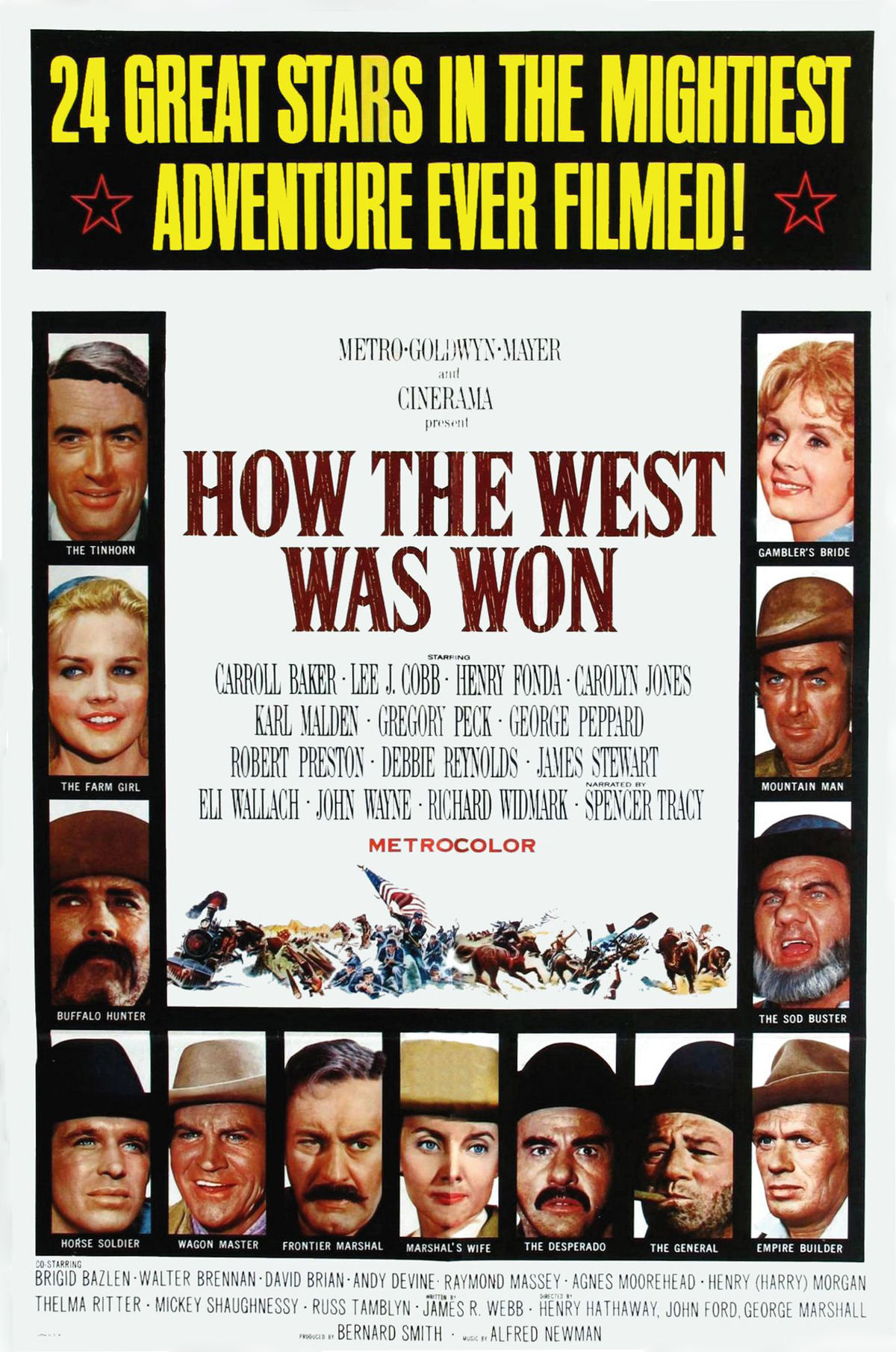
How the West Was Won was the Avengers: Endgame of its day: every star of the biggest box-office genre in America coming together for one epic adventure that would stretch over generations. Stewart! Fonda! Peck! Wayne! Together for the first time (only of course they are not, none of them appearing the in same scene). Even more than that, How the West Was Won would be filmed in Cinerama, a three-screen shooting method producing a panoramic image. All this would make How the West Was Won the biggest, grandest, largest film ever made. It was a massive box-office success, nominated for eight Oscars (including Best Picture) and wowed audiences.

Plot wise though, it’s basically a series of short films cobbled together into a single film. The stories are basically self-contained, although some actors cross over (especially George Peppard and Debbie Reynolds). The first episode The Rivers covers the migration west, down the river, of the Prescott family, taking on river pirates and allying with James Stewart (looking at least twenty years too old as a young drifter). The Plains sees Debbie Reynolds, daughter of the Prescott family, migrate further West and eventually marry gambler Gregory Peck. The Civil War sees Stewart’s son George Peppard caught up in the war. In The Railroad, Peppard reluctantly runs security for ruthless railway builder Richard Widmark. Finally, in The Outlaws an older Peppard attempts to retire, but not before one final shoot out with old enemy Eli Wallach during an attempted train heist.

All these short stories – each about 30-45 minutes in length – are entertaining. So entertaining that you won’t mind at the end that you have no idea how the west was actually won (I assume it’s something to do with progress and the law) or that the characters are basically actors riffing off their own personas rather than fully realised individuals. Despite the attempt to build the story around one  family (the Prescott-Rawlings), the stories are so disconnected and the characters so lightly sketched, with such huge time jumps, each story might as well be about completely new characters.

Not that there is anything particularly wrong with that. But it boils down to the key issue with How the West Was Won, a very flabbily constructed film that lacks any real sense of guiding narrative or vision behind it. It’s a series of set pieces, which are all about scale – the river rapids, the battles of the Civil War, the final train-set shoot out – in which some loosely defined characters live their lives. There are some decent performances – Debbie Reynolds does a very good job anchoring a couple of stories (plus we get to see her do some song-and-dance routines), while Peck (a smooth operator) and Fonda (a gruff woodsman) have the best parts among the stars. Others, like Wayne, pop up for but a few seconds.

They needed all these stars to fill the frame. How the West Was Won’s main problem is also its principle reason to exist. It was designed to showcase the wideness of Cinerama, one of only two films to use the technique. Designed to be projected into curved screens, the technique essentially used one massive camera to produce an image so large it needed three synchronised projectors to screen it. This led to an impossible wide frame to fill, with two clear joins in the middle. The challenge of shooting this was not an enjoyable one for the directors.

To cover the visible joins, nearly every scene in the film sees an object placed one-third and two-thirds of the way through the image (usually a tree or a post). The actors stand carefully on their marks in their assigned third of the image. Close ups involved flying the massive camera almost into the faces of the actors (and even then it only produced an image from the waist up). Awkward compositions abound – either with actors standing rock still in front of huge scenery, or actors standing in carefully assigned rows, standing on marks they never move from.

The sweeping shots of the American west look impressive, but in a National Geographic way – it’s simply fitting as much of the imagery of the countryside in as possible. It was a hugely difficult job for the directors. It was not helped by two of them being competent journeymen and all three of them having done their best work in 4:3. Quite frankly I don’t think any of them have a clue about how to fill a frame this mighty. Instead, the film for all its grandeur is frequently visually conservative and unimaginative to look at. It’s got huge landscapes, but no real inspiration.

How the West Was Won is an enjoyable curiosity. It is very rarely, if ever, seen as it was intended on a Cinerama screen (the version I watched on a large television, still showed the slight fish-eye effect at points of a curved image flattened). Telling five short stories, each of them entertaining enough, it keeps the interest. It has a lusciously beautiful (famous) score by Alfred Newman that captures the spirit of the West. But, for all its grandness, it’s a strangely small experience.

Pickup on South Street (1953)

Richard Widmark and Jean Peters feel the heat from the cops, the commies and their own passion in Pickup on South Street

Director: Samuel Fuller

Cast: Richard Widmark (Skip McCoy), Jean Peters (Candy), Thelma Ritter (Moe), Murvyn Vye (Captain Tiger), Richard Kiley (Joey), Willis B Bouchey (Zara), Milburn Stone (Winoki), Henry Slate (MacGregor)

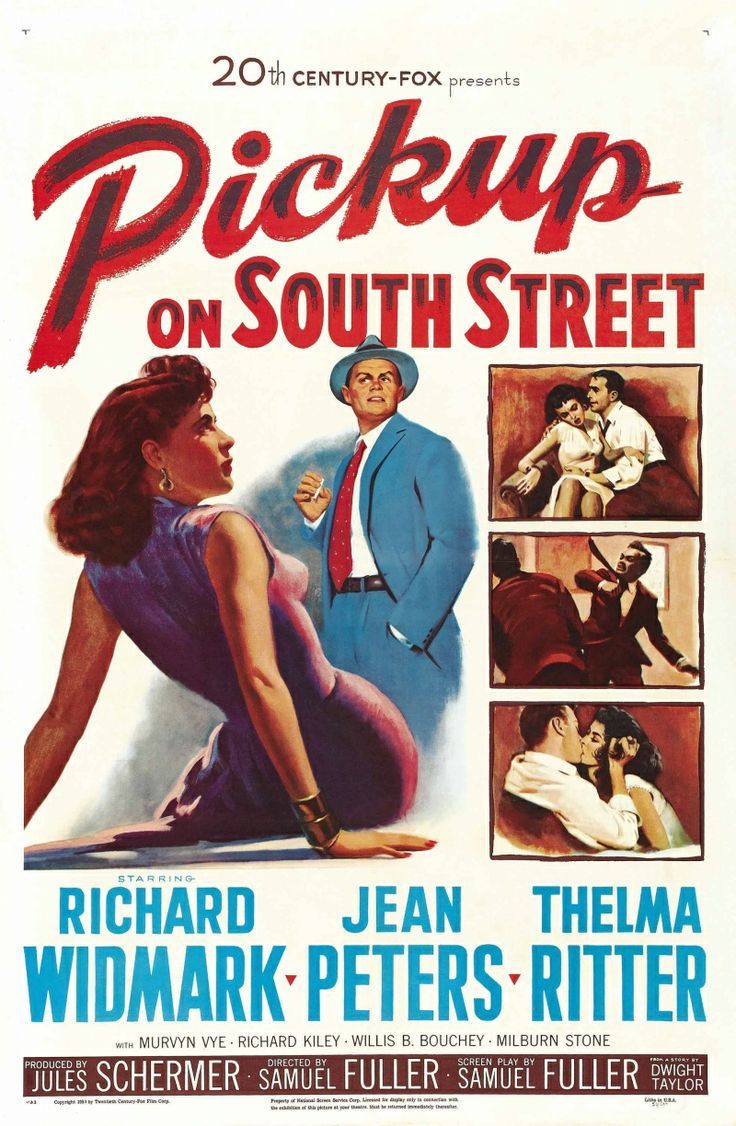
It’s 1950s, and the biggest bogeyman in America is the Commies. Candy (Jean Peters) is one of their unwitting couriers, funnelling top secret microfilm for her ex-boyfriend Joey (Richard Kiley) to pass to his Moscow superiors (poor Candy just thinks she engaged in helping Joey with some good-old All-American industrial espionage). Trouble is, while the Feds are trailing her, they watch her being pickpocketed by career thief Skip McCoy (Richard Widmark). Skip now has on his hands on some serious state secrets. Should he return the film to the police who want to lock him up? Or make a big score by blackmailing the Commies who want to kill him?

What makes Pickup on South Street so intriguing is it’s not necessarily as straight forward as you might think. Fuller’s film is an anti-communist film – the sort of “reds under the bed” scare that terrified millions in a country still reeling from Klaus Fuchs and the Rosenbergs. But this isn’t your standard Red Scare film. Because our heroes have about as much stake in the USA as they do in the USSR. They are the down-trodden, the under-class, the grifters. At the end of the day, I’m not sure Skip McCoy really cares who ends up with the MacGuffin. He’s motivated firstly by financial gain and secondly by personal revenge. No appeal to flag and country cuts any ice with him.

Making the hero this sort of anti-social career criminal was a master-touch as it not only enriches the entire perspective of the film – what has their country ever done for these people – but also adds an air of uncertainty over the whole thing. There would never be any doubt if the microfilm had fallen into the hands of a clean-cut Henry Fonda type. The fact that it’s Richard Widmark – who always looks like he’s torn between laughing in your face or punching it – means you never quite know what he’s going to do. If it works out best for him to hand that film over the Russkies, you can be sure he will.

That’s despite the heavy-handed entreaties of the cops and feds. Skip faces a barrage of hostile interrogations, vague promises, handcuffs and searches from law agents who are damn sure he has the film, but can’t prove it. Like many Fuller films, there is more than a hint of roughness and violence in every frame – and the law and order figures aren’t averse to this. Captain Tiger (what a name!) has already served a suspension for beating Skip in custody. An illegal search or two isn’t beyond them. You can see why the FBI was unhappy with this film – not least because it shows them constantly out-thought by a pickpocket.

The Commies though are a thoroughly bad lot. After all, it’s still an anti-Communist film. Richard Kiley’s snivelling coward Joey is no true believer, but the kind of low-breed opportunist tempted by a quick buck. The other communists we meet are corrupt, shady types, sitting in backrooms puffing pipes and casually handing out death sentences. Kiley’s weak-willed and increasingly desperate Joey becomes more and more despicable as the film goes on, desperation to save himself from the fury of his paymasters leading to ever lower and despicable crimes.

So the only people who really come out as truly decent – and playing by a very fixed moral code of their own – are the criminal underclass. In this world, everyone knows where they stand. Skip isn’t angry at stool-pigeon Moe, who carefully trades information with the police – everyone has to make a living he observes. Skip will pick pockets to earn his keep, and punch back when he’s attacked, but there is no sense that he has any taste for the crimes of the Communist agents. He’ll sell on the microfilm to them – but that’s only because his own government offer him nothing but hot air and empty promises. And, as the unspoken message of the film goes, what difference would it really make to Skip and his like anyway where the film ends up?

Instead Skip becomes motivated by personal feelings – specifically his feelings for Candy and Moe. There is a genuine sexual frisson between Skip and Candy from the start: Skip’s pickpocketing of Candy is shot like a sex scene, all sweaty brows, heavy breathing and close-ups (with Skip’s hands ‘penetrating’ Candy’s handbag with all the metaphorical energy of a train speeding into a tunnel). As events draw them closer together, the two maintain this electric sexual energy – whether arguing or fighting or lying to each other they seem unable to take their hands off each other – and the intimacy of close-ups and low angles Fuller uses for this brings a real sexual charge to their scenes. Widmark – superb as a heavy with a (hidden) heart – and Peters are also great, with Peters bringing a real roughened hinterland of disappointment to her role.

The other motivator for Skip becomes the stool-pigeon Moe, brilliantly played with an eccentric bag-lady energy by an Oscar-nominated Thelma Ritter. Moe is a grifter, selling ties by day and trading information on the side. She embodies the underdog nature of the criminal world, wanting nothing more than to earn enough to buy a decent funeral when she goes. Ritter has a marvellous speech on just how tied she feels from this constant scramble of scrapping by on the edge of society. A surrogate mother figure of a sort to Skip, Ritter’s performance is a classic piece of character acting.

Fuller’s scene is lean, short and fast-paced. Like many of his films there is a lot of violence – beatings, fights, shootings – all shot superbly with the camera pulling back to soak up the action. Sex and violence go hand in hand – Skip accidentally punches out Candy thinking she has broken in to kill him, and the two of them are in a passionate embrace moments later. Mixed in with touches of reality, that bring the tough urban world the characters live in, Pickup on South Street is a lean and mean film that manages to be more than just a straight anti-Communist film. It doesn’t just give us something to fight against: it also asks how we might give people something to fight for.

Judgment at Nuremberg (1961)

Maximilian Schell on a misguided attempt to salvage his country’s dignity in Judgment at Nuremberg

Director: Stanley Kramer

Cast: Spencer Tracy (Judge Dan Haywood), Burt Lancaster (Dr Ernst Janning), Richard Widmark (Colonel Ted Lawson), Maximilian Schell (Hans Rolfe), Marlene Dietrich (Frau Bertholt), Montgomery Clift (Rudolph Peterson), Judy Garland (Irene Hoffmann), William Shatner (Captain Harrison Byers), Howard Caine (Hugo Wallner), Werner Klemperer (Emil Hahn), Joh Wengraf (Dr Karl Wieck), Karl Swenson (Dr Heinrich Geuter), Ben Wright (Herr Halbestadt), Virginia Christine (Mrs Halbestadt), Edward Binns (Senator Burkette)

“I was just following orders”. It’s a statement you instantly associate with people who know they are doing the wrong thing, but cling to the idea it’s not their responsibility because they’ve been told to do it. The Nuremberg trials – which started with the major surviving war criminals, but then investigated every level of German society from the army to industry to doctors to the judiciary – exploded this as an excuse. But the trials also raised wider questions, ones that Judgment at Nuremberg explores: how do you make judgments for individuals when, arguably, nearly everyone in the country holds some sort of moral responsibility? What happens when justice collides with political reality? What price is put on getting justice for the few against the need to move on?

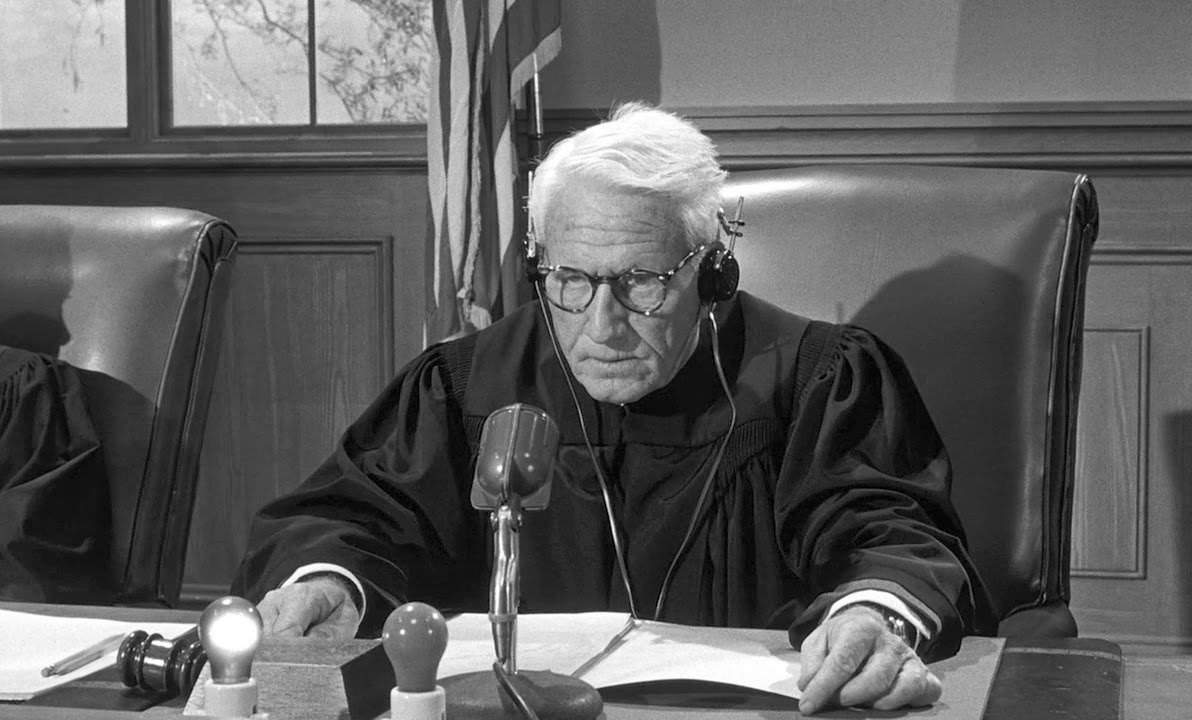
These, among others, are fascinating questions explored in Stanley Kramer’s engrossing – if at times a little dry and on-the-nose – film. In 1948 Judge Dan Hayward (Spencer Tracy) arrives in war-torn Nuremberg to judge the trial of four senior German judges. The most prominent of the accused is internationally renowned Dr Ernst Janning (Burt Lancaster). Janning’s passionate advocate Hans Rolfe (Maximilian Schell) believes the trial is about the Allies punishing the Germans and wants to show “we were not all like them”. Prosecuting laywer Colonel Ted Lawson (Richard Widmark) wants the trials to continue until all the guilty have been punished. But with Cold War tensions rising – and Berlin already under blockade by the Soviets – the politicians back home want the trials to wind down, particularly as the Germans could be key allies against the USSR. How will Hayward balance these pressures as the trial progresses?

Kramer’s film is a brilliant reconstruction of the detail of the trials. He had wanted to film the entire thing on location – but, when the trial room was unavailable, Kramer had the trial room rebuilt in exact detail in the studio (the production design is absolutely spot-on by Rudolph Sternard). The film stages all the issues of simultaneous translation, headphones and trial procedure in loving detail. His technical direction is well managed – even if the camera perhaps once too often pans around those involved in the trial while they speak. The trial drama is structured around three key witnesses (rather than documents), and brings out impressive performances from the entire cast.

Abby Mann’s screenplay wisely focuses in, not on the primary Nuremberg trials, but one of the many sub-trials. Little known, this works so well dramatically, because they both delve deeper into how every facet of German life was corrupted by Nazism – that in this case, leading judges condemned those they knew were innocent to death – and also allow an exploration around the purpose of the Nuremberg trials themselves. Were these trials crucially about justice at all costs and should continue indefinitely – as some characters clearly believe? Or were they meant as representative affairs, demonstrating the guilt of a selected few, at which point their purpose was done?

Kramer’s film is an educative piece, which explores this. Crucially several German characters are introduced, each of them unsure as to how much the national guilt should apply to them. Should Hayward’s household staff consider themselves guilty? As Hayward points out, Dachau was only about 20 miles away: not to know of its existence at all, was surely be wilful ignorance. Marlene Dietrich (excellent as an austere widow), is bitter that she has lost everything after her husband (a German general) was executed (an execution that many of the characters feel was harsh). He never liked Hitler, and he wasn’t a Nazi: how bad could he have been? He only did his duty right?

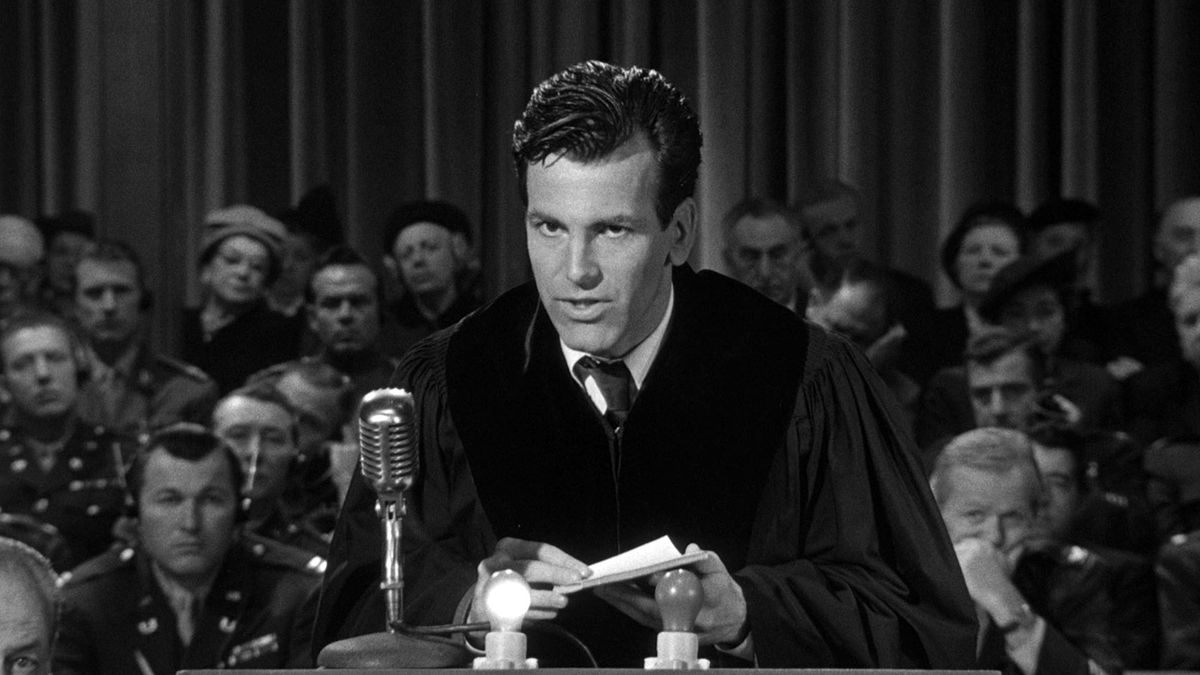
Meanwhile, firebrand lawyer Hans Rolfe believes that he must salvage some sense of German identity from the trial: he needs to show that “we were not all like that”. And rescuing the reputation of Dr Janning as “the Good German” is crucial to that. An Oscar-winning Schell (the part is perfect for his grandiose style) superbly captures the agonised guilt that has transformed into anger in this man: the desperation to protect his country that leads him to undertake the same brutal interrogations of witnesses during the trial that his clients are accused of doing. Repeating the same actions of the past that he hates, with a misguided goal of restoring pride to his country.

And why does Dr Janning become the focus of this desire to show not everyone was bad? One of the interesting things the film raises is questions of class. Rolfe sees him as the model Good German and Hayward struggles to see why he was involved in miscarriages of justice, because he is very much “one of us”. Ramrod straight, he’s no fanatic (like one of his fellow accused), he’s a noble, world-renowned lawyer. Lancaster’s Janning, with his rigid physicality, clearly thinks himself a world above his fellow accused. He has touched pitch, but feels he’s not really been defiled at heart: that there were clear reasons why he did the things he did. He has no sympathy for the crudity of Nazism, but still feel ashamed that he allowed himself to get tied up with it. He starts the trial trying to be above the entire process, as if not engaging will somehow stop him from feeling corrupted, even while his haunted face drips with shame.

It’s a nobility that many on the US side find appealing. It appeals to the same minds that deems Richard Widmark’s combatative Colonel Lawson as not quite gentlemanly, but vindictive. Never mind that Widmark’s lawyer wants justice done, regardless of the cost. It’s the same sympathy many now feel for Dietrich’s dignified widow, who feels so classy and noble that she can’t really be implicated in any nastiness. Janning unnerves Hayward and others, because if he can fall so can they. It also makes him a perfect candidate for rehabilitation. And, with the Soviets closing in on Berlin, many among the Americans want such a fate as much as Rolfe does, so that Germany can be rebuilt as a bulwark against Communism. But are we kidding ourselves? Janning may be the face of decency, but how decent can he be when he decided justice was an optional extra in his courtroom?

The film carefully explores these questions of politics being the art of compromise: of the need perhaps to end one era in order to start another. They’re attitudes I think the film acknowledges as legitimate, but also questions: “What was the war for?” Widmark’s character asks. When you have horrors such as those in the camps – and the film plays one of the key films to powerful effect during the trial – surely politics as normal can’t be allowed to continue? (Interestingly the film allows Dietrich and Schell’s characters to both, legitimately, question the inclusion of this evidence as too emotive and not relevant to the actual crimes of the accused.) Hayward himself comes under pressure to deliver light sentences which will be better for the country. Will he do so?

How can he when the evidence of suffering is so clear to him. The two key witnesses bought into the film are a man with learning difficulties and a woman who had been accused (falsely) of being seduced by a Jewish neighbour. The roles are played by Montgomery Clift and Judy Garland – and a lot of the emotion of these scenes partly comes from the tortured vulnerability of these two actors. These are people whose lives have been shattered – unjustly – and have paid terrible personal prices. Yes it might be expedient for us to look past these stories, but is it right?

Yes, you can argue Judgment at Nuremberg is a little preachy, but I think there are many more interesting ideas thrown up here than Kramer (usually denounced as a simple right-and-wrong director) gets credit for. The performances are superb: Schell is of course marvellous, but Spencer Tracy perfectly channels his ability to project morality as the unsettled judge who finds his easy assumptions challenged. And the film finally boils down perhaps to the simple question of right and wrong.

Even at the end Janning, while admitting the justice of his sentence, and the wrongness of his actions, is still desperate for everyone to know he wasn’t really one of them. That he never knew it would come to those horrors. As Hayward says “It came to that the first time you sentenced a man to death who you knew to be innocent”. Perhaps that the message of the film: justice is complex but needs to be done – and it doesn’t matter about your motives or thoughts, only the things you do.

Murder on the Orient Express (1974)

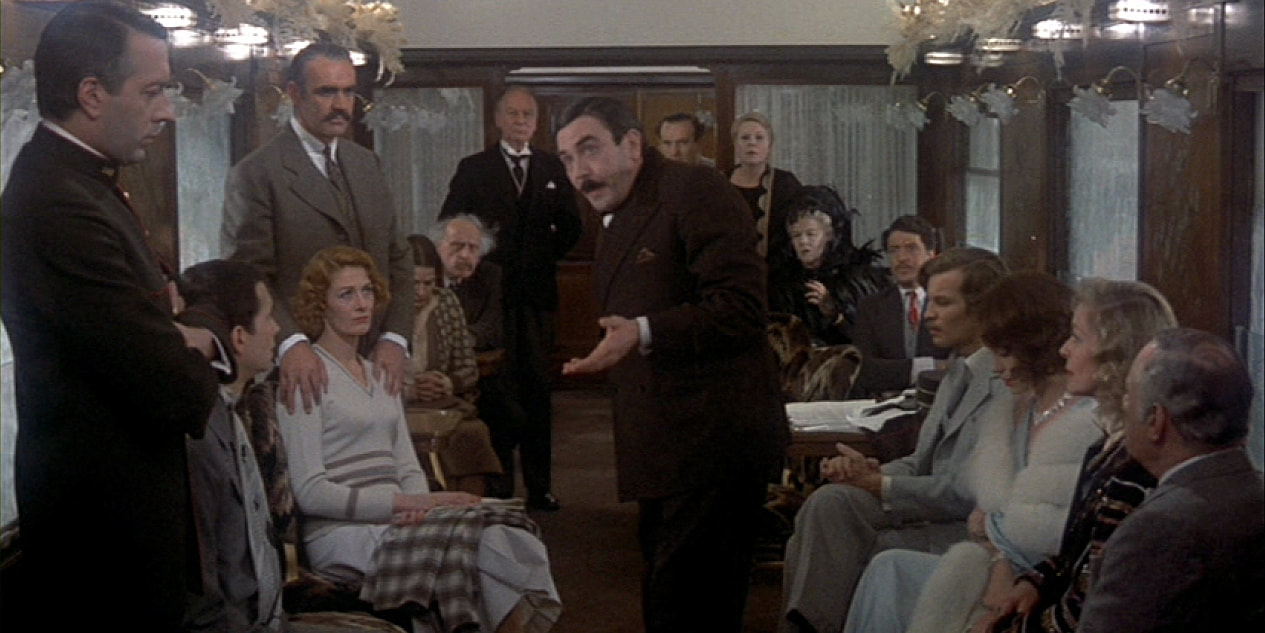
Albert Finney interrogates an all-star cast in Murder on the Orient Express

Director: Sidney Lumet

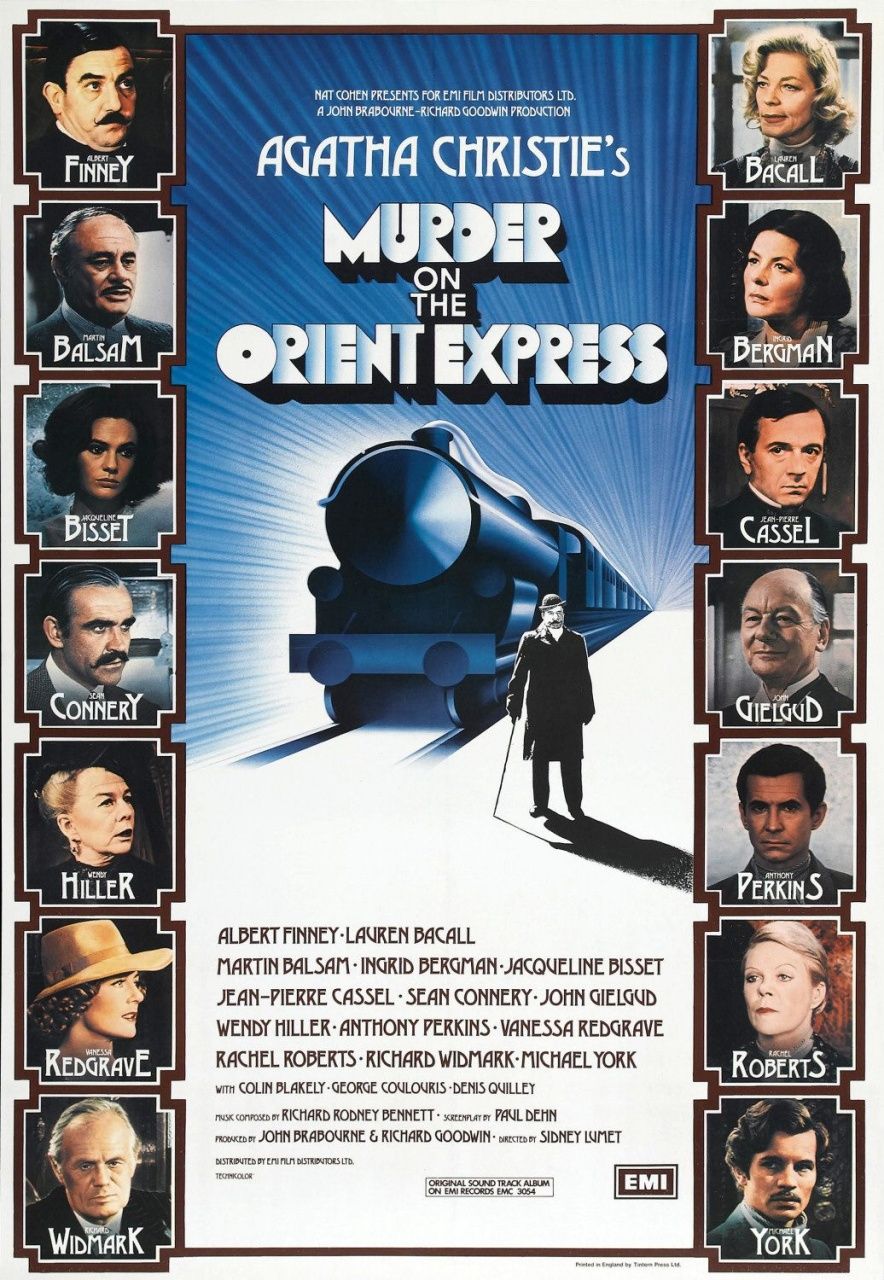
Cast: Albert Finney (Hercule Poirot), Lauren Bacall (Linda Arden), Martin Balsam (Signor Bianchi), Ingrid Bergman (Greta Ohlsson), Jacqueline Bisset (Countess Helena Andrenyi), Jean-Pierre Cassel (Pierre Paul Michel), Sean Connery (Colonel John Arbuthnot), John Gielgud (Edward Beddoes), Wendy Hiller (Princess Natalia Dragomiroff), Anthony Perkins (Hector McQueen), Vanessa Redgrave (Mary Debenham), Rachel Roberts (Hildegarde Schmidt), Richard Widmark (Ratchett), Michael York (Count Rudolf Andrenyi), Colin Blakely (Cyrus Hardman), George Coulouris (Dr Constantine), Denis Quilley (Antonio Foscarelli)

If there was a film that set the template for our expectations for an Agatha Christie adaptation, it was probably this one. A big starry cast. Luscious period detail. An engrossing plot with clues and double meanings in every corner. A healthy mix of the OTT and the chilling. Marshalled by Sidney Lumet, almost certainly the best director to take on a Christie mystery ever, this film was a massive hit then and remains a hugely enjoyable, rewarding treat now, the sort of masterclass in quality film-making and bravura acting that is guaranteed to leave a smile on your face.

You surely must know the plot by now right? Hercule Poirot (Albert Finney) returning from a successful case in the East hitches a ride on the Orient Express on the way home. During the journey he is asked by American businessman Ratchett (Richard Widmark) if he would take up the role of his bodyguard after threats against his life. Poirot turns him down – and sure enough the next morning Ratchett turns up dead in his compartment, with no less than a dozen knife wounds in his chest. With the train stranded in a snow drift, the killer must be one of the other twelve passengers in the carriage. And so the case begins…

Sidney Lumet’s superb, classy piece of murder mystery is a triumph of design and style. The train looks superb, the period detail is perfect, the costumes are luscious. But what Lumet brings to it all underneath all this Sunday afternoon splendour is a genuine sense of chilling menace. Helped a great deal by Richard Rodney Bennett’s haunting musical cues, this film never lets the viewer forget that the heartless destruction of an entire family is at the root of the crime itself, or that the desires for revenge we find in ourselves can take us to dark places. 

Lumet’s film opens with a brilliantly constructed series of newspaper stills, establishing the horrors of the Daisy Armstrong case that underpins the mystery, the kidnapping and murder of a young child (based on the Lindbergh kidnapping) that led to tragic consequences for an entire family. This chillingly sad and tragic back story is echoed throughout the film, and immediately establishes the stakes for all involved.

So we spend the film then trying to work out how all the suspects might fit it into this story. Lumet’s concept of bringing together an all-star cast was a brilliant idea, not only giving each of the suspects a quickly established personality (partly inspired by the actor’s body of work), but also assembling a group of such talented actors that they can sketch out a character within a few moments. Lumet’s first recruit for the cast was his old collaborator Sean Connery – and the agreement of Connery to take on a supporting role brought a host of actors to follow. It all adds to the fun, an enjoyable star-spotting exercise, and also an amusing game of watching sometime wildly competing acting styles.

Connery plays Arbuthnot with a stiff-upper lip English reserve, but then you also have a wonderfully arch (and very funny) John Gielgud, a dementedly twitchy Anthony Perkins (McQueen seems to have been adapted into a junior brother of Norman Bates), a show-boatingly larger-than-life Lauren Bacall (great fun), a Germanic stern Rachel Roberts and an inscrutable Vanessa Redgrave. That’s just a few of a terrific collection of actors, and arguably only Wendy Hiller’s overly imperious Princess Dragamiroff is a bit of a miss.

Lumet’s strength in depth allowed him to push his actors into demanding places – complex set-ups and, most especially, a series of long takes in his often confined performance spaces. The highlight – in fact it won her an Oscar – is Ingrid Bergman’s five-minute (practically only) scene where the camera slowly rotates around her across five minutes as she tells her story. Bergman’s shy, nervy, gentle and timid missionary comes across as achingly vulnerable. Bergman had been offered the larger role taken by Wendy Hillier, but wisely turned it down for this show-stopping moment.

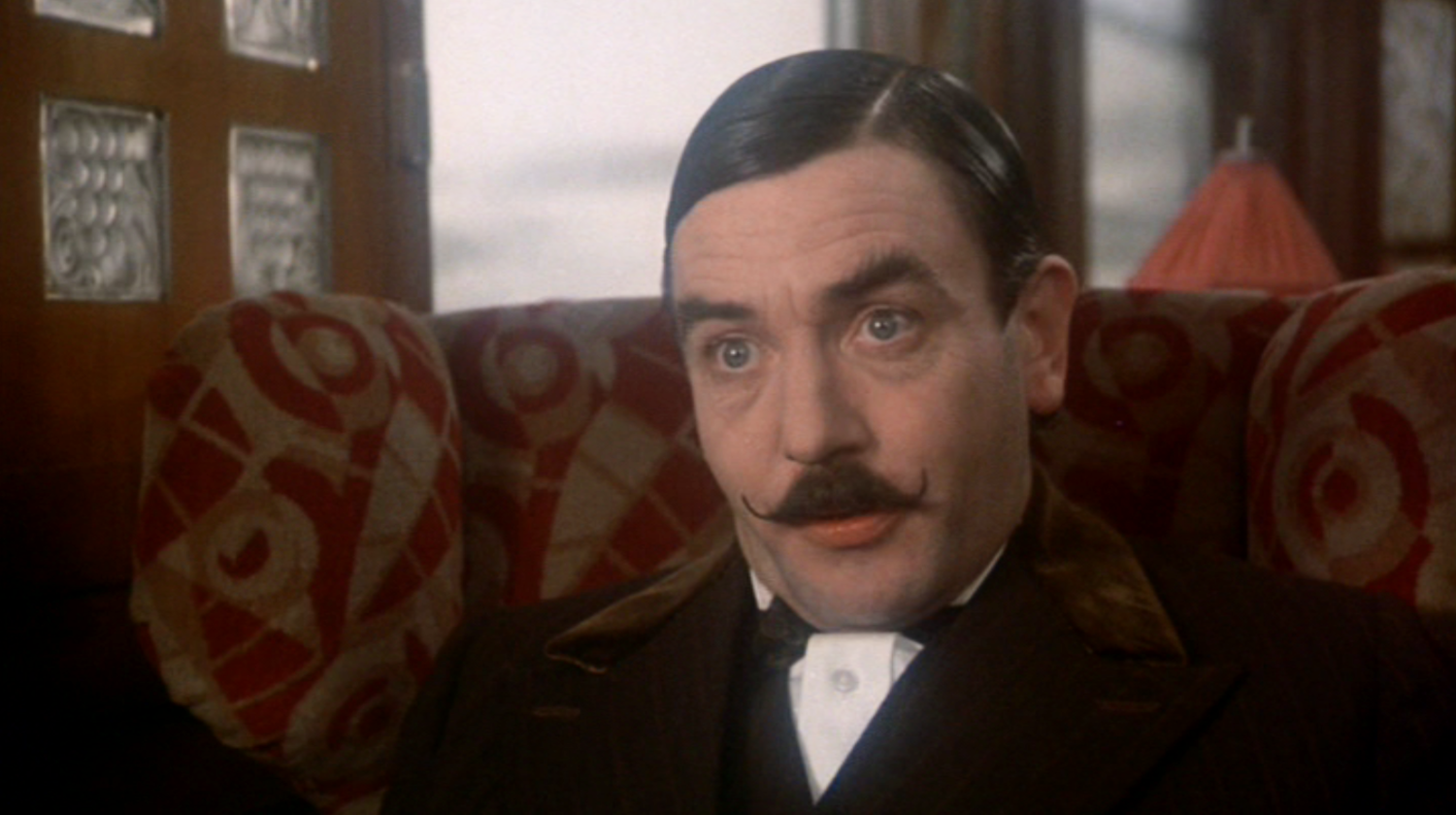
The advantage of having such accomplished actors was most clear in the burden placed on Finney as Poirot. Watching it now – familiar as we are with decades of David Suchet’s definitive performance – it’s easy to see Finney’s performance as a little too much. Covered with make-up and a fat-suit, his shoulders hunched around his neck, his hair plastered down with grease and his accent frequently heading way out over the top, Finney certainly leaves very little in the dressing room. His Poirot is an amiable showman, a man willing to adjust his personality and approach from suspect to suspect, but in the end a man with a well-being arrogance and a deep sense of personal morality as well as a profound sense of humanity.

Finney was a surprising Oscar nominee for Best Actor, but he almost certainly owed this to his final speech, an almost thirty-minute tour-de-force. Lumet, operating in small confines, determined that the best way of getting the most dramatic energy from the speech was to use long takes, elegant camera moves, and the minimum of cutting – to let Poirot cast his spell over the audience as much as he does over the suspect. As such Finney – in a tiny, crowded, set – performed the complete monologue several times (each time apparently flawlessly) so that the camera could be positioned in each point in the confined set at a time. The result is seen in the final sequence, which uses dizzying long takes and careful camera moves to draw us brilliantly into the reveals that come thick and fast.

Finney’s performance is magnetic in its theatricality and commitment, and Lumet’s directing decisions throughout the sequence really help to make this sequence as effective as it is. Lumet’s peppers this sequence with a series of brief flashbacks to earlier in the film, which skilfully present snippets of the characters testimonies represented at different camera angles, which is both eerie and also throws a new light on the scenes we have already seen. For all that Finney is a bit much at times, you can’t help but enjoy this piece of showmanship.

The final resolution remains justly famous, and it largely owes a lot to this film. Agatha Christie even was favourable to the film (one of only two films of her work she liked, the other being Billy Wilder’s adaptation of Witness for the Prosecution) although (in words I presume heard by Kenneth Branagh) she bemoaned the smallness of Finney’s moustache. There have been several film and TV adaptations that have followed, but only David Suchet’s version has challenged it for the title of the best. With its gorgeous settings, imaginative direction and wonderful cast I never tire of watching it.

Panic in the Streets (1950)

Paul Douglas and Richard Widmark race against time to prevent plague in Panic in the Streets

Director: Elia Kazan

Cast: Richard Widmark (Lt Commander Clint Reed), Paul Douglas (Captain Tom Warren), Barbara Bel Geddes (Nancy Reed), Jack Palance (Blackie), Zero Mostel (Raymond Fitch), Alexis Minotis (John Mefaris), Dan Riss (Jeff), Guy Thonajan (Poldi), Tommy Cooke (Vince Poldi)

It feels like a very modern nightmare: a plague of catastrophic proportions breaking out in a major city and threatening to wipe out thousands of people. This feeling helps to make Panic in the Streets feel more like a film from today rather than the 1950s. The only thing missing is a terrorist angle – everything else could have been pulled from the nightmare fuel of our modern age.

In New Orleans, a murdered man is found near the docks. The emergency button is pressed when the coroner detects a deadly infection. Naval doctor (and emergency co-ordinator) Lt Commander Clint Reed (Richard Widmark) quickly takes command and determines that the victim carried pneumonic plague before being shot. Tracking down the men who killed him, and who may also be carrying the disease, becomes urgent, before the infection spreads. The authorities don’t want panic, so Reed and Captain Tom Warren (Paul Douglas) – initially of course reluctant partners – must work together to quietly track down the killers. The killers meanwhile, Blackie (Jack Palance) and his crew, continue regardless with their small-town crime empire building.

Panic in the Streets was one of the first films to shoot extensively on location – and it’s a brilliant choice, as Elia Kazan’s use of real life, grimy, New Orleans locations, from back streets to the docks, is pivotal for the sense of urgency and realism that runs through the entire film. Kazan’s camera work is brilliant throughout, and it adds a real gritty sense of danger to the entire film. It’s also brilliant that he selects possibly the least attractive parts of New Orleans for his locations – Blackie’s world of run-down buildings and dives just feels perfect for the film.

Kazan keeps the focus tight and avoids too many distractions from the film’s narrative – except maybe some tiresome insights into Reed’s slightly troubled domestic life (with Barbara Bel Geddes in a particularly thankless role as his wife, who alternates between supportive and the inevitable just wanting him at home more). Other than that, the film follows Reed’s search in forensic detail, from questioning suspects to working out the radius of possible infection. There is more tension here in a meeting with the city mayor to try and wrestle the authority Reed needs to carry out his job than in dozens of car chases.

The script is tightly written, and focused on plot over character, but still allows moments for character beats that good actors can seize upon. Widmark makes Reed a driven professional, who still has enough personal insight to register that his flaws include arrogance and impatience. In many ways an interesting piece of counter-casting, Widmark’s slightly menacing air is inverted really well as a doctor frustrated by the lack of understanding he encounters from those he is trying to save from a potentially deadly infection. He’s the perfect actor for a character who is a hard-bitten professional with a ruthless streak, and who’s a little hard to like.

He has a great foil in Paul Douglas as a professional, down-to-earth, but skilful and whip-smart police detective. One of the film’s pleasures is the bond that slowly grows between this odd couple – it’s not unexpected if you’ve ever seen a movie before, but it is very well done. The film, however, is almost stolen by Jack Palance as the villainous heavy, intent on empire building and oblivious to the fact that he is probably carrying a deadly plague that could wipe out half the population. Equally good is Zero Mostel as his weaselly, sweaty side-kick.

It’s odd watching it now that the authorities aren’t more terrified by the prospect of such a deadly infection – but that is a sign of how things have changed since the film was released. It’s sometimes a rather cold film, fascinated by slimmed down procedure – from the procedures of tracking people down, to the inoculations Reed administers right, left and centre to those who may be exposed. Despite this general mood, Kazan still gets the tone just right for the later shoot out that tops off the film.

Panic in the Streets does have a few too many slower moments. The scenes showing Reed’s home life are particularly drab – although we do get a marvellous scene with his wife where Reed acknowledges that his attitude to Captain Warren has been arrogant and condescending. The politics of lowlife New Orleans criminals are completely dependent on the charisma of the actors – remove Palance and Mostel’s performances and they would be exposed as dull and irrelevant. But the rest of the time, the film has a genuine feeling of grimy reality and keeps the pace up a treat. It’s a little B movie gem that feels ripe for discovery in our terror-obsessed modern world.