Tag: Robert De Niro

The King of Comedy (1983)

The King of Comedy (1983)

Scorsese’s dark satire on the obsessive love of fame was miles ahead of its time

Director: Martin Scorsese

Cast: Robert De Niro (Rupert Pupkin), Jerry Lewis (Jerry Langford), Sandra Bernhard (Masha), Diahnne Abbott (Rita Keene), Shelley Hack (Cathy Long), Frederick De Cordova (Bert Thomas)

Like moths to a flame, celebrity attracts obsessives, weirdos and those desperate to grab their slice of fame’s limited cake. In our world of influencers and social media, the sharp, uncomfortable and acidic King of Comedy has become a classic after flopping on release. The world seems full of Rupert Pupkin’s today, people who feel their mission in life is to share their gifts for entertaining with the world and feel ownership over their famous idols.

Rupert Pupkin (Robert De Niro) feels like this about TV chat-show host Jerry Langford (Jerry Lewis). Pupkin sees himself as a polite, affable comedy-star-in-the-waiting and only the fact that he and Langford have never met is preventing them from forming a deep and lasting friendship. In actuality, Pupkin is a fantasist with an elaborate fantasy-world he struggles to differentiate from reality. Believing Jerry wants to give him his big break, his stalkerish attempts to become the star’s protégé lead to inevitable rejection. Desperate, he allies with Jerry’s even-more-openly obsessive stalker Masha (Sandra Bernhard) to take desperate measures to break into the spotlight.

The King of Comedy gets, in a way few other films have done before or since, the dark outer-reaches of the allure of fame. It’s a film about people desperate, in different ways, to have a part of the glamourous exciting world are pressed up against the screen watching. It’s about the darkly-comic – and, in their way, terrifying – lengths people will go to feel special and noticed. To land a quiet moment with a distant superstar or (even better) to become the celebrity themselves.

There’s a little bit of Rupert Pupkin in all of us. Perhaps that’s why we find De Niro’s exquisite performance both hilarious, mortifying to watch but also strangely endearing. Who hasn’t spun in their head elaborate fantasies full of warm conversations with those we admire, where they fall over themselves to tell us how amazing we are? Or imagined a critical teacher going on television to tell the world how wrong they were? Or dreamed of impressing the person we fancied at school with tales of our high-flying success among the hoi-polloi?

What we perhaps don’t do, is build a replica TV studio in our apartment, staffed with life-size cardboard cut-outs of our heroes. Or act out, long into the night, the conversations we wished we had. We probably don’t try to force up fantasies weekend retreats with superstars into reality by turning up at their houses unannounced with a date we want to impress in tow. We might enjoy flirting with a little fantasy life, we’ve probably not started to believe it or started to resent the celebrities for not performing in real life the affection they show us in our mind.

But Rupert does. Superbly played by De Niro – this might just be his finest performance, hilariously over-eager, pathetic but with just the possibility of Bickle-like danger under the surface – Pupkin lives half in this world, half in his own. He doesn’t even seem to realise how socially awkward or desperate he is, approaching every conversation with an air of polite, calm decency. The sort of guy who hands over his own autograph to the girl he’s trying to impress, telling her it will be worth a fortune one day. Who, when he finally gets the chance to talk to his idol after ’rescuing’ him from a deranged fan (something we quickly realise is a set-up – and an indicator of the ends Pupkin will go to), seems literally unable to let the conversation end, utterly unaware each additional word that passes his lips makes it less-and-less likely Jerry will ever speak to him again.

Pupkin only looks normal when he’s compared to his partner in Jerry-obsession Masha, a superbly grating performance of unhinged monomania from Sandra Bernhard. Masha and Rupert – the sparky, bickering interplay between De Niro and Bernhard is electric, the two sounding like children feuding over the last cookie in the jar – are two halves of the same personality: Rupert the more polite, more capable of affecting normality part who longs for a celebrity to recognise him as one of their own; Masha is the possessive id, who wants to grasp her object of affection tight and never let them go, focused on celebrities because they are easier to follow than regular people.

But we’ve all been desperate to take a chance to get close to something we want haven’t we? When presenting himself at Jerry’s office with his demo tape, Pupkin politely but firmly refuses to read any social cues from the staff that they want him to leave. De Niro’s permagrin is a superpower, rejection bouncing off him unscathed. De Niro manages, under the smile and unassuming manner, to always demonstrate Pupkin’s belief fame is his due. The King of Comedy really understands the belief many feel that all which separates them from success is luck. Pupkin rejects hard work and honing his act, genuinely not understanding why he can’t graduate straight to prime-time TV. He’s a millennial ahead of his time, someone who believes if he really, really wants something he should get it.

What’s fascinating about Scorsese’s film is it encourages us to share Pupkin’s delusional perspective. Jerry Langford – a superb performance of bitter, dark self-parody by Jerry Lewis – is all smiles on TV but, as far as we can see, a surly bully in reality, frequently abrupt and rude. But think about it: we only really see him from the perspective of the invasive Pupkin and the frankly terrifyingly Masha. Would you cut these guys any slack? In brief moments where King of Comedy puts us in Jerry’s shoes, it’s clear his world isn’t always pleasant: the woman who responds to his polite refusal to talk to her son on the phone screams “You should die of cancer” at him and he’s obvious genuinely scared of Masha. Is it a surprise he clutches a golf club throughout his confrontation when Pupkin arrives at his home? He chooses his words carefully because too much interaction can be as dangerous as none-at-all.

What’s also quietly clever about King of Comedy is that Pupkin isn’t talentless as such. His problem is all his material is as derivative and carefully studied as his attempt to act normal is. When we see his act, some of the jokes land – but they land like with the carefully planned poise of an obsessive who has copied the tics of those with genuine talent. Pupkin is witty, but it’s outweighed by his obsessive desire for immediate fame. Everything about him is carefully crafted, his entire persona constructed to cope with the world. That’s why he retreats so often in fantasy, where everything is easier.

And maybe King of Comedy heads into fantasy, much as Taxi Driver perhaps does. Don’t trust a Scorsese-De Niro film where someone who we’ve seen as maladjusted, unaware and self-deceiving as Pupkin gets what he wants at the end. King of Comedy shares huge amounts of DNA with Taxi Driver – history repeating itself as farce – even if Pupkin is too childish and incompetent to be as much of a danger as Bickle is.

King of Comedy captures all this with a brilliant understanding of the addictive qualities of fame and celebrity. Sure we sort of like Pupkin sometimes, but we also understand why Jerry finds him so unbearable and unsettling – and also clear just how short a distance he would need to travel to become Masha. King of Comedy delivers all this with an unflashy skill and hosts a truly superb performance from De Niro, a pitch-perfect study in weakness, longing, delusion, repressed desperation and strange vulnerability. It speaks to feelings we’ve all had, but it also reveals the horrific end results of those longings.

Awakenings (1990)

Awakenings (1990)

Decent performances from the leads can’t save a shamelessly manipulative, saccharine movie

Director: Penny Marshall

Cast: Robert De Niro (Leonard Lowe), Robin Williams (Dr Malcolm Sayer), Julie Kavner (Eleanor Costello), John Heard (Dr Kaufman), Penelope Ann Miller (Paula), Max von Sydow (Dr Peter Ingham), Ruth Nelson (Mrs Lowe), Alice Drummond (Lucy), Judith Malina (Rose), George Martin (Frank), Dexter Gordon (Rolando), Keith Diamond (Anthony), Anna Meare (Miriam), Mary Alice (Margaret)

There can be few things more terrifying than being trapped inside your own body, unable to engage with the world, but to be in a sort of waking coma for years. Imagine how wonderful – and how terrible – it might be if you briefly woke to normality, only to return to your catatonic shell? This actually happened to patients of Dr Oliver Sacks – here re-imagined as Dr Malcolm Sayer (Robin Williams) – in a Bronx hospital in 1969. Looking after catatonic survivors of the encephalitis lethargica epidemic of 1919-30, Sayer discovered they responded to certain stimuli: their name, music, catching balls etc. With an experimental drug he discovers he can restore the patients to ‘life’ – foremost among them Leonard Lowe (Robert De Niro), just a boy when afflicted – only to discover the effects won’t last and they are doomed to return to their coma-like state.

It’s such a terrible thing to think about that it even gives genuine emotional force to Awakenings an otherwise hopelessly manipulative, sentimental film that plays like a TV-Movie weepie. It certainly didn’t need the naked emotional manipulation that washes over the whole thing like a wave, with Randy Newman’s sentimental, tear-jerking score swells with every single heart-string tucking moment. Awakenings is so determined to make you feel every single moment it eventually starts to make the story less affecting than it really is. A simpler, less strenuous film would have been more moving rather than this film almost genetically engineered into ‘life-affirming’.

Everything in Awakenings feels like it is always trying too hard. Every moment is laid on for maximum emotional impact. Adapted from Oliver Sacks’ book chronicling individual cases, it presents a stereotypical Hollywood ‘feelings’ film, with lessons for all. Worse, there is a tedious ‘seize the day’ message that keeps ringing out of the film. The awakening is, of course, not only literal but metaphorical – the patients (and their doctors) ‘awoke’ to appreciate life and living more. It’s hard not to think at times there is something rather patronising about partially using Leonard’s brief experience as a lesson for Dr Sayer to stop being so damn timid and ask a nurse out on a date. As traumatic as it is for Leonard to return to his coma, at least Dr Sayer learned to live a little!

It’s a very fake attempt at a hopeful ending to an otherwise down beat true-story. Dr Sayer is a retro-fitted version of Oliver Sacks, sharing many of his characteristics – but not his sexuality or decades long celibacy – and the film presents him, as Hollywood loves to with geniuses, as a shy, awkward type who no-one of course could expect anything of. He combines this with quiet maverick tendencies, putting the patients first against the ‘numbers-first-risk-free’ obstructionist bureaucrats (represented, of course, by John Heard, though he does thaw a little) who run the hospital and poo-poo his ideas.

Awakenings is full of sickly moments of heavy-handed sentimentality – its opening shot of Leonard as a boy carving his name in a bench under the Brooklyn Bridge tells you immediately one of the first places he’ll go as an adult for a wistful smile – that keep trying to do the work for you. (Of course, all the nurses and cleaning staff offer up cheques to help pay for the patients drugs!) The story doesn’t need it. Just seeing the facts of these vibrant adults emerge for a brief time in the sun is moving enough. Leonard quietly, but with dignity, asking the hospital board for permission to go outside alone is more moving than watching him forcibly dragged from the door by porters or seeing him rant on the mental ward he’s been consigned to as a punishment. We don’t need Sayer to literally tell us some things are too sad for him to film, when we can see it on Williams’ face.

The leads are not always immune to the try hard nature of the film, but they do some decent work. De Niro (Oscar-nominated) brings a touching sweetness to Leonard, essentially a boy who wakes in the body of an adult. There is a genuine wonder in his eyes at the world around him – wonder that transforms into frustration at the continued restrictions placed on his freedom. There is something slightly studied about the physical effects (especially in the film’s final act) but De Niro understands that underplaying and quiet honesty is more moving than when the film pushes him towards grandstanding.

Williams is also very good – if at times a little mannered – as the quiet, awkward Sayer. With the less flashy – but potentially more complex role – he again shows how close humour is to pathos. It’s a performance with several little eccentric comic touches, but wrapped up in a humanitarian shell of earnestness that is quite affecting. It’s a shame that the film constantly undermines his restraint by using every conceivable trick of framing, scoring and composition to wring sentiment from him.

But then that’s Awakenings all over. You can imagine the script covered with annotations along the lines of ‘make them cry here’. And it worked with a great many people, the mechanical nature of the film working overtime to tickle the tear ducts. But the film’s utterly unnatural sense of artifice constantly prevents you from really feeling it. You are always aware of Marshall nudging you to remind you of the unbearable emotion and the tragedy of lives not lived. All easily washed down in a narrative structure as old as the hills – Sayer is an outsider who proves himself, he and Leonard fall out then come back together stronger than ever etc. etc. – that continually reminds you of its functional, manipulative nature.

Killers of the Flower Moon (2023)

Killers of the Flower Moon (2023)

Scorsese tries to tell an Indigenous story – but from the persecutor’s perspective

Director: Martin Scorsese

Cast: Leonardo DiCaprio (Ernest Burkhart), Robert De Niro (William King Hale), Lily Gladstone (Mollie Kyle), Jesse Plemons (Thomas Bruce White), Tantoo Cardinal (Lizzie Q), John Lithgow (Peter Leaward), Brendan Fraser (WS Hamilton), Cara Jade Myers (Anna Brown), JaNae Collins (Reta), Jillian Dion (Minnie), Jason Isbell (Bill Smith), Louis Cancelmi (Kelsie Morrison), William Belleau (Henry Roan)

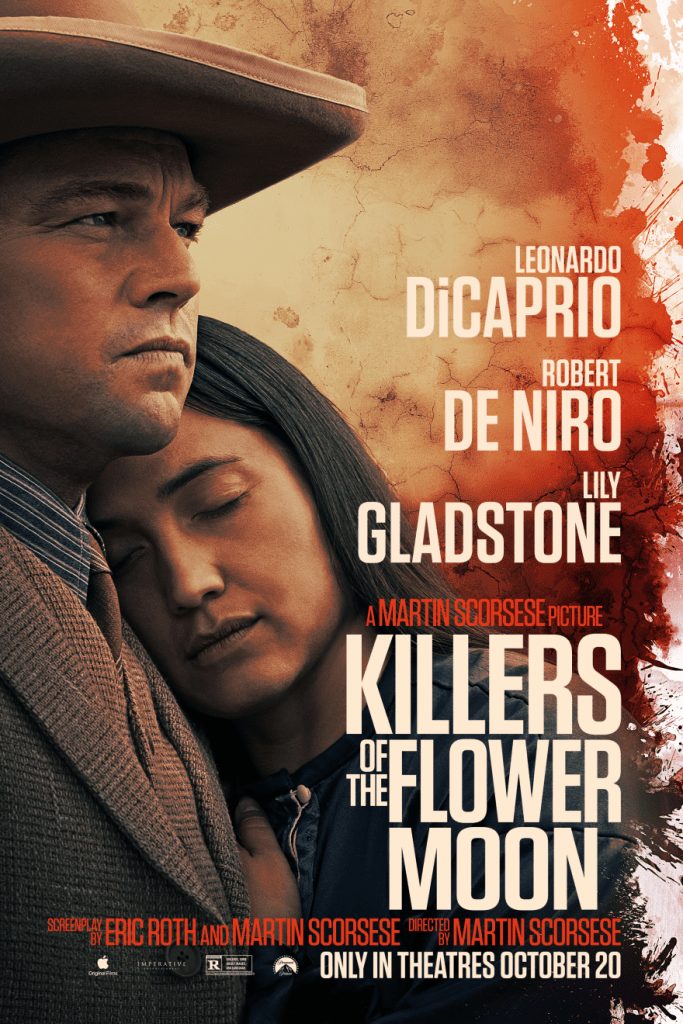
In the 19th century, the American government forcibly shifted Indigenous nations from their rich, fertile lands to unwanted backwater reservations. The Osage nation was moved from Missouri to Oklahoma, land no-one wanted… Until oil was discovered there in the early 20th century. Suddenly hugely rich, the Osage nation’s land once again became the focus of white Americans, as keen to dispossess these Indigenous people as they were in the last century. This ruthless grab of oil rights – and the brutal exploitation and murder of dozens of Osage people – is the theme of Scorsese’s epic Killers of the Flower Moon.

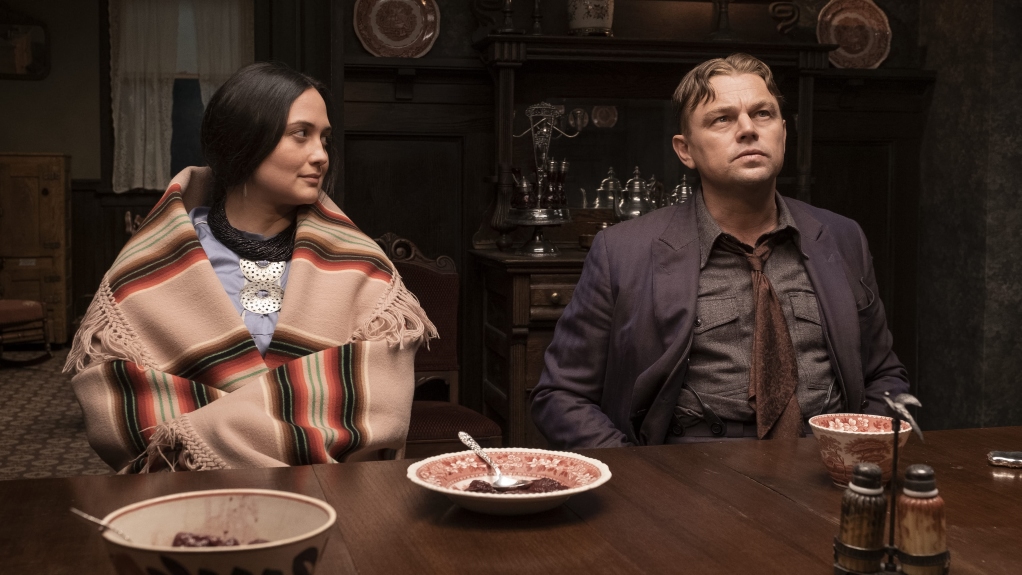
Ernest Buckhart (Leonardo DiCaprio) returns from war service (as a cook) to live with his uncle William King Hale (Robert De Niro) in Oklahoma. Hale lives on a ranch in the heart of reservation country and has built himself a powerful local presence by acting as benefactor of the Osage people. But Hale is, in fact, a ruthless sociopath who smiles cheerily at his neighbours, while plotting ceaselessly to steal their oil rights. Hale persuades Buckhart to marry Mollie Kyle (Lily Gladstone), whose family own headrights. While the gullible and easily-led Buckhart truly loves Mollie, he also willingly takes an active part for years in Hale’s schemes to murder the rest of Mollie’s family, so that their oil rights will collect with Mollie – and, in effect, with Hale.

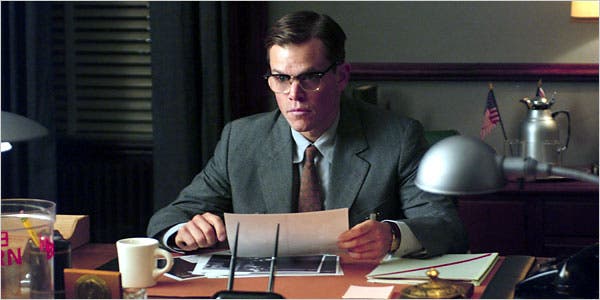
Scorsese’s film is certainly a rich tapestry, but also a curiously mixed viewing experience. It feels at times like what it is – a film that dramatically changed its focus several times during its development, eventually reaching towards bringing the Indigenous experience to the screen, only to find that reach exceeding its grasp. The original book by David Grann focused on the FBI investigation into the crimes with DiCaprio originally set to play FBI investigator White (now played by Jesse Plemons). DiCaprio instead was drawn to the role of Buckhart, with the film repositioned to focus on the killers rather than the investigators or victims. During Scorsese’s extensive work with the Osage nation, the filmmaker became increasingly compelled by the exploitation of the Indigenous people.

Watching the film, it feels like a late swerve in focus Scorsese isn’t quite able to deliver on. However, some of the film’s most compelling content is its commentary on the Indigenous experience and the brutal exploitation and murders by a white community that sees the Osage people as second-class human beings. As a sort of twisted natural progression from encroaching on land a hundred years ago, people like Hale talk of marrying into Indigenous families, breeding out the blood and turning these communities into extensions of their own white families so they can control their wealth.

Over the course of the film, Scorsese carefully shows community gatherings becoming more and more dominated by white faces. Even tribal functions and ceremonies become awash with white faces, staring on with paternalistic, unfeeling smiles. From an early montage of Indigenous people enjoying their unexpected wealth (in a mix of historical and recreations photos and film stock), we progress ever more sharply into seeing whites take over. These fall into two firm categories: Masonic pinstripe types who stick together to cover-up crimes, and trailer trash and inept lesser-family members who are farmed out like cattle to soak up Osage wealth.

Scorsese’s film doesn’t shirk from depicting the casual racism of this community. A KKK march heads through the town. When Hale attends the cinema, he first sees newsreel footage of the Tulsa massacre then The Birth of the Nation. A montage of suspicious Osage deaths is marked by a Mollie voiceover stressing the lack of investigation. Osage oil owners are dispatched with increasing blatantness, as pretence of staged suicides and accidents degenerates into shootings, executions and finally bombs. Hale rants about the need to “take back control” and coldly states that they can escape any retribution because, fundamentally, no one cares or will remember.

But yet… this is still a film where we see a traumatic event happen to a group, but which focuses overwhelmingly on the perpetrators rather than the victims. I find myself agreeing with one reviewer that it feels at times like Get Out, told from the perspective of the white people. Scorsese’s film’s main beat feels like regret and guilt and perhaps what it needed was anger. For all its noble efforts, it’s hard to escape the fact that Mollie is the only Osage character in its epic runtime who is made to feel like a character, and she remains a person things happen to. The other Osage characters are, by and large, victims – Mollie’s sisters or William Belleau as Hale’s drunken, depressed neighbour – people who pop up in order to be dispatched.

I was reminded somewhat of The Searchers. In 1956, a film that criticised a John Wayne hero as an unpleasant racist was a big statement – but in a film where the Indigenous characters were still faceless nobodies, villains or comic relief. It’s similar here: Killers of the Flower Moon shows us the vileness of its white villains, but doesn’t really give us a full Indigenous perspective. And it feels, in 2023, we should do better. Even the impact and workings of reservations, land displacements and white-guardians isn’t explained in the film. Gladstone is marvellous – her eyes are full of suppressed pain, suspicion, fury and glimmers of the possibilities of forgiveness – but her character remains somewhat of a cipher, never quite receiving the exploration the killers of her family receive.

It feels like a realisation made during the filming, but without the time to deliver (after all the stars are playing the killers). Scorsese gives two beautiful Osage-themed bookends (and his carefulness around avoiding cultural appropriation is to be applauded), but the Osage themselves become passengers in their own story, allowed only a few brief moments to protest or express their anger. In a film that stretches over 200 leisurely minutes, more really should have been done.

Saying that, the film is blessed with two wonderful performances by Di Caprio and De Niro. DiCaprio, his mouth stuffed with rotten teeth, his body stumbling from scene-to-scene, expertly walks a tightrope between weakling and coward. Does he realise the moral morass he has climbed into? Or does he not care? How does he manage the mental gymnastics of plotting the deaths of his wife and her family and yet also convince himself that he is protecting her? It’s a fascinating performance. De Niro gives his greatest performance in 25 years as a polite, gentle man who warmly means every word of his friendliness but is also capable of acts of shocking murder and violence towards ‘his friends’ without even batting an eyelid. De Niro’s avuncular presence chills noticeably over the course of the film, brilliantly letting the egotistical dark heart leak out into the surface.

There is a lot to respect about Scorsese’s film, not least the way the late Robbie Robertson’s heartbeat-inspired score constantly creates an air of menace. It’s beautifully filmed – even if it is incredibly stately in its huge runtime – and it’s trying, very hard, to address an under-addressed issue in American culture. But it fumbles the ball because, for all its good intent, it still tells the story of an Indigenous group through the eyes of white people. Worse – their white persecutors. A braver, better (and shorter) film would have centred Gladstone’s Mollie rather than making her, at times, a passenger on a very long ride. Killers of the Flower Moon strains to make amends to Indigenous Americans – but instead it feels like a long guilt-trip for its white film-makers.

Amsterdam (2022)

Amsterdam (2022)

Lots of quirk, whimsy and smugness, not a lot of interest or dynamism in this satirical mis-fire

Director: David O. Russell

Cast: Christian Bale (Burt Berendsen), Margot Robbie (Valerie Voze), John David Washington (Harold Woodsman), Robert De Niro (General Gil Dillenbeck), Chris Rock (Milton King), Rami Malek (Tom Voze), Anya Taylor-Joy (Libby Voze), Zoe Saldana (Irma St Clair), Mike Myers (Paul Canterbury), Michael Shannon (Henry Norcross), Timothy Olyphant (Tarim Milfax), Andrea Riseborough (Beatrice Vandenheuvel), Taylor Swift (Elizabeth Meekins), Matthias Schoenaerts (Detective Lem Getwiller), Alessandro Nivola (Detective Hiltz), Ed Begley Jnr (General Bill Meekins)

David O Russell’s has made a niche for himself with his ensemble awards-bait films, filled with touches of quirk and offering rich opportunities for eccentric, showy performances from actors. Some of these have walked a fine line between charm and smugness: Amsterdam tips too far over that line. Like American Hustle it’s a twist on a real-life event (opening with a pleased with itself “A lot of this really happened” caption) but, unlike that film, it fails to insert any compelling storyline, settling for a whimsical shaggy-dog story that frequently grinds to a halt for infodumps or lectures.

Set in 1933, just as Roosevelt has taken office, it follows three friends who formed a friendship for life in post-war Amsterdam. They are: wounded veterans doctor Burt Berendsen (Christian Bale) and lawyer Harold Woodsman (John David Washington) and socialite-artist-turned-nurse Valerie Voze (Margot Robbie). Berendsen and Woodsman lost touch with Valerie in the 1920s, but now they are all bought together after the murder of their respected former commander as part of a plot from various nefarious types to overthrow the government in a fascist-inspired coup.

Sounds gripping right? Well, Amsterdam fails to find any urgency in this. In fact, details of this plot and the political context it’s happening in are sprinkled around the film as if Russell kept forgetting what the film was supposed to be about. It’s almost as if he stumbled on an unknown piece of American history – a rumoured coup attempt, thwarted by being denounced by the ex-Marine General approached to lead it (here represented by De Niro’s ramrod straight General Dillenbeck) – but got more and more bored with it the longer he spent on it.

Instead, his real interest is in the faint overtones of Jules et Jim style thruple between Berendsen, Woodsman and Voze (though this is American not French, so any trace of homoeroticism is dispatched, despite the obvious bond between the two men). The most engaging part of the film is the Act two flashback to these three healing, dancing and bonding in post-war Amsterdam, in a “our troubles are behind us” bliss. Even if it’s self-satisfied in its bohemianism.

To be honest, even then, they have an air of smugness behind them. They pass the time singing improvised nonsense songs based on words pulled out of a hat and playfully posing in Valerie’s modernist artwork. Valerie is played with almost enough charm by Robbie for you to overlook she is a standard Manic Pixie Dreamgirl, the sort of babe who pulls shrapnel from bodies to turn it into artistic tea-sets as a commentary on the madness of war. She and Woodsman form a relationship (with the married Berendsen as a sort of – well I’m not sure what, but definitely not a sexual third wheel) and these blissful Amsterdam days are the times of their life. Russell is so keen for us to know it, that all three pop up in short cutaways at key moments to whisper “Amsterdam” direct to the camera, an affectation that fails to deliver the spiritual impact its straining for.

It’s better than the shaggy dog story around the conspiracy that fills the 1930s part of the storyline. This remains so poorly defined, that Bale has to narrate a concluding slideshow of clips and fake newsreel and newspaper coverage to explain what on earth has just happened. The lack of clarity about the stakes – and the general lack of seriousness or urgency anyone treats them with –fails to provide any narrative oomph. Instead, it drifts along from casual meeting to casual meeting, every scene populated with a big-name actor showboating.

There is a lot of showboating in this film. Bale, an actor with an increasingly worrying tendency for funny voices and tics, fully embraces the facially scarred, glass-eye wearing Berendsen, perpetually stooped with a war wound and prone to fainting from pain-killer overuse. It’s a showy, actorly performance with a licence to go OTT. Bale does manage to invest it with an emotional depth and vulnerability, but there’s more than an air of indulgence here.

Most of the rest follow his lead. Malek and Taylor-Joy sink their teeth into a snobby socialite married couple. Rock essentially turns his role as a veteran into a less sweary extension of his stand-up act. Myers and Shannon seize with relish roles as ornithologist spies (is this meant to be a joke about the origins of the James Bond name from the author of a bird-spotting guidebook?) Poor John David Washington ends up feeling flat with his decision to underplay (like he’s in a different movie) and only De Niro really manages to feel like anything other than an actor on holiday.

Russell wants to make a point about the continual corruption of the rich and how their hunger for more power will never be sated. There are some half-hearted attempts at attacking racism, with the ill treatment of black veterans, but it lacks bite or edge. His attempts to draw parallels with Trump are all too clear, but the film largely fails to integrate these ideas into the film. In fact, it ends up relying on voiceover lectures from Bale about dangers to democracy. It ends up like being hectored by an angry socialist after a student revue night.

The film is shot with a series of low angle shots and medium and close ups that eventually made me feel like I was watching it from the bottom of a well. A vague sepia-ish tone is given by Emmanuel Lubezki, but the film looks flat and visually uninteresting (so much so I was stunned to see $80million had somehow been blown on it, despite most of the cast working for scale). It drifts towards a conclusion, without giving us anything human to invest in (as Russell managed so well in Silver Linings Playbook or The Fighter) or providing the sort of caper enjoyment he delivered in American Hustle. Instead, it’s oscillates between smug and dull.

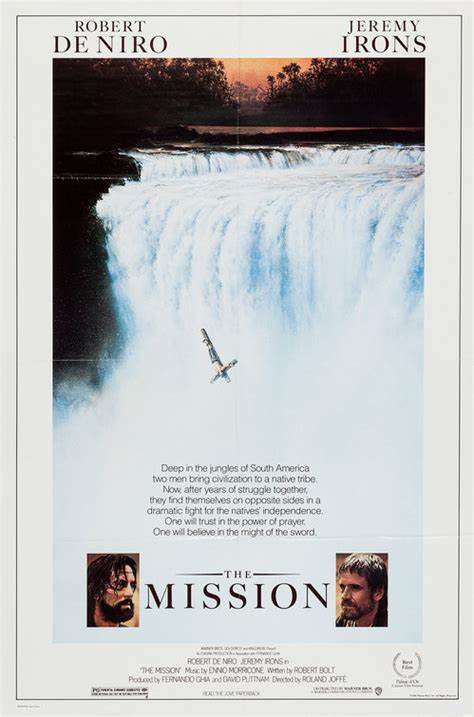
The Mission (1986)

Robert de Niro turns aside from the Jesuit rule to fight for right in The Mission

Director: Roland Joffé

Cast: Robert de Niro (Rodrigo Mendoza), Jeremy Irons (Father Gabriel), Ray McAnally (Cardinal Altamirano), Aidan Quinn (Felipe Mendoza), Cherie Lunghi (Carlotta), Ronald Pickup (Hontar), Chuck Low (Don Cabeza), Liam Neeson (Father John Fielding)

Spoilers: The incredibly grim and depressing ending of The Mission is discussed in detail.

When the world is run by men, how much of a voice does God have? Roland Joffé’s film explores colonial politics and religious duty in Spanish and Portuguese controlled South America. Needless to say, God doesn’t get that much of a vote when questions of land ownership, slavery and money are in play – and no noble stand from Jesuit priests is going to make a jot of difference. Joffé’s beautifully made and moving epic might be slightly self-important, but it won the Palme d’Or. With powerful imagery and sequences but some under-explored themes and characters, its one of those films that probably would have benefited from being at least an hour longer.

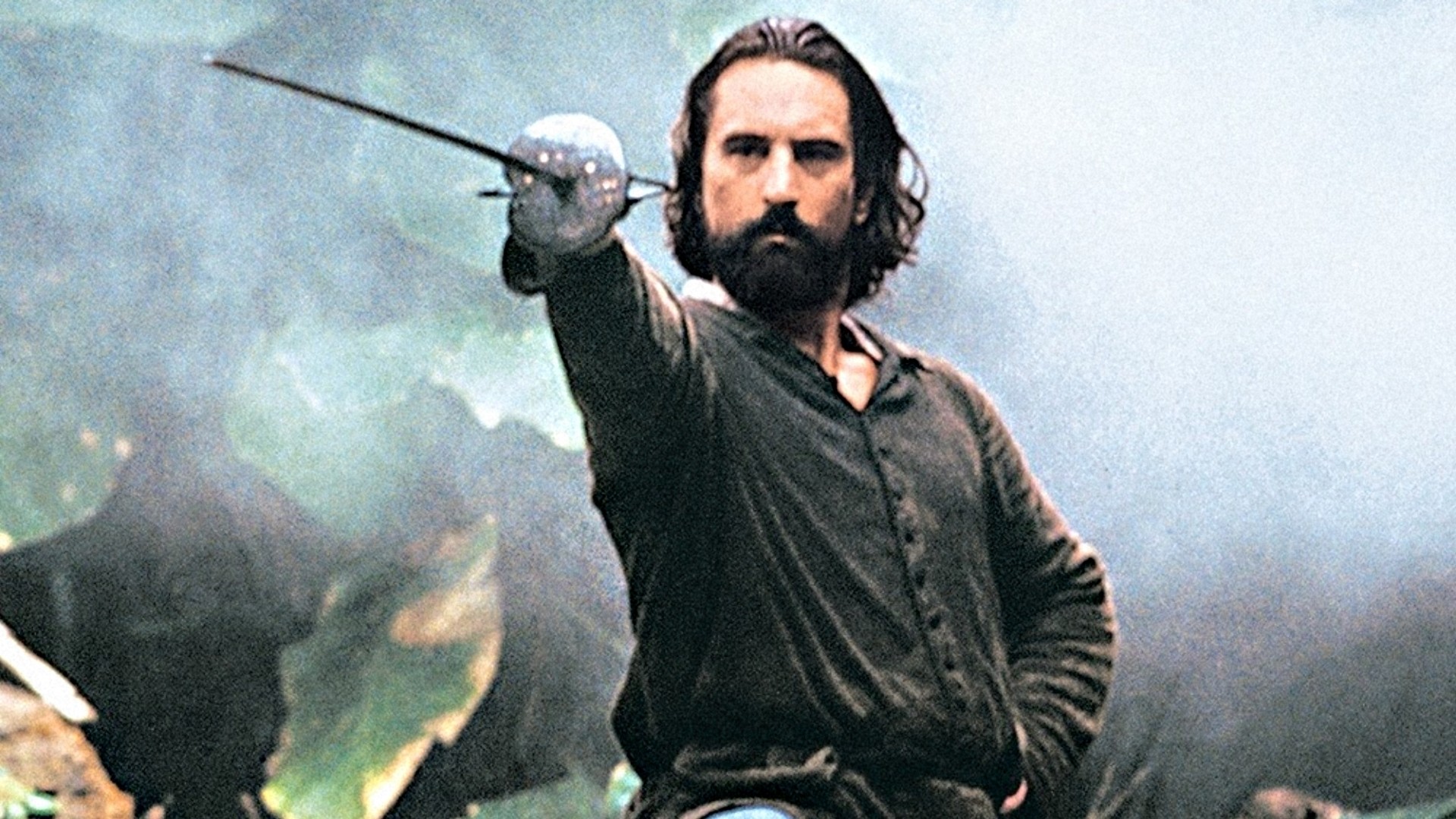
In the Paraguayan jungle in the 1750s, Jesuit priest Father Gabriel (Jeremy Irons) successfully converts a Guarani community at his mission. Problem is to the Spanish and Portuguese empires the Guarani are fit only for exploitation and slavery. Mercenary slaver Rodrigo Mendoza (Robert de Niro) is one of them – but his world collapses after he murders his brother (Aidan Quinn) in a dispute over the woman (Cherie Lunghi) they both love. Mendoza makes his penance with the Jesuits, and the forgiveness he receives from the Guarani changes his life, leading to his conversion. But when a treaty – with the reluctant agreement of papal legate Cardinal Altamirano (Ray McAnally) – calls for an end to the mission, Gabriel and Mendoza resolve to fight: one with prayers the other with the weapons he has sworn off. Can they help the Guarani defend themselves from colonialism?

I don’t think its too much of a spoiler to say, no they can’t. The Mission may occasionally muddle itself by trying to say a lot in a short run-time, but on one thing it’s clear: the world is what men have made it, and they’ve made it a pretty dreadful place. The final quarter of the film is entirely given over to the spirited fight to protect the mission, as Mendoza and the other priests take up arms to help these people defend their homes. Joffé doesn’t gloss over the hideous cost of this, with a staggeringly high body count. The Europeans don’t differentiate between combatants and non-combatants, and the killed (and everyone is killed) fall with a sickening finality.

Watching the senseless destruction of this entire community for no purpose other than stripping the Guarani people of anything of value and shipping it back to Europe, you can only agree with Cardinal Altamirano that perhaps it would have been better for all concerned if ships had never crossed the Atlantic. When the dreams of bringing Christian civilisation end with Father Gabriel leading a march of peaceful converts into a hail of bullets, something has gone badly amiss in the world. Hammering home how helpless decency is, Mendoza is fatally wounded (and the village finally doomed) when he is distracted from destroying the bridge into the village, by running to safe a wounded child. No good deed goes unpunished in The Mission.

All of this is, by the way, immensely moving. It’s a tribute to Joffé’s quiet, coldly realistic eye for violence among the natural world that the final half hour is a hard watch. The European invaders may be faceless, scruffy monsters, but even they are briefly halted by the sound of prayer from the village (before they burn it down and kill everyone). The Mission is a profoundly beautiful film, which strains hard for spiritual meaning, and this final sequence is almost impossibly tragic to watch. Just as he had done in The Killing Fields, Joffé’s ability to report without sensationalism on real life tragedy, amongst scenery of great beauty, makes for powerful viewing.

There is so much right about The Mission, it feels harsh criticising it. The film was shot entirely on location (at times the cast show clear signs of the jungle-tummy that spread like wildfire through the cast and crew) and Chris Menges’ (Oscar-winning) cinematography captures the exotic beauty of the jungle, with a powerful visual sense of the spiritual and the sublime. It’s an effect built on immeasurably by Ennio Morricone’s extraordinary score (one of the greatest ever recorded), every single note perfectly chosen to communicate the holy serenity of the Jesuits and the dark flaws of mankind.

Its in exploring those flaws that the film feels a tad rushed. I dearly wish this was an hour longer, if for no other reason that it could bring greater focus to the balance between faith and realpolitik in greater depth. Although the Cardinal gets a few moments to reflect on this, and explicitly question the self-appointed right the Europeans have given themselves as masters of the world, the film never quite manages to dive into these. (McAnally however is excellent as this tortured and ashamed man). Too often these ideas are boiled down into “worldly men bad, priests good”.

The role of the Missionaries themselves also goes unquestioned – these are, after all, people who have crossed the seas with the same sort of imperialist missions as anyone else, finding the indigenous tribes and aiming to make them (no matter how decent their motives) as much like the Europeans as they can. Instead there are presented as purely good and holy. Just think what another hour could have done for expanding the insight into the role of the Church here.

There is a few too many blunt statements of intentions and plot information, rather then real insight. You come out of it still with only a most basic idea of why Gabriel and Mendoza make the decisions they do – or what they hope the outcomes might be. More of a dive into the characters could have given more context to their holy intentions.

In the end the film’s main aim is pushing a message of peace. It’s the message Mendoza must learn. The film’s other most successful sequence covers his extraordinary penance, dragging a huge bundle of armour and weapons up a mountain to the mission. De Niro sells the anguish as beautifully as he does Mendoza’s shamed gratitude when he is greeted warmly by the very people he had enslaved. Its moments like this where The Mission achieves its aim of grappling with something close to how spirituality can move and change us – which often gets bogged down elsewhere in ticking off plot.

The message of peace is embodied by Irons’ profound and generous performance as Gabriel, a man who believes the world should be simpler than it is. I just wish the film had given itself more room to delve into its themes. In trying to cover imperialism, religion, spirituality and native rights, all in two hours (the Guarani draw a short story, with not one of them really being given a character) its too much. A richer, more textured film would make for a richer overall experience. It’s a film of great beauty in score and photography, often moving, but doesn’t make its message much more than give peace a chance.

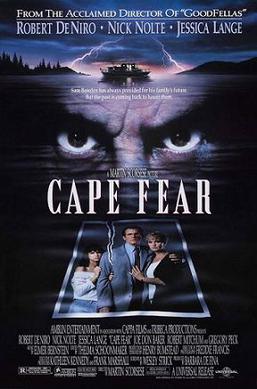
Cape Fear (1991)

Robert De Niro terrorises his lawyer’s family in Cape Fear

Director: Martin Scorsese

Cast: Robert De Niro (Max Cady), Nick Nolte (Sam Bowden), Jessica Lange (Leigh Bowden), Juliette Lewis (Danielle Bowden), Joe Don Baker (Claude Kersek), Robert Mitchum (Lt Elgart), Gregory Peck (Lee Heller), Illeana Douglas (Lori Davis), Fred Dalton Thompson (Tom Broadbent), Martin Balsam (Judge)

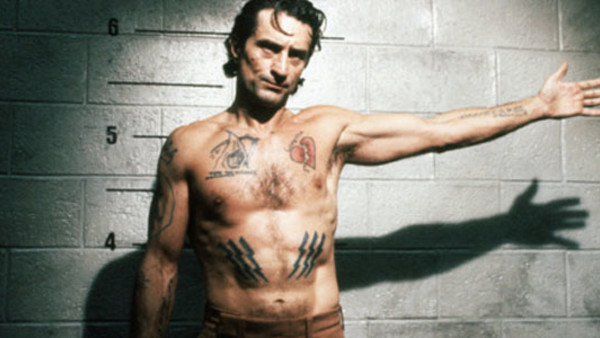
Max Cady (Robert De Niro) is out of prison after 14 years. He went in as an ill-educated psychotic bum, sent down for the rape and assault of a young woman after his appalled lawyer Sam Bowden (Nick Nolte) buried evidence on her sexual history that might have lightened his sentence. He comes out as a self-educated, articulate and psychotic force of nature, not sorry for one minute and intent on making Sam and his wife Leigh (Jessica Lange) and daughter Danielle (Juliette Lewis) pay. 

Scorsese’s remake of J. Lee-Thompson’s deliberately Hitchcock-esque thriller sees the great director go one better by trying to channel Hitchcock’s style as closely as possible. Framing and editing decisions echo Hitchcock, its design apes as much as possible cinematographer Robert Burk’s lensing, Elmer Bernstein remixes the original film’s Bernard Herrmann score into something even more Hitchcockesque than the original. Scorsese throws in several of the master’s favourite themes, with sexual obsession and frustrated, working men forced to defend themselves in extreme situations. Combined with the sort of lavish violence and extreme imagery Hitchcock couldn’t use, we end up with something like an odd film-school experiment, by film students who have watched too many slashers. It’s grim, tasteless, overlong and troubling – and not in a good way.

The film adjusts Nolte’s character from a lawyer and witness against Cady into his corrupt lawyer (no matter that his corruption in this case was well intentioned). The film has a slightly unpleasant concern with modern worries about masculinity, with Bowden now concerned he is not “man enough” to defend his home – the film constantly passes subtle judgement against Bowden’s lack of physical prowess. It also readjusts Bowden into a weasel, corrupt at work and having an affair with a young attorney (whom Cady then beats and rapes later in the film, with a slightly queasy air that she is at least partly culpable by allowing Cady to pick her up in a bar beforehand). To be honest Bowden is hard to sympathise with, and his quest to assert his masculinity rather than rely on the law or hiring others to do his dirty work not really that pleasant. Frankly Nolte was never the actor to engage sympathies in the way original choice Harrison Ford (he wanted to play Cady) would do.

Cady himself is played by Robert De Niro, channelling heavily the original’s star Robert Mitchum (with lashings of The Night of the Hunter) as the sort of articulate psychopath so beloved by film. It’s fun to watch De Niro grandstanding as this sort of violent Tyrannosaur, weaving both psychological and shockingly violent games to unnerve and panic Bowden and his family. The film doesn’t give much scope to make Cady much more than a sort of comic-book monster, but De Niro does at least have moments of reflection in amongst his insanity. And there is a sort of admirable emotional intelligence in Cady’s knack of detecting the underlying tensions in the Bowden’s marriage and family life and exploiting these to torment the family.

The film’s most effective moments are the quieter ones, none more so than Cady’s quiet befriending/seduction of Bowden’s daughter Danielle behind her parents’ back. This culminates in a deeply unsettlingly seduction scene in Danielle’s school hall, where Juliette Lewis (extremely good) fascinatingly and bashfully becomes entranced with Cady’s interest in her teenage reading list and problems with her parents. The sexuality of the scene is possibly even more unnerving today and a highlight of the film – not least, ending as it does, with Danielle sucking Cady’s thumb before kissing him and leaving with the giddy, confused excitement of someone both scared and fascinated. Few other things in the film match this moment for psychological complexity – or the unsettling exploration of teenage sexuality overlapping with rebellion against domineering parents. 

Least of all the film’s overblown and final confrontation between the Bowden family and Cady, in which Cady rises from death no  less than three times and which stretches on forever, jettisoning all the small stock of goodwill the film had built up in its quieter moments. But then this is just part of a film that chooses the graphic and the overblown over calculated and chilling, every chance it gets. It’s a shame as there is a more chilling, psychological terror film – with Cady as a demonically clever opponent – struggling to come out here, but which keeps tripping into slasher territory with Cady as an invulnerable Michael Myers.

Perhaps Scorsese just thought of the whole thing as a sort of cineaste’s private joke? All the Hitchcock references, the careful apeing of styles, even the casting of the original’s leads in small roles (a joke further amplified by casting Mitchum as the police officer, while ultimate straight arrow Gregory Peck plays a lawyer even more corrupt than Bowden). But jokes like this don’t really make for long-term entertaining films, and Cape Fear is so full of basically horrible people doing horrible things to each other (in an increasingly Grand Guignol fashion) that after a while you more than cease caring about it. You start getting actively annoyed by it.

Once Upon a Time in America (1984)

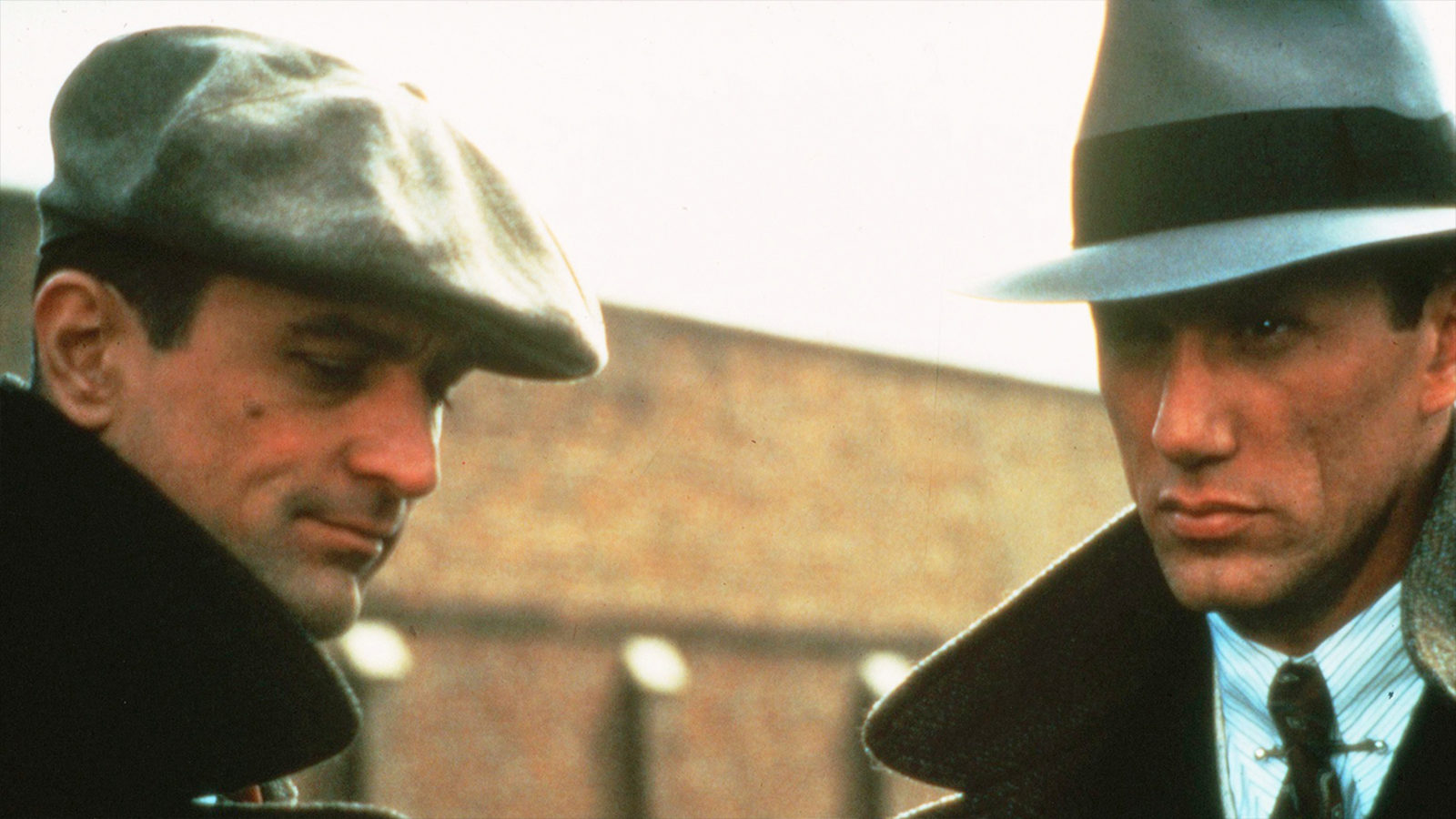
Robert De Niro and James Woods are gangsters in Sergio Leone’s sprawling indulgent masterpiece Once Upon a Time in America

Director: Sergio Leone

Cast: Robert De Niro (Noodles), James Woods (Max), Elizabeth McGovern (Deborah), Joe Pesci (Frankie), Burt Young (Joe), Tuesday Weld (Carol), Treat Williams (Jimmy O’Donnell), Danny Aiello (Police Chief Aiello), Richard Bright (Chicken Joe), James Hayden (Patsy), William Forsythe (Cockeye), Darlanne Fluegel (Eve), Scott Tiler (Young Noodles), Rusty Jacobs (Young Max), Jennifer Connelly (Young Deborah)

It had been thirteen years since Leone had made a film. During this time he turned down The Godfather in favour of his own dream of filming Harry Grey’s novel The Hoods. The final film, Once Upon a Time in America, seems destined to live in the shadow of The Godfather, from its settings and many of its themes through to its graphic design and cast. It’s a challenging, over-indulgent, sometimes difficult film that, never-the-less has its own sense of hypnotic power to it.

Told in a partly non-linear style, it opens with Noodles (Robert De Niro) a Jewish gangster on the run from thugs in 1930s New York days after the fall of prohibition. With his friends and his girl dead and his money stolen, Noodles flees the city – returning only in 1968 after a mysterious summons suggests his past is not as buried as he thought. Within this, the film weaves an intricate series of flashbacks that fill in the story of Noodles and his friend Max (James Woods) turning their teenage gang of hoodlums into an effective crew, muscling in on the money that can be made from prohibition. Carrying the story from 1918 all the way back to 1968, we discover why Noodles was on the run, what the money was, where it’s gone and who or what summoned him back to life.

Leone originally envisioned the film as a two-part epic: two films of three hours length. His original cut was almost ten hours long, cut down to six and then finally to just over four. This cut was released to critical acclaim at Cannes – but was still too long for the producers, concerned about making their money in America. To the fury of the cast (James Woods continues to be vocal about the butchering of the film), and the heartbreak of Leone, the film was cut again to just over 2 hours before its release in the States – a move that rendered it nearly incomprehensible and led to reviews that labelled it one of the worst of the year. Only with the much late release of the European cut (and work continues to restore something closer to Leone’s six hour cut) did the film find acclaim.

But you can see why the producers worried. Leone was never a director who felt the need to get where he was going quickly. As his films became ever more dominated by his love for artful compositions, meditative longeurs and drawing the tension out for as long as possible, so their running times ballooned. Leone matched this with a yearning to tell a story that was to be nothing less than about defining “America” – or at least, give a symbolic weight and depth to the Americana he loved. The film is overflowing with the feel of Old Hollywood gangster films and classic imagery of the immigrant experience in Manhattan. It’s like a brilliant coffee-table album bought to life and covered with blood.

So Once Upon a Time in America is a slow, lethargic even, film that takes its time to build up a picture of an immigrant community drawn together through bonds of culture and shared past that are nearly impossible to express – but fractured by the greed and capitalism of the American Dream, temptation to make an even bigger killing leading to old loyalties being sacrificed. Leone juggles some big ideas here, and if the film never quite comes to grips with any of them as it charts the fractured relationship of Max and Noodles, from brothers-in-arms to ambition, pride and private frustrations leading to betrayal it’s never less than strangely engrossing. 

In many ways this is a hugely indulgent film, but it is also remarkable (strangely) for how restrained and elegiac it is. The razzamatazz of some of Leone’s Westerns are mixed in with a golden age romantic view of the past – and its lost opportunities and loyalties – in a film particularly fascinated with the coming-of-age of young men. The film is nothing less than an old man taking a ruminative journey through the past (both Leone and Noodles in his memories), looking back at a life time of bad choices and lost chances. It all makes for one of cinema’s greatest mood pieces ever, with faultless period reconstruction, but also a piece that for all its focus on personal lives at cornerstones of histories, makes its characters seem strangely impersonal.

Part of that lies in Leone’s clear love for the film’s long second act (nearly a third of its runtime), which charts the young Jewish hoodlums teenage lives in 1918 New York – their meeting, first scores, rivalries with other gangs and inevitably the loss of virginity. For all its overextended backstory, the section of the film hums with love and elegiac romance. It’s the richest part of the film. There is a beauty in beats of the watching the boys encounter everything from first crime to first love – and easy as it is to mock a good 3-4 minutes watching one of them eat a cake intended as an offer in exchange for a first sexual experience with the local floozy, moments like that have an innocence and a beauty to them that Leone really captures.

It’s a shame that it’s the back-end of the film that suffers – and its plot and narrative drive. It feels like Leone fought to keep the beauty of this early section and sacrificed drive and narrative later. The fracturing of the relationship between Max and Noodles is less clear, and their adult characters never quite come into focus. Perhaps there isn’t quite room for actors in the long sequences of wordless silence and atmosphere, punctuated by bursts of shocking violence, in Leone’s world. Certainly the cut doesn’t help, with most of the supporting cast (Joe Pesci, Treat Williams, Burt Young, Danny Aiello) reduced to little more than one scene each, their storylines – particularly a crucial Teamsters plot – barely making any sense.

Max’s growing distance from Noodles is perhaps rooted in everything from his ambition being frustrated by Noodles small-time viewpoints, perhaps even in suggestions of a frustrated homosexual love for the defiantly straight Noodles. James Woods does very well to piece to together a suggestion of deep psychological unease and confusion in a character who remains unknowable, a man to whom loyalty is everything until it isn’t.

As Noodles Robert De Niro anchors the film with one of his quietest, most reflective performances. Noodles is a deeply flawed, low-key, humble character who carries in him a capacity for self-destructive and vicious violence. Leone’s film suggests Noodles is perhaps troubled by feelings and longings he can’t begin to understand or appreciate. He is a romantic character, deeply infatuated with both Max and his childhood sweetheart Deborah, but unable to express or communicate his feelings until it is far too late, a man traumatised by emotional connection.

Not that this excuses Noodles for his actions, particularly towards women. If there is one troubling aspect of the film it is its attitude towards women. There are two prominent women in the film, both of whom are raped. One of them, Carol, is a shrewish temptress, who deliberately provokes Noodles to rape her and is then shown enjoying it. The second rape, this time of Deborah, comes from Noodles after a romantic date where he has finally done everything right. While Leone shoots the scene with an almost unwatchable grimness – Elizabeth McGovern’s screams and distress make for very hard viewing – the film still asks us to feel not only for her pain, but also (perhaps more so) Noodles regret. Further when they encounter each other late in life, Deborah matches him in sadness at chances lost – an unlikely reaction you feel for someone who has suffered as traumatic experience as she has. 

But then to Leone perhaps this is part of the corruption of America – or rather the vileness of gangsters. The gangsters are a grotesque bunch in this film, killing without compunction, torturing, stealing, using violence as second nature. Loyalty is barely skin deep and arrogance abounds. There is no romantic sense of family behind it all – perhaps the thing Leone rejected most from The Godfather – just a series of people on the make and on the take. 

But for all its faults and over extended length the film is increasingly hypnotic and engrossing, Leone’s understanding of mood being near faultless. While the ideas are perhaps not quite pulled into sharp focus in the film – and leave the audience having to do a lot of supposition – it still works over time. And the film has so many astonishing merits – from its awe-inspiring shooting and production to the sublime score from Ennio Morricone that gives the film even more poetic depth – it more than merits its existence.

And of course there is the cheeky sense Leone throws in that some – or indeed all – of what we are seeing may not even have happened. The film opens and closes with Noodles in an opium den, stoned out of his mind, in the 1930s. In the opening he lies there, haunted by the sound of a ringing phone (the memory of the phone call he made betraying Max), and we see him arrive at the film’s end taking his first puff and lying back with a grin. Is the film’s off-kilter 1968 even real? Or just an opium den dream? Is the past – and the film’s disjointed narrative flying back and forth – just a stoned man lost in his own fantasies? Who knows? What we do know is that Leone’s indulgent epic is a flawed but genuine masterpiece – and the opium fantasy angle may just be the perfect cover for the fact more than half the film is on the cutting room floor of history.

Casino (1995)

De Niro gets sucked into temptation and vice in Scorsese’s Casino

Director: Martin Scorsese

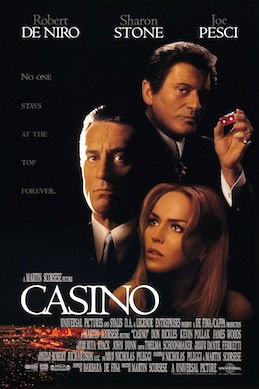
Cast: Robert De Niro (Sam “Ace” Rothstein), Sharon Stone (Ginger McKenna), Joe Pesci (Nicky Santoro), James Woods (Lester Diamond), Don Rickles (Billy Sherbert), Alan King (Andy Stone), Kevin Pollak (Philip Green), LQ Jones (Pat Webb), Dick Smothers (Senator), Frank Vincent (Frank Marino), John Bloom (Don Ward)

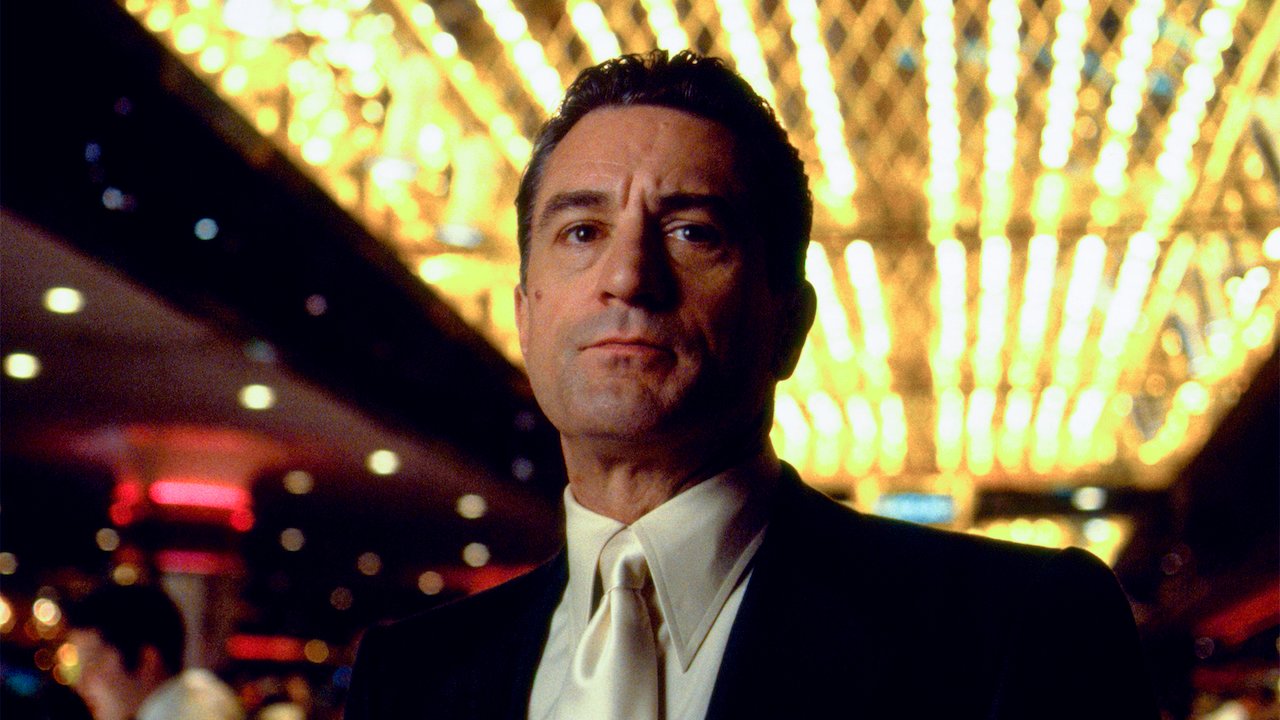
Scorsese’s Casino often gets overlooked in the master’s CV. Marking his first gangster film since Goodfellas, Casino is a very different film, a sort of combination history lesson and slice of violent gangster interplay, in which Las Vegas first gives these gangsters all their dreams coming true before chewing them up and spitting them out like all the other hopeless gamblers. And in doing that, it’s a perverse sort of nostalgia for the little guys being allowed to run the show – even if they did that by putting heads in vices – before they were shunted out by the even more ruthless efficiency of the mega-corporations. Because a world like Las Vegas only makes it easier for basic greed and personality flaws to take hold and ruin everything that’s good.

Sam “Ace” Rothstein (Robert De Niro) is a gambling and odds fixer, a man so expert at what he does and how he does it, so skilled at working the odds to spin out a profit for the Mafia, that the Chicago mob hires him to run their casino in Las Vegas. Rothstein turns the casino into the ultimate money making machine, understanding the odds of every bet and squeezing money out of every pore of the operation. While Sam takes care of the money, childhood friend Nicky Santoro (Joe Pesci) handles the other side of the Mafia business – increasingly abusing his position to make his own fortune on the side. Sam is further undermined by the only “against the odds” bet he ever made in his life: falling in love with Ginger (Sharon Stone), a selfish, self-destructive former hooker who is happy to take Sam’s money but will never offer him the love he craves. Disaster awaits.

Part of the reason perhaps why Scorsese’s Las Vegas epic (and the film is nearly three hours long) doesn’t have the warm regard of many of his other films is its focus on an intricate – although fascinating – explanation of how a Las Vegas casino operates, and the film’s reliance on voiceover to convey a vast amount of backstory, personal motivation and character insight. The opening hour of the film is almost entirely narrated (largely by De Niro and Pesci, although other characters occasionally intrude), as Scorsese shows exactly how a mob-skimming operation works in a casino, as well as nearly every detail of its operation, from day-to-day workings to dealing with cheats. The mechanisms of Las Vegas – along with its corruption, violence and blatant theft – are what fascinates the film. These sequences are assembled with the expected grace and skill of Scorsese and his regular editor Thelma Schoonmaker, but they lack the emotional connection of Goodfellas.

In fact, Casino might almost be some sort of tribute to silent film, so much of it is images accompanied alone by voiceover and well-chosen pop songs. It’s a film where imagery is all, with the camera prowling along the red-lined interiors of the casino itself (where daylight never intrudes), or lovingly following the progress of coins from slot machines to counting rooms to bags stuffed with cleaned bills for gangsters to carry away to their masters. It all makes for a rich and fascinating social history, even if you do feel slightly distanced from it by its near-documentary style voiceover.

But then, this voiceover does allow for a surprisingly rich character study once you plug into it. With the design stressing the demonic red-lined rooms and lights of Las Vegas – and the Saul Bass designed title sequence of a man falling through flames into a neon lit underworld – the idea of this place as some sort of hell is there all the way through. This context allows us to see three characters who are corrupted and destroyed by the pressures and temptations of five years running an operation in America’s capital of temptation and excess. And as the film goes on, everything gets bigger, from the garish colours and clothes to the music to the increasingly graphic violence.

And this film is astonishingly violent. Heads are placed in vices, people are brutally murdered by everything from pens to baseball bats, hits happen with a gruesome immediacy. And the person carrying out most of these acts is Pesci, a demonic imp lacking any sense of charm. Pesci retreads his role from Goodfellas, but even worse if possible, a man for whom violence is as second-nature as breathing. 

It makes a neat contrast through with De Niro, who dominates the film (and either appears in or narrates almost every minute). It’s one of De Niro’s calmer, most reflective performances ever in a Scorsese picture (arguably until The Irishman). He’s a quiet, meticulous, fastidious professional gambler, who never takes a chance professionally but takes huge gambles with his personal life. De Niro brings the film a calm centre, and the precision of a man who both loves what he does but is so obsessed with making things perfect he gets no pleasure from it. Unlike many De Niro roles in Scorsese, Sam is the closest you can see as a regular guy, someone who works in a world of theft and violence but sees that as a cost of doing business rather than a career choice.

It’s why he remains sympathetic, despite the destruction around him. Perhaps also helped by his simply appalling wife. Sharon Stone gets her finest part ever (she received the film’s only Oscar nomination, for Best Actress) as the self-destructive, greedy addict Ginger who doesn’t want to change anything about her life and marries Sam solely for his money, but continues her relationship with her pimp Lester (a sleazy James Woods) and snorts cocaine in front of her five-year-old daughter. But Sam takes the chance because he loves her – and this Jewish outsider, who moves in circles of Italian mobsters and Southern societies that control the state, wants nothing more than to be loved and accepted. It’s what keeps him close to Nicky – for all his horrific impulsiveness – because Nicky is the closest thing he has to a genuine friend.

It’s a theme that runs throughout the whole film. The Mafia allowed its “street” operatives to run this operation in Las Vegas – and would never allow such regular soldiers such power again – and Las Vegas itself closed its doors to these more “independent” operators in the future to give the riches to corporations and insiders. It’s part of what makes Casino such a fascinating history lesson – this is the Las Vegas we all kind of think of, dirty, corrupted and sexily run by gangsters (even if the film makes clear that these guys would crush your head for looking at them the wrong way). But it’s now a circus, an entertainment ride.  Because our heroes here make the same mistakes as the guys that go through their casino – “the longer they play, the longer they lose”.

Raging Bull (1980)

Robert De Niro takes to the ring in Scorsese’s marvellous Raging Bull

Director: Martin Scorsese

Cast: Robert De Niro (Jake LaMotta), Joe Pesci (Joey LaMotta), Cathy Moriarty (Vickie LaMotta), Nicholas Colasanto (Tommy Como), Theresa Saldana (Lenora LaMotta), Frank Vincent (Salvy Batts), Lori Anne Flax (Irma LaMotta)

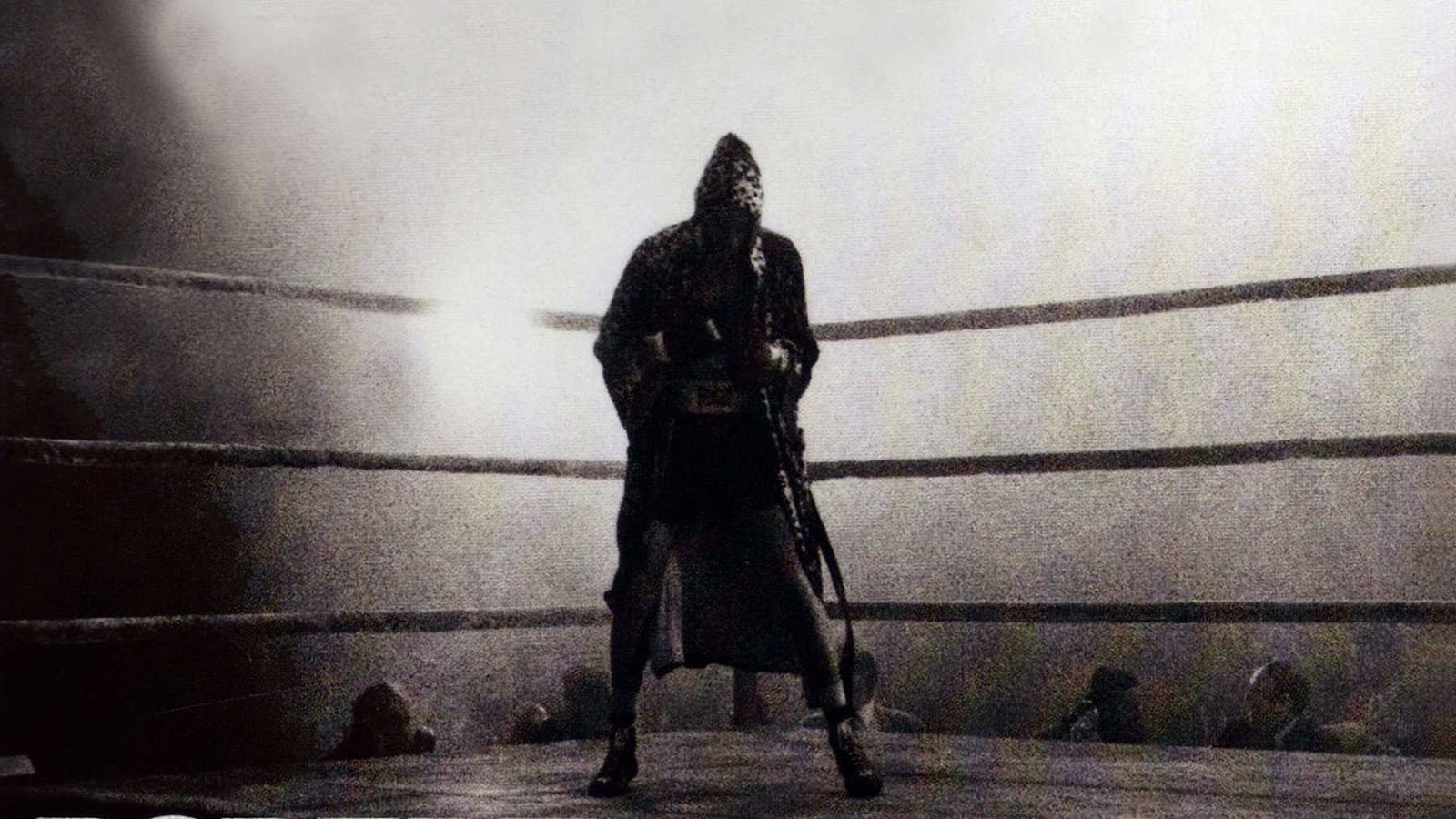
On the surface, Raging Bull seems an unusual topic for Scorsese. A sports biopic? For this, the least sports-engaged director in Hollywood? Even in Scorsese’s most masculine works, sports are always noticeable for their absence. But Raging Bull is a masterpiece, a film whose legacy has seen it named as the greatest film of the 1980s, showcasing possibly Robert De Niro’s most famous performance. A brilliant combination of art, searing personal drama and boxing, Raging Bull may not always be the easiest watch in the world, but it’s a scintillating piece of cinema.

Opening in 1964, we see the overweight, ageing Jake LaMotta (Robert DeNiro) preparing for a comic stand-up routine. From there, the film flashes back to the younger Jake in the ring, with the film following LaMotta’s boxing career. However, the real drama is in his out-of-the-ring relationships, with his brother and manager Joey (Joe Pesci) and his second, younger, wife Vickie (Cathy Moriarty). LaMotta inside the ring is a bull, a man who can take unbelievable levels of punishment. Outside the ring though he is a fragile, paranoid, self-loathing man with a sharp self-destructive streak, whose envy and jealousy systematically destroys every relationship he touches.

Watching the film, its clear Scorsese knows very little about boxing but fortunately he knows everything about filmmaking. Raging Bull is a marvel, a superbly made and directed marvel. Scorsese’s triumphant decision was to shoot the film in black-and-white (some truly beautiful work from Michael Chapman). This gives the film both the classic, gorgeous feel of a 1940s Hollywood movie, but also allows the boxing matches themselves to take on an almost impressionistic artistry, with powerfully emotive monochrome images. The photography also creates a stark, documentary like sense of reality for the many scenes of domestic disharmony and violence, while later shots brilliantly allow LaMotta (lost in self-loathing and disgust) to almost disappear into the inky darkness of the frame. Raging Bull would be half the film it is, if it was in full colour.

Recovering from a cocaine addiction that nearly killed him, Scorsese was intimately familiar with self-destruction – and its perhaps this that drew him towards LaMotta’s jealousy, possibly the film’s major theme. LaMotta is a self-loathing individual, who sees little value in himself, who treats pummellings in the ring like just punishments and believes everyone is betraying him. It’s one of the finest films about the green-eyed monster ever made. Obsessed with his younger wife – whom LaMotta first encounters at age 15 and whom he marries as soon as she is legal – LaMotta also earnestly believes she is sleeping with every man around. It’s clear that these paranoid fantasies stem from his own disgust at himself, LaMotta’s own conviction that there is nothing of value in him.

It’s this jealousy that really destroys LaMotta, his trigger-happy temper seeing him able to switch on an instant from a calm – but monomaniacal – insistence that he just wants to know the truth about his wife, to indiscriminate violence. LaMotta is an impulsive, excessive creature who does everything to a huge degree, from doubting his wife, to shovelling food into his guts. Scorsese’s camerawork – particularly it’s La Dolce Vitaish love of Cathy Moriarty – reflects LaMotta’s internal dysfunction. It worships Moriarty in the same way LaMotta does, but also reflects his obsessive possessiveness.  

All of this is further captured in Robert De Niro’s iconic performance. De Niro won the Oscar for this stunning tour de force. Raging Bull became almost as famous for De Niro’s all-consuming preparation: he trained for months to achieve the physique and skill of a professional boxer (he even entered some professional bouts, winning two out of three). He then went completely the other way, the entire film going on a four month hiatus while De Niro went on an eating tour around Italy to pile on the pounds for the ageing, overweight LaMotta. At the time it seemed like no other actor had gone to such levels.

This focus on De Niro’s preparation sometimes obscures in the mind the genius of the actual performance, as if we have almost been blinded by the training and technique behind it. De Niro’s energy, his fury, his intelligent understanding of the fractured mind of the paranoid brilliantly brings LaMotta to life. So intense is the actor’s understanding of the disgust that lies at the heart of LaMotta’s personality that, even at his worst, the man is never completely unsympathetic. De Niro rages through scenes of jealous outbursts and violence, but he also has a childish gentleness of the man unable to understand the world around him, twice in the film collapsing into bursts of affecting tears. The older LaMotta is perhaps wiser, but just as inarticulate in emotions as his younger version and as unable to fix the damage. It’s a masterful performance, a physical and emotional tour-de-force.

De Niro also worked closely on the choreography of the boxing scenes, which allowed Scorsese the freedom to shoot these with an imagination and brilliance that had never been seen before. Each fight has its own unique feel, with Scorsese understanding that this sport is a neat parallel for how LaMotta sees life, a series of brutal clashes with pride and self-regard on the line. Scorsese’s fights are elemental clashes – the soundtrack frequently uses slowed sounds to create an animalistic roar.

The camera is frequently thrown into the ring with the pugilist – and LaMotta here is really more of a pugilist than a boxer, there is very little sense of tactics – with low angles and tight camerawork. Scorsese puts the camera – and the viewer – into the ring, making us part of the fights. Every punch and blow carries impact, and this is perhaps the most blood drenched boxing film in history, with the darkened liquid covering the faces of the fighters and dripping from the ropes of the ring. The fights reflect LaMotta’s mood, with one late fight seeming like an almost medieval battle, mist rolling in and the fighters flying at each other with a reckless abandon. There is nothing romantic about boxing here, it’s a grimy reality of violence with a purpose and brute strength, endurance challenges that only the strongest can emerge from.

LaMotta’s confidence and mastery of the ring is contrasted throughout with his lack of nous and understanding in the real world, and his ability to destroy everything he touches. Joe Pesci excels as his supportive brother who realises far too late the uncontrollable anger at the heart of this fighter, while Cathy Moriarty is also excellent as a young woman whose only real mistake is to want to live some part of her own life. Scorsese charts LaMotta’s destruction of both of these relationships, culminating in the washed up boxer pounding the walls of a jail cell weeping and screaming “Why! Why! Why!”, hatred for his self-destruction dripping from every pore.

Raging Bull looks unlike any other boxing film, instead like a perfectly formed art piece, its soundtrack full of classical tunes and its photography adjusting between the beauty of neo-realism and the cold realities of documentary film making. It’s superb, a masterful film, a work of art and also a profound understanding of the destructive impact of jealousy and self-loathing. Showcasing career defining work from De Niro, it’s no wonder this is still hailed as the greatest film of the 1980s and one of the greatest of all time.