Tag: Roland Young

David Copperfield (1935)

David Copperfield header
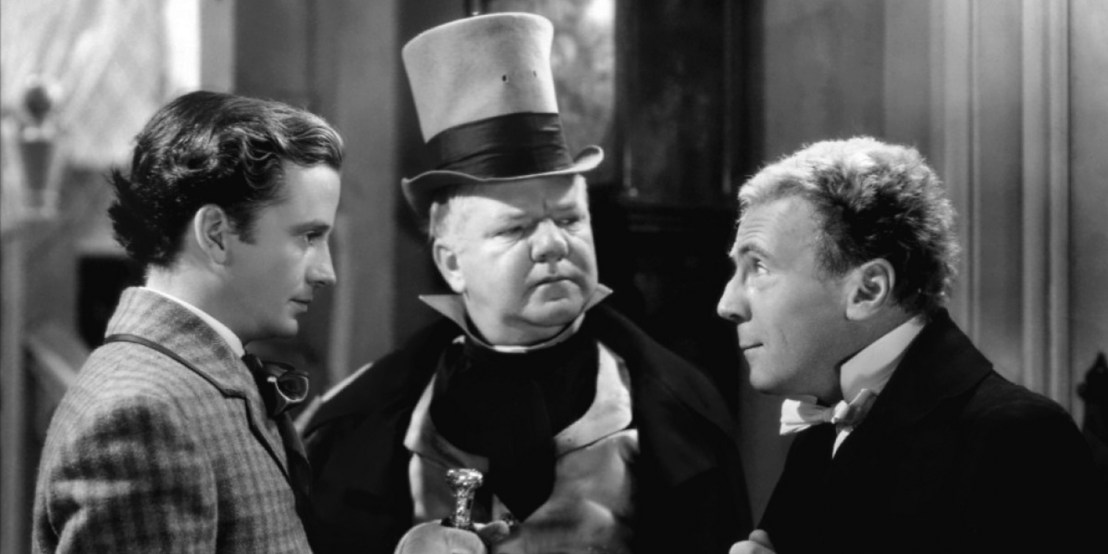
Frank Lawton, WC Fields and Roland Young bring Dickens to life in David Copperfield

Director: George Cukor

Cast: Freddie Bartholomew (Young David Copperfield), Frank Lawston (Old David Copperfield), Edna May Oliver (Betsey Trotwood), Elizabeth Allan (Clara Copperfield), Jessie Ralph (Peggotty), Basil Rathbone (Mr Murdstone), Herbert Mundin (Barkis), Jack Buckler (Ham Peggotty), Una O’Connor (Mrs Gummidge), Lionel Barrymore (Daniel Peggotty), Violet Kmeple Cooper (Jane Murdstone), Elsa Lanchester (Clickett), Jean Cadell (Emma Micawber), WC Fields (Wilkins Micawber), Lennox Pawle (Mr Dick), Lewis Stone (Mr Wickfield), Roland Young (Uriah Heap), Madge Evans (Agnes Wickfield), Hugh Williams (James Steerforth), Maureen O’Sullivan (Dora Spenlow)

You could argue David Copperfield is one of the most influential films ever made. David O Selznick was desperate to bring Dickens’ favourite novel to the screen. But the MGM suits were convinced it couldn’t be done (800 pages in two hours?! Get out of town!) and anyway who would want to come to the cinema when they could read the book at home? They were wrong, wrong, wrong and Selznick proved that classic literature (even if it was a cut-down version of a great book) could be bought to the screen and capture at much of the spirit of the book, even if you couldn’t dramatise all the events. David Copperfield remains very entertaining, not least because it also showed you can’t go to far wrong when you assemble an all-star cast who fit their characters perfectly.

The story of the film pretty much follows the novel (with exceptions, deletions and abridgements). Young David Copperfield (Freddie Bartholomew, growing up into Frank Lawton at the half-way point) grows up loved by his mother (Elizabeth Allan) and nurse Peggotty (Jessie Ralph), but loathed by his step-father Mr Murdstone (Basil Rathbone) who barely waits five minutes after his mother passes away before dispatching David to a factory in London. There David forms a bond with the charming exuberant Mr Micawber (WC Fields) before deciding to walk to Canterbury to seek the protection of his aunt Betsey (Edna May Oliver). Growing into a young man, he faces romantic problems, the schemes of the vile Uriah Heap (Roland Young) and the betrayals of his schoolfriend Steerforth (Hugh Williams). Will all turn out well?

Stylistically, David Copperfield aims to be as true to the novel as impossible. It’s designed to look as much as possible like a series of Phiz sketches bought to life and the actors have clearly studied both novel and illustrations to craft themselves as much as possible into living, breathing representations of their characters. Well scripted by Hugh Walpole (who also cameos early on as a Vicar), the film manages to be faithful without being reverential and tells an engaging story with momentum – even if the pace accelerates a little too much towards the end.

Walpole’s adaptation splits the book into two acts: the childhood of our hero and his life as young man. Giving an idea of how the momentum accelerates towards the end, this basically means the first hour of the film covers the novel’s opening 200 pages, leaving the last hour to hurry through the remaining 600. This means several characters and events are deleted, simplified or removed. However, Walpole still manages to retain all the truly vital information and iconic material, and recognises most of the striking material is found in that first 200 pages.

This childhood story is very well told, partially because Freddie Bartholomew (while he has touches of school play about him) is an affecting and endearing actor, who makes the young David a kid we care about rather than either an insufferable goodie-two-shoes or a syrupy brat. He’s a smart, kind, slightly fragile boy who we end up caring about – and it gives a real emotional impact when his mother dies (a very tender Elizabeth Allan) or to see him misused by Mr Murdstone (a perfectly judged performance of austere coldness by Basil Rathbone). Little touches of joy in his life – like the time he spends at the Peggotty’s converted ship home (a perfect representation of its description in the book) are really heartwarming, because David himself is such an endearing fellow.

It does create an obstacle for Frank Lawton when he takes over, since the audience is asked to try and bond with this new actor having already committed their hearts for just over half the run time to another. Lawton also has to deal with scenes rushing towards the conclusion rather than getting character beats like Bartholomew. Cuts impact his key relations: his school friendship with Steerforth is relayed second hand, meaning Steerforth turns up only to almost instantly let everyone down; Dora Spenlow and Agnes Wickfield get only brief screen time to establish their characters. The schemes of Uriah Heap are barely explained (he’s just a hypocritical wrong ‘un, okay?). It says a lot that the last fifteen minutes rush through the deaths of three major characters, a shipwreck, a dramatic confrontation, David travelling the world and a resolution of romantic tensions. It’s the only point when the film feels like its ticking boxes.

But it doesn’t completely matter (even if a two-part film would have helped no end – particularly allowing Lawton more room to develop a character) since the performances are so good. Expertly marshalled by Cukor – who rarely introduces visual flair, but coaches pin-perfect turns from the entire cast – every role is cast to perfection. None more so than WC Fields, for whom Wilkins Micawber became a signature part. Replacing Charles Laughton mid-filming (he claimed he looked more like he was about to molest the boy), Fields keeps his own accent and some of his own persona, but still fits perfectly into the Dickensian larger-than-life optimism and good will of Micawber. His comic timing is spot-on – watch him climbing over a roof or bantering with David and his family – and he seems like he has just walked off the page. If there had been a Supporting Actor Oscar in 1935, he would almost certainly have won it.

He’s the stand-out of a host of excellent performances. Edna May Oliver is very funny and has a more than a touch of genuine emotion as Betsey Trotwood. Jessie Ralph is excellent as Peggotty. Lennox Pawle makes a very sweet Mr Dick. Roland Young is the very picture of unctuous hypocrisy as Uriah Heap. Only the young women get a little short-changed: despite her best efforts, Madge Evans can’t make Agnes Wickfield interesting and Maureen O’Sullivan is rather cloying as Dora.

But the film itself is pretty much spot-on for the tone of Dickens, even if events are rushed. The impact of the Peggotty/Steerforth story is lost since we are never given the time to get to know any of the parties involved, and certain plot complexities are only thinly sketched out. But Cukor marshals the actors perfectly and throws in at least one striking shot, of Murdstone appearing in the distance as the camera follows a cart bearing David away from his mother. It always looks just right and the characters that do get the time are perfectly played, so much so that a few performances (Fields, Oliver, Young) may even be definitive.

David Copperfield proved you could turn a doorstop novel into a film and, even if you sacrificed some of the complexities (and might need to rush to fit it all in) you could still produce something that felt recognisable and true to the original. So, for that – with the mountain of adaptations that followed – we have a lot to thank it for.
Ruggles of Red Gap (1935)

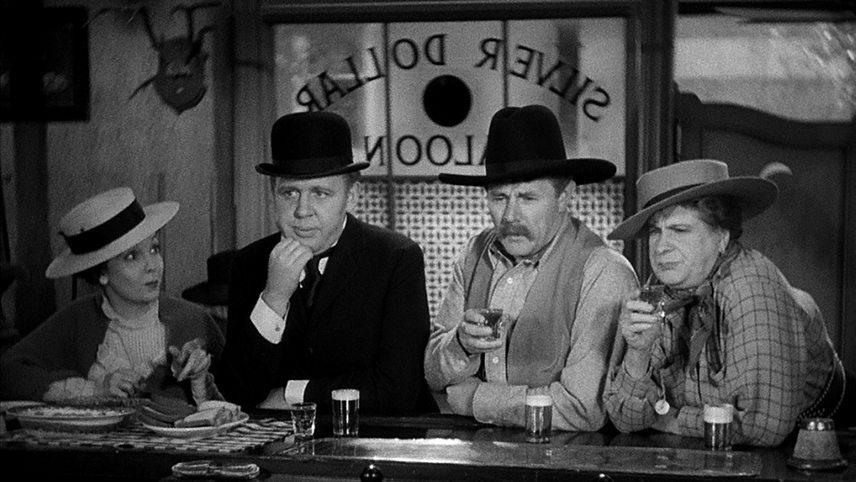
Charles Laughton wonders what he’s got himself in for in Ruggles of Red Gap

Director: Leo McCarey

Cast: Charles Laughton (Ruggles), Mary Boland (Effie Floud), Charles Ruggles (Egbert Floud), ZaSu Pitts (Mrs Judson), Roland Young (Earl of Burnstead), Leila Hyams (Nell Kenner), Maude Eburne (Ma Pettingell), Lucien Littlefield (Charles Belknap-Johnson), Leota Lorraine (Mrs Belknap-Johnson), James Burke (Jeff Turtle)

Ruggles (Charles Laughton) is the perfect gentleman’s gentleman. So how will he react when his gentleman, the Earl of Burnstead (Roland Young), loses him at cards to nouve riche American Westerner Egbert Floud (Charles Ruggles) and his social-climbing wife Effie (Mary Boland)? Wodehousian antics meet societal culture-clashes, in Leo McCarey’s witty and rather sweet comedy from Charles Laughton’s annus mirabilis (Ruggles, Bligh and Javert all in the same year!) that’s a celebration of American egalitarianism and the well-hidden warm cordiality of the polite British.

Directed with a fine sense of comedic timing by Leo McCarey, Ruggles of Red Gap is refreshingly heart-warming and a celebration of the rewards of decency. For all his initial reserve – and Jeevesian distaste for his new employer’s brashness and love of chequered suits – Ruggles emerges as a decent man, liberated by the classless openness of America. In fact, the idea of all men being equal opens Ruggles eyes for the first time to the idea of making his own decisions (after all he doesn’t question being told he will be moving from Paris to Washington State) and being seen as something other than just an extension of his employer.

Ruggles makes this point with some excellently delivered set-pieces. Most of these revolve around the enjoyable cultural clash between Ruggles and his new employer, the relaxed Egbert, who can’t imagine not calling Ruggles by a host of invented names (from “Bill” to “The Colonel” – the latter causing no end of trouble later) or inviting this staid servant to sit down and have a beer. Egbert’s obliviousness to the careful social rules that Ruggles has lived his entire life by works, because there is not a jot of meanness or correction to it. Egbert genuinely doesn’t understand the fine points of class difference and sees no reason not to treat Ruggles like a friend rather than a servant.

It makes for some terrific moments of comic business. Ruggles and Egbert conduct a running battle where Egbert’s natural politeness and Ruggles’ duteous deference leads to them constantly insisting the other walks first through doorways. Their first day together sees Egbert and a friend taking Ruggles to a Parisian bar and getting him roundly pissed (probably for the first time in his life). Later Egbert’s insistence on introducing him when they arrive in Red Gap as his friend “the Colonel”, combined with Ruggles patrician manners leads to him being mistaken as a genuine aristocrat by the snobbier element of Red Gap society.

Regular Americans may be overly boisterous – you can’t miss the increasingly irritated reactions by Parisians at Egbert’s reunion on the streets of Paris with an old friend, which escalates from embraces, to loud whoops to riding each other like horses – but generally they mean well (good natured fun is poked at the American’s hopelessness with foreign languages – “je voodrais ham un eggs”). In Red Gap, the patrons of a saloon greet Ruggles as one of their own. In turn Ruggles – and even the Earl of Burnstead – are charming and respond far more warmly to their decency than the snobbery of the hoi polli.

If there are unsympathetic characters in the film, it’s the snobs of the American elite, desperate to grab a bit of that old world glamour. Egbert’s snobby brother-in-law Charles sticks out as dyed-in-the-wool snob, concerned mostly with position and being seen with the right people. Effie (hilariously played by Mary Boland) is interested in Ruggles largely as a status symbol, and spends her entire time crafting Egbert into her idea of a gentleman. By contrasts the actualupper status chap, the Earl (delightfully under played with a hilarious uber-poshness by Roland Young) is relatively decent, humble and far prefers the fun-loving social crowd of Red Gap the stuffed shirts.

The film was a very personal one for Laughton, deep into his decision to take up American citizenship. Ruggles’ (and Laughton’s) love for American society is captured in the scene where he recites the Gettysburg Address to the rapt patrons of the saloon (none of whom could remember a single word of it when asked beforehand). In previews, the audience sniggered at Laughton’s emotional rendition (he couldn’t get through it without weeping) – so McCarey re-cut so we only see Laughton from behind and instead focuses on the faces of his audience: suddenly the scene carries real emotional force.

Laughton’s performance is an odd mix. Some moments – such as the Gettysburg address – he nails. His interplay with the other actors is highly effective, but many of his reaction shots often feel overplayed. He over eggs the pudding with the comic eyebrows and, like the scenes when he plays drunk, he sometimes seems to be trying too hard to be funny. But his ability to offer several different versions of shock and surprise is pretty faultless and he captures beautifully Ruggles growing sense of independence and delight at there being more opportunities in life than he ever imagined.

The rest of the cast bounce off each other with all the ease of a relaxed repertory company. Charles Ruggles (who knew Ruggles was such a common name!) is brilliant as Egbert, loud, brash but overwhelmingly kind and decent. His comic timing is exquisite and his chemistry with Mary Boland (one patient the other long suffering) is a constant delight. The comic playing of the cast, with assured – if at times visually disjointed – direction by Leo McCarey helps craft this into a delightfully heart-warming comedy of manners with just the right touch of slap-stick. At the end of which you’ll be as willing to jack it all in and set up a grill in Red Gap as Ruggles is.

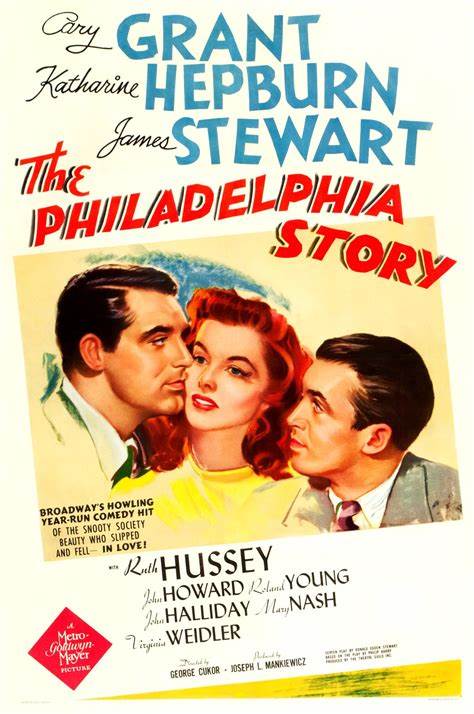
The Philadelphia Story (1940)

The Philadelphia Story (1940)

Three stars are at the top of their game in this classic screwball-style comedy

Director: George Cukor

Cast: Katharine Hepburn (Tracy Lord), Cary Grant (C.K. Dexter Haven), James Stewart (Mike Connor), Ruth Hussey (Elizabeth Imbrie), John Howard (George Kittredge), Roland Young (Uncle Willie), John Halliday (Seth Lord), Mary Nash (Margaret Lord), Virginia Weidler (Dinah Lord), Henry Daniell (Sidney Kidd)

In 1938 Katharine Hepburn’s career was over. After the flop of some now forgotten (wait, hang on…) screwball comedy called Bringing Up Baby, she took centre place on the Independent Theatre Owners list of “Box Office Poison”. Flops after flop hit Hepburn (all of them are classics today of course), and the studios did their damnedest to drop her. So, Hepburn returned to the stage, developing The Philadelphia Story with Philip Barry – and creating a lead role for herself that would play to all her strengths and help win back public affection. And which (with a little help from Howard Hughes) she would own the rights for: so, if and when they wanted to make a film, she could insist she starred. The rest is history.

The Philadelphia Story is perhaps the best example of the Code-approved genre, the “remarriage comedy” (because the code wouldn’t countenance the idea of a couple cheating). Daughter of a rich Philadelphia family, Tracy Lord (Katharine Hepburn) is to marry her dull fiancée George Kittredge (John Howard). George’s main attraction is he’s the complete opposite of her charismatic ex-husband C.K. Dexter Haven (Cary Grant). Dexter crashes the build-up to the wedding, bringing along reluctant society journalist (he’s really a renowned short-story writer) Mike Connor (James Stewart) and press photographer Elizabeth (Ruth Hussey), promising to introduce them as distant friends of the family so they can report on the wedding. But then Tracy finds herself drawn to Dexter and Mike and George as well – who will she end-up walking down the aisle with?

Perhaps the best thing about The Philadelphia Story is that you really don’t know who it will be – and the film successfully keeps the question both up-in-the-air and deeply entertaining. There even seems a chance (unlikely as it is) that Tracy really will stick with George (a tedious nouveau riche businessman with priggish middle-class morals who can’t even mount a house – imagine!). Directed with the sort of unfussy smoothness Cukor excelled in – and helped get the best out of actors – it’s a superb comic treat, with a sparkling adaptation by Donald Ogden Stewart.

At the heart of it, Hepburn is superb in a role that riffs considerably off her own public personality. Hepburn was smart enough to know most audiences saw her as far too clever by half. Her sharpness, acidity and no-nonsense unwillingness to suffer fools had made her hard to relate to. Quite correctly, she felt she needed a role where she could “fall flat on her face”. Which , by the way, is more or less the first thing she does – a hilarious prat fall while throwing Cary Grant’s Dexter out, him responding to her snapping his golf clubs by gently putting his hand on her face and pushing her off-balance (only Grant could have got away with that by the way).

Tracy Lord is a version of the Hepburn many people felt they knew. Tracy genuinely believes she’s smarter and better than anyone else, with unquestionable judgment and superior morals. The film is a gentle exercise in pricking her balloon, showing her she is as prone to mistakes, prejudice and, above all, getting giddy and silly in love, as anyone else. This is a fiercely practical woman, who sets high standards for those around her, suddenly finding herself falling in love with three men at once. It’s the exact flighty lack of commitment she spent years condemning her estranged father for.

This is all scintillatingly played by Hepburn, at her absolute best. The rat-a-tat dialogue (with its classic, Wildean comedy of errors and mis-identification) is under her complete control. She’s delightful when, under the influence, she flirts with Mike – Hepburn showing the world (clearly they missed it in Bringing Up Baby) that she could be as silly and vulnerable as the next girl. Hepburn knew people wanted to see her personae deconstructed, and for her character to learn that (in the words of another comedy) nobody’s perfect. It works a treat – and this remained one of her greatest (and funniest) performances.

It helps she had two of the greatest to riff off. Cary Grant is at his light-comedic best here, turning Dexter – a manipulative reformed alcoholic it would be easy to dislike – into the embodiment of sophistication, charm and playful wit, who we adore as much Tracy’s family does. James Stewart won an Oscar and matches Grant gag-for-gag in a comedic masterclass. He’s a master of hilarious comedic and physical reactions – and lovable enough to turn a chippy newspaperman into a sort of hilariously droll sage. His ‘drunk’ acting is also some of the funniest you’ll see on film (even Grant can be spotted cracking up just a little as Stewart hiccups his way through a scene).

Hepburn’s chemistry with both actors is sublime. Her romancing scenes – both the worst for wear for drink, but also empowered to say things they’ve clearly been burying all day – with Stewart are not hugely romantic, but also rather sexy (Cukor’s direction here is also exquisitely spot-on). It’s a masterclass in on-screen flirtation – and you can see why George gets as pissed off as he is. Hepburn and Grant meanwhile bicker and taunt each other with all the chemistry of a match and a fire.

Each scene has a bounce that teeters between heart-felt and farcical. The set-ups are frequently silly – but they work because they hinge on characters that feel immensely real. Every performer is spot on – credit also goes to a superb Ruth Hussey, one of the few grown-ups in this weekend of flirting, feuding children. Set in a sumptuously rich Philadelphian mansion, for all of Mike’s chippy criticism it’s a celebration of the smooth upper classes over hard-working, dull prigs like George. Its sole fault might be it’s too long (at just under 2 hours, a few scenes and set-ups outstay their welcome). But, as a classic Hollywood comedy, it’s pretty much the top of the class. Box-office poison no more.