Tag: Rupert Friend

The Phoenician Scheme (2025)

The Phoenician Scheme (2025)

Anderson marries heart, truth and a genuinely engaging and compelling plot with his unique quirk

Director: Wes Anderson

Cast: Benecio del Toro (Zsa-Zsa Korda), Mia Threapleton (Sister Liesl), Michael Cera (Bjorn Lund), Riz Ahmed (Prince Farouk), Tom Hanks (Leland), Bryan Cranston (Reagan), Mathieu Amalric (Marseilles Bob), Richard Ayoade (Sergio), Jeffrey Wright (Marty), Scarlett Johansson (Hilda Sussman), Benedict Cumberbatch (Uncle Nubar), Rupert Friend (Excalibur), Hope Davis (Mother Superior), Bill Murray (God), Charlotte Gainsbourg (Korda’s late wife), Willem Dafoe (Knave), F. Murray Abraham (Prophet), Stephen Park (Korda’s pilot), Alex Jennings (Broadcloth), Jason Watkins (Notary)
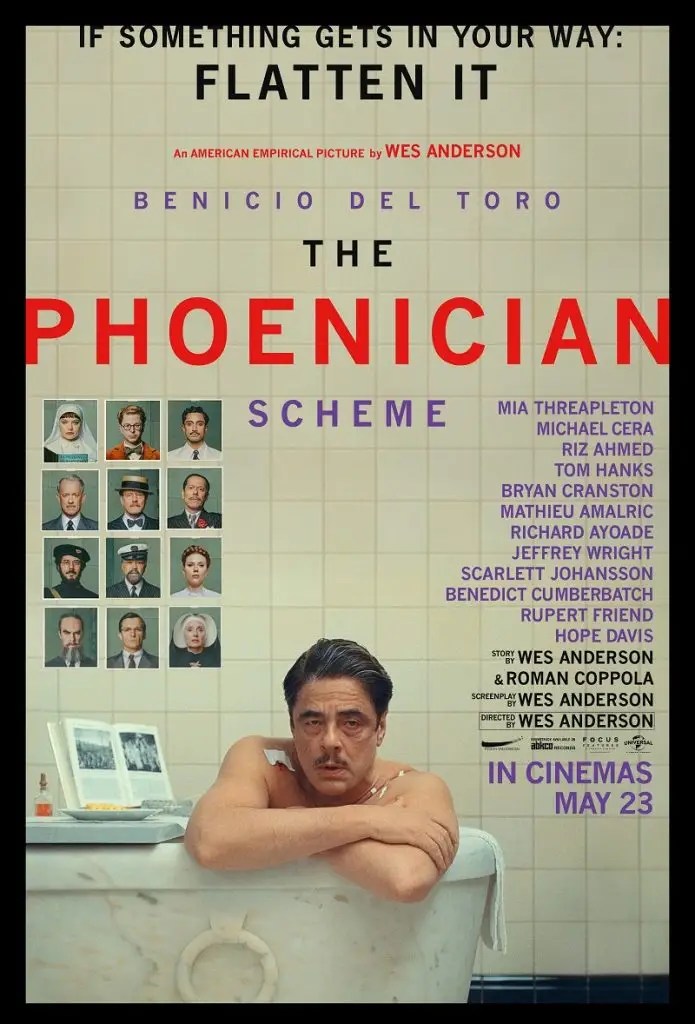
Wes Anderson is one of those directors I often sit on the fence about, with a style so distinctive it can in become overwhelming. But when it works, it works – and The Phoenician Scheme is (aside from his superb Netflix Dahl adaptations) his best work since his masterpiece The Grand Budapest Hotel. In this film, Anderson finds an emotional and story-telling engagement that adds depth to all the stylised invention. It’s a film I’ve found more rewarding the longer I’ve thought about it.

Set in an Anderson-esque 1950s (Andersonland?), notorious industrialist and arms trader Zsa-Zsa Korda (Benecio del Toro) spends his life dodging assassins. After one attempt gets close, he decides to try and repair his relationship with estranged daughter Liesl (Mia Threapleton), a novice nun who suspects her father might have had her mother murdered (he denies it). With governments, business competitors and others on his tail, Korda throws together a complex scheme for one last success in Phoenicia, a massive new development built with slave labour. As Korda juggles rivals and investors, will he repair his relationship with his daughter? And how will he fare in his recurrent visions of standing at the (noir) Gates of Heaven, being judged for entry?

Anderson’s film, of course, is another superb example of his visual style, constructed like an intricately layered work of art. Each shot could probably hang in an art gallery, framed to perfection with gorgeously sublime colours that soak off the screen. The elaborate set design and vintage costume work are striking as always, with every piece perfectly placed and every feature expertly judged. Within this, his carefully selected cast deliver the wry, dry and arch Anderson-dialogue with aplomb, embracing every moment (of many) where Anderson allows the characters to share a raised eyebrow or a pithy aside to the camera.

In other words, it might all be as you expect – a formula that started to feel a bit tired after intricate, insular films like The French Dispatch and Asteroid City, which felt so personal to Anderson that they were virtually impenetrable to everyone else. But what elevates The Phoenician Scheme is that Anderson embraces both a surprisingly tense plot-line – the closest he can probably get to a thriller, laced throughout with satire, humour and more than a fair share of the ridiculous – and gives a genuine emotional force to a father and daughter struggling to recognise what (if anything) could bring them together. Throw in questions around life, death and what constitutes making a life ‘worth living’ and you’ve got a rich, intriguing and rewarding film that could stand even without the Anderston scaffolding.

Perhaps only Anderson could mix an unscrupulous businessmen targeted by assassins (some of these are delightfully, blackly, comic – not least an opening plane bomb that sees Korda ejecting his pilot for refusing to attempt a crazy hail-Mary manoeuvre to survive an inevitable crash) with Korda closing vital deals (in a deliberately, impenetrably complex scheme) by shooting hoops with a pair of baseball-fanatic brothers (Tom Hanks and Bryan Cranston, both hilarious), taking a bullet for a fez-wearing gangster (Matheiu Almaric, wonderfully weasily) and forcing an eccentric naval captain (Jeffrey Wright, perfectly deadpan) during a blood donation to sign with a bomb. And spin out a joke where Korda hands over custom-made hand grenades to business associates like they are branded pens. All while dodging a shady government cabal (fronted by Rupert Friend’s Transatlantic Arthurian-nick-named Excalibur).

But The Phoenician Scheme works because under this comic twist on spy thrillers, it has a real heart. Anderson’s finest films are where he works with an actor who can bring depth and feeling to the quirk. And here, he might just have brought out the best from an actor prone to a little quirk himself. Benecio del Toro gives Korda a world-weary cynicism but also a subtle fragility. There is nothing that won’t flummox Korda, a guy tipped off on attempts on his life because he frequently recognises assassins he’s hired himself in the past. But he’s also quietly afraid his life has been for nothing: that he is, in fact, not a rogue but an out-and-out villain ruining countless lives. And that God (in the form of, who else, Bill Murray) isn’t going to be welcoming up there.

It motivates a careful dance of reconciliation and grooming to take over his business with his estranged daughter Liesl, delightfully played by Mia Threapleton (with just the right mix of dead-pan flair for the dialogue, while giving it an arch warmth). Liesl imagines herself as distant from Korda as can be – the novice (literally) to his expert manipulator – but she turns out to have far more talent for Korda’s mix of chutzpah, disregard for rules and ruthless improvisation. Watching the relationship – and recognition – between these two (beautifully played by both actors) is very funny and also surprisingly sweet (you know its Anderson when a nun suddenly pulling a small machete out of her wimple is both oddly endearing and absolutely hilarious).

This sense of emotional development and personal and dramatic stakes is improved further by the celestial semi-trial (cue Willem Dafoe as an advocate angel), in a black-and-white heaven that mixes Powell and Pressburger’s Matter of Life and Death (surely the name Korda is no coincidence) and the imagery of Luis Buñuel. This all leads into a surprisingly gentle but affecting tale of redemption and second-chances, including an ending that feels surprising but also somehow completely, wonderfully inevitable and fitting,

The Phoenician Scheme may even be slightly under-served by its Andersonesque framing and design: after all it’s become easy to overlook the depths when the display is as extraordinary as this. When Anderson unearths a deeper meaning, working with masterful performers who can imbue his quirky, witty dialogue with heft, he can be one of the best out there. And do all that without sacrificing an air of charming whimsy, and building towards the most hilarious fist fight since Bridget Jones’s Diary (between del Toro and Cumberbatch’s tyrannically awful Uncle Nubar). Not a lot of directors can pull that off – and it’s a lovely reminder that Anderson at his best is an absolutely unique, wonderful gem in film-making.

Jurassic World: Rebirth (2025)

Jurassic World: Rebirth (2025)

Back-to-basics monster mash that feels like a reheated remix of several elements from the previous films

Director: Gareth Edwards

Cast: Scarlett Johansson (Zora Bennett), Mahershala Ali (Duncan Kincaid), Jonathan Bailey (Dr. Henry Loomis), Rupert Friend (Martin Krebs), Manuel Garcia-Rulfo (Reuben Delgado), Luna Blaise (Teresa Delgado), David Iacono (Xavier Dobbs), Audrina Miranda (Isabella Delgado), Ed Skrein (Bobby Atwater), Bechir Sylvain (LeClerc), Philippine Velge (Nina)

Those InGen scientists never know when to stop. The latest Jurassic film reveals yet another tropical island awash with prehistoric beasties. This one was also home to a Frankenstein-factory, where terrible genetic abominations were created, cross-bred dinosaurs with extra wow-factor (like flying velociraptors). But of course, almost twenty years later, they roam free, causing trouble for a team of mercenaries. Led by Zora (Scarlett Johansson) and Duncan (Mahershala Ali), they are working for Big Phama Baddie Martin (Rupert Friend) and friendly palaeontologist Dr Henry Loomis (Jonathan Bailey) to capture blood samples from the three largest dinosaurs ever to unlock a cure for heart disease (and millions of dollars). Things don’t go to plan when they end up stranded on an island, with a young shipwrecked family in tow.

It’s called Jurassic World: Rebirth but it could be Jurassic World: Reheated. Gareth Edwards film is shot with nerdy charm and crammed with lots of 90s-child fan-bait images of “Objects are closer than they appear” mirrors and “When Dinosaurs ruled the Earth” banners. But it’s also a blatant reheat of many elements of the first three films, often presented in a strikingly similar way. Like the little-loved, low-key and formulaic Jurassic Park 3, a team of mercs is stranded on an island with a family in tow. Perilous journeys take them into the nests of pterodactyls and down river against a gigantic dinosaur opponent. Throw in many other recognisable beats and scenes and you’ve got a film that will be feel more enjoyable and diverting, the less familiar you are with the preceding seven films.

In fact, much as I have a childish glee for dinosaurs still, Jurassic World: Rebirth makes me feel actually we might have gone as far as we can go. Even if the last two films were not complete successes, at least their vision of dinosaurs emerging to become everyday creatures we might encounter anywhere felt different. Rebirth shuts that down in the opening credit crawl, stating dinosaurs could only survive long-term in the tropics. Once again, they reside live on deserted islands miles from rescue. To hammer (multiple) points home, it opens with Friend’s phama boss whining because a dying brachiosaurus is blocking his four-by-four in the New York traffic.

It’s so we can get the familiar set-up, with a rag-tag mix of unlikely heroes thrown together to survive while shrieking and running in the jungle. There is precious little to surprise you in Rebirth, not least the fate of the characters. Every single Jurassic film has thrown children-in-peril into the mix and Rebirth literally can’t imagine setting itself up without the same, so introduces the Delgado’s, a divorced Dad with two daughters the oldest of whom brings with her waster boyfriend who has “redemption in waiting” written all over him. Just as we’ve seen now countless times before, no matter how terrified and dangerous things get, these kids have tooth-proof plot armour. Not a T-rex by the river or a flying velociraptor (in an almost neat restage of the kitchen scene from the first film) stand a change of laying a claw on them.

In fact, the rest of the cast feels the same. There is a weary paint-by-numbers inevitability about who will bite it and when. The second Ed Skrein’s arrogant merc turns up, you know he’s toast – just as Rupert Friends’ cowardly, profit-focussed exec might as well put himself in a dino lunch box and save us all time (though first he has to prove to the viewer, how shitty he is). The team is made up of three big name actors and a parade of red shirts who look and feel like red shirts from the second their under-developed mouths spew out their formulaic dialogue. A thick coating of plot armour is strapped onto the backs of nearly every other character, and not once in the film did I either (a) really fear for the lead characters or (b) think that any of them would turn out to be anything other than saints (I briefly thought Henry almost sharing a name with Halloween’s mad scientist might be a subtle reveal… it isn’t).

In fact, this lot are the nicest parade of mercs you’ll ever beat and both Johansson and Ali carry with them the sort of character-developing past trauma that is such basic scriptwriting 101 you almost feel sorry for the actors working with it. (To wit: Ali is a grieving father, Johansson is dealing with the loss of a boyfriend on a past op – if you can’t work out where those motivations might take you, you need to see more movies). These mercs are decent, hard-working, honourable guys about a million miles from what you think real merc, who shoot guns at people for money, might be like. They’re more like charming humanitarians.

The most interesting stuff in Rebirth are the moments that feel new. A prologue, set 17-years before, showing how all hell broke loose on the lab is well-done (even if its a lift from Edward’s past Godzilla film), both in its mounting dread and its almost satiric ‘no security system works in the movies’ resolution of a discarded snickers wrapper short-circuiting a billion-dollar system keeping the abominations secure. The abominations are also interesting: a flapping, vicious velociraptor feels new (it even proves its chops by devouring a normal velociraptor) while the D-Rex hybrid (a sort of grotesque mix of a T-Rex and the creature from Alien) is artfully shot by Edwards in a series of slow half-reveals before we see its real horror.

It’s a shame there isn’t more of that. Because otherwise, Rebirth passes the time but it’s a film for people who vaguely remembered the original films rather than someone who has watched them more than once. For anyone who has, there is nothing either new or surprising here, nothing that does anything remotely different, no character who doesn’t feel like they’ve been plucked and retooled from one of the earlier films. It’s a back-to-basics approach (staffed, to be fair, with some good actors) that gives you exactly what you expect all the time. That might be fine at times, but it’s hard not to wish for a little bit more. It is at least, though, twice as good as the woeful fanbait that was Dominion.

Asteroid City (2023)

Asteroid City (2023)

Anderson’s quirk filled film is a triumph of his own style but lacks the depth of his best work

Director: Wes Anderson

Cast: Jason Schwartzman (Augie Steenbeck/Jones Hall), Scarlett Johansson (Midge Campbell/Mercedes Ford), Tom Hanks (Stanley Zak), Jeffrey Wright (General Gibson), Tilda Swinton (Dr. Hickenlooper), Bryan Cranston (Host), Edward Norton (Conrad Earp), Adrien Brody (Schubert Green), Liev Schreiber (J.J. Kellogg), Hope Davis (Sandy Borden), Stephen Park (Roger Cho), Rupert Friend (Montana), Maya Hawke (June Douglas), Steve Carell (Motel manager), Matt Dillon (Mechanic), Hong Chau (Polly), Willem Dafoe (Saltzburg Keitel), Jake Ryan (Woodrow), Grace Edwards (Dinah), Aristou Meehan (Clifford), Sophia Lillis (Shelly), Ethan Josh Lee (Ricky)

Every time I go and see a Wes Anderson film, I hope I might fall in love again. Eventually, I’ll find something in Anderson’s overly distinctive, quirky style that I love as much as The Grand Budapest Hotel. Maybe the romantic in me is dying, because I think its never going to happen. Certainly it doesn’t with Asteroid City a film I sat watching thinking “I know some people will love this more than life itself, but for me sitting here it feels like waiting for the rapture”.

Asteroid City is another of Anderson’s films that’s an intricate puzzle box where the pieces shift like the brightly coloured squares on a Rubrik’s cube. It’s filtered through several layers of remove: we watch a 50s TV announcer (Bryan Cranston) introduce a stage performance of a playwright’s (Edward Norton) long-running play that is itself an entrée to a wide-screen, technicolour production of a host of eccentrics, including a recently widowed photographer (Jason Schwartzman), his grouchy father-in-law (Tom Hanks), a glamourous Hollywood star (Scarlett Johansson) and several others accompanying their kids to a remote town in the desert for a young stargazing and science competition co-sponsored by an army general (Jeffrey Wright), when the whole town is thrown into quarantine after a stop-motion alien drops in, looks around and flies off.

Somewhere in Asteroid City there is an interesting, slightly sad, meditation on grief, loss and ennui struggling to get out. The alien arrival makes everyone question the nature of the universe and their place in it. It’s easy to see the influence of Covid on a town flung into quarantine, and the resulting state of uncertainty throwing everyone off kilter. We are following a man who has recently lost his wife, being played in this film-within-a-play-within-a-TV-show by an actor who was (we discover) recently lost his own partner. At one point this actor asks the director if he is ‘doing it right’, if he is getting the emotion or the author’s intention: “just tell the story” the director (Adrien Brody) responds. I think that’s part of a message about just live and let the big questions take care of themselves, of trusting that we can do our loved ones proud. That’s an interesting, rewarding point.

But it’s lost in Anderson’s pitiless device, his never-ending quirk and the deliberately distancing, artificial nature of his world and the monotonous, arch delivery his script, camera work and editing imposes on a series of actors. What this film desperately misses is a leading player with the strength and independence of a Ralph Fiennes or a Gene Hackman: someone who can bring depth and a sense of reality to the stylised Anderson world, while still delivering something perfectly in keeping with his tone. To put it bluntly, Schwartzman is, to put it bluntly, not a sufficiently engaging or interesting actor to communicate his character’s inner turmoil under the surface which the film’s inner meaning requires. He too naturally, and trustingly, settles into the Anderson rhythm.

In this crucial role, he’s a misfire. With our leading player too much of an artificial character, someone we never believe is anything other than a construct of the film’s author, inhabited by a collaborator who doesn’t bring the independence or new vision the director needs, the more the deeper emotional layers of the film are drowned. Instead, the film becomes a crushing onslaught of style and trickery, devoid of any sense of reality at any point.

It eventually makes the film feel overly smug, too pleased with-itself, too taken with its intricate, tricksy construction. It is of course a triumph of art design and the photography is gorgeous, from the black-and-white of the TV studio and theatre, to the 60s tinged, artificial world of Asteroid City, crammed with its obviously fake skylines and vistas and technicolour inspired feel. That at least its impossible not to admire. But it’s also a mighty artificial trap that enfolds the entire film – and eventually the audience – in a world of weightless, arch, eyebrow-cocked commentary that promises a lot but winds up saying almost nothing of any interest.

There are performances to admire. Scarlett Johansson is very droll and finds some depths as an star actress struggling with a concealed depression. Tom Hanks looks most like the actor who feels like he can break out of the Anderson mould and discover some genuine emotion. Jeffrey Wright demonstrates few actors can do Anderson dialogue better than him, Bryan Cranston very droll and perfectly observed as Ed Murrow style TV man and Adrien Brody is loose, fun and inventive as the play’s director. But yet its everything inside this framework that feels somehow empty.

What I want from Anderson is someone to come in and shake him up, to point out that he is not betraying his aesthetics or style by injecting a small dose of reality and humanity into it. When he has done that in the past – moments in Rushmore, The Royal Tenenbaums and, above all, The Grand Budapest Hotel – he has delivered movies that are inventive, fun and playful but also carry real, lasting emotional impact. When he delivers in-jokes like Asteroid City, it feels like a party you have been invited to where everyone speaks in some made-up language they’ve not told you about in advance. And after not very long, all you want to do is to get up and leave.

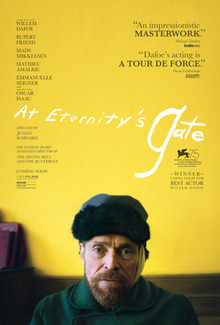
At Eternity's Gate (2018)

Willem Dafoe is the great Van Gogh standing At Eternity’s Gate

Director: Julian Schnabel

Cast: Willem Dafoe (Vincent van Gogh), Rupert Friend (Theo van Gogh), Oscar Isaac (Paul Gauguin), Mads Mikkelsen (Priest), Mathieu Amalric (Dr Paul Gachet), Emmanuelle Seigner (Woman from Arles/Madame Ginoux), Niels Arestup (Madman), Vladimir Consigny (Dr Felix Ray), Amira Casar (Johanna von Gogh-Bonger)

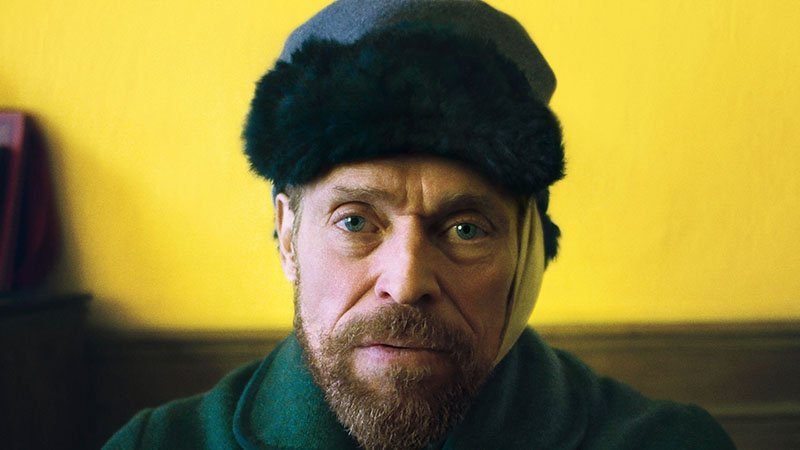
Vincent van Gogh has a constant fascination for film-makers. Perhaps it’s because, as this film suggests, he sat permanently “at eternity’s gate”, painting for those yet to be born. It’s well known van Gogh only found success, fame and artistic recognition after his death. The sad tragedy of his life – he was a deeply troubled man, who struggled profoundly with depression – has been fuel for many films with van Gogh played by actors ranging from Kirk Douglas to Benedict Cumberbatch. Now Willem Dafoe – a very close physical match to the painter (even if he is almost 25 years older than van Gogh at his death) – takes the role on in artist Julian Schnabel’s film.

You’d expect Schnabel, a renowned artist and film-maker, to create a film that offers insight and even revelations on van Gogh and the process of art creation. It’s a shame then that At Eternity’s Gate doesn’t quite succeed in doing this. Schnabel stated in interviews that the existence of the Kirk Douglas/Vincente Minnelli Lust for Life (a far more conventional narrative retelling of van Gogh’s life spliced with melodrama) removed the need for him to worry about telling the clear facts of van Gogh’s life. While I guess it’s true that the basic litany of van Gogh’s final years (which the film focuses on) of Arles-Gauguin row-ear removal-asylum-Gachet-suicide is pretty familiar to many people (and I suspect everyone likely to see this film!), Schnabel’s film drains the drama from this.

Instead Schnabel offers up a film straining at complexity, but which feels rather slight and unsatisfactory. It only seems to scratch the surface of art and the thinking behind van Gogh’s creations. In fact, whenever the film actually tries to talk about art it largely comes across as stodgy and lumpen. Oscar Isaac in particular is saddled with several speeches and dialogue exchanges on art that fall lamely to the floor. Van Gogh gets a few more poetic contributions, but these are few and far between and essentially seem to sum up to a wistful love of nature and the beauty around us.

On top of this, I don’t feel like I get a real understanding or insight in this film into van Gogh’s inner life. In 2011 an episode of Doctor Who written by Richard Curtis made profound and moving material out of Van Gogh’s depression in the episode Vincent and the Doctor. The pain of inner turmoil, the volatility of depression, the way joy can switch to anger and suicidal self-loathing as if a switch has been flicked – it’s all there in that episode. It’s a side of van Gogh that seems missing in this film. The demons, for want of a better word, are missing. 

The film indeed averts its eyes from van Gogh’s bleakest moments. The arguments with Gauguin happen mostly off-screen – I guess the film is placing us in van Gogh’s shoes in that it’s as much a surprise to us that Gauguin announces he can’t bear it any more as it clearly was to van Gogh. The ear cutting is related to us by a calmer van Gogh days later. The film also follows the line of the recent 2011 biography of van Gogh in believing his death was not suicide but manslaughter, a theory that I’m not sure I can really support (since it seems to be founded on a lack of understanding about how the depressed can seem fine one day and then suicidal the next) so maybe this is all intentional.

What the film does do well is get a sense of van Gogh as a soulful and gentle man. Willem Dafoe, as well as being a remarkable physical match for van Gogh, is also an actor made for both suffering and imbalance. After a career of martyrs, the intense, the unhinged, the mutilated and Jesus Christ, his face seems lined already with the cares of the world. Dafoe is very good here, soulful and vulnerable but with a monomania for painting under the surface that guides all his actions. But he has a wistful, childlike tenderness to him and a sense of a gentle man adrift in a world he can’t understand.

It’s a shame the film doesn’t have slightly more to it. Visually it gets a good sense of van Gogh’s striking colours. But I was put off by Schnabel’s addiction to using a wild hand-held camera. Often sloshing woozily around the frame, the camerawork is clearly an attempt to capture the urgent brush strokes and movement of van Gogh’s painting in its visual style – like his paintings it never sits still. It’s also perhaps an attempt to capture the mania of van Gogh’s inner life: it’s noticeable the camera work only calms when van Gogh himself is calm (i.e. painting). But it’s still not exactly easy to watch – like reading a book on the upper deck of a ship during some particularly choppy seas.

At Eternity’s Gate feels like it should be a better film than it is. Irritating camera work aside, it is well made and it has a fine performance at its centre. There are some decent cameos from the other performers – best of all Mads Mikkelsen as a kindly priest who gently, and with great sadness, breaks it to van Gogh that his work is clearly rubbish – but it never really feels like it gives any real insight into either van Gogh or his artwork. For all its panache, it’s strangely empty.

The Young Victoria (2009)

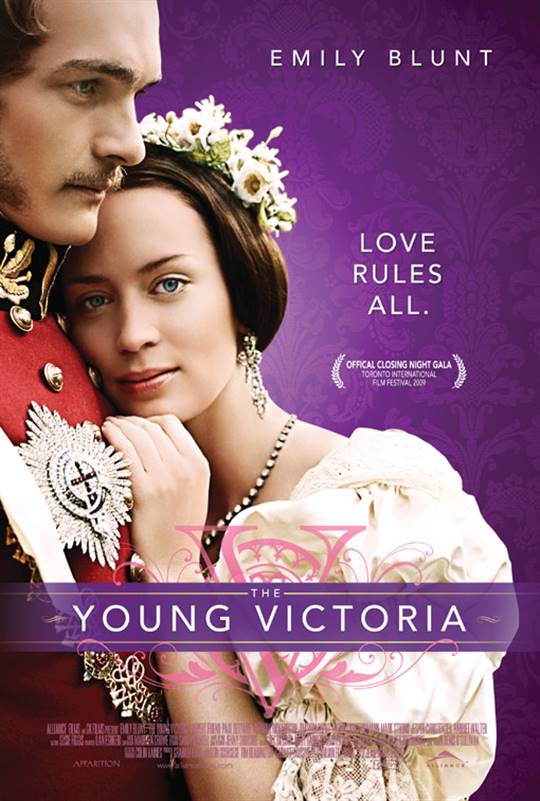
Emily Blunt and Rupert Friend play the royal couple in the cozy The Young Victoria

Director: Jean-Marc Vallée

Cast: Emily Blunt (Queen Victoria), Rupert Friend (Prince Albert), Paul Bettany (Lord Melbourne), Miranda Richardson (Duchess of Kent), Mark Strong (Sir John Conroy), Jim Broadbent (King William IV), Harriet Walter (Queen Adelaide), Thomas Kretschmann (King Leopold), Jesper Christensen (Baron Stockmar), Jeanette Hain (Baroness Lehzen), Julian Glover (Lord Wellington), Michael Maloney (Sir Robert Peel), Michel Huisman (Prince Ernest), Rachael Stirling (Duchess of Sutherland)

Now ITV’s Victoria exists, it’s a bit strange to go back and watch The Young Victoria. With the love today of long-form drama, and the time it can invest in things, it’s funny to see what the drama took almost 8 hours to do being crammed into an hour and a half here. But saying that, The Young Victoria is still an entertaining, luscious viewing experience which, while it has some strange ideas about certain events, is the sort of relaxing Sunday afternoon viewing that will take you out of yourself.

After the death of William IV (a slightly overripe Jim Broadbent), Victoria (Emily Blunt) is elevated to the throne. Finally able to shed the control of her mother’s (Miranda Richardson) domineering secretary Sir John Conway (Mark Strong), Victoria is determined to steer her own course. But she is surrounded by competing influences, not least from the charming arch-politician Lord Melbourne (Paul Bettany). King Leopold of Belgium (Thomas Kretschmann) dispatches his nephew Prince Albert (Rupert Friend) to England with the express interest of marrying Victoria and controlling her – but Albert and Victoria find themselves as kindred spirits, supporting each other to rule.

The Young Victoria is the epitome of prestige costume dramas. It looks fantastic, the cinematography is ravishing, the production and costume design exquisite. It’s pretty clear what the producers thought would sell the picture abroad. The royal regalia is pushed very much to the fore, and we get some wonderfully sweeping scenes, not least an impressively large-scale coronation. The soundtrack brilliantly riffs on Handel, and Julian Fellowes’ script mixes period regal style with a sweeping feeling of romance between Victoria and Albert.

The film actually does a very good job of repositioning Victoria as a young woman, and gives her a strong quality of self-determination and a desire to be herself in a man’s world. It’s really helped in this by the combination of imperial strength, girlish wilfulness and sharp intelligence Emily Blunt brings to the role. Blunt and the film also aren’t afraid to show that, however much Victoria had guts and determination, she was also quite a headstrong woman not above making emotionally led mistaken decisions. In fact, much of the drama spins out of Victoria learning to try and put these youthful crushes and prejudices aside.

Having said that, it’s interesting that the successful conclusion of the film centres on Victoria accepting that she needs the help of Albert to run the kingdom, and that she needs to remove competing influences for her affection – Melbourne and Lehzen – to focus her affection and loyalty on him. The film frames this as a winning romance and a successful partnership (which it was) – but it’s also vaguely creepy if you think about it. Mind you, since all the affectionate influences on Victoria are implied by the script to be at least partly motivated by self-interest, with the possible exception (eventually) of Albert, it manages to suggest this was for the best.

Albert’s background gets some interesting exploration here. He’s very much presented at first as the tool of Leopold as a means of controlling British politics. But he is far too independent, smart and noble to ever be the means of manipulation. Friend is very good here – his performance is quiet, authoritative but also heartfelt. Fellowes guilds the lily a bit to show his devotion by having Albert shot by a would-be assassin late-on in the film. Historically the assassin’s pistol wasn’t loaded, and Albert didn’t get shot (though Fellowes protests Albert didput himself in front of Victoria and that this intent is what’s important, not whether he was shot or not) but the moment does work – it gives the drama a boost and it’s undeniably moving.

While Albert is presented overwhelmingly sympathetically, interestingly Lord Melbourne gets quite a kicking. Paul Bettany is presented far more as a rival love interest than the sort of father-figure Melbourne was in real life (Bettany is probably 20 years younger than the real Prime Minister). Melbourne is shown as cynical, controlling, manipulative and overwhelmingly motivated by self-interest (a few more pushes and he would virtually become the film’s villain). He’s constantly contrasted negatively with Michael Maloney’s upright, honest Sir Robert Peel (one of my favourite statesmen of the 19th century so at least I’m pleased) – and his relationship with Victoria is one of self-promotion, which seems odd seeing as historically the two of them were so close. 

The film introduces other villains for us to hiss at. Kretschmann and Christensen do a good job as arch political schemers. Our real villain though is Mark Strong, who does a great job of scowling, controlling nastiness as the failed-bully Sir John Conroy. Strong’s performance works so well because he makes it clear that Conroy feels that his “Kensington System” (an attempt to manipulate and cow Princess Victoria into being a submissive puppet) is genuinely in her best interest, and that he genuinely cares for her. His partnership with Miranda Richardson as Victoria’s near-love-struck mother works very well.

The Young Victoriathrows in enough interesting character beats like this for it to really work as an enjoyable afternoon period-drama. With some great performances – Emily Blunt carries the movie brilliantly – and while some of the historical characterisation is a bit off, and other moments feel a little too chocolate box it’s a very entertaining, undemanding view., it’s great fun. The hardcore Victorian costume-drama fans will probably prefer Victoriafor the same story in more depth – but this film does it with great sweep (and doesn’t cram in Victoria’s stupid below-stairs plotlines!).

The Death of Stalin (2017)


Hilarious hi-jinks in Soviet Russia as the politburo struggle to deal with The Death of Stalin

Director: Armando Iannucci

Cast: Steve Buscemi (Nikita Khrushchev), Simon Russell Beale (Lavrenti Beria), Paddy Considine (Comrade Andreyev), Dermot Crowley (Lazar Kaganovich), Rupert Friend (Vasily Stalin), Jason Isaacs (Georgy Zhukov), Olga Kurylenko (Maria Yudina), Michael Palin (Vyacheslav Molotov), Andrea Riseborough (Svetlana Stalin), Jeffrey Tambor (Georgy Malenkov), Paul Whitehouse (Anastas Mikoyan), Paul Chahidi (Nikolai Bulganin), Adrian Mcloughlin (Joseph Stalin)

Armando Iannucci is a brilliant television satirist, who spring to wider fame with the success of foul mouthed political satire The Thick of It (re-imagined as Veep in the USA). His sweaty, sweary, fly-on-the-wall style, and characters who embody the panicked agitation of the nakedly ambitious but not-too-bright, was a perfect match for our modern world. Does the style work for the past? You betcha.

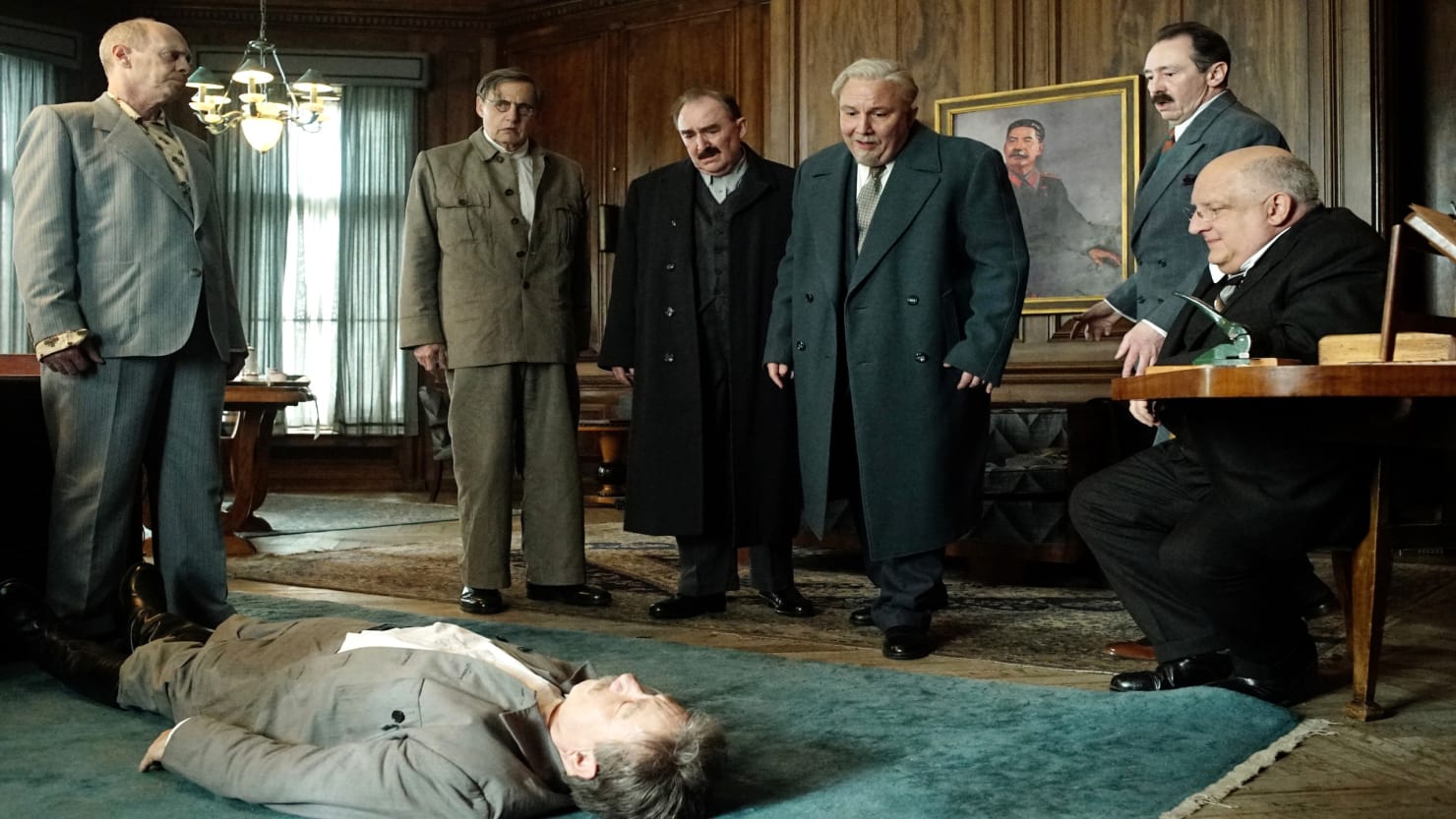
In Soviet Russia, a country near paralysed with terror, the ruthless dictator Stalin dies. This starts an immediate scramble to succeed him, with the leading candidates being weak-willed, vain and foolish deputy Malenkov (Jeffrey Tambor), vaguely principled but fiercely ambitious opportunist Khrushchev (Steve Buscemi) and sinisterly sadistic police chief Beria (Simon Russell Beale). Soviet Russia though is a pretty ruthless place for political manoeuvring, with retirement usually coming in the form of a single bullet to the back of the head.

First off the bat, The Death of Stalin is a blisteringly funny film, a real laugh-out loud riot. Why does it work so well? Because it understands that, hand-in-hand with the horror, Stalinist Russia was so completely barking mad that it lends itself completely to black comedy. Imagine The Thick of It, but with Malcolm Tucker executing rather than dismissing terrified ministers. Welcome to the madness. Events that seem crazy are pretty much true: although time has been telescoped, the struggle for the succession did more or less play out like this (with less swearing).

Every scene of this dark farce has a memorable, stand-out line or moment. The sweaty panic of these over-promoted yes-men is brilliantly reminiscent of the sort of panic you can imagine seeing in your office, with the exception that it probably isn’t literally life-and-death. Iannucci completely understands the wild improvisation of the fiercely ambitious in high-stress situations. If you think the ministers of The Thick of It were adrift when confronted with parliamentary enquiries, imagine how their counterparts struggle when faced with the threats of a bullet in the head.

Because that’s the great thing about this film – while still being hilariously foul-mouthed, it actually gives a pretty good idea of what it might have been like to live in Soviet Russia. The characters are constantly having to adjust to who is in favour and who isn’t, what it is permissible to think and say and what isn’t, who is “dead and who isn’t”. Iannucci totally understands human nature doesn’t change – those left alive around Stalin are just the sort of shallow, selfish, weaklings he’s been lampooning in The Thick of It. Most of the ordinary people we see are just desperate to keep their heads down – getting noticed for regular joes in this film is basically a death sentence. 

The opening sequence really gets this idea across. Paddy Considine is hilariously nervy and terrified as a radio producer ordered to send a recording of the live concert they’ve just broadcast (unrecorded) to Stalin. The frantic rush to reassemble the orchestra, fill the audience up again with people from the street, replace the conductor (the original having passed out in terror at the possibility that he may have been bugged questioning Stalin’s musical knowledge) is brilliantly funny – but works because the genuine expectation that doing the slightest thing wrong could lead to immediate execution is completely clear. Especially as the scene is intercut with Beria’s heavies rounding up innocent civilians to disappear into a gulag. 

Iannucci doesn’t dodge the ruthlessness. The film is punctured throughout by executions, often carried out with a black farcical desperation. It doesn’t shy away from the brutality of Beria, whose violence, sadism and pathological rape addiction we are constantly reminded of (and which are even more effectively sinister as he’s played by the cuddly Simon Russell Beale). In turn, a frantic Beria berates the rest of the politburo for their participation in the orgy of killings and show trials Stalin organised. We see people about to be taken to their deaths hurriedly offering terrified goodbyes to their loved ones. The final sequence of the film, as the battle for the succession reaches its end-game, tones down the jokes to give us an alarmingly realistic picture of a coup. Black farce ending in death: it’s as legitimate a picture as any of living in Stalinist Russia.

All of this is presented in a razor-sharp and witty script, and the cast who deliver it are brilliant. In a fantastic touch, the actors (with the exception of Isaacs) use their own accents, which only adds to the crazy fun. The acting is, across the board, fabulous. Russell Beale gives his greatest ever film performance as a grubby, ambitious, not-quite-as-smart-as-he-thinks Beria, with bonhomie only lightly hiding his chilling sadism and cruelty. Buscemi is equally brilliant as Khrushchev, who has the ego and self-delusion to convince himself that he is the only hope for a reformed USSR, while actually being a weaselly political player with naked ambition.

Around these two central players there is a gallery of supporting roles. Tambor gives a brilliant moral and intellectual shallowness to the hapless Malenkov. Friend is hysterical as Stalin’s drunken son, a deluded man-child barely tolerated by those around him. Palin’s cuddliness works perfectly as fanatical Stalinist Molotov. Whitehouse, Crowley and Chadihi are also excellent, while Riseborough does well with a thankless role as Stalin’s daughter. The film may be hijacked though by Isaacs as a swaggeringly blunt General Zhukov, re-imagined as a bombastic, plain spoken Yorkshireman, literally entering the film with a bang half-way through and bagging most of the best lines.

The Death of Stalin is not just a brilliantly hilarious comedy, it also feels like a film that completely understands both the terror and the confused ineptitude of dictatorship. In a world where it is death to question the supreme leader, is it any surprise that his underlings are all such clueless, ambitious idiots? Has anyone else understood the black comedy of dictatorship before? I’m not sure they have. You’ll laugh dozens and dozens of times in this film. And then you’ll remember at the end that when this shit happens, people die. This might be the best thing Iannucci has ever made.