Tag: Sam Waterston

Crimes and Misdemeanors (1989)

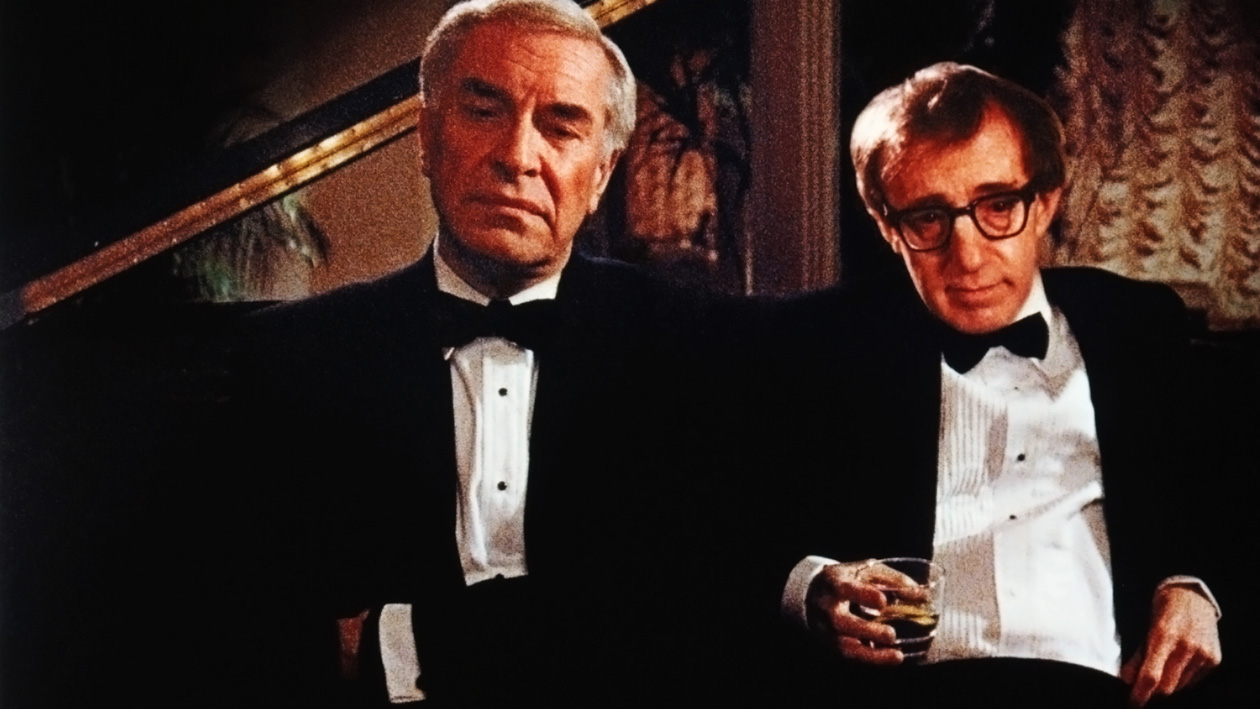
Martin Landau and Woody Allen reflect on Crimes and Misdemeanors

Director: Woody Allen

Cast: Caroline Aaron (Barbara), Alan Alda (Lester), Woody Allen (Cliff Stern), Claire Bloom (Miriam Rosenthal), Mia Farrow (Halley Reed), Joanna Gleason (Wendy Stern), Anjelica Huston (Dolores Paley), Martin Landau (Judah Rosenthal), Jerry Orbach (Jack Rosenthal), Sam Waterston (Ben)

Successful ophthalmologist Judah Rosenthal (Martin Landau) has it all: respect, fortune, a loving family…and a mistress. That mistress, Dolores (Anjelica Huston), won’t play ball and disappear but actually wants Judah to deliver on his half promises of leaving his wife. Should Judah confess all, as his rabbi friend Ben (Sam Waterston) suggests? Or should he follow the advice of his gangster brother Jack (Jerry Orbach) and remove Dolores permanently? Meanwhile, documentary film-maker Cliff (Woody Allen) has been hired by his brother-in-law, pompously successful TV producer Lester (Alan Alda), to shoot a film celebrating Lester’s life. During the shooting, Cliff can barely hide his irritation – or his growing attraction to Halley (Mia Farrow), the associate producer both he and Lester are romancing. Who will she end up with?

Dostoyevsky – could you live with a murder? – gets the Woody Allen treatment in one of Allen’s most highly respected, but troubling films. To be honest, I didn’t much care for Crimes and Misdemeanors. I have moral qualms about it – and, I will hasten to add, these qualms have nothing to do with the lack of punishment for Judah. Crimes and Misdemeanors hides its blatant cynicism and loathing for people, underneath some fine acting and good jokes. But its possibly one of Allen’s most unlikeable works, where his sympathies seem hideously astray.

It wants to be an exploration of the guilt that follows a crime. But to be honest, aside from some expert furrowing of brow and distressed line deliveries from Landau, I’m not sure Woody has much to say about guilt. Furthermore, I think he is inviting us to sympathise with Judah not because he feels bad (and even then, so what?), but for various extenuating circumstances. Namely, he’s a good man (he has all but funded a new hospital wing by himself) with a loving family and is a dedicated doctor. Furthermore, his mistress is presented almost exclusively as a demanding and difficult floozy (Anjelica Huston in an unflattering part – although at least she gets more to do than Claire Bloom in the thankless part of Judah’s wife, an almost non-existent role).

Frankly, the film suggests Judah’s motives are more complex than just removing a self-caused problem and since he feels shock (sorrow for Dolores or the crime seems noticeable absent, and it feels like Allen mistakes the one for the other) and is a nice guy, we should think again about our knee-jerk reactions of right and wrong. Problem is, Judah is not a nice guy – he’s shallow, self-pitying and self-justifying – and watching a character with, it turns out, no real morals go through a moral quandary doesn’t make for engaging viewing.

Judah’s moral reaction to the murder is insubstantial. Essentially guilt makes him wonder where there is in fact a God after all – before deciding that, on balance, the probability is that the universe will not punish him. Other than that, I’m not sure Allen has much more to add to the discussions of right and wrong. Dostoyevsky made hundreds of pages of conscious and guilt shattering a man’s equilibrium. Allen can’t manage more than about ten minutes of screen time, let alone 90 minutes.

Perhaps that’s why Crimes and Misdemeanors is padded out with a second, almost as long, unconnected secondary plot. It’s a one-sided rivalry between Allen’s film-maker and Alda’s pompous producer, with Mia Farrow as an artistic waif who serves as the prize for this unspoken competition. (This is perhaps one of the worst Allen films for female characters: we have two cold, personality-free wives for the main characters, a shrill mistress, a bland artistic waif and Woody’s character has a sister who is tied to a bed and defecated on. How did the same guy write Hannah and Her Sisters?)

Again, Allen’s sympathies lie with the idealistic, uncompromising Cliff, even more so because his interest in making films people don’t want to see makes him, in Allen’s eyes, noble. Compare and contrast with the film’s loathing for Lester – hilariously played by Alan Alda as a neat self-parody. Lester is everything Cliff isn’t, but secretly wants to be (though I’m not sure Allen realises this): successful, well-regarded, admired, rich and gets all the girls. No wonder the film hates him – even though, to be honest, he doesn’t seem the bad. After all, the sort of drive and ambition that Lester has is exactly what makes a man successful.

It wouldn’t matter so much if Cliff wasn’t remarkably similar to him, but considerably less charming. Just like Lester, Cliff is a self-important bore, cuddling his lack of success as proof of his genuineness. Cliff has no problem with effectively creepily stalking Halley (despite being married – fine though as Allen thinks she’s a bitch). Cliff’s passive aggressive assertions that Halley deserves someone like him rather than someone like Lester aren’t romantic, they’re creepy. (Needless to say, Halley ends up with Lester, to Cliff’s shock, horror and disappointment – while his wife plans to leave him).

Now I get it, there are people reading this who will think “well yes you just don’t like it because you want a simple ending where the baddies are punished – well life isn’t like that”. That’s not the case: I’m fine with films where murderers escape scot-free: but I generally want the film to know they are bad people. Crimes and Misdemeanors doesn’t. And it doesn’t really have anything of interest to say. It’s one of Allen’s films where his cynicism about humanity is exposed too heavily. You long for a bit more critical insight into Cliff, or for a more acute exposing of Judah’s self-interested excuses. You get neither, instead Allen ending on the note that the universe is dark and indifferent and only love can change things. There’s lots of the first two and precious little of the third here.
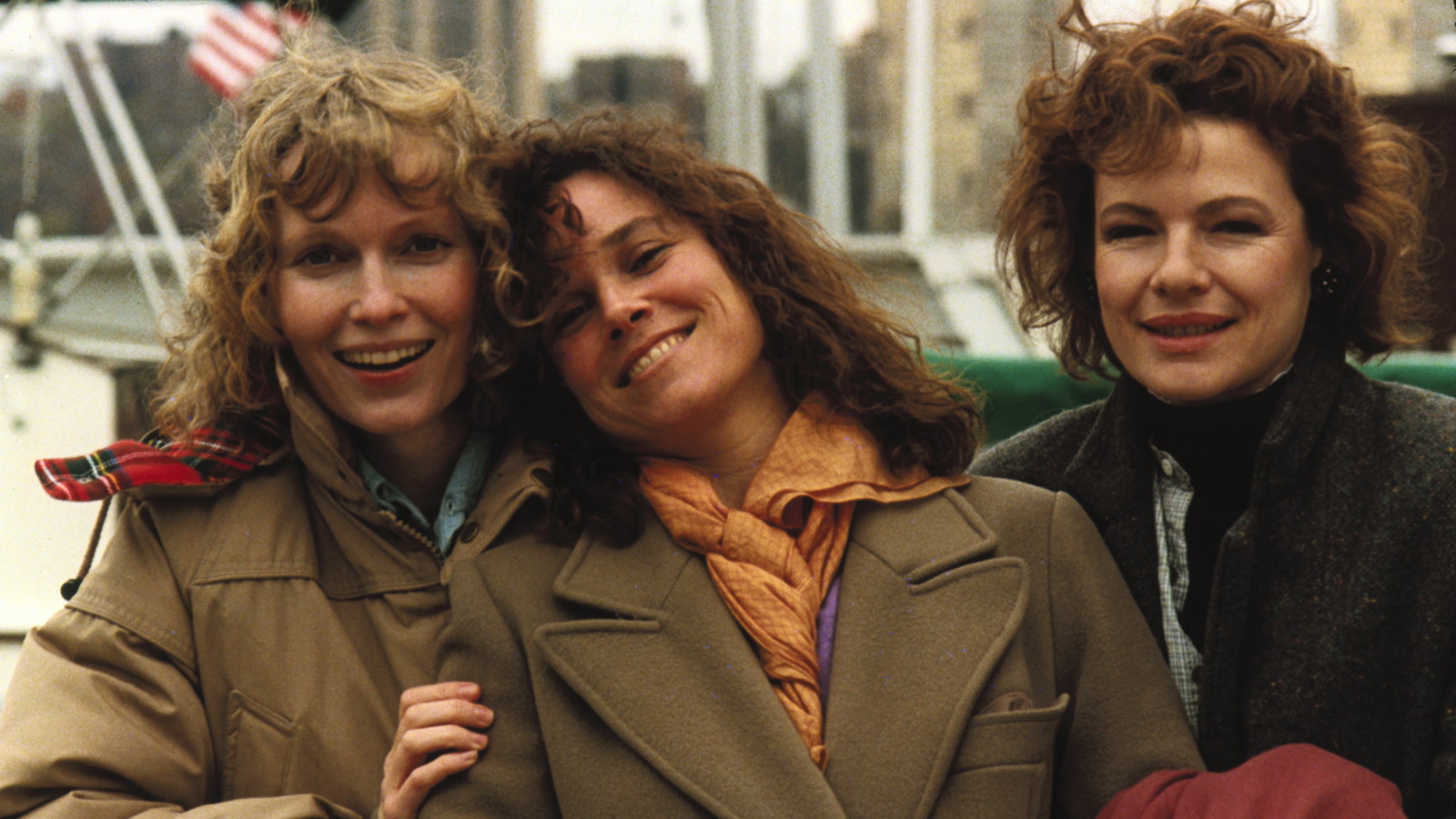
Hannah and Her Sisters (1986)

Mia Farrow, Barbara Hershey and Dianne Wiest are Hannah and Her Sisters one of Allen’s finest films

Director: Woody Allen

Cast: Woody Allen (Mickey), Michael Caine (Elliot), Mia Farrow (Hannah), Carrie Fisher (April), Barbara Hershey (Lee), Lloyd Nolan (Evan), Maureen O’Sullivan (Norman), Daniel Stern (Dusty), Max von Sydow (Frederick), Dianne Wiest (Holly), Sam Waterston (David)

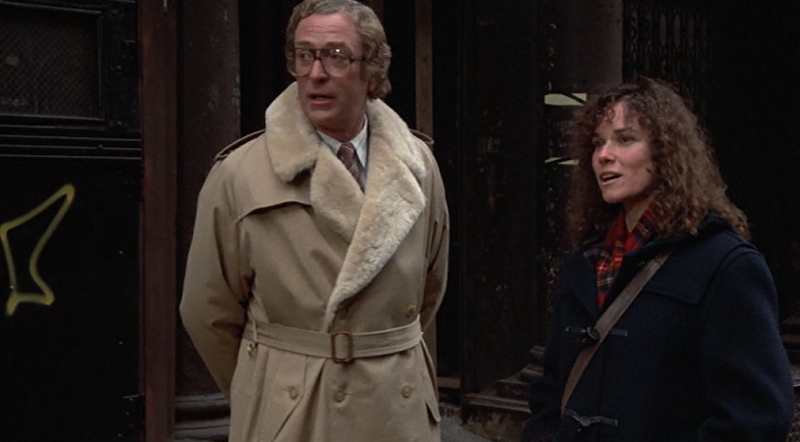
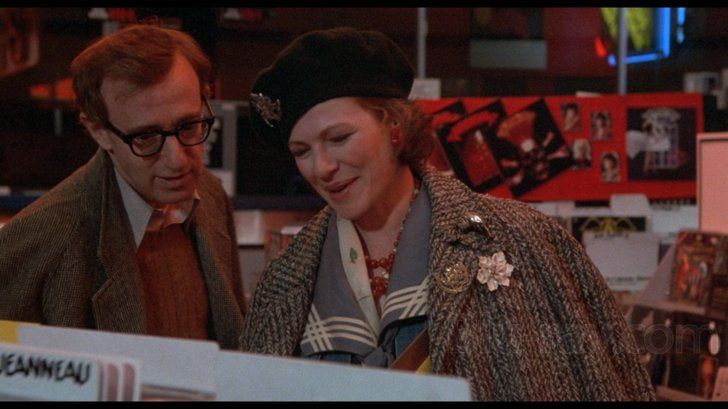
Hannah (Mia Farrow) is divorced from Mickey (Woody Allen) and happily married to Elliot (Michael Caine). Eliot is in love with Lee (Barbara Hershey). Lee is Hannah’s sister. Holly (Dianne Wiest) is considering dating Mickey. Holly is also Hannah’s sister. This whirligig of relationships is the heart of Hannah and Her Sisters, one of Woody Allen’s finest and certainly most humane films. Witty and heartfelt, it’s one of his sharpest scripts, crammed with acute observation and fine gags and is directed with a coolly introspective eye.

Allen splits the film into multiple sections, each opening (like the chapter of a novel) with a quote from the scene we are about to watch. Music plucked from Allen’s beloved classics (most often, and fittingly considering its romance theme, Bewitched, Bothered and Bewildered) frequently bridge scenes. Internal monologues is used often to allow us to explore the inner lives of the characters (the actors do a marvellous job reacting on screen to this internal thought process we are hearing).

The film uses a host of inspirations carefully mixed into Allen’s Manhattan Metropolitan middle-class milieu. The entire film has an autumnal Chekovian feel to it, with a rich sense of lives continuing ‘off stage’ as much as on. While the title obviously echoes Three Sisters, it’s study of romantic and intellectual entanglements overlaps with Chekov, as does the film’s love of wordplay. There are also, of course, echoes of Bergman (with gags) both in the film’s episodic structure but also its framing device of three Thanksgivings dinners, reflecting Bergman’s triumphant Fanny and Alexander.

The most effective thing about the film, in addition to its wit, is the surprising warmth it feels for the characters. Not always in an Allen film does one find the sympathy and empathy so widely spread – there is usually at least one character who is the target for the writer’s scorn. But here, no major character is presented as either the butt of snide humour or sneers. Even von Sydow’s pretentious artist is capable of searing emotional pain, and its hard not to sympathise with him as clients enquire whether his art will fit with their home décor. Each scene carefully balances the perspectives of multiple characters to allow us to relate to what each of them is going through. It’s possibly the largest cast of fully-rounded characters in an Allen film, and his most generous film.

It’s a film that avoids judgement over its characters, despite the frequently terrible and morally troubling things they do. It’s a film that understands the heart is an uncontrollable but resilient muscle, which doesn’t always guide us to the right or the easy things. Of course today, with Allen, you think it’s probably not a surprise he had sympathy with a group of people engaged in relationships that often involve profoundly betraying others. But at least her understands the irresistible urge people have to continue doing things they shouldn’t.

It’s hard not to overlook that the film’s least explored character (despite her multi-layered performance) is Mia Farrow’s Hannah. Poor Hannah, the still, moral centre of the film, is betrayed by both her husband and her sister (to their mutual guilt). Allen leaves her in ignorance – even though she knows something is wrong – and while Allen acknowledges what Elliot and Lee is doing is wrong, he mitigates things by making clear Hannah’s decency and generosity makes her overwhelming. While we see the impact a sudden distance from her husband has on Hannah (in a great shot she talks to him while he is off camera in another room, making her look like she is talking to a wall), Hannah is one of the few characters we don’t get the insight of an internal monologue for, and that feels like an easier way for Allen to maintain our sympathies for others.

The person whose internal monologue we hear the most is her conflicted husband Elliot. Hannah and Her Sisters may be unique in that it has two characters who are clear Allen substitutes. While Allen plays one, Caine is the husband (who looks alarmingly like a prediction of future developments in the Allen-Farrow relationship). Caine is superb, not least because he turns lines you can hear could be delivered with an Allenesque twitchiness, into ones crammed with utter emotional genuineness.

For all that he is a cheat, Elliot is strangely guileless and rather sweet, plagued with guilt and also giddy as a schoolboy, begging Lee to read an ee cummings poem that carries special meaning for him. Caine makes Elliot a genuine human character, a flawed man trying to avoid hurting people (but causing pain everywhere). If Branagh in Celebrity (with his distracting Allen imitation) showed how much of a slave to Allenesque delivery you can become, Caine shows how heartfelt simplicity and underplaying can bring out deeper emotion from Allen’s dialogue. Allen also rather brilliantly directs this abashed dance of attraction: from Caine’s internal monologue telling him to play it cool, moments before he kisses Lee, to the camera framing Frederick’s sketches of a naked Lee directly in Elliot’s line of sight while he tries to think of literally anything else.

Caine also matches superbly with Barbara Hershey, excellent as a woman who feels trapped in her life and drawn to Elliot despite herself. Lee’s current relationship is with Frederick, wittily played in a near parody of Bergmanesque brooding by Max von Sydow, who takes a late lurch into real vulnerability, a pretentious artist who is part-lover-part-tutor and is disconnected from the real world, Lee is virtually his only link left with it. Frederick is clearly a tutor and surrogate parent, as much as a lover to Lee – and that attraction to a figure who can take responsibility in her life is clearly something she’s attracted in Elliot. The slow, guilt-ridden coming together of Elliot and Lee – and the slow deflation of this fling – is the emotional heart of the movie.

The film’s other two arcs provide more of the gags. Woody Allen gifts himself some of his finest comic moments as Hannah’s hypochondriac ex-husband (the second Allen stand-in) undergoing an existential crisis after he discovers he is in fact not dying of a terminal disease. Dianne Wiest is similarly excellent (and also Oscar winning) as Hannah’s unsuccessful sister Holly, a would-be actress too insecure to find success. Wiest is not only funny, but also vulnerable and affecting, as she tries to find her place in the world. In many ways Wiest plays a third version of Allen here, as she becomes a neurotic writer channelling her real life into writing (to the consternation of her sister).

Changing reality into scripts is the only thing awkward about Hannah and Her Sisters today. Hannah and her extended family (and many children) are a thinly veiled portrait of Farrow’s own family (Hannah’s mother is even played by Farrow’s real life mother Maureen O’Sullivan). Like Allen and Farrow, Mickey and Hannah needed to adopt and foster children. And of course Eliot’s affair with Hannah’s sister eerily mirrors Allen’s own affair with Farrow’s adopted daughter, and the film’s sympathy for Elliot sometimes seems like an unsettling excusing of Allen’s future conduct. That’s not even mentioning one of the film’s earliest jokes is Allen’s character complaining about the cutting of a child molestation skit from his Saturday Night Live-ish show (“what’s the problem half the country’s doing it” quips Allen, a joke that doesn’t work today for so many reasons).

But put that aside because, whatever your opinion of Allen, Hannah and Her Sisters is one of his finest films. It’s expertly shot and directed with a real unobtrusive ease (Allen’s innate understanding of this Manhattan world contrasts sharply with how at sea he is in his European movies). The acting is spot on. As well as being very funny, the moral conundrums the film explores are sympathetic and witty, as are the flawed human beings behind them. Possibly his best film.

Nixon (1995)

Anthony Hopkins triumphs as Nixon in Oliver Stone’s surprisingly sympathetic biopic

Director: Oliver Stone

Cast: Anthony Hopkins (Richard Nixon), Joan Allen (Pat Nixon), James Woods (HR Haldeman), Powers Boothe (Alexander Haig), Larry Hagman (“Jack Jones”), Ed Harris (E. Howard Hunt), Dan Hedaya (Trini Cardoza), Bob Hoskins (J. Edgar Hoover), Madeline Kahn (Martha Mitchell), EG Marshall (John Mitchell), David Paymer (Ron Ziegler), David Hyde Pierce (John Dean), Paul Sorvino (Henry Kissinger), Mary Steenburgen (Hannah Nixon), JT Walsh (John Ehrlichman), Sam Waterston (Richard Helms), Brian Bedford (Clyde Tolson), Tom Bower (Francis Nixon), Kevin Dunn (Charles Colson), Annabeth Gish (Julie Nuxon), Tom Goldwyn (Harold Nixon), Saul Rubinek (Herbert G Klein)

In 1995, there was one person the chronicler of the 1970s American experience, Oliver Stone, hadn’t covered: Richard M Nixon. The man who was the embodiment of the dark scar on the American consciousness, the grim, unlovable presence behind the war in Vietnam, the protests and the deep, never-ending wound of Watergate, who seemed to drag the country further and further into the abyss. The man who besmirched the office, the least popular president ever, the national shame. With Stone’s searing attacks on everything from Vietnam policy to the conspiracies behind the Kennedy assassination, you’d expect his film on Nixon to be a condemnation. What people didn’t expect was a film as strikingly even-handed as this, which recasts Nixon not as a gloating villain, but a Shakespearean figure, a Greek tragedy of a man destroyed by chronic character flaws.

Opening with a crushed Nixon, like a drunken Gollum cradling his precious, listening to his precious tapes in the bowels of the White House during his final days in office, the film is told in a fascinatingly non-linear style – loosely falling into two acts, cutting backwards and forwards in time. The first act covers most of Nixon’s career up to the presidency, focusing on his Quaker childhood and the influence of his mother Hannah (Mary Steenburgen), his defeat in the 1960 election to Kennedy and his years rebuilding his political standing. The second half takes a more linear approach, covering a Presidency becoming increasingly bogged down in the inept cover-up of Watergate and increasingly desperate attempts to save his presidency, intermixed with foreign policy successes.

What is really striking is that Stone’s movie finds a great deal of sympathy for this troubled and complex man. He’s a man who has greatness in his grasp, dedicated, intelligent and with vision – but fatally undermined by self-loathing, self-pity and a bubbling resentment about not having the love of the people. Like Lear raging against the storm, or Macbeth bemoaning the impact of his vile deeds, Stone’s Nixon becomes a sympathetic figure, even while the film makes no apologies for his actions, his aggressive bombing of Cambodia (the film notes at its end the bombing led directly to the massacres of the Khmer Rouge) or his failures to claim any responsibility for how he caused his own end.

Stone’s empathetic vision of Nixon is shaped largely by Anthony Hopkins’ titanic performance in the lead role. Hopkins makes no real effort – beyond teeth and hair – to look like Nixon, but brilliantly embodies Nixon’s awkward physicality and, above all, his angry, bitter, resentful personality. It’s not an imitation, but it totally captures him. Hopkins has got it, and the disintegration of Nixon over the course of the film into the shambling, miserable, twitching, even slightly unhinged mess he became in the final days of his presidency is astounding. 

It works because Hopkins never loses sense of the potential for greatness in Nixon – sure he’s socially awkward (Hopkins superbly captures Nixon’s awkward grin, his stumbling nervousness in conversation), but politically he’s assured, confident and has huge insight into realpolitik. His flaw is that he wants to be both the master politician and the people’s champ, to be Nixon and JFK, to have the people cheer him to the rafters. It’s a longing that turns to resentment, fuelling insecurity and fear, that causing him to be so afraid of being cheated that he cheats first and bigger.

It’s that potential for greatness that swims through Stone’s masterfully made, electric film. Stone’s love for mixing film stock, fake newsreel footage, snazzy camerawork, switching colour stock, stylistically eclectic sound and music choices and bombastic lecturing comes to the fore here – and I accept it won’t be for everyone. But for me it works. It’s a big, dramatic movie because it covers an epic theme. From its early echoes of Citizen Kane – the White House as Xanadu, those missing 18 ½ minutes of the tape Nixon’s “Rosebud” – through to the accelerated pace and film stock as events spiral out of the President’s control, it’s an explosion of style that really works, even if there are points which are too on-the-nose (a scene where Nixon’s dinner talk of war is interrupted by a steak that leaks gallons of blood as he cuts into it, is clumsy in the extreme).

Stone’s theories revolve around the true villain being the government-financial power system itself, a grindingly oppressive beast chews up and spits out the men who think they can ride it. Nixon may know about the danger of the system, but he’s as powerless as anyone else. Its tendrils extend everywhere, from the creepily domineering CIA chief Helms (Sam Waterston, unsettlingly intimidating in scenes restored in the director’s cut) to the shady Texan money interests (led by an excellent Larry Hagman of all people) who sure-as-shit want to get rid of that liberal, Cuban surrender monkey Kennedy, by any means necessary (“Say Kennedy dont run in 64?”). 

Nixon wants to control it, to do some good – and the film is excellent at stressing how Nixon’s poverty-filled Quaker background gave him a drive to achieve but also a chippy insecurity and moral standards from his imperious mother he can never hope to meet – but what hope does he have? In any case, his own deep moral failings doom any chance of forging his own goals, sucking him into a quagmire where long-running dirty deeds, shady deals and unedifying company consume him. “When they look at you they see what want to be. When they look at me they see what they are” Nixon complains to the painting of Kennedy, the rival whom he can never eclipse, the man born with all the advantages Nixon never had, the millionaire embraced by the people while the working-class Nixon is reviled. It’s these resentments that consume and destroy Nixon, and Stone presents this as an epic tragedy of a great politician, crushed by his fundamentally human flaws.

Around Hopkins, Stone assembles a brilliant cast. Joan Allen is superb as Nixon’s loving but insightful wife who won’t shy to speak truth to power. James Woods is perfect as the bullishly aggressive, fiercely loyal Haldeman. Paul Sorvino does a wonderfully arch impersonation of Kissinger, always keeping his distance. David Hyde Pierce makes a smoothly innocent but determinedly self-preserving John Dean, Powers Boothe a wonderful cold Alexander Haig. Only Bob Hoskins gives a performance slightly too broad as Hoover – but he still laces the role with a crackling menace.

Nixon is a great film, an explosion of style (perhaps at times a little too much), which painstakingly strips bare the President’s psyche – his doubt, guilt, bitterness, resentments and finally overwhelming self-pity. Powered by a titanically well-observed performance by Anthony Hopkins, who is just about perfect in every frame – every nuance feels real – Nixon is a wallow in the dark underbelly of America, which hints throughout at the even greater dangers that lie under the surface, the powerful system maintaining the status quo that sees presidents come and go, but never allows any real change. It’s a remarkable film.

On the Basis of Sex (2018)

Felicity Jones does earnest, dedicated work in an earnest, dedicated film: On the Basis of Sex

Director: Mimi Leder

Cast: Felicity Jones (Ruth Bader Ginsburg), Armie Hammer (Martin Ginsburg), Justin Theroux (Mel Wulf), Kathy Bates (Dorothy Kenyon), Sam Waterston (Erin Griswold), Cailee Spaeny (Jane C Gisnburg), Jack Raynor (James H Bozath), Stephen Root (Professor Brown)

Ruth Bader Ginsburg is an extraordinary person, her pioneering work to bring about sexual equality in the USA something that has made an actual, permanent change to her country for the better. This biopic covers the early years of this campaign in the 1970s, and if it at times gets a little too bogged down in the conventions of these sort of biopics, it does tackle them with genuine passion.

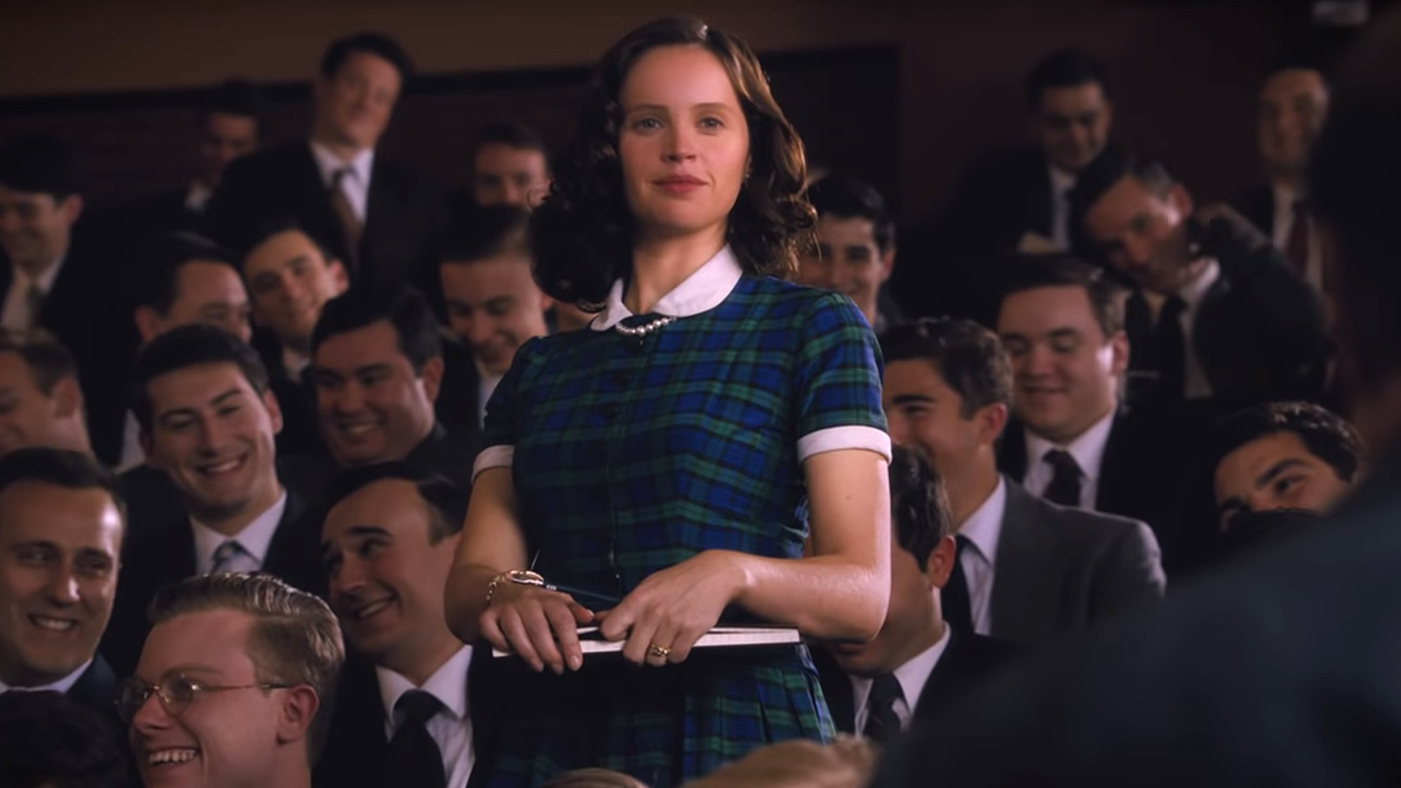
At Harvard in the mid-1950s, Ruth Bader Ginsburg (Felicity Jones) is one of the first women allowed in to study law – and finds that she faces a battle to constantly prove that she deserves to be there. Her husband Martin Ginsburg (Armie Hammer), himself an accomplished lawyer, is endlessly supportive and encouraging, but Ruth continues to find that she struggles to be treated as an equal in the male dominated legal world of the 1950s and 60s. All this changes when her husband brings to her attention a tax case that discriminates against a male carer – and she realises this could be a vehicle to establish a precedent that American laws are unconstitutional when they discriminate on the basis of sex.

Mimi Leder directs a film full of warmth, respect and feeling for the importance of the story it is trying to tell. While it at times seems a tiny bit overwhelmed by the responsibility of bringing such a pioneering person’s story to the screen, it still manages to bring enough character and flair to it to make it an engaging watch. Perhaps you might feel at times you are only beginning to scratch the surface of RBG’s extraordinary life – but the film still treats you with the respect to assume that you can follow the legal arguments being outlined, even as it structures much of the film with clichés.

It does have some fine sequences in it though, not least a running visual image of Ruth walking up steps towards important buildings. The opening sees her lost in a crush of young male Harvard students, struggling to find her own space in a male dominated world. Later she climbs the steps outside the Court of Appeals, this time at the head of a progress of men following her behind. And finally the film bookends its opening Harvard steps sequence with Ruth – this time alone – climbing the steps of the supreme court: shots and cuts echo the opening of the film as Felicity Jones is slowly replaced by the real Ruth Bader Ginsburg.

Felicity Jones does a decent job as Ginsburg, although she struggles with a slightly awkward make-up job to age her up. She however captures the fire in Ginsburg’s belly and her passion to right wrongs, as well as the demanding intellectual ability that at times made her a domineering and difficult person. She doesn’t always find much wit in the role, but she really wins the empathy of the audience with the injustice she faces – not least from the very start having to justify why she has taken a place at Harvard from a man in the first place.

It helps as well that she has such a fine scene partner for so much of the film in Armie Hammer, who is excellent as her supportive, way-ahead-of-his-time husband Martin. Taking on most of the domestic chores – and combined with his own brilliant career – Martin was as much a fascinating figure as Ruth. Hammer plays with a joyful, charismatic relish, perfectly mixing intellectual curiosity with an innate decency. It’s also a generous performance that complements Jones perfectly.

The relationship between these two is the emotional heart of the film, frequently raising warm smiles from the audience. An early scene where Martin is diagnosed with cancer after collapsing during a game of charades tugs at the heartstrings, not least for the sudden pained look of panic that crosses Martin’s face as he collapses, and Ruth’s protective rush to his side. These two argue once in the film – and that an argument based around Martin encouraging Ruth to live the life she wants – and the film goes out of its way to show that their life together was an equal partnership, where both were determined to support and protect the other.

It’s a lovely relationship to place at the film’s centre – even if Hammer is essentially playing the supportive wife role that so many biopics of men have featured (Felicity Jones in The Theory of Everything for starters springs to mind!). That points at one of the weaknesses of the film: its predictability. Structurally it follows the route of many of these sort of biopics, with initial struggle, a cause, set-backs, pep-talks, sudden nerves before the eventual demonstration of triumph. Frankly nothing in the film narratively is remotely surprising, and Leder, despite a few touches of flair, largely directs with a workmanlike assurance.

Workmanlike is a little harsh, but is probably the film’s main weakness. While it’s well-played and has an excellent story – and, I will say it again, a script that largely expects its viewers to follow the legal points – it also can’t quite figure out a way to tell the story that doesn’t squeeze it into the biopic clichés that you’ve seen dozens of times before. Is that necessarily a bad thing? Not exactly: but it also makes the film at heart an engaging middle-brow drama, which seems a shame when Ruth Bader Ginsburg is anything but.