
Tag: School drama

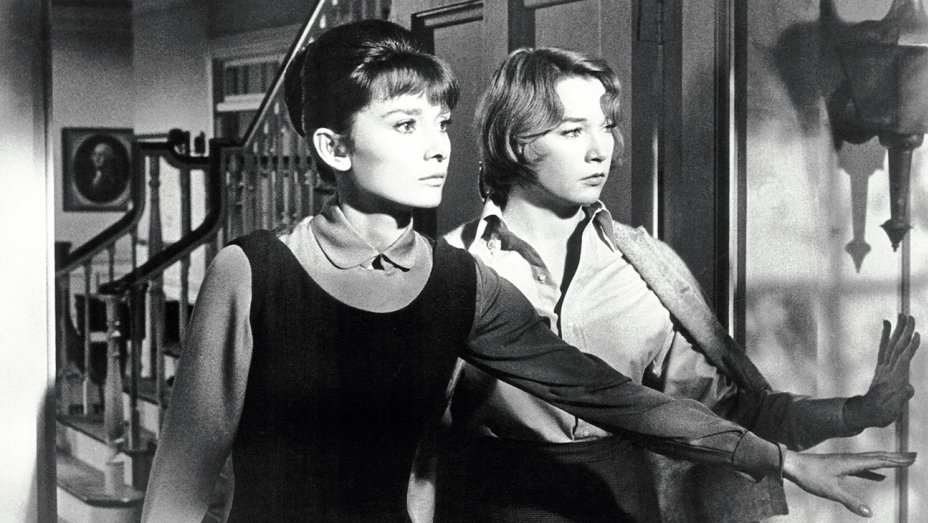
The Children's Hour (1961)

Audrey Hepburn and Shirley MacLaine are victims of scurrilous rumours in The Children’s Hour

Director: William Wyler

Cast: Shirley MacLaine (Martha Dobie), Audrey Hepburn (Karen Wright), James Garner (Dr Joe Cardin), Miriam Hopkins (Lily Mortar), Fay Bainter (Mrs Amelia Tilford), Karen Balkin (Mary Tilford), Veronica Cartwright (Rosalie Wells), Mimi Gibson (Evelyn), William Mims (Mr Burton)

The Children’s Hour was William Wyler’s second stab at directing an adaptation of Lilian Hellman’s play of the same name: a story about  two young teachers at a private girls’ school, and the destruction wreaked on their lives when a malicious pupil spreads rumours the two are in a secret lesbian relationship. His first attempt from 1936, These Three, kept as many of the themes as possible but carefully deleted every single reference to homosexuality in the script. This second film version restores this core theme in a carefully structured, well directed, respectful film adaptation that, with its careful analysis of the danger of rumours and snap judgements, still feels relevant today. 

Martha Dobie (Shirley MacLaine) and Karen Wright (Audrey Hepburn) run a private girls’ school. Karen is engaged to Dr Joe Cardin (James Garner), and this prolonged engagement is part of the arsenal used by a bitter, bullying student Mary (Karen Balkin) when she decides to start spreading innuendo about a scandalous relationship between the teachers, painting Martha as consumed by sexual envy. Mary’s story is believed whole-heartedly by her grandmother, doyen of the social scene and Joe’s aunt, Amelia Tilford (Fay Bainter). Thoughtless words from Martha’s aunt Lily Mortar (Miriam Hopkins) make things worse. In no time, the school is ruined, the children all gone and Martha and Karen face a desperate battle to prove that there is nothing to this but gossip.

Wyler’s film is a strange mixture at times, in part a commentary on prejudice, and also a scorching condemnation of jumping to judgements. The film plays out all this with calmness and a general careful avoidance of histrionics and lecturing. The removal of the children from the school is brutal and cowardly – with none of the parents having the guts to say why they are doing what they are doing until finally confronted by Karen. Amelia Tilford goes about her campaign of moral righteousness with a holier-than-thou superiority while constantly stressing that she takes no pleasure in this. In the latter half of the film, the abandoned school seems to be constantly surrounded by smirking men.

The film carefully outlines that this sort of moral judgement is inherently wrong, and it brings out some true moral judgement on many of the people involved. It draws out a brilliant Crucible-like indignation at the rigidity and hypocrisy of how those who are judged to be different are treated. The film’s finest sequence is at the centre of the film, where Martha and Karen make a (failed) attempt to nip the scandal in the bud by confronting Mary at her grandmother’s house. The scene zings with a burning sense of injustice, as Mary’s lies are believed, doubled down on and then confirmed by a blackmailed fellow student, all while the audience knows that everything that is being spun is florid, innuendo-filled rubbish.

Mary is a bitter, twisted, angry little girl whose face seems permanently screwed into a furious frown. She also has the sharpness and ruthlessness of the natural bully, successfully blackmailing a sensitive, kleptomaniac student to endorse all her lies at every turn. Wyler carefully demonstrates that she has a natural manipulator’s deviance and that half-facts and muttered comments carry more conviction and force than carefully stated arguments ever would.

But Mary’s actions partly stem from Karen’s own forceful treatment of her – and Karen’s moral inflexibility and personal certainty is just one of the many character flaws that this lie brings closer and closer to the surface. Well played by Audrey Hepburn, using her occasional slight imperiousness to great effect, Karen’s lack of compromise, her domineering personality and her own moral superiority help to make her both an unsympathetic victim to many, and a person who manages to drive wedges (inadvertently) between herself and her two closest friends, Joe and Martha.

That wedge spins out from the fact that the more sensitive Martha (a sensitively delicate performance from Shirley Maclaine) does have romantic and sexual feelings for Karen, feelings that she has carefully suppressed (or perhaps not even understood) and confesses to late on in a wave of guilt and shame, mixed with an almost unspoken hope that Karen might respond to this confession with more than silence and a quiet assurance that it won’t change anything. Neither of which is what Martha wants (or needs) to hear. 

MacLaine was critical of Wyler for removing from the film scenes that showed Martha’s love and affection for Karen in a romantic light. Perhaps Wyler was still slightly squeamish about the likelihood of America accepting a lesbian character presented honestly and sensitively. –But MacLaine has a point for, while the film does suggest it is reprehensible to  make judgements about other people’s private lives, it falls well short of suggesting that a lesbian relationship is as normal and valid as a straight one, or that Martha’s feelings for Karen are the equal of Karen’s for Joe. Karen will let the idea slide, but she is hardly thrilled by it, meanwhile Martha is made the more passive and hysterical of the two women, and her feelings for Karen are a source of tragedy in the story. While it’s of its time, the film still shies away from the idea that a lesbian relationship could ever be without a tinge of scandal. Unlike, say, Dirk Bogarde’s gay barrister in Victim, there is always something “not quite right even if we shouldn’t judge” about homosexuality in the film.

It’s why the film is at its strongest when showcasing its outrage for the many selfish and self-appointed moral guardians who ruin lives with sanctimonious self-regard. Miriam Hopkins is eminently smackable as Martha’s appalling aunt, whose love of gossip pours fuel on the fire. Fay Bainter is very good (and Oscar nominated) as Amelia, whose reluctance and unease about her self-appointed role as the moral police, only partly tempers her rigidity and inflexibility. Words of support and encouragement from others are noticeable by their absence, and even the long-standing loyalty of Joe (a rather charming James Garner) is eventually tinged (forever for Karen) by a moment of doubt. 

Rumours and innuendo are dangerous and cause real and lasting damage to people’s lives. It’s a fact the film enforces strongly – and it’s an idea that perhaps is even more relevant today at a time when social media sends moral judgements that ruin lives around the world even faster than Amelia Tilford’s phone can. A well-made film with moral force, that could have gone further, but still went further than many others dared at the time.

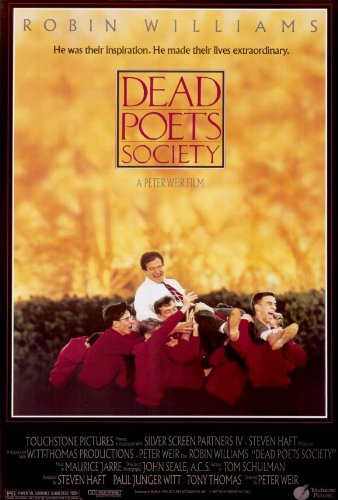
Dead Poet's Society (1989)

Robin Williams is an inspirational teacher (is there any other type in films?) in Dead Poet’s Society

Director: Peter Weir

Cast: Robin Williams (John Keating), Robert Sean Leonard (Neil Perry), Ethan Hawke (Todd Anderson), Josh Charles (Knox Overstreet), Gale Hansen (Charlie Dalton), Norman Lloyd (Headmaster Gale Nolan), Kurtwood Smith (Mr Perry), Dylan Kussman (Richard Cameron), James Waterson (Gerard Pitts)

“Oh Captain, My Captain!” Your feelings for Dead Poet’s Society are probably directly linked to how you react to that desk-standing ending. A triumph of emotional film-making? Or garishly over-sentimentalised nonsense? I’ll go for the latter myself, as I found myself non-plussed and unengaged with this conventional “idealistic teacher changes lives of young boys” story. Seen it all before. 

In 1959 at elite, all-male prep school Welton Academy, four young students (Robert Sean Leonard, Ethan Hawke, Josh Charles and Gale Hansen) are surprised by the unorthodox teaching methods of their new English teacher, Welton Academy old boy John Keating (Robin Williams). Rather than teach the stuffy, facts based curriculum, Keating encourages the boy to use their hearts and minds, to be creative and above all to carpe diem as much as they can. The boys start an illicit poetry club (?) and begin to explore their own artistic leanings – but their conservative parents and school won’t stand for this challenge of the orthodox and when tragedy strikes it’s Keating who gets the blame.

Dead Poet’s Society already feels a bit dated, and it’s story line treads all too familiar ground of fusty seniors struggling to understand the artistic stirrings of the youngsters inspired by the sort of maverick inspirational teacher that everyone at one time or another has dreamed of being. Naturally of course (as per the rules of films) all the other teachers are either cynical, disinterested or box tickers. For a genuine artist like Weir, I was struck by how plodding this film was in its story and construction and also its ideas and themes. It’s a struggle between generations played out at a point in history where the cultural revolution of the sixties was just about to happen. These ideas were already over twenty five years old when the film was made – and this adds nothing really too the mix.

Instead we get the standard tropes we might expect, as the students play out expected and predictable plots. Nervy Ethan Hawke, at first too shy to speak, finds the courage to express himself. Josh Charles sets out to woo the girl he loves (at times this is more than a little creepy). Proto-rebel (and no doubt soon to be sixties activist) Gale Hansen begins bucking authority and writing scurrilous articles for the School newspaper. And Robert Sean Leonard begins to defy his domineering father’s wishes to focus solely and exclusively on a medical career by landing the part of Puck in a local play and dreaming of a career in the theatre.

Despite the focus of much of the film’s promotion (and in people’s memories) on Robin Williams’ central performance, the story line is all about these boys. And I will say there are some fine performances from these four principles – three of whom went on to have notable careers. Particularly fine is Robert Sean Leonard, who gets a meaty pile to play with as a young adolescent who lacks the courage to tell his father what he really feels and carries all this with a confidence and assurance (even though his Puck performance is hardly the work of genius the film insists it is!).

It’s unfortunate that most of what they do is the totally expected collection of school yard clichés, which builds towards an inevitable and predictable, sad, sentimental, ending. Keating is the standard inspirational teacher, given to flights of fancy and eccentric touches (tearing pages from books, leading the boys in sports designed to build their poetry skills, encouraging the boys skilfully to recite their own poetry) that will either leave you wishing you had him as a teacher or leave you cold. 

Watching it now, and seeing Keating interact with his students, you can’t help but feel his increasing closeness with the boys, his encouraging them to call him “Captain” (in one skincrawling moment he doesn’t even turn around when walking until one of them addresses him as this!), his taking them to plays, his obvious favouring of a few key students would all contribute to him struggling to get CRB cleared. I actually found his character rather grating, although the film does use a good few moments to underline how Keating rebukes the boys for their more thoughtless and pointless acts of rebellion and how he urges Neil to gain the support of his father before acting.

Nothing particularly wrong with Robin Williams performance though, even though the thing you feel impressed people the most was this most energetic of funny men restraining himself in a relatively straight and low-key part. It’s a role several actors could have taken on just as well, but Williams does a sound job.

It’s a shame that the film itself is so deeply bland. Its later sentimental touches become increasingly heavy handed and overbearing, and it’s parable of betrayal and corruption in a 1950s school hits its points equally hard. There is nothing really fresh or unique here, and the film itself never brings its story to life in a way that feels fresh or unique. It’s a film widely loved, but to be honest for the uninitiated has more than enough moments of weakness for you to want to check out of this class.

Goodbye Mr Chips (1939)

Robert Donat is superb (and Oscar winning) as an (eventually) beloved teacher in Goodbye Mr Chips

Director: Sam Wood

Cast: Robert Donat (Mr Chipping), Greer Garson (Katherine), Lyn Harding (Dr John Hamilton), Paul Henreid (Max Staeffel), Terry Kilburn (John Colley/Peter Colley I/Peter Colley II/Peter Colley III), John Mills (Adult Peter Colley), Scott Sunderland (Sir John Colley)

Goodbye Mr Chips is the sort of film that feels ripe for spoofing. The sort of idealised stuff-upper lip, Tom Brown’s Schooldays look at the past that should have you spluttering and chuckling. But it’s done with such warmth, such genuine emotion and tenderness, that instead you can’t help but feel yourself welling up while watching it. I certainly did (although I was watching it at half seven on a Sunday morning…)

The film follows the fortunes of Mr Chipping (Robert Donat) from his first joining the school in 1870 as a naïve young Classics teacher, struggling to exert authority over the children, to a beloved elder statesmen of the school in 1933. Along the way, he deals with a host of personal and worldly trials and tribulations, falls in love with a young suffragette Katherine (Greer Garson) who recognises his tender soul, and eventually helps the school through the national trauma of World War I.

It’s a quite beautifully done piece of old fashioned film-making, crammed with those moments of suppressed emotion and unspoken depths that get me every time. Maybe it’s something peculiarly English, but nothing can touch our repressed souls than seeing a kindred spirit struggle to keep his emotions locked down. Chipping loves his job, he loves the children he teaches and he will work tirelessly to give them the best start in life he can. The schoolchildren across 60 years are his children – can he express any of this before his deathbed? Of course not, he’s British.

It’s a film that celebrates the strength of that indomitable British characteristic of keeping on, of struggling forward, of keeping traditions and decency going. It’s a strongly conservative message, I’ll give you that, but it’s carried by such nobility and morality that it stresses the positives of this patriarchal affection. And Wood’s direction avoids over-sentimentality at nearly every point, helped by a wonderfully constructed script by Journey’s End playwright RC Sheriff (among others).

And Chipping himself is such a gentle, unassuming and kindly character – a decent, compassionate man who does everything he can to help others – that the film never feels forced. Indeed, it gives many scenes a real emotion. The courtship between Chipping and Katherine is all the more affecting for understanding how unnatural and difficult it is for the shy and reserved Chipping to open himself up to love. It’s also deeply sweet and endearing to see how Katherine is able to see past his awkwardness and bashful quietness to understand the caring, deeply humane person below the surface, and how hard she works to help this better man flourish.

This humanity is behind everything that Chipping does in the film: from the start it’s clear he cares deeply for the pupils at the school, even if he struggles to build a connection. It’s there on his first day where he tries – ineffectually – to comfort a new boy. At first he is led to believe domineering discipline is needed to keep his authority. What marriage – and Katherine’s love – teaches him is that he can allow people to see his natural warmth, and that personal affection makes discipline all the easier and natural. And makes him a better teacher.

It’s that romantic subplot between Katherine and Chipping that really gets the cockles warmed at the centre of the film. Beautifully played, with sensitivity and tenderness, by both Donat and Garson this is an extremely sweet relationship, where Katherine has to make most of the running to get round Chip’s shyness. You can enjoy – as Chip’s best friend Max Staefel (a lovely performance by Paul Henried) does – the fact that his colleagues expect Katherine to be some sort of aged harridan rather than a beautiful young woman. And it’s clear to see why the boys become devoted to someone warm, friendly and charming like Katherine. In Greer Garson’s first major role, she is superb – a character you feel as strongly about as Chips does, and feel her loss as deeply. 

The death scene – and its reaction – nails everything perfect about Robert Donat’s Oscar-winning performance. Chipping’s shell-shocked, robotic return to work is a brilliant demonstration of his trauma, his determination to not let it affect his work, and (in his quiet, middle-distance staring) his utter inability to get over the pain of losing the most important person in his life. Donat’s performance is superb throughout, convincingly ageing over 60 years during the film, but never losing that consistent sense of Chips being a man who has to learn how to find the balance between the warmer side of his character and the needs of being in a position of authority.

It’s a balance he finds wonderfully, by slowly allowing his humour to be seen by the boys – winning him a reputation as a sort of beloved eccentric, and surrogate father to hundreds of boys. This comes together beautifully as he guides the school through the horror of World War I. The film captures perfectly the shock and horror – under that English reserve – of so many dying for so little, of entire generations of former pupils being lost. Donat’s speech in the church near the war’s end seems to capture these feelings of reeling at the senseless violence.

But what the film does so well is not to make these moments sickly, but play them straight and let the emotions of these moments speak to themselves. We don’t need sentimental camera tricks or swooping music, or zooms into tear laden faces. Robert Donat’s performance brilliantly plays into this – he’s an absolute pillar of gentle reserve and kindness and every moment (he’s in every scene) rings absolutely true. It’s a beautiful, gentle, star turn at the heart of a film that slowly becomes deeply moving.