Tag: Science fiction

Ex Machina (2015)


Alicia Vikander: is she human or not? The question that troubles the cast of Ex Machina

Director: Alex Garland

Cast: Domhnall Gleeson (Caleb Smith), Alicia Vikander (Ava), Oscar Isaac (Nathan Bateman), Sonoya Mizuno (Kyoko)
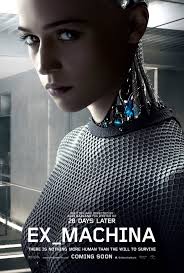
It’s the age-old story of creation: man yearns for the power of the gods. There is something intrinsically god-like about the desire to create life and to develop a new creation. Ex Machina is a film that precisely explores this idea (along with a host of others). In the struggle to create an artificial intelligence, are we motivated to further mankind – or is it a perverse desire to become God ourselves? 

Caleb (Domhnall Gleeson) is a low-level coder working for a Google-like organisation founded by genius inventor Nathan Bateman (Oscar Isaac). Caleb wins a competition to spend a week at the reclusive home of Bateman, a solitary modernist house cumresearch station in the middle of a secluded forest. Nathan wants Caleb to conduct a series of interviews with his new invention – an android named Ava (Alicia Vikander), as part of a Turing Test to ascertain if she is truly intelligent or not. However, over the week, the mysteries of the house darken – and, as Caleb begins to develop strong feelings for Ava, the question arises of who is manipulating whom.

Ex Machina is a confident, fascinating piece of film-making from first-time director Alex Garland, who also writes a screenplay stuffed with ideas. It challenges and provokes discussion, carefully outlining a story of deception and counter-deception, demanding multiple viewings to unpick truth from lie. Garland is also a brilliant chamber-piece director, drawing fantastic performances from his cast, and shooting the secluded house in such a range of styles and angles that it feels both expressive and claustrophobic. Ex Machina is an extremely intelligent small-scale discussion piece, which would make as terrific a play as it does a film.

Among its themes is the question of man striving for god-like control. Nathan, a prickly, socially uneasy and unempathetic person, wants God’s mantle – and is willing to treat his creations with the same ruthless indifference, he demonstrates to Caleb, and the users of his search-engine. His knowledge of humanity is based on essentially stealing an understanding of our thoughts and desires from our search histories, so creating artificial intelligence is simply a progression from the control he already has.

It’s especially creepy that the androids Nathan creates are all attractive young women. Throughout, the film explores the attitudes men have to women. To Nathan, it’s increasingly clear they are objects. He proudly brags about how Ava is both sexually attractive and fully capable of experiencing sex. He treats his housemaid (and sexual partner) Kyoko with a contempt bordering on outright cruelty. Nathan is possessive – and you suspect it’s logical to him to make the first in the next generation of his perfect race as a woman, subservient to him.

Caleb has a healthy but romanticised view of women –he wishes to see himself as white knight, sweeping in to save the woman he loves. He has a lovestruck, teenage protectiveness and devotion towards Ava – qualities, the film suggests, make him ripe for manipulation (the question being from whom). Caleb’s entire attitude towards women is protective – he is increasingly disgusted by Nathan’s vileness – but still in its way paternal. Caleb is naïve and strangely innocent, prone to hero worship – and his initial devotion to Nathan slowly transfers to Ava.

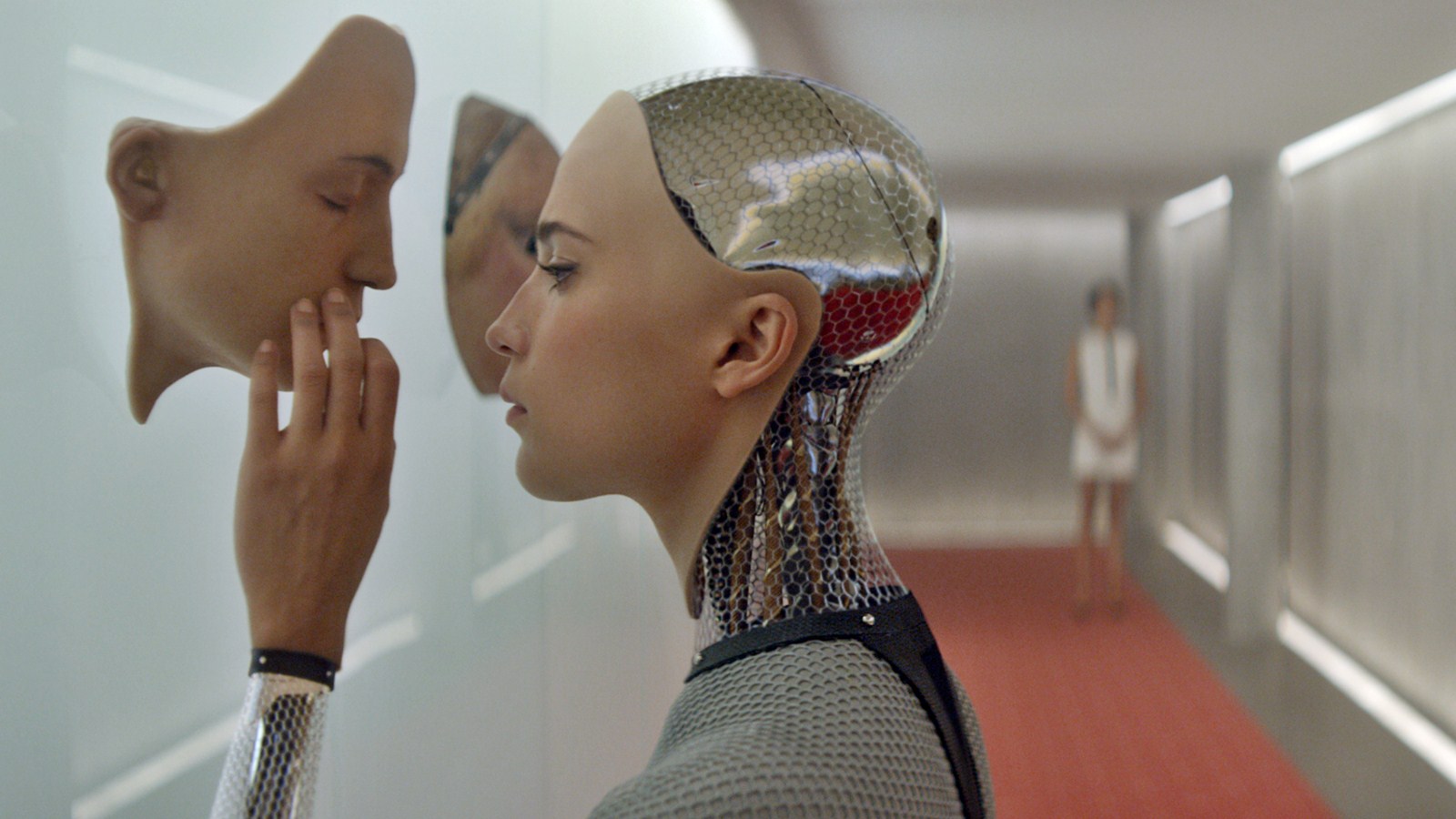
A lot of this works because Alicia Vikander’s Ava is such a fascinatingly elliptical figure. Vikander and Garland skilfully leave you guessing: just how human is Ava? Under observation from Nathan, her discussions with Caleb seem cold and functional. During the many brief power cuts that blight the lab, when they are alone from CCTV, she appears to be far more emotional and tender. But what does she feel for Caleb? Is it genuine feeling – or an approximation designed to draw Caleb in? Her desire for freedom is a genuine human feeling – but how is she going about this? In scenes where we glimpse her alone, Vikander’s movement and expression are neutrally unreadable. It’s a fascinating superb performance from Vikander, both tender and gentle and also unsettling and creepy.

The script never loses its way, and never gets overwhelmed by cheap thrills. There are moments of violence and danger – and the ending of becomes increasingly dark – but it all seems a very natural progression. Because the ideas of seeking freedom from oppressive masters – and mankind looking to abuse the powers of the gods over their creations – feel very real and true. These are ideas that are endlessly fascinating – and the film explores them in brilliant detail, without ever flagging, becoming bogged down in tedious discussion, or letting its ideas overwhelm the plot.

Ex Machina is a fascinating film, brilliantly acted – Isaac and Gleeson are quite simply superb as two very different tech geeks, struggling with ideas about humanity they can scarcely begin to understand and express. The effects to create Ava are extraordinary (and Oscar-winning). Alex Garland makes himself as a director of true promise – and Ex Machina is a film that can take its place as one of the compelling, intelligent and intriguing science-fiction films of the 2010s.

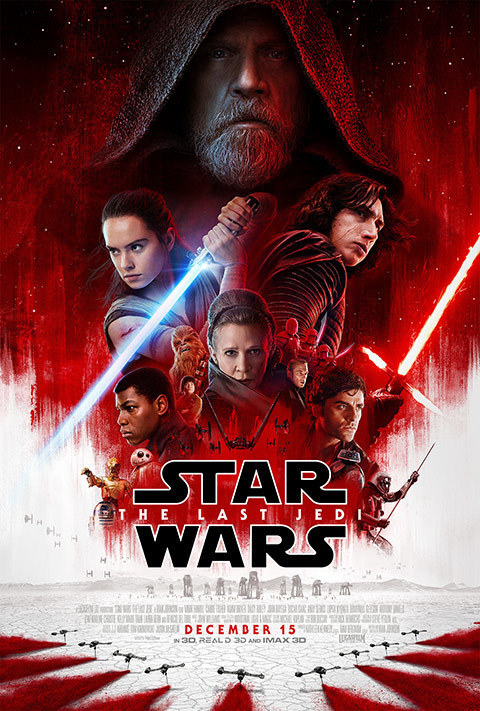
Star Wars: The Last Jedi (2017)


Could Daisy Ridley be The Last Jedi in this controversial new Star Wars chapter

Director: Rian Johnson

Cast: Mark Hamill (Luke Skywalker), Carrie Fisher (General Leia Organa), Adam Driver (Kylo Ren), Daisy Ridley (Rey), John Boyega (Finn), Oscar Isaac (Poe Dameron), Kelly Marie Tran (Rose Tico), Andy Serkis (Supreme Leader Snoke), Lupita Nyong’o (Maz Kanata), Domhnall Gleeson (General Hux), Laura Dern (Vice Admiral Amilyn Holdo), Benecio del Toro (DJ), Gwendoline Christie (Captain Phasma), Anthony Daniels (C-3PO), Frank Oz (Yoda)

Spoilers! OK I’m really trying my best to not have too many spoilers in here, but you know it’s pretty much impossible. So you should do what I do and go to the see the film knowing almost nothing about it. That would be much better than reading any reviews!

It’s pretty clear the Star Wars franchise is going to be with us for some time. So eventually it’s going to have to move past telling similar stories, with familiar characters, in very familiar settings, and branch out into something new and a bit more daring. Star Wars: The Last Jedi is an attempt to do this. Is it completely successful? No, probably not. Does it try and push the franchise into a slightly new direction? Yes it does.
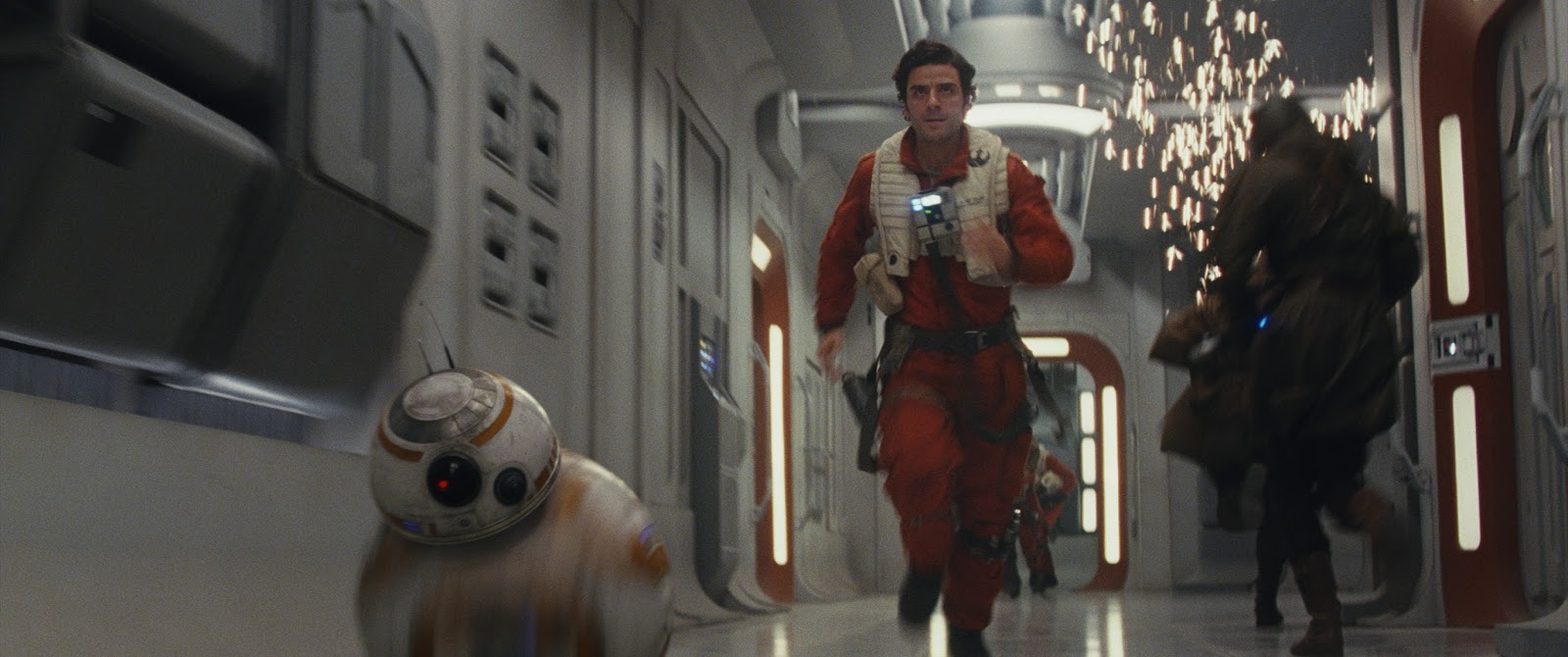
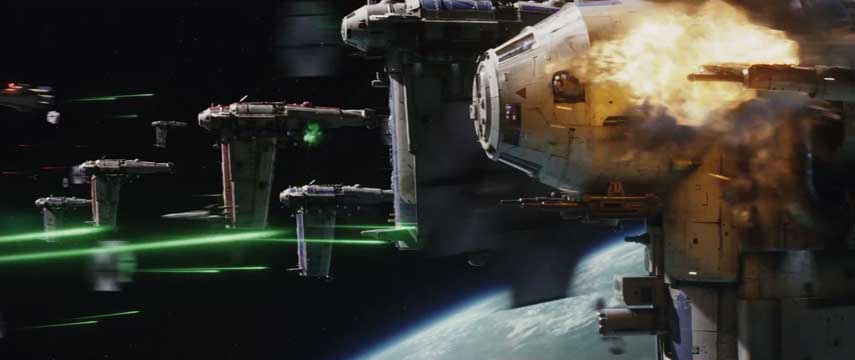
The film starts moments after the end of The Force Awakens. Rey (Daisy Ridley) has met with Luke Skywalker (Mark Hamill) on the remote planet he has spent the past decade hiding on. She believes (as do we!) that he will train her in the ways of the Jedi – instead he tells her to leave, and firmly states that the Jedi are a failed organisation that don’t deserve to continue. Meanwhile, during a speedy evacuation of the resistance base – covered by a suicidally reckless military operation by Poe Dameron (Oscar Isaac) that costs the lives of dozens of resistance ships and pilots – General Leia Organa (Carrie Fisher) is incapacitated, and the surviving rebel ships find themselves relentlessly pursued by the First Order. While the new leadership of the resistance seems to be offering no alternatives, Poe and Finn (John Boyega) hatch a plan to travel to a distant planet and recruit a codebreaker, to help them hack into the First Order flagship and disable the tracker it’s using, allowing the fleet to escape.

The Last Jedi is a film that has had a mixed reception from the fandom. After spending a couple of days thinking about it, this might be because the film so completely inverts expectations and refuses to play it safe. It’s a film about loss and disillusionment, but also about hope against adversity. It would have been very easy to transform Luke into a new Yoda, to make Poe and Finn heroic guys whose actions save the rebellion over the heads of their stuffed-shirt commanders. To build Kylo Ren further towards a redemption arc. These are all things you could expect – none of them happen.

Subverting these expectations has angered a lot of people – fascinatingly the same people who complained The Force Awakens was too similar to Star Wars. So I guess that kinda shows you can’t keep the Internet happy – so why even try. The main issue has been the re-imaging of Luke Skywalker. The man the first trilogy presented as the universe’s bright-eyed-boy, our new hope: here he’s a bitter, depressed man who has lost hope and his love for the Jedi. He’s a man who confesses to dark thoughts, who it transpires considered acts of murder, who has failed at almost everything he’s touched since the conclusion of Return of the Jedi. This is a big turnaround for the franchise’s hero, and yes it is jarring. Is this what people expected after the end of Force Awakens? It sure ain’t.

But, after the play-it-safe Rogue One and the thrilling remember-what-you-used-to-like-before-the-prequels joy of The Force Awakens, the franchise needed something like this. A shake-up, a repositioning of the universe. It’s not always bright and hopeful, and our heroes are flawed people who make huge mistakes. It’s in many ways a logical extension: if Rey is the new hope, than something must have gone wrong with the old hope. Luke has failed totally in the same way both his mentors (Yoda and Obi-Wan) did – he encouraged and honed the viper-in-the-nest.

As that viper-in-the-nest, we’ve got the terrifically complex Kylo Ren. Ren’s path in this film is the most inverted, unexpected and unusual development in the series so far. Adam Driver was superb in Force Awakens, and he’s great here once again as a very different type of villain. Ren is strong in the force, but in almost every other way he’s hugely weak: a sullen, moody man-child, straining for greatness, a tearful brat easily led, driven by his emotions, trying to take on a mantle of greatness he is psychologically ill-equipped for. He seems barely aware of what he wants from life, except for a vague wish to pull the world down – like any teenager, angry at his parents, which is what he is.

Pulling the world down seems to be Rian Johnson’s aim as well. An early attack wipes out the resistance leadership – Admiral Ackbar! No! – and the resistance itself is eventually reduced to a single ship, desperately running from the far stronger First Order. Never mind Empire Strikes Back, the resistance has never been so pummelled, its military achievements so minor. Even their one victory in the film – the destruction of a fearsome First Order ship – carries such a huge cost of men and equipment that Leia strips Poe of his rank for even attempting it. Thereafter, the only victory the resistance can hope for is to survive. No other Star Wars film has ever allowed such monumental failure to be the main plotline for our heroes. Johnson is clearing the decks and resetting the tables – he even wraps up lingering mysteries from The Force Awakens with such abruptness you wonder if he wanted to kill parts of the Internet dead.

Failure also ekes through the Poe/Fin subplot. Every single decision these characters take in this film is wrong, misguided, hugely costly or all three. If the film does have a major flaw it’s that Finn’s journey to the gambling planet is a cul-de-sac of plot development, that could have easily hit the cutting room floor and probably cost the film very little indeed. It never really goes anywhere, other than to allow Johnson to make some points about arms traders selling weapons to both the First Order and the resistance. It also introduces into the mix Benecio del Toro’s fantastically annoying, overly-twitchy performance as the hacker DJ – Del Toro seems to be getting more and more prone to “Deppism”, where a good actor succumbs to twitches and quirks rather than acting.

What is most interesting about this plot-line though is its very pointlessness. The plan (major spoiler here) doesn’t work at all, in fact it leads to many, many, many more resistance lives being lost, and wrecks Hondo’s secret plan which would have saved everyone’s lives. The film doesn’t quite have the courage to pin the blame for this disaster directly on Poe and Finn. In fact the film gets a bit confused here about the message it wants Poe to learn – it’s something about costly actions in war not being worth mindless sacrifice, but then this is a film that at its conclusion celebrates another character making a huge sacrifice. Unclear? A bit. Anyway: the point however is: you can’t imagine previous Star Wars films allowing our characters to so completely fuck up here as Poe and Finn do – and give them no moment of triumph to make compensation later in the film. 

What this does though, is Rey to be repositioned at the real hope – although the film goes about inverting her as well, with several suggestions that she is far more open to the dark side of the force might have thought. Daisy Ridley is very good as Rey, juggling conflicting pulls on her personality, her desire to redeem both Ren (and there is a great sexual chemistry between these two) and Luke, and the different directions these desires pull her in. Rather than seeing the force as a binary good/bad thing, Rey seems to want to find a balance between the two of them. Johnson explores this via a number of visually interesting scenes, not least Rey in a cave from the dark side, full of endless reflections. It’s an unexpected re-working of the Luke/Yoda relationship and works very well.

The Last Jedi is not a perfect film. For all its interesting inversion of old tropes, and the lack of triumph it allows our characters, it’s way too long. It could easily have been cut down by half an hour at least. Although some plots are designed to be expectation-defying dead-ends, they still end up feeling less than interesting (and ripe for fast forwarding on later viewings). Despite an attempt to include some scenes of deliberate humour, the film has less spark and joie de vivre than many of the other entrances in the franchise. Structurally, it’s not always clear what the timeline of events is between the different locations (weeks seem to go past for Rey, while only hours go by in the rebel fleet), and some of the points the film wants its characters to learn are unclear or hard to understand (I genuinely don’t know what Poe was supposed to have learned by the end of this film).

Its strength though are the characters – building on the groundwork from The Force Awakens(and very differently from Rogue One) this film is full of characters we care about. John Boyega and Oscar Isaac continue to excel as Finn and Poe (and still have great chemistry, shippers…) – Boyega in particular is quite the star. Ridley and Driver are superb. Hamill was never the strongest actor in the world, but he gives his most complex performance yet as Luke. The film mostly rattles along very nicely, and has plenty of action and excitement as well as “race against time” structure that works very well. Interestingly, its main handicaps are that it defies expectations almost a little too much (so it demands second viewing and reflection) and that it’s overlong and at times unclearly structured. But as a step forward for the franchise it’s still a good thing. A new hope indeed.

Coda: The film’s main sadness is the premature death of Carrie Fisher. One problem watching the film was that two or three times I was convinced that the film was about to show us Leia’s death. Johnson avoids changing the film from its original plan (Episode IX was intended to be “The Leia film” after films focusing on Han Solo and Luke), but it does seem a shame that Fisher’s good work wasn’t crowned by the sort of iconic final scene she deserves. The Episode IX planned will now never happen – but it would have been great to see Fisher really head centre stage in that film. RIP.

Mad Max: Fury Road (2015)


George Miller’s Mad Max: Fury Road – a crazy car chase film

Director: George Miller

Cast: Tom Hardy (Max Rockatansky), Charlize Theron (Imperator Furiosa), Nicholas Hoult (Nux), Hugh Keays-Byrne (Immortan Joe), Rosie Huntington-Whiteley (The Splendid Angharad), Nathan Jones (Rictus Erectus), Riley Keough (Capable), Zoë Kravitz (Toast the Knowing), Abbey Lee (The Dag), Courtney Eaton (Cheedo the Fragile), Josh Helman (Slit)

Sometimes films seem designed to give you a visceral thrill, to throw you into an experience and see whether you sink or swim. To pull off that sort of hard-edged momentum, you need a film-maker skilful enough to create an addictive energy that never slackens and never gives you a second to question the film while it’s going on. Mad Max: Fury Road has such a director in George Miller, and its demented, high-octane excess, married with a film-making style that felt modern, vibrant and grounded in reality, surprisingly made it one of the most acclaimed films of 2015.

In a post-apocalyptic future Australia, the world is a ruined desert and basic requirements like water, greenery and fuel are more valuable than anything. In a rocky outcrop, cult-leader Immortan Joe (Hugh Keays-Byrne) rules one of the few populations by controlling access to the water. “Road warrior” Max Rockatansky (Tom Hardy) is captured by Immortan Joe’s warriors and put to work as a “blood bag” to transfuse into Immortan Joe’s warriors. However, this coincides with a planned escape by Immortan Joe’s wives (the few remaining women capable of conceiving children). Led by road warrior Imperator Furiosa (Charlize Theron), the women flee to find a mysterious paradise in the wilderness. Cue an almighty chase and running battle between Furiosa’s road carrier and Immortan Joe’s forces, desperate to reclaim the wives.

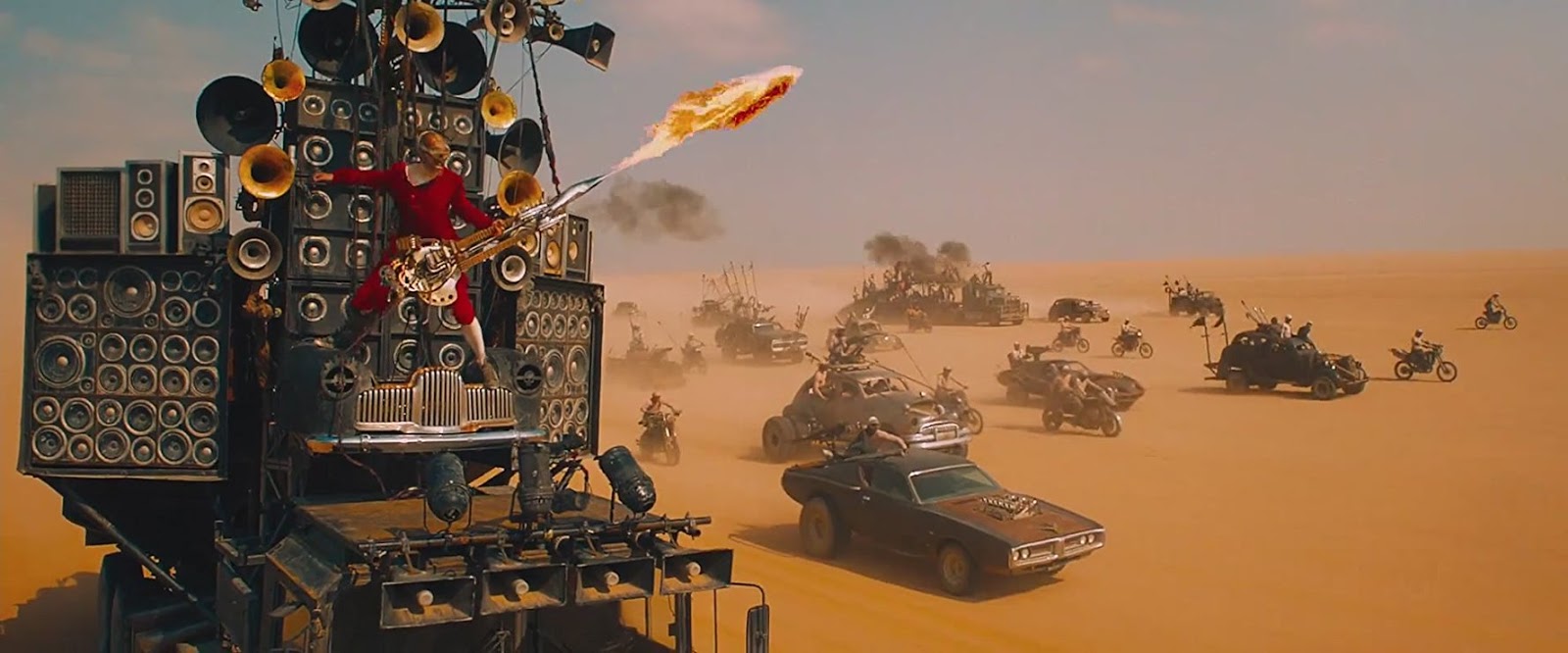
Mad Max: Fury Road is a bizarre, extreme, surreal thrill ride, a high-octane road chase, crammed with action, thrills and dynamism. It’s directed with extraordinary vibrancy by George Miller, who makes it fresh and scintillating. Miller crams the action and design with an explosion of style. Everything is amped up to 11, from the look to the characterisations and motivations. But what makes this such a well-directed film is that Miller shoots much of it with careful, professional clarity: so many other films would be cut with a frantic craziness, but this has a polished traditionalism to it. Basically Miller knows the actual content of the story is “insane” enough that he doesn’t need to gild the lily with bizarre, swooping camera angles or choppy editing. 

That’s partly why this film has had such a strong positive reaction. While being insanely OTT, it’s actually quite an old-fashioned piece of film-making, and it looks like a lot of it was shot for real on location, using real practical stunts. This may or may not be the case, but it certainly looks like this. And in an era where so many action films are about superheroes, and crammed with special effects, to have a world where things feel grimy and real, where the objects we are watching feel like they exist, is like a breath of fresh air. The design throughout the film accentuates this sense of reality. It makes things feel like they have depth and force. It immediately adds stakes to the action.

That action takes place in a unique looking world. The visuals in this film are crazy. The design of Immortan Joe’s half-nude soldiers, with their silver paint aerosol and petrol smeared faces, is terrifyingly cultish. The look of the many different vehicles is immediately striking, with each being clearly of the same world, but each distinctive in look, like some Wacky Races. The steampunkish mix of cobbled-together remains of technology to create the cars and trucks is brilliantly done. It’s a film that looks like nothing else, and shot with radiant streaks of yellows and blues, mixed with scenes shot in almost painterly black and white. It’s an explosion of style, but not straining too hard to force itself upon you like so many films do. 

The film also has a simple structure and storyline, that allows it to focus on the action. It’s slick, steamlined and very focused. The villains are clear, and their motivations easy to understand. They are presented with a certain depth, but their essential villainy is easy to have a gut instinct against. This also helps us bond with our heroes – despite the fact that most of the wives have only the most briefly sketched of characters. But we totally understand their position, fear and desire for freedom. Just as the film is a primal explosion of “fight or flight”, so are the feelings our heroes carry. Everyone can relate to them.

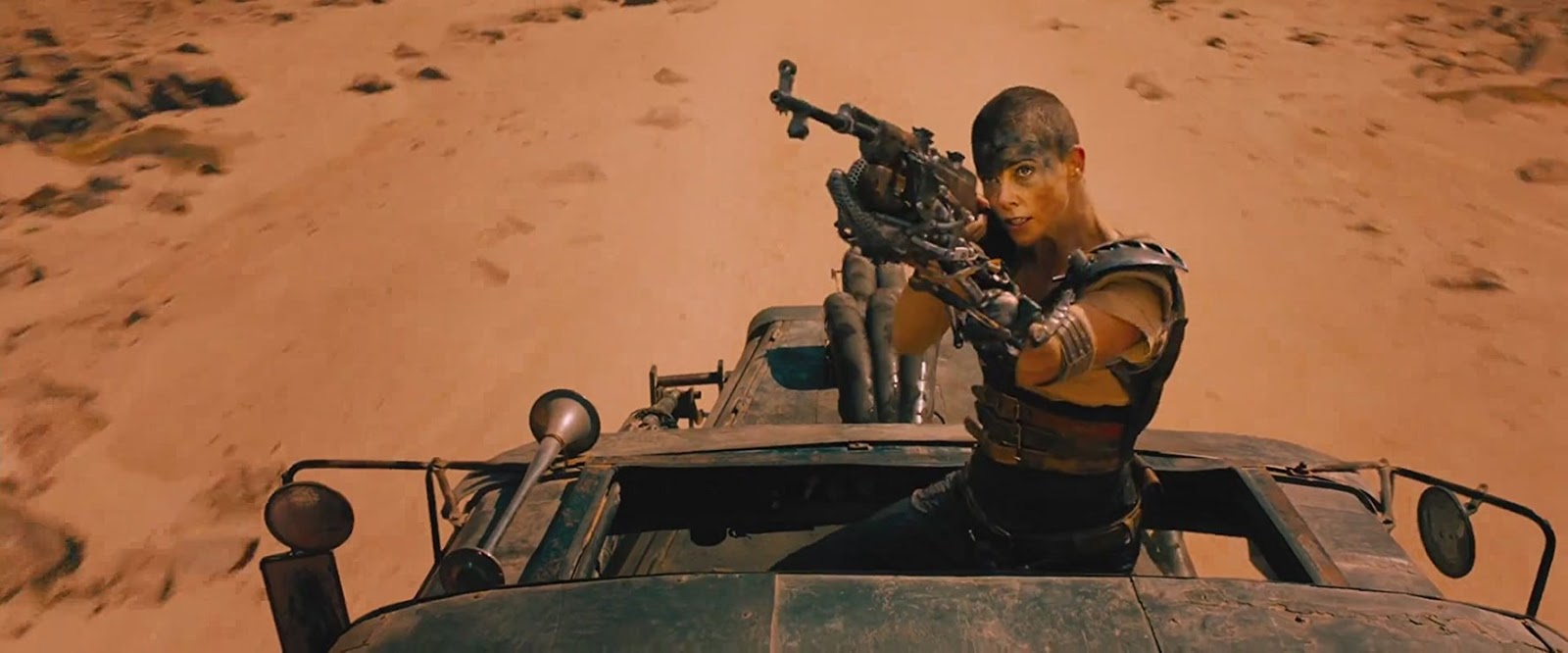
It’s also great that this is an action film where the women largely drive (literally!) much of the action. The film may have the Mad Max name on it, but the true lead of the film is Furiosa. It’s her actions that drive the film, it’s her conflicts that are at its heart, the film is her journey and Max is largely along for the ride (again literally!). Charlize Theron is very impressive in the lead, a strong warrior woman, but also someone with a buried poetic soul and a clear emotional arc. Tom Hardy delivers as the grizzled Max, but this is very much Theron’s film.

Mad Max: Fury Road is an exciting and engrossing film. But it’s made with such professional inspiration on the visuals that it invites people to read into it a lot more depth than I think is actually there. It’s got such old-fashioned control and brilliance to it, while being so explosive and vibrant, that it’s tempting to read into it a thematic complexity. Let’s be honest, this is a chase movie. It’s a hell of a chase movie, but it’s a chase movie.

It may be set in a world of post-apocalyptic totalitarianism, but it’s not trying to tell us anything hugely original about what such a world may be like. It creates such a world with huge inventiveness, but it’s not an enlightening film. Similarly, this is a film that places women at the centre of its action, but I’m not sure you could call it a film that has much to say about feminism. Most of the women in this film are still defined primarily by their breeding abilities. Furiosa may be the leader, but most of the rest of the women are under her protection. The film does something different with gender, but it also does a lot of quite traditional things. 

It’s really tempting to see great symbolism in such a dynamic and striking piece of film-making. But thematically there isn’t much there. Miller directs a film that is brilliant too experience, so brilliant you expect there to be more at its heart. In truth there isn’t really – it’s largely what it appears to be on the tin. There’s nothing wrong with that though. You just need to know what you are going to get. This is not some great game changer of a motion picture, that will reinvent and reposition the genre. It is a skilfully made and compelling chase movie, where a group of people run to a point, turn around and head back, being chased all the way. It’s shot with a near poetic, old-school brilliance – but it’s still just a chase movie. Accept it as that – a high-octane action thriller – and you will be swept away. Look to it for the thematic depth some have claimed it carries and you will be disappointed.

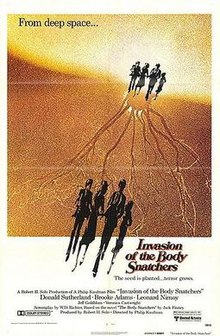
Invasion of the Body Snatchers (1978)


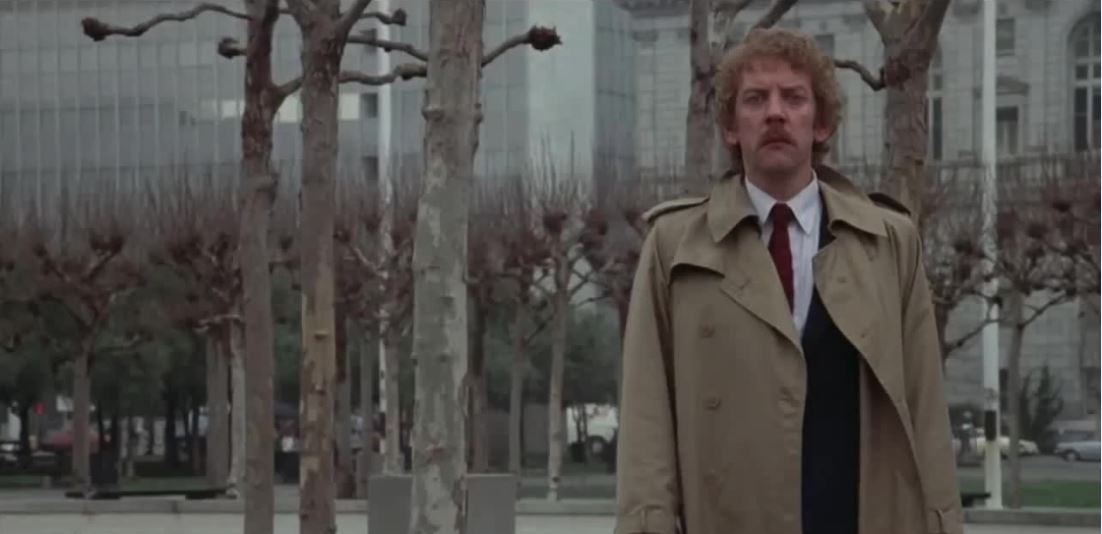
Donald Sutherland is lost in the soulless world of Invasion of the Body Snatchers

Director: Philip Kaufman

Cast: Donald Sutherland (Matthew Bennell), Brooke Adams (Elizabeth Driscoll), Leonard Nimoy (Dr David Kibner), Jeff Goldblum (Jack Bellicec), Veronica Cartwright (Nancy Bellicec), Art Hindle (Dr Geoffrey Howell), Don Siegel (Taxicab Driver), Kevin McCarthy (Running Man)

Sometimes, as we look around our office-based world, it’s hard not feel that most of it is taking place on a weary treadmill. That we are going through the motions with no engagement or feeling, that we are all cogs in the same machine. Invasion of the Body Snatchers, like all great science fiction films, taps into this sense of individuality being lost in our modern age, and mixes it with a brilliant dose of Cold-War paranoia. Like much brilliant science-fiction, it offers a window on our world that makes us pause and reflect on our own lives.

Matthew Bennell (Donald Sutherland) is a health inspector (has there been a less sexy job for a hero?) in San Francisco. One day his colleague Elizabeth Driscoll (Brooke Adams) confesses to him that her boyfriend, dentist Geoffrey (Art Hindle), has changed so much that he feels like a completely different person. Turns out she’s not alone in the city – many people are reporting their loved ones have become distant and changed. While Matthew’s friend, celebrity psychiatrist Dr David Kibney (Leonard Nimoy), laughs off their concerns, Jack (Jeff Goldblum) and Nancy (Veronica Cartwright) Bellicec are keen to listen – especially when they find a copy of Jack growing in their home. Can the people of San Francisco really be being replaced by copies in an alien invasion?

Invasion of the Body Snatchers is not just a great remake, it’s a great piece of film-making in its own right. It takes the ideas of the original and ramps them up into a Nixon-era paranoia fest, to create a creepy and unsettling film. It’s a film that perfectly understands the one thing all people value, perhaps more than any other, is their individuality and ability to feel and experience emotions. These are the two things the Pods take from you – in all other respects, the people are unchanged, they’re just unfeeling drones. 

What Philip Kaufman does really well is fill the film from the start with unsettling moments, and hints that things are wrong. The film opens with eerie visuals as the Pods arrive from space and slowly infect the vegetation of the planet. Unusual camera angles and lingering shots pick out people in the frame, behaving suspiciously robotically. Robert Duvall has a wordless (uncredited) cameo as a priest on a creaking swing in a playground – the sound and visuals both insanely unnerving, especially considering Duvall’s wordless intense stare. 

Pod people go about their work of taking over the earth with a relentless, eerie silence. Do they cling to silence so much, so that their piercing screams when they detect a rogue human can be heard? Late in the film, we see several instances of Pod people, freeze, point rigidly at an unconverted human, and then let out an inhuman shriek (it’s unsettling beyond belief). When pursuing humans, the run with a wild pack abandon. Throughout the film, the camera hovers on moments or scenes, asking us to wonder what’s going on. A floor cleaner mindlessly moves his cleaner across the floor and the camera lingers on him for what feels like ages – is he a pod person? Or is he just an ordinary Joe going about his work? Kaufman sprinkles moments like this throughout the film.

He and screenwriter WD Richter also tap into a sadness of the late 1970s – the world of the hippie, where it felt the world might change, is passing. Matthew, David and Jack all feel like old college buddies – you can imagine the three of them hanging out at Woodstock. Jack and Nancy have clung to their hippie lifestyle, but are reduced to running a mud-bath and trying to peddle Jack’s poetry to the bored and uninterested. David has repackaged himself into a soulless, impossibly vain and self-important TV psychiatrist, dishing out cod-advice and lapping up praise at swanky book launches. Matthew is a slightly grubby civil servant. Kaufman and Richter do a great job of suggesting the younger, more idealistic roots of these characters with minimal dialogue and action. It adds a rich theme to the film – are the Pod people and their mechanical, soulless routine just where the human race is going anyway? Is it any coincidence that the invasion takes places in hip San Francisco?

Kaufman shoots the film with an eerie off-kilterness, helped a lot by Michael Chapman’s excellent cinematography. Ben Burtt’s soundscape is also brilliant – from the creak of the swing at the start and the shriek of the Pod people, to the deafening silence late in the film of the almost completely converted San Francisco, as the Pod People go through the motions of their old lives, devoid of emotion. The design of the pods, and the growing replacement humans, is horribly eerie. This creepiness helps hammer home the sense of paranoia as more and more people are replaced by Pod people – leaving us, like the characters, constantly questioning who is “real” and who isn’t? Who can we trust?

Donald Sutherland is the perfect lead for this – he has both a slightly ground-down world-weariness but also a strong sense of maverick individuality. He’s an interesting, challenging actor and he’s very easy to empathise with. A lot of the film’s emotional force comes from the deep friendship (which could perhaps be more) between him and Brooke Adams (also very good). Leonard Nimoy offers a subtle inversion of his Spock persona, taking elements of Spock’s logical coldness and inverting them for both maximum smarm and creep. Goldblum and Cartwright are just about perfectly cast, with Cartwright especially good (and reaffirming her scream-queen skills) as a woman with a surprisingly sharp survival instinct.

Kaufman’s Invasion of the Body Snatchers is easy to overlook in the list of great American 1970s thrillers due to being both (a) a remake and (b) a science-fiction film. But this is an unsettling investigation of an America on the verge of changing from one type of generation to another. It’s unsettling, intriguing and gripping – wonderfully made and very well acted. It’s a film that understands paranoia, isolation and our love of our own individuality more than many others I can think of. It’s one of the great American 1970s films.

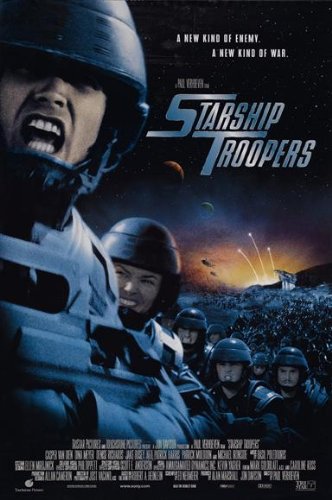
Starship Troopers (1997)


Earth’s military might goes up against space bugs in Paul Verhoeven’s militaristic satire

Director: Paul Verhoeven

Cast: Casper Van Dien (Johnny Rico), Dina Mayer (Dizzy Flores), Denise Richards (Carmen Ibanez), Jake Busey (Ace Levy), Neil Patrick Harris (Carl Jenkins), Patrick Muldoon (Lt Zander Barcalow), Clancy Brown (Sgt Zim), Michael Ironside (Lt Jean Rasczak), Seth Gilliam (Cpl Sugar Watkins)

Every so often, a film uses the tropes of bad films so well, and makes such effective satirical digs, that people initially miss the point of what the film is trying to do. This is pretty much what happened with Paul Verhoeven’s Starship Troopers. On the surface a terribly acted, deeply stupid sci-fi actioner about soldiers killing space bugs, Verhoeven actually created a sharply intelligent, wry satire on the very bombastic militaristic fascism it seems to celebrate. This satirical bent was missed not only by the critics, but also the producers of the straight-to-video sequels the film spawned.

In the 23rd century, mankind has reached the stars. But it’s done so by creating a militaristic, aggressive society, where the young are encouraged to join up to the military in order to become “citizens”. Leaving high-school, hotshot would-be-pilot Carmen Ibanez (Denise Richards) joins up – followed by her boyfriend Johnny Rico (Casper van Dien), in turn followed by Dizzy Flores (Dina Mayer), the girl in love with him. Joining the ground soldiers, Ricco and Flores find themselves as the point of the spear in mankind’s war with the Arachnids (the Bugs), a race of (it becomes clear) intelligent and savage insects on a distant planet.

Starship Troopers isn’t really like anything else: it might well be Verhoeven’s American masterpiece, the perfect mix of his love for extreme gore, violence and sex (filmed with lashings of comic colour and playful glee) with keen social satire, the very ideas he had explored in everything from Robocop to Total Recall. At first glance, Starship Troopers serves up the all-action, gun-toting space battle excitement you would expect from its genre. But Verhoeven not only ramps everything up to 11, he also laces the dialogue and action with a keen satirical bent that hammers home the underlying theme of how war essentially (as Verhoeven puts it) “makes fascists of us all”.

The action is regularly interrupted by propaganda newsreel footage, which stresses the importance of sacrifice for the military effort. The military training camps are almost obsessively focused on brainwashing and reducing the young people in them to cogs in the machine, with safety and welfare as very much a secondary concern (the death of a recruit in an exercise is a concern only because it shows careless leadership rather than because of the death itself). Everyone in the film seems to be a perfect physical specimen. Military lives are thrown away through a combination of arrogance (they’re just bugs, this will be easy!) and incompetence, but never with any feeling of responsibility or expression of regret (though the media works hard to adjust all casualty figures wildly downwards).

The film fires shots at everything in the industro-military complex. The foreign policy of this world is ludicrously aggressive and jingoistic. Despite the spin of the propaganda, it’s pretty clear that humanity has started the war itself. The army is like Hitler’s wet dream – sleek perfect bodies, suicidal self-sacrifice, a complete lack of questioning of any orders or directives, a willing acceptance of corporal punishment. This attitude of violence and unthinking aggression is at every point of society – newsreel footage shows children holding guns with grinning soliders, who then proceed to hand out live ammunition. Later children are shown stomping cockroaches, to cries of the “the only good bug is a dead bug!”. Trials are routinely praised for the brevity (one day between arrest, conviction and execution!). It’s a terrifying world.

What Verhoeven does so well is that, while aware of the multi-leveled nastiness of the world of Starship Troopers, he also makes it a pretty effective straight-war movie. It’s exciting and the action quotient is high. Just like the soldiers in the picture, it’s very easy to see the bugs as faceless opponents which it is easy to feel little regret over killing. The battle scenes are high scale – and of course blackly comic in their extreme gore and bloodlust. But you can still enjoy the action – which is why the film works so well as satire. And also perhaps why so many at the time missed the point. Verhoeven makes this as an enjoyable B-movie, by really effectively using the tropes of B-movies. He turns the trashy B-movie into a sort of art exhibit.

That surely also explains some of the casting. I’m not sure how many of the actors are in on the joke. Certainly Casper van Dien and Denise Richards seem blissfully unaware of the satirical bent under the film. These two wooden actors trot through the sort of banal, by-the-numbers plot arcs and dialogue that fill films like these, with van Dien’s jaw as chiselled as granite and Richards grinning no matter the content of the scene. But their honest woodenness is perfect for the film: a smarter actor would have wanted to tip the wink to the audience, but these guys play it totally straight without even a hint that they are aware of the message underneath.

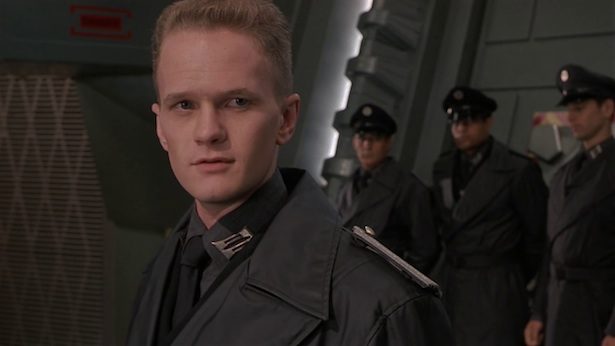
The more satirical element is left to other members of the cast: Michael Ironside has great fun as an almost absurdly fanatical solider, first introduced as a teacher lecturing his students on how the state must come before everything else and violence is the solution to all the world’s problems. Neil Patrick Harris tips a slight nod to the audience as a young man who rises so swiftly through the ranks that by the time we reach the end of the film, he’s a Gestapo-coated secretive colonel. He fits right into the grey militaristic, Nazi design of the military. You can watch all this stuff and simply enjoy the silliness – teenage boys will love this. And when they mature they’ll realise how awful the world it’s presenting is.


Starship Troopers is the ultimate military satire, a film that pushes every single fascist, militaristic society cliché to the limit. The news comes only from state propaganda. Military training involves brainwashing, maiming and slaughter. Education praises anger and violence as a solution to all problems. Verhoeven shoots this all with a grandeur, that pushes the celebration of militaristic violence to the max. 

It’s a film which is brave enough to make its militaristic sequences exciting, to shoot and cut this fascist wet dream with a stirring sense of excitement underpinning all the action. At the end you can celebrate the small victory our heroes celebrate in what is clearly going to be an ongoing war – until of course you realise it’s the victory of a Nazi organisation. The fascist world of the future may bring us sexual and racial equality – but that’s because it’s worked out everyone is needed to feed the grinder. It’s a super-smart satire film that disguises itself as a completely trashy action flick. It’s actually rather brilliant.

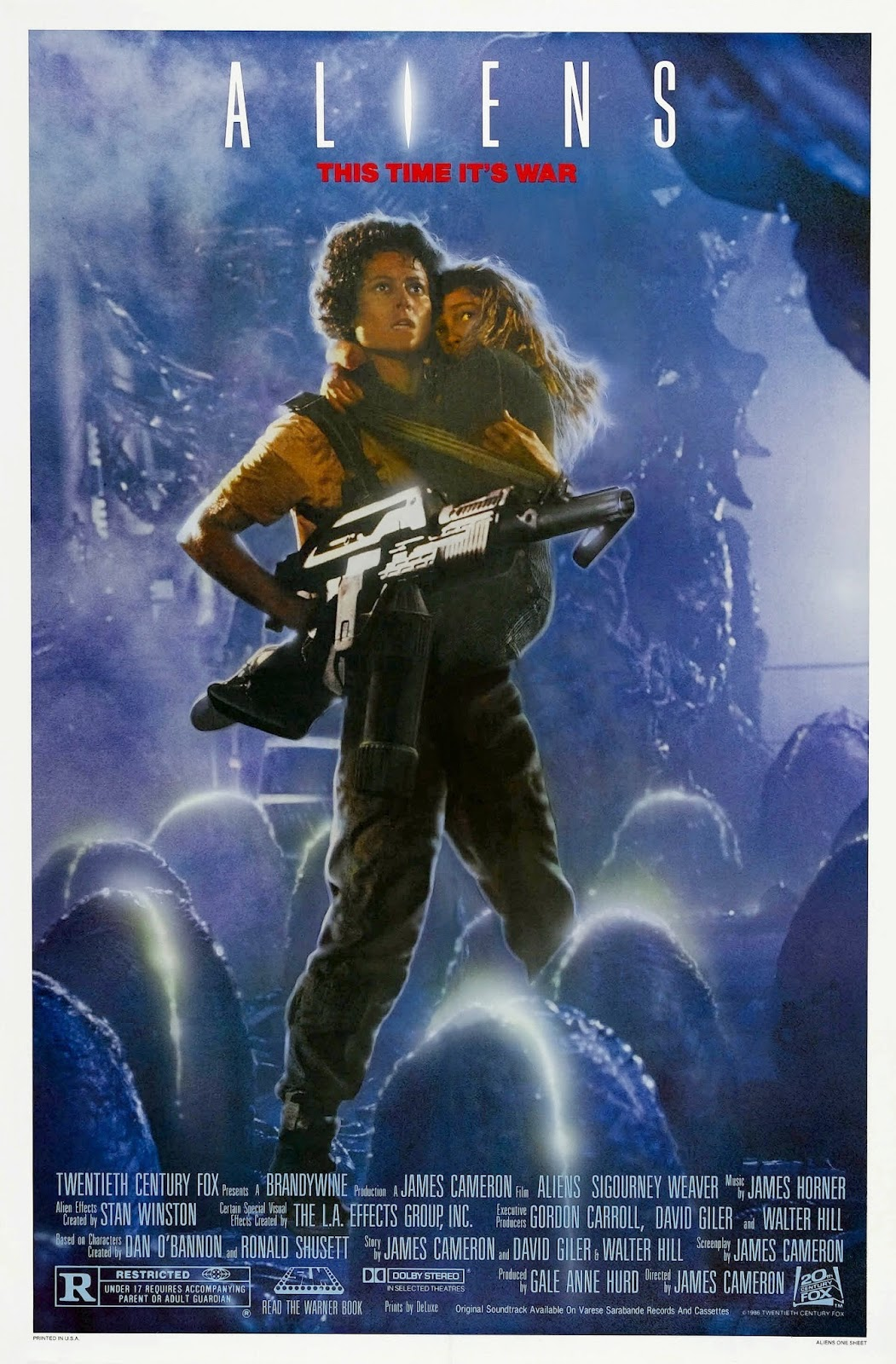
Aliens (1986)


Sigourney Weaver takes on the terrifying alien hordes in Aliens

Director: James Cameron

Cast: Sigourney Weaver (Ellen Ripley), Michael Biehn (Corporal Dwayne Hicks), Paul Reiser (Carter Burke), Lance Henriksen (Bishop), Carrie Henn (Newt), Bill Paxton (Private Hudson), William Hope (Lieutenant Gorman), Jenette Goldstein (Private Vasquez), Al Matthews (Sergeant Apone), Mark Rolston (Private Drake)

When any list of greatest-sequels-ever-made is put together, you get the familiar names: Godfather Part II, Toy Story 2, The Empire Strikes Back – but no such list is complete without James Cameron’s groundbreaking Alien sequel, Aliens. In fact, Aliens is so bloody good no list of great action films, science fiction films or even war films is complete without it. 

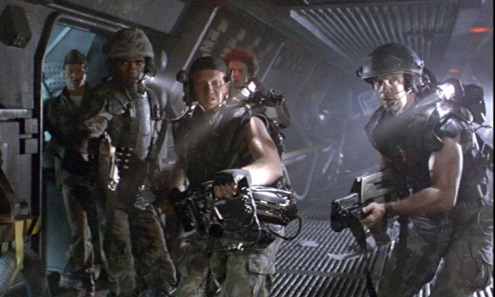
Set 57 years after Alien, Ripley (Sigourney Weaver) is awakened from hypersleep and returns to Earth. Her warnings of the hideous Alien threats on LV-426 go unheeded by the soulless Weyland-Yutani company – until all contact is lost with the terraforming colony there. At which point, company man Burke (Paul Reiser) recruits a troop of marines to head to LV-426 on a rescue mission. However, the over-confident marines find themselves on a devastated base with only one survivor, a traumatised young girl called Newt (Carrie Henn), and are quickly out of their depth fighting against a ferocious enemy whose tactics and motivations they don’t understand. 

Can this really only be the second large-scale movie James Cameron ever made? The guy may be (allegedly) a demanding, perfectionist dick, but you are left in no doubt of his mastery of genre film-making – or the thematic depth and emotional weight he can bring to what in the hands of thousands of other film-makers would have been a cheap-shock, monster-schlock thriller. Aliens is quite simply magnificent, one of the best Hollywood films you are likely to see. I’ve seen it I don’t know how many times, but it never, ever loses its impact. It’s always gripping, the action is always compelling and it never ever fails to scare and thrill you. 

Cameron’s trick is that he is so good at build-up. Nary a single Alien is seen on screen for the best part of an hour. Instead Cameron invests time in establishing the characters and their relationships. We begin to understand each of the marines as individuals. We feel our empathy for Ripley grow as we discover she has lost her daughter while in hypersleep, that she still feels traumatised by the events she witnessed, but that she has a strength of character, integrity and will that helps her weather the storms she has endured. You understand these characters so well – and the world that they inhabit – that when they start getting torn apart by slathering xenomorphs, it carries real weight and impact.

All the weapons the marines have and their tactics are carefully explained. We spend a good 15 minutes in the base itself before any Aliens arrive: the entire complex is quickly established as basically a huge haunted house. The wonderful production design makes it feel like the industrial zone on The Crystal Maze if a desperate hand-to-hand battle had been fought there (it’s also great that Cameron leaves what actually happened there to our imagination). Cameron has a mastery of small details – so the marines’ motion detectors have an electronic bleeping that increases in intensity as movement gets closer. It’s a brilliant tension builder that works time and again. The over-confident marines also makes their later fear all the more realistic and strangely affecting.

Then of course when things do kick off, it goes absolutely mental. Not for nothing is poor Hudson (a career establishing performance of bravado hiding fear from Bill Paxton) screaming “It’s game over man! GAME OVER!” after the first foray into the Alien nest. Paxton by the way has a perfect part in this film – every single line is endlessly quotable, largely because of his pitch-perfect delivery (I love “What so you mean they cut the power? They’re ANIMALS man!”), and despite being a cocky blow-hard, you end up loving him. Jenette Goldstein is similarly excellent as an almost impossibly hard-as-nails marine – she’s full of good advice, such as “Just nerve gas the whole fucking nest”.

The rest of the film is a helter-skelter of high octane, perfectly paced action. Every single sequence in this film is a stand-out, with stakes that feel impossibly high. Cameron really understood just how terrifyingly, inhumanly, remorselessly brutal the Aliens are – they are relentless and brilliantly single-minded, as well as having a ruthless cunning. They look and sound incredibly unsettling, and their darker, more animalistic design works wonders. It’s actually amazing, considering how this film is over 30 years old, that the Alien effects look better here than in Ridley Scott’s Alien: Covenant. Technically this film hasn’t aged a day – even the model work makes the film look real and lived in, rather than electronic and shiny.

James Horner’s score is sombre, unsettling and foreboding. It makes brilliant use of near ambient sound, before building into crashing, threatening crescendos in sequence with the action. Mix that in with the film’s brilliant sound design, and you’ve got a marvellous soundscape. The Aliens sound unnatural in their hissing fury. The military equipment is just the right side of futuristic and modern. The lighting is a dark mixture of shadows and reds. Everywhere seems unsettled. The editing is hugely influential – fluid, calm, brilliantly communicating the story and the geography of the action, everything.

Cameron’s greatest triumph, though, is to ground the story so well in a sense of family. The marines, for all their arguments and feuds, are a functional family unit – part of the reason William Hope’s useless Gorman struggles is because he doesn’t have the confidence to impose himself on such a tight group. But the real family theme is the mother-daughter relationship between Ripley and Newt. This is a bond that grows throughout the film, and feels really genuine and warm. It’s also a relationship that gives an emotional basis for all the actions we see. Cameron recognised that we can all relate to a basic family and that protecting this against the Aliens is what defines us in relation to them.

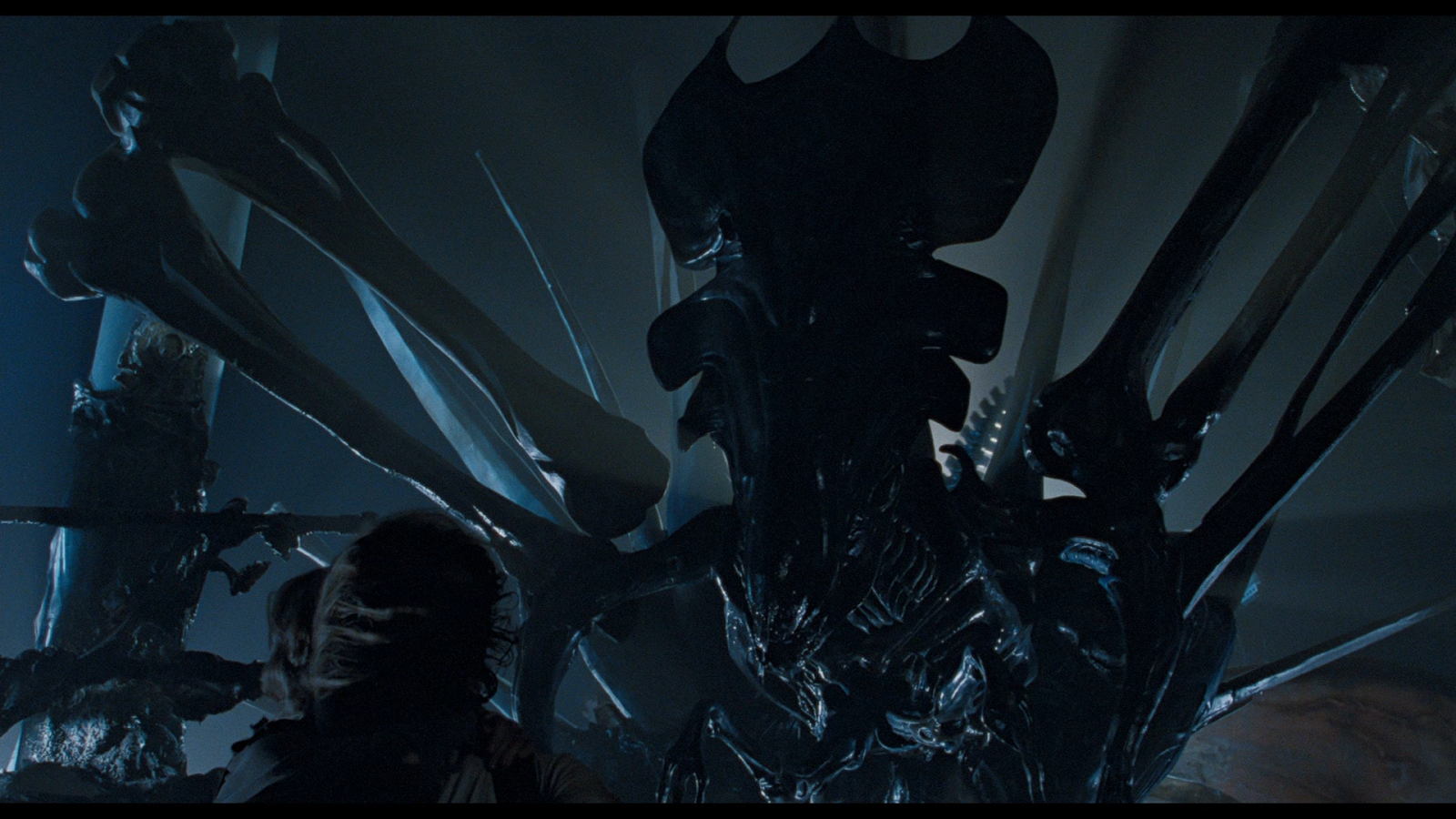
Of course, it also allows some clever thematic contrasts later when we are introduced to the Queen Alien. While it would be easy to blame this film for the tired cliché of the “Alien Queen” which we’ve seen time and time again, it’s used really well here. The Aliens may be conscienceless killers, but they’re still someone’s children: and we get a really neat contrast between Ripley and the Alien Queen’s determination to protect their children (as well as the best use of the word “Bitch” until Molly Weasley in Harry Potter).

The film’s secret weapon however is Sigourney Weaver’s outstanding performance in the lead. Not many actors get Oscar nominations for sci-fi or action films: Sigourney Weaver is one. And she deserved it because this is an iconic performance. Ripley isn’t an action hero – she’s strong and resourceful and she survives because of that. She’s not skilled at expressing herself or communicating – largely because it’s clear she’s suffering from PTSD. She completely fails to win over the corporate board with her story, and it’s clear the marines don’t hold her initial briefing in high regard. But even before they arrive on the planet, she’s beginning to win their respect. By the time of the initial encounter, her principled, strong-willed, sensible resourcefulness effectively makes her the expedition’s leader. 

Alongside this, Weaver does a fantastic job with Ripley’s growing maternal feelings towards Newt – the bond between these two is immediately clear, and her maternal protection of Newt becomes one of her core motivations. With Weaver, Hicks and Newt we end up with a strange family at the centre – a curious closeness that makes the film feel unique. It adds a strong emotional core to the film, and gives Weaver a depth to play with that enlightens her relationships throughout the film – she’s clearly got a strong protective feeling, and her desire to protect the marines is as much a part of this as her feelings for Newt.  It’s a terrific performance, full of feeling and strength. She fully deserved the Oscar nomination – arguably she could have won.

Aliens is one of those landmark films that never lets you down. Cameron’s direction of it is pitch-perfect, there’s hardly a fault in the whole film. It’s a masterpiece of design and construction and totally gripping from start to finish. It’s not only one of the best sequels of all time, as a purely enjoyable and affecting piece of cinema it may well be superior to the original. Even more than the first film, it made Ellen Ripley one of the great iconic characters of cinema. It will never get old and it’s never going to get tired. If you haven’t seen it, you really, really should.

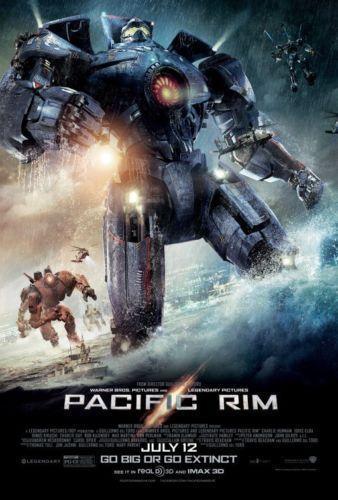
Pacific Rim (2013)


Idris Elba, Charlie Hunnam and Rinko Kikuchi are cancelling the Apocalypse in Pacific Rim

Director: Guillermo del Toro

Cast: Charlie Hunnam (Raleigh Becket), Idris Elba (General Stacker Pentecost), Rinko Kikuchi (Mako Mori), Charlie Day (Dr Newt Geiszler), Max Martini (Hercules Hansen), Robert Kazinsky (Chuck Hansen), Ron Perlman (Hannibal Chau), Clifton Collins Jnr (Tendo Choi), Burn Gorman (Dr Gottleib), Diego Klattenhoff (Yancy Beckett)

Film can be a beautiful and thought-provoking art-form. But sometimes, gosh darn it, you just want to leave the works of the great artists behind and watch a big, loud film in which giant robots hit giant monsters. Over and over again. In lurid, glorious, high colour detail. That’s pretty much the life and career of Guillermo del Toro. Make something like Pan’s Labyrinth. Then follow it up with something so wildly, tonally different you won’t believe it’s from the same guy: Pacific Rim.

In 2013, huge monsters (Kaiju) emerge from an interdimensional portal at the bottom of the Pacific Ocean. As they destroy cities left, right and centre, mankind is pushed to the limit. Eventually they develop Jaegers – giant robots controlled by two pilots, whose minds are linked together and used to drive the Jaeger’s movements. In 2020, Raleigh Becket (Charlie Hunnam) leaves the Jaeger force, commanded by General Stacker Pentecost (Idris Elba), after his brother and co-pilot is killed by a Kaiju. By 2025, the world governments decide to cut the funding of the Jaeger programme – forcing Pentecost to call Becket out of retirement and team him with his adopted daughter Mako Mori (Rinko Kikuchi) to launch a final, desperate, assault on the portal with the few remaining Jaegers, in an attempt to stop the ever-increasing number of Kaijus for good.

Pacific Rim is loud. It is silly. Its plot is a collection of clichés and offcuts from other movies. Some of the acting in it is ludicrously bad, over-the-top, poorly accented or all three. It looks and sounds like a direct-to-DVD movie made on a massive budget. Yet, despite all this, it’s really, really good fun. The ultimate guilty pleasure. Deafeningly dumb, but somehow it sort of knows this, and it knows you know it, so it just gives you what you wanted when you sat down – bangs, bashes and silly dialogue. Maybe this all works because Del Toro is actually a real director: he can shoot this nonsense with a sense of flair and scale, and is confident enough as a storyteller to just accept he’s making a dumb film and doesn’t need to try and pile some spurious depth on it, but just run with the emptiness.

Pacific Rim gives you this: some truly sublime robot vs. monsters battling in a variety of beautifully shot locations, in particular downtown Hong Kong. I mean, who wouldn’t love seeing this smashy super-action? The robots basically look really cool, the monsters are really imaginative, it’s tonnes of fun. Of course the battles are silly, there is always “one more weapon” to use that is bigger and better than anything they’ve used before (so why not do that from the start?). Del Toro also shoots the fights with a surprisingly calm camera, that makes the action the frantic lead, rather than the normal thing you see in these films, with the camera flying around all over the place. They’re edited really well. The score is great. The battles don’t overstay their welcome, and the characters at the centre of the Jaegers are always kept front-and-centre. Who wouldn’t love them?

The plotline of the film has a B-movie directness, which del Toro manages to fill with some depth. It’s a film about co-operation and learning to work together. This should be pretty wearingly obvious – okay it is – but somehow it strangely moving in the film. The Jaegers literally need two people to work together so closely they share a mind to operate it. The whole Jaeger programme only works from intimate co-operation. Characters feud and argue – but the film is about them learning to overcome these differences and work together. The film hammers home the fatality rate of this war with kaijus so well, that you end up really caring for sacrifices and risks these people are running. When Jaeger pilots start dying, I find it actually rather moving in its brutal suddenness. 

At lot of this comes from the wonderful, hero-worshipping, film style del Toro uses. Look at shots such as when (in flashback) Idris Elba’s Penthouse climbs out of a Jaeger, framed by the sun behind him – he looks like some sort of ultimate hero. The Jaeger pilots all have their own distinctive themes, and are framed and shot with idealism and adoration. Sure their personal issues are the most rampant form of clichéd melodrama – but it’s sold with complete conviction, and told with such unabashed simplicity, that you end up caring for it. 

This is despite the fact that most of the acting is pretty below par. Idris Elba is the one major exception – the only one with the charisma to sell such basic plots as “dying of brain tumour” and to make chuckle worthy lines like “we are cancelling the apocalypse” sound like rallying cries, rather than seriously awful crap. Charlie Hunnam, by comparison, has nowhere near that level of charisma and Raleigh Becket is probably the most forgettable lead character you’re going to see in a movie like this. Robert Kazinsky is pretty awful as his rival Jaeger pilot (his accent is dreadful). Charlie Day and Burn Gorman are hit-and-miss as the comic sidekick scientists. Rinko Kikuchi is however pretty good – and with her “drift” memory loss she has probably the film’s most affecting sequence.

But this isn’t a film of subtle character work or sharp scripting. It’s got a B-Movie aesthetic, but it delivers it totally honestly. Basically, Guillermo del Toro is a good enough director to be comfortable with making a really, really good bad movie, Pacific Rim is deeply silly and stupid, but it is a lot of fun and its characters (despite their pretty forgettable or clichéd nature) are still people you really invest in. Del Toro pulls off a neat trick filming this, perhaps because the film is so sweetly honest, and unabashed, about what they are doing here. It’s got a heart-warming message about co-operation. It never feels exploitative. It’s got a childish sweetness about it, a real family robot basher. It’s the best bad movie you’ll ever see.

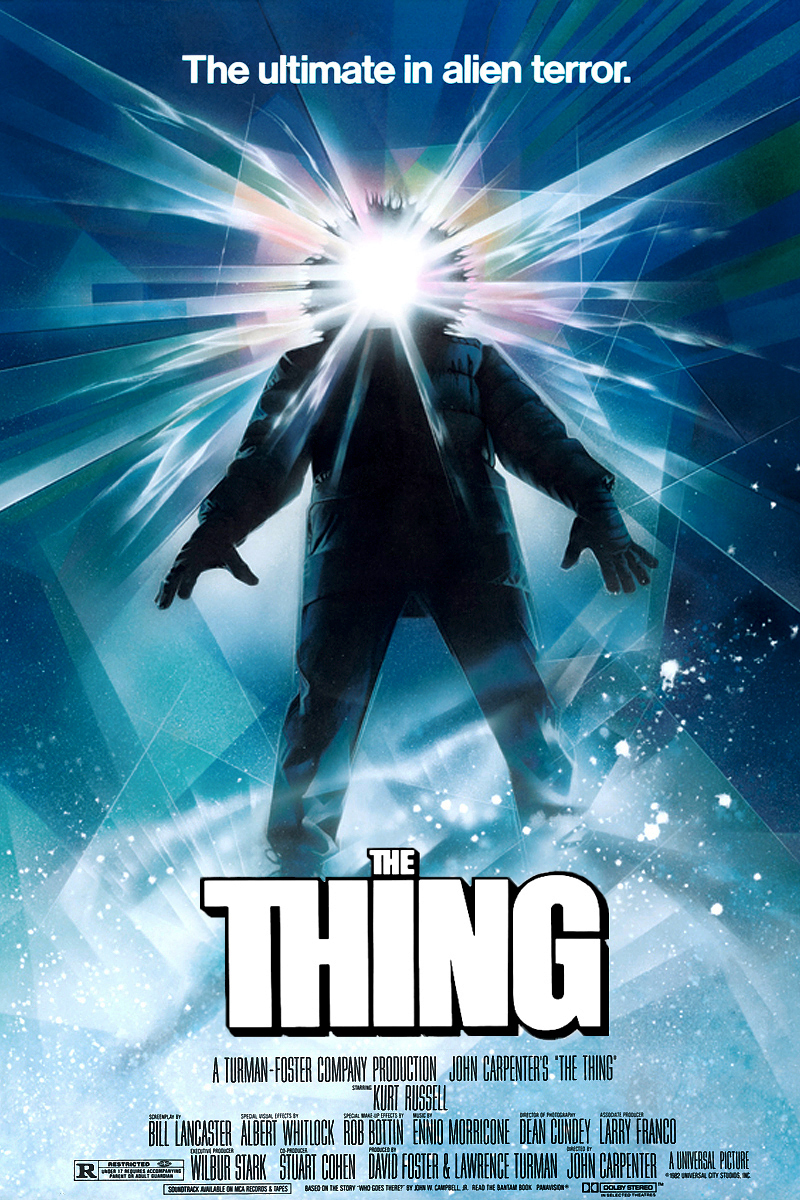
The Thing (1982)


The men of an Antarctic base encounter a deadly force from space in The Thing

Director: John Carpenter

Cast: Kurt Russell (MacReady), Wilford Brimley (Blair), TK Carter (Nauls), David Clennon (Palmer), Keith David (Childs), Richard Dysart (Dr. Copper), Charles Hallahan (Norris), Peter Maloney (Bennings), Richard Masur (Clark), Donald Moffat (Garry), Joel Polis (Fuchs), Thomas Waites (Windows)

In a curious coincidence, The Thing was released on the same day as Blade Runner. Both have since gone on to become landmark science fiction films, hugely influential to future film makers. Both have scenes that linger in the memory, and have ambiguous endings fans have discussed for decades. Both were also disastrous box office bombs and with negative critical reactions.

The Thing is a creeping masterpiece of sci-fi, body horror and paranoia. On an Antarctic base, an American research team rescues a dog being pursued by two Norwegians from a base close-by (the two Norwegians are both killed, one accidentally, one shot dead after firing at the Americans). Investigating the Norwegian base to see what happened, they find it destroyed and a series of grisly corpses, including one with two faces. Soon it becomes clear the Norwegians fell victim to an alien who has the power to perfectly copy and replace living organisms. The Americans realise they are trapped on the camp, with no idea who them may now be a “Thing” rather than human.

John Carpenter’s creepy, atmospheric horror film is an endlessly gripping thriller that rewards constant rewatching. Its shot with an unnerving simplicity of movement, with the focus getting tighter and tighter. We start with an unsettling helicopter shot taking in the panorama of Antarctica but, before long, the action is confined to single rooms in the American camp, with our leads shouting suspiciously at each other. The whole film is underplayed by an eerie Ennio Morricone score that really gets under your skin with its haunting electronic strains. It’s a classic by any definition of the word, and it never, ever gets old or tired: I’ve seen it a dozen times, and each time new small moments grab me, shots enchant me – and it never fails to be tense, unnerving and scary.

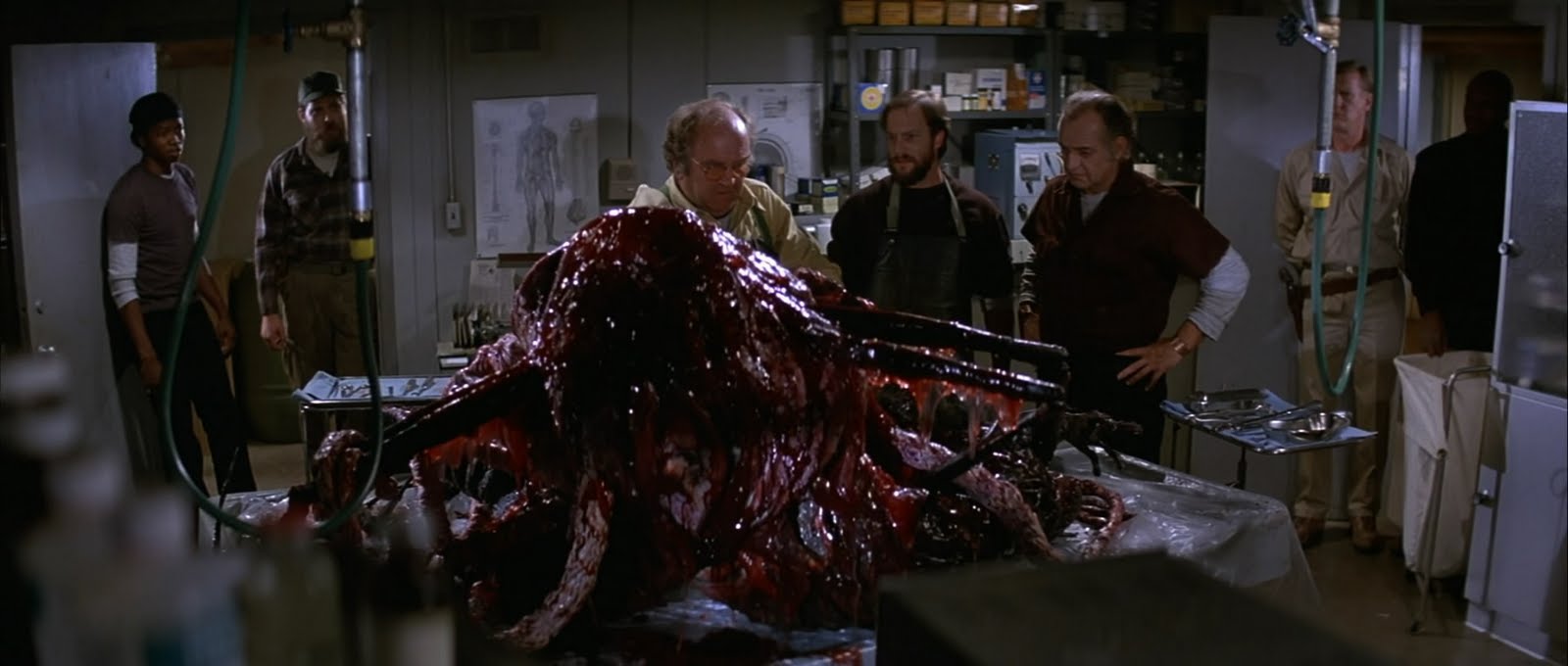
“You’ve got to be fucking kidding” a character states at one point. It’s pretty easy to imagine that this was the reaction of the critics at the time, at the onslaught of body horror. The Thing’s process of absorption is not only disgusting (usually involving flesh and skin peeling back to reveal all sorts of crazy shit), but its defence mechanisms involve similar depths of insane grossness. By the time our heroes are incinerating replacements with a ruthless lack of concern, we’ve already seen chests turn into massive tooth jaws, a dog Thing peel its own face off, and a head of a Thing separate itself from a burning body, grow spider legs and scuttle away. You’ve got to be fucking kidding indeed.

The Thing is pretty much a landmark in prosthetic work (you’ve never seen anything like this before). And the body horror still packs a major punch – I couldn’t eat my sticky bun while the Dog Thing ripped itself apart in the middle of a kennel early on (those poor other dogs by the way…). Some of the most effective stuff is actually the smaller scale moments – there is a great moment where a Thing grabs another character by the face and hand and face merge together. It has a truly yucky feeling to it. It’s all so carefully constructed and inventive that it haunts and fascinates. But if it was just a parade of gross images and nightmare fuel it wouldn’t have lasted. What makes it work is that it has a cracking story and a great set of characters. 

Carpenter collects a terrific group of actors, headlined by Kurt Russell. Russell’s MacReady is the perfect lead for this sort of film, a grizzled maverick slacker who reveals (when the shit hits the fan) the natural charisma of the born leader, the only man there able to make the hard calls. He even has a perfect little introduction scene, playing chess with a computer (whose voice makes it the only female character in the film incidentally). Having narrowly lost the game against a tactically more cunning opponent, he pours his drink into its workings, effectively destroying the game board. That gives you a pretty accurate idea of where the film is going. The whole film is Macready’s struggle against an opponent who is cunning, brilliant and (almost literally) faceless – is it any wonder he decides that destruction could be the only way to win? 

The rest of the cast give a lot of depth to their otherwise trope-based characters. In particular, Dysart, Brimley, David, Hallahan, Moffat and Masur stand out for creating unique feeling characters, each of them feeding into the growing paranoia that infects the camp. Because that’s what makes this film last: it’s a brilliant study of paranoia, suspicion and a group of macho men (to varying degrees) squabbling aggressively with each other in a confined space. Carpenter really captures this sense of twisted group dynamics – establishing plenty of tensions and personality flaws and clashes even before the horror begins. It feels like a real cold war movie: interlopers in our midst, but we don’t know who they are. It’s a slow burn that really pays off when the action explodes in the second half of the movie. 

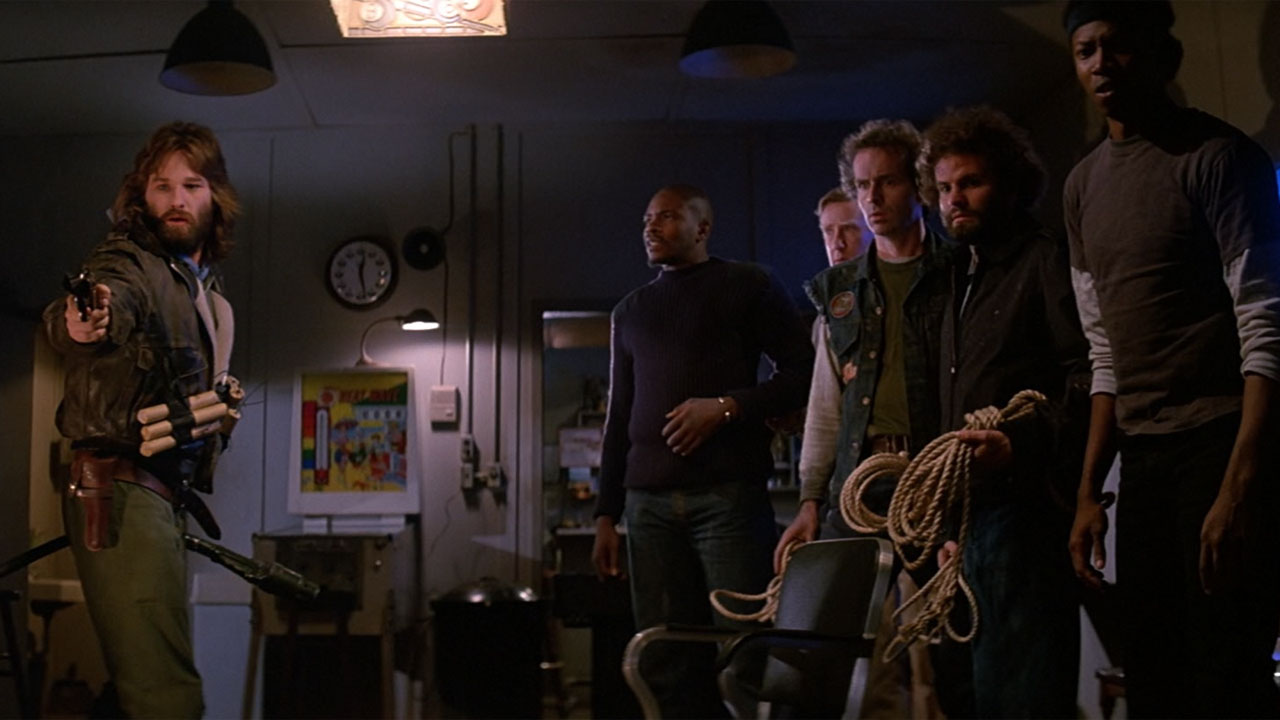
And that pay-off is compelling. A particularly masterful sequence involves a series of blood tests (now a hoary old stable of these things, but at the time something really new). MacReady essentially ties up all the other remaining characters (living and dead) and sticks a scolding hot wire into a blood sample from each man. The idea being the blood of any Thing will react aggressively to the “attack”. Carpenter really lets this scene build slowly – not least because MacReady is holding all the men at dynamite and gun point. The slow build-up reveals a few innocent men, each untied to help Macready. Then just as MacReady (and the audience) begin to relax – someone fails the test and the scene jumps into body horror chaos. Completing the tests after that is a near wordless sequence of jump cuts from test to test, with the number of untied men slowly growing. It’s brilliantly done: slow – quick – slow. Perfect tension drama. It’s the centrepiece of the whole damn movie.

The other thing Carpenter really understands is that set-ups like this are perfect discussion fodder for fans. Just as we love to debate whether Deckard is a replicant or not, there are plenty of similar points in this film. Most of this revolves around Blair, the first to work out the danger the Thing will cause if it reaches civilisation: when does he become infected? How many of his actions are human, how many Thing? At one point MacReady visits him (isolated in a hut) and finds him sitting calmly asking to come back in. Creepily beside him, an unused noose hangs from the roof: it’s not commented on in the scene at all, but it speaks volumes for possible interpretations. This sort of stuff throws itself open to a debate for the ages – the film enigmatically provides enough clues without definitive answers. It does this for a number of events – deaths go unexplained, materials are destroyed and we never find out by whom. The film is full of shady events, of key moments happening off camera, of mysteries going as unanswered for the characters as they do for the audience. Ripe for you to add your own interpretation.

The final scene of the film continues this: the surviving characters sit in the burning wreckage of their base. For all they know, either or neither of them may, or may not, be Things. But it hardly matters: the cold is coming in and we (and they) know anyone left in these conditions will be frozen in a matter of hours. So you get this brilliantly low-key, weary but charged exchange:

Survivor #1: Maybe we shouldn’t.

Survivor #2: If you’re worried about me…

Survivor #1: If we’ve got any surprises for each other, I don’t think we’re in much shape to do anything about it.

Survivor #2: Well, what do we do?

Survivor #1: Why don’t we just… wait here for a little while… see what happens?

So – the question stands? Who is a Thing and who isn’t? It’s a perfect, unsettling, final frame discussion point – and one that has kept feeding debate for years.

The Thing is a nasty, grimy, tense, unsettling, gruesome, gory, yucky, scary, paranoia-inducing masterpiece. It’s easily the best thing John Carpenter ever made (its failure at the box office seemed to break the director’s spirit, as nothing he did ever again reached this). As a slow-burn, cold war flavoured conspiracy and suspicion story it’s out of the top drawer – it captures perfectly the psychosis and fear that can be brought on by trapped isolation. It’s crammed with perfectly formed scenes. It has a terrific, nearly nihilistic feel to it – even the most competent of the men (MacReady) is way out of his depth here. Our alien nemesis is a master of psychology and tactics. So is the film.

Star Trek: Nemesis (2002)


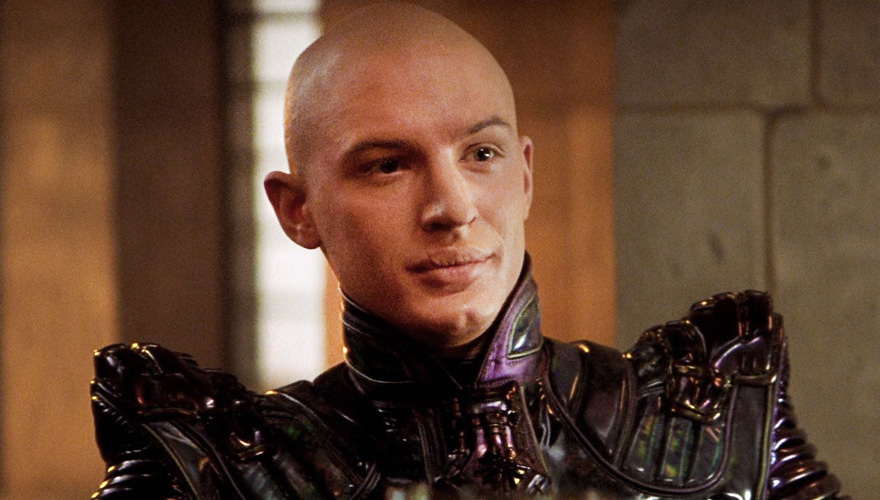
Tom Hardy plays a clone of the young Patrick Stewart in Star Trek: Nemesis. You can tell he’s identical ‘cos he’s got no hair

Director: Stuart Baird

Cast: Patrick Stewart (Captain Jean-Luc Picard), Jonathan Frakes (Commander William Riker), Brent Spiner (Lt Commander Data), LeVar Burton (Lt Commander Geordi LaForge), Michael Dorn (Lt Commander Worf), Gates McFadden (Dr Beverley Crusher), Marina Sirtis (Deanna Troi), Tom Hardy (Shinzon), Ron Perlman (Viceroy), Dina Meyer (Commander Donatra), Kate Mulgrew (Admiral Janeway)

There are few things in the Star Trek franchise with as poor a reputation as Star Trek: Nemesis. It’s as close as the series got to a franchise-killer, a film that bombed so colossally (the first ever Star Trek film to lose money at the box office) that it seemed to end not only the movie series but all planned television projects. Since then, it has been remembered as an incoherent, poorly plotted mess, crammed with terrible writing and direction and shoddy action. Is this memory fair? Well yes and no.

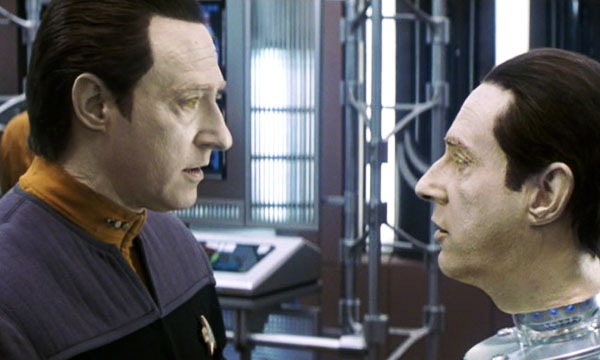
Picard (Patrick Stewart) and Data (Brent Spiner) have their sense of self thrown: first by Data’s discovery of an identical, unadvanced prototype of himself called B-4 (also Spiner) and then by Picard discovering on a mission to Romulus that the new leader of the Romulan Empire is a clone of his younger self, going by the name Shinzon (Tom Hardy). Having assassinated the Romulan government, Shinzon plans to give freedom to his “Reman brothers”, the slave race that raised him from childhood. But he also has sinister aims for the Federation…

This is a horrendously compromised product, cut to ribbons by the studio to get as close as possible to two hours as possible, regardless of the impact on plot or characters. Why? Because it was released at the same time as Lord of the Rings: Two Towers and the plan was all the people who didn’t want to see that would choose Nemesis instead. I won’t start to explain here all the reasons this plan was stupid. Suffice it to say, it didn’t work and meant we ended up with a gutted mess that jumps as quickly as it can to action set-pieces, many inadequately filmed on the cheap.

It also doesn’t help that Stuart Baird was brought on board to direct: a self-proclaimed “non-fan” who proudly announced he hadn’t watched any Trek before. A fresh perspective is great – but come on, if it’s the fourth film with the cast, following 175 episodes, you’d think some respect for the past would be good, right? Instead, Baird seems contemptuous of the whole genre and has no tonal understanding of Star Trek. The actors constantly struggle to keep their characters as consistent as possible, while events and actions keep spinning wildly out of whack. I could start nit-picking Star Trek errors (why is Worf here? Why is Wesley back in Starfleet? What’s happened to Data’s emotion chip? Why does no-one mention Data’s evil brother Lore? Picard was not always bald. Etc. etc. etc.) but I’d be here all day.

Anyway, if they were going to bring a new face on board, could they not have found a better director than Baird? Some of the sequences of this film are so wonkily filmed they look cheaper than they probably were. Any scene involving hand-to-hand fighting is cursed with poor shots and bizarre slow motion straight out of 1970s TV. They all look absurdly slow and cheap. The Romulans are redesigned as ludicrously camp, partly green skinned, heavily made-up softies. Shinzon and the Remans sashay around in noisy rubber costumes like space gimps. Baird has no sense of comic timing and virtually all the overtly “funny” parts of the film fall on their arse. The wedding scene is one long sequence of slightly embarrassing faux-comedy – the sort of thing that will confirm to any sceptic that loving Star Trek is desperately sad.

But the main problem is the plot. Shinzon is a character who should be really interesting: for starters, he’s played by the excellent Tom Hardy. He should be casting a dark light on Picard, with a feeling that these are men only a few degrees apart, or that Shinzon is a kind of renegade son pushing to find his own place in the universe. All lost in the edit. Shinzon’s back story and aims make no sense, and by the end his character degenerates into a motiveless nutter. If he’s all about freeing the Remans (a goal achieved at the start of the film) why does he want to destroy Earth? If his focus is on Picard why does he constantly delay capturing him? What would have worked was if the Enterprise were trying to stop Shinzon destroying Romulus, or if Shinzon’s focus was exclusively on Picard and we had more of a sense of Shinzon being a “dark Picard”. Instead he’s just a nutter with a homicidal plan for Earth which comes out of nowhere.

Badly structured as the Shinzon plot is, at least this has some decent scenes between Hardy and Stewart. However the B-4 plot makes little sense at all, while also providing an unfortunate opportunity for Spiner to play “simple Data”, like an android Rain Man. In terms of where he fits into Shinzon’s plan or the rest of the plot, B-4 makes no sense and provides no real contrast to Data or comment on the Picard/Shinzon relations. He should, of course, be another repeat of the theme of Picard seeing a disagreeable version of himself. But this never comes together. It just gets used for jokes or for Spiner to show-off. Neither option is that appealing.

This thematic material keeps getting constantly lost. It’s cut so badly that it often makes the film empty and unsatisfying. You keep wanting thematic juice: our heroes confronting dark versions of themselves, or the struggle of dealing with your lack of uniqueness in the galaxy. But the film only wants to sketch these in roughly in order to keep moving forward to action scenes. The worst of these is a prolonged car buggy chase on a primitive planet that not only takes ages, it’s desperately dully and makes no real sense at all when you think about (for starters, if the baddies wanted B-4 to be found, why break him up and sprinkle the bits all over a dangerous planet?). 

This means that, despite the title, we never get the sense of there being an actual nemesis in this film. Shinzon never really feels like a reflection of Picard. The film just tells us he’s a baddy, because, hell he just is. You can practically tick off the standard list of villain quirks. Lack of patience? Check. A creepy attitude to women? Check. Killing a subordinate for failing? Check. Any prospect of making him an interesting, different type of character gets pushed out in favour of the simple.

That’s many paragraphs saying what’s wrong. But it’s not all bad. Honestly it isn’t. In fact, there are some nice moments in there. There are some good character beats, and the cast are working hard to make these moments land. In particular, there are some lovely exchanges between Picard and Data, while Geordi gets more to do in this film than most of the last few (including some actual moments exploring his friendship with Data, often lost in the films). Picard feels more like the enlightened explorer and intellectual character from the TV show here than he did in any of the other films. When we are allowed to relax and breathe, the film touches on an elegiac, end-of-an-era quality (see scenes like that below).

Also, as awful as the buggy chase sequence is, the final space battle (while a clear lift from Star Trek II) is exciting and well filmed, and also showcases our characters’ professionalism. The hand-to-hand combat bits are hopeless, and Picard’s final “man on a mission” assault strains credibility. But Data’s final sacrifice is quite moving – especially the quiet moments afterwards where the rest of the cast respond to it. It’s sad because you know more of this warm interplay is on the cutting room floor with the thematic material of the film – leaving this neutered disappointment instead. Which is a shame because there is some decent material here – and some enjoyable moments. There is also a terrific score.

Star Trek: Nemesis is not as bad as you may remember. I mean, it’s a long way short of the best Star Trek films – but it’s got its moments. It’s made by a director who doesn’t understand (or care) about the franchise, but the cast do their best to hold it together. It’s a thoroughly compromised film, ruined by too many people trying to make a film that did too much, and it was clearly intended as a jumping off point for the next film (which never happened), but for all this, there is just about enough to keep a fan entertained – although probably not a non-fan. And if nothing else, this is the last chance to see the cast of one of the best sci-fi shows ever made.

Blade Runner 2049 (2017)


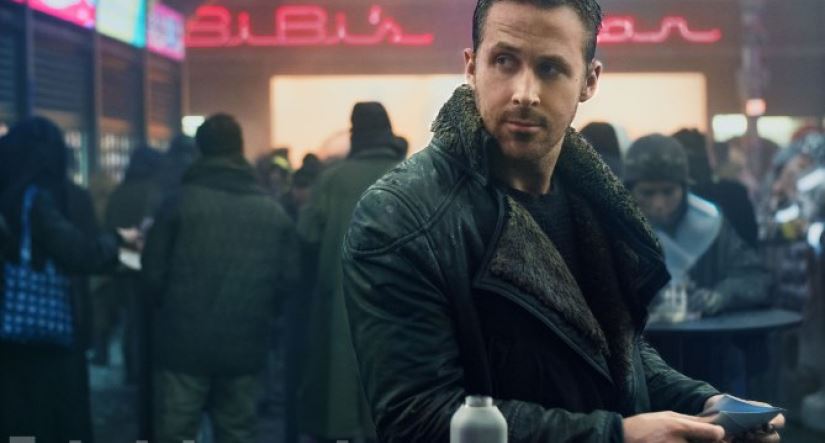
Ryan Gosling does a man’s job filling some difficult shoes in Blade Runner 2049

Director:  Denis Villeneuve

Cast: Ryan Gosling (Officer K), Harrison Ford (Rick Deckard), Ana da Armas (Joi), Sylvia Hoeks (Luv), Robin Wright (Lt. Joshi), Mackenzie Davis (Mariette), Carla Juri (Dr Ana Stelline), Lennie James (Mr Cotton), Dave Bautista (Sapper Morton), Jared Leto (Niander Wallace), Barkhad Abdi (Doc Badger), Edward James Olmos (Gaff), Sean Young (Rachael)

SPOILERS: It’s pretty much impossible to discuss Blade Runner 2049 without revealing some of the workings of the plot. Since the film makers have gone out of the way to say “don’t reveal any of the plot” I thought it fair to say I’ll discuss some things fairly freely here. So you’ve been warned!

Making a sequel is a risky business at the best of times. Then imagine making a sequel to a film that is not just a cultural and artistic landmark film but one people genuinely love. The possibility of creating a massive disappointment? Pretty big. You need some guts to take that on – like announcing you are making Gone with the Wind: Blown Away or Casablanca: Everyone Back to Rick’s. That’s the sort of challenge for the makers of the long-awaited Blade Runner sequel. Could they make something that both complemented and expanded on the original?

The year is 2049 (of course!). K (Ryan Gosling) is a Blade Runner with the task of hunting down long-lived Nexus-8 replicants – the twist being (and its revealed in the opening minutes of the film!) that K himself is a replicant, a more obedient Nexus-9 model. After “retiring” aged replicant farmer Sapper Morton (a career best Dave Bautista), K locates the buried remains of a female replicant who died after an emergency caesarean section. Terrified that replicants may be developing the ability to reproduce, K’s superiors order him to “retire” the child and all who know of it. As K investigates, his loyalties become ever more divided – while sinister corporate genius Niander Wallace (Jared Leto) and his Nexus-9 hit-woman Luv (Sylvia Hoeks) have their own plans for the replicant child.

So the big question is, does Blade Runner 2049 succeed? The answer is a firm and reassuring yes. The big issue is, does the existence of this film affect (or even ruin) the previous film? Blade Runner 2049 not only complements the original, it builds on and expands its themes, and poses far more questions than answers. In some ways it’s even more profound and searching than the original – arguably it engages with ideas and concepts even more overtly (and richly). If your concern going into this film was it would end any discussion about whether Deckard is a replicant or not, then have no fears – the question remains as open as ever (and works either way for this story).

Even more than the original, this film tackles what it means to be human and how we define humanity by the ability to express emotions and empathy. It comes at this from a different stand-point from Blade Runner by removing any doubt about our hero’s nature. What is more, he is a replicant deliberately designed to be more obedient than earlier models. A cool, minimalist actor with a mastery of small expressions, Ryan Gosling is almost perfectly cast as the quiet K, developing deep yearnings to be more than what he is. The entire film revolves around this question of how capable K is not only of forming emotions, but of making his own choices.

The ability to live freely and choose is at the heart of the conundrums for all our characters. To what extent are they able to do this? K goes about his work of dispatching fellow replicants with a quiet reluctance, but does his duty nevertheless. But he is a character yearning to be “more” – and what, in many ways, is more human than that? The film taps into this expertly with K’s belief that maybe he himself is replicant child. The film’s mantra is about choosing what we live and what we die for and, regardless of who or what we are, being able to do this is what makes us “more”.

In a film stuffed to the gills with replicants and other artificial characters, we are constantly asked to address and question how far each of them goes towards achieving “humanity”. Just as with Blade Runner, the only two definitely human characters (Niander Wallace and Lt Joshi) are strangely distant, hard to read or even cruel authoritarian figures, making a damn bad case for real humans.

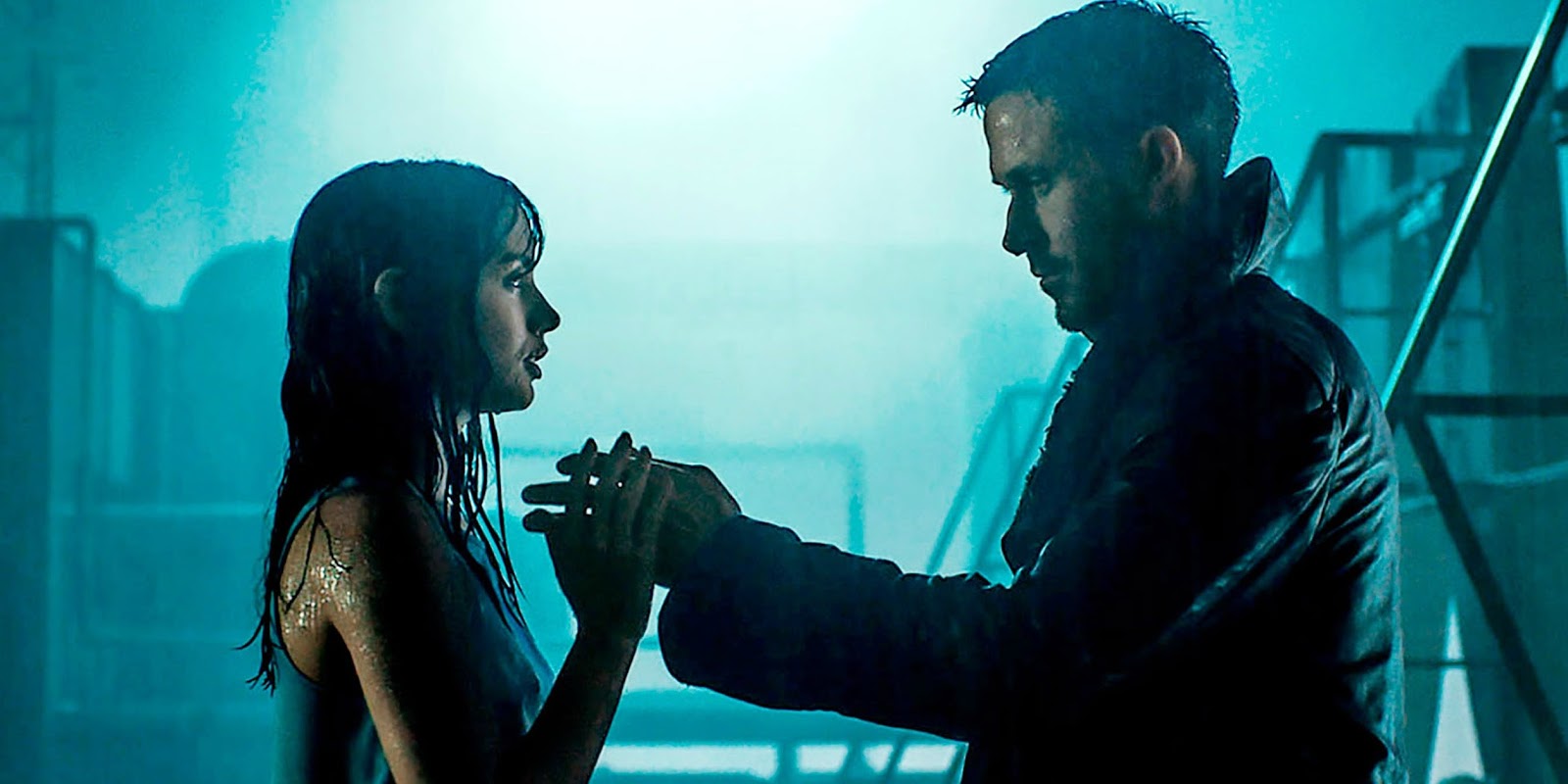
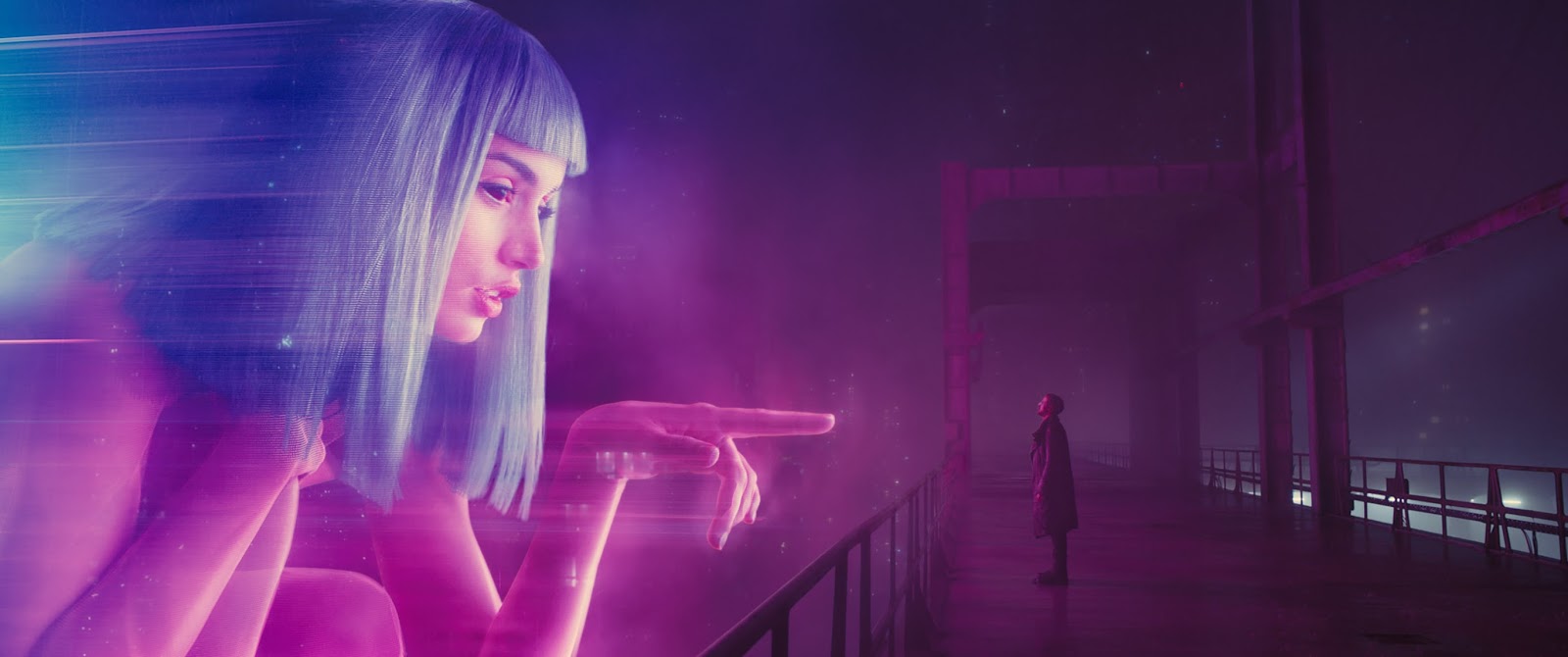
Joi (brilliantly played by Ana de Armas), K’s girlfriend, is a warm, caring, loving woman – but she’s also a hologram, designed to be the perfect companion. K and she go to great lengths to protect and care for each other over the film – and her final fate is a deeply moving moment. But Joi is a computer programme – and a late sequence in the film where K interacts sadly with a looming holographic advert of another Joi that repeats many of her phrases in a disconnected style casts a sad light on all their previous interactions. Every time Joi said anything with love or affection to K, was this just a computer reflecting back what her owner wanted to hear?

It’s not a great surprise to say K does eventually learn to make his own choices and to decide his own fate. In many ways this is a fable of growing up – K accepting his limitations while forging his own destiny – but it makes a contrast with other replicants. While the older models form their own resistance, K’s counterpart Luv (an imposing Sylvia Huks) can’t or won’t break free of following Wallace’s commands. There are more than a few hints Luv is not always happy with the duties she is asked to perform (at one point she weeps quietly as a replicant is dispatched). But at others, she’s clearly striving as much as K to be “special” – she triumphantly repeats a mantra to herself about being the best, like a daughter trying to impress her father.

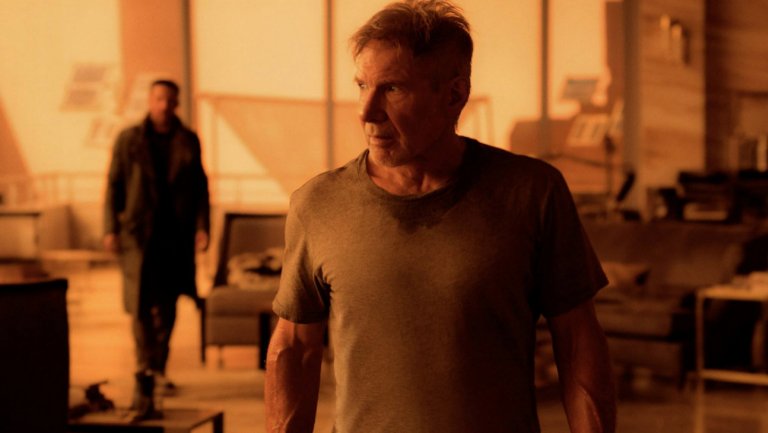
These new characters offer such diverse and exciting story-telling opportunities, you almost don’t notice that Deckard doesn’t appear in the film until nearly the third act. Harrison Ford may have been slightly uncomfortable in the original – but he fully understands the more assured, confident Deckard in this film, who has made his peace with leaving the world behind. Ford gives this new Deckard an almost Han Solo-ish shoot-first swagger, but mixes it with a world-weary sadness. I’d go so far as to say he’s actually better in this film than the first one.

Which is a further testament to the strength of this film. All the themes and ideas of the original are used as bouncing-off points for further exploration. This never feels like a retread, reboot or remake – it feels like a rich and rewarding piece of intelligent sci-fi by itself. I actually feel it could be watched independently of the first film, and still have plenty to offer. It’s not interesting in tying the first film up in a bow – instead it serves as a stimulus for future discussion. You could imagine a sequel to this film sustaining enough interest for 35 years.

Technically of course the film is an absolute marvel. Roger Deakins’ photography is gorgeous, capturing every element of this dystopian nightmare world in a series of brilliant images, in turns drained, bleached and sun kissed. Every frame is artfully composed for maximum impact. The production design is similarly magnificent, Dennis Gassner’s work melding the world of the original, with its steam-punk look, with a mix of technological developments. The score by Hans Zimmer and Benjamin Wallfisch is similarly perfect, giving the film a brooding intensity.

But most of this artistry comes back to the film-making mastery of Denis Villeneuve, a director so gifted I think he may be more interesting than Ridley Scott. His control of the pace of the film is brilliant – despite being very long, it never drags – and he shoots every scene with a careful, intellectually engaged brilliance. He is able – possibly even more than the original – to mix emotion and elliptical theorising, and to draw a raft of brilliant performances from an outstanding cast. More than anything else, he treats the audience with respect, giving them a measured and thoughtful film that trusts we have patience. Villeneuve tops Arrival here, and does so with confident aplomb.

Blade Runner 2049 is a film that demands to be seen more than once. It’s a patient and intensely thoughtful piece of science fiction, that asks profound questions about humanity and the characters in it. I don’t really feel from one viewing I’ve got a grip on it – in fact the more I think about it, the more its haunting, elegiac quality starts cramming into my head. You need to be patient and go with it – you need to be in the right mindset for this slowburn concept film. But, get in that mindset and this film is constantly rewarding. If you want to criticise something, I will acknowledge that many of the female characters are a little more clichéd (most are prostitutes or similar) – but this world where many women seem to be in subservient roles to men is in many ways an extension of the world created in the original film (and now an expression of the dystopian future).

However this is a great film. A really great piece of adult science-fiction. I’ll go out on a limb and suggest it is better than the original film.