Tag: Skyler Gisondo

Superman (2025)

Superman (2025)

A fun, character-led, engaging film that makes a better stab at starting a massive franchise

Director: James Gunn

Cast: David Corenswet (Clark Kent/Superman), Rachel Brosnahan (Lois Lane), Nicholas Hoult (Lex Luthor), Edi Gathegi (Mister Terrific), María Gabriela de Faría (The Engineer), Anthony Carrigan (Metamorpho), Nathan Fillion (Guy Gardner), Isabela Merced (Hawkgirl), Skyler Gisondo (Jimmy Olsen), Sara Sampaio (Eve Teschmacher), Wendell Pierce (Perry White), Pruitt Taylor Vince (Jonathan Kent), Neva Howell (Martha Kent), Zlatko Burić (President of Boravia), Frank Grillo (Rick Flagg), Bradley Cooper (Jor-El)

In 1978 Hollywood promised to make us believe a man could fly. In 2025 it just wants us to believe a franchise can be reborn. Superman, again, hopes the man of steel can launching a DCU franchise to compete with Marvel (in some ways, hilarious that this is just at the point when the world seems tired of interconnected monolith Comic Book worlds). Has it learned the lesson of the first attempt? I’d say yes: under the experienced hand of James Gunn, Superman is light, fun, exciting and engaging. It may all be (inevitably) heading towards a city-sized smackdown to save the world, but at least it does it with a bit of charm and character work along the way.

What it also definitely isn’t is an origins story. And, in many ways, thank God: is there anyone under this yellow sun that doesn’t know Superman is from Krypton, his alias is mild-mannered reporter Clark Kent at the Daily Planet, he’s got the hots for Lois Lane, his enemy is balding super-genius Lex Luther and he’s got a deadly fear of Kryptonite? Gunn is totally spot-on that we didn’t another hour plus on film laboriously putting all those pieces in place again.

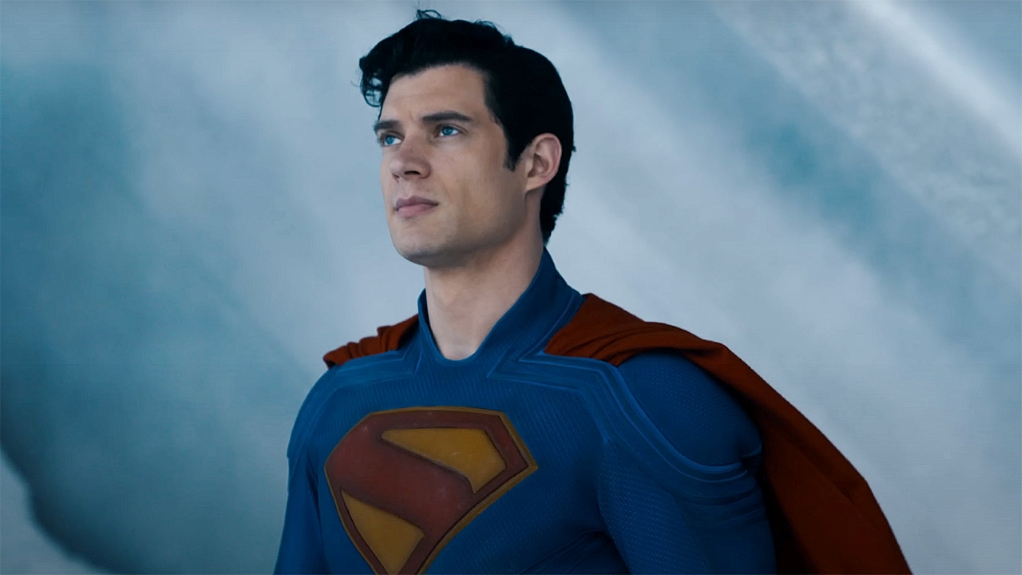
Superman instead throws us straight into the second act: the invulnerable hero (David Corenswet) getting beaten for the first time, outmatched by Lex Luthor’s (Nicholas Hoult) Ultraman who has all of Superman’s powers and none of his personality. It’s part of a doom spiral where Superman’s decisions to unilaterally intercede in a war are condemned for overstepping, painful revelations about his past leave him ostracised by the world and he winds up imprisoned by Luthor who wants to reshape the world as he sees fit. Can reporting (and romantic) partner Lois Lane (Rachel Brosnahan) rope in the Justice Gang (a group of meta-human heroes) to help?

That probably doesn’t give quite a clear enough picture of what a barmy, primary-colour spectacle Superman is. To say it throws in everything including the kitchen-sink at your would be an understatement. Gunn’s film is soaks in love for the scatter-gun, heightened reality of comic books. If the first wave of DCU films were about trying to ground superheroes in the real world, this throws us into a nutsy world where: the Justice Gang are celebrities and their members include a half-hawk woman and a cocky dickhead with a magic ring; the villain has a private pocket universe he’s using as a personal Guantanamo Bay; and battles with giant space monsters are such a regular sight people whip out their phones to film it rather than runaway.

In fact, in this world, Superman facing off against his super-powered foe in a city collapsing into a giant rip in space-and-time actually feels strangely grounded. Compared to floating around on flying platforms through a purple pocket universe or swimming through a river of anti-matter to save a meta-human baby who can change his form into any material on earth, it’s pretty normal. But Gunn’s film embraces its madness with a tongue-in-cheek joie d’vivre: in fact, it’s refreshing that the film acknowledges there is no point trying (once again) to Nolanise this stuff.

In fact, Gunn works hard to make sure any real-world commentary is delivered with a soft-touch. A key sub-plot about the invasion of Jarhanpur (a stand-in for both Ukraine and Gaza) by its neighbour Boravia (blatantly Russia) gets funnelled into a black-and-white moral issue. A Trump stand-in is Boravia’s blow-hard leader, with a thick Russian accent (distancing him from the real thing). Social media gets a kicking (not surprising considering the director’s personal experience on it), but with off-the-wall gags like Luthor owning a legion of engineered monkeys endlessly typing angry comments into the ether to drive algorithms. Metropolis is the only city where a daily paper not only drives discussion, but is the most trusted source of news.

The colourful barmyness also works, because Superman grounds itself in warm and relatable characters. Bought to life with a great deal of humility and relatability (the one area the film plays it completely genuinely) by David Corenswet, this version of Superman embodies the virtues of kindness. He’s endlessly polite and attentive, from his robot servants in the fortress of solitude to his hardest language being “gosh”. He’s dedicated to preserving life (from humane subduing of giant monsters to saving a squirrel mid-fight) and putting others first. He’ll go to great lengths to protect his pet dog Krypto (possibly the most genuinely endearing dog on screen since The Artist).

And it makes a great framework for a film that deconstructs Superman by stripping him of his certainties. Dramatically it’s always difficult to fear for an invulnerable hero, so Gunn’s decision to open with our hero having had the crap beaten out of him (not for the last time in the film) is a good touch. But Gunn also challenges Superman’s moral certainties, in particular with a unique reveal in Superman-lore leaving him questioning everything he thinks he knows about his past. It’s refreshing to see a film challenge superheroes for taking unilateral decisions on behalf of everyone, with even Lois criticising him for a power-grab. Sure, it’s a strawman – there is no doubt Superman’s decision to stop Boravia is the right thing to do – but it’s good to see it discussed and questioned.

Superman uses this to explore characters, in particular the emotional vulnerability of Clark Kent and the bond between him and Lois. There is a refreshing scene where Corenswet and Brosnahan simply sit and talk about his turmoil, while outside the window in the distance a bizarre intergalactic-eye monster is fought by the Justice Gang. (Both a good gag, and a sign of the film’s focus on character). But, unlike other Superman films, Corenswet’s Man of Steel confronts him with the possibility of physical and moral failure on every level. Throw in a Luthor who, for all his man-child antics, carries out some of the darkest, most brutal acts any version of the character has before and this leads to some genuinely affecting moments of grief and guilt.

Gunn combines this genuine interest in character with some engaging use of obscure comic book characters, about him the general viewer has no pre-viewing expectations. Krypto is a genuinely funny addition as a hyper-active chaos pet. Nathan Fillion is good fun as a dickish blow-hard with super-powers. Edi Gathegi is wonderfully droll as the wearily frustrated Mr Terrific. And the three leads make a very effective combo: Corenswet’s selflessness and kindness very well contrasted with Hoult’s petulant arrogance while Brosnahan gives Lane gallons of determination and can-do attitude.

It’s not perfect. A sub-plot about Luthor’s girlfriend is presented as a victim of an controlling relationship and a source of comedy for a desperate neediness. It’s resort to a big-city smackdown is overly familiar, while a few reveals can be seen coming far off. Hoult’s Luthor is a big-swing of a performance that doesn’t always hit. But when it works, it’s a bubbly ball of super-hero-fun that celebrates basic decency, kindness and looking after each other. And maybe that’s the hero we need right now.
Licorice Pizza (2021)

Licorice Pizza (2021)

Young romance in a changing time in Paul Thomas Anderson’s unconventional love story

Director: Paul Thomas Anderson

Cast: Alana Haim (Alana Kane), Cooper Hoffman (Gary Valentine), Sean Penn (Jack Holden), Tom Waits (Rex Blau), Bradley Cooper (Jon Peters), Benny Safdie (Joel Wachs), Skyler Gisondo (Lance), Mary Elizabeth Ellis (Momma Anita), John Michael Higgins (Jerry Frick), Christine Ebersole (Lucy Doolittle), Harriet Sansom Harris (Mary Grady)

Is there a force harder to understand than love? That’s basically the theme of Paul Thomas Anderson’s delightfully whimsical film, which explores an unlikely relationship in Los Angeles in 1973, played out to a backdrop of the OPEC gas crisis. Told with a dreamlike grace and overflowing with affection and warmth for its characters, it’s a deceptively simple film that is a masterpiece of heartfelt craft.

Standing in line to have his photo taken for his High School picture, 15-year-old Gary Valentine (Cooper Hoffman) is instantly smitten with cynical photography assistant, 25-year-old Alana Kane (Alana Haim). Much to her surprise, his claim to be a child actor in the movies is actually true – he’s co-starring with Lucille Doolittle (Christine Ebersole, in a thinly veiled spoof of Lucille Ball) in a movie. He’s also a budding entrepreneur, setting up a business selling water beds in LA. Alana still doesn’t know what she wants to do with her life, but finds herself drawn to Gary, despite her acute awareness of their age difference. The two of them become business partners and drift in and out of friendship, never quite sure exactly how they feel about each other.

Now I guess you might well have checked yourself there at the thought of a romance between a teenager and a 25-year-old. But there is no prurience here, no masturbatory coming-of-age fantasy with an older woman or sleazy grooming. This is instead a very genuine, sweet and moving romance between two people who only really have numbers keeping them apart. It particularly works because Gary in many ways feels about 5 years older than he actually is and Alana often feels about 5 years younger than she is. In many ways they are both twenty-year-olds – and it’s only the fact that they are not which puts a barrier between them being together. As such it becomes very easy to accept their potential relationship, and even root for it.

That’s massively helped by the fact that these two characters are marvellously embodied by two first-time actors. Anderson specifically wrote the role for Alana Haim, member of family rock group Haim (Anderson has directed several of their music videos, and was taught by Haim’s mother). She’s stunning: prickly, quick-witted, cynical but also vulnerable and sensitive. She’s desperate to find some sort of purpose in her life: exploring the role of trophy girlfriend, businesswoman and political campaigner, but always seems like she’s slightly lost, for all her defiance. Haim is also wonderfully exasperated and befuddled by the interest she feels for this younger guy, barely able to acknowledge she might have feelings for him. Haim is superb.

Gary, played by the son of regular Anderson collaborator the late Philip Seymour Hoffman, is equally well bought to life by Cooper Hoffman. Gary’s career as a child actor is coming to an end: as we see through a disastrously over enthusiastic audition, which the casting directors watch out of a polite respect. But Gary has the go-getting hustling skills of someone much older. He’s got an eye for business opportunities – water beds, film productions, pinball machines – that would be the envy of others. He’s smart, confident, frequently cocky, assured – but at times also staggeringly immature (like a teenage boy he’s obsessed with boobs and Alana watches with frustrated despair as he and some friends drag out miming a wanking gag for what seems forever). He’s also still sometimes just a kid: mistakenly arrested at one point, he sits in terror in a police station and, even when uncuffed and released, is too scared to leave the station without Alana’s encouragement.

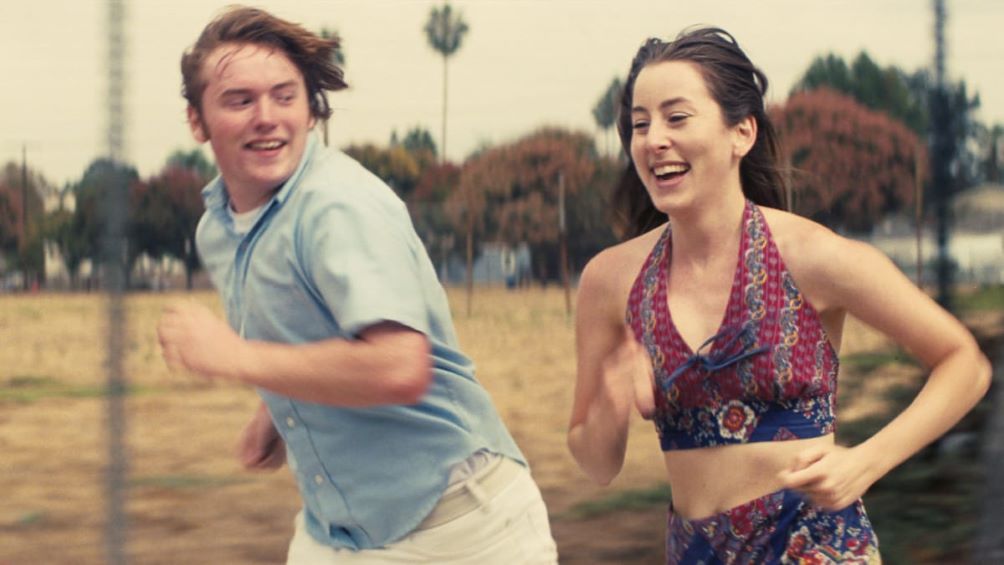
That arrest scene is yet another moment that reaffirms the deep bond and love between these two people. Wrongly arrested for nominally fitting the description of a suspected killer – “Look forward to Attica!” the police taunt him – he’s hauled from an Expo. Alana follows, running full pelt after the squad car – even though at this point they’ve not spoken for weeks – and then holds him for what feels like forever when he is released (before, of course, slapping him and saying “What did you do?”). Later, when Alana falls while taking part in an ill-advised late-night motorbike stunt, Gary will run the length of a golf course to make sure she is alright (despite, again, the two of them having cut ties before this). Moments like this sing with a real romantic force.

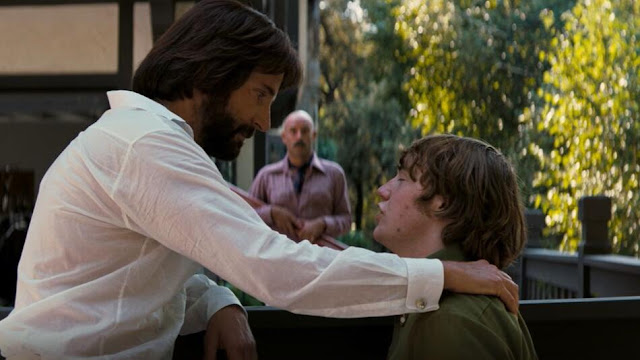
Particularly as this is such a love-hate film. Alana and Gary constantly hurt each other, finding ways to get into perfect sync only to screw it up. Gary is heartbroken when Alana starts to date his older co-star (a smug atheist, played wonderfully by Skyler Gisondo). Alana is overcome with jealousy and pain when Gary flirts and kisses a school crush his own age at the launch of their water-bed business. After auditioning for a movie role, Alana delights in making Gary uncomfortable when he walks into the bar where she is enjoying a drink with the movie’s male star. Through it all, these two are drawn back to each other time and again – and when the chips are down their loyalty and love to each other is absolute, even if they can’t always admit it to either themselves or each other.

Around the two outstanding central performances, Anderson constructs a series of scenes and skits that drift from one to the other. The whole film has a curiously dreamlike transition structure: it’s frequently hard to tell how much time has passed and the narrative omits overly functional scenes, so we frequently see a situation has changed but only an implication of why (example: Gary’s mother tells him she can’t chaperone him to New York for a TV appearance – next shot Alana and Gary are on a plane. How was this agreed? Who cares!). Each of the sequences plays out with a shaggy-dog story charm, directed with the confidence and brilliance of a director who is happy to make it look easy. And let me tell you, very few could pull off something as light and charming.

The film is stocked with delightful cameos. John Michael Higgins is very funny as the owner of a Japanese restaurant, with two successive Japanese wives who he “translates” for by repeating in ludicrously Japanese accented loud English whatever has just been said. Harriet Sansom Harris is very funny as a plugged-in agent. Ebersole is a monstrous attention-hungry star. Sean Penn is funnier than he’s ever been playing a version of William Holden, pissed and barely able to distinguish between his film roles and real life, cajoled by an equally pissed director (Tom Waits on top form as a sort of Peckinpah-Huston combo) to perform a motorbike stunt late at night. Best of all is Bradley Cooper, who burns through his brief scenes as an unhinged Jon Peters, a whipper-cracker of unpredictability and insatiable horn.

But it’s the two leads that give this heart, and Licorice Pizza is an amazingly sweet, tender, endearing and deeply charming love story about a couple who can’t quite understand why they want to be together and spend most of the movie making sure they’re not. Anderson brings it altogether with immense homespun charm – this is almost a home movie, Haim’s family play he character’s family, the cast is stuffed with Anderson’ family and friends – and Licorice Pizza is the sort of delight that shouldn’t work, but very triumphantly does.