Tag: Thrillers

The Day of the Jackal (1973)


Edward Fox takes aim as suave assassin The Jackal

Director: Fred Zinnemann

Cast: Edward Fox (The Jackal), Michel Lonsdale (Deputy Commissioner Claude Lebel), Terence Alexander (Lloyd), Michael Auclair (Colonel Rolland), Alan Badel (The Minister), Tony Britton (Inspector Thomas), Denis Carey (Casson), Cyril Cusack (Gunsmith), Maurice Denham (General Colbert), Olga Georges-Picot (Denise), Barrie Ingham (St. Clair), Derek Jacobi (Caron), Jean Martin (Wolenski), Ronald Pickup (Forger), Anton Rodgers (Bernard), Delphine Seyrig (Colette de Montpellier), Donald Sinden (Mallinson), Timothy West (Commissioner Berthier)

The definition of lazy criticism is to say a story doesn’t work because we know the outcome. If that was the case, no production of Hamlet would ever work, and no adaptation of a best-selling book would ever find favour with an audience. We’d be bored by films based on history and we’d be even more indifferent to the hundreds of films made every year that follow accepted narrative structures. What makes a film compelling is often not the destination, but the journey. How do we get there? What do we learn? How does it make us feel? All of these things are keenly observed throughout Fred Zinnemann’s masterful adaptation of The Day of the Jackal.

The year is 1962 and the French President Charles de Gaulle is blamed by many for weakening France by granting independence to Algeria. The Organisation Armée Secrète (OAS) hire an English professional assassin known only as The Jackal (Edward Fox) to assassinate De Gaulle. When word of the target leaks to the panicked French Government, Commissioner Claude Lebel (Michael Lonsdale) is given an impossible task – identify a man of whom the government knows nothing and stop him from carrying out a plan only he knows the details of. Meanwhile, the Jackal relentlessly goes about his meticulous planning.

So anyone with passing familiarity with history will know that de Gaulle was not assassinated in the early 60s. Watching The Day of the Jackal, you know that the Jackal will fail. But that’s not the point of the film. Instead it’s a masterful, streamlined thriller that completely understands how much we can invest in watching someone go about a job with calm, cool professionalism. It’s the ingenuity and meticulousness that makes the film compelling, the way each angle of the Jackal’s plan is carefully considered and information slowly delivered to the audience. In some areas we are a couple of steps ahead of Lebel’s search. In others we are as far behind as he is: we may know the weapon and the Jackal’s secret identities, but we know as little about his final plan as Lebel does – it’s only when it’s revealed that all the pieces we’ve seen make perfect sense.

It’s a film that has been assembled with all the grace and skill of a master clockmaker. Zinnemann’s direction and Kenneth Ross’ taut screenplay make every second count. There isn’t a single piece of flab on the bones of this movie, every scene carries a piece of vital information that contributes to the overall picture. Zinnemann sprinkles the film with careful passing shots of calendars and clocks, making the sense of a countdown towards the Jackal’s strike hang intimidatingly over the whole film. The film is gripping, right from its opening reconstruction of the almost-successful OAS assassination attempt on De Gaulle in 1962. Everything feels perfectly interlinked and connected, each scene brilliantly builds on top of the ones before.

This is quite simply an unshakeably brilliant engine of a film, a relentless ride with tension and excitement dripping from every frame. It’s not afraid to be cruel or dangerous – and some of the victims are truly blameless – and it’s not afraid to show that violence and cruelty are weapons as much for the authorities as the Jackal (the cruellest act, after all, is committed by the French Army on poor loyal Wawlinski).

A large part of the success of the film rests on Edward Fox’s performance in the lead. Fox gives the Jackal an unshakeable, public-school, confidence, an attractive resolve that sees him meet every obstacle with a cool elán, resolutely unperplexed by anything that he encounters. Fox’s superb performance succeeds in making you engage with (and even root for) a man who is a cold-blooded professional killer, who commits murder (when provoked) without hesitation. How does this happen? Again it’s his efficiency, his expertise. The film totally understands how engrossing watching talented people go about their work can be.

The film makes the minutia of setting up an operation immensely compelling. In careful detail, we see exactly how the Jackal goes about getting a false passport from the authorities. How he scopes out a potential place to conduct the assassination. His careful preparation of disguises and fake identities. In one gloriously done scene, we see him practise using his specially constructed rifle on a melon at a huge range. Carefully he takes a series of shots at the melon, adjusting the sight each time to make the weapon as accurate as possible. The scene is a showcase for the Jackal’s meticulous professionalism (you can see why the producers were outraged when the scene was cut from a TV screening in the 1980s – it’s practically a highlight of the movie).

Similar investment, however, is made in the detailed footwork involved in tracing and detecting the Jackal by the French and English police. Michael Lonsdale is a perfect foil for Fox’s urbane cool, with his dour, grey, crumpled Label, a man selected somewhat unwillingly for a mission but who slowly reveals the cool head and nerves of steel that made him perfect for the job. The police-work used to try and close the net on the Jackal is as intricate as the hitman’s own work – careful plodding through files and methodical calculation and educated guesswork. It’s as far from the rush and tumble of Hollywood as you can imagine – but somehow, because it feels so real, every discovery against the odds by the authorities becomes hard-won and exciting. The sense of a net being skilfully built also serves to make the Jackal’s skilful evasion of each trap all the more compelling.

And the tense race against time lasts for the whole of the film. The film brilliantly keeps this cat-and-mouse game alive, with the police and the Jackal constantly leap-frogging each other to stay one step ahead. Each move and counter-move has all the intricacy of a chess game. There are enough twists and turns to keep every audience member gripped. The eventual assassination attempt itself is built up to beautifully – a wordless, tense but brilliantly assembled montage of liberation day celebrations keeps both the police and the audience on their toes as to where the Jackal will strike from. The finale of the film turns on a twist of fate that is simply a brilliant coup de theatre. There is even a droll little coda that deepens the mystery of the Jackal even further.

Zinnemann’s direction throughout is flawless – calm, measured and methodical, and never allowing flash or bombast to drown out events. It’s helped as well by the wonderful cast of actors – a real who’s-who of British and French character actor talent, with Alan Badel’s smooth Interior Minister, Eric Porter’s cool but fanatic OAS leader, Cyril Cusack’s quiet gunsmith and Derek Jacobi’s eager young detective particular standouts. I also have a lot of time for Olga Georges-Picot’s quietly moving performance of a woman pushed to extreme actions by grief.

The Day of the Jackal is another of those near perfect movies. Everything it sets out to do it does perfectly, and it rewards constant viewing. It’s got some terrific unflashy performances and is a perfect demonstration of why professionalism and expertise can be so engrossing. It wraps this up into a deliciously tense confection, where every scene bubbles with undercurrents of drama and danger. There is not an off-beat – instead it’s a brilliant piece of pulp cinema that transcends itself into being something truly adept and dramatic. You can’t take your eyes off it for a second. I don’t hesitate for a second in saying it’s one my favourite thrillers.
Fallen (1998)


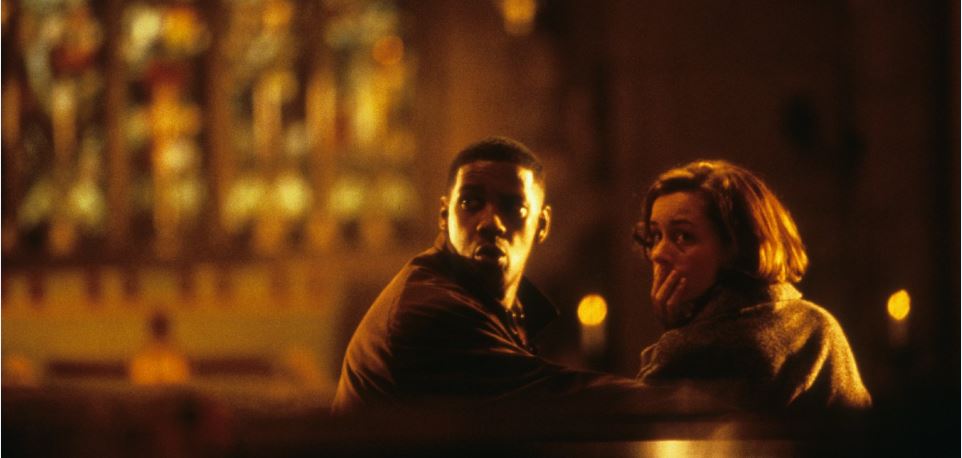
Denzel Washington and Embeth Davidtz on the run from a nasty Demon in Fallen

Director: Gregory Hoblit

Cast: Denzel Washington (Detective John Hobbes), John Goodman (Detective Jonesy), Donald Sutherland (Lt. Stanton), Embeth Davidtz (Gretta Milano), James Gandolfini (Lou), Elias Koteas (Edgar Reese), Gabriel Casseus (Art Hobbes)

Every so often, a film comes round that you know, while you watch it, is a fairly average, unspectacular piece of film-making. But for some reason something about the film just clicks with you and you end up enjoying something basically nothing special. For me, Fallen is one of those films.

What’s particularly nice about having this film as a bit of a guilty pleasure is, I’m pretty sure, most people have never heard of it. Detective John Hobbes (Denzel Washington) has recently been present at the execution of a notorious serial killer. Moments before his death, the killer grabs his hand and mutters a message in a strange language. As a copycat killer continues the crimes – and begins to frame Hobbes – the detective slowly realises his nemesis is no man, but a demon, able to possess humans by touch. He failed to possess Hobbes – and now wants to destroy his life.

There is nothing really new here: Hobbes is straight out of film noir, while the plotline of his mentally handicapped brother raising a son is pure TV-movie of the week. The demon possession idea is not exactly new (although it’s snazzily shot) and the demon quickly heads the way of most creatures in these films: foul-mouthed and delighting in sex and violence. There is a secret underground movement of those aware of the demons on Earth (fortunately we only see one of them) combatting their evil. Nothing really new.

But Fallen makes these elements seem somewhat fresh. The idea of the demon moving from person-to-person via touch is very interestingly presented. At one point Hobbes has a conversation with the demon, as it switches from host to host. Later Gretta (Embeth Davidtz) is pursued down the street by the demon, moving swiftly from person to person in a chain of touching hands. The various actors do a good job of conveying a single consistent character for the demon (fortunately he favours possessing recognisable character actors from US TV drama). Hoblit’s direction has plenty of these interesting new ways of presenting things. He’s also able to keep a good air of menace throughout the film.

It’s not perfect of course. The investigation of the demon’s background hits all the familiar beats from Dante to the Bible. Hobbes must be the only person in the world who (having decoded a message) has to ask A NUN whether the word “Apocalypse” means anything to her. A detective who has never heard of the word apocalypse? Times have changed: it’s the sub-title to a bad X-Men film now. At least one character is so obviously set-up as a candidate for long-term possession, you immediately suspect he’s innocent.

But the film has a fine closing scene, and a decent twist which plays with your initial expectations. It also gives you plenty of clues throughout (from the first shot of the film) about how the action might play out, more than enough for you to work it out for yourself. The idea of the “final confrontation in the wilderness” is again a familiar one, but the supernatural element makes this feel different. It’s actually a twist I didn’t see coming first time around (I was young at the time, not sure if I would be caught again today) – but it’s well presented and doesn’t cheat the audience.

Probably the main reason the film works so well though is Denzel Washington. Here is an actor giving a performance probably beyond the material, encouraging others to lift their game. He perfectly captures both Hobbes’ dedication and his purity of soul, with plenty of little touches that never feel heavy handed. He makes the plotline with his brother hugely sweet. He gets the balance just right between scepticism and dawning horror. It’s a real professional performance that plays off his charisma very well – imagine how awful it would have been with Keanu Reeves in the lead.

But I love that twist ending, and I’m a sucker for these demonic possession films (like disaster films or period epics) so I’ve seen this 3-4 times and really enjoyed it each time. As well as Washington, John Goodman and Embeth Davidtz give very good performances, and there is always enough mystery that you never feel you are racing  far ahead of the film (of course we know from day one it’s about demonic possession, but the characters never feel dense catching up with us). Fallen is a high quality piece of B-movie thrills. If you haven’t heard of it, do check it out.

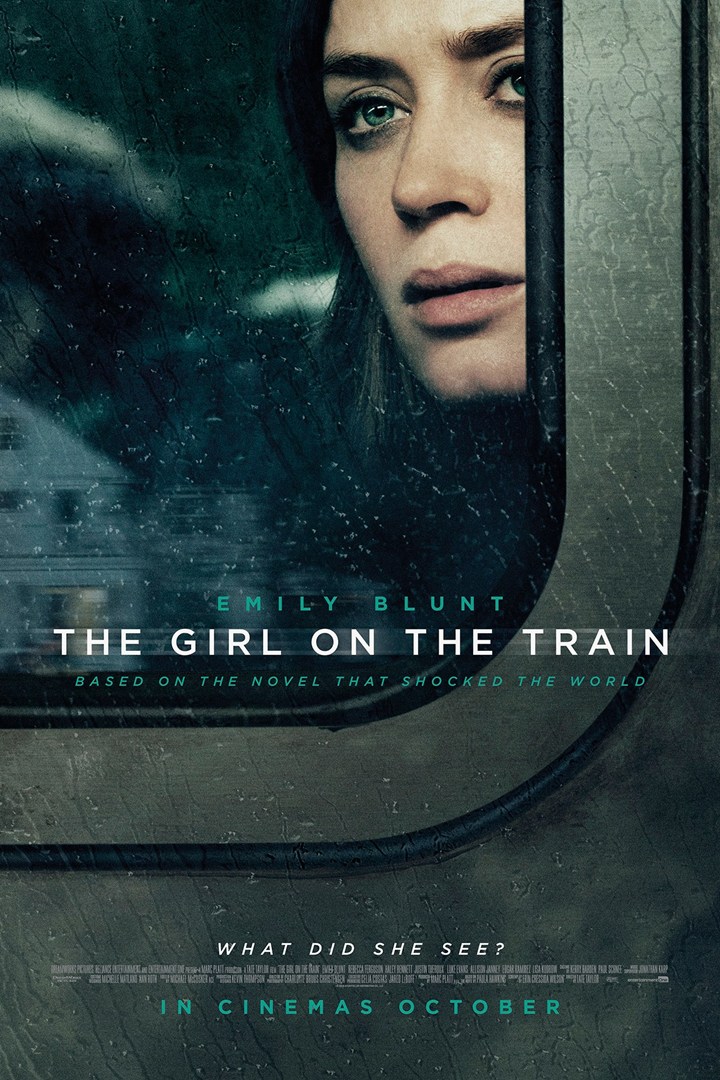
The Girl on the Train (2016)


Emily Blunt on a commute into danger in the underwhelming Girl on the Train

Director: Tate Taylor

Cast: Emily Blunt (Rachel Watson), Rebecca Ferguson (Ann Watson), Haley Bennett (Megan Hipwell), Justin Theroux (Tom Watson), Luke Evans (Scott Hipwell), Allison Janney (DS Riley), Edgar Ramirez (Dr Kamal Abdic), Lisa Kudrow (Martha), Laura Prepon (Cathy)

Rachel Watson (Emily Blunt) is a lonely, divorced alcoholic who takes the train into New York every day to spy on her husband (Justin Theroux) and his new wife (Rebecca Ferguson), whose house the train passes. However, she also becomes obsessed with the seemingly happy marriage of her ex’s neighbours (Luke Evans and Haley Bennett), who live an apparently Instagram-perfect life of coffee on the balcony and candlelit sex in their perfect living room (with the curtains conveniently left open – everyone leaves their curtains open in this film, no matter what they are doing). When the picture-perfect wife goes missing, she inveigles her way into their lives to try and help.

This is not a good film. It’s not a terrible film, but it’s a flat and lifeless one – a plot-boiler that simmers along without ever really getting exciting.  The story feels like it’s been pulled together from crumbs swept from the table of Gillian Flynn. It’s a hotchpotch mess, tangled, unclear and not that interesting. I can’t be the only person un-intrigued by the mystery of who shags who among the middle classes. Even a murder doesn’t spice it up. The small cast makes many mysteries obvious – when one character is found to be pregnant, but two of the three male characters we’ve been introduced to have been ruled out, you don’t need to be Poirot to work out who the father might be. Even the title is a call back to better thrillers, with its Girl with the Dragon Tattoo styled title.

The story drifts on and on, never really getting anyway or explaining anything properly. It doesn’t help that it’s mediocrely filmed. Look at the lean, compelling and sharp film David Fincher made of (the much better) Gone Girl. Then look at the murky, plodding, dull execution here. Particularly damningly it’s a shock to find out this is less than 2 hours, because it feels a hell of a lot longer.

The story has been switched from the book’s original London to somewhere outside Manhattan, which doesn’t help either. There is something quite small scale and domestic about the story that the sweeping vistas and huge houses of wealthy American suburbia don’t match up with. The very concept of the film – seeing into houses from commuter trains paused at signals – doesn’t even work removed from London’s architecture (the train in this film stops regularly on a huge expanse of track due to rail works that go on for ever and ever). Edgar Ramirez’s psychiatrist keeps the name Kamal Abdic (with its suggestion of middle Eastern roots) but now seems to be Mexican. Everyone in the film looks like a fashion model. Lots of other small moments just don’t make sense in the way they would have done in the original setting.

Emily Blunt is pretty good in the lead role, much better than the film deserves. Okay the drop-dead gorgeous Blunt doesn’t even remotely look like the overweight, sweaty alcoholic described in the book. But she nails her drunk acting, and carries the emotional heft of the film rather well, with an engaging vulnerability. She is, perhaps, even a little too engaging – the book’s original version of her character is apparently pretty unlikeable. The script trims away her needy obsessiveness, and creepy stalker tendencies. But Blunt is a little too likeable, and a little too sophisticated (despite prosthetic eyebags), to really convince as the pathetic Rachel. The switch to America doesn’t help here either – basically Brits make better losers than Americans tend to.

The rest of the cast are okay, but there is hardly a stand out among them. I have to admit I found Haley Bennett and Rebecca Ferguson (with their identikit blond hair dyes) hard to tell apart at times (this may be due to staying up all night watching the 2017 British election the night before).

By the end, when the killer is revealed (with a graphically suggestive flashback) you’ll find it hard to really care. In fact the final reveal is so clumsily put together all the implications aren’t clear at all. It’s a load of fuss about nothing. Taylor is trying to turn a pulpy novel into an arty thriller – but he doesn’t have the cinematic know-how to do it. He’s far too bland and middlebrow. Maybe that makes him a suitable match – a derivative director for a derivative book – but it hardly helps make this a good film. If he’d gone for a more B-movie approach, playing up the dark satire you could find in the story, then we could have had something interesting here. But he didn’t and we don’t.

Hangmen Also Die! (1943)


Brian Donley on the run in Fritz Lang’s Nazi occupation thriller

Director: Fritz Lang

Cast: Hans Heinrich von Twardowski (Reinhard Heydrich), Brian Donlevy (Dr Franticek Svoboda), Walter Brennan (Professor Stephen Novotny), Anna Lee (Mascha Novotny), Gene Lockhart (Emil Czaka), Dennis O’Keefe (Jan Horak), Nana Bryant (Hellie Novotny), Margaret Wycherly (Ludmilla Novotny), Tonio Selwart (Chief of Gestapo Kurt Haas), Alexander Granach (Inspector Alois Gruber), Reinhold Schünzel (Inspector Ritter), Jonathan Hale (Dedic)

Film dramas “ripped from the headlines” have a mixed track record. Making a drama about an event that happened so recently the dust has hardly settled leaves you open to making decisions in your film that could later be exposed as mistakes. Few films in history are more headline-ripping though than Hangmen Must Die!, a film about the assassination of Heydrich, the planning of which must have started almost immediately after the news broke.

Dr Svoboda (Brian Donlevy) is on the run in Prague after shooting dead Reinhard Heydrich, Hitler’s deputy in occupied Czechoslovakia. After a chance meeting, he pleads with Mascha Novotny (Anna Lee) for shelter – but this only serves to endanger her family, particularly her father Professor Novotny (Walter Brennan), in the affair. Meanwhile the Gestapo, led by Alois Gruber (Alexander Granach) investigates and the Nazis take hundreds of Czech notables, including Novotny, into custody as hostages. The Germans promise to execute hostages until the assassin is handed over.

First things first: unlike 2016’s Anthropoid, this film is a complete work of fiction. It is first and foremost a film made by European exiles in the middle of World War II to sing the praises of those defying the march of fascism. Heydrich only appears at the start of the film, played with a sinister, mincing campness by von Twardowski (a notable German socialist exile). Despite this, the arrogance and cruelty of Heydrich is hammered home, with his lines delivered in a bullying, untranslated German. The film uses a dark humour to stress his villainy, Heydrich nonchalantly strolls down a crowded meeting room, forcing those in attendance to remain saluting, swivelling to follow Heydrich, until he finally settles and returns the salute allowing them to relax. It’s a neat little joke and perhaps one of the clear signs of the hand of co-writer Bertolt Brecht. Take a look at the sequence (and rest of the movie as well!) here:

That’s one of the film’s other claims to fame: noted director Fritz Lang worked with fellow exile Brecht to craft the script. As such, the film is a slightly unusual mix between the left-wing, idealist politics of Brecht and the film noir style of Lang. The primary aim is to serve as a propaganda tool, and the courage and bravery of the Czech people is repeatedly stressed. With a few key exceptions, the Czechs are loyal, honest and willing to make huge sacrifices. Lang films this with a stirring simplicity, low angle shots, skilful use of light, and dynamically involving crowd scenes, bringing this courage visually to life. Brechtian touches, such as a crowd of Prague locals confronting Mascha (with increasing menace) when she considers betraying the assassin to save her father’s life, are perfectly complemented by Lang’s skilful film making. The film’s final tribute to the heroes of Europe, with the people of Prague joining together to sing a hymn to the fallen hostages, surges with a left-wing Brechtian political outrage.

What’s most unusual about the film – and one of its problems – is the curious mixture of tones. Perhaps because of its film noir styles, perhaps because of the American accents of many of the Czech characters (interestingly, the exiles overwhelmingly play villainous Germans), this film becomes a sort of behind-the-lines 1930s hard boiled gangster thriller – with the difference that the cops are the baddies. The Gestapo go about their jobs like gangster gumshoes from Hollywood movies. The Czech people, for all their gumption, look and act like streetwise New Yorkers. It’s an odd tone that takes some getting used to.

On top of that, the film shows several hostages (including characters we get to know) shot due to the refusal to hand over the assassin. I can’t watch this without thinking about how little it gets near the true horror of Nazism. The Gestapo here are relative pussycats, compared to the brutal lengths they went to in real life: the Gestapo chief even prudishly talks about a need for evidence. Compared to the thousands of civilians killed in real life, this is nothing. The Germans even essentially “give up” in a coda and accept a defeat. This makes terrific propaganda of course, but it just ties into the sense that this film doesn’t even begin to touch the villainy of the occupation. It makes for better entertainment, but it’s strange to watch today.

Finally, the last problem with the film is the rather mixed performers. Put simply, Brian Donlevy is totally miscast as the assassin, a B-movie actor who is far too American for the part, and incapable of giving the role the depth it needs. Svobada just isn’t interesting or sympathetic. Anna Lee is similarly bland, while the less said about O’Keefe as her fiancée, the better. Not one of the American actors is completely convincing in their role, although Walter Brennan is close to an exception, effectively gentle and wise as the brave Novotny. The best performances are from the exiles, with Graucher in particular excellent as a shrewd, soulless, corrupt detective, with no guilt about the means he uses.

The film culminates in a rather hard-to-follow and far-fetched attempt by the resistance to frame a collaborator (played with weaselly self-importance by Gene Lockhart) for the crime. This plot tends to meander, but there are several very good scenes showing the Czech resistance, including a wonderful sequence in a restaurant that goes from a sit-down, to an unveiling, to a shootout. Lang skilfully builds the tension throughout, and the creeping relentlessness of hostage executions and Svoboda’s attempts to run from the Gestapo are very well done. Sequences such as Svobda ducking into a movie cinema, only to find a keen collaborator inside, sizzle with excitement.

In fact there are many excellent moments in the film. It is beautifully filmed, with a gorgeous use of expressionist shadow and camera angles to create a claustrophobic, doom laden world. Lang’s strength of plotting by-and-large works very well. Though it can’t bring across the full horror of Nazi occupation, the dread of the Gestapo is clear in the movie. “Enhanced interrogation” is underplayed, but it is sinisterly embodied in the fate that befalls an arthritic shopkeeper. We see him exhausted, but not broken, in a prison cell, forced to constantly pick up a chair under interrogation with her weakened hands. Later, a character throws himself out of a window rather than risk being interrogated to reveal information about the resistance. The hostages are brutally dispatched, with the level of panic, fear, collaboration or defiance having no impact on their fates.

It’s a fractured film, overlong but very well filmed, which creates a brilliant tribute to the strength of the Czech people. Trim 20 minutes off it and I think this could have been a great thriller.  It’s a strange mix of acting styles, but the marriage of Brecht and Lang works very well (it’s a real shame Brecht never made another film) and the drama of the film carries it over the strange bumps in the road. Brecht, by the way, spent the rest of his life rubbishing Lang, as he couldn’t understand why Lang put all the plot and character into a movie Brecht saw as being purely political.

It’s in many ways a strange historical monument – perhaps its makers couldn’t imagine the depths of Nazi atrocities, perhaps Hollywood wasn’t willing to bring such horrors to the screen. It’s not perfect, but in its own way, it’s a piece of cinematic history.

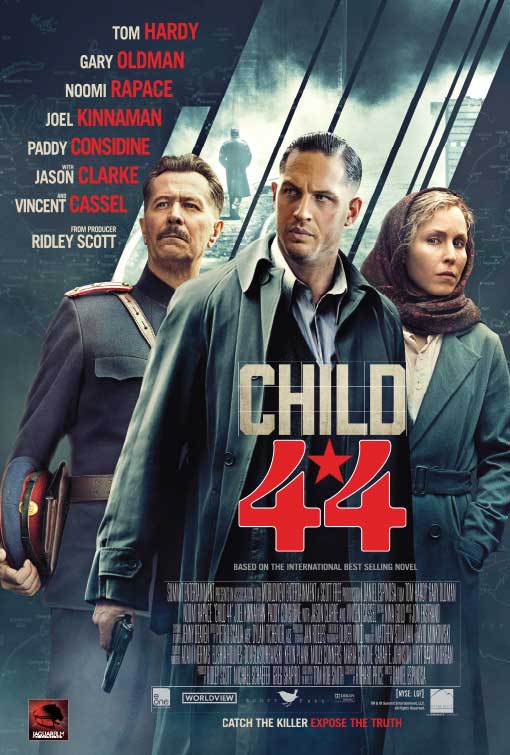
Child 44 (2014)


Tom Hardy and Gary Oldman investigate murder in Stalinist Russia: It should be more interesting than it is

Director: Daniel Espinosa

Cast: Tom Hardy (Leo Demidov), Noomi Rapace (Raisa Demidova), Joel Kinnaman (Vasili Nikitin), Gary Oldman (General Nesterov), Vincent Cassel (Major Kuzmin), Jason Clarke (Anatoly Brodsky), Paddy Considine (Vladimir Malevich), Fares Fares (Alexei Andreyev), Charles Dance (Major Grachev), Tara Fitzgerald (Inessa Nesterova)

Adaptations of bestselling books are tricky things. Your source material already has a pre-existing fan base but you also need to bring new faces into the multiplex. Is that easy to do? Not always – and many films fail to strike a balance between telling the story for newcomers and satisfying the old fans. This is one of those failures.

Leo Demidov (Tom Hardy) is a war hero and NKVD officer in 1950s Stalinist Russia. Initially complacent and sure that he is a good man doing his best in the system, his life is shattered after his wife Raisa (Noomi Rapace) – a woman who secretly hates her husband – is maliciously reported as a traitor, and Leo refuses denounce her. Banished to the outbacks of Russia, Leo feels compelled to find some redemption by investigating a child murderer. But Stalin has ruled murder is a capitalist crime “impossible” in the paradise of Communist Russia, making it a crime the all-powerful state has decreed cannot exist.

It’s hard to put your finger exactly on why this film never comes to life. It ticks nearly all the boxes of the original book’s plot (it in fact changes the one part of the book I found a “shark jump”, the identify of the killer itself). It’s well shot. There are some very good actors in it. It’s a good story. But it just doesn’t work – you never really invest in it. Perhaps the problem is the film has to jettison the interior monologues of the characters, so we lose much of the context of the action.

The book’s strength was its exploration of the nature of investigating crime in Stalin’s Russia: where crimes only exist if the state agrees they can, where investigation is largely unnecessary as the perpetrator is always proclaimed at the start, where those investigating the crimes are constantly in fear of being denounced for failures (“if the man I follow escapes, I will be accused of working with him”). The film fails to get this Stalinist tension across, so is left with just the bare workings of the plot without the novel’s context, making it seem like a “murder of the week” TV movie.

The attempt to get all the plot ticked means many actors get wasted in heavily reduced parts. A particular victim is Gary Oldman, who can’t be on screen for more than 15 minutes, and switches from obstructive boss to confidante as the plot requires. For the leads, Hardy and Rapace give quality performances (Rapace in particular is very good), and I did like the way the film really explored how Raisa’s feelings for Leo change from disgust and fear towards true affection. But you never really feel or care for them as you should.

However, they, along with the rest of the cast, suffer from the decision to give all the actors thick Roosian acksents. Why was this decided? Not only does this make some lines hard to hear (particularly Hardy’s) and stifles variance in delivery, but there is no need for it. Every character is Russian. They are all talking Russian. It’s all set in Russia. Why not have them use non-strongly accented versions of their own voices? Do we really need thick Slavic vowels to remind us we are in Russia?

Child 44 is a disappointing film, and perhaps the worst thing about it is, if you watch it before reading the book, you’ll probably wonder what all the fuss was about. By largely failing to get across the full complexity, danger and madness of the Stalinist system, it reduces the book’s plot into something flimsy and everyday. The whole adaptation has almost completely missed the point of what made the book so different and compelling in the first place. By doing so it turns the story into something that feels much more derivative than it actually was.

Jack Reacher: Never Go Back (2016)


Tom Cruise and Cobie Smulders on the run – not as exciting as it should be

Director: Edward Zwick

Cast: Tom Cruise (Jack Reacher), Cobie Smulders (Major Susan Turner), Aldis Hodge (Captain Anthony Espin), Danika Yarosh (Samantha Dutton), Patrick Heusinger (The Hunter), Holt McCallany (Colonel Sam Morgan), Robert Knepper (General James Harkness)

Titling a sequel to any film Never Go Back is a real hostage to fortune. It’s not a great surprise that a quick internet search for reviews of this film throws up a plethora of puns around the film’s subtitle. It’s pretty obvious: but considering the general meh nature of this film, it’s also kinda fair.

Jack Reacher (Tom Cruise) travels back to Washington DC to visit Major Susan Turner (Cobie Smulders), a Military Police officer who has helped him with a number of problems in the past. He arrives, however, to find her under arrest for espionage – and after he starts asking questions, he quickly joins her in lock-up, under arrest for murder. Busting out of prison, they go on the run together to try and find out who has framed them.

Now I loved the first Jack Reacher film: I’ve seen it three times now and it has a brilliant combination of well-cut action sequences, witty lines, an involving plot and some interesting eccentric fringe characters (not least Werner Herzog’s Russian mobster mastermind), which fleshed the movie out into an entertainingly different man-gotta-do movie. This sequel shakes up the formula – but in doing so makes itself much more of an identikit movie, full of tropes we’ve seen before.

For starters, the main appeal of the first Reacher film was the character himself: a loner who plays by his own rules, operating like some sort of master-less samurai, was interestingly different; it was hard to predict how he might react in different situations. Here, teaming him up with Turner (good as Smulders is in the role) and a character who may-or-may-not-be his daughter turns Reacher into just another leg of a mismatched trio, an odd bunch on the run. Cruise tackles well Reacher’s conflicted reactions to taking on a father-child bond that has never crossed his mind before, but adding this parental element to the mix makes the movie start to feel like a high-class Taken reprise.

Secondly, Zwick’s direction doesn’t have the zing that the rather dry and uninvolving plot needs to bring it to life. There is very little of interest in the script, and no memorable lines at all. The best scene in the film is Reacher’s introduction – practically the only scene that captures the character’s slightly cocky defiance of authority, his seemingly omniscient awareness of how events will unfold and his simmering potential for violence coupled with a strong moral code. The storyline that built up to that opening scene sounds really interesting: I wish the film had been about that. No scene after that point really comes to life again. Zwick’s action directing is perfunctory and he can’t add the visual wit that Christopher McQuarrie introduced to such great effect in the first film.

Thirdly the story is just plain not that interesting. The conspiracy is hard to fathom (or care about) and the villains are poorly defined ciphers. In fact, outside of Smulders and Cruise, not a single actor makes an impression in this film: each supporting character is little more than a plot device, sketched with broad strokes. The family dynamic between Reacher-Turner-Dutton feels rather old-hat and robs us of Reacher’s most unique asset as a character – all part of turning the film into another run-of-the-mill thriller. For a fourth or fifth film in the series, doing something very different with the character might have worked: here we still want to explore the loner.

That’s really harsh: it’s not a bad film, just a disappointingly average one. There are some decent scenes and some grins. Cruise and Smulders give good performances. I’m glad they made a Reacher sequel. I just wish it had been a better one. I’m sorry, I can’t resist – this is one film that you will probably Never Go Back to.

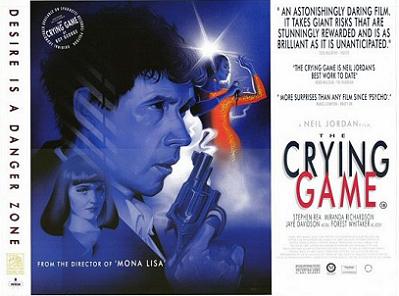
The Crying Game (1992)


Jaye Davidson and Stephen Rea play a dangerous game of attraction

Director: Neil Jordan

Cast: Stephen Rea (Fergus), Miranda Richardson (Jude), Forest Whitaker (Jody), Jaye Davidson (Dil), Adrian Dunbar (Peter Maguire), Tony Slattery (Deveroux), Jim Broadbent (Col), Ralph Brown (Dave)

The Crying Game is one of those little movies that could: a small scale British/Irish drama about human nature and dangerous relationships, which suddenly burst into the world big, was nominated for five Oscars and won one for its creator, turning him into a widely respected writer/director.

The film follows Fergus (Stephen Rea), an IRA soldier who, over a long night, bonds deeply with Jody (Forest Whitaker) a British soldier his unit are holding hostage with the intent of killing him if their comrades are not released. When Jody is accidentally killed trying to escape his execution, and British soldiers wipe out his cell, Fergus escapes to a new life in London, aiming to track down Jody’s girlfriend Dil (Jaye Davidson) whom Jody asked him to find. Fergus discovers things about himself and Jody in London he little anticipated – and also finds that his IRA companions, especially the dangerous Jude (Miranda Richardson), are not as deceased as he believed.

When it was first released in the UK, The Crying Game was a critical and box-office disaster. This was linked to its IRA plotline, largely on account of the film’s unwillingness to stick an unequivocally clear condemnatory label on the IRA. Of course, the film is not a film about terrorism at all – and whatever it says about the rights and wrongs of the British presence in Ireland (very little indeed), I think it’s pretty clear that it shows killing and violence are completely wrong. However, the film was saved by its huge success in America. There, its subject matter didn’t provoke the same level of controversy it was re-marketed as the biggest “twist” film since Psycho.

And ever since then I would say it has stayed in that list of great “twist” films – up there with The Usual Suspects, The Sixth Sense, Planet of the Apes, Fight Club and of course Psycho, among many others. Most of its mystique at the time was due to the fact that the twist was revealed just over halfway through the film and was based around a theme that has gained far more familiarity to us today. I won’t say what the twist is (just in case), as seeing it unfold is a pleasant surprise that turns what we think we know about several of the characters on its head. I’ll simply say that it is a question of identify and leave it at that.

Identity is appropriate, as that’s what this film is about: the images we build about ourselves and how we project those to the people around us. The way our environment, and the people we spend time with, help to shape the people we are. The sometimes unexpected depths that we discover within ourselves. The film is dramatically opposed to label altogether: hence it can present a gunman for the IRA who is a sensitive and kindly soul, whose relationships with others are based on gentleness (and Fergus is just one of three characters in the film who turn out to be very different from our initial perception of them). Many of these reveals are connected to understanding how love and affection can overlap with feelings of attraction and how we express these feelings. This is all parts of the film’s fundamentally humanitarian outlook.

The film has a poetic, at times almost dreamlike, quality about it. There is a lyrical ambience to many of the scenes, with the camera drifting comfortably through the action. Visions of Jody plague Fergus throughout, both day-to-day and (tellingly) during a sexual encounter with Dil. Jody’s image haunts the film, ghost-like, through the many photos of him in Dil’s flat. Many of the events have a similarly haunting sense of being a few degrees out of reality. It’s got the sense of a violent bedtime story or fairy tale in London.

Jordan’s script is outstanding – humane, witty, deeply felt – and the actors embrace the opportunity to play such multi-levelled, difficult-to-pigeonhole characters. It’s also brilliantly constructed into three clear acts, each of which comment upon and deepen the others: we have Fergus and Jody together in Ireland, a tragic growth of friendship and respect between two men; Fergus and Dil in London, a sweet and tentative romance built on secrets; and finally the return of the IRA to London, a destructive thriller. Each act feels like a natural development and there are no juddering changes of tone, as Jordan keeps the focus on the characters and their personal stories and feelings.

A large part of the film’s success is linked to Stephen Rea’s thoughtful and sensitive performance as Fergus, a man who has clearly stumbled into a life of violence despite his sensitive and rather tender nature (and our underlying natures guiding our actions is a major theme of the film). He’s a true lost soul, and his deep (and sudden) friendship with the kidnapped Jody has an ease about it that reveals depths about his character. His relationship with Dil has a sweetness to it, while Fergus is engagingly nervous and tentative of openly expressed love (not to mention that he lies to her – non-maliciously – from the start, as he knows far more about her than she realises). It’s a low-key but commanding performance with a real depth of feeling, and Jordan gives the character a powerful redemptive arc that Rea plays to the hilt.

There is also terrific work from the rest of the cast. This is one of only two films Jaye Davidson ever made, and the untrained naturalness of the acting adds a huge amount to the mystique of the character, as well as making Dil truly sympathetic and intriguing. Davidson’s short career also preserved the unique mystery around the character that was so essential to the film’s success. Forest Whitaker’s English accent is an up-hill battle, but the actor brings his force-of-nature charisma to the part so completely you overlook that he isn’t convincing as a Londoner, a solider or a cricketer. What you do believe is his connection with Fergus, while Whitaker is able to suggest dark hints throughout that his bond with Fergus is as least part manipulation.

Miranda Richardson has the grandest role as a death-dealing IRA hitwoman, which she delivers with aplomb, her dark eyed fanatical fury making her a dangerous antagonist for the film. Jim Broadbent also shines in an early role as an enigmatic barman, but there is hardly a bum note in the acting, although Tony Slattery is perhaps a little too broad as Fergus’ worksite boss.

The Crying Game is a hugely rewarding film to watch, a deep and thoughtful film, packed with wonderful scenes, great acting and guaranteed to lead to discussion and debate after it has finished. Yes it’s a film with a famous twist – but it is not a film defined by that twist. Instead that is only part of the rich tapestry of the film’s exploration of identity, desire and self-knowledge, in which the images we are present to others are as difficult to interpret as the images we present to ourselves.

The Sum of All Fears (2002)

Morgan Freeman and Ben Affleck save the world from nuclear armageddon

Director: Phil Alden Robinson
Cast: Ben Affleck (Jack Ryan), Morgan Freeman (William Cabot), Bridget Moynahan (Dr. Catherine Muller), James Cromwell (President J. Robert Fowler), Liev Schreiber (John Clark), Ciarán Hinds (President Alexander Nemerov), Alan Bates (Richard Dressler), Michael Byrne (Anatoly Grushkov), Colm Feore (Olson), Ron Rifkin (Sidney Owens), Bruce McGill (Gene Revell), Philip Baker Hall (David Becker) 

In the aftermath of 9/11, people debated whether that atrocity would lead to a change in how Hollywood made blockbusters. Would the public still have the taste for American landmarks being destroyed in the name of entertainment? I guess the answer was “sure they would”, because less than a year later Baltimore was being wiped out by a nuke in The Sum of All Fears. And people generally did find it entertaining. As they should: this is not a smart film, but it is fun, and with hardly any violence or swearing it’s a perfect “all generations” viewing thriller.

The fourth entry in the on-again, off-again Jack Ryan franchise, a series of loosely connected but enjoyable films based on Tom Clancy’s novels, this reboots the saga after two entertaining airport-novel style films starring Harrison Ford. Ryan (Ben Affleck) is now a young CIA analyst who is suddenly thrust centre stage in the Agency when Alexander Nemerov (Ciarán Hinds) rises to power in Russia. Before he knows it, he is working closely with CIA chief William Cabot (Morgan Freeman) and briefing the President (James Cromwell). Working with agent John Clark (Liev Schreiber), Ryan investigates rogue nuclear weapons in Russia, little knowing that it is part of a fiendish plan by European neo-Nazis, led by Richard Dressler (Alan Bates), to plunge Russia and the US into a nuclear confrontation.

First off the bat, Tom Clancy hated this film. He even does a commentary on the DVD which is a scene-by-scene breakdown of all the things he doesn’t like and the terrible changes he felt had been made from his book. I can see why he’s upset, but this is actually a very entertaining, solid, slightly old-fashioned piece of film-making. Clancy’s books aim to be “a few degrees to the left” of reality, to present something that could happen. This film is more of a Bond movie, not least in its choice of baddies. The book uses Arab terrorists. Wisely (I think) the film changes this to a set of Bond-villain like Nazis, embodied by Alan Bates’ enjoyable scenery-chewing performance as a slightly camp chain-smoking Nazi (“Ze Fuhrer vasn’t crazee. He vas stoopid”). There is even a scene where one of the plotters, Goldfinger-style, announces ’I will have no part in this madness’ only to be swiftly bumped off. Clancy hated it, but it’s something a little different and also enjoyably silly.

Besides, you might have felt there was enough vibe of reality in there for Clancy with the reaction to the big one being dropped on Baltimore. The build-up to this sequence is very well done, cut and shot with tension, and Jerry Goldsmith’s score really effectively helps with this build. It’s also quite shocking to actually see the plan succeed: and the shots of a mushroom cloud over the city are presented with a sombre sorrow. There is probably more Clancy criticism for Ryan’s effortless travel around the irradiated city (and his totally unaffected cell phone) but this sequence is still damn good.

Similarly skilfully done is the reaction of the politicians. Daringly, the US politicians are to a man sweaty, stressed old white guys (Air Force One takes off to the accompaniment of them screaming at each other). One of them even has a heart attack. The American politicians may be reluctant – but they are the fastest to rush towards pushing the button. They are also shown to be hopelessly lacking judgement when it comes to appraising the likely reactions to their decisions: one reassures the President that the Russians won’t respond to a full nuclear strike against military targets! The fast build from angry words to a bombers is terrifically done.

The Russians are similarly twitchy – and unlike the Americans, far more susceptible to bribery and collaboration with our villains – but interestingly their President is the “reasonable man”, whom Ryan (and the audience) respects. Charismatically embodied by that wonderful character actor Ciarán Hinds (the film deservedly brought Hinds to America’s attention and he hasn’t looked back since), Nemerov is the wisest, smartest guy in the room – a realist and level-headed man. Hinds is actually the stand-out in the film, superbly backed up by Michael Byrne as a shady (but surprisingly cuddly) KGB fixer.

The build-up to the remorselessly exciting nuke and aftermath sequences is pretty traditional fare but well directed by Phil Alden Robinson and a very good cast of actors largely deliver in their roles. Affleck at the time was heading into the height of his Bennifer unpopularity: he gives a decent performance as Ryan, but Ford is a tough act to follow and Affleck doesn’t quite have the same “ordinary-joe” quality Ford and Baldwin brought to it earlier. He also doesn’t quite have the leading man charisma the part needs to carry the film (Affleck’s best work is as a character actor, but he is trapped by his leading man looks). Fortunately Morgan Freeman, calmly contributing another of his wise mentor roles, offers sterling support. Schreiber and Cromwell are also good in key roles.

This is a very traditional, quite old-school thriller, inspired by a combination of Goldfinger and 1970s political thrillers. It’s not a special film – and not even the best in the franchise – but it is invariably entertaining, has a host of well-done scenes, and barrels along. Robinson also has an eye for tension in smaller sequences – a marvellously tense scene simply involves Ryan trying to get a card swipe machine to work – although he is less confident with some of the action. But in showing how quickly our trigger happy masters can push towards Armageddon, this is a film that seems to be endlessly relevant. And wouldn’t you rather have Nemerov of even Fowler running the US than Trump?

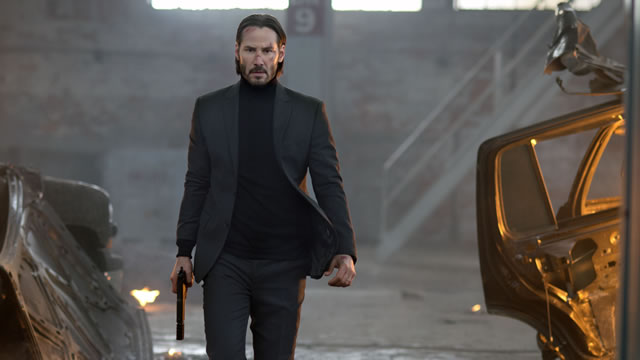
John Wick (2014)


Keanu Reeves: Architect of violence in this witty pulp thriller

Director: Chad Stahleski, David Leitch

Cast: Keanu Reeves (John Wick), Michael Nyqvist (Viggo Tarasov), Alfie Allen (Iosef Tarasov), Adrianne Palicki (Ms. Perkins), Bridget Moynahan (Helen Wick), Dean Winters (Avi), Ian McShane (Winston), John Leguizamo (Aurielo), Willem Dafoe (Marcus), Lance Reddick (Charon)

When B-list movie-making works, it can be a treat. John Wick is such a film. Set in a very distinctive criminal underworld, the recently widowed super assassin John Wick (Keanu Reeves) has left the life of crime behind but is dragged back in when the son (Alfie Allen) of a Russian mafia kingpin (Michael Nyqvist) murders his dog, a final gift from his wife. Wanting revenge for the loss of his last link with his wife, Wick undertakes a roaring rampage of revenge.

John Wick is a film all about momentum. It’s sharp and brutal, with fights and events piling on top of each other. However, it’s also a film told with quite a bit of wit and imagination – it’s got a cool sense of humour, and presents a tongue-in-cheek view of its super assassin story. The film’s pace and immersive action is punctured regularly and very effectively with amusing moments that really hit home. The idea of the criminal underworld having its own secret code, rules, havens and even currency is several times expanded wittily to bring an everyday element into the extraordinary. As an exercise in briefly and simply “building a world” you could look at few better examples than the script for this film.

Keanu Reeves is actually a fine choice for the lead role. His limitations as an actor have always been based above all in his flat and unmodulated Dude voice, so it’s only at moments of vocal emotion (there is one such angry outburst that he struggles with in the film) where even the audience feels that awkwardness of watching an actor at the limits of their range. But his best quality has always been his inherent lovability. As an audience member, you can’t help but care about him. Combine that with his physical brilliance and you have the perfect combination required for this role: you can believe totally in him as a ruthless killer, while also feeling a great deal of affection for him.

With Reeves’ physical abilities, the fights are then very well framed to showcase the fact that the actor is doing the stunts himself. If Quantum of Solace is perhaps the most inept example of high-cut frenetic action, this is at the other end of the scale totally. Simple, clear camera set-ups allow us to follow what happens at all times. Establishing shots and tracking shots show us exactly what is going on and where. This means you can relax and settle into the crackingly efficient violence that fills the film. The fights are inventive, shot with wit, and highly enjoyable in their execution without being excessively bloody or violent. The calm angles and stable camera serve to really accentuate the speed of those in the fights, making the fights visually very original. Despite the enormous body count, it never revels in violence. The patient build up to the first burst of violence also serves to really bond us to Wick’s backstory and his grief at his loss.

However, it’s not perfect. Strangely, despite the fact that the film is quite short, it’s still too long. There is a natural culmination point in the film at the end of Act Two that feels like a very natural, thematic stop point. Act Three resets the table hurriedly to reposition another character as a principal villain and to bring us another confrontation: this time however, the motives are less clear, and the action  just a little too much more of the same. It feels less witty and original than some of the other sequences in the film and to be honest I felt my attention drifting it a bit; the motivation for the final clash just isn’t there in the way it is with the initial enemies.

But this is a very enjoyable piece of pulpy film making, its wit and imagination embraced by some very enjoyable performances from the actors. The fight scenes not only have a unique look to them, they get the balance exactly right between violence and enjoyment. It’s almost the definition of a guilty pleasure .

Primal Fear (1996)


Richard Gere prepares an impossible defence for unbalanced Edward Norton. Twist ahoy!

Director: Gregory Hoblit

Cast: Richard Gere (Martin Vail), Laura Linney (Janet Venable), John Mahoney (John Shaughnessy), Alfre Woodard (Judge Shoat), Frances McDormand (Dr Molly Arrington), Edward Norton (Aaron Stampler), Terry O’Quinn (Bud Yancy), Andre Braugher (Tommy Goodman)

Courtroom dramas are the bread and butter of film drama. You get to deal with good vs evil, right vs wrong – and you even have two advocates on each side there duelling it out on camera for you. Primal Fear came at a time when John Grisham and his like were ruling the bestseller charts, and it’s a fine demonstration of that very late 80s to mid 90s genre: the all-star court case film.

After the murder of a beloved archbishop in Chicago, bloodied altar-boy Aaron Stampler (Edward Norton) is found near the scene. There seems no doubt that he’s guilty. Top city lawyer Martin Vail (Richard Gere) takes his case for the publicity of a big trial, but finds himself believing the boy to be innocent. As the trial begins though, Vail’s psychiatric investigation reveals Stampler has a split personality – his gentle main persona and a violent defensive personality, “Roy”, who admits to the crime.

This is an advanced, well-written trial thriller which, through a combination of some neat lines and some very good performers, manages to bring a lot of life and originality to what could have been a collection of stock characters. Instead, each character in the film feels real and their actions seem part of a coherent personality. The mechanics of the plot also move very smoothly, with a well-handled twist. And as a bonus it has something to say about human nature, about our need to believe in something and how easy it is to tell lies about ourselves and believe them from others.

The film is shot with a good eye for grimy real-life locations and muddy shade-of-grey morality. Hoblit’s direction is crisp and straightforward and he avoids getting any pyrotechnics in the way of the actors – here the performances are the special effects. It’s also a brilliant twist movie that doesn’t telegraph the fact it contains a twist until it suddenly pulls the rug out from under your feet. Hoblit doesn’t give us any advantages over the characters and has the restraint not to show his hand too early – instead he sucker punches us with a sudden downer ending. It’s a masterpiece of genre craft film-making.

Richard Gere at first glance is playing well within his range – a smirking hotshot focused on the win, willing to defend anyone and anything. However, what Gere does really well here is play his persona as an actual persona of the character. The “real” Martin Vail, it becomes clear, is actually almost naïve in his underlying faith in the justice system. He has a touching faith in people and the twist of the film works because we believe how much Vail unwittingly allows himself too be manipulated and conned. He’s the sort of true believer who can playfully mock his faith because his belief in it is absolute. It’s even more crushing, then, when that faith is so cruelly used and abused. The final shot of him alone on the street all but screams “My God, what have I done?”.

But though this film has some of Gere’s best work, this is Ed Norton’s movie. Incredibly, this was Norton’s first ever film, and he seizes the film absolutely by the scruff of the neck. Re-watching the film now, it’s less of a surprise when Aaron’s “Roy” personality bursts out – Norton is so well known now you are almost waiting for him to really let rip – but he nails the contrasts between the stammering, gentle Aaron and the ferocious Roy. You always know which one he is at any time – and even better than that, Norton drops subtle hints throughout to set up the film’s twist (which I won’t give away). His performance is largely a triumph of masterful control of acting tricks and a brilliant demonstration of range, as well as a swaggering display of confidence, rather than a subtle piece of character work, but it’s still an absolute knock out for all that – and totally believable.

Strong performances also come from Laura Linney, making an awful lot of the role of Gere’s courtroom nemesis and part-time lover. Andre Braugher is particularly good as an investigating officer. Alfre Woodward is stern and authoritative but fair minded and just as the judge. Frances McDormand makes what could have been a wet liberal doctor feel like a genuinely caring and dedicated intelligent professional. There isn’t a weak link in the cast, and every character beat feels well observed and natural. How many genre films have failed to manage that?

It all works extremely well and offers all the courtroom fireworks you could want with maximum efficiency. All the actors are working at the top of their game, and the direction keeps the action taut and intriguing. Here’s the thing: the plot makes little sense if you think about it, and Norton’s plan depends on so many variables he could never have known that it would success. But the film is made with such confidence and assurance that it never really matters. The twist still has a lot of impact today – and the film bravely offers no happy endings, only hammers home the system’s corruptness. A very good example (perhaps one of the best) of the courtroom genre.