Tag: Tom Skerritt

Top Gun (1986)

Top Gun (1986)

Cruise flies into movie super-stardom in this fun-but-much-worse-than-you-remember flying film

Director: Tony Scott

Cast: Tom Cruise (Lt Pete “Maverick” Mitchell), Kelly McGillis (Charlie Blackwood), Val Kilmer (Lt Tom “Iceman” Kazansky), Anthony Edwards (Lt Nick “Goose” Bradshaw), Tom Skerritt (CDR Mike “Viper” Mitchell), Michael Ironside (LCDR Rick “Jester” Heatherly), John Stockwell (Lt Bill “Cougar” Cortell), Barry Tubb (Lt Leonard ”Wolfman” Wolfe), Rick Rossovich (Lt Ron “Slider” Kerner), Tim Robbins (Lt Sam “Merlin” Wells), James Tolkan (Cdr Tom “Stinger” Jardian), Meg Ryan (Carole Bradshaw)
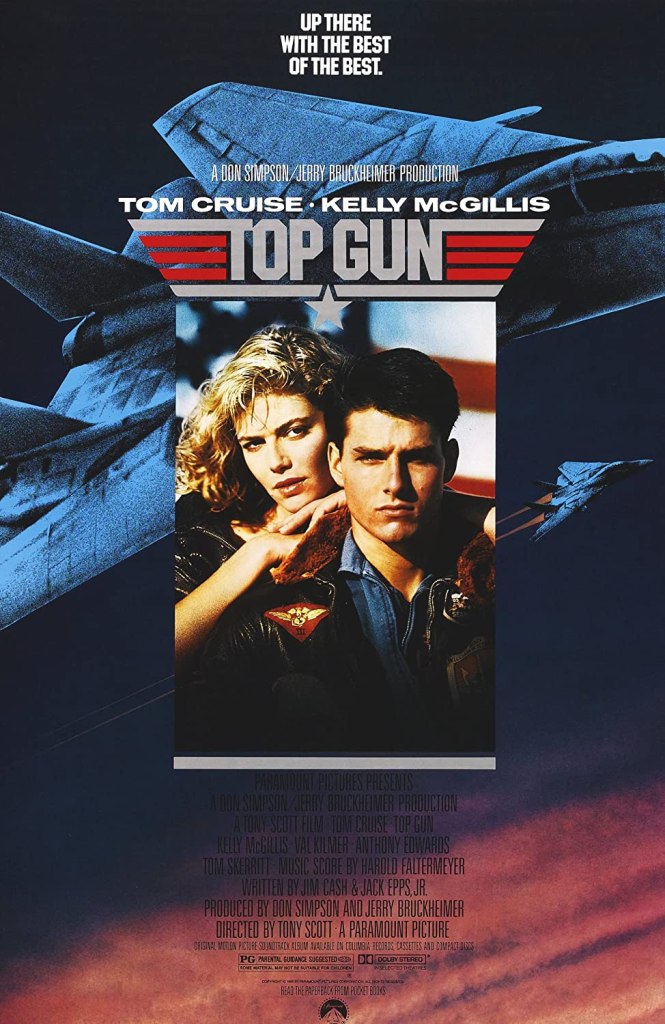
“I feel the need: the need for speed!” Those words lit up mid-80s cinema screens with one of the biggest hits of the decade. Top Gun is still one of Cruise’s most iconic films, its blasting rock-and-roll soundtrack, beautifully backlit romance and cocksure go-getting self-confidence making it one of the definitive Reaganite 80s films ever made. Its legacy is so all-consuming, it’s always a surprise when you sit down to watch it what a fundamentally average it is.

Its plot, such as it is, can be summarised thus: Tom Cruise cockily flies planes and romances Kelly McGillis until Goose dies. Then he flies planes with the same level of skill but slightly more humility and commits to Kelly McGillis. It all takes place in TOPGUN, the navy’s dog-fight training school for elite pilots. Cruise is Pete “Maverick” Mitchell, super-confident best-of-the-best. Kelly McGillis is the astrophysicist and civilian instructor on the course whose heart melts for Tom’s boyish charms. Anthony Edwards is the doomed Goose (he might as well have a skull and crossbones hanging over him – he’s even got a loving wife and son back home). Val Kilmer is Cruise’s rival pilot, super-professional “Iceman”. The training is fast-paced, macho and culminates in a clash with a (conveniently unnamed) country that definitely isn’t the USSR.

There are three things undeniably great about Top Gun. The songs from Kenny Loggins and Berlin are top notch, full of soft-rock sing-along bombast. Scott shoots the hell out of scenes and the sun-kissed beauty framing the various airplanes and aircraft carriers is superb. With its fetishistic worship of the manly glory of the navy and its equipment, the film had full military backing, a huge boon it exploited for wonderfully executed scenes of dogfights and faster-than-sound planes (Scott even paid $25k to get an aircraft carrier to change course – writing a cheque there and then – so a sunset shot would look better). And of course there is Tom Cruise.

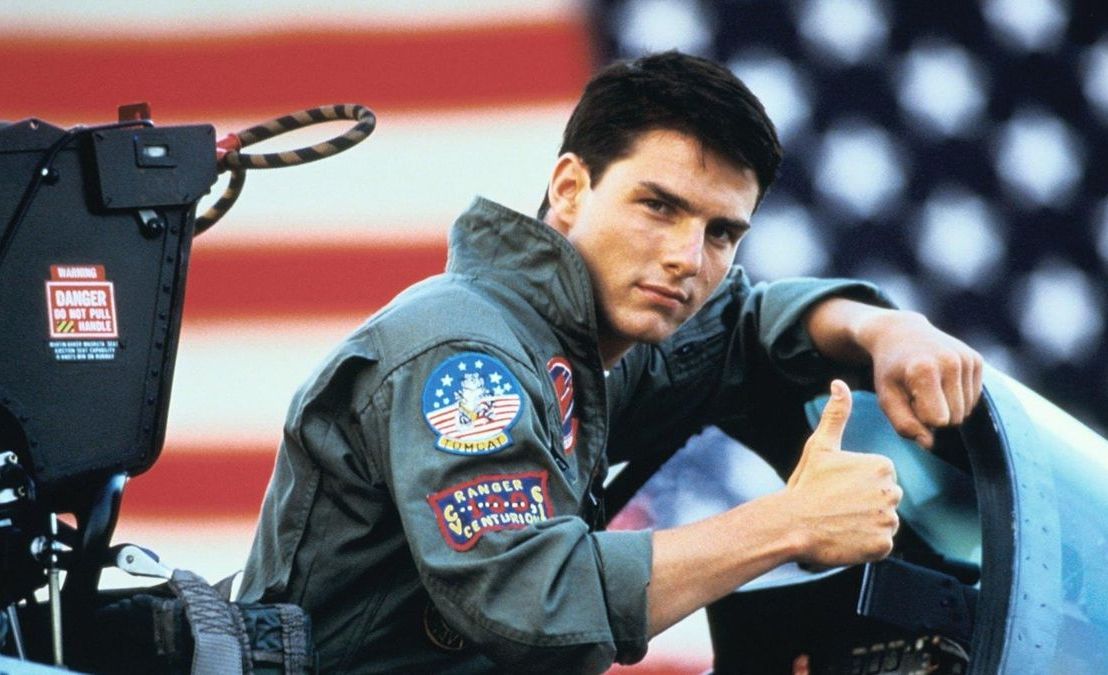
Top Gun is the foundation stone in the Church of Tom Cruise, defining a persona Cruise would effectively riff on for huge chunks of his career. Pete Mitchell is so cocksure he’s even called Maverick. But, as well as being arrogant and over-confident, he’s preternaturally skilled, boyishly enthusiastic, strangely vulnerable, yearns for affection, wins people over with a grin and goes through a crisis of confidence that sands down his negative qualities while never touching his courage, skill and likeability. Cruise cemented his eye-catching charisma and relatability: audiences wanted to be him or be with him. A huge chunk of its massive success is down almost exclusively to what a star Cruise is and how easily he makes this hackneyed stuff work.

The rest is a bizarre mix of half-formed plot ideas, weakly sketched characters and a plot so shallow it almost doesn’t deserve the name. Top Gun is all about a cool guy flying planes accompanied by some excellent songs. There is no depth to its character exploration. There is a dim suggestion Maverick needs to mature (with Goose as the sacrificial lamb to prompt that development) but it’s barely explored. It has no shrewdness in its look at the risk-taking intensity of flying or the type of personalities it might attract. The training is awash with familiar tropes: hotshots, grizzled trainers (two of them in Skerritt and Ironside!) mixing growls with behind-his-back grins at Maverick’s pluck. His rival is the anthesis of Maverick, but (gosh darn it!) he eventually learns to respect him.

The central romance seems thrown in because a film like this needs it – it’s very much An Officer and a Gentlemen in the skies. Maverick’s true emotional love story is with Goose – this surrogate brother/uncle providing Maverick’s only friendship and the vicarious family this Cruise archetype character secretly longs for. But gosh darnit, it’s Hollywood so gotta have a beautiful woman for our hero to manfully seduce. Poor Kelly McGillis looks rather uncomfortable in her ill-shaped and poorly developed character, while her love scenes with Cruise are acted with a slobbering over-intensity that suggests both of them are trying too hard (he constantly kisses her tongue first, which is gross). Perhaps they wanted to really go for it in the hope viewers would overlook the obvious homoerotic tensions of most of the film.

Oh those tensions! Top Gun drips with gleaming, tanned half-naked men squaring up to each other in dressing rooms – and that’s not even mentioning the infamous volleyball sequence (where only Edwards, bless him, wears a t-shirt). Characters forever utter variations on “I’ll nail his ass” lines. Iceman and Maverick take part in a homoerotic-tension fuelled rivalry that culminates in an explosive dog-fight climax and a loving embrace on the deck of an aircraft carrier.

It’s hard to tell how much all this was a joke, and how much Scott, Bruckheimer and Simpson just didn’t notice in the middle of all their glistening, back-lit, fast-paced shooting of military muscle (in every sense) how gay it might look. Maybe they thought people wouldn’t notice either amongst all the military machinery (this must be Michael Bay’s favourite ever film). Top Gun’s aerial footage is super impressive (though it is funny noticing now that famous daredevil Cruise clearly does all his cockpit shots in front of a green screen) even if the whole film feels like an MTV video to promote its knock-out songs.

Top Gun is still fun, even if that’s mostly mocking the nonsense and emptiness it’s built upon. Nothing much really happens, its plot so flimsy it barely stands up against the Mach-9 force of its planes. But it’s got Cruise at his blockbuster best – and when you’ve got that you don’t really need anything else. It’s poorly written, junkfood trash all framed in a fetishistic beauty – but it’s sort of goofy, stupid, empty fun.
The Turning Point (1977)

The Turning Point (1977)

Two women struggle to have it all in a film that wouldn’t have looked out of place in the 1940s

Director: Herbert Ross

Cast: Shirley MacLaine (DeeDee Rodgers), Anne Bancroft (Emma Jacklin), Tom Skerritt (Wayne Rodgers), Leslie Browne (Emilia Rodgers), Mikhail Baryshnikov (Yuri Kopeikine), Martha Scott (Adelaide), James Mitchell (Michael Cooke), Alexandra Danilova (Madame Dakharova), Anthony Zerbe (Joe “Rosie” Rosenberg), Lisa Lucas (Janina Rodgers), Antoinette Sibley (Sevilla Haslem)

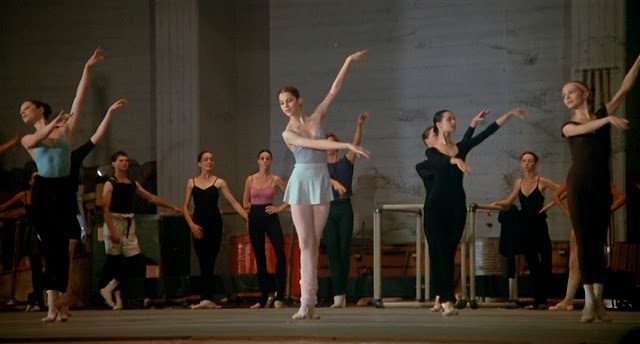
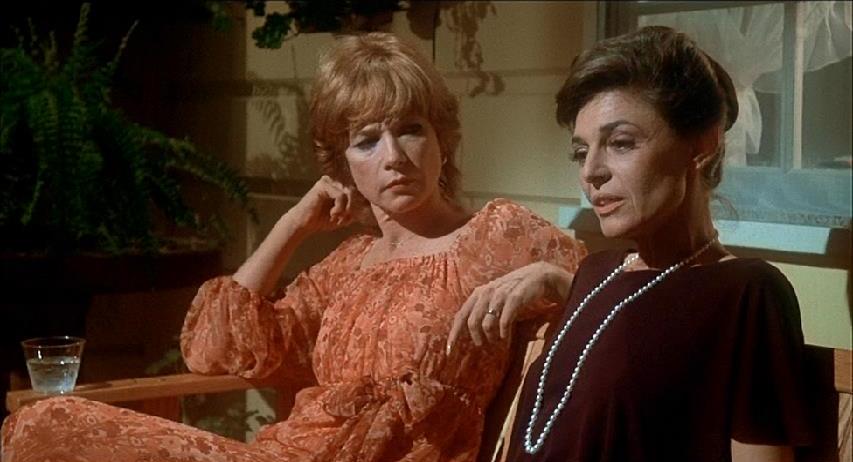
The demands of ballet are unlike any other artform there is. Complete physical and emotional commitment is needed to master it – so that means you got to make choices. The Turning Point is all about those choices. You might even call them ‘turning points’. DeeDee (Shirley MacLaine) and Emma (Anne Bancroft) were two young ballerinas who took radically different paths: DeeDee had a child with fellow dancer Wayne (Tom Skerritt) and left the profession behind; Emma remained with the company to become its prima ballerina. Now DeeDee’s teenage daughter Emilia (Leslie Browne) has joined the company: will she become the new prima ballerina? Or will she decide to focus on a relationship with playboy dancer Yuri (Mikhail Baryshnikov)? Will Emma and DeeDee resolve the tensions between them – and the conflict from their shared parental interest in Emilia?

The Turning Point was a big hit in 1977. That, and the fact that it was about (and featured a lot of) an artform as graceful as ballet seems to have convinced the Academy it merited a haul of eleven Oscar nominations. Come awards night, the film set a record for most unsuccessful nominations, converting none of them into Oscars. Perhaps that’s because, on closer inspection, The Turning Point is a fairly run-of-the-mill soap opera, that mixes in various clichés from backstage, traditional ‘women’s pictures’ and family drama to come up with a plotline that’s eventually very familiar.

For all its positioning as a female-led drama, it essentially boils down to the same old patterns that for decades such films have circled. Turns out women can’t have it all: you can have that successful career, but forever sacrifice the joy of being a mother or you can settle down and have the family but face a life of career unfulfillment. Twas ever thus, ‘tis one or t’other. Essentially the film boils down into a soapy drama about resentments and illicit backstage affairs and little more than that. It doesn’t even really double down on the fun this sort of set-up could provide, instead framing the whole thing as a very serious drama.

But then, the film was an autobiographical affair for those involved. Emma is based on Nora Kaye, who was married to the director Herbert Ross. DeeDee is based on Kaye’s childhood friend Isabel Mirrow Brown, who made the exact same choice as DeeDee, marrying a fellow dancer (just like Tom Skerritt’s character). Her daughter (and Kaye’s goddaughter) was Leslie Browne, who here plays a fictionalised version of herself based on her own experience of starting her ballet career. Characters based on Jerome Robbins, Lucia Chase and other leading figures from ballet and theatre appear. Only Mikhail Baryshnikov’s Yuri is purely fictional (although the character has more than few similarities with Baryshnikov himself, being a Soviet defector).

It does give an additional layer of interest to the film. Ross also mixes in a host of extended ballet sequences which showcase actual professional ballet dancers, with snippets from Swan Lake, Cinderella and The Nutcracker among others. The dancing is breath-takingly good. Not least from Baryshnikov and Browne, who are given multiple opportunities to showcase their skills. Baryshnikov in particular is at the height of his powers, a graceful artiste who moves with an astonishing finesse. Both landed Oscar nominations, one suspects largely on the basis of their dancing.

The acting is left to MacLaine and Bancroft as the leading ladies. There is something a little perverse that MacLaine, the former dancer, doesn’t so much as trot a step, while Bancroft (totally unexperienced) struts parts of Anna Karenina. However, the two actresses rip into these thinly written parts, giving them a lot more force than the film deserves. MacLaine balances motherly pride with bubbling feelings of something uncomfortably close to envy for her daughter’s success, spending time in New York trying to recapture some of her past (including a brief fling with Anthony Zerbe’s lecherous choreographer). Bancroft balances coming to terms with the end of her career as a ballerina with a growing regret that she has been left without a family. She becomes increasingly close to Emilia, mentoring her, dressing her and coaching her through a performance after relationship problems lead to Emilia getting roundly pissed in a bar before the show.

Needless to say, this unspoken squabble for ownership over Emilia – not helped by Emilia’s fury over her mother’s infidelity – only exacerbates tensions between the two women. It builds towards the film’s true climax (but unfortunately not its actual climax, as fifteen minutes remain for Emilia to be coached for her star-making performance) as the two women down drinks and exchange angry words and slaps, leading to a full blown cat fight outside the theatre. The fight later descends into cathartic giggling – and pity the two actresses who filmed it in ballroom dresses in what looks like a gale – but is acted with a great deal of attack by both, who bounce off each other (literally) hugely effectively.

But the scene is also a further confirmation that what we are really watching is a sort of high-brow family soap, that uses ballet as a backdrop for family feuds, scuffles, sexual escapades and tear-filled reunions. And it boils down to that struggle between career and family, the sort of struggle Bette Davis and Joan Crawford films were dealing with in the 1940s. Which is possibly another reason so many took to The Turning Point: even in 1977 it was an old-fashioned piece of entertainment, that did very little new.

That carries across to its whole execution: Ross competently directs the film (this was his annus mirabilis as he directed two Best Picture nominees, this and The Goodbye Girl) but really it gets all the force it has (and more than it perhaps deserves) from the two leads and a fine supporting cast (Tom Skerritt is very good as DeeDee’s laid-back, understanding father who perhaps masks secrets of his own). It’s a soap opera, solid but not spectacular, that really outside its showcase of ballet, doesn’t stand out from several other films of the same genre.

Alien (1979)

Sigourney Weaver is last woman standing in Alien

Director: Ridley Scott

Cast: Tom Skerritt (Dallas), Sigourney Weaver (Ripley), John Hurt (Kane), Ian Holm (Ash), Yaphet Kotto (Parker), Harry Dean Stanton (Brett), Veronica Cartwright (Lambert)

For decades, space was seen as a place of wonder. But Alien reminded us it was also a place where no one can hear you scream. We dream the vast void out there contains life: but what if the life we found was a relentless killing machine, a seemingly invulnerable monster literally having humanity for breakfast? Ridley Scott’s Alien took science fiction and ran it through the blender of horror, turning its space ship into a terrifying haunted house with an alien straight out of slasher films. It’s still a landmark today.

In deep space, the Nostromo’s crew is pulled out of hypersleep early – long before arriving back in our solar system. A strange distress call from an unidentified vessel needs to be investigated, on standing orders from “the company”. The seven-strong crew lands their ship and a party heads out – only to return with third officer Kane (John Hurt) with a strange alien creature attached to his face. The creature can’t be removed until it detaches itself of its own accord. All seems well until an unfortunate dinner party – at which point the crew finds itself being hunted one-by-one by a relentless alien monster.

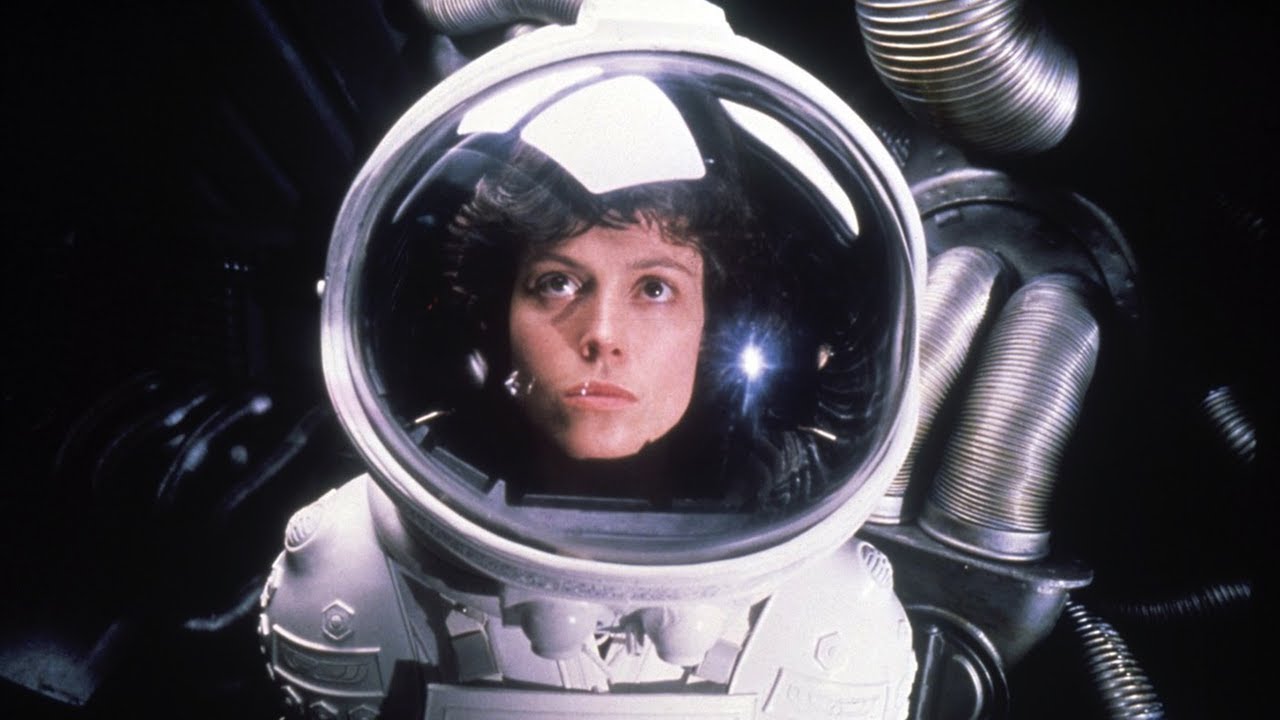
Scott’s film is so famous today it’s very hard not to forget your foreknowledge of what’s going to happen and to experience it as its original viewers did. But it still works brilliantly – even if almost everyone watching knows only Ripley is getting out of this alive. The film is a masterpiece of slow-burn tension punctuated by moments of shocking horror. The final Alien itself doesn’t appear until almost an hour into the picture – but before then we’ve had our nerves more than jangled by the unsettling disquiet of the film’s mood. From the Nostromo, to the storm-laden planet they land on, and the vast alien ship – now a tomb of dismembered corpses with an unsettling organic look, like a giant carcass – everything in the film is designed to put us ill-at-ease. You can’t watch this film and expect anything to turn out for the best.

The camera prowls around the dank, grimy and run-down ship – space travel has rarely looked this unglamorous – like the predator that will hunt the crew. It’s slow, stately lingering on the crew, their faces, the eerily unsettling sounds and score, all serve to act like an advance funeral. Every single beat of the film stresses claustrophobia and dirt. It looks like a horrible trap already, and the film embraces a sense of grim inevitability. The observational style of the editing and shooting as we follow the characters, overhearing their bickering and functional work-based conversations, also helps add to this mounting sense of unease. It’s a surprisingly quiet film for much of its opening act, ambient noise and unsettingly lingering music dominating.

There is a poetical eeriness about the whole film. This is also partly from the sense of the ship being a society in microcosm. Much of the bickering is around bonus pay shares, the working-class engineers of the ship (one of whom is also black) bemoaning their smaller shares. The officers sit at the top, a mixture of entitled, distant, officious and daring. They have their own feuds over status, professional boundaries and personal rivalries. The captain is a laissez-faire professional, who offers only a general guidance and could really be just another member of the crew. The ship is like a giant oil-rig in space, with the crew basically a group of “truckers”. The film is as much about interpersonal tensions as it is about an alien monster who hunts people down.

But it is mainly about an alien monster that tears people apart. After almost an hour of deeply unsettling and unnerving build-up, when the monster (literally) rears its head, it’s a terrifying sight. We usually only see it briefly for small shots, but what we see is pure nightmare fuel. The creature is terrifying in its violence and power. It is partly human but also completely revolting. Covered in slime, it looks like a bizarre mix of a man, a giant penis and a vagina (its designer, HR Giger, reasoned nothing would be more unsettling and disturbing to us than seeing a beast that’s partly inspired by our own sexual organs). It creeps in corners, embraces the many shadows of Scott’s set and its capacity for violence seems unstoppable. Sharp editing and suggestion elaborates the visceral horror of its extending jaws punching through bone and flesh. It moves like an interpretative dancer and leaves a trail of blood. It’s unstoppable and infinitely cunning. It looks like your worst nightmare.

It’s all washed down with body horror. An alien that smothers its victims and shoves an egg down their throat which hatches through their chest becoming a slaughtering beast. There is an uneasy sexuality about this, right down to the “birth” of the creature being a grotesque parody of childbirth. The “birthing scene” is a masterpiece, the first moment in the film when the tension between the crew has eased – and the film itself seems to have relaxed for a moment from the knot of tension – that turns into one of the most memorable moments of body horror ever. The actors were allegedly told what would happen – but not how graphic it would be – and their horror-struck disgust (Veronica Cartwright was nearly knocked over by a powerful jetstream of mock blood and guts) and and shock gives the film a priceless realism.

Watching the film, it’s striking to me how much John Hurt’s Kane is shot as the hero early in the film. It’s he who wakes first from hypersleep. It’s Kane we follow the most for the early part of the film – he’s the one piloting the ship, volunteering to answer the distress call, urging his crew mates on as they investigate the alien vessel – it’s Kane who seems to be the hero. Making his brutal demise even more of a subconscious shock. On the other hand, Ripley is introduced as an officious, unpopular, by-the-book officer who it seems few other members of the crew like (Sigourney Weaver’s praetorian attitude helps a lot with this) – if you had to bet on someone to bite it early on, you’d pick her. The film continues to defy expectations. Characters who seem like they might be invulnerable are slaughtered early. Those who looked vulnerable survive until late on.

It’s a very strong cast. Weaver magnificently grows in authority as the film progresses, turning her abrasiveness into strength of character and moral determination. Hurt is very good as the unknowing victim-in-waiting. Kotto, chippy and defiant, is another stand-out. The finest performance through might well come from Ian Holm as science-officer Ash. Precise, cold, distant – but always hiding his own secret agenda – it’s an unsettlingly controlled performance that leads to a pay-off reveal that still works brilliantly today (and the character would have one of the most memorable death scenes in film, if he wasn’t in the same film as the most memorable death scene).

Scott’s filmmaking is brilliantly controlled, and the film is a horrifying masterpiece of tension and terror. The monster is skilfully shown at its worst (you’d never even guess in actuality it’s little more than a Doctor Who man-in-a-rubber-suit) and its design is faultless perfection. It’s not completely perfect – its build up might be ten minutes too long, and a late sequence that sees Weaver wearing little more than her undies looks hideously dated today – but it’s pretty close. Science fiction has never been scarier than it is here – hell the movies have rarely been scarer. In space no-one really can hear you scream.

M*A*S*H (1970)

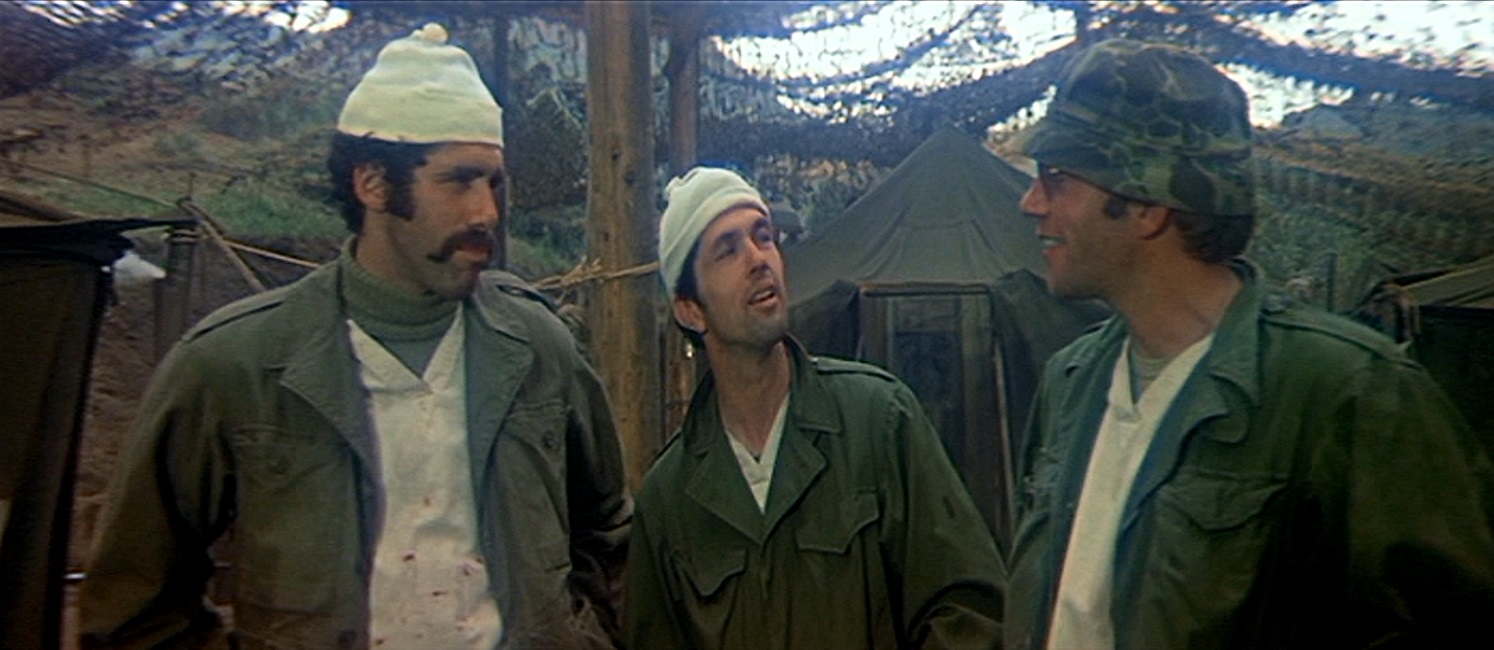
Elliott Gould, Tom Skerritt and Donald Sutherland are three madcap surgeons in Robert Altman’s M*A*S*H  a film that looks less screwball and more misogynist every day

Director: Robert Altman

Cast: Donald Sutherland (Captain “Hawkeye” Pierce), Elliott Gould (Captain “Trapper” John McIntyre), Tom Skerritt (Captain “Duke” Bedford), Sally Kellerman (Major Margaret Hoolihan), Robert Duvall (Major Frank Burns), Roger Bowen (Lt Col Henry Blake), Rene Auberjonois (Father Mulcahy), David Arkin (SSgt Wade Vollmer), Jo Ann Pflug (Lt Maria “Dish” Schneider), Jon Schuck (Captain “The Painless Pole” Waldowski), Carl Gottlieb (Captain “Ugly John” Black)

Robert Altman’s counter-culture M*A*S*H was his first (and probably only) unreserved smash hit, the film where Altman cemented his style as a director. Although set in the Korean War, the film was clearly more about attitudes towards Vietnam. Today M*A*S*H is probably more well known as the filmic spring board for the extremely long-running TV show starring Alan Alda (which, at 11 years, lasted seven years longer than the war it was set in). 

M*A*S*H (like the series) covers the mad-cap antics of the doctors at the 4077thmedicine outpost near the frontlines of the Korean war, a casualty clearing station where young men are patched up and either sent back to the front line or sent home. While the base is a military operation, most of the doctors serving there are drafted civilian doctors rankled by rigid military discipline. The leaders of this prickly bunch are “Hawkeye” Pierce (Donald Sutherland), “Trapper” John (Elliot Gould) and “Duke” Bedford (Tom Skerritt), with their targets ranging from generals to the stiff-backed military figures on the base, specifically the officious but less-competent surgeon Frank Burns (Robert Duvall) and Head Nurse Major Hollihan (Sally Kellerman).

M*A*S*H is the first expression of what became Robert Altman’s signature style as a director. The film has a grimy immediacy that throws the audience into the middle of the action, and is cut with an edgy lack of artifice that at the time was seen as barely competent film-making. That didn’t outrage people as much as Altman’s willingness to allow a lack of conventional discipline in dialogue delivery, with actors overlapping wildly, some dialogue drifting out of earshot or not being captured on screen, no real story being developed through it. It’s a deliberately scrappy, scratchy, almost clumsy film shot with a great deal of artistic discipline (including a spot on The Last Supper parody) but cut and sound-edited with a casual precision that makes it feel extraordinarily experimental.

It infuriated its screenwriter Ring Lardner Jnr (no doubt the Oscar that he received soothed his pain), and Altman’s loose, improvisational style and unwillingness to go for conventional framing and style also alienated his leading actors. Altman and Sutherland (with Gould’s support) each pushed for the other to be dismissed from the film (Sutherland has claimed to have never seen the film, and ton have never understood its success; Gould later apologised by letter to Altman and worked with him several times again) and the whole film’s final style – its influential fly-on-the-wall vibe and nose-thumbing lack of formal discipline – can be attributed completely to Altman’s vision and artistic independence.

The film is important as a key landmark in film-making style and in Altman’s development as a director – but there is no other way of saying it, it has dated extraordinarily badly. For those more familiar with the TV show, its tone is going to come as quite a shock. The TV show is a lighter, sillier, more socially conscious creation (increasingly so in its later years) where the tone was more japery and deadpan silliness. The film is cruel, and its lead characters are swaggering, alpha jocks and bullies, whose meanness and astonishing levels of misogyny are constantly celebrated and rewarded. For those who remember Alan Alda as Hawkeye, Donald Sutherland’s viciousness is coming to come as quite a shock!

Hawkeye and Trapper John’s vileness at frequent intervals is pretty hard to stomach (the less said about the racist, unpleasant Duke the better). The film is really keen to show that all this rampant cruel practical jokery is a survival mechanism against the horrors of war, and the difficulty of dealing with patching young soldiers up to send them back out to die. But the film never really gives us a sense of the war, and the surgery scenes (while effective in their bloodiness and counterpointing the frat house atmosphere of the rest of the film) fail to create that ominous sense of senseless never-ending conflict that the film needs to balance out the vileness of the humour. Further, while Hawkeye and Trapper John are both shown to be dedicated and gifted professionals, they also remain two-dimensional figures, never really shown to have an emotional hinterland that expands their work. They are instead more like Wall Street stockbrokers: excellent at their job, but still a pair of arseholes.

Their attitude to women – and the film’s attitude – is beyond troubling today, it’s flat out offensive. The nurses on station are treated as no more than snacks for the men to enjoy, that they are entitled to pick up as often as they like, and who are barely given any character at all. Sex is as much an entitlement as rations. On his promotion to Chief Surgeon, Trapper John demands (half-jokingly) sex, while Hawkeye “volunteers” a woman to help “cure” another character who fears he has turned homosexual and is considering suicide. Counter culture against the war is celebrated throughout – but it shown in this film to be overwhelmingly a masculine campaign, in which women have no place and no equality. Men can feel the war is terrible, and men can rebel against authority, but women exist only to service their needs.

All of this boils down into a real bad taste in the film’s treatment of ultra-professional Major Hoolihan. Reviled by Hawkeye, Trapper John and Duke for the twin crimes of taking her military career seriously and not being interested in sex with Hawkeye, Hoolihan is systematically degraded and humiliated throughout the film. From having her sex with humourless prig and fellow disciplinarian Frank Burns broadcast around the camp (giving her the nickname “Hot Lips” from her pillowtalk, a title she never escapes) to having the shower tent collapsed around her in front of the whole camp to settle a bet about whether she is a “real blonde” or not – her reaction to which we are misogynistically encouraged to view as hysteria, as dismissed by her commanding officer – it’s tough to watch. The one compliment she gets in the film on being a good nurse is accompanied by her insulting nickname, and by the end of the film she has been reduced to being depicted as an air-headed cheerleader at a football game. Even her credits picture shows her ultimate moment of humiliation. She’s seen as a Blue Stocking, unnatural because she is attractive but not willing to be sexually available to men. This is the sort of treatment that could drive a person to suicide, here treated for laughs. It’s impossible to watch with a smile today.

And it’s the dated part of the film as Hawkeye and Trapper are never questioned for this behaviour – indeed they are celebrated and encouraged throughout as fun, cool guys – when in fact they are the worst sort of jock bullies and their antics the sort of tedious frathouse rubbish that blights too many all-male clubs. They are working class Bullingdon boys, who value nothing, with the film giving them passes because they are great surgeons. Sutherland in particular isn’t charming, he’s creepy and unsettlingly cruel, while Gould at least has a madcap goofiness with touches of humanity. 

Two hours with these arseholes is a long time, and the film just plain isn’t funny enough for what it is trying to do – neither does it convey the horrors of war enough, or the men’s understanding of it. More time shown on the surgeons at least acknowledging the horrors might have helped wonders – but the film assumes that we know what they are feeling and just rolls with it. You could generously say they are cruel in a cruel world. But the film never acknowledges the essential meanness of the humour here, and tries to involve us all in it with no sense of conflict or concern. It’s a troubling film to watch today, its rampant sexist cruelty is offensive and its lack of charm purely unintentional. Time will continue to be cruel to it.