Tag: Tom Waits

Licorice Pizza (2021)

Licorice Pizza (2021)

Young romance in a changing time in Paul Thomas Anderson’s unconventional love story

Director: Paul Thomas Anderson

Cast: Alana Haim (Alana Kane), Cooper Hoffman (Gary Valentine), Sean Penn (Jack Holden), Tom Waits (Rex Blau), Bradley Cooper (Jon Peters), Benny Safdie (Joel Wachs), Skyler Gisondo (Lance), Mary Elizabeth Ellis (Momma Anita), John Michael Higgins (Jerry Frick), Christine Ebersole (Lucy Doolittle), Harriet Sansom Harris (Mary Grady)
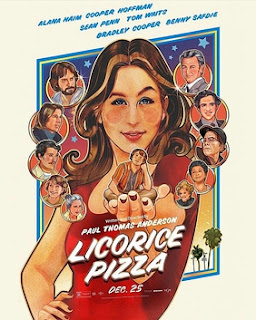
Is there a force harder to understand than love? That’s basically the theme of Paul Thomas Anderson’s delightfully whimsical film, which explores an unlikely relationship in Los Angeles in 1973, played out to a backdrop of the OPEC gas crisis. Told with a dreamlike grace and overflowing with affection and warmth for its characters, it’s a deceptively simple film that is a masterpiece of heartfelt craft.

Standing in line to have his photo taken for his High School picture, 15-year-old Gary Valentine (Cooper Hoffman) is instantly smitten with cynical photography assistant, 25-year-old Alana Kane (Alana Haim). Much to her surprise, his claim to be a child actor in the movies is actually true – he’s co-starring with Lucille Doolittle (Christine Ebersole, in a thinly veiled spoof of Lucille Ball) in a movie. He’s also a budding entrepreneur, setting up a business selling water beds in LA. Alana still doesn’t know what she wants to do with her life, but finds herself drawn to Gary, despite her acute awareness of their age difference. The two of them become business partners and drift in and out of friendship, never quite sure exactly how they feel about each other.

Now I guess you might well have checked yourself there at the thought of a romance between a teenager and a 25-year-old. But there is no prurience here, no masturbatory coming-of-age fantasy with an older woman or sleazy grooming. This is instead a very genuine, sweet and moving romance between two people who only really have numbers keeping them apart. It particularly works because Gary in many ways feels about 5 years older than he actually is and Alana often feels about 5 years younger than she is. In many ways they are both twenty-year-olds – and it’s only the fact that they are not which puts a barrier between them being together. As such it becomes very easy to accept their potential relationship, and even root for it.

That’s massively helped by the fact that these two characters are marvellously embodied by two first-time actors. Anderson specifically wrote the role for Alana Haim, member of family rock group Haim (Anderson has directed several of their music videos, and was taught by Haim’s mother). She’s stunning: prickly, quick-witted, cynical but also vulnerable and sensitive. She’s desperate to find some sort of purpose in her life: exploring the role of trophy girlfriend, businesswoman and political campaigner, but always seems like she’s slightly lost, for all her defiance. Haim is also wonderfully exasperated and befuddled by the interest she feels for this younger guy, barely able to acknowledge she might have feelings for him. Haim is superb.

Gary, played by the son of regular Anderson collaborator the late Philip Seymour Hoffman, is equally well bought to life by Cooper Hoffman. Gary’s career as a child actor is coming to an end: as we see through a disastrously over enthusiastic audition, which the casting directors watch out of a polite respect. But Gary has the go-getting hustling skills of someone much older. He’s got an eye for business opportunities – water beds, film productions, pinball machines – that would be the envy of others. He’s smart, confident, frequently cocky, assured – but at times also staggeringly immature (like a teenage boy he’s obsessed with boobs and Alana watches with frustrated despair as he and some friends drag out miming a wanking gag for what seems forever). He’s also still sometimes just a kid: mistakenly arrested at one point, he sits in terror in a police station and, even when uncuffed and released, is too scared to leave the station without Alana’s encouragement.

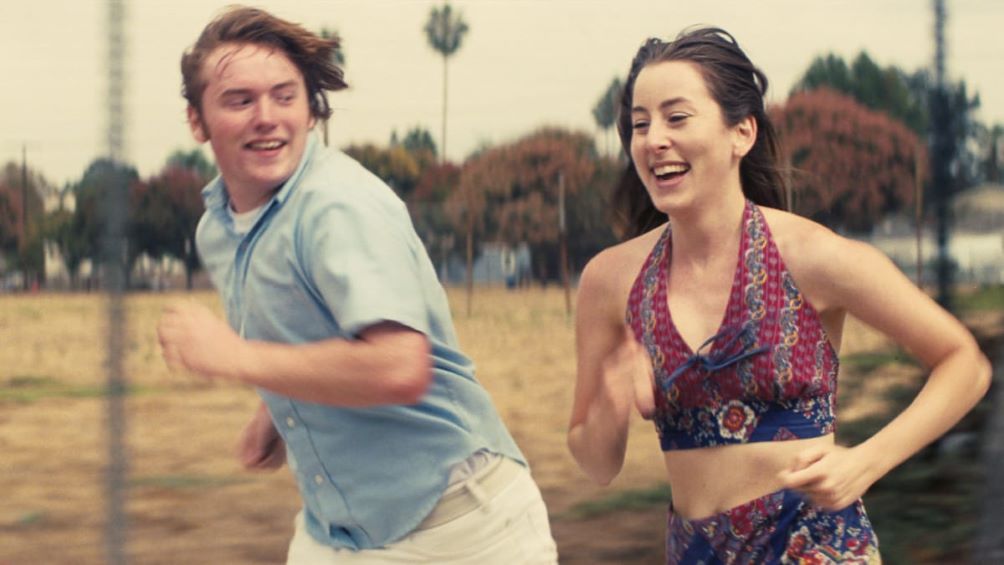
That arrest scene is yet another moment that reaffirms the deep bond and love between these two people. Wrongly arrested for nominally fitting the description of a suspected killer – “Look forward to Attica!” the police taunt him – he’s hauled from an Expo. Alana follows, running full pelt after the squad car – even though at this point they’ve not spoken for weeks – and then holds him for what feels like forever when he is released (before, of course, slapping him and saying “What did you do?”). Later, when Alana falls while taking part in an ill-advised late-night motorbike stunt, Gary will run the length of a golf course to make sure she is alright (despite, again, the two of them having cut ties before this). Moments like this sing with a real romantic force.

Particularly as this is such a love-hate film. Alana and Gary constantly hurt each other, finding ways to get into perfect sync only to screw it up. Gary is heartbroken when Alana starts to date his older co-star (a smug atheist, played wonderfully by Skyler Gisondo). Alana is overcome with jealousy and pain when Gary flirts and kisses a school crush his own age at the launch of their water-bed business. After auditioning for a movie role, Alana delights in making Gary uncomfortable when he walks into the bar where she is enjoying a drink with the movie’s male star. Through it all, these two are drawn back to each other time and again – and when the chips are down their loyalty and love to each other is absolute, even if they can’t always admit it to either themselves or each other.

Around the two outstanding central performances, Anderson constructs a series of scenes and skits that drift from one to the other. The whole film has a curiously dreamlike transition structure: it’s frequently hard to tell how much time has passed and the narrative omits overly functional scenes, so we frequently see a situation has changed but only an implication of why (example: Gary’s mother tells him she can’t chaperone him to New York for a TV appearance – next shot Alana and Gary are on a plane. How was this agreed? Who cares!). Each of the sequences plays out with a shaggy-dog story charm, directed with the confidence and brilliance of a director who is happy to make it look easy. And let me tell you, very few could pull off something as light and charming.
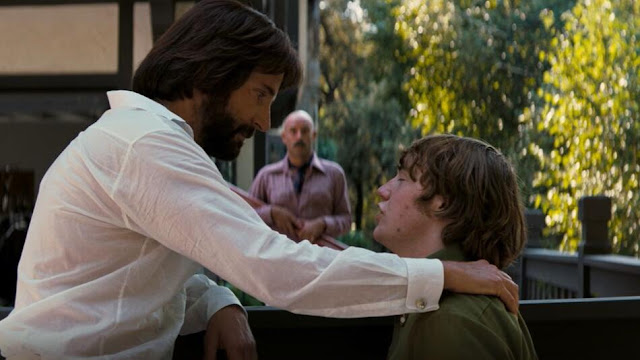
The film is stocked with delightful cameos. John Michael Higgins is very funny as the owner of a Japanese restaurant, with two successive Japanese wives who he “translates” for by repeating in ludicrously Japanese accented loud English whatever has just been said. Harriet Sansom Harris is very funny as a plugged-in agent. Ebersole is a monstrous attention-hungry star. Sean Penn is funnier than he’s ever been playing a version of William Holden, pissed and barely able to distinguish between his film roles and real life, cajoled by an equally pissed director (Tom Waits on top form as a sort of Peckinpah-Huston combo) to perform a motorbike stunt late at night. Best of all is Bradley Cooper, who burns through his brief scenes as an unhinged Jon Peters, a whipper-cracker of unpredictability and insatiable horn.

But it’s the two leads that give this heart, and Licorice Pizza is an amazingly sweet, tender, endearing and deeply charming love story about a couple who can’t quite understand why they want to be together and spend most of the movie making sure they’re not. Anderson brings it altogether with immense homespun charm – this is almost a home movie, Haim’s family play he character’s family, the cast is stuffed with Anderson’ family and friends – and Licorice Pizza is the sort of delight that shouldn’t work, but very triumphantly does.

Bram Stoker's Dracula (1992)

Gary Oldman prowls the night as Bram Stoker’s Dracula

Director: Francis Ford Coppola

Cast: Gary Oldman (Count Dracula), Winona Ryder (Mina Murray), Anthony Hopkins (Professor Abraham van Helsing), Keanu Reeves (Jonathan Harker), Richard E. Grant (Dr Jack Seward), Cary Elwes (Lord Arthur Holmwood), Billy Campbell (Quincy P Morris), Sadie Frost (Lucy Westenra), Tom Waits (Renfield)

In the 90s Francis Ford Coppola planned a series of high Gothic films of classic monster stories, kick starting the plans with his own production of Dracula (the only other film that came of this was Kenneth Branagh’s equally operatically overblown Mary Shelley’s Frankenstein). Going back to the story of the original novel (more or less), Coppola presented a deliberately high-intensity, theatrical, over-the-top version of Stoker’s tale that becomes as overbearing as it is visually impressive.

In 1462 Vlad the Impaler (Gary Oldman) renounces God and becomes Dracula, after false news of his death leads to his wife (Winona Ryder) committing suicide and being damned by the church. Over four hundred years later, the immortal vampire Dracula plans to travel to England, with his plans unwittingly aided by his solicitor Jonathan Harker (Keanu Reeves). His interests are peaked all the more when he sees a picture of Harker’s fiancée Mina (Winona Ryder again) – the reincarnation of his dead wife. Dracula heads to England, preying on Mina’s friend Lucy (Sadie Frost) leading to an alliance of Lucy and Mina’s friend, led by Professor van Helsing (Anthony Hopkins) to combat Dracula’s villainy and save Mina from her own dark temptations to join the besotted Vampire.

Coppola’s film doubles down on Gothic romance, thundering through the action with everything dialled up to 11. The (rather good) score hammers home every beat, the camera swoops and zooms through a parade of tricks, wipes and dynamic angles with cross fades frequently throwing two images on screen at the same time. It makes for a sensual – in more ways than one – overload, but also a rather oppressive viewing experience, with no respite or sense of calm but every single scene delivered with stomach churning acceleration.

It’s a film directed with a deliberate operatic style, that celebrates (and makes no attempt to hide) its set-based theatricality. The opening sequence sets the tone with its Kurosawa inspired costumes in front of an Excalibur style blood-red sky, with battle scenes (and impalings) staged as an elaborate puppet show. Oldman – with a hammy Eastern European accent that you could wade through like treacle – then rages and roars over his wives crumpled body, stabbing a cross that leaks blood all while images are cross-cut showing his wives demise and the beginnings of his own monstrous transformation. The film doesn’t ease up from there.

To be honest Coppola massively over-eggs the pudding, producing an over-blown monstrosity of a film that shouts and shouts and shouts and drains all subtlety from every frame. In particular the sexual undertones of Vampirism – and the harsh male judgement of female sexuality – that the book explores are placed unsubtly front and centre. Every vampire attack is presented as a positive ravishing, Frost and Ryder writhing orgasmically (poor Frost has to undergo the indignity of being humped and bitten by a Dracula in part human-part wolf form) while boobs are left on display after every single assault. From an early scenes that sees Lucy and Mina gawping at a pornographically illustrated Arabian Nights, we are left in no doubt that IT’S ABOUT SEX YOU KNOW.

Coppola shows no restraint at all in his directing, which leaves nothing to the imagination, and ends up leaving the actors adrift between a film that is part serious attempt to film the book and part ludicrous bodice ripper, like the cheapest 60s salacious horror film from the worst excesses of Hammer.

It certainly leaves the actors adrift. Oldman gives it a go with gusto, even if he seems completely lost as to what tone this character should hit (is he a monster, a lost soul, a conflicted lover, a megalomaniac – who knows?). Anthony Hopkins channels Orson Welles with the sort of ham that was to become more-and-more his go to in later years. Winona Ryder does her best with a role that oscillates wildly between Good Girl and Minx. She’s saddled with an English accent, which restrains like a straitjacket. Tom Waits has fun as the insane Renfield (here imprisoned in a crazy asylum that resembles a medieval dungeon).

The rest of the performances are pretty much abysmal. Poor Keanu Reeves is left ruthlessly exposed, horrendously miscast as a stiff-upper lip English lawyer in a performance that surely goes down somewhere in history as one of the worst ever. His acting here would barely scrap by in a school play, his delivery of the dialogue wooden beyond belief and some talcum powder added to his hair for the film’s later sections only makes him look ridiculous. Reeves is a decent performer in the right role, but he was never worst case than this. But then the rest of the cast are pretty much just as bad: Frost is out-right awful, hopelessly unable to make Lucy anything other than a slut, while Grant, Campbell and Elwes are all wooden and dull to a man.

The film does get some points for reverting closer to the plot of the book – unlike many versions – although the addition of the love story between Dracula and Mina is marred by tonal problems and the utter lack of chemistry between Oldman and Ryder (they famously fell out on set and the film never recovers). Coppola directs the film with no discipline at all, and no sense of balance between spectacle and story. While it has many merits in its design – it won no less than three Oscars and the costumes, make-up for Oldman and much of its look and style are flawless – it’s basically a pretty over-bearing and dreadful film that shouts at the viewer so long and so hard that it becomes easier in the end to laugh at it rather than with it. A sad misfire.

The Fisher King (1991)

Robin Williams and Jeff Bridges go on a quest in Terry Gilliam’s decent but overlong The Fisher King

Director: Terry Gilliam

Cast: Robin Williams (Parry), Jeff Bridges (Jack Lucas), Mercedes Ruehl (Anne Napolitano), Amanda Plummer (Lydia Sinclair), Michael Jeter (Homeless Cabaret Singer), David Hyde Pierce (Lou Rosen), Lara Harris (Sondra), Harry Shearer (Sitcom actor), John de Lancie (TV Executive), Tom Waits (Veteran)

In 1991 Terry Gilliam was seriously worried he might be unemployable. After the famous feud with his producers over the editing of Brazil, his follow-up The Adventures of Baron Munchausen had flown over budget and bombed at the box-office. For Hollywood Gilliam was the worst kind of maverick – trouble with no record of financial success to give him the licence to do what he wanted. So he was thrilled to be offered the chance to direct The Fisher King, his first ever “for hire” job, a sentimental but surreal romantic buddy movie. It’s financial and critical success almost certainly saved his career.

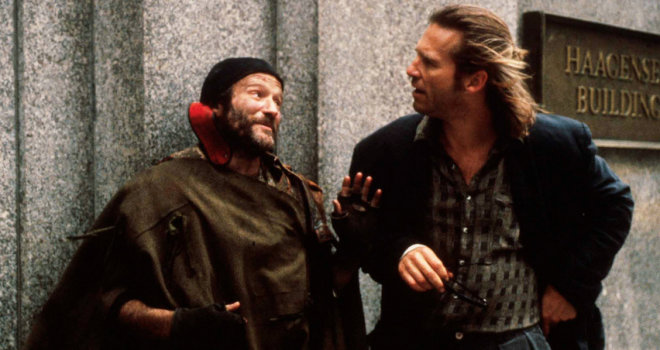
Jack Lucas (Jeff Bridges) is a New York radio shock jock, whose show accidentally provokes a lonely and confused man to massacre the customers at a late night bar. Three years later and Jack’s career is over and he is working as a co-owner of a video rental star (and live-in lover) with Anne Napolitano (Mercedes Ruehl). One day – drunken and suicidal – he is saved from a gang of young thugs by eccentric homeless man Parry (Robin Williams). Jack discovers three years ago that Parry was a respected professor of English literature, whose life fell apart after his wife was killed in the same bar massacre that ruined Jack’s career. The two men are drawn together – but can they save each other?

The film is based on the myth of the Fisher King, the king charged with finding the Holy Grail but could not find it for years – only for a fool to present it to the king full of water to drink, revealing it was there in the King’s possession the whole time. The fool helps because he is “purer” than those more worldly around him. The idea that Richard LaGravenese’s screenplay is leaning on is that these two characters – Jack and Parry – alternate between them the roles of Fisher King and Fool, both slowly doing things for each other that change their personalities and allow them to adjust back into the world and become comfortable with the people they are.

Reading that it should become clear that this is a sentimental film – and it certainly is. It’s also hellishly overlong for such a slight story of tragedy leading to overcoming personal crisis. We know watching the film from the start that Jack Lucas is a bad guy – and Gilliam shoots his opening scenes of Radio presenting with great skill, using high angles, extreme close-ups and shots that prevent us getting any real sight of Jack, making him as impersonal and contemptable as possible in his shallowness, pride and thoughtless cruelty. It’s not a mystery to expect that we are due to watch a triumph of the human spirit film, in which Jack becomes a better man. The film takes a very long time making this simplistic point.

The catalyst is Robin Williams, in a role tailor made for him as a hyper-active, manic personality mixed with tragedy and depression. To be honest Williams is frequently over indulged in the role – despite his Oscar nomination – heading over the top too often, and often over-egging the pudding both in Parry’s energetic enthusiasm and also in his moments of tragic depression. Parry is given a romantic sub plot with Amanda Plummer’s nervous office worker (a character who is little more than a collection of quirks than a personality, and it’s a shame it’s led to Plummer being typecast in such eccentric roles) that is almost insultingly slight and one-sided (he comes across a bit like a stalker) and lacks any of the charm needed for the story to work.

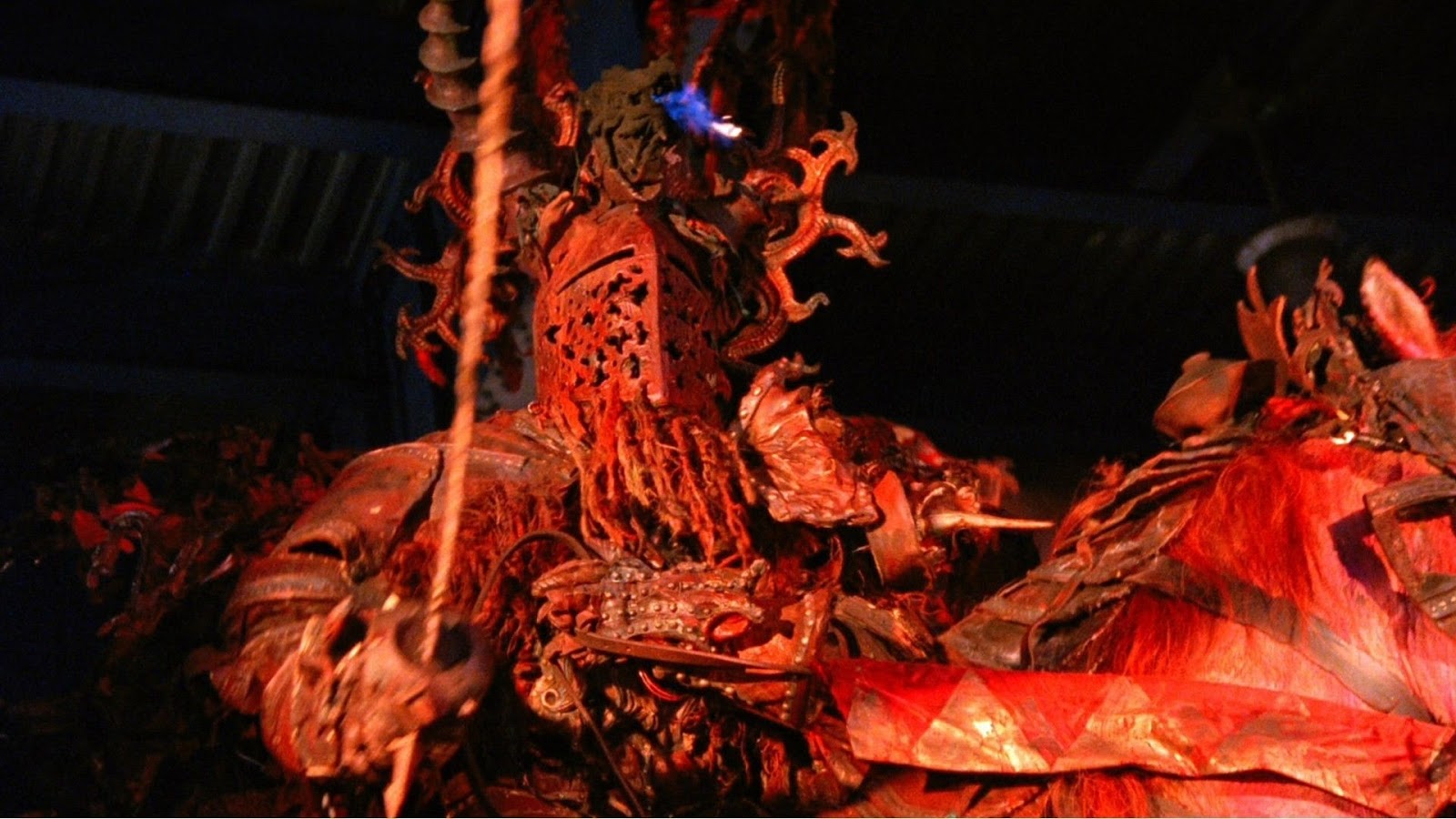
Parry is used to tie the film into further Arthurian flourishes with his obsessions with the legend. Parry visualises a sinister Red Knight – a mental expression of his grief and horror at his wife’s death, which takes the form of the appearance of his wife’s blood splattered face – which chases him through the city. Parry is also obsessed with the discovery of the Holy Grail, which he claims can be found in a millionaire’s faux medieval castle in the centre of Manhattan. This Arthurian stuff is often rather crow-barred in, but holds more interest than traditional plot-lines of people rediscovering their humanity and capability of bonding with others.

Jeff Bridges actually takes on the far harder role as Jack Lucas, a character who has to go on a firm development from start to finish. While Parry is a deliberately eccentric figure, Jack is the one who must journey from arrogance and pride to selflessness and humanity. Bridges does it very well, with a neat line in under playing and an ability to suggest the warmth, shame and self-disgust that Jack works hard to cover up. He’s also blessed to share scenes with Mercedes Ruehl who is outstanding (and Oscar winning) as his girlfriend, the most humane, engaging and real character in the film, a woman who seems at first blowsy and cheap (Jack clearly believes she is beneath him) but reveals more and more depths and capacity for honesty, love and generosity.

Gilliam has a sharp eye for the huge gap between wealth in poverty in 90’s New York, and how the two worlds are geographically only a width of a piece of paper, despite being worlds apart. His direction uses many of his flourishes with great effect. Fish eyed lens POV shots, low angles, stylistic dream sequences, a dream sequence where Grand Central station is full of dancing travellers like a mighty ballroom – many of the sort of things you see in his films are here. To be honest, I found some of the flourishes a bit overwhelming in a story that is so slight and so grounded in just four people’s interactions and quests for salvations. But it works, and Gilliam gets some moments of romantic and platonic love that really work. But it’s still a slight film that goes on far too long, and it eventually loses the viewer in its time-consuming journey towards expected heart-warming moments.