Tag: Victor Fleming

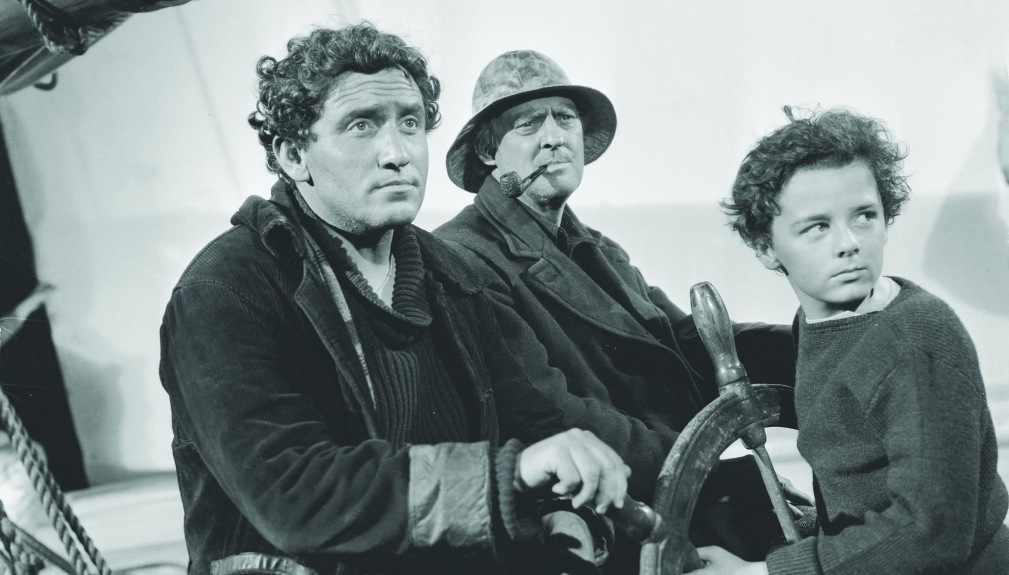
Captains Courageous (1937)

Captains Courageous (1937)

Well-made, coming-of-age story with two very fine leads and a heart-tugging ending

Director: Victor Fleming

Cast: Freddie Bartholomew (Harvey Cheyne), Spencer Tracy (Manuel Fidello), Lionel Barrymore (Captain Disko Troop), Melvyn Douglas (Frank Burton Cheyne), Charley Grapewin (Uncle Salters), Mickey Rooney (Dan Troop), John Carradine (‘Uncle Jack’), Oscar O’Shea (Captain Walt Cushman)

Harvey Cheyne (Freddie Bartholomew) is a hard kid to like. Scion of Henry Ford-like American tycoon Frank Burton Cheyne (Melvyn Douglas) he’s an arrogant, entitled snob who believes he is deserves anything he wants because Daddy has never-empty pockets. The servants in his father’s estate can’t stand him, his prep school classmates only pretend to like him and even his teachers think he needs to be taken down a peg or two. Suspended from school, his father (upset at what his son has become) hopes a trip to Europe will help Harvey grow-up. But, en route, Harvey is lost at sea and picked up by the fishing boat We’re Here. Despite his objections, they have no interest in cutting short fishing season by three months to take him straight back and slowly Harvey finds himself rather enjoying fishing life, helped by his growing bond with salt-of-the-Earth Portuguese fisherman Manuel (Spencer Tracy).

Adapted from a Rudyard Kipling novel – despite what you might think, Harvey and his father are also American in the original – Captains Courageous is a surprisingly sweet coming-of-age tale, mixed with a surrogate-father-son relationship, well-directed by Victor Fleming and strongly played by the cast. The cast spent months bobbing up-and-down in a giant water tank to bring the film to the screen, and it’s a tribute to Fleming’s direction and Harold Rossen’s sharp camerawork that it often genuinely feels like a film pulled in from the seas like Manuel’s fishes.

It also has some wonderful chemistry between its two leads. Freddie Bartholomew, one of the biggest (and most skilled) child stars of the 30s, had a hard task here: appearing in virtually every scene, he has to turn a character who most viewers would love to give a cuff around the ear too, into a kid we end up admiring. Captains Courageous doesn’t shirk at stressing Harvey’s arrogant, self-absorbed unpleasantness: he treats the servants like talking furniture, brags about his editorship of the school magazine (a position bought for him by his father’s purchasing of their printing press) which he feels with dull articles (essentially ‘what I did on my holidays’) and shamelessly uses his father’s money to bribe people (including his schoolmaster, who he loans $50 to then casually mentions it would be great if the history test could be made easier).

He is, in short, a total brat and that only starts to change on We’re Here. Bartholomew’s trick is to do just enough to suggest a decent kid buried under the surface here, even when he’s demanding the ship turn round to take him home or assuming his ship-mates will settle into playing servants for him. He and the film slowly reveal his childish enthusiasm waiting for an outlet. With a distant father, you get the feeling Harvey felt acting like the pampered, entitled wealthy man was the only way to impress him. Captains Courageous is rather endearing in showing how he flourishes when faced with pushback by someone (Manuel) who gives him genuine attention, teaches him things and won’t take his nonsense (in the way nearly every other employee in his life does).

Bartholomew’s thoughtfulness, vulnerability and eager-to-impress energy makes for a great combination with Spencer Tracy’s jovial warmth as Manuel. Tracy – who won an Oscar – was later rather self-critical of his curly-haired ‘liddle feesh’ accented-fisherman, generously claiming his success was partly due to Bartholomew. But Tracy’s work here is endearing, funny and unforced, making Manuel a mix of big brother and father, full of energy and joi d’vivre, with exactly the sort of easy-going happiness in small things (catching a big fish, playing music, even swabbing a deck) that Harvey never has. Tracy also brings out Manuel’s strong morals and his respect for others – it’s no surprise that he has no truck with Harvey’s cheating in a fishing competition.

In fact, Manuel’s response to this (deep disappointment, throwing the competition and firmly telling Harvey he’s no fisherman) is exactly the sort of firm-but-fair parenting, with a moral education, that Harvey needs. But Manuel is also a fierce defender of him when he admits his mistakes and also offers the sort of direct, in-person support and regard for Harvey that his own father failed to do. (There is a lovely reaction shot from Tracy – one of the best reactors in movies – of warm pride when Harvey admits blame). The two actors have a natural, easy bond which is genuinely endearing. Manuel even becomes as keen for the boy’s good opinion (bashfully clamming up when Harvey reacts with shock to his talk of ladies). Captains Courageous allows Tracy to be as playful, loose and fun as he ever has.

The staging and design of the fishing boat is marvellously done, the actors having clearly (and impressively) done their homework around the tying of knots, casting of lines and rowing of oars. Lionel Barrymore gives a fine salty sea-dog (with a hidden heart of gold) as the captain, with Mickey Rooney echoing him as his eager son and John Carradine scowling as Manuel’s rival fisherman. There is a genuine sense of energy and vibrancy in all the fishing and sailing scenes (despite some, at times, less than convincing back projection), with Captains Courageous more than holding its own with epics of the sea.

Of course, you are not perhaps surprised that the film is also heading towards a tragic end, as so many coming-of-age tales do. But it’s extremely well-done and, thanks to the playing of the cast carries real emotional impact, not least through Bartholomew’s and Tracy’s poignant performances. There is also a mature and tender coda to Captains Courageous about the nature (and difficulties) of fatherhood, adding further depth to a character study of a young boy that genuinely sees him grow and develop in a way that feels neither sickly sweet nor forced – and has a real warmth and joy to it. Full of impressive staging and with a wonderfully played relationship between Bartholomew and Tracy, it’s a fine, heart-warmer turned tear-jerker.
Gone with the Wind (1939)

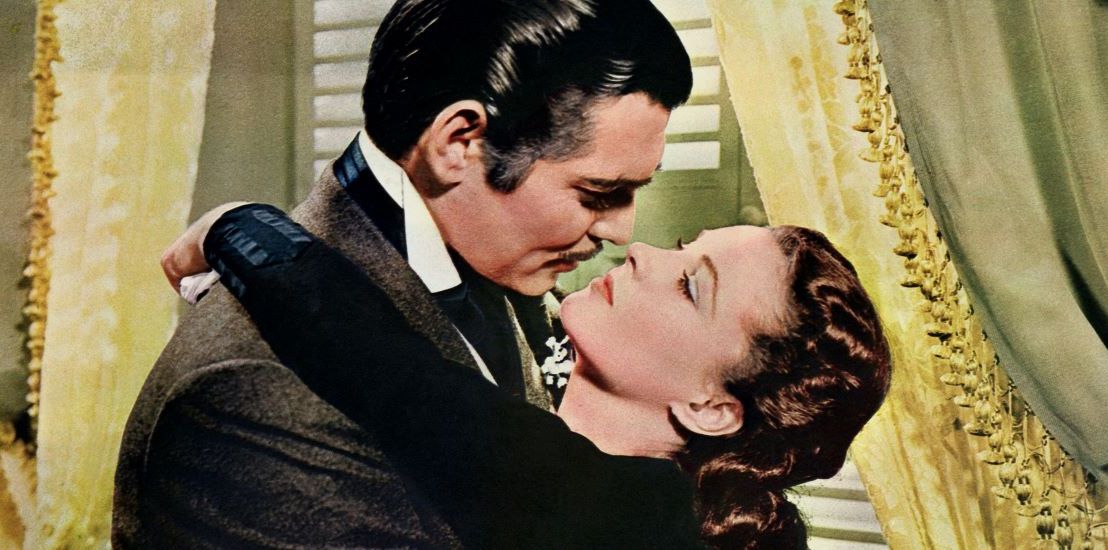
Gone with the Wind (1939)

For decades unchallenged as the best loved Hollywood film ever made, but showing some signs of its age, it’s still an undeniable marvel

Director: Victor Fleming

Cast: Vivien Leigh (Scarlett O’Hara), Clark Gable (Rhett Butler), Leslie Howard (Ashley Wilkes), Olivia de Havilland (Melanie Hamilton), Thomas Mitchell (Gerald O’Hara), Evelyn Keyes (Suellen O’Hara), Ann Rutherford (Careen O’Hara), Barbara O’Neil (Ellen O’Hara), Hattie McDaniel (Mammy), Butterfly McQueen (Prissy), Oscar Polk (Pork), Rand Brooks (Charles Hamilton), Carroll Nye (Frank Kennedy), Jane Darwell (Mrs Meriweather), Ona Munson (Belle Watling), Harry Davenport (Dr Meade)

For most of the twentieth century, if you asked people to draw up a list of the greatest Hollywood films of all time, you can be pretty sure this would be close to the top. A landmark in Hollywood history, everything about Gone with the Wind is huge: sets, run time, costs, legend. It’s crammed with moments that have developed lives of their own in popular culture. Its score from Max Steiner – luscious and romantic – is instantly recognisable, practically Hollywood’s soundtrack. It’s the most famous moment in the lives of virtually all involved and for decades whenever it was released, it raked in the cash. But as we head into the twenty-first century, does GWTW (as it called itself even at the time) still claim its place at the head of Hollywood’s table?

It’s the love child of David O. Selznick. Never mind your auteur theory: GWTW credits Victor Fleming as the director, but parts of it were shot by George Cukor (the original director, who continued to coach Leigh and de Havilland), William Cameron Menzies (the legendary art director, who shot the Atlanta sequences) and Sam Wood (who covered for an exhausted Fleming for several weeks). This is a Selznick joint from top to bottom. GWTW is possibly the ultimate producer’s film: a massive show piece, where not a single cent isn’t up on the screen. Huge sets, vast casts, colossal set pieces, thousands of costumes and extras. It’s an extravaganza and Selznick was determined that it would be an event like no other. And a hugely entertaining event it was.

It would also be scrupulously faithful to Margaret Mitchell’s novel, with a dozen screenwriters working on it (including Selznick). GWTW was the ultimate door-stop romance novel. Set in Atlanta, Georgia, the entire film is a no-holds barred “Lost cause” romance of the South during the Civil War and Reconstruction. Scarlett O’Hara (Vivien Leigh) is the passionate, wilful daughter of a plantation owner, desperately in love with Ashley Wilkes (Leslie Howard), who is attracted to her but all set to marry his cousin Melanie (Olivia de Havilland). Also interested in Scarlett is playboy Rhett Butler (Clark Gable). Romantic complications are set to one side when the Civil War breaks out, bringing disaster to the South. As the war comes to its end will Scarlett and Rhett find love, or will Scarlett’s fixation on Ashley continue to come between them?

GWTW’s casting was the sort of national obsession not even the casting of a superhero gets today. Every actress in Hollywood seemed to screen test for Scarlett O’Hara, with Selznick playing the search for all the publicity it was worth. No one suggested Vivien Leigh. But, lord almighty, Leigh was placed on this Earth to play Scarlett O’Hara. GWTW is dominated by Leigh, dripping movie star charisma. She would be synonymous with the role for the rest of her life, and it’s no exaggeration to say this one of the greatest acting performances in movie history. Leigh balances a character stuffed with contradictions. Scarlett is wilful and vulnerable, impulsive and calculated, childish and dependable, selfish and generous, spoilt and sensible, romantic and realistic… But Leigh balances all this with complete ease. It’s an act of complete transformation, an astonishingly confident, charismatic and complicated performance.

There was no debate about who would play the romantic hero, Rhett Butler. He basically was Clark Gable. And Gable was perfect casting – so perfect, he was almost too scared to play it. But he did, and he is sublime: matinee idol charismatic, but also wise, witty and vulnerable (it’s easy to forget that Rhett is really in the traditional “woman’s role” – the ever-devoted lover who sticks by his woman, no matter how badly she treats him, spending chunks the latter half of the film halfway to depressed tears). For the rest, Leslie Howard was oddly miscast as Wilkes (he seems too English and too inhibited by the dull role) but Olivia de Havilland excels in a generous performance as Melanie, endearingly sweet and loyal.

These stars were placed in a film production that’s beyond stunning. Shot in glorious technicolour, with those distinctive luscious colours, astonishingly detailed sets were built (plantations, massive dance halls, whole towns). Everything about GWTW is designed to scream prestige quality. It lacks directorial personality – the best shots, including a crane shot of the Civil War wounded or a tracking shot on Leigh through a crowded staircase, seem designed to showpiece the sets and volume of extras. It’s a film designed to wow, crammed with soaring emotions and vintage melodrama. Nothing is ever low key in GWTW: disasters are epic, love is all-consuming passionate clinches. They built stretches of Atlanta so they could burn it down on camera. It’s extraordinary.

And much of GWTW is extremely entertaining. Especially the first half. It’s an often overlooked fact that if you ask people to name things that happen in GWTW, nearly everything (bar the film’s final scene obviously) they will come up with is in the first half. Rhett behind a sofa in the library? Atlanta on fire? Rhett and Scarlett at the ball? Scarlett surrounded by admirers at a garden party? “I’ll never be hungry again?” All before the interval. The first half is a rollicking, fast-paced rollercoaster that takes us from the height of the South to the devastation after the war. It grabs you by the collar and never lets go, supremely romantic, gripping and exciting.

The second half? Always duller. Bar the start and finish of the second half (nearly two hours in all), it’s a Less memorable film. Sure, it has the O’Hara’s in extreme poverty, Scarlett reduced to converting a curtain into a dress to glamour up some cash to keep Tara. It’s got Ashley and Melanie’s adorably sweet reunion. And it’s got possibly the most famous line ever in movies “Frankly my dear, I don’t give a damn” (not to mention “Tomorrow is another day”).

Other than that? It’s a bitty, plot-heavy series of forgettable, episodic moments which you feel really should have been cut. Who remembers Frank Kennedy? Or Scarlett’s lumber mill? Rhett pushing his daughter in a pram? The London sequence? There is a solid hour of this film which is flatly shot, dully paced and devoid of anything memorable at all. GWTW owes all its beloved reputation to the first half: and to be fair you’ll be so swept up in that you’ll give the film a pass for its middling second act. After all you get just about enough quality to keep you going.

But what about the elephant in the room? GWTW, like no other beloved film, has a deeply troubling legacy. They were partly aware of it at the time – after all, every racial epithet was cut, as is every reference to the KKK (it’s referred to as a “political meeting” and Rhett and Ashley’s membership is glossed over) and we never see the attack they carry out on a shanty town of former slaves. But GWTW remains, in many ways, a racist film peddling an unpleasant and dangerous mythology that the “Lost Cause” of the South was all about gentlemanly fair play, rather than coining it off plantations full of enslaved workers.

GWTW, in many ways, plays today a bit like a beloved elderly relative who comes round for dinner and then says something deeply inappropriate half-way through the main course. The dangerous mythology is there from the opening crawl which talks of the South as a land of “Cavaliers and cotton fields” where “Gallantry took its last bow…[full of] knights and their ladies fair, of Master and Slave”. The third shot of the film is a field of smiling slaves, working in a cotton field. Hattie McDaniel won an Oscar (at a segregated ceremony) and she is wonderfully warm as Mammy, but her character is another contented underling. At least she seems smarter than the other main black characters, Pork and Prissy: both are like children reliant on the guidance of their masters.

The Cause of the South is luscious and romantic, as are the people who fight it. Nearly every Yankee we see is corrupt, ugly and greedy, rubbing defeat in our heroes’ faces. It’s not quite Birth of a Nation, but the second half has a creeping suspicion of freed black people. A carpetbagger from the North is a smug, fat black man who mocks wounded Southern soldiers. Scarlett’s walk through the streets of a rebuilt Atlanta sees her startled and mildly hustled by black people who no longer know their place. Every prominent black character is sentimental about the good old days. GWTW would make an interesting double feature with 12 Years a Slave.

It’s this dangerous and false mythology that makes the film troubling today. It’s why you need to imagine the entire thing with a massive asterisk – and why you should be encouraged to find out more about the era than the fake and self-serving fantasy the film peddles as reality. But for all that, GWTW is so marvellous as a film that it will always be watched (and rightly so), even if it was always a film of two halves and only becomes more controversial in time. But watch it with a pinch of salt, and it is still one of the most gorgeous, sweeping and romantic films of all time: that’s why it still remains, for many, the definitive “Hollywood” film.

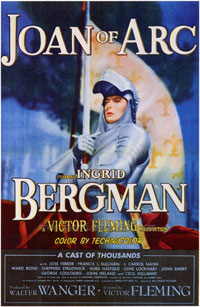
Joan of Arc (1948)

Joan of Arc header
Ingrid Bergman shows France the way in po-faced epic Joan of Arc

Director: Victor Fleming

Cast: Ingrid Bergman (Joan of Arc), José Ferrer (Dauphin Charles), Francis L Sullivan (Bishop Cauchon), Roman Bohnen (Durand Laxart), Geoge Coulouris (Sir Robert de Baudricourt), George Zucco (Constable of Clervaux), Gene Lockhart (Georges de la Trémoille), John Emery (Duke d’Alençon), Richard Ney (Charles de Bourbon), Lief Erickson (Dunois of Orleans), John Ireland (Jan de la Boussac), Hurd Hatfield (Father Pasquerel), Ward Bond (La Hire), J. Carrol Naish (Count of Luxembourg), Frederick Worlock (Duke of Bedford), Shepperd Strudwick (Father Jean Massieu), Alan Napier (Earl of Warwick), Cecil Kellaway (Jean Le Maistre)

A light descends from heaven, and a young girl is seized with a sense of purpose. Joan of Arc (Ingrid Bergman) believes – as do her countrymen – that she received a message from heaven to help deliver fifteenth-century France back to the French, and out from under English occupation. For three years, this young woman strikes fear into the hearts of the English, inspiring the French into a series of victories (most of all at Orleans) and improving the French position such that the ambitious Dauphin (José Ferrer) is crowned Charles VII. But Joan is a target for the English, and she’s eventually  captured and burned for heresy after a trial notably free of justice at Rouen.

A huge investment at the time, with its colossal cast and loving recreation of medieval France, Joan of Arc is historically a luckless film. Despite its box-office winnings, it failed to cover its immense cost. It gained seven Oscar nominations (and four wins!) with no nomination for Best Picture. Its director, its cinematographer and actor Roman Bohnen (playing Joan’s uncle) all died prematurely after its release. Ingrid Bergman was caught up in scandal – and effectively exiled from Hollywood – shortly after when her affair with director Roberto Rossellini became public knowledge. Producer Walter Wagner was imprisoned three years later for shooting his wife’s lover. The film itself had 20 minutes sliced from it and, for decades, was only available in its truncated version.

Aside from these historic curiosities, Joan of Arc is a well-made, handsomely mounted but fundamentally rather dry and at points rather dull historical drama, mixed with more than enough touches of Biblical worthiness. Victor Fleming himself felt the film was a disappointment, that a trick had been missed – perhaps  aware that his own old-fashioned, rather flat direction fails to bring any inspiration out of the drama.

If drama is quite the right word for what, all too often, are too many scenes made up almost solely of a group of men sitting around a table in medieval garb talking at length of current affairs. Too many of these scenes lack in pace or urgency and many end up feeling forced, with too much of the dialogue reduced to recounting events rather than driving the story.

The structure of the story feels off as well: it can be split into three rough acts: Joan’s search for her purpose, Joan’s time as the inspiration of the French, and Joan’s imprisonment and trial. The trial, in particular, takes up almost the final 45 minutes of the film. The play the film is based on used a troupe of actors performing the life of Joan as a framing device for further insight into the life and impact of the saint. Without this framing device, the actual film becomes a rather dry history lesson.

It’s not helped by Bergman’s performance, which serves to capture in capsule the film’s po-faced piousness. It was a dream of Bergman’s to bring her Broadway performance of Joan to film. Sadly, the script’s lack of wit (or insight into the personality of Joan), means the majority of her scenes fall into a stock pattern: her lines are delivered with a breathless intensity with her hands are clasped across her chest. Aside from a few brief scenes where Joan questions why her voices have fallen silent, there are very few moments where either Bergman or the film seek to delve down into the motivations and inspirations of Joan. Like the film, her performance is bereft of any wit or warmth – instead it is almost devotional in its careful respect.

It’s part of the film’s seriousness. It makes some excellent points on the lasting impact of Joan, the horrific unfairness of her trial and the fact that, by burning her, the English merely cemented her hold on the French people rather than ending it. But too many other issues are pushed to the wayside, along with Joan’s character and motivations. No questions are raised around Joan’s interpretation of her visions. The conflict between faith and war is unexplored. The film sets its store out clearly: this is a devotional work and we should take it as that, and any questions around faith, legitimacy or what drove a fanatical teenager to embrace a life of military campaigning goes unexplored. In truth, we know as little about Joan at the end as we did at the beginning.

Which isn’t to say the film doesn’t have its plusses. As a piece of devotional film-making, it has a lovely score from Hugo Friedhofer, with just the right uses of heavenly choirs singing through the most devout sections. The design of the film is beautifully done, heavily inspired by medieval manuscripts, with the same striking primary colours and framing. It has in fact a beautifully old-fashioned look to it, a wonderfully designed artificiality. The siege of Orleans is a dramatically staged sequence, with a particularly striking orange-drenched sky. Visually you can imagine this as an incredibly stuffed-shirt Adventures of Robin Hood, but still glorious to look at.

Bergman is also wisely surrounded by a strong cast of character actors, all providing the sort of colour and corruption that Bergman’s stiffly written Joan can’t provide. José Ferrer landed an Oscar nomination for his film debut as the ambitious, weak-willed and envious Dauphin, more interested in realpolitik than doing the right thing. Francis L Sullivan connives and blusters wonderfully as corrupt Bishop Cauchon, fixing the trial. George Coulouris gives his usual hurried authority to de Baudricourt, while Cecil Kellaway inverts his Irish kindness as Joan’s Inquisitor. Off-the-wall casting choices like Ward Bond as a French captain surprisingly tend to pay-off. Shepperd Strudwick makes the biggest impression though as Joan’s sympathetic bailiff (he also speaks the prologue).

The overall film though is one more for history buffs than for movie goers. With its seriousness, odd pace (some events take forever, while others – such as Joan’s capture – either rush past in seconds of happen off-screen) and general lack of any humour or warmth, it’s not always an engrossing watch. Well-made as it is, it’s also directed with a certain flat professionalism rather than inspiration and Bergman seems constricted by the script and the part. A curiosity, but not a complete success.