Tag: Cecil Kellaway

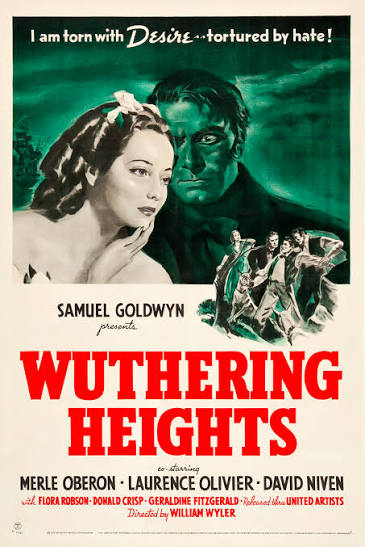
Wuthering Heights (1939)

Wuthering Heights (1939)

Defining the public image of the novel, a sweeping romance that continues to win admirers

Director: William Wyler

Cast: Laurence Olivier (Heathcliff), Merle Oberon (Catherine Earnshaw), David Niven (Edgar Linton), Geraldine Fitzgerald (Isabella Linton), Flora Robson (Ellen Dean), Hugh Williams (Hindley Earnshaw), Donald Crisp (Dr Kenneth), Leo G Carroll (Joseph), Miles Mander (Mr Lockwood), Cecil Kellaway (Earnshaw), Cecil Humphreys (Judge Linton)
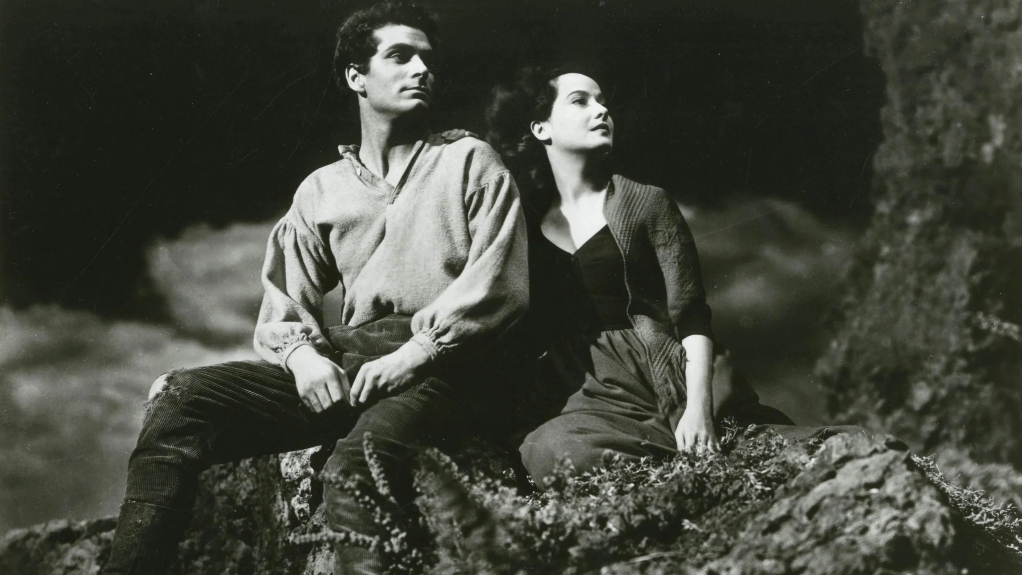
If there is a reason why Emily Brontë’s dark, Gothic revenge novel is now chiefly remembered as a sort of definitive Great Romance, it’s probably because of this movie. Wuthering Heights takes the bitter fury of the original novel and quite brilliantly boils it down into a frustrated, denied romance between two people who cannot be together rather than charting the self-destructive passion of two fundamentally selfish people. That caught on so much, nearly every adaptation that followed essentially copied this film, and many still dream of being swept up by Heathcliff.

Wuthering Heights achieves this by significantly hacking back Brontë’s novel. In fact, it pretty much only adapts half the book, scrapping all together the second volume charting the damaging impact on the characters children from their parents obsession. Instead, the focus is resolutely on the young orphan Heathcliff (Laurence Oliver), growing up in the home of the Earnshaws where is he hated by the jealous Hindley (Hugh Williams) but adored by Hindley’s sister Cathy (Merle Oberon). Humiliated once too often, and heartbroken after he mistakenly overhears Cathy feels he would be a disgrace as a husband compared to the wealthy Edgar Linton (David Niven), Heathcliff disappears. He returns, years later, wealthy and determined on revenge on those who wronged him while also claiming Cathy for his own.

This is the entrée to a romantic obsession Wyler’s film successfully dials up on a convincingly windswept reconstruction of the Yorkshire moors (actually California). It’s a film that works hard to smooth down its lead characters less sympathetic qualities – helped enormously by jettisoning that second half of the novel – and get us rooting for this lovestruck Romeo and Juliet, despite the obstacles put before them. Those obstacles are of course principally class-based, with the posh hats of Yorkshire (defined by David Niven’s suavely polite but relentlessly superior Linton) firmly glancing down their noses at Heathcliff’s tearaway qualities and poor background.

Mind you, Cathy seems rather torn as well. Merle Oberon’s version of Brontë’s heroine swerves between longing for the fiery romance Heathcliff promises and the security and comfort in the Linton’s home. The film’s attempt to make Cathy more sympathetic than her literary roots, is to stress this tearing between her heart and her head. Ironically, this actually tends to make her slightly less sympathetic today. Oberon frequently has to yo-yo between different emotional states, as Cathy juggles her longings and desires. What Oberon most comfortably takes on is the wind-swept passion of Cathy, her wild lack of common-sense that can frequently tip into blistering, jealous bitterness. Clearly, her unhappiness at love denied is what the film wants us to focus on, but Oberon can’t quite capture the inner pain that drives these actions here, making Cathy feel more selfish then intended.

Similarly, Heathcliff’s considerable rough edges (his original ruthless, malevolent force) are sanded down (the jettisoning of the second half of the novel is even better for him) to become a Byronic romantic hero. It’s further helped that Olivier is excellent, able to deliver both the romantic middle-distance starring, but also giving a real emotional weight to the turmoil and vulnerability in Heathcliff. Olivier can stare down the disapproving posh-nobs with calm defiance but also be driven into distraught shame and pain when he feels Cathy’s contempt. Few actors could do haughty coldness and arrogance as well as Olivier, but would have also made Heathcliff seem like a little-boy-lost, out-of-his-depth with the emotions around him.

Much is made to make Heathcliff sympathetic, in contrast with other characters. Linton – and Donald Crisp’s dismissively smug doctor – treat him with haughty contempt and don’t hesitate to label him as a force of evil for his treatment of the drunken Hindley. Something we can’t blame him for, after we’ve seen the casual meanness of Hugh William’s pathetic drunk or his snivelling cowardice when finally challenged by Heathcliff. To be fair, the film presents Linton surprisingly sympathetically – he adores Cathy and treats his servants well, it’s only Heathcliff’s awkward outsider status that riles him, like Niven’s gentlemanliness can’t process a man who doesn’t fit.

Flora Robson’s Nelly Dean – in the novel a far more critical figure of – is here a sympathetic ally. Wuthering Heights re-frames the vital Heathcliff overhearing scene – that motivates his departure and grievance – not as Nelly allowing him to hear the worst, but instead an accident she feels too embarrassed to prevent. At every point, the audience are invited excuse Heathcliff – to the extent we don’t even feel bad when Isabella Linton (a very fine performance by Geraldine Fitzgerald) insists she be allowed to marry him, despite Heathcliff’s clear using of her to provoke jealousy in Cathy. Poor Isabella seems only dimly aware of how much Heathcliff only has eyes for Cathy – and for that matter that Cathy’s protestations of indifference are far from convincing – but so powerfully faithful are our lovers presented, for all their betrayals of each other, it’s hard to berate them.

Wuthering Heights is also helped a great deal in its romantic mission by Wyler’s superbly atmospheric direction and the wonderfully brooding photography by Gregg Toland. Brontëland here is a place of looming shadows, with a real sense of the windswept coldness of the moor contrasted with the blazing passions of the leads. Alfred Newman’s score is full of luscious, rich themes adding to this effect. Wyler’s direction is pacey and draws excellent performances from the cast, while his superb framing and cutting adds tension throughout. The idea of the moor as somewhere outside societies rules, where Cathy and Heathcliff can live out a fantasy of full equality and romance, comes across so powerfully it’s now nearly the defining image of the novel.

Nearly. But for its lasting impact, it’s hard not to disagree with producer Sam Goldwyn’s claim that, while Wyler directed Wuthering Heights, Goldwyn made it. It was Goldwyn who pushed the development of the script towards romance and passion away from obsession and revenge. And it was Goldwyn who insisted on the final shot, a ghostly image of Heathcliff and Cathy walking away into the mist (a pair of extras with their backs to us, as Olivier and Oberon had moved on to other projects) that has had more impact than any other in cementing the idea this novel was about a love so strong it outreached death. It’s a far cry from Brontë’s view of a destructive obsession that ruined lives for generations– but then that would never have sold as many tickets would it?

Joan of Arc (1948)

Joan of Arc header
Ingrid Bergman shows France the way in po-faced epic Joan of Arc

Director: Victor Fleming

Cast: Ingrid Bergman (Joan of Arc), José Ferrer (Dauphin Charles), Francis L Sullivan (Bishop Cauchon), Roman Bohnen (Durand Laxart), Geoge Coulouris (Sir Robert de Baudricourt), George Zucco (Constable of Clervaux), Gene Lockhart (Georges de la Trémoille), John Emery (Duke d’Alençon), Richard Ney (Charles de Bourbon), Lief Erickson (Dunois of Orleans), John Ireland (Jan de la Boussac), Hurd Hatfield (Father Pasquerel), Ward Bond (La Hire), J. Carrol Naish (Count of Luxembourg), Frederick Worlock (Duke of Bedford), Shepperd Strudwick (Father Jean Massieu), Alan Napier (Earl of Warwick), Cecil Kellaway (Jean Le Maistre)

A light descends from heaven, and a young girl is seized with a sense of purpose. Joan of Arc (Ingrid Bergman) believes – as do her countrymen – that she received a message from heaven to help deliver fifteenth-century France back to the French, and out from under English occupation. For three years, this young woman strikes fear into the hearts of the English, inspiring the French into a series of victories (most of all at Orleans) and improving the French position such that the ambitious Dauphin (José Ferrer) is crowned Charles VII. But Joan is a target for the English, and she’s eventually  captured and burned for heresy after a trial notably free of justice at Rouen.

A huge investment at the time, with its colossal cast and loving recreation of medieval France, Joan of Arc is historically a luckless film. Despite its box-office winnings, it failed to cover its immense cost. It gained seven Oscar nominations (and four wins!) with no nomination for Best Picture. Its director, its cinematographer and actor Roman Bohnen (playing Joan’s uncle) all died prematurely after its release. Ingrid Bergman was caught up in scandal – and effectively exiled from Hollywood – shortly after when her affair with director Roberto Rossellini became public knowledge. Producer Walter Wagner was imprisoned three years later for shooting his wife’s lover. The film itself had 20 minutes sliced from it and, for decades, was only available in its truncated version.

Aside from these historic curiosities, Joan of Arc is a well-made, handsomely mounted but fundamentally rather dry and at points rather dull historical drama, mixed with more than enough touches of Biblical worthiness. Victor Fleming himself felt the film was a disappointment, that a trick had been missed – perhaps  aware that his own old-fashioned, rather flat direction fails to bring any inspiration out of the drama.

If drama is quite the right word for what, all too often, are too many scenes made up almost solely of a group of men sitting around a table in medieval garb talking at length of current affairs. Too many of these scenes lack in pace or urgency and many end up feeling forced, with too much of the dialogue reduced to recounting events rather than driving the story.

The structure of the story feels off as well: it can be split into three rough acts: Joan’s search for her purpose, Joan’s time as the inspiration of the French, and Joan’s imprisonment and trial. The trial, in particular, takes up almost the final 45 minutes of the film. The play the film is based on used a troupe of actors performing the life of Joan as a framing device for further insight into the life and impact of the saint. Without this framing device, the actual film becomes a rather dry history lesson.

It’s not helped by Bergman’s performance, which serves to capture in capsule the film’s po-faced piousness. It was a dream of Bergman’s to bring her Broadway performance of Joan to film. Sadly, the script’s lack of wit (or insight into the personality of Joan), means the majority of her scenes fall into a stock pattern: her lines are delivered with a breathless intensity with her hands are clasped across her chest. Aside from a few brief scenes where Joan questions why her voices have fallen silent, there are very few moments where either Bergman or the film seek to delve down into the motivations and inspirations of Joan. Like the film, her performance is bereft of any wit or warmth – instead it is almost devotional in its careful respect.

It’s part of the film’s seriousness. It makes some excellent points on the lasting impact of Joan, the horrific unfairness of her trial and the fact that, by burning her, the English merely cemented her hold on the French people rather than ending it. But too many other issues are pushed to the wayside, along with Joan’s character and motivations. No questions are raised around Joan’s interpretation of her visions. The conflict between faith and war is unexplored. The film sets its store out clearly: this is a devotional work and we should take it as that, and any questions around faith, legitimacy or what drove a fanatical teenager to embrace a life of military campaigning goes unexplored. In truth, we know as little about Joan at the end as we did at the beginning.

Which isn’t to say the film doesn’t have its plusses. As a piece of devotional film-making, it has a lovely score from Hugo Friedhofer, with just the right uses of heavenly choirs singing through the most devout sections. The design of the film is beautifully done, heavily inspired by medieval manuscripts, with the same striking primary colours and framing. It has in fact a beautifully old-fashioned look to it, a wonderfully designed artificiality. The siege of Orleans is a dramatically staged sequence, with a particularly striking orange-drenched sky. Visually you can imagine this as an incredibly stuffed-shirt Adventures of Robin Hood, but still glorious to look at.

Bergman is also wisely surrounded by a strong cast of character actors, all providing the sort of colour and corruption that Bergman’s stiffly written Joan can’t provide. José Ferrer landed an Oscar nomination for his film debut as the ambitious, weak-willed and envious Dauphin, more interested in realpolitik than doing the right thing. Francis L Sullivan connives and blusters wonderfully as corrupt Bishop Cauchon, fixing the trial. George Coulouris gives his usual hurried authority to de Baudricourt, while Cecil Kellaway inverts his Irish kindness as Joan’s Inquisitor. Off-the-wall casting choices like Ward Bond as a French captain surprisingly tend to pay-off. Shepperd Strudwick makes the biggest impression though as Joan’s sympathetic bailiff (he also speaks the prologue).

The overall film though is one more for history buffs than for movie goers. With its seriousness, odd pace (some events take forever, while others – such as Joan’s capture – either rush past in seconds of happen off-screen) and general lack of any humour or warmth, it’s not always an engrossing watch. Well-made as it is, it’s also directed with a certain flat professionalism rather than inspiration and Bergman seems constricted by the script and the part. A curiosity, but not a complete success.

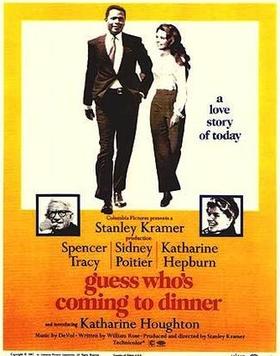
Guess Who's Coming to Dinner (1967)

Hepburn, Tracy, Poitier and one awkward meal: Guess Who’s Coming to Dinner

Director: Stanley Kramer

Cast: Spencer Tracy (Matt Drayton), Sidney Poitier (John Prentice), Katharine Heburn (Christina Drayton), Katharine Houghton (Joey Drayton), Cecil Kellaway (Monsignor Mike Ryan), Beah Richards (Mrs Prentice), Roy E Glenn (Mr Prentice), Isabel Sanford (Tillie)

Stanley Kramer’s films today are quite easy to knock. In fact, to be honest, they were pretty easy to bash back then. Kramer was a man with immense social conscience, and his films carry the same liberal agenda. They were about “Big Themes” and they had a “Message” that they very much wanted the viewer to take home with them. You can see why so many of them were littered with Oscar nominations. Guess Who’s Coming to Dinner is perhaps the most famous of his liberal films, and while we’d love to think the theme it covers today – interracial marriage – isn’t still an issue, I  think many people would say it still was.

Joey Drayton (Katharine Houghton) returns to the home of her liberal parents – Matt (Spencer Tracy) a newspaper editor and Christina (Katharine Hepburn) an art gallery owner – with Dr John Prentice (Sidney Poitier) whom she announces as her new fiancé, after a whirlwind romance in Hawaii over the past two weeks. Her parents, Matt in particular, are hit for six – and their doubts are shared by John’s parents (Beah Richards and Roy E Glenn). Can the older generation overcome their concerns to celebrate the happiness of the younger? 

Guess Who’s Coming to Dinner is a sensitive, very carefully handled film, whose liberal earnestness practically drips off the film. It’s so hand-wringingly liberal in its outlook it’s almost impossible not to mock it a little bit. Not least because John is so ridiculously overqualified – a professor of medicine, one of the world’s leading experts on tropical diseases, a nominee for the Nobel Prize – that you can’t help but wonder what he sees in her not vice versa.

This over-qualification was, by the way, an intentional move by Kramer, who was keen that the onlypossible objections to John could be the haste of the engagement and the colour of his skin. It’s the latter point that becomes the main discussion point, with some hand-wringing concerns around the attitudes of the wider world, and Matt Drayton in particular being moved to question whether he can practise the liberal agenda he preaches. It’s no real surprise to say that eventually all the characters sit down to the eponymous dinner in blissful harmony, but the film is delivering a positive message here.

You could say that it would have been more daring to make John, at the very least, a middle ranking accountant or something at least. But, let’s be honest, at the time this film was made interracial marriages were literally illegal in 17 US states (as the film name checks). Saying that though, the possibility that a BAME male may feel uncomfortably out of place in liberal White America has hardly gone away. It’s one of the reasons why I think the film still works and carries a message today – because if we want to think that these problems have gone away completely today, we are kidding ourselves.

Therefore, however right-on the film may be, it’s still relevant today and it’s still got something to teach us. The world we live in now may well have pushed some of the views and issues expressed in this film underground – we certainly don’t (I hope!) bandy around the word “Negro” as often this film does – but they are still there. So Kramer’s hopeful message of reconciliation and overcoming knee-jerk prejudice is still one that packs a punch. It’s that message that brought such an amazing cast on board, not least Spencer Tracy and Katharine Hepburn as the Drayton parents. Tracy was extremely ill at the time of the film’s production – he died 17 days after filming completed. Tracy was so fragile – as can be clearly seen at several points – that he could only film for three hours in the morning, and only on intermittent days. The film was only made with him because Kramer, Hepburn and Tracy agreed to take no up-front fee, as Tracy could not be insured to finish the film. Hepburn in particular – Tracy’s partner for over 20 years – nursed him through the film, helping with his lines and carefully watching to make sure he was not overcommitted. Not a single shot of Tracy was taken on location due to his ill-health, and a number of scenes were cleverly shot to avoid Tracy having to be on set as often as possible.

Despite all this, Tracy is magnificent. His underlying warmth and humanity work so well for the part that you constantly warm to him, even while you are as frustrated as many of the other characters  with his lukewarm reaction (bordering on hostility) to the wedding. You totally feel empathy for his situation, while at the same time wanting to give him a slap in the face. And man Tracy knows how to react – he is marvellous in a scene with Richards, where all he does is stand, half turned away from the camera and listen. But in this scene you see Drayton think and reassess everything he has considered in the last 24 hours.

But the whole film is building towards the final 10 minutes, which is nearly a complete Tracy monologue – and this is extremely emotional, not least as we are watching a great actor, aware he is dying, knowing that this is his last acting moment, talking emotionally of his love for his fictional wife, while his real life partner of 26 years sits tearfully in shot. It’s that extra level that really creates the emotional force.

Very good as Hepburn in, it’s clear in many scenes that her mind is more on Tracy than her performance – but she still has many wonderful moments, with similar emotional force. She also has one of the film’s funniest moments, where she imperiously dismisses a gallery colleague for barely hiding her racist disgust. Hepburn won the Oscar but stated she had never watched the film, finding the memory of making it far too raw.

The rest of the cast are also good – you can tell their commitment to the film – with Poitier conveying both human decency and firmness of character. Kellaway is very good as the only person in the film who expresses open-minded joy at the union. Richards has a wonderful emotional speech about the value of love, while Glenn conveys all the awkward frustration of a father who cannot understand his son. 

Guess Who’s Coming to Dinner is a very worthy film – and boy it knows it – but it’s got a sort of innocent idealistic purity about it. Its makers clearly believed that they were making a film that would contribute towards changing attitudes in society. And for all its heavy-handed liberalism, you can say it did to a certain extent – but not as much as it would like to. For that reason, there is a sort of additional poignancy to watching it, knowing that an issue the film makers clearly hoped would be gone for good in 30 years would in fact still be with us 50 years on. So for all its flaws, you can’t help but respect and even feel affection for it.