Tag: Winona Ryder

Bram Stoker's Dracula (1992)

Gary Oldman prowls the night as Bram Stoker’s Dracula

Director: Francis Ford Coppola

Cast: Gary Oldman (Count Dracula), Winona Ryder (Mina Murray), Anthony Hopkins (Professor Abraham van Helsing), Keanu Reeves (Jonathan Harker), Richard E. Grant (Dr Jack Seward), Cary Elwes (Lord Arthur Holmwood), Billy Campbell (Quincy P Morris), Sadie Frost (Lucy Westenra), Tom Waits (Renfield)

In the 90s Francis Ford Coppola planned a series of high Gothic films of classic monster stories, kick starting the plans with his own production of Dracula (the only other film that came of this was Kenneth Branagh’s equally operatically overblown Mary Shelley’s Frankenstein). Going back to the story of the original novel (more or less), Coppola presented a deliberately high-intensity, theatrical, over-the-top version of Stoker’s tale that becomes as overbearing as it is visually impressive.

In 1462 Vlad the Impaler (Gary Oldman) renounces God and becomes Dracula, after false news of his death leads to his wife (Winona Ryder) committing suicide and being damned by the church. Over four hundred years later, the immortal vampire Dracula plans to travel to England, with his plans unwittingly aided by his solicitor Jonathan Harker (Keanu Reeves). His interests are peaked all the more when he sees a picture of Harker’s fiancée Mina (Winona Ryder again) – the reincarnation of his dead wife. Dracula heads to England, preying on Mina’s friend Lucy (Sadie Frost) leading to an alliance of Lucy and Mina’s friend, led by Professor van Helsing (Anthony Hopkins) to combat Dracula’s villainy and save Mina from her own dark temptations to join the besotted Vampire.

Coppola’s film doubles down on Gothic romance, thundering through the action with everything dialled up to 11. The (rather good) score hammers home every beat, the camera swoops and zooms through a parade of tricks, wipes and dynamic angles with cross fades frequently throwing two images on screen at the same time. It makes for a sensual – in more ways than one – overload, but also a rather oppressive viewing experience, with no respite or sense of calm but every single scene delivered with stomach churning acceleration.

It’s a film directed with a deliberate operatic style, that celebrates (and makes no attempt to hide) its set-based theatricality. The opening sequence sets the tone with its Kurosawa inspired costumes in front of an Excalibur style blood-red sky, with battle scenes (and impalings) staged as an elaborate puppet show. Oldman – with a hammy Eastern European accent that you could wade through like treacle – then rages and roars over his wives crumpled body, stabbing a cross that leaks blood all while images are cross-cut showing his wives demise and the beginnings of his own monstrous transformation. The film doesn’t ease up from there.

To be honest Coppola massively over-eggs the pudding, producing an over-blown monstrosity of a film that shouts and shouts and shouts and drains all subtlety from every frame. In particular the sexual undertones of Vampirism – and the harsh male judgement of female sexuality – that the book explores are placed unsubtly front and centre. Every vampire attack is presented as a positive ravishing, Frost and Ryder writhing orgasmically (poor Frost has to undergo the indignity of being humped and bitten by a Dracula in part human-part wolf form) while boobs are left on display after every single assault. From an early scenes that sees Lucy and Mina gawping at a pornographically illustrated Arabian Nights, we are left in no doubt that IT’S ABOUT SEX YOU KNOW.

Coppola shows no restraint at all in his directing, which leaves nothing to the imagination, and ends up leaving the actors adrift between a film that is part serious attempt to film the book and part ludicrous bodice ripper, like the cheapest 60s salacious horror film from the worst excesses of Hammer.

It certainly leaves the actors adrift. Oldman gives it a go with gusto, even if he seems completely lost as to what tone this character should hit (is he a monster, a lost soul, a conflicted lover, a megalomaniac – who knows?). Anthony Hopkins channels Orson Welles with the sort of ham that was to become more-and-more his go to in later years. Winona Ryder does her best with a role that oscillates wildly between Good Girl and Minx. She’s saddled with an English accent, which restrains like a straitjacket. Tom Waits has fun as the insane Renfield (here imprisoned in a crazy asylum that resembles a medieval dungeon).

The rest of the performances are pretty much abysmal. Poor Keanu Reeves is left ruthlessly exposed, horrendously miscast as a stiff-upper lip English lawyer in a performance that surely goes down somewhere in history as one of the worst ever. His acting here would barely scrap by in a school play, his delivery of the dialogue wooden beyond belief and some talcum powder added to his hair for the film’s later sections only makes him look ridiculous. Reeves is a decent performer in the right role, but he was never worst case than this. But then the rest of the cast are pretty much just as bad: Frost is out-right awful, hopelessly unable to make Lucy anything other than a slut, while Grant, Campbell and Elwes are all wooden and dull to a man.

The film does get some points for reverting closer to the plot of the book – unlike many versions – although the addition of the love story between Dracula and Mina is marred by tonal problems and the utter lack of chemistry between Oldman and Ryder (they famously fell out on set and the film never recovers). Coppola directs the film with no discipline at all, and no sense of balance between spectacle and story. While it has many merits in its design – it won no less than three Oscars and the costumes, make-up for Oldman and much of its look and style are flawless – it’s basically a pretty over-bearing and dreadful film that shouts at the viewer so long and so hard that it becomes easier in the end to laugh at it rather than with it. A sad misfire.

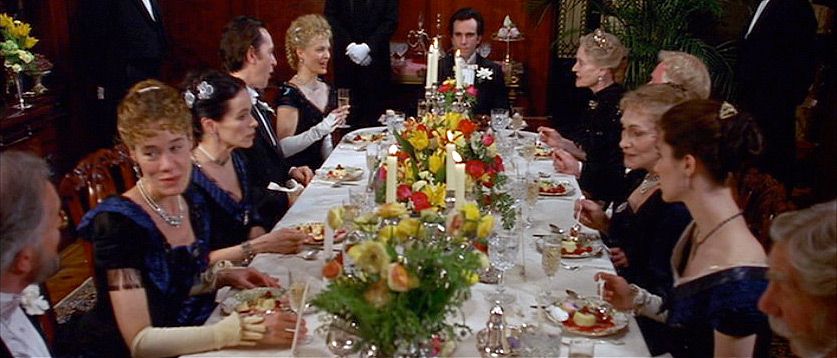
The Age of Innocence (1993)

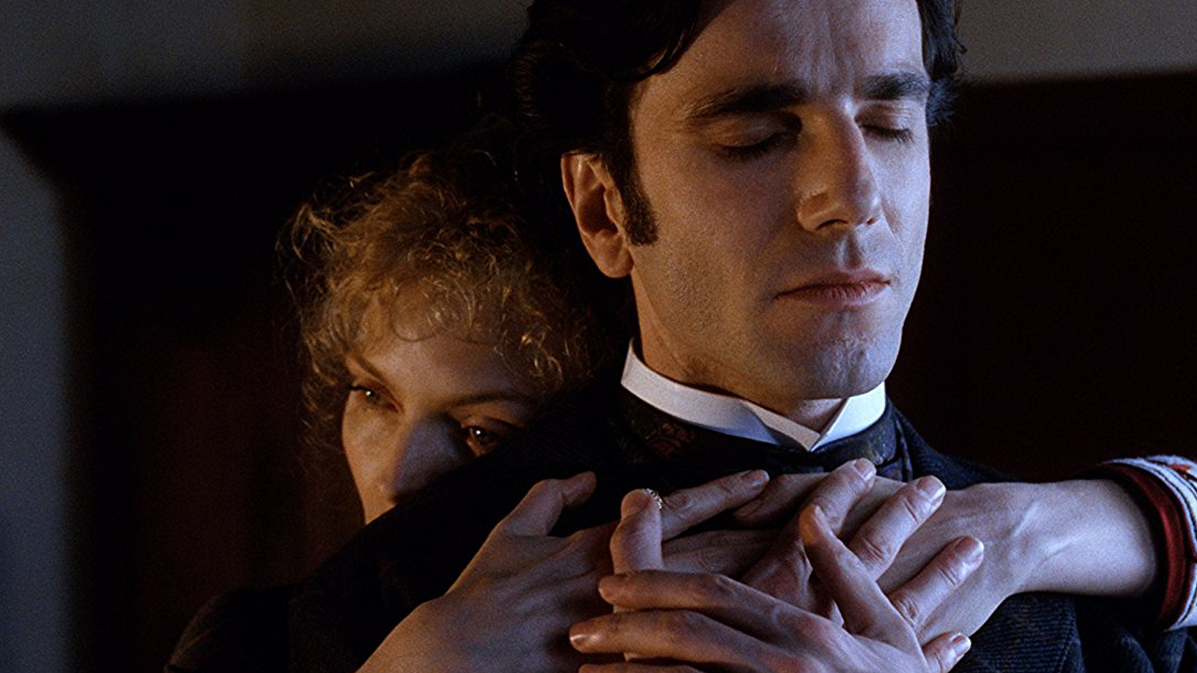
Daniel Day-Lewis and Michelle Pfeiffer have a love that cannot survive the morals of society in The Age of Innocence

Director: Martin Scorsese

Cast: Daniel Day-Lewis (Newland Archer), Michelle Pfeiffer (Countess Ellen Olenska), Winona Ryder (May Welland), Miriam Margolyes (Mrs Mingott), Geraldine Chaplin (Mrs Welland), Michael Gough (Henry van der Luyden), Richard E. Grant (Larry Lefferts), Mary Beth Hurt (Regina Beaufort), Robert Sean Leonard (Ted Archer), Norman Lloyd (Mr Letterblair), Alec McCowen (Sillerton Jackson), Sian Phillips (Mrs Archer), Jonathan Pryce (Rivière), Alexis Smith (Louisa van der Luyden), Stuart Wilson (Julius Beaufort), Joanne Woodward (Narrator), Carolyn Farina (Janey Archer)

In 1870’s New York, Newland Archer (Daniel Day-Lewis), is a fastidious connoisseur of the arts, part of the super-rich elite of New York society. He’s engaged to be married to young May Welland (Winona Ryder), but finds his world view and values turned upside down when he meets May’s cousin, the Countess Ellen Olenska (Michelle Pfeiffer). Ellen is a scandalous figure, a woman separated from her philandering European husband, trying to make her way in New York society. Newland and Ellen are irresistibly drawn together, but do they have a chance to be together in the oppressive society of the New York upper classes?

That’s one question. The one more people were asking was: how would Scorsese follow up Goodfellas? Probably very few people would have bet on an adaptation of Edith Wharton’s The Age of Innocence. In fact, in 1993, there was more than a little annoyance among some viewers at the idea of the master of gangster movies, the guy who directed Raging Bull and Taxi Driver, turning his hand to the realm of Merchant Ivory. The film bombed at the box office – but did it deserve that reaction? Was Scorsese a director out-of-place?

Well the reaction is slightly unfair, because The Age of Innocence is a marvellously filmed, exact, brilliantly constructed piece of film-making, that so lays on the opulence and wealth of New York society that it turns everything in the film into feeling like a gilded cage. That’s a cage carefully controlled and monitored by the inmates, with their strict, inflexible rules about every single social interaction, unbreakable rules of decorum and etiquette covering everything, with any deviation from these rules met with instant expulsion. Put it like that, and this doesn’t sound a million miles away from the gangster families Scorsese is more associated with.

Inspired by the films of Powell and Pressburger in its intricate construction, and flashes of artifice in filming and editing, as well as its rich colour palette, with touches of everyone from Visconte, Ophüls, Truffaut to name but a few, this is a film-maker’s love letter to cinematic classics. A beautiful sequence of Newland watching Ellen from behind and a distance on a jetty, yearning for her to turn around before a boat passes a lighthouse, using that landmark as the point when he will stop looking and accept something is not to be. The scene is bathed in a Jack Cardiff-ish red, with the objects in the light given a sharp definition in contrast to the colours. It’s a beautiful image, and one of several that run through the film. Inspired by paintings of the era, Scorsese also layers in Viscontish scenes of opulence, with The Leopard very much in mind as every detail of the vast wealth, and huge accumulation of objects in every room of these people’s houses, seems to crush and entrap the people in them. The rooms themselves become metaphors of the oppressive, rule-bound society the characters are trapped in, like the people have been designed to fit into the rooms rather than vice versa. The one exception is Ellen’s rooms, which have a sense of personality to them.

This marvellous construction – with its beautiful photography, inspiring design and costumes – contains a storyline of frustrated love, a love triangle between three people where the man has to make a choice between what he wants and what is expected of him. Newland Archer clearly loves Ellen in a way he can never love May – indeed, he is dismissively cruel in his thoughts towards May, who he clearly considers nothing more than an extension of the mindless gilded objects of beauty around him, a woman he sees as lacking an imagination or daring. In Ellen, he sees far more opportunities for a world of change, of difference, or being something he does not expect. She is far more of a free-spirit, a more bohemian figure, confident in herself and something far more modern than May, who is very much a product of her time and place.

The film, carefully demonstrates the growing unease and unsettlement of Archer as he begins to feel things he has never done before, to start to react and aim for a style of living he would never previously consider. All his life before now is a careful studying and collection of moments, or savouring experiences in the way that a collector would place them in a glass box. From seeing only the moments of plays he wishes to see, to carefully collecting shipments of books from London and reading the choice moments, Archer is a coldly controlling figure who believes he guides and directs his own life. Ellen not only demonstrates to him that in many ways he is as conventional as anyone else, but also that there are other options in his life. Archer struggles to build the emotional language that he needs in order to express these feelings bubbling in him – key moments indeed seem reminiscent of the operas that this New York society spends so much time watching, and it is only late in the film in little, genuine moments of affection can he find something real.

Scorsese’s film artfully and carefully shows this developing affection between the two, a love that the two of them speak of surprisingly early, but fail to find a genuine way of expressing it. The film captures the attempt by New York society at the time to be more British than the British, and the hidebound restrictions this brings. Scorsese uses cinematic tricks to show Archer’s striving to escape. Spotlights zero in on Archer and Ellen in the middle of society, as if to drain out all other moments. Letters from his respective love interests are delivered with the actors addressing the camera, as if speaking to Archer direct. Flashes of screen colour cover key cuts, as if all this colour was just on the edges of his life but he is unable to access them. He is a man who feels himself trapped and committed to one form of life, but who still feels the longing for another.

The Age of Innocence is a beautifully made film, but there is a coldness to it. Perhaps this is why it doesn’t quite capture the heart in the way of other films. So much as Scorsese captured the cold and restrictive world of this society, that it seems to permeate the film and make the whole thing somehow colder and more restrictive. There is such artistry and effort in the film-making, that the film seems a coldly detailed piece of art. Perhaps this is why the use of narration – beautifully spoken by Joanne Woodward – becomes overbearing here in the way it doesn’t in other Scorsese films. It’s another distance from the entire experience, as if the film is keeping the audience at arm’s length as much as society is. 

Daniel Day-Lewis’ performance is expertly assembled, a masterful, brilliantly observed, intricately detailed masterclass in micro-expression, of layered frustrations and repression. But it’s such a marvellously constructed, detailed and well observed performance that it feels a masterful piece of art to be admired rather than loved. For all the film centres Archer in the story, he is a hard man to care for or invest in. Pfeiffer gives a wonderful performance as the far freer, intelligent and daring Ellen – but there is a slight lack of spark between them, for all the brilliance of both actors the feeling of an overpowering, obsessive love just doesn’t quite come out of the picture.

This coldness of the construction, carries through every frame. It is perhaps an easier film to admire than love, for all its brilliant construction. It is perhaps too successful in establishing the sharp rules of its society, and does not invest enough time in looking at the raw passions that bubble under the surface of its characters. It never quite explores the inner life of its characters, and they remain slightly distant objects from us. To be fair, this works very well in some cases: Winona Ryder as May carefully plays her hand throughout the film, so that it is a shock in the final scenes where she reveals depths of determination, strength of character and manipulation that far dwarf anything Archer is capable of. Where he is a man with a wistful longing for what he wants, but lacks the will to take it, she knows what she wants and is determined to take it.

The film uses its mostly British cast very well, their understanding of period and these sort of society rules crucial to its success. Margolyes, Wilson and McCowen in particular are very impressive as very different types of society bigwigs. Scorsese’s film contains many other things to admire, but it’s such a wonderfully made piece of film-making, so overburdened with intelligent interpretation of the novel that it fails to make a real emotional connection with the viewer. You will respect and enjoy scenes from it, but perhaps find its running time as overbearing as the characters find the society they are in, and eventually find yourself needing to come up for air.

The Crucible (1996)

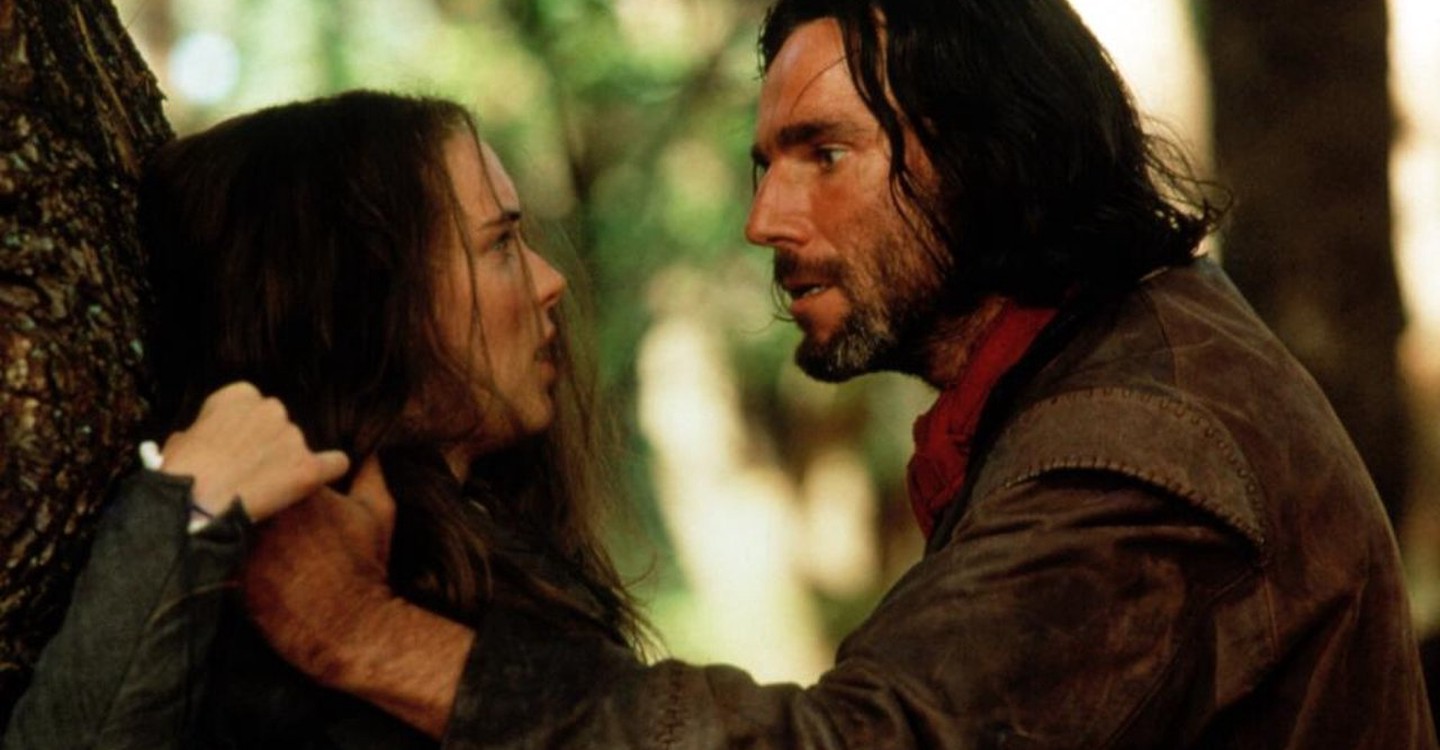
Winona Ryder and Daniel Day-Lewis are swept up in the heated emotions of small-town Salem in The Crucible

Director: Nicholas Hytner

Cast: Daniel Day-Lewis (John Proctor), Winona Ryder (Abigail Williams), Paul Scofield (Judge Thomas Danforth), Joan Allen (Elizabeth Proctor), Bruce Davison (Reverend Samuel Parris), Rob Campbell (Reverend John Hale), Jeffrey Jones (Thomas Putnam), Peter Vaughan (Giles Corey), Karron Graves (Mary Warren), Charlayne Woodard (Tituba), Frances Conroy (Ann Putnam), Elizabeth Lawrence (Rebecca Nurse), George Gaynes (Jude Samuel Sewell), Mary Pat Gleason (Martha Corey)

The Crucible is now so well-known, it’s virtually a shared cultural reference point. Surely we have all studied it at some point at school, or seen it on stage (or both). The play helped “witch trial” become a common short-hand for an increasingly vicious campaign conducted by society against a group within it. The Crucible works so effectively as a play because it is both simultaneously a brilliant recreation of the time it is staging, and a play of universal themes which is for all time.

In Salem, Massachusetts in 1692, the young girls of the village are caught dancing around a fire in the woods late at night by Reverend Paris (Bruce Davison). The next day, some of the girls will not awaken from fits, and rumours of witchcraft spread. Terrified of the blame being pinned on her, the girls’ ring-leader Abigail Willams (Winona Ryder) “confesses” to being tempted by the devil and swiftly accuses other people in the village (often at the prompting of senior villagers keen to remove rivals and resolve old feuds). However, Abigail’s real target is Elizabeth Proctor (Joan Allen), the wife of Abigail’s former lover John Proctor (Daniel Day-Lewis). The accusations quickly spiral into a series of trials based on the girl’s “evidence”, conducted by Judge Thomas Danforth (Paul Scofield).

The Crucible may be one of the finest adaptations of a play ever made. With the script adapted for the film by Arthur Miller itself, the play is effectively opened out and subtly restructured (the original is essentially four acts, each a single scene in a single location) to allow different character interactions, earlier introductions, and to show us things only implied in the original play. Many will complain about the film showing us rather than allowing our imaginations to work, but the film never loses the ideas and themes of the original play and gives it a real emotional force. What the film might sacrifice in the claustrophobia of small rooms, it more than makes up for in getting across a real sense of a community consumed by hysteria.

Nicholas Hytner – in only his second movie – directs with great skill, using a number of low-angle lenses to make ceilings loom over the scene. He mixes this with sweeping shots (beautifully filmed) of the Massachusetts countryside, which looks increasingly windswept and bleak. He really understands how to play the film “straight” – to let its universality speak by grounding it in the Salem countryside, without tipping the hat. His theatrical experience works wonders for the set-piece scenes, which sizzle with tension and brilliance, with Hytner allowing moments where you can almost convince yourself everything is going to be OK.

Miller’s expanded screenplay also allows an even greater sense of the hidden corruption of the trials, and how they are misappropriated by certain members of the village. Far more than even in the play, you get a real sense of old scores being settled, and of odd-balls and eccentrics being targeted. Frances Conroy (pre-Six Feet Under fame) is excellent as Ann Putnam, using accusations to alleviate her own bitterness at the loss of her children, while her husband is a spittle-mouthed bully, shamelessly using the trial as a landgrab (well played by Jeffrey Jones, awkward as it is to see him in a movie – google it).

In this nightmare village of suspicion and accusation, Abigail Williams is the only person who really understands the opportunities and dangers fully. Winona Ryder is often overlooked in this film, but her brilliant expressiveness is perfect for Abigail. She really adds depth and shade to the character – yes she is bitter and angry and ruthless and shameless, but she’s also scared and genuinely in love with John, and you get flashes of doubt and even regret over what she is doing.

The object of her obsession is John Proctor. Daniel Day-Lewis – Miller’s son-in-law – takes on the role and he is of course as excellent as you might expect. Day-Lewis’ key roles are such larger-than-life landmarks in cinema, it’s easy to overlook him playing a role taken on by so many other actors. At first, you almost feel it might be a waste – but he gives it a growing emotional commitment and force. He may be the one sane man in the storm of hysteria, but Day-Lewis doesn’t lose track of Proctor’s inner cowardliness, his corruption, his bitterness. Day-Lewis’ performance repositions the role as a man who has to learn to stand for something. It’s a superb performance.

He’s equally matched by Joan Allen, whose performance as Elizabeth Proctor throbs with dignity, but also a puritan strength of faith that makes it easy to imagine that Proctor would feel overwhelmed by a sense of being weighed in the balance and found wanting. She and Day-Lewis have a beautifully played, hugely emotional scene late on in a windswept field which (like so many other scenes in this production) briefly suggests a hope for the future.

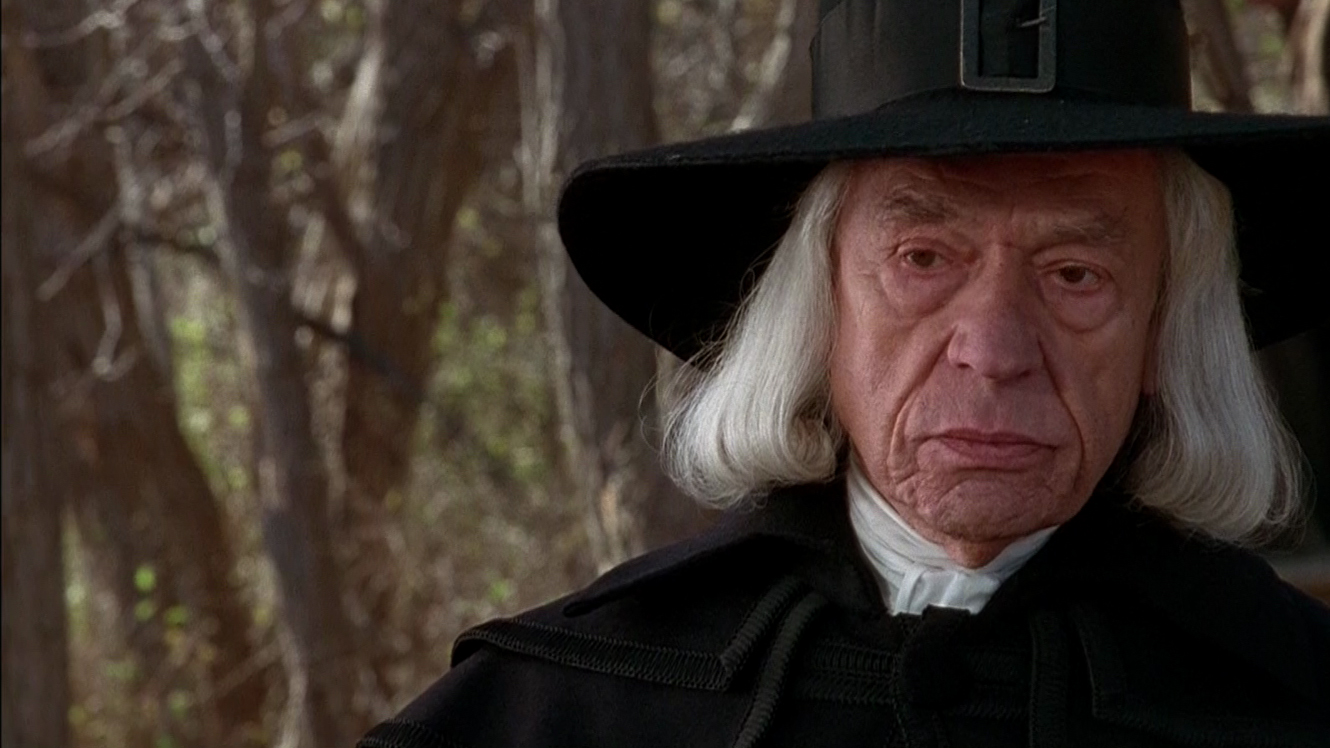
Paul Scofield did so few films that each of his rare performances is to be treasured (this was his last film performance). His Danforth is simply superb, probably close to the definitive performance. It trades a lot on an inversion of Scofield’s most famous performance as Thomas More. Scofield plays Danforth as a man filled with certainty without a trace of doubt, who is married to the word of the law but has no understanding of the spirit of it. In Scofield’s masterful performance, flashes of arrogance and pride intermix with a genuine sense of faith and morality. His Danforth is convinced everything he does is right – a position that allows him to commit many wrongs.

The film is rounded out by several other excellent roles: Bruce Davison is outstandingly weaselly as Samuel Paris, Peter Vaughan has a wily shrewdness as Giles Corey, Rob Campbell is increasingly filled with doubt and anger as Hale, Karron Graves is wonderful as a desperate and scared Mary Warren. Mary Pat Gleason is perfect as the proud Martha Corey, while George Gaynes subtly suggests a man consumed with doubt as Judge Sewell.

“Anybody seeing The Cruciblenow would never dream that it had been a play” said Arthur Miller on this adaptation. He’s right. This must be one of the best stage-to-screen adaptations there has ever been, with all involved totally understanding what made the play great while expanding and deepening the content for film. It’s a marvellous film.

Black Swan (2010)


Natalie Portman in the intense world of ballet in Aronofsky’s crazy masterpiece Black Swan

Director:  Darren Aronofsky

Cast: Natalie Portman (Nina Sayers), Mila Kunis (Lily), Vincent Cassel (Thomas Leroy), Barbara Hershey (Erica Sayers), Winona Ryder (Beth MacIntyre), Benjamin Millepied (David Moreau), Ksenia Solo (Veronica), Kristina Anapau (Galina), Janet Montgomery (Madeline), Sebastian Stan (Andrew)

Something about ballet just makes people think of obsession. Many dancers criticised Black Swan for perpetuating myths about the dangerous psychology, the quest for perfection, the personal life imbalance connected with the all-consuming art ballet seems to be. It’s hard not to agree with them – but that doesn’t mean Black Swan isn’t unsettling, creepy and hypnotic film-making. 

Nina Sayers (Natalie Portman) is an obsessive member of the New York Ballet, focused on achieving perfection and lives a sheltered, barely adult life at home, dominated by her mother Erica (Barbara Hershey). With the forced retirement of company lead Beth McIntyre (Winona Ryder), Diagheliv-style director Thomas Leroy (Vincent Cassel) selects Nina to play the dual role lead of white and black swan in Swan Lake. Leroy feels she is perfect for the innocent white swan, but needs to work on the sensual black swan. Increasingly feeling the pressure of playing the role under the demanding Leroy – and growing increasingly preoccupied with her understudy Lily (Mila Kunis) – Nina’s fragile psyche begins to fracture.

Black Swan is a mesmerising mixture of psychological drama, melodrama, Cronenberg-style body horror, unreliable narration and immersion into a pressure-cooker world. It’s often difficult to watch, sometimes maddeningly over-blown, and overly tricksy in its intense visual style. But despite that, it’s actually compellingly watchable, an audacious tight-rope walk between style and substance that constantly feels like it’s going to get lost in its extremes but never does.

Aronofsky’s camera flies and whirls like the ballet dancers he is recording, and he creates a wonderfully dark spin on The Red Shoes. What I found particularly fascinating watching the film again after many years is how unreliable and imprecise so much of the story is. Told completely from the perspective of Nina – a woman subject to delusions, chronic social insecurity and an increasingly split psyche – it becomes clear that a lot of what we see may not be as clear-cut as we think. 

This most obviously affects our perception of Mila Kunis’ rival (or is she?) dancer Lily. How many of the interactions we see are actually happening, and how many are fantasies? With Lily becoming an alternative physical form for Nina’s projection of her own “black swan” persona (several times, Lily’s face morphs and shifts into Nina’s), we have to question virtually every appearance we see of her – and interpret her personality from the prejudiced, fearful view seen by Nina. Similarly, Barbara Hershey’s domineering mother (while undoubtedly controlling) is perhaps not the monster we see. She’s clearly 100% right in her fears for Nina’s sanity. How much of her behaviour is possessive jealousy and how much is it a protective parent who knows her daughter is a danger to herself?

Then of course we have Nina herself. Natalie Portman won every award going for her performance here, a tour de force of bravura dementedness mixed with vulnerability. Nina is a character who we only slowly realise as the film progresses is not the innocent, childlike waif she first appears, but has a much darker, more complex personality. Her “black swan” side – the darker, sexual side of her personality she is encouraged to explore – slowly expresses itself more and more as a physically. Portman clearly demonstrates the differences between the two sides of Nina’s personality. Her increasing desperation, isolation and insecurity are very effective – and the moments where she allows the “black swan” persona to control her actions are riveting.

Aronofsky explores Nina’s unbalanced mind with moments of pure body horror – although it’s grand guignol ickyness like this that probably pushed some people too far. It ties into most of the film being (quite possibly) a series of Nina’s vivid fantasies. Ballet wounds become increasingly magnified – from a broken toe nail early on, to Nina obsessively picking and scratching any wound. In one impossible to watch moment she obsessively picks off a long strip of skin from a finger wound (fortunately revealed immediately after to be fantasy). Beginning to believe she is growing wings, she obsessively scratches her back and has visions of swan flesh morphing over her body. At one point she fantasies her legs breaking into swan legs. In between this are bouts of sexual exploration – both solo and with partners – that seem increasingly unnerving. 

Aronofsky’s ballet world is one of meticulous work and back-stabbing brutality. An early sequence covers Nina’s almost ritualistic preparations of her ballet shoes. The troupe, far from supportive, seems to be ripe for bitchy debate and rivalry (although of course some of this may well be Nina’s unhinged perception). Winona Ryder has a neat cameo as a former star dancer, ruthlessly dumped for being too old. Vincent Cassel’s director is at best a domineering bully and at worst a position-abusing horndog, depending on how reliable Nina’s perspective is. It’s the setting of a melodrama, and Aronofsky has expertly mixed a Silence of the Lambs style psycho-drama and The Fly style horror.

Portman holds the film together brilliantly under Aronofsky’s distinctive direction. It’s not going to be for everyone – but Aronofsky understands ballet if nothing else, shoots it brilliantly, and when we finally see Nina fully transformed as the Black Swan dancing the final performance, the energy and controlling focus of her performance, and its beauty, really comes across (even to a ballet ignoramus like me).

Black Swan is such an off-the-wall mix of styles, and so out there in some of its visuals, story developments and characterisations, that it’s not going to please everyone. In fact, catch this on the wrong day and you’ll hate this film (and probably really, really, really hate it). But catch it at the right time and it will stick with you. But whatever your view of its gothic style and content, you’ll admire Portman’s performance, respect the craft with which it has been made, and enjoy several fine performances from Cassel, Hershey and Kunis among others. It’s weird. Very weird. But that’s not necessarily a bad thing.

Little Women (1994)


Gillian Armstrong’s beautifully cast and played adaptation of Little Women is a classic

Director: Gillian Armstrong

Cast: Winona Ryder (Jo March), Gabriel Byrne (Friedrich Bhaer), Trini Alvarado (Meg March), Kirsten Dunst (Young Amy March), Samantha Mathis (Amy March), Claire Danes (Beth March), Susan Sarandon (Marmee March), Christian Bale (Theodore Laurence), Eric Stoltz (John Brooke), John Neville (Mr Laurence), Mary Wickes (Aunt March)

There are certain adaptations that simply set the standard. I’m thinking of the BBC Pride and Prejudice or Emma Thompson’s Sense and Sensibility. For productions like this, it almost seems superfluous to create another version: why would you want to when you can already watch the whole thing done perfectly? Gillian Armstrong’s superlative production of Little Women is such a film: so perfectly cast, immaculately acted and brilliantly assembled that I simply can’t imagine another production bettering it.

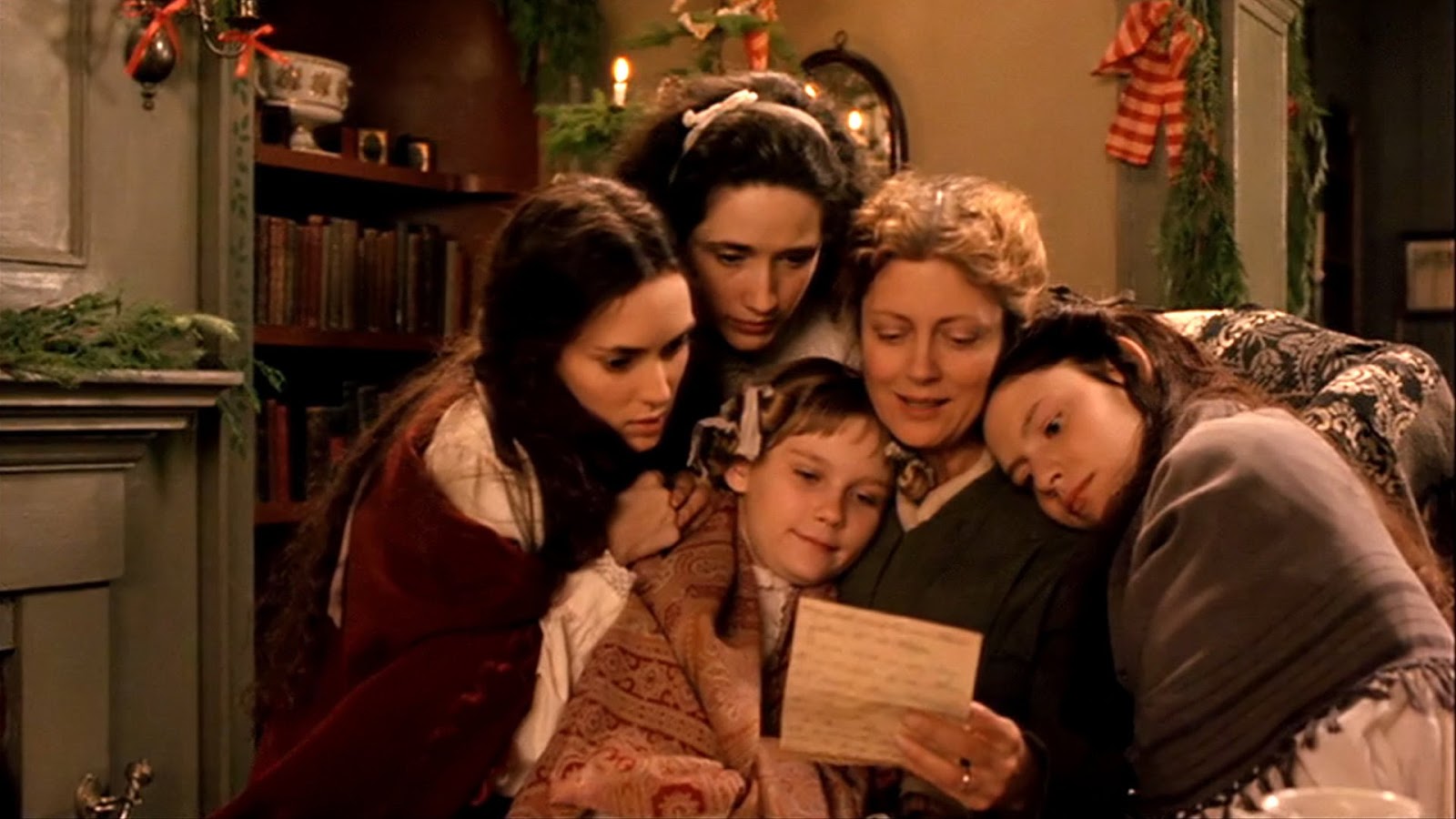
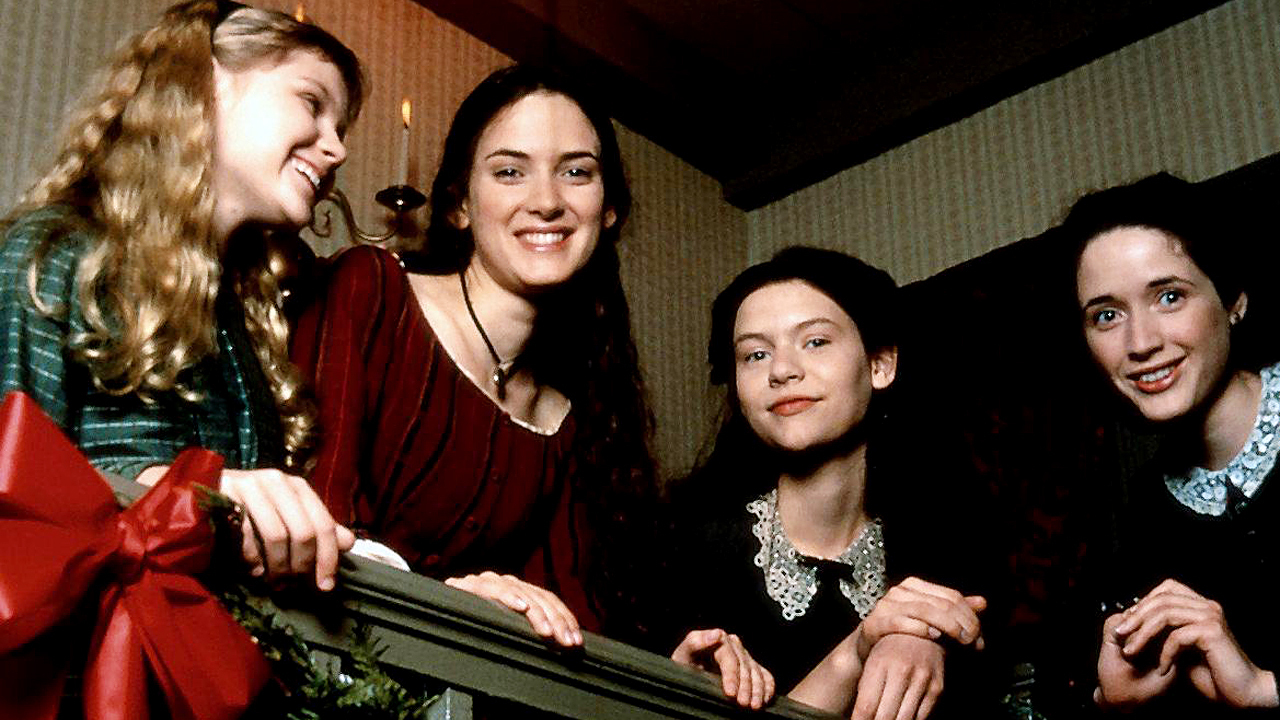
In Massachusetts during the American Civil War, the March sisters live with their mother (Susan Sarandon): sensible Meg (Trini Alvarado), tomboyish Jo (Winona Ryder), gentle Beth (Claire Danes) and temperamental Amy (Kirsten Dunst). While their father is away fighting, the girls grow up and experience the highs and lows of life and love, while never losing sight of the strong bond that holds them together.

Not only is it impossible to imagine another production besting this, I can’t imagine another creating so many “something in my eye” moments as this film manages. Gillian Armstrong’s tender direction gets a guaranteed emotional response from the audience every time, largely because she keeps the film simple, focused and doesn’t overegg the emotion. She recognises the story itself carries delicious highs and heartbreaking lows – and lets these moments speak for themselves. From its opening moments, establishing the girls’ love of theatricals and their own private “Pickwick club”, you know you are in the safe hands of people who fully understand the novel.

It’s a film which plays it very, very simple and lets the beauty of the moments speak for themselves. Many work perfectly: no less than three times I felt myself welling up, from the presentation of Mr Laurence’s piano to Beth, to Beth’s tragic death, to the final scenes between Jo and Professor Bhaer. Each of these moments is quite simply perfectly played and carry a major emotional wallop. It’s because Armstrong sets out a film that is totally straight, and a completely loving and respectful adaptation of Alcott’s novel. Armstrong, and adapter Robin Swicord, also build a profound, focused story of growing up and learning to adjust to loss and the changes life brings us. Focusing on this creates a very clear journey in the movie – as well as a story anyone who has had any life experiences is going to respond to.

Part of the reason why the film is such a complete success is the superb playing from a cast without a weak link among it. The four March sisters genuinely feel like people who have grown up together, so strong are the bonds of chemistry between them. I’d also hugely commend Armstrong and Swicord for so skilfully establishing the different personalities of the sisters – within the opening few minutes you’ll feel like you know all their personalities exactly (a task utterly failed by a recent three-part BBC adaptation).

In the lead role, it’s scintillating to watch Winona Ryder and remember what a superb, heartfelt and gloriously expressive actress she is. Vulnerable but also tomboyish, boisterous and also tender, she brilliantly captures Jo and her semi-bohemian, semi-homespun yearnings, and her passionate love for a life different from the traditional. Ryder also has such wonderful skill with conveying emotion – at several key moments, waves of emotion seem to pass over her face in careful micro-expressions. Several moments carry the weight that they do, because Ryder sells them so well. 

Her three sisters are equally well-cast. If she has a rival for skill of expression and conveying depth of emotion it’s Claire Danes, who is astonishingly good as the gentle Beth (hard to believe she was only 15 at the time!). Danes’ simple joy and her gentle, unassuming love for those around her really hit home. Danes’ joyful warmth makes Beth’s acceptance of the piano from Mr Laurence a beautiful moment, while her tender humanity makes her death incredibly moving. Kirstin Dunst is superb as the young Amy – part brattish pre-teen, part excitable child. Her sudden horror when she realises the gravity of burning Jo’s book again helps this moment work so well. Trini Alvarado has the less interesting part, but her grounded, calm, proper and gentle performance as Meg balances the work of the sisters really well, and Alvarado demonstrates she has real empathy for the role.

The rest of the cast are equally good. Samantha Mathis (taking over the older Amy) delivers an excellent portrayal of a woman keen to head into the world. Susan Sarandon is perfect as a wonderfully loving, all-knowing mother. Christian Bale is perfect as the playboyish Teddy, full of playful fire. John Neville sells a few crucial scenes as a humane Mr Laurence. Gabriel Byrne is certainly far more handsome than his literary counterpart, but he’s so wonderfully gentle, caring and kind that it hardly matters: the relationship between him and Jo is beautifully judged.

Beautifully judged basically sums up the whole thing: there is not a bum note in this whole film. Armstrong and Swicord nail every single decision. Armstrong’s direction is outstanding: a brilliant example is the gently, unbearably sad sequence of sprinkling roses in Beth’s room after her death – it’s so simply done but incredibly moving. The film is crammed with moments like this, beautifully scored by Thomas Newman. Swicord’s script is marvellous, and it successfully draws out the feminist message of the book, without hammering the points: it gently flags up the lack of opportunities often available for women at the time, but also celebrates the contribution they can make. 

Little Women is a simply superb piece of adaptation, and a deeply affecting and heart-warming film. Only a film that lets you invest in the characters as much as this, could move you as much as it does. When Ryder smiles, you feel your whole world light up. When Danes cries with joy you feel your heart sing. When tragedy comes you feel like you’ve had a loss yourself. The story is superbly streamlined, each character is perfectly established, the relationships between them all are so wonderfully done – you can’t help but fall in love with it. If it had been a film about men it would have been littered with Oscar nominations. As it is, despite the sexism of the Academy, it’s a film you’ll treasure and return to again and again.