Author: Alistair Nunn

In Which We Serve (1942)


Noel Coward takes command in stirring British wartime drama In Which We Serve

Director: Noël Coward, David Lean

Cast: Noël Coward (Captain E.V. Kinross), Bernard Miles (CPO Walter Hardy), John Mills (Shorty Blake), Celia Johnson (Alix Kinross), Joyce Carey (Kath Hardy), Kay Walsh (Freda Lewis), Michael Wilding (Flags), Leslie Dwyer (Parkinson), James Donald (Doc), Philip Friend (Torps), Frederick Piper (Edgecombe), Richard Attenborough (Young Stoker)

Only the British would make a wartime propaganda film about a sunk ship where over half the crew gets killed (the Navy nicknamed the film In Which We Sink). It says something about this endearingly muddle-headed country that the stories that appeal most to us are those that celebrate our struggles against adversity. It was filmed in the aftermath of the Battle of Britain but before the Battle of El Alamein – the British considered themselves safe from invasion, but still saw victory was a long way off. In that climate, the film’s attitude of knuckling down and doing your duty to achieve a distant dream must have resounded profoundly with millions of people.

Based on the early war career of Louis Mountbatten, this “story of a ship” revolves around the Torin, a destroyer captained by E.V Kinross (Noël Coward). The ship is dive bombed and sunk by the Luftwaffe, and the captain and survivors cling to a lifeboat, waiting for rescue. While they wait, the crew remember their lives back home in flashback – in particular the captain, CPO Hardy (Bernard Miles), and able seaman ‘Shorty’ Blake (John Mills). Can you imagine an American propaganda film with a plot like that?

It’s easy to mock a film like In Which We Serve today. Its stiff-upper-lipped, duty-led, hierarchical world has been lampooned countless times since Peter Cook’s pitch-perfect Bernard Miles impersonation in Beyond the Fringe. (Early in the film, watching Kinross at home, I remembered Eddie Izzard’s spoof: “Don’t go to the war Daddy / I must they won’t start without me…”). The first 30 minutes, with its clipped dialogue, fast-paced delivery and stiff-backed, formal playing style takes a while to tune into. But it’s worth it, as the establishment of this carefully controlled exterior is what makes the later sections, with strong emotions just below the surface, so moving.

Coward was of course primarily a man of the theatre, and this was his only original film script. His collaboration with experienced film-makers produced a stirring, skilfully crafted epic that reflects on several levels of British rank and society, and not only shows us “why we fight” but also “why we should fight”. Coward is credited as the principal director, but much of the direction (and the film’s skilfully constructed structure in the editing suite) comes from his co-director David Lean, here making his directing debut.

Lean’s expressive hand is clear in the brilliantly composed sequences on board the ship itself, both in action and at ease. An example of the fluid editing, is where the camera follows the progression of a missile through the ship, passed from crew member to crew member, each given some brief moments to show their quiet determination and resolve. Similarly, the sequences on the drifting lifeboat have a claustrophobic intensity about them. The flashbacks are carefully placed to allow our understanding of the characters and their backgrounds to grow each time.

The scenes back home are remarkable for their dramatic simplicity. Coward understood the stories that move are those of normal people. The sailors’ home lives – from the captain down – are domestic, calm, happy and above all normal. Very little happens: one sailor gets married, the captain plays with his children, the Petty Officer teases his wife. This regularity makes their courage under fire all the more stirring: truly ordinary people doing the extraordinary. Some critics have called Coward’s attitude to the working classes snobbish, but there is no disdain at all here – instead there’s a paternal admiration with genuine warmth.

This warmth extends even to a stoker who cuts and runs during action. It would be easy to use this moment to amplify the braveness of the others. Instead, in a moving speech to the men, the captain takes the blame onto himself for not supporting the young man earlier. The mortified stoker, in a wonderful little scene, struggles to express his shame to a barmaid, not in anger but in a quiet, confused guilt. The film never condemns or judges him – he is quietly shown returning to his duties. There is no explicit moment of redemption, just a sense of a man who has let himself down, resolving quietly to do better.

The opening sequence covers the lifespan of the ship – from its construction and commissioning, to its launch, early actions and sinking, with the implication of a nation coming together. Later scenes mix theatrical touches with documentary realism. A marvellous sequence covers Dunkirk, which feels incredibly real but also showcases a few wonderful flourishes, from Kinross’ speech praising the soldiers’ bravery to Shorty’s affectionately wry remark on the rivalry between soldiers and sailors. The final sequence brings us full circle, with the construction and launch of another battleship under Kinross’ command. We may lose a battle, but we are never beaten.

Coward takes on the lead role. To be honest, it’s a striking piece of miscasting that somehow works out – Noël Coward is no-one’s idea of a hard-nosed naval veteran. He lacks the range in particular for his scenes of domestic life, coming across as too detached and distant – particularly noticeable since his wife is played brilliantly by the radiant Celia Johnson, conveying layers of emotion under a controlled exterior. But, his quiet, buttoned-up professionalism and clipped Englishness work perfectly for the quietly emotional speeches he delivers. These he nails perfectly, his voice just giving the hint of cracking. It’s a curiously stagy, and in no way naturalistic, performance – but as a representation of a particular type of Britishness it’s perfect.

And Kinross is just the sort of man you would follow to the end – distant and authoritarian, but just and warm. Rescued from the ocean, he goes immediately to his men, moving quietly from wounded man to wounded man, collecting addresses, issuing quiet words of unexpressive comfort (“I’ll tell her you did your duty”). His closing speech (heavily based on Mountbatten’s own address to his crew) throbs with emotion just below the surface as he thanks his men – and it’s hard not to feel it as he shakes the hand of each man and is overcome with emotion, he can only nod a brief acknowledgement to his officers. Lean trains the camera on his back, as we see his shoulders seem to swell to support the pride, respect and love for his men. It’s peculiarly British, but this unspoken affection is hugely powerful.

The more naturalistic performances from the rest of the cast help to anchor the film – and also allow Coward’s more stylised acting to work effectively. John Mills is wonderful as Gunner “Shorty” Blake, a plucky, kind and witty man. He’s just the sort of unexpressive hero we’d all like to be, and his homespun love story with Kay Walsh is genuinely engaging and moving for its everyday normality. Mills also carries much of the film’s humour.

It’s the final sections of the film that really, really work. I can’t get through the scenes of the surviving crew being saved, the quiet courage of the dying men and the austere warmth of the captain, the speeches that burst with pride and respect under a reserved veneer, without feeling a lump in the throat. It’s a masterful piece of quietly powerful film-making, that pays off precisely because so much of what has gone before has been so normal. The fact that we’ve seen the lives of these people – and can see what, in their quiet way, they are fighting for – I found increasingly moving.

In Which We Serve is a wonderful piece of film-making, very well written by Coward and strongly directed (largely) by Lean. Coward himself, in the lead role, is far better at the speeches than as either a captain or husband, but the rest of the cast is excellent with Mills and Johnson both outstanding. It’s truly the stuff of spoofery in many ways today, but tune yourself up to the accents and the repressed Britishness and this is a heartfelt and deeply moving film. Perhaps one of the finest propaganda films you’ll ever see – and still so very British.
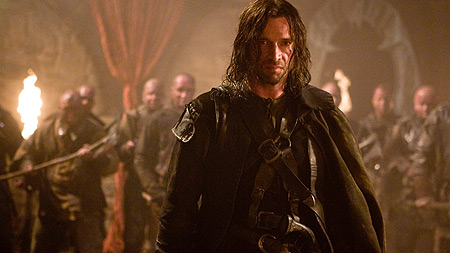
Solomon Kane (2009)


James Purefoy excels in cult-classic in the making Solomon Kane

Director: Michael J Bassett

Cast: James Purefoy (Solomon Kane), Max von Sydow (Josiah Kane), Pete Postlethwaite (William Crowthorn), Alice Krige (Katherine Crowthorn), Rachel Hurd-Wood (Meredith Crowthorn), Jason Flemyng (Malachi), Mackenzie Crook (Father Michael)

Solomon Kane was a pulp-magazine character from the 1920s. I’d never heard of him before – I imagine many others haven’t either – so bringing a film about him to the screen was always going to be a labour of love. That’s certainly what this film is. 

In 1600, Solomon Kane (James Purefoy) is a ruthless mercenary, but is confronted by a demon who tells him his soul is forfeit to the Devil. Horrified, Kane flees to sanctuary in a monastery, forsaking violence and devoting himself to God. After being expelled because the abbot has a dream, he encounters a Puritan family, the Crowthorns, and travels with them. Kane is deeply drawn to the Crowthorns – and when they are ambushed, the family killed, and daughter Meredith (Rachael Hurd-Wood) kidnapped by the servants of the sorcerer Malachi (Jason Flemyng), Kane swears to revenge the Crowthorns and rescue Meredith.

There’s something quite sweet and charming about Solomon Kane. It’s an old fashioned B-movie with a winning style. Is it going to rock any worlds? Probably not, but it’s got plenty of swagger and it makes a small budget go a long way. Bassett’s influences are pretty clear – everything from Witchfinder General to Lord of the Rings – but he shoots the film with a commendable energy. The visual flair is impressive, and successfully creates the feel of an England halfway between civilisation and the middle ages. Bassett also knows how to shoot an action scene, and the film is stuffed with fantastic sword fights that hit the right balance between brutality and dynamism.

Bassett also finds a fair amount of emotional heft in the story. The decision to focus a large chunk of the opening 45 minutes on Kane’s guilt and his attempts to make amends, make him a character we end up caring about. The “good family that wins our hero’s heart” cliché is exactly that, but it works very well here as Bassett takes his time and lets Kane’s bond with the Crowthorn family grow organically. All this patient establishment of Kane’s personality really pays off during the action of the second half.

It’s also helped a great deal by James Purefoy’s committed performance in the lead role. Purefoy has long since been a favourite of mine, who never really got the breaks to become a bigger star. His performance has the physicality and charisma, but Purefoy also adds in a Shakespearean depth to create a man desperate for redemption, carrying a pained heart very close to the surface. He dominates the whole film, setting the tone; and I suspect his dedicated performance encouraged fine work from the actors around him, despite almost all the other roles being little more than cameos. There are blockbusters whose leading actors are incapable of holding the screen as well as Purefoy does here.

Bassett’s B-movie spectacle is not perfect. The eventual explanation of why the Devil wants Kane’s soul is inexcusably garbled. Jason Flemyng is miscast as the demonic sorcerer Malachi, and his final confrontation with Kane lacks real impact (largely because Malachi has so little presence throughout the film) and devolves into a face-off with a dull special effects monster that looks rather like Megatron in the live-action Transformers films. There is a smaller-scale, personal ending in this film, but it gets crushed under the foot of the special effects. It’s a shame that a large portion of this film’s budget probably went on this.

Solomon Kane is structured, and plays, like a B-movie – but it’s proud of that. Its low budget demanded inventiveness and dedication from the cast and crew, all of whom delivered. The grimy design of the world is perfect, the story creates a good combination of action and emotion. Its story may be pretty clichéd, but it’s presented with great gusto – and has a terrific leading performance from a heavily under-rated actor in James Purefoy. More people deserve to see this – if this isn’t a cult classic in the making, I’m not sure what is.

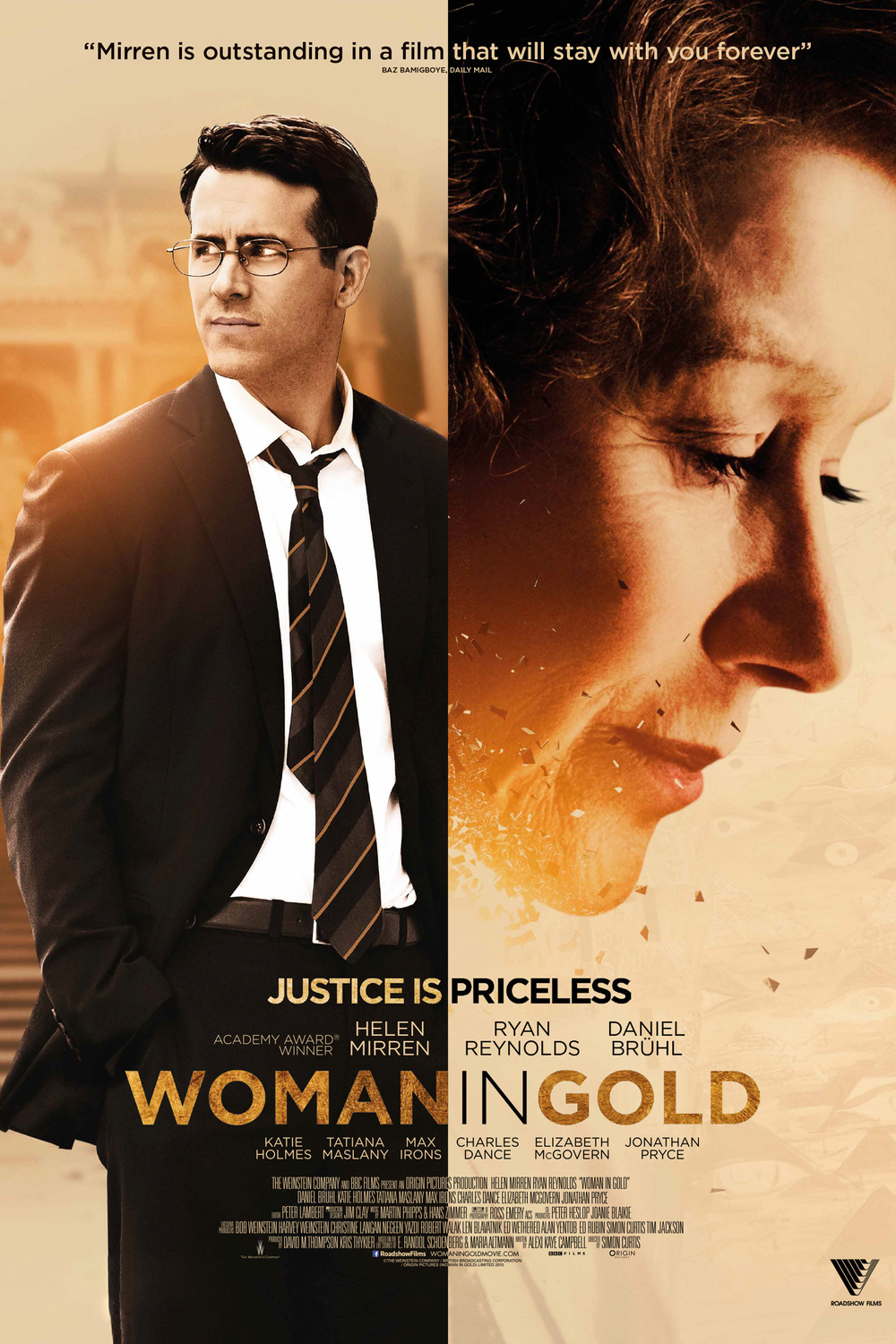
Woman in Gold (2015)


Helen Mirren and Ryan Reynolds stumble through bland Philomena rip-off Woman in Gold

Director: Simon Curtis

Cast: Helen Mirren (Maria Altmann), Ryan Reynolds (Randy Schoenberg), Daniel Brühl (Hubertus Czernin), Katie Holmes (Pam Schoenberg), Tatiana Maslany (Young Maria), Max Irons (Fritz Altmann), Charles Dance (Sherman), Elizabeth McGovern (Judge Cooper), Jonathan Pryce (Chief Justice Renhquist), Antje Traue (Adele Bloch-Bauer), Allan Corduner (Gustav), Henry Goodman (Ferdinand)

The Nazi regime across Europe was a criminal one in every sense of the word. Along with the hideous acts of murder and warmongering, Woman in Gold uses its story to remind us their leaders were also little better than common thieves.

Maria Altmann was a young Jewish woman from a wealthy family, living in Vienna in the 1930s. She escaped from Austria to the US in 1939 with her husband, but had to leave the rest of her family behind. Their fine possessions, including several paintings by Klimt, were stolen by the Nazis.

Decades later, Maria (Helen Mirren) recruits struggling lawyer Randy Schoenberg (Ryan Reynolds) to help her reclaim the paintings, now owned by the Austrian government. The government are predictably dismissive of any claims on their heritage, and are particularly unwilling to give up Klimt’s Portrait of Adele Bloch-Bauer (or Woman in Gold), a portrait of Altmann’s aunt, proudly displayed as a jewel of Austrian culture. So begins a case that will go, via the American supreme court, to the very heart of Austria’s uncomfortable relationship with its past. In parallel, Maria remembers her younger self (Tatiana Maslany) and her escape from Vienna.

I think it’s fair to say Maria is a role Helen Mirren could play standing on her head. It’s a cliché – the feisty, imperious elderly woman who cows all around her, but has a heart of (forgive me) gold. Ryan Reynolds Schoenberg is similarly predictably: a young, naïve, slightly bumbling do-gooder revealed to have hidden depths of strength, and ends up connecting with his own heritage in a “very personal” journey. In fact, every character in the “present day” plotline is a hopeless cliché. Katie Holmes has perhaps the worst role as Schoenberg’s wife – as The Wife always does in these things, she spends the first half of the film asking her husband to drop his time-consuming crusade, but come the second half she’s making the inevitable “you’ve come too far to give up now” speech.

Every bit of the modern day story is predictable, reheated slop from other, much better movies – you literally recognise every beat of every courtroom scene. Most conversations are essentially the actors spooling plot at each other, explaining everything from art history to Austrian mediation procedures. The moments where the dialogue allows the actors to focus on character land with a hamfisted heaviness, with all the subtly of Oscar “for your consideration” scenes.

Periodically the story abandons logical evolution altogether and leaps from A to B without explanation: Maria will never go back to Vienna, less than five minutes of screentime later oh no actually she will (explained by a timely, on-the-nose flashback), no she definitely won’t go back a second time, ta-da there she is. She wants to fight, then she wants to give up, then she wants to fight again. Whether these events were real or not, the film makes them feel like humdrum screenplay hokum.

You keep waiting for this to spring to life and do something fresh, but it never does. Even its odd-couple pairing is essentially Philomena reheated – but without the wit and warmth of that film’s script. It manages to turn what should have been an interesting story into something drier and duller than a documentary would have been.

The film takes wing a little more in the flashbacks to the 1930s. Again, there’s nothing new here, but the performances in are infused with a warmth, emotion and humanity missing from the other storyline – Allan Corduner is particularly good as Maria’s loving father. The sense of peril from the Nazis also gives the film a clear and unequivocal antagonist: the sequence where Maria and her husband flee Vienna is more engaging and tense than anything else in the film.

The weight of these flashbacks, however, only serves to contrast poorly with the strange, odd-couple comedy of the rest of the film. It’s literally two different films sitting uncomfortably together, neither doing either any service.

Woman in Gold is a confused film, that drags down what could have been a fascinating story into a safe, Sunday-afternoon film that never wants to say anything too controversial (even its potshots at the Austrians for overlooking their Nazi past is balanced by “good” Austrians). It reduces its characters to plot-spouting clichés, wrapped in a dry story. Although its flashback scenes carry some emotional heft, they can’t save the main plotline which spirals on and on, never engaging the viewer’s interest. It’s not gold, it’s very base metal.

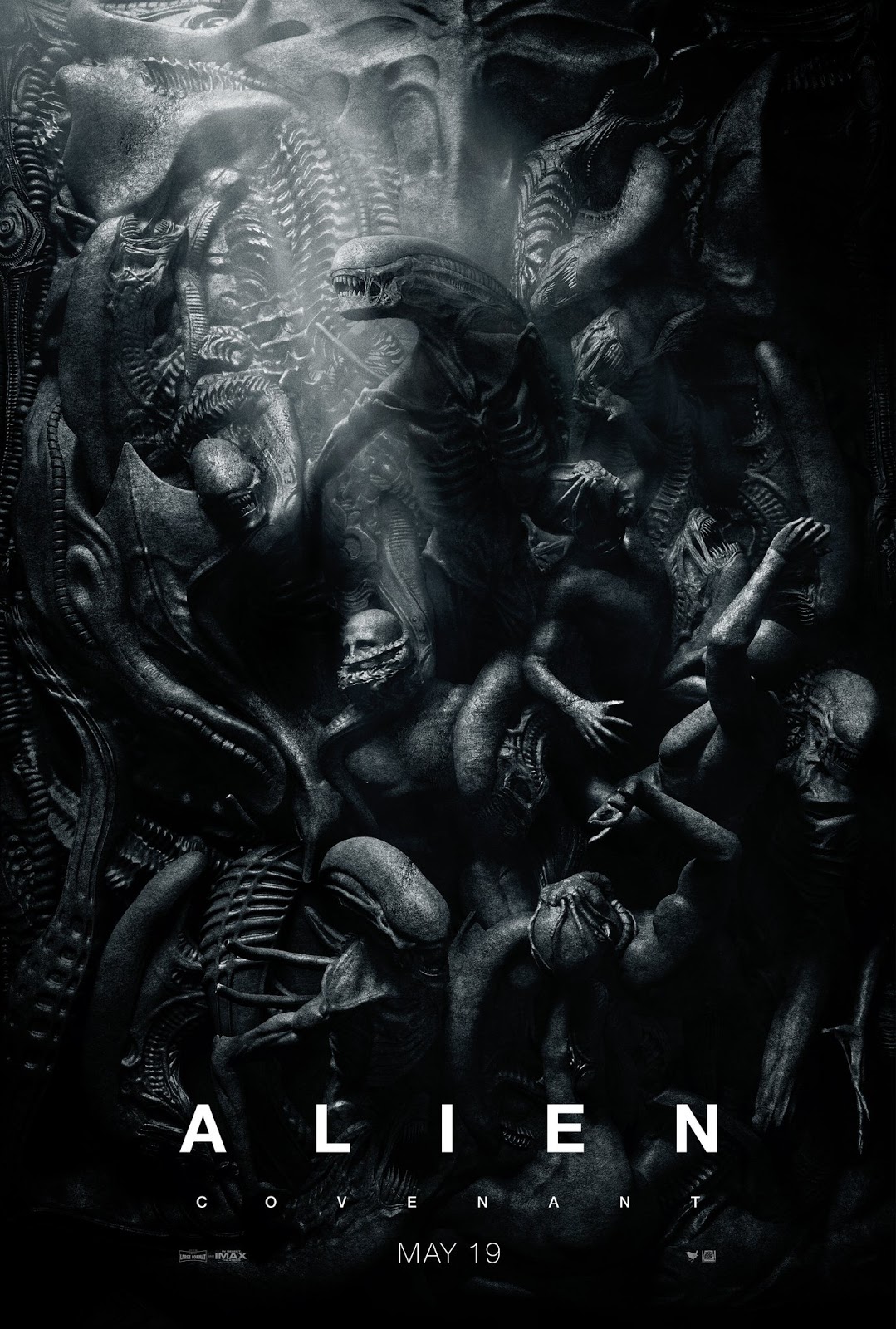
Alien: Covenant (2017)


The xenomorph rises again, in prequel Alien: Covenant

Director: Ridley Scott

Cast: Michael Fassbender (David/Walter), Katherine Waterston (Daniels), Billy Crudup (Oram), Danny McBride (Tennessee), Demián Bichir (Lope), Carmen Ejogo (Karine), Amy Seimetz (Faris), Callie Hernandez (Upworth), Guy Pearce (Peter Weyland), Noomi Rapace (Elizabeth Shaw), James Franco (Jacob)

The Alien franchise is a series I’ve always had a lot of time for. Perhaps I just enjoy the carnage and blood letting of these movies, but at their best there is a sinister poetry behind the pure destructiveness of this rampaging beast, with a perfect mix of haunting nihilism and stirring action. In 2012, Scott returned to the franchise to explore its roots. His prequel film, Prometheus, had a mixed reception (and it’s a film I’ve found weaker with repeated viewings) but it still had that mixture of nihilistic poetry and gore. So where does Alien: Covenant fall?

Set 10 years after Prometheus, a solar flare hits the colony ship Covenant. To repair the damage, the ship’s android Walter (Michael Fassbender) wakens the crew, although the captain (an unbilled James Franco) is killed by a malfunction. Command passes to Oram (Billy Crudup), although many of the crew look to the captain’s wife Daniels (Katherine Waterston) as their moral leader. After the damage is repaired, the crew investigate a signal from an abandoned world, where they find the marooned android David (Fassbender again) and a planet with a terrible virus, that infects its hosts to create brutal Xenomorph monsters. But is all as it seems?

Alien: Covenant is a mixed bag. It has a haunting and unsettling tone and gives us plenty of aliens in all their various forms. Many of the sequences of alien attacks are exciting. It’s trying to build a mythology around the creation of the aliens, and tie that in with a thematic exploration of our needs to create and destroy. It wants to explore the potential dangers of artificial life, and how it could judge us and find us wanting. At the same time, it’s a flawed and rather predictable film, which never really surprises you. It might give you some things to think about – but it won’t provoke your interest enough to make you really think about them for long after the credits roll.

Its main weakness is in its large cast. Most of the characters are referred to throughout by non-descript surnames, hammering home their lack of individuality. The film is so resolutely invested in the establishment of its mythology, it has no time to build characters or a story around the crew. They are little more than ciphers, plot tools to deliver specific points rather than for us to relate to them, or feel concern for their fate. Even Waterston’s Daniels, nominally our surrogate character, feels distanced and undefined. Like the rest of the cast, she suppresses the loss of a loved one (there are at least three bereaved partners in this film) with a suddenness that speaks less of her professionalism and more of the film’s shark-like need to always moving forward.

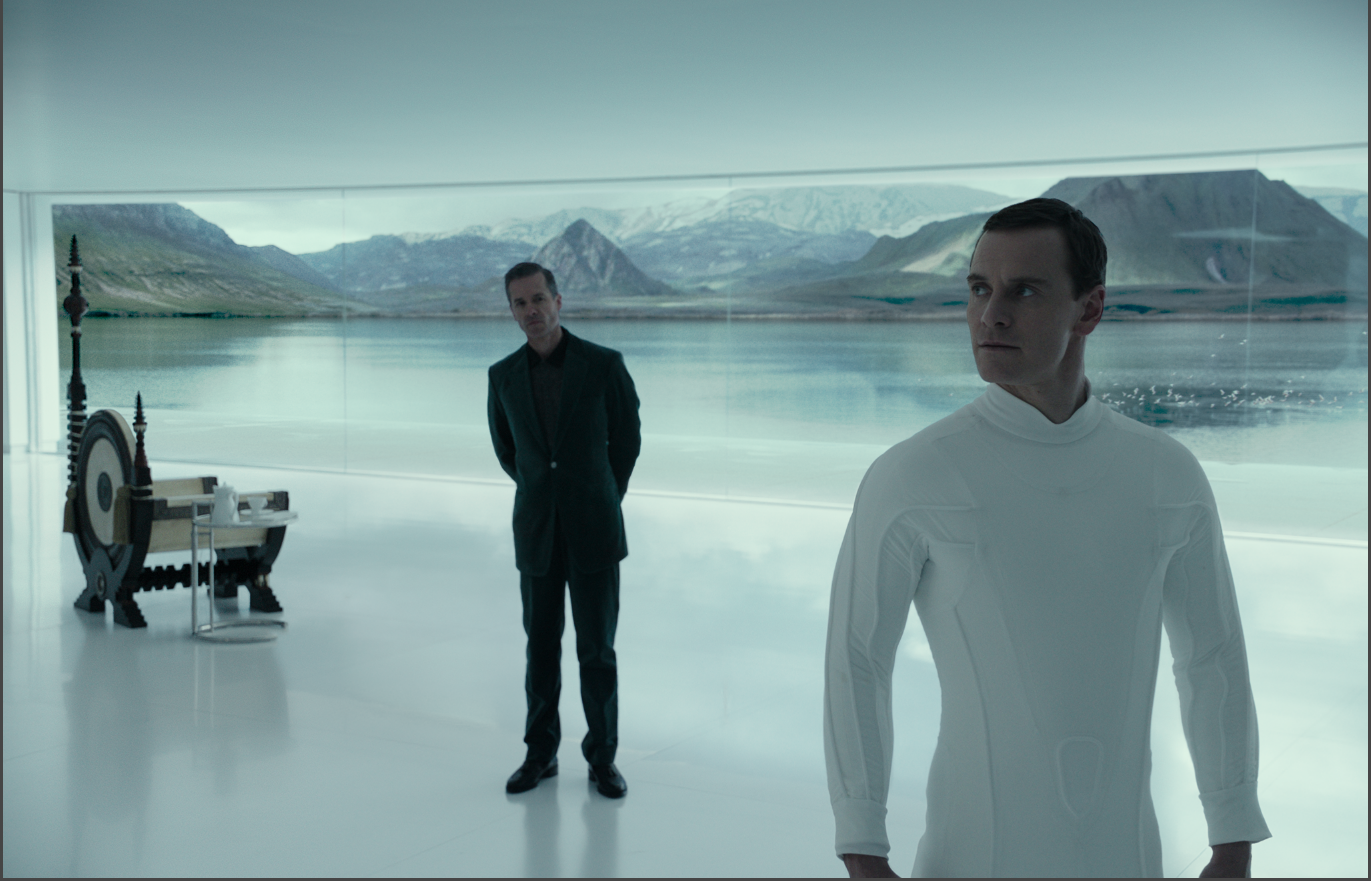
The one exception to the blandness is Fassbender’s dual role as androids David and Walter. It’s an actor’s bread and butter to play different roles, so we shouldn’t be surprised that a great actor like Fassbender executes it here with such skill. But he clearly distinguishes both the loyal, straightforward Walter and the darkly oblique David, and manages to craft the two most impressive performances in the film. This also gives Fassbender several chances to act oddly with himself, including a scene where David (rather suggestively) teaches Walter to play a pipe (it’s all about the fingering) and even a creepily possessive kiss scene between the two androids.

It helps that the film positions David as a protagonist-antagonist, and spends time exploring his fractured psyche (because it is central to the creation of the aliens, the film’s main interest). From its dark prologue, which shows David awkwardly questioning his nature with his creator (a swaggering cameo from Guy Pearce), David carries much of the film thematic interest. He is a creation of mankind, who believes he has surpassed his creators. Learning that Walter, a second generation, has been programmed to be less ‘human’ in his emotional capability as David, only confirms his belief that he is perfect. David is fuelled by a homicidal rage towards his creators, matched with an insane fixation on his own perfection.

The film wheels out a host of literary big guns to suggest a richness and depth to its exploration of these themes, from Milton to both Shelleys, but these points are really window dressing, as David is really closer in spirit to a Mengele crossed with a mad scientist from an old Hollywood B-movie. Despite this though, Fassbender’s David feels like a fully-rounded, absorbing character. His ‘Walter’ performance is equally good – gentler, compassionate, less grandstanding but quietly engaging.

Alien: Covenant is a film that aims high and wants to add some intellectual heft to its “slasher” roots. I think it’s probably a film that “hangs out” with ideas rather than enters into a proper conversation with them, but at least it’s aiming for thematic depth and richness, even if it often misses. I’m not sure it carries the sense of wonder and awe, and near-religious parallels, Prometheus (a deeply flawed, but more haunting film than this) managed. But it wants to make us question our place in the universe, and how our blind overconfidence could one day doom us. These ideas may just be window dressing to the blood and guts that the film delights in, but it at least shows that Scott is trying to make something a little deeper, and trying to make points about human nature.

It may be this focus on philosophical musing and the mythology of the alien’s development, distracted the film-makers from creating a plot to wrap around all this. The characters actions are too are often determined by the requirements of the plot, rather than logic or characterisation. So many dumb decisions are made, it stretches credibility: deflecting on a whim to a strange planet, charging around this alien world with careless abandon, following a clearly demented android you don’t trust into a room full of alien eggs – the plot requires each of the characters to perform various acts of stupidity in order for it to get anywhere.

The plot is also a hybrid that remixes beats from the previous films. No death (and there are loads of them) carries any surprise or shock value, and the alien itself (impressively filmed as the action is) behaves pretty much as you would expect. The familiarity of the events also makes the characters feel (to the audience) even more stupid and careless. There is excitement, but the film never really gets you to the edge of your seat – with its familiar action, and bland characters most of whom are little more than alien-fodder, you just never feel a tension or investment in their fates.

I wanted to like Alien: Covenant more than I actually did – but the truth is that it’s a film that lets itself down. There are moments of awe and wonder in there. It has a very good villain, whose motives and reasoning are interesting and thought-provoking. It has a terrific pair of performances by Michael Fassbender. But it’s also got too much flatness – plot and characters seem rushed and thinly sketched out. It’s clear where Scott’s and the writers’ focus was – and it means chunks of this movie just glide past the eyes and ears. Not the worst Alien film by a longshot – but still someway off the greatness of the first two films.

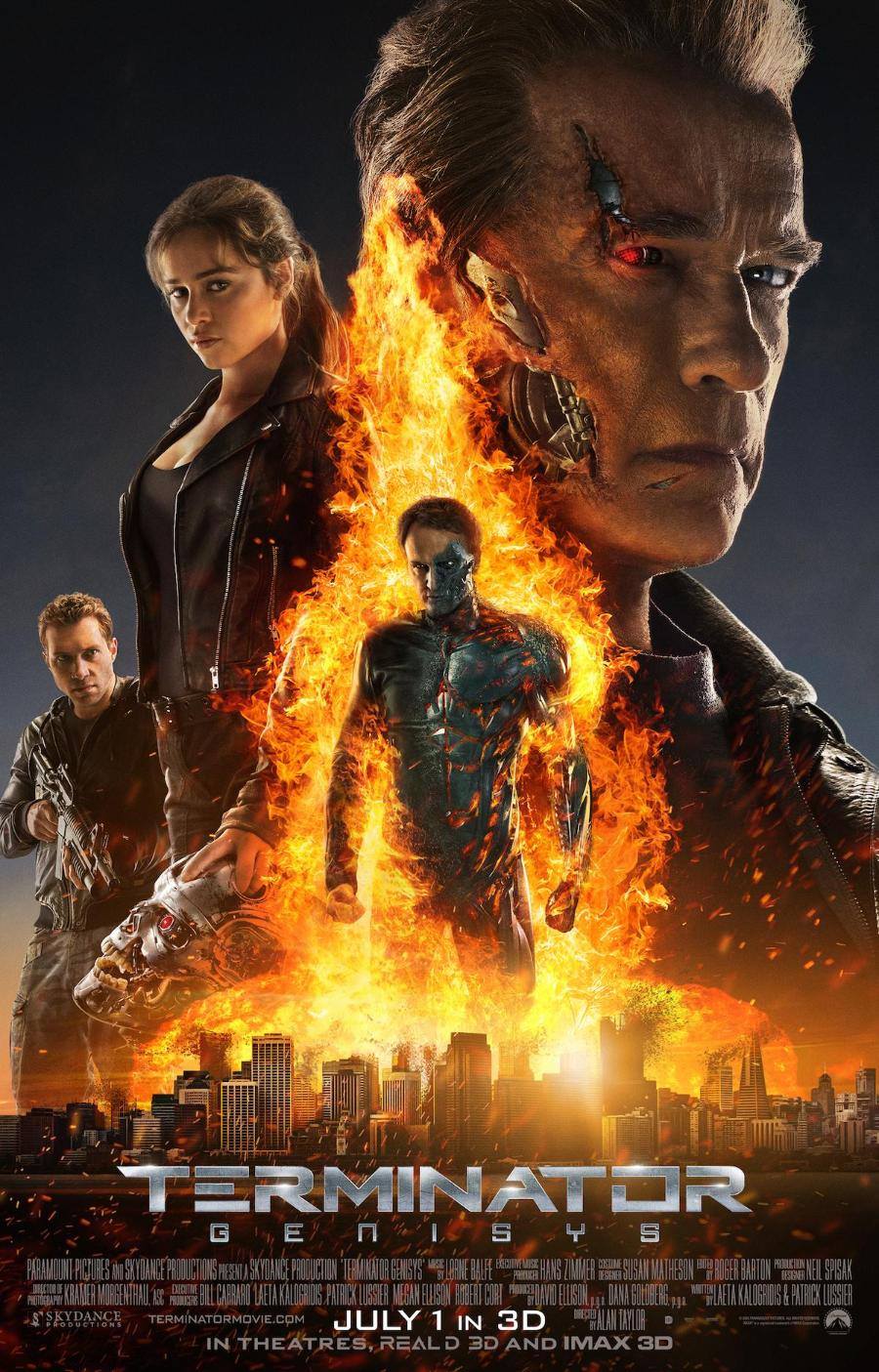
Terminator Genisys (2015)


Arnie saddles up (again) as The Terminator, this time with Emilia Clarke in tow. Reboot or remake?

Director: Alan Taylor

Cast: Arnold Schwarzenegger (Pops), Jai Courtenay (Kyle Reese), Emilia Clarke (Sarah Connor), Jason Clarke (John Connor), JK Simmons (O’Brien), Dayo Okeniyi (Danny Dyson), Matt Smith (Alex/Skynet), Courtenay B Vance (Miles Dyson), Byung Hun Lee (T-1000)

Every few years, Hollywood convinces itself the Terminator franchise is a licence to print money just waiting for exploitation. Since the late 90s, three movies and one TV series have attempted to relaunch the franchise. Each has underperformed, and left plans for sequels abandoned. Terminator: Genisys is the latest in this trend, the first in a planned trilogy that will never be made. As such, it’s a type of curiosity, a film that sets up a new timeline and introduces mysteries never to be answered.

Once again, the film starts with John Connor (Jason Clarke) sending Kyle Reece (Jai Courtenay) back in time to save his mother Sarah (Emilia Clarke) from deadly Terminators sent to destroy her and prevent Connor from being born. But when Reece arrives, he finds the past he was expecting altered and that Sarah was already saved years before from a first Terminator, by a re-programmed one nicknamed Pops (Arnold Schwarzenegger). Our heroes find themselves adrift in a timeline dramatically altered from the one they expected, and transport themselves to 2017 to combat Skynet once more.

It says a lot that the most original and daring thing about this movie is that no-one at any point says “Hasta La Vista, Baby”. Aside from that, the film is a Frankenstein’s monster, assembled from the off-cuts of previous franchise entries. The familiar lines are trotted out once more: I’ll Be Back, Come With Me if You Want to Live, Get Out and many more. The structure of the film limply settles into the same basic set-up we’ve seen since Terminator 2, while the big set pieces have an air of inevitability about them. This is a lazy, half-baked claim to re-invent the franchise that essentially copies and repeats everything from previous films with only a few small changes of angle. You can admire briefly the skill that has re-created moments from the original film, and be impressed by the effects that show a newly-young Schwarzenegger fighting his grizzled future self – but it will largely just make you want to watch the first film again.

This stench of familiarity is despite the huge, seemingly-inventive loopholes that the film, Bourne Legacy like, jumps through in order to try and justify its existence. The Terminator franchise has become so scrambled with alternative timelines, paths not taken, and film series cancelled that it spends almost the first hour carefully recreating events from previous movies, with some major tweaks and changes to allow a new “timeline” to burst up and act as a jumping off point for this movie. By the time the complex timeline politics has been put in place, the film has barely an hour of its run time left – at which point it needs to introduce its two antagonists and give our heroes a mission. The timeline is truncated, the villain is under-developed and the mission the dullest retread of the plot of Terminator 2 possible: a race to get to a building to blow it up. Yawn.

Is it any wonder that people shrugged at this movie? Even it can’t imagine a world outside the confines of its franchise rules. It reminds you what a small world the Terminator universe is. There’s little more than 3-4 characters, Skynet is always the adversary, time travel always seems to involve variations on the same people, the future is always the same blasted wasteland. The films always degenerate into long chases, compromised by our heroes’ attempts to change the future. So many Arnie Terminators have been reprogrammed by the resistance now, you wonder if any of them are left fighting for Skynet. What seemed fresh and daring in the first two films, now feels constrained and predictable. To find life in this franchise, it needs to do something genuinely different, not go over the same old ground over and over again.

The tragedy of this film is that the one unique thing it had – the identity of its main villain – was blown in the trailer of the film. Taylor was apparently furious at this undermining of a twist his film takes time building up. It ought to have been a shock for audiences to find out the franchise’s saviour-figure, John Connor, was instead the film’s villain – instead anyone who’d seen a trailer knew all about it before the opening credits even rolled. They even put it on the flipping poster! On top of which, the trailer carefully checks off all the major set pieces up to the final  30 minutes. Is it any wonder so many people gave it a miss at the cinema? Shocks left unspoiled, such as Matt Smith (strangely billed as Matthew Smith) revealed to be the embodiment of Skynet, are so dull and predictable they hardly counted as twists.

There is little in there to bolster the plot. The action is shot with a dull efficiency. The film is edited together with a plodding mundanity. Schwarzenegger once again goes through the familiar motions, but surely we have now seen enough of this character, which could in fact be holding the franchise back. Emilia Clarke looks bored, Jai Courtenay (an actor who came to prominence with a warm and intelligent performance in Spartacus: Blood and Sand) is again cast as a charisma free lunkhead, with attempts to add shading to his character only adding dullness. Jason Clarke lacks the charisma for the cursed role of John Connor (every film has seen a new actor take on the role).

Reviews claimed the plot was too complex for the audience: not the case. The plot is clear enough – it’s just dull and engaging. It never gives the viewer a reason to invest in the story. Terminator: Genysis is a ploddingly safe, predictable and routine piece of film-making, from a franchise that desperately needed reinvention. But so long as average and uninventive filmmakers – Jonathan Mostow, McG, Alan Taylor – are entrusted with its future, it will always be a franchise with no future. It’s time it was terminated. Hasta La Vista, Baby.

Sex & Drugs & Rock & Roll (2010)


Andy Serkis and Bill Milner recreate the 1970s in this mixed bag Ian Dury biography

Director: Mat Whitecross

Cast: Andy Serkis (Ian Dury), Bill Milner (Baxter Dury), Naomie Harris (Denise), Ray Winstone (Bill Dury), Olivia Williams (Betty Dury), Noel Clarke (Desmond), Toby Jones (Hargreaves), Ralph Ineson (The Sulphate Strangler), Mackenzie Crook (Russell Hardy), Michael Maloney (Graham), Luke Evans (Clive Richard), Tom Hughes (Chaz Jankel), Arthur Darvill (Mick Gallagher)

Ian Dury, one of the leading new wave British musicians of the late 70s, has his life brought to the screen in an eclectic and inconsistent film with flashes with genius. The film covers Dury’s life, from his early polio to initial success and later revitalisation. Front and centre is the effect disability has on Dury’s life, and the relationship with his son, wife and girlfriend.

The film’s main claim to fame is Andy Serkis’ brilliant performance as Dury. The role is a perfect match for Serkis’ vocal range and physicality. As a reconstruction of Dury’s style and manner it is triumphantly perfect (he has a standing invitation from the Blockheads to tour with them as Dury). What Serkis does really well here though is to delve into the heart and mind of Dury, to bring out the emotional confusion, pain and mixed desires within him – to believably present someone confusingly in love with two people, but causing both of them great pain. A man who can idolise the relationship his late father had with him, but confusingly repeat many of the mistakes of his isolated later childhood with his own children. Serkis burns up the screen, and motors the film – he’s the heart, the lungs and most of the brain as well.

It needs this ­tour-de-force of committed resurrection from Serkis, boiling with righteous indignation and cheeky charm, as the film itself is a little uninteresting to anyone not already into this era of British pop. In fact, I’d go so far as saying some initial study of Dury is pretty much essential to understand what is going on – and above all to understand the impact of various moments on the wider world. The film is rather confused in explaining the impact of this band on the cultural scene, and tends to fly too quickly over events.

It’s also stylistically an odd film. It starts with a fantastic device of Dury presenting the film like a compere at a surreal lecture, or music gig. Filmed in a concert hall, Dury runs through the events and even drags onto stage at times, like props or exhibits, moments from his past. It’s a rather avant garde idea, returned to only sporadically throughout – I suspect limited access to the filming location may have had something to do with it – but it sets up an expectation of a film that will be a bit more thematically and structurally daring than it eventually becomes. The film has a scattergun range of filmic styles, from animation to surrealist recreation, as if the director had a host of ideas about how to make the film, and threw them all in, rather than make something tonally consistent.

Away from the stylistic flourishes, you are constantly reminded that this film follows a pretty familiar series of music biog tropes: the early struggles, the success, the drugs, the loss of form, the triumphant return. The film does mine some interesting material from the relationship between Dury father and son, but even this is fundamentally a “Dad and Lad” story we have seen before.

So what makes the film stand out is the performances. Naomi Harris is heartfelt and sweet as Dury’s lover, while Olivia Williams is excellent as his understanding, undervalued wife. There are decent supporting turns from the rest of the cast, while Bill Milner underlines his promise as a performer with an intelligent turn as a son pushed into being a rebel.

It’s a decent rock biography, but depends too much on you already knowing the story – and forgiving the fact that it’s not nearly as different from other films as it likes to think it is.

Avengers: Age of Ultron (2015)


The Avengers Assemble to take on robotic villain Ultron

Director: Joss Whedon

Cast: Robert Downey Jnr (Tony Stark), Chris Hemsworth (Thor), Mark Ruffalo (Bruce Banner), Chris Evans (Captain Steve Rogers), Scarlett Johansson (Natasha Romanoff), Jeremy Renner (Clint “Hawkeye” Barton), James Spader (Ultron), Samuel L Jackson (Nick Fury), Don Cheadle (James Rhodes), Aaron Taylor-Johnson (Pietro Maximoff), Elisabeth Olsen (Wanda Maximoff), Paul Bettany (JARVIS/Vision), Cobie Smulders (Maria Hill), Anthony Mackie (Sam Wilson), Hayey Atwell (Peggy Carter), Idris Elba (Heimdell), Stellan Skarsgard (Erik Selvig), Thomas Kretschmann (Baron von Strucker), Linda Cardellini (Laura Barton)

The Marvel Cinematic Universe: with the wrong director, it can be top a heavy mess, but Whedon showed with the first Avengers film that the right writer/director can weave the competing plotlines into a story that win overs an audience and leave them thrilled and entertained. His problem here was repeating that trick with the sequel.

After (it seems) finally defeating HYDRA, the Avengers relax at last – little knowing that Tony Stark (Robert Downey Jnr) is using multi-film-macguffin Loki’s staff to explore the possibility of creating an intelligent army of robots to defend the Earth. Instead, he creates Ultron (James Spader), a deeply flawed robotic version of his own personality, who grows to believe the best way to save the world is to wipe out mankind. Time for the Avengers to saddle up once more!

The greatest nemesis the Avengers faced here was that the first of these superhero smackdown films (2011’s Avengers Assemble) was far better than anyone had a right to expect. It was witty and had a plausible script, a very good villain in Tom Hiddleston (much missed here), and a winning structure that saw our heroes initially far apart and later drawn together into a family. On top of that, it gave all the jaw-dropping action and geeky thrills of watching iconic characters fighting together (in every sense of the word) that the fans expected. It worked so well that, consciously or not, Whedon ended up imitating it its structure here.

Both films open with a piece of shady alien tech: it’s stolen, and our heroes’ noble intentions for its use which   backfire. The villain is an outcast with a personal (familial) connection to one of our heroes (Ultron is, to all intents and purposes, Stark’s son). A first attempt to take on the villains ends in chaos as no-one works together, leaving the gang disheartened. Hulk is unleashed, causes chaos and needs to be restrained. A pep talk from Fury perks the gang back up. They head back into a battle over a city, against overwhelming odds, where they finally work together and turn a weapon of mass destruction into their salvation. With some small thematic twists and some adjustments to the plot they are fundamentally the same movie.

This might be connected to the greater studio interference Whedon dealt with. This conflict of visions results in a wonky balance between pay-off from past films and build up to future ones, and several plot lines being poorly developed. Most obviously most of Thor’s sub-plot ended-up on the cutting room floor. What was meant to be a series of revelations about infinity stones turns into essentially Chris Hemsworth sitting in a puddle. Whedon confirmed that the studio instructed he delete either this sequence or the sequence set at Barton’s log cabin (the emotional heart of the movie) so it’s not surprising that this paid the price. Needless to say, not a frame of the terrifically dull and overextended Iron Man vs. Hulk battle was allowed to hit the cutting room floor.

This confused cutting down of ideas is present throughout the movie. Villain Strucker, introduced with fanfare at the end of the last movie, is unceremoniously bumped off off-screen. Andy Serkis pops up to serve as an introduction to a future movie. The creation of Paul Bettany’s Vision is only vaguely explained. Ultron is never really given time (despite a pitch perfect performance of cold smarm from James Spader) for his plans to fall into shape, or for the audience to really understand him as a character. A backstory for Natasha is fitfully sketched out – but with hardly any time to explore it, the final product was so clumsily done that the film drew heavy (unfairly personal) criticism from the Twitterati, claiming Whedon was denouncing any woman choosing not to have children (“I’m a monster” says Natasha remembering her brutal education, which included GBH, murder and her voluntary sterilisation). He clearly isn’t, but as the plotline is rushed, it becomes easier to read an unintended message in it.

The area Whedon does handle well is juggling the huge number of characters he needs to keep tabs on at any one time – with careful plotting and some decent, fleet-footed scripting, he manages to allow each of the heroes a moment in the sun and a chance for the actors to breathe and perform. Those moments where the film takes five and doesn’t worry about the explosions and comic lore are the ones that work best – and also, perhaps, the ones most warmly embraced by the fans (never the best judges of what they think they will like – in advance they would probably have named the bland Iron Man-Hulk battle as the movie’s big sequence).

There’s a reason why most people would probably remember sequences like the party scene, where our heroes playfully take it in turns to lift Thor’s hammer: they feel real and they deal with emotions and friendships that we can understand and relate to, in a way we can’t with a giant robot man hitting a big green guy for no real eason (can you tell I didn’t like that bit?). It’s why the sequence Whedon fought so hard to keep in the film – Barton’s log cabin – feels genuinely rather sweet and moving. These are sequences where our characters behave like human beings, and they are the sequences that make us connect with the film.

Anyway take a look at these two scenes – which is more interesting and engaging? Make up your own mind!

The best Marvel films have always had an eye for the incongruous insertion of our heroes into a real world. And by placing Barton (an empathetic Jeremy Renner) front and centre as the moral cornerstone of the film, contrasting his (albeit well-trained) normality against the Gods he fights with, Whedon allows elements of relatability to anchor the film. Renner makes an awful lot of Barton’s wistful longing for something away from Avenging, while his relationship with his wife (who “fully supports your Avenging”) is one of the first relationships in these films that feels like it could be from a regular movie.

It’s strengths like this that Whedon brings to these films. It’s not directorial vision – at heart Whedon is quite a televisual director, using simple camera set-ups without much visual flair. The action the film provides is entertaining enough, but in truth we’ve seen all this super action before, and few of the set pieces are really memorable. Even a few days away I’m struggling to remember them all. Which is not to say they are badly staged at all – they’re just nothing new or special, and in many ways just higher budget developments of things from the first film. Whedon’s real visual strength is in his instinct for a comic beat or sight gag – and the film delivers several of these.

Whedon also crucially forced through (against studio objections) the death of Quicksilver. Marvel strongly urged a cop-out final shot of Quicksilver either in a hospital bed or in recuperation, but Whedon wisely stuck to his guns. It was an important struggle, as it forces a sense of peril into this world and gives the viewer the sense that sometimes things might not always turn out well. This is particularly important, since Stark’s entire plot about his fears would make no sense in a world without stakes or consequences. It also allows Whedon to do some very neat audience misdirection with Barton – how many of us, watching Barton solemnly promise his wife that this will be ‘one last mission’, were expecting him to bite the big one later in the film?

Avengers: Age of Ultron is a compromised film, but still a decent one. It’s not in the top five Marvel films, let alone the top five superhero films, but it’s entertaining, has some decent action – and, above all, Whedon manages to put a bit of heart in heart, enough for us to care about the characters. It’s this factor so many of these films miss out on – and it’s a reason that, while Age of Ultron is flawed, it’s not fatally so, and will continue to entertain for a good many years yet.

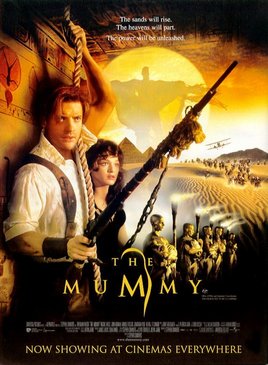
The Mummy (1999)


Brendan Fraser and Rachel Weisz face off against their undead nemesis in The Mummy

Director: Stephen Sommers

Cast: Brendan Fraser (Rick O’Connell), Rachel Weisz (Evie Carnahan), John Hannah (Jonathan Carnahan), Arnold Vosloo (Imhotep), Kevin J O’Connor (Beni Gabor), Jonathan Hyde (Dr Allen Chamberlain), Oded Fehr (Ardeth Bay), Erick Avari (Dr Terrence Bey), Patricia Velasquez (Anck-Su-Namun), Omid Djalili (Warden Gad Hassan)

The Mummy came out so many years ago that it’s being “rebooted” again as a Tom Cruise vehicle, as part of a Universal “Monsters Cinematic Universe” (oh dear God, even writing it sounds terrible). I’ve no idea what the new Mummyis like, but I am pretty certain it won’t match this film for fun, excitement, wit or (most of all) honest, gee-shucks B-movie charm.

In ancient Egypt, High Priest Imhotep is cursed and buried alive after his affair with Pharaoh’s mistress; should he rise again, he will do so as an unstoppable monster. Flash forward to 1926 and adventurer Rick O’Connell (Brendan Fraser) is hired by Egyptologist Evie Carnahan (Rachel Weisz) and her chancer brother Jonathan (John Hannah) to guide them to the hidden city of Hamunaptra. There, in competition with a rival American team of explorers, they find the body of Imhotep, read aloud from the book of the dead, bring Imhotep back to life – and all hell breaks loose.

I’ll say it straight out: I think you’ve got to have a pretty hard heart not to have a soft spot in it for The Mummy. Tonally, it’s one of the few Hollywood family-action films that doesn’t have any major miss-step. It’s a silly, rather warm-hearted, B-movie action with intensely likeable leads and a series of entertaining set-pieces. Every frame has been shot and framed like an epic, old-school adventure movie – and the plot knowingly runs with its clichés. It’s a film with literally no pretensions, which embraces its status as a piece of entertainment. And, I’d say, it succeeds magnificently at doing that.

It’s helped by a hugely charming performance from Brendan Fraser as a combination of Indiana Jones and Humphrey Bogart in The African Queen. Fraser’s got the chiselled good looks, but also a great deal of timing. The film gives him plenty of bon mots (“Patience is a virtue” Evie cries while decoding hieroglyphics; “Not right now it isn’t” Rick replies, staring at the hordes of possessed Egyptians heading their way) and he delivers them with a perfect 1930s matinee idol charm. It also helps that he has terrific chemistry with Rachel Weisz.

Weisz plays her part with a sweet comic charm, but adds a growing toughness to the character that prevents her from being a damsel in distress. John Hannah is pretty good value as her comic relief brother, while Oded Fehr makes such a great impression in limited screentime as the representative of a group of ancient guardians, you are surprised he hasn’t had more opportunities since then. Arnold Vosloo plays the Mummy with a tinge of sadness round the edges that humanises a man who is literally a monster.

Stephen Sommers directs the film with a witty sense of visual humour. This ranges from the obvious comedy (a 360 shot that takes in Evie knocking over a series of bookcases) to the satirical (he has a lot of fun with the gun-toting, ill-fated American explorers throughout the film). He also keeps the film barrelling along, without overlooking opportunities for character development. Despite the constant stream of action beats you always feel you understand exactly what motivates Rick and Evie – and their growing attraction to each other feels carefully developed.

Perhaps in a way The Mummy shows how films have changed in the last 17 years. When it was released, it was denounced as a big, dumb action film. However, compared to some of the fast-cut, poorly scripted rubbish churned out now, it looks rather sweet, well structured and focused more on character than on effects. As such it’s a really enjoyable and charming film, miles head of crap like Batman vs. Superman. Release exactly the same film today and I think many would call it a breath of fresh air, without the wearying self-important tone that weighs down so many modern blockbusters.

No it’s not a work of genius and no it’s not perfect. Omid Djalili’s character sails perilously close to racial stereotype. The killing scarab beetles in particular sometimes go marginally too far for its family audience. The special effects look a bit dated at points. Logically of course the plot barely stands up to thinking about: who on each curses someone with a terrible curse that makes them invincible and immortal? Why not just punish Imhotep by killing him badly eh?

Sommers is no master film maker – later Mummy films would largely fail to recapture this magic – but when he gets his boys-own, B-movie style bang-on, as he does here (and in The Rocketeer), he is a wonderful entertainment merchant, who makes engaging, entertaining films. No it’s not going to win any awards or trouble any top ten lists, but it’s always going to put a smile on your face.

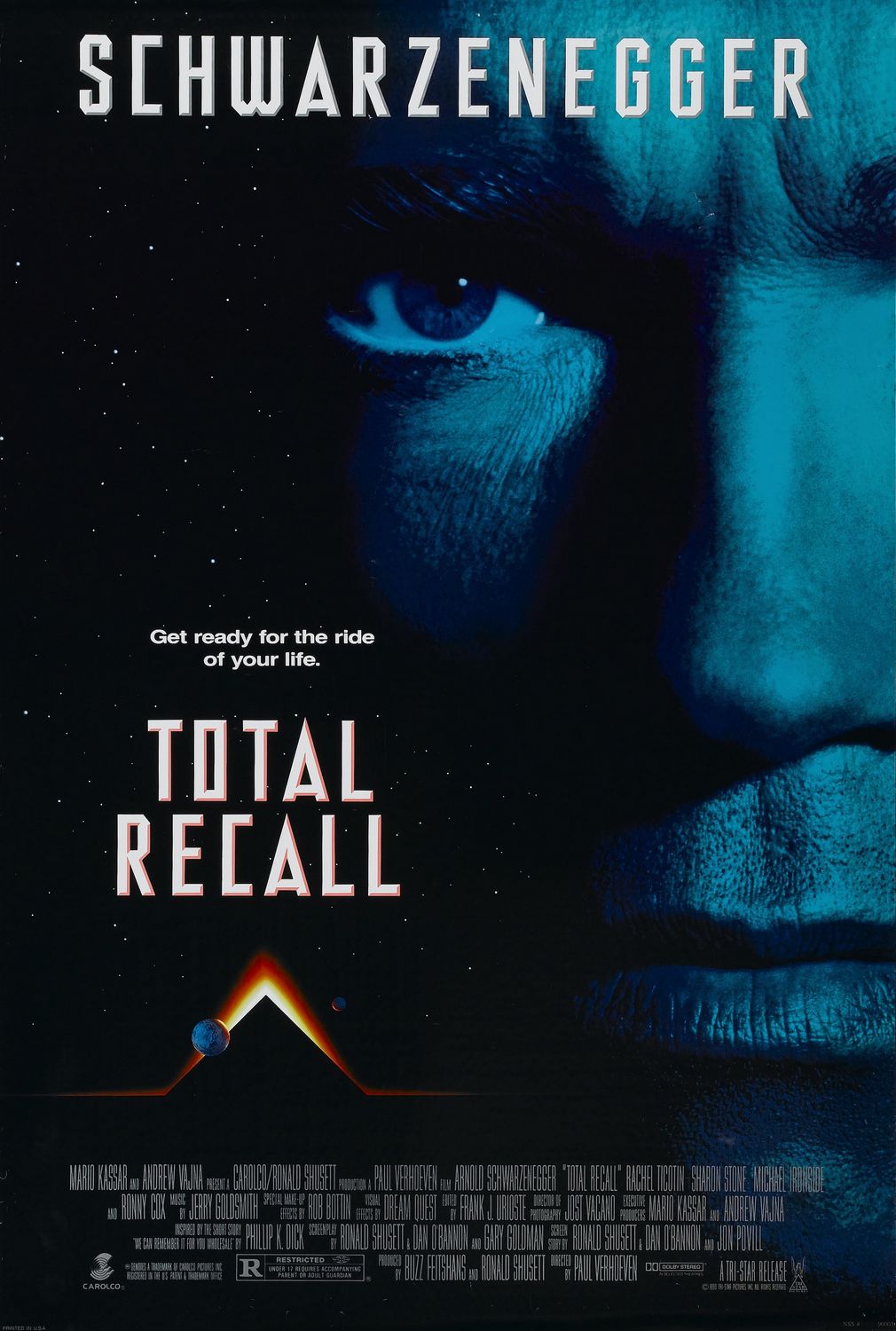
Total Recall (1990)


Arnold Schwarzenegger goes for a trip into his memories in Total Recall

Director: Paul Verhoeven

Cast: Arnold Schwarzenegger (Douglas Quaid/Carl Hauser), Rachel Ticotin (Melina), Sharon Stone (Lori Quaid), Ronny Cox (Vilos Conhaagen), Michael Ironside (Richter), Mel Johnson Jnr (Benny), Marshall Bell (George/Kuato), Roy Brocksmith (Dr Edgemar), Dean Norris (Tony)

Perhaps in 2084, they will look back on Schwarzenegger’s career and wonder what on earth we were all thinking. He was the figurehead of the 1980s fashion for muscle-bound leading men, defined more by physicality than acting ability. Since then, fashions have changed: movies are led by actors who go through hours of physical training, rather than weight lifters taking acting classes. Would Schwarzenegger be a star today? Quite possibly not: compare him to his nearest modern equivalent, Dwayne Johnson. Schwarzenegger doesn’t have an ounce of Johnson’s ability, wit or even charm. Would the world of Twitter embrace an often one-note performer with a paper thin range?

Schwarzenegger got where he was because, for all his lack of acting skill, he is a very clever man: he could spot a script and worked with people who got the best out of him. He turned himself into a brand: “Arnie” the pillar of strength, the master of the one-liner. It worked for films, it worked for politics. Which is all a long intro to say: in his best work, he put himself into decent roles in films from distinctive filmmakers, like Total Recall.

Total Recall is a semi-smart sci-fi action thriller, directed by Paul Verhoeven with his usual Dutch excess: part social satire, part wallow in extreme cartoonish violence and grotesque, Flemish-painting style imagery. Douglas Quaid (Arnie) is a construction worker in 2084, who dreams of escaping his humdrum life and visiting the Mars colony. He decides to visit Recall, a memory implantation centre which promises to give him memories of visiting Mars, with a twist: he’ll visit as a secret agent. However, the implantation reveals Quaid has hidden memories – he may in fact be rogue agent on the run, Carl Hauser. Before he knows it, everyone from his own wife (Sharon Stone) to a brutal intelligence operative (Michael Ironside) is hunting him with lethal force – and Quaid must head to Mars for answers about who he is.

Verhoeven’s sci-fi work adds a level of social satire to high concept stories. In Total Recall he mixes in his critical denunciations of big business and corporate ethics (also a major theme of Robocop) with an everyday acceptance of brutal violence that is so neck-breakingly, blood-spurtingly extreme in places it could only be social satire. Total Recall mocks our own ease with violence as entertainment, by setting itself in a world where the news broadcasts government troops machine gunning protestors (while a newsreader cheerily comments on the minimum use of violence), and the representatives of the Mars Corporation have literally no compunction or hesitation in inflicting huge numbers of civilian casualties in the crossfire.

A lot of this cartoonish violence spins out of the movie’s own playing around with the nature of reality. It leaves open the question of whether Quaid is really a spy in disguise, or if the film’s events occur only in his fractured brain suffering a terminal meltdown from an upload gone wrong. At Recall Quaid is promised his new fantasy memories will be full of action, he’ll get the girl and save the world. Needless to say he achieves all these things by the film’s end. Rachel Ticotin even appears on a screen in Recall as his “fantasy” woman. Is Quaid dreaming or not? It’s a question that is of more interest to viewers I suspect than the filmmakers (other than a few cheeky bits from Verhoeven), but it does tie in neatly with the almost dreamlike hyper violence Quaid dishes out: necks snapped, bodies spurting fountains of pinky red blood, dead bodies used as shields ripped to pieces by bullets. It’s all so extreme that it deliberately feels both not quite real and a mocking commentary on the bloodless action in other sci-fi films.

Schwarzenegger fits surprisingly well into all this. On paper, he’s completely miscast as an innocent discovering a hidden past, the future Governator anchoring a film with satirist leanings. But Verhoeven gets something out of Schwarzenegger in this film that works surprisingly well. Like James Cameron recognised, Verhoeven saw Arnie had a sort of upstanding sweetness amidst all the macho posturing. Arnie is surprisingly effective as Quaid, suddenly shocked at his capabilities for violence (as well of course or physically selling the action). Verhoeven taps into Arnie’s likeability (what other action star could sell “Consider this a divorce” as a punchline as he shoots his fake wife in the head?) and runs with it throughout the film.

As such, Schwazenegger makes a decent lead. It helps that he is willing to be a figure of fun at points. He wears a wet towel round his head to block transmissions. His face contorts ludicrously as he pulls an enormous probe from out of his nose. He infiltrates Mars dressed as an old woman. Most of this material fades away in the second half of the movie when Schwarzenegger reverts to the more typical heroic action (I suspect negotiations over the script shifted the film into a halfway house between a standard action movie and Verhoeven’s more satiric bent). But it’s all still there and helps humanise Quaid, so that we are on board with the slaughter he perpetrates later. Quaid is probably one of the best roles Arnie had – and Verhoeven does very well to fit a man so serious about himself into a world of self-parody. Saying that, the role is in some ways beyond Arnie’s reach – I’m not sure he is really plugged into or understands the dark comic tone of the movie, and he doesn’t really have the wit as a performer to do much more than deliver killer lines, certainly not to contribute to the dark satire Verhoeven is putting together.

As a whole the film doesn’t always deliver. Schwarzenegger seems at sea during scenes with his feisty, independent love interest played by Rachel Ticotin (this does her no favours, as her role hardly connects). Sharon Stone similarly has little chemistry with the Austrian Oak – although at least she has the second best role in the script as a vicious woman not afraid to use sex as a tool. The actual plot fits in nicely with the possibly dreamlike nature of what we are seeing, but the villain’s aims seem rather unclear, and the film lacks a strong enough antagonist (neither Michael Ironside or Ronny Cox have quite enough to make their thin characters come to life).

This plays into the film as being semi-smart: it’s a curious mix of smart and stupid. It’s got enough brains to poke a bit of fun at corporate America, and to make moral comments on our treatment of minorities (here represented by the mutants who inhabit Mars). On the other hand, it’s a schlocky action cartoon, that revels in ultra-violence while creating a world where, in universe, it is not considered extreme enough to comment on.

Total Recall is a fun movie that allows you to read more into it than is probably really there. Verhoeven peddles themes around the nature of reality, and introduces satiric comments on corporations and violence in the media that don’t hit home so heavily that they become wearing. I also have to say I like its empathy with the vulnerable and weak – the mutant resistance on Mars is engagingly grounded and humane, particularly in contrast to the ruthless heartlessness of Mars Corp. It’s not a masterpiece, but as a smarter piece of popcorn fun it works really well.

For Schwarzenegger himself, this was his final non­­-Terminator hit. Terminator 2 (a year later), an undoubted work of genius, was his high watermark. Three attempts since to relaunch the Terminator franchise (all with mediocre or worse directors), demonstrate Schwarzenegger’s awareness his time was fleeting and dependent on his roles rather than his skills. Total Recall was Schwarzenegger doing something completely different, to great success – but also one of his last hits-. His run of good scripts, and pulp premises, came to an end here – but it was a good end. California awaited!

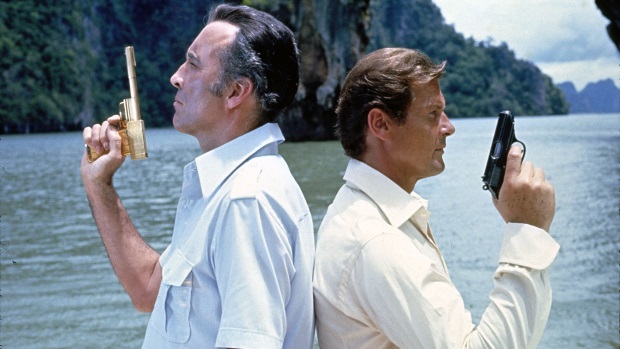
The Man with the Golden Gun (1974)


Christopher Lee and Roger Moore duel to the death in the confusing and strangely pointless The Man with the Golden Gun

Director: Guy Hamilton

Cast: Roger Moore (James Bond), Christopher Lee (Francisco Scaramanga), Britt Ekland (Mary Goodnight), Maud Adams (Andrea Anders), Bernard Lee (M), Hervé Villechaize (Nick Nack), Richard Loo (Hai Fat), Soon-Tek Oh (Lt Hip), Clifton James (JW Pepper), Desmond Llewelyn (Q)

I sat down to watch The Man with the Golden Gun having just heard the news of Roger Moore’s death. It seems an odd one to choose, as this was easily Moore’s least financially successful, and least fondly received, Bond film. But it had just been on TV, and I wanted to raise a glass (or eyebrow) to Britain’s finest.

MwtGG was very much the formula trying to find its way in a post-Connery world, with Moore’s performance an odd half way house between his later light persona and the harder edge of Connery. Anyway, the plot, such as it is: Bond is sent a bullet with his name literally on it from Francisco Scaramanga (Christopher Lee), the world’s greatest hitman who only uses golden bullets and charges a (now rather sweetly modest-sounding) $1million per hit.  Bond goes to Hong Kong to find out more and gets embroiled in some complex (and not particularly interesting) back-and-forth about hijacking the world’s solar energy supply, hindered by incompetent agent Mary Goodnight (Britt Ekland). It all culminates into a duel of guns on Scaramanga’s private island.

The problem with this film isn’t so much that it’s a bit dull – it’s that it’s not really about anything at all. Does anyone really understand Scaramanga’s scheme? Even he seems confused about it. As far as I can tell it’s something to do with controlling solar energy, but how the heck he’s going to control access to the sun I don’t know. Scaramanga seems far more interested in a silly heat gun he’s got as a side installation. Anyway, whatever the heck this is about, lots of other people seem interested in it. It’s powered by “the Solex”, which looks like some sort of robotic cigarette pack. This Solex changes hands even more regularly than Bond changes love interests, but its purpose and why it’s important are such a poorly explained macguffin it’s really hard to care.

What the film is nominally about (but turns out not to be) is the duel between Scaramanga and Bond. Turns out, of course, Scaramanga doesn’t have a clue about the bullet. His motivations towards Bond are as unclear as the plot, alternating between indifference, admiration and envy. On top of that, to make a duel like this work we need the feeling Scaramanga and Bond are two sides of the same coin – that with a push at the right time in his past, Bond could have turned into the ruthless hitman Scaramanga is. This could have worked with Connery’s early Bond – or Dalton and Craig – but never do you believe Moore’s Bond has a streak of black through his soul.

This is despite some ill-fitting moments in the film, created solely in an effort to show Moore’s Bond acting tough, moments that feel horrendously out of place and against character. In particular, early in the film Bond quite viciously roughs up Andrea Anders (he slaps her, nearly breaks her arm, spies on her with the shower and threatens her with a gun in a weirdly sexual manner). It feels totally wrong for Moore’s gentle suaveness. At other points in the film, Moore plays with a hardness and general prickishness that isn’t present in his other films, and doesn’t match his light style. Throughout the film he feels annoyed at Goodnight, he pushes a kid off a boat, he treats his colleagues dismissively – it feels all the time Moore is struggling to play a Bond way against his style.

To be fair, I can see why Bond is annoyed with Goodnight: Britt Ekland is probably the nadir of Bond girl stupidity. Literally nothing she does in this film is any use, and most of the rest of the time it actively helps the villains. She’s stupid, clumsy and not funny. She’s so incompetent you need to keep double checking she is actually meant to be an MI6 agent. Ekland has indignities heaped upon her on this film, from being locked in the boot of a car, to being hidden in a cupboard by Bond mid-coitus so that he can do the nasty with Scaramanga’s girlfriend. Late on, she nearly kills Bond by backing into a button with her bottom. Ekland’s main reason for being cast was of course her physical assets in a bikini – so it’s lucky that Scaramanga keeps her on his island dressed only in a bikini for the last third of the movie. Only way to make sure she doesn’t have a weapon, doncha know!

As the plot drifts around, going either in circles or nowhere at all, the producers land Bond in a kung-fu training school in Hong Kong. Bond films as a genre have always gently ripped off as much as possible whatever was popular at that time in Hollywood (Blaxploitation in Live and Let Die, Star Wars in Moonraker, Bourne in Quantum of Solace etc. ), and so it merrily climbs on the Bruce Lee bandwagon here. Unfortunately, it’s all highly stupid and adds nothing (Scaramanga even comments in the movieabout the ludicrousness of sending Bond to a school rather than just putting a bullet in him) and hits heights of ridiculousness when the entire school of elite trainers is bested by Bond’s sidekick and two teenage schoolgirls in school uniform.

That’s another thing wrong with this movie – the wildly varying tone. So at times we get Bond chasing down leads like Philip Marlowe. Next we have him roughing up a weeping woman. We’ve got Goodnight’s buffoonery, Scaramanga’s suave cruelty… It’s all over the shop. The comic moments of the film particularly grate. Was anyone waiting for Sherrif JW Pepper’s return from Live and Let Die? Didn’t think so, he’s as funny as a bout of gonhorrea. Even some of the good moments get undermined by bizarre tonal shifts: the classic car flip stunt (which is amazing, particularly because you know they did it for real after hours of careful calculations) is overlaid with a stupid “whoop” sound effect, like a Carry On film (even Guy Hamilton subsequently said this was a terrible idea).

However, it’s not all bad – no Bond film ever really is, such is the triumph of the formula. Christopher Lee is very good – you wish he was in a much better film than this one. The late duel in the film between Scaramanga and Bond is pretty good, even if it all ends a little too easily. Scaramanga’s funhouse seems totally bizarre (why the hell does he even have this on the island next to a power plant?) but its good fun. The MI6 base on a half sunk ship off the coast of Hong Kong, with all the corridors on the wonk is an absolute triumph of design. Bernard Lee gets lots more to do than he usually does – and delivers his exasperated boss lines with a sense of dry timing.

It doesn’t change the fact, though, that this is possibly one of the weakest Bonds around. It’s not a terrible film – I enjoyed watching it, though at least part of that comes from growing up with these films, making them as familiar as family members. But it’s way down there in the Bond list. It’s a slightly tired movie, in a franchise trying to find its feet under a new lead. Tonally it’s a complete mess for large chunks of it, and manages to make its plot seem inconsequential and dull. Nothing really seems that much at stake, and Scaramanga (despite Lee’s good performance) never feels like a villain we really understand. I’ve no idea what he wants, and no idea why he should be stopped.

The Man with the Golden Gun is only worth it for a doze in front of the television on a Sunday afternoon. Thank goodness that’s the only time it’s likely to appear on your TV. And putting all else aside, Moore was a terrific Bond and an even more terrific human being. Rest in Peace.