Author: Alistair Nunn

The Lighthouse (2019)

The Lighthouse (2019)

Undefinable, haunting madness in Robert Egger’s mesmeric film that defies categorisation

Director: Robert Eggers

Cast: Robert Pattinson (Ephraim Winslow), Willem Dafoe (Thomas Wake)
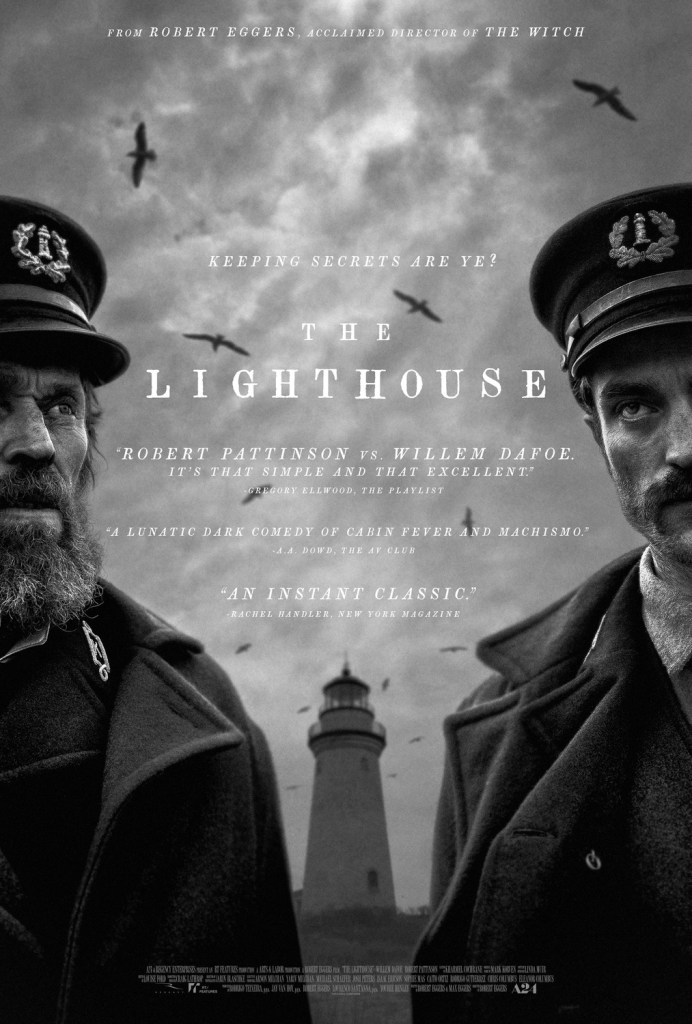
Who’d want to be a lighthouse keeper? Weeks on end, stuck on a rock, with nothing but sea gulls and your fellow keepers for company. The cabin fever might well start to make you feel your grip on reality shifting. You’d definitely think it was a strong chance watching Robert Eggers’ mesmeric, enthralling and undefinable masterpiece, a mix of everything from Victorian shlock to Greek Mythology via MR James and Edgar Allen Poe, by way of Freud and Jung. It’s impossible to work out, horrifyingly clear and deeply, unsettlingly brilliant.

Two ‘wickies’ (lighthouse keepers) in 1890s arrive on an island off the coast of New England. Thomas Wake (Willem Dafoe) is a (self-proclaimed?) salty-sea-dog and veteran wickie. He tends the light. His assistant, Ephraim Winslow (Robert Pattinson), is a former woodworker working on contract, seemingly on the run from something. He is the island’s dogsbody and tends the mechanisms that keep the light on and turning and the island’s fog-horn blaring. These two live cheek-by-jowl, a relationship that oscillates between distrust, resentment and strange warmth.

Things take an increasing turn for the bizarre, as a storm cuts them off from their scheduled relief. Slowly the isolation, supplies failure (gin and beans are seemingly the only food sources left) tap into the psychological flaws in the men themselves. Ephraim becomes ever more consumed by visions of a horrific but sensual mermaid. Wake obsessively guards his sole access to the lighthouse tower – and, Ephraim suspects, the mysteries it contains. Their relationship crosses boundaries of longing, violence and anger.

The Lighthouse is somewhere between parable, modern myth and psychological study. You could call it a horror film – I see it more as a classic ghost story – but you could just as easily call it a survivalist film, a character study or a psychological thriller. Egger’s insidiously unsettling film-making and the sublime acting from the two leads combine to make a film ripe for interpretation, and intensely rewarding on rewatch. It’s an explosion of artistic brilliance.

Shot in a superbly atmospheric black and white – and a claustrophobic academy ratio 4:3 – it’s a film that presents one striking, chilling, unforgettable visual image after another. Inspired by silent cinema – in particular Murnau, Lang and von Sternberg, although I spotted elements of Keaton – but as if moody German expressionism was used to shoot a Rorschach test. The inky blacks, and overwhelming bursts of blinding white light, suggest unimaginable horrors lurking out of sight, while its impressionistic imagery constantly pushes us to question the reality of the film.

It all builds on the superb feeling of isolation Eggers invokes. Rooms are small and crowded with furniture. The island is a bleak rock, shorn of any vegetation. The only wildlife is an army of seagulls. The blare of the island’s foghorn is continuous – sounding like a doom-laden rumble from Hell – that seeping into the viewer’s soul. Every corner of the lighthouse station becomes achingly familiar to the viewer and somewhere you can imagine not wanting to spend a second longer than you have to.

Stretching their vocal muscles around a script (written by Eggers and his brother Max) full of rich, chewy, Victoriania dialogue by way of Beckett and Pinter (in one compellingly funny sequence, the two actors basically shout “what” at each other over and over again) both are superb. Dafoe walks a fine line expertly between realism and Robert-Newton-esque parody, as the saltiest sea-dog imaginable, who can oscillate between surly admonitions and flights of myth-filled, metaphorical fancy. Pattinson dives head first into a man who we are never sure we fully understand: is he a frustrated time-server, a violent monster, a delusional schizophrenic, a little-boy lost? Either way it’s a truly brilliant performance of Day-Lewis level commitment and immersion.

You could have a lot of fun arguing that perhaps both men are two halves of the same fractured psyche (as if Wake is a future version of Ephraim, almost as if the film is him witnessing his own origins story). Certainly, as their film progresses, their personalities and histories begin to merge. It would help explain the curious emotional bond between them: at times they seem to almost hate each other, at another a drunken fight is only inches away from a sexual encounter. They laugh at and loath each other, are mutually dependent, plot each other’s destruction but then pathetically look at each other for reassurance and praise (Wake is heartbroken when Ephraim criticises his cooking, while Ephraim both resents and worships this hard-taskmaster father figure).

It’s a suspicion that could also be incited by the all-pervading weirdness on the island. Ephraim –carrying the burden of secret crimes on the mainland – see visions of a mermaid among logs, in which sexual encounters are mixed with the mermaid’s murderous attempts to drown him. His first-day searches of the house unearth a carving of a mermaid, which seems to fascinate and repel him – he takes to masturbating (joylessly) over it in the workshop. He seems to spy Wake worshiping, naked, the light during his long-night vigils up the tower (suspicious fluids drip down from here, along with half glimpses of mermaid tentacles). In any case, Wake guards his access to the light like a jealous lover, while his faith in sea mythology becomes increasingly less of a mantra and more of a framework to understand the world.

How much is real? Or is it a sign of Ephraim’s fractured, guilty, conscious? We see most of the events through his eyes – a man we know is a thief and, most likely, a killer. There is more than enough evidence that Ephraim is lying about his past as much to himself as he is Wake. Wake too is a liar – telling at least two versions of how he ended up with a gammy leg, enough to make you wonder how much his claims of being a sea-dog are true. As isolation and constant drink – the two spend most of the second half in various states of inebriation first from gin then turpentine – kick in, and they and their surroundings become increasingly dishevelled and fart-stenched.

There are dark powers at work on this island. Echoes of Greek Myths loom – Ephraim has traits of Prometheus, fascinated by a light horded by the Gods, the very light that Wake, Proteus like, is determined to keep to himself. Wake stresses that the gulls carry the souls of dead sailors – and the unsettling persistence these pester Ephraim with, is surpassed only by the violence with which he responds to them. Elements of Victorian ghost stories, hypnotism and gothic fiction combine in every corner of a film where we see very little but get a lot implied (powerful, Eisenstein and Bunuel-style, close-ups of faces and eyes imply powerful horrors out of shot).

The Lighthouse reminds me in many ways of the best of the BBC Ghost Stories of the 1970s in their unsettling, MR James-style unexplained (even unstated) horrors. There is a palpable air of horrific tension around the film, of an unexplained, unknowable force that could somewhere destroy both men – and has perhaps unsettled their minds. The film culminates in a superb, haunting shot as Ephraim comes face-to-face with something unknown that is pure MR James: we never see what caused the horror, only its terrible results. (It’s as terrifying as Whistle and I’ll Come to You or A Warning to the Curious where blind, over-confident curiosity leads to dreadful outcomes).

Eggers film is not a conventional horror film: I believe thinking of it as a deeply unsettling exploration of man’s vulnerability and weakness, ala MR James, is key. This is a story of unseen, imagined, unsettling horrors – but also a claustrophobic relationship drama, playing out like a psychological thriller as two men dance around destroying and seducing each other. It’s a complex Rubrik’s cube that rewards constant thought and attention. Beautifully filmed, superbly acted, compelling in every frame, it can claim to be one of the most unique and powerful American films of the 2010s.


Wild (2014)

Wild (2014)

Reese Witherspoon finds herself in a film that is more than just Eat, Pray, Hike

Director: Jean-Marc Vallée

Cast: Reese Witherspoon (Cheryl Strayed), Laura Dern (“Bobbie” Grey), Thomas Sadoski (Paul), Michel Huisman (Jonathan), Gaby Hoffmann (Aimee), Kevin Rankin (Greg), W. Earl Brown (Frank), Mo McRae (Jimmy Carter), Keene McRae (Leif)

Ever thought tackling a 1,100 mile hike would be a fun adventure? The opening of Wild might change your mind. Gasp as Reese Witherspoon rips out a bleeding toe nail and then throws her ill-fitting hiking boots down a mountain, screaming abuse at them all the way! Want to grab that back-pack now?

In this adaptation of a memoir about loss and self-discovery, Witherspoon plays Cheryl Strayed who (fairly impulsively) decided to hike the Pacific Crest Trail in 1995 to try to find in herself the woman her late mother “Bobbie” (Laura Dern) believed she could be. After Bobbie’s early death from cancer at 45, Cheryl had collapsed – ruining her marriage to Paul (Thomas Sadoski) in an orgy of anonymous sex and heroin addiction. Now she wants to make a new start.

Adapted by Nick Hornby with a good deal of skill and emotional intelligence, Jean-Marc Vallée’s film is an interesting character study via the survivalist genre, mixed with a touching exploration of grief, loss and self-loathing. After throwing us into Day 26 with that bloodied toe-nail, the film rolls back to follow Cheryl’s walk: intercut with powerful memories of her relationship with her mother, each memory activated by different encounters along the way and bubbling into her mind along with a distinctive soundtrack (most especially Simon and Garfunkal’s El Condor Pasa) that reflects the music that reminds Cheryl of her mother.

It could have been a sentimental finding-yourself movie – Eat, Pray, Hike anyone? (I also rather like Reese Witherspoon Finds Herself in a Backpack) – and I won’t lie, there are elements of that. But maybe it caught me in the right mood, maybe because I’ve always fancied testing myself with an epic hike, but I actually found it intelligent, sensitive and just the right side of sentimental.

Wild carefully avoids simple points. It’s a film not about a long journey leading to revelation, but a journey that helps you accept all your past decisions, right or wrong. There is a pointed lack of emotional breakdowns, tearful confessions or flare ups of self-anger and revelation. Instead, it’s about the long grind of starting an internal journey towards contentment. Because trekking 1,100 miles is the long haul: there ain’t any easy ways out or short cuts on this trek.

The film’s principal asset is Reese Witherspoon. Also serving as producer, Witherspoon is in almost every single frame and delivers an under-played but very emotionally satisfying performance. She plays Cheryl as quietly determined, having already hit rock bottom and knowing every step she takes from now is upwards. She meets adversity – aside from the odd flash of frustration – with a stoic will and finds an increasing spiritual freedom in the wild that serves as an escape from the horrific wilderness of her self-destructive years. But she never lets us forget the pain that underpins this journey for Cheryl. It’s a very impressive performance.

The reminders of that pain are distributed through the film, which unflinchingly chronicles Cheryl’s escape from grief in the arms of a parade of sleazy men, anonymous hotel sex and (finally) shooting up heroin on the streets of San Francisco. It ends her marriage to Paul – but not their friendship, in the sort of adult emotional reaction you hardly ever see in a movie. Paul – played with warmth by Thomas Sadoski – may not be able to continue his marriage after discovering his wife’s parade of trust-breaking, but it doesn’t stop him from helping a person he loves who is in need.

All of this is nicely counterpointed by the hike itself. Naturally it’s all slightly episodic, as Cheryl moves from location to location, but Hornby’s script makes these vignettes really work. Vallée’s direction also does a fantastic job of intercutting between the long walk of 1995, and Cheryl’s memories of both her mother (played with a vibrancy that makes a huge impression from limited screen time by an Oscar-nominated Laura Dern) and her own emotional collapse after her death.

I also appreciated that Wild doesn’t shirk from showing the vulnerability of an attractive young woman hiking alone. Some potential predators are revealed to be the opposite: others are exactly what they appear to be. But not every encounter is one of potential danger: far from it.

Cheryl is met time and again by people who only appear to support, share their expertise and help her in her quest. At an early station, a man talks her through the huge amount of equipment she’s bought and advises what she can leave behind (Vallée opens the film with the strenuous effort, including rolling around on the floor, Cheryl has to go through just to put this backpack on). She finds a touch of romance with a handsome musician (a charming Michel Huisman). There’s also comedy, most of all with Cheryl’s encounter with a self-important journalist (Mo McRae), who won’t be convinced that she isn’t a female hobo.

This is all packaged together in a quiet, un-pretentious way that culminates in a thought-provoking monologue about the value of self-acceptance and putting aside regrets. Others would have layered on the sentiment, but here the balance is just right. With Witherspoon at the top of her game, Wild is a well-made and involving road trip that also makes you think.

The Curious Case of Benjamin Button (2008)

The Curious Case of Benjamin Button (2008)

Ageing, romance and sentiment in Fincher’s handsome shaggy dog story

Director: David Fincher

Cast: Brad Pitt (Benjamin Button), Cate Blanchett (Daisy Fuller), Taraji P Henson (Queenie), Julia Ormond (Caroline Button), Jason Flemyng (Thomas Button), Elias Koteas (Monsieur Gateau), Tilda Swinton (Elizabeth Abbott), Mahershala Ali (Tizzy Weathers), Jared Harris (Captain Mike Clark)

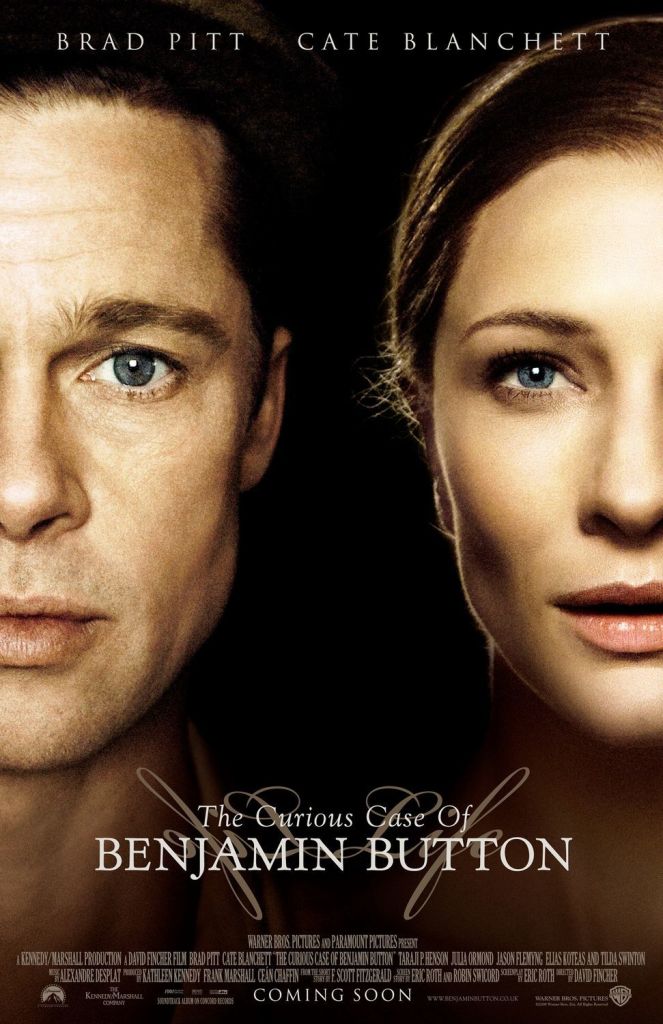
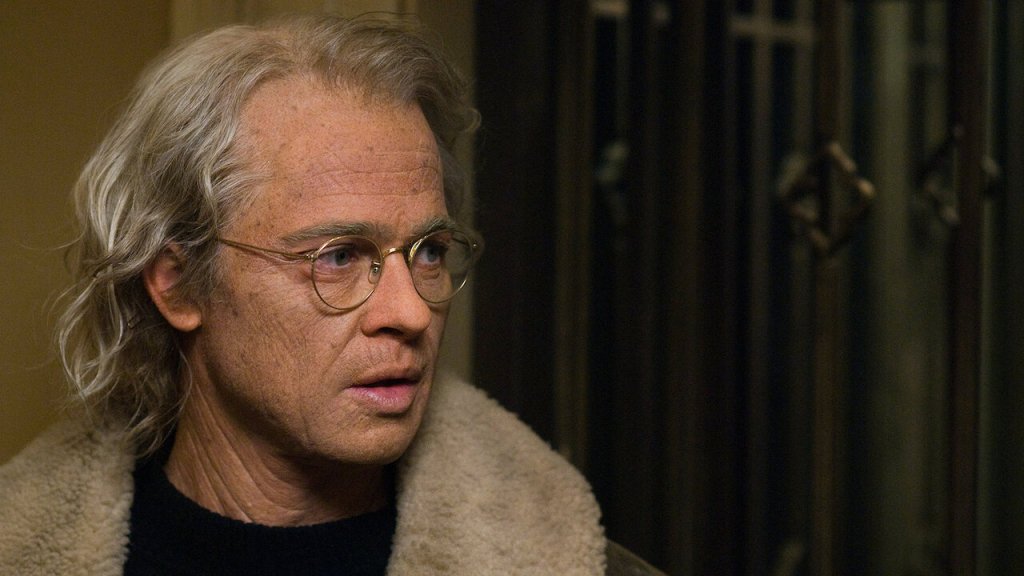
As the eleventh hour of the eleventh day of the eleventh month of 1918 strikes, a baby boy is born. A baby boy unlike any other, with the appearance and illnesses of a very old man. Discarded by his horrified father (Jason Flemyng), the boy is adopted by Queenie (Taraji P Henson), caretaker of a nursing home. There it becomes clear he is growing backwards: the older he gets, the younger he appears. Young Benjamin will eventually grow into Brad Pitt and spend his life watching those around him grow ever older as he grows ever younger. Most joyful, and painful, of all being his childhood friend Daisy (Cate Blanchett), the woman he will love his whole life.

Fincher’s film is a strange beast. A huge technical triumph, that uses cutting edge special effects and astonishing make-up to age – in both directions – Brad Pitt and Cate Blanchett throughout the course of the film (both taken from extreme old age to face-lifted youth), it’s also a whimsical shaggy dog story with elements of a fairy tale that does very little with its astonishing concept other than pepper the script with easily digestible homilies about the purity of the simple life, as if screenwriter Eric Roth was still gorging on the same box of chocolates from which he plucked Forrest Gump.

TCCoBB has a lot going for it: you can see why it was coated with technical Oscars. The ageing and deageing special effects are skilfully and even subtly done, the recreation of a host of periods – from the 1910s to the 1990s and beyond – flawlessly detailed. Claudio Miranda’s photography uses a host of film stocks – from sepia, to scratchy home movie footage style, to luscious technicolour beauty – to reflect time and era constantly. The assemblage of the film has been invested with huge care and attention and, despite its great length, Fincher cuts together (with Kirk Baxter and Angus Wall) an episodic film that manages to keep its momentum and drive going.

Also, it’s a far less vomit-inducing spectacle than the manipulative stylings that coat Forrest Gump. This is in part to Brad Pitt’s restrained and contemplative performance in the lead role: Pitt underplays with surprising effectiveness, capturing Benjamin’s “come what may” attitude and eagerness to go with the flow of the opportunities life offers him. He delivers the narration with an authority just the right side of portentous (for all his rather flat, uninteresting voice) and skilfully manages to invest his body with a physicality quite contrary to his physical appearance (his old body moves with a young man’s casualness, while his younger form carries a slightly world-weary hesitancy).

Benjamin’s mantra becomes one of living your life just as suits you best, not as others expect you to and never worrying about leaving it too late to take chances or make changes. Or at least something like that. To be honest, the weakest part by far of TCCoBB is the lightness and breeziness of its thematic impact. I’ve seen this film three times and, other than a slightly charming shaggy dog story, I’m not quite sure what point it is trying to make – other than straining for a star-cross’d romantic sadness.

This feels like a missed opportunity because there is so much that could be explored here. The film is a nearly unique opportunity to explore how much age – either physical or mental – defines us. A chance to see how our perceptions of a person are shaped as much by what they look like or how they sound, as by who they are. What sort of different perspective on humanity might Benjamin have? How might those around him evaluate, their own lives as they see this him getting younger?

Questions such as these are not touched, the film settling for Benjamin’s whimsical, first-do-no-harm philosophy crossed with a sort of saintly non-interference. The closest it gets to dealing with this is in Benjamin’s friendship and later relationship with Daisy. Old/young Benjamin is told off by Daisy’s grandmother for being a dirty old man, when they first met as children (or old man in his case). Later their lives will drift together and apart, until they form a relationship when both are “the same age” physically. But the film shirks really exploring the implications of this – and outright flees the idea of Benjamin as an increasingly younger man in a romantic relationship with an increasingly older Daisy.

Instead, it settles all too often for easy lessons, comforting parables and charming little vignettes. Benjamin grows up cared for by his adopted mother Queenie (an engaging, if straight forward, performance by Taraji P Henson) – but in the sort of 1920s New Orleans where a racial epithet is never even whispered. He travels the world with Jared Harris’ (rather good) salty sea-dog, falling in love briefly with Tilda Swinton’s lonely champion swimmer turned society wife. He reconnects happily with his father (after all it’s much easier to live a life of free choice if you are the heir to a massive button factory empire). Idyllic 1960s love hits Daisy and Benjamin – a brief shot of a cruise missile taking off is the only reference to those troubled times we see.

It’s all very easy, romantically toned, sweet and easily digestible. Even writing it down highlights how these are charming, eccentrically tinged, vignettes. All events and experiences come together with a vague “lessons learned” impact, as old Benjamin regresses into a teenager, a child and then an infant. But it could have been so much more. A real study of what makes us human, a real look at how events and perspectives define us. It isn’t. Heck, other than watching Pitt travel handsomely around the world on a motorbike in a late montage, we don’t really get much of a sense of how being young/old may impact him.

Which isn’t to say it’s not enjoyable. It all proceeds with a great deal of charm and love, much of which has clearly been invested in every inch of its making. The acting from (and chemistry between) Pitt and Blanchett is very effective. But it feels like a slightly missed opportunity, a film that settles for being a warm, reassuring cuddle when it could have sat you down and helped you understand your life. For all its slight air of importance, it’s a crowd-pleasing, if slightly sentimental, film.

Thor: Love and Thunder (2022)

Thor: Love and Thunder (2022)

Injokes, backslappery and smugness abound in this terrible Thor adventure

Director: Taika Waititi

Cast: Chris Hemsworth (Thor), Natalie Portman (Dr Jane Foster/Mighty Thor), Christian Bale (Gorr the God Butcher), Tessa Thompson (Valkyrie), Jaimie Alexander (Sif), Taika Waititi (Korg), Russell Crowe (Zeus), Kat Dennings (Dr Darcy Lewis)

Okay. Part way through this desperately unfunny tonal mess I wondered: if I had to choose would I watch this again, or Thor: The Dark World? I can’t quite believe it, but I’d rather watch that functional, forgettable, mundane film. At least it doesn’t make me angry as it drifts past my eyes. And I say that as someone who loved Thor: Ragnarok. Thor: Love and Thunder is terrible. So, unlike Star Trek, it looks like even numbered Thor films are awful – so at least Thor Five should be a doozy.

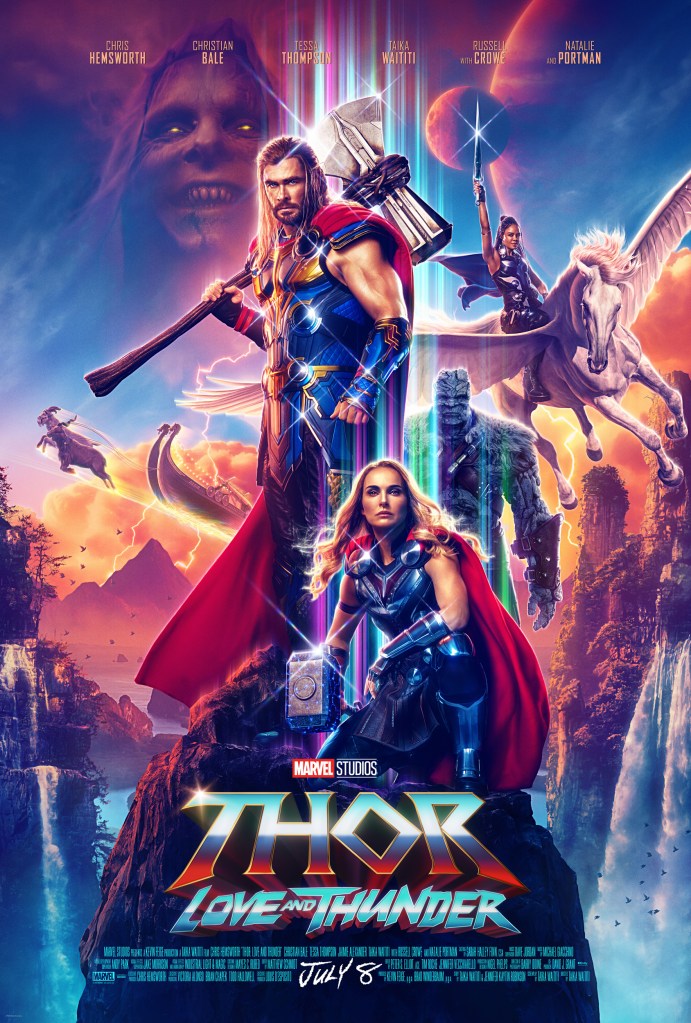
Thor (Chris Hemsworth) is in a state of ennui – although that doesn’t stop him restoring his buff form after we last saw him as a coach potato in Avengers: Endgame. He doesn’t know what to do with his life: he has (and I can’t believe the film doesn’t make this obvious joke considering its jukebox score) “lost that lovin’ feelin’”. Will the arrival of bereaved father Gorr (Christian Bale), and his mission to butcher all Gods because they don’t answer your prayers, give him meaning? Or will it be the chance to finally rekindle his love for Jane Foster (Natalie Portman) when she unexpectantly lands back in his life? However, it’s not the Jane he remembers: unknown to him, she’s dying from cancer, but his old hammer Mjolnir is keeping her alive, transforming her into a female version of Thor.

Thor: Love and Thunder is a bit like attending a victorious Thor: Ragnorak after-show party. Everyone there thinks everything they say is like the funniest thing ever and the air rings to the sound of backs being slapped. It takes everything that it believes worked best in that film and dials it up to eleventy thousand. Waititi doubles down on his quirky, off-the-cuff, shoulder shrugging humour at every turn and you get the feeling that no one once tapped him on the shoulder and said “you know that’s funny to us on set, but are we sure that will be funny in the audience?”

Because, based on the audience I saw it with, it wasn’t. I think I chuckled about three times in the film. Which considering it takes every single bloody opportunity to tell a joke, is damning. Perhaps it fails to land because, unlike in Ragnarok or other Waititi films, its like he’s surgically removed anything emotional or gives a weight to the gags. He’s also sacrificed much of his trademark sweetness. Instead, this is full of incredibly knowing, tip-the-wink gags at the audience, as if trying to say “hey it’s okay, we can’t take this seriously, comic books are all silly, silly shit”.

And you know, that’s fine many people take these things too seriously. But what worked about Thor: Ragnarok was it balanced a quirky sense of humour with genuine stakes and real emotional quandaries. This however is just a tonal mess. We have an opening scene dealing with child death, that shifts swiftly into knock-about farce. A leading character dying of cancer sitting alongside a pair of screaming goats. It is revealed Jane is effectively draining her life source using the hammer (that it is keeping her alive and killing her at the same time). Here’s a chance to explore the cost of heroism and finding a purpose in life (after all isn’t Thor supposed to be depressed? Wouldn’t Jane make a good contrast here?). instead, the film constantly retreats to playing the humour card (worst of all unfunny humour!), as if Waititi perhaps thinks this genre stuff is silly and slightly below him.

Ragnarok allowed moments of impact: this film shits all over any moment of potential emotional reality. Hemsworth’s Thor used to be a guy with a strong moral purpose and seriousness, but allowed to stretch his wings with comedic sharpness. Now he’s a buffoon who interrupts a speech to distraught parents with gags. Any attempt to build an arc of a hero who is internally lonely and searching for purpose is constantly smashed by self-consciously irreverent humour. It says a lot that Thor’s axe Stormbreaker feels as much a character as anyone else – although the film is overly pleased with the gag of the axe being jealous of Thor’s doe-eyes at his old hammer.

The entire film feels like it’s been plotted out in about four minutes. Presumably Waititi was confident “hilarious” off-the-cuff inspiration would solve any problems. Christian Bale struggles manfully with his villain – but it’s like no one gave him the memo that the film was a piss-take. Tedious detours fill the plot – like an un-funny Guardians of the Galaxy cameo at the start, a tiresome trip to an orgy-tastic God planet and the screeching giant goats which feels like a joke whose punchline has been cut. A major plot point about a wish granting Eternity God is suddenly introduced to establish a secret plan for the villain. It’s like no one gave a damn.

Waititi doubles down on funny stuff that worked in small doses in Ragnarok by stretching it past any point of humour here. Liked Neill, Damon and Lesser Hemsworth playing bad actors in that film? Well, you get bucket loads of it here with Melissa McCarthy as a Fat Hela (that’s the joke: she’s fat). Liked Korg’s overly literal asides? Well, he’s in seemingly every second of the bloody film here, including narrating it. Russell Crowe pops up for a cameo that everyone clearly feels was hilarious but really looks like a big-name actor amusing himself with a borderline racist Greek accent. The film is crammed with this crap.

Hemsworth does okay I suppose, but in many ways the film feels as much of an ego-trip for him as it does Waititi. Natalie Portman gets to do some some fun things, but comedy isn’t her natural forte and she struggles with getting the zing in the dialogue that Tessa Thompson manages. It builds towards a big ending where Thor weaponises children and then the film lands on an utterly unearned emotional ending at a secret place – as if Waititi suddenly remembered his films work best when they have a heart – at the centre of the universe that is so easy to reach you wonder why people didn’t go there much earlier in this franchise. Even the final explanation of the title feels thrown in at the last minute and I’ve no idea what we are supposed to make of Thor’s character arc in this film.

The lack of heart is what is missing here. There is nothing heartfelt or emotionally true really in this. Nothing to give you warm feelings or to make you say “ahh”. Instead there are just endless, endless smug insiderish-gags. This is a piece of shit and the silent reaction it got from the full audience I saw it with says it all. A smug, tonal mess by a director who is over-indulged and unrestrained and forgets that humour works best when grounded with some sense of drama. I’d definitely rather watch Thor: The Dark World again.

The Men (1950)

The Men (1950)

Brando makes his film debut in this earnest but realistic drama about paraplegic war veterans

Director: Fred Zinnemann

Cast: Marlon Brando (Ken Wilocek), Teresa Wright (Ellen), Everett Sloane (Dr Brock), Jack Webb (Norm), Richard Erdman (Leo), Arthur Jurado (Angel), Virginia Farmer (Nurse Robbins)

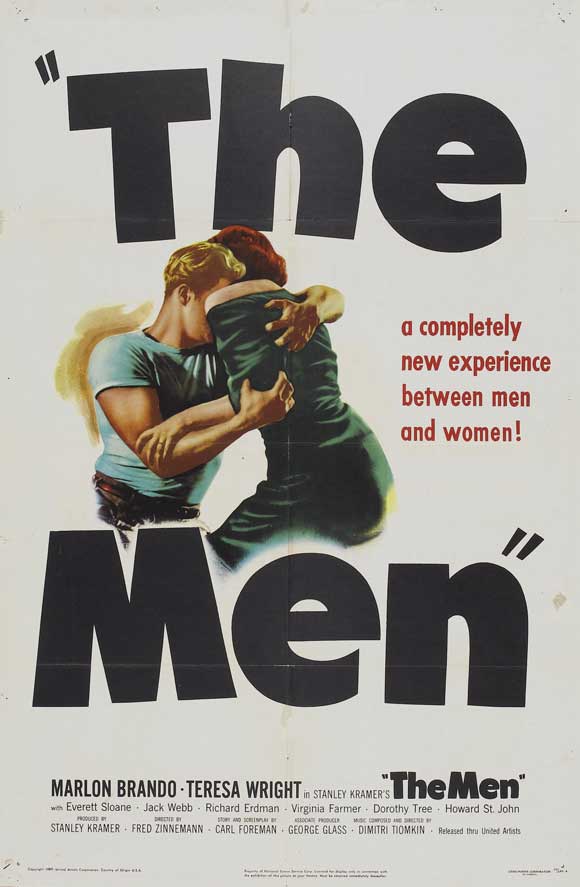
The Men opens with a thoughtful dedication to the two wars many soldiers have fought: the first with weapons, the second “with abiding faith and raw courage” against the physical and emotional consequences of the first. Fred Zinnemann’s documentary-influenced The Men takes a careful look at how the impact of that second war at a paraplegic veterans hospital. Ken Wilocek (Marlon Brando, in his film debut) is a former college sports star now confined to a wheelchair and struggling to adjust. His fiancé Ellen (Teresa Wright) is still eager to marry – but are either of them ready for the difficulties Ken will have adjusting his life?

The biggest strength of The Men – aside from its realist lack of flash – is how it avoids easy answers to big questions. Sure, Carl Foreman’s script has a tendency to lean into a mix of relationship drama and information film. But in looking at Ellen and Ken’s wedding night (and, in a neat visual metaphor of a misfiring champagne bottle, their likely sex lives), The Men is coldly realistic. Ellen might be largely presented as a picture-perfect ideal woman – but even she is freaked out by Ken’s squeaky wheelchair, twitching leg, implied impotence and the thought of what she has let herself in for.

That’s as nothing to the self-loathing fury – directed into rage at Ellen – Ken feels. This man who defined himself by machismo and physicality, who labours for weeks to stand upright so he can get married at the alter (it’s a sign of the film’s avoidance of easy solutions that, despite this, Ken still falls over at the alter) suddenly realises that he will always be partially dependent on his wife for simple tasks. He’ll never be the provider he expected to be – and he’ll never be able to fulfil some of his wife’s sexual needs. A proud man, no wonder the realisation throws him into depression.

It’s moments like this when Zinnemann’s film is at its strongest. It’s a film surprisingly frank and (for the time) daring about the emotional and physical consequences of war injury. Everett Sloane’s impassioned doctor is introduced warning wives and mothers about the consequences of paraplegia and the difficulties emotionally, physically and (he all but says) sexually they will have – but he might as well be talking direct to the camera informing the audience.

ZInnemann’s film, in a dispassionate but respectful way shows the process of rehabilitation, its strengths and its weaknesses. From physical training to the difficult emotional adjustments. The film used several real-life veterans – including Arthur Jurado in a key role as a Latino paraplegic holding onto optimism – and worked closely with hospital medical staff (some of whom appear as themselves). There is a solid sense of respectful realism about the whole thing. (You can feel the hand of producer Stanley Kramer.)

He’s also helped hugely by a powerful, committed and complex performance from Brando in the lead role. Making his first film, Brando astounded Zinnemann and the crew with his commitment. Effectively Brando “learned” to be paraplegic, forming deep friendships with the veterans (far more allegedly than with his fellow actors). His performance is a searing collection of contradictions. Ken is boyish, eager and lets excitement flash across his face when playing sports or driving an adjusted car for the first time. But he’s just as apt to be surly, resentful and bitter, to snap at those trying to help him and furious at the failings his own body have forced on him.

It comes to a head at that disastrous wedding night. Brando struggles with a growing realisation of his dependence and helplessness and his face flares with the pained recognition that this is in no way the wedding night be imagined. Throughout much of the film he is desperate to cling to any chance of recovery – from imagining sensation in his legs to furious workouts to build his upper body strength to help him pretend he still has fully functioning limbs. It’s a fabulous performance, a slice of realism and humanity, underplayed with an everyday casualness.

It does mean Teresa Wright at times looks a little more actorly as Ellen. To be fair to Wright, her part is saddled with the most conventional plot arcs and scenes, of romantic devotion mixed with sudden doubts. (It’s not helped by Dimitri Tiomkin’s overly emphatic themes for her character, that do their best to do all the work for the audience). Her scenes tend to have the air of the infomercial about them, as Ellen debates disabilities with Dr Brock and her doubting parents. Foreman’s dialogue also tends to lean a little too much into “I’ll love you Ken, no matter what” territory.

The Men is at its weakest when it looks at societal integration. For all the quality of Brando and the low-key sensitivity of Zinnemann’s direction, this ends up being a lighter, less impactful version of Wyler’s astounding The Best Years of Our Lives. Brando plays a combination of Dana Andrews’ and Harold Russell’s characters from that film, but The Men never hits the same heights of universal experience and pain as that film does. (Teresa Wright basically plays the same role here as she did opposite Dana Andrews). It’s just a little too low-key, a bit too documentary.

When away from the medical, there is a lack of inspiration and poetry from The Men. It gains a lot from Brando’s performance, but without him it would feel more like a Government infomercial. When it hits drama, for all its daring, it never manages to fully turn itself into something more than a traditional romance-against-the-odds. It has its heart in the right place, but it feels like a companion piece to better films than a classic in its own right.

The Blue Angel (1930)

The Blue Angel (1930)

Dietrich lights up the screen in von Sternberg’s first fliration with sound but not his last with obsession

Director: Josef von Sternberg

Cast: Emil Jannings (Professor Immanuel Rath), Marlene Dietrich (Lola Lola), Kurt Gerron (Kiepert), Rosa Valetti (Gueste), Hans Alberts (Mazeppa), Reinhold Bernt (Clown), Eduard von Winterstein (School director), Rolf Muller (Angst), Roland Verno (Lohmann), Carl Balhaus (Ertzum)

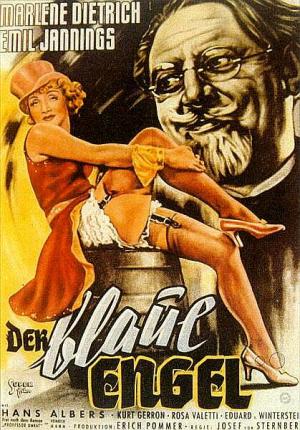
Love and lust can be dangerous, all-consuming forces. Just ask Josef von Sternberg. It’s a rare film on his CV that isn’t about the self-destructive nature of longing. The Blue Angel is about obsession and its deadly consequences: but it’s also the birthplace of an obsession that would define von Sternberg’s own career. It’s the film where he discovered Dietrich. Did von Sternberg guess that, in time, he might himself become a version of the lovestruck Rath? I’d guess not, but the stench of sadomasochist excitement from complete prostration comes out of every frame of this classic.

Immanuel Rath (Emil Jannings) is a professor at the local gymnasium, preparing his students for university. Problem is, they are more interested in the goings-on at the seedy nightclub The Blue Angel than with Rath’s pompous lessons about Hamlet. Specifically, they are obsessed with Lola Lola (Marlene Dietrich), the erotic head-line singer. Rath tries to catch his students in the act – and instead finds himself smitten by Lola, leaving his career to marry her. Five years later, and Rath has lost every ounce of self-respect, regularly debased by the cabaret company and reduced to doing humiliating chores for his wife.

The Blue Angel was one of the first major sound movies made in Germany. Jannings – winner of the first Best Actor Oscar – was the biggest star in Germany and handpicked von Sternberg, who had directed him to that Oscar in Hollywood’s The Last Command, to make the film. Plans to make a film about Rasputin were ditched in favour of an adaptation of Heinrich Mann’s story about a professor who becomes infatuated with a cabaret singer. It’s a tragic tale of a man bought low by an unsuitable woman: however, von Sternberg (with Mann’s agreement) rewrote the plot into a parade of humiliation for the professor. Rather than a tragic figure, he would be a pompous man turned into a submissive, emasculated figure of mockery.

Is this what Jannings had in mind? Surely not. Von Sternberg was critical of the actor, believing his overly-expressive movements and facial expressions – so perfect for silent cinema – looked crude and ridiculous with sound. Jannings certainly seems more comfortable throughout The Blue Angel with reactions than dialogue: but even then, his wide eyes, double-takes and shocked mouth often seem too much. In art imitating life, he feels like the self-important “actor” being taken down a peg, marginalised in the frame and (by the end) smeared in clown make-up with the yolk of raw eggs running down his face.

Jannings was certainly unhappy with the focus of the film shifting powerfully to Dietrich. He was the star, but it’s Dietrich you remember. And no wonder, since von Sternberg’s camera can hardly take its eyes off her. Dietrich’s cabaret performances – recorded live – were a sensation. Just as much was her brooding sensuality, with Dietrich’s rawness as a performer guided by von Sternberg into an unforced naturalism. Where Jannings is large, she is small. Where he double takes, she raises a single arched eyebrow. Where he blusters, she quietly sits and cocks her head. Von Sternberg’s camera frequently centralises her in the frame as if trying to unwrap the enigma of this intriguing woman.

Who is Lola? You can watch in detail and never be sure. At times she’s a coquettish tease. At others a contemptuous dominatrix. But then she is also playful, sensitive and (at first) seems to find the idea of possible security and fatherly protection from Rath desirable and alluring. Dietrich’s performance constantly keeps us on our toes. Does she at expect to be protected by Rath, but finds his increasing submissiveness arousing (does Rath find the same?). Or was she – as she hints in her cold and manipulative second rendition of Falling in Love Again – always a manipulator of men? (I like to think the other clown in Act One is some sort of former lover of Lola, the sad eyes he uses when staring at Rath seeming to say “don’t make my mistakes”.)

Sex is central to The Blue Angel. Von Sternberg’s camera constantly catches Lola’s legs in frame – in one striking shot on a spiral staircase directly above Rath’s head. Dietrich swaggers and dips, her hips moving, her legs curled sensually. She’s lit like a mix of an angel and a Caravaggio-esque temptress. She takes a sort of twisted pleasure in demeaning Rath – reduced to cooling her curling iron and rolling her stockings on so she can head out to “entertain” more men. But, just as telling, Rath keeps coming back for me. Sure, he might shout and rage – but then he’ll humbly take his place on his knees in front of her.

The Blue Angel is strikingly decadent. While Rath’s classroom has a hide-bound Victorianism – with himself as a puffed-up Thomas Arnold – the nightclub is seedy, crammed with loutish clientele swigging beer. Lola’s dressing room is rundown, the pay is poor and the glamour almost non-existent. This is the underbelly of Weimar Germany, already feeling the pinch. Rath is reduced to selling dirty postcards of his wife – his dishevelled frame hawking these around the punters after her performances – and allowing her to entertain “private admirers”.

Humiliation becomes the heart of this beautifully made film. Shot by von Sternberg with his signature artistic richness – the unnamed town feels like a Dickensian blow back more than Germany of the time – with beautiful halos of light and a frame that constantly fills itself with dynamic movement, The Blue Angel culminates in high tragedy laced with farce. Rath, forced into performing a humiliating clown routine in his hometown, watches as his wife watches him while clasping her new lover to her lips. Is she seeing how far she can push her pet in his humiliation? Will nothing make him stand up to her? Is this always what she wanted or just what she finds she likes?

Either way, you can see here the formation of fascinations that von Sternberg would only let go further in future films (think of The Scarlet Empress which reimagines Catherine the Great as the ultimate dominatrix). It humiliates Jannings both textually and meta-textually – making him look like a hammy relic, next to the sensual naturalness of Dietrich. But it’s also one of the great films about the erotic desire to be belittled. It was von Sternberg’s calling card and it cemented his desire to work with Dietrich again and again. Make of that what you will.

Note: The Blue Angel was of course made in the shadow of the rise of the Third Reich. Dietrich narrowly beat out Leni Riefenstahl for her role. Goebbels later banned the film for being “Jewish”. Of its three stars: Dietrich was a passionate anti-Nazi campaigner. Emil Jannings became the most famous actor to support the Nazis (which ended his career after the war). And, tragically, Kurt Gerron and his wife were murdered in Auschwitz.

Mothering Sunday (2021)

Mothering Sunday (2021)

Arthouse flourishes and trickery drown this try-hard literary adaptation

Director: Eva Husson

Cast: Odessa Young (Jane Fairchild), Josh O’Connor (Paul Sheringham), Sope Dirisu (Donald), Olivia Colman (Mrs Niven), Colin Firth (Mr Niven), Glenda Jackson (Older Jane Fairchild), Patsy Ferran (Milly), Emma D’Arcy (Emma Hobday)

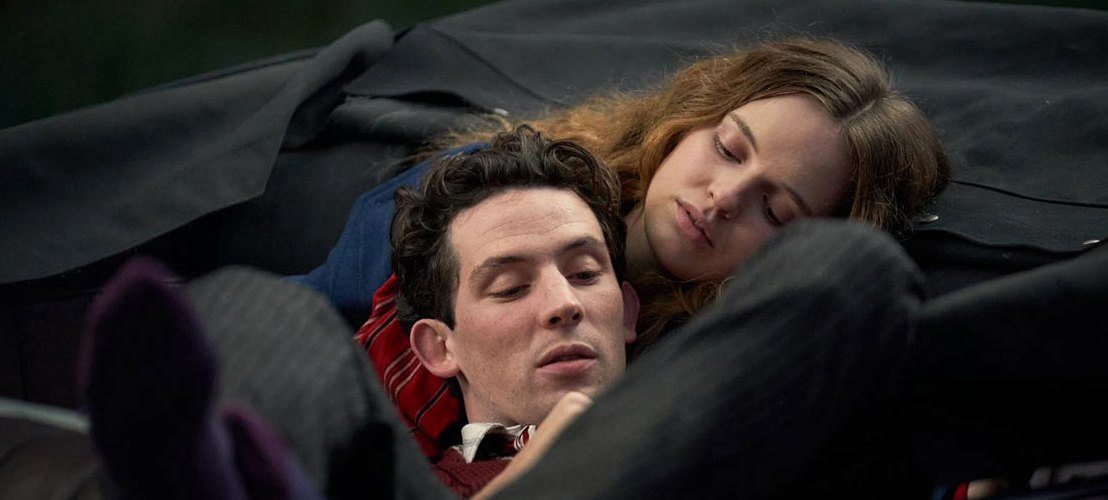
Based on an award-winning novel by Graham Swift, Mothering Sunday is mostly set on a single day: March 30th 1924. Jane Fairchild (Odessa Young) is the maid of the Nivens (Colin Firth and Olivia Colman), both of whose sons died in the Great War. The only surviving son of their close social circle is Paul Sheringham (Josh O’Connor), who has been conducting a secret sexual affair with Jane for several years. On this fateful day, Paul sneaks away from his fiancée (who was originally to marry the Nivens’ deceased son, James) for a tryst with Jane. The tragic after-effects will shape Jane’s future life. This is intercut throughout the film as she deals with the illness years later of her lover, philosopher Donald (Sope Dirisu).

Mothering Sunday is a proud, in fact a little too proud, art-house film. It takes an intricate, well structured and delicate novel by Swift and piles on the technique to try and wring as much meaning from the piece as possible. In doing so, Husson drowns a simple story in cinematic tools. Skilful cutting, intriguing shots, rich layered music, artful compositions, juddering intercutting between timelines, repeated shots and symbolic compositions eventually give an impression of a film trying too hard to impress.

It’s a story that would have carried a world more impact if it had been told with simple directness, where stylistic flourishes felt natural rather than exploited at every conceivable opportunity. Instead of moving though, the film eventually becomes tiring and the pointed dynamism of the film’s making gets in the way of the emotion. As we are cut away from moments of emotion, or the dialogue tries too hard to capture the complexity of Swift’s writing (as my wife put it, “there is a lot of talk about jizz”), we are constantly prevented from encountering the quiet emotion and unspoken devastation that should be at the heart of this simple-but-shattering story.

Even when Olivia Colman’s character – in her only real scene – is heart-rendingly confessing her pain at the loss of her children and her envy of Jane for her orphan status (she has no one to lose), Husson’s camera seems at least as interested in making you admire the fiddily mirror-based tracking shot she is using to shoot it. It is far more impactful and graceful when it sits still: for example moments like Colin Firth’s well judged performance of deeply repressed grief and pain, which expresses itself in very British banalities about the weather and doing-the-decent-thing.

Which isn’t to say that Mothering Sunday is a bad film, or that there aren’t moments of deeply impressive film-making. A dashboard-mounted camera that follows Jane’s disguised torment as she is driven to the scene of disaster is memorable, and there are beautiful shots like an aerial shot lingering over a fire in a forest that haunt the imagination. The film has a haunting quality to it, like a half-memory that flits from clear picture to clear picture via hazy recollection. But all this style swamps the impact. The film never has the patience to sit down and let us get involved in its story properly. Or really tackle how lasting the impact of loss – particularly the generational loss of the 1910s – had on families and, by extension, the whole country.

Mothering Sunday’s main successful feature is the hugely impressive performance from Australian actress Odessa Young. Not only is her accent faultless, but Young has a poetic romanticism in here that sits equally alongside an old soul within a young body. Much of the film is dependent on her micro-reactions to moments of life-changing sorrow and joy. She spends a large chunk of the film naked (as required by the source material – although this is also another tiresome sign of the film’s overly proud ‘arthouse’ badge) – but imbues this with a bohemian freeness that suggests it’s the only time, released from the shackles of her work clothes, that she feels truly free. She carries almost the whole film and does so with a consummate, compelling ease.

There are fine performances as well from Josh O’Connor – channelling Prince Charles somewhat – as a conflicted man, crushed by the burden of carrying the expectations for a whole generation, and Sope Dirisu (in a rather thankless role) as Jane’s later philosopher lover. Glenda Jackson contributes a neat cameo as a Doris Lessing-like older Jane, now a hugely successful novelist, reacting just like she did to the winning of the “major international prize” for literature.

But the overall film never quite manages to carry the impact it should. It should leave you consumed with the sadness and waste of early death and the destruction that comes from war. Instead, you will remember more the pyrotechnical invention of its making – and the wonderful score by Morgan Kibby – rather than any heart or sense of tragedy.

The Last Metro (1980)

The Last Metro (1980)

Passion, privacy, tension and terror all come to head in Truffaut’s stately theatrical occupation epic

Director: François Truffaut

Cast: Catherine Deneuve (Marion Steiner), Gérard Depardieu (Bernard Granger), Jean Poiret (Jean-Loup Cottins), Heinz Bennent (Lucas Steiner), Andréa Ferréol (Arlette Guillaume), Paulette Dubost (Germaine Fabre), Sabine Haudepin (Nadine Marsac), Jean-Louis Richard (Daxiat), Maurice Risch (Raymond Boursier)

The curtain parts and we are introduced to a magic world of imagination and drama play out before us on stage. But how can the actors immerse themselves in this, while such huge drama plays out in the real world? It’s the dilemma of the Montmatre theatrical troupe in Paris during the Occupation. With war raging with all its complex moral choices and dangers, how can you focus on the art within – or for the matter process the complex emotional entanglements in an already claustrophobic profession only made worse by the perils of Nazi occupied Paris and their pet collaborators.

Truffaut’s film is called The Last Metro as it recalls a period during the occupation when hundreds of thousands of people crowded into Parisian theatres to stay warm at night before rushing to catch the final train home before the curfew. The Montmatre Theatre is run by Marion Steiner (Catherine Deneuve), a film star turned stage actor struggling to keep the theatre going in the absence of her Jewish theatre-director husband Lucas (Heinz Bennett) – who, unknown to anyone else, is hiding in the theatre basement. Bernard Granger (Gérard Depardieu) is her new lead actor for their latest Ibsenesque production: but his presence will stir powerful feelings in the embattled Marion.

Truffaut’s film steers away from his other more famous work – the sort of vibrancy and romance of earlier films like Jules et Jim or The Four Hundred Blows or the inventive playfulness of Day for Night. Instead, The Last Metro is a more formal, classically shot, interior piece that revels in small moments and touches of emotional investment so subtle and glancing some viewers might not even notice them. It’s also – surprisingly for cinema’s leading cineaste – a film deeply in love with the mechanics and backstage drama of theatre, subtly contrasting the claustrophobia and intensity of such spaces with the oppressive world-shrinking and glance-over-your-shoulder anxiety of occupation.

It’s also a superb character study, with a quite brilliantly complex and compelling performance from Catherine Deneuve. A starlet with a double burden – not only keeping the theatre alive, but also her husband – Marion is a woman pulled so hard and so overwhelmingly in so many competing directions, it’s taking every ounce of her control to hold herself together. Facing financial pressures, censorship pressures and the constant fear that a single wrong word could see her theatre ripped away from her and her husband discovered and killed, she maintains a cold and professional veneer that rarely, if ever, slips.

So little does it, that Bernard – played with an effortlessly underplayed grace and charm by Gérard Depardieu that belies his Rugby-player bellicosity – is, for the most part, blissfully unaware of Marion’s growing, unspoken, attraction to him. A love she seems hardly able to acknowledge herself, not least because it feels like an even deeper betrayal now of her husband, hiding out in the basement and utterly dependent on her, than it would in peacetime.

Lucas – a wonderful Heinz Bennent – is himself teetering on the edge of falling apart from the sustained effects of acute cabin pressure. Never leaving the damp theatre basement – apart from surreptitious trips to the stage late at night – Lucas’ attitude to his enforced imprisonment moves from a larkish boys-own adventure into an increasingly bitter resentment. Directing the show from afar – a drain has been hooked up so he can listen in on rehearsals – he provides late night feedback to Marion to accompany the detailed handwritten notes he ‘left behind’. Mapping out future productions on his cell walls, Lucas avoids the suspicion that the constant pressure of concealing him has tipped their relationship from romance to one of anxiety-ridden responsibility.

It contrasts with the play the company is performing: where, in typical Ibsen style, the lead is a tragedy tinged woman, suffering memory loss, who falls into a deep but mutually painful love with her son’s tutor. Even from the rehearsals, Marion begins to feel some bleed of this dramatic relationship into her real world: she asks Bernard to not touch her during rehearsals, as if worried that this moment of physicality could lead to consequences she cannot control.

Touch is a key sensation in The Last Metro – as if moments of physical contact and intimacy carry even more weight in a world where no one can be trusted and every word must be carefully watched. Bernard uses a repeated routine of palm reading to try and seduce (with mixed results) a series of women (most notably lesbian production designer Arlette – strikingly played by Andréa Ferréol – who, in a lovely flourish, he describes as longing for “like a warm croissant”). Physical contact – the light caress of a face and hands – is crucial to the film. Truffaut’s camera zooms in on moments where hands take each other, either in longing, understanding or – in a sequence where Marion journeys to Gestapo headquarters – with the threat of imminent violence.

Closing distance is particularly important in a period where all contact must be carefully judged and measured. Collaborators, like powerful press chief Daxiat, will use the smallest slight or word out of place to justify pulling your world down. Played with a hissable vileness by Jean-Louis Richard, Daxiat is a pompous, self-important, two-faced and vindictive man parroting Nazi slogans and revelling in his power to destroy careers. But, small man though he is, the Occupation gives him power – when Bernard angrily confronts him for his rudeness about Marion in his review, its Bernard who Marion is furious at for his recklessness.

It’s because hanging over every moment – and constantly playing in Deneuve’s expressive eyes – is the dread of what will be found if her theatre is searched or how doomed her husband will be if it is closed. Finding a play that passes muster with the censors and pleases the masses is literally a matter of life and death.

Truffaut echoes the claustrophobia of occupied France in his shooting of the cramped backstage world – and he and Suzanne Schiffman in their screenplay add to this with their look at backstage politics and affections between actors, stagehands and crew. Even the outside is shot like an interior – and Truffaut never bothers to make the locations feel like anything other than sets, as if the whole world is a claustrophobic theatre – with extensive use of mid and close-up shots and subtle tracking shots that maintain the theatrical effect.

It does make for a film that can feel stately and a little too heritage – and its undeniable you miss some of the energy of Truffaut’s other films (you can’t imagine his idol Hitchcock ever shooting a frame of The Last Metro­ – or what he would have made of its luxurious pace). Its subtle energy is sometimes so easy-to-miss that it can be easy for parts of the film to pass you by. Plotlines – such as Bernard’s support of the resistance – sit awkwardly at times within the framework, and the film’s boiling down of Vichy France to (essentially) one bad apple told a story about Occupation that was very pleasing to the French self-image (no wonder if was a massive hit).

The Last Metro is at times a little too in-love with its cultural heritage and the quiet professional skill of its making. But, it counter-balances this with some involving and subtle work from all its principles and director: and in Denevue (especially) and Depardieu it had two of the greatest actors in French cinema at the top of their game. Multi-layered and demanding, it’s a film that makes you work from its newsreel opening to its fourth-wall, metatextual ending, riffing on romantic entanglements, art, burdens and the oppression of occupation. Perhaps too knowingly prestige to be great, but still an essential watch.

Top Gun: Maverick (2022)

Top Gun: Maverick (2022)

You’ll feel the need for speed in this triumphant better-than-the-original sequel

Director: Joseph Kosinski

Cast: Tom Cruise (Captain Pete “Maverick” Mitchell), Miles Teller (Lt Bradley “Rooster” Bradshaw), Jennifer Connelly (Penny Benjamin), Jon Hamm (Vice Admiral Beau “Cyclone” Simpson), Glen Powell (Lt Jack “Hangman” Seresin), Monica Barbaro (Lt Natasha “Phoenix” Trace), Lewis Pullman (Lt Robert “Bob” Floyd), Ed Harris (Rear Admiral Chester “Hammer” Cain), Val Kilmer (Admiral Tom “Iceman” Kazansky), Charles Parnell (Rear Admiral Solomon “Warlock” Bates)

It’s been 38 years since Tom Cruise last felt that need for speed. Top Gun is a sentimental favourite, partially because its the ultimate brash, loud, Reaganite 1980s Hollywood film. But (whisper it), it’s not actually – and never has been – a very good film. Perhaps though that’s all for the best: Top Gun has so little of merit in it, it offers an almost completely blank canvas for a sequel. It helps the team create Top Gun: Maverick, a film so insanely entertaining it should carry some sort of health warning.

Decades have passed and Pete “Maverick” Mitchell (Tom Cruise) is pretty much the greatest pilot in the world, deliriously skilled at everything in the cockpit and pretty much hopeless at anything outside it. He’s distrusted by all his superiors except his old wingman Iceman (Val Kilmer). Thanks to Iceman he is selected to train the next generation of pilots at TOP GUN for an impossible mission to take out a nuclear plant in a “hostile nation” (clearly Iran). One of that next generation is Bradley “Rooster” Bradshaw (Miles Teller), son of Maverick’s late best friend “Goose”, the guilt for whose death Maverick never recovered from. After Maverick tried to prevent Rooster from following in his father’s footsteps – not able to stand the thought of being responsible for the deaths of both his surrogate brother and son – can the two overcome their problems?

Top Gun: Maverick was delayed from hitting cinema screens for nearly two years thanks to Covid. Cruise resisted all opportunities to sell it to streaming: a decision vindicated by the supreme big-screen entertainment it offers. This one you really do need to see on the big screen. Its aerial footage is so stunning it makes the original look like tricycles on training wheels. Combined with that though, and unlike the original, Maverick has a thoughtful and engaging emotional storyline, with characters who change through well thought out emotional arcs.

But I’ll be honest, the staggering, visceral enjoyment of these plane sequences is probably the principal thing you’ll immediately take out of the film. Working from a training programme partly devised by Cruise, the film shows the impact of punishing G-forces by… actually putting the actors in planes travelling at these huge speeds. Unlike Top Gun, with its blue-screen cockpit shots, there is no doubt Cruise, Teller et al are actually in the planes as they bank at impossible speeds. Partially shot by the actors themselves – sitting the camera up in their cockpits – the film literally shows you the scenery flashing by. It’s Cruise’s mantra of doing it for real taken to a stunning degree. It’s the simple old-fashioned joy of knowing almost everything you see is real.

The mission this time is far more detailed: effectively it’s a steal from Star Wars, our heroes required to fly through a narrow ravine (below the radars of surface to air missiles) before climbing a steep bank and using their laser targeting to successfully blast a small access port. (It won’t surprise you to hear that on the final mission one character has to “use the force” when their targeting laser fails). Maverick’s training programme pushes the pilots to the limit, while his extraordinary flight skills quickly win their awe (in the first session he challenges all the pilots to take him down in a simulated dogfight, with everyone shot down doing 200 press-ups – Maverick does zero, everyone else 200+). Kosinski shoots with a cool clarity that makes you feel you are being punched by G-force.

But Top Gun: Maverick would just be a showcase for cool planes without its emotional heart. And it’s the intelligent and involving story that makes it work. Cruise is at his charismatic movie star best as Maverick – he knows exactly how to win the audience over – but his cocksure confidence is underpinned by a growing sense of fear at the risks he puts others through. Unlike the navy, his main concern is to get the pilots back alive and his guilt-ridden treasured memory of Goose is the hallmark of a man who never managed to put ends before means. He’ll take any risk himself, but balks at taking chances with anyone else’s life.

It’s what drives his troubled relationship with Rooster. The two have a surrogate father-son relationship, fractured by Maverick’s attempt to keep Rooster safe out of the cockpit. (Pleasingly, Rooster does not hold Maverick responsible for his father’s death, only for derailing his career.) The relationship between these two – Cruise’s Maverick quietly desperate to rebuild some sort of familial connection and Rooster shouldering resentment for a father-figure he clearly still loves – is handled with a great deal of tact and honesty. It really works to carry a wallop.

It’s also part of how Maverick’s place in the world, and decisions in life, are being questioned. As made clear in a prologue where he thumbs his nose at a sceptical Admiral (no one scowls like Ed Harris) by taking a prototype jet out for test run, he’s both a relic and a guy who doesn’t know when to stop (he wrecks the jet by pushing past the target of 10 Mach by trying to go another .2 faster). Unlike Iceman – a touching cameo from a very ill Val Kilmer that leaves a lump in the throat – Maverick never fit in within a military organisation (“They’re called orders Maverick”). He’s lonely, his past failed relationship with Jennifer Connelly’s Penny just one of many roads-not-taken. (There is no mention of Kelly McGillis’ character.) In a world of digital drones, he’s an analogue pilot flying by instinct: his days are numbered.

This is proper, meaty, thematic stuff explored in a series of involving personal arcs which by the end not only leaves you gripped because of the aerial drama, but also genuinely concerned about the characters. I can’t say that about the original. Top Gun: Maverick is not only a thematically and emotionally richer story – carried with super-star charisma by Cruise – than the original, it’s also more exciting and more punch-the-air feelgood. This sort of thing really is what the big screen is for.

The Discreet Charm of the Bourgeoisie (1972)

The Discreet Charm of the Bourgeoisie (1972)

Dinner dates never happen in Buñuel’s playfully witty, absurdist satire

Director: Luis Buñuel

Cast: Fernando Rey (Rafael Acosta), Paul Frankeur (François Thévenot), Delphine Seyrig (Simone Thévenot), Bulle Ogier (Florence Thévenot), Stéphane Audran (Alice Sénéchal), Jean-Pierre Cassel (Henri Sénéchal), Julien Bertheau (Monsignor Dufour), Milena Vukotic (Inès), Claude Piéplu (The Colonel), Maria Gabriella Maione (Terrorist), Muni (Peasant), Michel Piccoli (Interior Minister), Pierre Maguelon (Brigadier Sanglant), François Maistre (Commissaire Delecluze)

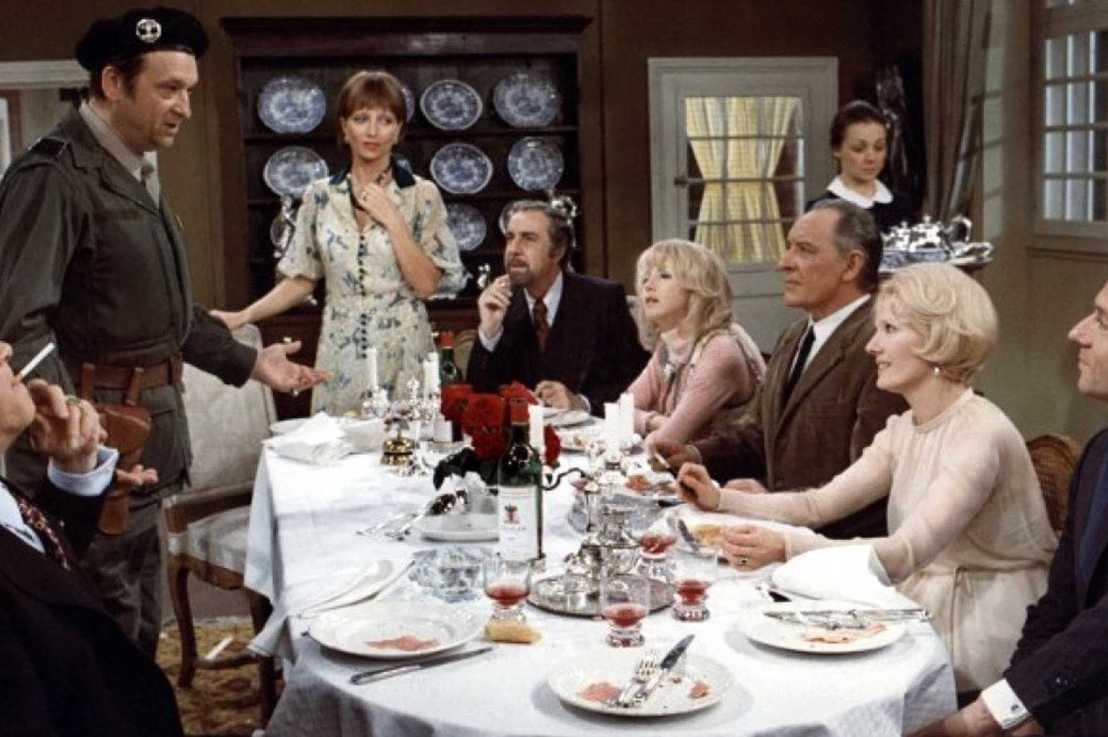
Six very bourgeoisie Parisian friends try to have dinner; but circumstances keep getting in the way. Circumstances that become increasingly bizarre, surreal and absurdist and half of which may or may not be dreams (or even dreams within dreams). This is the jumping off point for Buñuel’s engagingly light and witty, but also profound, intriguing and defying interpretation. The Discreet Charms of the Bourgeoisie. In the hands of a dogmatic artist, it would be heavy-handed trash: in Buñuel’s it maintains a playfulness making it entertainingly (if at times infuriatingly) mystifyingly unreadable.

Those six friends are a shallow, self-obsessed bunch who talk the snobby talk of class and culture, but their knowledge is skin-deep and their lifestyle funded by cocaine smuggling. That cocaine is trafficked into Paris in the diplomatic bag of Ambassador Rafel Acosta (Fernando Rey), representative of the (fictional) Latin American Republic of Miranda. It’s sold by his friends, François Thévenot (Paul Frankeur) and Henri Sénéchal (Jean-Pierre Cassel), and its these three – along with their wives Alice Sénéchal (Stéphane Audran) and Simeone Thévenot (Delphine Seyrig) and Simone’s sister Florence (Bulle Ogier) – who keep trying to have dinner.

Those dinners are constantly interrupted by a series of increasingly outlandish events, that the guests accept with the sort of blasé insouciance this sort of people pride themselves on. Things escalate on successive nights from Henri forgetting he has invited their guests to dinner, to a dead landlord of a country inn, the Sénéchals slipping out to the garden to have sex, a Bishop (Julien Bertheau) who longs to be a gardener, a café that runs out of tea and coffee, an army division on military manoeuvres, their arrest by the police… That’s not mentioning the onslaught of dreams as the characters imagine yet more meals interrupted by murder, terrorism and even their dining room turning into a stage in front of an audience where they don’t know their lines.

If that sounds pretentious… I suppose that’s fair. But the point is that Buñuel never hectors or overplays his hand. Instead, the film is an absurdist light comedy, a whimsical road-to-nowhere (like the country road we frequently see the six characters walking down in cutaways) that, in its structure, aims to expose the shallowness and hypocrisy of an entire class. Our ‘heroes’ are overwhelmingly concerned, time and again, with their own basest needs – mostly food and sex – and are more than happen to call in a chauffeur so they can mock him for not knowing how to drink a cocktail correctly (doesn’t stop him enjoying the cocktail way more than any of them do). They encapsulate a whole class, concerned only with tucking in and making sure everyone can see they are unshaken by events, no matter how outlandish they seem.

Into this mix, Buñuel throws an astonishing and inventive selection of dreams that increasingly dominate the second half of the film. (And in fact, makes you wonder after a while whether everything we’ve seen in the film is some sort of crazy, unlikely fever dream). Buñuel used to joke he slipped in dreams when he needed to expand a films runtime, but it’s wonderful here how often the dreams comment subtly on the characters and their perceptions of each other: and how little they seem to learn or be aware of the implications of this.

The most surreal dream of all is Henri’s fantasy of entering a house – a house with walls painted with false perspective images of other rooms – where the group encounter rubber food and then a curtain sweeps aside to find an expectant audience watching them. Despite the prompts for their lines, the characters flee in sweaty nervous panic. Do they realise the meaning of this exposure of their sense of unbelonging? You can be sure they don’t.

In fact, in a stroke of daring by Buñuel, they are so remote from understanding this that Henri is in fact having a dream inside François’ dream: as if François can only vicariously confront his fear of unbelonging by dreaming about another man dreaming about it. That worry of mockery and isolation in society is then continued in François’ dream, as he dreams of Henri waking from a dream and arriving at a party at a Colonel’s house where the mockery and ignorance of Rafael’s home country becomes so overbearing, Rafael shoots the Colonel dead. As if, again, François can only imagine being pushed to extremes vicariously.

Perhaps he’s simply jealous of Rafael, who is blatantly conducting an affair with his wife. Rafael’s a man of class, obsessed with greed and lust. He’s also a sneaky coward and a creepy opportunist, not above trying to seduce a female terrorist who tries to kill him (and then having her shipped off by his security when she turns him down). Doesn’t make him different from anyone else: the Thévenots are arrogant upper-classes scorning those below them, Florence a shallow, selfish drunk, the Sénéchals full of hedonistic entitlement.

Buñuel’s film gently deconstructs the code and hypocrisies of this society – with its unspoken rules, strange hierarchies and lusts – not with lectures but with the tools of farcical theatre. The film repeatedly feels like a left-field Cowardian drawing room comedy, mixed with Moliere farce. A cheating wife is interrupted by the sudden arrival of her husband, a Bishop borrows the clothes of a gardener so no one believes he is a priest, sudden entrances and exits constantly interrupt scenes. This is all told with a light, revealing wit: with subtle playing and controlled, skilful direction, we learn about these characters depth (or lack of them) while enjoying the frequently bizarre circumstances.

It doesn’t just touch them either. When the characters are arrested, they are released on the orders of the Interior Minister for reasons that we are don’t hear three times because of traffic noise. Outside noise jumps in at several key points to undermine key information and interrupt events – the characters indifference to this as constant as their general ambivalent uncaring coolness to everything else. It’s also funny.

There are also darker dreams, told by soldiers and police officers, haunted by mauled bodies and murderous consequences. A soldier tells a dream of a ghostly encounter of his dead mother, urging him to avenge the death of his parents (its left unclear if this is a false memory or a dream). A policeman sees a vision of his dead body releasing his prisoners – after an interrogation of a young man that sees a piano transformed into an electric chair.

Not to mention a world where suave class and violence sit side by side. Rafael’s readiness to use guns – shooting a wind-up toy of a terrorist from across the street, his apartment littered with hidden firearms – is matched by the Bishop who mixes forgiveness and revenge for the man who killed his father. Much of this taking place in the classiest and most well-observed of environments.

There are excellent peformances across the board, but this is a triumph from Buñuel. It’s a film that defies easy interpretation and understanding, that wraps its insight up in intriguing, unreadable and bizarre dreams and events which strike a magical balance between both possible and impossible. It explores a whole class and its hypocrisies, but does so in a series of light, even playful, scenes which feel more like light-comedy. It’s the work of an inventive master working with the medium in a unique and unrepeatable way, who can be both surrealist enigma and master of farce. You could watch it multiple times, drawing different shades and interpretations every time.