Category: Artist biography

Lee (2024)

Lee (2024)

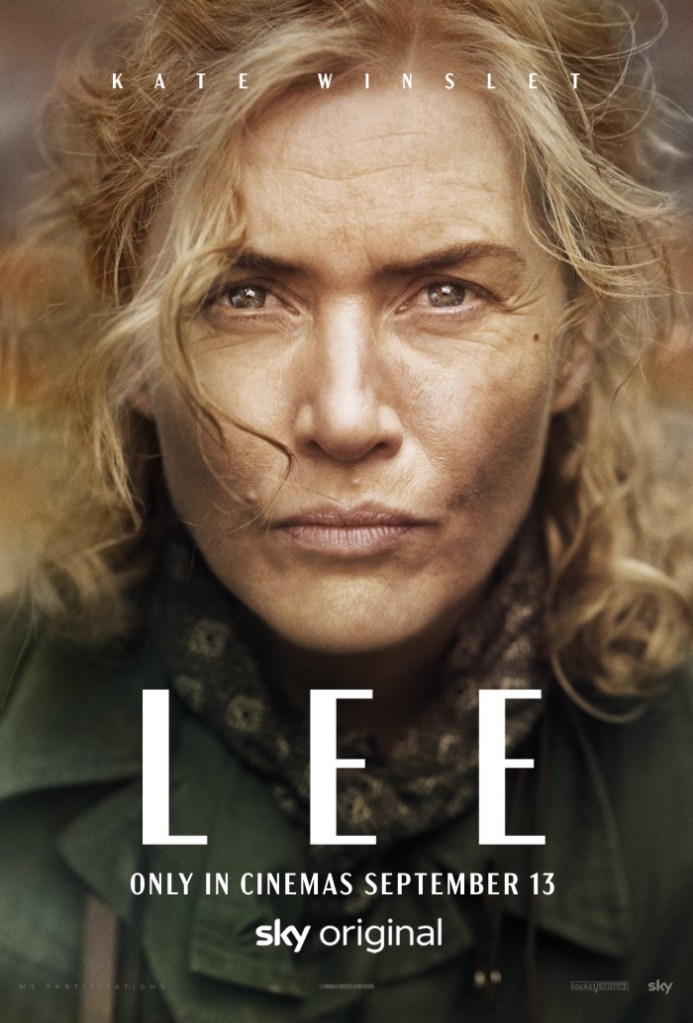
Kate Winslet plays with passion in an otherwise rather safe and traditional biopic

Director: Ellen Kuras

Cast: Kate Winslet (Lee Miller), Marion Cotillard (Solange d’Ayen), Andrea Riseborough (Audrey Withers), Andy Samberg (David Scherman), Noémie Merlant (Nusch Éluard), Josh O’Connor (Interviewer), Alexander Skarsgård (Roland Penrose), Arinzé Kene (Major Jonesy), Vincent Colombe (Paul Éluard), Patrick Mille (Jean D’Ayen), Samuel Barnett (Cecil Beaton), Zita Hanrot (Ady Fidelin)

“War? That’s no place for a woman!” That’s the message photographer Lee Miller (Kate Winslet) received when she applied to head to the Western Front for Vogue in World War Two. An experienced artist and photographer, with a strongly independent mindset, Miller wasn’t taking no for an answer: her stunning images of the horrors of war and the Holocaust would become a vital historical record.

That’s the key message of this well-meaning, rather earnest, slightly old-fashioned film, a callback to hagiographic biopics of yesteryear. It’s told through a framing device of an older Lee being interviewed in the 70s. The interviewer is played, in a thankless role, by Josh O’Connor (the character’s identity is a late act reveal that most viewers will probably guess early) and his dialogue is awash with either the sort of “and then you married and left France and moved back to London where you became the first woman photographer hired by Vogue” narration that links time-jumped scenes together, or blunt statements about Lee’s emotional state (“you must have been very frustrated”) that Winslet is definitely skilled enough to do with her face alone.

This was a passion project for Winslet, who spent a decade bringing it to the screen and which she bailed it out during a funding wobble, and she is the main reason to watch Lee. This strong-willed, take-no-nonsense bohemian turned hardened professional is a gift for Winslet, but she also gives Miller a strong streak of inner doubt and fear. Under her force-of-nature exterior, there is a strong streak of vulnerability in Miller, her life marked by past trauma. Winslet lets this rawness out at key moments, bringing great depth and shade to a character who could otherwise be blunt and difficult, and the film works best when it gives her free reign.

It’s unflinching but also tasteful in its depiction of war. Experienced cinematographer and first-time film director Ellen Kuras shoots its grimy, hand-held immediacy with an intensity that makes a lot of the film’s limited budget. Lee’s dirt and dust-sprayed combat scenes – with Miller dodging explosions and bullets to get into position to get the perfect shot – are tensely assembled and make a punchy impact. But Lee also knows when not to show us things, and its visual restraint when Miller and colleague David Scherman (Andy Samberg) photograph the horrific aftermath of Buchenwald and Dachau is admirable, the camera focusing on the characters’ stunned faces as they capture the terrible moments, with the horrific reality just out of focus.

There are some fine moments in Lee, which makes it more of a shame that so much of it feels safe, predictable and unchallenging. Lee focuses on Lee Miller as an artist and downplays her daring, unconventional life. Tellingly it’s adapted from a biographer by her son, titled The Lives of Lee Miller, which chronicles her life of constant reinvention. This is after all a woman who maintained a relationship with her Egyptian husband in the 30s, after meeting her second husband Roland who himself remained married for several years (they only married in 1947). She was a model, a surrealist artist, photographic pioneer, ahead of her time. That’s rinsed out to make her more conventional.

In the film, she and husband Penrose (a generously low-key performance from Alexander Skarsgård) have an uncomplicated meet-cute in a French villa owned by a friend (an extended cameo by Marion Cottillard) – admittedly it as at an outdoor picnic where Lee and others sunbathe topless – before settling into a life of middle-class suburbia (right down to Lee cooking meals for Roland when he returns from work). Hints that she has a consensual affair with Scherman linger, but the film seems prissily determined to reposition Lee as a far more conventional person than she really was. It’s a conservative attitude that comes from a good place – focusing on the work not the gossip – but it also makes her feel less unique or challenging than she was.

With the work as its focus, it’s surprising Lee doesn’t make more of the extensive collection of masterpiece photos Miller took. Although an inevitable credits montage shows how some of these were re-created for the film, actually including the images in the film itself might have carried more power and placed Miller’s work more prominently at its heart.

Lee also fumbles slightly with its final revelation of Miller’s past trauma. Shocking as this is, attempting to suggest what happened to Lee in her teens is on the same scale as the Holocaust or that she has a unique understanding of an act of ethnic genocide because she suffered in the past stinks. It’s especially notable since Lee does an excellent job of showing the quiet distress the Jewish Scherman feels as he realises only an accident of geography saved his life. Andy Samberg, in his first dramatic role, is extremely good in a role that clearly carries a very personal feeling for him.

Lee has things going for it, not least Winslet’s barn-stormingly committed and passionate performance. But in the end, it turns its lead character into someone who feels less provocative and revolutionary than she was. Its safely traditional structure and narrative approach turn her into a “role model” and make Lee the sort of middle-brow biopics Hollywood churned out in the 80s. It’s solid, interesting but essentially safe and forgettable.

Andrei Rublev (1966)

Andrei Rublev (1966)

Tarkovsky’s masterpiece is one of the greatest films ever made about art and creativity

Director: Andrei Tarkovsky

Cast: Anatoly Solonitsyn (Andrei Rublev), Ivan Lapikov (Kirill), Nikolai Grinko (Danlil Chyorny), Nikolai Sergeyev (Theopanes the Greek), Irma Raush (Durochka), Nikolai Burlyayev (Boriska), Yuriy Nazarov (Prince Yury/Grand Duke Vasily I), Rolan Bykov (Jester), Mikhail Kononov (Foma)

I’ve always been a Tarkovsky sceptic. But Andrei Rublev is a masterpiece. Perhaps only Tarkovsky could have made a film about an artist and never once show a paintbrush in action or design a film about creativity that drips with shocking violence. Andrei Rublev avoids the cliches of cradle-to-grave biography – helped by the fact we know almost nothing about this medieval icon painter – presenting instead a series of vignettes suggesting possible influences on the work of an artist. It makes for an intriguing, fascinating film, challenging but infinitely rewarding.

Tarkovsky’s film roughly chronicles 24 years (1400-1424) in the life of Andrei Rublev (Anatoly Solonitsyn). But this is far from a straight-forward narrative, and the episodes themselves often seem only loosely linked and the movement of time and location often feels hazy. In many of these scenes Rublev is often a quiet observer or a man searching for depth and meaning, uncertain of his own views, aspirations and how he wishes to express his faith.

Over the course of the film, he observes a travelling Jester (Rolan Bykov) punished for mocking the social order, debates theology with his mentor Theopanes the Greek (Nikolai Sergeyev), is tempted by a pagan orgy in the forest and witnesses shocking acts of violence (including taking a life himself) in a civil war between two feuding noble brothers. Eventually taking a vow of silence, it is his witnessing of the rapturous reception of the successful casting of a giant bell – and the relieved shock of the teenage bell-master (Nikolai Burlyayev) that confirms to him the spiritual importance of providing consolation and joy to others through religious art.

Shot in a luscious black-and-white, Tarkovsky’s film presents a series of beautifully composed images that constantly invites us to re-interpret and re-imagine what we are seeing. This is not history as picture-book or progressive story. This is Tarkovsky at his best, a sprawling dream that never tries to clumsily link events to artistic outcomes or obvious motivations, but to suggest how the atmosphere of the world can form an artist’s spirit.

This is a medieval world that feels immersive, grimy and real – but also hums with a gorgeous sense of possibility. Tarkovsky frequently shoots horses, his camera lingering on these free-spirited animals that represent the freedom nature can give us. A close connection with the natural world draws the characters in time and again: Theopanes sits contentedly and allows ants to swarm over his legs, the bell is born in a dug-out crater in the earth itself. Water recurs as a symbol of possibility and temptation: Rublev’s pupil Foma daydreams of flying while washing brushes in water and later meets his death in a river; Andrei spies the naked pagan celebration in the river, then averts his eyes when rowing past their inevitable arrest. In the film’s prologue an early balloonist flies across a river, while at its conclusion Rublev and Boriska crouch and comfort each other in a water-logged field. Nature is elemental, bringing characters closer to an understanding of themselves and others.

In contrast, Tarkovsky’s film is striking for presenting what a destructive, violent and brutal force the ambitions of man can be. A yearning for power and recognition time and again develops into of violence. The jester is consigned to beating and years of imprisonment due to the close-minded resentment of intelligent-but-uninspired monk Kirill (Ivan Lapikov). A group of stonemasons are brutally blinded in the forest (violence even corrupts nature) by the Grand Duke’s men for standing by their rights. Most strikingly, Andrei witnesses a brutal massacre (vividly shot with hellish detail by, the entire sequence echoing the Eastern Front in World War II) in the city of Vladimir, where the Grand Duke’s brother’s forces indiscriminately rape and slaughter the population (including a horde of survivors searching for sanctuary in the church Rublev has just decorated with icons) and brutally torture and murder a monk (culminating in feeding him a melted golden cross). Even the bell-makers labour under the threat of instant death should their work fail and the bell crack.

Tarkovsky perhaps suggests the possibility of beauty and violence goes hand-in-hand for all of us. I feel that is the message of his fascinating – but never clearly explained – prologue. Set in an unspecified time and place, a medieval balloonist takes to the skies while, on the ground, panicked villagers (seeing the flight as witchcraft) attack his assistants. The balloonist flies with joy over the river – then crashes to the ground (and probably his death). This Icarus fable is, perhaps, about the difficulties of reaching for the sublime when the world constantly wants to pull us down. There is little place for invention and creativity in an existence that places a premium on earthly concerns, where art is just another tool for maintaining the power of the elites and the masses fear change.

It’s what Rublev is straining to rebel against. He lives in a world – and it’s hard to resist the idea Tarkovsky was suggesting Soviet Russia was little different – where art is a tool of control, feathering the glory of the powerful. He struggles to paint a Last Judgement because, as he argues with fellow artist Danlil (Nikolai Grinko) he doesn’t want to create an image designed to terrify the masses into faith. The Duke’s motivation for painting his Church is to make it grander than his brother’s. The bell is cast as a show for foreign dignitaries. The jester’s performance is punished for its satire.

Andrei is contrasted with the more overtly intellectual – but uninspired and untalented – Kirill, played with surely resentment and self-loathing by Ivan Lapikov. Judgemental and arrogant, Kirill dreams of having his genius recognised (approached by Theopanes to work with him, he is more interested in having the offer repeated publicly than the work itself) and lashes out at both the jester and his own dog for having the sort of freedom he can never find in himself.

Temptation and vanity also stands in the way of achievement. Shot in a style reminiscent of Christ in the wilderness, Andrei is fascinated by  the pagan orgy he witnesses. He is similarly drawn, for reasons he seems not quite to understand, towards the beautiful holy fool Durochka (Irma Raush), who he will brutally defend from rape in Vladimir. A vow of silence – and a Sisyphean labour moving heated rocks around a snow-bound monastery – is his self-appointed punishment for both his dreams of glory and his yearnings for romantic couplings. Art can be challenging.

But its results can be beautiful and inspire higher feelings. In the aftermath of the massacre of Vladimir, Andrei imagines a discussion with the long-dead Theopanes (Tarkovsky skilfully shoots this sequence with Theopanes appearing at every turn Andrei makes) who scorns Andrei’s grief and guilt over his burned church icons (and the false clash their beauty makes with the brutal world around them) and proclaims their beauty is a purpose in themselves. It’s a feeling Andrei only understands when seeing the people react with joy to the casting of the bell.

The final bell sequence – which brings all characters together to witness – would in itself make a masterful short movie and is certainly the finest extended sequence Tarkovsky ever made and a wonder in its own right. Immersed in the detail – and offering a fine portrait of bullish determination and artistic dictatorialness from Nikolai Burlyayev’s laser-focused Boriska – shot with a striking series of long shots and edits (some of the birds-eye shots are extraordinary) Tarkovsky creates a sequence of inspiration and tension. The careful, omnious, build-up to see if the bell will ring creates the same joyful relief in the audience as it does the watching crowds. It’s also perhaps the finest example on screen of the strangely empty, nervous release the culmination of creativity can bring.

Andrei Rublev is a fascinating, challenging and deeply engrossing art-house picture that alone cements Tarkovsky’s position among the greats. Finding colour only at the end with a series of awe-inspiring studies of the details in Rublev’s paintings, it reaches a finer understanding of the struggles in the soul of the artist than hundreds of more traditional biopics. Solonitsyn is superb as the enigmatic Rublev, the film a brilliant pageant of events (much like the medieval passion play Rublev remembers witnessing) that uses incidents to give us a final picture of understanding. It becomes one of the most oblique but constantly thought-provoking explorations of artists ever made – and a film where hours of thinking only scratches the surface of its possibilities.

Mr Turner (2014)

Mr Turner header2
Timothy Spall is superb in Mike Leigh’s outstanding portrait of Mr Turner

Director: Mike Leigh

Cast: Timothy Spall (JMW Turner), Dorothy Atkinson (Hannah Danby), Marion Bailey (Sophia Booth), Paul Jesson (William Turner Snr), Lesley Manville (Mary Somerville), Martin Savage (Benjamin Robert Haydon), Ruth Sheen (Sarah Danby), David Horovitch (Dr Price), Karl Johnson (Mr Booth), Joshua McGuire (John Ruskin), Mark Stanley (Clarkson Stanfield), Patrick Godfrey (Lord Egremont), Niall Buggy (John Carew), James Fleet (John Constable)

“This guy was a revolutionary…he was also timeless”. That’s Mike Leigh’s perspective on JMW Turner – and looking at his late work, as this film does, how can you argue? Turner’s striking use of colour, his work increasingly reflecting moods rather than cold photographic reality, was a forerunner of Impressionism. Often scorned at the time, they now stand as a body of work almost unequalled among British masters. Leigh’s film is a pictorially beautiful, but also sensitive (if meandering) coverage of Turner’s last 25 years, which (like his Topsy-Turvy) is a fascinating celebration of creativity.

To play the artist, Leigh turned to one of his most trusted regulars, Timothy Spall. Spall spent two years learning to paint – a Day-Lewis like effort that reaps dividends as the camera catches his natural, skilfully mastery of both brush and pencil. In a career-best performance, Spall captures Turner in all his scruffy energy. Spall’s Turner is an ambling, gruff eccentric who communicates frequently through grunts (Spall finds multiple variations on a series of guttural cries, from emotional collapse to satisfaction), creating a portrait of an artist who is as deeply intellectually curious as a he is curiously reserved amongst people (for all his frequent gruff bonhomie).

It’s easy to see the grunting Turner as a curmudgeon. But he is in fact far from it. This is a man of deep personal feeling – his uncontrolled sobbing on the death of his father speaks to that – who has warm and personable feelings with his fellow artists. He engages naturally – and with genuine interest – with all he speaks to here, from lords to workers. Like all great artists, he is observing, curious and wants to discover all he can about people and their world.

Again, much like Topsy-Turvy, Mr Turner is a celebration of the power of creativity. With its beautiful imagery and lingering on the environment around Turner, we get a powerful sense of the inspiration he drew from nature. It also shows painting perhaps as it never has been shown before on screen. Turner paints with an aggression that suggests the ideas are tearing themselves out of him. The canvasses are struck, pounded and wrestled into shape. Paint and spit are mixed together, rags and brushes thrown aside. The painting is fast, messy and all-consuming, hands dripping with watery paint. It’s a sense of the artist captured by the muse.

It’s made clear that we are seeing a man who never lets a moment of inspiration pass. Who wants to capture, in his canvasses, the glory and wonder he sees in light dancing across the sky. None of this is clumsily presented or cliched: instead Leigh communicates an intimate understanding of the curiosity and ambition of the artist. The film also doesn’t back away from how revolutionary art like this is – from Queen Victoria to Music Hall comics, Turner is increasingly reviled as a half-blind, mad artist who can now longer paint. Leigh also pokes playful fun at the pretension of critics – principally John Ruskin, here presented as a pompous pillock explaining painting to painters.

It also has a brilliant eye for the performance of art. Turner is clearly a showman – and it’s hard not to think that Leigh appreciates his theatricality. The film brilliantly reconstructs a famous moment at the Royal Academy where Turner recognised his own painting (Helvoetsluys) paled in its colours next to Constable’s The Opening of Waterloo Bridge. Applying a seemingly random splash of red to his painting and then walking away – while onlookers stare aghast at the ruined painting – Turner then returns and crafts (with a rag and his nail) the blob of paint into a small, eye-catching buoy. Its details like that which make the artist. That’s inspiration, and the film is crammed with moments like this.

Taking as its effective starting point the death of Turner’s beloved father (a sparkling Paul Jesson), Leigh’s film takes an observatory, non-judgemental, episodic approach to following Turner’s life. His relationship with fellow artists – from bonhomie with pals like John Carew and Clarkson Stanfield, to guarded distance with his rival Constable, the only man he feels can match him – are contrasted with Turner’s complicated private life.

In private, Leigh presents Turner as a man partly selfish, partly unwilling to confront responsibility – a damaged relationship with his mother having left him retreating from intimacy. A man who, still in his 50s, relies on his father (who he introduces to everyone as “Daddy”) to look after him (from planning his meals to mixing his paint). Turner has disowned his teenage daughters by his mistress Sarah Danby (a furiously good Ruth Sheen).

Turner’s relationship with two women become the pivot of the film. Dorothy Atkinson gives an extraordinary performance, part shuffling curiosity, part portrait of quiet long-suffering devotion. The film supposes an occasional sexual affair between this faithful housekeeper and Turner, which for Turner is clearly little more than an opportunity for release. For Hannah Danby, it’s something considerably more – and Leigh gives the final shot of the movie to her grief and loneliness after Turner’s death.

Turner finds some peace in an unofficial marriage he forms with landlady Sophia Booth (a wonderfully humane performance from Marian Bailey), a relationship he kept completely secret, setting up a home in Chelsea. It’s a relationship set-up and run on Turner’s own terms, but for a man who was a public figure (in every sense), the film suggests that this taste of the ordinary gave him a sense of safety he hadn’t felt since the loss of his father.

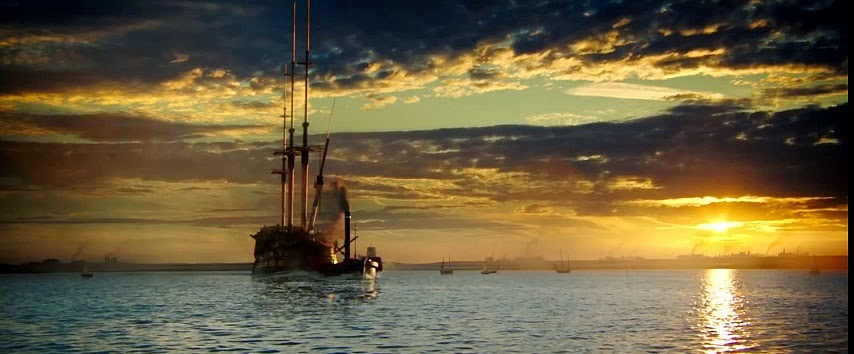
Any film about Turner almost has a moral obligation to be shot beautifully. From the opening minutes you’ll know you are in safe hands with Leigh’s regular camera-man Dick Pope. This is an astonishingly beautiful film, which takes Turner’s mastery of light as its inspiration for a series of strikingly gorgeous images. There is a reconstruction of the inspiration for The Fighting Temeraire which wouldn’t look amiss on your wall. The inspiration of Rain, Steam and Speed is extraordinary. At every moment the use of light and vibrant yellows echoes Turner’s dying words “The Sun is God”. One transition to Turner sketching in the Lake District captures a rocky outcrop so wonderfully that for a second I thought I was looking at a painting.

Mr Turner can be criticised as a collection of scenes – or sketches – that come together to form a film. There is no real plot, thematic or otherwise, in the film. Instead, it is designed to give us an impression of the artist, and follows the same sort of episodic, sometimes random, pattern than life itself follows. But in its intimate understanding of both creativity and the complexity of humanity, it becomes a wonderfully involving and inspiring film, beautifully shot and wonderfully directed by Leigh with a towering performance by Spall.

The Agony and the Ecstasy (1965)

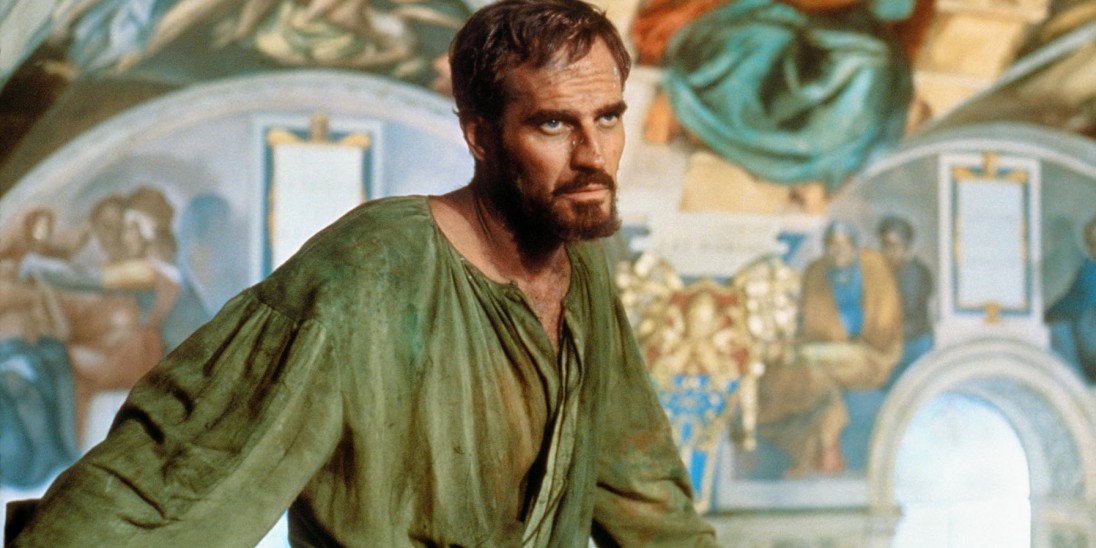
Rex Harrison and Charlton Heston debate the creation of art in The Agony and Ecstasy

Director: Carol Reed

Cast: Charlton Heston (Michelangelo Bounarroti), Rex Harrison (Pope Julius II), Diane Cilento (Contessina Antonia Romola de’Medici), Harry Andrews (Donato Bramante), Alberto Lupo (Duke of Urbino), Adolfo Celi (Giovanni de’Medici), Venantino Vanentini (Paris De Grassis), John Stacey (Giulano da Sangallo)

Call a film The Agony and the Ecstasy and you are tempting fate with the critics. Make your recurring dialogue phrase “When will you make an end?” and you are practically writing the negative headlines for them. Your enjoyment of The Agony and the Ecstasy is pretty going to be pretty much directly linked to your level of interest in Renaissance art, the Sistine Chapel and stodgy Hollywood epics. Don’t care for any of those? This probably isn’t the film for you. For me, I love the first two – and I have a terrible weak spot for the third. I know (trust me, I know) films like this aren’t that good really, but they go about their epic work with such earnestness that they always suck me in.

The film, an adaptation of a doorstop novel by Irving Stone, tells the story of Pope Julius II (Rex Harrison) commissioning Michelangelo (Charlton Heston) to paint the Sistine Chapel. It’s a job which Julius expects will be done and dusted in a couple of months: instead it takes almost four years (and that’s just the ceiling, the film doesn’t even cover the artist moving on to The Last Judgement!). Rejecting the original concept, Michelangelo decides to turn fresco painting on its head: and so one of the greatest masterpieces of all time is born.

The Agony and the Ecstasy lost a bucket load of money (despite this is hoovered up five Oscar nominations, most of which focused on its strengths, above all, it’s 1:1 recreation of the Sistine Chapel which is progressively covered in paint as the film progresses). It more often than not tips somewhere between documentary and reverence of God, the Church, the Artist or all three at once. The first 12 minutes of the film is literally a documentary, a run-down of the artist’s career with mid-Atlantic voice-over and reverential visual slide-show of the artist’s greatest hits.

Once the action starts, all too often the film heads into “men in tights” territory, a stilted, personality-free Hollywood version of the Renaissance, all primary colours and dubbed European actors. Directing, with a smooth emptiness, is Carol Reed. Remember when Reed made films like The Third Man and Odd Man Out? How could the man who made films as original and dynamic as those close out his career making such middle-of-the-road fare as this and Oscar-winner Oliver? Reed delivers by-the-numbers. From swelling chords of Alex North’s well-judged score at our first sight of the interior of the (unpainted) Sistine chapel to the pristine pictorial pleasantry of the marble quarry Michelangelo retreats to, there is not a single unique or interesting shot in the film.

The closest the film gets to visual dynamism is the half-way point as Michelangelo heads to the mountains for inspiration, to see the clouds form themselves into (what we recognise as) the Creation fresco from the chapel. But then perhaps Reed reckoned he couldn’t bring us anything as visually striking as the ceiling (and to be fair who can?). So, the film doesn’t compete.

Instead it settles down into demonstrating the mechanics of how the ceiling is completed. While you could get a good dig in here that we see a real time painting of the ceiling, in fact I felt this demonstration of how you go about transferring a design to a ceiling was fascinating. Certainly, you can see why it takes a burden on Michelangelo. The film builds some nominal drama about whether it will ever be finished: but since it’s clear Julius (who at times is a bit of a “why I oughta…” boss, frustrated but amused by a protégé’s shenanigans) and Michelangelo (tempestuous of course, as artists are) have no intention of not finishing it, it’s pretty manufactured. But it doesn’t matter because this is really a story of the glory of fine art – and the burdens of its creation. And on that score it’s very successful and, for all its earnestness, very effective.

Charlton Heston gives a fine performance as the great artist. While there is no hint of Michelangelo’s probable sexual flexibility – Heston claims to have done his research and decided there was no way any of that was going on in the artist’s life – we do get a lot of his prickly bitterness (his surviving correspondence is a never ending stream of bitching about money and barely a mention of art theory, a sign if ever I saw one that great artist’s need to balance the books like the rest of us). Heston’s grandness may seem at time like he is as carved out of marble as the subject’s work (after all this is the actor cast as Moses based on his physical similarity to Michelangelo’s carving), but he does convince.

Rex Harrison has the juicier part as the war-like Pope, the Prince of both the Church and Realpolitik. Harrison famously declined to grow the beard that Julius was famed for, but he captures the brusque playfulness of this man who remodelled the Papacy as a political force. His scenes carry energy and wit in a way most of the rest of the film lacks.

Overall though the film, I am well aware, is (ironically) as slow as watching paint dry. But yet, it pushes my buttons and I rather like it. Again, it’s probably a bias coming into it. And I forgive it a lot for a beautifully judged and played scene where Julius and Michelangelo study the creation fresco and its meanings for faith. It’s wonderfully written and played and carries a profound spiritual intellect. This is when the film comes to life – it’s gives serious space to proper discussions on questions of art and faith, which is often rewarding.

Sure, it sits within a film that is often dry and old-fashioned. But when it zeroes in on the painting itself: how it came about, its inspiration and its meaning – it carries a real impact. It’s a flawed film: but I find myself with a very soft spot for it.

Moulin Rouge (1952)

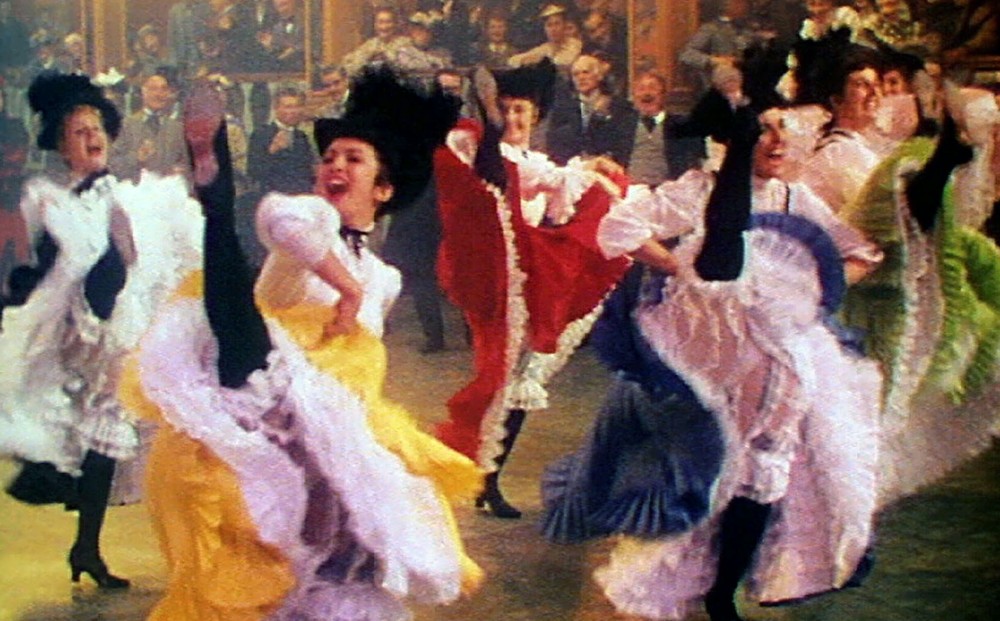
Dancers a go-go in John Huston’s Moulin Rouge (not that one!)

Director: John Huston

Cast: José Ferrer (Henri de Toulouse-Lautrec/Comte Alphonse de Toulouse-Lautrec), Zsa Zsa Gabor (Jane Avril), Suzanne Flon (Myriamme Hyam), Claude Nollier (Comtess de Toulouse-Lautrec), Katherine Kath (La Goule), Muriel Smith (Aicha), Colette Marchand (Marie Charlot), Georges Lannes (Sgt Patou), Theodore Bikel (King Milan IV), Peter Cushing (Marcel de la Voisier), Christopher Lee (Georges Seurat)

John Huston’s biography of Toulouse-Lautrec is less well known than its exclamation marked name-sake. It would be easy to say there is little in common, beyond the name and setting, between Huston’s film and Luhrmann’s operatic jukebox musical. But that’s to overlook the sprightly and confident shooting that Huston gives many of the scenes in the Moulin Rouge, and the mood of depression and corruption that underlies all the glamour of the club. These are two films very much drinking from the same well – even if the aesthetic and style of both are drastically different.

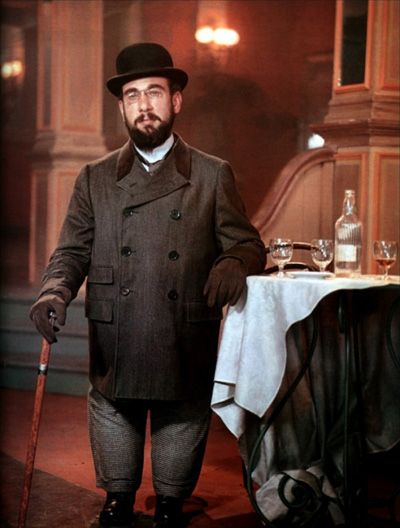
This artist biography focuses mostly on the last decade of Toulouse-Lautrec’s life. Played by José Ferrer (who also does double duty as the artist’s patrician father), it’s an exploration of the self-loathing and depression that drives the artist and funnels itself into his art. Art which is bold, animated with strikingly unique use of colours and movement. It’s all very different from the more timid, self-conscious crippled artist, the growth of whose legs was arrested after an accident in his childhood. Huston’s film front-and-centres Toulouse-Lautrec’s quest for love, but it has enough to say about the rest of its subject’s life.

Similar to his later work on Moby Dick, Huston aimed for a very particular look for his film, inspired by the colours used in the artwork of its subject. Shooting in Technicolour – and much to the objection of that company, who believed all films should showpiece it’s particularly striking bold colours rather than the muted colours Lautrec at times used – he manages to assemble a picture that feels like it completely captures not only the style of the artist, but also captures something of the more grimy and seedy side of the Parisian streets he walked. There is a neat little scene in the middle of the film where Lautrec argues with a printer over mixing his own specialised colours, rather than the more traditional colours he works with. Hard not to see that as a commentary on Huston’s own struggles with Technicolour.

It gives the film though its own very distinctive look, in which Huston uses a number of cinematic approaches that really capture the vibrancy of the Moulin Rouge. The opening scenes, that showcase a flashy can-can dance at the club is shot with immediacy, the camera roving in amongst the dancers, throwing us into the atmosphere and excitement of this ground-breaking night club. Alongside which – within the confines of the Hay’s Code – we get a sense of the sexuality of the nightclub, captured in the tempestuous clashes between the dancers and the pettiness and suddenness of feuds that spring up over every subject matter.

The film doesn’t quite continue all this vibrancy in the rest of its length as it focuses more on Lautrec’s own personal life. José Ferrer, always a distantly patrician actor, is perhaps a little too stilted to really invest us in the emotional pain of a man who didn’t believe he was worth loving. However his commitment to playing the part physically can’t be faulted. To play the diminutive Lautrec, Ferrer wore a contraption that folded his lower legs up behind him (he could only wear it for about 15 minutes before he had to restore the circulation to his legs), wearing this even in scenes he could not be seen full length, so as to get the posture of Lautrec correct. It’s a shame that Ferrer’s slightly reserved manner and precision leaves you feeling like the character is being studied at arms length rather than up-close and personally.

This affects slightly the focus on romance that the film takes – art gets its place, but the style very much looks at these in context of romantic struggles. Lautrec is presented as man convinced of his own ugliness and the barrier of his disability, who could never find a woman who would love him. This drew him, it seems, either towards destructive relationships (in particular with a ‘prostitute’ – not that you would know thanks to the Hays Code – played with an Oscar-nominated richness by Colette Marchand) or to relationships he convinced himself could only be hopeless, platonic obsessions (Suzanne Flon as an art-lover who only the most self-loathing of men couldn’t tell is devoted to Lautrec).

The film interestingly rather misses a sense of fun that you might expect from a nightclub scene. Lautrec is of course miserable for most of his life, self-medicating his physical pain and depression with drink. His parents are either guilty at the accident that crippled him, or frustrated at his choice to spend his life painting the dancers of the Parisian night-life. Huston does get a great sense of the compulsion of the artist – Lautrec is rarely seen not sketching something – and his film is very successful at capturing the loneliness that can accompany art.

If the film does sometimes become a slightly old-fashioned a-to-b story of an artist and his inspiration, it counter-balances this with the flashes of creativity and vibrancy Huston brings to the film. Huston was himself critical of the film in the future, thinking it a missed opportunity – I would suppose due to the general lack of sex in a story set in an environment soaked in it – but working within the limitations he had, it’s a fine piece of work. While you could wish for a slightly more engaging lead performance, it certainly works very effectively to bring its setting and story to life.

Never Look Away (2019)

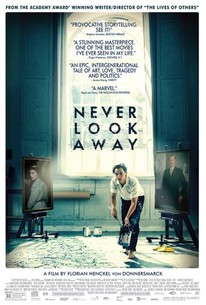
Tom Schilling excels in this shadowy Gerhard Richter biography Never Look Away

Director: Florian Henckel von Donnersmarck

Cast: Tom Schilling (Kurt Barnet), Sebastian Koch (Professor Carl Seeband), Paula Beer (Ellie Seeband), Saskia Rosendahl (Elisabeth May), Oliver Masucci (Professor Antonius van Verten), Ina Weisse (Martha Seeband), Rainer Bock (Dr Burghart Kroll), Hanno Koffler (Gunther Presueer)

In 2006 The Lives of Others propelled Florian Henckel von Donnersmarck to the fore-front of the European Arts Film circle. His follow-up, the Depp/Jolie starrer The Tourist was a disaster that sent him spiralling back. Now von Donnersmarck returns to German cinema – and the travails and divides of a country split for a large chunk of the 20th century into East and West – with Never Look Away a film heavily inspired by the life and work of famed German artist Gerhard Richter, with splashes of German history and it’s difficult relationship with both fascism and socialism.

Kurt Barnett is an artist growing up in Nazi Germany, living outside Dresden after his father lost his teaching job due to his reluctance to join the party. Barnett’s family is hit hard during the way – his two young uncles are killed, Dresden (and everyone he knows) is destroyed. Worst of all his inspirational artistic sister Elisabeth (Saskia Rosendahl) is diagnosed with schizophrenia and is quietly killed during the Nazi programme of removing “unsuitable elements” from German society. That decision is taken by Professor Carl Seeband (Sebastian Koch), a natural survivor and amoral egotist who later makes the adjustment smoothly to living in the Socialist East. Barnett (played by Tom Schilling as a young man) meanwhile goes to East German art school, falling in love with a fashion student Ellie (Paula Beer), but struggling to find his own voice in an East Germany where all art must serve a social purpose. Will escape to the West bring freedom of thought?

Never Look Away is a mantra in the film, in an epic quasi-biography that explores the dark underbelly of German history, filtering the countries struggles to find some sort of freedom through the world of Art. It also has an unflinching eye for the losses and horrors of Nazi Germany, with the film never turning away from the brutal impact of the bombings of Dresden, the death of Kurt’s uncles on the Eastern front and (toughest of all) the shuffling of his tragic aunt into a gas chamber. 

But the film also works so well as a commentary on the silent repression Germany has suffered throughout the twentieth century, from the fear of stepping out of line with a contrary opinion in Nazi Germany, to the repression of individualist thought under Communist East Germany. “Never Look Away” are the last words Elisabeth speaks to Kurt – and it’s what fuels his eventual move towards Art that comments on reality with its blurred reproductions of personal snapshots and images (see Gerard Richter’s art). 

Von Donnersmarck uses art as a neat commentary for these ideas by showing how, in each era of Germany, the comments and views of art reflect each other. The film opens with the young Kurt and Elisabeth taking a tour around a Nazi “Degenerate Art” exhibition in Dresden, which suggests the likes of Picasso and Dali are either insane, moral degenerates, perverts or all three for their failure to create art that properly reflects nature. Later at the East German art school, the same artists are denounced again for failing to carry a proper and correct social message in their work. The tables are turned in the free Germany of the 1960s, where Modern exhibitionist art is all the rage, and paint and canvas is so passeas to be almost vulgar. Three different political spectrums, three very different dictates from society about what constitutes art.

How’s a man to find himself, and his personal expression as an artist, in the middle of this? Kurt is a gifted painter and drawer, but in every era his work is moved towards what is expected of him. As a boy in Germany he hides his impressionist sketches. In East Germany he becomes a famous painter of socialist images and murals. In the art college he tries to shift his style into the experimental alleyways of his peers – work that his professor (played with a neat mixture of pretension and earnestness by Oliver Masucci) recognises his not his true voice. It takes putting his own spin on images and memories of the past – of careful reproductions than subtly blurred to reflect our own imperfect memories (a visual trick von Donnersmarck prepares us for throughout the film with Barnett watching things move in and out of focus as they happen before him) works perfectly.

The film throws together this mix of art and German history with a thick streak of melodrama, which should be ridiculous but basically seems to work. Contrivance and coincidence bring together the fates of Barnett and Professor Seeband, the man responsible for the death of his aunt, and bounds their lives together forever. It’s a narrative development that could make you groan, but somehow the film gets away with it. It probably mostly works because Sebastian Koch is excellent as Seebold, even if the man is so base, selfish, lacking in shame and principle and coldly, uncaringly ruthless that he feels at time almost like a cartoon. No deed of greed and bastardy is beneath him, and the score frequently underlines his villiany with a series of unsubtle cues. 

But it works because Koch’s Seebold is also a marvellous commentary on the flexibility of so many in Germany. Seamlessly he turns himself from proud SS sterilisation and termination doctor, into proud East German Socialist leader and finally into centre-piece of West German society as a leading surgeon. Just as art is bent and shifted, so Seebold represents how people will allow their lives and principles to adapt and shift with all the rest. It’s worth a bit of melodrama and some plot twists that lean on the unbelievable (and are based far less on reality than most of Richter’s life). 

But the sections that focus on Barnet/Richter are just as fine, and von Donnersmarck brings energy, excitement and joy to the act of art creation in the way few other film makers have done. Tom Schilling continues his excellent run of roles, as a passionate free-thinker, yearning to have the chance to find his own voice and Paula Beer is just as good as his wife, whose artistic soul is just as strong, even if she does get a (albeit moving) can-I-have-babies plotline. The relationship between these two is striking for its loving affection and genuine warmth. And it gives the film a real heart.

Never Look Away isn’t perfect, but in its marvellous expression of the joys of artistic creation and the way that art is bent and used for the needs of government and society, it has a lot to say. With excellent performances across the board – Schilling, Koch and Beer are fabulous – it is also a fascinating commentary on the schizophrenic nature of Germany itself throughout much of the twentieth century. Melodramatic and obvious at times – and even I will say overlong at nearly three hours – a thudding mix at times of points made with too much force, it’s also a marvellous exploration of art and artists. Von Donnersmarck is back.

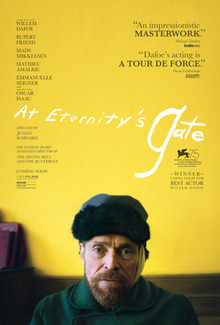
At Eternity's Gate (2018)

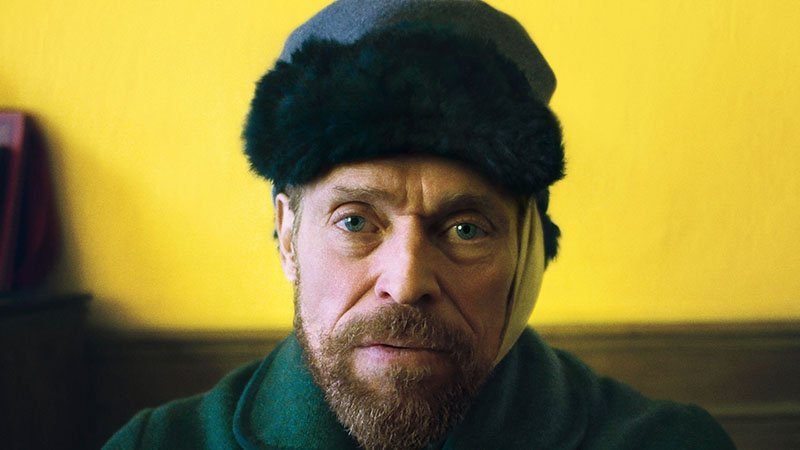
Willem Dafoe is the great Van Gogh standing At Eternity’s Gate

Director: Julian Schnabel

Cast: Willem Dafoe (Vincent van Gogh), Rupert Friend (Theo van Gogh), Oscar Isaac (Paul Gauguin), Mads Mikkelsen (Priest), Mathieu Amalric (Dr Paul Gachet), Emmanuelle Seigner (Woman from Arles/Madame Ginoux), Niels Arestup (Madman), Vladimir Consigny (Dr Felix Ray), Amira Casar (Johanna von Gogh-Bonger)

Vincent van Gogh has a constant fascination for film-makers. Perhaps it’s because, as this film suggests, he sat permanently “at eternity’s gate”, painting for those yet to be born. It’s well known van Gogh only found success, fame and artistic recognition after his death. The sad tragedy of his life – he was a deeply troubled man, who struggled profoundly with depression – has been fuel for many films with van Gogh played by actors ranging from Kirk Douglas to Benedict Cumberbatch. Now Willem Dafoe – a very close physical match to the painter (even if he is almost 25 years older than van Gogh at his death) – takes the role on in artist Julian Schnabel’s film.

You’d expect Schnabel, a renowned artist and film-maker, to create a film that offers insight and even revelations on van Gogh and the process of art creation. It’s a shame then that At Eternity’s Gate doesn’t quite succeed in doing this. Schnabel stated in interviews that the existence of the Kirk Douglas/Vincente Minnelli Lust for Life (a far more conventional narrative retelling of van Gogh’s life spliced with melodrama) removed the need for him to worry about telling the clear facts of van Gogh’s life. While I guess it’s true that the basic litany of van Gogh’s final years (which the film focuses on) of Arles-Gauguin row-ear removal-asylum-Gachet-suicide is pretty familiar to many people (and I suspect everyone likely to see this film!), Schnabel’s film drains the drama from this.

Instead Schnabel offers up a film straining at complexity, but which feels rather slight and unsatisfactory. It only seems to scratch the surface of art and the thinking behind van Gogh’s creations. In fact, whenever the film actually tries to talk about art it largely comes across as stodgy and lumpen. Oscar Isaac in particular is saddled with several speeches and dialogue exchanges on art that fall lamely to the floor. Van Gogh gets a few more poetic contributions, but these are few and far between and essentially seem to sum up to a wistful love of nature and the beauty around us.

On top of this, I don’t feel like I get a real understanding or insight in this film into van Gogh’s inner life. In 2011 an episode of Doctor Who written by Richard Curtis made profound and moving material out of Van Gogh’s depression in the episode Vincent and the Doctor. The pain of inner turmoil, the volatility of depression, the way joy can switch to anger and suicidal self-loathing as if a switch has been flicked – it’s all there in that episode. It’s a side of van Gogh that seems missing in this film. The demons, for want of a better word, are missing. 

The film indeed averts its eyes from van Gogh’s bleakest moments. The arguments with Gauguin happen mostly off-screen – I guess the film is placing us in van Gogh’s shoes in that it’s as much a surprise to us that Gauguin announces he can’t bear it any more as it clearly was to van Gogh. The ear cutting is related to us by a calmer van Gogh days later. The film also follows the line of the recent 2011 biography of van Gogh in believing his death was not suicide but manslaughter, a theory that I’m not sure I can really support (since it seems to be founded on a lack of understanding about how the depressed can seem fine one day and then suicidal the next) so maybe this is all intentional.

What the film does do well is get a sense of van Gogh as a soulful and gentle man. Willem Dafoe, as well as being a remarkable physical match for van Gogh, is also an actor made for both suffering and imbalance. After a career of martyrs, the intense, the unhinged, the mutilated and Jesus Christ, his face seems lined already with the cares of the world. Dafoe is very good here, soulful and vulnerable but with a monomania for painting under the surface that guides all his actions. But he has a wistful, childlike tenderness to him and a sense of a gentle man adrift in a world he can’t understand.

It’s a shame the film doesn’t have slightly more to it. Visually it gets a good sense of van Gogh’s striking colours. But I was put off by Schnabel’s addiction to using a wild hand-held camera. Often sloshing woozily around the frame, the camerawork is clearly an attempt to capture the urgent brush strokes and movement of van Gogh’s painting in its visual style – like his paintings it never sits still. It’s also perhaps an attempt to capture the mania of van Gogh’s inner life: it’s noticeable the camera work only calms when van Gogh himself is calm (i.e. painting). But it’s still not exactly easy to watch – like reading a book on the upper deck of a ship during some particularly choppy seas.

At Eternity’s Gate feels like it should be a better film than it is. Irritating camera work aside, it is well made and it has a fine performance at its centre. There are some decent cameos from the other performers – best of all Mads Mikkelsen as a kindly priest who gently, and with great sadness, breaks it to van Gogh that his work is clearly rubbish – but it never really feels like it gives any real insight into either van Gogh or his artwork. For all its panache, it’s strangely empty.

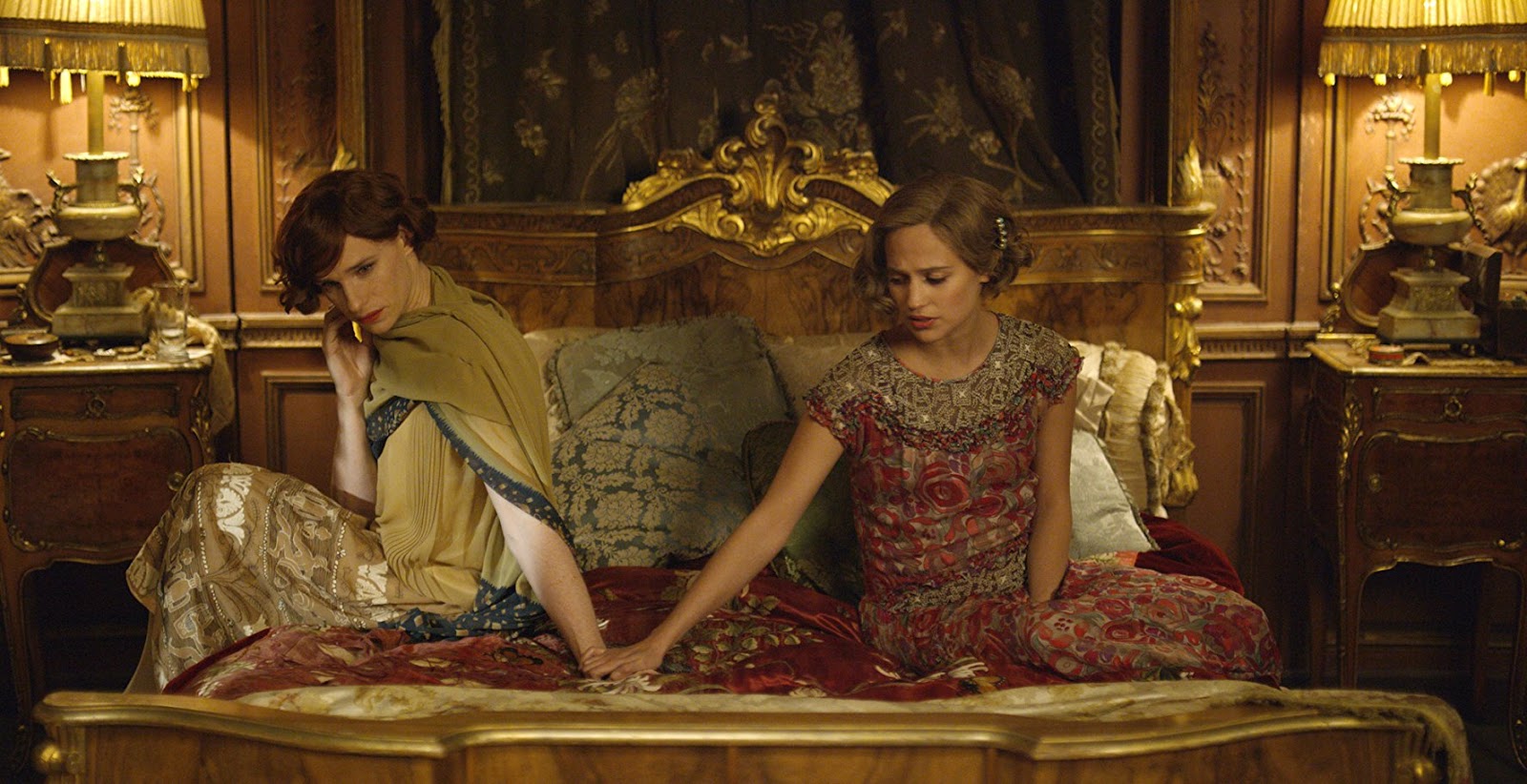
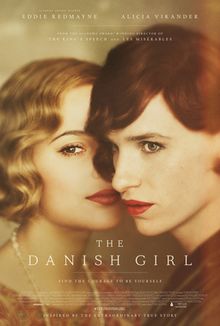
The Danish Girl (2015)

Eddie Redmayne and Alicia Vikander struggle with questions of identity in the overly sentimental The Danish Girl

Director: Tom Hooper

Cast: Eddie Redmayne (Einar Wegener/Lili Elbe), Alicia Vikander (Gerda Wegener), Matthias Schoenaerts (Hans Axgil), Ben Whishaw (Henrik Sandahl), Amber Heard (Ulla Paulson), Sebastian Koch (Dr Kurt Warnekros), Pip Torrens (Dr Jens Hexler), Nicholas Woodeson (Dr Buson), Emerald Fennell (Elsa), Adrian Schiller (Rasmussen)

Working out who you are can be a lifetime’s struggle for some people. Finding out that who you are is someone outside the bounds of what society considers normal or acceptable often calls for a special kind of bravery. That’s the kind of bravery that Einar Wegener had when he realised that he felt he was a woman, not a man. Einar became one of the first ever recipients of sex reassignment surgery, becoming Lili Elbe. It’s an inspiring true-life story, fudged in Tom Hooper’s syrupy, sentimental film.

Eddie Redmayne plays Einar/Lili, slowly realising his fascination with women’s clothing is actually part of a far larger realisation, that she identifies as woman rather than a man. Her wife, Gerda (Alicia Vikander), helps Lili explore her identity, herself journeying through pain at losing her husband to final acceptance and support as Lili begins surgery to complete her transition.

Tom Hooper’s film is shot and framed with the magnificence you expect from his previous films. Hooper’s mastery of framing not only presents people in striking contexts (he has a particular eye for positioning people artfully in a frame with fascinating walls behind them), but also uses the camera to drill into its protagonists (throwing backgrounds into soft focus) to help you begin to empathise with them. It’s a great way to build a connection with the lead characters. But the film never quite adds enough depth and real understanding to its beautiful visuals. I’m not sure it really gets inside the mind of Lili and gets a real understanding of her.

For starters, the structure of the film is confused. The main problem is that the dramatic thrust of the film is Lili realising she is a woman. The character’s emotional and psychological conflict is all bound up in struggling to accept this: the journey of the film is Lili’s internal journey to know and accept herself. Once this realisation is made the drama drains out of the film. Try as it might, it can’t make a series of operations to make complete Lili’s transition dramatically interesting. It also fails to really get inside the psychology of Lili at this point, making her feel more like an exotic, occasionally selfish, passenger through a series of treatments, rather than someone who feels like she has real dramatic thrust.

This is partly because the film splits the perspective more or less equally between Lili and Gerda. While the film follows the passage of Lili realising who she is, if anything more of its empathy and understanding (and interest) is invested in how Gerda reacts to this change. You can see the logic of some complaints that the story of this leading LGBT figure is filtered through the perceptions of their heterosexual wife. Gerda’s emotional journey – pain, anger, rejection, sorrow, despair, acceptance and support – is what really drives the film, far more really than Lili’s realisations. 

But this slightly skewed perception is all part of a film that never quite feels true. I appreciate that Lili moved in some bohemian circles, but surely more people would have been more outraged in the 1920s and 30s by this change. The only people in the film we see reacting in any way negatively are two doctors and a pair of thugs in Paris. Other than that, far from a struggle for acceptance, people seem to fall over themselves to tell Lili how wonderful her new identity is.

The most supportive figure of all is Lili’s childhood friend, Hans Axgil (played very well by Mattias Schoenaerts) – who’s the centrepiece of another major issue with the film. This wonderfully warm and kind man befriends and supports both Lili and Gerda. I left the film wanting to find out what happened in real life to this man who seemed too good to be true. Guess what: he was literally too good to be true. He didn’t exist. In fact no one in the film existed other than Lili and Gerda. Furthermore the timeline (and many of the events) of the film have been changed, as have some of the facts around their relationship. For a film pushing itself as an inspiring “true story” this feels more than a little bit like a cop out.

This is part of the film simply trying too hard. From lingering shots of Einar longingly fingering women’s clothing early in the film, to the syrupy music sore that hammers home as many of the emotional beats of the film as possible, it’s a film that wants to do things as obviously as possible for the audience. It wears its “importance” very heavily: you can tell all involved believed that the project they were working on was going to have an impact on viewers across the world.

Not that we should detract at all from two lead performances. Redmayne immerses himself utterly in the role and performs with sensitivity, giving Lili an early sense of fear that develops into an increasingly relaxed and confident determination. Vikander is equally good, running the full gamut of emotions: she probably is the movie’s heart (making her supporting actress Oscar feel even more like character fraud). Two fabulous performances – and plenty of striking visuals, well directed – but it’s a film that really never quite feels like it gets into the heart of its lead, and always feels like it’s pushing you into feeling an emotional reaction, straining for you to shed tears, rather than letting them come naturally.

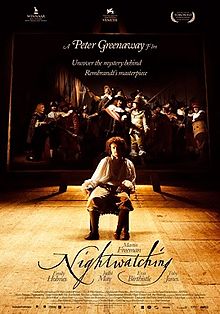
Nightwatching (2007)

Martin Freeman is the great artist Rembrandt van Rijn in this bizarre part drama part art lecture

Director: Peter Greenaway

Cast: Martin Freeman (Rembrandt), Eva Birthistle (Saskia van uylenburg), Jodhi May (Geertje Dircx), Emily Holmes (Hendrickje Stoffels), Toby Jones (Gerard Dou), Jonathan Holmes (Ferdinand Bol), Natalie Press (Marieka), Fiona O’Shaughnessy (Marita), Adrian Lukis (Frans Banning Cocq), Adam Kotz (Willem van Ruytenburch), Michael Culkin (Herman Wormskerck)

There are few artists who have such a distinctive visual style as Rembrandt van Rijn, perhaps the greatest of the Dutch masters. And there are few filmmakers with such distinctive style as Peter Greenaway. So this film is a sort of perfect marriage: Greenaway, the man who claims most of the world is visually illiterate and incapable of understanding the grace and depth of visual images (be they film or painting), taking the secret language of Rembrandt’s paintings.

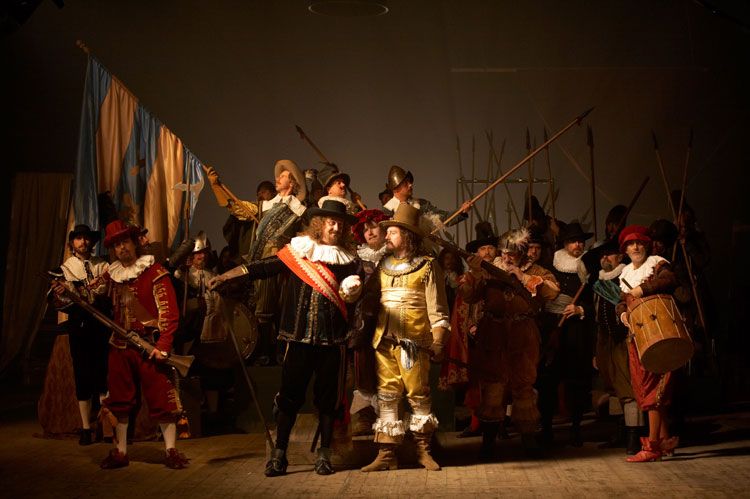
Rembrandt (Martin Freeman) is hired to paint the Militia Company of District II. There is, however, a conspiracy in the company. Captain Hasselberg (Andrzek Seweryn), the original commissioner of the painting, is killed, seemingly in an accident, and replaced by Frans Banning Cocq (Adrian Lukis) and his lickspittle deputy Willem van Ruytenburch (Adam Kotz). Rembrandt believes the accident was in fact murder, removing Hasselberg so that the other members of the militia can profit in a financial deal with the British government (I won’t go into the details). Alongside this, the film also looks at the personal life of Rembrandt and his relationship with his wife Saskia (Eva Birthistle) and, after her death, his maids and mistresses, Geertje (Jodhi May) and Hendrickhe Stoffels (Emily Holmes).

Peter Greenaway is a visual stylist that’s for sure. The film takes place (apart from a few outdoor sequences in a forest) in a sort of representative set that looks a bit like a combination of a theatre stage and the bare framework of a Dutch interior painting. The camera frequently uses the width of the frame to squeeze in full-body shots of its characters, and the width and depth of the room, to try and replicate as much as possible the look and feel of these artworks. An early discussion of colour (and how to describe it) is illustrated by Geertje opening curtains in a representation of Rembrandt’s bedroom, with each colour (red-yellow-blue) in turn flooding the room from the open windows. The film looks distinctive and impressive, the costume design is meticulously researched, and the artful framing to ape the conventions and styles of Rembrandt’s painting is extremely well done.

What is less well done is the actual story itself, which is largely inert and frequently dull, and takes ages to outline what is, to be honest, a not particularly interesting conspiracy. It then intercuts this with scenes and moments from Rembrandt’s domestic life, but never ties the two of these together into something coherent. Too immersed in the details of the case to be the sort of dream-cum-fantasy of previous Greenaway films like The Draughtman’s Contract, and too preoccupied with the director’s narrative laxity to become a proper character study or piece of investigative fiction, the film rather uncomfortably falls between two stools becoming neither one thing or the other.

In fact, you almost sense Greenaway’s heart wasn’t really in it, that he really wanted to make Rembrandt J’Accuse, the companion art lecture illustrated with moments from this film, which really goes to town on his conspiracy theory. The details of the conspiracy (extremely hard to follow here) are at least easier to follow in Rembrandt J’Accuse, where they make a batty but enjoyable Dan Brownish argument – even if it is based on hands being drawn “without commitment” and elastic interpretations of visual language. To be honest, for all that Rembrandt J’Accuse is a bit odd – and that Peter Greenaway has an air of an ultra-pretentious Johnny Ball in his addresses to the camera – it actually makes a far more compelling piece of cinema than the narrative film it sits alongside.

Which is a shame because, as well as the design, there is a lot of good stuff here, not least in the performance of Martin Freeman. Cinema and TV’s eternal nice-guy gets to stretch himself fantastically as an electric, compelling genius overflowing with passion, ideas, intelligence and a chippy (frequently foul mouthed) confidence, mixed with an insatiable sex drive and nose-thumbing defiance. Freeman really gets the sense of a complex, earthy, fiery man who knows he is the smartest man in the room, and is extremely cocky with it – but also has a keen sense of justice and decency. It’s about a million miles away from Tim or Bilbo, and a big reminder that he is a hell of a performer.

Put Freeman in with the thrilling design and painterly flourishes of the film, and you’ve got sections that are really worth watching. Eva Birthistle is very good as his intelligent and articulate wife, as is Johdi May as his earthy, ill-tempered, sensual lover. Nathalie Press is heart-breaking as an illegitimate girl with a tragic life. Adrian Lukis is particularly smarmy and vile as the head of the militia. In fact, most of the performances are great.

It’s just the story is not. Moments of investigation are just building into something logical and coherent when they get interrupted by straight-to-camera addresses (very odd) from the members of the Rembrandt household explaining their personal situations. Just as we start to get invested in the loves of Rembrandt, we get thrown back into the dull conspiracy. When the two overlap, neither is really served. The story frankly isn’t interesting enough. That’s even before you have to wade through the inevitable Greenaway penchant for including as much full-frontal nudity as possible (Freeman and May in particular) and graphic sex in multiple positions and orifices. I mean, I get it, Rembrandt was a lusty guy but do we need to keep seeing it?

Nightwatching is a bizarre oddity – a vehicle for a commanding lead performance, with an actor cast way against type, that never decides whether it is some sort of biography of an artist or a secret-history-expose of a conspiracy forgotten by time. As always with conspiracy theories you suspect the obvious-but-dull is probably the truth – Rembrandt delivered a painting that was so radically different from the dull line-up paintings of this genre that it shook up the art world (not in a good way) and then he fell out of fashion, didn’t have a good understanding of money, and went bankrupt, rather than being destroyed by a shadowy Amsterdam cabal. Greenaway is so in love with his theories – and his usual lusty and psychological obsessions – that he ends up with something that is neither a drama or an art lecture but somewhere in the middle with the worst aspects of both.

Loving Vincent (2017)

Douglas Booth becomes a painting in the unique Loving Vincent

Director: Doreta Kobiela, Hugh Welchman

Cast: Douglas Booth (Armand Roulin), Jerome Flynn (Paul Gachet), Saoirse Ronan (Marguerite Gachet), Helen McCrory (Louise Chevalier), Chris O’Dowd (Joseph Roulin), John Sessions (Père Tanguy), Eleanor Tomlinson (Adeline Ravoux), Aidan Turner (Boatman), Robert Gulaczyk (Vincent van Gogh)

Now this is something very different. It’s a common turn of phrase to praise a well-photographed film by saying every frame looks like a painting. Well Loving Vincent is a film where every single frame is literally a painting. A beautifully painted pastiche collection of van Goghs, painted over a combination of motion capture and photographs of real locations. And, as you would expect, it is beautiful. 

The film covers events year after the suicide of Vincent van Gogh (Robert Gulaczyk). Armand Roulin (Douglas Booth) tries to deliver van Gogh’s last letter to his brother Theo. Roulin’s father Joseph (Chris O’Dowd) is also concerned that there is more to the death than meets the eye, as van Gogh had written to him that all was well in his life. Roulin travels first to Paris and then to Auvers-sur-Oise, where van Gogh spent his final days, talking to those who knew him, including his landlady Adeline Ravoux (Eleanor Tomlinson), his art supplier Père Tanguy (John Sessions), the daughter of his doctor Marguerite (Saoirse Ronan) and finally Dr Gachet (Jerome Flynn) himself. 

Loving Vincent looks simply beautiful. Its quality is astonishing. The film was shot on green screen with actors. Van Gogh’s paintings were then overlaid as backgrounds for the action. The film was carefully edited, then every frame in the final film was turned into a single hand painting – with real paint. 65,000 hand-painted frames. It’s astonishing – you’ve never seen anything like this before. The style, the homages to van Gogh, the respect and craft behind reproducing his distinctive look – it’s marvellous. Every single image in the film demands you linger upon it and soak it in.

I simply haven’t ever seen a film like this before. I can’t imagine any film like this being made again (for starters it took years to make). It demands to be seen if you have any interest in art or any interest in cinema as a visual artform. It’s so impressively done, you start falling in love with its artistry. It’s also got a poetic visual beauty to it. The flashbacks showing van Gogh’s last few days are put together with a black-and-white pencil-drawn style, which contrasts beautifully with the primary colours of the present day. The film walks a brilliant tightrope line between “real” and dreamlike wonder – final shots of van Gogh or sequences of Roulin dreaming feel like real visual expressions of inner thoughts in their greater expressionist vibrancy.

If there is a weakness to the film, it is that (whisper it) there isn’t much actually to it once you look past the visuals. It’s truly unique in look and feel but the story it delivers is fairly traditional and even (at times) a little flat. Despite being soaked in van Gogh I’m not sure you learn too much about him or his art from the film, and the film shies away from its more interesting topics. The dialogue or plotting rarely ventures above the average.

Perhaps one of the most interesting themes of the film is the struggle of the characters to understand and appreciate the difficulties of depression: that suffers can be optimistic one minute, and consumed with world-ending self-loathing the next. It would have been more interesting if the film had engaged more with this theme, rather than trying to build a rather flat murder mystery around van Gogh’s death. It also would have felt more true to the actual struggles of the artist – crikey, this material was spun out into an excellent Doctor Who episode, which feels like it managed to get more understanding of van Gogh than this film manages.

The acting however is pretty good – Douglas Booth anchors the film every well as the nominal detective figure, struggling with his own guilt over abandoning van Gogh. Saoirse Ronan is very good as a sad love opportunity lost for van Gogh, Eleanor Tomlinson radiant as his friendly hostess, Jerome Flynn tragically guilt-ridden and envious as Dr Gachet. It may not be a film that really gives actors the opportunity to let rip, but it’s still good.

The main question over Loving Vincent is whether there is enough to it to make it more than an art experiment, or a curiosity. Plot and storyline wise it’s a very traditional, rather straightforward film, but it carries a germ of depth in there. And then the film looks so uniquely marvellous that you can’t deny it a certain place in film history. Because you won’t see anything like this again, and if you have any love for the artist or art in general, you have to check it out. Every frame is literally a painting.