Category: Ballet films

The Red Shoes (1948)

The Red Shoes (1948)

Ballet and obsession go hand-in-hand in this beautiful, triumphant film

Director: Michael Powell, Emeric Pressburger

Cast: Anton Walbrook (Boris Lermontov), Marius Goring (Julian Craster), Moria Shearer (Victoria Page), Robert Helpmann (Ivan Boleslawsky), Léonide Massine (Grischa Ljubov), Albert Bassermann (Sergei Ratov), Ludmilla Tchérine (Irina Boronskaya), Esmond Knight (Livingstone Montague), Austin Trevor (Professor Palmer), Jean Short (Terry), Gordon Litmann (Ike), Eric Berry (Dimitri)

If there was a moment when “ballet” and “obsession” became synonymous in people’s minds, it might just have been the premiere of Powell and Pressburger’s The Red Shoes. The founding text in the cult of en pointe, The Red Shoes mixes technicolour beauty and fairy-tale darkness with an elaborate meditation on the struggle to balance life and art. For many it’s the peak of The Archer’s cinematic artistry. While I don’t place it that high – I have too much fondness for the beauty of A Matter of Life and Death, enjoyment for the bonkers madness of Black Narcissus and too much respect for the pleasures of The Life and Death of Colonel Blimp – there is no arguing that this is vibrant, beautiful filmmaking, two masters firing on all cylinders.

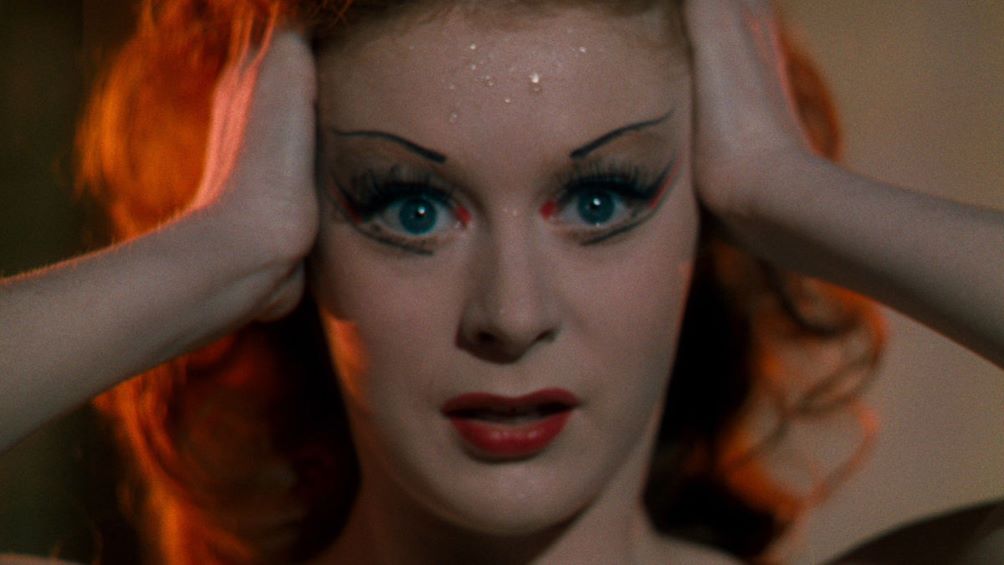
The Red Shoes is the ballet battleground for the conflicting demands of three people. Boris Lermontov (Anton Walbrook) is a Diaghilevish impresario for whom everything is secondary to art, demanding complete obedience from his protégés. Julian Craster (Marius Goring) is a gifted young composer who values life and love over art. Between them is Victoria Page (Moira Shearer), graceful once-in-a-generation ballerina talent who wants to both dedicate herself to Julian but also dance herself into legend with Boris. These three will make and break alliances on and off tour, touring Craster’s Red Shoes about ballet shoes with a mind (and dance) of their own.

On its release The Red Shoes became the most successful British film ever released in America (it even topped the end-of-year box office chart). Its popularity added even greater momentum to the wave of Hollywood musicals that turned into a tsunami. Would Gene Kelly have had the guts to end An American in Paris with a fifteen-minute ballet if Powell and Pressburger hadn’t stuck a 17 minute one in the middle of The Red Shoes first? Where The Red Shoes differs from Hollywood musicals that pirouetted in its footsteps, was it darkness and surprising bleakness, it’s clear, cold-eyed look at the limits of opportunity and the dangers of following your dream.

Because Victoria Page – played with a great deal of honesty and affecting vulnerability by professional ballet dancer Moira Shearer – is severely damaged by doing so. Inveigling her way into Lermontov’s company (despite Lermontov’s distaste at her mother’s forceful pushiness) she proves her spurs by a sensational performance in a small-scale Swan Lake at the Mercury Theatre (dancing to a recording rather than a live band) and is parachuted into a leading role in Lermontov’s productions. Vicky dreams of leaving the sort of mark few do – but she’s also human, unsuited at heart to the fierce, all-consuming obsession Lermontov expects from his stars. Shearer makes her vulnerable, gentle, lacking the force of personality to resist peer pressure.

Pressure is what Lermontov trades in. Played with a vampiric intensity by Walbrook, Lermontov is pale, Germanic and frequently retreats behind sunglasses. He commands there is no God but art and that he alone is its unquestionable high priest. He holds court in his office, where his staff come and go, rotating around his every whim and opinion. He lurks in the shadows at the rear of the theatre during rehearsals, quietly passing judgement. Vicky’s predecessor is dismissed for daring to get married. And there is the constant expectation that should he ask you for a sacrifice, it should be made in seconds.
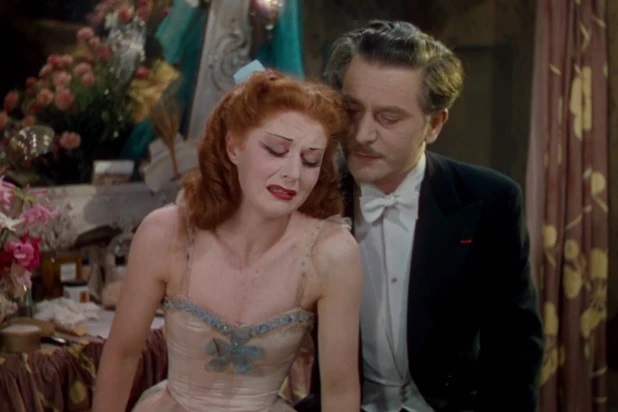
He doesn’t care for conflict. In fact, any disagreement is met with summary dismissal. It doesn’t matter how much he’s invested in you. As Julian Craster discovers to his cost. Goring does fine work as the enthusiastic young composer (even if he is clearly a little old for the role) who we are introduced to excitedly watching his professor’s new composition for Lermontov only to discover all the melodies are his. While Lermontov is reluctant to do anything to ensure Craster gains the credit for his work (a sign of his own need to control all patronage and praise) he takes Craster on, who proves himself no flash in the plan. But no amount of time invested in Craster matters when the young composer dares to fall in love with Vicky. And even worse, she dares to love him back.

Because love and a life outside of the dance isn’t part of the plan. These ideas are all captured in The Ballet of the Red Shoes, the piece Craster composes for Vicky (the preparation for which is the catalyst for their burgeoning love affair). Based on the Hans Christian Anderson tale of the dancing shoes that had a life of their own, it neatly encapsulates Vicky’s problem. As Lermontov says summing up the story, it’s the tale of shoes that at first delight a young woman and then literally dance her to death. The entire ballet, like the film, is a grim reminder of the horrific price all-sacrificing excellence in the arts can lead to.

It’s fitting that this story is placed at the heart of such a hugely beautiful and fascinating film. Powell and Pressburger’s film are virtually a by-word for technicolour beauty. Jack Cardiff excels himself here as a photographer (only a reluctance to give this Brit outsider an Oscar two years running surely prevented even his nomination). The Red Shoes is crammed with exquisite imagery, gorgeous photography and striking, unforgettable colours. Hein Heckroth’s sets are magisterial (and Oscar winning), not least in the staging of the ballot that dominates the centre of the film.

The ballet is filmed quite unlike any other dance sequences in films. Powell in many ways breaks the cardinal rules of shooting dances. The ballet is a combination of quick edits and intricate camera moves. It is defiantly non-realistic: despite the setting, it is clearly (with its use of slow motion, super-imposed images and effects like the red shoes lacing themselves onto Vicky’s feet) not a faithful theatrical staging but highly cinematic. It beautifully, subtly suggests that we are at a tipping point between reality and imagination, that Vicky’s identification with the lead role has partially shifted her perception of the whole piece into a fairy tale turned real.

Is that partly why the whole film feels like we are walking in her own personal Hans Christian Anderson story? With Julian as the romantic prince, the theatre as a mix of enchanted forest and mysterious castle – and Lermontov as the beast who may be a prince in disguise or the wolf dressed as granny. It leads into the finales tragic ending, which blurs the line between reality, imagination and trauma into an undefinable mass. Do those red shoes exert a terrible, profound power of Vicky she hardly understands? Or are they just physical representations of her own ability to choose between the demands placed on her?

The Red Shoes is in some ways a traditional melodrama, not to mention another fable of a woman being unable to have both career and family (in the way, of course, that a man can). It is also a slim story, and the ballet – impressive as it is – depends on your relationship to that artform to work or not (I confess I find it drags slightly). But it’s also full of delightful behind the scenes sequences, from rehearsals to design meetings with Albert Bassermann’s Germanic designer to Craster’s coaching of the orchestra.

Visually rapturous, its directed with a great deal of flair and sympathy from Powell who draws some superb performances from his cast of mostly professional dancers. Although Shearer has no real chemistry with Goring, her performance as Vicky is beautifully observed and highly sympathetic and The Red Shoes is blessed with a definitive performance from Walbrook who is powerfully, imposingly domineering as Lermontov. The Red Shoes may at time dress its melodramatic heart in a little too much on-the-nose artiness, but it is also a sensational, ravishing film that lingers as long in the memories as Vicky’s prodigious dance steps.

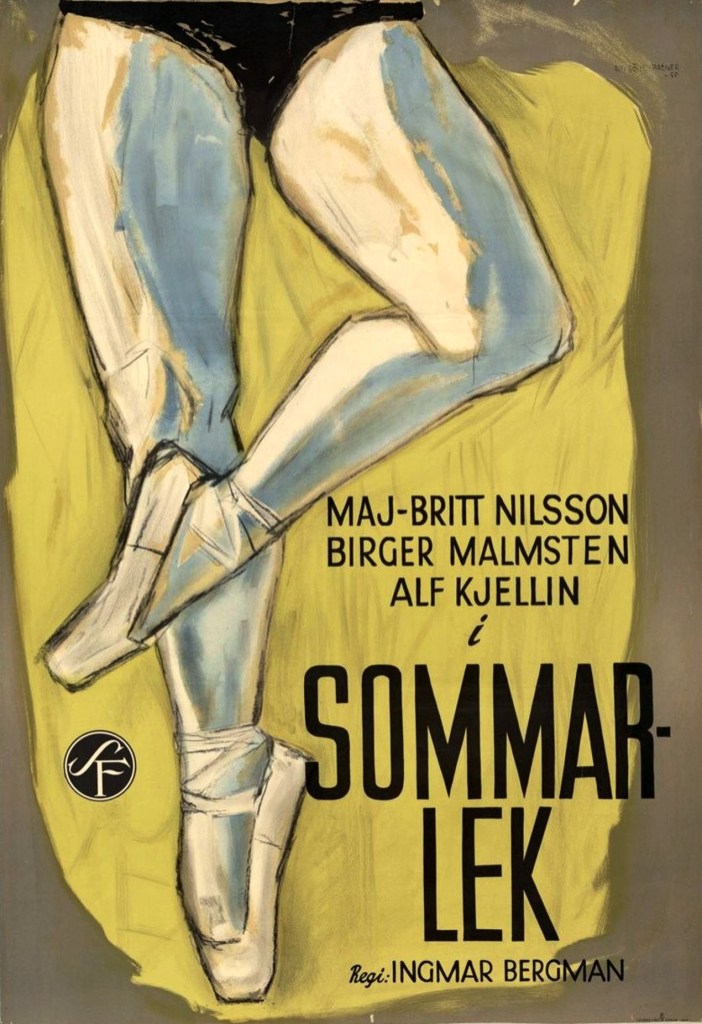
Summer Interlude (1951)

Summer Interlude (1951)

Memory, mortality, repression, grief and a little dash of hope: Bergman establishes his themes in one of his earliest film

Director: Ingmar Bergman

Cast: Maj-Britt Nilsson (Marie), Birger Malmsten (Henrik), Alf Kjellin (David Nyström), Annalisa Ericson (Kaj), Georg Funkquist (Uncle Erland), Stig Olin (Ballet Master), Mimi Pollak (Mrs. Calwagen)

On the night of the dress rehearsal for her next production, successful ballerina Marie (Maj-Britt Nilsson) receives a parcel containing an old diary. It’s thirteen years old and belonged to Henrik (Birger Malmsten), a young man she met and fell in love with while staying with family friends on a small island. The relationship was one of blissful joy – so why then does even the faintest memory of it bring out a cold panic in Marie?

The answer is of course rooted in past trauma in a film that touches on so many themes Bergman would explore in even greater detail later, it’s hard to see it as a film in its own right, like an early draft pencil sketch of a Renaissance master. Themes of memory, trauma, mortality, repression, romance and coming to terms with all of these would resurface time and again in the master’s later work. Wild Strawberries, The Seventh Seal, Face to Face, Persona, Fanny and Alexander… They all expand on Summer Interlude. For starters, Marie’s reverie on the island revolves around memories activated by eating strawberries and takes in an ageing priest exploring mortality through chess.

So, you can sort of watch Summer Interlude as a game of inspiration-spotting, keeping a tally of the Bergmanesque pre-homages. But that would do a disservice to a heartfelt, beautifully judged, hauntingly sad film which deals not only with loss but also acceptance. It’s effectively two films in one, straddling the emotionally cold present and Marie’s return to the windswept island, and the glorious summer of carefree romance she shared all that time ago, when everything was possible.

As Marie, Maj-Britt Nilsson is impressive. One of the first of Bergman’s muses – and the first major indicator of his skill and empathy for powerful female-led drama – Nilsson has the difficult job of distinguishing between two versions of her character. Her present day one is muted, restrained and hiding behind her ballet performance make-up, unable to really face the world and unhappy in her own skin. By comparison, the younger version feels like a different person: vibrant, hopeful, excited and youthful. And besotted with Birger Malmsten’s boyish and delightful Henrik, an impulsive but engaging kid.

The flashback to their romance is given the sun-dabbled beauty of memory. They run across beaches and up hills, flirt in beach huts and conduct a sweet engagement ceremony. The company of the other is more than enough for both of them. Gunnar Fischer’s photography captures this with an intense, naturalistic beauty – including a gorgeous shot of a cloud across the sun while we hear the voices of Marie and Henrik below. It also makes for a wonderfully alive contrast to the more static coolness of the present, where wide-open spaces are exchanged for backstage confines.

It’s not a huge surprise to reveal that Marie and Henrik’s relationship end tragically. That after all is the mood we associate with the Gloomy Swede. But what makes the film really work is the hope and joy not only of the memory of that glorious summer – but also in the ability, thirteen years later, of Marie to consider processing it and allowing new joy into her life. To come to terms with what has happened to her and learning to love the person she is today, (literally) wiping away the defensive make-up that has kept her distant from the world.

Much of her defensiveness comes courtesy of “Uncle” Erland (a deeply unsettling Georg Funkquist), the family friend she was staying with that summer. A doctor and psychiatrist, Erland clearly has a unsuitable interest (bordering on obsession) with Marie (something all too obvious to his wife). His desire to help her deal with her tragedy is based more on an unpleasant desire for control as it is friendship. He’s one of the darker figures in Bergman, even more so because he’s so mundane in his corruption.

Memory and past trauma linger over Summer Interlude – and the influence of both is central to the film’s impact. Bergman skilfully intercuts between past and present, without ever overplaying or showing his hand. Both timelines are interspersed with little character flourishes that would be worthy of whole films (and in some cases Bergman explored those himself later!). Henrik’s geriatric aunt, a fanatical chess player, who (correctly) states she will live for decades to come. A priest dwelling on mortality. A ballet master who understands how Marie’s obsession with dancing serves to blot out any other life. A fellow dancer who muses on how long before their time is up.

These ideas are assembled though with a warmth and emotional intelligence that would become Bergman’s hallmark. It’s also a film crammed with invention: a (brief) argument with Henrik over Marie’s obsessive practice, frames her feet in constant close-up as she practices her moves: the film will end with a similar shot, this time with practice married to romance. For a film about tragedy, trauma and torturous memories, it’s surprising how optimistic it is. As Marie smiles for what seems like the first time in decades, you feel there is hope for us all.

The Turning Point (1977)

The Turning Point (1977)

Two women struggle to have it all in a film that wouldn’t have looked out of place in the 1940s

Director: Herbert Ross

Cast: Shirley MacLaine (DeeDee Rodgers), Anne Bancroft (Emma Jacklin), Tom Skerritt (Wayne Rodgers), Leslie Browne (Emilia Rodgers), Mikhail Baryshnikov (Yuri Kopeikine), Martha Scott (Adelaide), James Mitchell (Michael Cooke), Alexandra Danilova (Madame Dakharova), Anthony Zerbe (Joe “Rosie” Rosenberg), Lisa Lucas (Janina Rodgers), Antoinette Sibley (Sevilla Haslem)

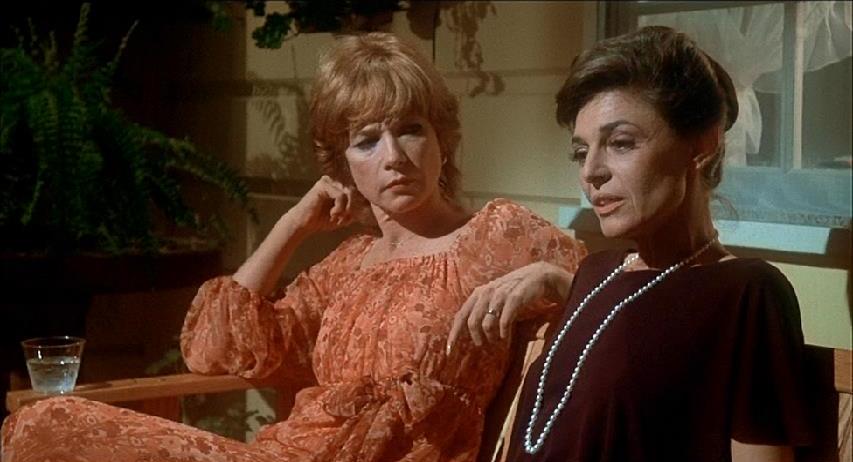
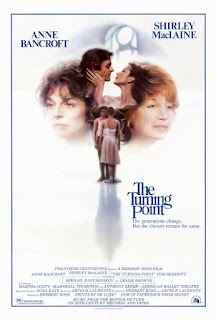
The demands of ballet are unlike any other artform there is. Complete physical and emotional commitment is needed to master it – so that means you got to make choices. The Turning Point is all about those choices. You might even call them ‘turning points’. DeeDee (Shirley MacLaine) and Emma (Anne Bancroft) were two young ballerinas who took radically different paths: DeeDee had a child with fellow dancer Wayne (Tom Skerritt) and left the profession behind; Emma remained with the company to become its prima ballerina. Now DeeDee’s teenage daughter Emilia (Leslie Browne) has joined the company: will she become the new prima ballerina? Or will she decide to focus on a relationship with playboy dancer Yuri (Mikhail Baryshnikov)? Will Emma and DeeDee resolve the tensions between them – and the conflict from their shared parental interest in Emilia?

The Turning Point was a big hit in 1977. That, and the fact that it was about (and featured a lot of) an artform as graceful as ballet seems to have convinced the Academy it merited a haul of eleven Oscar nominations. Come awards night, the film set a record for most unsuccessful nominations, converting none of them into Oscars. Perhaps that’s because, on closer inspection, The Turning Point is a fairly run-of-the-mill soap opera, that mixes in various clichés from backstage, traditional ‘women’s pictures’ and family drama to come up with a plotline that’s eventually very familiar.

For all its positioning as a female-led drama, it essentially boils down to the same old patterns that for decades such films have circled. Turns out women can’t have it all: you can have that successful career, but forever sacrifice the joy of being a mother or you can settle down and have the family but face a life of career unfulfillment. Twas ever thus, ‘tis one or t’other. Essentially the film boils down into a soapy drama about resentments and illicit backstage affairs and little more than that. It doesn’t even really double down on the fun this sort of set-up could provide, instead framing the whole thing as a very serious drama.

But then, the film was an autobiographical affair for those involved. Emma is based on Nora Kaye, who was married to the director Herbert Ross. DeeDee is based on Kaye’s childhood friend Isabel Mirrow Brown, who made the exact same choice as DeeDee, marrying a fellow dancer (just like Tom Skerritt’s character). Her daughter (and Kaye’s goddaughter) was Leslie Browne, who here plays a fictionalised version of herself based on her own experience of starting her ballet career. Characters based on Jerome Robbins, Lucia Chase and other leading figures from ballet and theatre appear. Only Mikhail Baryshnikov’s Yuri is purely fictional (although the character has more than few similarities with Baryshnikov himself, being a Soviet defector).

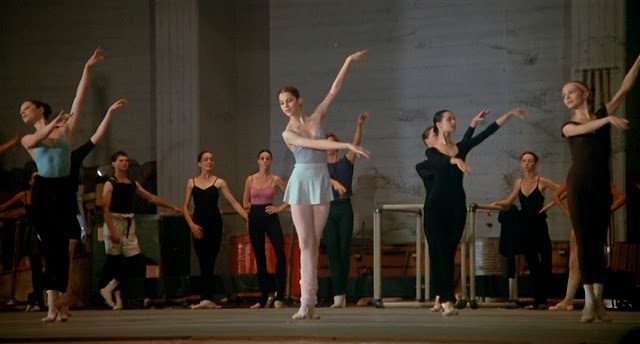
It does give an additional layer of interest to the film. Ross also mixes in a host of extended ballet sequences which showcase actual professional ballet dancers, with snippets from Swan Lake, Cinderella and The Nutcracker among others. The dancing is breath-takingly good. Not least from Baryshnikov and Browne, who are given multiple opportunities to showcase their skills. Baryshnikov in particular is at the height of his powers, a graceful artiste who moves with an astonishing finesse. Both landed Oscar nominations, one suspects largely on the basis of their dancing.

The acting is left to MacLaine and Bancroft as the leading ladies. There is something a little perverse that MacLaine, the former dancer, doesn’t so much as trot a step, while Bancroft (totally unexperienced) struts parts of Anna Karenina. However, the two actresses rip into these thinly written parts, giving them a lot more force than the film deserves. MacLaine balances motherly pride with bubbling feelings of something uncomfortably close to envy for her daughter’s success, spending time in New York trying to recapture some of her past (including a brief fling with Anthony Zerbe’s lecherous choreographer). Bancroft balances coming to terms with the end of her career as a ballerina with a growing regret that she has been left without a family. She becomes increasingly close to Emilia, mentoring her, dressing her and coaching her through a performance after relationship problems lead to Emilia getting roundly pissed in a bar before the show.

Needless to say, this unspoken squabble for ownership over Emilia – not helped by Emilia’s fury over her mother’s infidelity – only exacerbates tensions between the two women. It builds towards the film’s true climax (but unfortunately not its actual climax, as fifteen minutes remain for Emilia to be coached for her star-making performance) as the two women down drinks and exchange angry words and slaps, leading to a full blown cat fight outside the theatre. The fight later descends into cathartic giggling – and pity the two actresses who filmed it in ballroom dresses in what looks like a gale – but is acted with a great deal of attack by both, who bounce off each other (literally) hugely effectively.

But the scene is also a further confirmation that what we are really watching is a sort of high-brow family soap, that uses ballet as a backdrop for family feuds, scuffles, sexual escapades and tear-filled reunions. And it boils down to that struggle between career and family, the sort of struggle Bette Davis and Joan Crawford films were dealing with in the 1940s. Which is possibly another reason so many took to The Turning Point: even in 1977 it was an old-fashioned piece of entertainment, that did very little new.

That carries across to its whole execution: Ross competently directs the film (this was his annus mirabilis as he directed two Best Picture nominees, this and The Goodbye Girl) but really it gets all the force it has (and more than it perhaps deserves) from the two leads and a fine supporting cast (Tom Skerritt is very good as DeeDee’s laid-back, understanding father who perhaps masks secrets of his own). It’s a soap opera, solid but not spectacular, that really outside its showcase of ballet, doesn’t stand out from several other films of the same genre.

Black Swan (2010)


Natalie Portman in the intense world of ballet in Aronofsky’s crazy masterpiece Black Swan

Director:  Darren Aronofsky

Cast: Natalie Portman (Nina Sayers), Mila Kunis (Lily), Vincent Cassel (Thomas Leroy), Barbara Hershey (Erica Sayers), Winona Ryder (Beth MacIntyre), Benjamin Millepied (David Moreau), Ksenia Solo (Veronica), Kristina Anapau (Galina), Janet Montgomery (Madeline), Sebastian Stan (Andrew)

Something about ballet just makes people think of obsession. Many dancers criticised Black Swan for perpetuating myths about the dangerous psychology, the quest for perfection, the personal life imbalance connected with the all-consuming art ballet seems to be. It’s hard not to agree with them – but that doesn’t mean Black Swan isn’t unsettling, creepy and hypnotic film-making. 

Nina Sayers (Natalie Portman) is an obsessive member of the New York Ballet, focused on achieving perfection and lives a sheltered, barely adult life at home, dominated by her mother Erica (Barbara Hershey). With the forced retirement of company lead Beth McIntyre (Winona Ryder), Diagheliv-style director Thomas Leroy (Vincent Cassel) selects Nina to play the dual role lead of white and black swan in Swan Lake. Leroy feels she is perfect for the innocent white swan, but needs to work on the sensual black swan. Increasingly feeling the pressure of playing the role under the demanding Leroy – and growing increasingly preoccupied with her understudy Lily (Mila Kunis) – Nina’s fragile psyche begins to fracture.

Black Swan is a mesmerising mixture of psychological drama, melodrama, Cronenberg-style body horror, unreliable narration and immersion into a pressure-cooker world. It’s often difficult to watch, sometimes maddeningly over-blown, and overly tricksy in its intense visual style. But despite that, it’s actually compellingly watchable, an audacious tight-rope walk between style and substance that constantly feels like it’s going to get lost in its extremes but never does.

Aronofsky’s camera flies and whirls like the ballet dancers he is recording, and he creates a wonderfully dark spin on The Red Shoes. What I found particularly fascinating watching the film again after many years is how unreliable and imprecise so much of the story is. Told completely from the perspective of Nina – a woman subject to delusions, chronic social insecurity and an increasingly split psyche – it becomes clear that a lot of what we see may not be as clear-cut as we think. 

This most obviously affects our perception of Mila Kunis’ rival (or is she?) dancer Lily. How many of the interactions we see are actually happening, and how many are fantasies? With Lily becoming an alternative physical form for Nina’s projection of her own “black swan” persona (several times, Lily’s face morphs and shifts into Nina’s), we have to question virtually every appearance we see of her – and interpret her personality from the prejudiced, fearful view seen by Nina. Similarly, Barbara Hershey’s domineering mother (while undoubtedly controlling) is perhaps not the monster we see. She’s clearly 100% right in her fears for Nina’s sanity. How much of her behaviour is possessive jealousy and how much is it a protective parent who knows her daughter is a danger to herself?

Then of course we have Nina herself. Natalie Portman won every award going for her performance here, a tour de force of bravura dementedness mixed with vulnerability. Nina is a character who we only slowly realise as the film progresses is not the innocent, childlike waif she first appears, but has a much darker, more complex personality. Her “black swan” side – the darker, sexual side of her personality she is encouraged to explore – slowly expresses itself more and more as a physically. Portman clearly demonstrates the differences between the two sides of Nina’s personality. Her increasing desperation, isolation and insecurity are very effective – and the moments where she allows the “black swan” persona to control her actions are riveting.

Aronofsky explores Nina’s unbalanced mind with moments of pure body horror – although it’s grand guignol ickyness like this that probably pushed some people too far. It ties into most of the film being (quite possibly) a series of Nina’s vivid fantasies. Ballet wounds become increasingly magnified – from a broken toe nail early on, to Nina obsessively picking and scratching any wound. In one impossible to watch moment she obsessively picks off a long strip of skin from a finger wound (fortunately revealed immediately after to be fantasy). Beginning to believe she is growing wings, she obsessively scratches her back and has visions of swan flesh morphing over her body. At one point she fantasies her legs breaking into swan legs. In between this are bouts of sexual exploration – both solo and with partners – that seem increasingly unnerving. 

Aronofsky’s ballet world is one of meticulous work and back-stabbing brutality. An early sequence covers Nina’s almost ritualistic preparations of her ballet shoes. The troupe, far from supportive, seems to be ripe for bitchy debate and rivalry (although of course some of this may well be Nina’s unhinged perception). Winona Ryder has a neat cameo as a former star dancer, ruthlessly dumped for being too old. Vincent Cassel’s director is at best a domineering bully and at worst a position-abusing horndog, depending on how reliable Nina’s perspective is. It’s the setting of a melodrama, and Aronofsky has expertly mixed a Silence of the Lambs style psycho-drama and The Fly style horror.

Portman holds the film together brilliantly under Aronofsky’s distinctive direction. It’s not going to be for everyone – but Aronofsky understands ballet if nothing else, shoots it brilliantly, and when we finally see Nina fully transformed as the Black Swan dancing the final performance, the energy and controlling focus of her performance, and its beauty, really comes across (even to a ballet ignoramus like me).

Black Swan is such an off-the-wall mix of styles, and so out there in some of its visuals, story developments and characterisations, that it’s not going to please everyone. In fact, catch this on the wrong day and you’ll hate this film (and probably really, really, really hate it). But catch it at the right time and it will stick with you. But whatever your view of its gothic style and content, you’ll admire Portman’s performance, respect the craft with which it has been made, and enjoy several fine performances from Cassel, Hershey and Kunis among others. It’s weird. Very weird. But that’s not necessarily a bad thing.