Category: Biography

Maestro (2023)

Maestro (2023)

Well filmed and acted Bernstein biopic, that doesn’t really get to the heart of its subject

Director: Bradley Cooper

Cast: Carey Mulligan (Felicia Montealegre), Bradley Cooper (Leonard Bernstein), Sarah Silverman (Shirley Bernstein), Gideon Glick (Tommy Cothran), Maya Hawke (Jamie Bernstein), Matt Bomer (David Oppenheim), Vincenzo Amato (Bruco Zirato), Michael Urie (Jerry Robbins), Brian Klugman (Aaron Copland), Zachary Booth (Mendy Wager)

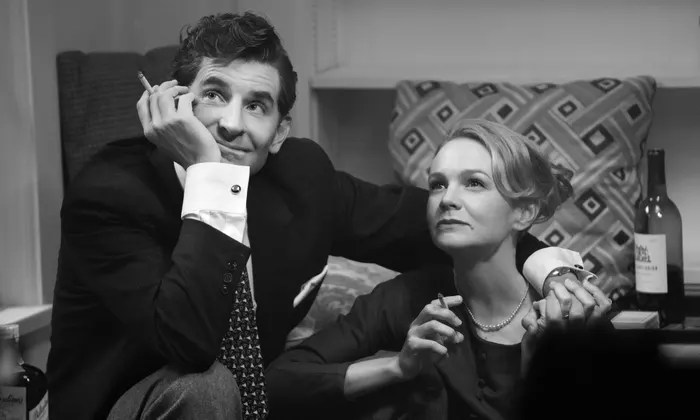
You can’t fault his ambition. In bringing the family life of legendary composer, conductor and cultural icon Leonard Bernstein to the screen, Bradley Cooper pulls out all the stops in a medley of inventive staging mixed with single shot trust in actors. Maestro is, in many ways, a perfect capturing of Bernstein: dazzling, giddy film-making that never lets you really peek into its subject’s soul. It’s a hugely impressive sophomore effort, but not quite fully satisfying as a film.

It opens with the life-changing night in 1943 when a 25-year-old Leonard Bernstein (Bradley Cooper) stands in (with no rehearsal) to conduct the New York Philharmonic at Carnegie Hall for a packed crowd and millions listening on the radio. From there, Bernstein never stops his ascent, becoming one of the world’s leading conductors and a composer who triumphs in every genre. He also marries successful actress Felicia Montealegre (Carey Mulligan), in a marriage full of mutual love and support. But Bernstein is the epicentre of his own fame, whose primary sexual attraction is to men. Over the decades, his marriage bends, fractures and reforms as Bernstein’s numerous affairs and party-filled lifestyle increasingly alienate the loyal Felicia.

Maestro is shot with all the zest and energy Bernstein himself was full of. Cooper keeps the pace the brisk and frequently transitions between scenes with a bravura trust that we can keep up. We see Bernstein receive the phone call for that fateful stand-in performance in his apartment: jubilant, he runs out the door (stopping only to playfully slap the bottom of his lover David en route), the camera taking an angle above to watch the pyjama-clad Bernstein run through a series of halls and emerge into the auditorium of Carnegie Hall.

It’s one of several transitions that mix reality and fantasy. Felicia will turn around from Leonard, during a flirty date in an empty theatre, to stride forward to applause from a packed audience. Felicia and Leonard run from a snobby garden party straight into a theatre (again with an overhead shot tracking them in a single smooth cut) where dancers from On the Town pirouette on stage as a visual representation of Bernstein explaining his work, the dancers eventually luring Leonard, Felicia and several other characters into an impromptu ballet. It’s a playful mix of reality and fantasy. At other times, the film skips years in seconds, successes dizzyingly referenced in throwaway lines.

The film’s focus is Leonard and Felicia’s complex, multi-layered marriage. Two people, in many ways soulmates, deeply stress-tested by Leonard’s frequent selfishness. Cooper, in a remarkable physical transformation (his capturing of Bernstein’s voice, mannerisms and conducting style is faultless) makes the composer a force of nature, high on his own genius: garrulously charming, a man who can focus all his attention on one person as easily as he can absent-mindedly drop another. The sort of man who excitedly introduces his fiancée to his lover David (a sensitive Matt Bomer) and then abashedly apologises immediately after for springing the news on him.

It’s part of the message of that On the Town ballet: living with Bernstein is a never-ending, dizzying pile of social engagements that doesn’t stop ever. Felicia feels she is ready for that: but the drift of Bernstein’s primary emotional commitment away from her and towards protégé Timothy Cothran (Gideon Glick) deeply hurts her. It’s part of Bernstein’s increasing lack of care to at least pretend to keep his promiscuity under semi-wraps, including awkwardly dismissing unspecified “rumours” that have distressed his daughter Jamie (Maya Hawke, very good) as nothing more than “jealousies”.

As Felicia, Carey Mulligan delivers what might just be a career best performance. Luminous, she makes Felicia savvy, loving but realistic about the “sacrifices” loving Bernstein involves. It’s a marriage where she is often in Bernstein’s shadow – at one point literally so, a shot showing Bernstein’s giant conducting shadow dwarfing Felicia in the wings. Mulligan’s performance mines deep emotional depths, Cooper frequently showcasing these in long, still takes. Most strikingly, a dynamite argument in New York after the opening of Bernstein’s Mass plays out in one visceral shot as Mulligan conveys the release of years of tension, in angry home truths. She is also heart-breaking during the film’s affecting chronicle of Felicia’s cancer, another striking single-shot scene showcasing Mulligan’s skill at letting all pain play behind her eyes while talking to visiting friends.

Maestro is about the underlying strength between these two who always turn to each other at hours of need or emotional triumph. Felicia’s successes on stage are shared with Bernstein, while it’s she who accompanies him (after their unofficial split) to his ground-breaking Mahler concert in Ely (another virtuoso sequence, directed and acted by Cooper with aplomb). Bernstein abandons his career – and all other relationships – to nurse Felicia, their bond finally something that could not be shaken by his thoughtlessness.

However, Maestro fails at times to really show how this relationship buckled. The giddying speed with which it moves through events means the middle act and, in particular, the sense of Bernstein’s numerous affairs gets lost. When Felicia finally does erupt, it’s easy to think it’s due to one late night and Bernstein holding his lover’s hand during the Mass premiere, rather than years of slow emotional distancing. It’s one time when a montage, stressing the repetitive nature of Bernstein’s self-obsession, would have really made a positive impact.

It’s also a film that focuses so much on the relationship, it leaves Bernstein himself a curious enigma. Strangely, despite sampling Bernstein compositions throughout the film, its almost as dismissive of his musical theatre work as it implies Bernstein himself was. West Side Story gets barely a passing mention, On the Waterfront is bundled up with “film scores” and almost nothing of the rest of his work is placed in any form of context. The epic Mahler concert in Ely is brilliantly restaged, but its artistic importance never explained and it’s easy to come out of the film not really appreciating either Bernstein’s cultural or musical impact.

Instead, Bernstein remains somewhat of an enigma, a charismatic figure who, for all the excellence of Cooper’s performance, remains a showman we never get to really know, someone capable of great care and intimacy (he’s extraordinarily tactile) for people, but also keeps them (and us) at a distance. The affairs have a veil tastefully drawn over them. There is very little overtly gay content in Maestro, which feels a conservative choice.

It’s hard not to think at times Cooper is more focused in Maestro on demonstrating his own directorial invention and pushing himself to never go for the obvious shot. Maestro is a dazzling dive into the playbox of film technique – it changes in aspect ratio and colour stock to reflect the cinematic era (though an odd decision for a film about a composer, that never explores his connection to cinema) and offers a host of interesting visual compositions and daring long-takes. Cooper and especially Mulligan are superb, but it’s a film that perhaps leaves more questions in the mind. A dazzling piece of film-making, but not always a dazzling piece of story-telling.

Golda (2023)

Golda (2023)

Undramatic saga of Middle East history that fails to bring seismic events to life

Director: Guy Nattiv

Cast: Helen Mirren (Golda Meir), Camille Cottin (Lou Kaddar), Liev Schreiber (Henry Kissinger), Rami Heuberger (Moshe Dayan), Rotem Keinan (Zvi Zamir), Lior Ashkenazi (Lt General David Elazar), Dvir Benedek (Major General Eli Zeira), Ed Stoppard (Major General Benny Peled), Dominic Mafham (Lt General Haim Bar-Lev), Emma Davies (Miss Epstein), Ohad Knoller (Major General Ariel Sharon)

I’m sure you couldn’t have picked a worse time to release a film celebrating Israel’s fight against the Arab nations than November 2023. As the world looks on in horror at the latest cycle of violence engulfing Gaza, it hardly feels like the right time to kick back and cheer as Israeli forces fight for their country in the 1973 Yom Kippur War. But, even without that, Golda is fatally undermined by being a turgid, dull biopic where despite the volume of events little is made either engaging or interesting.

Golda Meir (Helen Mirren) is Prime Minister of Israel, managing the country’s military response after the combined forces of Egypt and Syria launch a surprise attack on the Golan Heights and Sinai. After intelligence failures leave Israel on the back foot, Meir must plan Israel’s counter-offensive, deal with the moral complexities of sacrificing soldiers, and work diplomatically to ensure the continued support of the US via Secretary of State Henry Kissinger (Liev Schreiber), all while dealing with cancer. All of this is told through the intermittent use of a framing device, where Meir is being interviewed by a 1974 committee investigating those intelligence failures.

Golda is obviously apeing Cuban Missile Crisis political thriller Thirteen Days, with its focus on a tight timeline, generals in cigarette-smoke-filled rooms making tough calls, and the dilemmas faced by an elected leader trying to ensure their country’s survival. Unfortunately, where Thirteen Days mixed history lesson with genuine drama, Golda just feels like it takes thirteen days to watch. How did they manage to make such a seismic conflict as dull as this?

There was a bit of controversy initially on casting the non-Jewish Helen Mirren. That can be largely forgotten, not least because Mirren is by some way the best thing in the film, gravelly and conveying the unbearable pressure on Meir. She even gets to show her human side, with sweet scenes with her loyal assistant (well played by Camille Cottin) and a plate of borsch and an offer for Henry Kissinger (a decent Liev Schreiber). Mirren is caked under various prosthetics but does a good job.

But the rest of the film is a dull mess with its flat, lifeless script singularly failing to add tension or drama. The film feels like a box-ticking exercise, from flat conversations on various troop movements to the casualty figures Meir dutifully records in her notebook. Only rarely does the film bring any of this viscerally to life (such as the increasingly crowded morgue Meir walks through to receive her cancer treatments). Events at the front are given no human face to draw us into the crackly reports coming in over radios, and there is little sense of characters having to debate and choose between different courses of action under huge pressure. Keeping the action contained within just a few indoor locations serves to make the film feel cheap rather than claustrophobic.

Our only glimpse of the front is to see Dayan fly over the Golan Heights (and promptly vomit in guilt). Discussions in briefing rooms get bogged down in establishing who someone is and what they are in charge of, rather than communicating the stakes. So, we get various uniform-clad actors spouting reams of geographical locations, division numbers and military statistics, accompanied by maps where the odd cigarette lighter stands in for various armies. Somehow, despite the volume of talking, its nearly impossible to understand any of this, so poorly is it communicated visually.

That’s before we get started on the film’s one-sided lack of historical context. A brief series of captions that opens the film runs down an Israeli-only perspective of the country’s history. The crucial background of the 1967 war – a pre-emptive strike by Israel that seized the land now being attacked in 1973 – is completely ignored. It’s never made clear that the Arab nations argued they had launched their attack in response to 1967, and no wider context is given.

This feels particularly awkward considering recent events (in late 2023) threw the conflicting narratives in the region even more into the limelight. Both Arabs and Israelis have legitimate cases. But a film that focuses on one side only and whose only Arab voice is a radio intercept of a Syrian gleefully celebrating the “death of the Zionists” hardly feels like it is making a mature and sensitive statement about the Middle East conflict.

It means the film’s final celebration that the war led to the peace agreement between Egypt and Israel – including the recognition of Israel by Egyptian Premier Sadat – rings hollow. Peace, as a topic, is never raised in the course of the film (so hardly feels like a thematically correct ending) and its celebration at the end feels like a fig leaf to suggest an “upbeat” ending, when 1973 was effectively just another round in a war that was to continue (with increasingly horrific impact on civilians on both side) for the rest of all our lifetimes so far.

Golda fails as drama, fails as history and fails as a film. It’s a mess.

Shine (1996)

Shine (1996)

Middle-brow and safe biography that takes easy choices and makes reassuring points

Director: Scott Hicks

Cast: Geoffrey Rush (David Helfgott), Armin Mueller-Stahl (Peter Helfgott), Noah Taylor (Young David Helfgott), Lynn Redgrave (Gillian), Googie Withers (Katherine Susannah Prichard), John Gielgud (Sir Cecil Parkes), Sonia Todd (Sylvia), Nicholas Bell (Mr Rosen), Alex Rafalowicz (Child David Helfgott)

A hugely talented pianist, David Helfgott (played by Noah Taylor then Geoffrey Rush) trained at the Royal College of Music in the late 1960s but developed schizoaffective disorder, a condition that stalled any music career. What happened next is debated, but according to Shine years of mental institutes and sheltered housing eventually led to rediscovery and a life turned round by marriage to Gillian (Lynn Redgrave). This provided a happy home to Helfgott, who had grown up under the domineering hand of his father Peter (Armin Mueller-Stahl), a Polish-Australian who had narrowly escaped the Holocaust and disowned his son after he travelled, against his wishes, to Britain.

Shine repackages Helfgott’s life into a crowd-pleasing triumph-against-adversity biopic which plays fast and loose with facts. Shine makes no mention of Helfgott’s first marriage, it’s portrayal of his father as a misguided tyrant has been disputed by other members of Helfgott’s family and the level of estrangement Helfgott had from his family (his brother claimed David continued to live with the Helfgott family after his return) has been strongly disputed. Shine smooths off all rough edges and emphasises dramatic potential in others to create its stereotypical heart-warming tale.

What it also does is turn Helfgott’s life into a middle-of-the-road biopic, a highly convention film full of expected arcs (struggle, triumph, collapse, triumphant return) and directed with a middlebrow assurance by Hicks. It’s a film that flatters to deceive, offering only cursory insight into its subject and ends with a sentimental scene in which we are all-but-invited to join the characters in a standing ovation for a Helfgott comeback performance (which the film doesn’t even show us).

Shine has almost no interest in Helfgott’s illness, what bought it on, how it developed or what he and those around him did to help him function in society (his marriage to Gillian gets barely ten minutes of the film’s runtime). It has very little interest or insight into music – other than Rachmaninov being ‘very hard to play’ and some guff about finding the heart behind the notes which sounds full of import because anything said by John Gielgud sounds important. It takes a fascinatingly conflicted character like Peter Helfgott and bends over backwards to make him as two dimensional as possible, with only a brief throw-away line that leans into how quite possibly his views on the importance of family might just have been affected by the slaughter of the rest of his in the Holocaust. Everything is designed to make us feel that standing ovation is earned.

The film gets a much better performance than it deserves from Armin Mueller-Stahl as Peter Helfgott. Here is an actor with more compassion and insight into his role than either the film or the director has. On the surface everything Peter does is appalling; controlling what his son plays, demanding he wins competitions, blocking opportunities for progress, beating him in a rage twice and throwing him out of the house. But Mueller-Stahl plays the fragility and vulnerability under Peter exquisitely. This is a man so terrified about losing his family that he goes to extraordinarily damaging lengths to hold it together. So much so he destroys it.

And you understand that in every moment of Mueller-Stahl’s sensitive and immaculately judged performance. He looks at his son with tenderness and adoring love. His eyes dance with fear at the prospect of David going out alone into a world he thinks is dangerous. Its fear that leads him to react with violence – the terror of weakness pours from Mueller-Stahl. It’s a rich, layered, superb performance which seems almost smuggled into a film that does it’s very best to present Peter Helfgott as a controlling, destructive bully who (it believes) was the root cause of David’s illness.

The drama of the film – most of its first hour – revolves around the clash between this domineering father and the young Helfgott, played by Noah Taylor. It tells a very familiar story: the quiet, but talented son and the monster behind him, but does it solidly enough. Quiet, mumbling and shy – but with subtle traces of condition we know will seize him later in life, Taylor is marvellous. The training sequence at the Royal Academy, again familiarly reassuring for its pupil-mentor set-up, also allows a lovely showcase for an-almost-swansong role for Gielgud, sparkling, wry and charming.

It’s strange than that the Best Actor awards were poured onto Geoffrey Rush who only appears in two scenes before taking over the role at the 67-minute mark (of a 100-minute film). Rush, then unknown internationally, gives the sort of grand performance beloved of awards ceremonies. I admire Rush enormously: but Shine is all technique and no insight. Rush twitches, talks at a thousand miles a minute and plays the piano like a natural. Never once is he given the opportunity to really get inside what motivates Helfgott. He doesn’t even get the main dramatic meat of the film (he shares one brief scene with Mueller-Stahl). It’s ironically like a note-perfect but professionally smooth piano recital: the sort of role you feel Rush could actually have done standing on his head.

Shine even fudges moments of stand-up-and-cheer. Helfgott has been told he cannot play a piano because it affects his nerves. We frequently see him starring wistfully at a piano. The film opens with a rain-soaked Helfgott barging into a closed café hoping to be allowed to use the piano. The film is clearly building towards the moment when Helfgott plays the piano in that café, wowing the clientele with his virtuosity after a clumsy initial test playing of a few keys. We should have been wondering: does he still have it after all these years? We’re not because Hicks has thrown away Helfgott’s first playing of the piano in years five minutes early by having him hammer the keys with brilliance in a piano in his hostel (the instrument subsequently locked by his annoyed host). Why not have the piano locked from the start, sitting in his room, present but out of reach? Wouldn’t that have made it even more triumphant when Helfgott played like a master in that café one evening?

It’s cack-handed moments like that exposes the weakness in Shine, a film that flatters to deceive, offering only the most conventional and safe perspectives on a life. It boils things down to goodies and baddies and simplifies mental problems into being solved by just a little love and affection.  It’s a film that wants us to applaud Helfgott – and, by extension, to feel better about ourselves. But Shine offers very little in the way of insight or understanding and boils all its events down into easily digestible narrative homilies. It’s middle-brow filmmaking of the middlest kind.

The Lost King (2022)

The Lost King (2022)

Bizarre, grudge-settling comedy-drama that celebrates amateurism and hates experts

Director: Stephen Frears

Cast: Sally Hawkins (Philippa Langley), Steve Coogan (John Langley), Harry Lloyd (Richard III), Mark Addy (Richard Buckley), Lee Ingleby (Richard Taylor), James Fleet (John Ashdown-Hill), Bruce Fummey (Hamish), Amanda Abbington (Shelia Lock)

In 2012 the world’s media descended on Leicester after the body of King Richard III was discovered in priory turned car park. Richard III had long had passionate supporters – Ricardians – who rejected the idea that the man Shakespeare turned into Britain’s most hated monarch was anything of the sort. It was one of those fans, Philippa Langley (Sally Hawkins), who researched for 20 years to find evidence for where he was buried and became the public face of the search through ratings-winning television documentaries and writing a best-selling book.

All of this is rejigged in a silly, sentimental, bizarre film that repositions Langley as an inspired amateur butting heads with the self-promoting professionals of Leicester University. I suppose there is something ironic in a film which insists someone had their reputation sullied in the name of drama, itself sullies peoples names in the name of drama. (Richard Taylor, the deputy registrar of Leicester, here portrayed as a sexist, elitest self-promoter who mocks the disabled, has openly declared his intention to sue). The Lost King wants to be an affectionate Ealingesque comedy of the triumph of the little guy. It’s actually got an uncomfortable feeling of grudges being settled and a stench of Brexity anti-intellectualism.

Fascinatingly the anti-intellectualism even extends to Langley herself. Remember that 20 years of research? All deleted in this film. Here Langley is a working mum, suffering from ME (the film draws vague parallels between this and Richard’s scoliosis) who one day stumbles into a performance of Richard III and basically falls in love with the dead king. She pops down to a second-hand bookshop, buys eight books on Richard and in a few months is digging up the car park. It’s as if the idea she spent time in archives, triple checking sources, studying maps etc. would somehow have been “cheating” – that we could only root for her if she was an amateur, “one of us” who makes her (always correct) decisions purely on gut instinct.

But it fits with a film that portrays Leicester University as a sort of scheming club of middle-managers and moustachio-curling villains. No one from the university can so much as draw breath without disparaging “that woman” as an obsessive weirdo. They batter everyone with their expertise, arrogantly dismiss any ideas they don’t have themselves and stand around growling so Langley can puncture their pretention with her common-sense wisdom. Case in point: she suggests they overlay a modern map of Leicester over a medieval map to check locations. First they object, then look at her like she’s split the atom. Of course, they are right to object: medieval maps are hand-drawn approximations often more based on aesthetics than accuracy. But that doesn’t matter to the film, which of course immediately shows the two maps lining up in microscopic detail. If only 500 years’ worth of scholars could have thought of that, eh?

Embodied by Lee Ingleby’s Richard Taylor as a number-crunching obstructive bureaucrat who does everything he can to steal the credit (honestly, if you are going to take this kind of pop at a regular person at least change his name), Leicester University are unilaterally baddies. All this score-settling seems to have come from Langley’s resentment at not being invited to speak at a couple of press conferences. No matter that TV documentaries and books made her name synonymous with Richard III to anyone who really cares (even the film can’t pretend it’s telling “an untold true story”). This is a film with an axe to grind – so much so that the eventual discovery of Richard becomes secondary to this mud-slinging as Langley rebukes Taylor publicly (inevitably shaming him into silence) for equating disability with wickedness and cutting her out of meetings.

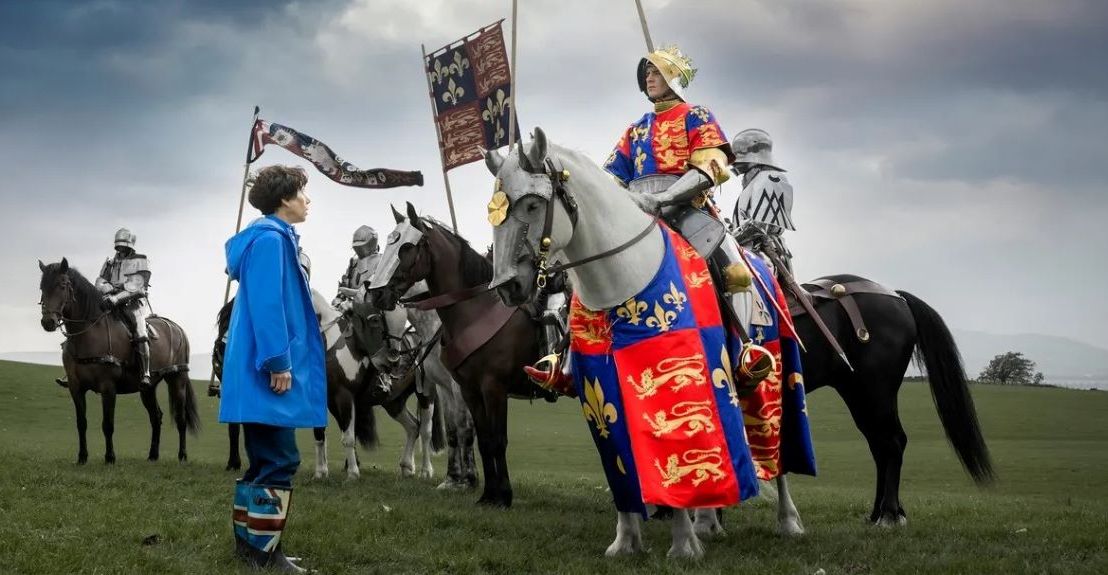
What’s particularly odd about The Lost King is that the film ends up painting Langley as exactly the kind of un-credible crank its villains (villainously) see her as. Having removed all her rigorous research, it replaces it with Having A Feeling. This is communicated visually with Langley communing regularly with a vision of Richard III, personified by the actor from the play she saw. Langley chats to this vision with the breathless excitement of a giddy teenager, and he helps her discover reams of facts, not least a bizarre moment of ecstasy when she spots an “R” in the car park and just knows Richard is under there.

Harry Lloyd is all adrift in this bizarre part and its main impact is to raise unfortunate giggles and make Langley look exactly like the sort of person you wouldn’t invest tens of thousands of pounds in. Mind you, Langley here is way more competent than any other Ricardian society member, all of whom are portrayed as cranks and pub bores, talking as if they only discovered famous primary sources this week, and utterly unable to even tie their own shoelaces until Langley sails in and discovers the king’s body in about ten minutes.

Hawkins plays a part firmly in her wheel-house, as an eccentric but determined woman in love with a ghost, while co-scriptwriter Steve Coogan generously writes himself a “stop reading Holinshed and look after the kids” role as her supportive ex-husband. Langley, like other characters, bends and changes according to the needs of the scene but is always the hero. When the script needs her to be a determined leader, she won’t take no for an answer. When it needs her to be oppressed by those nasty Leicester professionals, she won’t say boo to a goose. (Similarly, Mark Addy’s archaeologist yo-yos between dismissive of Langley to affectionately supportive almost scene-to-scene.)

The Lost King wants to be a triumphal little-guy film, but actually it has an unpleasant air to it. It feels like a massive grudge being publicly settled. It belittles and ignores expertise, patience and research in favour of gut instinct and amateurism. It bizarrely paints its lead character as a mixture of oddball weirdo, genius and saintly crusader. It’s also neither dramatic nor funny (except accidentally). It’s a bad film.

Judy (2019)

Judy (2019)

A star turn is the only thing of note in this empty, uninsightful biopic

Director: Rupert Goold

Cast: Renée Zellweger (Judy Garland), Jessie Buckley (Rosalyn Wilder), Finn Wittrock (Mickey Deans), Rufus Sewell (Sid Luft), Michael Gambon (Bernard Delfont), Richard Cordery (Louis B Mayer), Darci Shaw (Young Judy Garland), Bella Ramsey (Lorna Luft), Royce Pierreson (Burt Rhodes), Andy Nyman (Dan), Daniel Cerqueira (Stan), Gemma-Leah Devereux (Liza Minnelli)

By 1969 Judy Garland (Renée Zellweger) was homeless, broke and stuck in a pill-and-alcohol fuelled depression. Desperate to provide a home for her children, she flew to London for a five-week booking at the Talk of the Town nightclub. Judy sees her, pushed beyond her physical and emotional limits, as she struggles to complete the run – or even get on stage – marrying the feckless young Mickey Deans (Finn Wittrock) and flashbacks to her memories as a Hollywood child star (Darci Shaw), under the punishing “mentorship” of studio head Louis B Mayer (Richard Cordery).

All this gets mixed together in Goold’s uninspired, sentimental and rather empty biopic that never really gets to grips with Garland’s personality, so desperate is it to shoe-horn her into a bog-standard narrative of redemption mixed with personal tragedy. Garland, I’m sure, would have hated it: she always pushed back against the idea that her life had been tragic (which this film whole-heartedly embraces) and the portrayal of her as a constantly misunderstood victim, generously one-sided as it is, boils her down into someone with no agency or control at all in her life.

As such, the most effective parts of this film are the flashbacks to her childhood, filming Wizard of Oz, living off diet pills so she can’t put on weight and working 18-hour days. All under the direction of a monstrously calm Louis B Mayer – a terrific performance of amiable, grandfatherly menace from Richard Cordery – who pleasantly tells her she is a dumpy child who must work like a dog to get ahead and owes everything to him. If the film gets anywhere to understanding Garland’s psychology, it’s in these scenes – I’d rather they’d made it about this than her swan song in England.

In the 1969 sections, the film continues to try and communicate that a life of constant work and pressure left Garland an emotional, physical (and possibly mental) wreck. It puts us on her side, stressing her vulnerability and desperation which she covers with brittle, demanding behaviour. But it’s too squeamish to show too much of her popping pills and downing more than the odd glass of vodka – despite the fact she’s clearly intoxicated for large parts of the film. It only briefly looks at how crippling anxiety affected her unwillingness to rehearse and implies her time in London was a lengthy period of unending servitude rather than a five-week booking singing her greatest hits (the film is hugely vague about timelines to increase the feeling of Garland’s powerlessness).

The film isn’t even smart enough to give us moments where other characters get a glimpse of the fragility under Garland’s prima donnai-sh petulance. Despite her treating both of them as a mix of underlings and informers, Jessie Buckley’s minder and Royce Pierreson’s pianist inexplicably become friends to the star part-way through the film. There is no scene to transition this, no moment of fragile tenderness they witness that makes them understand there is more to this demanding person than they initially thought. Instead, it feels like the narrative requires them to like her just as the audience is supposed to, so whoosh they like her.

The one affecting sequence sees a lonely Garland bumping into two gay fans (Andy Nyman and Daniel Cerqueira) and rather sweetly asking if they would have dinner with her (they are of course thrilled). Back at their apartment, they cook a disgusting looking omelette, play the piano and she listens as they are tearfully talk about their life of persecution in homophobic Britain. It’s gentle, sweet and the only time we (or she) get a real sense of what Garland means to people – these fans idolise her as a symbol of hope. Even this scene is undermined by (a) it not having any lasting impact on Garland as soon as it finishes and (b) these characters being shoe-horned into a blatantly emotionally manipulative ending almost unwatchable in its cloying feel-good-ish-ness.

The one thing the film has going for it is a committed, pitch-perfect performance by Renée Zellweger who captures the vocal and physical mannerisms perfectly. She won every award going including the Oscar. It’s an impressive study and she plays the moments of pain as committedly and rawly as the gentle, tender moments. She does everything the film asks of her, and it’s not her fault that it asks so little of her. There is no dive into Garland’s personality, no questioning that any of her ills were self-inflicted, no criticism for her not turning up for gigs where customers have paid a fortune to see her, no attempt to explore other perspectives on the impact of her actions or how she has become the woman she is.

Instead, Judy meanders towards its semi-feelgood ending without ever really letting us feel we’ve understood much about either this woman or her difficult life, other than framing her as a victim from a life of exhausting show-biz exploitation. Told within a story that is low on drama, pathos or humour, you end up wondering what point it was trying to make in the first place.

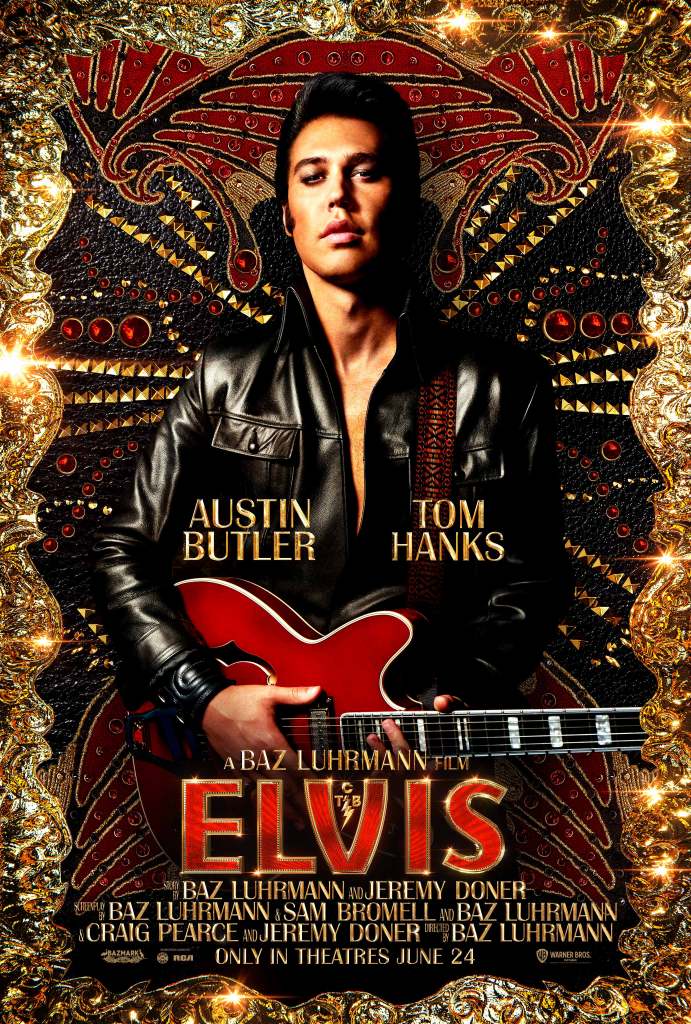
Elvis (2022)

Elvis (2022)

A brash, confident exterior hides a more sensitive and tender film – rather like its subject

Director: Baz Luhrmann

Cast: Austin Butler (Elvis Presley), Tom Hanks (Colonel Tom Parker), Olivia DeJonge (Priscilla Presley), Helen Thomson (Gladys Presley), Richard Roxburgh (Vernon Presley), Kelvin Harrison Jnr (BB King), David Wenham (Hank Snow), Kodi Smith-McPhee (Jimmie Rodgers Snow), Luke Bracey (Jerry Schilling), Dacre Montgomery (Steve Binder)

You know someone has reached an untouchable level of fame, when their first name alone is enough for everyone to know who you’re talking about. Few people are as instantly recognisable as Elvis. He had such impact, that the world is still awash with impersonators decades after he died. He’s an icon like few others – perhaps only Marilyn Monroe can get near him – and if Baz Luhrmann’s ambitious, dynamic biopic only at times feels like it has really got under his skin, it does become an essential, tragedy-tinged tribute to a musical giant.

Its slight distance from its subject is connected to Luhrmann’s choice of framing device. This is the life of legend, as told by the man behind the curtain who pulled the strings. The film opens in the final moments in the life of Elvis’ manager, Colonel Tom Parker. Whisked to hospital after a terminal stroke, Parker sits (hospital gown and all) in a Las Vegas casino (standing in as his own personal purgatory), bemoaning that everyone blames him for Elvis’ death and he never gets the credit for giving the world the genius in the first place.

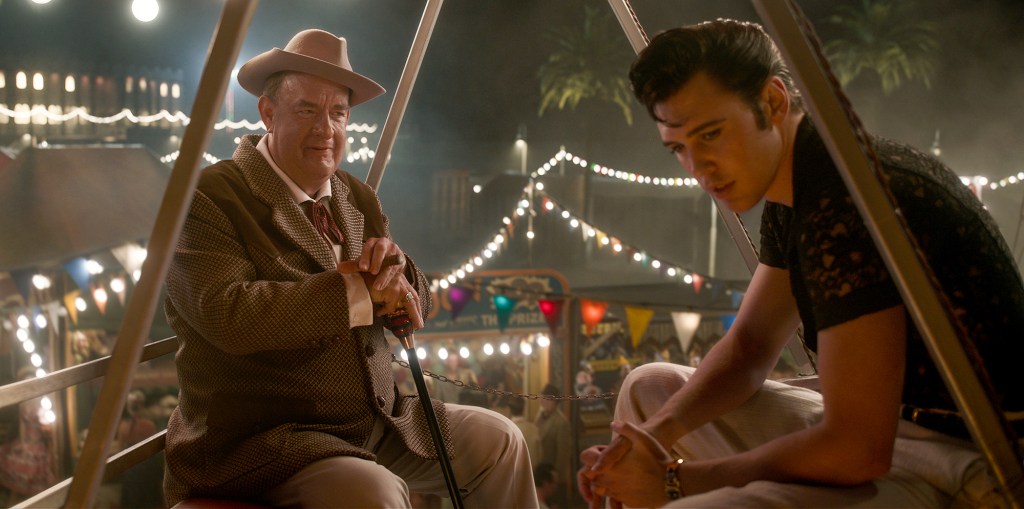
Like a mix of Salieri and Mephistopheles, Parker is a poisonous toad, a cunning “snowman” who spins spectacles at travelling fairs with Elvis as his ultimate circus “geek”, a peep show for the whole nation. Played by Tom Hanks under layers of prosthetics, with a whining, inveigling voice and a mass of self-pitying justifications, he is an unreliable narrator who we should be careful to listen to (a neat way of justifying any historical amendments). It also helps prepare us for one of the film’s main themes: Elvis is a man so trapped by what others want, he doesn’t even get to tell his own life story.

You can’t argue Luhrmann isn’t a polarising film maker. Elvis starts, as so many of his films do, with an explosion of frentic, high-paced style. The camera sweeps and zooms, fast cuts taking us through the final fever dream of the dying Parker, 60s-style split screens throwing multiple Elvis’ up on the screen. It’s a loud, brash statement – much like that visual smack in the face that opens Moulin Rouge! You either love or loath Luhrmann’s colourfully brash style – love it and you are in for a treat.

Like Luhrmann’s other films, the attention-grabbing start is our doorway into a sadder, quieter, more reflective film. The early sweep of the camera, zooming in to Parker’s eyes and whirligigging around his giggling frame as he wheels himself through a casino, the transitions to comic-book style visuals, the location captions that loom over the scenes… it all builds to a sad, depressed and trapped Elvis sitting alone in his hotel room in America’s city of sin. Elvis is a film about an abusive relationship between two people, where the victim can’t imagine life without his Svengali. It’s Romeo and Juliet – but if Romeo was a poisonous succubus draining the lifeforce of Juliet.

Luhrmann is a master of quick establishment and has the confidence to make scenes that really should be ridiculous, work wonderfully well. The key musical influences on Elvis – the blues and Gospel – are introduced in a neat scene which shows the young Elvis moving from one to another on the same afternoon. His first performance captures the world-changing impact of the sex appeal of those swivelling hips by Luhrmann cutting to women, almost surprising themselves, by jumping out of their seats screaming and then looking around stunned at their reaction, before screaming again. It conveys whole themes in cheekily constructed vignettes like this.

It’s the same with stressing the obligations and influences that fill Elvis’ world. His dependence on the affection of a series of women – from his tough but demanding mother (strongly played by Helen Thomson) and then his loving but frustrated wife Priscilla (Olivia DeJonge) – is equally well established, as is Parker’s skill in sidelining these figures. The film deftly explores Elvis’ musical influences and that his success partly stemmed from being a white man singing black music. It’s an attraction Parker instantly picks up, and if the film does skirt over some of the more complex feelings of the black community towards this white singer, it does make Elvis’ debt to them hugely clear.

Luhrmann’s film takes a cradle-to-grave approach but manages to be a lot more than just jukebox musical. While there are performances – impressively staged and recreated – the music is used more to inspire refrains and ideas in the score rather than shoe-horned in as numbers. It’s a skill you wish the script had a little more of at times. Elvis doesn’t always quite manage to tell you about the inner life of this icon. We begin to understand his dreams of leaving a mark, but little of his motivations. His feelings for his wife are boiled down to a simple lost romance and his opinions on everything from politics to family dynamics (both subjects the real Elvis was vocal about) remain unknowable.

But this is film that focuses on the tragedy of an icon. And it makes clear that Parker – whose bitter darkness becomes more and more clear from the beginning – was responsible for crushing the life from a man who he turned into a drugged showpony, in a glittering Las Vegas cage. Parker and Elvis’ first meeting is a beautifully shot seduction atop a Ferris wheel, and helps cement in the viewer’s minds the power this man will have over the King’s life and career.

Crucial, perhaps above all, to the success of the film is Austin Butler’s extraordinary, transformative performance. This is sublime capturing of Elvis’ physicality, but he matches it with a beautifully judged expression of the legend’s soul. His Elvis is always completely believable as the most famous man on the planet, but also a conflicted, slightly lost man under the surface, lacking the confidence to build his own destiny. Butler’s recreation of Elvis’ singing is extraordinary and his performance bubbles with an unshowy tragedy. He breathes life into this larger-than-life icon in a subtle and eventually deeply affecting way that will make you want to throw an arm around his shoulder.

Luhrmann’s film ends a world away from its bright beginning. We’ve seen Elvis triumph, but we’ve also seen him buffeted by events, never really becoming their master. Elvis becomes a highly emotional tribute to a man who gave us so much, but was prevented from giving more. When the real Elvis appears on screen, singing Unchained Melody with passion, it’s undeniably moving. Even more so because we get a sense that performances like this was what we wanted to be doing. Luhrmann – and Butler, whose work cannot be praised enough – may not always manage to make us know the King as completely as we could, but it certainly makes us care deeply and share his regret.

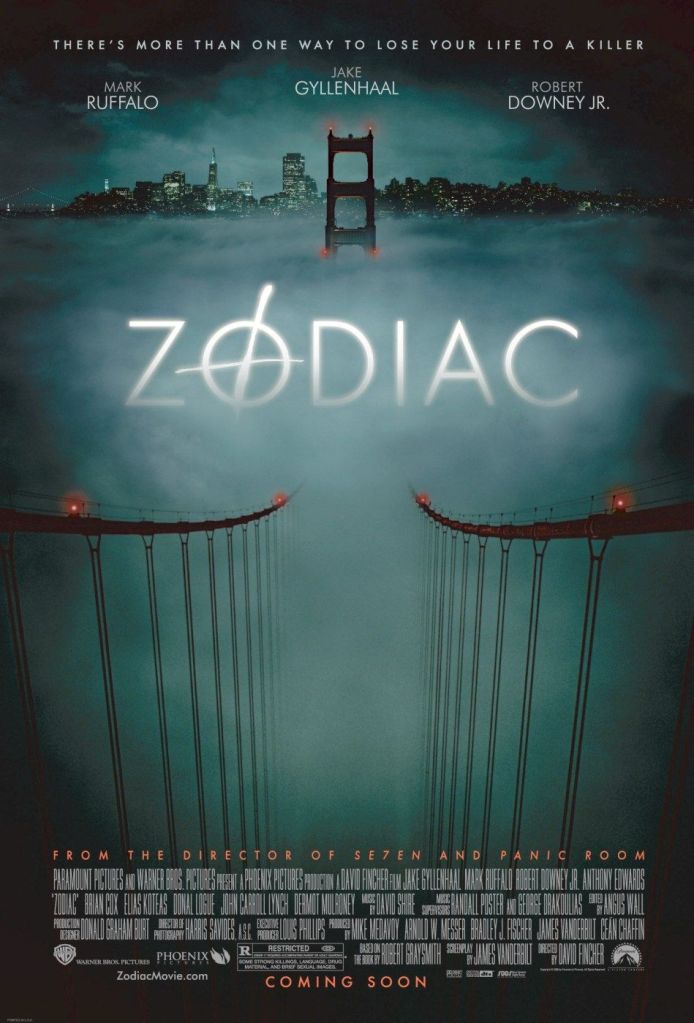
Zodiac (2007)

Zodiac (2007)

A chilling chronicle of the hunt for a serial killer told with a superb mix of journalism and filmic flair

Director: David Fincher

Cast: Jake Gyllenhaal (Robert Graysmith), Mark Ruffalo (Inspector Dave Toschi), Robert Downey Jnr (Paul Avery), Anthony Edwards (Inspector Bill Armstrong), Brian Cox (Melvin Belli), Elias Koteas (Sergeant Jack Mulanax), Donal Logue (Captain Ken Narlow), John Carroll Lynch (Arthur Leigh Allen), Dermot Mulroney (Captain Marty Lee), Chloë Sevingy (Melanie Graysmith), John Terry (Charles Thieriot), Philip Baker Hall (Sherwood Morrill), Zach Grenier (Mel Nicolai)

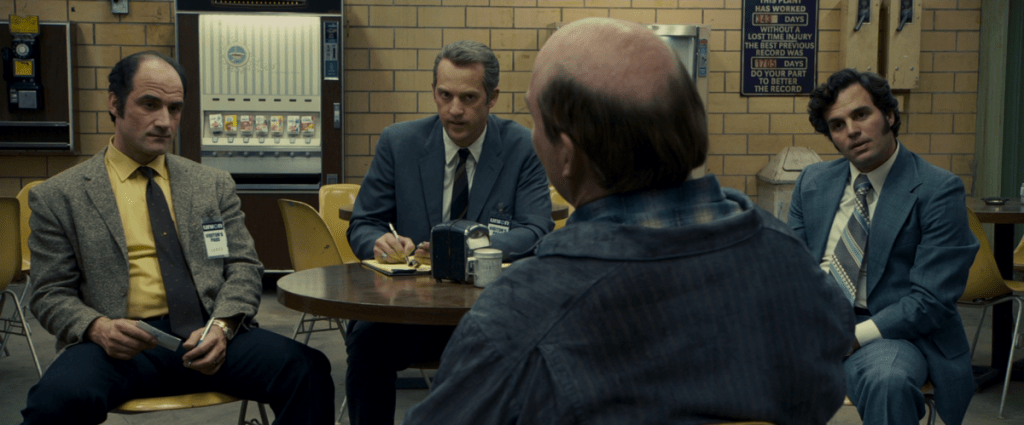
It’s one of the great unsolved mysteries of American history, like San Francisco’s version of Jack the Ripper. For a large chunk of the late 60s and early 70s, a serial killer known only as “the Zodiac killer” murdered at least five (and claimed 37) innocent people, all while sending mysterious, cipher-filled letters to San Francisco newspapers, taunting police and journalists for failing to catch him and threatening further violent acts. The investigation sifted through mountains of tips and half clues but only produced one possible suspect, Arthur Leigh Allen: though no fingerprint or handwriting match could conclude a case.

The story of the hunt for this elusive killer, stretching into the 1980s and concluding with another dead-end coda in 1992, is bought to the screen in a film from David Fincher that expertly mixes cinematic flair with journalistic observation. Channelling All the President’s Men and 70s conspiracy thrillers as much as it does the dark obsession of Fincher’s Seven, Zodiac is a master-class not only in the bewildering detail of large-scale investigations (in the days before computer records and DNA evidence) but also the grinding, destructive qualities of obsession, as those hunting the Zodiac killer struggle to escape the shadow of a case that grows to dominate their lives.

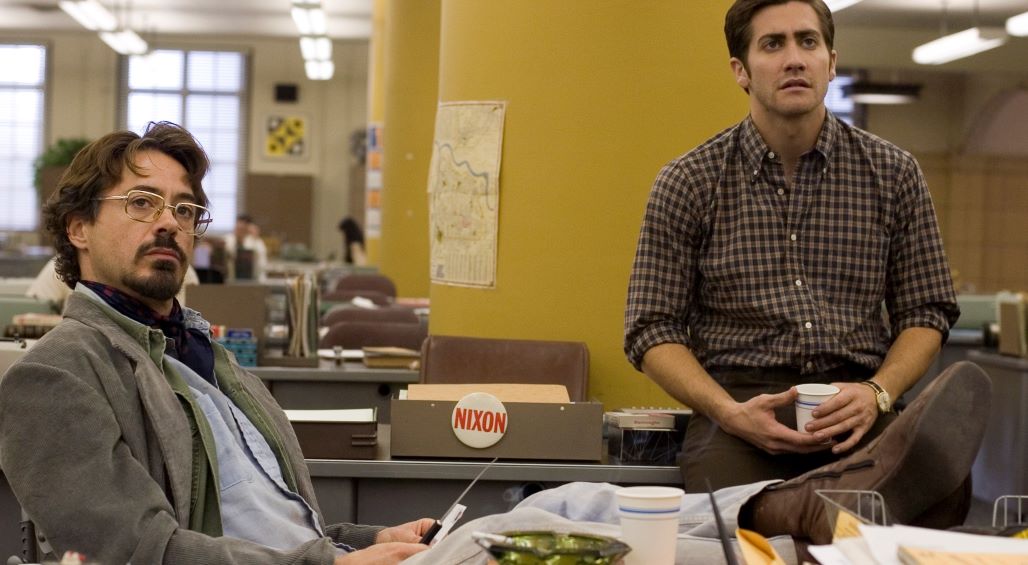
Zodiac focuses on three men, all of whom find their lives irretrievably damaged by their investigation. At first, it seems the drive will come from Robert Downey Jnr’s Paul Avery. Avery is the hard-drinking, charismatic, old-school crime correspondent on the San Francisco Chronicle. In a performance exactly the right-side of flamboyant narcissism, Downey Jnr’s Avery is a man who likes to appear like he takes nothing seriously, even while the burden of the case (and a threat to his life from the Zodiac killer) tips him even further into a drink habit that is going to leave him living in a derelict houseboat, in a permanent state of vodka-induced intoxication.

The second is Inspector Dave Tosci, a performance of dogged, focused professionalism from Mark Ruffalo. He’s confident he’ll find his man, and will go to any lengths to do it, staying on call night and day, and hoarding facts about the case like a miser. He relies more than he knows on level-headed, decent partner Bill Armstrong (played with real warmth by Anthony Edwards). Tosci’s self-image and belief slowly crumble as every lead turns dead end, every gut instinct refuses to be backed by the evidence. The killing spree becomes his personal responsibility, a cross he bears alone for so long that when a belated letter from Zodiac surfaces in 1978, his own superiors believe Tosci sent it in some vain attempt to keep a cooling case alive.

Our third protagonist, present from the arrival of the very first Zodiac letter at the door of the Chronicle, is Jake Gyllenhaal’s Robert Graysmith. A quiet, studious, teetotal political cartoonist who is literally a boy scout, Graysmith spent a huge chunk of the 70s and 80s trying to crack the case, eventually turning his investigation into a best-selling book. It’s Graysmith who becomes the focus of Fincher’s investigation of obsession. The glow of monomania is in Gyllenhaal’s eyes from the very start, as the cipher and its deadly message spark a mix of curiosity and moral duty in him. He feels compelled to solve the crime, but it’s a compulsion that will overwhelm his life. The Zodiac is his Moby Dick, the all-powerful monster he must slay to save the city. (“Bobby, you almost look disappointed” Avery tells him, when Avery suggests some of the Zodiac’s murderous claims are false, as if reducing the wickedness of the Zodiac also reduces the power of Graysmith’s quest.)

The real Graysmith commented when he saw the film, “I understand why my wife left me”. It’s a superb performance of school-boy doggedness, mixed with quietly fanatical, all-consuming obsession from Gyllenhaal, as the film makes clear how close he came (closer than almost anyone else) to cracking the case, but nearly at the cost of his own sanity. Graysmith pop quizzes his pre-teen children on the case over their breakfast (a far cry from, at first, his instinct to shield his son from the press coverage) and as he becomes increasingly unkempt, so his house more and more becomes a mountain of boxes and case notes.

It’s the secondary theme of Zodiac: how obsession doesn’t dim, even when events and evidence drop off. The second half of the film features very little new in the case (which peaked in the early 70s) but focuses on the lingering impact of the ever more desperate and lonely attempts to solve it. Armstrong, the most well-adjusted of the characters, perhaps knew it was a hopeless crusade when he threw his cards in and left the table after a few years to spend time with his children while they grew up. Avery cashes out as well – even if his health never recovers. Tosci is cashiered from the game, and even Graysmith finally realises the impact on him.

That second half of the film is long. Too long. It also, naturally, leaves us with no ending – a sad coda that hints at the guilt of primary (only) suspect Arthur Leigh Allen, but gives us (just like the surviving victims) no closure. It’s fitting, and deliberate, but still the only real flaw of Zodiac is that, at 150 minutes, it’s too long. The deliberate draining of life from the case, like a deflating balloon, also impacts the narrative, which consciously drops in intensity (and, to a degree, interest – despite Gyllenhaal’s subtle and complex work as Graysmith). It’s even more noticeable considering the compelling flair with which Fincher delivers the first half of his scrupulously researched film.

Fincher and screenwriter James Vanderbilt spent almost 18 months interviewing everyone involved with the case. Nothing was included in the film unless it could be verified by witnesses. That included the crimes of the Zodiac: only attacks where there were survivors are shown, the only minor exception being Zodiac’s murder of a taxi driver (where only distant eye-witnesses were available) – even then, every event is confirmed by ballistics and no dialogue is placed into the mouth of the victim. The film also acknowledges the unknown nature of the Zodiac killer: each time the masked killer appears in recreations of his crime he is played by a different (masked) actor, subtle differences in build, tone of voice and manner reflecting the contradictory eye-witness statements. These chilling scenes are shot with a sensitivity that sits alongside their horrifying brutality. Fincher felt a genuine responsibility to reflect the horror of what happened, but with no sensationalism.

Instead, he keeps his virtuoso brilliance for the investigation. The newspaper room filling with the super-imposed scrawl of the Zodiac killer, while the actors read out the words. Restrained but hypnotic editing, carefully grimed photography, camera angles that present everyday items in alarming new ways, a mounting sense of grim tension at several moments that makes the film hard to watch. A superb sequence surrounding the Zodiac’s demand to speak to celebrity lawyer Melvin Belli (a gorgeous cameo from Brian Cox), first on a live TV call-in show, then in person (a “secret meeting” swamped by armed police, which Zodiac, of course, doesn’t turn up to). This is direction – aided by masterful photography (Harris Savides) and editing (Angus Wall) – that immerses us in a world (like drowning in a non-fiction bestseller), while never letting its flair draw attention to itself.

Zodiac was a box-office disappointment and roundly forgotten in 2007. It’s too long and loses energy, but that’s bizarrely the point. It implies, heavily, that Allen (played with a smug blankness by John Carroll Lynch) was indeed the killer, but doesn’t stack the deck – every single piece of counter evidence is exhaustingly shown. In fact, that’s what the film is: exhaustive in every sense. It leaves you reeling and tired. It might well have worked better, in many ways, as a mini-series. But it’s still a masterclass from Fincher and one of the most honest, studiously researched and respectful true-life crime dramas ever made. And just like life, it offers neither easy answers, obvious heroes or clean-cut resolutions, only doubts and lingering regrets.

Love is a Many-Splendored Thing (1955)

Love is a Many-Splendored Thing (1955)

Very thin romantic drama that finds very little to offer beyond it’s set-up of “love across the divide”

Director: Henry King

Cast: William Holden (Mark Elliott), Jennifer Jones (Dr Han Suyin), Torin Thatcher (Humphrey Palmer-Jones), Isobel Elsom (Adeline Palmer-Jones), Murray Matherson (Dr John Keith), Virginia Gregg (Anne Richards), Richard Loo (Robert Hung), Soo Yong (Nora Hung), Philip Ahn (Third Uncle)

In 1940s Hong Kong, Eurasian Dr Han Suyin (Jennifer Jones) works at a respected hospital and carefully balances her relationship with the Chinese and Western expat communities. All of which is shaken up when she falls in love with American journalist Mark Elliott (William Holden). As China’s civil war sees the country turn Communist – and with war rumblings in Korea – can this love across the divide survive prejudice, Mark’s estranged wife and the disapproval of her friends?

Love is a Many-Splendored Thing was a box-office hit and scooped no fewer than eight nominations (including Best Picture) in a weak year at the Oscars. It won two of them for its main virtues: the lush, romantic score from Alfred Newman and its title song (which became a massive hit). Aside from that, it’s a very slight romance (with a tragic ending) based on Han Suyin’s autobiographical novel (Suyin, who sold the rights because she needed the money, refused to watch it).

It’s very much a film of its time. The focus is at least as much on the locations and wide-screen framing as it is on story (it was made slap-bang in the middle of the era when these were considered cinema’s unique selling point over TV). Before the script was even completed, a second unit team was dispatched with the stars to shoot wordless sequences on location, all to capture that Hong Kong atmosphere. Writer John Patrick and director Henry King’s job was then to build a narrative framework using as many of these as possible, inspired by the book.

What they came up with is as conventional as they come: essentially, two charming, attractive Hollywood stars meet, flirt, fall in love and face the consequences. Despite the earth-shattering events around them, very little intrudes into the story. The outbreak of Chinese Communism gets name checked a few times – one of Suyin’s colleagues at the hospital is a proud Commie – but only a few moments are spent on considering the impact this might have on Hong Kong or the expat community. Similarly, the Korean War might as well have been started by people who just wanted to drag William Holden away from romantic bliss.

Love is a Many-Splendored Thing has its chances to really tackle the racial element of this relationship. But bar a few small moments, it mostly avoids this. Sure, Suyin loses her job for largely unspecified reasons (the implication is there that it’s for crossing this racial divide), and she gets dragged across town to get a ticking off from the grand doyen of the expat community for flirting with a white man (although this could just as well be for the fact he’s separated but still married). But her Chinese family mostly accept Suyin’s relationship with little complaint, and far more easily than they do her cousin’s relationship with a foreigner (guess it’s because Mark is such a top bloke). The whole issue feels slightly swept, awkwardly, under the carpet – which just doesn’t feel true. For all its patronising heavy-handedness, at least Sayonara two years later really engaged with this theme.

But then, maybe it’s because Jennifer Jones doesn’t even look remotely Asian. Reportedly unhappy with her make-up, its toned down to such a subtle extent that honestly half the time she doesn’t look that different than she does in any other role. I suppose, today, we should thank our lucky stars they didn’t go the whole yellow-face hog, but it does look odd considering everyone else of even remotely Asian descent is played by an Asian-American actor.

Despite this, Jones is actually rather good as Suyin: intelligent, sensible and very surprised to find herself falling in love with someone so socially unsuitable for her as Mark appears to be. She’s compassionate, witty and knows her own mind, and if Jones is given a few too many speeches explaining Asian culture to Mark (or rather to the viewer), at least she delivers them with grace and gravitas. Holden is also good, even if he could play this dashing romantic role standing on his head.

Fascinatingly both stars, despite their convincing on-screen chemistry, couldn’t stand each other. As well as having incompatible working styles – Jones was details oriented, Holden more instinctive – they failed to bond personally. (Jones reported she ate garlic to annoy famed lothario Holden, while Holden claimed a bunch of flowers he purchased Jones to clear the air were literally thrown back in his face.) It, surprisingly, doesn’t come across on screen, and the film’s strongest moments by far are the romantic ones between the two leads.

Fortunate, as that’s the meat of a film that barely has anything else on its bones during its swift runtime. King directs with a professional competent flatness that doesn’t give any additional life to the project. Aside from some decent romantic moments atop the couple’s favourite hill and a swimming sequence (obviously imitating From Here to Eternity but without an ounce of that film’s dynamism and sexiness) there is little to keep drawing you back.

Love is a Many-Splendored Thing settles for being a reassuring, lightweight romance, in which two handsome people, in luscious locations, fall in love. It offers very little outside of that, so basically your enjoyment of the film will be decided by how much that sort of thing wins you over. If you want more from your romances, it’s not for you.

The Fighter (2010)

The Fighter (2010)

A fighter has a title shot, in a surprisingly heartwarming film about the importance of family, no matter how messed up it is

Director: David O Russell

Cast: Mark Wahlberg (Micky Ward), Christian Bale (Dicky Eklund), Amy Adams (Charlene Fleming), Melissa Leo (Alice Eklund-Ward), Jack McGee (George Ward), Frank Renzulli (Sal Lanano), Mickey O’Keefe (Himself)

Everyone loves Rocky. We all want to that local-hero-turned-good, the guy who went the distance. Lowell, Massachusetts had that in Dicky Eklund. Eklund, a minor pro-boxer, once went the distance against Sugar Ray Leonard in 1978 (he argues he knocked him down, although many are convinced Leonard slipped). “The Pride of Lowell” then became… a crack addict, tumbling from disaster to let-down, helping and hindering the career of his brother, fellow boxer Micky Ward.

The story of the two brothers – leading up to Ward’s eventual title shot in 1997 – comes to the screen in Russell’s affectionate, if traditional, boxing drama, long a passion project of Mark Wahlberg who plays Micky. Wahlberg kept himself in boxer-condition for years as he dreamed of making the film, recruiting director and cast and producing the film. The fine, sensitive film we’ve ended up with is a tribute to his commitment and producing skills, while the fact that Wahlberg casts himself in the least dynamic part is a nice sign of his generosity.

Because it’s only really on the surface a Micky Ward film. Sure, the film follows the vital events in his life. It opens with him bashed up in a mis-match, filling his role as a “stepping stone” fighter, someone the future champs flex their muscles against. We follow his struggles to escape from under the thumb of his large brash family – above all his bombastic, domineering mother Alice (Melissa Leo). He forms a relationship with ambitious-but-caring Charlene (Amy Adams), moves up the ranking, lands that title shot, fights the big bout. But it never quite feels like Micky is the star.

Because, really, this feels like it’s about Dicky Eklund working out the first act of his life is over, and trying to find if he has what it takes to start a second, more humble, one. The film opens with Dicky followed by an HBO crew for a fly-on-the-wall documentary. Dicky’s convinced himself it’s to chart his boxing come-back. It’s actually about the horrific impact of crack addiction. Dicky is a strung-out, unreliable junkie, living on past glories but screwing up everything he touches, being enabled by the fawning worship of his mother and sisters, who still worship him as the families main event (and continue to do so, even as Micky rises to title shot). The film’s heart is Eklund sinking to rock bottom and realising he has forced the compliant Micky into playing a subservient role in his own life.

Perhaps it feels like a film more focused on the remoulding of this charming but selfish figure because of the compelling performance of Christian Bale. Starving himself down to match Eklund’s wizened, strung-out physique (he’s still got the boxer moves, but his body has wasted away) is a day’s work for a transformative actor like Bale. But this isn’t just a physical performance, but a deep immersion into the personality of a person who almost doesn’t realise until it is too late how fundamentally flawed he is. Bale’s a ball of fizzling energy and electric wit coated in a lethargic drug-induced incoherence. His energy is frantic but uncontrolled, wild and mis-focused. It’s a superb, heartfelt performance of loveable but dangerous uselessness that nabbed Bale an Oscar.

But what makes The Fighter a surprisingly warm film is that, for all his many flaws, selfishness and self-obsession, Dicky genuinely cares for his brother. He wants the best for him, he believes in and loves him. Much of the power of Bale’s performance comes from the fact he never forgets this, even when Dicky is at his worst. In fact, Russell’s whole film works because that warmth and love everyone feels for Micky is never forgotten and never weaponised by Russell into helping us make moral judgements about the characters. Nor does it forget that Micky may sometimes hate his family, but he never stops loving and needing them.

A weaker film would have stressed the trailer-trash greed of Melissa Leo’s Alice. Leo (who also scored an Oscar and famously dropped the f-bomb on live TV, condemning the ceremony to a permanent time delayed broadcast ever since) is in many ways playing an awful character: controlling, nakedly favouring Eklund over his brother, quick to judge, rude and aggressive. She’s never truly likeable – but Russell’s film understands everything she does is motivated by love. She genuinely wants the best for Micky, even while she pushes him into bad fights and never listens to him. She tries to protect him, and expresses this in destructive selfishness.

In many ways she’s just like Micky’s girlfriend Charlene, who recognises early that Micky’s family (who have turned him into a timid hen-pecked type) can’t be trusted to run his whole career, but who also subtly pushes herself into Alice’s place as the leading decision-making influence in his life. Very well played by Amy Adams (who lost the Oscar to Leo), Charlene is smart, sexy, loving but just as determined that it’s her way or the highway.

What Micky needs to do, the film carefully (if rather safely) outlines, is take the best qualities of all his influences. It’s Eklund’s “job” to realise Micky needs everyone he loves singing from the same hymn-sheet. It needs compromise and putting other people first. It makes for a nice little paean to the importance of family relationships, founded on forgiveness and admitting when you are wrong. Micky forgives his mother and brother for their selfishness: they, in turn, acknowledge their mistakes. Eklund is crucial here: Bale is again superb as a man who suddenly realises pride has nearly ruined his life and embraces the junior role in the relationship with his brother.

Sure, none of this reinvents this wheel, but it still makes for engaging and rather sweet drama. Russell mixes it with some neat stylistic flourishes that don’t overwhelm the film. It’s shot with an edgy, handheld immediacy reflecting its street roots. The fights are shot with old TV cameras, so that invented footage can fuse with 90s HBO coverage. Russell of course gets great performances from his actors, as he always does.

The Fighter is in many ways predictable. But it wears its heart very much on its sleeve, and Wahlberg deserves credit for assembling it and for giving a quiet, generous performance at the centre of it. And the film’s commitment to the idea that, no matter the problems in our families, we can all find the courage to admit our mistakes and pull in the same direction remains heartwarming.

The Wolf of Wall Street (2013)

The Wolf of Wall Street (2013)

Greed is Good? Scorsese’s masterpiece is a heady deconstruction of the excess of white collar criminals

Director: Martin Scorsese

Cast: Leonardo DiCaprio (Jordon Belfort), Jonah Hill (Donnie Azoff), Margot Robbie (Naomi Lapaglia), Kyle Chandler (FBI Agent Patrick Denham), Rob Reiner (Max Belfort), Jon Bernthal (Brad Brodnick), Matthew McConaughey (Mark Hanna), Jon Favreau (Manny Riskin), Jean Dujardin (Jean-Jacques Saurel), Joanna Lumley (Aunt Emma), Cristin Milioti (Teresa Patrillo), Christine Eberle (Leah Belfort), Kenneth Choi (Chester Ming), Brian Sacca (Robbie Feinberg), Henry Zebrowski (Alden Kupferberg)

All The Wolf of Wall Street is really missing is an early freeze frame of a coke-fuelled banker slamming the phone down on a closed deal and a wistful voiceover from Jordan Belfort: “As far back as I can remember, I always wanted to be Wall Street trader”. If Goodfellas was Scorsese’s exploration of the attractions – and dangers – of a life in blue collar crime, then The Wolf of Wall Street is its white collar companion piece. The fact that so many viewers find the behaviour of Belfort morally outrageous in a way that no one ever objects about Henry Hill is, for me, an indication of how much we loath these masters-of-the-universe. For all their faults, we’d still rather see a violent criminal as one of us.

Based on Jordan Belfort’s (Leonardo DiCaprio) autobiography, The Wolf of Wall Street follows his time building a dodgy trading empire and a large fortune. Not that he can remember most of it, as he seems to be on a permanent intoxicated binge of drinks, hookers and every drug you can ever imagine (and some you can’t). The FBI catches up with him eventually, but Belfort learns precious little from his experiences. Other than, perhaps, that so long as you are rich and white in America, you can basically get away with anything.

That’s perhaps the key to Wolf of Wall Street. Scorsese may not shy away from the delicious dark comedy of Belfort’s life of excess, but it doesn’t blind him to the shallow awfulness of the man or his unthinking, instinctive greed and self-obsession. You would need to be a pretty shallow person to look at Belfort’s greed, moral emptiness and self-destructive binges and want to ape him. If you think watching DiCaprio literally paralytic on quaaludes is the life you want, frankly there is something wrong with you.

What perhaps made some feel Wolf of Wall Street was oddly in love with Belfort is its electric pace. The film is a brilliant reminder of Scorsese’s faultless understanding of pace. Or one who matches unparalleled cinematic skill with the rambunctious energy of a first-timer allowed to play with his movie toys for the first time. Brilliantly assembled, this is a superb collection of cinematic techniques, from jump cuts to fluid transitions that power through a series of increasingly bacchanalian parties and isn’t afraid to admit that, in the moment, this stuff can be fun (rather like getting the best table in Goodfellas) but ultimately self-destructive. (After all, few know the dangers of drugs like Scorsese.)

At the centre of this whirlwind is a stunning performance from Leonardo DiCaprio. With his still youthful, charismatic handsomeness, DiCaprio only needed to tweak his screen persona to provoke the sort of perverted idolatry Belfort receives from his co-workers. But he goes above and beyond in his transformation in this role. He makes Belfort simultaneously oddly childlike and revoltingly corrupted, someone whom we enjoy spending time with while finding repulsive. He rips through Belfort’s trademark, drug-fuelled motivational speeches, monologues of insanely eye-popping intensity, explosions of off-the-chain wildness. At other times he’ll sulk and whine like a spoilt child. DiCaprio struts across the screen with an unpredictable physicality – his embodying of the physical effects of mind-altering drugs is hilarious and horrifying –in possibly his finest ever performance.

DiCaprio is the raw energy source that helps power the rest of the film. Scorsese matches him blow-by-blow with this dynamic expose of white-collar corruption. Using Belfort as a narrator – which serves to further expose his shallowness, greed and utter inability to learn any sustained messages from the depths he plummets to – the entire film is all about how the flip side of the American Dream tacitly promotes and encourages this sort of behaviour.

Belfort is the rash the system has come out as. In a highly effective early cameo, McConaughey plays Belfort’s first mentor, a coke-fuelled hedonist hooked on the buzz of closing deals, who pushes Belfort towards a career of success (including introducing a brilliant breathing exercise – improvised by McConaughey based on his own warm-up exercises – that becomes a mantra in the film). DiCaprio’s eyes have already lit up at watching a deal closing. Drugs and sex are just an attempt for Belfort to replicate the buzz of the real addiction: money.

Scorsese recognises that we don’t need to know the details of Belfort’s illegal dealings. (In his voiceover Belfort literally tells us it doesn’t matter, all that does is the shitload of cash they were bringing in.) We learn enough about the huge mark-ups (50% of the deal’s value) he can make from selling penny stocks (trades of small public companies) and “pump and dump” tactics to know it’s wrong. I will admit the film does little to show the victims – but then Belfort never cares either, proudly stating at one point he has no guilt fleecing his clients out of cash, because he knows how to spend it, better than they do.

It all pours into a hedonistic, alpha-male environment where the air is as littered with fucks (the film held a record for most use of the word) as the floors and desks of Belfort’s offices are during his hooker-filled end-of-week parties. Wolf of Wall Street is also an expose of toxic alpha-maledom. Bullying, abuse and screaming are ripe, women are basically commodities traded as easily as shares. The only exceptions are those allowed into the boys’ club as either surrogate-male fellow traders or trophies to adorn the arm. Margot Robbie (superb in a star-making role) plays Belfort’s glamourous wife, who knows she needs to use her physical assets to make her way in this world.

The film rips along through a party-deal-party structure. Belfort goes from wowing his fellow penny stock traders by making $2k in two minutes to wrapping the trading floor of his fake-old-school Wall Street firm around his finger in excess filled speeches. He also goes from a charming party animal to an incoherent, rambling, deeply unpleasant and dangerous drunk and drug addict. But crucially, he learns nothing . There is no life-and-soul shattering payback like Henry Hill undergoes. Fault, guilt and consequences roll off his rich, spoilt back. He ends the film still winning the adulation of would-be millionaires, his conscience (if it exists) untroubled by any impact his actions have had on others.

Perhaps Scorsese could have allowed more space to victims – and to Kyle Chandler’s dutiful and dedicated FBI agent who brings him down (our final shot of this character stresses his humble, low-paid status – echoing back to his confession to at times regretting leaving a trading career for a law one). But that’s to criticise the film for not being obvious enough. Of course parties are fun. But each party becomes wilder, more orgiastic and uncomfortable as the film goes on. But if we didn’t understand the fun, we couldn’t understand how people get hooked on this adrenalin fuelled life.

Wolf of Wall Street though is a warning to the curious – if you are smart enough to look. Belfort’s soulless, horrible life is not one to aspire to, and his moral emptiness not one to wish to have. It’s a funny film, but it’s also a dark one. DiCaprio is brilliant beyond belief, Jonah Hill funny and pathetic as his best friend, Margot Robbie becomes a star and Scorsese rips through the film with the energy, passion and dynamism of a much younger director. An outstanding tentpole film in his CV.