Category: Biography

Zodiac (2007)

Zodiac (2007)

A chilling chronicle of the hunt for a serial killer told with a superb mix of journalism and filmic flair

Director: David Fincher

Cast: Jake Gyllenhaal (Robert Graysmith), Mark Ruffalo (Inspector Dave Toschi), Robert Downey Jnr (Paul Avery), Anthony Edwards (Inspector Bill Armstrong), Brian Cox (Melvin Belli), Elias Koteas (Sergeant Jack Mulanax), Donal Logue (Captain Ken Narlow), John Carroll Lynch (Arthur Leigh Allen), Dermot Mulroney (Captain Marty Lee), Chloë Sevingy (Melanie Graysmith), John Terry (Charles Thieriot), Philip Baker Hall (Sherwood Morrill), Zach Grenier (Mel Nicolai)
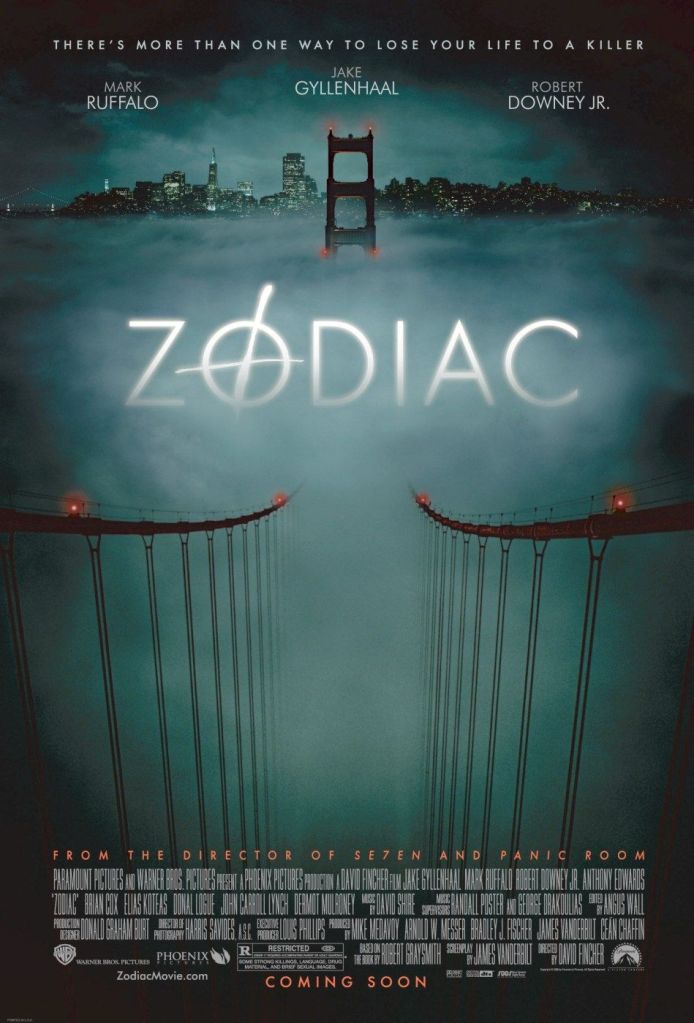
It’s one of the great unsolved mysteries of American history, like San Francisco’s version of Jack the Ripper. For a large chunk of the late 60s and early 70s, a serial killer known only as “the Zodiac killer” murdered at least five (and claimed 37) innocent people, all while sending mysterious, cipher-filled letters to San Francisco newspapers, taunting police and journalists for failing to catch him and threatening further violent acts. The investigation sifted through mountains of tips and half clues but only produced one possible suspect, Arthur Leigh Allen: though no fingerprint or handwriting match could conclude a case.

The story of the hunt for this elusive killer, stretching into the 1980s and concluding with another dead-end coda in 1992, is bought to the screen in a film from David Fincher that expertly mixes cinematic flair with journalistic observation. Channelling All the President’s Men and 70s conspiracy thrillers as much as it does the dark obsession of Fincher’s Seven, Zodiac is a master-class not only in the bewildering detail of large-scale investigations (in the days before computer records and DNA evidence) but also the grinding, destructive qualities of obsession, as those hunting the Zodiac killer struggle to escape the shadow of a case that grows to dominate their lives.

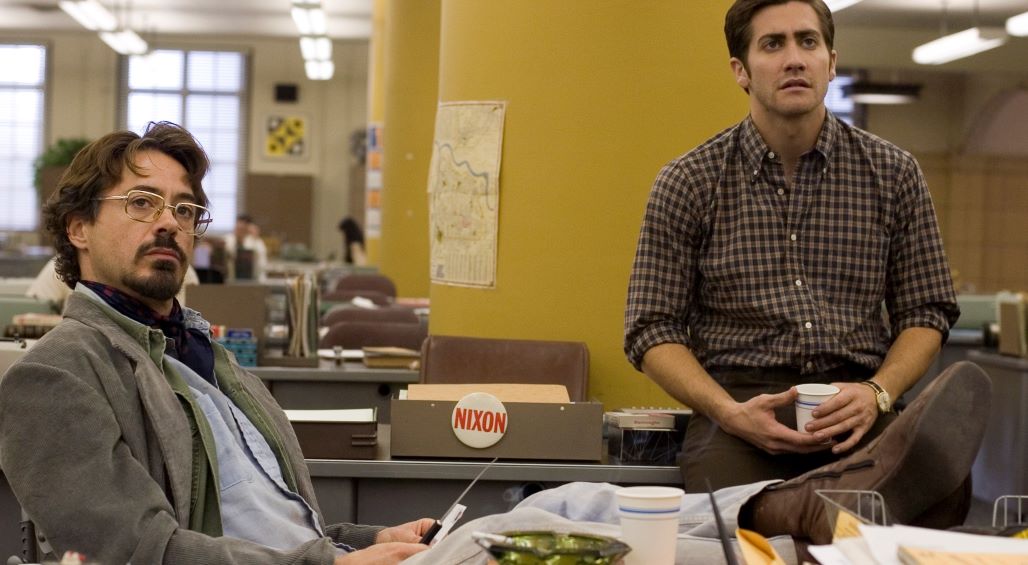
Zodiac focuses on three men, all of whom find their lives irretrievably damaged by their investigation. At first, it seems the drive will come from Robert Downey Jnr’s Paul Avery. Avery is the hard-drinking, charismatic, old-school crime correspondent on the San Francisco Chronicle. In a performance exactly the right-side of flamboyant narcissism, Downey Jnr’s Avery is a man who likes to appear like he takes nothing seriously, even while the burden of the case (and a threat to his life from the Zodiac killer) tips him even further into a drink habit that is going to leave him living in a derelict houseboat, in a permanent state of vodka-induced intoxication.

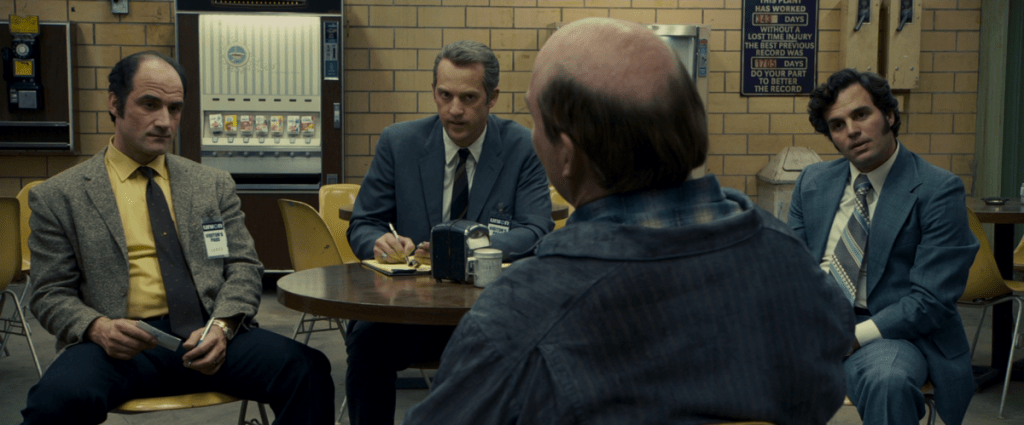
The second is Inspector Dave Tosci, a performance of dogged, focused professionalism from Mark Ruffalo. He’s confident he’ll find his man, and will go to any lengths to do it, staying on call night and day, and hoarding facts about the case like a miser. He relies more than he knows on level-headed, decent partner Bill Armstrong (played with real warmth by Anthony Edwards). Tosci’s self-image and belief slowly crumble as every lead turns dead end, every gut instinct refuses to be backed by the evidence. The killing spree becomes his personal responsibility, a cross he bears alone for so long that when a belated letter from Zodiac surfaces in 1978, his own superiors believe Tosci sent it in some vain attempt to keep a cooling case alive.

Our third protagonist, present from the arrival of the very first Zodiac letter at the door of the Chronicle, is Jake Gyllenhaal’s Robert Graysmith. A quiet, studious, teetotal political cartoonist who is literally a boy scout, Graysmith spent a huge chunk of the 70s and 80s trying to crack the case, eventually turning his investigation into a best-selling book. It’s Graysmith who becomes the focus of Fincher’s investigation of obsession. The glow of monomania is in Gyllenhaal’s eyes from the very start, as the cipher and its deadly message spark a mix of curiosity and moral duty in him. He feels compelled to solve the crime, but it’s a compulsion that will overwhelm his life. The Zodiac is his Moby Dick, the all-powerful monster he must slay to save the city. (“Bobby, you almost look disappointed” Avery tells him, when Avery suggests some of the Zodiac’s murderous claims are false, as if reducing the wickedness of the Zodiac also reduces the power of Graysmith’s quest.)

The real Graysmith commented when he saw the film, “I understand why my wife left me”. It’s a superb performance of school-boy doggedness, mixed with quietly fanatical, all-consuming obsession from Gyllenhaal, as the film makes clear how close he came (closer than almost anyone else) to cracking the case, but nearly at the cost of his own sanity. Graysmith pop quizzes his pre-teen children on the case over their breakfast (a far cry from, at first, his instinct to shield his son from the press coverage) and as he becomes increasingly unkempt, so his house more and more becomes a mountain of boxes and case notes.
It’s the secondary theme of Zodiac: how obsession doesn’t dim, even when events and evidence drop off. The second half of the film features very little new in the case (which peaked in the early 70s) but focuses on the lingering impact of the ever more desperate and lonely attempts to solve it. Armstrong, the most well-adjusted of the characters, perhaps knew it was a hopeless crusade when he threw his cards in and left the table after a few years to spend time with his children while they grew up. Avery cashes out as well – even if his health never recovers. Tosci is cashiered from the game, and even Graysmith finally realises the impact on him.

That second half of the film is long. Too long. It also, naturally, leaves us with no ending – a sad coda that hints at the guilt of primary (only) suspect Arthur Leigh Allen, but gives us (just like the surviving victims) no closure. It’s fitting, and deliberate, but still the only real flaw of Zodiac is that, at 150 minutes, it’s too long. The deliberate draining of life from the case, like a deflating balloon, also impacts the narrative, which consciously drops in intensity (and, to a degree, interest – despite Gyllenhaal’s subtle and complex work as Graysmith). It’s even more noticeable considering the compelling flair with which Fincher delivers the first half of his scrupulously researched film.

Fincher and screenwriter James Vanderbilt spent almost 18 months interviewing everyone involved with the case. Nothing was included in the film unless it could be verified by witnesses. That included the crimes of the Zodiac: only attacks where there were survivors are shown, the only minor exception being Zodiac’s murder of a taxi driver (where only distant eye-witnesses were available) – even then, every event is confirmed by ballistics and no dialogue is placed into the mouth of the victim. The film also acknowledges the unknown nature of the Zodiac killer: each time the masked killer appears in recreations of his crime he is played by a different (masked) actor, subtle differences in build, tone of voice and manner reflecting the contradictory eye-witness statements. These chilling scenes are shot with a sensitivity that sits alongside their horrifying brutality. Fincher felt a genuine responsibility to reflect the horror of what happened, but with no sensationalism.

Instead, he keeps his virtuoso brilliance for the investigation. The newspaper room filling with the super-imposed scrawl of the Zodiac killer, while the actors read out the words. Restrained but hypnotic editing, carefully grimed photography, camera angles that present everyday items in alarming new ways, a mounting sense of grim tension at several moments that makes the film hard to watch. A superb sequence surrounding the Zodiac’s demand to speak to celebrity lawyer Melvin Belli (a gorgeous cameo from Brian Cox), first on a live TV call-in show, then in person (a “secret meeting” swamped by armed police, which Zodiac, of course, doesn’t turn up to). This is direction – aided by masterful photography (Harris Savides) and editing (Angus Wall) – that immerses us in a world (like drowning in a non-fiction bestseller), while never letting its flair draw attention to itself.

Zodiac was a box-office disappointment and roundly forgotten in 2007. It’s too long and loses energy, but that’s bizarrely the point. It implies, heavily, that Allen (played with a smug blankness by John Carroll Lynch) was indeed the killer, but doesn’t stack the deck – every single piece of counter evidence is exhaustingly shown. In fact, that’s what the film is: exhaustive in every sense. It leaves you reeling and tired. It might well have worked better, in many ways, as a mini-series. But it’s still a masterclass from Fincher and one of the most honest, studiously researched and respectful true-life crime dramas ever made. And just like life, it offers neither easy answers, obvious heroes or clean-cut resolutions, only doubts and lingering regrets.

Love is a Many-Splendored Thing (1955)

Love is a Many-Splendored Thing (1955)

Very thin romantic drama that finds very little to offer beyond it’s set-up of “love across the divide”

Director: Henry King

Cast: William Holden (Mark Elliott), Jennifer Jones (Dr Han Suyin), Torin Thatcher (Humphrey Palmer-Jones), Isobel Elsom (Adeline Palmer-Jones), Murray Matherson (Dr John Keith), Virginia Gregg (Anne Richards), Richard Loo (Robert Hung), Soo Yong (Nora Hung), Philip Ahn (Third Uncle)

In 1940s Hong Kong, Eurasian Dr Han Suyin (Jennifer Jones) works at a respected hospital and carefully balances her relationship with the Chinese and Western expat communities. All of which is shaken up when she falls in love with American journalist Mark Elliott (William Holden). As China’s civil war sees the country turn Communist – and with war rumblings in Korea – can this love across the divide survive prejudice, Mark’s estranged wife and the disapproval of her friends?

Love is a Many-Splendored Thing was a box-office hit and scooped no fewer than eight nominations (including Best Picture) in a weak year at the Oscars. It won two of them for its main virtues: the lush, romantic score from Alfred Newman and its title song (which became a massive hit). Aside from that, it’s a very slight romance (with a tragic ending) based on Han Suyin’s autobiographical novel (Suyin, who sold the rights because she needed the money, refused to watch it).

It’s very much a film of its time. The focus is at least as much on the locations and wide-screen framing as it is on story (it was made slap-bang in the middle of the era when these were considered cinema’s unique selling point over TV). Before the script was even completed, a second unit team was dispatched with the stars to shoot wordless sequences on location, all to capture that Hong Kong atmosphere. Writer John Patrick and director Henry King’s job was then to build a narrative framework using as many of these as possible, inspired by the book.

What they came up with is as conventional as they come: essentially, two charming, attractive Hollywood stars meet, flirt, fall in love and face the consequences. Despite the earth-shattering events around them, very little intrudes into the story. The outbreak of Chinese Communism gets name checked a few times – one of Suyin’s colleagues at the hospital is a proud Commie – but only a few moments are spent on considering the impact this might have on Hong Kong or the expat community. Similarly, the Korean War might as well have been started by people who just wanted to drag William Holden away from romantic bliss.

Love is a Many-Splendored Thing has its chances to really tackle the racial element of this relationship. But bar a few small moments, it mostly avoids this. Sure, Suyin loses her job for largely unspecified reasons (the implication is there that it’s for crossing this racial divide), and she gets dragged across town to get a ticking off from the grand doyen of the expat community for flirting with a white man (although this could just as well be for the fact he’s separated but still married). But her Chinese family mostly accept Suyin’s relationship with little complaint, and far more easily than they do her cousin’s relationship with a foreigner (guess it’s because Mark is such a top bloke). The whole issue feels slightly swept, awkwardly, under the carpet – which just doesn’t feel true. For all its patronising heavy-handedness, at least Sayonara two years later really engaged with this theme.

But then, maybe it’s because Jennifer Jones doesn’t even look remotely Asian. Reportedly unhappy with her make-up, its toned down to such a subtle extent that honestly half the time she doesn’t look that different than she does in any other role. I suppose, today, we should thank our lucky stars they didn’t go the whole yellow-face hog, but it does look odd considering everyone else of even remotely Asian descent is played by an Asian-American actor.

Despite this, Jones is actually rather good as Suyin: intelligent, sensible and very surprised to find herself falling in love with someone so socially unsuitable for her as Mark appears to be. She’s compassionate, witty and knows her own mind, and if Jones is given a few too many speeches explaining Asian culture to Mark (or rather to the viewer), at least she delivers them with grace and gravitas. Holden is also good, even if he could play this dashing romantic role standing on his head.

Fascinatingly both stars, despite their convincing on-screen chemistry, couldn’t stand each other. As well as having incompatible working styles – Jones was details oriented, Holden more instinctive – they failed to bond personally. (Jones reported she ate garlic to annoy famed lothario Holden, while Holden claimed a bunch of flowers he purchased Jones to clear the air were literally thrown back in his face.) It, surprisingly, doesn’t come across on screen, and the film’s strongest moments by far are the romantic ones between the two leads.

Fortunate, as that’s the meat of a film that barely has anything else on its bones during its swift runtime. King directs with a professional competent flatness that doesn’t give any additional life to the project. Aside from some decent romantic moments atop the couple’s favourite hill and a swimming sequence (obviously imitating From Here to Eternity but without an ounce of that film’s dynamism and sexiness) there is little to keep drawing you back.

Love is a Many-Splendored Thing settles for being a reassuring, lightweight romance, in which two handsome people, in luscious locations, fall in love. It offers very little outside of that, so basically your enjoyment of the film will be decided by how much that sort of thing wins you over. If you want more from your romances, it’s not for you.

The Fighter (2010)

The Fighter (2010)

A fighter has a title shot, in a surprisingly heartwarming film about the importance of family, no matter how messed up it is

Director: David O Russell

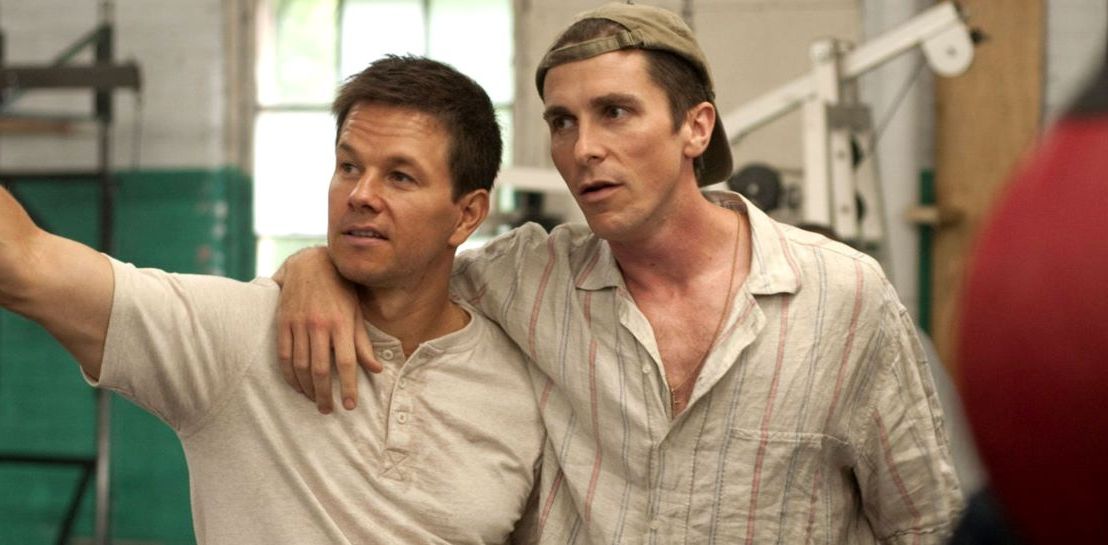
Cast: Mark Wahlberg (Micky Ward), Christian Bale (Dicky Eklund), Amy Adams (Charlene Fleming), Melissa Leo (Alice Eklund-Ward), Jack McGee (George Ward), Frank Renzulli (Sal Lanano), Mickey O’Keefe (Himself)

Everyone loves Rocky. We all want to that local-hero-turned-good, the guy who went the distance. Lowell, Massachusetts had that in Dicky Eklund. Eklund, a minor pro-boxer, once went the distance against Sugar Ray Leonard in 1978 (he argues he knocked him down, although many are convinced Leonard slipped). “The Pride of Lowell” then became… a crack addict, tumbling from disaster to let-down, helping and hindering the career of his brother, fellow boxer Micky Ward.

The story of the two brothers – leading up to Ward’s eventual title shot in 1997 – comes to the screen in Russell’s affectionate, if traditional, boxing drama, long a passion project of Mark Wahlberg who plays Micky. Wahlberg kept himself in boxer-condition for years as he dreamed of making the film, recruiting director and cast and producing the film. The fine, sensitive film we’ve ended up with is a tribute to his commitment and producing skills, while the fact that Wahlberg casts himself in the least dynamic part is a nice sign of his generosity.

Because it’s only really on the surface a Micky Ward film. Sure, the film follows the vital events in his life. It opens with him bashed up in a mis-match, filling his role as a “stepping stone” fighter, someone the future champs flex their muscles against. We follow his struggles to escape from under the thumb of his large brash family – above all his bombastic, domineering mother Alice (Melissa Leo). He forms a relationship with ambitious-but-caring Charlene (Amy Adams), moves up the ranking, lands that title shot, fights the big bout. But it never quite feels like Micky is the star.

Because, really, this feels like it’s about Dicky Eklund working out the first act of his life is over, and trying to find if he has what it takes to start a second, more humble, one. The film opens with Dicky followed by an HBO crew for a fly-on-the-wall documentary. Dicky’s convinced himself it’s to chart his boxing come-back. It’s actually about the horrific impact of crack addiction. Dicky is a strung-out, unreliable junkie, living on past glories but screwing up everything he touches, being enabled by the fawning worship of his mother and sisters, who still worship him as the families main event (and continue to do so, even as Micky rises to title shot). The film’s heart is Eklund sinking to rock bottom and realising he has forced the compliant Micky into playing a subservient role in his own life.

Perhaps it feels like a film more focused on the remoulding of this charming but selfish figure because of the compelling performance of Christian Bale. Starving himself down to match Eklund’s wizened, strung-out physique (he’s still got the boxer moves, but his body has wasted away) is a day’s work for a transformative actor like Bale. But this isn’t just a physical performance, but a deep immersion into the personality of a person who almost doesn’t realise until it is too late how fundamentally flawed he is. Bale’s a ball of fizzling energy and electric wit coated in a lethargic drug-induced incoherence. His energy is frantic but uncontrolled, wild and mis-focused. It’s a superb, heartfelt performance of loveable but dangerous uselessness that nabbed Bale an Oscar.

But what makes The Fighter a surprisingly warm film is that, for all his many flaws, selfishness and self-obsession, Dicky genuinely cares for his brother. He wants the best for him, he believes in and loves him. Much of the power of Bale’s performance comes from the fact he never forgets this, even when Dicky is at his worst. In fact, Russell’s whole film works because that warmth and love everyone feels for Micky is never forgotten and never weaponised by Russell into helping us make moral judgements about the characters. Nor does it forget that Micky may sometimes hate his family, but he never stops loving and needing them.

A weaker film would have stressed the trailer-trash greed of Melissa Leo’s Alice. Leo (who also scored an Oscar and famously dropped the f-bomb on live TV, condemning the ceremony to a permanent time delayed broadcast ever since) is in many ways playing an awful character: controlling, nakedly favouring Eklund over his brother, quick to judge, rude and aggressive. She’s never truly likeable – but Russell’s film understands everything she does is motivated by love. She genuinely wants the best for Micky, even while she pushes him into bad fights and never listens to him. She tries to protect him, and expresses this in destructive selfishness.

In many ways she’s just like Micky’s girlfriend Charlene, who recognises early that Micky’s family (who have turned him into a timid hen-pecked type) can’t be trusted to run his whole career, but who also subtly pushes herself into Alice’s place as the leading decision-making influence in his life. Very well played by Amy Adams (who lost the Oscar to Leo), Charlene is smart, sexy, loving but just as determined that it’s her way or the highway.

What Micky needs to do, the film carefully (if rather safely) outlines, is take the best qualities of all his influences. It’s Eklund’s “job” to realise Micky needs everyone he loves singing from the same hymn-sheet. It needs compromise and putting other people first. It makes for a nice little paean to the importance of family relationships, founded on forgiveness and admitting when you are wrong. Micky forgives his mother and brother for their selfishness: they, in turn, acknowledge their mistakes. Eklund is crucial here: Bale is again superb as a man who suddenly realises pride has nearly ruined his life and embraces the junior role in the relationship with his brother.

Sure, none of this reinvents this wheel, but it still makes for engaging and rather sweet drama. Russell mixes it with some neat stylistic flourishes that don’t overwhelm the film. It’s shot with an edgy, handheld immediacy reflecting its street roots. The fights are shot with old TV cameras, so that invented footage can fuse with 90s HBO coverage. Russell of course gets great performances from his actors, as he always does.

The Fighter is in many ways predictable. But it wears its heart very much on its sleeve, and Wahlberg deserves credit for assembling it and for giving a quiet, generous performance at the centre of it. And the film’s commitment to the idea that, no matter the problems in our families, we can all find the courage to admit our mistakes and pull in the same direction remains heartwarming.

The Wolf of Wall Street (2013)

The Wolf of Wall Street (2013)

Greed is Good? Scorsese’s masterpiece is a heady deconstruction of the excess of white collar criminals

Director: Martin Scorsese

Cast: Leonardo DiCaprio (Jordon Belfort), Jonah Hill (Donnie Azoff), Margot Robbie (Naomi Lapaglia), Kyle Chandler (FBI Agent Patrick Denham), Rob Reiner (Max Belfort), Jon Bernthal (Brad Brodnick), Matthew McConaughey (Mark Hanna), Jon Favreau (Manny Riskin), Jean Dujardin (Jean-Jacques Saurel), Joanna Lumley (Aunt Emma), Cristin Milioti (Teresa Patrillo), Christine Eberle (Leah Belfort), Kenneth Choi (Chester Ming), Brian Sacca (Robbie Feinberg), Henry Zebrowski (Alden Kupferberg)

All The Wolf of Wall Street is really missing is an early freeze frame of a coke-fuelled banker slamming the phone down on a closed deal and a wistful voiceover from Jordan Belfort: “As far back as I can remember, I always wanted to be Wall Street trader”. If Goodfellas was Scorsese’s exploration of the attractions – and dangers – of a life in blue collar crime, then The Wolf of Wall Street is its white collar companion piece. The fact that so many viewers find the behaviour of Belfort morally outrageous in a way that no one ever objects about Henry Hill is, for me, an indication of how much we loath these masters-of-the-universe. For all their faults, we’d still rather see a violent criminal as one of us.

Based on Jordan Belfort’s (Leonardo DiCaprio) autobiography, The Wolf of Wall Street follows his time building a dodgy trading empire and a large fortune. Not that he can remember most of it, as he seems to be on a permanent intoxicated binge of drinks, hookers and every drug you can ever imagine (and some you can’t). The FBI catches up with him eventually, but Belfort learns precious little from his experiences. Other than, perhaps, that so long as you are rich and white in America, you can basically get away with anything.

That’s perhaps the key to Wolf of Wall Street. Scorsese may not shy away from the delicious dark comedy of Belfort’s life of excess, but it doesn’t blind him to the shallow awfulness of the man or his unthinking, instinctive greed and self-obsession. You would need to be a pretty shallow person to look at Belfort’s greed, moral emptiness and self-destructive binges and want to ape him. If you think watching DiCaprio literally paralytic on quaaludes is the life you want, frankly there is something wrong with you.

What perhaps made some feel Wolf of Wall Street was oddly in love with Belfort is its electric pace. The film is a brilliant reminder of Scorsese’s faultless understanding of pace. Or one who matches unparalleled cinematic skill with the rambunctious energy of a first-timer allowed to play with his movie toys for the first time. Brilliantly assembled, this is a superb collection of cinematic techniques, from jump cuts to fluid transitions that power through a series of increasingly bacchanalian parties and isn’t afraid to admit that, in the moment, this stuff can be fun (rather like getting the best table in Goodfellas) but ultimately self-destructive. (After all, few know the dangers of drugs like Scorsese.)

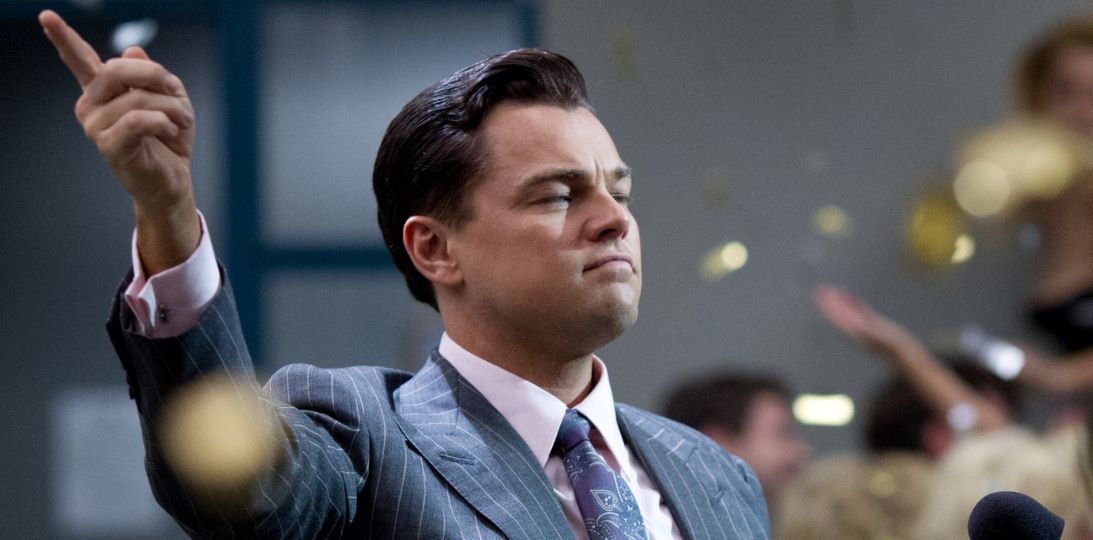
At the centre of this whirlwind is a stunning performance from Leonardo DiCaprio. With his still youthful, charismatic handsomeness, DiCaprio only needed to tweak his screen persona to provoke the sort of perverted idolatry Belfort receives from his co-workers. But he goes above and beyond in his transformation in this role. He makes Belfort simultaneously oddly childlike and revoltingly corrupted, someone whom we enjoy spending time with while finding repulsive. He rips through Belfort’s trademark, drug-fuelled motivational speeches, monologues of insanely eye-popping intensity, explosions of off-the-chain wildness. At other times he’ll sulk and whine like a spoilt child. DiCaprio struts across the screen with an unpredictable physicality – his embodying of the physical effects of mind-altering drugs is hilarious and horrifying –in possibly his finest ever performance.

DiCaprio is the raw energy source that helps power the rest of the film. Scorsese matches him blow-by-blow with this dynamic expose of white-collar corruption. Using Belfort as a narrator – which serves to further expose his shallowness, greed and utter inability to learn any sustained messages from the depths he plummets to – the entire film is all about how the flip side of the American Dream tacitly promotes and encourages this sort of behaviour.

Belfort is the rash the system has come out as. In a highly effective early cameo, McConaughey plays Belfort’s first mentor, a coke-fuelled hedonist hooked on the buzz of closing deals, who pushes Belfort towards a career of success (including introducing a brilliant breathing exercise – improvised by McConaughey based on his own warm-up exercises – that becomes a mantra in the film). DiCaprio’s eyes have already lit up at watching a deal closing. Drugs and sex are just an attempt for Belfort to replicate the buzz of the real addiction: money.

Scorsese recognises that we don’t need to know the details of Belfort’s illegal dealings. (In his voiceover Belfort literally tells us it doesn’t matter, all that does is the shitload of cash they were bringing in.) We learn enough about the huge mark-ups (50% of the deal’s value) he can make from selling penny stocks (trades of small public companies) and “pump and dump” tactics to know it’s wrong. I will admit the film does little to show the victims – but then Belfort never cares either, proudly stating at one point he has no guilt fleecing his clients out of cash, because he knows how to spend it, better than they do.

It all pours into a hedonistic, alpha-male environment where the air is as littered with fucks (the film held a record for most use of the word) as the floors and desks of Belfort’s offices are during his hooker-filled end-of-week parties. Wolf of Wall Street is also an expose of toxic alpha-maledom. Bullying, abuse and screaming are ripe, women are basically commodities traded as easily as shares. The only exceptions are those allowed into the boys’ club as either surrogate-male fellow traders or trophies to adorn the arm. Margot Robbie (superb in a star-making role) plays Belfort’s glamourous wife, who knows she needs to use her physical assets to make her way in this world.

The film rips along through a party-deal-party structure. Belfort goes from wowing his fellow penny stock traders by making $2k in two minutes to wrapping the trading floor of his fake-old-school Wall Street firm around his finger in excess filled speeches. He also goes from a charming party animal to an incoherent, rambling, deeply unpleasant and dangerous drunk and drug addict. But crucially, he learns nothing . There is no life-and-soul shattering payback like Henry Hill undergoes. Fault, guilt and consequences roll off his rich, spoilt back. He ends the film still winning the adulation of would-be millionaires, his conscience (if it exists) untroubled by any impact his actions have had on others.

Perhaps Scorsese could have allowed more space to victims – and to Kyle Chandler’s dutiful and dedicated FBI agent who brings him down (our final shot of this character stresses his humble, low-paid status – echoing back to his confession to at times regretting leaving a trading career for a law one). But that’s to criticise the film for not being obvious enough. Of course parties are fun. But each party becomes wilder, more orgiastic and uncomfortable as the film goes on. But if we didn’t understand the fun, we couldn’t understand how people get hooked on this adrenalin fuelled life.

Wolf of Wall Street though is a warning to the curious – if you are smart enough to look. Belfort’s soulless, horrible life is not one to aspire to, and his moral emptiness not one to wish to have. It’s a funny film, but it’s also a dark one. DiCaprio is brilliant beyond belief, Jonah Hill funny and pathetic as his best friend, Margot Robbie becomes a star and Scorsese rips through the film with the energy, passion and dynamism of a much younger director. An outstanding tentpole film in his CV.

The Eyes of Tammy Faye (2021)

The Eyes of Tammy Faye (2021)

Transformative make-up can’t quite cover up this slightly empty film

Director: Michael Showalter

Cast: Jessica Chastain (Tammy Faye Bakker), Andrew Garfield (Jim Bakker), Cherry Jones (Rachel Grover), Vincent D’Onofrio (Jerry Falwell), Mark Wystrach (Gary S Paxton), Sam Jaeger (Roe Messner), Louis Cancelmi (Richard Fletcher), Gabriel Olds (Pat Robertson)

In the twentieth century, what better way to spread the Word of the Lord than television? The Eyes of Tammy Faye follows the lives of Tammy Faye Bakker (Jessica Chastain) and her husband Jim Bakker (Andrew Garfield), who co-founded the evangelical TV network, PTL (Praise-the-Lord). The network is a huge success but their marriage flounders, until both collapse when Bakker is convicted of embezzling millions from the network’s on-air fundraisers.

At least that’s what I found out what happened when I looked the Bakkers up. Narratively, The Eyes of Tammy Faye is a mess that often fails to make either events, or their impact, clear. Part of this might be legal worries – the film skirts around accusations of rape made against Bakker, fudging it as unspecified, unsavoury allegations from an ex-employee – but for the embezzlement, something Bakker was convicted for, there’s really no excuse. It’s genuinely hard to tell exactly how this crime happened or worked – the Bakkers’ life falls apart in the same way it rose, via a swift, stylishly assembled montage of headlines and soundbites.

Perhaps the film is unclear because it’s worried if there was too much information about precisely what happened, it might look like Tammy Faye was in on it. The film wants so much to make clear Tammy had no idea where all the money comes from, it has to keep us in the dark as well. Instead, it settles for being a sympathetic portrait of Tammy Faye, a genuinely nice person who stood out in the 1980s evangelical scene for focusing on the love of God, rather than all the social and political trends right-wing Christians wanted to let people know God definitely hated.

Despite aiming to be as sympathetic as possible, the film ends up rather short-changing her. Tammy argued to keep politics out of religion, uncomfortable with growing links with the Republican party and Reaganism. Even more admirably, she believed God loved gay people as much as he did anyone else, and that meant it was God’s will to love and support the gay community during the AIDS crisis. This was an almost unique – and brave – viewpoint. Tammy hosted AIDS sufferers on her show and, Princess Diana-like, urged an end to the prejudice and fear of those diagnosed with the disease. No one at the time with a similar public image was saying the same thing.

But the film boils this down to a single scene with Tammy hosting a Christian pastor AIDS sufferer on her TV show, and a couple of throw-away remarks from hissable bad guy, Reverend Jerry Falwell (a menacing Vincent D’Onofrio). The principle behind making such a stance gets lost, as does her life-long dedication to supporting the gay community (she ended up as a regular guest at Pride marches). The film is so focused on showing us she’s a nice, decent and kind person it doesn’t bother to show the principles behind her views.

It offers no explanation for how a woman whose whole life was steeped in conservative religious views interpreted Christianity so differently to nearly everyone else around her. It has no interest in the grit it must have taken to take this stance. Instead, it largely turns her into a candyfloss doll who loves everyone all the time because goshdarnit she’s so sweet.   

You could make a really interesting film here about a turning point in the politicisation of religion. Christian movements were flexing their muscles and pushing a conservative domestic agenda, heading down a road that would lead to violent debates on sexuality and abortion. The film could have used this life-story to explore these developments within the evangelical community. It flunks this opportunity, setting up goodies and baddies, skipping out details and draining a film that arguably should have been about politics into one that barely explains them.

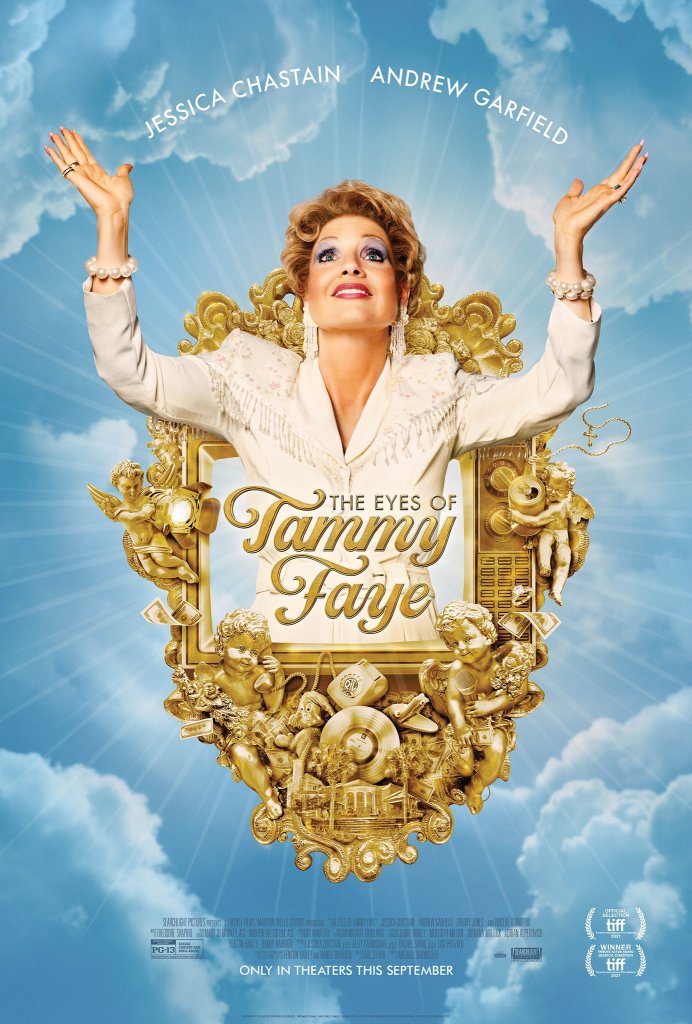
It settles for being a conventional, safe and predictable cradle-to-grave biography about a nice person who gets in (unknowingly, of course) over her head, in a marriage to a man corrupted by fame. Jessica Chastain – winning a generous Oscar in a weak year – is lovable and perfectly captures the persona of Tammy Faye, but essentially just ticks off the expected biopic tropes. Andrew Garfield gives excellent support as her naïve husband, seduced by fame and money and confusion about his sexuality. (Another flunk of the film is never linking Tammy Faye’s support for the gay community with her obvious awareness of her husband’s suppressed feelings.)

The film won a second Oscar for its impressive make-up and hair, which transforms Chastain’s facial features (she did about 3-4 hours in the chair everyday) and plumps out Garfield’s face. It’s a trap the film gets seduced into: fascinating recreations of TV moments and appearances, that never really gets under the skin to help us understand either of the Bakkers’ at all.

Bugsy (1991)

Bugsy (1991)

Old school glamour is the order-of-the-day in this luscious but slightly empty gangster film

Director: Barry Levinson

Cast: Warren Beatty (Ben “Bugsy” Siegel), Annette Bening (Virginia Hill), Harvey Keitel (Mickey Cohen), Ben Kingsley (Meyer Lansky), Elliot Gould (Harry Greenberg), Joe Mantegna (George Raft), Bebe Neuwirth (Countess Dorothy de Frasso), Bill Graham (Charlie Luciano), Lewis van Bergen (Joe Adonis), Wendy Phillip (Esta Siegel), Richard C Sarafian (Jack Dragna)

Las Vegas: the city of dreams for gangsters. As Ben (“Bugsy” – but don’t call him that) Siegel (Warren Beatty) tells a room full of gangsters when he’s pitching for their investment, like a hyper-violent Dragon’s Den: build the largest city in a state, you own the state, own the state and you own a slice of America. Imagine how the money can come rolling in then. It’s fair to say the mobsters aren’t so certain – and maybe Las Vegas would never have been a huge success if Bugsy had run it rather than being whacked – but God knows their investment paid out millions of times over.

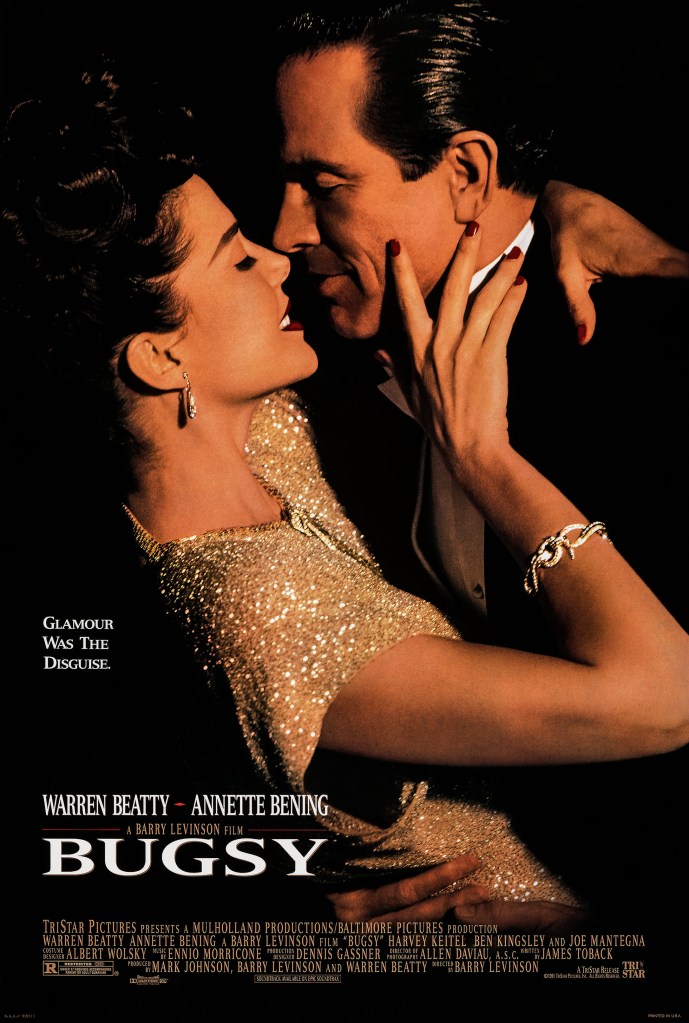
The dream of building Las Vegas is at the centre of Beatty’s passion project (in this one he just played the lead and produced, dropping a couple of hyphens compared to Reds), a Golden-hued, romantic biopic of notorious gangster (and killer) “Bugsy” Siegel. Siegel sees what no-one else could see: how a city in a law-lax desert could become a mecca for gamblers, and crime could reap the profits. But the project goes millions over budget – not helped by girlfriend Virginia Hill (Annette Bening) creaming millions off the top. Trouble is Bugsy’s investors aren’t the sort of guys who shrug their shoulders at failed investments.

You can see what attracted Beatty to Bugsy. For all it’s about gangsters, I couldn’t escape the feeling Beatty sees Bugsy as something akin to a fast-talking movie producer. Bugsy spins elaborate stories for his backers of how their investment will pay-off, builds fantasies on a huge scale, won’t accept any compromise (a load-bearing wall should be knocked down if it’s blocking the view of the pool!), pouring his heart-and-soul into every detail of his vision. It doesn’t feel a world away from the same control-freak energy Beatty poured into Reds (Bugsy is basically financier, manager, backseat architect and marketing man for his dream).

Bugsy feeds a lot off the fascinating two-way admiration street between Hollywood and gangsters. Beatty’s Bugsy is enamoured with Hollywood, even shooting a (terrible) test reel to try and break into the movies. He’s thrilled to be hanging around with old pal George Raft (a muted Joe Mantegna), who seems equally jazzed to hook up with notorious criminals. Hollywood laps up the notoriety of criminals, both on-screen and off. For his Flamingo launch, Bugsy wants to stuff the place with stars (to his fury, bad weather prevents them arriving), and schmoozing celebrities is at least part of what is going to make the City of Sin such a fun place.

Levinson’s film is shot with a romantic lusciousness, a sepia-tinged nostalgia that wants you to soak up the glory of the costumes, sets and the cool of being a quick-witted gangster who gets all the best girls. It’s very different from the real Bugsy, a brutal killer with a huge capacity for violence. The film tries its best to match this, but can’t escape the fact that Beatty is way more suave and charming than Bugsy deserves. For all we’re introduced to him gunning down a cheating underling – and we see him brutally beat others for bad-mouthing Virginia or using his loathed nickname – he never feels like a brutal criminal, but more like a flawed, romantic dreamer with a temper.

It’s hard not to compare Bugsy with the best works of Scorsese from the same era. Goodfellas knew that, under the surface glamour, this was a dog-eat-dog world and that there was no romance at the end of a bullet. Casino (which followed a few years later, a sort of semi-sequel) sees the true vicious sadism and greed at the heart of this city-building operation, while Bugsy sees it more as a lavish dream and a tribute to a sort of visionary integrity. Even seeing Bugsy gunned down in his own home by a sniper, doesn’t carry  with it the sort of inevitability it needs. As Scorsese understands, this way of life is like playing Russian roulette forever – eventually the chamber is going to be full. For all Bugsy literally plays roulette, it never feels like he’s playing with fire, more that he’s reaching slightly beyond his grasp.

Perhaps Levinson doesn’t quite have the vision to make the film come to life or stamp a personality on it. It feels like a film that has been carefully produced and stage-managed to the screen – and Levinson deserves credit for marshalling such an array of commanding personalities together to create such a lavish picture. But it’s muddled in its message. Is Bugsy actually worth making a film about? What are we supposed to understand from this: was he a killer out of his depth, or an unlucky dreamer? Bugsy wants him to be both, but fails to make a compelling argument for either.

Beatty is impressive in his charisma though, for all he never quite seems to have the edgy capacity for instant violence the part needs. He does capture Bugsy’s desire for self-improvement, from the Hollywood dreams to the eternal elocution lessons he repeats over-and-over like a mantra. His desire for glory even manifests as a bizarre fantasy that he is destined to assassinate Mussolini. It also perhaps explains why he’s drawn to Virginia, a would-be starlet. Annette Bening gives arguably the most impressive performance (but, inexplicably, was practically the only major figure involved in the film not to pick up an Oscar nomination) as a woman who is an unreadable mix of devoted lover and selfish opportunist, leaving us guessing as to her real intentions and feelings.

There is good support from Keitel (hardly stretching himself as Bugsy’s number two Mickey Cohen), Kingsley (an ice-cool but loyal Meyer Lansky, unable to stop Bugsy destroying himself) and, above all, Elliott Gould as Bugsy’s hopeless, pathetic best friend. Bugsy though, for all it’s entertaining, feels like a mispackaged biopic that wants to turn its subject into a romantic figure, unlucky enough to be rubbed out before he could be proved spectacularly right. This soft-soap vision doesn’t ring true and misses the opportunity the film had to present a more complex and nuanced view of the era and its crimes.

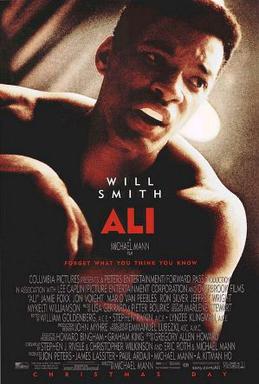
Ali (2001)

Ali (2001)

Will Smith captures The Greatest in a film that misses the fire and passion of Muhammad Ali

Director: Michael Mann

Cast: Will Smith (Muhammad Ali), Jamie Foxx (Drew Bundini Brown), Jon Voight (Howard Cosell), Mario van Peebles (Malcolm X), Ron Silver (Angelo Dundee), Jeffrey Wright (Howard Bingham), Mykelti Williamson (Don King), Jada Pinkett Smith (Sonji Roy), Nona Gaye (Khalilah Ali), Michael Michele (Veronica Porché), Michael Bentt (Sonny Liston), James Toney (Joe Frazier), Charles Shufford (George Foreman), Joe Morton (Chauncey Eskridge), Barry Shabaka Henley (Herbert Muhammad)

There is perhaps no greater sportsman of the 20th century than Muhammad Ali. Not for nothing did he call himself “The Greatest”. His impact on his sport is unrivalled, and his impact on our culture almost matches it. He’s one of those titanic figures that, even if you don’t care a jot for boxing, you know exactly who he is. Ali approved the film – and even more so, Smith’s performance – in Mann’s film that covers ten turbulent years in Ali’s life, from winning the title and changing his name, to refusing the Vietnam draft and losing his boxing licence and title, to reclaiming the title again in  the legendary “Rumble in the Jungle”.

If there is a major flaw about Ali, it’s that Ali was a man who was about so much more than just boxing – but Ali struggles to be more than a film about a boxer. It’s hard today to look at the film and not think that a black director would have had more connection with the emotional, cultural and political turmoil that defined Ali’s life in the 60s and 70s. Mann mounts all this well – and gives it plenty of empathy in the film – but his outsider perspective perhaps contributes to the film’s coldness.

Coldness is the prime flaw of the film. There was no sportsman larger than life than Ali. No public figure who demanded attention more, no boxer who fought his battles as much with wit, convictions and passion as well as fists as Ali. A film of his life needs to capture some of this magic alchemy: it needs to feel like a film that conveys the man Ali was. While there is no doubt there was a melancholy in Ali, a quiet inscrutability behind the pizzazz, this film leans too much into this. It does this while never really telling us anything about Ali’s inner life.

As two marriages are formed and collapse, we don’t get an understanding of what drew Ali to, and caused him to turn away from, these women. His relationship with the Nation of Islam ebbs and flows throughout, but other than a few on-the-nose statements from Ali, we don’t get an idea of how his faith defines him. We get his brave stand against serving in the Vietnam war, but not the emotional and intellectual conviction behind it (other than parading a series of famous quotes).

The film is packed with famous black figures – from Malcolm X to rival boxers and Ali’s support team – his father and family, not to mention three of his wives, but the relationship the film is most invested in is Ali’s mutual appreciation/attention-feeding verbal duels with boxing correspondent Howard Cosell (a pitch-perfect vocal and physical impersonation by Jon Voight). There feels something wrong about this film about a black icon, that his relationship with a white man feels the best defined.

But then it’s also a flaw with the film that its most striking, inventive and memorable sequences are all pitch-perfect recreations of filmed events. Will Smith perfectly captures the vocal and physical grace of Ali, and brilliantly brings to life his interviews with Cosell and his larger-than-life press conferences. The boxing matches are compellingly filmed, a perfect mix of slow-mo and immersive angles (they were largely fought for real, with few punches pulled). Ali’s final KO of Foreman in the Rumble in the Jungle, after several rounds of exhausting Rope-a-dope, is punch-the-air in its triumphal filming and scintillating excitement. But all of this stuff you could actually watch for real today. How essential is a film that uses actors to recreate, with better camera angles and superior editing, stuff that was filmed when it actually happened? Essentially if I want to see Ali stunning the world with his words, or sending Foreman to the canvas, would I choose to watch the man himself, or Will Smith’s perfect impersonation of him doing it?

There is nothing wrong with Will Smith’s performance though. For all his Oscar-winning work in King Richard, this is his finest performance. Bulked up to an impressive degree (Smith spent a year preparing for the film), he’s got Ali’s movements in and out of the ring to a tee and the voice is an unparalleled capture of The Greatest’s. It’s a transformative, exact performance – Smith has just the right force of character for the patter, but also brings the part a soulful depth that the film struggles to explore further. It’s a superb performance.

Enough to make you wish this was in a better, more passionate film. Ali was at the centre of a storm of civil rights and class war in America. He became the public face of a black community struggling to make its voice heard, sick of tired of being treated like second-class citizens by a country they were expected to die for in battle. The politics of the time is lost – Mario van Peebles has a wonderful scene as a troubled Malcolm X, but even he feels like a neutered figure – and the cultural impact of Ali is diluted.

The film ends with captions that dwell on Ali’s later boxing career and his marriages. That’s fine. But this a man who was so much more than what he just did in the ring. He used his position to take a stand on vital issues in America, at huge personal cost, when thousands of others would have settled down to mouth platitudes and make money. He took on the government and refused a compromise that would have allowed him to continue boxing, because he felt the war and America’s domestic policies were wrong. He was a brave leader of men, at a time of furious injustice. The film conveys the facts, but none of the glorious passion. It’s a photocopy of Ali, which is why its best bits are recreations of filmed events. It can’t quite understand or communicate the tumultuous feelings behind racial injustice in the 60s and 70s. It could – it should – have been so much more.

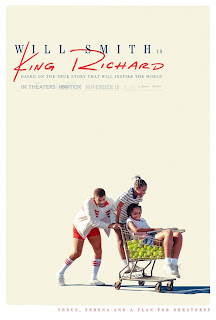
King Richard (2021)

King Richard (2021)

Richard Williams creates two of the greatest tennis stars ever in this easy-viewing star vehicle

Director: Reinaldo Marcus Green

Cast: Will Smith (Richard Williams), Aunjanue Ellis-Taylor (Oracene “Brandy” Price), Saniyya Sidney (Venus Williams), Demi Singleton (Serena Williams), Jon Bernthal (Rick Macci), Tony Goldwyn (Paul Cohen), Mikayla LaShae Bartholomew (Tunde Price), Danielle Lawson (Isha Price), Layla Crawford (Lyndrea Price)

Sports movies have a very reliable formula. There’s the initial promise, early success, adversity, obstacles, a moment of doubt, a renewal of commitment and a final success. I think it’s fair to say that King Richard pretty much hits all the beats you expect. In fact, its pretty much exactly the film you expect it to be when it starts and doubles down hard on the charisma and charm of its star.

King Richard tells the story of how the Williams Sisters, Venus (Saniyya Sidney) and Serena (Demi Singleton), took their very first steps towards dominating the world of tennis, as told through the eyes of their father Richard (Will Smith). Richard Williams had been determined from almost the moment his children were born, that he would never stop working (and push them) to build lives that would take them away from the working-class ghetto he grew up in. Teaching himself tennis coaching, from the moment they can hold a racket the girls are coached. But, being working class and black in a white-middle-class sport, Richard must work night-and-day to win professional coaching and playing opportunities for his daughters. Not to mention, struggling to ensure that they don’t forget their roots or get chewed up and spat out by the sport.

First and foremost, King Richard is a showpiece for Will Smith. The part fits him like a glove: Williams a larger-than-life, force-of-“Will” role that feels about 2/3rds Williams and 1/3rd Smith. With Williams fast-talking patter, never-give-up determination and absolute commitment to protecting his loved ones, the role plays to all Smith’s strengths. Smith gives a quintessential movie-star performance, which to-be-honest often feels like a Will Smith personality role (the modern equivalent of a Cary Grant performance), but is very entertaining because few people are as good at crafting their personae to benefit a movie as Smith is. Smith is heartfelt, earnest, loveable, sometimes slapable (Note: I wrote that before Smith’s slap-heard-around-the-world was forever attached to his Oscar-winning performance), but always a charming guy you root for.

Which is odd, as Richard Williams is a man with a mixed reputation. He was a demanding, argumentative, often controlling presence who irritated and alienated far more people on the tour than he befriended. Some saw him as a self-promoter, others as a man at times causing problems for his daughter’s careers. King Richard doesn’t shy away from showing these qualities – the awkwardness, the temper, the selfishness, the arrogance – but presents them all in the best possible light. The film is purest hagiography and Richard Williams is always vindicated in all his calls.

Awkwardly the film is also determined to give him all the credit for the Williams’ sisters success. Now there is merit in this – and the script was developed with the sister’s input, so it feels a bit presumptuous to get angry on their behalf. The sisters would never have become what they are if their father had not put rackets in their hands so young and invested hours in training them. Similarly, they would not have been as fully-rounded people without his constant mantra about family, humility and hard work. But also, they did have quite a bit of talent themselves – and certainly they profited from lessons they picked up from the other coaches they worked with.

However, one of the points King Richard is gently making – and it is gently made, as if the film was worried its crowd-pleasing potential might have been affected if it banged this drum too hard – is that Williams had to be a domineering figure because he was fighting against a racial divide in the sport. He feels out of place in the tennis country clubs because he is. No one else on the junior tour is anything other than white and well off. Every coach and trainer is applying methods that have worked for affluent middle-class athletes, without considering any adjustment might be needed for two young women coming from a totally different background.

You can argue the hagiography is partially a course correction from years of the only black father and coach on the tour being denounced as uppity, loud-mouthed, self-obsessed and intrusive. Its still made clear he shares these traits with many other tour parents, but adding to it a massive dose of supportive parenting. There are moments when the film addresses how Williams’ obsession that he knows best might just be starting to run the risk of alienating his daughters: in particular Aunjanue Ellis-Taylor delivers a blistering late speech (which probably got her an Oscar nomination by itself, so compellingly is it performed) where she lays out in no-uncertain-terms Williams many character flaws and damaging behaviours. (Coincidentally the film’s most compelling dramatic scene).

Maybe a bit of hagiography is what we need from a film designed to be an uplifting, triumph against the odds and celebration of one man’s fatherly love and devotion to give his daughters a chance to change their stars. The film is professionally directed by Green and some of the titbits of the sisters early training (throwing American footballs to build service strength among others) is fascinating.

The film is probably at least twenty minutes too long and starts at some points to repeat the same beats again and again. It doesn’t really do anything new and is exactly the sort of film you could predict it being. But it has some good performances, Smith is at the top of his (Oscar-winning) game, and it is an enjoyable, if predictable, feel-good watch.

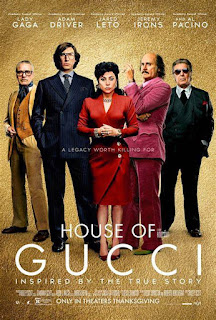
House of Gucci (2021)

House of Gucci (2021)

Ridley Scott’s bizarre film is half-pantomime, half true-crime drama

Director: Ridley Scott

Cast: Lady Gaga (Patrizia Reggiani), Adam Driver (Maurizio Gucci), Jared Leto (Paolo Gucci), Jeremy Irons (Rudolfo Gucci), Al Pacino (Aldo Gucci), Salma Hayek (Giuseppe Auriemma), Jack Huston (Domenico De Sole), Reeve Carney (Tom Ford), Camille Cottin (Paola Franchi), Youssef Kerkour (Nemi Kirdar)

There are few juicier combinations than glamour, money, fashion and true crime. Scott’s House of Gucci taps into this with a film that’s somewhere between pantomime and tragedy. Full of actors giving their very best “Mamma Mia!” Italian accents and shrugging shoulders, it oscillates wildly from scene-to-scene between black comedy and operatic high drama. It’s a strange mixture, with House of Gucci becoming some sort of bizarre treat, like an end-of-year treat for cinema viewers to unwrap.

The film follows the disastrous marriage between Maurizio Gucci (Adam Driver) and Patrizia Reggiani (Lady Gaga). Patrizia, a ruthlessly ambitious gold digger, zeroes in on the shy Maurizio, heir to 50% of the Gucci fashion fortune, and marries him. This is all to the horror of his father Rudulfo (Jeremy Irons), who (correctly) identifies Patrizia’s ambitions, and cuts them off. Taken under the wing of Rudolfo’s brother Aldo (Al Pacino), Patrizia pushes Maurizio into a management role in the company – and down a slippery slope that will lead to forgery, betrayal and eventually murder.

House of Gucci feels like it might have existed more comfortably as a ten-part TV drama. It’s essentially a big, brash version of the Emmy-award winning The People vs. OJ Simpson, but told in about a quarter of the time. What this basically means is that any subtle character work and detailed story telling is sacrificed, with the focus firmly on the salacious and entertaining drama. The overall effect is a swift rush through a story that becomes a series of sensational, almost comedic, clashes between larger-than-life personalities squabbling over a huge pot of money. Like Dallas on the big-screen, it’s all scored with a series of funky pop tunes, adding to the sense of pantomime.

It’s an odd outing from Scott, with (it felt to me) little of the individual stylistic touches that he has bought to other projects. In fact there’s very little of his stamp on it: it’s Scott as professional craftsman. He and the film feel very confused by the tone. Mostly the film doubles down on black humour and show-casing big, brash performances. Then it might acknowledge briefly that there were real victims here, which it wants to treat with a level of respect. By and large, the film is like a glossy magazine article, with Scott nudging you as you turn each page and saying “you will not believe what happened next!”

I suppose House of Gucci probably could have explored more the personal and emotional hinterlands of its characters. Relationships shift dramatically from scene-to-scene, with Maurizio and Patrizia’s marriage souring over-night, for no clear reason. Pre-existing family rivalries and politics could have been explored more: it’s heavily implied Aldo and Rudolfo are already engaged in a struggle of ideals (Aldo wants commercial expansion, Rudolfo to remain an elitist fashion house). Drama could have been made of the attempts by both brothers to use other members of the family as pawns in this feud. But then, a film that dived into the psychology of the players might well have ended up being more about business and less about the entertaining ruthlessness of the rich and famous.

The performances are wildly different in tone. Lady Gaga effectively holds the film together as an ambitious woman who is only partially aware (at first) of what a ruthless gold digger she is. Devoid of any interests other than being rich (“I’m a people pleaser” she tells Rudolfo when asked what her interests are), Patrizia is the sort of monster of ambition who would fit comfortably into an episode of Desperate Housewives. Setting her cap at Maurizio with a laser-like focus and shafting everyone left, right and centre (although Gaga does hint at her deeply repressed insecurity) it’s a performance that walks a fine line between OTT and human. The film has a lot of fun at her amoral certainty – she sees no problem with forging Rudolfo’s signature on some vital papers after his death (the film even sets forgery up as Chekhov’s skill in its opening scenes) and Gaga enjoyably plays the outrage that only someone convinced they never wrong can feel.

Opposite her, Driver plays Maurizio as a timid, easily seduced young man, pushed into taking a leading role in a business he has no real interest in (or aptitude for). Driver is softly spoken – and gives the most restrained and grounded performance in the film – and frequently meets another demand from his wife with a chuckle and a reluctant “Patrizia…”. House of Gucci steps carefully around Maurizio, sometimes playing him as an innocent abroad, at others as a man corrupted by his wife into a creature of ambition.

Most of the rest of the cast go for a broad style which, while fun to watch, only adds to the sense that we aren’t supposed to be taking anything too seriously. While many of the Gucci family probably were larger-than-life personalities, I’m not sure they could have been the cartoons they are here. Irons goes for a waspish Scar-like mastery of the cutting remark. Pacino doubles down on his shoulder-hunched energy, with added shouting. Hayek gives a performance that’s a near master-class in Vampish camp, plotting murder from a mud bath.

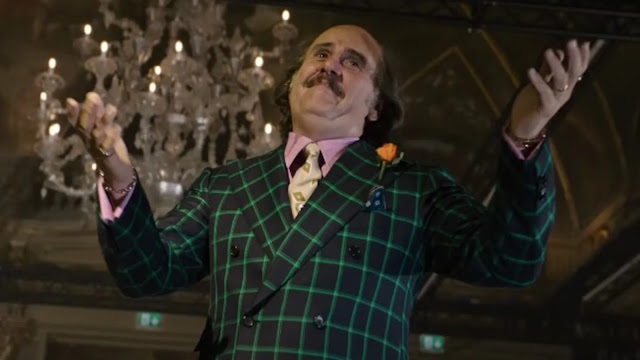
Towering above them all is Jared Leto, who seems to be in a film all of his own, with every scene another clip for his “for your consideration” show-reel. Buried under a mountain of latex that transforms him into a clone of Jeffrey Tambor, Leto goes all out as the passionate, ultra-stereotypical-Italian Paolo Gucci, in a performance that’s either a shameless parade of showing off or somewhere near a stroke of genius. It works because, beneath all the hammy exuberance, Leto make’s Paolo a desperately sweet guy, the only real innocent in the film. Leto and Pacino in particular feed off each other – a late scene between the two is hilarious (I’m not sure in the right way, but who can tell what these actors are aiming for sometimes) in its joyful overplaying.

Perhaps joy is the one thing House of Gucci needs a little bit more on. I wonder how more entertaining again it might have been if the film had really gone all out on being a camp classic. It shies away from this, wanting to leave some vestige of respect for the dead and not lose its true-crime-roots. But, I wonder if a director more suited to this material than Scott – who struggles to stamp his personality on it – might have done more to make this into a cult classic.

Spencer (2021)

Kristen Stewart channels the People’s Princess in Spencer

Director: Pablo Larrain

Cast: Kristen Stewart (Diana, Princess of Wales), Timothy Spall (Major Alistair Gregory), Jack Farthing (Prince Charles), Sean Harris (Chef Darren McGrady), Sally Hawkins (Maggie), Jack Nielsen (Prince William), Freddie Spry (Prince Harry), Stella Gonet (Queen Elizabeth II), Amy Manson (Anne Boleyn)

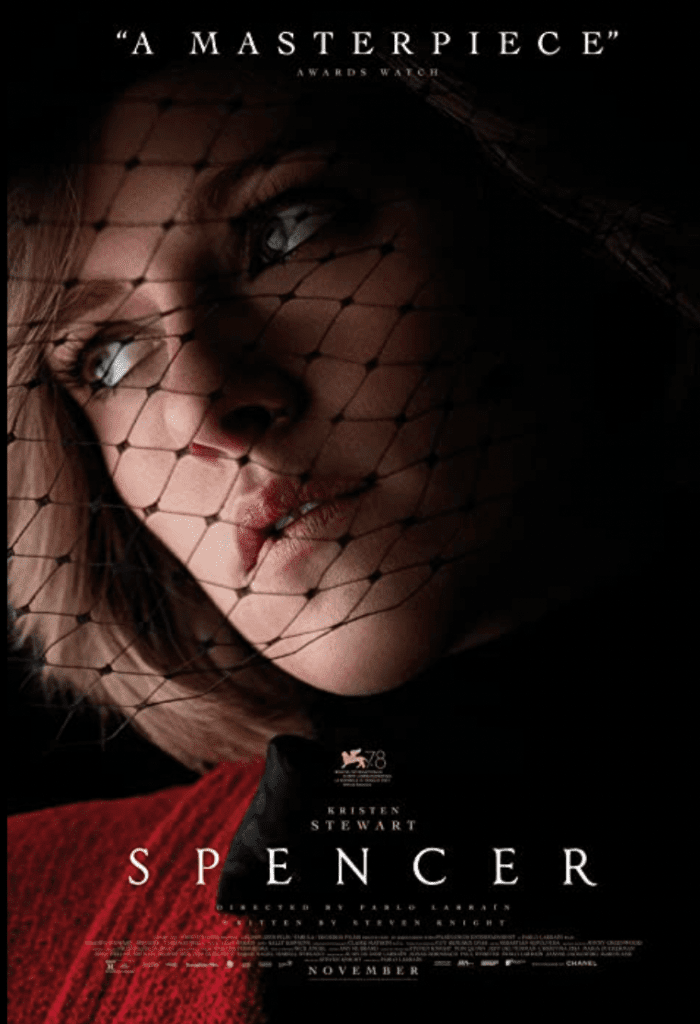
There is no more famous fairy-tale-gone-wrong in history than Prince Charles and Diana. It’s been explored in countless books, memoirs and films. It’s the meat of Netflix’s The Crown. Interest in it has been rekindled again after Prince Harry’s royal resignation. It’s a fable (also what this film claims to be, based, it claims, on “a true tragedy”) that will only become more of a legend. At its centre is Diana, a figure idealised and enshrined by a tragic early death, who had all the warmth, lovability and public humanity the more reserved Charles lacked. Diana’s romanticism has always helped her be remembered as the hero of this tragedy, with Charles the villain. You’ll see no difference in opinion here. Spencer is a fantastia on Diana that feels like it has been squeezed out of the pages of a host of sentimental pro-Diana memoirs from the likes of Paul Burrell.

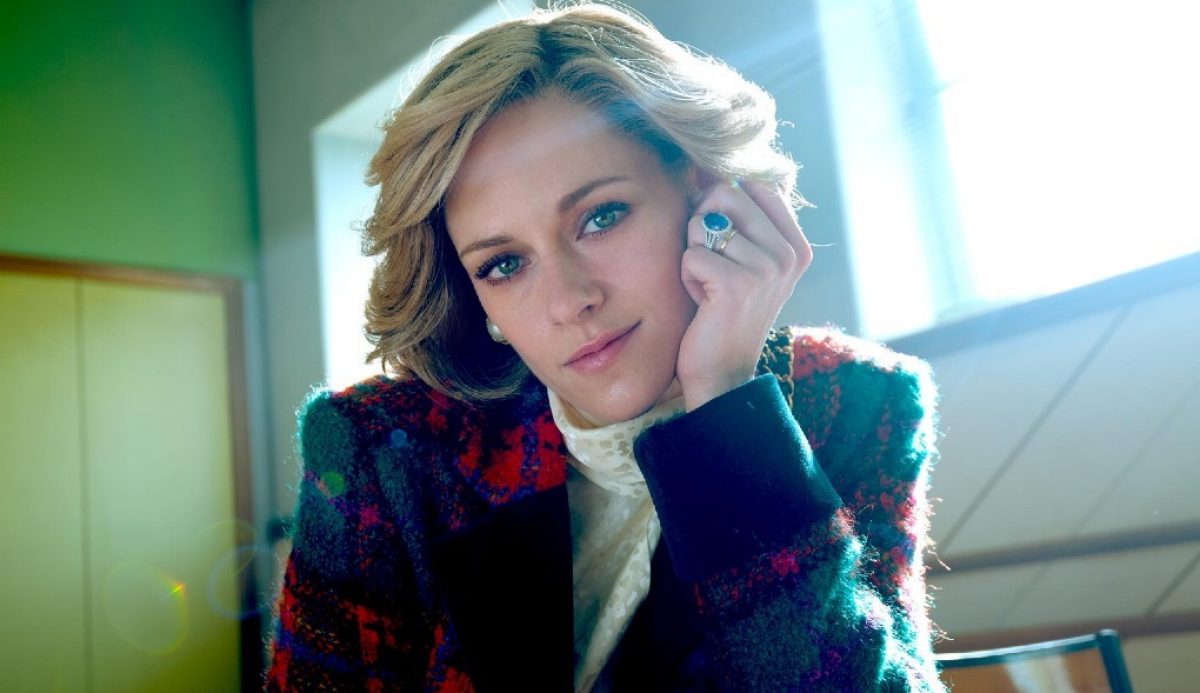
Set over a three-day Christmas holiday at Sandringham, around 1991, the film follows a disastrous holiday of psychological depression, despair and isolated crisis for Diana (Kristen Stewart) as her marriage to Charles (Jack Farthing) finally, irretrievably, collapses. Over those days, Diana hides in her room, throws up meals, is treated with stony silence from the Royal family and quietly bullied by Sandringham equerry Major Gregory (Timothy Spall). Her only friends are besotted loyal dresser Maggie (Sally Hawkins) and avuncular chef Darren (Sean Harris) and her only moments of happiness are with her two young sons, giving her the only taste she has of a normal life.

If there is one thing Spencer does very well, it is giving an insight into how overbearing and crushing depression can be. Diana is erratic, frequently tearful, prone to fantasies and suffers through prolonged periods of self-loathing, exhibiting as chronic vomiting after every meal and possible self-harm. Stress makes her sharp and waspish with those she doesn’t trust and almost overwhelmingly needy with those she does. Larrain visualises this with muted pallets and drained colours, showing this world in the same oppressive, depressing light as Diana see it, while Johnny Greenwood’s excellent score makes superb use of a series of unsettling chords to constantly put us ill at ease.

The downside is, the film so completely consumes the Diana-side only, that it feels like being crushed to death by a collapsing mountain of “People’s Princess” bargain-bucket memoirs. Diana is always the victim and never at fault. The film takes an idealised view of her as “one-of-us” chewed up and spat out by an uncaring system, with the Windsors as monstrous gargoyles. (A bit rich considering she’s the daughter of an Earl). Charles is cast firmly as a cold-fish and villain, heartlessly openly carrying on an affair, gifting the same pearls to Camilla as he does Diana. Where Diana is warm and playful with the children, Charles is cold and authoritative, angrily tutting at William’s failures at shooting. Where she has a natural touch with people, Charles is cold and dictatorial.

It is, basically a one-sided vision of this story. That would be fine if the film had suggested that what we are seeing is Diana’s depression-filtered perception of the world – her perception told her surroundings were like, cold, cruel and oppressive. But there is no suggestion that we are seeing this, no extenuating circumstances or slight doubts raised to suggest that there may be different interpretations of these events or that there were two people in this marriage, both in different ways at fault.

It’s something The Crown has carefully – and skilfully – done, by demonstrating these are two people never in love with each other in the first place, with no common interests and outlooks. Spencer could have delved more into helping us understand how this situation came about. It isn’t interested in doing this: as far as the film is concerned, Charles is an unfaithful bastard (Jack Farthing’s channels his Warleggen from Poldark, playing every scene with a razor-blade growl) intent on gaslighting his wife. It doesn’t seem fair.

And lord knows, I’m sorry for Diana who should never have agreed to marry a man she was unsuited to and in love with another woman from day one. There is a film to be made (eventually) about Diana which explores the fascinating puzzles in her identity. The woman who loathed the press but also was an expert manipulator of public opinion, who yearned for privacy but loved public and private devotion. Spencer doesn’t explore any of this, instead presenting a simplified, romantic vision of a woman exactly as you would expect to see from a cliched TV movie. At heart, in fact, that’s what Spencer is – a slushy made-for-TV-movie shot like an arthouse film.

That’s perhaps why its full of such ridiculous flourishes. We’ve obviously talked about the stone-cold Royals. We get cod psychology – “Where the fuck am I?” are Diana’s opening lines, hammering home for us (in case we are about to miss it) that her tortured psychology is the heart of the film. As the Royal Court arrives at Sandringham, their cars drive over the dead body of a pheasant – symbolism you see! Diana reads a book about Anne Boleyn – and sure enough she is soon literally communing with a ghost of the beheaded Queen, both of them claiming themselves as victims of a cruel king who loved someone else. Everything in the film is heavy-handed and designed to push Diana as the faultless victim and the Royals as scowling monsters.

Kirsten Stewart gives a decent impersonation of Diana – vocally she’s spot-on – but for me she struggles in the shadow of Emma Corrin’s extraordinarily transformative work in The Crown – a show that also gained a lot more emotional insight into this story than the film even begins to achieve. It’s shot with a real arthouse style, but at heart it’s a silly and shallow film that never tries to understand either Diana’s inner life or how her marriage became what it was.