Category: Biography

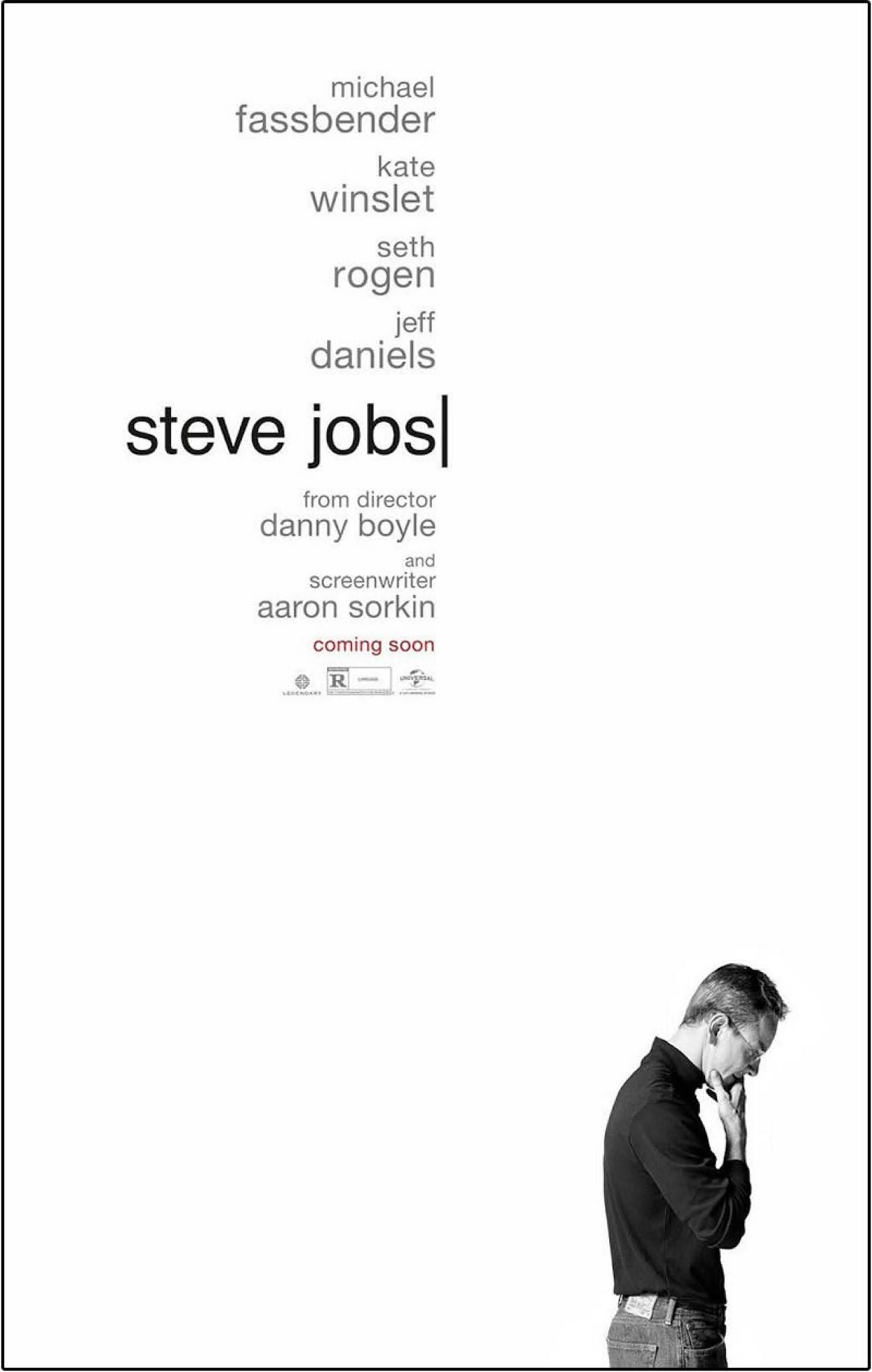
Steve Jobs (2015)

Michael Fassbender excels in Danny Boyle’s superb Sorkin scripted biopic Steve Jobs

Director: Danny Boyle

Cast: Michael Fassbender (Steve Jobs), Kate Winslet (Joanna Hoffman), Seth Rogan (Steve Wozniak), Jeff Daniels (John Sculley), Katherine Waterston (Chrisann Brennan), Michael Stuhlbarg (Andy Hertzfield), Perla Haney-Jardine (Lisa Brennan aged 19), Makenzie Moss (Lisa Brennan, aged 5), Ripley Sobo (Lisa Brennan, aged 9), Sarah Snook (Andy Cunningham)
The art of movie biography shouldn’t be slavishly covering every second of the subject’s life. It should be capturing their essence. Steve Jobs does exactly that, a superb distillation of its subject’s life and personality through focusing on the preparation for three vital project launches: the Apple Macintosh in 1984, the NeXT Computer in 1988 and the iMac in 1998, each playing out in real time. The contrasting (and continuing) clashes and tensions at each event – personal and professional – tells us more about the man and his impact than a cradle-to-grave biopic ever could.

It also helps that Steve Jobs has an electric script from Aaron Sorkin. Sorkin approached the project not like a film, but as a classic three-Act play. Steve Jobs is an explosion where all the special effects are the words, held together by pulsating ideas and a sense of rhythm musicians would envy. This is Sorkin at his absolute best, a script with zip and jokes but also a profound understanding of exactly the sort of tunnel-visioned visionary perfectionism Jobs encapsulated, all wrapped up with a beautifully judged emotional through-line. Only Sorkin can make just actors delivering dialogue as dynamic and edge-of-the-seat as a car chase.

And (like The Social Network) his intensely intellectual style, and sense for the frustration of the super-intelligent at the rest of us for not keeping up, is perfect for this tale of the creation of the future of computing. Sorkin uses product launches as a window into how fresh idea can be accepted (or not) by the world. The battles over them, with the focus on small details that communicate the big picture and the difficulties of making others understand the visionary core that makes something work is crucial – and brilliantly delivered here. That’s perfect for Sorkin, who is gifted at making big-picture passionate thinkers sound as brilliant as they are.

But what makes Steve Jobs perhaps his most compelling script, is that he adds an emotional undertone to it. Jobs was a visionary, who understood better than the customer what they really wanted. But he was also a flawed individual. Sorkin’s script makes clear that, like his computers, he was a closed system. Just as the Macs were designed to only work with their own software and not interface with others (Jobs’ gospel, the exclusivity of the product being what makes it special), so Jobs himself built his own conception of the world and refused to let anything outside that influence it, or allow any external factors to change his mind. Decide he was loyal to someone, and nothing they do will shakes that. Decide another has betrayed him, and the system locks them out.

Central to this is Jobs’ relationship with his unacknowledged daughter. From the 5-year-old he reluctantly spends time with, to the young girl he starts to form a carefully emotionally managed bond with to the 19-year old who finally tells him how much she resents his closed-system management of their relationship. Sorkin’s script brilliantly balances an insight into why Jobs might have acted like this (bound up in issues with his birth parents) and the emotional impact it has on the daughter (the hugs not returned, the words not said). Jobs isn’t a bad man – although the script doesn’t shy away from his selfishness, or the appalling things he said about Lisa’s mother in the press – or a straight-forward terrible dad. He’s just not quite capable (or willing) of giving the emotional commitment needs. It’s written tenderly with a great deal of empathy for both father and daughter.

This emotion is further bought out by Boyle’s dynamic humanism at the helm. It’s a reminder of what a great theatre director Boyle is: this film is basically one of the most dynamic plays you’ll ever see, fast cuts and graphics intermixed with extended one-shot dialogue scenes that allow his actors to flourish. Boyle employs on-screen graphics and montage to move us between the product launches, but isn’t afraid to let his camera serve the dialogue, with the exchanges brilliantly cut to the rhythm of the dialogue.

He also sets out a space for the actors to deliver uniformly superb performances. Front and centre is Michael Fassbender’s transformational performance. He communicates Jobs’ brilliance and his ruthless determination to never compromise. It’s a performance of messianic intensity, but also extremely grounded and real – and, like Sorkin, he understands the heart of the film is the father-daughter relationship. Fassbender carefully hides Jobs’ emotional need, just as he understands the dynamism that wouldn’t allow a hint of vulnerability and arrogance that judges everyone as second-best to himself. He’s a tough, difficult, uncompromising man – but also an egalitarian one, (eventually) willing to acknowledge his flaws, the biggest being his fear of emotion.

Equally brilliant is Kate Winslet as Joanna Hoffman, Jobs’ long-time confidante and ‘work-wife’, manager of each of the launches and a combination of mentor, conscience, counsellor and parent. Jeff Daniels is excellent as the businessman who goes from mentor to unforgiven rival. Seth Rogan gives his finest dramatic performance as Steve Wozniak, here a decent man and computing genius, who lacked Jobs’ ability to “play the orchestra” and shape events to his will.

It’s all wrapped up in a gripping film that feels like a fusion of theatre and film. If it has a problem, it’s that many will find its focus on the nuts-and-bolts of Apple hard to follow (and I confess, the script makes me understand the drama without understanding the product). But its strength is in understanding visionaries, their ability to shape ideas that wouldn’t occur to the rest of us – and the selfishness, and the damage that causes, that often goes hand-in-hand with that. With scintillating acting, skilful direction and, above all, a superb script, Steve Jobs is sharp and engrossing drama.
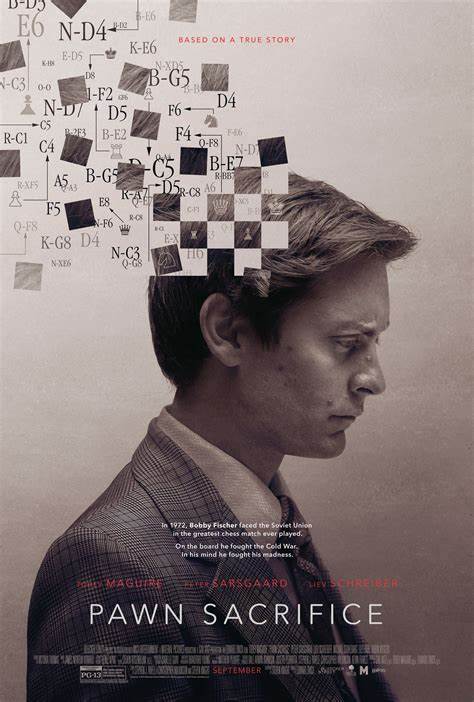
Pawn Sacrifice (2014)

Liev Schreiber and Tobey Maguire recreate Spassky/Fischer in Ed Zwick’s pointless chess drama

Director: Ed Zwick

Cast: Tobey Maguire (Bobby Fischer), Liev Schreiber (Boris Spassky), Peter Sarsgaard (Father Bill Lombardy), Michael Stuhlbarg (Paul Marshall), Lily Rabe (Joan Fischer), Robin Weigert (Regina Fischer)

In the 1960s and 70s, Chess suddenly became world news. Like the space race before it, it was effectively a way for the USA and USSR to combat each other without the risky side effect of blowing up the whole world. The USSR had all the best players: until American chess prodigy Bobby Fischer emerged to shatter this monopoly. In 1972 the world seemed to come to a stop to watch the world championship clash between Fischer (Tobey Maguire) and Boris Spassky (Liev Schreiber) in Reykjavik. Ed Zwick’s film attempts to bring together the personal and the political – two superpowers using a game as a proxy for war – into an enlightening package. It fails.

The film opens with Fischer trashing his apartment in search for bugs on the eve of the 1972 final before flashing back in time. You’d expect the film to give us an idea of what bought our “hero” to this point. Zwick’s film utterly fails to do this. Now Fischer – very well played by an aggressively prickly Tobey Maguire – was a hugely troubled man. Though never formally diagnosed some combination of paranoia, OCD and a myriad other personality problems meant he was never more than a step away from self-destruction. Despite this he was deeply driven by an ambition to be the best chess player in the world. Its rich material, but the film never begins to get to grips with Fischer.

Could this be because it wants to tell an uplifting story – the film is really building towards the standing ovation Spassky gives Fischer in game 6 at the 1972 championship when Fischer whipped him in about 40 moves of perfect play – but is struggling with the fact that Fischer himself is deeply unsympathetic. A paranoid conspiracy freak who even by the standards of the 1960s was an aggressive, virulent anti-Semite (Fischer would later match Mel Gibson in his anti-Semitic tirades, blaming Zionism for everything from 9/11 down). A bully who refused to interact with anything except on his own terms, who cut all friends and family from his life for the most minor transgressions. There is no insight given here at all, or suggestion of what was wrong with Fischer.

It’s hard to hang a “triumph against the odds” structure – as Zwick’s unimaginative and conventional film tries to – around this. A far more interesting film would have used the 1972 tournament as an Act 2 triumph and then explored in more depth Fischer’s long spiral of self-destruction that would see him as a bearded eccentric ranting against Jews and America, in exile in Iceland. A film like that would also have then been able to properly do service to the idea of Fischer as a pawn of American state interests, who celebrate him when they want to rub the Soviet nose in it, but then drop him as soon as his purpose is served.

Instead, the film becomes formulaic and empty, leaving us with the impression that we learn nothing about Fischer at all. Why did this man of Jewish descent hate Jewish people so much? Was it self-loathing? What motivated him to seemingly self-destruct his own career so regularly? Was it a fear of being beaten? We have no idea. Instead that opening scene of Fischer destroying his apartment tells us everything we learn about the man over the course of the film. He remains an enigma – and since he’s also deeply unpleasant (the film skirts a little around how much) and we don’t get given any rich material to understand why he’s like this, he becomes a tedious figure to spend time with.

Zwick’s film also fails to communicate the cold war motivations behind this. Although there are the odd shots of the powers-that-be watching on TV in the Kremlin and the White House, we get no sense of how or why these powers are using chess to promote their own ideology. The film is endlessly reliable on vintage and reconstructed newsreel footage to constantly tell us directly things it can’t work out how to do with dialogue, from the political situation to chess moves. You learn nothing about the Cold War from this film. Michael Stuhlbarg’s lawyer turned promoter for Fischer states openly that he wants to use Fischer to show up the Russkies – but that blunt statement is it.

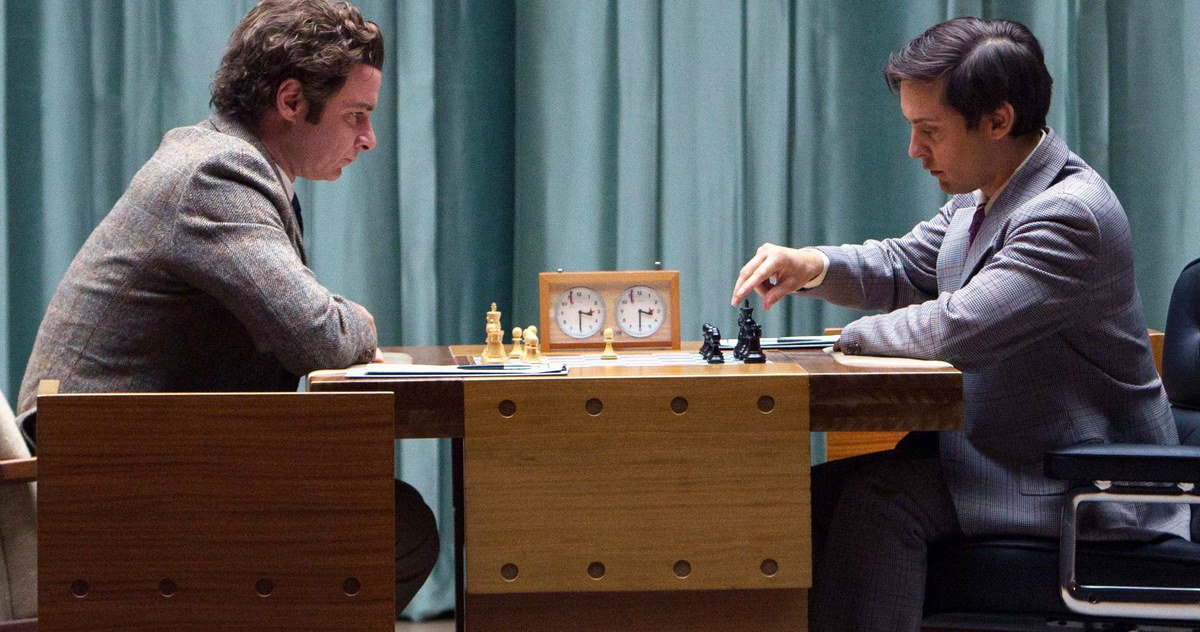
Instead the film is only really interesting when it is effectively recreating footage from the 1972 championship. And when a film’s strong points are recreating real events perfectly, you know you are in trouble. Zwick’s film lacks ideas, a compelling plot, insight or invention. It suffers badly today when compared to the far more dynamic and insightful The Queen’s Gambit (whose lead character is a heavily fictionalised female Fischer). Zwick’s film is him at his plodding, middle-brow worst, presenting a would-be epic shorn of anything of actual interest of controversy. The only thing that redeems it are decent performances from Maguire, Sarsgaard and Schreiber. Otherwise, this is an empty mess that tells you nothing at all about anything. You could checkmate it in about four moves.

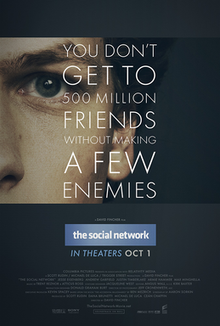
The Social Network (2010)

Andrew Garfield and Jesse Eisenberg bring the making of Facebook to life in Fincher’s modern American classic

Director: David Fincher

Cast: Jesse Eisenberg (Mark Zuckerberg), Andrew Garfield (Eduardo Saverin), Justin Timberlake (Sean Parker), Armie Hammer (Cameron Winklevoss/Tyler Winklevoss), Max Minghella (Divya Narendra), Brenda Song (Christy Lee), Rashida Jones (Marilyn Delpy), Joseph Mazzello (Dustin Moskovitz), Rooney Mara (Erica Albright), John Getz (Sy), David Selby (Gage)

Nothing has changed our interaction with the world faster than the internet. And nothing on the internet has changed how we interact as much as social media. As it drives changes in the way we relate to other people, it’s a brave film that tries to capture this zeitgeist and turn it into an effective movie. The Social Network is a brave movie – and also a brilliant one, a defiantly modern and far-sighted movie that avoids being the sanctimonious message movie it could have become, by concentrating on personal relationships, drama and, above all, a strong and compelling story.

Its October 2003 and a 19-year old Harvard student Mark Zuckerberg (Jesse Eisenberg) gets dumped by his girlfriend Erica (Rooney Mara). So, he responds like many people today would – but not in 2003 – by writing a series of rude and angry blogs about her. And at the same time, he does something you and I wouldn’t be able to do – he builds overnight a campus website called Facemash that allows users to rate the attractiveness of female students. It’s a sensation – and a scandal.

Off the back of it, Zuckerberg is approached by the Winklevoss brothers (in a skilled double performance by Armie Hammer) to see if he’d be interested in building an elite social network, Harvard Connection, for them. Zuckerberg agrees – but did he independently already have the idea for Thefacebook, an elite social network for Ivy League students? Either way, with funds from friend Eduardo Saverin (Andrew Garfield) he builds the platform which is to become Facebook. Does it all end well? Since the story is framed around Zuckerberg in 2009, sitting in depositions while being sued by both the Winkelvoss brothers (“the Winklevi”) and Saverin, you can guess not.

Fincher’s film reflects its central character in many ways – cool, efficient, tightly wound, juggling intellectualism with simmering tension. It’s vibrant, fresh, razor-sharp, perfectly paced and superbly dramatic. It turns what could have been a terrifically dull story of very clever people typing lines of code into a whipper-sharp story of jealousies, rivalries and suspicions. It also brilliantly veers away from being a polemic. It could easily have made points – as many films have – about the “evils and dangers of that creepy thing the internet” or constantly reminded us how morally superior film-makers are to social media kingpins. It does nothing of the sort. Instead it’s a brilliantly insightful look at the birth of a phenomenon that also makes subtle, intelligent points about some of the behaviours that phenomenon led to. All while keeping us gloriously entertained.

A big part of the film’s success is in Sorkin’s superb script. The material is perfect for him. The character’s intellectualism fits with his pithy turn of phrase, while their perceptions of themselves as victims or on a moral crusade fits with his ability to write morality with empathy. It also helps that he is the master of crackling dialogue. The idea to structure the film around the depositions is also a master-stroke. Not just a reminder of what’s to come, it adds an air of artificiality to everything we see (perfect as well for Sorkin’s smarter-than-life dialogue) – after all, each scene is based on the filtered remembrances of people in the depositions. And all of them remember a subtly different story.

Sorkin and Fincher also manage to avoid having villains in play. It would be easy to make Zuckerberg a villain: many films would have done. But Zuckerberg here isn’t bad – it’s more that he’s tunnel-visioned, selfish and socially inept. Erica (a marvellous turn by Rooney Mara as the first victim of social media bullying) has a point when she says she dumping him not because he’s a geek but because he’s not really a nice person. But Zuckerberg’s actions – his betrayals as some read them – come not from vindictiveness but a shark-like moving forward that leaves people behind him. And he’s also, as the film is keen to show repeatedly, lonely. He has one friend – whom he sacrifices on the altar of his creation – and is ruthless at cutting people out of his life when they fail to meet the standards he has set them.

The film channels the skills of Eisenberg – whose range is not huge – perfectly here, in a role he was surely born to play. Eisenberg crafts his physicality in something hunched, oppressed and sullen while his flat voice is perfect for a man who expresses himself through his creation not his personality. He gives Zuckerberg both a ruthlessness, but also a strange lack of knowledge – constantly surprised that his actions have consequences that leave him alone. He makes him a true lonely god of the internet – the man who invented the biggest social networking centre in the world, but who doesn’t have a friend himself.

But it also makes clear that Zuckerberg lacks the usual flaws of his kind: he’s not interested, it seems, in money, riches, fame or drugs. To him, the prize is to do not to be seen to do. He makes a rich contrast with Sean Parker (a brilliantly charismatic Justin Timberlake), the creator of Napster, who briefly influences him but is primarily interested in the flash and bang that the retiring Zuckerberg isn’t. What he does have is the drive and ruthlessness that his friend Eduardo Saverin (a wonderful performance from Andrew Garfield as a marvellously sweet, but clearly naïve and out-of-his-depth man completely lacking the vision a project like Facebook needs) doesn’t have – and which makes Saverin unsuitable for thinking in the global terms Zuckerberg is.

And the film has little time for the Winklevoss twins. Played with chutzpah in a double role by Armie Hammer (who skilfully distinguishes both of them), Zuckerberg is right when he describes them as rich kids who had everything they ever wanted in life – and seem outraged that they can’t be given the rights to Facebook as well. As he points out they intended to do nothing other than come up with a concept. These rowers – in a witty touch their boat is sponsored by that dinosaur Polaroid – also represent the old elite under siege from new media. The entitled rich, who can’t comprehend that the world is being handed to them on a plate.

The film also makes for an intriguing meta-commentary on the growth of social media. From the trolling of Erica, through the bitter feuds and arguments, the he-said-she-said fighting of the depositions, and the quick shifts between friendship and rivalry, it also manages to capture the world of social media in a nutshell. The atmosphere where actions can explode in people’s perception, where statements you made years ago come back to bite you, where judgement and criticism are constant and the ability to communicate more easily also makes fights easier to start, seem more and more prescient.

Fincher’s film does this marvellously, with a wit and sense of dramatic flair that reminds me of a more grounded Network. Sure the scene at Henley-on-Thames is hand-in-the-mouth agonising for any British person to watch (it is littered with major errors from turn-of-phrase to its understanding of life in Britain), but when every other scene in it is perfectly done it doesn’t matter. Like any victory, Facebook has many people claiming to be its father. You could say the film about this film: superbly directed, a brilliant script and perfectly cast, it’s a triumph.

The Aviator (2004)

Leonardo DiCaprio excels as Howard Hughes in The Aviator

Director: Martin Scorsese

Cast: Leonardo DiCaprio (Howard Hughes), Cate Blanchett (Katharine Hepburn), John C Reilly (Noah Dietrich), Kate Beckinsale (Ava Gardner), Alec Baldwin (Juan Trippe), Alan Alda (Senator Owen Brewster), Ian Holm (Professor Fitz), Danny Huston (Jack Frye), Gwen Stefani (Jean Harlow), Jude Law (Errol Flynn), Willem Dafoe (Roland Sweet), Adam Scott (Johnny Meyer), Matt Ross (Glen Odekrik), Kevin O’Rourke (Spencer Tracy), Kelli Garner (Faith Domergue), Frances Conroy (Katharine Houghton), Brent Spiner (Robert E Gross), Edward Herrmann (Joseph Breen)

Howard Hughes grew up wanting to make the biggest movies in the world, fly the greatest plans and be the richest man in the world. He achieved all of this. He ended his life a wild-haired long-nailed recluse, terrified of stepping outside his controlled zone, a victim to crippling OCD. Martin Scorsese’s The Aviator is a triumphant, brilliantly engrossing, sumptuous exploration of Hughes’ years of triumph, where everything seemed to go right publicly – even while everything was beginning to go wrong internally.

It’s Scorsese’s second teaming with Leonardo DiCaprio – and while DiCaprio’s boyish good looks don’t really relate to what the real Hughes looked like, his charismatic enthusiasm, passion and determination brings Hughes triumphantly to life. It’s a brilliant performance, which dominates the movie. DiCaprio seems to completely understand power of driving ambition, who will mortgage everything he has time and time again to achieve his dream – and also the force of personality needed to turn those dreams into success. But obsession drives both success and eventual personal disaster. There is always something slightly fragile about DiCaprio – maybe its those boyish good looks – and here he brilliantly captures the tragedy of a man clinging to his sense of self, struggling with the demons within him.

Scorsese’s film gloriously balances the epic with the personal. It so brilliantly relates to the irrational but very convincing fears of those suffering from OCD, that scenes featuring Hughes obsessively plucking tissues from boxes, or stuck in restrooms scared of touching the door carry a real sense of threat. The grandness of much of the rest of the film – and the sense we get have how much more Hughes could have achieved – means the demons he carries are even more affecting. Imagine what he could have done, if he wasn’t terrified of even the smallest germ, or was able to put aside his destructive urge to control every inch of his environment and the people in it.

All this tragedy works because the grandness is so impressive. Scorsese’s film looks beautiful. The filming was inspired by replicating the visual and colour styles of contemporary Hollywood. The early 1930s-set section of the film apes the toned look of early-colour (green appears blue, most strikingly at a golf course) with full colour only appearing when the film hits the years of technicolour. The 1940s sequences are inspired by touches of film noir, leaning into the early days of epic technicolour by the end. It looks striking and also amazing. The production design is similarly breathtaking, while the film is shot and assembled with a wonderfully vibrant energy.

It’s also got plenty of wit. John Logan’s fast-paced script captures the sense of a fun of a man who was determined to turn his dreams into reality. John C Reilly is a lot of a fun as the weary number 2, constantly performing financial gymnastics to keep his bosses dreams afloat. Compulsion and obsession makes Hughes the sort of guy who will rebuild an aeroplane from scratch because of a minor flaw, or will reshoot a film because it will work better with sound. During the shooting of Hell’s Angels he keeps a private fleet of planes on the ground while waiting for clouds that will make the scene work. Frequently thousands of dollars a day are spent keeping projects ticking over, while Hughes waits for perfection. He’s not a man to compromise – and you can see why an artist like Scorsese would relate to that. While the film never lets you forget this obsessive perfectionism cuts both ways – and is as much a symptom of OCD as obsessive handwashing.

Scorsese’s passion for classic Hollywood clearly informs much of the first half of the film, that covers the shooting of Hell’s Angels and Hughes’ relationship with Katharine Hepburn. There are delightful cameos from Hollywood icons like Errol Flynn and Louis B Mayer. Playful references abound. The film’s emotional heart is the bond between the two larger-than-life ambitious figures Hughes and Hepburn. Cate Blanchett (Oscar-winning) is fantastic as Hepburn, a pitch-perfect impersonation that also captures her gsharp, uncompromising intelligence and no-nonsense energy. The chemistry between the two is spot-on.

The film’s second half covers more the aviation of the title, with Hughes’ struggle to break the near-monopoly of the skies owned by PanAm, with his own airline TWA. With Hughes starting to teeter on the edge of OCD collapse, even while energetically setting records in the air and fighting battles in the senate, its perhaps even stronger. It also introduces nemesis in Alec Baldwin’s smoothly manipulative Pan Am chairman Juan Trippe and, most delightfully, an Oscar-nominated Alan Alda as a hypocritically corrupt Senator Brewster. The dinner and senate clashes between Alda and DiCaprio provide glorious energy to power the film’s final act.

It also serves as a last hurrah for Hughes. It’s DiCaprio that really makes the film work as this star burns itself out, finally succumbing to the compulsions that we know will see him end his days locked into a room at the top of a Las Vegas hotel. Moments carry a suggestion of fantasy – is Hughes imagining some of the shady figures he sees at the edges of frames? Are oddly toned late meetings with Ava Gardner (an underpowered Kate Beckinsale) an illusion? It’s all part of the the powerful sense of tragedy of seeing him end, wild-haired, peeing into milk bottles and stuck into loops of repeating phrases over and over again. Scorsese’s film superbly captures the immense sense of lost opportunities.

The Aviator is undeniably grand and triumphant film-making, that looks a million dollars. But it also manages – in thanks to a superb performance from DiCaprio – to capture a tragic sense of a man who burnt himself out at the height of fame and success. It tells two parallel stories without us realising it: a man achieving his dreams, even while his nightmares consume him. With Scorsese’s perfectly judged direction and some wonderful performances, this is both a sprawling epic and a very personal story of loss. While it seems very different from the films we might expect from the master, I think it might be one of his finest works.

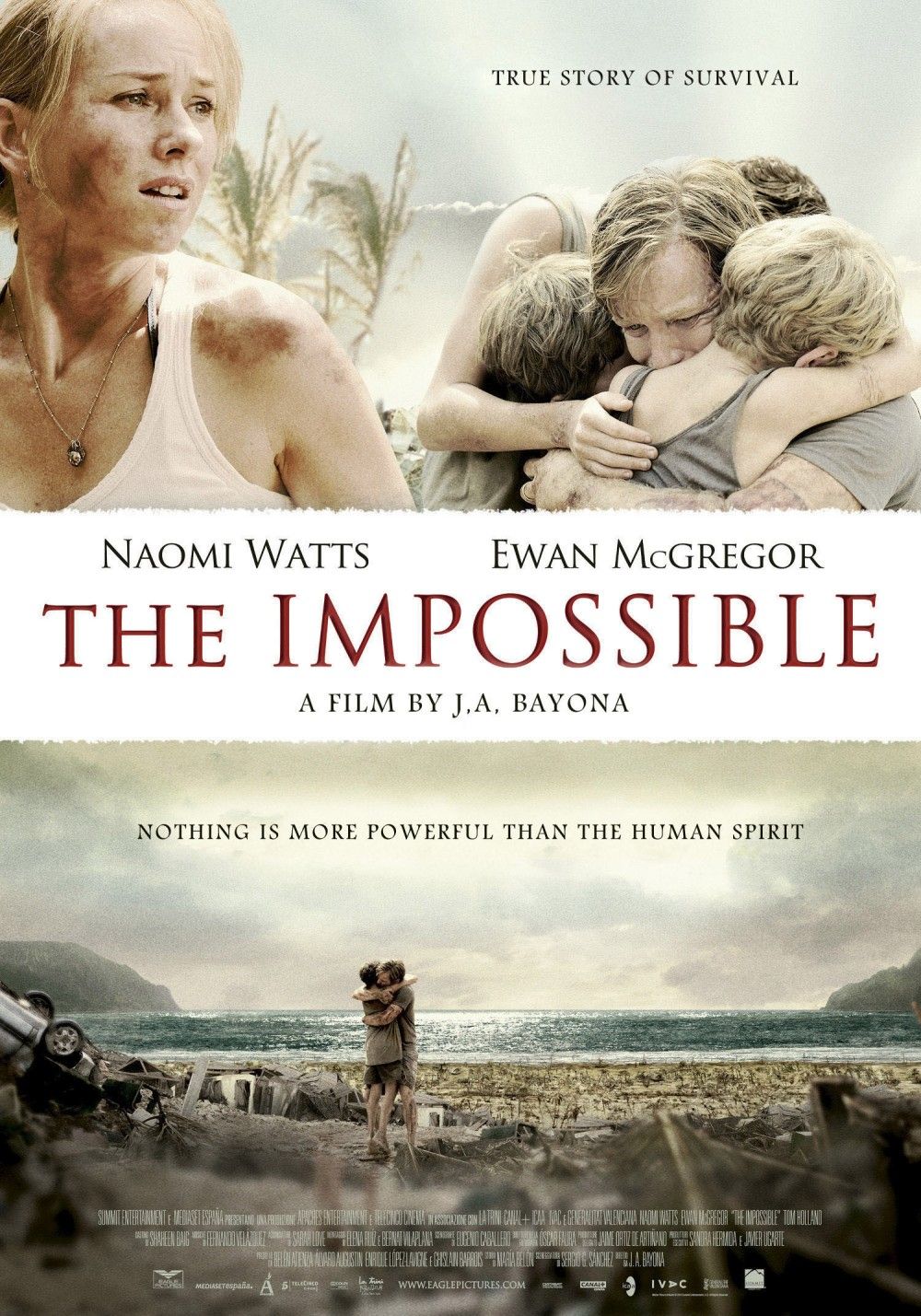
The Impossible (2013)

Naomi Watts and Tom Holland survive extreme circumstances in The Impossible

Director: JA Bayona

Cast: Naomi Watts (Maria), Ewan McGregor (Henry), Tom Holland (Lucas), Samuel Joslin (Thomas), Oaklee Pendergast (Simon), Marta Etura (Simone), Sönke Möhring (Karl), Geraldine Chaplin (Old Woman)

In 2004 the Boxing Day tsunami hit the Indian ocean. The resulting tidal waves devastated communities in several countries, with almost a quarter of a million casualties. The impact left rich and poor alike in a desperate struggle to survive. These terrible events form the basis of this emotionally powerful, if sometimes manipulative, film that recreates the remarkable story of a Spanish family, separated in the tsunami, who all miraculously survived.

Here the family is re-imagined as British (presumably to sell the film around the world a little easier, as they now all speak English). Maria (Naomi Watts) is a doctor who for the last few years has been a stay-at-home mum for her three sons Lucas (Tom Holland), on the cusp of becoming a teenager, Thomas (Samuel Joslin) and Simon (Oaklee Pendegast), both younger. Her husband is businessman Henry (Ewan McGregor). Staying in Thailand for a Christmas vacation, the family are separated when the tsunami hits their resort. Maria (badly injured) and Lucas make their way to a hospital, where Lucas struggles to get the life-saving treatment his mum needs. Henry is trapped in the resort with their other two sons, desperately trying to find his missing wife and child. Around them swirl an entire country of refugees and affected people, all of them trying to find family members.

The Impossible gets an awful lot right. The recreation of the tsunami is faultless. You’ll feel every moment of terror as the water rips through the family’s high-end vacation spot. As Maria and Lucas are swept far away by a deep swell of fast-flowing water (stuffed with mud, filth and debris) you’ll feel every blow to bodies as debris hammers into them, and feel like you’ve lived through every moment of desperation as the two fight against the current to reach each other. The sense of powerlessness and fear – a mother trying to be brave for her son, a son frightened and desperate for reassurance, ashamed at being scared – are powerful, deeply affecting and hugely immersive. Bayona’s experience of directing horror comes wonderfully into play here, as he knows exactly how to push our buttons and make us feel the emotion, fear and anxiety of the situation.

This tone continues through most of the film’s first hour which largely follows Maria and Lucas as they attempt to reach the hospital. Running on adrenalin, Maria only slowly begins to succumb to exhaustion as her grievous wounds (smashed ribs, a horrifically graphic leg injury) sap her strength, even while she tries to maintain an air of calm for her son. What is intriguing in this sequence is that, like a set of scales, as the mother becomes weaker the son becomes stronger – Lucas suddenly propelled into become an adult. Lucas increasingly takes decisions on how best to survive, argues at times for hard calls and becomes, in many ways, the adult in the situation.

This sequence is helped hugely by the performances of the two actors. The physical commitment of every actor isn’t to be doubted (Holland and Watts spent hellish weeks in water tanks filming – although this is only relative compared to the horror of the actual tsunami). Watts (Oscar-nominated) brings power to a mother who believes she is the only thing her son has left in the world, and must survive at all costs for him. Her buttoning down of her terror for as long as she can is deeply moving, and she brings the part significant heart. Tom Holland is simply a revelation as Lucas. He develops an authority well beyond his years, the complexity of the emotions he deals with – from fear to anger and defiance, determination, anxiety, relief and despair – would have challenged an actor three times his age. Holland never loses trace of the central kindness in Lucas – no matter how desperate the situation – and he is the undoubted star of the film, his portrayal of a child forced to grow up scarily quickly is deeply affecting.

Ewan McGregor offers similarly excellent work. Left searching through the rubble of his holiday home, McGregor brilliantly captures a sense of a father trying to deny that his control over events has disappeared. He excels in an extremely moving breakdown scene – after finally contacting his wife’s parents in the UK, he collapses in desperate, uncontrollable sobs of guilt and fear, apologising for not knowing what to do. It’s some of the actor’s best work, brilliantly tapping into his natural warmth for excellent effect.

Where the film struggles more is in its focus. While it is a story of one – affluent – Western family, so naturally its focus will be there, it does turn the rest of the cast into little more than extras. Some focus is given to the Thai people: a group of poor local people is crucial in saving Maria and Lucas’ lives and getting them to a hospital, their immediate humanity and generosity reducing Maria (and the audience) to tears of gratitude, but that’s the only real look we get at them. The hospital where a large part of the story is set is full of Westerners, bar the staff. All the victims we spend significant time with are white and Western (all are presented sympathetically, bar a pair of Americans for whom the tsunami is a holiday inconvenience).

But you could watch the film and not realise that so many of the people who died were part of the indigenous population – and while thousands of Westerners also perished, the survivors did at least return to their homes, whereas those living in affected countries lost everything.

The film’s other flaw is the manipulative tone it moves into late on, in particular a series of prolonged “missed moments” as the separated family walk around the hospital, just missing each other. This may well have actually happened, but is so contrived that it feels like a narrative flourish. The plot slows down in the second half as the characters search for each other. The film’s final title cards were a perfect opportunity to bring more focus to other victims – and to mention the death toll and impact on the countries – but avoids all of this to simply confirm it’s based on a true story.

The Impossible has lots of powerful moments. Its moments of emotion are raw and affecting and, manipulative as it is, you do celebrate when the family is reunited. But it’s also a film that loses its way a bit – which captures a superb survivalist story but then becomes too sentimental towards its end. And by not doing more to acknowledge the impact on the Thai people, among others, you can’t help but feel it turns this tsunami into something that affected rich, white, Westerners – which is harder to forgive.

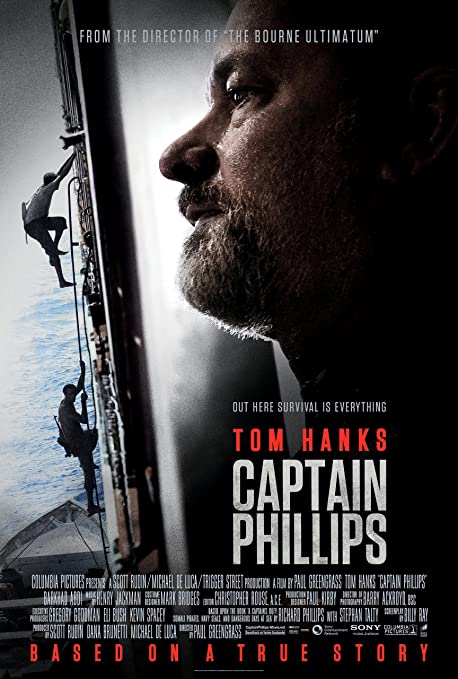
Captain Phillips (2013)

Tom Hanks is kidnapped by pirates in Captain Phillips

Director: Paul Greengrass

Cast: Tom Hanks (Captain Richard Phillips), Barkhad Abdi (Abduwali Muse), Barkhad Abdirahman (Adan Bilal), Faysal Ahmed (Nour Najee), Mahat M, Ali (Walid Elmi), Michael Chernus (Shane Murphy), David Warshofsky (Mike Perry), Corey Johnson (Ken Quinn), Chris Mulkey (John Cronan), Catherine Keener (Andrea Phillips), Max Martini (SEAL commander)

The best of Paul Greengrass’ directorial work brings documentary realism to compelling real-life events, laced with tragedy. He’s made extraordinary films about Bloody Sunday and 9/11 and bought his unique style to Jason Bourne and the Green Zone of Iraq. Captain Phillips continues this, bringing to life the true story of the hijacking of the container ship Maersk Alabama and the kidnapping of its captain Richard Phillips. And this is a brilliantly tense and dynamic film which seizes the viewer in a vice-like grip and never once lets up for a moment of its runtime. 

Tom Hanks plays Richard Phillips, dedicated and professional merchant captain, whose ship is eventually seized by four Somali pirates, led by Abduwali Muse (newcomer Barkhad Abdi, who landed BAFTA and  Oscar nominations for this work here). Phillips is determined to protect the crew (who are hidden around the ship), while the pirates are desperate for a life-changing score that could free them from lives of crushing poverty in Somalia. With such high stakes to play for, Phillips and Muse find themselves engaged in a battle of wills and wits – but with only one of them armed with a gun.

Greengrass’ film is almost unbelievably tense. From the first appearance of Muse’s skiff off the Maersk Alabama to the film’s end, Greengrass manages to keep the audience on a knife edge for over two hours – this despite it being based on a true story where we know the hero will come out in one piece. Shot in the typical Greengrass style, with an at-times jittery handheld camera – brilliantly shot by Barry Ackroyd, a master of this style – this is an immersive drama to an extreme degree. You really do feel part of the action, with the immediacy of the shooting infecting the entire viewing experience.

This is powered further by Greengrass’s superb work with actors – and he draws some marvellous performances here. Tom Hanks – inexplicably not nominated for an Oscar – gives a near career best performance as Phillips. Hanks’ natural skill at playing regular, relatable guys in impossible situations is perfect for Phillips, but he mixes it here first a slightly stern authoritative distance Phillips has with the crew and a deep sense of duty. On top of which, thrown into an impossible situation Hanks has Phillips walking a tight-rope of being seen to co-operate with the hijackers, while trying to work against them, while simultaneously becoming increasingly frayed around the edges. The final sequences alone – of a shocked and emotionally exhausted Phillips – were deserving of the highest honours, raw and honest work from Hanks who confirms he is a great actor.

To go toe-to-toe in scenes with Hanks would be a challenge for most actors – imagine how difficult it must be for a first time performer. Chosen from thousands of applicants, Barkhard Abdi is superb as Muse. Confident, determined but quietly, unspokenly, out of his depth, Muse is determined not to be taken for a ride, but also desperately improvising – a man who feels he doesn’t have choices in his own life, so must cling to an opportunity no matter how remote it becomes, until the bitter end. Abdi is fierce and strong – “Look me in the eye – I’m the captain now!” he firmly tells Phillips – but as the film progresses, it’s clear his control over the other pirates is loose and, smart as Abdi is, he’s also naïve in how much power he holds against the might of the US military sent to free Phillips.

Greengrass’ film skilfully adds enough beats of the poverty and desperation of Somalia to avoid these pirates ever becoming just faceless heavies and thieves. The group are introduced in a poverty-stricken fishing village, Muse choosing from dozens of desperate volunteers to man his crew. Muse stresses to Phillips that while there may be more choices than fisherman and pirate, in Somalia there aren’t – and that international shipping lines have disrupted the traditional fishing areas around the Somali coast. These are desperate and determined men –not blindly evil – and they need a massive score – the $30k they’re offered from the ship’s safe isn’t going to cut it.

The film brings this intensity into play for every action of the pirates. Early on, the smallness and decrepitude of Muse’s skiff is compared frequently with the height and vastness of the Maersk Alabama, with the pirates’ daring and dangerous boarding of the ship as tensely involving as the ship’s crew’s struggle to evade them and protect their own lives.

The wide open vastness and hide-and-seek of the Alabama is then expertly swopped for the claustrophobia of the escape ship that the four hijackers and Phillips spend the final hour of the film on. Here anger rises within the ship – cramped, hot, low on water, with some of those in the ship badly wounded – while outside, the US military masses to prevent the ship making it to the Somali shore. Any idea that the pirates will triumph is removed – but the tension still exists as to how Phillips himself can survive a situation on his small boat that is spiralling faster and faster out of control.

All this superbly marshalled by Greengrass from start to finish, the film a masterclass in wringing every drop of expectation and investment from a compelling real-life story. With wonderful performances from the two lead actors, the film never once lets up in its electric pace and all-pervading sense of danger. With Hanks and Abdi superb, it’s a film that won’t let you go for a second. Inexplicably, despite a Best Picture nomination, the main elements of its success (except Abdi) – Hanks, Greengrass and Ackroyd – all missed out on nominations. That’s the problem when you are so skilled you make it look easy.

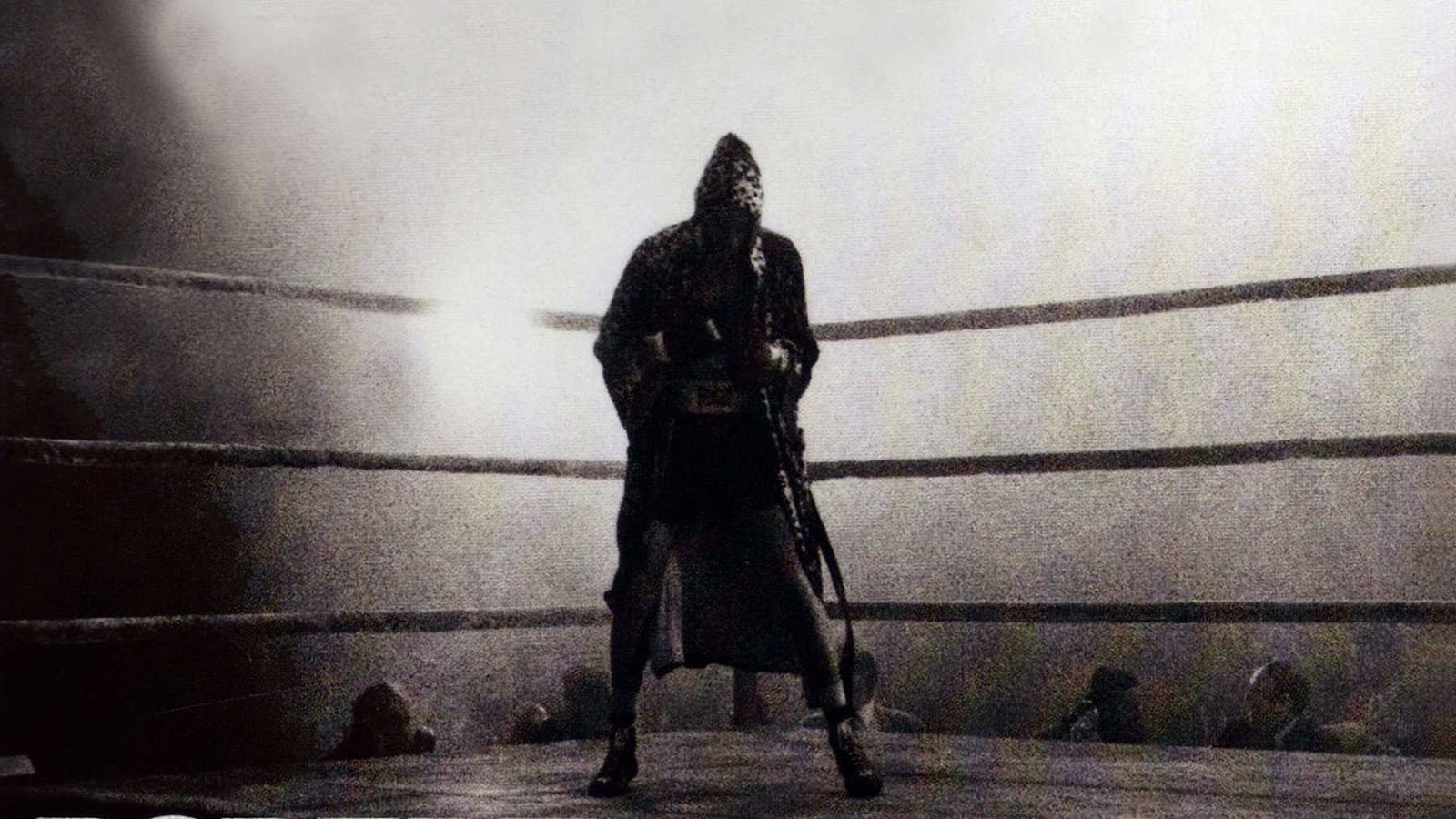
Raging Bull (1980)

Robert De Niro takes to the ring in Scorsese’s marvellous Raging Bull

Director: Martin Scorsese

Cast: Robert De Niro (Jake LaMotta), Joe Pesci (Joey LaMotta), Cathy Moriarty (Vickie LaMotta), Nicholas Colasanto (Tommy Como), Theresa Saldana (Lenora LaMotta), Frank Vincent (Salvy Batts), Lori Anne Flax (Irma LaMotta)

On the surface, Raging Bull seems an unusual topic for Scorsese. A sports biopic? For this, the least sports-engaged director in Hollywood? Even in Scorsese’s most masculine works, sports are always noticeable for their absence. But Raging Bull is a masterpiece, a film whose legacy has seen it named as the greatest film of the 1980s, showcasing possibly Robert De Niro’s most famous performance. A brilliant combination of art, searing personal drama and boxing, Raging Bull may not always be the easiest watch in the world, but it’s a scintillating piece of cinema.

Opening in 1964, we see the overweight, ageing Jake LaMotta (Robert DeNiro) preparing for a comic stand-up routine. From there, the film flashes back to the younger Jake in the ring, with the film following LaMotta’s boxing career. However, the real drama is in his out-of-the-ring relationships, with his brother and manager Joey (Joe Pesci) and his second, younger, wife Vickie (Cathy Moriarty). LaMotta inside the ring is a bull, a man who can take unbelievable levels of punishment. Outside the ring though he is a fragile, paranoid, self-loathing man with a sharp self-destructive streak, whose envy and jealousy systematically destroys every relationship he touches.

Watching the film, its clear Scorsese knows very little about boxing but fortunately he knows everything about filmmaking. Raging Bull is a marvel, a superbly made and directed marvel. Scorsese’s triumphant decision was to shoot the film in black-and-white (some truly beautiful work from Michael Chapman). This gives the film both the classic, gorgeous feel of a 1940s Hollywood movie, but also allows the boxing matches themselves to take on an almost impressionistic artistry, with powerfully emotive monochrome images. The photography also creates a stark, documentary like sense of reality for the many scenes of domestic disharmony and violence, while later shots brilliantly allow LaMotta (lost in self-loathing and disgust) to almost disappear into the inky darkness of the frame. Raging Bull would be half the film it is, if it was in full colour.

Recovering from a cocaine addiction that nearly killed him, Scorsese was intimately familiar with self-destruction – and its perhaps this that drew him towards LaMotta’s jealousy, possibly the film’s major theme. LaMotta is a self-loathing individual, who sees little value in himself, who treats pummellings in the ring like just punishments and believes everyone is betraying him. It’s one of the finest films about the green-eyed monster ever made. Obsessed with his younger wife – whom LaMotta first encounters at age 15 and whom he marries as soon as she is legal – LaMotta also earnestly believes she is sleeping with every man around. It’s clear that these paranoid fantasies stem from his own disgust at himself, LaMotta’s own conviction that there is nothing of value in him.

It’s this jealousy that really destroys LaMotta, his trigger-happy temper seeing him able to switch on an instant from a calm – but monomaniacal – insistence that he just wants to know the truth about his wife, to indiscriminate violence. LaMotta is an impulsive, excessive creature who does everything to a huge degree, from doubting his wife, to shovelling food into his guts. Scorsese’s camerawork – particularly it’s La Dolce Vitaish love of Cathy Moriarty – reflects LaMotta’s internal dysfunction. It worships Moriarty in the same way LaMotta does, but also reflects his obsessive possessiveness.  

All of this is further captured in Robert De Niro’s iconic performance. De Niro won the Oscar for this stunning tour de force. Raging Bull became almost as famous for De Niro’s all-consuming preparation: he trained for months to achieve the physique and skill of a professional boxer (he even entered some professional bouts, winning two out of three). He then went completely the other way, the entire film going on a four month hiatus while De Niro went on an eating tour around Italy to pile on the pounds for the ageing, overweight LaMotta. At the time it seemed like no other actor had gone to such levels.

This focus on De Niro’s preparation sometimes obscures in the mind the genius of the actual performance, as if we have almost been blinded by the training and technique behind it. De Niro’s energy, his fury, his intelligent understanding of the fractured mind of the paranoid brilliantly brings LaMotta to life. So intense is the actor’s understanding of the disgust that lies at the heart of LaMotta’s personality that, even at his worst, the man is never completely unsympathetic. De Niro rages through scenes of jealous outbursts and violence, but he also has a childish gentleness of the man unable to understand the world around him, twice in the film collapsing into bursts of affecting tears. The older LaMotta is perhaps wiser, but just as inarticulate in emotions as his younger version and as unable to fix the damage. It’s a masterful performance, a physical and emotional tour-de-force.

De Niro also worked closely on the choreography of the boxing scenes, which allowed Scorsese the freedom to shoot these with an imagination and brilliance that had never been seen before. Each fight has its own unique feel, with Scorsese understanding that this sport is a neat parallel for how LaMotta sees life, a series of brutal clashes with pride and self-regard on the line. Scorsese’s fights are elemental clashes – the soundtrack frequently uses slowed sounds to create an animalistic roar.

The camera is frequently thrown into the ring with the pugilist – and LaMotta here is really more of a pugilist than a boxer, there is very little sense of tactics – with low angles and tight camerawork. Scorsese puts the camera – and the viewer – into the ring, making us part of the fights. Every punch and blow carries impact, and this is perhaps the most blood drenched boxing film in history, with the darkened liquid covering the faces of the fighters and dripping from the ropes of the ring. The fights reflect LaMotta’s mood, with one late fight seeming like an almost medieval battle, mist rolling in and the fighters flying at each other with a reckless abandon. There is nothing romantic about boxing here, it’s a grimy reality of violence with a purpose and brute strength, endurance challenges that only the strongest can emerge from.

LaMotta’s confidence and mastery of the ring is contrasted throughout with his lack of nous and understanding in the real world, and his ability to destroy everything he touches. Joe Pesci excels as his supportive brother who realises far too late the uncontrollable anger at the heart of this fighter, while Cathy Moriarty is also excellent as a young woman whose only real mistake is to want to live some part of her own life. Scorsese charts LaMotta’s destruction of both of these relationships, culminating in the washed up boxer pounding the walls of a jail cell weeping and screaming “Why! Why! Why!”, hatred for his self-destruction dripping from every pore.

Raging Bull looks unlike any other boxing film, instead like a perfectly formed art piece, its soundtrack full of classical tunes and its photography adjusting between the beauty of neo-realism and the cold realities of documentary film making. It’s superb, a masterful film, a work of art and also a profound understanding of the destructive impact of jealousy and self-loathing. Showcasing career defining work from De Niro, it’s no wonder this is still hailed as the greatest film of the 1980s and one of the greatest of all time.

The Two Popes (2019)

Hopkins and Pryce excel in Fernando Merielles’ witty and thought-provoking The Two Popes

Director: Fernando Meirelles

Cast: Jonathan Pryce (Cardinal Jorge Mario Bergoglio/Pope Francis), Anthony Hopkins (Cardinal Joseph Ratzinger/Pope Benedict XVI)

Hollywood loves a buddy movie. And what buddy movie could be more off the wall than Two Popes: one a German traditionalist with a reputation for rigid interpretation of church law who reads Latin for fun, the other an easy-going Argentinian reformer with a love of football and tango. So that’s what you get with The Two Popes, a surprisingly funny and engaging film about Papal politics, dashed with a pleasingly even-handed perspective on its two central characters.

In 2012, Cardinal Jorge Mario Bergoglio (Jonathan Pryce) is planning to hand in his resignation as Archbishop of Buenos Aires to Pope Benedict XVI (Anthony Hopkins), now in his seventh year of Pope. Bergoglio feels that he has little left to offer the church, and this own reformist ideas are out of step with the current leadership. He feels his best calling would be to return to a simpler, parish priest life. But Benedict XVI summons him to the Vatican to dissuade him – leading to a series of prolonged heart-to-heart conversations between the two that see a thaw in their relationship, heartfelt confessions from both men on their failings, and Benedict’s revelation that he plans to resign from the Pontificate – and wants Bergoglio to succeed him, as Bergoglio can offer the reform to the church that Benedict cannot.

The Two Popes is a terrific adaptation by Anthony McCarten of his own stage play. It shows us Benedict’s conservative, safety-first policies (towards everything from financial scandals to child abuse scandals) and Bergoglio’s more modern, inclusive church, but largely avoids holding one up as wholly superior to the other, or turning the story into a simple good guy/bad guy conflict. Instead it focuses on showing the faults and positives of both men, and how both men felt a calling and need for their service at different times – and how this loss of calling (something both men suffer from at the start of the film) can be reborn through patience, listening and reflection. Meirelles directs this very theatrical piece sharply, with a keen eye for expanding it into film with a combination of intriguing angles, visual style and confident editing.

Unfolding over the course of several increasingly heartfelt conversations – which progress from awkwardly blunt confrontation, through thawing openness, to something near to a confessional – this is a film that uses the Hollywood convention of a mismatched couple to allow an intriguing exploration of the price and value of faith and the difficulty of duty. Sharp commentary is made on the backgrounds of both men – Benedict growing up in Nazi Germany, the sharp criticism of Bergoglio’s perceived lack of action during the Military Junta coup, which led to his dismissal as head of the Jesuit order in Argentina. Both express guilt, regret and even touches of self-loathing – but both also react to those feelings in the other with patience and support.

It also helps that these conversations around church politics and religious intent are told with plenty of fresh and entertaining jokes. There is always a lot of mileage to be had from seeing people like the Pope delightedly watching trashy TV or failing to recognise either ABBA or the Beatles, while Bergoglio’s homespun openness and willingness to talk with anyone about anything (not to mention his passion for football) throw open no end of comic possibilities from seeing this prince of the Church insist on being treated as just a regular joe.

It also gives loads of opportunities for its two stars, arguably Wales’ leading actors (both highly deserving of their Oscar nods). Hopkins, given his best material in years, is brilliant as Benedict: irascible, imposing, morally certain and firm but also playful just below the surface and a man profoundly aware of his own mistakes and failings. Hopkins delivers the lines with just the right touch of twinkle in his eye. 

He also bounces wonderfully off Pryce who is possibly at a career best as Bergoglio. A brilliant physical match for Pope Francis, Pryce’s performance captures perfectly the unaffected humility of the man, but also his intensely sharp personal reflection and the burdens of guilt, as well as the shying away from confrontation that is Bergoglio’s greatest failing. Pryce’s comic timing is impeccable, but he also carries the movie’s heart and soul with affecting skill, pulling off the difficult trick of making a good man a compelling one.

Meirelles’ film is a talky affair – and its construction is a little pat at times, like a very well assembled production line buddy movie and biopic. It never completely escapes the clichés of two-very-different-people-coming-together that is one of its heartbeats, but it does it all so well, with such grace and wit – and two such terrific performances – that it hardly matters. Another big success for Netflix.

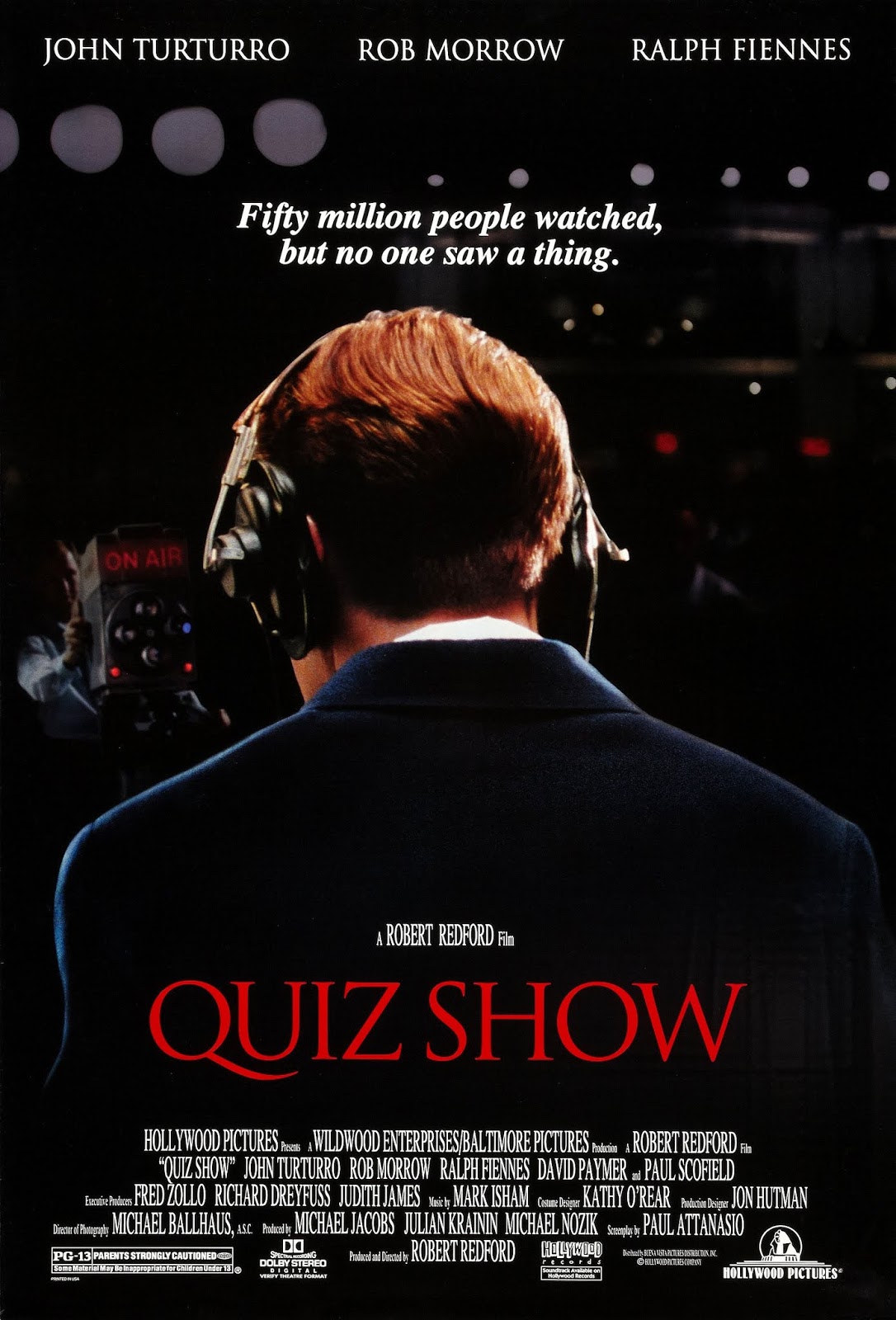
Quiz Show (1994)

Ralph Fiennes excels as the man who as the answers he shouldn’t have in Quiz Show

Director: Robert Redford

Cast: John Turturro (Herb Stempel), Rob Morrow (Richard Goodwin), Ralph Fiennes (Charles Van Doren), David Paymer (Dan Enright), Paul Scofield (Mark Van Doren), Hank Azaria (Albert Freedman), Christopher McDonald (Jack Barry), Elizabeth Wilson (Dorothy Van Doren), Mira Sorvino (Sandra Goodwin), Allan Rich (Robert Kintner), George Martin (Chairman Oren Harris), Paul Guilfoyle (Lishman), Martin Scorsese (Martin Rittenhome), Barry Levinson (Dave Garroway)

Imagine, if you can, a time when we trusted everything we saw on television. When whole nations crowded around to watch a show, and would run home to make sure they didn’t miss it. When the people appearing on the box in the corner were like members of the family invited into our home. In our cynical age of streaming and distrust, such ideas are impossible to imagine. Now we doubt anything we are shown on the box – and the first brick in that wall fell into place with the rigged quiz show scandals on American television in the 1950s.

Twenty-One is the biggest hit on NBC, with reigning champion Herb Stempel (John Turturro) correctly answering every question that comes his way. But the show’s sponsor, Geritol, is worried: Stempel’s ratings are at a plateau, and they feel the show needs a new champion. So producers Dan Enright (David Paymer) and Albert Freedman (Hank Azaria) look to recruit the sort of face of Twenty-One the sponsors want – and find him in clean-cut, Ivy league, charming Columbia League instructor (or “Professor” as they insist on calling him – and Van Doren’s move from reminding him he hasn’t qualified for that title, to happily accepting it is telling in itself) Charles Van Doren (Ralph Fiennes). 

They offer Van Doren the chance to win the show by telling him the answers in advance, while offering Stempel a career in television if he will agree to throw the next edition of the programme. Both men are plagued with indecision, but Stempel throws the game and Van Doren provides the correct answer to his final question – the exact same question he had been asked at his audition. Van Doren, seduced by the fame, quickly agrees to be given the answers in advance of the show, but the unreliable Stemple is dropped by NBC and instigates Grand Jury proceedings. The records are sealed but this piques the interest of Congressional lawyer Richard Goodwin (Rob Morrow), who begins to see the potential to “put television on trial” – while being deeply conflicted by his growing friendship with Van Doren, keen to be seen as co-operating with any investigation.

Quiz Show remains Redford’s finest directorial achievement by far, a rich, fascinating, beautifully made film with a profoundly rewarding and engrossing reflection on fame, television and the media in 20th-century America. Told at a gentle but compelling pace, probably the strongest weapon in its arsenal is a fantastically literate, well-constructed, dryly amusing and affecting script by Paul Attanasio. Scenes are beautifully assembled, crammed with well observed character beats and wonderfully quotable lines. It’s a script that would stand up extraordinarily well as a play itself, and Redford allows it plenty of room to breathe in his assured, unshowy and perfectly judged direction.

This is a film that analyses exactly how truth and entertainment are supposed to be inter-related. The rigging of quiz shows – and it was systematic across a range of shows on all channels – was a detailed lie to the American people. But, the film asks, what was the real harm of this? What are these quiz shows for? Tests of intellectual attainment or pieces of entertainment for the masses? As Scorsese’s Geritol executive says, people weren’t watching the questions, they were watching the money. 

And money is where the villainy lies in this film. For a film rich in period detail, Redford makes clear that there is a definite sense of class that underlies all the action. Decisions are made on the show based on selling things – advertising hours and Geritol products. And there are people in this show – the heads of corporations like NBC – who are making millions out of peddling rigged entertainment shows to the people. And when the chips come crashing down, it’s not these executives who are in the firing lines; it’s the little people who were the face of the enterprise – the contestants themselves – who pay the price.

It’s the exact opposite of what Goodwin wishes to achieve when he starts his investigation. He wants to add some moral force, some legislative control, to what you can and cannot present as fact and fiction on television. What he fails to understand – and what the film does – is that deep down people don’t want this. They want the excitement and the thrills – and at the end of the day wouldn’t care less if they never found out everything presented to them was carefully scripted. This lasts today: do we care that comedy sketches are not improvised but carefully scripted? Do we care if game show contestants are carefully pre-selected? Again, as Scorsese’s sponsor representative states, all any investigation will accomplish is TV shows figuring out other ways to get the high ratings: and simpler questions and less erudite competitors will be the way to go.

Because it’s all the glamour and excitement and drama we like to watch, not displays of intellectual accomplishment. It’s something the film understands – and something that comes across very clearly in Ralph Fiennes’ exquisitely well-judged performance as Charles van Doren. A genuinely intelligent, decent man, Fiennes’ performance works so well because he makes clear that under the WASPish, patrician decency of van Doren is a fundamental shallowness, a laziness and hunger for the quick buck and easy success. Constantly, Fiennes’ confident grin and easy manner hide his unease and guilt at his conduct. But he clearly can’t help himself, a Faust wrapped up in his pact.

After all what would his father – the famous poet and academic Mark van Doren, played with a beautiful ease, grace, intelligence and iron-clad honesty by Paul Scofield, a sublime actor at the top of his game – think of this all if he found out? The scenes between the two men – one the proud, loving but quietly demanding father, the other the successful, shallow, quietly desperate son – are the film’s strongest moments, consumed with the tension of the unspoken. We can see the pressure of familial expectations reflected elsewhere in Herb Stempel’s wife’s disappointment at finding that Stempel himself was a coached as much as van Doren.

John Turturro goes larger as Stempel, a bitter and frustrated man addicted to the attention and glamour TV has bought him which he has always felt has been denied him. Stempel’s desire for fame, his assumption of a persona in the public eye which is part studied, part eagerness to please his audience, gets to the heart of TV’s power. It’s the box in every room, and it can turn the ordinary into the extraordinary. It’s a box with the potential to weave magic – and it’s the tricks behind the magic that are difficult to see. For all we know the magician doesn’t saw the assistant in half (as Hank Azaria’s crude producer puts it), it makes it hard to enjoy the trick when you know it is one.

It’s ideas like this that the film gets to  so cleverly, and which turns the American quiz show into an intelligent metaphor for the corrupted ambition of America itself. The dream is to get to the top, and this was a way of offering a short cut for it – and all to help big business sell its products and make money. This is the subversive truth at the heart of Quiz Show, but it’s easy to forget as we, like the American people, have the obvious villains of the ordinary contestants be crucified by the media, rather than those who really profited. Redford’s film is smart enough to constantly remind us of this, to humanise the contestants and to show the darker elements underneath. Quiz Show is a great film.

The Theory of Everything (2014)

Felicity Jones and  Eddie Redmayne bring to the screen the life of Stephen Hawking

Director: James Marsh

Cast: Eddie Redmayne (Stephen Hawking), Felicity Jones (Jane Hawking), Charlie Cox (Jonathan Jones), David Thewlis (Dennis Sciama), Simon McBurney (Frank Hawking), Emily Watson (Beryl Wilde), Maxine Peake (Elaine Mason), Harry Lloyd (Brian), Guy Oliver-Watts (George Wilde), Abigail Cruttenden (Isobel Hawking), Christian McKay (Roger Penrose), Enzo Cilenti (Kip Thorne)

If you want a story of a triumph over adversity, there are few where adversity was faced off so successfully and publicly than the life of Stephen Hawking. Diagnosed with motor-neurone disease while still a postgraduate, Hawing defied the diagnosis that gave him little more than a few years to live, to shape a life and career that would have a profound impact on the world and make him probably the most famous scientist alive. Not bad for a man who spent a large part of his life confined to a wheelchair, only able to communicate through a synthesised computer voice.

But his life was not just a story where he was the only character. Many of his accomplishments came about because of the unflagging support of his wife Jane. This film takes as its source the book Jane wrote about their life together. And while it arguably sugar-coats or plays down some of the more uncomfortable or divisive elements of their marriage (a marriage that was eventually to end in divorce and several years where they did not speak), it also serves as a warm tribute to the many years they spent together where their support for each other was total and offered with no agenda or demands.

Here in James Marsh’s inventive and well-made film, which manages to more-or-less transcend its “movie of the week” roots, Hawking and Jane are played by Eddie Redmayne and Felicity Jones in performances that scooped an Oscar and a nomination respectively. Both are deserved, as these are rich, dedicated and empathetic performances, crammed with admiration for their subjects. It all fits perfectly well in Marsh’s moving if (at times) rather conventional film, which he directs with a lack of flash and plenty of heart. 

It’s a film that sometimes avoids delving too deeply into the emotional heartlands of its lead characters, and the frequently messy situations that life throws you into (the end of this relationship comes with a remarkably calm sadness, which contrasts heavily with the furious argument Jane describes in her book). It’s also a film that has a very clear agenda of framing Jane as a near saint in her devotion and patience, and Stephen as a brave soul with a superhuman perseverance and regard for his wife. So the introduction of choir leader Jonathan Jones (played with a sweet charm by Charlie Cox) into their domestic life as a surrogate father to the Hawking children and friend to Jane (very definitely not a lover, the film is eager to make clear) is very much something accepted by both without a hint of doubt or recrimination. Similarly, Hawking’s later divorce of Jane is set in a context of “setting her free” rather than the more (allegedly) definitive break it was in real life.

Real life, you suspect, was messier than this. The film does mine some excellent emotional honesty from Jane’s decision to marry Stephen being, at least partly, based on her belief that this man she loves only has a few years to live. From the start she doesn’t anticipate signing up for a lifetime of providing care and abandoning her own aspirations to support Stephen’s (the film makes no real mention of her own dreams of becoming a translator) – but Jane does so with a decided willingness and sense of duty. Similarly, Stephen does not anticipate a life essentially trapped in a wheelchair – finally speechless – and the film allows beats of frustration from him, alongside the determination to not let these problems prevent him from achieving his potential.

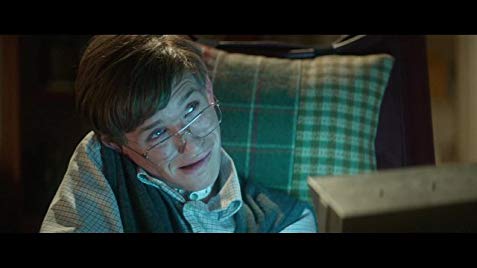
The film revolves around Eddie Redmayne’s performance as Hawking. Needless to say it’s a technical marvel, a stunning accomplishment not only in its physical mastery (especially as it was all shot out of sequence, so in each scene Redmayne needed to carefully map how far the symptoms had progressed) and commitment, but also in its searing emotionality. Hawking’s brightness, his bashful playfulness, his intelligence and sense of cheeky charm are all there – and they’re later married with a pained, just-controlled bitterness mixed with stern mouthed resentment and gutsy determination to deal with the hand he has been given. Redmayne’s performance is a superb capturing of the all-consuming feelings of being betrayed by your own body, of no longer being the master of your own frame and being forced to adjust your plans and expectations to meet the limits nature has put on you.

Felicity Jones is equally good in a superbly heartfelt performance as Jane, a woman who gifts Stephen the determination and will to see past the limits the disease places on him. But it’s also a performance that acknowledges the draining burden of having to support someone this ill, of having to constantly be the strong member of the marriage, the one who must always be as ready to save her husband from choking at dinner as she must be to drop everything and fly across Europe to take life-saving medical decisions about him. Jones’ performance never slips into self-pity, but mines a rich vein of willing sacrifice powered by love.

Marsh’s film is largely unflinching around the everyday miseries and sorrow of the terminally ill and restrictingly disabled. We are confronted in every scene with the limits that Hawking’s body places upon him, from deteriorating handwriting and clumsiness to the loss of all speech and movement. This progression is presented with a detail uncoloured by maudlin sentimentality. Doctors are sympathetic but bluntly clear about the dangers and risks of treatment, each adversity is met with a quiet determination to carry on.

The Theory of Everything is a heart-warming watch – and features two superb performances. The portrait of a marriage that works, for the most part of their lives together, despite all obstacles is inspiring. While the film glosses over well-publicised issues over the end of the relationship – and perhaps downplays the emotional strains on both towards its end – it still succeeds in making a largely unsentimental picture of a genius who overcame all, and the brave woman who gave him the dedication he needed to do it.