Category: British royalty

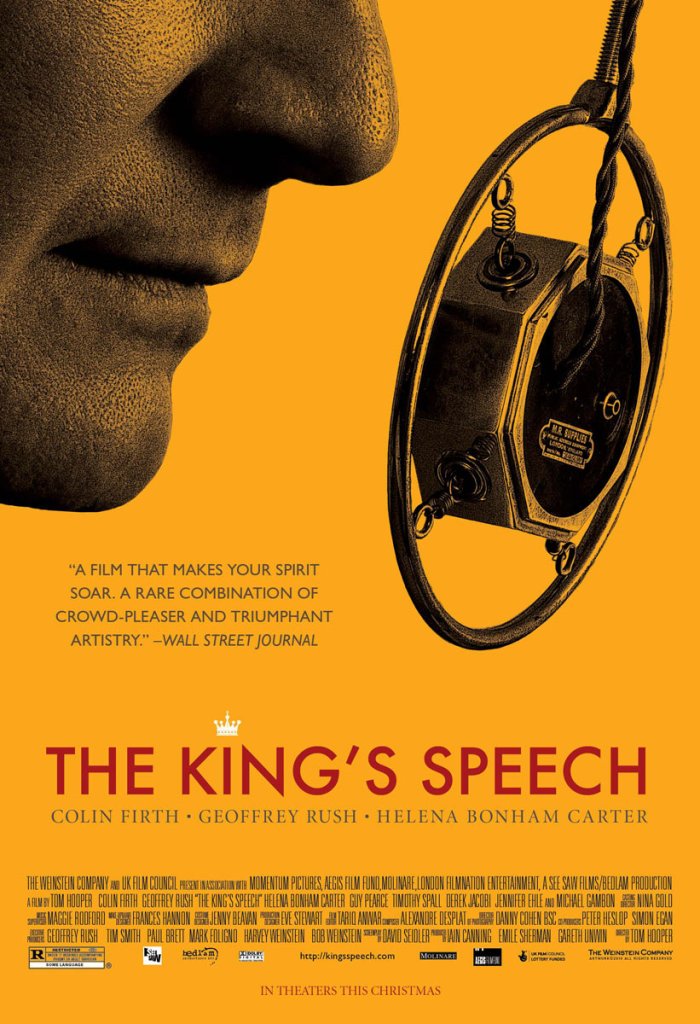
The King's Speech (2010)

The King's Speech (2010)

A King struggles to speak in this Oscar-winning heart-warmer that really works

Director: Tom Hooper

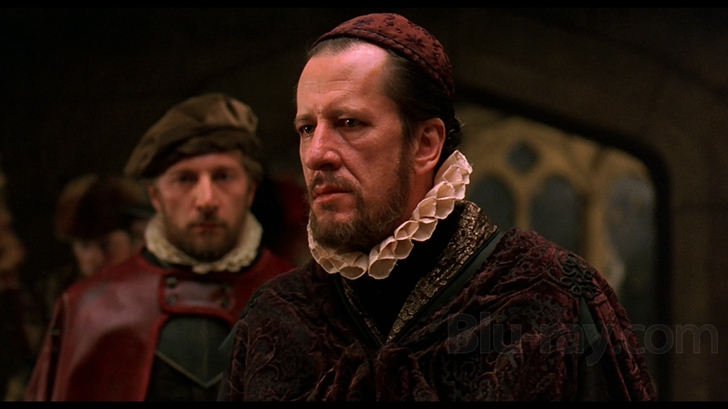
Cast: Colin Firth (King George VI), Geoffrey Rush (Lionel Logue), Helena Bonham Carter (Queen Elizabeth), Guy Pearce (King Edward VIII), Timothy Spall (Winston Churchill), Derek Jacobi (Archbishop Cosmo Lang), Jennifer Ehle (Myrtle Logue), Michael Gambon (King George V), Freya Wilson (Princess Elizabeth), Ramona Marquez (Princess Margaret), Anthony Andrews (Stanley Baldwin), Eve Best (Wallis Simpson)
It can be very hard to imagine the fear and pressure of not being able to trust your own voice. In a world where communication is valued so highly, what terror can it bring if you can’t easily express the thoughts in your own head? It’s a fear perfectly captured in the Oscar-winning The King’s Speech. Because in a constitutional monarchy, what purpose does the King have, but to be a voice for his people? And if the King can’t speak, how can he hope to fulfil his duty? The King’s Speech uses its empathy for those struggling with a condition many find easy to mock and belittle, to create an emotionally compelling and deeply moving story that is a triumph not of overcoming an affliction, but learning how it can be managed and lived with.

In the 1930’s Prince Albert, Duke of York (Colin Firth) is second-in-line for the throne. But unlike his charismatic brother David (Guy Pearce), he’s a tense man uncomfortable in the spotlight, whose life has been blighted by his stammer. As pressure grows from his father George V (Michael Gambon) to take on a more public role, he and his wife Elizabeth (Helena Bonham Carter) begin the process of consulting doctors for “a cure”. But the answer might lie with a former actor turned speech therapist Lionel Logue (Geoffrey Rush), whose techniques are as much psychological as they are practical. As he and the future George VI begin to work together, a tentative friendship forms as the taciturn king begins to open up about his feelings and find real friendship for the first time in his life.

The King’s Speech delivers a well-paced, beautifully written (an Oscar winning script from David Seidler) moving story of two unlikely outsiders who find themselves as unlikely kindred spirits. While it’s easy to see its Oscar win for Best Picture as a triumph of the academy’s conservatism (and there is a case to make, with the film’s heritage style and rather conventional structure and story-telling), but that would be to overlook the emotional impact it carries. I’ve seen the film several times now, and each time I find a lump forming in my throat as it sensitively and intelligently tackles themes of depression, isolation and fear and builds towards the heart-warming achievement of a man who learns his afflictions don’t have to define him.

Hooper (who scooped the Oscar for Best Director) draws superb performances from his actors, as well as bringing his own distinctive style to the film. He had already shown with his TV miniseries John Adams that he could shoot period material with all the immediacy and energy of more modern subjects, and it’s what he does here. His unique framing – with the actor’s often at the edges of the frame, in front of strikingly character-filled surfaces – not only grounds the drama in reality, but also captures a sense of the characters own personal isolation, helped by the frequent intimately-close shots. It helps the film avoid throughout from falling into the “heritage” trap, and instead feel (for all its royal family trappings) like a personal, intimate and real story.

And the intimacy is what makes it work so well – especially since so many of the scenes are made up of two characters sitting and talking, gently but with a slowly peeling honesty, about their own thoughts and feelings. The film is hugely successful in building up our empathy for the often over-looked struggles those who stammer go through. The terror that everyday events can bring. The burden of not mastering your own voice. The anger not being able to express yourself can bring. The resentment of how others can perceive your condition as anything from an irritation to a joke to something that with just a bit of help and effort you could brush aside like a sore toe.

The film has drawn praise for its depiction of stammering – although I am reliably told by an friend with an expertise in such things that the film’s connection of stammering with psychological trauma is old-fashioned and far from proven. But it realistically shows the burdens both it, and a troubled childhood, can bring and draws attention and sympathy to the condition in the best possible way.

A lot of this is helped by Colin Firth’s outstanding, Oscar-winning, performance in the lead role. From first seeing him, his George VI is a buttoned-up man with tension pouring out of every pore, who has chosen taciturn aggression as a defensive alternative to actually having to speak. Firth’s observance of mechanics of stammering is spot on (I wonder if he consulted Jacobi, who has had more than his own experience acting a stammer!), but above all he captures the deep pain, frustration and fear it can bring to a person. Firth’s King is a man who has lived a life feeling coldly shunned by most of his family – an upbringing he is clearly working hard to correct with his sweetly loving relationship with his own children. He’s bitter and angry – not only struggling to understand and express these emotions, but allowing them to crowd out his natural warmth, kindness and generosity which emerge as he opens up to Logue, and experiences genuine friendship for the first time.

Firth sparks beautifully with Geoffrey Rush who is at his playful and eccentric best as Logue. A warm, witty and caring man with a sharp antipodean wit and playful lack of regard for authority (the film mines a lot of fun from Logue’s playful teasing of the stuffed shirt nature of monarchy and the British class system), Rush’s performance is excellent. Just as the King has been dismissed by others for his stammer, so Logue has been dismissed as an actor for his Aussie accent and is scorned by his colleagues for his unconventional methods and lack of qualifications. But, by simply listening to a man who has been lectured to his whole life, who is frightened of himself and his situations, he helps him find a voice (in, of course more ways than one). Rush’s performance is essential to the success of the film, both as the audience surrogate and also a character with his own burdens to overcome.

Backing these two is a superbly judged performance of emotional honesty, matched with that take-no-prisoners bluntness we grew to know in the Queen Mother, from Helena Bonham Carter. The rest of the cast is equally strong. Pearce offers a neat cameo as a bullyingly selfish Edward VIII. Jacobi is overbearingly pompous as the face of the establishment. Jennifer Ehle is wonderfully playful as Logue’s put-upon wife. Andrews contributes a neat little turn as Stanley Baldwin.

Historically the film telescopes events for dramatic purposes. In fact, the future King’s therapy had started almost a decade earlier. Timothy Spall’s Winston Churchill – a rather cliched performance – is converted here into an early supporter of George VI during the abdication crisis (in fact Churchill’s outspoken support for Edward VIII nearly destroyed his career). Baldwin has been partly combined with Chamberlain. Other events are simplified. But it doesn’t really matter too much. Because the emotional heart of the story is true – and the relationship between these two men, and the positive impact they had on each other’s life is what make the film so moving.

Culminating in a near real-time reconstruction of the King’s speech announcing the outbreak of the Second World War – a brilliantly handled, marvellously edited and shot sequence with masterful performances from Firth and Rush – the film is an emotional triumph. Sure, it hardly re-events the wheel, with its struggle to overcome adversity story line and tale of royalty bonding with commoner – but it hardly matters when the rewards are as rich as this. With superb performances all round, in particular from Firth, Rush and Carter and sharp direction of a very good script, this is a treat.
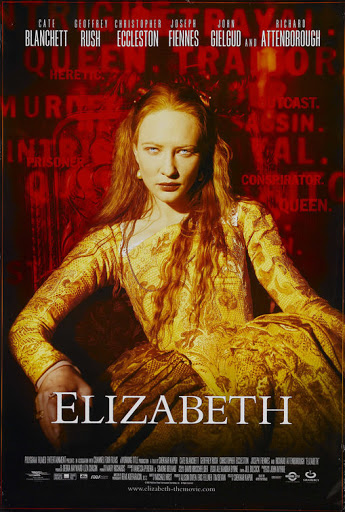
Elizabeth (1998)

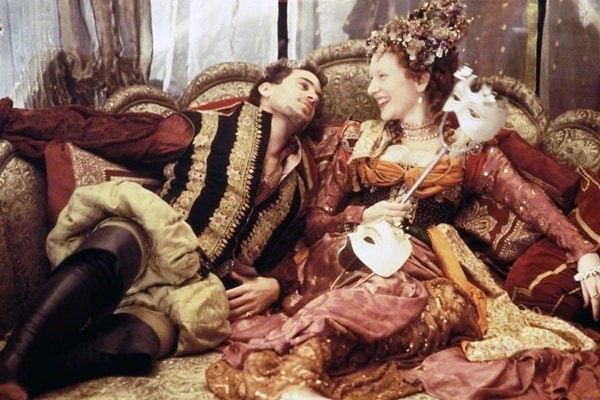
Joseph Fiennes flirts with a regal Cate Blanchett in this landmark Tudor history flick Elizabeth

Director: Shekhar Kapur
Cast: Cate Blanchett (Elizabeth I), Geoffrey Rush (Francis Walsingham), Joseph Fiennes (Robert Dudley, Earl of Leicester), Richard Attenborough (Lord William Cecil), Christopher Eccleston (Duke of Norfolk), Kathy Burke (Mary I), Fanny Ardant (Mary of Guise), Vincent Cassel (Duke of Anjou), Eric Cantona (French Ambassador de Foix), Emily Mortimer (Kat Ashley), Kelly Macdonald (Isabel Knollys), John Gielgud (Pope Pius V), Daniel Craig (John Ballard), James Frain (Alvaro de la Quadra), Edward Hardwicke (Earl of Arundel), Jamie Foreman (Earl of Sussex), Terence Rigby (Bishop Gardiner)

Not many people would think of Elizabeth as being an influential film. But I would say the roots of all modern costume drama can be found in this British Tudor epic. Classic costume drama before had seen the focus on “thees and thous”, Greensleeves, lovely costumes, well-lit sets and a certain grandeur. Elizabeth re-set the table. Mixing The Godfather with Elizabeth R, Elizabeth turned costume drama into a world of dark schemes, political intrigue, violence and lashings of sex and passion. It would leave prestige Hollywood dramas of the 70s and 80s behind and turn costume drama into something far darker, grittier and sexual than ever before.

The film follows the early years of the reign of Elizabeth I (Cate Blanchett). The queen is young, naïve and passionate. She’s well educated and smart, but still impulsive and too much in thrall to her emotions. She’s far too open about her sex-filled love affair with Robert Dudley (Joseph Fiennes), new-made Earl of Leicester, and too inexperienced to heed the advice of either William Cecil (Richard Attenborough), who is pushing her towards the middle-ground of European alliances, or Francis Walsingham (Geoffrey Rush), who argues for Elizabeth to lead a strong nation, willing to take on its enemies. Conspiracies whirl around the court, as disaffected Catholics led by the Duke of Norfolk (Christopher Eccleston) plot to seize the crown and restore the “true religion”.

Elizabeth’s style is triumphant. Many of the scenes take place in dimly lit halls at court, and candlelit private chambers. The palace is seemingly made of nooks and crannies where conspirators and lovers can silently retreat and keep their intentions secret. The music – wonderfully composed by David Hirschfelder – is a mixture of urgent marches and murky sounding chords, which brings a watery effect to the soundtrack, as if every moment could twist into swamp-like traps of treachery. The film is briskly cut, frequently jump-cutting and putting together impressive montages of conspirators or events. 

The film starts with such a montage of protestants being burned: moving swiftly from a death warrant being stamped, to heads being brutally (and bloodily) shaved to an overhead shot of the cart carrying the martyrs to their deaths, culminating in their cries as the fires reach hold and finally overwhelm the soundtrack. It’s a sign straightaway that this will be very different from the traditional taste and decorum of a costume drama – and this film won’t flinch away from the grimness. Shekhar Kapur’s direction throughout is stylish, dynamic and uses editing and cinematic tricks to great effect (if at times with a little too much flash).

And the film is soaking in political intrigue – conspiracies and plots swell and unfold, with the film finally culminating in a clearly Godfather-esque purge of the Queen’s enemies. This is Tudor drama as Mafia flick, the lords of England little better than the heads of the five families, and Elizabeth the young heir they underestimate at their peril. It takes historical action and brings it definitely into a very modern feeling conspiracy thriller, using cinematic tricks and good editing to break away from the more staid period pieces of the 1970s into something much darker and atmospheric.

That also carries across into its exploration of sex, something that has got even more play in costume dramas since. It’s odd to think that the film was quite controversial at the time for showing Elizabeth and Dudley engaged in a passionate sexual affair, or for suggesting that the Queen “became a virgin” as part of piece of political showmanship. The film fronts and centres the young naivety of Elizabeth and her all-consuming fascination with Dudley – well played by Joseph Fiennes as a part romantic dreamer, part tragic weakling – and her slow realisation that there is no place for romance and passion in the world of being a queen.

Because the film is also a coming of age drama: how did Elizabeth become the Greatest Tudor Monarch? Cate Blanchett is inspired casting choice, dominating the film with a multi-faceted performance that sees Elizabeth change from an excited young girl into the distant authoritarian figure. Blanchett gets to play it all here, showing her impressive range, charting this changing personality as not always linear – so a scene of giddy romance can be followed by her sharpness when challenging the lords of England over matters of religion and then back to weakness. While you can argue the film undermines Elizabeth’s intelligence (particularly early on) what it does capture supremely well is her determination and her wilfulness. It also triumphantly turns her into a very human figure, Blanchett brilliantly showing a character forcefully – and consciously – reshaping herself to meet the demands of her office.

Around Blanchett, Kapur assembles possibly one of the most eclectic casts in history. Can you think of another film where you could see John Gielgud one scene and Eric Cantona the next? Richard Attenborough and Angus Deayton side-by-side? Fortunately, the core roles are played by assured and impressive performers. Eccleston makes for a wonderfully imperious, self-important Norfolk. Cassel goes gleefully over-the-top as the camp Anjou. Frain, Craig and others excel in early roles. The pick of the lot is a mesmeric performance by Rush as the sinister but loyal Walsingham, an eminence grise willing to work things in the background Elizabeth wants but cannot ask for, a wartime consigliere, several steps ahead of the rest and whose loyalty to Elizabeth is matched only by his ruthlessness.

Historically the film has only a passing resemblance to reality. Elizabeth’s political astuteness was sharper from the first than the film gives her credit for (although, as its aim is to stress how humanity must be sacrificed for power, there are artistic reasons for this). Bishop Gardiner, leader of the anti-Elizabeth church faction, had died during the reign of Mary I. Cecil is played as an unimaginative old man, when he was in fact in his thirties when Elizabeth came to the throne, and her most trusted and wisest advisor. Numerous events are telescoped and combined – the Ridolfi plot which (roughly) climaxes the film took place 14 years into Elizabeth’s rule, not within at most a year. The film ends with a series of historical captions, not a single one of which is actually true. Michael Hirst’s script plays fast and loose with history (and with the odd dodgy line along the way) but he’s got a flair for bringing out the drama.

But does it matter? After all, who really looks to films for their history lessons? What Elizabeth is trying to do is to turn history into cinema, and this it does to glorious effect. It also managed to change our idea of what a “history film” was. After Elizabeth, history dramas would turn increasingly into darker tales, tinged with sex and conspiracy. But this film remains one of the best, directed with real flair and style by Kapur and powered by a superb performance by Cate Blanchett. Elizabeth gets more or less everything (apart from the facts of course) stylishly right and tells English history with gripping and entertaining intensity.

The Lion in Winter (1968)

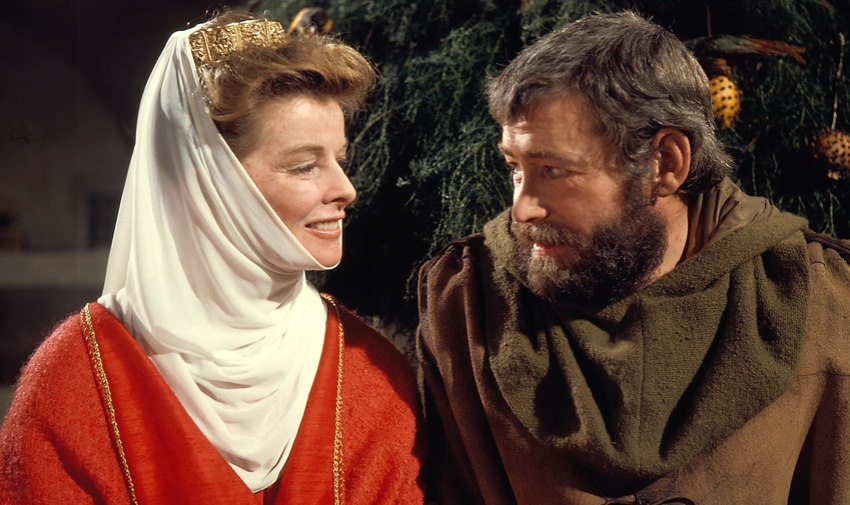
Katharine Hepburn and Peter O’Toole are the feuding royals in The Lion in Winter

Director: Anthony Harvey

Cast: Peter O’Toole (Henry II), Katharine Hepburn (Eleanor of Aquitaine), Anthony Hopkins (Richard the Lionhard), John Castle (Prince Geoffrey), Nigel Terry (Prince John), Timothy Dalton (Philip II), Jane Merrow (Alais), Nigel Stock (Captain William Marshall)

James Goldman’s play The Lion in Winter did solid but not spectacular business on Broadway. But when it came to film, it surfed a wave of popularity for stories about British history and became one of the most financially successful films of its year, winning three Oscars (including for Goldman). Even more than that, it went on to be West Wing President Jed Bartlett’s favourite movie of all time. I think we know which prize is the most treasured.

Christmas 1183 (including an ahistorical Christmas tree and gift wrapped presents and all) and Henry II (Peter O’Toole), king of England and huge chunks of France, wants nothing more than family around him to mark the occasion. Problem is, this is possibly the more dysfunctional family ever. His Queen Eleanor of Aquitaine (Katharine Hepburn) has been under “home arrest” for ten years in her castle, and his children Richard (Anthony Hopkins), Geoffrey (John Castle) and John (Nigel Terry) seem to take it in turns to conspire against their father, their allegiances shifting faster than even they can sometimes follow. For added complexity, Henry is living with his late eldest son’s intended Alais (Jane Merrow) as husband and wife and her half-brother the new King of France Philip II (Timothy Dalton) is joining the family for Christmas. Over one night, this family will fight, feud and change pacts and allegiances until hardly anyone knows where the games end and the hate begins.

Anthony Harvey’s film is a stately, often wordy, faithful reconstruction of Goldman’s script that gives front-and-centre to the often scintillating dialogue between the family members, that leans just the right side of ahistorical (sample line: “Hush dear, Mummy’s fighting”) but frequently allows it’s top-of-the-line cast to let rip on some glorious speeches and dialogue duets crammed with ideas, wordplay, character and wit. Harvey therefore basically decides to sit back as much as possible and allow the actors do the work, using a mixture of medium shots and close-ups to bring the focus as much as possible to the Broadway-style staging or into the actor’s faces. He also uses the strength of the performers to allow for a series of long takes as they burn through pages of Goldman’s dialogue. The fact that there is hardly an interesting shot in the film, and its visual language never matches it’s verbal fire is a shame, but a price the film thinks worth paying.

And it matters little when Harvey is able to work as well with actors as he does here. All the performers are at the top of their game. Katharine Hepburn (winning her fourth Oscar, in a tie with Barbra Streisand in Funny Girl) has the perfect level of acute intelligence and imperious arrogance for Eleanor. But Harvey encourages from her a softness at crucial moments, that in-between the barn-storming speeches and verbal putdowns, Hepburn finds moments of quiet sadness and loneliness – a sense that sometimes ten years of imprisonment means she has had enough of all this – that are some of her most affecting work on screen. She’s hilarious but deeply moving – and totally believable as one of the most powerful women of the middle ages. 

She also is matched perfectly with O’Toole. Playing a 50-year old King at 35, O’Toole brings all the fire and charisma of his personality to the part, in a film where he perfectly balances the larger-than-life gusto of Henry II with his own personal disappointments, guilt and sorrow. O’Toole had already triumphed once as the charismatically brilliant king in Becket (for which he was also Oscar nominated, as he was here), but this performance is even better. Not only is his facility with the dialogue faultless, he also utterly convinces as the sort of awe-inspiring figure who dominates every room he’s in not just with force of character but the acuity and sharpness of his intellect. This might be his finest screen performance – and the one where he was most cheated of the Oscar (losing to a highly active campaign, criticised at the time, from Cliff Robertson in Charly).

To fill the cast out around these pros at the top of their game, Harvey raided British theatre to pluck some promising gems from British Theatre, more or less all of them here in their film debut. Anthony Hopkins is marvellously proud, forceful but just a few beats behind most of the others as a Richard who says what he means and sticks to it. Timothy Dalton is his polar opposite (and equally brilliant) as a Philip II who never says what he means and manipulates with a playful ease everyone he meets. John Castle (an actor who never had the career he should have had) is smugly unlikeable and coldly superior as the unliked middle-brother Geoffrey, while Nigel Terry is a snivelling punching bag as two-faced coward John. Jane Merrow is heartfelt and earnest as Alais, the only unquestionably kind and good person in this bunch.

These characters rotate sides and allegiances over the course of one evening, raging at each other like a medieval Who’s Afraid of Virginia Woolf? The brilliance of the dialogue never stops entertaining – although towards the end the film loses a bit of energy (it probably peaks with Henry’s loud double bluff of dragging the family in the middle of the night to a wedding he has no intention of seeing performed), perhaps partly because the film itself never really comes to flight as something cinematic. This is despite the decision to downplay the glamour – costumes are simple and look lived in (the cast wore them for hours off set to make them look lived in) and sets are far from pristine. It perhaps contributes to the slightly mundane feel of the filmmaking.

But the tricks are all in the dialogue and perhaps the film works best with an interval and a chance to take stock. There are several marvellous scenes, even if the constant feuding and side changing does wear you out after a while. But it’s a treat for the acting. Hepburn and O’Toole are simply at the top of their game, and the rest of the cast more than keep up with them. With an excellently imposing score from John Barry (also Oscar-winning), it’s a shame the film itself is a little too flatly and uninspiringly filmed with a murky lack of visual interest, but there are more than enough qualities for you to issue a pardon.

The Queen (2006)

Helen Mirren reigns supreme as her Majesty in The Queen

Director: Stephen Frears

Cast: Helen Mirren (Queen Elizabeth II), Michael Sheen (Tony Blair), James Cromwell (Prince Philip), Helen McCrory (Cherie Blair), Alex Jennings (Prince Charles), Roger Allam (Robin Janvin), Sylvia Syms (Queen Elizabeth, the Queen Mother), Tim McMullan (Stephen Lamport), Mark Bazeley (Alistair Campbell), Julian Firth (Jonathan Powell)

It’s easy to assume The Queen is a cozy piece of film-making, not least because writer Peter Morgan’s exploration of the Royal Family has become every one’s favourite costume drama viewing thanks to his series The Crown on Netflix. But that’s to forget the acute sense of the personal and the public Morgan has, and his ability to write himself into the minds of his participants. And he’s perfectly matched here with the wry eye of Stephen Frears. Together they create a film that uses a single moment of history to explore the nature of our institutions and the particular characters of the people that fill them.

The film follows the death and aftermath of Princess Diana, and especially the dramatic public reaction to the death that expressed itself both in unparalleled scenes of national public mourning and hostility to the Royal family. Both are things a lifetime of duty and service have failed to prepare Queen Elizabeth II (Helen Mirren) for – but are also things intrinsically understood by her new Prime Minister Tony Blair (Michael Sheen). As the public clamour for the Royals to join the public in an exhibition of public grief rises, it’s mixed with a furious demand for a royal ‘mea culpa’ for ruining the life of the “People’s Princess”. Could the Royal Family be finished?

Well of course it wasn’t, and perhaps it’s hard to understand for those who didn’t live through those crazy days of 1997. But there was never anything like it before – people wept in the streets as if they had lost a family member of their own. Princess Diana – a tireless campaigner for charities, who did a great deal to change public perceptions on AIDS among many other issues – was also a brilliant master of public opinion, far more attuned to the countries drift away from stiff-upper-lip reticence towards celebrity-worship sentimentality than the family she married into. As skilful a manipulator of the press, as she was a victim of their hounding, she’d made herself into someone larger than life. It’s the sort of modern cult of celebrity, that few others mastered – and certainly not in the Royal Family.

Diana hangs over the family in the film like a ghost, an embodiment of their sense that the country is drifting away from them. It’s a film where pace and speed are vital, Frears and Morgan brilliantly contrasting the rushing onslaught of events from the car crash to distraught, increasingly angry, crowds gathering outside Buckingham Palace with the relatively sedate official response, which was effectively a private retreat to Scotland and say and do very little. The film has a brilliant sense of the momentum of those crazy days, and of the clash between an institution straitjacketed by tradition and a world where the public exhibition of emotion is de rigour.

What the film finds however is the value in both, and in doing so perhaps becomes one of the greatest adverts for the monarchy – or at the very least for Elizabeth II – you will ever see. A lot of this comes from Helen Mirren superb performance as the Queen. It’s a role Mirren performs with a combination of Sphinx-like genius and a genuine fragility under a veneer of exactitude. Mirren’s Elizabeth is a woman whose sense of duty has led to a lifetime of living as a symbol, a profession that has demanded the avoidance of any sort of personal opinion what-so-ever (something Morgan leans on with his Alan Bennettish early scene, where the Queen chats with a maid about the recent General Election and regrets she never had the chance to tick a box for something). She’s a woman certain that she has performed her duty in the finest tradition of her family.

Her tragedy in the film is the bewildered sense of suddenly finding the country she thought she knew being completely different. Put simply, the destructive Diana, a difficult person privately but loved publically, is a woman she can’t understand – and a country that embraces her is one she struggles to understand as well. Mirren’s Queen has a sharply defined sense of her place and person, but finds herself questioning all that. While sharply refusing to be treated as fool, she has a distressed sense of suddenly being adrift in the world.

Morgan captures all this in a series of engaging “behind the scenes” moments, but his real trick is his sure touch with symbology. A magnificent stag on the grounds, being hunted by all and sundry, could easily have been a clumsy parallel with the Queen, but it’s delivered with real grace and serves as a true emotional catalyst for the Queen (twice!) as she finally begins to understand both her own situation, and the necessity for her to bend her own firm principles and tradition to meet the requirements of this new age.

It’s the main theme of the film, this conflict between tradition and modernism, but the film sees merit in both. Many of the formalities of court life are humoursly spoofed in their intricate pomposity, but the overblown sentimentalism and knee-jerk judgamentalism of the modern world are hardly much better. As Blair himself, the arch modernist, observes there will always be a place for a head of state who gives us a symbol to aspire to. Not least, because the burden of standing for things and being driven to play to the masses will eventually lead to the destruction of most political careers (the film mines a fair bit of material between the implicit comparison of Blair’s saint-like popularity in 1997 to the wreckage of his “Bliar” reputation in 2006).

Frear’s film is a gentle critique but also a sharp defence of the institution of the monarchy, as practiced by the Queen. It may pain her, but she will get on with it. Morgan’s script also suggests her quiet wisdom – the film’s coda has her suggesting that Diana, like all things popular today, will pass. 

The film is less sure footed elsewhere. It’s portrayal of New Labour at times leans a bit too heavily into public perception – Campbell (played by a bullying Mark Bazaely) as a brash blow-hard, Labour as being obsessed with spin and image, Cherie Blair as a judgemental Shrew. Other members of the Royal family sometimes bend into parody – by the time of the Crown, Peter Morgan was to find Prince Philip as a far more fascinating and richer character than he is here. But the performances are strong across the board, as if following their head of state in Mirren. Sheen’s re-creation of Blair is pitch perfect, and he also aptly understands the difficult balance in Blair between genuine decency and ambition. Roger Allam also provides a wonderfully dry cameo as the Queen’s old fashioned secretary, while Alex Jennings does a neat impersonation of a Charles desperate to be seen to be doing the right thing.

The Queen’s main interest though is showing that tradition and modernism can sit side-by-side – and that a leaning too far in either direction is harmful for all involved. It sprinkles in intriguing levels of criticism for Diana, but matches that with a respect for the Queen, that makes her real while keeping her a symbol. Helen Mirren’s performance deserved every price going, and the film itself rewards with each new viewing.

Mary, Queen of Scots (2018)

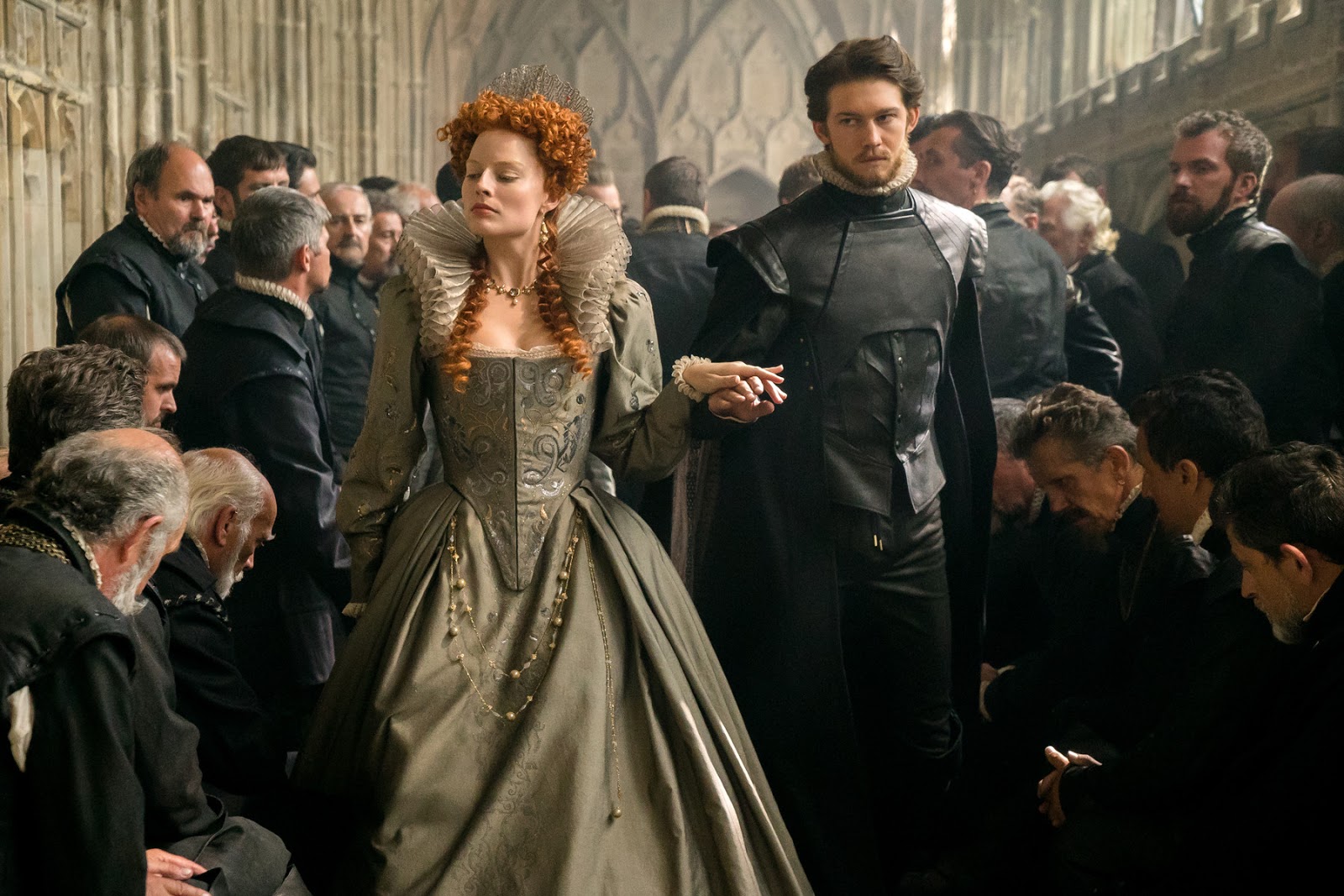
Margot Robbie as a particularly dense version of Elizabeth in misfire Mary, Queen of Scots

Director: Josie Rourke

Cast: Saoirse Ronan (Mary Queen of Scots), Margot Robbie (Elizabeth I), Guy Pearce (William Cecil), David Tennant (John Knox), Jack Lowden (Lord Henry Darnley), Joe Alwyn (Lord Robert Dudley), Gemma Chan (Elizabeth Hardwick), James McArdle (Earl of Moray), Martin Compston (Earl of Bothwell), Ismael Cruz Cordova (David Rizzio), Brendan Coyle (Earl of Lennox), Ian Hart (Lord Maitland), Adrian Lester (Lord Randolph), Simon Russell Beale (Robert Beale)

Mary Queen of Scots posterThe history of the Tudors has been mined so often by film and theatre that there can hardly be any hidden stories left to tell, barely any twists that can be unveiled or reimaginings that haven’t already been imagined. Mary Queen of Scots certainly fails to find any new angles on its oh-so-familiar tale, and even its attempt to rework events and characters keeps banging its head on those damn, unchangeable real events that spoil the story it seems to want to tell.

And it’s a familiar story. Mary (Saoirse Ronan) returns to Scotland from France after the death of her husband. Naturally many people aren’t keen to see this Queen, not least her half-brother the Earl of Moray (James McArdle) who was running the country, and protestant firebrand anti-feminist John Knox (David Tennant). But Mary is plugged in, sharp and savvy and she’s going to rule the country her way – and also put forward her claim for the throne of England currently held by her cousin Elizabeth I (Margot Robbie). It seems all is set for Mary’s success – until fortune begins to turn with her marriage to drunken playboy Henry Darnley (Jack Lowden). Conspiracy, murder, exile and execution are on the cards.

Mary Queen of Scots is a mess. For starters, Beau Willmon’s script does the near impossible of turning one of the most electric periods of British history into something stodgy, dull and hard to follow. Perhaps wrapped up in his House of Cards background, a show where there is a never ending stream of betrayals, counter crosses and twists for twists’ sake, Mary Queen of Scots is the same. The film is a constant parade of betrayals in Scotland, as lords shift and move sides from scene to scene with such swiftness, such lack of explanation, such lack of exploration of character and motivation, that you end up not only confused by ceasing to care. Decent actors like James McArdle and Ian Hart struggle through with ciphers (Hart literally changes sides every single scene). Martin Compston is given a confused character design as Bothwell that makes Mary’s third husband a hero until he makes a left-field heel reversal and becomes a bullying rapist. What a mess.

It’s even worse in England, where poor Guy Pearce’s every scene is a never-ending stream of exposition and historical context. Every single scene in England at the court drags and claws itself into nothingness, simply a load of dry, dense, uninvolving dialogue with characters whom we are never given any real reason to invest in. Just as the Scottish lords are ciphers who do whatever the plot requires them to do, with no time invested in developing their characters, so it’s the case with the English lords. There are many, many, many people to keep on top of but virtually no characters to invest in.

Willmon’s script also falls wildly in love with Mary herself, desperate to turn her into some genius politician and master of realpolitik, who we are frequently told is playing the game of courtly politics with aplomb and genius. “She’s out-manoeuvred us” one character constantly bemoans. However, the problem Willman has is that he eventually has to deal with the fact that the real life Mary made hideous, disastrous, stupid decisions. And since those decisions are basically the building blocks of the story (who she marries, who she trusts, who dies, where she goes, who she abandons etc etc.), there is no way around them. You are left with a film that tells you all the time how smart your lead character is, while most of the things she does are foolish.

Not least the marriage to Lord Darnley. Jack Lowdon gives a very good performance as a feckless, arrogant weakling. But surely only the densest woman alive could fail to see that Darnley is a hideously inappropriate husband? The film gets round this by stressing his charm and, in one hilariously misjudged scene, his intense skill at cunnilingus as being the thing that pulls the wool over her eyes. (After this first soft focus bit of oral play, Mary bashfully asks Darnley if he would like some “satisfaction” as well. No that’s fine he sweetly says – she really should be suspicious by then.) The film tries to course-correct by having Mary realise literally five minutes into the marriage that she has made a terrible mistake. But she doesn’t learn from it, as the rest of her life is a series of disastrous decisions, promoting the wrong people, snubbing others, leaving her son (the SINGLE MOST IMPORTANT PERSON IN THE COUNTRY) behind when she runs away… need I go on.

As well as trying to make Mary a genius, it also balances by trying to make Elizabeth an idiot. I swear there is not a single scene in this film where Elizabeth is not in tears about something. She shows no judgement whatsoever, struggles with her hormones, blindly follows the advice of her counsellors, spends half the movie making paper roses and stroking horses rather than running the kingdom. On top of which, this film which wants to make a point about the sexism women face dealing with a world of men, turns Elizabeth (the greatest queen England ever had) into a hormonal idiot, blindly led by men and obsessed with the idea of having children (even longingly trying to make her shadow appear pregnant) because, you know, deep down the ladies just be wanting babies. 

Now Saoirse Ronan and Margot Robbie do decent jobs with the versions of these people they play, even if none of this rings true. Josie Rourke does a decent job directing the film visually, with its Game of Thrones inspired look and feel (Edinburgh castle is turned into some sort of bizarre Dragonstone structure, half hewn out of a mountain). But its story is, to put it bluntly, really, really BORING. You are never given any reason to care about most of these characters, so the constant stream of betrayals and side shifting eventually becomes utterly unengaging. Every time you get near to thinking Mary is smart, she has to do a terribly dumb historically inspired real event, that actually makes her look even more stupid than she was. Mary Queen of Scots is a stodgy, dense, dull mess of a film that ends up being drier and less interesting than the sort of high-Hollywood epics from the 1970s it’s trying to update.

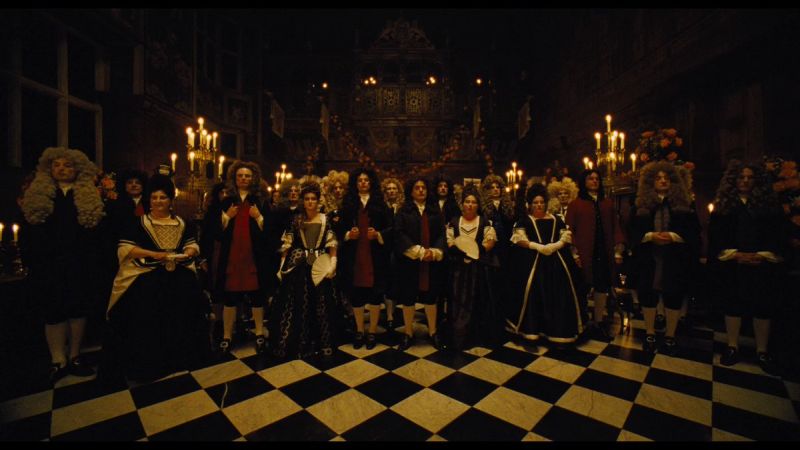
The Favourite (2018)

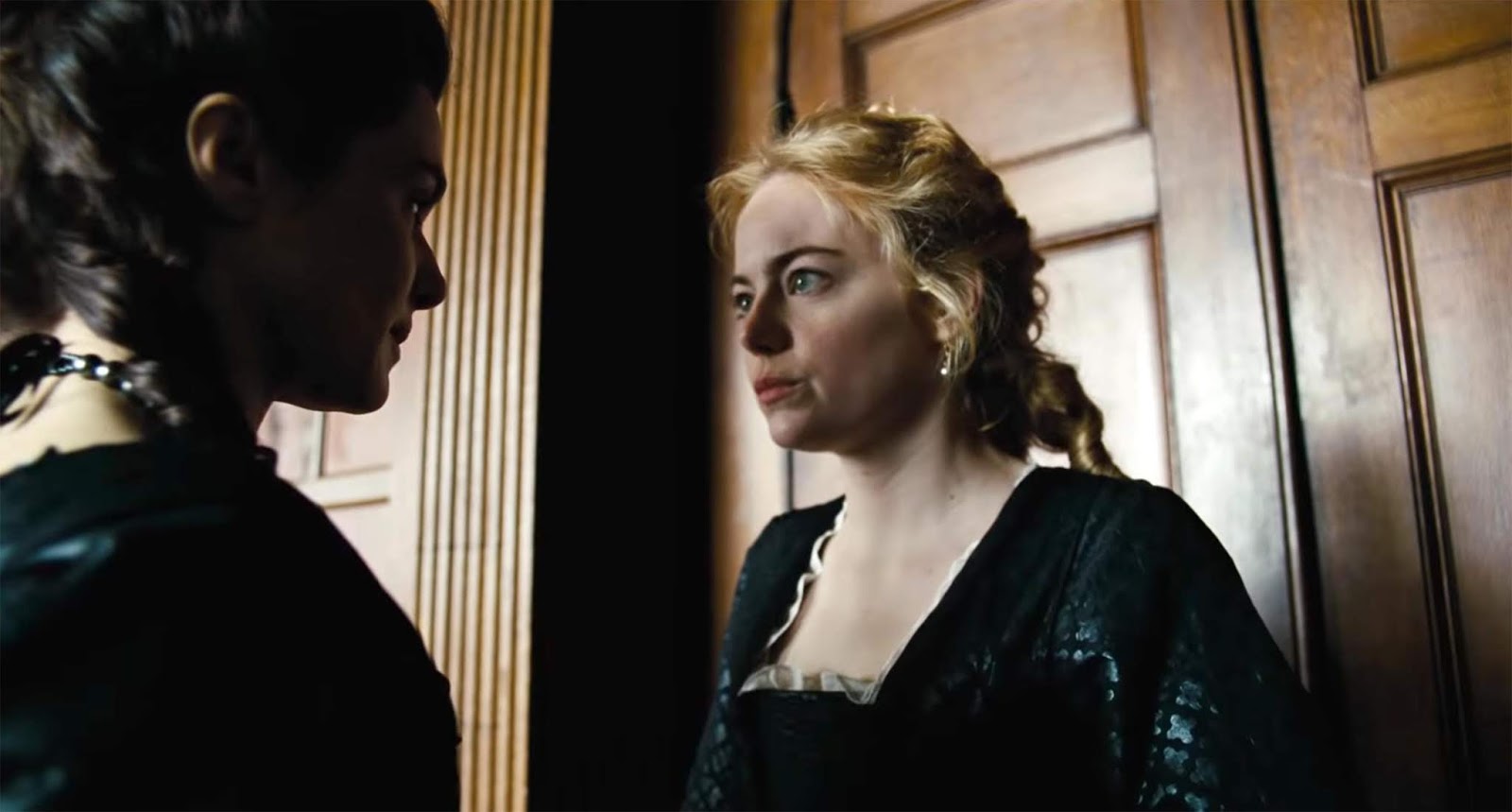
Olivia Colman is at the centre of a complex rivalry in The Favourite

Director: Yorgos Lanthimos

Cast: Olivia Colman (Queen Anne), Emma Stone (Abigail Hill), Rachel Weisz (Sarah Churchill, Duchess of Marlborough), Nicholas Hoult (Lord Robert Harley), Joe Alwyn (Colonel Lord Masham), Mark Gatiss (Lord Marlborough), James Smith (Lord Godolphin)

Looking around the cinema, I couldn’t help but wonder how many of the audience were expecting The Favourite to be a Sunday night-style costume drama about Queen Anne. Goodness only knows what they made of this skittishly filmed, acidic, sharp-tongued, very rude drama about squabbles in the court of Queen Anne. The Crown it ain’t.

In 1708, the court of Queen Anne (Olivia Colman) is dominated completely by her head of household, chief advisor, secret lover and domineering best friend Sarah Churchill, Duchess of Marlborough (Rachel Weisz). But Sarah’s control over Queen Anne is set to be challenged by the arrival in court of seemingly charming, but in fact ruthlessly ambitious, cousin Abigail Hill (Emma Stone), a former aristocrat who has fallen on hard times. Soon Sarah and Abigail find themselves in the middle of a bitter, ruthless clash for control over Anne – who, seemingly weak-willed and disinterested in government, in fact takes an eager pleasure from the rivalry of the two women.

The Favourite is a brilliant, acerbic, very dark comedy that treats its period setting with a hilarious lack of reverence. It’s a frequently laugh-out loud comedy, with its often foul-mouthed dialogue just on the edge of being anachronistic (a trait that also comes into the hilarious non-period dancing). It takes a moment to tune up, but leans just enough on the fourth wall to work. Lanthimos’ film doubles down on the insane pressure bowl of Anne’s courts, turning the court of the 1700s into a bizarre, semi-surreal state where you have no idea what insanity you might see around the corner – from racing ducks, to rabbits roaming free, to a naked man being pelted with oranges. 

But then this is the sort of bizarreness that stems from the top, and Olivia Colman’s Queen Anne is a domineering eccentric. In a film-career-making performance from Colman, her Queen Anne is part infantalised puppet, part needy insecure lover, part bitter control freak. Anne will change from scene to scene from a furious, knee-jerk rage to a weeping vulnerability. Her interest in actually ruling the kingdom has been largely beaten out of her, but she still needs to feel that she holds the power. With her body raddled with gout, Anne alternates between demanding independence and being wheeled from place to place. Colman’s performance bravely skits between temper tantrums and a desperate, panicked loneliness and sadness – it’s a terrific performance.

A woman as uncertain and unhappy in herself as Anne is basically pretty ripe for control and manipulation. History has not been kind to Sarah Churchill, who is often seen as a ruthless, power-hungry manipulator only out for what she can get, obsessed with the power her role brings her. This film takes a different, more interesting slant, thanks in part to Rachel Weisz’s superb performance. Weisz plays Churchill as a strong-minded, hard to like woman, who has a genuine bond with Anne, but honestly believes she is better suited to execute the powers of royalty than her lover. But that doesn’t stop her having feelings for her – or priding herself on refusing to lie to Anne about anything (from her appearance to her behaviour). But this doesn’t stop Sarah from ruthlessly bullying Anne or threatening her – though she’s equally happy to climb into bed with her when required.

But Sarah Churchill here is doing the things she is doing because she honestly believes that it is what is best for the kingdom and (by extension) Anne, and the moments of shared remembrance between Anne and Sarah have a genuine warmth and feeling to them. Which makes her totally different from the ruthless Abigail, played with a stunning brilliance by Emma Stone. Abigail doesn’t give a damn about anything or anyone but herself: something the rest of the servants in the household seem to recognise instinctively as soon as she arrives, but a danger Sarah doesn’t detect until too late. Abigail’s every action is to promote her own wealth and prestige, and she’ll do whatever it takes to do that, from crawling through the mud for herbs to crawling between the sheets to pleasure Anne at night. Stone’s Abigail is ruthless, self-obsessed, uncaring and on the make in another terrific performance.

The film focuses in large part on the see-sawing fortunes of these two rivals for the role of favourite – with Anne as the fulcrum in the middle. The film is split into eight chapters, each of which is opened by a quirky quote from the chapter itself. It neatly structures the film, and also gives it a slight off-the-wall quality. The film is packed with electric scenes, as the women wear the trousers in the court (often literally, in Sarah Churchill’s case), riding and shooting in their spare time and slapping down the assorted politicians and lords desperately trying to promote their interests on the edge of the court. This battle of wits and wills is a fabulous, increasingly no-holds barred, rivalry that motors the film brilliantly.

Lanthimos loves every moment of scheming and double crossing the film supplies. He shoots the film with a selection of low-angle and fisheye lenses, which make the palace settings seem as imposing, large and domineering as possible – and also distorts the world just as the feud between the two women is doing. The film looks fabulous, with its intricate design and it’s candle lit lighting. Lanthimos’ court always looks gloomy and secretive, with only a few spots of orange warmth.

Lanthimos also understands that there is very little room for sentiment or feeling here, and the flashes of it we get are never allowed time to really grow. That’s not a negative of course, as this sharp comic drama is also an arch commentary on some of the selfishness and distortion of events that lies under politics (sound familiar?), with the interests of the ordinary people of the realm raising very little interest from any side on the political divide. And Anne is such a bizarre character, so pulled between pillar and post, so desperately unhappy so much of the time, so utterly spoilt the rest, that you understand how she has become such a chew toy for court faction, and why she is happy to tacitly encourage this world where her every whim is played to for advantage.

I laughed out loud several times during The Favourite. It’s obvious to say that it feels like a film for the #metoo era – but it certainly has three fabulous, brilliant, hilarious and strangely heartfelt performances from its three female leads, three of the best actresses in the business. Wonderfully directed, beautifully written and fabulously designed, this is properly fantastic cinema.

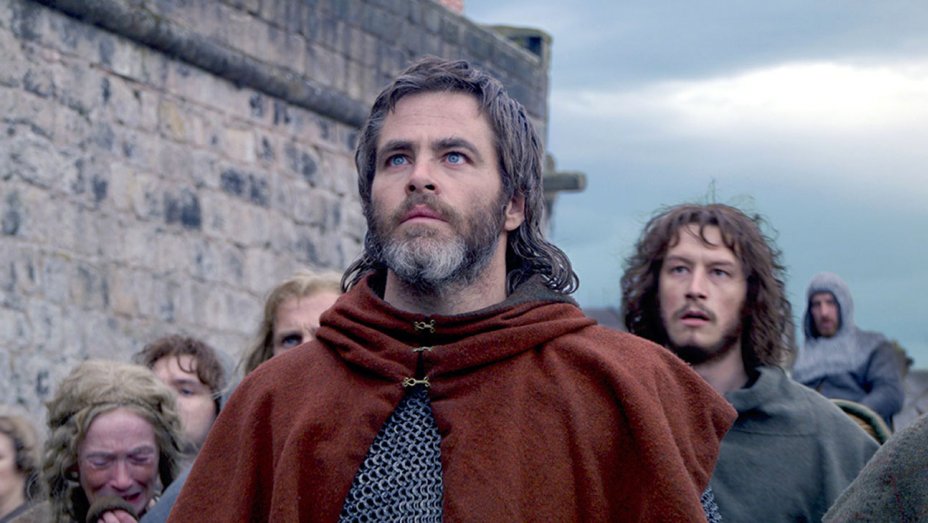
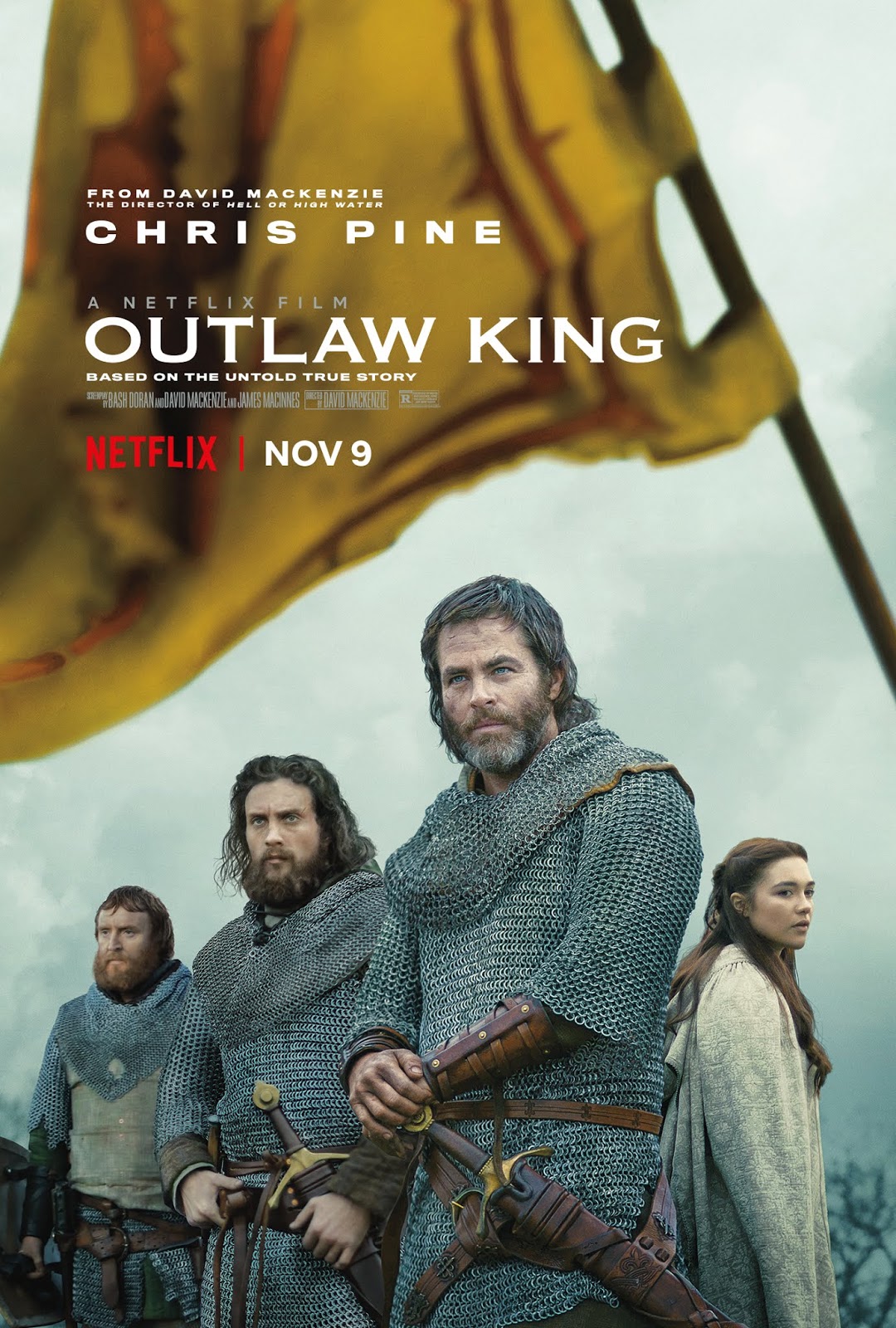
Outlaw King (2018)

Chris Pine leads Scottish rebellion in Netflix’s Outlaw King

Director: David Mackenzie

Cast: Chris Pine (Robert the Bruce), Aaron Taylor-Johnson (James Douglas), Florence Pugh (Elizabeth de Burgh), Stephen Dillane (Edward I), Billy Howle (Edward II), Tony Curran (Angus Macdonald), Sam Spruell (Aymer de Valence), Lorne Macfadyen (Neil Bruce), Alastair Mackenzie (Lord Atholl), James Cosmo (Robert de Bruce), Callan Mulvey (John Comyn)

In 1995 the world went crazy for Mel Gibson’s Braveheart, which turned William Wallace from a largely forgotten historical rebel into a martyr for independence. Outlaw King is an almost spiritual sequel that follows the life of Robert the Bruce, the eventual winner of Scottish independence. It picks up almost immediately from the death of Wallace and follows the struggle of the Bruce to take the throne. But I’d be surprised if it has the same impact.

Outlaw King is a fairly decent pick-up of events, and it tries to get a balance between drama and history – one it more or less manages until the final act. In the aftermath of a failed Scottish rebellion, Robert the Bruce has the advantage of his father (James Cosmo) being an old friend of Edward I (Stephen Dillane). After renewing his oath of loyalty to Edward, Robert is given land, influence and a marriage to wealthy noblewoman Elizabeth de Burgh (Florence Pugh). However, after his father dies regretting the pact and William Wallace is brutally executed by the English, Robert uses the public outrage as a boost to putting together his own claim to the Scottish throne. Murdering his chief rival in a church, he raises the flag of rebellion against the English and leads an army to take back Scotland. But things swiftly go wrong, and Bruce finds himself on the run and declared a rebel.

Outlaw King gets a lot right. It’s impressively filmed and looks fantastic. The photography by Barry Ackroyd is wonderful, in particular the use of candles for interior scenes which bring a brilliant golden glow to the action. Mackenzie is an ambitious and imaginative director, and he pushes himself to the limit here. The opening nine minutes of the film is one long continuous shot that takes in debate, a sword fight, court room intrigue and the firing of the largest trebuchet you are going to see outside of Warwick Castle. With the camera swaying and bobbing around in this sequence you have to admire the chutzpah – even if I can see that some viewers (my wife included!) might think it showing off. 

Mackenzie gets equal flourish out of the film’s many combat scenes. There is, to tell the truth, probably one too many of these bloody melees, but the camera gets a real sense of the blood, mud and gore that medieval battle involved. With brilliant use of hand-held immersive camerawork, each of these battles really gives you a sense of bloo-spattered chaos. Sometimes things are hard to follow – at least one death in combat is met with fury, but I’m not entirely sure who that guy even was (and it’s never mentioned again). But you’ve got to admire the skill of the film-making.

It’s the story itself where the film sometimes falls a bit flat. It does get a really good sense of the medieval, I will certainly give it that. The design and attitudes of the film are pretty perfect, and the stakes that everyone is clashing for feel very real. But the film encounters problems more and more as the film drifts into fiction and away from history. While the realpolitik of Bruce’s move to have himself declared king has a ruthlessness that feels real, the film’s attempt to build a personal rivalry between Bruce and the future Edward II feels forced from the start. By the time the film’s conclusion attempts to boil the entire campaign for Scottish independence into a mano-a-mano clash between the two on the battlefield (that of course never actually happened) you start to feel it’s getting very silly. Not least as figures who in real life would be invaluable bargaining chips are allowed to walk free from the battle field, to demonstrate the moral superiority of our heroes.

It’s a part of the general drift of the storyline that gets a little less compelling the longer it goes on. Maybe this is because once Bruce has his initial army destroyed and his first campaign to grasp power defeated, the story of him being on the run and carrying out guerrilla hits never feels fresh and original. We’ve seen it before – and the way the film generally avoids developing the supporting characters fully often means your focus starts to shift. After a really strong start, the film becomes more and more generic, Bruce himself becomes more and more a perfect leader rather than the almost Machiavellian character he started as, and the focus turns more and more into making it a conventional goodie-vs-baddie clash. It becomes something more forgettable, more like something you’ve seen before, and turns a campaign that took almost ten years into a rushed “and then they won this battle and everything was fine” ending.

There are many strong moments in there though, not least the generally decent performances from the cast. Chris Pine as Robert the Bruce sounds like the sort of casting decision made in hell, but he actually handles himself very well. His accent is very good, he captures a lot of the complexity of Bruce as a man who wants to be good but must sometimes be ruthless, and he brings a large dollop of charisma to the role so that you never really find yourself questioning whether he is a man others would follow. He doesn’t set the world alight, but does a good job.

The film’s stand-out turn however comes from Florence Pugh, who brings her customary intelligence and charisma to the complex part of the Bruce’s wife. At first positioned into an arranged marriage, she quickly proves both her independence and value, but also her strength of character. Far from being just a hostage – the role history largely assigned her – Pugh’s performance always makes her a character with agency, a woman determined enough to be loyal to the end once she has made her choices. There are other decent performances as well, in particular from Stephen Dillane as an authoritarian hard-ass Edward I, while Billy Howle gets to a play an Edward II who feels true (the film avoids references to his homosexuality, but does allow him to be the fearsome warrior – if hopeless general – he was, as opposed to the homophobic cartoon he was in Braveheart).

Outlaw King,though, just isn’t quite good enough. It’s fine for a decent watch on a Saturday night. In fact Netflix is just about its perfect platform: if you stumbled across this while scrolling through the library, and you were in the mood to click on it, you wouldn’t be disappointed. But even though it’s visually impressive and enjoyable, it’s also increasingly predictable and even a little bit empty. It doesn’t quite come to life as much as it should and eventually settles for being something quite traditional.

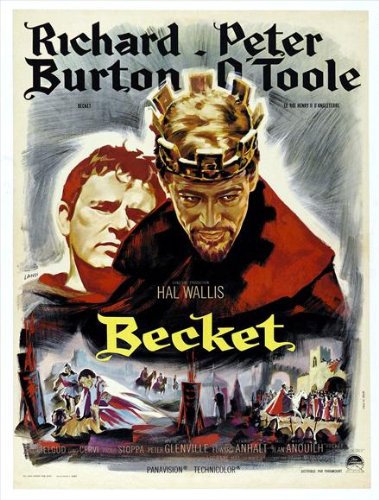
Becket (1964)

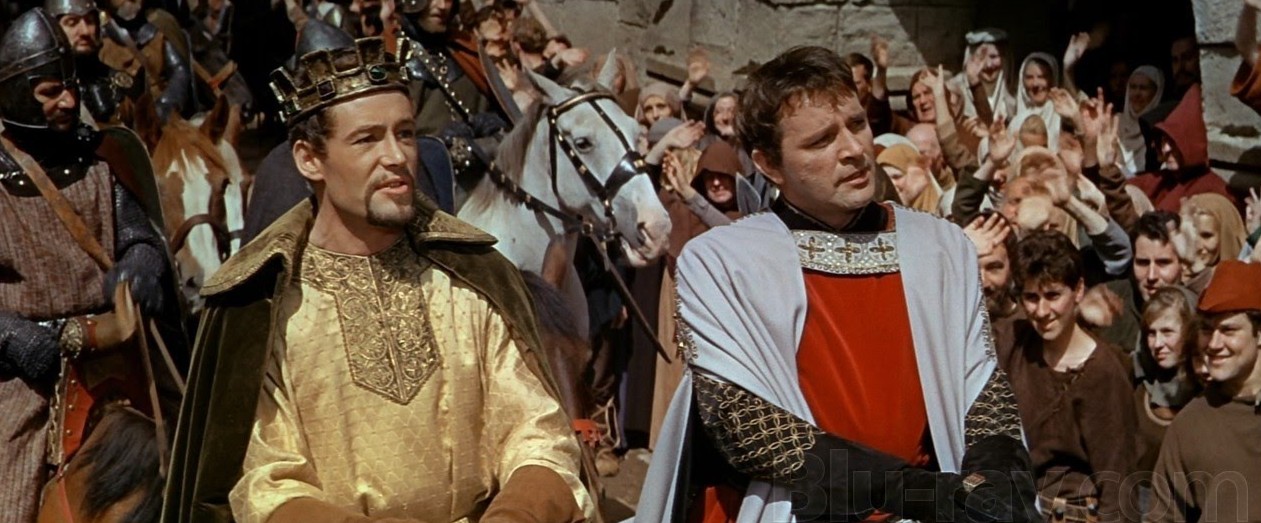
Peter O’Toole and Richard Burton make unlikely friends (and then enemies) in Becket

Director: Peter Glenville

Cast: Richard Burton (Thomas Becket), Peter O’Toole (Henry II), John Gielgud (Louis VII of France), Donald Wolfit (Bishop Gilbert Foliot), Martita Hunt (Empress Matilda), Pamela Brown (Eleanor of Aquitaine), David Weston (Brother John), Sian Phillips (Gwendolen), Felix Aylmer (Archbishop of Canterbury), Paolo Stoppa (Pope Alexander III), Gino Cervi (Cardinal Zambelli)

Burton and O’Toole in the same movie? There must have been a few late night benders on that shoot… You suspect actually that the backstage fun might have been just a little more sprightly and engaging than the movie itself, a lavish 1960s Hollywood Prestige film of English history. Based on Jean Anouilh’s semi-satirical play, it translates the clash between Church and State under Henry II into a very personal conflict between two men who each feel the other has let them down. 

Thomas Becket (Richard Burton) is a Saxon who has risen high in the service of Henry II (Peter O’Toole) at a time when all the top jobs are held by Normans. Becket and Henry do everything together: hunting, hawking, whoring, you name it, the two of them are inseparable. But while both are sharply intelligent men, Henry is basically lazy and principally interested in enjoying life, while Becket always has a slight streak of responsibility for his people and their rights. But despite this, the two men both have England’s interests at heart and a strong friendship. So when Henry makes Becket Archbishop of Canterbury, it should work a treat, right? Well wrong, because Becket quickly begins to feel his loyalty is to the Church and God, not to Henry – and soon a debate over the legal rights of the church has blown up into a full scale clash between the two former friends. Will no one rid Henry of this turbulent priest?

Becket is a fairly sharply written, waspish play about the love/hate relationship between two men, but its themes and ideas are basically secondary to the showcasing opportunities it gives to its two lead actors. That’s pretty much what happens with this film: for all the ups and downs of the plot, the thing that really lifts this film are those two performances. Take that away and you essentially have a stately period pace, flatly and unimaginatively filmed with the look-at-the-scenery-and-costumes steadiness of other films of this genre and time. So it’s just as well that both leads are clearly having a whale of time.

Burton invests Thomas Becket with a quiet authority and a growing sense of something that, if it’s not morality, is at least a sort of moral certitude. Burton’s Becket is not the straightforward good-guy: his stances are always governed at least partly by his own pride and ambition. His defence of the Church is partly motivated by the need to secure his position, and in his career beforehand he constantly shows that he is won’t let doing the right thing damage his position at the court. But there are also touches of genuine faith throughout, and Burton plays the monologues imploring God for guidance with earnest conviction. Alongside this, he plays Becket with a great deal of wry observance and subtle wit that makes this kaleidoscopic character constantly fascinating: you never quite know what he is thinking.

Burton’s restraint also allows O’Toole more room in the more expansive role of Henry II. The powerful king – proud, controlling, intelligent and bombastic – was always a perfect role for O’Toole: indeed he would play it again four years later in another play adaptation, The Lion in Winter (becoming one of the few actors to get two Oscar nominations for the same character). O’Toole roars through the film, bringing immense energy and humour to Henry’s many scenes of intense speechifying. But what O’Toole does so well is balance this with a genuine sense of vulnerability, a genuine pain at losing Becket’s friendship. For all the power and control, O’Toole understands that Henry is essentially a very lonely man with only one man anywhere near his equal. O’Toole’s sharply intelligent, dynamic performance is a real treat.

And it feeds into the underlying theme of the film: this sense of unrequited love between the two men. Henry, for all his egotism, is clearly in love on some level with Becket: a fact that Becket seems aware of, but doesn’t quite return with the same intensity. And in fact, to double Henry’s pain, it feels like the friendship is one partly driven by Henry’s position rather than something genuine between the two men – Becket is always more guarded and more critical as a companion. Though of course that is fair enough: Henry is, however good-naturedly, a supreme ruler who cares little for the welfare of the Saxons under his rule, happy to help himself to attractive women from the peasantry if he wants them. But then perhaps it’s Becket’s very distance, his certain level of speaking truth to power, that makes him so appealing to Henry: when Becket is around, Henry has competition for smartest guy in the room.

There is a lot going on between the two leads, so it’s not surprising that much of the rest of the film doesn’t get a look in. For the other performers, John Gielgud landed an Oscar nomination for his two scenes (barely five minutes) as an arch and manipulative King of France, while Donald Wolfit is all puffed-up pomposity as Becket’s church rival. But the film is only focused on the two men and their political rivalry, so the context is always sketched in quickly, and the energy drops out of the film noticeably when they are apart. The film wants to frame the rivalry so much as a personal one that it doesn’t develop another interest in the political issues – so when scenes are obliged to focus on this, you feel the film starting to drag.

But that might also be because Anouilh’s play is famously historically inaccurate. For starters, Becket wasn’t Saxon, so his early lack of social standing makes no sense. The Constitutions of Clarendon (historically the reason for the falling-out in the first place) don’t merit a mention. Henry’s wife Eleanor of Aquitaine is presented as a shrew rather than one of the most intelligent women of the era, while Henry is also shown to be on poor terms with his mother, again contrary to the truth. 

But that stuff all stems from the play, and in the end it hardly matters as the film is positioning itself as the tale of a friendship turned sour between two men. O’Toole and Burton are sublime, and if the direction and film-making around them is pretty pedestrian (although the film looks great and has an impressive score) it doesn’t really matter in an actors’ piece like this. Most of what is good from the play is carried over to the film, and the dialogue and speeches are often very strong. It’s a very stately and rather overlong play that doesn’t really keep the momentum up. But it’s still enjoyable, still has plenty to admire and even if it’s overlong and dry, it gives you performances that really sing.

The Madness of King George (1994)

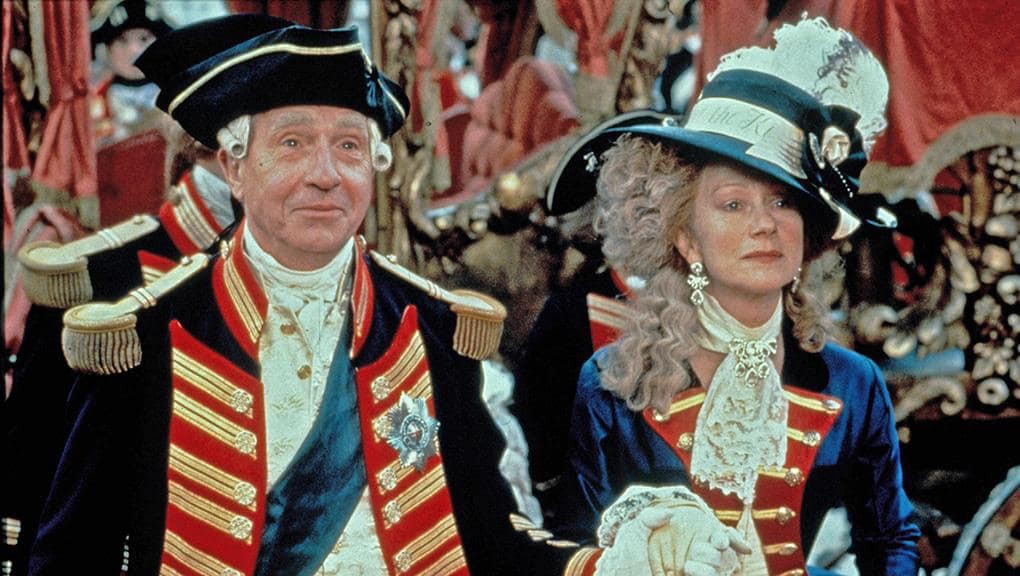
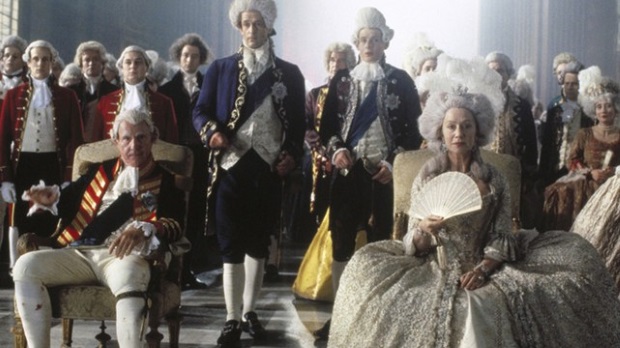
Nigel Hawthorne and Helen Mirren excel in this masterful adaptation of Alan Bennett’s classic play

Director: Nicholas Hytner

Cast: Nigel Hawthorne (King George III), Helen Mirren (Queen Charlotte), Ian Holm (Dr Willis), Rupert Everett (Prince of Wales) Amanda Donohoe (Lady Pembroke), Rupert Graves (Captain Greville), John Wood (Lord Chancellor Thurlow), Geoffrey Palmer (Dr Warren), Jim Carter (Charles James Fox), Julian Rhind-Tutt (Duke of York), Julian Wadham (William Pitt), Anthony Calf (Captain Fitzroy), Adrian Scarborough (Fortnum), Struan Rodger (Henry Dundas), Caroline Harker (Mrs Fitzherbert), Roger Hammond (Dr Baker), Cyril Shaps (Dr Pepys)

Alan Bennett’s The Madness of George III allegedly changed its name for the film adaptation because producers worried American audiences would feel they missed the first two films in the series. It’s not actually true, but it was a lot of free publicity for Nicholas Hytner’s film debut – a marvellous, accomplished and brilliant theatrical adaptation that will always take a firm place on my list of favourite films. It’s an excitingly well-made, hilarious and heartfelt film that captures forever Nigel Hawthorne’s greatest ever performance.

In 1788 King George III (Nigel Hawthorne) is still fuming over the loss of “the colonies” (the film front and centres talk of the plucky United States, to help sell the film in the land of the free) and the behaviour of his ambitious oldest son George (Rupert Everett). Happily married to his wife Queen Charlotte (Helen Mirren), and the father of 15 children, George is a stickler for form and duty. So imagine the shock of his ministers when his behaviour becomes impulsive, irrational and finally obscene. With the king talking non-stop and impossible to control, the Prince of Wales schemes to become Prince Regent. Desperate, the king’s ministers call in Dr Willis (Ian Holm), a professional doctor of the mad, who claims he can (with time) cure the king. But will it be in time to prevent the regency?

Nicholas Hytner has rather charmingly claimed that he knew so little about film-making he didn’t realise the difficulty of many of the things he asked for, and if he had known he would never have asked. He gives much of the credit to the seasoned pros working on the film pulling out the stops to give him what he asked for. The end result is a brilliantly paced, lusciously filmed epic that is both a wonderfully moving personal story of a crotchety but lovable monarch and a witty look at regency politics. Several scenes are shot with an imaginative brilliance, from shots that throw themselves into the middle of scuffles at court with the unbalanced king, to sweeping landscape shots that make it look like the thing cost millions of dollars.

The other advantage of bringing in Hytner (director of the original stage production) was his brilliant understanding of Alan Bennett. Bennett’s script is superb, crammed with sensational lines and brilliant jokes that never get in the way of the humanity. Bennett is always more than radical than his cosy reputation suggests, and King George is a witty deconstruction of the purpose of the Royal family (politicians frequently comment on their pointlessness and George defines it as “smile and wave” and to act as “a model family”). It’s got a great understanding of the frustrating waiting game of long-serving heirs (being Prince of Wales “is not a position, it is a predicament”). The film even lands a cheeky gag at the end with the suggestion that the King’s condition was hereditary.

Hytner’s film uses the trappings of royalty brilliantly, contrasting them to great effect with the later degradation of the king – in an inspired moment, George’s first “enthroning” in the restraint chair Willis uses to condition him into behaving is soundtracked to Handel’s Zadok the Priest. George’s court is an uptight, staid place where people can’t relax (or even sit – George is so adamantly opposed to people sitting in his presence even a heavily pregnant woman is not exempt during an interminable bell-ringing version of Handel). George is a constrained figure – so it’s no wonder his insanity displays itself as an increasingly loose-lipped lack of inhibition.

The question of madness is richly handled. As Willis says, many of the mad consider themselves kings, so what does a king fancy himself as? And how can you tell what is normal for a king anyway? George is an eccentric from the start – and even his recovery at the end is basically eccentricity with an element of self-control rather than a full recovery. The film never shies away from making you invest in the rough treatment the king undergoes to wrestle him back to sanity. The doctors get short shrift, either incompetent or scheming (“When will you get it into your head that one can produce a copious, regular and exquisitely turned evacuation every day of the week and still be a stranger to reason” Geoffrey Palmer’s wonderfully dry Warren tells a toilet-obsessed colleague). 

The film is slightly more confused about Willis. Strongly played, with a twinkly chippiness, by Ian Holm (who is just about perfect) the film can’t quite decide if Willis is responsible for the king’s recovery or not. It’s a battle of wills, but is Willis ahead of his time or as medieval as his colleagues? Does Willis’ aggressive conditioning (punishing bad behaviour with restraints) force the king back into sanity? Or is it George’s love of his wife that provides the final push? Or is the king naturally on an upcycle where madness expresses itself in eccentricity rather than incoherence? It’s not clear (maybe this is deliberate) but Willis’ regime of punishment and reward has a slight air of quackery.

What’s pretty deliberate was Bennett and Hytner’s insistence that only Nigel Hawthorne could play the king. Thank god they did, as Hawthorne is simply brilliant. Cheated of the Oscar in 1994, Hawthorne is compelling. He also conveys the natural authority of a king, and the “grumpy old man” side of the king is mined for brilliant comic effect. But it’s also a beautifully heartfelt and hilarious performance, running the gamut from delight in obscenities to teary fury and fear at the treatment from his doctors and loss of mental control. Such a sublime performance.

And it surely inspired some top work from the brilliant cast around him, many of whom revived their roles from the stage production (chief among these Wadham’s wonderfully dry Pitt).  Helen Mirren is warm, proud and eventually desperate as Charlotte, while Rupert Everett mines the Prince of Wales for all the comic pomposity and childishness he can. Rupert Graves is excellent as a loyal equerry, while John Wood, Jim Carter and Geoffrey Palmer also excel. You’ve rarely seen such a strong cast of British stage notables, and it’s not surprising they were attracted to perform in a script that has as many good lines as this one.

It’s accomplished and luscious, is brilliantly shot and designed, and is packed full of wonderful sequences. It wears its intelligence lightly, with George as a proto-Lear struggling to hold onto his marbles. The characters even sit and read Lear at one point (“Is that wise?” questions Thurlow. “I had no idea what it was about” says the little-read Willis). George may recover his wits in time, but it’s unclear whether this makes him more or less of a human being. In many ways at the height of his insanity, he’s a warmer, friendlier person (if out of control), then he is as his buttoned-up, stickler-for-duty self. 

The Madness of King George is the sort of film all theatre adaptations wish they could be, brilliantly cast, opening out into something that not only feels compelling to watch but also brings out the great depths of the original play. What is monarchy for? How can we tell if the all-powerful are mad or not? What is sanity anyway? All this and with some superb jokes, and a story that really involves you. With Nigel Hawthorne’s simply brilliant performance at the centre, this is one for the ages.

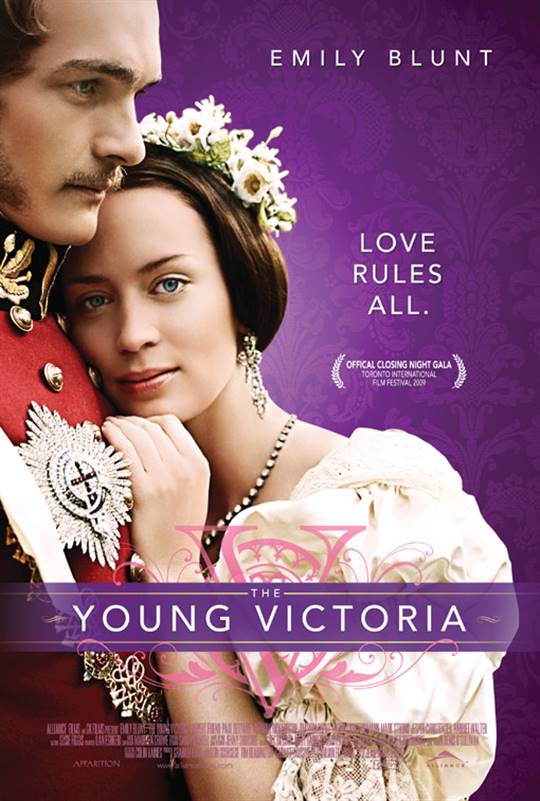
The Young Victoria (2009)

Emily Blunt and Rupert Friend play the royal couple in the cozy The Young Victoria

Director: Jean-Marc Vallée

Cast: Emily Blunt (Queen Victoria), Rupert Friend (Prince Albert), Paul Bettany (Lord Melbourne), Miranda Richardson (Duchess of Kent), Mark Strong (Sir John Conroy), Jim Broadbent (King William IV), Harriet Walter (Queen Adelaide), Thomas Kretschmann (King Leopold), Jesper Christensen (Baron Stockmar), Jeanette Hain (Baroness Lehzen), Julian Glover (Lord Wellington), Michael Maloney (Sir Robert Peel), Michel Huisman (Prince Ernest), Rachael Stirling (Duchess of Sutherland)

Now ITV’s Victoria exists, it’s a bit strange to go back and watch The Young Victoria. With the love today of long-form drama, and the time it can invest in things, it’s funny to see what the drama took almost 8 hours to do being crammed into an hour and a half here. But saying that, The Young Victoria is still an entertaining, luscious viewing experience which, while it has some strange ideas about certain events, is the sort of relaxing Sunday afternoon viewing that will take you out of yourself.

After the death of William IV (a slightly overripe Jim Broadbent), Victoria (Emily Blunt) is elevated to the throne. Finally able to shed the control of her mother’s (Miranda Richardson) domineering secretary Sir John Conway (Mark Strong), Victoria is determined to steer her own course. But she is surrounded by competing influences, not least from the charming arch-politician Lord Melbourne (Paul Bettany). King Leopold of Belgium (Thomas Kretschmann) dispatches his nephew Prince Albert (Rupert Friend) to England with the express interest of marrying Victoria and controlling her – but Albert and Victoria find themselves as kindred spirits, supporting each other to rule.

The Young Victoria is the epitome of prestige costume dramas. It looks fantastic, the cinematography is ravishing, the production and costume design exquisite. It’s pretty clear what the producers thought would sell the picture abroad. The royal regalia is pushed very much to the fore, and we get some wonderfully sweeping scenes, not least an impressively large-scale coronation. The soundtrack brilliantly riffs on Handel, and Julian Fellowes’ script mixes period regal style with a sweeping feeling of romance between Victoria and Albert.

The film actually does a very good job of repositioning Victoria as a young woman, and gives her a strong quality of self-determination and a desire to be herself in a man’s world. It’s really helped in this by the combination of imperial strength, girlish wilfulness and sharp intelligence Emily Blunt brings to the role. Blunt and the film also aren’t afraid to show that, however much Victoria had guts and determination, she was also quite a headstrong woman not above making emotionally led mistaken decisions. In fact, much of the drama spins out of Victoria learning to try and put these youthful crushes and prejudices aside.

Having said that, it’s interesting that the successful conclusion of the film centres on Victoria accepting that she needs the help of Albert to run the kingdom, and that she needs to remove competing influences for her affection – Melbourne and Lehzen – to focus her affection and loyalty on him. The film frames this as a winning romance and a successful partnership (which it was) – but it’s also vaguely creepy if you think about it. Mind you, since all the affectionate influences on Victoria are implied by the script to be at least partly motivated by self-interest, with the possible exception (eventually) of Albert, it manages to suggest this was for the best.

Albert’s background gets some interesting exploration here. He’s very much presented at first as the tool of Leopold as a means of controlling British politics. But he is far too independent, smart and noble to ever be the means of manipulation. Friend is very good here – his performance is quiet, authoritative but also heartfelt. Fellowes guilds the lily a bit to show his devotion by having Albert shot by a would-be assassin late-on in the film. Historically the assassin’s pistol wasn’t loaded, and Albert didn’t get shot (though Fellowes protests Albert didput himself in front of Victoria and that this intent is what’s important, not whether he was shot or not) but the moment does work – it gives the drama a boost and it’s undeniably moving.

While Albert is presented overwhelmingly sympathetically, interestingly Lord Melbourne gets quite a kicking. Paul Bettany is presented far more as a rival love interest than the sort of father-figure Melbourne was in real life (Bettany is probably 20 years younger than the real Prime Minister). Melbourne is shown as cynical, controlling, manipulative and overwhelmingly motivated by self-interest (a few more pushes and he would virtually become the film’s villain). He’s constantly contrasted negatively with Michael Maloney’s upright, honest Sir Robert Peel (one of my favourite statesmen of the 19th century so at least I’m pleased) – and his relationship with Victoria is one of self-promotion, which seems odd seeing as historically the two of them were so close. 

The film introduces other villains for us to hiss at. Kretschmann and Christensen do a good job as arch political schemers. Our real villain though is Mark Strong, who does a great job of scowling, controlling nastiness as the failed-bully Sir John Conroy. Strong’s performance works so well because he makes it clear that Conroy feels that his “Kensington System” (an attempt to manipulate and cow Princess Victoria into being a submissive puppet) is genuinely in her best interest, and that he genuinely cares for her. His partnership with Miranda Richardson as Victoria’s near-love-struck mother works very well.

The Young Victoriathrows in enough interesting character beats like this for it to really work as an enjoyable afternoon period-drama. With some great performances – Emily Blunt carries the movie brilliantly – and while some of the historical characterisation is a bit off, and other moments feel a little too chocolate box it’s a very entertaining, undemanding view., it’s great fun. The hardcore Victorian costume-drama fans will probably prefer Victoriafor the same story in more depth – but this film does it with great sweep (and doesn’t cram in Victoria’s stupid below-stairs plotlines!).