Category: Comedy

The Thin Man (1934)

The Thin Man (1934)

Complex mysteries take a backseat to witty wordplay in this charming, funny comedy

Director: W.S. Van Dyke

Cast: William Powell (Nick Charles), Myrna Loy (Nora Charles), Maureen O’Sullivan (Dorothy Wynant), Nat Pendleton (Lt John Guild), Minna Gombell (Mimi Wynant Jorgenson), Porter Hall (Herbert MacCauley), Henry Wadsworth (Tommy), William Henry (Gilbert Wynant), Harold Huber (Arthur Nunheim), Cesar Romero (Chris Jorgensen), Natalie Moorhead (Julia Woolf), Edward Ellis (Clyde Wynant)

Wealthy businessmen Wynant (Edward Ellis) is missing and his daughter Dorothy (Maureen O’Sullivan) needs someone to find him: particularly as the police suspect Wynant is a killer after his mistress Julia (Natalie Moorhead) is found dead, under suspicion of stealing $25k from him. Can she persuade debonair, playboy detective Nick Charles (William Powell) to put the martinis aside and take a break from his never-ending banter with wife Nora (Myrna Loy) to help unpick this mystery?

But of course she can, in this hugely enjoyable murder mystery. Inspired by a Dashiell Hammett novel (but you feel only loosely). In fact, Albert Hackett and Frances Goodrich’s script (with the encouragement of WS Van Dyke) focused a lot less on the mystery and a lot more on the sparky interplay between Nick and Nora. The Thin Man is really a crackerjack, joke-a-minute screwball comedy with a murder loosely attached. If anything, it feels more like a comedic Agatha Christie Tommy-and-Tuppence yarn – it even has a final scene where Nick gathers the suspects together over dinner to explain exactly what happened.

Not that Nicks’ actor, William Powell, particularly followed the complex plot details. But then I’m not sure anyone making The Thin Man expected anyone else to either. For starters, most viewers came away with the impression that the debonair Powell was the title’s thin man, rather than Wynant (the original crime relied on the victim being thin) – and the producers eagerly embraced that misconception, with a host of sequels following, each titled with a twist on the thin man.

Besides, the viewers were here for the banter not the crime drama. The Thin Man was shot at a lightening pace by Van Dyke (earning his nickname “one-take Woody”) over no more than twelve days. The reason being that was the length of time Myrna Loy was available for, and her chemistry with Powell was second-to-none. And you can tell it in the film, which has a loose, improvisational quality between the two leads who are often essentially fooling around on camera with each other, pulling faces and telling off-the-cuff jokes far more than spending time actually cracking the case.

And that’s where the joy of the picture really is. It’s huge fun to see the two of them playfully mock hit each other before reverting to affectionate hugs when Lt Guild turns to look at them. Or slapstick business around an icebag to the head for a hung-over Nora. The sort of film where we spent several minutes watching Nick playfully shoot balloons off a Christmas tree with an air rifle from ridiculous positions (until he finally hits a window). Both actors capture perfectly the mood of jaunty, cocktail fuelled, archly witty fun that really powers the film, like Noel Coward goes investigating.

Both actors are at the top of their game. Powell’s casual air of permanent intoxication doesn’t dim his razor-sharp cleverness. Somehow, he manages to remain smooth and stylish, even as he pulls a parade of silly faces. It’s a hugely entertaining, charismatic performance that bounces brilliantly off Myrna Loy’s equally fine performance of arch comic skill. Like Powell, Loy matches playful silliness with sexy sensuality and a winning way with a comic line. Van Dyke encourages both of them to carry out as much natural kidding around as possible (there’s even a moment when Powell drops slightly out of frame, the camera not keeping up with his off-the-cuff japery).

The two of them are a perfect fit for a pair constantly in a state of inebriation. Nora even orders six martinis (all to be lined up) alongside Nick’s one when she finds out he’s that many drinks ahead of her. Nick’s first reaction to be woken up in the middle of the night is reaching for a drink. Despite this, the two of them are sublimely cool under fire (literally) as only Golden-era Hollywood types can be. In fact, being held at gun point in the middle of the night feels like only an inconvenience in the way of a nightcap.

In fact, what’s really striking about The Thin Man is how it shows a real marriage of equals. They may bicker at points – and Nick may joke he married Nora for her money – but they work as a fully unified team. If one has a sharp line, the other an equally sharper comeback and if they make decisions they make it as a team. And, of course, they still have the hots for each other (the film ends with a classic cutaway to them climbing into the same bunk, hammering it home with their dog Asta covering her eyes and a cut to a train steaming away on the track). No wonder audiences absolutely soaked up the energy: just years after the end of prohibition, here was a fun-loving couple all about enjoying every inch of the pleasure’s life had to offer.

The whole tone of The Thin Man is about coating murder mystery in fun. From party guests who tip into the comically ridiculous (my favourite being a melancholic businessman who keeps weeping at the Charles’ Christmas Bash because he feels he needs to call his Momma) to an over-enthusiastic dog (Asta, played by celebrity mutt Skippy) whose whims constantly butt into the Charles’ never-ending drinking, flirting and banter. I love William Henry’s Gilbert, who never moves without a large reference book and uses a parade of out-of-context terms he clearly doesn’t understand from Oedipal to thinking sexagenarian is a sex addict to mispronouncing sadist as sad-est.

With all this background colour, no wonder most people didn’t really give a damn who did the thin man in (or even who the hell the thin man was). We were here for the fun, for Powell and Loy and for the jokes and banter. With Van Dyke encouraging a freeform style from start to finish (Powell’s first scene was his first practice, unknowingly filmed, his relaxed comedy so perfect Van Dyke printed it straight away), The Thin Man is wild, entertaining and funny ride which continues to entertain as viewers try to stop giggling to work out its elaborately obscure mystery.

Father of the Bride (1950)

Father of the Bride (1950)

Gentle, well-made comedy is elevated by a star turn from Spencer Tracy

Director: Vincente Minnelli

Cast: Spencer Tracy (Stanley Banks), Joan Bennett (Ellie Banks), Elizabeth Taylor (Kay Banks), Don Taylor (Buckley Dunstan), Billie Burke (Doris Dunstan), Leo G. Carroll (Mr Massoula), Moroni Olsen (Herbert Dunstan), Melville Cooper (Mr Tringle)

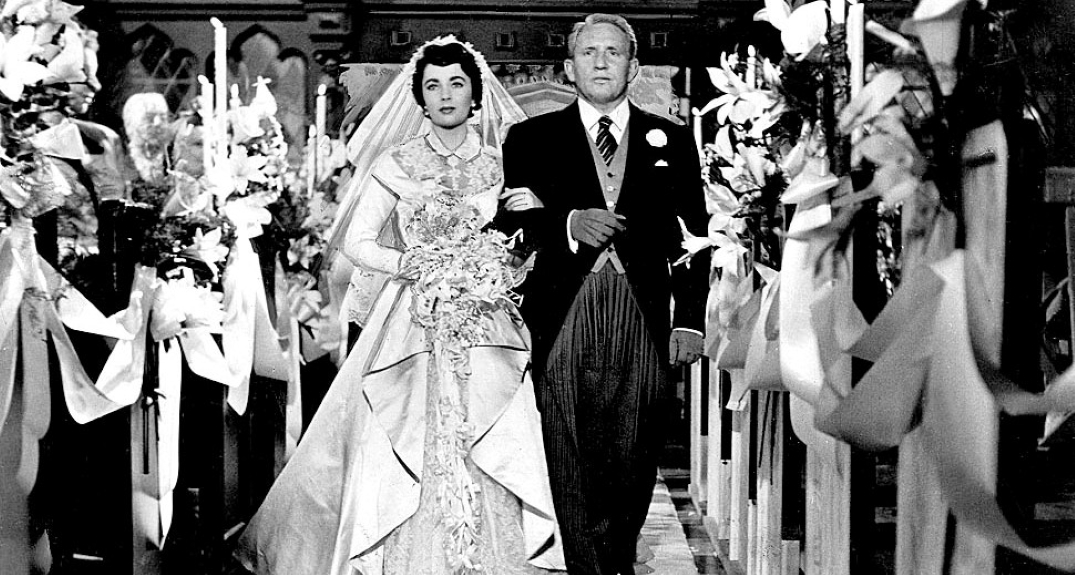
Apparently almost 70% of couples find wedding planning stressful. Perhaps they would be reassured to hear things haven’t changed much since the 1950s! Stanley Banks (Spencer Tracy) is a successful partner in a law firm whose domestic bliss is disrupted when daughter Kay (Elizabeth Taylor) announces she intends to marry boyfriend Buckley (Don Taylor). With the support of her mother Ellie (Joan Bennett), Kay dreams of a big church wedding – and Stanley is left counting the cost while struggling with his sadness at his daughter growing up and flying the nest for good.

Father of the Bride delightfully takes a simple idea and mines it for as much comic effect as possible. The structure is simple: the build-up to and staging of the wedding, with all absurdities of such things as fussy caterers and exacting church wardens pointed up. There are minor bumps and hiccups, but nothing that would make a viewer ever seriously worry that all will not turn out well. Instead, the film riffs on the constant exasperation of a father watching the plans (and cost) of the wedding spiral ever upwards, as more and more extras pile on top of others.

Much of its success is linked to Spencer Tracy, excellent as the eponymous father. The role was written for him and Minnelli demanded he should play it when producers suggested a more comic actor like Jack Benny might fit the bill better. (Katherine Hepburn did not take on the wife, though I can’t imagine she would found much to engage her in Joan Bennett’s underwritten role.) The entire success of the film revolves around our connection with Tracy, something never in doubt with his skill and assurance.

Minnelli cements this with an opening shot panning across wedding debris before craning up to introduce us to a fourth-wall breaking speech of resigned weariness from Tracy. His narrative voice is returned to again and again, as Tracy shares a wry and exasperated commentary. Father of the Bride is a testament to Tracy’s comic chops, his mastery of the micro-reaction providing constant laughs, from a look of disbelief across a dining table to one of shock as the latest bill flies in. It’s a hilariously effective performance, in which Tracy embraces the ridiculousness of farce. Like a practiced comedian he spays himself (three times) while attempting to open a coke or kids himself into believing he looks dandy in a morning suit several years too small for him.

But the performance – and the film – really works because Tracy also communicate its humanity. In his relationship with Elizabeth Taylor (suitably radiant as Kay, and full of a forceful personality she surely inherited from her father), Tracy makes clear his love for his daughter and his sadness at an end of an era: he won’t be ‘the man’ in her life anymore. Even with small inconsequential moments (such as Kay ignoring Stanley’s appeal to wear a coat before fetching it immediately when Buckley suggests the same), Tracy shows sadness dance across his face. The wedding is awash with bittersweet moments, with Tracy as harried host desperately attempting to speak with his daughter one last time before she leaves. Father of the Bride through Tracy’s performance mines a great deal of quiet, genuine emotion from a parent struggling with a child grown up.

It’s a bittersweet thread Minnelli’s film keeps pinging away under the comedy. Minnelli seems an unlikely choice (you’d expect a Cukor or Capra), but his skill with composition adds to the film without overwhelming the slender story with flash. The opening shot of wedding debris prepares us for the hustle and bustle of the big day, where a parade of carefully choreographed background events in the Banks’ house is as skilled as the bustling crowds of the event. Minnelli gives a Dali-inspired flair to Banks’ pre-wedding nightmare (his feet melting into the ground and clothes falling apart) and he plugs into Tracy’s reactive skill to frame these off-the-ball moments for maximum impact.

Editing also helps accentuate jokes. On hearing his daughter intends to marry, Banks reflects with horror on who this suitor might be, a montage of assorted suitors (from athletic, to bookish, to dancing) spooling past us. (The biggest joke now might be how utterly safe all these suitors are, the sort of lads you imagine fathers today would be desperate for daughters to bring home). Minnelli also fades in and out on blurry close-ups on glasses to communicate both the passing of time and Stanley’s rising inebriation (after a growing parade of martinis) when the Banks meet with Buckley’s parents.

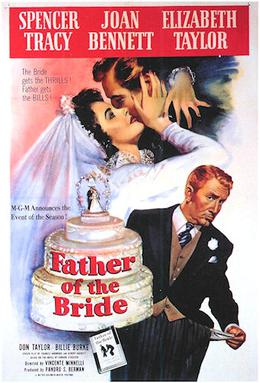
This sort of comic energy helps carry the film very effectively. Of course it is all very simple – the 1991 remake added more moments of crisis and obstacles for the characters to overcome – and that can explain why events sometimes feel stretched out even over its slim 90-minute run time. For all the film’s tagline (“Bride gets the thrills; Father gets the bills!”) suggests frustration on Stanley’s part, moments where he weeds through a huge invite list (525!) or bemoans paying for an orchestra no one is listening to are generally underplayed (perhaps it was thought we could only sympathise so much before starting to think of Tracy as a penny pincher?)

But, overall, the film works very well indeed, mostly due to Spencer Tracy’s hugely effective performance – funny, endearing, likeable and hugely relatable with a perfect balance between comedy and emotional depth. It would have been nice to have had more of a contrast between Stanley and Buckley – when Buckley turns up to a heart-to-heart with father-in-law clutching a briefcase full of his work, I immediately thought ‘never has a woman more clearly married someone like her dad’. But what the film aims to do it, it succeeds at. And that’s to have some good-natured, heart-warming fun showing how even stars like Tracy can find weddings stressful.

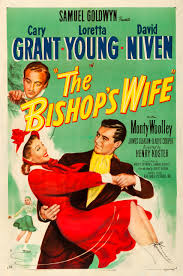
The Bishop’s Wife (1947)

The Bishop’s Wife (1947)

Charming Christmas enjoyment in this rather odd angel comedy that wins you over

Director: Henry Koster

Cast: Cary Grant (Dudley), Loretta Young (Julia Brougham), David Niven (Bishop Henry Brougham), Monty Woolley (Professor Wutheridge), James Gleason (Sylvester), Gladys Cooper (Mrs Agnes Hamilton), Elsa Lanchester (Matilda), Sara Haden (Mildred Cassaway), Karolyn Grimes (Debby Brougham)

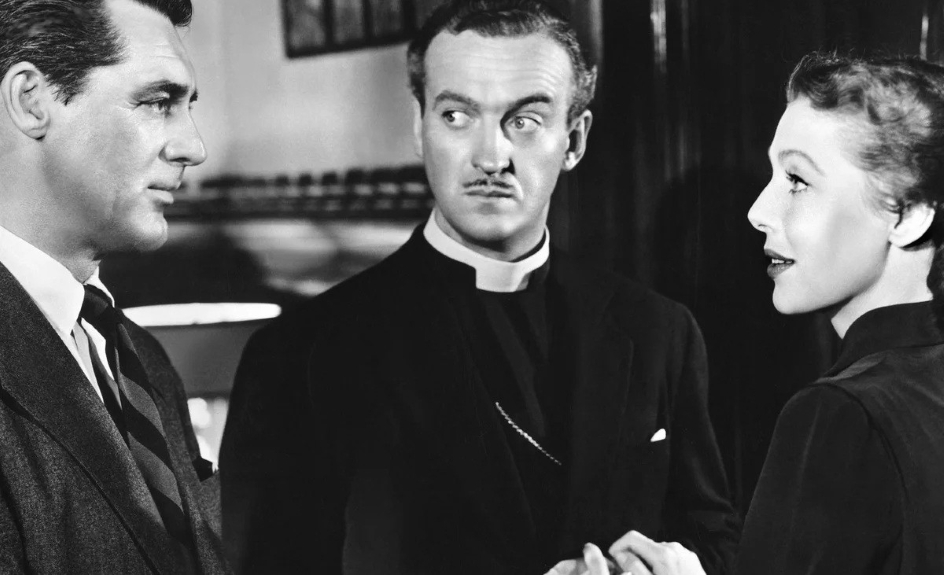
Newly appointed Bishop Henry Brougham (David Niven) is forgetting who he is. Now spending all his time with the hoi-polloi (led by Gladys Cooper’s grande dame Mrs Hamilton) trying to secure funding for a new cathedral he’s rather lost sight of things at home with his devoted wife Julia (Loretta Young). Enter, seemingly in answer to his prayers, angel Dudley (Cary Grant). Taking up a role as Henry’s new assistant – with only Henry knowing the Heavenly background of his guest – Dudley sets about helping those around Henry rediscover their spiritual joy in life.

The Bishop’s Wife is a gentle, unassuming film, all taking place in the week before Christmas. It’s heart-warming, seasonal stuff, competently directed by Henry Koster, who efficiently juggles gentle character conflicts with a reassuring moral message. There are some rather charmingly done magical special effects sprinkled across the film: Dudley uses his angelic powers to instantly sort reference cards, fly decorations onto a chair, dictate to a self-operating typewriter and guide a snowball through the air with all the dexterity of Oliver Stone’s magic bullet. As a gentle piece of seasonal viewing, it gives you everything you could want.

Such is its easy charm and seasonal sweetness, it almost doesn’t matter that it’s quite an odd film. It’s no real surprise Dudley isn’t on Earth to help Henry secure mega-bucks he to build a grand cathedral (especially since principle doner Mrs Hamilton is more interested in making it a tribute to her late-husband rather God) but to help Henry work out his real focus should be the ordinary joes of his community and his marriage. That he should make sure he prioritises a humble choir at small local church St Sylvester’s and keep in touch with the parishioners he used to dedicate his time to. And, above all, that he should find time in his bustling calendar to keep the love in his marriage.

But the methods used by Dudley – away from angelic magic over inanimate objects and his ability to know everyone’s names before they even open their mouths and cross roads in bustling traffic without fear – are a little odd. Aside from shoring up a few people’s spiritual strength, he essentially begins a campaign of seduction, giving Julia the sort of loving attention Henry hasn’t given her in ages. It’s a slightly bizarre holy campaign – the angel who uses the temptations of the flesh to save a marriage – but it’s done with such innocence a viewer almost forgets the odd idea.

It also just about makes a virtue of casting of Cary Grant as Dudley. In a part that feels tailor-made for Bing Crosby, surely Cary Grant is no-one’s idea of an angel (a slightly abashed, heart-of-gold, demon perhaps). Grant, to be honest, slightly struggles with the role – at times the complete decency of Dudley leaves him rather stiff and the Grant twinkle gets one of its most subdued outings in cinematic history. However, Grant’s naughty charm does make us accept a little bit more that Dudley might just feel a little more than he’s saying with his attraction to Julia (even if, the rules of films, tell us there is zero chance of an angel being a seducer).

It still manages to get the goat of Niven’s Bishop, who increasingly resents this overly efficient new presence in his life more focused on charming his wife than getting on with what he presumes he’s there for – securing funds for the Cathedral. Niven (originally cast as the Angel – but his raffish charm would have been as unnatural a fit as Grant’s), does rather well as a decent man crushed under expectations and duty who has forgotten the things that really matter. Niven has a very neat line in quietly exasperated fury, so buttoned-up and English (despite being American!) he can’t give vent to his real feelings but hides it under genteel passive aggression. He also sells a neat joke that he is constantly rendered literally incapable of saying out loud that Dudley is an angel.

Loretta Young, between these two, has the least interesting part, trickly written. It goes without saying that a feel-good product of 1940s Hollywood is not going to have the wife of a Bishop actually, genuinely considering straying from her husband (just as, I suppose, it can only go so far in suggesting Grant’s Dudley is sorely tempted to leave his wings behind). Young’s role leans a little too much into the patient housewife, just eager for her husband to embrace day-to-day joys at home and not lose himself so much in work, but she manages to make it work.

These three lead a cast made up of experienced pros who know exactly how to pitch a fairly gentle comedy like this. Monty Woolley is great fun as a slightly over-the-hill professor, who needs to be befuddled by a never-emptying glass to stop him wondering why he doesn’t remember Dudley from the lectures he claims to have attended all those years ago. James Gleason offers cheeky, down-to-earth humour and sensibility as a friendly taxi-driver, while Gladys Cooper once again proves she can give austere grande dames more depth than anyone else in the business.

It all makes for a gentle, rather sweet and charming film despite that fact that almost nothing in it really make sense. In fact, it frequently falters as soon as you consider any of the plot at all or any of the actions and motivations of its characters. But then, this is basically a sort of Christmas Carol where the Angel arrives to re-focus the (not particularly imperilled) soul of one man, with wit, charm and warmth – and if it feels odd that also involves inspiring envy and jealousy (deadly sins right?!) in a Bishop, I suppose we should go with it. After all, it’s Christmas.

A Touch of Class (1973)

A Touch of Class (1973)

A decent farce gets buried in a film that tries to make a profound point about relationships

Director: Melvin Frank

Cast: George Segal (Steve Blackburn), Glenda Jackson (Vickie Allessio), Hildegard Neil (Gloria Blackburn), Paul Sorvino (Walter Menkes), K Callan (Patty Menkes), Cec Linder (Wendell Thompson), Nadim Sawalha (Hotel manager), David de Keyser (Doctor Alvarez), Eve Kampf (Miss Ramos)

London-based American banker Steve Blackburn (George Segal) and divorced fashion designer Vickie Allessio (Glenda Jackson) feel an instant spark when they literally bump into each other while he’s playing baseball in the park. She loves the idea of some no-strings sex; he’s got more than a little experience of cheating on his wife. They head to Málaga for a dirty weekend, only to find a string of circumstances keep getting in their way of a relaxing (dirty) weekend.

A Touch of Class seems an odd choice as Best Picture nominee – just as Glenda Jackson seems an unlikely Oscar winner for a fairly straight-forward role of comic exasperation. (Surely part of Oscar was the voters surprise that the fiercely serious Jackson even had a sense of humour). But this film has its moments of entertaining farce, particularly in its opening half covering the disastrous trip to Málaga where literally nothing seems to go right. It works less well when A Touch of Class segues later into something trying to be more serious, not least since the film’s attempt to explore genuine feelings works best when it embraces the fact its lead characters realise that, beyond a sexual charge, they pretty much can’t stand each other.

There is something very British about this farce of manners. The first hour chronicles a series of embarrassments, nearly all of them revolving around a constant sense of social obligation and clumsy propriety, much of it coming from Steve’s desperation not to be caught out as an unfaithful husband. From booking tickets for their flight – an arch travel advisor (a very funny Eve Kampf) responding with mocking po-faced seriousness to attempts by Steve to pass Vickie off as his ‘mother’ – to the two awkwardly pretending not to know each other when Steve bumps into film producer friend Walter (Paul Sorvino) – who you suspect wouldn’t care less –  it quickly goes from bad to worse.

Like any classic farce, they end up trading their winning pre-booked car for a juddering mini with a faulty clutch (so Steven can escape Sorvino’s character without having to explain why he can’t give him a lift), arrive at their hotel to be shunted from room-to-toom, Steve putting his back out after a bizarre argument about which side of the bed each will sleep on and eventually both being invited separately to dinner with Walter and his wife (who, unknowingly to them, are awkwardly shadowing part of their holiday). The comedy of this social awkwardness, the terror of saying something that might shock or embarrass someone, genuinely generates some decent comic mileage.

A Touch of Class also generates an entertaining sense that the two have very little in common. George Segal’s Steve is an overgrown, spoilt schoolboy, obsessed with winning who celebrates like he’s scooped The Open when he beats the child (as talented as a young Seve) he’s hired to play golf with him. (Vickie’s look of scornful disgust throughout this match is great.) When it comes to sex, you get the sense he’s demanding and in constant need of praise. Their first major argument kicks off when he responds very poorly to her review of their first tumble as ‘very nice’. Segal mixes this with a frantic desire to constantly be seen as a nice guy by everyone, from his wife to his friends while making minimal sacrifices for a relationship with Vickie.

In fact, the film would work best if it just focused on the disastrous holiday and two people discovering an initial spark disguised feelings clearly closer to mutual loathing. A more nimble film would have allowed more peaks and troughs where strong sexual desire mix with growing dislike outside of the tumbles in the sheet, leading to the affair beginning and ending in Málaga. Instead, A Touch of Class suddenly shifts in its final third to exploring the two attempting a long-term adulterous affair, a beat of seriousness it’s not adept enough to pull off. It’s not helped by the fact it repeats points already made (Steve is interested in booty calls with minimal concentration, Vickie is torn between having some fun and wanting something serious). It becomes a different – and to be honest, not that good, movie (not helped by an in-movie screening of Brief Encounter which really points up how much weaker this films depiction of infidelity is).

Part of the problem is it’s really hard to see what Glenda Jackson’s Vicki could find to respect in this guy once she got to know him. Jackson is a much better comic performer than you might expect – she landed the role after Frank saw her royally take the piss out of her impossibly-serious image on TV’s Morecambe and Wise – but her comedy is one of dry, arch exasperation not flat-out farce. She’s at her most relaxed in the moments where she can barely hide her contempt for Steve, or when laying into his selfishness and immaturity with arch sarcastic monologues. But this strength of character makes it all the more unlikely Vicki would consider continuing the affair in London – or that she would ever tolerate being used as essentially a sex toy by a selfish lover.

A sudden pivot to wider ambitions the film can undermining what could have been a decent comic farce. Expanding the film’s first two thirds and embracing showing the life cycle of a relationship starting as a fling and disintegrating under the pressure of actually spending time together gets lost under a clumsy attempt to say something profound about infidelity. A strange desire to suggest there is in fact real emotion between these two clashes constantly with the comic drive of the film suggesting the exact opposite. As the humour drains awkwardly out the film, so does its purpose and success. It’s as if Frank and team were as embarrassed as Steve to be caught out in a sex farce and felt they needed to add a clumsy social message and character study to make it feel legit. This never meshes with the film’s most successful moments and never rings true.

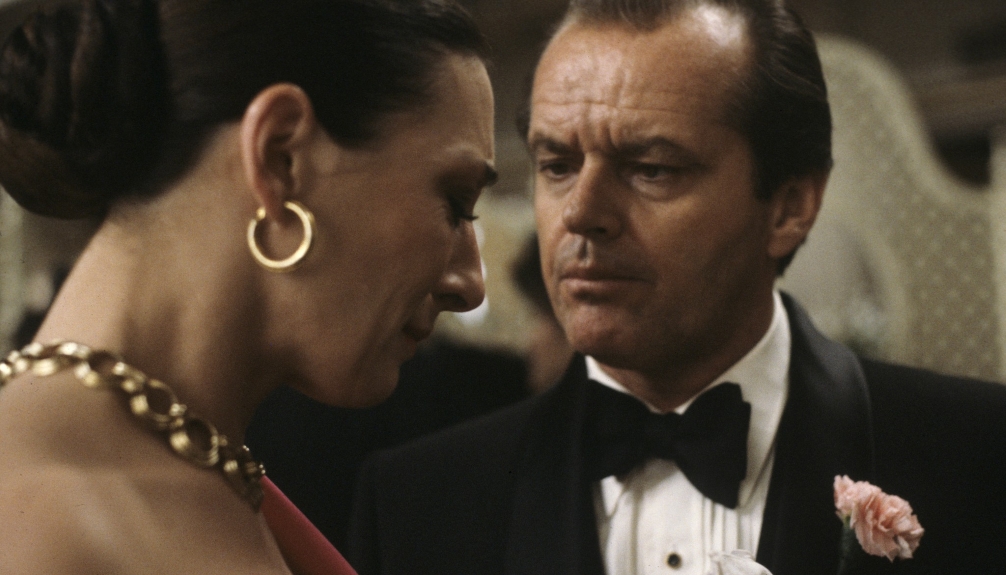
Prizzi’s Honor (1985)

Prizzi’s Honor (1985)

Would-be satirical mafia farce, that is slow, dense and insufficiently funny to hit its target

Director: John Huston

Cast: Jack Nicholson (Charley Partanna), Kathleen Turner (Irene Walkervisks/Irene Walker/Mrs Heller), Anjelica Huston (Maerose Prizzi), Robert Loggia (Eduardo Prizzi), John Randolph (Angelo Partanna), Lee Richardson (Dominic Prizzi), Michael Lombard (Rosario Filangi), Lawrence Tierney (Lt Davey Hanley)

Charley Partanna (Jack Nicholson) is a good-natured guy, loyal to his job – which just happens to be rubbing people out for the Prizzi crime family in New York. His gentle amble through Mafia life is thrown out of whack after a parade of unlucky events, silly mistakes and random occurrences. All of these can be linked back to his falling in love with Irene Walkervisks (Kathleen Turner), a con-woman, assassin and practised liar who may-or-may-not be in love with the besotted Charley. These two find themselves in the middle of a complex Prizzi family feud, much of it built up by Charley’s former girlfriend Maerose Prizzi (Anjelica Huston). What sides will everyone pick?

John Huston’s Prizzi’s Honor was one of the first films to take Mafia tropes, all that iconography The Godfather had made so ubiquitous and try and satirise it. Adapted from Richard Condon’s novel (by Condon), it carefully recreates the style and features of Mafia films, replaying the conventions – feuds, hits, femme fatales, pay-offs – with a streak of comedy. But what it lacks is the zip and energy this sort of dark satire really needs. It’s far too stately and never quite funny enough. Instead, it’s often slow and difficult to follow – and, damningly, is most engaging when it’s most like a regular gangster film.

It feels like an old man’s film. I’d defy you to look at this and then The Asphalt Jungle and not feel Huston was lacking fire here with this frequently untense, and slow film. It opens with a hugely over-extended wedding sequence, almost twenty minutes long, which laboriously introduces the characters. It frequently fails to pick to the pace from there: too many scenes lack thrust and drive, working their way slowly towards narratively unclear purposes. Now sometimes that is because so many of the characters are lying to each other – but Prizzi’s Honor does a consistently poor job of making sure we are either aware of the real truth or that we are in full understanding of the stakes at play.

A large part of the fault is the wordy, dense screenplay from Richard Condon (how did a sharp adapter of books like Huston allow this?). It takes nearly an hour for the film to really get going with a proto gang-war initiated by Irene impulsively shooting a police captain’s wife during a botched hit. Along the way, it creates too many long conversation scenes that lack spark or wit. It’s a far too faithful an adaptation, relying far too much on telling not showing. Multiple off-screen plot developments (involving complex double cross schemes) are related to us through conversations that are (honestly) hard to follow, boring to watch and delivered and shot with a flat, functional lack of interest. All of these would have worked better with a mixture of words and visuals – seeing some of these complex events playout, with an accompanying voiceover (the sort of thing Scorsese would have done brilliantly – see Casino).

Neither script nor direction is sprightly or engaging enough. It’s languid musical score and the ambling camerawork and editing also doesn’t help. It consistently feels slow, it’s meaning fuzzy, it’s action not gripping enough, it’s jokes not funny enough. Each scene is either too over-stuffed with plot-heavy information or too light on emotional connection or purpose. I’d be surprised if many people could explain exactly how the plot mechanics worked when the credits roll which, for a film that gives over a lot of time to slowly explaining things in dense dialogue is not a good sign.

The film depends on its performers to spring into life. Best of all is Anjelica Huston’s Oscar-winning turn as Maerose, disgraced black sheep of the Prizzi family. She rips into this vampish manipulator, running rings around the other characters with her sexual power or superb play-acting (there is a great scene when she makes herself up to look depressed and miserable to win the sympathy of her dim kingpin father played by Lee Richardson). It’s a funny, engaging and dangerous performance that you wish was in the film a hell of a lot more than it is. Close behind is William Hickey, rasping with malice, as a lizardry Godfather full of greed, ambition and utterly lacking in morals, presenting a neat sideways parody of Brando-style figures.

The two leads have their moments. Jack Nicholson is surprisingly restrained as Charley, surely one of the most gentle and dim characters he’s ever played (probably the film’s best joke, since it’s JACK). Nicholson gives him a childish naivety, easy to manipulate, whether that’s Irene saying she definitely didn’t know about the Prizzi-robbing scam her late husband pulled alongside her or the rings the smarter Prizzi’s and his consiglieri father (a coldly jovial John Randolph) run round him. He’s sexually naïve – putty in the hands of Maerose (‘With the lights on?’ he asks with meek bewilderment when she invites him to a clinch in her apartment) and Irene (‘On the phone? Now?’ he asks when she suggests some sexy banter) – and, with his New Yoick accent and prominent upper lip feels like a dutiful child trusted to run errands by his parents.

Opposite him Kathleen Turner embraces the lusty femme fatale qualities that made her a star, playing a husky voiced practised liar with a ruthless heart. Prizzi’s Honor though deals Turner a tough-hand: she’s the most enigmatic character and possibly its most poorly developed, the film giving so little clarity to her inner life that part of me wonders if Turner herself was slightly confused as to her character. Even in a film where the female lead is a ruthless, murdering grifter, she’s still largely only seen in relation to the men in the film – a potentially satirical point the film doesn’t really develop at all.

Both actors give sterling performances, but so slow and artificial is the film, so laboured its pacing that I found it extremely hard to care about what was truth what was a lie. Prizzi’s Honor has small moments but it’s devoid of the energy and pace that could have made it a dark comic delight. With the lack of investment it creates in an audience, it’s frequently hard-to-follow plot developments and clumsy, unengaging exposition, even the dark ending is unlikely to make much an impact. Hugely praised at the time – partly, you feel, due to affection for its director – it’s a slow, unengaging film that only briefly sparks to life.

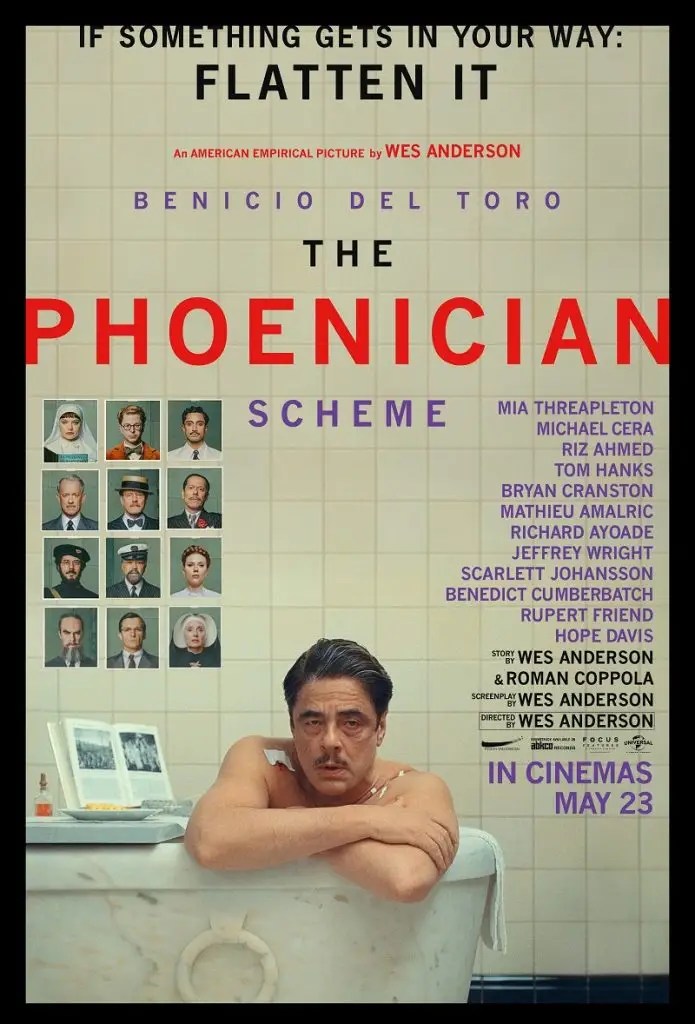
The Phoenician Scheme (2025)

The Phoenician Scheme (2025)

Anderson marries heart, truth and a genuinely engaging and compelling plot with his unique quirk

Director: Wes Anderson

Cast: Benecio del Toro (Zsa-Zsa Korda), Mia Threapleton (Sister Liesl), Michael Cera (Bjorn Lund), Riz Ahmed (Prince Farouk), Tom Hanks (Leland), Bryan Cranston (Reagan), Mathieu Amalric (Marseilles Bob), Richard Ayoade (Sergio), Jeffrey Wright (Marty), Scarlett Johansson (Hilda Sussman), Benedict Cumberbatch (Uncle Nubar), Rupert Friend (Excalibur), Hope Davis (Mother Superior), Bill Murray (God), Charlotte Gainsbourg (Korda’s late wife), Willem Dafoe (Knave), F. Murray Abraham (Prophet), Stephen Park (Korda’s pilot), Alex Jennings (Broadcloth), Jason Watkins (Notary)

Wes Anderson is one of those directors I often sit on the fence about, with a style so distinctive it can in become overwhelming. But when it works, it works – and The Phoenician Scheme is (aside from his superb Netflix Dahl adaptations) his best work since his masterpiece The Grand Budapest Hotel. In this film, Anderson finds an emotional and story-telling engagement that adds depth to all the stylised invention. It’s a film I’ve found more rewarding the longer I’ve thought about it.

Set in an Anderson-esque 1950s (Andersonland?), notorious industrialist and arms trader Zsa-Zsa Korda (Benecio del Toro) spends his life dodging assassins. After one attempt gets close, he decides to try and repair his relationship with estranged daughter Liesl (Mia Threapleton), a novice nun who suspects her father might have had her mother murdered (he denies it). With governments, business competitors and others on his tail, Korda throws together a complex scheme for one last success in Phoenicia, a massive new development built with slave labour. As Korda juggles rivals and investors, will he repair his relationship with his daughter? And how will he fare in his recurrent visions of standing at the (noir) Gates of Heaven, being judged for entry?

Anderson’s film, of course, is another superb example of his visual style, constructed like an intricately layered work of art. Each shot could probably hang in an art gallery, framed to perfection with gorgeously sublime colours that soak off the screen. The elaborate set design and vintage costume work are striking as always, with every piece perfectly placed and every feature expertly judged. Within this, his carefully selected cast deliver the wry, dry and arch Anderson-dialogue with aplomb, embracing every moment (of many) where Anderson allows the characters to share a raised eyebrow or a pithy aside to the camera.

In other words, it might all be as you expect – a formula that started to feel a bit tired after intricate, insular films like The French Dispatch and Asteroid City, which felt so personal to Anderson that they were virtually impenetrable to everyone else. But what elevates The Phoenician Scheme is that Anderson embraces both a surprisingly tense plot-line – the closest he can probably get to a thriller, laced throughout with satire, humour and more than a fair share of the ridiculous – and gives a genuine emotional force to a father and daughter struggling to recognise what (if anything) could bring them together. Throw in questions around life, death and what constitutes making a life ‘worth living’ and you’ve got a rich, intriguing and rewarding film that could stand even without the Anderston scaffolding.

Perhaps only Anderson could mix an unscrupulous businessmen targeted by assassins (some of these are delightfully, blackly, comic – not least an opening plane bomb that sees Korda ejecting his pilot for refusing to attempt a crazy hail-Mary manoeuvre to survive an inevitable crash) with Korda closing vital deals (in a deliberately, impenetrably complex scheme) by shooting hoops with a pair of baseball-fanatic brothers (Tom Hanks and Bryan Cranston, both hilarious), taking a bullet for a fez-wearing gangster (Matheiu Almaric, wonderfully weasily) and forcing an eccentric naval captain (Jeffrey Wright, perfectly deadpan) during a blood donation to sign with a bomb. And spin out a joke where Korda hands over custom-made hand grenades to business associates like they are branded pens. All while dodging a shady government cabal (fronted by Rupert Friend’s Transatlantic Arthurian-nick-named Excalibur).

But The Phoenician Scheme works because under this comic twist on spy thrillers, it has a real heart. Anderson’s finest films are where he works with an actor who can bring depth and feeling to the quirk. And here, he might just have brought out the best from an actor prone to a little quirk himself. Benecio del Toro gives Korda a world-weary cynicism but also a subtle fragility. There is nothing that won’t flummox Korda, a guy tipped off on attempts on his life because he frequently recognises assassins he’s hired himself in the past. But he’s also quietly afraid his life has been for nothing: that he is, in fact, not a rogue but an out-and-out villain ruining countless lives. And that God (in the form of, who else, Bill Murray) isn’t going to be welcoming up there.

It motivates a careful dance of reconciliation and grooming to take over his business with his estranged daughter Liesl, delightfully played by Mia Threapleton (with just the right mix of dead-pan flair for the dialogue, while giving it an arch warmth). Liesl imagines herself as distant from Korda as can be – the novice (literally) to his expert manipulator – but she turns out to have far more talent for Korda’s mix of chutzpah, disregard for rules and ruthless improvisation. Watching the relationship – and recognition – between these two (beautifully played by both actors) is very funny and also surprisingly sweet (you know its Anderson when a nun suddenly pulling a small machete out of her wimple is both oddly endearing and absolutely hilarious).

This sense of emotional development and personal and dramatic stakes is improved further by the celestial semi-trial (cue Willem Dafoe as an advocate angel), in a black-and-white heaven that mixes Powell and Pressburger’s Matter of Life and Death (surely the name Korda is no coincidence) and the imagery of Luis Buñuel. This all leads into a surprisingly gentle but affecting tale of redemption and second-chances, including an ending that feels surprising but also somehow completely, wonderfully inevitable and fitting,

The Phoenician Scheme may even be slightly under-served by its Andersonesque framing and design: after all it’s become easy to overlook the depths when the display is as extraordinary as this. When Anderson unearths a deeper meaning, working with masterful performers who can imbue his quirky, witty dialogue with heft, he can be one of the best out there. And do all that without sacrificing an air of charming whimsy, and building towards the most hilarious fist fight since Bridget Jones’s Diary (between del Toro and Cumberbatch’s tyrannically awful Uncle Nubar). Not a lot of directors can pull that off – and it’s a lovely reminder that Anderson at his best is an absolutely unique, wonderful gem in film-making.

A Midsummer Night’s Dream (1935)

A Midsummer Night’s Dream (1935)

Handsomely staged and quietly influential production, full of invention and good ideas

Director: Max Reinhardt, William Dieterle

Cast: James Cagney (Bottom), Joe E. Brown (Francis Flute), Dick Powell (Lysander), Jean Muir (Helena), Victor Jory (Oberon), Verree Teasdale (Hippolyta), Hugh Herbert (Snout), Anita Louise (Titania), Frank McHugh (Quince), Ross Alexander (Demetrius), Ian Hunter (Theseus), Mickey Rooney (Puck), Olivia de Havilland (Hermia), Dewey Robinson (Snug), Grant Mitchell (Egeus), Arthur Treacher (Epilogue)

It says something about Hollywood’s back-and-forth relationship with Shakespeare, that Reinhardt and Dieterle’s film can still make a case for being one of its finest Hollywood Shakespeare films. What’s fascinating about it is how much attitudes towards it have changed over time. Opening to a chorus of sniffs from the critics (“It should never have been filmed!”), horrified about the blasphemy of the Bard on celluloid, the things praised at the time now feel the stuffiest while the elements criticised feel fresh and dynamic. Personally, it’s crazy mix of genres, eras, comedic styles and dramatic tone feels like the sort of thing Shakespeare (a consummate showman who spoke in poetry) might have enjoyed.

It came about because Jack Warner wanted a bit of class. Max Reinhardt, internationally famous avant-garde theatre director, as part of Warner’s power thruple: direction by Reinhardt, music by Mendelssohn, words by Shakespeare! Reinhardt had directed a lavish production at the Hollywood Bowl (which also featured Rooney as Puck and de Havilland as Hermia), that would form the basis of his film, incorporating ballet and impressive visual effects. William Dieterle, was bought in to translate Reinhardt’s vision to film (since it quickly became clear Reinhardt didn’t know how to make a movie).

We get an MND that mixes farcical comedy with a dark, sensuous energy. Athen’s forest was transformed by Hal Mohr’s Oscar-winning photography into a glittering fantasy land, created with a mixture of superimposition and miles of cellophane wrapped around the perfectly-recreated trees to reflect the studio lights in a shimmering dance. But in this, is a fairy world of danger and chaos: Reinhardt’s pioneered the interpretation of Puck (played with malicious gusto by Mickey Rooney) as a fire-lighting child, revelling in the chaos his actions cause. Rooney (or rather his double, as Rooney broke a leg early in production) skips and sways, laughing maniacally, tormenting the lovers (possibly even controlling their words and actions), unleashing dark forces of the night.

The film is full of such dark forces – a surprise to critics who saw Dream as a gentle comedy. The ballet sequences, used by Reinhardt to visually demonstrate Oberon’s and Titania’s power to manipulate the environment around them, feature demonic dancers who wouldn’t look out of place in Faust, creepy music-playing goblins and a constant sense of unknowable power. Victor Jory – highly praised at the time, although his precise, poetic reading feels austere and lacking in feeling today – is a darkly imperious Oberon, with barely a trace of warmth to him. (Anita Louise’s Titania also takes a traditional line, speaking with a slightly irritating sing-song that should serve the poetry but instead drains it of life.)

You suspect, if he could have got away with it, Reinhardt might have allowed a trace of bestiality to enter into Titania’s romance with the transformed Bottom. As it is, he settles for Titania snatching a coronet from the Indian boy (nicely introduced early, to cement the split between the two fairy monarchs) who bursts into tears, increasing the feeling that the fairies are inconsistent, temporary creatures, perfectly willing to drop previously treasured people for whoever else captures their attention.

Lavish spectacle runs throughout a play that feels highly indebted to Raphael and the other Renaissance masters. Reinhardt has no problem switching styles: Theseus’ arrival is staged like an Ancient Roman pageant, before settling into a Renaissance style court while the Mechanicals could have stepped straight out of Brueghel. Again, it’s a playing around with style and location that looks very modern today but short-circuited reverentially literal critics at the time. Reinhardt even plays with the idea of Hippolyta being a less-than-willing partner for Theseus (she appears defiantly restrained in the opening scene), although this is largely benched for later scenes.

The lavish opening also shows the production’s ability to balance comedy and drama. Alongside the traditionalist grandiosity, we have low comedy from both the lovers and mechanicals. In a fast-cut, skilfully assembled array of moments (surely Dieterle’s work), the relationships between the four lovers are expertly displayed and mined for comic energy (particularly Lysander’s and Demetrius’ private competition to sing loudest) as are those between the mechanicals (from Bottom’s enthusiasm to Quince’s frustration at the terminal stupidity of Flute).

The mechanicals are one of the greatest divergence in critical opinion between then and now. To critics at the time it was a jaw-dropping mistake to cast Cagney and a host of film comedians in Shakespeare – surely these were roles for the likes of Gielgud? Everything from their delivery to the posture was lambasted for being crude and too damn American for a genre considered the exclusive preserve of the well-spoken likes of Jory and Hunter. However, the energy and naturalness of these actors – and the consummate comic timing they pull out of their roles – is one of the film’s greatest touches.

Cagney was never afraid to look beat-up or ridiculous, and he revels as an explosive ball of energy as Bottom. He flings himself, with the same energy as Bottom, into over-enunciated voices and grand displays of ‘bad acting’, parodying a host of styles from classical to pantomime to stage comedy. Cagney also makes him sweetly naïve and childishly literal, while his gentle, polite mystification about being treated like a king by the fairies seems rather sweet. The other mechanicals are also genuinely excellent, doing one of the hardest things: making Shakespearean comedy work on screen. Joe E Brown is hilarious as a supernaturally dim Flute, barely able to remember what gender he is playing; Hugh Herbert’s Snout has an infectious nervous giggle he can’t control, Frank McHugh’s Quince parodies directors like DeMille. Each of them contributes to a genuinely funny Pyramus and Thisbe that closes the film.

It’s more funny than the sometimes-forced banter between the lovers, not helped by a far too broad performance by Dick Powell (who later claimed he didn’t understand a word he was saying) that makes Lysander somewhere between a buffoon and an egotist. Olivia de Havilland (perhaps not surprisingly) emerges best here as a heartfelt Hermia, although the quarrel between the lovers is perhaps the least well staged sequence in the film (Reinhardt and Dieterle resort to all four of them at points speaking their lines at the same time, as if wanting to get the scene over and done with).

But MND is awash with other touches of cinematic and interpretative invention, it’s darkish vision of the Fairy world (with superimposition and ballet interjections giving it a darkly surreal touch) as influential as it’s haphazard approach to place and setting. Its comic performances come alive with real energy, devoid of the more stately approach from others. Above all, MND feels like an actual interpretation of its source material, rather than just a respectful staging – and its influence played out over decades of productions to come. Overlooked for too long, it’s a fine and daring piece of film Shakespeare, far better than it has a right to be.

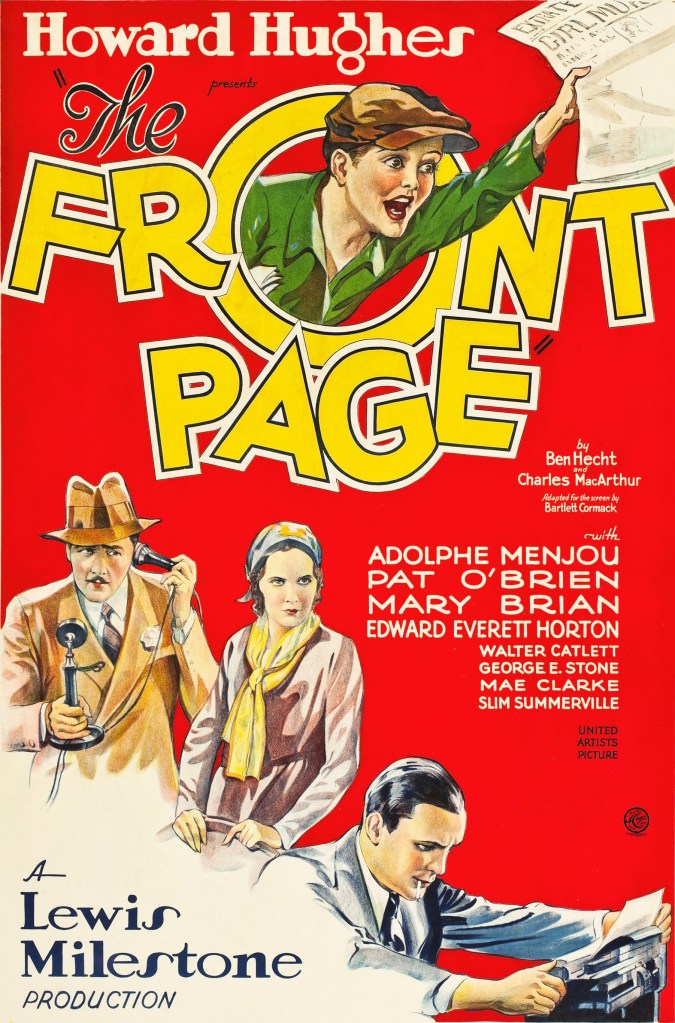
The Front Page (1931)

The Front Page (1931)

Original and (perhaps) best version of the pioneering cynical journalism story

Director: Lewis Milestone

Cast: Adolphe Menjou (Walter Burns), Pat O’Brien (Hildy Johnson), Mary Brian (Peggy Grant), Edward Everett Horton (Roy Bensinger), Walter Catlett (Jimmy Murphy), George E. Stone (Earl Williams), Mae Clarke (Molly Malloy), Slim Summerville (Irving Pincus), Matt Moore (Ernie Kruger), Frank McHugh (McCue), Clarence Wilson (Sheriff Pinky Hartman), Fred Howard (Schwartz)

Unscrupulous newspaper men fling fast-paced banter at each other, caring less about the truth and far more about how the copy sells. In many ways the deeply cynical The Front Page hasn’t really aged at all. Probably why it keeps coming back round again-and-again, in different forms for different eras (most famously of course, spiced up with a gender-swopped Hildy as the screwball romance His Girl Friday). I’ll make a confession – not a surprise for those who know my heretical views on His Girl Friday – it’s never been my favourite play and I’ve never found it as funny as others. But, despite my doubts, it’s hard to deny the flair and energy of Milestone’s early talkie.

Star-reported “Hildy” Johnson (Pat O’Brien) has decided the time is right to give up the newsprint game and find happiness with sweetheart Peggy Grant (Mary Brian). But his ruthless editor Walter Burns (Adolphe Menjou) doesn’t want to hear it from his star reporter. Burns is determined to drag Hildy back into the game, and the press-stopping story of an anarchist who escapes hours before his scheduled execution is just the thing to tempt Hildy away from those wedding bells.

And so we get the ultimate cynical press story, adapted from a play that practically invented the image of the newspaper man as a heartless adrenalin junkie more interested in the scoop than the truth. The Front Page is all about the process of collecting the news, and how easily and casually this can be spun into what an audience wants. If the truth does out eventually, it barely happens as a result of the journalists. In fact, our heroes largely end up pushing it because it will get them out of a tight spot and shift a hell of a lot of copies tomorrow morning.

Milestone’s film for years existed as only a bastardised version of the international print: made up of Milestone’s third choice takes and angles with re-edited lines. Restored into his original vision, it’s striking how dynamic and cinematic The Front Page is. While His Girl Friday has it beat on pace (giving us the same story and almost the same amount of dialogue in twelve fewer minutes), arguably Milestone’s film has the edge on cinematic technique. Milestone uses dynamic camera angles and set-ups to inject pace, from the long tracking shot of Burns prowling his newsprint rooms to the rotating camera that roves around the film’s primary location, the courthouse press-room.

It uses fast-cuts and zooms to great effect: the opening shot of a sack of flour, crash zooms out to reveal it’s being used to test a gallows; the ‘yo-yo’ effect as the camera bounces rapidly up-and-down to take us from one reporter’s face to another during a harried reporting scene. Milestone makes large chunks of otherwise single-location farce, come to life through witty angles and blocking, knowing when and when-not to include an actor in the frame to make a joke work. It’s fast-cutting gives it an early screwball style that further accelerates its sense of momentum. It’s a very astutely, very skilfully directed movie that feels several years ahead of its time, and certainly a whole other level above some of the stilted play adaptations Hollywood was churning out.

Even though the script has never been my favourite, it also picks up a lot of screwball dynamism (and healthy dose of pre-Wilder cynicism) in its bones. It’s chorus of newspapermen, all corrupted to various degrees, are finely delineated, each with their own clear characteristics. From Frank McHugh’s shallow cough to Fred Howard’s banjo, via Edward Everett Horton’s prissy germaphobia and half-hearted attempts at woeful poetry, they each have complementary personalities that helps the comedy spark even more. That’s even without their utter disinterest in the personal lives and tragedies of those they are reporting on, or their shameless gilding of the facts of every story (a lovely audio montage sees them all reporting wildly different versions of an arrest).

The Front Page has a strong performance from Adolphe Menjou as the debonair Burns, here embodied by Menjou as a heartlessly ambitious Mephistopheles-type, constantly throwing titbits of temptation in the way of Hildy. Milestone even films him with a Devilish-Murnau strength, popping up seemingly everywhere he needs to be at any moment in time. Add in Menjou’s suave delight in some ruthlessly amoral lines and you have a genuinely spot-on piece of casting. This is less of the case for Pat O’Brien, the sort of actor more familiar as the best friend to a real star, here showing he doesn’t quite have the charisma to carry a dynamic part like Hildy (in fact, O’Brien would have been perfect casting for the male-version of Peggy: dependable, sturdy, dull).

Nevertheless, he and Menjou bounce off each other well in a film that has more than a little homoerotic energy in it (surely the idea for the gender reverse spun from this!) Even Peggy points out Hildy seems as least as excited as the thought of inconveniencing Burns as he does in marrying her (“you’re going to marry me to spite Mr Burns?”). Hildy isn’t just a man fighting against his urge to report on any events happening around him (a potential fire sees him bemoaning he doesn’t have a camera to hand). There is a life and energy to him when riffing ideas with Burns, that he just doesn’t have with anyone else. The two of them burst into life like naughty kids in each other’s company, in a way they just don’t with anyone else.

Hildy may end the film heading into the sunset, but you suspect Burns’ scheme to bring him back (a witty typewriter ping covers a sensor banned piece of naughty language as Burns calls Hildy an SOB on the phone to an underling) is going to succeed with very little hinderance. Because these guys are made for each other and, just like the rest of the cast, they need the buzz of being in the room where it happens far more than the dull dependency of a job in advertising for Peggy’s Dad’s firm.

That The Front Page does very well and while I’m still not an admirer of a play I found overly cynical and glib, Milestone’s dynamically staged version of it may (ironically) be the best of many committed to the screen.

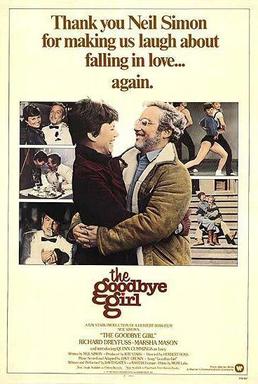
The Goodbye Girl (1977)

The Goodbye Girl (1977)

Some funny lines isn’t quite enough for this romantic comedy to work as well as it should

Director: Herbert Ross

Cast: Richard Dreyfuss (Elliot Garfield), Marsha Mason (Paula McFadden), Quinn Cummings (Lucy McFadden), Paul Benedict (Mark Bodine), Barbara Rhoades (Donna Douglas), Nicol Williamson (Oliver Fry)

Working as a performer sucks. There’s no money and who knows when the next job is round the corner? It’s even tougher when you are forever unlucky in love. That’s the case for semi-retired dancer Paula McFadden (Marsha Mason). She’s been jilted twice by actors who disappear for a big break somewhere else, leaving only a cursory apology behind. It makes being a single mother to precocious-but-vulnerable ten-year-old Lucy (Quinn Cummings) even harder. Harder again is that her recent awful boyfriend, as a parting gift, sublet their apartment without her knowledge to Elliot Garfield (Richard Dreyfuss), an actor as neurotic as Paula, arriving in New York for his big break. Paula refuses to leave her home and the two kick off a territorial feud, which settles into a truce and a flat share. But could it lead to anything else?

It probably won’t be a surprise to say yes it does, in this sharply written film from Neil Simon, crammed with fast-paced, theatrical, gag-filled dialogue which keeps the film’s pace up without really converting it into something real. The main problem with The Goodbye Girl is that it’s hard to believe in, or really care for, either of its two lead character. I don’t think it’s an exaggeration to say both of them would be incredibly hard work to live with. After all, they can frequently be rather trying just to watch. Simon makes them both brittle, neurotic, high-strung and prone to performative bursts of euphoria and rage. Both can swing on a six-pence between these. It’s probably meant to make them the perfect match, like a feuding Bogart (who Garfield impersonates at one point) and Bacall, but after a while just starts to wear you down. You want to give both of them a bit of a shake and say “pull yourself together!”

The ability to stick with the film revolves around how charming you find both performers. Here, Richard Dreyfuss has the definite advantage. Coming off a hot-streak that had seen almost every film he had made turn into a smash hit, Dreyfuss’ performance made him (at 29) the youngest winner of the Best Actor Oscar. A late replacement for a fired Robert De Niro (can you even begin to imagine De Niro’s deadpan intensity working here?), the part is a perfect match for Dreyfuss’ youthful, madcap energy. He seizes on the rat-a-tat dialogue, embraces Garfield’s zany love for New Agey thinking (yoga, guitar and sleeping “buffo”) and bounces around the film as likely to make monkey noises while euphorically chinning up on a door frame as he is to play sweet imagination games with young Lucy. He brings a lot of charm to a highly strung, difficult man, uncovering a lot of his essential decency and kindness.

He actually settles more into the difficult balance than Marsha Mason, the person (Simon’s wife) who the film was written for. Mason never really manages to find the softness and likability in this role. It’s not entirely her fault: while the point is that Paula is a woman with serious trust issues, the film never gives her a moment of calmness or reflection to open up about this. Instead, it takes a lazier route of having this turn her into an abrasive comic character, the sort of person who responds to a “morning after” with a furious expectation of betrayal. Mason never quite manages to find a softness or likeability under this prickly defensiveness. Interestingly, for all the project was written for her, she has few of the truly funny lines and is effectively the obstacle that must be fixed rather than having the more engaging role of charming disrupter.

To be honest there is not a lot of chemistry between the two. Simon so enjoys the competitive dialogue feuding over territory, bills and who will have what room and when, that he rather forgets to  show them actually falling in love. In fact, he ends up relying on the age-old formula of a precocious, New York Times reading child being the bridge to bring them together. Quinn Cummings is rather good as the sort of kid who only exists in the movies, as adept with the witty retort as the adults. But between Elliot and Paula, the romance always feels a bit too inevitable rather than natural, the eventual thawing occurring swiftly rather than feeling it has developed naturally and gently.

It’s part of the slightly formulaic nature of The Goodbye Girl. It’s a highly safe film, with a very conventional romantic storyline, that bubbles along to a happy ending. You can feel the box-ticking from scene-after-scene, just as you can feel the inevitability of its happy ending. It’s also overly theatrical, feels constrained by its location and never quite light enough on its feet. There are a few too many stand-up rows around the apartment block (their poor neighbours) and Herbert Ross’ direction struggles as much as Simon’s script to give us a reason to really root for this couple.

There are though some decent digs at the working life in the arts. Paula, trying to get back into the dancing game, is hideously off-the-pace and takes a job as an enthusiastic glamour-girl flogging Japanese cars at trade show. Elliot is forced to fall back a doorman gig at a strip club. It’s a tough old trade, especially as Elliot’s big break in New York falls apart after he is forced by a pretentious, talentless director to perform Richard III as a limp-wristed, 1970s stereotype of a gay man, mincing around and lisping his lines to the ridicule and disgust of audiences and critics. This comic highlight feels a little awkward now (the joke is the stereotyped gay behaviour, rather than the appalling idea, making it’s a little uncomfortable to watch at times, rather as if Elliot was being made to play it in black face).

The Goodbye Girl just isn’t quite charming or likeable enough and its characters are never people we really end up warming to or rooting for. Its sharp dialogue ends up making them feel less like real people and more like theatrical characters, bouncing off each other for effect. Dreyfuss comes off best here, but Ross’ direction is uninspired, its romantic coupling never really convincing and it tends to rather overstay its welcome.

The Love Parade (1929)

The Love Parade (1929)

Lubitsch’s delightful early musical mixes European class with battle of the sexes wit

Director: Ernst Lubitsch

Cast: Maurice Chevalier (Count Alfred Renard), Jeanette MacDonald (Queen Louise), Lupino Lane (Jacques), Lillian Roth (Lulu), Eugene Pallette (Minister of War), E. H. Calvert (Sylvanian Ambassador), Edgar Norton (Master of Ceremonies), Lionel Belmore (Prime Minister)

Sylvania has a problem with its ambassador in France, Count Alfred Renard (Maurice Chevalier) – largely that he can’t stop seducing anything that moves. Renard is swiftly recalled to his homeland… where he catches the eye of young, unmarried Queen Louise (Jeannette MacDonald), who immediately thinks he might just be the man for her. Renard isn’t averse to marrying into royalty, but quickly finds himself chafing in the role of Prince Consort – this isn’t what marriage is supposed to be, the husband doesn’t defer to the wife!

It is of course a slightly dated version of marriage, and The Love Parade could be seen as a very light piece of Taming of the Shrew style-action where a strong woman learns true happiness is sometimes being the number two. The fact that, despite this, The Love Parade is still charming, funny and more than a little delightful is partly due to the immensely skilled lightness it’s directed with by Lubitsch (it feels the whole sweet confection could burst with a puff of strong air) and the huge charm of its leads. After all, Chevalier is no-one’s idea of a Petruchio while Jeanette MacDonald manages to marry up romantic longing with being tired of the restrictive burdens of royalty, that you believe she’d be happy to share some of it out.

The Love Parade was one of the first ‘talkie-musicals’ and it’s assembled with such pace and energy by Lubitsch (at his very best) that you almost don’t notice how often its forced into static framing for the talking and singing (where couples frequently sit or stand opposite each other to burst into song). That’s because the film is awash with swift intercutting between different locations, often to great comic effect (not least cut aways to groups of ministers, soldiers and servants excitedly commentating from afar on the lead’s first date) and intermixes this with smoothly seductive tracking shots through grand Habsburg-style sets.

Lubitsch’s film however uses sound effectively and remarkably imaginatively. Establishing his confidence with it, it opens with us overhearing dialogue from outside a room before the door swings open and we see Chevalier stride in and confide directly to us. Sound is used throughout for comic effect, either in its presence – the highly suggestive ‘400 cannon blasts’ on the night of the wedding or the frustrated drumming of fingers on the table our happy couple do in the midst of an early row to the awkwardly quiet march-past of a group of soldiers trying not to disturb the Queen’s lie-in. It’s creative stuff, considering the limitations at the time, and bounces effectively off the parade of songs and witty dialogue that powers the film.

Alongside that, the film works because it’s such an interesting exploration of social mores and etiquette, not to mention a cheeky love of the sort of content code-Hollywood would have frowned on. The opening sequence revolves around the aftermath of one of Renard’s seductions, with shots of garters, a furious husband and a gun loaded with blanks (Renard seems to have a drawer full of these for just such occasions). Queen Louise is all too clearly extremely aroused by reading about Renard’s string of sexual conquests, immediately running into her dressing room to apply more make-up before she can greet him with all the coquetteish excitement she can manage.

There is innuendo throughout (“My wife has told me everything” one of Renard’s embassy colleagues announces, something Chevalier’s face tells us is clearly far from true). Lubitsch uses visual humour expertly, cutting away from Renard’s delighted recounting of one of his adventures to a shot outside where we watch Renard and his audience talking silently from the other side a window, with only their reactions clueing us into how saucy the story is. All this is classic ‘Lubitsch touch’, which thrives among these gorgeously grand sets and costumes.

The Love Parade manages to keep us feel sympathy for the likeable Renard, not least once he discovers, as Prince Consort, his duties seem to be little more than shaving (because, as he tells Louisa, he looks terrible in a beard) and resting (so he’s nice and ready for the evening’s fun later). He literally can’t eat a meal until Louisa arrives to eat first (he’s reduced to plucking an apple from a tree to beat off hunger) and finds his advice is instantly handed back to him unread by one of Louisa’s many court flunkies. Sure, you’d prefer that The Love Parade works its way into a proper partnership at the end, rather than just reversing the power to it’s ‘natural order’ but at least you can see Renard has a point.

It’s interesting that a more natural partnership actually seems to develop between their two servants, Renard’s valet Jacques (Lupino Lane) and Louisa’s maid Lulu (Lilian Roth). Lane and Roth give energetically charming comedic performances – and also by far the most engaging and dynamic musical sequences. The highlight here is ‘Let’s be common’, that brilliantly uses Lupino’s double-jointed flexibility to stage the film’s most overtly entertaining number. There is a Mozartian quality to these super-smart servants – so much so, I’d willingly trade a few of Chevalier or MacDonald’s numbers for a couple more with them.

Which isn’t to disparage the stars. Chevalier’s comic skills are exploited to the max here – his reaction to ‘being shot’ in the opening sequence is a masterclass in timing – and it’s a part he invests with huge charm which sells Renard’s slight selfishness as genuine likeability. Lubitsch throws in a few neat gags about his accent, not least Renard’s penchant to voice his frustrations in perfect, rat-a-tat French to bewildered Sylvanians (he’s deeply disappointed when he asks one obstructive courtier if he speaks French only to get the answer ‘yes’). Jeannette MacDonald is also skilfully sharp and just frustrating enough, from her opening scene where she is poutishly pissed that he flunkies can’t find her a consort (despite the fact she doesn’t want one) to her mix of romanticism and imperiousness that runs through the film.

The Love Parade is an engaging and funny Lubitsch masterclass in his particular genre of sophisticated comedy, as well as a strikingly original use of sound and music. It remains engaging and entertaining today.