Category: Coming of Age film

Memoirs of a Geisha (2005)

Memoirs of a Geisha (2005)

Lush romantic adaptation settles for tourism and pretty pictures instead of any emotional or narrative weight

Director: Rob Marshall

Cast: Zhang Ziyi (Sayuri Nitta/Chiyo), Ken Watanabe (Chairman Ken Iwamura), Michelle Yeoh (Mameha), Gong Li (Hatsumomo), Suzuka Ohgo (Young Chiyo), Kōji Yakusho (Nobu), Kaori Momoi (Kayoko Nitta), Youki Kudoh (Pumpkin), Kotoko Kawamura (Grandmother Nitta), Tsai Chin (Auntie), Cary-Hiroyuki Tagawa (the Baron), Samantha Futerman (Satsu Sakamoto), Mako (Mr. Sakamoto)

In 1920s Japan, 9 year old disgraced former geisha pupil Chiyo (Suzuka Ohgo) meets a businessman, Chairman Ken Iwamura (Ken Watanabe), who is kind to her. She resolves to one day become a geisha so she may see him again. As a young woman, Sayuri (Zhang Ziyi), as she is now known, masters the geisha arts under the tutelage of famous geisha Mameha (Michelle Yeoh). She encounters the Chairman again – but can she confess her love? And can she escape the attempts of her rival Hatsumomo (Gong Li) to destroy her?

Arthur Golden’s romantic novel was a major success in 1997, tapping into a fascination with Japanese culture. It was inevitable it would come to the screen. But in the journey, it has been stripped down into a beautiful but basically empty story, that seems trite and shallow and revolves around hard-to-invest in characters. By the time it’s finished you’ll wonder what the fuss was about.

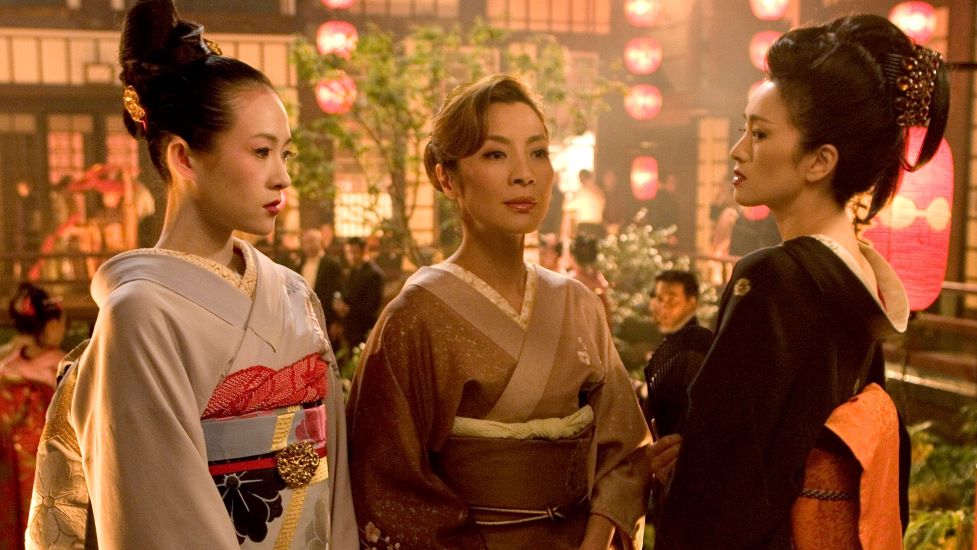
The reconstruction of 1920s-40s Japan does look radiant, even if the film focuses on the most chocolate-box, touristy view of Japan you could possibly imagine (think of a Japanese item, event or object and it’s in the film). But it’s radiantly shot and intricately put together – the geisha costumes are a gorgeous, multi-layered, decorative treat – and it’s not a surprise the film lifted three Oscars for cinematography, production and costume design.

It’s not a surprise as well that it was overlooked in all the majors. It’s well-directed by Rob Marshall (juggling a multi-lingual cast and framing the film beautifully), but fundamentally a mix of the highly predictable and the deeply troubling. It’s basically Geisha Expectations or Jane Geishyre. Our heroine is a poverty-stricken youth who makes a series of key encounters in her childhood that shape her whole personality as she comes into wealth as a young adult. Similarly, this quiet girl’s obsessive love for a distant businessman (whom, yuck, she meets as a child – and he compares her to his own children), suffering quietly while sacrificing everything to help him.

But it’s all much less interesting than either of those novels. Despite the narration by an older Sayuri, we never get inside the young woman’s head. Ziyi Zhang is given very little to work with: she either looks distressed, simpering or sad, and frequently fades into the background of her own story. All we really learn about her is that the Chairman gave her an ice cream when she was 9, and that this event influenced her entire life. Equally dull is the Chairman himself, whom Watanabe struggles to make anything other a mute and inscrutable character, terminally dull.

It’s hard to invest in a love-across-the-ages (in every sense) romance between these two, because the film fails to build them up as characters we care about and gives them hardly any time to be together. By the time we reach a late confession, that the Chairman decided (when Sayuri was 9) to turn her into his ideal geisha (um, grooming anyone? Oh yuck) and they finally kiss each other, they still feel like complete strangers. She never matures into a woman who can fall in love past her childhood obsession and he seems more like an oddly manipulative sugar daddy.

Memoirs of a Geisha flounders on the empty plot and non-characters at its heart. It ends up relying on the visuals and lovely design work, because there is no drive or interest in its plot. The film’s most compelling performance is Gong Li’s Hatsumomo and when she walks out of the picture three quarters of the way through, it never recovers. Gong is superb as an envious, embittered geisha being replaced by younger faces. She snipes and growls like a relic from a Bette Davis Hag-thriller, but in the next scene her face will crumple with fear and sadness. She gets all the best lines and the most interesting scenes, from sniping, to lost love to pyromaniac revenge.

Memoirs of a Geisha disappointed at the box office. It’s clumsy casting didn’t help: fine actresses as Zhang, Yeoh and Gong are, they were all Chinese (in Yeoh’s case Malaysian Chinese) rather than Japanese, and there was an uncomfortable feeling that the producers didn’t think this was really an issue. It opened up a can of worms about lingering Chinese hostility over Japanese war crimes, leading to a ban in China. In Japan, the casting was condemned and the film seen as more interested in a tourist eye on geisha culture than a truly Japanese one (and it does appear the film consulted virtually no Japanese people during its making).

All the glorious design in the world can’t hide the emptiness at the heart of Memoirs of a Geisha. World War Two is skipped over in about two minutes (Sayuri spends the time working in the hills, and sums up her whole wartime experience in a couple of sentences, delivered in voice-over while Zhang looks beautiful and pained washing fabric in a river). Other than their external glamour, we don’t learn much about what being a geisha actually means. Its central romance goes from bland, to anonymous, to deeply troubling. It looks wonderful, but if there was anything deeper to the novel than a luscious, gorgeous setting and a predictable, traditional romance, it’s completely lost in translation.
Belfast (2021)

Belfast (2021)

Kenneth Branagh pays tribute to his early years in Northern Island in this autobiographical film

Director: Kenneth Branagh

Cast: Jude Hill (Buddy), Caitríona Balfe (Ma), Jamie Dornan (Pa), Judi Dench (Granny), Ciarán Hinds (Pop), Lewis McAskie (Will), Colin Morgan (Billy Clanton), Michael Maloney (Frankie West), Lara McDonnell (Moira), Gerard Horan (Mackie), Conor MacNeill (McLaury), Turlough Convery (Minister), Olive Tennant (Catherine)

Directors making films about their childhood is a well-established sub-genre. Fellini got the ball rolling, a few years ago Alfonso Cuarón made his own black-and-white look at growing up in troubled political times in Roma and this year Pablo Sorrentino has released a film focused on his own teenage years in The Hand of God. Huge admirer of Kenneth Branagh as I am, I can’t deny he’s not a unique visionary in the vein of those filmmakers. But, Belfasthas a heartfelt, genuineness and a sweetness that verges just the right side of sentimentality and is a loving tribute not only to the city he grew up in but also to his parents, making it Branagh’s most personal project since In the Bleak Midwinter and possibly his finest non-Shakespeare film.

Branagh’s substitute is 9-year-old Buddy (Jude Hill), the child of a protestant family, living on a cross-community street in August 1969. His main concerns in life are friends, films, football and a classmate he has a crush on at school. But for his parents (Caitríona Balfe and Jamie Dornan), their worries are much more about the growing sectarian violence in the city. Pa has an offer of a job in England, which could bring them a new life. But it means the whole family leaving behind it everything it has ever known, including Buddy’s beloved grandparents (Judi Dench and Ciarán Hinds). As the city becomes more dangerous, what will the family decide to do?

If there is a memory piece Belfast reminds me of most, it’s John Boorman’s Hope and Glory. That film was true to Boorman’s memory, that growing up during the Blitz was also an exciting time, because as a child he never realised that death could be seconds away. It’s the same with Belfast. Branagh is keeps the film as much as possible from the child’s perspective. A child might be aware of the news playing on the TV, see the growing number of soldiers stopping and searching people on the streets and be wrapped up in riots, while never really understanding what exactly is going on.

The film has been unfairly attacked by some for not focusing on the accepted narratives of this era of Belfast’s history: misery, killing and brutality. What Belfast instead brings to the fore is the warm community. Streets where everyone knew your name, people sat outside their homes and chatted with neighbours, shared celebrations together and looked after each other. You can understand why it was such a wrench to leave this behind – even with soldiers patrolling the street. How scary it was for a person of any age – from Buddy to Ma, who has known nothing but Belfast her entire life – to even consider going to a place where no-one would know you and you would be an outsider.

Belfast is dedicated to those who stayed behind, those who left and all the lives who were lost. It’s a tribute to a community spirit and family, that has chimed with a great deal of people who lived in the city at the same time and place. The film is fundamentally hopeful because, under the violence and danger, it makes a plea – and demonstrates – that many people in Ireland just wanted to live their lives and didn’t care which church their neighbours went to. The opening few moments of the film is a snapshot of these halcyon days, kids from different communities playing together on the streets and their families gossiping and laughing together.

It’s shattered by the film’s first outburst of violence, as a Unionist gang attacks the street and hurl Molotov cocktails at the houses of Catholic residents – with Buddy, confused and terrified, caught in the middle and dragged into his house and safety by his frantic Ma. It’s a threat that will hang over the film for the rest of its runtime, embodied by Colin Morgan’s bullying enforcer, but only vaguely understood by Buddy – and considerably less important to him than whether he gets to sit next to the girl he has a crush on at school.

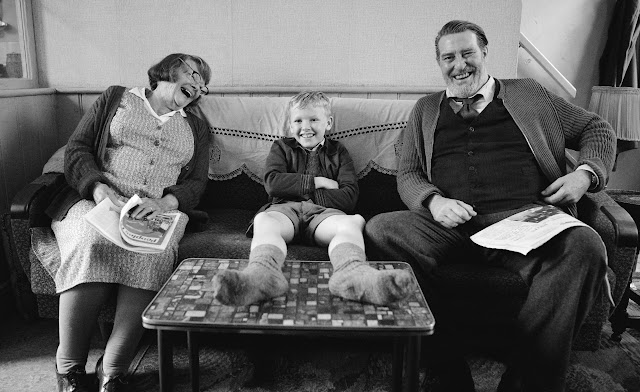
That crush is one of many things he gets advice on from his Grandad, played with a genuinely heart-warming twinkle by an Oscar-nominated Ciarán Hinds. Hinds is the picture of the perfect Grandad, wise, attentive, patient and full of homespun advice and wisdom – dialogue that Hinds brings to life with an expressive warmth. He’s paired to wonderful effect with Judi Dench (also Oscar-nominated) as Buddy’s Granny, who’s got a sharper tongue (and most of the funny lines) and has a cold-eyed realism about what it might be best for her son and his family.

You could check yourself and ask if Branagh is idealising his memories. But I think this is partly the point of the film. At several moments there is a slight air, not so much of fantasy, but of a childhood’s perception and memory being restaged. Jamie Dornan’s hard-working, caring Dad is frequently shot by Branagh in a way reminiscent of the Western heroes in the film buddy watches (High Noon in particular). A late confrontation between Dornan and Morgan plays out like a child’s romanticised memory of how something might have played out – as does a sequence where Dornan and Balfe sing and dance to Everlasting Love. I think Branagh is asking us to consider this might not be exactly what happened, but a fantasy tinged, child’s idealised memory of an event.

And Branagh’s film – shot in a luscious black-and-white – is told with a sharply edited pace and economy. It frequently allows us to see the ‘true’ situation in the background or on the edge of Buddy’s perception. Ma – beautifully played by Caitríona Balfe as grounded, moral but vulnerable and scared – has genuine worries not only about the violence but also the couple’s financial situation. There is an argument, and a later sad half-ultimatum, between Ma and Pa that we understand but Buddy is only vaguely aware is happening. Branagh’s film is full of half moments like this, where he trusts we are intelligent enough to see exactly what the child is seeing and also see more.

Branagh also draws a superb performance from Jude Hill as Buddy. This is a kid who is wide-eyed, natural, unforced and gets the balance just right between sweetness and a childish selfishness and vulnerability. There are real moments of terror and distress for Buddy, which are immensely well-done, and Branagh proves again there are few better directors of actors out there.

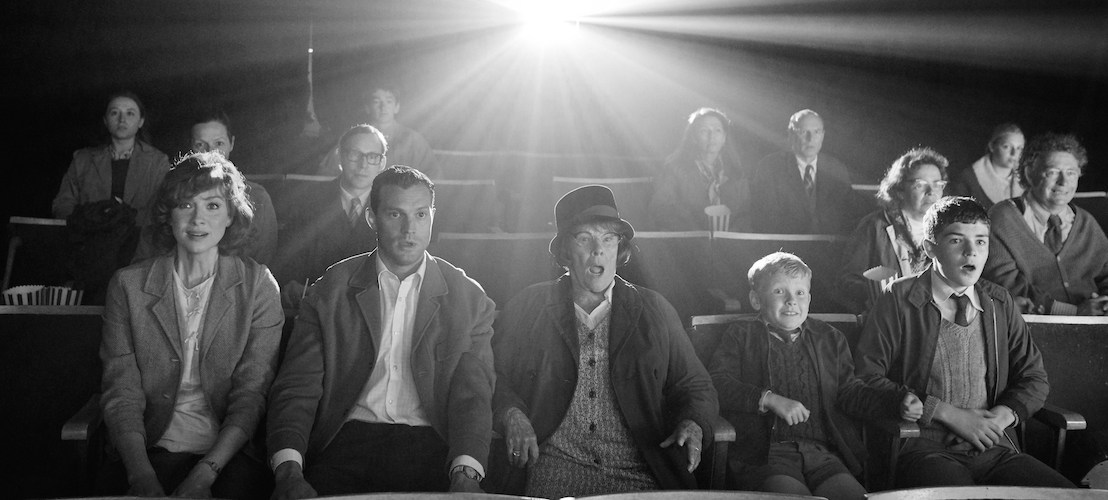
In among this there are some lovely moments where we see Branagh’s passion for the arts and film-making take hold. These are shown in splashes of pure colour: from clips of Chitty Chitty Bang Bang which an enraptured Buddy watches in the cinema, to actors performing A Christmas Carol in the Belfast theatre appearing in perfect colour. That’s not to mention touches of everything from Westerns to Star Trek to a shot of Buddy reading a Thor comic-book (sadly no Shakespeare).

Belfast is above all warm-hearted and loving tribute from a son to his parents and the impossible decisions they needed to take to give him opportunities in life they never had. Branagh’s script is crammed with some wonderful lines and plenty of hard-earned sentiment and the cast play each of these moments to perfection. It’s a passion project that really communicates its passion and shows how love, family and hope are universal. Cynics will sneer, but it’s a lovely film.

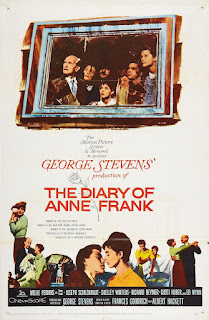
The Diary of Anne Frank (1959)

The Diary of Anne Frank (1959)

Reverent adaptation of the most famous diary ever written, that drains it of any sense of life or drama

Director: George Stevens

Cast: Millie Perkins (Anne Frank), Joseph Schildkaut (Otto Frank), Shelley Winters (Petronella Van Daan), Richard Beymer (Peter Van Daan), Gusti Huber (Edith Frank), Lou Jacobi (Hans Van Daan), Diane Baker (Margot Frank), Ed Wynn (Albert Dussell), Douglas Spencer (Kraler), Dodie Heath (Miep Gies)

Few personal stories have had such a huge impact on so many people’s lives than Anne Frank’s diary. This literary marvel, written by a teenager who mixed profound insight with teenage obsessions, was a world-wide sensation when it was published after the war. The diary covers the over two years Anne, her family and their friends spent in hiding in a secret annexe in her father’s warehouse in Amsterdam. For Jews hiding from the barbaric persecution of the Nazi occupying forces, every day was a struggle between trying to lead as normal a life as possible and the terror of discovery and deportation to a concentration camp. Of course, we know, tragically, they were discovered – and only Anne’s father Otto survived the war.

Otto discovered the diary when he returned to Amsterdam after the liberation of Auschwitz. Moved by the diary’s mix of maturity and youth, Otto had it published first for friends and then more widely. At various points, parts of the diary were edited to remove more “personal” content (Anne wrote freely at points on her growing sexuality and was sometimes less than kind to the other occupants of the annexe). More modern editions have embraced a less edited, fuller diary that really allows us to see what a brilliant, challenging, sometimes judgemental, fully rounded teenager Anne was. The Diary of Anne Frank hails from an era that framed a more sanitised diary. The worst you can say for it is that I think there is a good chance the real Anne Frank would have found it a bit dull.

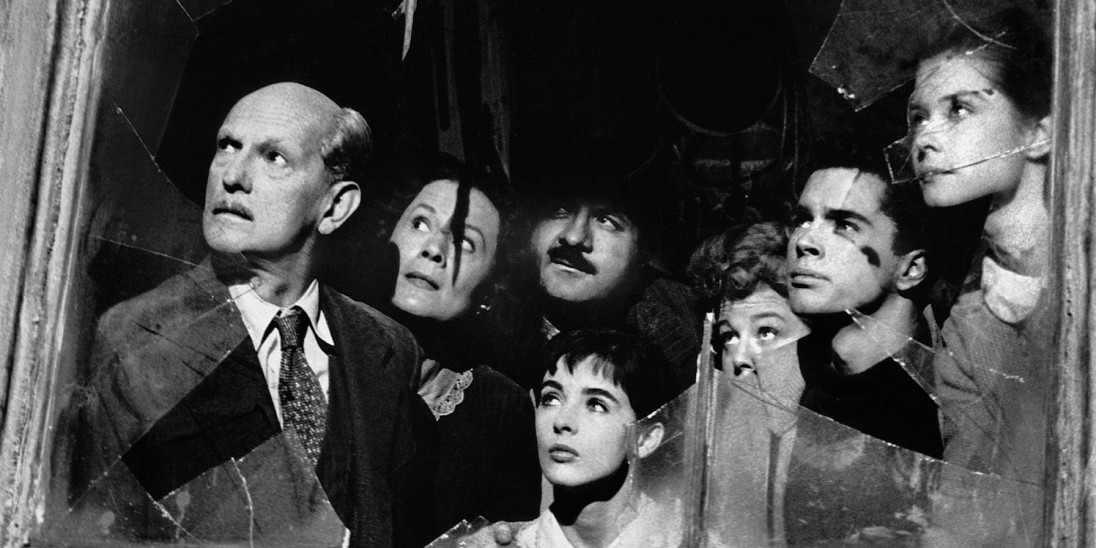
Adapted from a Pulitzer Prize winning play by Frances Goodrich and Albert Hackett, George Steven’s film is reverent, noble and very worthy. It also frequently lacks any pace or life, and is so concerned with being life-affirming that it filters out nearly all sense of tension or conflict that these eight people felt (which they often did living, as they did, in a few small rooms for over two years, with very little food). The film also centres a romantic relationship between Anne and Peter – one that, according to Anne’s own diary, was already coming to an end at their discovery (in reality, she felt they had little in common other than living in the annexe together).

But Stevens’ film is so concerned with framing someone as fascinating as Anne as a secular saint that it removes much of the vibrancy that gives the diary such impact. It also doesn’t help that Stevens shoots the film in a luscious black-and-white, in detailed sets – but also in the widest possible cinemascope. This does allow for some lovely shots – an image of Anne and Peter kissing in a monochrome shadow, before a door opens to bathe them in light is striking – but it sacrifices the most essential fact of the setting: its cramped smallness.

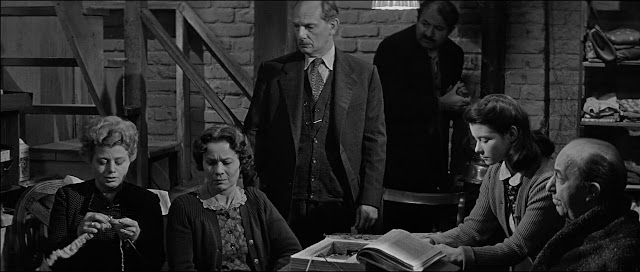
The widescreen frequently makes the annexe seem larger than it is

Who decided that a location defined by its claustrophobia and smallness was best captured in super-widescreen, I don’t know. But the wide angles make the annexe look a heck of a lot larger than it actually is (I’ve been there, I know it was more cramped than this!) and Stevens frequently frames the whole cast in shots which makes the annexe look positively cavernous.

The lack of claustrophobia has a serious impact on the story’s sense of drama. It also helps to filter out the tension. The script removes, or minimises, most of the key personal tensions in the annexe. We have moments of disagreement, but generally the inhabitants are shown to get on extremely well, with Anne herself practically perfect. This doesn’t really square with the diary, which is pretty open in Anne’s difficult relationship with her mother (with whom she felt no affinity), the clashes with the Van Daans and Mr Dussell (not their real names – Dussell basically translates as idiot, which gives a better impression of Anne’s difficult relationship with this unwanted roommate) or her later arguments with her father. Instead, things are smoothed out and nothing that could detract for a moment from the optimistic and hopeful message of the film is allowed.

The film also replicates several changes that the play made for dramatic effect. This most especially affects the character of Dussell (real name Fritz Pfeffer). In real life a respected dentist and pillar of the Jewish community, Dussell/Pfeffer here is a complacent, panicking imbecile, utterly ignorant of the Jewish faith and claims to have lived his whole life in Amsterdam with no idea he was a Jew. The real-life Pfeffer had in fact fled Germany to escape Nazi persecution. Played with a self-satisfied whininess by Ed Wynn (a famous TV comic, Oscar-nominated here for showing he could do drama), Dussell/Pfeffer is a joke. Pfeffer’s family cut ties with the Franks after the play was released.

Wynn’s nomination reflects how the broader performances in this film gained the most attention. Shelley Winters won an Oscar for her role as the blowsy Mrs van Daan – both van Daans are larger-than-life and obsessed with their status. More restrained and effective performances come from Gusti Huber as Anne’s shy and nervous mother and above all by Joseph Schildkraut as her wisely patient father. Richard Beymer gives an effective performance as a young Peter, straining against the leash of being stuck in a sort of suspended childhood.

As Anne, Millie Perkins looks the part in many ways – apart from the fact she is clearly too old. But there is something a little neutered and frankly a little too perfect about her performance. Her voice has a flat American twang to it that makes much of her voiceover a little wearing to listen to, especially as the tweeness is dialled up. I’m not sure she has the presence for the role – although she is not helped by the sanitised, earnest script.

Criticising The Diary of Anne Frank feels almost sacrilegious, like criticising the lives of the real people who went through something unimaginable to try and survive in a world of horror. But Stevens’ film is straining so hard to be reverent – and shaves the edges of its characters so much – that it turns them and their story into something much more easily digestible than it should be. It becomes a feelgood story, rather than something vibrant and alive. And that vibrancy is what has made Anne Frank live for so long after her murder. To create a film that captures so little of that, instead turning her into a conventional romantic heroine, just feels like it misses what made her unique.

Almost Famous (2000)

Almost Famous (2000)

Cameron Crowe turns his youth into a hip coming-of-age film with just enough sting among the sentiment

Director: Cameron Crowe

Cast: Patrick Fugit (William Miller), Billy Crudup (Russell Hammond), Frances McDormand (Elaine Miller), Kate Hudson (Penny Lane), Jason Lee (Jeff Bebe), Zooey Deschanel (Anita Miller), Anna Paquin (Polexia Aphodisia), Fairuza Balk (Sapphire), Noah Taylor (Dick Roswell), Philip Seymour Hoffman (Lester Bangs), Terry Chen (Ben Fong-Torres), Jay Baruchel (Vic Munoz), Jimmy Fallon (Dennis Hope), Rainn Wilson (David Felton)

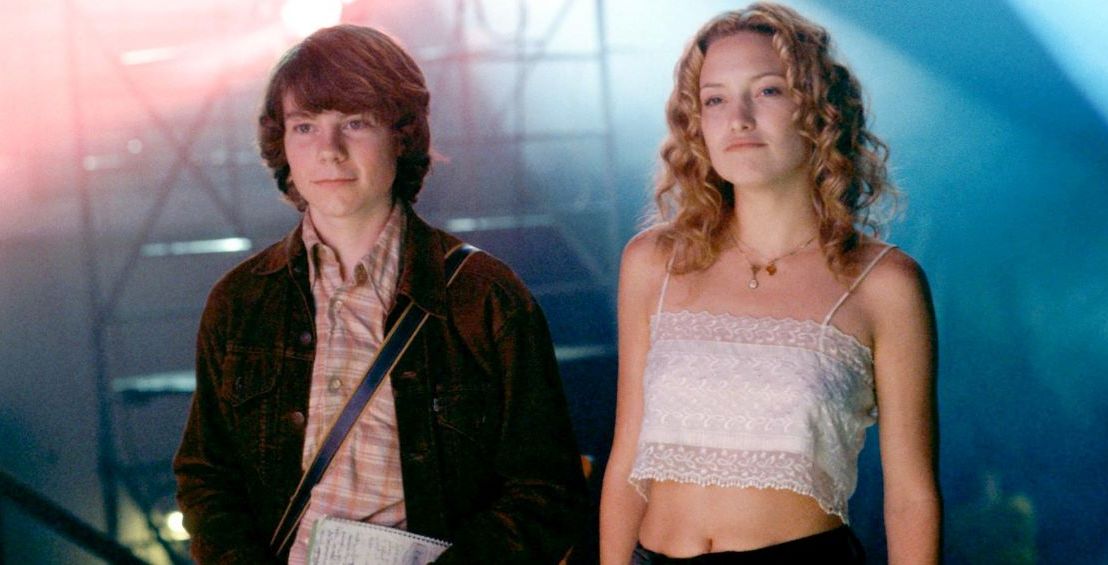
Cameron Crowe fictionalises his teenage years in the warm, affectionate Almost Famous, an endearing, heartfelt riff on the golden years of Rock ‘n’ Roll, when it felt like music could change the world and making the front cover of Rolling Stone was the greatest thing ever. Patrick Fugit plays William Miller (the Crowe substitute), a precocious 15-year-old would-be-music journalist recruited by Rolling Stone to write an article on Stillwater, an up-and-coming new band. Miller adores the music scene and is soon smitten with the lifestyle, Stillwater’s charismatic guitarist Russell Hammond (Billy Crudup) and most of all “Band Aid” (muse not groupie) Penny Lane (Kate Hudson).

Crowe’s film is a glorious reconstruction of the rock and roll scene of the early 70s – and I can imagine anyone with fond memories of it will find much to love here. It’s not just the fashions and hairstyles, but the glorious capturing of a mood. The whole film is a celebration of a time that felt freer and more idealistic, where the actions and words of a rock band could feel like the most important, beautiful thing in the world. The film is not just nostalgia but also a celebration of a mood of hopefulness that embodied an era.

It’s also a coming-of-age story, as a boy-becomes-a-man. Patrick Fugit is very endearing as a kid no one can quite believe is 15, even though every moment seems to hammer home his fresh-faced innocence. But then it’s not a complete surprise since, thanks to his strong-willed mother having moved him up a class at school and led him to believe he is older than he is. Nevertheless, this is the sort of trip that shapes someone, finding friendship, love, belonging, betrayal, righteous anger and acceptance along the way. All of this is backdropped by the shift of rock and roll becoming something corporations used to make a lot of money.

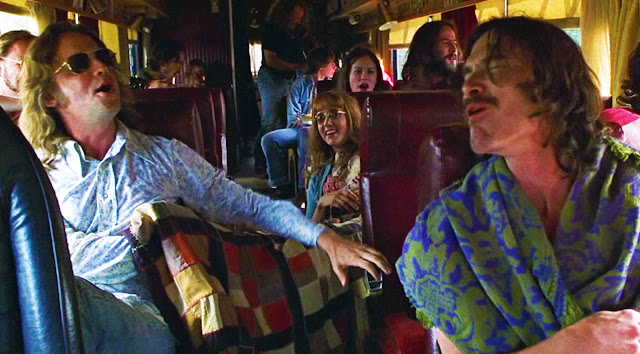
Stillwater are just on the cusp of this, still clinging to the fun of bussing from gig-to-gig, enjoying the mood, the songs and (of course) the girls. The film is also a celebration in a way of their coming-of-age, the tour starting in a ramshackle bus and ending on a sleek private jet, with accommodation switching from the bus to plush hotels. And along the way, they are trying to work out what they hell they are doing as much as William is. Perhaps that’s why the film feels like it captures the era so well – wasn’t everyone flailing around in the 70s trying to work out if they belonged to the hedonism of the 60s or what would become the Reagonism of the 80s?

But it’s still rock ‘n’ roll, best embodied by Billy Crudup’s charismatic turn as Band icon Russell Hammond. Crudup is all grungy magnetism and shuffling emotional gentleness under the surface of rock star swagger. Not that it stops him from moments of egotism, selfishness and pomposity. You can see why tensions are sometimes high in the band, with the rest of its members often seen as jut Russell’s support group (a band t-shirt causes fury when it shows Russell in the foreground with the other four as shadowy outlines behind him). Russell takes William under his wing, perhaps because he recognises the youth and fragility in William. Or maybe he just likes the hero-worship.

Because one of the dangers of getting close to these stars is getting sucked into hero worship. William is after all a journalist who needs to maintain objectivity. He’s even warned about it by his mentor, fabled music writer Lester Bangs (Philip Seymour Hoffman in a charismatic cameo) that the biggest danger is succumbing to the charms of the celebrity: these are after all, people who have made it their mission in life to be liked. They’re going to be good at it.

Getting in their airspace can be a dangerous place, as discovered by leading Band Aid Penny Lane, played with a luminous, radiant warmth by Kate Hudson. Penny is a devoted fan, enraptured with being part of the scene and with her self-proclaimed role as muse to the artists. Based on a personal friend of Crowe’s – and, one supposes, his real-life first love – it’s Penny who draws William into this life, looks out for him, cares for him (a favour he is to return in kind). She starts an affair with Russell – but is banished when Russell’s girlfriend rejoins the tour, jokingly traded in a card game with another band for a crate of beer (a reveal Hudson plays with a beautiful mix of devastation and valiant nonchalance). It’s not that Russell’s a bad guy, more that he can’t cope with complexities.

So, you can see why William’s Mum – played with a larger-than-life mix of bullish determination, smothering love and control-freak determination by Frances McDormand – is so worried about him. It’s a sign of the film’s overall warmth (and Crowe’s well-adjusted personality!) that McDormand’s character is treated with the same affection and admiration as everyone else and the love between mother and son is never in doubt. She is responsible for some of the film’s highlights, not least a phone call to Russell where her natural authority quickly reduces him to the overgrown schoolboy he is at heart.

And Almost Famous is a very funny film, riffing off various true life rock-and-roll road trip stories, from raucous parties to accidental electrocutions, like a slightly straighter version of Spinal Tap. It’s capped by a hilarious near-disaster plane flight, where the end seems in sight, leading to a series of ‘confessions’ that become more and more heated and factious as they go on. It’s a film that shows some of the warts of the characters – just as William’s article eventually will for Stillwater – but also their many, many beauty spots. People make mistakes and hurt each other, but life goes on – and we take the punches, but they don’t define us.

Perhaps that’s a big part of growing up: and it’s a growing-of-age film for three characters: William, Penny and Russell. All three of these characters find themselves drawn together, all of them spiritually so close. They hurt each other, betray each other, but they all love each other. It’s a hopeful message, a glorious celebration of a time and era.

David Copperfield (1935)

David Copperfield header
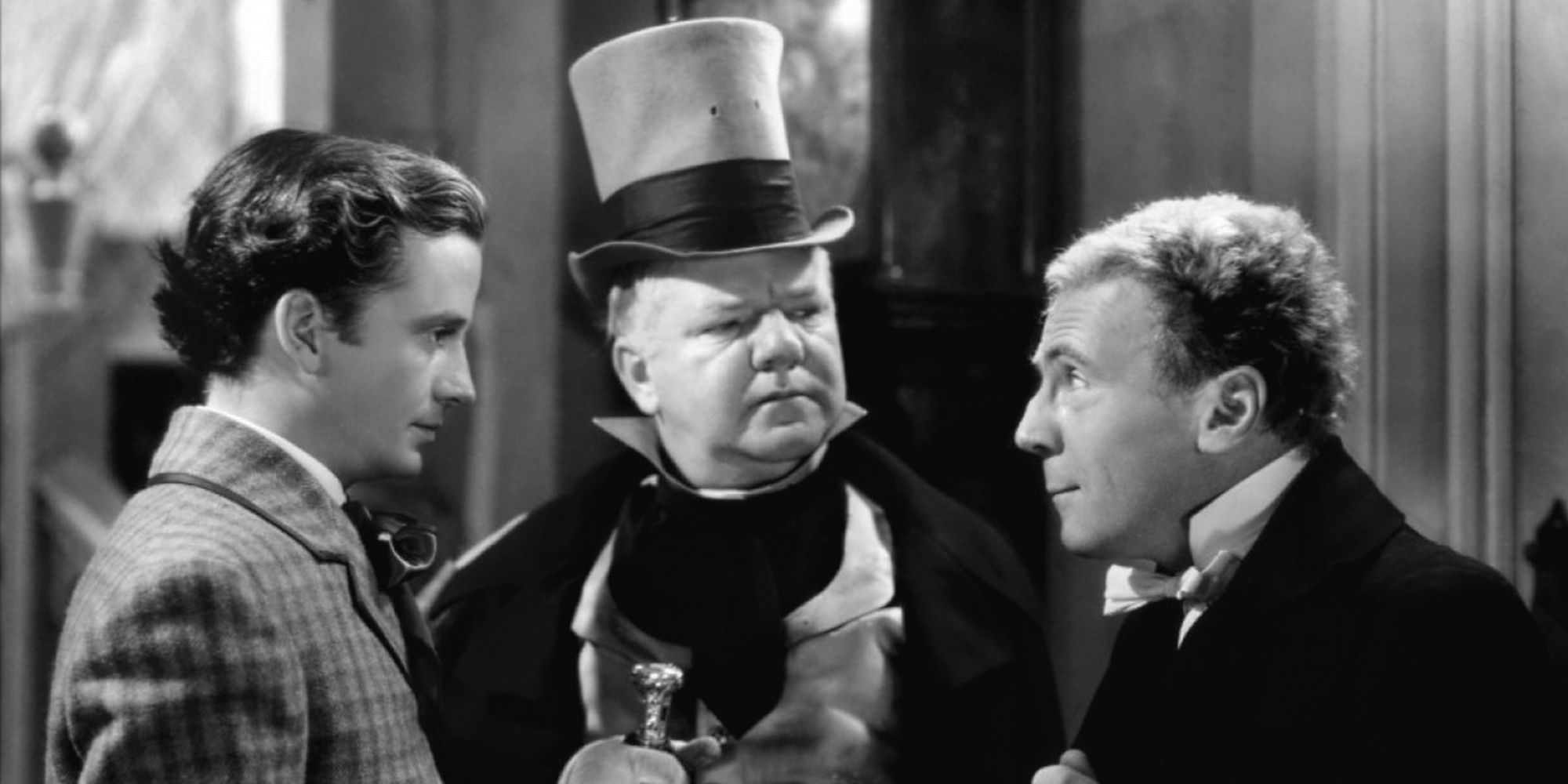
Frank Lawton, WC Fields and Roland Young bring Dickens to life in David Copperfield

Director: George Cukor

Cast: Freddie Bartholomew (Young David Copperfield), Frank Lawston (Old David Copperfield), Edna May Oliver (Betsey Trotwood), Elizabeth Allan (Clara Copperfield), Jessie Ralph (Peggotty), Basil Rathbone (Mr Murdstone), Herbert Mundin (Barkis), Jack Buckler (Ham Peggotty), Una O’Connor (Mrs Gummidge), Lionel Barrymore (Daniel Peggotty), Violet Kmeple Cooper (Jane Murdstone), Elsa Lanchester (Clickett), Jean Cadell (Emma Micawber), WC Fields (Wilkins Micawber), Lennox Pawle (Mr Dick), Lewis Stone (Mr Wickfield), Roland Young (Uriah Heap), Madge Evans (Agnes Wickfield), Hugh Williams (James Steerforth), Maureen O’Sullivan (Dora Spenlow)

You could argue David Copperfield is one of the most influential films ever made. David O Selznick was desperate to bring Dickens’ favourite novel to the screen. But the MGM suits were convinced it couldn’t be done (800 pages in two hours?! Get out of town!) and anyway who would want to come to the cinema when they could read the book at home? They were wrong, wrong, wrong and Selznick proved that classic literature (even if it was a cut-down version of a great book) could be bought to the screen and capture at much of the spirit of the book, even if you couldn’t dramatise all the events. David Copperfield remains very entertaining, not least because it also showed you can’t go to far wrong when you assemble an all-star cast who fit their characters perfectly.

The story of the film pretty much follows the novel (with exceptions, deletions and abridgements). Young David Copperfield (Freddie Bartholomew, growing up into Frank Lawton at the half-way point) grows up loved by his mother (Elizabeth Allan) and nurse Peggotty (Jessie Ralph), but loathed by his step-father Mr Murdstone (Basil Rathbone) who barely waits five minutes after his mother passes away before dispatching David to a factory in London. There David forms a bond with the charming exuberant Mr Micawber (WC Fields) before deciding to walk to Canterbury to seek the protection of his aunt Betsey (Edna May Oliver). Growing into a young man, he faces romantic problems, the schemes of the vile Uriah Heap (Roland Young) and the betrayals of his schoolfriend Steerforth (Hugh Williams). Will all turn out well?

Stylistically, David Copperfield aims to be as true to the novel as impossible. It’s designed to look as much as possible like a series of Phiz sketches bought to life and the actors have clearly studied both novel and illustrations to craft themselves as much as possible into living, breathing representations of their characters. Well scripted by Hugh Walpole (who also cameos early on as a Vicar), the film manages to be faithful without being reverential and tells an engaging story with momentum – even if the pace accelerates a little too much towards the end.

Walpole’s adaptation splits the book into two acts: the childhood of our hero and his life as young man. Giving an idea of how the momentum accelerates towards the end, this basically means the first hour of the film covers the novel’s opening 200 pages, leaving the last hour to hurry through the remaining 600. This means several characters and events are deleted, simplified or removed. However, Walpole still manages to retain all the truly vital information and iconic material, and recognises most of the striking material is found in that first 200 pages.

This childhood story is very well told, partially because Freddie Bartholomew (while he has touches of school play about him) is an affecting and endearing actor, who makes the young David a kid we care about rather than either an insufferable goodie-two-shoes or a syrupy brat. He’s a smart, kind, slightly fragile boy who we end up caring about – and it gives a real emotional impact when his mother dies (a very tender Elizabeth Allan) or to see him misused by Mr Murdstone (a perfectly judged performance of austere coldness by Basil Rathbone). Little touches of joy in his life – like the time he spends at the Peggotty’s converted ship home (a perfect representation of its description in the book) are really heartwarming, because David himself is such an endearing fellow.

It does create an obstacle for Frank Lawton when he takes over, since the audience is asked to try and bond with this new actor having already committed their hearts for just over half the run time to another. Lawton also has to deal with scenes rushing towards the conclusion rather than getting character beats like Bartholomew. Cuts impact his key relations: his school friendship with Steerforth is relayed second hand, meaning Steerforth turns up only to almost instantly let everyone down; Dora Spenlow and Agnes Wickfield get only brief screen time to establish their characters. The schemes of Uriah Heap are barely explained (he’s just a hypocritical wrong ‘un, okay?). It says a lot that the last fifteen minutes rush through the deaths of three major characters, a shipwreck, a dramatic confrontation, David travelling the world and a resolution of romantic tensions. It’s the only point when the film feels like its ticking boxes.

But it doesn’t completely matter (even if a two-part film would have helped no end – particularly allowing Lawton more room to develop a character) since the performances are so good. Expertly marshalled by Cukor – who rarely introduces visual flair, but coaches pin-perfect turns from the entire cast – every role is cast to perfection. None more so than WC Fields, for whom Wilkins Micawber became a signature part. Replacing Charles Laughton mid-filming (he claimed he looked more like he was about to molest the boy), Fields keeps his own accent and some of his own persona, but still fits perfectly into the Dickensian larger-than-life optimism and good will of Micawber. His comic timing is spot-on – watch him climbing over a roof or bantering with David and his family – and he seems like he has just walked off the page. If there had been a Supporting Actor Oscar in 1935, he would almost certainly have won it.

He’s the stand-out of a host of excellent performances. Edna May Oliver is very funny and has a more than a touch of genuine emotion as Betsey Trotwood. Jessie Ralph is excellent as Peggotty. Lennox Pawle makes a very sweet Mr Dick. Roland Young is the very picture of unctuous hypocrisy as Uriah Heap. Only the young women get a little short-changed: despite her best efforts, Madge Evans can’t make Agnes Wickfield interesting and Maureen O’Sullivan is rather cloying as Dora.

But the film itself is pretty much spot-on for the tone of Dickens, even if events are rushed. The impact of the Peggotty/Steerforth story is lost since we are never given the time to get to know any of the parties involved, and certain plot complexities are only thinly sketched out. But Cukor marshals the actors perfectly and throws in at least one striking shot, of Murdstone appearing in the distance as the camera follows a cart bearing David away from his mother. It always looks just right and the characters that do get the time are perfectly played, so much so that a few performances (Fields, Oliver, Young) may even be definitive.

David Copperfield proved you could turn a doorstop novel into a film and, even if you sacrificed some of the complexities (and might need to rush to fit it all in) you could still produce something that felt recognisable and true to the original. So, for that – with the mountain of adaptations that followed – we have a lot to thank it for.

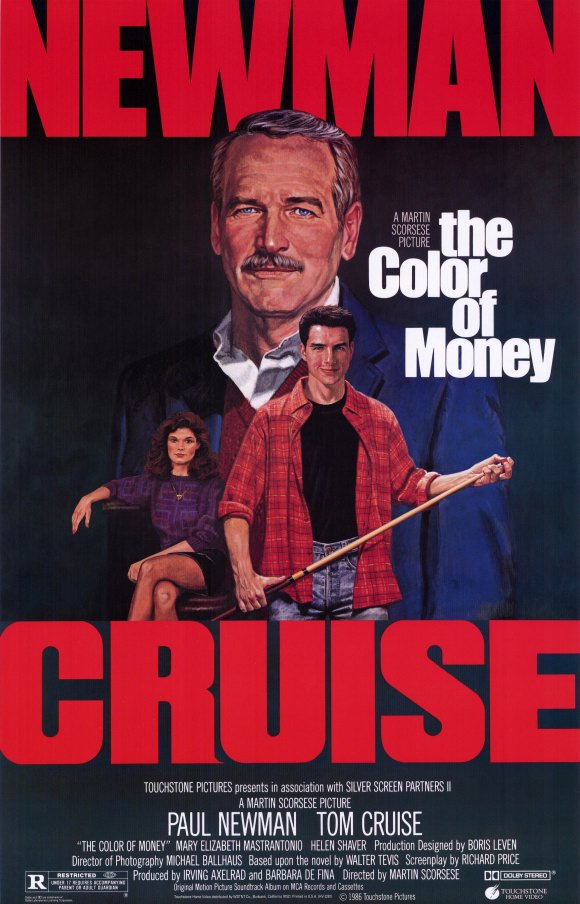
The Color of Money (1986)

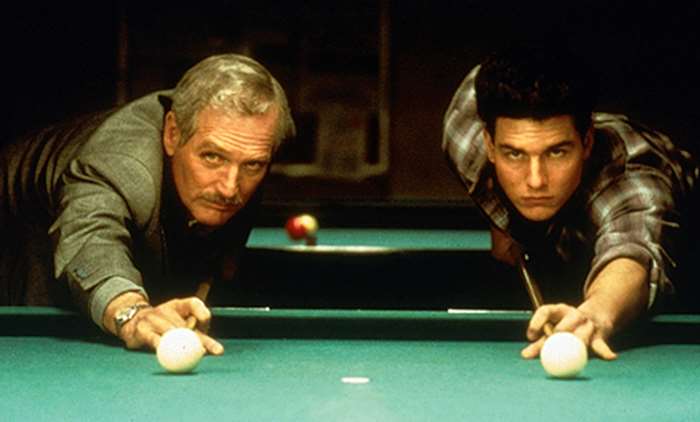
Newman and Cruise set the table in The Color of Money

Director: Martin Scorsese

Cast: Paul Newman (“Fast” Eddie Felsen), Tom Cruise (Vincent Lauria), Mary Elizabeth Mastrantonio (Carmen), Helen Shaver (Janelle), John Turturro (Julian), Bill Cobbs (Orvis), Forest Whitaker (Amos), Keith McGready (Grady Sessions)

The Hustler is one of Newman’s most iconic roles. It’s remembered for his cocksure cool, leaning across the table and dispatching balls with a twinkling smirk. What people don’t remember is that The Hustler is actually more of a kitchen-sink drama than a Rat Pack party. It deals with depression, assault, corruption, injustice and suicide. It’s not even remotely a laugh a minute. The Color of Money is a belated sequel, that feels made by people who remember their impression of what The Hustler was, but don’t actually remember the tone of the film itself. But then, Scorsese intended from the very start to make an entertainment to showcase a star, so I’m sure he knew that making a real tonal companion to the original film was always going to be a no-no.

It’s 25 years since “Fast Eddie” Felsen (Paul Newman) was banished from pool clubs throughout the land by gangsters. He now earns a living selling booze to clubs, largely so he can hang out pool clubs and mentor and stake the ‘hustler’s and stars of tomorrow. The kid who catches his eye is Vincent Lauria (Tom Cruise) an exceptionally gifted pool player with a cocksure confidence and a love of the game, that perhaps reminds Eddie more than a little of himself. Vincent, and his girlfriend Carmen’s (Mary Elizabeth Mastrantonio) grifting skills leave a lot to be desired: but Eddie sees promise and takes them out on a road trip to train them up and make a fortune.

It’s a fitting title, as it’s pretty clear that The Color of Money was the main thing on Scorsese’s mind when he made this. Don’t get me wrong, this is an enjoyable and well-made star vehicle, but it’s also the only time Scorsese was a hired gun working for a star who made films he grew up watching. Scorsese has spoken openly that his main aim here was to bring it in on time and on budget (he made it faster and cheaper than that), in order to help win studio backing for The Last Temptation of Christ. (Ironically of course, most people have far fonder memories of The Color of Money than that film, but then this is a film designed to entertain not challenge.)

It’s a fairly traditional and even predictable storyline. The mentor and the mentee, the latter jaded but rediscovering some of his old fire from the callow exuberance of the other. To be honest not very much actually happens in the film other than pool games and some predictable feuds before the final reconciliation. Inevitable lessons are learned and understandings are achieved. Compared to The Hustler, this is a very callow piece of work indeed, a straight entertainment vehicle that takes the fun, memorable beats of the original and crafts a whole film around them. In many ways you could argue it’s as much a sort of spiritual sequel to Newman’s work in The Sting as anything else.

But Scorsese shoots the hell out of it, so there is always something to look at. No end of editing and camera tricks are used for the pool games, which are shot like action sequences. Swift pans, tracking shots, sharp camera spins are all used to turn a game of knocking nine balls into pockets into something epic. Interesting shots abound, especially several sequences where a camera is mounted on a car bonnet to product an odd Steadicam effect. This is work way beyond a journey-man-pro director, but compared to Scorsese’s other works it’s minor. Scorsese opens the film by delivering a voiceover introducing nine-ball-pool, but the film never feels personal.

What it is, is a triumph for its two leading men. The year before Newman had won an honorary ‘career’ Oscar, which he accepted with a slight air of surprised resentment. No wonder, since he won a ‘real’ Oscar a year later for this reprise. To be honest, the film doesn’t ask anything particularly demanding of Newman, compared to the heights he had achieved in, for instance, The Verdict. It’s a lot of charm and aged confidence, mixed with a mentor exasperation and an unspoken concern that his powers are fading. Newman does spice things up with some interesting character work – there is a great scene when Eddie berates himself for being suckered by pool shark Amos (also a beautiful cameo from Forest Whitaker), humiliated for having lost his touch. But, whereas the first film was a below-the-skin character study, this is more like a victory parade for a charismatic star who even signs off the film by stating “I’m back!”. He’s great but not challenged.

Cruise raises game as he always does when working with legends (see also his work with Hoffman and Nicholson). The film captures perfectly both his cocksure confidence and the gentleness and vulnerability that Cruise manages to hide beneath it. You only need to see how vulnerable and scared Vincent is of being abandoned by the more sophisticated Carmen, to know that his karate moves with a pool cue while singing along to Werewolves of London is a front of a young man wanting to look like a big one to the world. Mastrantonio is pretty good in a fairly simplistic role, that is essentially a twist on a hooker-with-a-heart-of-gold.

The Color of Money offers up fairly predictable charms and plot twists and no real surprises at all. While its original film was a piece of neo-realism tinged social drama, this is a brash entertainment, stuffed with pop songs and charismatic actors doing their thing. All pulled together by a director who wanted to prove he could make something as glossy and empty as the next man. Entertaining but forgettable.

All Quiet on the Western Front (1930)

All Quiet on the Western Front (1930)

War is hell in one of the greatest and most influential war films ever made

Director: Lewis Milestone

Cast: Lew Ayres (Paul Baumer), Louis Wolheim (Stanislaud Katczinsky), John Wray (Himmelstoss), Slim Summerville (Tjaden), Arnold Lucy (Professor Kantorek), Ben Alexander (Franz Kemmerich), Scott Kolk (Leer), Owen Davis Jnr (Peter), William Bakewell (Albert Kropp), Russell Gleason (Muller)

Franklin Roosevelt once said “War is young men dying and old men talking”. Perhaps no film shows that more truly than All Quiet on the Western Front. The first truly great film to win Best Picture at the Oscars, it’s a profoundly influential and unflinching look at the horrific cost of war. Specifically, it looks at how a younger generation buys into dreams of glory and destiny, only to arrive at the front lines and discover they’ve been sold a pup. A sense of glorious purpose collapses into death, mud and misery. War, it turns out, is hell.

All Quiet on the Western Front follows a company of German soldiers during the First World War, plucked from their college to lay down life and limb for the Kaiser. Their unofficial leader is Paul Baumer (Lew Ayres), an intelligent and thoughtful young man. They soon find the frontline is a world away from what they expected, and death moves through the boys like a flu. Over time Paul, with the mentorship of experienced soldier Stanislaud Katczinsky (Louis Wolheim), finds his naïve view of the world torn away with each bullet and failed attack.

In many ways it was brave to make such a large-scale Hollywood epic that placed the side America had actually fought against in the sympathetic role (on the other hand, much easier to look at the losing side and say “you’re fighting for a hopeless cause”). But that makes the film’s message even stronger: it doesn’t matter about sides, war claims young men regardless. The deaths come thick and fast on the Western front – and the gains are negligent. While the boys’ Professor (a pompous Arnold Lacy) sings a familiar hymn of glory and success by Christmas, life on the front line is actually continual terror. Mud, rats, debris and the constant chance the next step you take could be your last. Shelling is non-stop and every inch of the rickety, ramshackle trenches shakes with each explosion. Never mind going over the top, just being there shreds the nerves.

When the attacks come, the film is striking in its modernism and visual invention. Milestone frequently uses intriguing angles and long tracking shots to present an uninterrupted vision of hellish conflict. The film is full of crane shots, urgent camera movements and judicious cutting. The horrors are shown clearly – at one point a soldier literally explodes while cutting through barbed wire, his hands left clinging to the wire, the rest of his body gone. Milestone intercut shots of machine guns firing an arc with the camera moving in a smooth tracking shot as men run towards it and collapse in death. The film is literally shredding its soldiers.

The debris filled, fox-hole spotted no-man’s land the film presents is hellish. It’s a literal minefield of death, with bodies charging backwards and forwards depending on the tide of battle, the camera moving alongside them. For hand-to-hand fighting in the trenches, Milestone shoots the action with a tracking crane shot above the trenches, which stretch like a jagged flesh wound in nature, overflowing with people trying desperately to kill each other. During one charge, Paul lands in a fox hole with a French soldier, who he mercilessly wounds with his bayonet – then spends a dreadful night watching him slowly die. There isn’t any glory here and attack and retreat are both equally pointless. All that really happens is the body count ticking slowly up.

Most of the company are dead well before the film hits the half-way point. After the first big attack, the company goes behind the lines for a meal. Their meal is almost denied them as it was made for a company twice the size of the one that actually reports. It’s a sign of the suffering and hardening to death, that the reaction of the survivors is joy at the unexpected double rations. Later Milestone follows the fate of a single pair of boots, in a beautifully edited sequence that constantly visually focuses on a pair of good boots, while their successive owners meet their deaths.

It’s all so different from how we started, with an Eisenstein-inspired series of cuts to cheering faces as the students sign up. The horseplay at the training camp – where they deal with an officious postman turned corporal Himmelstoss (a puffed up and preening John Wray), overly aware of his own rank and determined to rub the boys faces in it – in no way prepares them for what is to come. This is all too clear from their confused faces at the staging post, a chaos of mud, soldiers and shelling. No wonder no one at home understands what’s happening here – as Paul discovers on leave, when he is repeatedly shocked and disgusted by the casual triumphalism of old-armchair-Generals utterly ignorant of the realities at the front.

All Quiet on the Western Front is so beautifully shot and edited – you can see its influence on so many war films to come – that it’s a shame some of its dialogue and ‘acting’ scenes are now either a little too on-the-nose or overstay their welcome. There are some big themes handled in the dialogue: why are we fighting, what is the point of war, how do we live our lives when they could end at any time – but the dialogue is sometimes a little stilted. It’s also where the film reverts to something more stagey and theatrical and less cinematic and visual. It’s also a slightly overlong film – already a sign that Hollywood had a tendency to equate “important” with “long”. Most of the films’ points are well made by the first hour, and the second hour or so often repeats them.

However, those concerns are outweighed by how much there is admire. Lew Ayres is very good as the noble Paul – the film had such a profound effect on him he became a life-long pacifist, a conscientious objector in WW2 who served as a front-line medic. Louis Wolheim is superb as the rough-edged but decent and kind Kat, a senior soldier taking the new company members under his wing and teaching them nothing is more important than the next meal and no unnecessary risks.

All Quiet on the Western Front takes place in a naturalistic quiet, with no hint of music to interrupt the mood. It is an overwhelmingly powerful movie about the pointlessness and cruelty of war – and the lies that young men are told to fight it. When Paul returns to the homefront – and sees another class of boys being inspired to die for their country by his Professor – he denounces the whole thing (and is promptly branded a coward). War is a cycle that eats everyone it comes into contact with and has no logic behind it. Directed with verve and imaginative modernism by Milestone, this is a brilliant picture, one of the first sound masterpieces – and still one of the greatest war films ever made.

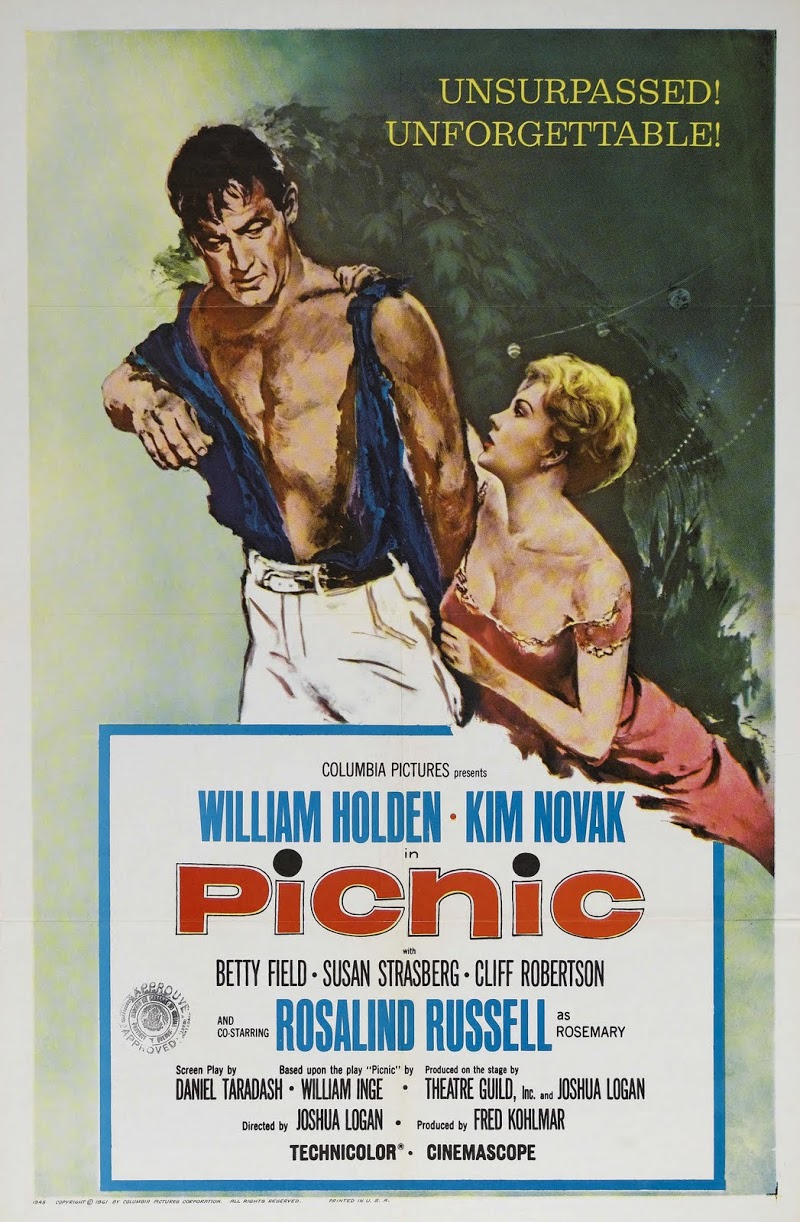
Picnic (1955)

William Holden stirs up a small-town – and Kim Novak – in Picnic

Director: Joshua Logan

Cast: William Holden (Hal Carter), Kim Novak (Madge Owens), Rosalind Russell (Rosemary Sydney), Betty Field (Flo Owens), Susan Strasberg (Millie Owens), Cliff Robertson (Alan Benson), Arthur O’Connell (Howard Bevans), Verna Felton (Helen Potts), Reta Shaw (Irma Kronkite)

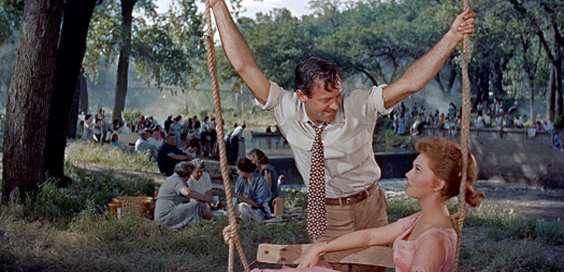
In a small Kansas town in the early 1950s, everything is sweet as apple pie. But under the surface, tensions bubble – and it only takes a stranger changing the status quo to make them explode. In William Inge’s Pulitzer-Prize-winning play – bought to the screen by original Broadway director Joshua Logan – that stranger is Hal Carter (William Holden), failed sportsman, actor and college drop-out, drifting into town looking for a new start from old friend Alan (Cliff Robertson). But Hal, an amiable screw-up, quickly puts himself in the middle of a love triangle between Alan and his girlfriend Madge (Kim Novak), the local beauty tired of being judged only by her looks.

All this eventually explodes into a series of furious confrontations where the true colours of various participants are revealed. In the 1950s Picnic looked like a criticism of the cosy conservatism of small-town America. But today, it actually feels more than a little nostalgic for the lost innocence of those times. Sure, some people in the town are less than sympathetic, or their lives have been crushed by the expectations of others. But generally, with its pastel colour palette and its generally fundamentally well meaning characters, it now feels a rather reassuring watch.

Like many films that pushed the envelope at the time, it also looks rather tame today. The film is strong on demonstrating the impact of the sexuality of a topless Holden on the women of the town – nearly all of whom go weak at the knees. But generally, the film’s sexual content now looks remarkably safe and gentle. A sense of powerful longing for something missing from their own lives does comes across strongly – Russell’s Mrs Sidney, worse for wear from drink, ends up feebly trying to pull up Holden’s trousers to look at his legs while dancing. But the sexual outbursts largely restrict themselves to that and a few passionate clinches.

Logan’s film throws in a few big visuals (such as the closing helicopter shot as a bus drives out of town) and clearly enjoys its location shooting, but remains stage-bound. Several scenes translate across exactly to backyard locations, the same sets in all but name that appeared on stage. It also struggles to fill the cinemascope screen, for all that James Wong Howe’s photography has a certain Autumnal beauty to it (you won’t see any vibrant greens, reds or yellows). In addition, many of the actors go for somewhere between naturalism and a mannered Broadway show-boating.

Perhaps the main issue is that film dwarves this slight and intimate story. Moments of intimacy that on stage you feel carry impact – heartfelt declarations and tortured confessions – don’t carry nearly so much on screen. In fact, the story ends up feeling rather slight and even predictable: the drifter has depths, but the town unfairly turns against him, the old-maid schoolteacher is deeply frustrated, the local beauty juggles depression, the good natured son of the local bigwig is a self-entitled bully. None of this really feels revelatory and, on screen, easily drifts by with little impact.

Logan’s stagy style also has a mixed impact on the acting with some going for a cinematic underplaying, and others inspired by a theatrical grandness to embrace the big moments. Leading the way in that camp is Rosalind Russell who gives a strong performance as the frustrated schoolteacher, but frequently allows herself to go a little too far in moments of emotional outburst. It’s particularly noticeable as she’s paired with Arthur O’Connell (reprising his Broadway role, and getting an Oscar nomination) who underplays with a quiet wit and honesty.

One of the film’s principle problems are with the two leads. William Holden gives a fine performance – fun-loving and kind but also cutting a rather sad and tragic figure behind the bonhomie – but is blatantly too old for the role. Hal is probably meant to be in his 20s – Holden was 37 and, with his craggy face, actually looks older. While it does add a level of Hal being increasingly irresponsible for his age, the part really means a charismatic youngster dripping sex appeal (think James Dean – Paul Newman was turned down for the part). Opposite him the inexperienced Kim Novak does, at times, give her line readings a striking genuineness but at others comes across as slightly wooden.

A stagy and slightly old-fashioned watch today, Picnic was nominated for several Oscars, but increasingly looks rather like a celebration rather than a gentle criticism of the small-town values it depicts.

Minari (2020)

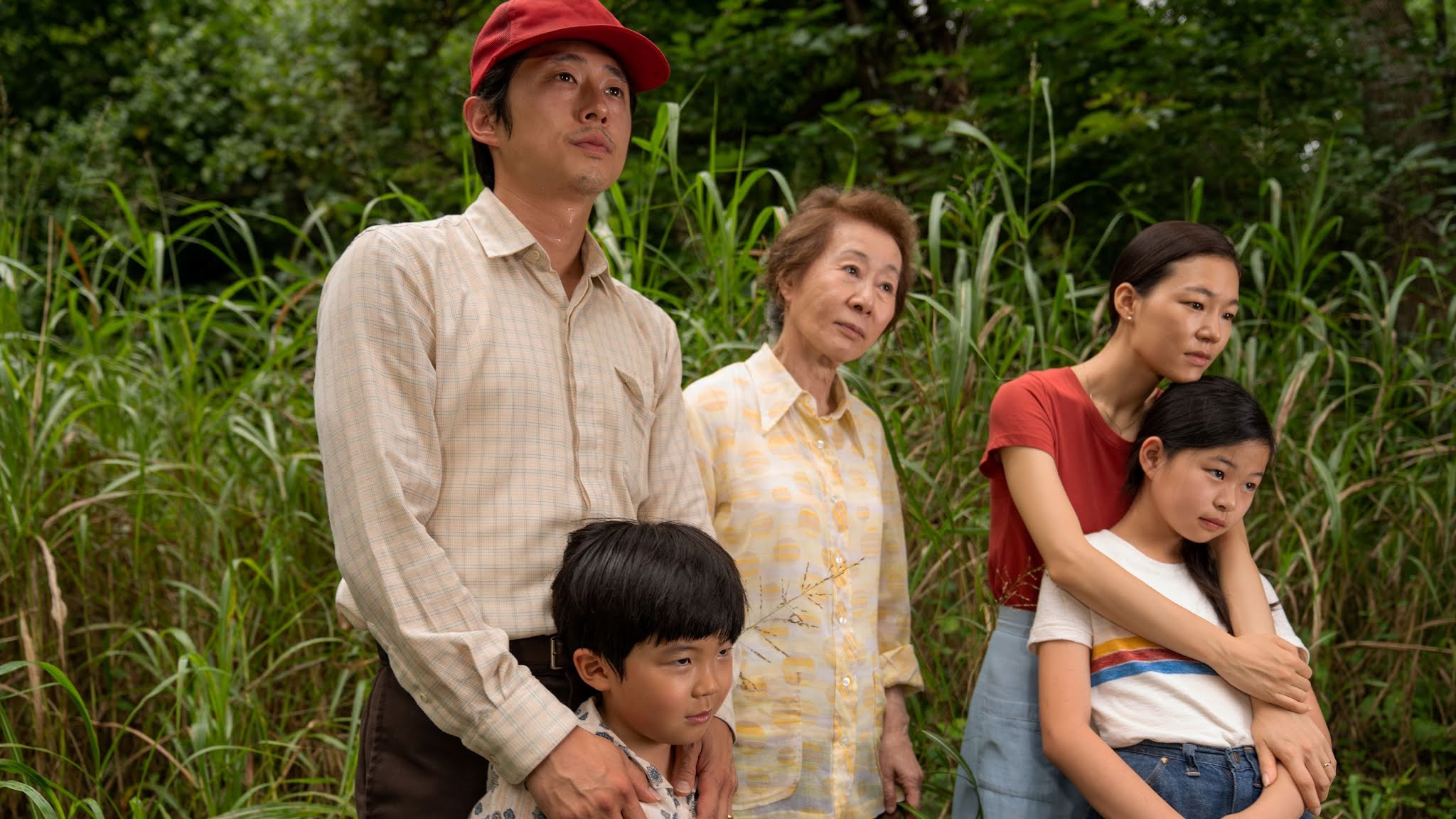
A family struggle against adversity in Lee Isaac Chung’s autobiographical and heartwarming Minari

Director: Lee Isaac Chung

Cast: Steven Yeun (Jacob Yi), Han Ye-ri (Monica Yi), Alan Kim (David Yi), Noel Kate Cho (Anne Yi), Youn Yuh-jung (Soon-ja), Will Patton (Paul)

Lee Isaac Chung grew up in rural Arkansas during the Reaganite 80s, when everyone felt they could live the American dream. His young life – and the experiences of his parents – from the basis of Minari, an emotionally involving, tender and quietly hopeful film about planting a future. The film is named after an obstinate Korean plant which takes root and grows where it can – a struggle the Yi family can sympathise with.

Jacob (Steven Yeun) dreams of building a family legacy, a Korean food farm that will find an eager market among Korean-Americans. His wife Monica (Han Ye-ri) is less than keen, looking with dread at the leaky trailer house her husband has invested their savings in. Nevertheless, Jacob sets about planting with back-breaking dedication, but very little practical knowledge – all while he and Monica continuing working as chicken sorters during the day. Her concerns are not helped by the heart condition of their son David (Alan Kim) – and that they are now over an hour from a hospital. Not even the arrival of Monica’s mother Soon-ja (Youn Yuh-jung) to provide childcare can help reduce the growing tensions in this family.

Although Minari is mostly in Korean, this is a very American tale. Jacob is a man very much trying to live the American dream, building a new business (and life) for his family. Even more American than that, he’s doing it out in the American west, working to conquer land that has beaten several farmers before him. Minari perfectly fuses together a respect for Korean heritage and culture with an inclusive view of the American ideal: that being rewarded for your hard work is something anyone can achieve.

As such Minari repackages many familiar story elements – childhood memories, a bond between an eccentric elderly relative and a child, near biblical struggles against the elements to build a farm, marital problems and fish-out-of-water set-ups – into something that feels fresh and highly engaging. Chung’s involving, carefully intimate direction is crucial to this, his connection with the material helping make it both funny and at times heart-breakingly tragic, while never allowing it to slip from being fundamentally hopeful.

Jacob’s desire to build the farm is both impressively ambitious and strangely irresponsible. Jacob wants to demonstrate his family should have faith in itself, taking immense pride in ‘Korean smart thinking’ as he finds home-made solutions to farming problems. He works with such dedication – frequently to the point of physical exhaustion – that its impossible not to admire him. But as he carries out his improvised fixes – from a well he digs that runs dry to working out how close together he can plant his produce – everything carries an edge-of-your-seat tension, as we are all too aware he’s making it up as he goes. Yeun is excellent as a man afraid of failure, driving himself to do everything he can to escape that fate, but often too blunt and proud to ask for help.

Chung isn’t afraid to demonstrate the damage this can have on a marriage. The couple frequently argue. So much that they seem to have forgotten the romantic moments in Korea that bought them together – hearing ‘their song’ playing, Jacob can’t even remember having heard it. Monica resents a farm she never wanted but feels forced to support. Han Ye-ri is wonderful, beautifully expressing a range of suppressed emotions, her face speaking volumes about her shock on first seeing their new home. The couple move between arguments and silent non-communication as the pressure of trying to make this business work – combined with supporting a family– drives a wedge between them.

Much of this is seen from their perspective of their children, in particular son David (an effectively sweet performance from Alan Kim). Fitting for a film about a director’s memories of his childhood, David is really the main character, with his perceptions and interactions with the other characters driving the narrative. He’s at an age where he is just beginning to understand some of the problems in his life, but still has the joy and sulky stroppiness of a young child.

What becomes the heart of the film is the relationship between David and his newly arrived Grandma, who he ends up sharing a room. David’s hostility to this woman – he’s furious that she’s not like an American, cookie-baking Grandma, instead being too Korean and (according to David) smelly – slowly changes, as she treats him with an honesty he doesn’t get from his tense parents. Any friendship formed over one tricking the other into drinking piss is sure to last!

The Grandma is played, in a scene-stealing performance scooping a truckful of prizes, by veteran Korean actress Youn Yuh-jung. In many ways it’s a simple part – the older family member who says outrageous things, but has a heart of gold – but Youn plays it with a quirk but also an immense sincerity that becomes genuinely moving. Unlike his parents, she encourages David to do things (like running) rather than do as little to preserve his heart. She helps him build his confidence – and finds she has more in common with this bluntly-spoken child than anyone else. In turn she gives him the attention his stressed parents are unable to. It’s not an original role, but it’s quite beautifully judged.

What is (sadly) surprising is that this Korean family finds themselves warmly welcomed into this Christian Arkansas community. I was waiting – as I am sure other viewers have – for a moment of racism or for Jacob to be exploited. Instead, the Yi family are given nothing but support from banks and the church in Arkansas (the only person who does screw the family is an unseen Korean businessman who cancels a crucial order). The family makes friends with local eccentric and Korean war veteran Paul (a jittery but charming performance by Will Patton) who, when he says he’s honoured to be invited to their home, really means it.

This warmth, of people maybe arguing and feuding but coming together and supporting each other, is a big part of what makes this film hopeful. The characters may all make huge mistakes – but they do for the very best of reasons. This is not a depressing film – which considering how much goes wrong, is a surprise. It’s a film where hard work is noble and huge disaster strikes it draws people together not apart. The minari itself is a part of that message of hope: it will grow down by the river, forge a fine crop, and survive all disasters: like family, it’s something we can always rely on.

The Hunger Games (2012)

Jennifer Lawrence takes aim against a corrupt system in The Hunger Games

Director: Gary Ross

Cast: Jennifer Lawrence (Katniss Everdeen), Josh Hutcherson (Peeta Mellark), Liam Hemsworth (Gale Hawthorne), Woody Harrelson (Haymitch Abernathy), Elizabeth Banks (Effie Trinket), Lenny Kravitz (Cinna), Stanley Tucci (Caesar Flickerman), Donald Sutherland (President Coriolanus Snow), Wes Bentley (Seneca Crane), Toby Jones (Claudius Templesmith), Alexander Ludwig (Cato)

“May the odds be ever in your favour”. They certainly were for The Hunger Games, the first adaptation of Suzanne Collins’ dystopian YA trilogy. It was one of many franchises trying to ride the success of the Harry Potter series – and easily the best (it’s vastly superior to, say, Twilight or the woeful Divergent). Shepherded to the screen by a confident Gary Ross, it’s a film that doesn’t shy away from book’s social politics and darkness, while also balancing that with complex and engaging characters. It stands up well to repeated viewings and never lets you forget it’s a film about teenagers involved in a brutal series of murderous blood sports.

In the future, after disasters and wars, the nation of Panem has been built. Twelve colonies are ruled from the capital. As punishment for a past rebellion, each year each district sends two tributes to the capital. These tributes will be feted, celebrated – and then pushed into an area and made to fight to the death in “The Hunger Games”, all of it transmitted on TV across Panem. To the winner, a lifetime of fame and comfort. To the losers – well, death. In the poorest district, District 12, Katniss Everdeen (Jennifer Lawrence) volunteers as tribute after her sister’s name is selected. Stubborn, surly, defiant and an expert archer, Katniss surprisingly finds herself capturing the public imagination – helped by a faked romance with her media-savvy fellow District 12 tribute (Josh Hutcherson’s Peeta). But in the ring will it be everybody for themselves? Or can Katniss keep hold of her soul?

The Hunger Games is rich material. Panem feels more and more like a mix between Gilead and Trumpian pomposity (the capital is a heavily stylised and artificial Rome-inspired centre of excess), in which life and death matters for very little. It’s a film that has astute things to say not only about how totalitarian regimes operate, but also how the oppressed often connive in their own suppression. So wrapped up is the population in the excitement of the Hunger Games, so invested in the results, that they’ve almost forgotten it is a tool of oppression. That the capital can only continue to exist if all the districts co-operate in following its orders and meekly supplying anything it asks – from food and resources, to teenagers for slaughter.

What this world needs is someone like Katniss. An individual who knows her own mind, who won’t play the game and will be herself. The film is brave in not softening the edges of this often prickly personality. Expertly played by Jennifer Lawrence, Katniss is compassionate and caring – but she’s also judgemental, untrusting, holds grudges and in person is often surly, resentful and impatient. But what makes her a hero, is her refusal to collaborate in softening the Hunger Games. She knows she is being manipulated to make a world feel better about itself – and she is repulsed by the idea of taking life needlessly and the slaughter of the weaker and more vulnerable tributes. Indeed, she will go to huge lengths to keep others alive in the games – something that helps to wake a population up to how they’ve been hoodwinked by bright lights to forget their own humanity. Her defiance is less about politics and more about simple human decency and being able to make her own choices – something a whole world has forgotten.

Even the people in the capital have forgotten that the Hunger Games exist to suppress not entertain. The film gets some delightful mileage out of its satire of blanket media coverage. The TV coverage is pure ESPN or Sky Sports, mixed with shallow chat shows. Stanley Tucci has a ball as a flamboyant anchor who lets no moral qualms even cross his mind as he banters with the tributes in interviews with the same excited ease as he will later commentate on their slaughter. Wes Bentley’s would-be Machiavel TV producer has been so drawn into the mechanics of his games, he’s stopped even seeing the combatants as human beings, just another set of ratings-tools he can use to advance his career.

It’s a neat commentary from the film on how we can be so beaten down and crushed by the everyday that we forget – or overlook – how it is both controlling our own lives and forcing us to rethink our own views on life. This is a world where people are being taught that life and death are not valuable, that murder can be entertainment and that everyday burdens are worth dealing with because you have a chance of being allowed to fight to the death for a shot at eternal comfort. It’s a deeply corrupt and savage system, and the film doesn’t flinch away from exploring it.

Alongside that, it’s an entertaining, gripping and involving film (if one that is a little overlong in places). The second half – which focuses on the games – is both exciting and terrifying in its (often implied – after all this is still a film that needs to be shown to kids) savagery. It encourages us to identify closely with Katniss, to experience the same terror she does as well as delight in her ingenuity and inventiveness to escape death and plan strikes against her brutal opponents. By the end of the film we’ve taken her to our hearts – for all we’ve seen how difficult a person she is – as much as the population of Panem have.

Ross’s film is a triumph of adaptation, and you don’t say that about many YA novels. Suzanne Collins’ adaptation of her own book captures its thematic richness, while compressing it effectively. There are a host of interesting actors giving eclectic performances, including Harrelson as Katinss and Peeta’s mentor, Banks and Kravitz as their support team, and Sutherland as the controlling dictator behind it all. The Hunger Games is prime entertainment, with some fascinating design work (the costumes and sets are spot on) and very well made. It’s a franchise to watch.