Category: Coming of Age film

Leon (1994)


Jean Reno teaches Natalie Portman the ways of death in classic romantic thriller Leon

Director: Luc Besson

Cast: Jean Reno (Leon), Natalie Portman (Mathilda), Gary Oldman (Norman Stansfield), Danny Aiello (Tony), Michael Badalucco (Mathilda’s Father), Ellen Green (Mathilda’s Stepmother)
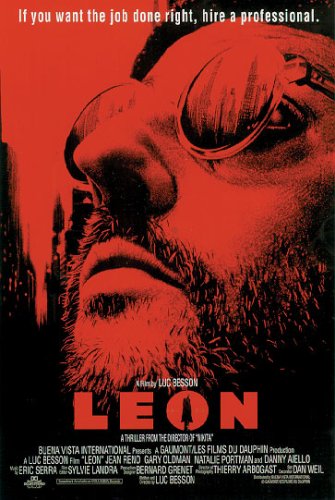
Luc Besson is an interesting film-maker, part visionary, part pulpy stylist. He has undeniable talent and visual flair, but far too often wastes this on trashy and juvenile comic book films, with a teenager’s preoccupations rather than a focus on story and character. One of the few exceptions to this is Leon, a film that marries his vibrancy with a heartfelt story.

Leon (Jean Reno) is a professional hitman working in New York, a dedicated professional with the stunted emotional maturity of a young teenager. One day the family of his next door neighbour is ruthlessly slaughtered by demented, drug-dealing cop Norman Stansfield (Gary Oldman), leaving only precocious 12-year Mathilda (Natalie Portman) alive. Despite his concerns about involving himself in the world, Leon takes Mathilda in – and these two outcasts develop a deep emotional bond, part mentor-pupil, part father-daughter, part celibately romantic.

In many ways, Leon should be an uncomfortable viewing experience. It’s a film that explores the growing emotional and sexual awakening of two characters, one of whom is a 12 year old girl, the other a hitman in his 40s. In fact it’s hard to imagine it even being made today by a Hollywood studio (it was controversial enough at the time). However, it works because the characters are so skilfully established. The 12 year old is precociously mature emotionally and sexually for her age, the man is so emotionally stunted and childlike in his outlook on the world he effectively feels like a 14 year old. The sexual interest is all from the girl, and is constantly batted gently aside (with a confused lack of understanding) by an adult who doesn’t understand the adult world and its feelings. As such, the film manages to side-step the creep factor and turn itself into a sort of touching fable.

It further works because our two leads give such terrific performances. Jean Reno perfectly understands Leon’s childish appreciation of the world, his touching faith in other people (his father-figure Tony is clearly swindling him), his simple delight in things (his wide-eyed appreciation of Singin’ in the Rain is very endearing). He’s naïve and has a child’s lack of understanding of violence and its impact. He’s focused so tightly on his narrow world, he’s clearly never developed any real emotional understanding of the wider world. Reno creates a character who is a seasoned killer who feels like a under developed teenager – emotionally and sexually he’s pretty close to being a 12 year old himself. His interest in Mathilda is rooted more in an elder brother/sister relationship. You get the feeling sex has never even really entered his mental equation. It’s a masterful performance, effortlessly cool but also stirringly real, sweet, vulnerable.

Equally brilliant is Natalie Portman’s enthralling performance as Mathilda. She creates a character who is sexually daring, seemingly far more adult and savvy than Leon in many ways, but is still recognisably a vulnerable child. She’s spiky and defiant, but this hides a deep rooted sensitivity and a desperation for love and affection. Her continued expression of sexual interest in Leon is as much rooted in a desire to feel part of a genuine caring family unit as it is some desire to initiate sexual contact. Her performance is perfectly nuanced and searingly real. Portman also feels both simultaneously adult and childish, so she never feels as out of place.

The film also works because it feels like a slightly unworldly drama. The rules of this world seem slightly fairy-tale like. It happens in a dreamy New York, with shady gangster chiefs, corrupt cops and hitmen moving serenely from location to location, with seemingly no intrusion of “real” people into this equation. The world seems oddly off-kilter, a self-contained fantasy where Leon is some sort of gentle ogre and Mathilda an Alice in Wonderland. While it’s set in a real place, Besson’s film feels like a sort of violent bedtime story. It becomes harder for sex in this context to seem threatening.

Instead, despite the killing and slaughter, this is a sweet and even slightly sentimental love story, about two souls who have an inherent understanding of each other. It’s a deep bond that transcends their ages and social conventions. Besson really understands this, and it’s what motivates and powers the film. They switch roles between child and adult smoothly: So one moment Leon is almost fatherly, teaching the basics of sniper work to Mathilda, the next she teaches him to read. There are undertones of sexuality, but the feeling is that neither of these characters really understands the complexities and realities of sex, because one is too young and the other is too emotionally immature.

Besson’s film making around this is sublime. The film is stylish beyond belief, the camera and editing fluid and dynamic. Action scenes hum with tension and excitement. The violent confrontations (of which there are many) are brilliantly done. Besson draws extraordinary, heartfelt performances from the two leads and creates a wonderfully moving fantasy-tinged world. His invention and pulp style brings a unique feel to what is a heartfelt, rather tender story. It’s a perfect marriage of style and content, where both complement each other. The story feels heartfelt, the execution gives it a swaggering extra dimension.

The tender reality of Reno’s and Portman’s performances – and the marvellous gentleness which Besson films this with – allows other parts of the film to go fully over-the-top. This is not least the case with Gary Oldman’s ramped-up-to-eleven Stansfield, a Grade A nutter. Oldman leaves nothing in the dressing room here, completely letting rip. In a way a performance of such utterly demented excessiveness should be absurd. But with the other performances feeling so genuine, and Besson’s fairy-tale styling, means Oldman feels a perfect part of this world, the dark monstrous heart of a corrupted land. In any other context it wouldn’t work, but here it really does.

Leon is a very tender, exciting and emotionally moving film – a great example of stylish film making married to a genuinely moving storyline between two people who feel like realistic, three dimensional characters. Both the style and the heart of the story complement each other perfectly. It’s a terrific piece of film making, with three performances at the heart each on their own way a stand-out. It must surely be Luc Besson’s finest ever film – and a height he’s very rarely ever reached again.
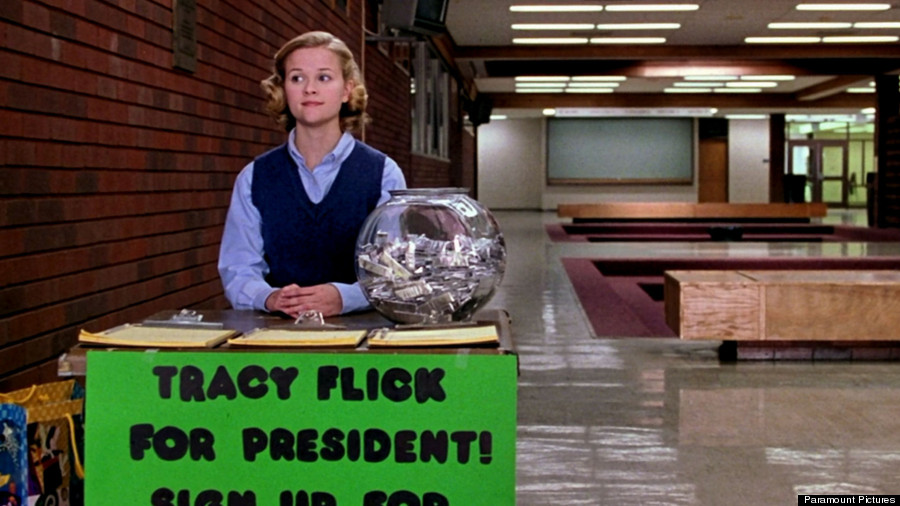
Election (1999)


Reese Witherspoon runs for office in high-school satire Election

Director: Alexander Payne

Cast: Matthew Broderick (Jim McAllister), Reese Witherspoon (Tracy Flick), Chris Klein (Paul Metzler), Jessica Campbell (Tammy Metzler), Phil Reeves (Principal Walt Hendricks), Molly Hagen (Diane McAllister), Colleen Camp (Judith Flick), Delaney Driscoll (Linda Novotny), Mark Harelik (Dave Novotny)

High school can be a great setting for films that want to comment on our adult world, because they are such exact microcosms for society. Few films get this idea as effectively as Alexander Payne’s simply superb Election.

In an Illinois high school, Jim McAllister (Matthew Broderick) is a civics teacher who loves his job but is increasingly annoyed by high-achieving student Tracy Flick (Reese Witherspoon), who he also unconsciously blames for the dismissal of his friend Dave for having an affair with her. Tracy is a ruthless careerist, the sort of girl whose hand is always first up in class, and she wants more than anything to win the election to school president. Feeling it his duty to stop Tracy, McAllister persuades football star Paul Metzler (Chris Klein) to run against her – and slowly unleashes a hurricane of ruthless campaigning and dirty tricks that leads to disaster.

This sharp and brilliant satirical comedy avoids jumping to any easy conclusions: instead it ruthlessly skewers everyone involved. Other films would make McAllister a crushed victim, broken down by events and Tracy’s unstoppable force of will. Instead, Payne turns him into an increasingly self-deluding whiner whose impending mid-life crisis becomes more and more evident. There is a particularly sly decision to cast Broderick as this weak-willed, selfish, self-proclaimed victim. Who cannot think about Ferris Bueller now all grown up into a klutzy loser, ineptly trying to initiate an affair with his wife’s best friend and mentally super-imposing Tracy’s head onto his wife’s body during a routine pregnancy-focused coupling?

In fact, watching the film it’s fascinating to see how much it charts McAllister’s disintegration into bitterness and self-justification. By any measureable standard, everything he does is fairly indefensible, while his annoyance with Tracy is rooted in his barely self-acknowledged sexual fascination with her. By the end of the film, as his cheery voiceover recounts his failures and personal and professional disasters with a self-deceiving optimism, you can’t help but begin to wonder how much this manic cheerfulness infected everything McAllister has told us from the start.

It’s things like this that make the film so much more than a straight political satire. Tracy Flick may be a ruthlessly ambitious young woman, who believes she has a nearly divine right to win – but she’s also the child of an equally ruthless woman (using Tracy to relive her own life), who has been sexually exploited by one of her teachers, whose smiles and enforced cheerfulness and drive hide a volcanic anger and insecurity. She could have been simply a smiling force of political ambition – but instead she feels like a real person diverting her own problems into a domineering careerism.

All of which adds a rich hinterland to the film and helps make it even funnier than it could have been. This might be the best political satire ever made. It’s certainly one of the funniest. There are zinger lines every few minutes. The satire is pin-sharp. Tracy is the qualified political hack that the normal people can’t relate to. Paul the Bush-like jock who can speak the language of the common man but manifestly lacks all qualifications. Tammy represents the anarchic frustration and alienation so many feel for the political process. The entire election is a shrewd, subtle skewering of every campaign in politics you’ve ever seen. Even the jobsworth geeks who run these things get it in the neck – “Larry, we’re not electing the fucking Pope” McAllister snaps (at the end of his tether) as he has the ludicrously elaborate election rules explained to him again.

But the film doesn’t forget the humanity: McAllister is a deluded man, but he feels real. He’s so inept at everything from seduction to deception it’s hard not to feel a little sorry for him. (As if to visualise his uselessness, he spends the last third of the film mostly with a massive swollen eye from a bee sting). Tracy has her own problems. Paul, far from being a heartless jock, is the most sensitive and caring person in the film (even if he is as dim as a failing lightbulb). Tammy’s a touching combination of good natured cynicism and obsessive, vengeful stalker.

Of course, it also helps that the acting is outstanding, the comic timing (both in acting and direction) perfect. Reese Witherspoon might never have been better than as the ruthless Tracy, a hurricane of hilarious repeated concepts from political biographies. Chris Klein is very sweet as Paul, a guy it’s impossible not to like. Jessica Campbell is perfect. Broderick holds the entire film together with a superb schleppy moral weakness. Payne’s direction brings all these elements together brilliantly – and has a way with the freeze frame and quick edit that provides a series of striking visual gags.

Election is a classic film – a brilliant satire on politics and elections, but also human nature itself. The characters have depth and reality that makes the jokes hit home with force. The use of voiceover narration from all the main players helps bring us even closer to them, and helps expose their inner personalities even more. I think this might be the best film Payne has made – Sideways and The Descendantsreceive the greater plaudits and attention, but this is his sharpest, wittiest film, and the one that is perhaps the most rewarding of repeat viewing. It’s simply a brilliant, small scale classic.

Walkabout (1971)


The blistering heat of the Australian wilderness is the setting for Roeg’s profound and troubling film

Director: Nicolas Roeg

Cast: Jenny Agutter (White girl), Luc Roeg (Brother), David Gulpilil (Aboriginal boy), John Mellion (Father)

Some films are hard to read. Others delve gently into ideas so complex and obscure that they need patient attention to follow. And other films are so elliptical and enigmatic they almost defy understanding. Walkabout is such a film. What is it about? You could almost say “everything and nothing”. 

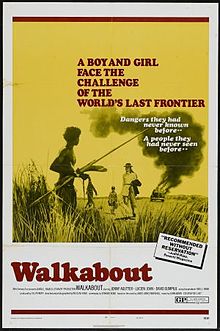
The surface story is strikingly simple. A 17-year-old girl (Jenny Agutter) and her much younger brother (Luc Roeg, the director’s son) are stranded in the Australian outback after their disturbed father first attempts to kill them (perhaps?) and then sets their car on fire and shoots himself. Quickly lost, with no idea how to get back to civilisation, they meet a young Aboriginal boy (David Gulpilil) on Walkabout. He saves them and agrees to guide them back to civilisation (perhaps?). But how far can cultural understanding go?

The story Roeg is telling underneath this bare-bones plot, though, is intriguing and troubling. Roeg uses the setting to explore the complex interrelationship between Western civilisation and the native civilisations it has displaced in many parts of the world. It’s also about ageing, sexual awakenings and the barriers (some of which we place ourselves) that prevent communication. This is all set in Roeg’s stunningly photographed, dreamlike representation of the Australian outback which is part surreal combination of cross-cuts and editing, part dark nature documentary.

It’s a haunting film where it’s never clear exactly what is happening, or what each of the characters is aiming to do ( “I don’t know” is a common refrain heard in the film). From the start, there is clearly something wrong with the Father in some way (with dark suggestions that he has too great an interest in his daughter’s burgeoning sexuality), but why does he turn partly homicidal (he puts little effort into pursuing his children) and then suicidal? The film gives no real clue.

This confusion about motives continues through the film. Does the Aboriginal boy really understand (or intend) the need to deliver the siblings back to civilisation? At one point he walks up a hill, is talked at by a white woman from a nearby settlement, then returns giving no indication he has discovered what they are searching for. Later he does the same after finding a road. Does he want to help? Or is he unwilling to let go of the spiritual closeness he can feel between the three of them?

Similarly, Agutter’s character undergoes a spiritual experience so profound, and yet so unsettling to her carefully conventional upbringing, she seems unable to process it. In the company of the Aboriginal boy we see her begin to relax and lose some of her carefully guarded inhibitions (this culminates in a famous naked swimming scene, which got the film in plenty of trouble in 2003 when the Age of Consent was raised to 18). But at the same time, she is never really able to communicate with the Aboriginal boy.

Her attempts to do so are almost laughably incompetent. While her younger brother develops a natural rapport using sign language, she is hopelessly wedded to verbal communication (she doesn’t even think to mime drinking when asking for water). In the outback, she clings far longer than the boy does to the accoutrements of civilisation in clothing and their radio. While she does relax, only at rare moments do we feel her humbled by the land around her. Their first moments together can be seen in the video.

Only for the briefest of brief moments, in an abandoned hut, do they meet briefly as equals – a silent moment of eyes meeting and a brief understanding of shared affection. It is shattered by her complete rejection shortly afterwards of the Aboriginal boy’s courtship dance – scared and confused (as much by her own obvious interest earlier), she pointedly ignores the dance, leaving the boy outside all night. The next day she and her brother are dressed in their school uniforms, as if nothing has happened.

Roeg’s final nihilistic observations – we may at points come closer together as a species, but we will only rarely ever be able to overcome the barriers we have created between ourselves. We may develop an immediate bond with people in extreme circumstances, but the closer we get to “normality” the quicker we reject those bonds and revert back to our ingrained behaviours.

This is all fascinating and deeply engrossing stuff – and it’s the sort of material you can reflect on over and over again. Roeg mixes this in with plenty of dark comparisons between our soulless modern world and the “savage” world of the Aboriginals – a comparison never flattering to the modern world. Roeg uses intercutting to point these up, particularly between the hunting of the Aboriginal boy, his respectful killing of a kangaroo, and our own mechanical slaughter and processing of meat. Now to be honest these sort of cutbacks are thuddingly dated and heavy-handed – the sort of holier-than-thou opinion making that quickly gets on the nerves.

A few of these sequences do work well. Near the end, the Aboriginal boy hunts when he is nearly crushed by a truck carrying two modern hunters. The truck skids to a halt and the hunters gun down several animals (the rather tiresome editing uses a series of still shots, crash zooms and distorted sounds) while the Aborigine looks on with confusion and disdain. In another sequence, the white woman the Aborigine met heads back to a settlement, where white men seem to be exploiting Aboriginal labour. She sits sadly on the bed staring into the distance. Moments like this, despite the often dated editorial tricks, do carry a real sense of the divide between two cultures.

Other sections of the film make similar points about the wildness of both the outback and the city world, but with increasingly dated and tired visual tricks – do we really need an umpteenth shot of maggots eating a corpse? Or more quiet pans along cold 1970s commercial surfaces? This is a shame, as the photography is beautiful. Roeg has an eye for a brilliant image – his shots of the Australian outback are some of the best use of sun and desert on film since Lawrence of Arabia. The film’s shots of the desert are simply stunning, with Roeg’s hypnotic series of images guaranteed to not only haunt your mind, but also to show an angle on the world you won’t have seen before.

Walkabout may be slightly dated in some of its production and editing techniques, but it’s a deeply thoughtful, unsettling work that asks profound and difficult questions about civilisation, life and death – the sort of film that rewards revisiting and reinterpretation. While many parts of it clunk in places, or have a distinct 1970s flashiness in their filmmaking, when it moves away from these rather clumsy ideas to deal with concepts that are more spiritual and intriguing, it’s a fascinating film.

The Cider House Rules (1999)


Michael Caine and Tobey Maguire deal with moral dilemmas in this handsome adaptation of John Irving’s Dickensian novel

Director: Lasse Hallström

Cast: Tobey Maguire (Homer Wells), Michael Caine (Dr. Wilbur Larch), Charlize Theron (Candy Kendall), Paul Rudd (Lt. Wally Worthington), Delroy Lindo (Arthur Rose), Erykah Badu (Rose Rose), Heavy D (Peaches), K. Todd Freeman (Muddy), Kieran Culkin (Buster), Jane Alexander (Nurse Edna), Kathy Baker (Nurse Angela), Kate Nelligan (Olive Worthington), J.K. Simmons (Ray Kendall) 

The Cider House Rules is the sort of well-constructed literary adaptation that Hollywood excels at producing: a well-crafted script (Irving adapted his own novel extremely well), juggling serious affairs without hectoring the audience, handsomely mounted, with a Dickensian style and a cast of heavyweight actors delivering performances that speak of their investment in the film.

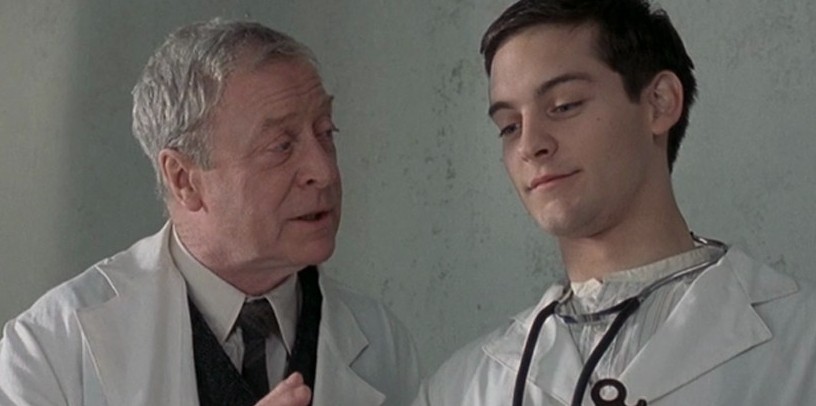
In a Maine orphanage in the 1940s, Homer Wells (Tobey Maguire) is raised by Dr Wilbur Larch (Michael Caine) as a surrogate son. Larch is a domineering autocrat with a passionate love for his charges, whose humanitarian instincts lead him to perform illegal abortions. Troubled by this – and feeling pressured into succeeding Larch’s as director – Homer leaves with a young woman (Charlize Theron) and her fiancée (Paul Rudd) after she visits for an abortion. Working as an apple picker in their orchard, under Mr Rose (Delroy Lindo), Homer learns important lessons above love and duty.

There are many similar films that feel like dull awards-bait, and the fact that this one avoids that is a major point in its favour. It’s very easy with material like this – cute orphans and tear-jerking speeches – to feel Cider House is a manipulative film (and I guess in a way it is) but it’s put together with such commitment and sincerity I found it genuinely moving. Hallström’s warm and beautifully paced direction creates a marvellous coming-of-age tale with characters whose flaws can be as deep as their warmth is vibrant.

The film also manages to move beyond its ‘coming-of-age’ roots with intelligent (but not too heavy-handed) mulling on the nature of “rules” – both those imposed on us and those we impose on others. Dr Larch (a magnetic performance by Oscar-winner Michael Caine) is a maverick, disregarding the abortion laws as he believes it is better he does abortions rather than someone untrained; he is also perfectly willing to impose his own rules on Homer as testaments to be followed without question. Similarly the “Cider House Rules” written on the wall of the apple workers’ lodgings are rejected outright by the working gang for their own unspoken code of conduct, no more effective than the system it replaces. All the characters are forced to draft their own rules (or principles) they can live with, matching their circumstances and actions.

The film also looks gently at the conflict between our desires and our duties, with Homer and Candy both yearning for freedom from their natural inclinations to have something to serve. This is presented as a struggle without a natural “right or wrong”, even if the apple orchard is a loose Garden of Eden, into which evil is admitted with tragic (and life-changing) consequences. A small criticism would be that the charismatic warmth of Caine’s performance and the family atmosphere of the orphanage are so endearing that it does unbalance the dilemma Homer eventually faces – instead of the audience feeling as torn as Homer about whether he should stay or return, most audience members I think would want him to return to the orphanage forthwith!

Tobey Maguire is so perfectly cast as the naïve in some ways, wordly wise in others, old-boy-young-man that he effectively reprised Homer Wells as Peter Parker a few years later. His sweet face –uncomplicated innocence and charm are in every twitch of his smile – carries the film, and his easy-going desire for a simple life makes perfect sense of the character’s rebellion against Larch’s benevolent dictation. Equally good for me though is Theron as Candy. She is a wonderfully expressive performer: midway through the film she is caught off-guard by an overlong hug from Homer, and a series of conflicted emotions from shock, to guilt, to attraction play across her face.

There is hardly a weak performance in the film, with Hallström drawing excellent work from the young orphans. Amongst the sprawling, Dickensian feeling cast, Caine is marvellous as the part dictator, part humanitarian Larch making a larger-than-life character feel real and grounded. Lindo captures the pride mixed with arrogance of Mr Rose. There are plenty of other excellent performances, not least from Baker and Alexander as two contrasting nurses in the orphanage.

I almost feel slightly guilty for the impact Cider House Rules had on me. In many ways it’s exactly the sort of safe, middle-of-the-road “serious” drama that seems designed to attract the notice of Oscar voters. But it’s told with a great deal of skill and dedication, and delivers so many emotional moments with warmth and feeling, I found myself genuinely moved by it. In fact I felt a bit teary at least twice. This is closely linked to some excellent performances – and a wonderful swelling musical score by Rachel Portman – but despite being the sort of middle brow Hollywood film it’s fashionable (and easy) to attack, I thought this was engaging, moving and thought provoking from start to finish.

Fifty Shades of Grey (2015)


Dakota Johnson and Jamie Dornan struggle with their obvious discomfort in this ghastly, hellish, joyless film

Director: Sam Taylor-Johnson

Cast: Dakota Johnson (Anastasia Steele), Jamie Dornan (Christian Grey), Eloise Mumford (Kate Kavanagh), Jennifer Ehle (Carla Wilks), Marcia Gay Harden (Dr. Grace Trevelyan-Grey)

For some reason, about ten years ago everyone got wildly turned on by reading a series of books ripped off from Twilight, which followed the adventures of a timid student and her induction into the world of sexual spanking by a controlling billionaire. It was like tepid porn you could read in the open and talk about in the office. The entire genre of “mom porn” (now to be spotted in every supermarket book section) was born.

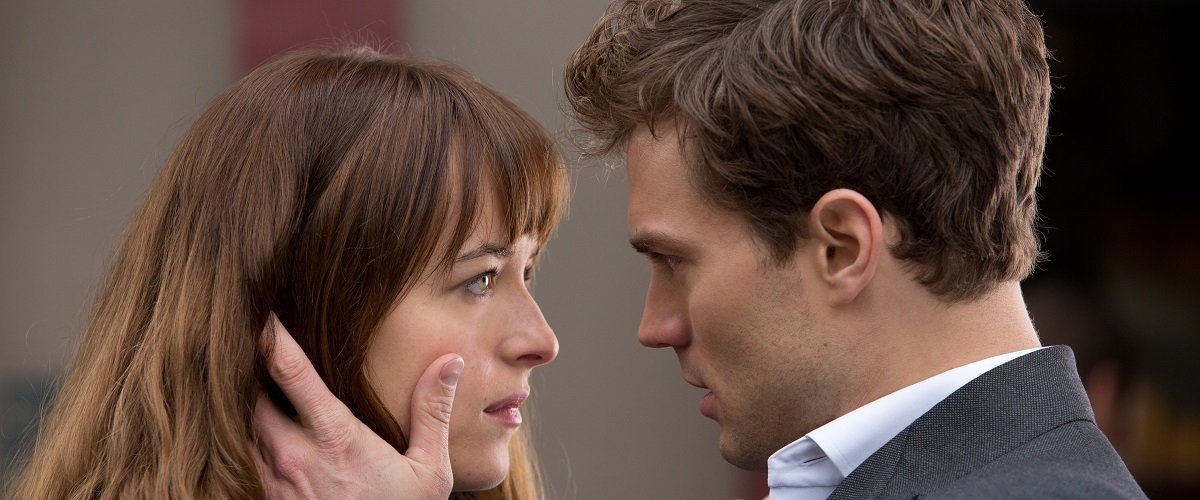
Anyway, it came at last (so to speak): the film of the book. With it came EL James’ atrocious dialogue (full disclosure here: I’ve not read the book, but I looked up some quotes and read the synopsis on Wikipedia, so I reckon that’s probably better than reading it), paper thin characters and event-less action. Along, of course, with the sex. Anastasia Steele (Dakota Johnson) is a young student who encounters Christian Grey (Jamie Dornan), a mysterious billionaire. He likes spanking. She’s never done anything down there (“You’re a virgin”, “yes”, “but you’ve done other stuff?” “no” “oh my god” – goes one classic exchange between the two). Bless, she doesn’t even know what a butt-plug is. I guess she will find out.

I’ll be blunt. This is possibly one of the worst, most offensive, horrible films I’ve ever seen. I’m actually rather angry I watched it. Nearly everything about it stinks: the acting and film-making craft are as vile, tasteless and revolting as the ideas behind it. First and foremost, Jamie Dornan honestly looks like he vomited with shame after completing every scene. Dakota Johnson does a reasonable job with a character who is as well-developed as the stains on Grey’s bedding, but since she is merely required to look alternately sad, timid or (god help us) “aroused” (expressions which bear a distinct resemblance to each other, mostly involving biting her lip and opening her eyes really wide beneath her “frumpy geek girl” fringe), she hardly needed to be much more than competent to bring this sad excuse for a protagonist to life. Ehle and Harden hopefully picked up big paycheques for selling their talents to this dreck.

As a relationship film, this is awful. Imagine Pretty Woman, but if Richard Gere could only get it up by smacking Julia Roberts in the mouth. It’s that charming. Factor in if their sex scenes had been shot with all the creativity of high-end porn, with the actors unconvincingly panting and sighing throughout and you get an idea of how sexy this film is.

The original author of the novels, EL James, had unprecedented creative control, and the tension between her demands for the film and the film-makers’ ideas is evident throughout. The film is a real hotch-potch: James had rejected one script by Patrick Marber (of Closer fame) for deviating too strongly from the book. That script presumably attracted Taylor-Johnson’s involvement as director – she wanted, it seemed, to make a serious relationship drama. EL James wanted an illustrated edition of her book. While I respect James’ insistence to get what she wrote on screen, I would also say she’s not a film-maker, and has no idea about what works on screen. What ends up here is a compromised mess – about half a Taylor-Johnson/Marber style “serious exploration of an unsuitable relationship” film, half James’ soft-porn spankathon shit.

The sex is one of the main problems with this film – there is nothing remotely enjoyable, titillating or even amusing about the joyless couplings in this film. Jamie Dornan looks like he’d rather be literally anywhere else during the sequences, a constant expression of embarrassment behind his eyes. The poor guy looks like he’s desperate to take Anastasia home to meet his mother. Both the sex and the spanking in this film are pretty tame, but he sets about both with a grim eyed determination, as if he was already thinking of getting back to his trailer and phoning his real life wife and kids. In fact, the film would make a perfect cold bath – I simply can’t imagine ever wanting to have sex again watching this film, let alone indulge in any of the “erotic” games it features, which it manages to make look as enticing as root canal.

The big thing missing from this film is any fun whatsoever. A large slice of the blame for this must go to Taylor-Johnson. I suspect she wanted to make a film that was a serious examination of relationships, and the unexpected dangers desire can lead us into. However, she was pushing against the source material (and the all-powerful author), and her efforts were always going to be doomed. This is taken from a book that is, to put it bluntly, a piece of sub-Cinderellesque shit with extra spanking. What it really needed was not an artistic approach, but more of the camp “I know this is rubbish, just enjoy it” direction – in other words, it needed an efficient (even knowing) hack director, not an artist at the helm.

By trying to look at the dynamics of power relationships in a serious way at least part of the time, Taylor-Johnson (assisted by Dornan’s fantastically awkward performance) manages to highlight what a humourless, manipulative, controlling wanker Christian Grey is. By any objective measures, he is clearly a controlling and abusive boyfriend. Filmed entirely seriously, with moody music in the background half the time and none of book-Anastasia’s laughably cheesy descriptions of the latest antics of her “inner goddess” (usually to be found dancing the hula or turning cartwheels), this film throws into sharp relief what is actually happening in this story: an experienced, controlling man finds a naïve, inexperienced younger woman and coerces her into servicing his desires. The “negotiation” talk is one of the most uncomfortable examples of this: “we can negotiate” says the man who holds all the cards, to the girl who doesn’t even know what she can or should ask for. 

Throw in the fact that he is multi-billionaire who gets his rocks off by fucking his girlfriends the same way he (presumably) fucks his business rivals, only makes him seem even more of an unredeemable asshole. His ostentatious gifts of new cars, his controlling forbidding of Anastasia to drink on her nights out with friends, his insistence on coming to remove her from one of these nights out when she’s only met him twice and has not asked for his help or his presence, his demand for her to sign a contract, his following her to her parents’, his not taking no for an answer…  Need I go on? The more the film focuses on these darker sides of the relationship, the more you look at Grey less as a messed up Prince Charming, and more like an abusive predator. 

Grey is also clearly purchasing his new part-time live-in mistress like a piece of meat, and he treats her like a piece of property throughout. Tragically (and I’m not sure the film realises this) Anastasia is so sweet and vulnerable she seems to think that she just has to accept all this spanking and rope game malarkey as just part and parcel of having a boyfriend (“Do we still get to go to the theatre” she rather sadly asks when enquiring into the new rules of their relationship). I don’t get overwhelmed with sympathy with her though: every hesitancy is overcome by a new extravagant display of Grey’s wealth. The film does build towards her walking away – but she hardly does this with any decisiveness. Despite the film’s best efforts, she in no way comes across as an equal partner or a strong character. 

So the film’s serious tone is a major problem in that sense. It’s also a major problem as Taylor-Johnson just ends up turning this into a totally dull, lifeless film. Almost nothing happens in this film. Trivial events and dull conversations are interrupted occasionally by the actors rutting with all the passion of two people eating a microwave meal. The film’s sex scenes are, incidentally, totally unbalanced: throughout his session in the red room, we see endless shots of Johnson’s assets but Dornan politely keeps his jeans on almost throughout. The camera’s perfunctory, joyless efforts to capture Johnson’s nipples in every scene it can (never miss a chance to edge them in at the corner of a shot!) just builds this feeling of no-one enjoying their work, but shovelling onto the screen what the readers might want so they can all go home.

The only way this fucking piece of garbage could ever have really worked on the screen is if someone had basically accepted it for what it was: a steaming pile of manure written to titillate those scared of searching the Internet for real porn. If it had been treated like the ghastly, campy piece of crap it was, then the film itself could have been the ultimate “bad” film. But Taylor-Johnson’s attempt to create a serious relationship drama crashes up against EL James’ dire, pig-eared prose and depthless characters, and instead creates a film both tedious in the extreme and offensive. 

Honestly, not even as a camp watch will this work – it is dull, horrible and awful. It thinks it’s a dark Cinderella tale. It’s just a dark story about a horrible man. Avoid, avoid, avoid.

An Education (2009)


First love: Never as smooth as you think it will be

Director: Lone Scherfig

Cast: Carey Mulligan (Jenny Mellor), Peter Sarsgaard (David Goldman), Dominic Cooper (Danny), Rosamund Pike (Helen), Alfred Molina (Jack Mellor), Cara Seymour (Marjorie Mellor), Emma Thompson (Miss Walters), Olivia Williams (Miss Stubbs), Sally Hawkins (Sarah), Ellie Kendrick (Tina)

The education in question is the first sexual relationship of a girl who is 16 going on 17. Jenny (Carey Mulligan) is a schoolgirl and prospective Oxford candidate who finds herself winning the attention of charming older man David (Peter Sarsgaard). Jenny is swept off her feet by the world of classy bars, art and culture David introduces her to and begins to lose interest in her literal education: if all education can do is turn women into either lawyers’ wives or teachers what is the point?

Strangely for a film based on a man approaching middle-age taking advantage of a naïve and excited teenager, it’s strangely cosy and charming, with the whiff of “safe” family viewing. Nothing wrong with that of course, but the whole confection is just a little too slight, a little too well packaged, a little too carefully and thoughtfully put together to really leave a lasting impression. Instead it’s an enjoyable enough 90 minutes which doesn’t really have anything that stays with you.

What it does have going for it above all is the marvellous lead performance from Carey Mulligan. At the time best known for appearing in the Blink episode of Doctor Who, Mulligan cements her early promise by demonstrating what a charismatic and vibrant performer she is. Jenny delights in the ease with which David deceives everyone without it ever occurring to her that he might be lying to her, and this teenage arrogance could easily be smackably annoying – but Mulligan makes her deeply engaging and loveable. You want to protect her from making an irrevocable decision that will ruin her life at 16 (sort of the opposite to Bella in Twilight). But Mulligan’s endearingly engaging performance sweeps the audience up into Jenny’s fascination with the exciting life David seems to be offering, and makes you understand why she believes it to be a viable option. She’s a radiant centre to the film and it’s almost impossible to imagine it working at all without her.

It is in fact very well-acted throughout. Sarsgaard underplays the role, suggesting the underlying shallowness and weakness to David which is far clearer to the audience than the characters. The supporting cast are knock-outs: Rosamund Pike is hilarious as a sweet airhead, Alfred Molina embodies the gullibility of the striving middle-classes mixed with great reserves of unspoken love and affection, Olivia Williams is terrific in an underwritten part as Jenny’s concerned teacher.

It’s strange watching the film to see how it romanticizes the sort of behaviour that, if we encountered it today, would be denounced as grooming at best, paedophilia at worst. In fact, the film soft-peddles a lot of the unpleasantness of its characters: David and Danny, it is clear, are conmen and swindlers, though I suspect the film wants us to think of them more as charming rogues. I suppose it’s the impact of seeing the story from Jenny’s perspective, but some more outside commentary would perhaps have been interesting: it also might have been more interesting to see Jenny actually having to deal with the moral consequences of some of the actions that happen around her. 

This is a slight affair, almost a shaggy dog story. There are many more things it could have explored (the swindling career of David, the role of women in the 1960s, the changing perceptions of “blue stockings” and their career options) but instead it settles for being a charming period piece. It makes no secret of the fact that, deep down, we are not meant to trust David and nothing in the plot ever really surprises you. It’s a gentle amble through an ill-advised teenage romance. But, despite all that, it’s very well acted and Carey Mulligan proves she was set to become a star.