Category: Coming of Age film

Goodbye Mr Chips (1939)

Robert Donat is superb (and Oscar winning) as an (eventually) beloved teacher in Goodbye Mr Chips

Director: Sam Wood

Cast: Robert Donat (Mr Chipping), Greer Garson (Katherine), Lyn Harding (Dr John Hamilton), Paul Henreid (Max Staeffel), Terry Kilburn (John Colley/Peter Colley I/Peter Colley II/Peter Colley III), John Mills (Adult Peter Colley), Scott Sunderland (Sir John Colley)

Goodbye Mr Chips is the sort of film that feels ripe for spoofing. The sort of idealised stuff-upper lip, Tom Brown’s Schooldays look at the past that should have you spluttering and chuckling. But it’s done with such warmth, such genuine emotion and tenderness, that instead you can’t help but feel yourself welling up while watching it. I certainly did (although I was watching it at half seven on a Sunday morning…)

The film follows the fortunes of Mr Chipping (Robert Donat) from his first joining the school in 1870 as a naïve young Classics teacher, struggling to exert authority over the children, to a beloved elder statesmen of the school in 1933. Along the way, he deals with a host of personal and worldly trials and tribulations, falls in love with a young suffragette Katherine (Greer Garson) who recognises his tender soul, and eventually helps the school through the national trauma of World War I.

It’s a quite beautifully done piece of old fashioned film-making, crammed with those moments of suppressed emotion and unspoken depths that get me every time. Maybe it’s something peculiarly English, but nothing can touch our repressed souls than seeing a kindred spirit struggle to keep his emotions locked down. Chipping loves his job, he loves the children he teaches and he will work tirelessly to give them the best start in life he can. The schoolchildren across 60 years are his children – can he express any of this before his deathbed? Of course not, he’s British.

It’s a film that celebrates the strength of that indomitable British characteristic of keeping on, of struggling forward, of keeping traditions and decency going. It’s a strongly conservative message, I’ll give you that, but it’s carried by such nobility and morality that it stresses the positives of this patriarchal affection. And Wood’s direction avoids over-sentimentality at nearly every point, helped by a wonderfully constructed script by Journey’s End playwright RC Sheriff (among others).

And Chipping himself is such a gentle, unassuming and kindly character – a decent, compassionate man who does everything he can to help others – that the film never feels forced. Indeed, it gives many scenes a real emotion. The courtship between Chipping and Katherine is all the more affecting for understanding how unnatural and difficult it is for the shy and reserved Chipping to open himself up to love. It’s also deeply sweet and endearing to see how Katherine is able to see past his awkwardness and bashful quietness to understand the caring, deeply humane person below the surface, and how hard she works to help this better man flourish.

This humanity is behind everything that Chipping does in the film: from the start it’s clear he cares deeply for the pupils at the school, even if he struggles to build a connection. It’s there on his first day where he tries – ineffectually – to comfort a new boy. At first he is led to believe domineering discipline is needed to keep his authority. What marriage – and Katherine’s love – teaches him is that he can allow people to see his natural warmth, and that personal affection makes discipline all the easier and natural. And makes him a better teacher.

It’s that romantic subplot between Katherine and Chipping that really gets the cockles warmed at the centre of the film. Beautifully played, with sensitivity and tenderness, by both Donat and Garson this is an extremely sweet relationship, where Katherine has to make most of the running to get round Chip’s shyness. You can enjoy – as Chip’s best friend Max Staefel (a lovely performance by Paul Henried) does – the fact that his colleagues expect Katherine to be some sort of aged harridan rather than a beautiful young woman. And it’s clear to see why the boys become devoted to someone warm, friendly and charming like Katherine. In Greer Garson’s first major role, she is superb – a character you feel as strongly about as Chips does, and feel her loss as deeply. 

The death scene – and its reaction – nails everything perfect about Robert Donat’s Oscar-winning performance. Chipping’s shell-shocked, robotic return to work is a brilliant demonstration of his trauma, his determination to not let it affect his work, and (in his quiet, middle-distance staring) his utter inability to get over the pain of losing the most important person in his life. Donat’s performance is superb throughout, convincingly ageing over 60 years during the film, but never losing that consistent sense of Chips being a man who has to learn how to find the balance between the warmer side of his character and the needs of being in a position of authority.

It’s a balance he finds wonderfully, by slowly allowing his humour to be seen by the boys – winning him a reputation as a sort of beloved eccentric, and surrogate father to hundreds of boys. This comes together beautifully as he guides the school through the horror of World War I. The film captures perfectly the shock and horror – under that English reserve – of so many dying for so little, of entire generations of former pupils being lost. Donat’s speech in the church near the war’s end seems to capture these feelings of reeling at the senseless violence.

But what the film does so well is not to make these moments sickly, but play them straight and let the emotions of these moments speak to themselves. We don’t need sentimental camera tricks or swooping music, or zooms into tear laden faces. Robert Donat’s performance brilliantly plays into this – he’s an absolute pillar of gentle reserve and kindness and every moment (he’s in every scene) rings absolutely true. It’s a beautiful, gentle, star turn at the heart of a film that slowly becomes deeply moving.

Parenthood (1989)

Steve Martin struggles with the demands of fatherhood, in the rather sweet Parenthood

Director: Ron Howard

Cast: Steve Martin (Gil Buckman), Tom Hulce (Larry Buckman), Harley Kozak (Susan Huffner), Jason Robards (Frank Buckman), Rick Moranis (Nathan Huffner), Martha Plimpton (Julie Buckman), Keanu Reeves (Tod Higgins), Eileen Ryan (Marilyn Buckman), Helen Shaw (Grandma), Mary Steenburgen (Karen Buckman), Dianne Wiest (Helen Buckman), Joaquin Phoenix (Garry Buckman-Lampkin)

If there is one thing everyone knows, it’s that families can be complex. That’s why good films about family life resonate so well – everyone (and I mean everyone) can find something in it that echoes with their own experiences. Parenthood is very good at this sort of thing, an entertaining but also tender and rather sweet comedy-drama about an expansive family and their many triumphs and problems.

Frank Buckman (Jason Robards) is the patriarch, a distant father with four children all now raising families of their own. Gil (Steve Martin), married to Karen (Mary Steenburgen), desperately wants to be the perfect dad he feels his own never was, but is struggling with the increasingly apparent emotional problems in his oldest son, 12-year-old Kevin. Helen (Dianne Wiest) is divorced, her ex-husband wants nothing to do with their children. Her son Garry (Joaquin Phoenix) is a socially withdrawn teenager, while her elder daughter Julie (Martha Plimpton) isn’t interested in education only in her relationship with gentle but useless Tod (Keanu Reeves). Susan (Harley Kozak) is married to Nathan (Rick Moranis) who is obsessed with turning their young daughter into a child prodigy. Frank’s favourite son is the feckless Larry (Tom Hulce), a wastrel sponger who turns up after years with an unexpected young son, Cool, in tow, in whom he shows little interest.

You can see just in that quick summary you’ve got a huge array of issues for the film to tackle, all of which it manages to do with sweetness, humour and also a certain amount of emotional truth. The film manages the ups and downs, the flat-out comedy and the heartbreak with real confidence, meaning you are moved smoothly from broad laughs to genuine “ahs” of sweetness. 

With the exception of the shallow and selfish Larry (every family has that black sheep), each of the characters has moments to demonstrate their depth and truth, showing sides of themselves you wouldn’t expect. In a large-cast film that delivers in a tight, well-structured two hours, that’s quite an accomplishment to be honest.

Ron Howard directs all this with fabulous control, a reminder that he’s actually quite a skilled director of comedy, with a good sense of timing and pacing. He’s also a superb director of actors, and there isn’t a weak link in the whole cast, from the youngest child actor to the most experienced Broadway veteran. 

Steve Martin is fabulous as the centre of the family saga, the dad desperate to be the best dad he can be, but who overly worries and obsesses about every detail to try and be as perfect as possible. Martin is ace at this sort of stuff, this gentle comedy grounded in reality, and totally understands how to make a character feel real and grounded. Combine that with his natural comic chops and willingness to embrace the absurd at moments – showcased here in a sequence where he desperately has to cover for a missing entertainer at his son’s birthday party – and he supplies many of the film’s stand out moments. 

Dianne Wiest (Oscar nominated) also manages a difficult balancing act in perhaps the film’s most interesting set of plotlines. Helen’s family covers the full range of teenage trauma, from a loving son who seems to turn overnight into a monosyllabic stranger to a daughter who rejects all her mother’s hopes for the future in order to spend time with a boy she doesn’t approve of. Wiest is not only extremely funny in some of her responses to these problems, but also heartrendingly real in her pain, confusion and frustration at not being able to help her children (or herself) as much as she wants, as well as the clear feeling that her life is somehow a failure compared to her two elder siblings. 

What’s also beautiful about the film is that none of these events or storylines work themselves out quite as you might expect. Young Garry (played excellently by an impossibly young Joaquin Phoenix, here billed as Leaf) has clear reasons for his feelings and is dealing with complete lack of interest his father shows in his life. Julie (Martha Plimpton, very good) isn’t the layabout teen you might expect, and has genuine feelings for Tod – who, under Keanu Reeves’ sweet, slacker style, is a man of far greater emotional depth than might be expected.

The other plotlines of the film are secondary to these, but are still wonderfully played and put together. The Moranis/Kozak plotline of “I’m an ignored wife who wants another baby” v “I’m trying to turn our daughter into a genius” is a bit more played for laughs, but the two actors know their stuff and deliver. Tom Hulce channels Mozart as the irredeemable Larry, but works very well with Jason Robards, who expertly portrays a man aware he was not the perfect dad. Again these scenes develop in ways you might not expect – particularly as regards Robard’s character.

The final sequence of the film, showing how the events and lessons of the film have changed the family but brought them together in different ways, and how they have changed and learned, should feel manipulative and pat, but because the whole film is done with generosity and warmth it actually brings a small tear to the eye with its sweetness and warmth. Parenthood isn’t perhaps remembered quite as well as it should be – but it’s a film that never fails to deliver and always leaves you feeling better about yourself. And you can’t ask more than that.

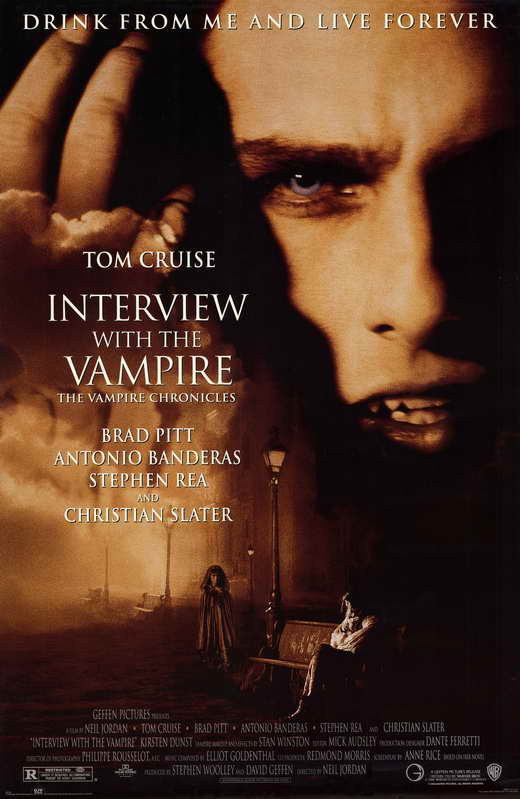
Interview with the Vampire (1994)

Tom Cruise and Brad Pitt bite and flirt in high-minded, but rather camp, Interview with the Vampire

Director: Neil Jordan

Cast: Tom Cruise (Lestat de Lioncourt), Brad Pitt (Louis de Pointe du Lac), Christian Slater (Daniel Molloy), Kirsten Dunst (Claudia), Antonio Banderas (Armand), Stephen Rea (Santiago), Domiziana Giordano (Madeleine), Thandie Newton (Yvette)

Why do vampires constantly keep rearing their ugly heads in films? What is it about them that we seem to find so addictive? Interview with the Vampire is a vampire film that takes a slightly different tone and tries to explore what it might actually be like to live the life of a vampire, the actual psychological impact it might have. It’s just a shame the film also can’t escape the temptation to fall back on the high camp the genre often gets trapped in.

Anyway, the film opens in modern day San Francisco, with young reporter Daniel Molloy (Christian Slater) interviewing a man named Louis (Brad Pitt) who claims to be an ageless vampire from the late 18th century. Louis tells his life story: turned to a vampire by the hedonistic Lestat (Tom Cruise) when he was consumed with grief at the loss of his wife and child. Louis struggles with the morality of taking life, unlike Lestat’s joy in killing. Later they turn a dying girl Claudia (Kirsten Dunst), who over the next 30 years matures psychologically but remains in the body of a 12-year-old. Louis and Claudia slowly begin to fear Lestat’s control and struggle to escape from his shadow.

Interview with the Vampire wants, desperately, to be an intellectual vampire film. A sort of Freudian exploration of the impact of suddenly becoming a creature that can never see daylight, sleeps in a coffin and has an insatiable hunger for human blood. Does it work? Well sort of, I guess. But the problem is most of the depression is carried by Brad Pitt’s Louis and, to put it frankly (as Lestat observes) he’s a whiner. His very human struggle with taking life and his sadness at the loss of his humanity should be engaging, but Louis is not an interesting character. He just mopes around. Rather than being sparked by his predicament, he’s just a boring and frustrating character.

Maybe this is partly Pitt’s performance as well – too withdrawn, too morose. Apparently Pitt hated making the movie (from the long hours of make-up, to the endless night shoots, to the boring character) and it shows in the movie. Pitt just can’t get engaged in the role, his matinee idol looks and rather dull speaking voice combining to make him look like a worse actor than he is. And then Louis keeps banging on and on about how depressed he is. In fact he bangs on so much you start to wonder why everyone – from Tom Cruise’s crazed Lestat, to Antonio Banderas’ ageless vampire – is so obsessed with him.

But then maybe it’s Louis’ looks eh? The film does wallow in the sensuality of sucking on people’s necks, and half the vampires in this seem to be campily metro-sexual. Cruise gives a surprisingly out-there performance of high camp hedonism and preening selfishness, so far out of his expected range that (while not brilliant) it reminds you he is a better actor than he gets credit for. Lestat clearly has a huge crush for Louis, and the orgasmic converting of Louis into a vampire leaves little to the imagination. Later Antonio Banderas as an effeminate, ethereal older vampire also seems to have a huge crush on Louis. The many vampire victims seem to succumb to erotic joy when they are bitten (at least until they die). Sex flows over the whole film, without the film itself ever actually being sexy, and the vampires are all pretty indiscriminate in their tastes.

Unfortunately this all too often tips into pure high camp. Stephen Rea, as a sort of vampire acrobat actor, gives a performance of superb silliness. Banderas lisps and wafts through the picture like a bizarre puff of perfume. Neil Jordan frequently explores the frame with ridiculous overblown action – no less than four times in the picture we watch scenes of operatic fire starting (often with vampires writhing in flamey pain) that suggest Jordan spent too long watching the fire sequence in Gone with the Wind before he made the picture. All the actors (aside from Pitt who barely shows up) dial it up to eleven with their performances, and the long-haired, long finger-nailed vampire representations here are like some sort of odd Halloween dressing up box.

Jordan’s film often trades dark, campy humour in favour of horror or thrills. There are no real jumps or scares in the picture, and the buckets of blood thrown around are more ridiculous than they are disgusting. In fact watching the film, I feel Jordan may have been torn between wanting to do something a little different (a sad vampire film about depression) and having to deliver the blood, guts and gore the genre fans wanted. Certainly, he fails to mine any real poetry from Anne Rice’s source material (although she loved the film, so what do I know) and for all the musings on the tragedies of living a life in the shadow you never really feel that moved by it.

There are however good things. Technically the film is very good. Cruise is surprisingly fun as the colourful Lestat. The film gets stolen by Kirsten Dunst as the physically young, mentally older Claudia, who struggles to find the balance between her teenage blood lust and her later disgust and fury at being trapped forever in the body of a child. But there isn’t enough good stuff among the tosh. Interview with the Vampire is an odd, actually rather bad film that is struggling to be a good one. It has a cast of 1990s heartthrobs who mostly enjoy dressing up and playing at their campy side. But it fails to really be engaging or make someone care about the story it is trying to tell.

Alfie (1966)


Michael Caine excels as amoral cockney moralist lothario Alfie

Director: Lewis Gilbert

Cast: Michael Caine (Alfie), Shelley Winters (Ruby), Millicent Martin (Siddie), Julia Foster (Gilda), Jane Asher (Annie), Shirley Anne Field (Carla), Vivien Merchant (Lily), Eleanor Bron (Doctor), Denholm Elliott (Abortionist), Alfie Bass (Harry), Murray Melvin (Nat)

Is there a more “swinging Sixties” film than Alfie – the story of a cockney wideboy interested only in “birds” and having a good time? On the surface it captures the attitude of the 1960s, with free love, thumbing your nose at authority, and having the sort of fun the wartime generation frowned on. But it’s a more interesting film than this, which criticises the emptiness of the 1960s by showing us Alfie’s selfishness and loneliness. Sure he has a good time now and again – but would anyone really want to live like this forever?

Alfie (Michael Caine) is a handsome chauffeur with a never-ending stream of affairs, commitment constantly avoided. The film follows these entanglements, starting with his needy girlfriend Gilda (Julia Foster), the mother of his child, whom he constantly cheats on. When Gilda finally leaves him – and Alfie loses touch with the son he has become fond of – a medical condition ends up with him in a convalescent home, where his affairs include the wife of a fellow patient, Lily (Vivien Merchant). Later relationships with a young hitchhiker (Jane Asher) and a rich American woman (Shelley Winters) similarly lead to disappointment.

The main thing that makes Alfie last (possibly the only thing) is Michael Caine’s sublime performance. Caine is on screen the whole time, and the film is spotted throughout with his casual direct-to-camera addresses. Caine’s charm and likeability work perfectly for this device, winning the audience over. But Caine never falls for Alfie – even if many audience members clearly did. Caine’s constantly demonstrates Alfie’s hypocrisy, shallowness, meanness and selfishness. Sure he recounts his actions with wit, but most of these actions are extremely shitty. But right from the start there is a charismatic, lothario swagger to him – and a cheeky charm – that makes you like him.

But his general shittiness is more obvious today than back in the 1960s. Then the amount of sex probably shocked viewers the most. Today it’s Alfie’s inability in to refer to women as anything but “it”, like some smooth Richard Keys. His attitude to women is appalling – he describes Jane Asher’s hitchhiker like some sort of floor-cleaning, bed-sharing car. Alfie avoids any sort of emotional connection at all with his conquests, and the film makes clear that this has left him empty and lonely, feelings he buries deep down.

In fact, the film is most telling at the moments when Alfie doesn’t turn to us with that confident grin and place a self-serving spin on what just happened. Seeing his son being warmly embraced by Gilda’s new husband (at the christening of their new child), Alfie can only skulk quietly at the back of the church – as scared to meet our eyes as he is those of this family he could have had. His love for his son is something Alfie refuses to accept himself – but his feelings are all too clear at his physical collapse on losing access to his child, and his later tear-stained reaction to Lily’s abortion.

Ah yes the abortion scene. Probably the highlight of the film – if only because its intense seriousness is so different from the rest of the film, and Alfie’s wheedling weakness and whiny self-justification become all the clearer. His complete lack of principle in sleeping with his only friend’s wife (“Well what harm can it do?”) of course results in her pregnancy. And Alfie is all at sea, firstly with Vivien Merchant’s expert portrayal of distress, pain, shame and guilt as Lily – and with Denholm Elliot’s perfect cameo of grimy, resentful disillusionment as a struck-off doctor turned back-street abortionist. Just to bang the nail on the head, Alfie leaves Lily alone after the operation (telling the audience that there’s nothing he can do anyway, right?). He may be horrified later at what he has done, and may feel moments of empathy – but has he really learned anything?

The film is full of these moments where we are invited to understand that Alfie is not leading a life for us to aspire to, but one we need to avoid. It’s left Alfie alone, miserable and abandoned. For all the jaunty 1960s vibe, and Alfie’s charming cheek, he’s not a happy man but a desperately shallow one. And he’s even got a shelf life for this way of life: “He’s younger than you are” one of his lovers tells him late in the film, as she leaves him. Because what has Alfie got in his life? When he runs through a checklist in the film’s closing monologue (“a bob or two, some decent clothes, a car. I’ve got my health back and I ain’t attached. But I ain’t got my peace of mind”) the emptiness of his life is all too clear.

Caine’s brilliance is to make this tragic, empty, selfish man seem attractive and exciting – while also never losing sight of what a complete shit he is. It’s a great performance and he dominates the entire film. He plugs perfectly into the hip, light touch that Lewis Gilbert directs the film with, and the entire film has a layer of cool on it that works rather well. What makes the film last today though is its shrewd analysis of the empty, soulless, coldness that underpins living your life like this – and how the sort of shallow, no consequences, no emotional investment bouncing around Alfie has just leaves you alone and growing old.

“What’s it all about?” You can argue the answers are buried in this film – but Alfie never spots them.

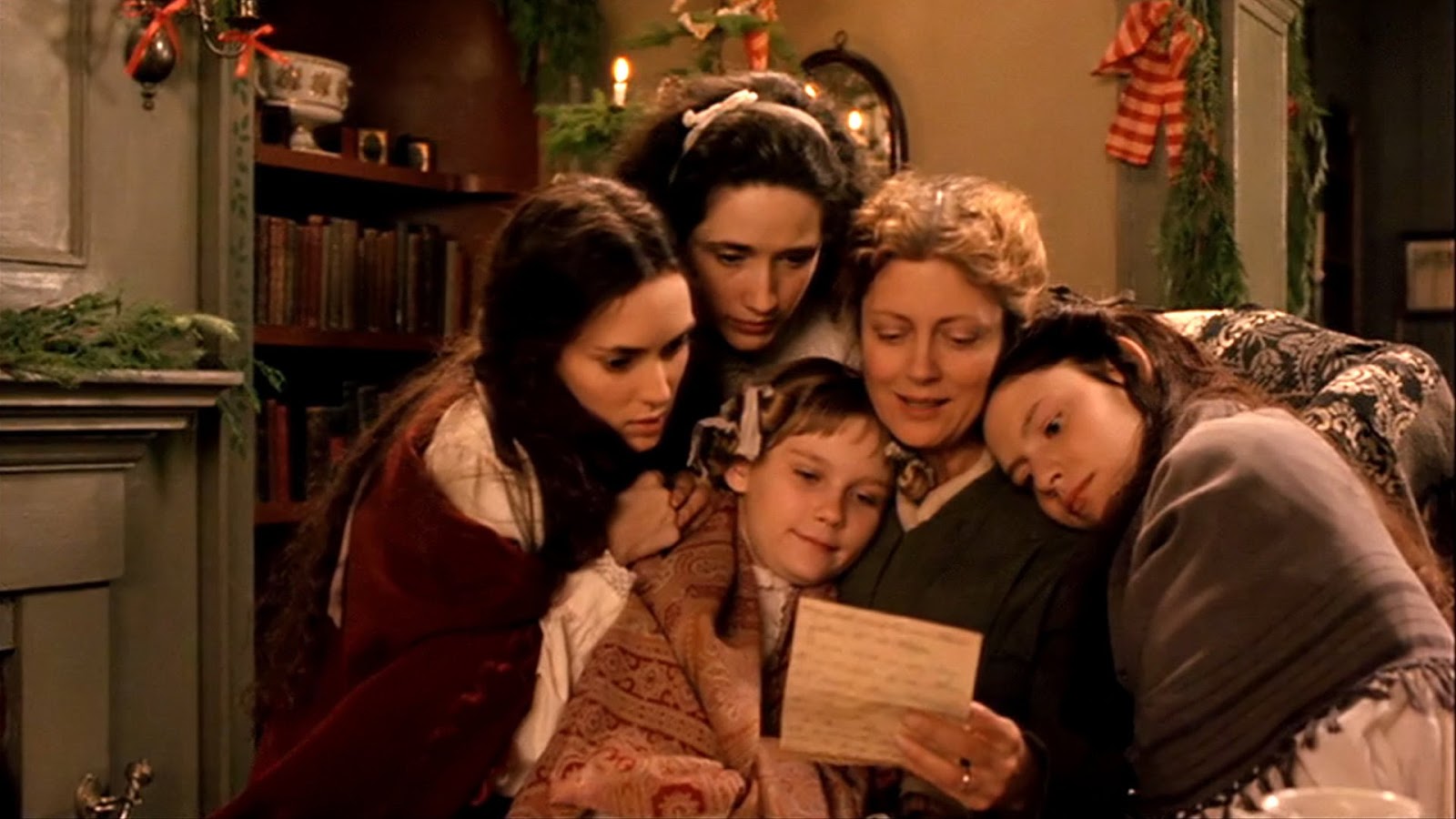
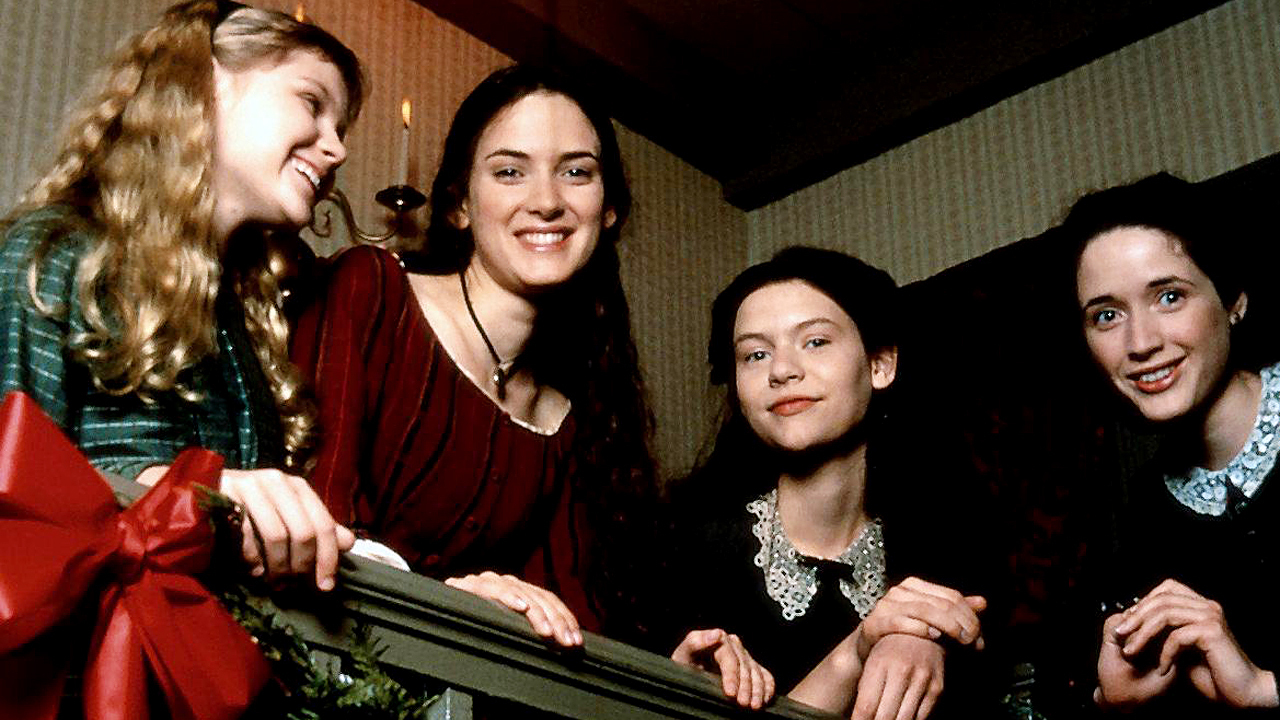
Little Women (1994)


Gillian Armstrong’s beautifully cast and played adaptation of Little Women is a classic

Director: Gillian Armstrong

Cast: Winona Ryder (Jo March), Gabriel Byrne (Friedrich Bhaer), Trini Alvarado (Meg March), Kirsten Dunst (Young Amy March), Samantha Mathis (Amy March), Claire Danes (Beth March), Susan Sarandon (Marmee March), Christian Bale (Theodore Laurence), Eric Stoltz (John Brooke), John Neville (Mr Laurence), Mary Wickes (Aunt March)

There are certain adaptations that simply set the standard. I’m thinking of the BBC Pride and Prejudice or Emma Thompson’s Sense and Sensibility. For productions like this, it almost seems superfluous to create another version: why would you want to when you can already watch the whole thing done perfectly? Gillian Armstrong’s superlative production of Little Women is such a film: so perfectly cast, immaculately acted and brilliantly assembled that I simply can’t imagine another production bettering it.

In Massachusetts during the American Civil War, the March sisters live with their mother (Susan Sarandon): sensible Meg (Trini Alvarado), tomboyish Jo (Winona Ryder), gentle Beth (Claire Danes) and temperamental Amy (Kirsten Dunst). While their father is away fighting, the girls grow up and experience the highs and lows of life and love, while never losing sight of the strong bond that holds them together.

Not only is it impossible to imagine another production besting this, I can’t imagine another creating so many “something in my eye” moments as this film manages. Gillian Armstrong’s tender direction gets a guaranteed emotional response from the audience every time, largely because she keeps the film simple, focused and doesn’t overegg the emotion. She recognises the story itself carries delicious highs and heartbreaking lows – and lets these moments speak for themselves. From its opening moments, establishing the girls’ love of theatricals and their own private “Pickwick club”, you know you are in the safe hands of people who fully understand the novel.

It’s a film which plays it very, very simple and lets the beauty of the moments speak for themselves. Many work perfectly: no less than three times I felt myself welling up, from the presentation of Mr Laurence’s piano to Beth, to Beth’s tragic death, to the final scenes between Jo and Professor Bhaer. Each of these moments is quite simply perfectly played and carry a major emotional wallop. It’s because Armstrong sets out a film that is totally straight, and a completely loving and respectful adaptation of Alcott’s novel. Armstrong, and adapter Robin Swicord, also build a profound, focused story of growing up and learning to adjust to loss and the changes life brings us. Focusing on this creates a very clear journey in the movie – as well as a story anyone who has had any life experiences is going to respond to.

Part of the reason why the film is such a complete success is the superb playing from a cast without a weak link among it. The four March sisters genuinely feel like people who have grown up together, so strong are the bonds of chemistry between them. I’d also hugely commend Armstrong and Swicord for so skilfully establishing the different personalities of the sisters – within the opening few minutes you’ll feel like you know all their personalities exactly (a task utterly failed by a recent three-part BBC adaptation).

In the lead role, it’s scintillating to watch Winona Ryder and remember what a superb, heartfelt and gloriously expressive actress she is. Vulnerable but also tomboyish, boisterous and also tender, she brilliantly captures Jo and her semi-bohemian, semi-homespun yearnings, and her passionate love for a life different from the traditional. Ryder also has such wonderful skill with conveying emotion – at several key moments, waves of emotion seem to pass over her face in careful micro-expressions. Several moments carry the weight that they do, because Ryder sells them so well. 

Her three sisters are equally well-cast. If she has a rival for skill of expression and conveying depth of emotion it’s Claire Danes, who is astonishingly good as the gentle Beth (hard to believe she was only 15 at the time!). Danes’ simple joy and her gentle, unassuming love for those around her really hit home. Danes’ joyful warmth makes Beth’s acceptance of the piano from Mr Laurence a beautiful moment, while her tender humanity makes her death incredibly moving. Kirstin Dunst is superb as the young Amy – part brattish pre-teen, part excitable child. Her sudden horror when she realises the gravity of burning Jo’s book again helps this moment work so well. Trini Alvarado has the less interesting part, but her grounded, calm, proper and gentle performance as Meg balances the work of the sisters really well, and Alvarado demonstrates she has real empathy for the role.

The rest of the cast are equally good. Samantha Mathis (taking over the older Amy) delivers an excellent portrayal of a woman keen to head into the world. Susan Sarandon is perfect as a wonderfully loving, all-knowing mother. Christian Bale is perfect as the playboyish Teddy, full of playful fire. John Neville sells a few crucial scenes as a humane Mr Laurence. Gabriel Byrne is certainly far more handsome than his literary counterpart, but he’s so wonderfully gentle, caring and kind that it hardly matters: the relationship between him and Jo is beautifully judged.

Beautifully judged basically sums up the whole thing: there is not a bum note in this whole film. Armstrong and Swicord nail every single decision. Armstrong’s direction is outstanding: a brilliant example is the gently, unbearably sad sequence of sprinkling roses in Beth’s room after her death – it’s so simply done but incredibly moving. The film is crammed with moments like this, beautifully scored by Thomas Newman. Swicord’s script is marvellous, and it successfully draws out the feminist message of the book, without hammering the points: it gently flags up the lack of opportunities often available for women at the time, but also celebrates the contribution they can make. 

Little Women is a simply superb piece of adaptation, and a deeply affecting and heart-warming film. Only a film that lets you invest in the characters as much as this, could move you as much as it does. When Ryder smiles, you feel your whole world light up. When Danes cries with joy you feel your heart sing. When tragedy comes you feel like you’ve had a loss yourself. The story is superbly streamlined, each character is perfectly established, the relationships between them all are so wonderfully done – you can’t help but fall in love with it. If it had been a film about men it would have been littered with Oscar nominations. As it is, despite the sexism of the Academy, it’s a film you’ll treasure and return to again and again.

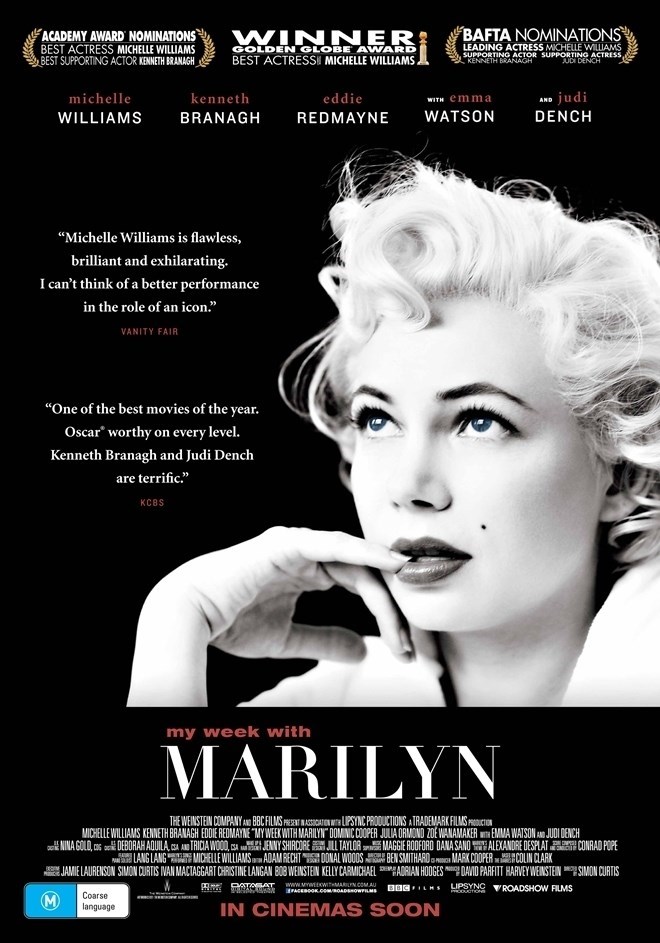
My Week with Marilyn (2011)


Michelle Williams navigates the world of fame as Marilyn Monroe, escorted by Eddie Redmayne

Director: Simon Curtis

Cast: Michelle Williams (Marilyn Monroe), Eddie Redmayne (Colin Clark), Kenneth Branagh (Laurence Olivier), Judi Dench (Sybil Thorndike), Emma Watson (Lucy), Dominic Cooper (Milton H. Greene), Derek Jacobi (Owen Morshead), Dougray Scott (Arthur Miller), Toby Jones (Arthur P Jacobs), Julia Ormond (Vivien Leigh), Zoë Wanamaker (Paula Strasberg), Michael Kitchen (Hugh Perceval), Philip Jackson (Roger Smith), Simon Russell Beale (Cotes-Preedy), Robert Portal (David Orton), Jim Carter (Barry), Richard Clifford (Richard Wattis), Gerard Horan (Trevor)

In 1956 Laurence Olivier was the greatest actor in the world; Marilyn Monroe was the biggest star (and sex-symbol) in the world. Surely when they came together to make a movie, it would be cinema gold. It wasn’t. Olivier directed and starred with Monroe in The Prince and the Showgirl, an almost impossibly slight puff piece, partly assembled (so rumour goes) so Olivier could sleep with Monroe. But it turned out Monroe’s fragile psyche and Stanislavkian approach to acting was incompatible with Olivier’s well-honed craft. The two did not get on.

Simon Curtis’ gentle, at times charming, but basically very lightweight film follows the making of the film through the eyes of Colin Clark. Clark, son of the famous art critic Kenneth Clark, was a naïve, romantic young man keen for a career in the movies through his father’s contacts. Hired by Olivier’s production company, Clark is tasked to take care of Monroe throughout the film. He becomes increasingly fascinated and infatuated with her as they spend more and more time together.

The film is based on Clark’s diaries, and he is played by Eddie Redmayne at his most fresh-faced. The problem with Clark is that, to be honest, rather than a young man on a journey of self-discovery, he comes across a little like a social-climbing creep and borderline stalker. Clark recounts a short-lived friendship that obviously had huge importance to him – but the film doesn’t want to deal with the fact it probably meant virtually nothing to Monroe, beyond some company during a lonely time. 

It’s not helped by the fact Clark comes across slightly like a pushy groupie, the self-proclaimed guardian of Monroe’s needs – qualifications barely justified by his actions. The film wants us to think he got closer to the magic of celebrity than anyone, but he feels like a stranger with his nose a little closer to the portcullis. Quite frankly, Colin is the least interesting character in his own story, and Redmayne fails to really give him much depth for us to engage with. Instead he remains a slightly unsettling inverted snob, manipulated by Monroe. The film, you feel, just doesn’t get this. At the end someone tells Colin he is “standing taller” than when he first met him (the implication being the relationship has made a man of him – as if spending a bit of downtime with a celebrity was the only route to emotional maturity). But rather than being part of a sweet star-crossed romance, Colin feels like someone creepily attaching himself to someone vulnerable. 

However, Michelle Williams is very good as Marilyn, capturing a real sense of her emptiness and insecurity. She perfectly captures Monroe’s physicality and vocal mannerisms. She is very good at capturing Monroe’s sense of permanent performance, of her glamour, kindness and innocence, mixed with her maddening vulnerability and (inadvertent?) selfishness. It’s a fine performance – better than the film deserves. 

Because the film is afraid of remotely criticising Monroe at all – or really engaging with the deep psychological reasons for her depression, or addressing the possibility that part of her appeal was her slight blankness that any desires could be projected onto. Instead, the film suggests, she’s sad because men just use her. Apart from Colin of course. His kissing, skinny-dipping and sharing a bed with her are entirely unmotivated by any lustful yearnings.

The film is in love with Monroe, presenting her just as Colin saw her – perfection. In fact, just as Dougray Scott’s put-upon Arthur Miller says, she was probably exhausting and all-consuming. She certainly sucks the naïve Colin into her orbit, in a way he (or the film) hardly notices or understands. It wants us to think of this as a romance – in fact, Monroe’s fragility created a neediness that meant she didn’t feel she needed to consider other people, so overwhelmingly concerned was she with her own brittleness. The film essentially believes she was a star, so is basically allowed to do what she wants. The fact that she did so with an air of gentle vulnerability means the film gives everything she does a pass.

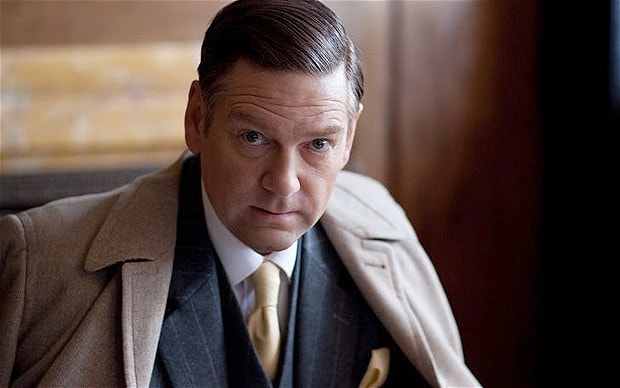
So it’s rather hard not to sympathise with Olivier’s growing frustration with Monroe’s unreliability. Kenneth Branagh triumphs as Olivier, surely the role he was born to play: very funny, but also with a patrician charm and all-consuming arrogance. Branagh taps into Olivier’s vulnerability, his sense that he may not be able to communicate his acting strength into movie stardom, that he is yesterday’s man. For all her difficulty, Monroe had that “star quality” that makes her the centre of your attention. I’d argue Olivier almost certainly had the same – but the film is so in love with Monroe, it needs to slightly bring Olivier down. Branagh, however, is so good that he constantly punctures the film’s attempt to force Olivier into a less sympathetic role than the one it indulges Monroe with.

My Week with Marilynis far from terrible – it’s just a rather empty film. It has a terrific cast with these British star actors all offering fine pen portraits of assorted actors, producers and agents. The film however is slight, and so in love with its fairy-tale elements, it doesn’t notice that Clark’s story is slightly more creepy and certainly a lot more emotionally empty than the film wants it to be. It wants to take us behind the curtain of a 20th-century icon – instead it accidentally shows how impenetrable their screens are, and how easy it is for ordinary people to persuade themselves that the most fleeting of contacts was something special.

Lion (2016)


Dev Patel searches for his past in Lion

Director: Garth Davies

Cast: Sunny Pawar (Young Saroo), Dev Patel (Saroo Brierley), Rooney Mara (Lucy), Nicole Kidman (Sue Brierley), David Wenham (John Brierley), Abishek Bharate (Guddu), Divina Ladwa (Mantosh Brierley), Priyanka Bose (Kamla Munshi), Seepti Naval (Saroj Sood)

In 1986, Saroo (Sunny Pawar) is accidentally separated from his brother Guddu (Abishek Bharate) and mother (Priyanka Bose) after being trapped on a train that travels 1,600km to Calcutta. Unable to find his way home, and dodging the dangers of Calcutta’s streets, he eventually ends up in an orphanage. He is adopted by an Australian couple, the Brierleys (fine and tender performances Nicole Kidman and David Wenham). Twenty years later, a chance meeting with a group of Indian students brings Saroo’s (Dev Patel) memories flooding back– and dedicates himself to retracing his steps and finding his family in India.

Lion is an overlong expansion of a story that would really spark your interest when presented in a newspaper article. But Garth Davies’ film drains the dramatic life out of the story by ludicrously overextending the telling in order to try and eke as much emotion from the audience as possible. Lion is under two hours, but it really should be at most an hour and a half.

The problem is the central section in Australia, while our hero tries to locate his roots. It just isn’t quite interesting enough, despite sterling, committed and emotional work from Dev Patel. Put simply, even with an extraordinary story like this, the film can’t help but communicate Sarro’s obsessions through cinema’s clichés. So we get a madness board with pins and bits of string to link clues. We get Saroo increasingly dishevelled. We get him driving away family and girlfriend. We get moody, tearful glances into the middle distance. Even the final solution to the mystery occurs after a spark of inspiration during a rage fuelled “I’m going to wreck this board and give up” moment. This whole section just serves to reduce the story into movie-of-the-week territory.

The film just doesn’t quite connect with us as it should. Perhaps because of the amount of time given over to very slow Google Earth searches, or overblown camera tracking shots across train lines, or expansive slow, piano-scored moments of emotional torment from Saroo. It’s a shame because there are flashes of good material in there – Nicole Kidman’s has a stand out scene to explain why she chose not to have children – and Dev Patel is the best he’s been. But it doesn’t quite work. After Saroo’s emotional revelation at an Indian friend’s house and realisation that he is “lost” (and this quiet devastation from Patel is affecting), the story doesn’t really kick off. It just slows down.

It’s a shame as the opening third of the film with young Saroo lost in Calcutta is very well done, even if it seems virtually every male living on the streets is a paedophile. The early scenes with Saroo and his brother are very good, and establish the strength of their bond. Sunny Pawar does a marvellous job as the lost boy, and Garth Davies films Calcutta with an earthy realism, as well as having a wonderful sense of empathy for the vulnerability of children. It’s also striking to see how uncommented upon a child alone on the streets of Calcutta goes. The dangers Saroo dodges feel genuinely threatening, and helps us invest emotionally for the rest of the film.

The moments that flash back to this do get overplayed later. Much as I initially liked Saroo hallucinating his brother and mother appearing around him in the streets of Melbourne, it’s a card that quickly gets overused. Like many of the ideas in this film, it gets hammered home a little too much. It’s that whole middle section, with poor Rooney Mara saddled with the thankless part of supportive girlfriend. You could have cut it down by 20 minutes and had the same impact. Garth Davies’ direction simply gets carried away with the lyrical sadness, to try and tug our heartstrings.

The problem is the most moving part of the film is the final sequence where we see the real people meeting in the streets of Khandwha. Nothing else in the film really measures up to this genuine emotion. Particularly after we’ve watched a man searching Google and behaving moodily for well over forty minutes. It’s a film that loses its way because it’s moments of emotional reality like that which make these stories truly profound – and a dramatisation can never provide that. With the film also unable to find a way to make the search as dramatic and engaging as the getting lost and being found, it also flounders in the middle, taking way too long to get us to the destination. It’s got its moments, but it’sa well assembled film that outstays its welcome.

Slumdog Millionaire (2008)


Dev Patel is the Chaiwala living the dream in Slumdog Millionaire

Director: Danny Boyle

Cast: Dev Patel (Jamal Malik), Freida Pinto (Latika), Madhur Mittal (Salim), Anil Kapoor (Prem Kumar), Irrfan Khan (Inspector), Ayush Mahesh Khedehar (Jamal [Child]), Tanay Chheda (Jamal [Teenager]), Azharuddin Mohammed Ismail (Salim [Child]), Ashutosh Lobo Gajiwala (Salim [Teenager]), Runbina Ali (Latika [Child]), Tanvi Ganesh Lonkar (Latika [Teenager]), Saurabh Shukla (Constable Srinivsas), Mahesh Manjrekar (Javred), Ankur Vikal (Maman)

Re-watching Slumdog Millionaire, it’s surprising to think that back in 2008 this film was so garlanded with awards (EIGHT Oscars!) and heralded so quickly as a classic. While it’s a well-made and at times rather sweet (with a hard-edge) fable, it’s also seems slightly less unique and genre-defying than first appeared. Never mind a list of the greatest Best Picture winners, I’m not even sure it’s the greatest Danny Boyle movie. But saying this, it’s still a fine movie – and one I arguably enjoyed more re-watching it almost ten years on then when I saw it in the cinema.

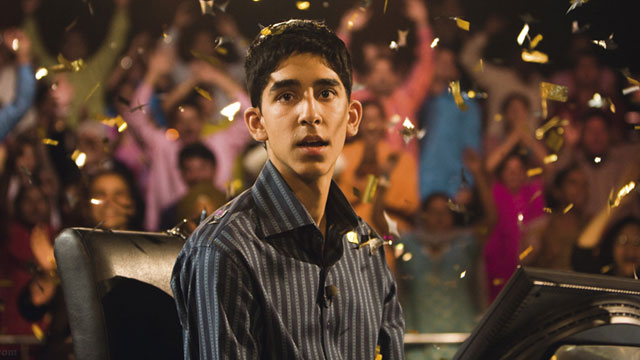
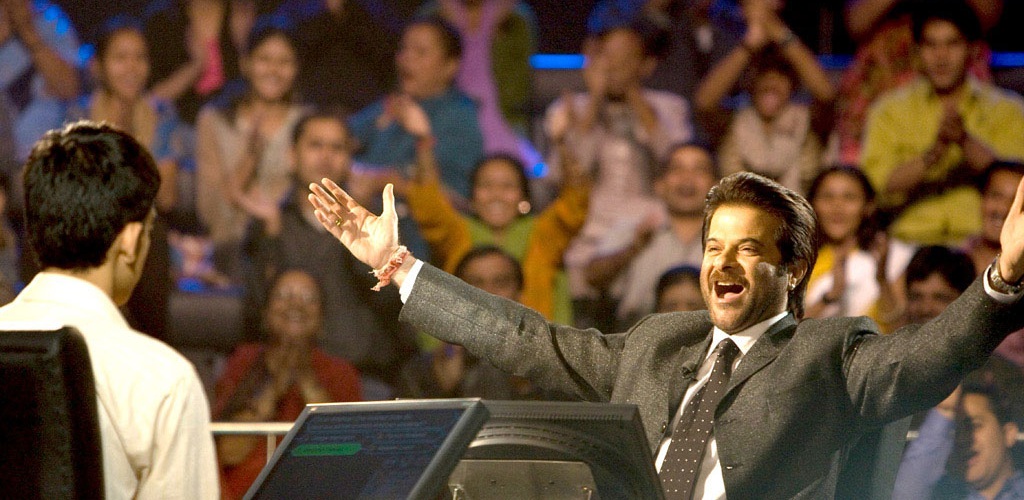
Jamal Malik (Dev Patel) is an eighteen year-old Muslim, a chaiwala working in a Mumbai call centre. He enters the Indian Who Wants to be a Millionaire?, hosted by egotistical Prem Kumar (Anil Kapoor), and to the astonishment of everyone is one question away from the ultimate prize of 20 million rubles. Arrested by the police and questioned before his final show, he explains via flashbacks how his experiences allowed him to answer each question. His life-story is one of danger and conflict in the slums and criminal underworld of India, tied closely to his brother Salim (Madhur Mittal) and their childhood friend Latika (Frieda Pinto), whom Jamal has loved his whole life.

Part social-realist tale, romance, family drama and fairy-tale, Slumdog’s main triumph is probably its ability to juggle half a dozen tones and genres so successfully. This is most strikingly demonstrated by fact that so many came out of a film that opens with its lead character being waterboarded and tortured by policemen, saying it was a brilliant feel-good movie! In fact, Boyle’s film is far more complex, touching on themes ranging from child exploitation and prostitution to gangland politics to social corruption, via murder, betrayal and mutilation. How does this a film crammed with this sort of material make you feel rather positive at the end?

Boyle’s, and screenwriter Simon Beaufoy’s, trick is to follow in the footsteps of that other great juggler of urban social comment and larger-than-life characters – Charles Dickens. Dickensian is perhaps the best word to describe Slumdog – it throws the viewer into the slums of Mumbai, glancing at this world with all the keen social commentary Dickens used to bring to Victorian London. As young children, Jamal and Salim are thrown in with a Fagin-like gang boss, while Latika develops an (admittedly much more gentle) Estelle-like connection with them both. Like David Copperfield, our hero moves from place to place (or frying pan to fire!), with an episodic charm, each event adding to the spectrum of his life. It works really well as it taps into a reassuringly familiar story structure that makes us feel narratively safe, no matter how much peril our heroes undergo.

What’s fascinating is placing this familiar material into (for us) a more exotic location. I suspect many American viewers watching were even less familiar with India as such a mixture of extreme wealth and poverty sit side-by-side so naturally (and again how Dickensian does that sound?). Anthony Dod Mantle’s cinematography is astounding for its energetic immersion in the streets of Mumbai –it’s like an explosion of Boyle’s high-octane, camera-shaking style seen in so many of his other films. It not only makes the film feel fresh and vital, it also manages to present India as something very different for those only familiar with the country as a Taj Mahal postcard.

The most compelling parts of the film are those in the first half that throw us into the Mumbai of Jamal and Salim’s childhood. Helped immensely by six terrific performances from the child and teenager versions of our three leads, these sequences (just over the first half of the movie) immediately involve the viewer in the fates and feelings of these characters. Perhaps because the film is shot in such an immersive style, you feel as if you have experienced the dangers (and occasional joys) alongside them, and developed a close bond with them. 

Despite the romantic plot of the movie, the true story is the jagged relationship, with its loyalties and betrayals, between the innocent, gentle dreamer Jamal and the more ruthless, realist Salim. The film charts the lengths they will go to protect and help each other – or sometimes in Salim’s case not. Salim is a fascinating character – easily the deepest, most conflicted of the three – who even as a child has a moral flexibility, happy to gain the benefits of a ruthless criminal lifestyle, while still having enough conscience to know what he has done with his life is wrong.

In contrast, the relationship between Latika and Jamal is far less complex. Frieda Pinto doesn’t actually appear until almost two thirds of the way into the movie – and she and Patel have only really one dialogue scene together to establish a romantic link. The romance between them is in fact the standard fairy-tale – two young friends as children who become unknowing sweethearts. The film relies on us being invested in their fates as children to want to be together, rather than building a link between two grown adults. This is the structure of a Prince Charming and a Princess in distress rather than grown-up storytelling – but it clearly works because it taps into our own fundamental first experiences of how stories work.

Dev Patel is a very sweet and highly engaging lead – and how could we not be immediately on the side of a pleasant, gentle young man whom we first see hanging from a ceiling with electrodes on his feet? Patel has a low-key decency about him that becomes more engaging the more you watch the film. Since most of his narrative function is to offer linking scenes to the far more dynamic and exciting flashbacks – and since the character of Jamal has very little real depth to him beyond “he’s a good guy” (again like a fairytale his innocence is untouched by events) – it’s quite a testament to his performance that you end up feeling as close to him as you do.

But it’s clear to me second time around the framing device of the Who Wants to be a Millionaire contest is the most disposable, and least interesting part of the movie. It does have the film’s most outright enjoyable adult performance, a swaggering, ego-filled turn from Amil Kapoor, but it’s still all much more predictable, obvious and functional than the adventures we see as our characters grow up. We know Jamal is going to keep getting things right (and thank goodness each question he answers, he learned the answers consecutively through his life! What a mess that might have been otherwise narratively!), so the fact that Boyle keeps what is essentially the same scene each time seeming interesting is quite something.


The gameshow however is the “quest” of this romantic fairy-tale. And fairy-tale is really what the film is: Jamal is there to try and find and save Latika. So in the end it doesn’t really matter that Latika hardly feels like a character, or that we’ve been given no real reason to think she and Jamal are in love other than the film telling us that they are, or that the plot of the film is really as flimsy as tissue paper. The film is a dream, a romantic fable. The genius of Boyle is to use a whole load of familiar, Dickenisan-style tropes to place this into a social-realist travelogue, a dynamite dance of flamboyant film-making techniques. So perhaps that is the point about Slumdog: on repeated viewings, like fairy-tales, its plot tricks and narrative sleight-of-hand become more obvious. But you get more of a respect for the confidence with which the trick is played.

Addams Family Values (1993)


The Addams Family Values: Goth meets summer camp fun in this engaging comedy

Director: Barry Sonnenfeld

Cast: Anjelica Huston (Morticia Addams), Raúl Juliá (Gomez Addams), Christopher Lloyd (Uncle Fester), Joan Cusack (Debbie Jellinsky), Christina Ricci (Wednesday Addams), Carol Struycken (Lurch), Jimmy Workman (Pugsley Addams), Carol Kane (Grandma Addams), David Krumholtz (Joe Glicker), Peter MacNicol (Gary Granger), Christine Baranski (Becky Martin-Granger)

The Addams Family was a serviceable family comedy about a bizarre group of Halloween style characters, who delighted in leading lives of cartoony horror. It drifts along, and was a big hit, but its sequel Addams Family Values is several times smarter, more confident and funnier. As a comedy family saga mixed with cartoon creepiness, it’s hard to beat.

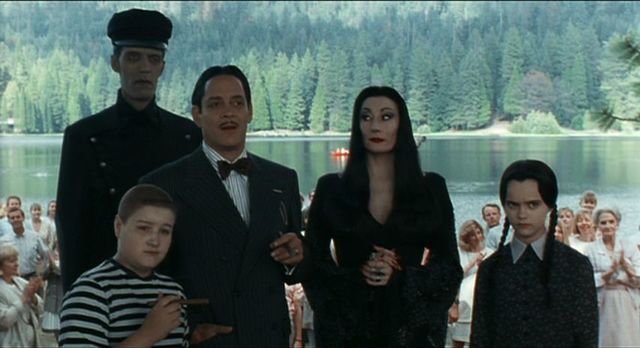
Celebrating the birth of their new child (“He has my father’s eyes” / “Take those out of his mouth”), Morticia (Anjelica Huston) and Gomez (Raúl Juliá) hire a new nanny, Debbie Jellinsky (Joan Cusack) to care for the baby. On her advice, they also decide to send the insanely jealous Wednesday (Christina Ricci) and Pugsley (Jimmy Workman) to a summer camp – needless to say they do not fit in with the All-American, Apple-Pie ideals championed there. Debbie meanwhile has wicked designs on becoming the widow of their rich Uncle Fester (Christopher Lloyd).

Addams Family Values gets a lot of comic juice out of some very witty set-ups. Everyone involved in the film feels more relaxed and happy to let the comedy breathe. Sonnenfeld lets the set-ups come naturally and allows the characters to come to the fore. Every joke in the film comes from watching the characters bounce off their circumstances. Of course, a lot of this comes from the fact the film doesn’t need to do any of the heavy lifting of introducing the world or the characters – it rightly assumes we know what we are getting from the start – but it still makes the film hugely entertaining.

A lot of the humour comes from the brilliant summer camp plotline, with its passive-aggressive, jolly-hockey-sticks owners (a very funny Peter MacNichol and Christine Baranski) and their naked favouritism for the popular kids. Placing the Addams children into a world of normal teenage politics and the forced jollity of adults who would rather still be one of the popular kids at school is a brilliant touch. This clash of values makes for no end of comic glory, culminating in a disastrous Thanksgiving play, which is a triumph of the sad and overlooked over the popular kids (because who watching any film favours the popular kids?).

Christina Ricci is brilliant in this – her deadpan sense of comic timing is spot-on. Every scene and every one-liner is stand-out. The film even finds time for a sweetly semi-romantic plotline between her and loser Joe Glicker (David Kumholtz, also very good as the kind of kid who likes to read A Brief History of Time). Ricci ends up carrying a lot of the film’s comic material, and she’s so perfect in the role that to a lot of us she will always be Wednesday Addams, never mind what she does.

The summer camp plotline is so drop-dead funny and memorable, it rather overshadows the film’s actual plot about Debbie’s attempts to seduce and murder Fester. Sonnenfeld struggles to make this main plot come to life – his real delight is in the sketch-based comedy of the summer camp and the Addams’ love for the grotesque and the extreme. Having said that, Joan Cusack is wickedly sexy and funny as a heartless social climber.

Anjelica Huston and Raúl Juliá remain divinely perfect as a couple so besotted they can barely look at each other without bursting into a steamy tango, or an avalanche of flirtatious foreign language banter. Juliá rips into the dialogue with a flamboyant gusto, and he’s a perfect foil for Huston’s supercool, arch one-liners. Sonnenfeld never lets the introduction of a baby affect their comic darkness in any way, which is a perfect set-up for comedy.

Addams Family Values is terrific good fun and always keeps you laughing. It’s a load better than the original, and has some terrific comic set-pieces in. Sure it’s got a pretty basic plot, but it’s directed with a wicked dryness by Barry Sonnenfeld and its cast are now completely comfortable in their eccentric characters. The tone always seems spot-on between the surrealist darkness and the childish, cartooney horror. It’s a very entertaining film.

The Last Detail (1973)


Randy Quaid, Jack Nicholson and Otis Young are sailors on a wild week in the classic The Last Detail

Director: Hal Ashby

Cast: Jack Nicholson (Signalman Billy Buddusky), Otis Young (Gunner’s Mate Richard Mulhall), Randy Quaid (Seaman Laurence Meadows), Clifton James (MAA), Carol Kane (Young Prostitute), Michael Moriarty (Marine Duty Officer), Nancy Allen (Nancy), Luana Anders (Donna)

When you see Jack Nicholson in a film from his late period – basically the 90s onwards – it’s easy to wonder what all the fuss is about. It’s sometimes hard when you see him eating the scenery to remember that in the 1970s Nicholson did a run of such mighty, landmark performances that he basically earned the right to do what he wanted for the rest of his life. The Last Detail is an often overlooked classic from the 1970s – and Nicholson is simply outstanding in it.

Buddusky (Jack Nicholson) and Mulhall (Otis Young) are “lifers”, career sailors who are ordered to take a young sailor, Meadows (Randy Quaid), from Virginia to Portsmouth Naval Prison in Maine. Meadows will serve eight years for stealing $40. Given a week to make the journey, Buddusky and Mulhall at first plan to get Meadows there as soon as possible so they can have a leisurely return and spend their per diems on a blow-out. However, feeling sorry for Meadows’ harsh punishment and lack of life experience, they decide instead to take their time on the journey and show Meadows a good time – including drinking, whoring and general hi-jinks.

The Last Detail is a brilliant slice of 1970s filmmaking, an episodic road movie with a script to die for and a simply superb performance from Nicholson. Hal Ashby’s film is both a celebration of the rebellious attitudes of the 1970s and a sad acceptance of their failure. It’s a heartfelt film where we discover and understand more and more about each character and find out more about the age as well. It’s also a lovely story of bromance – of three men who come together, find themselves developing a very close bond, but are trapped by the rigid organisation they are part of.

The film is completely Nicholson. This is the sort of tour-de-force that cements him in any list of the greatest screen actors ever. It’s just a marvellous performance, near perfect. Buddusky is the ultimate impotent rebel, a man with a natural rough leadership quality over those at his level, but who basically lives within a societal prison that he can’t really imagine breaking free from. Buddusky will let rip – never better than the marvellous sequence where he erupts against a racist barman who also refuses to serve the underage Meadows (“I am the MOTHERFUCKING SHORE PATROL” he suddenly screams, after almost a minute of slow tension build-up) – but he’s also quiet and thoughtful. Watch Nicholson’s reaction shots when he listens to Meadows reminisce on his childhood dreams of being a vet. What a masterclass of quiet acting – Budduksy is enchanted, irritated, sad, bored, confused, moved – all at once and more. 

Buddusky feels a brotherly affection for Meadows – perhaps also, a reflection of his own sense of being trapped. Nicholson alternates between affection and frustration with a touch of self-loathing. At one point during a drunken night at a motel, he demands Meadows punch him out, because he is the one taking him to prison. Meadows refuses – sweetly these guys are the best (only?) friends he’s ever had – Buddusky reacts by punching a cupboard repeatedly in fury. Later, during a fumbled sexual encounter for Meadows with a prostitute, he is kindly and understanding. It’s a fascinating performance of frustration, confusion and unaimed anger. There is nothing he can’t do.

Young is excellent as Mulhall (there is a great sequence where Mulhall berates Buddusky for his risky attitude, revealing Mulhall’s basic conventional outlook), while Quaid’s Meadows is an endearingly innocent figure: a kleptomanic with no friends, a sad family background (a visit to his abandoned family home reveals his mother to be an alcoholic), a sad, lonely boy who (unwisely) looks to a prostitute for emotional connection, and holds an unfulfilled dream of becoming a Master Signalman. He still takes on the others’ confidence through – just watch how Meadows grows in assurance as the film goes on. All three of these actors spark off each other brilliantly.

Ashby’s camera drifts gently, allowing the actors a great deal of freedom. Ashby shot the film in chronological order which works brilliantly – not least in that you see Randy Quaid grow in confidence as an actor just as the character emerges from his shell. Scenes are allowed to loosely continue, often past the point you might expect, which really allows the actors to breathe and the characters to grow: scenes of the characters drinking (rather feebly) in a carpark (as they can’t get into a bar) feel organic and almost improvisational. Ashby uses a lot of dissolves and fades to mark the passage of time – often in the middle of conversations to move us from one point to another – which also work really well.

This works perfectly for Nicholson, as it allows us to learn more about Buddusky’s shallow rebellion. Buddusky may rail against the oppression of the navy but he’s totally reliant on the grounding it gives him. Mulhall is more open about this – as a black man, it has given him some standing and a steady income to support his mother – but Buddusky is adrift in the real world. Watch him flirting with a college girl at a party. He’s hopeless, falling back on how navy work is man’s work, repeating it several times like a mantra before a crude joke. Nicholson’s first introduction is him (hungover) telling a soldier where his superior officer can stick his summons. Next time we see him, he’s arrived to see that officer. Buddusky badmouths everything and boasts of being “a badass” all the time – but every time he’s with an officer Nicholson seems to shrink and clam up. He can rebel only in words, on his downtime. On the clock he just has to fit in with the rest.

Part of the visual genius of the casting is Young and Quaid are both over six feet, making Nicholson look smaller and stunted. It’s a really neat visual metaphor for his sense of rebellion. He and Mulhall may bitch and moan about the injustice of the navy – but there is never really any question that they won’t carry out the task they are doing. Neither man has any real aim or goal in life, nor any particular insight or any plan. They just want not to be told to do things they don’t want to do. Meadows is off to prison – but Mulhall and Buddusky are also “lifers”. They ain’t going nowhere. They might not always like it, but they’d rather do that than drop out – when they meet genuine counter-culture types, none of them can understand or relate to them at all.

But the film is not depressing – it’s actually rather moving and lovable – because the bromance between the men is so well drawn. They grow to care a great deal for each other. They may not always have much in common, but they clearly have a whale of a time in each other’s company. The laughter feels genuine and grows from the actors’ own obvious rapport – I’m pretty sure they are near corpsing a few times – and it’s infectious. There is a dream-like freedom to the film – for its duration, reality is suspended and they can be free. They’re like children allowed out of school for the day. It’s hugely, engrossingly enjoyable and moving.

The Last Detail is a simply brilliant film. Ashby is a partly forgotten film maker, but films like this have a quiet, unflashy poetry to them. Robert Towne’s script is perfect – foul-mouthed and barbed, but full of unexpected emotional depths and beautiful character beats. Young and Quaid are excellent – but oh man Nicholson. He is so good in this film, it has to be seen to be believed. He is a living, breathing force of nature – he burns up the screen, but it never feels like showmanship. He’s sublime – it might be his greatest ever performance. And this is a great film that, in demonstrating the weakness of the rebellious feelings of the 1970s, might just understand that era better than many other films. An overlooked masterpiece – you should make it your mission to seek it out.