Category: Detective film

Panic in the Streets (1950)

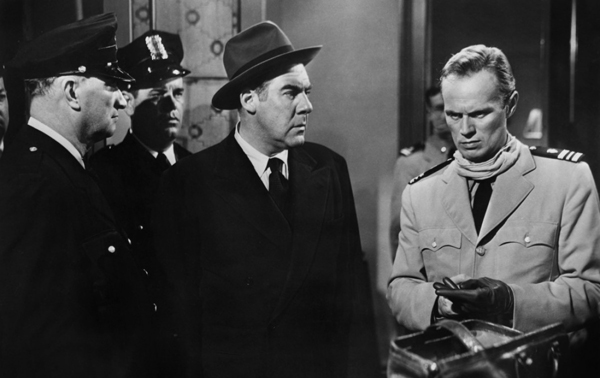
Paul Douglas and Richard Widmark race against time to prevent plague in Panic in the Streets

Director: Elia Kazan

Cast: Richard Widmark (Lt Commander Clint Reed), Paul Douglas (Captain Tom Warren), Barbara Bel Geddes (Nancy Reed), Jack Palance (Blackie), Zero Mostel (Raymond Fitch), Alexis Minotis (John Mefaris), Dan Riss (Jeff), Guy Thonajan (Poldi), Tommy Cooke (Vince Poldi)

It feels like a very modern nightmare: a plague of catastrophic proportions breaking out in a major city and threatening to wipe out thousands of people. This feeling helps to make Panic in the Streets feel more like a film from today rather than the 1950s. The only thing missing is a terrorist angle – everything else could have been pulled from the nightmare fuel of our modern age.

In New Orleans, a murdered man is found near the docks. The emergency button is pressed when the coroner detects a deadly infection. Naval doctor (and emergency co-ordinator) Lt Commander Clint Reed (Richard Widmark) quickly takes command and determines that the victim carried pneumonic plague before being shot. Tracking down the men who killed him, and who may also be carrying the disease, becomes urgent, before the infection spreads. The authorities don’t want panic, so Reed and Captain Tom Warren (Paul Douglas) – initially of course reluctant partners – must work together to quietly track down the killers. The killers meanwhile, Blackie (Jack Palance) and his crew, continue regardless with their small-town crime empire building.

Panic in the Streets was one of the first films to shoot extensively on location – and it’s a brilliant choice, as Elia Kazan’s use of real life, grimy, New Orleans locations, from back streets to the docks, is pivotal for the sense of urgency and realism that runs through the entire film. Kazan’s camera work is brilliant throughout, and it adds a real gritty sense of danger to the entire film. It’s also brilliant that he selects possibly the least attractive parts of New Orleans for his locations – Blackie’s world of run-down buildings and dives just feels perfect for the film.

Kazan keeps the focus tight and avoids too many distractions from the film’s narrative – except maybe some tiresome insights into Reed’s slightly troubled domestic life (with Barbara Bel Geddes in a particularly thankless role as his wife, who alternates between supportive and the inevitable just wanting him at home more). Other than that, the film follows Reed’s search in forensic detail, from questioning suspects to working out the radius of possible infection. There is more tension here in a meeting with the city mayor to try and wrestle the authority Reed needs to carry out his job than in dozens of car chases.

The script is tightly written, and focused on plot over character, but still allows moments for character beats that good actors can seize upon. Widmark makes Reed a driven professional, who still has enough personal insight to register that his flaws include arrogance and impatience. In many ways an interesting piece of counter-casting, Widmark’s slightly menacing air is inverted really well as a doctor frustrated by the lack of understanding he encounters from those he is trying to save from a potentially deadly infection. He’s the perfect actor for a character who is a hard-bitten professional with a ruthless streak, and who’s a little hard to like.

He has a great foil in Paul Douglas as a professional, down-to-earth, but skilful and whip-smart police detective. One of the film’s pleasures is the bond that slowly grows between this odd couple – it’s not unexpected if you’ve ever seen a movie before, but it is very well done. The film, however, is almost stolen by Jack Palance as the villainous heavy, intent on empire building and oblivious to the fact that he is probably carrying a deadly plague that could wipe out half the population. Equally good is Zero Mostel as his weaselly, sweaty side-kick.

It’s odd watching it now that the authorities aren’t more terrified by the prospect of such a deadly infection – but that is a sign of how things have changed since the film was released. It’s sometimes a rather cold film, fascinated by slimmed down procedure – from the procedures of tracking people down, to the inoculations Reed administers right, left and centre to those who may be exposed. Despite this general mood, Kazan still gets the tone just right for the later shoot out that tops off the film.

Panic in the Streets does have a few too many slower moments. The scenes showing Reed’s home life are particularly drab – although we do get a marvellous scene with his wife where Reed acknowledges that his attitude to Captain Warren has been arrogant and condescending. The politics of lowlife New Orleans criminals are completely dependent on the charisma of the actors – remove Palance and Mostel’s performances and they would be exposed as dull and irrelevant. But the rest of the time, the film has a genuine feeling of grimy reality and keeps the pace up a treat. It’s a little B movie gem that feels ripe for discovery in our terror-obsessed modern world.

Gorky Park (1983)

William Hurt investigates murder in Soviet Russia in ace adaptation Gorky Park

Director: Michael Apted

Cast: William Hurt (Arkady Renko), Lee Marvin (Jack Osborne), Brian Dennehy (William Kirwill), Ian Bannen (Prosecutor Iamskoy), Joanna Pacula (Irina Asanova), Michael Elphick (Pasha), Richard Griffiths (Anton), Rikki Fulton (Major Pabluda), Alexander Knox (The General), Alexei Sayle (Golodkin), Ian McDiarmid (Professor Andreev), Niall O’Brien (KGB Agent Rurik)

Martin Cruz Smith’s novel Gorky Park was a bestseller in the early 1980s. It looked at grim goings-on behind the Iron Curtain, a trio of grisly murders in Moscow’s Gorky Park (the bodies are faceless, toothless and fingerless to avoid identification). The murders are investigated by Arkady Renko (wonderfully played in this film by William Hurt), a chief investigator for the Moscow militia who feels out of place in the corruption of Soviet Russia, but is equally scornful of the consumerism of the West. The investigation delves into a complex web of Soviet relationships with American business and the dissident community, not least an American millionaire fur trader Jack Osborne (Lee Marvin), and a would-be defector and possible friend of the victims, Irina Asabova (Joanna Pacula).

What I loved about this film is the novel is a rather overwhelming 500+ pages, but this film is a brisk and pacey two hours – and I literally couldn’t think of a single thing missing. But then that’s what you get when you have a master writer adapting your screenplay. Gorky Park has Dennis Potter, perhaps the greatest British TV writer of all time – and this is a sublime script, which keeps the pace up, covers all the tense greedy wrangling of the villains, and also makes subtle and telling points about the Soviet system, all in a punchier and clearer way than the books. The dialogue is also absolutely cracking, ringing with a brusque, icy poetry, with a brilliant ear for a turn of phrase.

Filmed on location around Helsinki and Glasgow among other places, what the film misses in actual Russian locations (needless to say the Soviets were not keen to host the production of a film that showcased murder and corruption at the heart of their capital city), it makes up for with Apted’s taut direction and eye for the general crappiness of Soviet life. Everything is run down, everything is dirty, everything looks cold and unappealing, even the houses and luxury bathhouses of the party leaders look a bit middle-class and uninspiring. By the time (late in the film) that you find yourself in one of Osborne’s houses you are immediately struck by the quality of the furnishings – it’s literally a different world.

This atmosphere not only creates something a bit more unique, it also allows us to relax and enjoy the quality of Smith’s story. I found it overstretched in the book, but the film gives it an urgency and a sinister creepiness that grips your attention. Apted has a brilliant eye for the little tricks to survive living in a police state, from watching what you say, to carefully placing a pencil in a dialled telephone wheel to prevent bugs from activting. Every moment is well paced and nothing outstays its welcome. Characters are introduced with skillful brushstrokes, and the relationships feel real and lived in. With such strong dialogue, it’s also great they got such good actors to do it.

William Hurt takes on the lead, and he is perfect, affecting a rather clipped English accent (all the Russians speak with various regional or RP accents). With his unconventional looks (part boyish, part stone-like), he looks the part and he totally captures the yearning unconventionality of a character who deep down probably would be a true believer in a good society, but can’t believe in the corruption around him. Far from the stereotypical would-be dissident, Hurt makes him a man who loves his homeland, but not always the people running it. He’s exactly as you would picture Renko in the book – a guy who will go for justice with the bit between his teeth, a semi-romantic hero, no superman (he frequently is bested in combat), who is looking for something to love and believe in.

The rest of the cast are equally fine. Lee Marvin is cast against type as a suave, hyper-intelligent, manipulatively greedy businessman – although his reputation for playing heavies comes in handy when the gloves come off. Joanna Pacula mixes sultry Euro-siren with an urgent yearning for freedom. Ian Bannen is wonderfully avuncular as Renko’s supportive boss (extra points for Tinker Tailor fans that Bannen is reunited here with Alexander Knox, in a dark reflection of their Control-Prideaux working relationship from that series). Michael Elphick seizes on the part of the down-to-earth Pasha, Renko’s friend and comrade, a role greatly improved from the book (largely to give Renko someone to bounce ideas off).

Apted’s film has a great sense of tension and a wonderful feeling for Soviet Moscow’s dark underbelly. The mystery is increasingly gripping and involving as the film goes on – and, in a nice rug-pull, turns out to be about something totally different than what you might expect. Even the final shootout is assembled and shot with an unexpected vibe. It avoids any Cold War pandering – the main villain is a sadistic American allied with Russians, our hero a noble Russian who partners up with a salt-of-the-earth but decent American cop (Brian Dennehy, also very good). For a late night mystery thriller, with a touch of everything thrown in, you can do a lot worse than this. I enjoyed it far more than I expected. I’d almost call it an overlooked B-movie gem.

Murder on the Orient Express (2017)


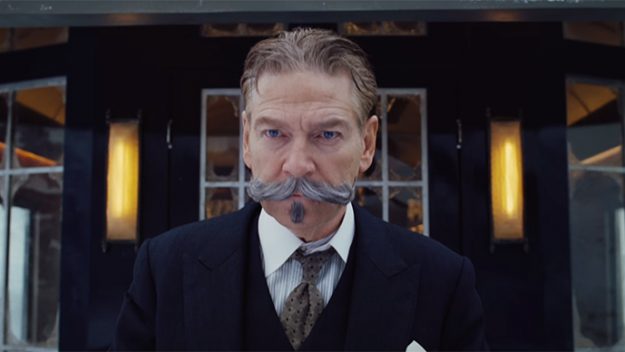
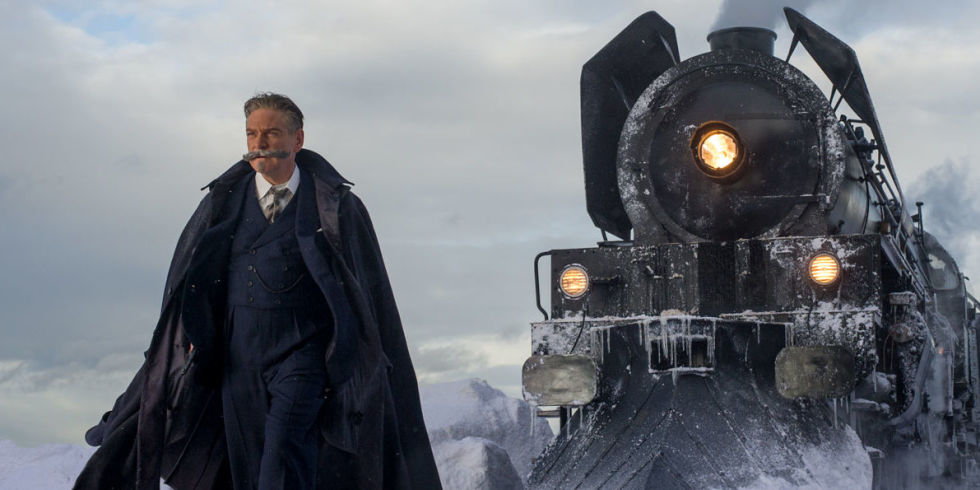
A dishevelled Kenneth Branagh (and tache) investigates a Murder on the Orient Express

Director: Kenneth Branagh

Cast: Kenneth Branagh (Hercule Poirot), Tom Bateman (Bouc), Penélope Cruz (Pilar Estravados), Willem Dafoe (Gerhard Hardman), Judi Dench (Princess Dragomiroff), Johnny Depp (Samuel Ratchett), Josh Gad (Hector MacQueen), Derek Jacobi (Edward Masterman), Leslie Odom Jnr (Dr Arbuthnot), Michelle Pfeiffer (Caroline Hubbard), Daisy Ridley (Mary Debenham), Marwan Kenzari (Pierre Michel), Olivia Colman (Hildegarde Schmidt), Lucy Boynton (Countess Elena Andrenyi), Manuel Garcia-Rulfo (Biniamino Marquez), Sergei Polunin (Count Rudolph Andrenyi), Miranda Raison (Sonia Armstrong)

Is there a murder mystery with a more widely known resolution than Murder on the Orient Express? Possibly not – if for no other reason that film and television versions of this story are as numerous as the suspects in the actual mystery. If that wasn’t a big enough challenge for Branagh to take on, he also joins a list of umpteen actors to play Poirot himself: following in the (very precise) footsteps of the big guns: Finney, Ustinov and of course, above all, David Suchet. How does his version of this most famous detective in his most famous adventure measure up? Well, with mixed results.

For those who don’t know, Hercule Poirot (Kenneth Branagh) is “possibly the world’s greatest detective”. Here, he is travelling back from Istanbul  on the Orient Express, a berth having being secured at the last minute by his friend Bouc (Tom Bateman) the director of the line. En route he is approached by the sinister Ratchett (Johnny Depp), who asks if he can serve as his bodyguard. Poirot refuses – only for Ratchett to be murdered that night. Bouc asks Poirot to investigate – and it soon becomes clear that the dozen other passengers in Ratchett’s carriage could all have had motives to kill him. But who is the killer?

Murder on the Orient Express is on the cusp of being a very good film. But, like the train itself, it gets bogged down too often in changes from the source material that add nothing, action scenes that feel toe-curlingly out of place, and bombastic filming that goes a little bit too far. In many ways it captures some of the faults of its director, my much-loved hero Kenneth Branagh – and I do love him, but as a director he has a tendency to make things too big, to wear his love of the complex shot on his sleeve; to basically try too hard. As a director, that’s what it feels like he’s doing here.

It’s filmed with a luscious, chocolate box, old-school Hollywood grandeur. The camera swoops and zooms over some gorgeous landscape as the train puffs through snowy mountain scenery. There are some loving travelogue tracking shots of Istanbul and Jerusalem. The film lingers with a loving eye on the luxury and class of the Orient Express itself (including some egregiously clunky product placement). The costumes look lovely.  But the end result of all this lavish filming is that it sometimes goes too far towards the reassuring, Boxing-Day-afternoon treat. 

Everything is a little too technicolour at points. It also means that some of Branagh’s more self-consciously tricksy camera work stands out a little too much. A “birds-eye” view of the discovery of the body (the camera above the heads of the actors looking straight down) is oddly disconnecting – it works a lot better when Poirot and Bouc examine the crime scene, giving the audience a god like view of the scene. Some overly complicated shots swoop up along the aqueduct where the train is stuck, past Poirot speaking to characters, then over the top of the train. It’s a rather too overblown and clumsy attempt to make a conversation seem cinematic – it feels a little forced.

It’s one of many points where the film feels like it is trying too hard to make the story edgier or more overtly cinematic. Not the least of these are sequences that up the action quotient. I feel very confident this is the first Poirot film you’ll ever see where the hero is involved in not one but two dynamic fights. One of these is a bizarre chase down the aqueduct with Poirot and another character. The second involves gunfire (an effective shock to be fair) and Poirot using his cane as a weapon in hand-to-hand combat. 

There is nothing wrong with making Poirot more active – Branagh’s character is very much the ex-soldier and policeman, busting open the door to Ratchett’s berth to investigate, walking over the train’s roof, brow-beating the odd suspect (at one point at gun point). It’s just all too much – what audience is this playing to? Who really goes to a Poirot film expecting a goddamn fight scene? Even Count Andrenyi is introduced ninja-kickboxing photographers (I’m not joking here) – is this really what Agatha Christie would have wanted?

There are some odd choices made to deepen Poirot’s character. He is given some sort of lost romantic interest – no less than four times in the film he is given scenes where he holds a photo and bemoans “mon cher Kat-a-rean”. In the opening sequence, Poirot’s love of symmetry is introduced by him accidentally stepping in a cow pat and then stepping in it with his other foot to make each equal. Not only does a “stepping in shit” joke seem wildly out of place, but I don’t believe someone as fastidious and observant as Poirot would even step in it in the first place, let alone choose to step into it twice.

The train doesn’t just stop, it’s nearly taken out by an avalanche. A knife isn’t just discovered, it’s literally found stabbed into a character’s back. Characters have been changed to allow a more diverse cast – which I applaud – but making Arbuthnot a soldier turned doctor is a change that makes very little sense. The claustrophobia of the original is lost by having workers turn up almost immediately to dig the train out. Several scenes are filmed outside, with workers surrounding the train digging it out. Some of these undermine the original or are a little silly.

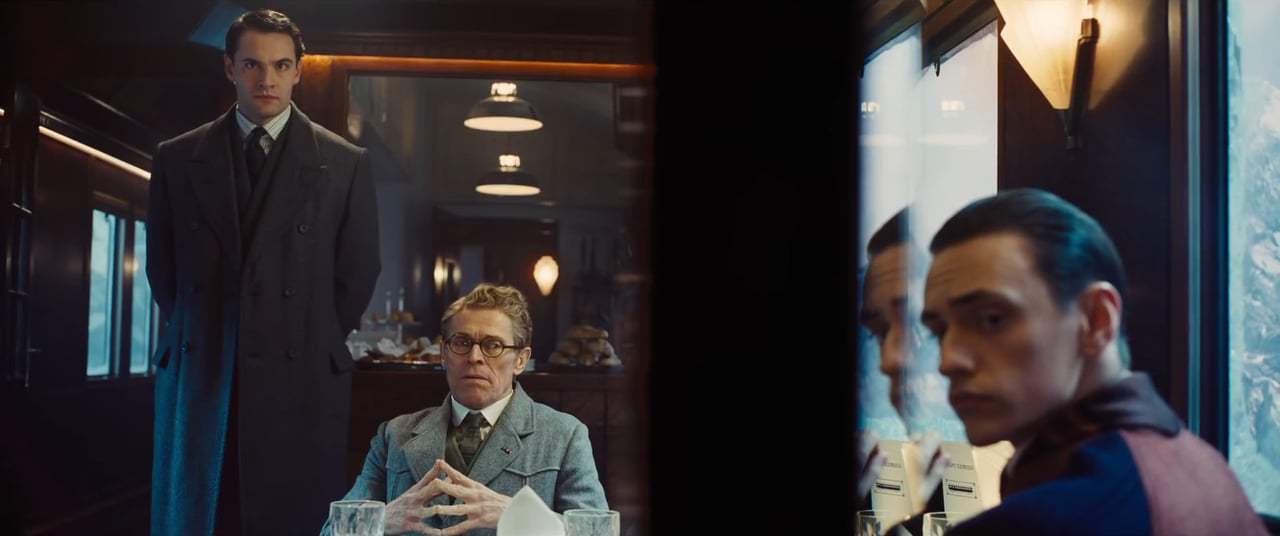
The suspect assemble

But I’m being really hard on this film because there are major flashes of promise here. Not least in Branagh’s performance as Poirot. I’m very confident in saying that, after David Suchet of course, this is the second best Poirot committed to film. The first thing anyone will notice is of course the moustache. Yes it looks absurd, but you attune to it quickly. It’s also a plot point: Poirot uses it, and his eccentricities, to lure people (Columbo style) into a false sense of security. When the film relaxes into just letting Poirot investigate (and hues closer to the original), Branagh gives Poirot a warm humanity and gentleness. His eyes are a wonder – intense disks of sadness. 

Branagh gives Poirot a love of order and justice that defines his world view – and the film introduces a moral conundrum for Poirot in the solution of the crime. I would say David Suchet’s TV version did this better – stressing Poirot’s Catholicism and belief in the rule of law as major factors that conflict him when confronted with the solution. But Branagh captures a real sense of Poirot’s conflict (even if the solution reveal is overplayed and overshot – right down to a “last supper” style tableaux in a railway tunnel) and his sadness, confusion and decency are really lovely – there is even a very neat touch with him forgetting to straight and smarten his appearance, as he deals with the ramifications of his solution to the murder. He looks like cartoon character, but he makes Poirot a real man. I would definitely like to see him do the role again.

The rest of the all-star cast rather struggle for crumbs, as the focus remains solidly on Poirot (largely because the film is intended as the possible first in a series). Tom Bateman is excellent as Bouc, charming and endearing but also given a character arc that sees him develop and change. Of the stars, Depp is suitably grimy as Ratchett, Pfeiffer imperiously stylish and skittish as Hubbard and Odum Jnr affecting as Arbuthnot. I was very taken with Daisy Ridley’s Mary Debenham, a young charm hiding steel underneath. Dafoe, Dench, Colman, Jacobi and the rest are given little to do but are reliably excellent when they are. Others like Cruz feel wasted. 

When the film focuses on Poirot simply investigating, it is very good. Each interrogation of the passengers is brilliantly played by Branagh – Poirot subtly adjusting his methods and approach depending on the person he is talking to. Poirot’s introduction sequence in Jerusalem has a playful Sherlock feel to it: Poirot solving a crime in seconds (having been dragged from his hotel, where he pickily demands eggs that are perfectly equal), including accurately predicting how the criminal will try and escape. There are lots of lovely moments – but just when you settle down to enjoy it, something wildly over-the-top or silly happens.

Murder on the Orient Express is by no stretch of the imagination a bad movie. In some places, it’s charming and a lot of fun. If it’s designed for watching on a bank holiday afternoon it works very well. But it’s, at best, the third best version of this story on film (after the 1974 Lumet film and the Suchet TV version). Do we really need to watch the third best version of an already familiar story? If we could transplant Branagh’s performance into Lumet’s film, now that would be something. But as it is, we’ve got a decent if flawed film that just tries too hard to do too much.

Les Diaboliques (1955)


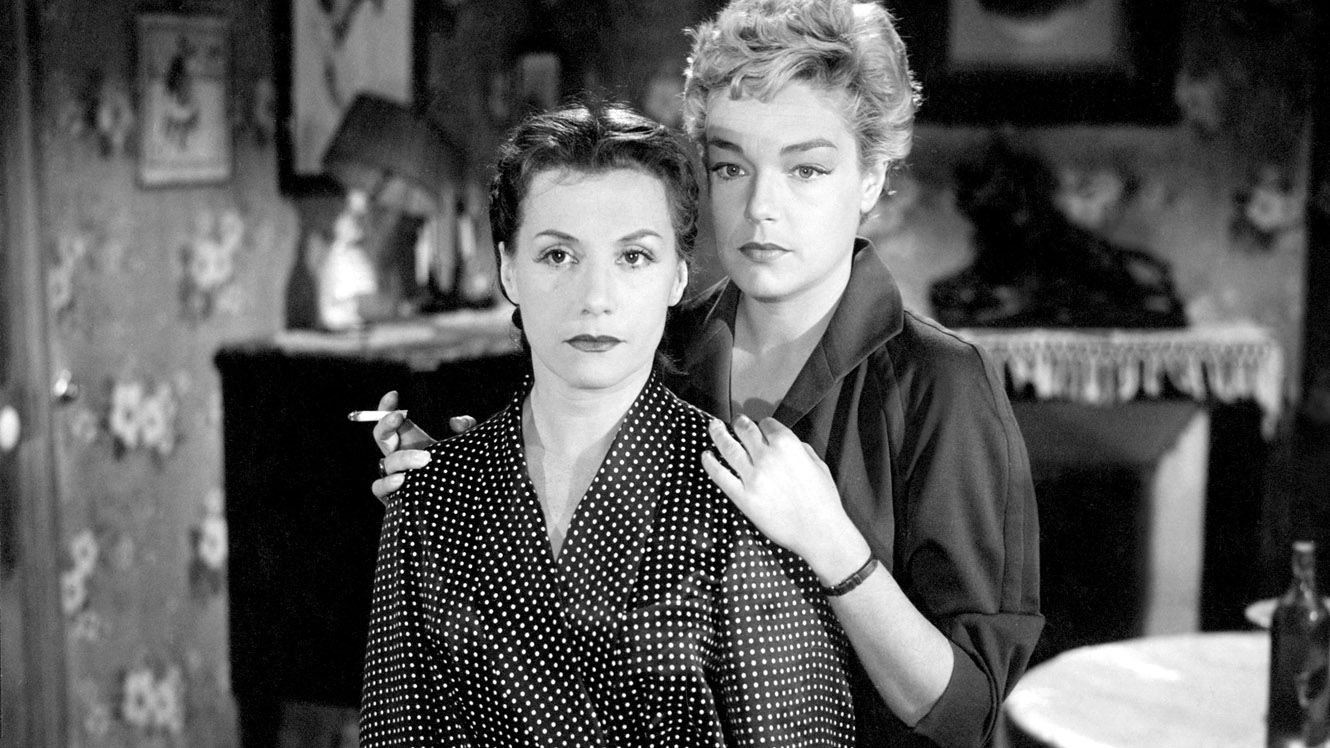
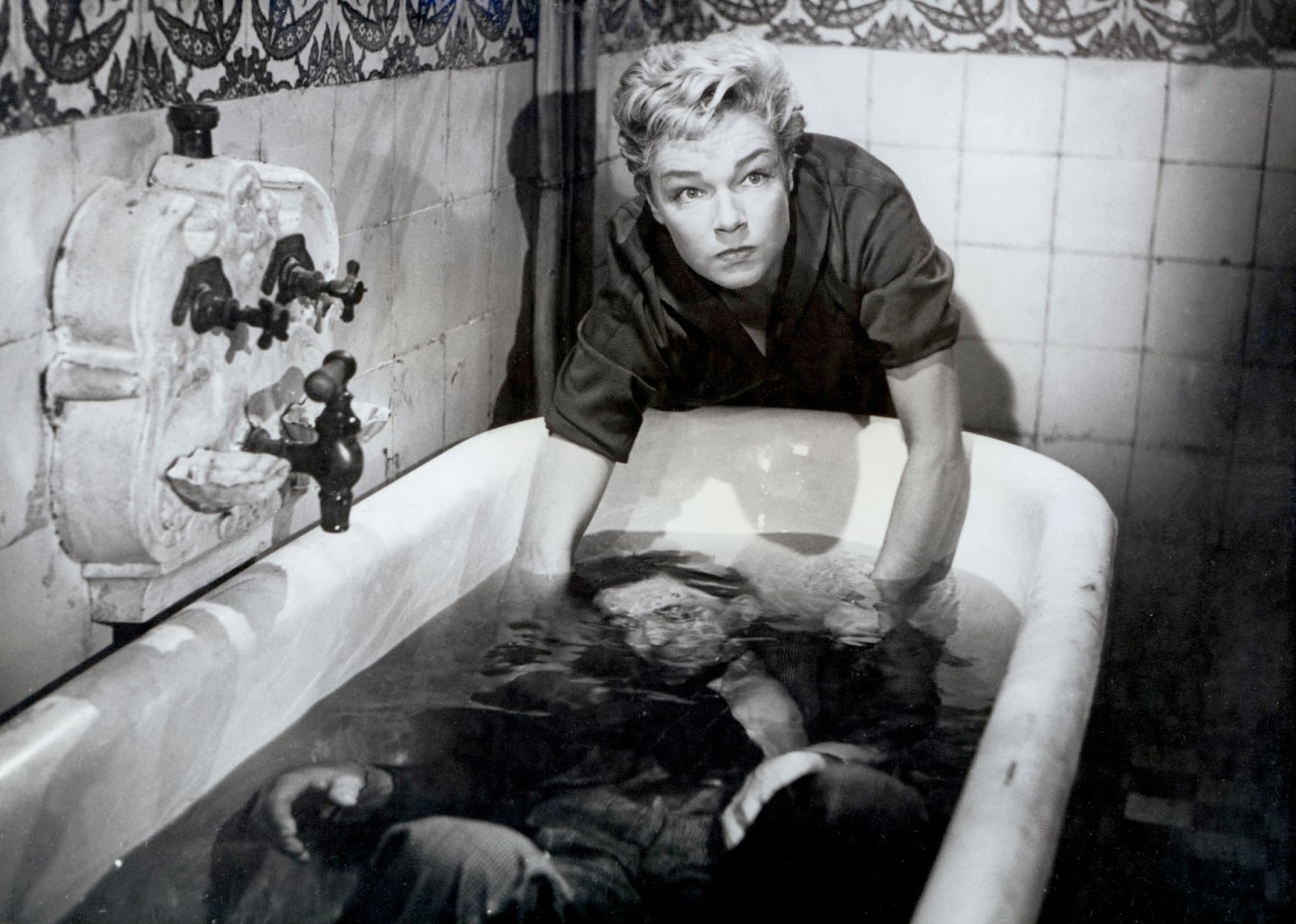
Véra Clouzot and Simeone Signoret plot murder in twisty thriller Les Diaboliques

Director: Henri-Georges Clouzot

Cast: Simeone Signoret (Nicole Horner), Véra Clouzot (Christina Delassalle), Paul Meurisse (Michel Delassalle), Charles Vanel (Alfred Fichet), Jean Brochard (Plantivaeu), Pierre Larquery (Drain), Michel Serrault (Raymond)

Clouzot is one of those fine directors, less prominent today in the list of the great artists of cinema. This might be because, unlike some of his contemporaries, many of his films were unashamed thrillers, Hitchcockian suspense tales, rather than the serious, artistic films we associate with French cinema. Les Diaboliques is the most popular of these films, a part mystery, part horror drama which slowly builds a confusingly terrifying picture of murder, danger and betrayal.

Christina (Véra Clouzot) is the wife of Paul (Michel Delassalle), a sadistic, bullying nightmare of a man. Together they run a boarding school, set up by her inheritance, but their marriage is a disaster. Paul is openly conducting an affair with fellow teacher Nicole (Simone Signoret). Nicole, however, is as disgusted and contemptuous of Paul as Christina – and she eventually persuades her that they should consider ridding themselves of Paul, with a temptingly simple scheme. However, things swiftly go against their plans…

Les Diaboliques is a compelling psychological thriller cum horror story, a creepy slow-burn of suggestion and paranoia that unfolds a bizarre whodunit mystery, which unnerves and constantly leaves you guessing. The story unfolds at a measured, inexorable pace. Clouzot’s camera is a quiet and carefully placed observer, taking in the events that occur in this hellishly cruel school with a calm directness, a cool minimalism that lets them speak for themselves.

And it’s a pretty hellish school. Paul is a brutal tyrant and bully, the teachers and students alternating between fear and loathing for him. He treats his fragile wife (struggling with a heart condition that could end her life at any moment) with a casual disregard and cruelty. Poor Christina is so put-upon and crushed, she seems wearily accepting of her husband’s constant affairs intermixed with cruelty. Even his mistress (an imperiously cold, harshly determined Simeone Signoret) can’t stand him. The whole school seems to have felt the effect of Paul’s personality – its run down, crushed, disheartened. The other teachers are either disinterested, faintly criminal or both. Is it any wonder wife and mistress want to murder him?

The murder, when it comes (and it’s the best part of half way through the movie) is almost blandly low-key. Clouzot even partly intercuts it with next-door neighbours complaining about the hot water being run late at night, the sound disturbing their radio quiz – unaware that it’s filling the bath so the two women can drown a drugged Paul. The flat where the crime occurs is as low-key and shabby as most of the rest of the film’s locations. 

Fascinatingly, what emerges increasingly are the lesbian undertones to the relationship between Nicole and Christina. Their intimacy is a major part of the build-up to the murder – their conspiratorial closeness seems as much as a careful seduction of Christina by Nicole as it is two like-minded souls coming together (this feeling, by the way, really comes into play as the film reach its conclusion). As events spiral out of control, Nicole becomes more and more of a protective, husbandly figure over the fragile Christina (an intriguing performance of vulnerability from Clouzot’s wife Véra), their physical and emotional closeness making them feel more and more like lovers dispatching a husband, rather than allies of convenience. It’s an intriguing subtext to the film, that I feel will make it of more and more interest as time goes on.

Events certainly do spiral out of control, as the body carefully placed in the swimming pool by the murderers (hoping to give the impression that Paul has accidentally drowned) is never discovered. Is it in the pool at all? Is Paul dead? Or has someone taken the body? A string of increasingly unnerving deliveries and visitations occurs – is Paul somehow speaking from the dead? Or are forces unknown manipulating the killers to disaster? Clouzot lets these events slowly build, avoiding the temptation to sprinkle clues or – more importantly – to give the audience more clues than the characters. We are only ever shown what Christine and Nicole see and only get the information they get.

This is where the film introduces its fourth primary character, retired detective Alfred Fichet. Fichet’s ambling, scruffy, seeming absent-mindedness makes him an eerily accurate forerunner of Colombo (at one point he all but says “just one more thing”). He rolls from place to place, clearly much sharper than he appears – it’s an impressively charismatic performance from Charles Vanel. He manages to work out what has happened (or perhaps what is happening) before the end – but moves too slowly in order to prevent disaster. But he changes the dynamic of the film in an intriguing way – shaking the film up 2/3rds of the way in, a tribute to the invention of its writing.

The final reveal of the plot is tinged with a horrifying terror – shot with an intense, watery fear that is guaranteed to haunt the memory. To say more is to reveal too much of an excellent act four twist. But it’s a sequence that you will find hard to shake from your mind – and one that you later realise the whole film was building towards. It’s what has led many people to call this film partly a horror story.

Clouzot’s film is a fine twisty thriller, even if at times it feels a little too in love with the mechanics of its tricks and plot mechanisms than it is with emotion and character. But it creates some intriguing and effective characters (including some small cameos) and it feels like a film that genuinely teaches us about the casual cruelty and selfishness that drives so many of our actions. There are many, many lies told in the film – even the children at the school casually lie – this is not a film that has a high opinion of the human race. 

Les Diaboliques has been called the greatest Hitchcock film Hitch never made. Hitch might well have brought a bit more flash and punch in its style (Clouzot is not the most inventive user of the camera here, with most shots very safe). But I’m not sure he could have improved its sense of creeping inevitability and grim claustrophobia. It still packs an inventive, clever and intriguing punch even today.

The Day of the Jackal (1973)


Edward Fox takes aim as suave assassin The Jackal

Director: Fred Zinnemann

Cast: Edward Fox (The Jackal), Michel Lonsdale (Deputy Commissioner Claude Lebel), Terence Alexander (Lloyd), Michael Auclair (Colonel Rolland), Alan Badel (The Minister), Tony Britton (Inspector Thomas), Denis Carey (Casson), Cyril Cusack (Gunsmith), Maurice Denham (General Colbert), Olga Georges-Picot (Denise), Barrie Ingham (St. Clair), Derek Jacobi (Caron), Jean Martin (Wolenski), Ronald Pickup (Forger), Anton Rodgers (Bernard), Delphine Seyrig (Colette de Montpellier), Donald Sinden (Mallinson), Timothy West (Commissioner Berthier)

The definition of lazy criticism is to say a story doesn’t work because we know the outcome. If that was the case, no production of Hamlet would ever work, and no adaptation of a best-selling book would ever find favour with an audience. We’d be bored by films based on history and we’d be even more indifferent to the hundreds of films made every year that follow accepted narrative structures. What makes a film compelling is often not the destination, but the journey. How do we get there? What do we learn? How does it make us feel? All of these things are keenly observed throughout Fred Zinnemann’s masterful adaptation of The Day of the Jackal.

The year is 1962 and the French President Charles de Gaulle is blamed by many for weakening France by granting independence to Algeria. The Organisation Armée Secrète (OAS) hire an English professional assassin known only as The Jackal (Edward Fox) to assassinate De Gaulle. When word of the target leaks to the panicked French Government, Commissioner Claude Lebel (Michael Lonsdale) is given an impossible task – identify a man of whom the government knows nothing and stop him from carrying out a plan only he knows the details of. Meanwhile, the Jackal relentlessly goes about his meticulous planning.

So anyone with passing familiarity with history will know that de Gaulle was not assassinated in the early 60s. Watching The Day of the Jackal, you know that the Jackal will fail. But that’s not the point of the film. Instead it’s a masterful, streamlined thriller that completely understands how much we can invest in watching someone go about a job with calm, cool professionalism. It’s the ingenuity and meticulousness that makes the film compelling, the way each angle of the Jackal’s plan is carefully considered and information slowly delivered to the audience. In some areas we are a couple of steps ahead of Lebel’s search. In others we are as far behind as he is: we may know the weapon and the Jackal’s secret identities, but we know as little about his final plan as Lebel does – it’s only when it’s revealed that all the pieces we’ve seen make perfect sense.

It’s a film that has been assembled with all the grace and skill of a master clockmaker. Zinnemann’s direction and Kenneth Ross’ taut screenplay make every second count. There isn’t a single piece of flab on the bones of this movie, every scene carries a piece of vital information that contributes to the overall picture. Zinnemann sprinkles the film with careful passing shots of calendars and clocks, making the sense of a countdown towards the Jackal’s strike hang intimidatingly over the whole film. The film is gripping, right from its opening reconstruction of the almost-successful OAS assassination attempt on De Gaulle in 1962. Everything feels perfectly interlinked and connected, each scene brilliantly builds on top of the ones before.

This is quite simply an unshakeably brilliant engine of a film, a relentless ride with tension and excitement dripping from every frame. It’s not afraid to be cruel or dangerous – and some of the victims are truly blameless – and it’s not afraid to show that violence and cruelty are weapons as much for the authorities as the Jackal (the cruellest act, after all, is committed by the French Army on poor loyal Wawlinski).

A large part of the success of the film rests on Edward Fox’s performance in the lead. Fox gives the Jackal an unshakeable, public-school, confidence, an attractive resolve that sees him meet every obstacle with a cool elán, resolutely unperplexed by anything that he encounters. Fox’s superb performance succeeds in making you engage with (and even root for) a man who is a cold-blooded professional killer, who commits murder (when provoked) without hesitation. How does this happen? Again it’s his efficiency, his expertise. The film totally understands how engrossing watching talented people go about their work can be.

The film makes the minutia of setting up an operation immensely compelling. In careful detail, we see exactly how the Jackal goes about getting a false passport from the authorities. How he scopes out a potential place to conduct the assassination. His careful preparation of disguises and fake identities. In one gloriously done scene, we see him practise using his specially constructed rifle on a melon at a huge range. Carefully he takes a series of shots at the melon, adjusting the sight each time to make the weapon as accurate as possible. The scene is a showcase for the Jackal’s meticulous professionalism (you can see why the producers were outraged when the scene was cut from a TV screening in the 1980s – it’s practically a highlight of the movie).

Similar investment, however, is made in the detailed footwork involved in tracing and detecting the Jackal by the French and English police. Michael Lonsdale is a perfect foil for Fox’s urbane cool, with his dour, grey, crumpled Label, a man selected somewhat unwillingly for a mission but who slowly reveals the cool head and nerves of steel that made him perfect for the job. The police-work used to try and close the net on the Jackal is as intricate as the hitman’s own work – careful plodding through files and methodical calculation and educated guesswork. It’s as far from the rush and tumble of Hollywood as you can imagine – but somehow, because it feels so real, every discovery against the odds by the authorities becomes hard-won and exciting. The sense of a net being skilfully built also serves to make the Jackal’s skilful evasion of each trap all the more compelling.

And the tense race against time lasts for the whole of the film. The film brilliantly keeps this cat-and-mouse game alive, with the police and the Jackal constantly leap-frogging each other to stay one step ahead. Each move and counter-move has all the intricacy of a chess game. There are enough twists and turns to keep every audience member gripped. The eventual assassination attempt itself is built up to beautifully – a wordless, tense but brilliantly assembled montage of liberation day celebrations keeps both the police and the audience on their toes as to where the Jackal will strike from. The finale of the film turns on a twist of fate that is simply a brilliant coup de theatre. There is even a droll little coda that deepens the mystery of the Jackal even further.

Zinnemann’s direction throughout is flawless – calm, measured and methodical, and never allowing flash or bombast to drown out events. It’s helped as well by the wonderful cast of actors – a real who’s-who of British and French character actor talent, with Alan Badel’s smooth Interior Minister, Eric Porter’s cool but fanatic OAS leader, Cyril Cusack’s quiet gunsmith and Derek Jacobi’s eager young detective particular standouts. I also have a lot of time for Olga Georges-Picot’s quietly moving performance of a woman pushed to extreme actions by grief.

The Day of the Jackal is another of those near perfect movies. Everything it sets out to do it does perfectly, and it rewards constant viewing. It’s got some terrific unflashy performances and is a perfect demonstration of why professionalism and expertise can be so engrossing. It wraps this up into a deliciously tense confection, where every scene bubbles with undercurrents of drama and danger. There is not an off-beat – instead it’s a brilliant piece of pulp cinema that transcends itself into being something truly adept and dramatic. You can’t take your eyes off it for a second. I don’t hesitate for a second in saying it’s one my favourite thrillers.

Fallen (1998)


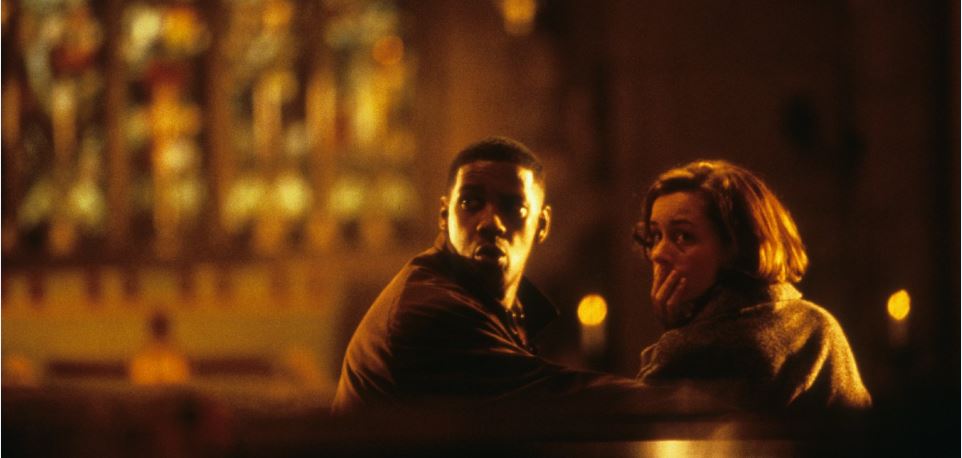
Denzel Washington and Embeth Davidtz on the run from a nasty Demon in Fallen

Director: Gregory Hoblit

Cast: Denzel Washington (Detective John Hobbes), John Goodman (Detective Jonesy), Donald Sutherland (Lt. Stanton), Embeth Davidtz (Gretta Milano), James Gandolfini (Lou), Elias Koteas (Edgar Reese), Gabriel Casseus (Art Hobbes)

Every so often, a film comes round that you know, while you watch it, is a fairly average, unspectacular piece of film-making. But for some reason something about the film just clicks with you and you end up enjoying something basically nothing special. For me, Fallen is one of those films.

What’s particularly nice about having this film as a bit of a guilty pleasure is, I’m pretty sure, most people have never heard of it. Detective John Hobbes (Denzel Washington) has recently been present at the execution of a notorious serial killer. Moments before his death, the killer grabs his hand and mutters a message in a strange language. As a copycat killer continues the crimes – and begins to frame Hobbes – the detective slowly realises his nemesis is no man, but a demon, able to possess humans by touch. He failed to possess Hobbes – and now wants to destroy his life.

There is nothing really new here: Hobbes is straight out of film noir, while the plotline of his mentally handicapped brother raising a son is pure TV-movie of the week. The demon possession idea is not exactly new (although it’s snazzily shot) and the demon quickly heads the way of most creatures in these films: foul-mouthed and delighting in sex and violence. There is a secret underground movement of those aware of the demons on Earth (fortunately we only see one of them) combatting their evil. Nothing really new.

But Fallen makes these elements seem somewhat fresh. The idea of the demon moving from person-to-person via touch is very interestingly presented. At one point Hobbes has a conversation with the demon, as it switches from host to host. Later Gretta (Embeth Davidtz) is pursued down the street by the demon, moving swiftly from person to person in a chain of touching hands. The various actors do a good job of conveying a single consistent character for the demon (fortunately he favours possessing recognisable character actors from US TV drama). Hoblit’s direction has plenty of these interesting new ways of presenting things. He’s also able to keep a good air of menace throughout the film.

It’s not perfect of course. The investigation of the demon’s background hits all the familiar beats from Dante to the Bible. Hobbes must be the only person in the world who (having decoded a message) has to ask A NUN whether the word “Apocalypse” means anything to her. A detective who has never heard of the word apocalypse? Times have changed: it’s the sub-title to a bad X-Men film now. At least one character is so obviously set-up as a candidate for long-term possession, you immediately suspect he’s innocent.

But the film has a fine closing scene, and a decent twist which plays with your initial expectations. It also gives you plenty of clues throughout (from the first shot of the film) about how the action might play out, more than enough for you to work it out for yourself. The idea of the “final confrontation in the wilderness” is again a familiar one, but the supernatural element makes this feel different. It’s actually a twist I didn’t see coming first time around (I was young at the time, not sure if I would be caught again today) – but it’s well presented and doesn’t cheat the audience.

Probably the main reason the film works so well though is Denzel Washington. Here is an actor giving a performance probably beyond the material, encouraging others to lift their game. He perfectly captures both Hobbes’ dedication and his purity of soul, with plenty of little touches that never feel heavy handed. He makes the plotline with his brother hugely sweet. He gets the balance just right between scepticism and dawning horror. It’s a real professional performance that plays off his charisma very well – imagine how awful it would have been with Keanu Reeves in the lead.

But I love that twist ending, and I’m a sucker for these demonic possession films (like disaster films or period epics) so I’ve seen this 3-4 times and really enjoyed it each time. As well as Washington, John Goodman and Embeth Davidtz give very good performances, and there is always enough mystery that you never feel you are racing  far ahead of the film (of course we know from day one it’s about demonic possession, but the characters never feel dense catching up with us). Fallen is a high quality piece of B-movie thrills. If you haven’t heard of it, do check it out.

Sleepy Hollow (1999)


Rumours that Johnny Depp is tapping into his eccentric style are of course unfounded

Director: Tim Burton

Cast: Johnny Depp (Ichabod Crane), Christina Ricci (Katrina Van Tassel), Michael Gambon (Baltus Van Tassel), Miranda Richardson (Lady Van Tassel), Casper Van Dien (Brom Van Brunt), Jeffrey Jones (Reverend Steenwyck), Richard Griffiths (Magistrate Philipse), Ian McDiarmid (Dr. Thomas Lancaster), Michael Gough (Notary Hardenbrook), Christopher Lee (Burgomaster), Christopher Walken (The Headless Horseman), Claire Skinner (Beth Killian) 

Tim Burton’s films often take on a larger-than-life quality, an overblown fanciful journey into a world that is a few degrees off from our own. So a bizarre ghost story about a headless horseman lopping off bonces left, right and centre, in an isolated town that feels more like a construct from a series of other films than any sort of real place, probably suits him perfectly.

After a series of murders via decapitation in the small town of Sleepy Hollow, Iachobad Crane (Johnny Depp) is called from New York to investigate. An eccentric (what else, it’s Depp) moderniser, Crane believes in logic and forensic investigation and is having none of the fears of the townspeople that the murders are being committed by a headless ghost. However he soon changes his views…

This adaptation bears little or no resemblance whatsoever to the original source material, bar a few homages, one or two brief scenes and a few character names. Burton, indeed, seems to have no interest in it at all: what he is interested in doing is paying homage to high-blown Hammer horror films from the 60s and 70s. Whether you enjoy this largely depends on whether you were a fan of either Burton or this style of film-making going into it.

I found the film rather too arch throughout – from the stylised performances of the actors, through to the slight tongue-in-cheek tone. It’s not particularly scary at any point, despite the blood and gore – largely because nothing ever feels real, there’s no sense of dread or peril. Heads are lopped off with an almost comic athleticism, bouncing around floors or rotating on necks. Only one sequence – the murder of a family – carries any real sense of unease about it. The rest of the film is one not-particularly-witty black comedy, in which a lot of time and talent seems to be invested in something not particularly interesting.

Depp is of course perfectly suited to this, his “look at me” acting style springing to the fore as Crane. As usual he overloads the character with quirks and mannerisms, the sort of tricksy emptiness it’s easy to mistake for great acting. The rest of the cast go about their business with a trained professionalism. However, despite the array of British acting talent on display, in truth none of them make much of an impression, with the exception of a nice cameo from Alun Armstrong as a senior New York policeman, and Miranda Richardson who has fun with her role as a sinister housewife with hidden depths.

The awards attention for the film focused on its finest aspects – its look and design. The production design of the film is impressively constructed and the artificial look of the exterior sets actually fits in very nicely within the world of the film. Emmanuel Lubezki’s photography also looks fantastic, shooting the film with a slightly off colour, 70s style that adds a vibrant red to the large amount of blood on screen. Costumes and other technical aspects are also impressive. The film looks fantastically striking, like a brilliantly designed coffee table book – and has about as much plot as one. It’s my problem with Tim Burton – this whole “unique vision” of his, often seems to be an excuse for littering his films with in jokes, arch design and stylisation and leaving out the things we actually care about, like characters, emotion and drama.

In the end, it’s really not a lot more than a joke, a pastiche of a certain genre of film that seems much more like one for the fans than a joke that we can all take part in. I’m aware not liking it throws me open to accusations of not “getting it” or expecting more from it, but I basically didn’t really find the joke funny enough. Its arch style make it hard to relate to, and despite the clear enjoyment of all involved, not a lot of the wit behind the scenes is clear in the final product. With nothing to really invest in, a rather sudden ending and a mood throughout that is trying to be creepy rather than genuinely so. Don’t expect a retelling of its plot around a camp fire to awaken too many goosebumps.