Category: John Ford

My Darling Clementine (1946)

Henry Fonda is here to enforce justice in My Darling Clementine

Director: John Ford

Cast: Henry Fonda (Wyatt Earp), Linda Darnell (Chihuahua), Victor Mature (“Doc” Holliday), Cathy Downs (Clementine Carter), Walter Brennan (Newman Haynes Clanton), Tim Holt (Virgil Earp), Ward Bond (Morgan Earp), Don Garner (James Earp), Grant Withers (Ike Claton), John Ireland (Billy Clanton), Alan Mowbray (Granville Thorndyke), Roy Roberts (Mayor), Jane Darwell (Kate Nelson)

In John Ford’s The Man Who Shot Liberty Valance, a journalist says “When legend becomes fact, print the legend”. It could almost be a commentary on My Darling Clementine, a lusciously romantic retelling of the story of Wyatt Earp and his Gunfight at the OK Corrall between the Earps and local cowboy gang the Clantons. John Ford’s film is a perfect slice of Americana, in which the West is seen at its glorious best, and almost no fact in it is true.

In 1882 retired Marshal turned ranger Wyatt Earp’s (Henry Fonda) brother James is killed outside the town of Tombstone, shortly after Earp had turned down an offer to buy his cattle from Old Man Clanton (Walter Brennan), the family patriarch. Earp suspects foul play, but decides to stay in Tombstone as its new Marshal, with his brothers Virgil (Tim Holt) and Morgan (Ward Bond) as his deputies to reinforce the law. In town he meets local gambling man “Doc” Holliday (Victor Mature) and falls for Holliday’s former girlfriend Clementine (Cathy Downs), in town searching for Doc. Will Wyatt find out who killed his brother and find contentment?

My Darling Clementine is almost entirely invented. Virtually nothing in it is true, from the year it’s set (the actual gunfight happened in 1881) to what happens in the actual gun battle. The fates of nearly all the characters have been changed (James, whose death kicks the film off, actually died in 1926) and a host of characters have been invented, not least Clementine herself. The action has been moved to Monument valley from Arizona. Its comprehensive myth-making on screen, with Earp himself changed from an unhappily married man probably “carrying on” with an Irish actress into the pillar of moral decency that is Henry Fonda. 

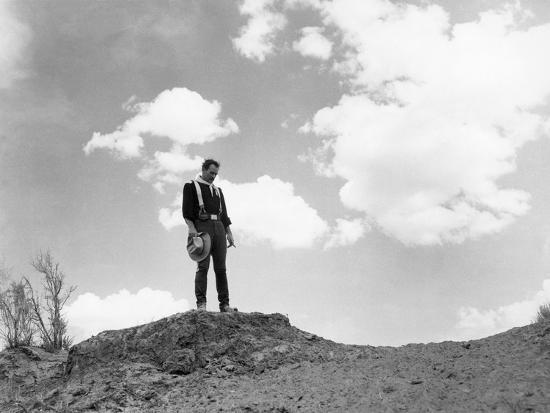
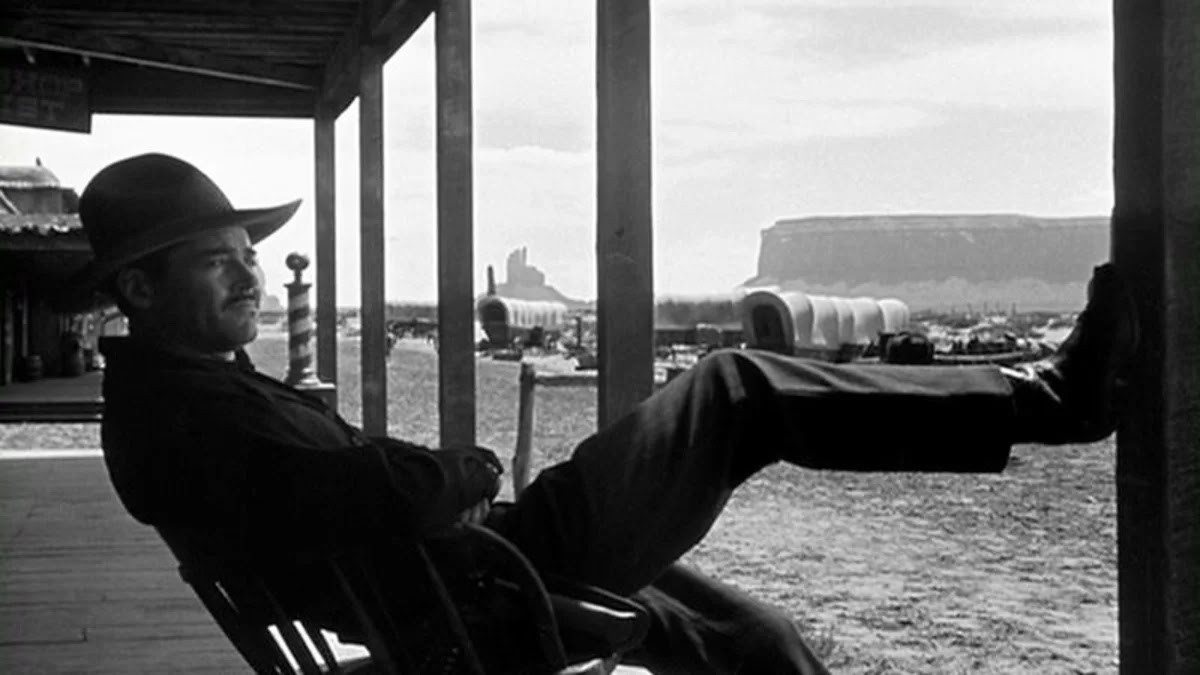
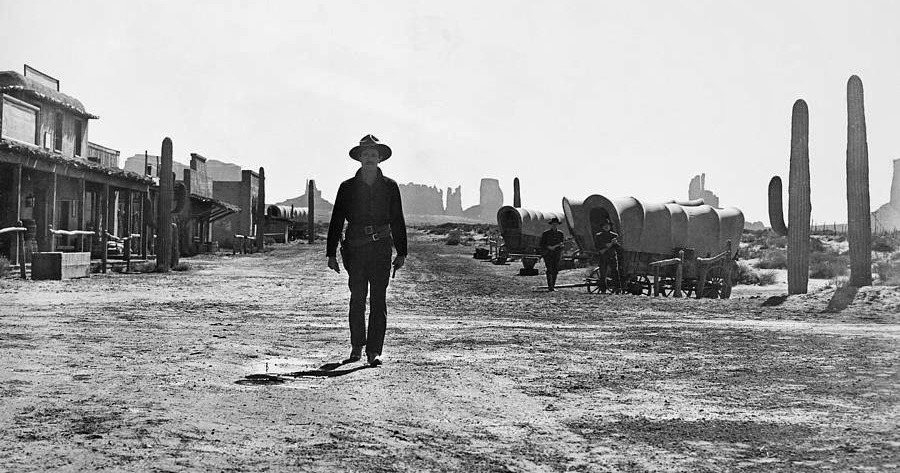
But does it really matter? Not really. If you run with the film has being part of Ford’s tradition of reworking the past of America into a grand origins myth for the United States, the film works perfectly. It’s directed with great visual skill by John Ford, who creates some luscious shots of Monument valley and some glorious skylines that dwarf the actors into the machinery of myth. His visual storytelling is perfect at communicating character, from the boyish leaning back on his chair from the boy scoutish Earp to carefully building the tentative, ]barrier filled relationship between Earp and Clementine. 

My Darling Clementine features a romance plot line, but it’s played in parallel with a story of feuding that leaves large numbers of the cast dead. Aside from Earp and Holliday there is virtually no overlap between the romance plot and the events leading to the gunfire. Clementine never refers to it, and you can almost imagine this as two films skilfully and gracefully cut together. Perhaps this is Ford’s intent: this is a film about community in the West, about the building and creation of a town and the shaping of relationships and friendships around it – that just happens to have as well a gang of murderers that Fonda needs to take down.

Tombstone is emerging from the Wild West – at a key moment half way through the film, Earp and Clementine dance (Earp with a surprising grace) at an outside ball to celebrate the opening of a church. It’s just one sign of civilisation arriving in the town, with theatre on the way and even Holliday’s gambling den slowly becoming something a little bit less violent. Earp himself is a reluctant but honest lawman, repeatedly asking at the start “what kind of town is this?” and seemingly deciding to stay to sort the place out as well as find out who killed his brother. 

It’s telling in any case that Earp’s reaction to his brother being killed is to pick up a badge not a gun, but then you would expect nothing less from Henry Fonda. Fonda is at his most decent, and bashful, his most just and moral, the embodiment of law and justice. Fonda pitches the performance perfectly, a shy man who knows what’s right, but has the guts to go the extra mile to get it. Fonda also gets some wonderful chemistry from his interactions with Cathy Downs’ Clementine, each scene between them dripping with longing but a sad knowledge that nothing can come of it.

There are a whole host of reasons for that, not least her past relationship with Doc. If there is a second heart to the film, it’s the uneasy semi-friendship that grows between Holliday and Earp. It’s a beautifully judged, wordlessly expressed mixture of regard, respect and suspicion, of two men who have taken very different paths in life but recognise in each other a common world view, a yearning for peace and poetry under the guns. Holliday – dying although you wouldn’t think it considering the hale and hearty look of Victor Mature – is a dangerous man but a fair one, not like the arrogant destructiveness of the Clantons. He’s even able to juggle respectful relations, not least with Linda Darnell’s showgirl. Mature gives a decent performance, hampered by his essential earnest woodenness from really exploring the depths of a TB suffering physician turned gunslinger, but able to express a basic decency and touch of poetry.

It’s a film about small moments between these characters that culminates in parallel with a gun fight that burns out of the clash between the Earps and Clantons. The Earps are of course all thoroughly decent, upright sorts while the Clantons are unclean, unshaven (first thing Wyatt does in the film is get shaved!) types, led by a bullying Walter Brennan. The gunfight is spectacular, but it’s part of one of two films, followed as it is with Earp’s sad departure from the town and the culmination of the unspoken love between him and Clementine. But isn’t that part of the myth? And with its romance, its heroic stand against injustice and its epic sweep and brilliance, My Darling Clementine is a celebration of the myth and power of the West.

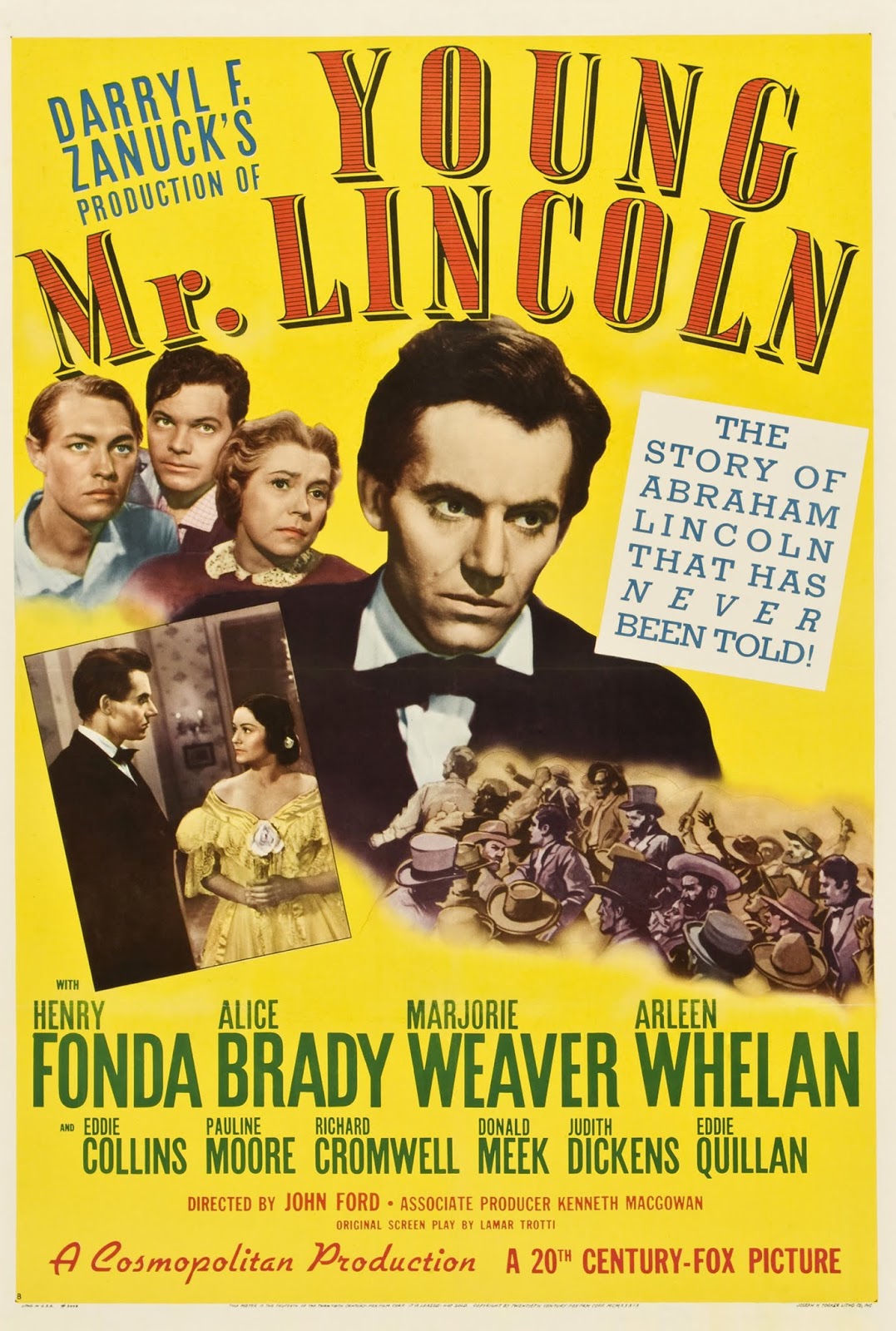
Young Mr Lincoln (1939)

Henry Fonda excels in the origins story as the Young Mr Lincoln

Director: John Ford

Cast: Henry Fonda (Abraham Lincoln), Alice Brady (Abigail Clay), Marjorie Weaver (Mary Todd), Arleen Weaver (Sarah Clay), Eddie Collins (Efe Turner), Pauline Moore (Ann Rutledge), Richard Cromwell (Matt Clay), Donald Meek (Prosecutor John Felder), Eddie Quillan (Adam Clay), Spencer Charters (Judge Herbert A Bell), Ward Bond (John Palmer Cass), Milburn Stone (Stephen A Douglas)

John Ford is often called the mythmaker of America, the director who perhaps contributed more than any other to building a romantic vision of America’s roots and past. As an explorer of the legends and mythology that underpinned his country, it’s perhaps no great surprise that he directed a film about the American revered more than any other since the Founding Fathers – Abraham Lincoln himself.

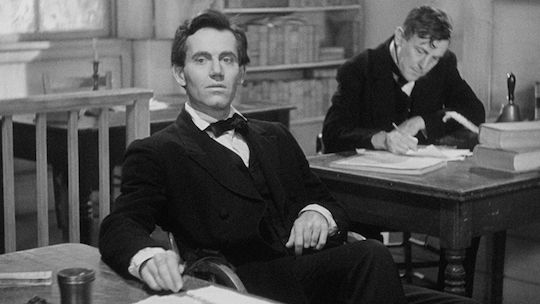
Playing out over 10 years, the film follows Young Honest Abe (Henry Fonda) from his days of autodidactism with a law book in Illinois, through his love for, and the death of, Ann Rutledge (Pauline Moore) and his arrival in Springfield to practice law (which he does with a shrewdness mixed with the wisdom of Solomon). The bulk of the film’s plot focuses in particular on him representing two brothers accused of murder in a courtroom trial, where Lincoln’s wit, wisdom and determination see justice done.

Okay reading that subplot, it’s pretty clear that this is a fairly rose-tinted view of The Great Emancipator. Henry Fonda had put off playing the role, as he felt it would be like hewing a performance out of marble. It’s hard for non-Americans to even begin to understand the reverence with which Lincoln is almost universally held in America, but it runs through this film like sugar through a stick of rock. Lincoln throughout the film is maybe an increasingly canny operator with a mastery of winning people over and playing crowds large and small, but he’s also always right, always does the right thing and always has a warm regard and love for genuine real people.

If you made the film today it would probably be called Abraham Lincoln: Origins, as Ford shows Lincoln building up all the weapons that would become central to his political artistry. Fonda starts the film gangly and physically awkward, finding it hard to know what to do with his height or long arms while giving speeches (Fonda wore platform shoes to increase his height). But even at the start his words are warm and genuine, even if his delivery is awkward. It’s something he masters to a far greater degree by the mid-way point of the film, when he skilfully diffuses a potential lynch mob with wit, gentleness, calm and a bit of righteous shaming. By the time he hits the courtroom, he’s overwhelmingly confident in his physicality and able to match it up with his oratorical brilliance and his skill at using seemingly rambling, inconsequential stories to suddenly hit home a sharp and painful truth.

Fonda’s impressive performance as Lincoln makes the film. Fonda gives Lincoln not just these positives but also hints at his sharpness of mind and his cunning. Negotiating a legal disagreement between two farmers (which he does with such skill that both end up paying him), he not only gives a fair sentence, but shows how he is not above manipulating men to achieve his ends (and, in biting one of the coins that he is given, that he may be honest himself but he’s not always trusting). He has a romantic regard for the mother of his clients (played very well by Alice Brady), but can still gently patronise her with his romantic ideal of her as an ideal American mother.

But when the push comes, Lincoln is a man of principle, wrapped in a skilful performance. The idea of mob justice is anathema to him, while Fonda makes clear he’s smart enough to not say that outright but to guide the crowd to agree with him. During the selection of the jury for the courtroom scene, he will accept men honest enough to say they favour hanging for the guilty, but turn down equivocators or those who believe they are better than the accused men. During the trial scene, he erupts in moral outage when the boys’ mother is pressured into naming one of her sons as the killer so as to save the other from the death penalty.

But he’s also a clever and brilliant player of the game, able to charm both the working classes and the rich, even if he’s not comfortable with either. During the trial scene, his quick wit and relaxation run rings around the government prosecutor (a good role of absolute convictions from Donald Meek) and he easily wins the crowd over with a series of gags and light touches that also carry with them a real, deep truth. Ford is also able to show his ambition – over the grave of Ann Rutledge he lets the fall of a stick decide whether he will continue his career or stay at home, and he all too clearly lets the stick lean over one way before letting it fall (he even acknowledges this himself).

Ford’s film is only very loosely based on actual true events – only the final coup Lincoln uses to win the case is really based on fact. The film is covered with smatterings of what look now like clumsy droppings in of key facts or persons from Lincoln’s life – from the cowpoke who plays “Dixie” (“Sounds like a song you could march to” is Lincoln’s comment) to Lincoln meeting future-wife Mary Todd, to his legal (and romantic) rival being none other than Stephen A Douglas his later rival for the presidency. There could have been a lot more, but afraid that it would make the film ridiculous, Ford kept these to a minimum by simply refusing to shoot them (such as a planned scene where Lincoln met John Wilkes Booth).

It all works because the audience knows who Lincoln will become, and it’s told with an earnestness and a certain amount of pace. Ford however really crafts a modern American myth and it even ends in a suitably epic scale: having won the case, Lincoln strikes off for a walk up a hill, trudging into the distance while a storm brews, heading onwards and upwards away from us and into his future. Sure it’s corn, but it works.

How Green Was My Valley (1941)

Donald Crisp and Sara Allgood raise Roddy McDowell in How Green Was My Valley

Director: John Ford

Cast: Walter Pidgeon (Mr Gruffydd), Maureen O’Hara (Angharad Morgan), Donald Crisp (Gwilym Morgan), Roddy McDowell (Huw Morgan), Sara Allgood (Beth Morgan), Anna Lee (Bronwyn), Patric Knowles (Ivor), John Loder (Ianto), Barry Fitzgerald (Cyfartha), Rhys Williams (Dai Bando), Morton Lowry (Mr Jonas), Arthur Shields (Mr Parry), Richard Fraser (Davy), Frederick Worlock (Dr Richards)

John Ford is by far-and-away best known for his Westerns, many of which are classics. So it’s a bit of a surprise that Ford always claimed the film closest to his heart was this occasionally sentimental drama about a young boy growing up in a Victorian Welsh mining town. Perhaps it was partly because, despite winning four Best Director Oscars, this was the only time Ford directed a Best Picture winner.

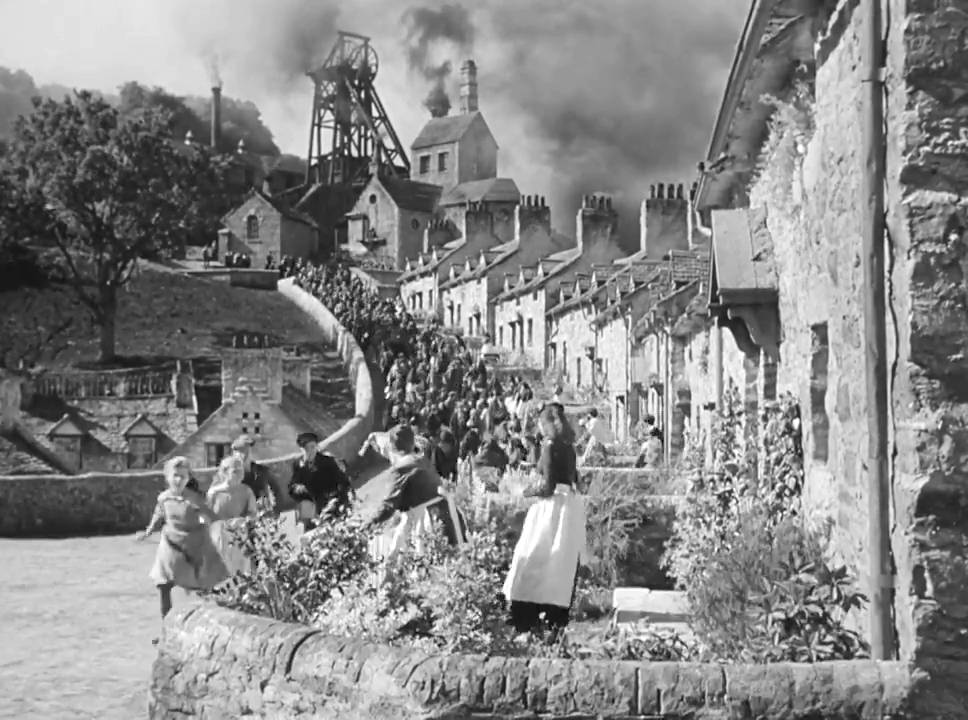
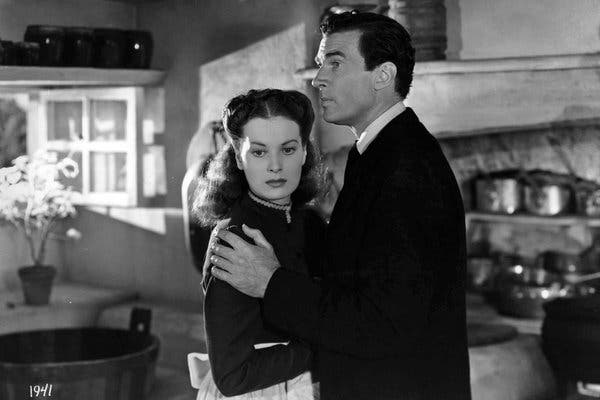
Following the remembrances of young Huw Morgan (Roddy McDowell), the youngest son (of several) of Gwilym Morgan (Donald Crisp), long-running foreman at the mine. The village is beautiful and life seems idyllic – until harsh economic conditions start to take their toll on the village. Wages are cut, moves towards unionisation are harshly resisted by the management, one-by-one the sons are laid off in favour of cheaper labour and the slag of the mine slowly turns the village into a dirty, stained mess. At the same time, the village is shown to be increasingly insular and judgemental, distrusting of outsiders, and suspicious of the preacher Mr Gruffydd (Walter Pidgeon) and the attraction between him and Huw’s sister Angharad (Maureen O’Hara) – made worse after she marries. Huw’s youthful innocence and naivety are met with an increasing attack from reality.

Ford’s film is today a controversial choice for Best Picture – among the films it beat were The Maltese Falcon and, most strikingly of all, Citizen Kane. It’s tough for any film to hold onto the same level of public affection, when it’s widely seen to have robbed a film commonly held up as one of the best (if not the best) of all time. But How Green Was My Valley is no travesty of an Oscar-winner. On its own merits it’s a solid, impressive, sentimental piece of episodic film-making that won’t disappoint you, even if it doesn’t inspire as much as it should.

John Ford directs a handsomely mounted film, full of luscious monochrome shots. It’s a shame that the original plans for the film – to shoot on location in Wales in technicolour – were prevented by World War Two, as the sweep of the real locations would have added a real epic scope to the drama, not to mention make the decline of the village even more obvious visually. But the recreation of the Welsh mining village they planned to film in (in Malibu of all places!) is faultlessly impressive, and Ford creates a real Celtic charm in his shooting of the film.

Celtic is perhaps the key word here as, along with the location, the other thing that ended up jettisoned in the film was its Welshness. There is precious little – if anything – Welsh about this film. It contains one Welsh actor (Rhys Williams), and Ford’s cast use a parade of actors ranging from an attempt at Welsh from Crisp to an imperious mid-Atlantic drawl from Walter Pidgeon. Most actors however settle solidly for something close to Irish – and it’s pretty clear to me that Ford, proud of his own Irish heritage, basically saw this a story of the old country forcing its sons to head to the new country, in the same way his own parents emigrated. It also makes sense for casting the film – there seemed to be precious few Welsh actors in Hollywood at the time, but a parade of Irish actors. 

But look past the film’s complete lack of Welshness – not to mention its presentation of the Morgan’s family home as far more clear and spacious than it would have been in real life – and pretend this is an almost Irish story, and you can focus on the film’s strengths. Although presented with sentiment and nostalgia, How Green is actually a more coldly realistic film than that. While shot with a luscious regard for the past, the film’s themes work to undermine this as much as possible – dealing with disillusionment, depression, unemployment and societal collapse. While Huw may remember the past as being a glorious country, we can see from the tumoils of his family that it was far more complex than that.

Of his siblings, most lose their jobs at the mines and are forced to emigrate. One who remains loses his life due to the mine’s working practices. Their father buries his head in the sand, and refuses to support any moves towards unionisation or the worker’s attempt to improve their lot. The family relies totally on the mine, but by the end of the film have been more-or-less destroyed by it. Even Huw’s sister Angharad, who has a good marriage to the son of the mine owner, finds herself trapped in a loveless marriage with her affections for Gruffydd the source of cruel comment from the village. The valley may be green on the surface, but it’s far darker underneath. 

And poor Huw either doesn’t notice, or doesn’t care. After struggling through bullying from a teacher at school, he finishes school and is awarded a scholarship – only to reject it in favour of remaining to work in the mine, having learned all the wrong lessons from his life (and to the horror of his father). Ford stresses Huw’s youthful naivety by not ageing up Roddy McDowell (very good) at all as Huw – Huw remains forever a 12-year-old-boy, even as events race on. It’s a neat capturing of both the older Huw (who narrates) imagination of what he was like, and also serves to stress how Huw’s nostalgia is framing the story we are seeing. It also makes Huw seem even weaker and vulnerable than he is – a shot of Huw labouring in the mine behind a seemingly giant cart hammers home his weakness – Ford shoots many scenes with low-angle lenses to make us visually emphasise with Huw and to see the world from his perspective.

How Green’s main weakness is its hesitation to commit to either the cold reality, or the hazy nostalgia that the film’s filming style uses. It lands between the two stools, wanting to tell us the truth while also wanting us to leave with a warm feeling towards the simpler times of the past. It’s perhaps not helped in this by the episodic nature of the script, which moves from event to event without much in the way of overarching narrative. It makes for a film that leans even more towards a slightly maudlin view of the past as a series of entertaining stories, which serves to cover even more the darker themes of the film.

Ford’s cast are a mixed bag. Donald Crisp is superb as the father, part imperious patriarch, part loving father – and won the Oscar. Equally good is Sara Allgood as his wife, the ideal loving mother that a son would remember, but with a spine of steel. Maureen O’Hara brings a passionate romanticism to Angharad, while Barry Fitzgerald and Rhys Williams are entertaining as a drunken trainer and his boxer protégé. Mnay of the rest of the cast though are weaker, with Walter Pidgeon rather stolid as Gruffydd and many of the actors playing Huw’s brothers reduced to balsawood under the burden of odd accents and earnest characterisation.

Ford’s film is a very good one that, if it catches you in the right mood, will certainly move you. I am not sure it caught me in the right mood on any of the occasions I saw it, but I appreciate its technical assurance and excellent direction. It fails to really find an effective balance between its darker tones and its nostalgic outlook, but it still works for all that. It’s not Welsh but it is a good film.