Category: Directors

The Four Hundred Blows (1959)

The Four Hundred Blows (1959)

Injustice, oppression and disregard fill the life of a young ‘Truffaut’ in this marvellous coming-of-age story

Director: François Truffaut

Cast: Jean-Pierre Léaud (Antoine Doinel), Albert Rémy (Antoine’s father), Claire Maurier (Antoine’s mother), Guy Decomble (“Sourpuss”, the teacher), Patrick Auffay (René Bigey), Georges Flamant (Monsieur Bigey), Pierre Repp (English teacher), Daniel Couturier (Betrand Mauricet), Luc Andrieux (Gym teacher), Robert Beauvais (School director)
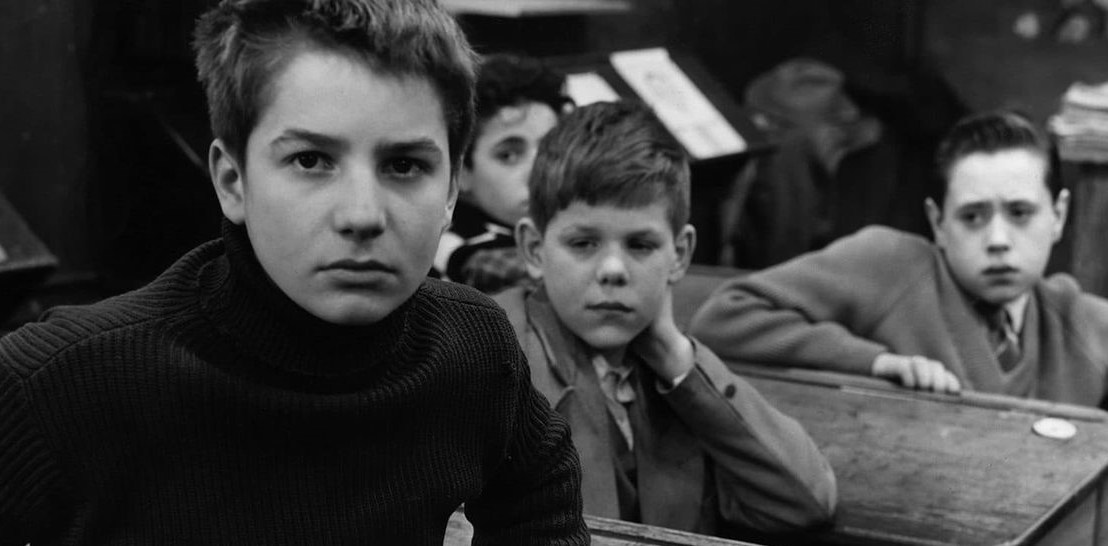
Truffaut’s first film, shot when he was just 26 years old, is not only one of the finest debuts ever, it’s also one of the films most in touch with being a child. Heavily based on Truffaut’s own troubled childhood, it’s a beautifully told exploration of how much children can be misunderstood by adults and what a cage, of circumstances outside of your control, childhood can become.

Antoine Doinel (Jean-Pierre Léaud) is a 12-year-old living in a cramped apartment with his parents, who have a tempestuous relationship and alternate between half-interested mateyness and exasperation with their son. Antoine is marked at school as the class trouble-maker and constantly finds himself in scrapes, only increasing the perception of him as a tearaway and lost cause. Eventually packed off to a reform school (basically a borstal), only his imagination and love of books and film (qualities no one sees in him but us) give him any hope.

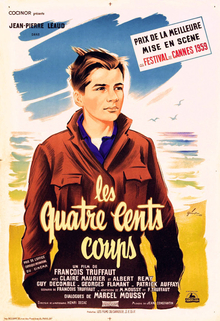
What’s with that title? In French it’s Les Quatre Cents Coups in reference to the expression “faire les quatre cent coups” which roughly translates as “raising hell”. The alternative English title of Wild Oats (which to be honest isn’t much better) was rejected. But perhaps it’s for the best. The 400 Blows has a poetic gorgeousness about it: it reminds us of Waugh’s powerful quote from Brideshead Revisited about the destructive impact of circumstances and misguided interventions on the tragic Sebastian: “a blow, expected, repeated, falling upon a bruise”. And what is Antonie’s life but 400 blows hammering down, repeatedly and expectedly on the same bruise?

This is a kid who never catches a break. From the opening scene, as the kids pass around a page torn from a naughty calendar, it’s him who gets caught with it – because he starts doodling artistically around her eyes. He’s distracted from his punishment homework by one of his father’s (brief) bursts of friendly interest. Worried, he skips school the next day then invents a ridiculous lie of his mother dying to cover it, cementing the impression he is a habitual liar. When he quotes his beloved Balzac in a school essay competition, he is thrown out of the class for plagiarism. After stealing a typewriter, he’s caught when he tries to return it. The kid cannot get a break.

It’s a hugely sympathetic and moving insight into Truffaut’s own childhood. He too was raised, largely in indifference, by two parents who seemed uncertain they wanted him. Like Antoine, he discovers the man he thinks is his father actually isn’t. He also he spent eight years living with his grandmother, because his mother wanted an abortion not a child, and witnessed his mother’s extramarital romances. Truffaut to spent much of his time with his closest friend Robert Lauchney (here appearing as René Bigey – Lauchney worked on the film’s crew).

But, also like Antoine, Truffaut was passionate about imagination and the arts. Antoine reads Balzac’s Le Père Goriot (smoking an illicit cigarette – after all he’s French) and it makes such a powerful impression he can quote large chunks of it from memory in a school essay and builds a candle-lit shrine at home to the author (with his usual luck, the candle nearly burns down the cramped flat). The cinema is his other big escape. He takes every opportunity to visit, staring at the screen with wonder, stealing film posters (he swipes an image of Harriet Andersson in Summer with Monika) and finding an outlet for his imagination and intelligence that the real world never offers.

This is a child who requires attention, focus and encouragement to bring out his vibrancy and creativity. What he gets are orders to take the bins out and stupefyingly boring lessons of endless repetition mixed with abuse at school. Home life has only flashes of happiness: Antonie’s childish, giggling joy when his parents take him to the film, and laughing in the car as they remember the film on the way home, is the only time he seems to smile in their presence. At others, his mother mixes irritation with sudden bursts of affection that are really bribes for good behaviour.

He is bought to life in an extraordinary performance from Jean-Pierre Léaud. Found from a pool of 200 applicants from a newspaper advert, Léaud transformed Truffaut’s idea of Doinel. Truffaut saw him as more overtly fragile, timid and artistic. Léaud has all of that – but matches it with a defiance, a bravery and a slight resentment that makes his vulnerability all the more affecting. He is the sort of kid you see as a tearaway but, look closer, you’d see the soul of an artist.

Léaud’s performance is guided with a great deal of delicacy and skill by Truffaut – so successfully that he and Truffaut would collaborate five more times on films about Antoine’s future life. His part was largely unscripted, Truffaut outlining the plot and scene and then encouraging him to use his own words. It’s gloriously effective in a beautifully naturalistic late scene, when Antoine (the camera focused solely on him), responds to a series of questions from an unseen psychiatrist about his past, including an abashed cheeky giggle when asked about his sexual experience.

The 400 Blows also helped to kickstart what would become the French New Wave. Truffaut – and cinematographer Henri Decaë – shot the film with an on-the-streets naturalism that gave a large dollop of documentary realism to a narrative film. Decaë’s roving camera, moving easily and naturally through the streets, tracking the movement of the children, is also reminiscent of the very act of being a child, where life is often one of wild drifting and aimless but purposeful running through streets. The wide angles capture the everyday details of the Paris in a way that feels intimate and real, and also manage to hammer home the cramped apartment the Doinels live in (Antonine’s bedroom, Harry Potter like, is basically a cupboard under the stairs next to the bin).

It all builds towards the film’s extraordinary ending. Thrown into a reform school, essentially told by his mother she doesn’t want him to come home, barred from seeing his friend René, asked to choose which hand he wants to be slapped with by the teachers and forbidden access to the books and films he loves, Antoine does what he has done all his life. He runs.

Running from a football match, evading a pursuing teacher, Truffaut gives us two long tracking shots of extraordinary beauty but also profoundly openly to interpretation. Antoine runs through the countryside, the camera keeping pace with him, his feet pounding on the grass and pavement. We are joining him in his flight, running free alongside him. Then he arrives at his destination – and the camera tracks him as he walks across the beach until finally he sees the sea. He wades – and then turns to look directly at us, Truffaut freeze-framing and zooming in.

Are we being challenged? After all, perhaps we are all complicit in the wretched judgement Antonine has faced. Or is this him welcoming us, accepting us, acknowledging us as his co-conspirator and escapee? Who quite knows. What we do know is that The Four Hundred Blows set Truffaut on the path to being one of the world’s leading directors – and is a stunning, sympathetic and heart-breaking insight into the struggles and injustice that childhood can consist of.

Drive (2011)

Drive (2011)

Neon, darkness and shades of grey fills the screen in a film that’s practically the definition of cult

Director: Nicholas Winding Refn

Cast Ryan Gosling (Driver), Carey Mulligan (Irene Gabriel), Bryan Cranston (Shannon), Albert Brooks (Bernie Rose), Oscar Isaac (Standard Gabriel), Christina Hendricks (Blanche), Ron Perlman (Nino Paolozzi), Kaden Leos (Benicio Gabriel)

Impassive and supernaturally calm, the Driver (Ryan Gosling) sits with the car engine purring. In this five-minute window he is the get-away driver who will go to any length. Outside of that, criminals are on their own. Its one of the simple rules he lives by. He never compromises. Until, of course, he finds something worth compromising for. That would be his neighbour Irene (Carey Mulligan) and her young son Benicio (Kaden Leos), trying to make ends meet while her husband Standard (Oscar Isaac) is in prison. The Driver helps them – and feels compelled to go on helping them when newly released Standard (trying to go straight) does one more job to get out from under the thumb of his criminal friends. That last job is always the worst one isn’t it? Particularly when crime lords as ruthless as Bernie (Albert Brooks) and Nino (Ron Perlman) are involved.

Drive won Refn the best director award at Cannes (after a huge standing ovation). It’s not hard to see why. This film is so overflowing with style, uncompromising cool and unreadable enigma it was practically a cult classic before it was even released. Layered in a mix of 70s and 80s chic – with its electric pink titles, John Carpenter-ish Los Angeles visuals and counter-culture smarts – it echoes cutting-edge crime drama from the punk years of Hollywood (it’s practically a remake of The Driver for starters!), by way of touches of Melville crime drama and Spaghetti Western anti-hero. Scored to a mix of ambient beats and electronic rock, it’s the dictionary definition of style.

It keeps you on your toes from the start. Its opening not only explores the Driver’s incredible skills (speed, manoeuvring, ingenious evasions and knowing when to go slow, he can do it all) it also sets us up for the whole film. Shot largely alongside the Driver in the car, we zip through streets and understand the determination (and hints of danger) under his impassive surface. That prologue is the whole movie in capsule – a careful wait, a sense of a fuse being list, touches of humour to distract us (the Driver’s precision with his gloves) and brilliant misdirection when his focused  attention to listening to a football game on the radio pays off in spades when we see his plans revealed.

Much of the first 40 minutes carefully develops the Driver’s surprisingly contented life: his happy acquiescence in the racing dreams of his fixer and mechanic boss Shannon (an ingratiating Bryan Cranston), who the Driver likes so much he doesn’t care that Shannon regularly swindles him; a soft, unspoken half-romance with Irene (Carey Mulligan, truthful and with a strength beneath the vulnerability); and a big-brother bond with her son Benecio. In another world this could have been a film where a loner learns to make a connection and finds love.

But it ain’t that film. The troubles start with Standard’s release from prison. Skilfully played by Oscar Isaac as well-meaning but essentially hopeless, Standard’s problems become Irene and Benecio’s problems. That one last job goes south – as they always do – in an orgy of cross, double cross and increasingly graphic violence. And the burning propulsive energy that lies under Drive, just like that purring engine in the films opening, is let rip.

What we get in the second half is dark, nihilistic and violent. Oh, good Lord, is it violent. Bone crunchingly, skull shatteringly, blood spurtingly violent. Because when gangsters get pissed off, they play for real. And it turns out, when the Driver finds something to care about, he plays for real as well. Refn’s eye for violence is extremely well-judged. We see just enough for it to be horrifying, but the worst is done via sound and editing (the Driver’s almost unwatchable assault on a goon in a lift puts almost nothing on screen, but the squelches and crunches on the soundtrack leave nothing to the imagination).

Refn’s trick is to combine lashings of indie cool and ultra-violence with a deceptively simple story that allows plenty of scope for interpretation. Drive has a sort of mythic, Arthurian quest to it, with the Driver as a sort of knight errant, defending a damsel in distress. But it’s also a grim crime drama, with a man at its centre who brutally kills without a second thought. This all depends on the enigmatic Driver at its heart. No other actor alive can do unreadable impassivity like Ryan Gosling – this could almost be his signature role. He’s ice-cool and professional, but also rather child-like and gentle.

Is he a guy dragged down by his own worst impulses? His jacket has a large scorpion on its back, echoing the old fable of the frog and the scorpion. Rather than one or the other, the Driver feels like both in one. A frog who wants to carry everyone over the river, but whose poor instincts and capacity for violence acts as the scorpion that destroys him. Where does he come from? What is his past? The film ends with a series of enigmatic shots that, to my eyes, suggest a supernatural quality to him. I sometimes toy with the idea he’s a sort of fallen angel, constantly protecting the wrong people like he has a scorpion curse on him. Refn’s gift is to craft pulp with psychological intrigue.

Drive is a very cool film – and Carey Mulligan and Ryan Gosling’s careful playing gives it a lot of heart, just as Albert Brooks’ marvellously dangerous gangster gives it a sharp, unpredictable edge. It rips its eye through the screen, with pace, speed and iconic imagery, all splashed with a pop art cool. But it’s not just a celebration of style: it’s also a dark romance, a tragedy and an exploration of a character who may be his own devil or may not even be human at all. Either way, its intriguing and exciting. Can’t ask for much more than that.

Nope (2022)

Nope (2022)

Be afraid of looking in Jordan Peele’s puzzling but less enlightening horror suspense film

Director: Jordan Peele

Cast: Daniel Kaluuya (Otis Jnr “OJ” Haywood), Keke Palmer (Em Haywood), Steven Yeun (Ricky “Jupe” Park), Brandon Perea (Angel Torres), Michael Wincott (Antlers Holst), Wrenn Schmidt (Amber Park), Keith David (Otis Haywood Snr), Donna Mills (Bonnie Clayton)

Spoiler warning: Peele loves to keep ALL the plot details on the QT – so I discuss more than he would want, but hopefully not enough to spoil the plot.

Jordan Peele’s previous horror films brilliantly married up genuine chills with acute social commentary. Plot details have often been kept under wraps – after all half the joy of watching Get Out or Us the first time is working out what the hell is going on. Nope continues this trend, but for the first time I feel this is to the film’s detriment. I actually think Nope would be improved if you know going into it that this was Peele’s dark twist on Close Encounters of the Third Kind (with added body horror). Instead, Nope plays its enigmatic cards so close to its chest that it ends up never having a hand free to punch you in the guts.

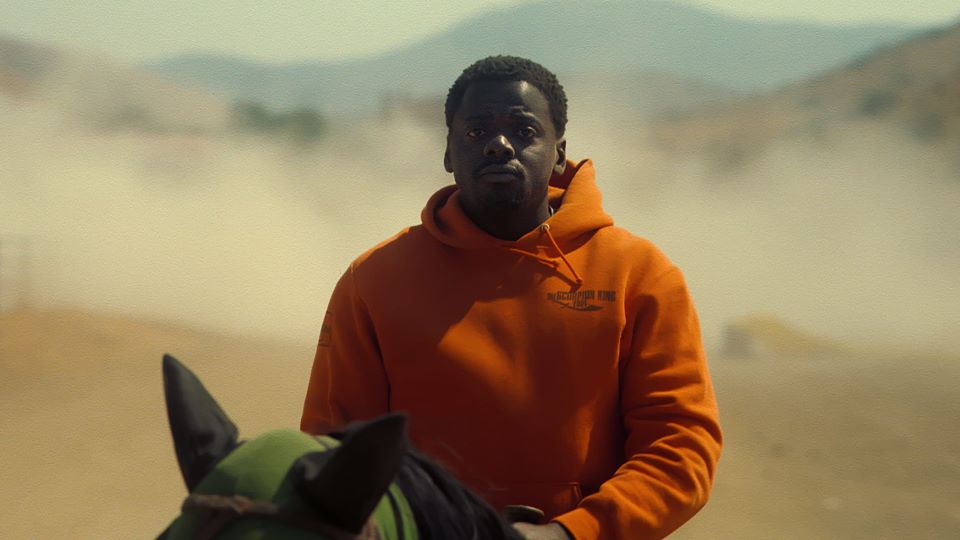
Pensive and guarded Otis Jnr (Daniel Kaluuya) – known, unfortunately, as OJ – and his exuberant wanna-be-star sister Em Haywood (Keke Palmer) are trying (with differing levels of enthusiasm) to keep their father’s Hollywood horse handling business alive after his freak death from a coin falling from the sky (everyone assumes it fell from a plane). The business is struggling, with OJ forced to frequently sell their horses to their neighbour, a former child star turned ranch theme-park owner, Ricky (Steven Yeun). Their lives are altered however when they discover a huge UFO living in a cloud near their ranch, sucking up horses (and other animals) and spitting out any inorganic remains. Seeing this as their path to fortune (and in Em’s case fame) they try and capture the UFO on film.

Nope is all about our compulsive need to look. Nothing draws our eyes like spectacle – and what could be a bigger spectacle than a huge saucer in the sky that eats people? It doesn’t matter if we know we shouldn’t, our eyes are drawn up (now imagine if Peele had been able to call the film Up!). We want to be part of the big event, whether that’s seeing the latest blockbuster at the big screen or rubber-necking at a roadside accident. Nope hammers this point home, when it becomes clear you are only at danger from the saucer when you look directly at it. Spectacle literally kills!

This is all an inversion of the mid-West America that starred at the skies in wonder in Close Encounters. There the Aliens capped the film with a glorious light show with awe and wonder from the humans watching. Here the appearance in the sky is a prelude to sucking you up, digesting you and vomiting out blood and bits of clothing a few hours later. Despite this, Ricky tries to make an entertainment show out of the creature (something he, of course, learns to regret), and OJ and Em find little reason to re-think their attempts to capture the animal on screen.

Peele’s film takes a few light shots at social media culture. Of course our heroes’ first instinct is to reach for their phones (they are looking for that “Oprah shot” that will guarantee fame and fortune). OJ at least is largely motivated by the cash influx his struggling business needs – Em wants the fame. But the film still attacks the shallow “main event-ness” of social media, where having the best and most impressive thing to show off (for a few seconds) is the be-all-and-end-all.

Peele remains too fond of these characters to judge them too harshly. But he has no worries about taking shots at the fame-and-money hungry Ricky, or a TMZ reporter who arrives at the worst possible moment and dies begging to be handed his camera so he can record the moment. Arguably Ricky would have made a more interesting lead: a man chewed up and spat out by the fame machine and angling for a second chance, who thinks he’s way smarter than he actually is.

The film opens with a chilling shot of what we eventually discover was the bloody aftermath of the disastrous final filming day of Ricky’s sitcom from his childhood-acting days, Gordy’s Home. Gordy was a chimp living with an adopted family: until the chimp actor snapped in bloody fury. It sets up a sense of danger, but the plot never quite marries it up with the main themes of Nope. Parallels are thinly drawn with Ricky’s attempt to commercialise this infamous tragedy, but it feels forced: the whole section plays like a chilling short story inserted into the main narrative. And the film never explores in detail the lesson from this bloody tragedy, that we underestimate the dangers animals can pose (despite the film being littered with creatures).

Instead, Peele settles for a stately reveal of his plot. It takes almost an hour for the film’s true purpose to become clear, but it lacks the acute and darkly funny social commentary that made his previous films so fascinating while they took their time showing you their hand. Interesting points are made about how black people are (literally) whitewashed out of Hollywood’s history (the Haywoods claim to be descended from the black jockey featured in the first ever moving film made in America). But it’s a political point that sits awkwardly in a satire (about something else!), and Peele overstretches the opening without making the central mystery compelling enough.

There are, however, fine performances from the actors, Kaluuya’s shuffling physique – slightly over-weight, the troubles of the world weighing him down – is matched with his charismatically sceptical looks. Keke Palmer is engaging and funny as his slap-dash sister, and the warm family bond between these two works really well. It never quite makes sense that someone as publicity-averse as OJ would really want to become a social media sensation, but you can let it go.

There is lots of good stuff in Nope – it’s beautifully filmed and assembled and once it lets you in on its plans, it has a strong final act. But its social commentary isn’t quite sharp or thought-provoking enough – people are shallow and love spectacle and social media, who knew – and neither the mystery or the plot are quite compelling enough. It’s told with imagination and Peele has a fascinating and unique voice: but Nope isn’t much more than a solid story well told.

Trouble in Paradise (1932)

Trouble in Paradise (1932)

Stealing, swindling and sex abound in Lubitsch’s masterful – and influential – early Hollywood comedy

Director: Ernst Lubitsch

Cast: Miriam Hopkins (Lily), Kay Francis (Madame Colet), Herbert Marshall (Gaston Monescu), Charles Ruggles (The Major), Edward Everett Horton (Francois Filiba), C. Aubrey Smith (Adolph J Giron), Robert Greig (Jacques, the butler)

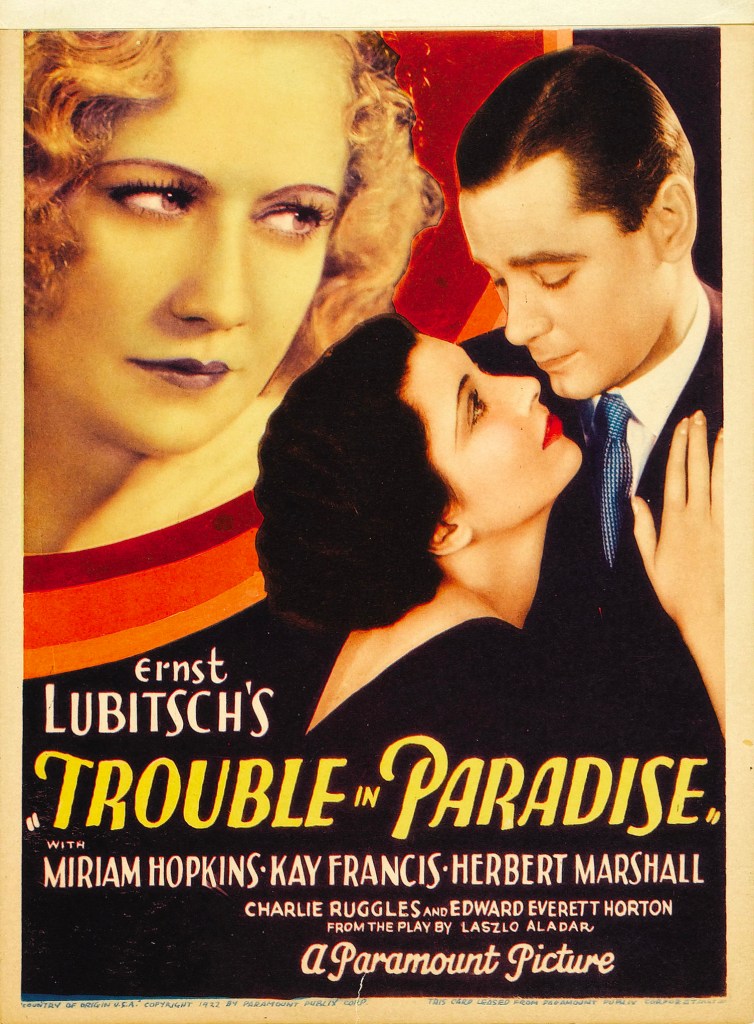
“Ah, that Lubitsch touch!” It was a slogan invented by the studio (probably to help turn Lubitsch into a brand – see also “The Master of Suspense!”). No one has ever been quite sure what it is exactly – but you can’t argue it doesn’t exist after watching Trouble in Paradise. A smoother, more charming slice of Wildean wit mixed with saucy naughtiness you couldn’t hope to find. All put together with effortless, cosmopolitan wit by Lubitsch, where every shot and camera movement has been planned for maximum effect. No wonder it’s one of the great early Hollywood comedies.

It’s Vienna and a Baron and a Countess are sitting down to a wonderful dinner together. But both know all is not what it seems: they’re both professional conmen. The Baron is Gaston Monescu (Herbert Marshall), the Countess Lily (Miriam Hopkins) – and they can pick each other’s pockets as easy as breathing. Falling in love, they team up and head for Paris, there to relieve fabulously wealthy Marie Colet (Kay Francis) of some of her firm’s dividends. Gaston becomes Marie’s private secretary – but don’t you know it, he finds himself falling in love with her. Will he go through with the scam? And will Lily give him the choice? The answer is almost certainly not what you think.

Trouble in Paradise is so swift, smooth and gloriously comically inventive that its very existence is enough proof of that Lubitsch touch. The comic business here is so marvellously done, so hugely influential and inventive, that half the comedies existing owe it a debt. Take a look at that first sequence as the two of accuse each other of being thieves and liars, in between passing each other the salt, with consummate politeness then proceed to take part in a pickpocketing game of one-upmanship (purses, pins, watches, garters, you name it!). All shot and directed with a perfect mixture of one-take dryness, matched with perfectly chosen fluid camera movements that accentuate punchlines.

Then there’s that script (“Do you remember the man who walked into the Bank of Constantinople and walked out with the Bank of Constantinople?”). It’s crammed to the gills with sensational bon mots with more than a touch of Wilde or Coward but also a certain emotional truth (“I came here to rob you, but unfortunately I fell in love with you.”). Trouble in Paradise is an intensely suave and sophisticated film that delights in making its characters feel like the nimble-thinking smartie-pants who always know what to say, that you’d love to be, but never quite are.

It’s grist to the mill of Lubitsch, who coats the film in the three things that really makes it work: European sophistication and ruthlessly dry wit; playfully smooth direction; and more than a dollop of sex (and lots of people in this, let’s face it, are pretty impure to say the least). Sex is in fact what’s at the heart of this film: they may be criminals, but Gaston and Lily are at least as interested in getting some of that as anything else and Marie is more than a match for them.

Trouble in Paradise is pre-Code – and far racier than anything we normally expect from Old Hollywood. After all, this is a film that makes a series of perfectly timed punchlines out of a Butler constantly knocking on the wrong bedroom door to find Marie, unaware that Gaston and Marie are “spending time together” elsewhere. Gaston and Lily’s first meeting is capped with a “do not disturb” sign being hung on their bedroom door. The word sex gets bandied about. In case we missed the point, Lubitsch shoots a romantic clinch between Gaston and Marie by focusing the camera on the bed where their shadows are being cast, looking for all the world like they are lying down on it. Later Lubtisch will focus on a clock marching forward in time as we hear Gaston and Marie flirt (and clearly more than just flirt) as the time flows by.

No wonder when the Code was introduced, Trouble in Paradise was slammed on the shelf for years. It’s more than clear that Gaston has it away with Marie and Lily – and, even more scandalously, no one seems to mind that much. There is sexual liberalness to Trouble in Paradise. Marie is happily stringing along two boorishly foolish suitors (Charles Ruggles as a bluff retired major and Edward Everett Horton as a slightly pompous fop, fleeced in the past by Gaston – both very funny). Gaston feels many things, but never ashamed, while Marie seems sexually excited by the idea that he might be a crook. (Their first meeting is a simmering swamp of sexual tension.)

Lubitsch keeps the film flowing so effortlessly, it glides down barely touching the edges. The humour is spot on and perfectly delivered. At one point Lily (still disguised as the Countess at this point) phones her “mother” in front of Gaston. Her conversation is polite and giddy – then Lubitsch cuts to the other end of the call where her crude landlady is prattling bored on the end, and we realise it’s all part of a con. Gags like this have inspired filmmakers for years. You can see the root of half the screwballs that were to come in the love triangle flirtatiousness between Marshall, Francis and Hopkins.

All three of them are excellent. Marshall had few better opportunities to showcase his dry wit and sex appeal (he was so often cast as stuffy, dull husbands), and he’s the ideal arch gentleman here, with a twinkle in his eye at his daring smartness and very sexy in his confidence. (The constant shots of Gaston running up and down stairs is, in itself, a gag – Marshall had only one leg and all that running was a body double). Far from a rube, Kay Francis makes Marie a sexually curious, determined and out-going woman who knows what she wants and happily plays the game to get it. Miriam Hopkins has a punchier feistiness as a woman who can shift personae with effortless ease.

Trouble in Paradise – that Paradise being Gaston and Lily’s natural partnership – slides so smoothly from set-piece to set-piece, each of them shot with superbly smooth camera movements that perfectly accentuate their comic impact, that it continues to offer huge entertainment. Brilliantly acted, packed with superb set-pieces, it benefits above all from that glorious Lubitsch touch. Sophisticated, amoral, naughty but with a touch of heart among all the lying and cheating, it’s very funny and very cheeky and all about sex and stealing. It’s a landmark film.

The Wolf of Wall Street (2013)

The Wolf of Wall Street (2013)

Greed is Good? Scorsese’s masterpiece is a heady deconstruction of the excess of white collar criminals

Director: Martin Scorsese

Cast: Leonardo DiCaprio (Jordon Belfort), Jonah Hill (Donnie Azoff), Margot Robbie (Naomi Lapaglia), Kyle Chandler (FBI Agent Patrick Denham), Rob Reiner (Max Belfort), Jon Bernthal (Brad Brodnick), Matthew McConaughey (Mark Hanna), Jon Favreau (Manny Riskin), Jean Dujardin (Jean-Jacques Saurel), Joanna Lumley (Aunt Emma), Cristin Milioti (Teresa Patrillo), Christine Eberle (Leah Belfort), Kenneth Choi (Chester Ming), Brian Sacca (Robbie Feinberg), Henry Zebrowski (Alden Kupferberg)

All The Wolf of Wall Street is really missing is an early freeze frame of a coke-fuelled banker slamming the phone down on a closed deal and a wistful voiceover from Jordan Belfort: “As far back as I can remember, I always wanted to be Wall Street trader”. If Goodfellas was Scorsese’s exploration of the attractions – and dangers – of a life in blue collar crime, then The Wolf of Wall Street is its white collar companion piece. The fact that so many viewers find the behaviour of Belfort morally outrageous in a way that no one ever objects about Henry Hill is, for me, an indication of how much we loath these masters-of-the-universe. For all their faults, we’d still rather see a violent criminal as one of us.

Based on Jordan Belfort’s (Leonardo DiCaprio) autobiography, The Wolf of Wall Street follows his time building a dodgy trading empire and a large fortune. Not that he can remember most of it, as he seems to be on a permanent intoxicated binge of drinks, hookers and every drug you can ever imagine (and some you can’t). The FBI catches up with him eventually, but Belfort learns precious little from his experiences. Other than, perhaps, that so long as you are rich and white in America, you can basically get away with anything.

That’s perhaps the key to Wolf of Wall Street. Scorsese may not shy away from the delicious dark comedy of Belfort’s life of excess, but it doesn’t blind him to the shallow awfulness of the man or his unthinking, instinctive greed and self-obsession. You would need to be a pretty shallow person to look at Belfort’s greed, moral emptiness and self-destructive binges and want to ape him. If you think watching DiCaprio literally paralytic on quaaludes is the life you want, frankly there is something wrong with you.

What perhaps made some feel Wolf of Wall Street was oddly in love with Belfort is its electric pace. The film is a brilliant reminder of Scorsese’s faultless understanding of pace. Or one who matches unparalleled cinematic skill with the rambunctious energy of a first-timer allowed to play with his movie toys for the first time. Brilliantly assembled, this is a superb collection of cinematic techniques, from jump cuts to fluid transitions that power through a series of increasingly bacchanalian parties and isn’t afraid to admit that, in the moment, this stuff can be fun (rather like getting the best table in Goodfellas) but ultimately self-destructive. (After all, few know the dangers of drugs like Scorsese.)

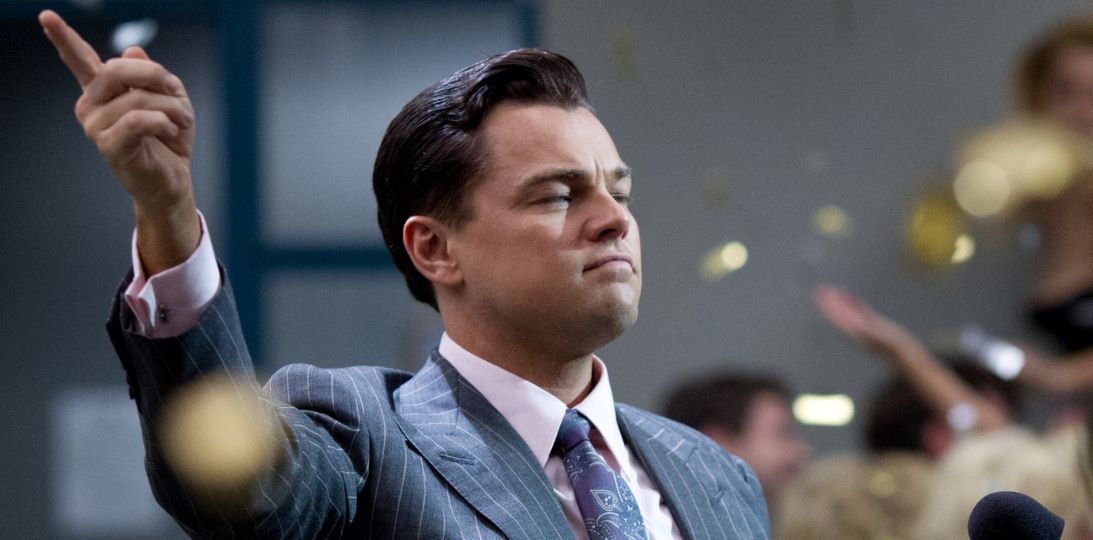
At the centre of this whirlwind is a stunning performance from Leonardo DiCaprio. With his still youthful, charismatic handsomeness, DiCaprio only needed to tweak his screen persona to provoke the sort of perverted idolatry Belfort receives from his co-workers. But he goes above and beyond in his transformation in this role. He makes Belfort simultaneously oddly childlike and revoltingly corrupted, someone whom we enjoy spending time with while finding repulsive. He rips through Belfort’s trademark, drug-fuelled motivational speeches, monologues of insanely eye-popping intensity, explosions of off-the-chain wildness. At other times he’ll sulk and whine like a spoilt child. DiCaprio struts across the screen with an unpredictable physicality – his embodying of the physical effects of mind-altering drugs is hilarious and horrifying –in possibly his finest ever performance.

DiCaprio is the raw energy source that helps power the rest of the film. Scorsese matches him blow-by-blow with this dynamic expose of white-collar corruption. Using Belfort as a narrator – which serves to further expose his shallowness, greed and utter inability to learn any sustained messages from the depths he plummets to – the entire film is all about how the flip side of the American Dream tacitly promotes and encourages this sort of behaviour.

Belfort is the rash the system has come out as. In a highly effective early cameo, McConaughey plays Belfort’s first mentor, a coke-fuelled hedonist hooked on the buzz of closing deals, who pushes Belfort towards a career of success (including introducing a brilliant breathing exercise – improvised by McConaughey based on his own warm-up exercises – that becomes a mantra in the film). DiCaprio’s eyes have already lit up at watching a deal closing. Drugs and sex are just an attempt for Belfort to replicate the buzz of the real addiction: money.

Scorsese recognises that we don’t need to know the details of Belfort’s illegal dealings. (In his voiceover Belfort literally tells us it doesn’t matter, all that does is the shitload of cash they were bringing in.) We learn enough about the huge mark-ups (50% of the deal’s value) he can make from selling penny stocks (trades of small public companies) and “pump and dump” tactics to know it’s wrong. I will admit the film does little to show the victims – but then Belfort never cares either, proudly stating at one point he has no guilt fleecing his clients out of cash, because he knows how to spend it, better than they do.

It all pours into a hedonistic, alpha-male environment where the air is as littered with fucks (the film held a record for most use of the word) as the floors and desks of Belfort’s offices are during his hooker-filled end-of-week parties. Wolf of Wall Street is also an expose of toxic alpha-maledom. Bullying, abuse and screaming are ripe, women are basically commodities traded as easily as shares. The only exceptions are those allowed into the boys’ club as either surrogate-male fellow traders or trophies to adorn the arm. Margot Robbie (superb in a star-making role) plays Belfort’s glamourous wife, who knows she needs to use her physical assets to make her way in this world.

The film rips along through a party-deal-party structure. Belfort goes from wowing his fellow penny stock traders by making $2k in two minutes to wrapping the trading floor of his fake-old-school Wall Street firm around his finger in excess filled speeches. He also goes from a charming party animal to an incoherent, rambling, deeply unpleasant and dangerous drunk and drug addict. But crucially, he learns nothing . There is no life-and-soul shattering payback like Henry Hill undergoes. Fault, guilt and consequences roll off his rich, spoilt back. He ends the film still winning the adulation of would-be millionaires, his conscience (if it exists) untroubled by any impact his actions have had on others.

Perhaps Scorsese could have allowed more space to victims – and to Kyle Chandler’s dutiful and dedicated FBI agent who brings him down (our final shot of this character stresses his humble, low-paid status – echoing back to his confession to at times regretting leaving a trading career for a law one). But that’s to criticise the film for not being obvious enough. Of course parties are fun. But each party becomes wilder, more orgiastic and uncomfortable as the film goes on. But if we didn’t understand the fun, we couldn’t understand how people get hooked on this adrenalin fuelled life.

Wolf of Wall Street though is a warning to the curious – if you are smart enough to look. Belfort’s soulless, horrible life is not one to aspire to, and his moral emptiness not one to wish to have. It’s a funny film, but it’s also a dark one. DiCaprio is brilliant beyond belief, Jonah Hill funny and pathetic as his best friend, Margot Robbie becomes a star and Scorsese rips through the film with the energy, passion and dynamism of a much younger director. An outstanding tentpole film in his CV.

Summer Interlude (1951)

Summer Interlude (1951)

Memory, mortality, repression, grief and a little dash of hope: Bergman establishes his themes in one of his earliest film

Director: Ingmar Bergman

Cast: Maj-Britt Nilsson (Marie), Birger Malmsten (Henrik), Alf Kjellin (David Nyström), Annalisa Ericson (Kaj), Georg Funkquist (Uncle Erland), Stig Olin (Ballet Master), Mimi Pollak (Mrs. Calwagen)

On the night of the dress rehearsal for her next production, successful ballerina Marie (Maj-Britt Nilsson) receives a parcel containing an old diary. It’s thirteen years old and belonged to Henrik (Birger Malmsten), a young man she met and fell in love with while staying with family friends on a small island. The relationship was one of blissful joy – so why then does even the faintest memory of it bring out a cold panic in Marie?

The answer is of course rooted in past trauma in a film that touches on so many themes Bergman would explore in even greater detail later, it’s hard to see it as a film in its own right, like an early draft pencil sketch of a Renaissance master. Themes of memory, trauma, mortality, repression, romance and coming to terms with all of these would resurface time and again in the master’s later work. Wild Strawberries, The Seventh Seal, Face to Face, Persona, Fanny and Alexander… They all expand on Summer Interlude. For starters, Marie’s reverie on the island revolves around memories activated by eating strawberries and takes in an ageing priest exploring mortality through chess.

So, you can sort of watch Summer Interlude as a game of inspiration-spotting, keeping a tally of the Bergmanesque pre-homages. But that would do a disservice to a heartfelt, beautifully judged, hauntingly sad film which deals not only with loss but also acceptance. It’s effectively two films in one, straddling the emotionally cold present and Marie’s return to the windswept island, and the glorious summer of carefree romance she shared all that time ago, when everything was possible.

As Marie, Maj-Britt Nilsson is impressive. One of the first of Bergman’s muses – and the first major indicator of his skill and empathy for powerful female-led drama – Nilsson has the difficult job of distinguishing between two versions of her character. Her present day one is muted, restrained and hiding behind her ballet performance make-up, unable to really face the world and unhappy in her own skin. By comparison, the younger version feels like a different person: vibrant, hopeful, excited and youthful. And besotted with Birger Malmsten’s boyish and delightful Henrik, an impulsive but engaging kid.

The flashback to their romance is given the sun-dabbled beauty of memory. They run across beaches and up hills, flirt in beach huts and conduct a sweet engagement ceremony. The company of the other is more than enough for both of them. Gunnar Fischer’s photography captures this with an intense, naturalistic beauty – including a gorgeous shot of a cloud across the sun while we hear the voices of Marie and Henrik below. It also makes for a wonderfully alive contrast to the more static coolness of the present, where wide-open spaces are exchanged for backstage confines.

It’s not a huge surprise to reveal that Marie and Henrik’s relationship end tragically. That after all is the mood we associate with the Gloomy Swede. But what makes the film really work is the hope and joy not only of the memory of that glorious summer – but also in the ability, thirteen years later, of Marie to consider processing it and allowing new joy into her life. To come to terms with what has happened to her and learning to love the person she is today, (literally) wiping away the defensive make-up that has kept her distant from the world.

Much of her defensiveness comes courtesy of “Uncle” Erland (a deeply unsettling Georg Funkquist), the family friend she was staying with that summer. A doctor and psychiatrist, Erland clearly has a unsuitable interest (bordering on obsession) with Marie (something all too obvious to his wife). His desire to help her deal with her tragedy is based more on an unpleasant desire for control as it is friendship. He’s one of the darker figures in Bergman, even more so because he’s so mundane in his corruption.

Memory and past trauma linger over Summer Interlude – and the influence of both is central to the film’s impact. Bergman skilfully intercuts between past and present, without ever overplaying or showing his hand. Both timelines are interspersed with little character flourishes that would be worthy of whole films (and in some cases Bergman explored those himself later!). Henrik’s geriatric aunt, a fanatical chess player, who (correctly) states she will live for decades to come. A priest dwelling on mortality. A ballet master who understands how Marie’s obsession with dancing serves to blot out any other life. A fellow dancer who muses on how long before their time is up.

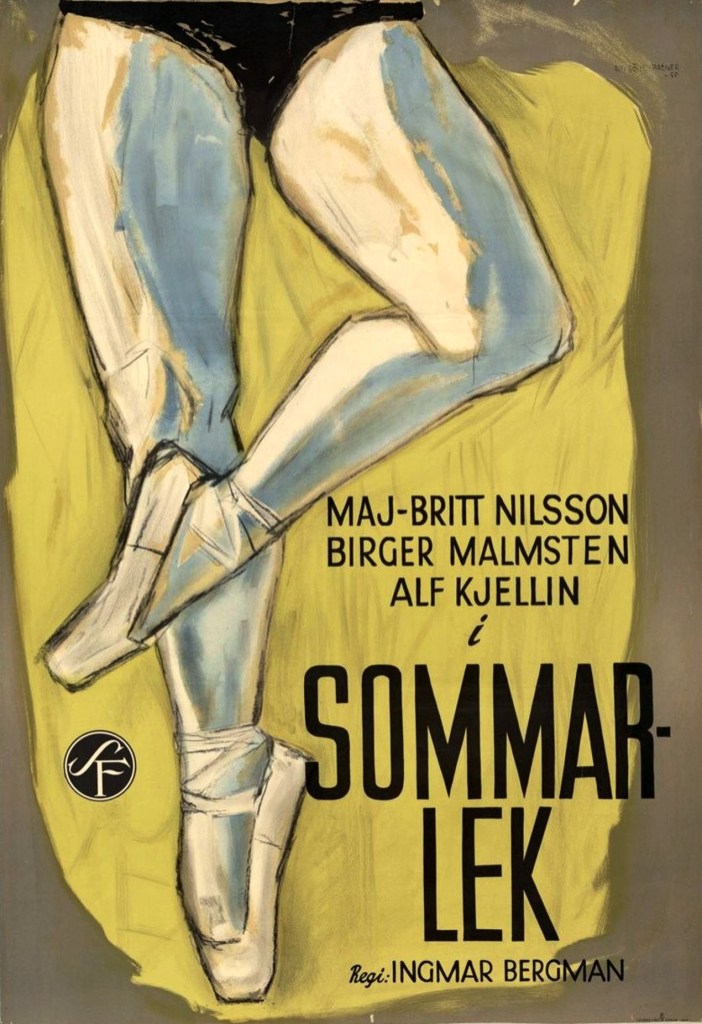
These ideas are assembled though with a warmth and emotional intelligence that would become Bergman’s hallmark. It’s also a film crammed with invention: a (brief) argument with Henrik over Marie’s obsessive practice, frames her feet in constant close-up as she practices her moves: the film will end with a similar shot, this time with practice married to romance. For a film about tragedy, trauma and torturous memories, it’s surprising how optimistic it is. As Marie smiles for what seems like the first time in decades, you feel there is hope for us all.

Another Round (2020)

Another Round (2020)

Vinterberg’s film explores our complex relationship with alcohol with a surprising lack of judgement

Director: Thomas Vinterberg

Cast: Mads Mikkelsen (Martin), Thomas Bo Larsen (Tommy), Magnus Millang (Nikolaj), Lars Ranthe (Peter), Maria Bonnevie (Anika), Helene Reingaard Neumann (Amalie), Susse Wold (Principal)

Mankind’s most difficult relationship? Might just be with alcohol. Ever since Noah first toppled over pissed, we’ve struggled to balance that delightful buzz a touch of intoxication gives with the destructive impact way too much has. It’s a relationship explored in Thomas Vinterberg’s curious mix of warning and celebration, Another Round, which (slightly obliquely) looks at the positives and negatives of alcohol consumption.

In a gymnasium school in Copenhagen, history teacher Martin (Mads Mikkeslen) has lost all passion and interest in his students (so much so they try to have him removed) and his marriage is stuck in an increasingly distant rut. After a birthday meal, he and three friends – PE teacher Tommy (Thomas Bo Larsen), psychology teacher Nikolaj (Magnus Millang) and music teacher Peter (Lars Ranthe) – agree to a pact to combat their ennui. After reading a theory that mankind is born with 0.05% blood alcohol content deficiency (and topping it up makes you more creative and relaxed), they decide to experiment with maintaining a certain level of inebriation. At first it has a positive impact; but as they push the boundaries of the experiment, the negatives swiftly multiply.

Vinterberg’s film is notable for not taking an obvious (or firm) stance on alcohol consumption. It’s easy to imagine an American or British film dwelling on the negatives at the cost of everything, or demonstrating deep regret in the friends for ever starting on this journey in the first place. Another Round doesn’t do this. In fact, it rather bravely points out the positives we can feel from the happiness and relaxation alcohol can give. So much so that, at first, it actually improves people’s lives. After all, if it was always all bad – we wouldn’t drink it would we?

This is most notable in the case of Martin. He might stumble in the staffroom on the way to class, but (after a swig of vodka) his teaching becomes more inspiring, electric and engaging. He rediscovers a passion for working with students, dropping the disengaged drawling of semi-confused facts we see him use earlier (where he doesn’t even seem to be listening to himself, randomly drifting from the Industrial revolution to Churchill) and replacing it with insightful parallels, high-energy tempo and fun activities. Whether it’s psychological or something else, being able to relax clearly has a positive short-term impact on his ability to teach.

It’s matched in the others as well. Peter gets his students singing with an intensity and beauty he couldn’t begin to get them to reach earlier. Tommy, in his work with a primary school football team, brings out the skilled footballer in a shy, bespectacled student (although his uncomfortable blurring of the line between teacher and surrogate parent with this boy hints at Tommy’s lack of control, which the film will explore in more depth). Vinterberg echoes the giddy feeling of elation all four feel by subtle use of a free-moving handheld camera, compared to the more staid rigidity of the earlier stable shots.

Martin also dramatically improves his personal life. He starts to reconnect with his family and rebuild passions with his wife. Sure, there are negatives. Hidden alcohol stashes at the school are discovered. It becomes harder to hide their intoxication in the common room. But it still feels good, right? Problem is, Martin makes the mistake many of us have. If a small amount of this makes me feel this good – why don’t I take a large amount? Surely if I up the blood alcohol content even higher, the positives will be all the greater. Sadly, of course, it doesn’t work like that.

Vinterberg’s film is careful not to use labels like alcoholism. But, in the same way it isn’t afraid to show the world-beating confidence a stiff drink or two can give you, it doesn’t shy away from the impact of over-consumption. Deciding, “as an experiment”, to push their drinking to absurd levels for one night only, to get as intoxicated as possible, the four have a fab night. But the next morning? Peter loses all his clothes diving in the sea. Nikolaj wets the marriage bed in a confused stupor. Martin wakes up, face bleeding, on the pavement having tried (and failed) to use his keys on his neighbour’s house, and is carried home by his humiliated children.

This is as nothing compared to the terrible impact of alcohol on Tommy. While all four of the men no doubt become increasingly dependent, it’s Tommy who tips into full blown alcoholism. Beautifully played by Thomas Bo Larsen, its painful to watch this gruff-but-playful bachelor dip increasingly into confused, stumbling, permanent inebriation, living in a home made of finished bottles and unable to hide from colleagues or students his intoxication.

But, for all that much of the second half of the film focuses on these negatives, it doesn’t offer easy solutions. All four realise things have gone too far – but none of them can forswear (or even seem to consider doing so) alcohol. Martin’s marriage collapses and Nikolaj’s nearly goes the same way. But they still gather at the film’s end for a drink. It’s at this point that it can be a little unclear what Vinterberg’s thoughts are on the demon. But then perhaps that is the point: we all know it’s bad for us anyway, so a film that looks at how we balance that desire with a certain level of responsibility is always, perhaps, going to shy away from either easy answers or definitive statements.

It’s perhaps why the film ends with a surprisingly blissful, up-beat ending of hope for the future rather than despair, as Martin explodes into a riotous improvised dance routine. It’s easy to forget Mikkelsen is a trained dancer, and the fact he provides such a striking, memorable ending to the film is fitting as it’s a triumph for him. At first a shambling, sad-sack figure, Mikkelsen’s Martin finds a casualness and relaxation that seemed beyond him (the film is a physical triumph for Mikkelsen – his drunken move through a common room worthy of Gene Kelly or Buster Keaton). Mikkelsen’s work is extraordinary in its emotional complexity – bursts of pained sorrow, rage, guilt, self-loathing, despair and hope flash across his face and he holds the entire film together.

He’s ably supported by Larsen, Millang and Ranthe – all superb – and Vinterberg’s deceptively casual and unobtrusive direction helps craft a film that offers scenarios but not lectures. While I could have hoped for the film perhaps taking a bit more of a stance one way or the other – or give a more unflinching look at the impact on others of alcohol abuse – as a personal story Another Round is vibrant, honest and (strangely) hopeful, for all the terrible impacts it displays. It lingers with you like a hangover.

The Lighthouse (2019)

The Lighthouse (2019)

Undefinable, haunting madness in Robert Egger’s mesmeric film that defies categorisation

Director: Robert Eggers

Cast: Robert Pattinson (Ephraim Winslow), Willem Dafoe (Thomas Wake)

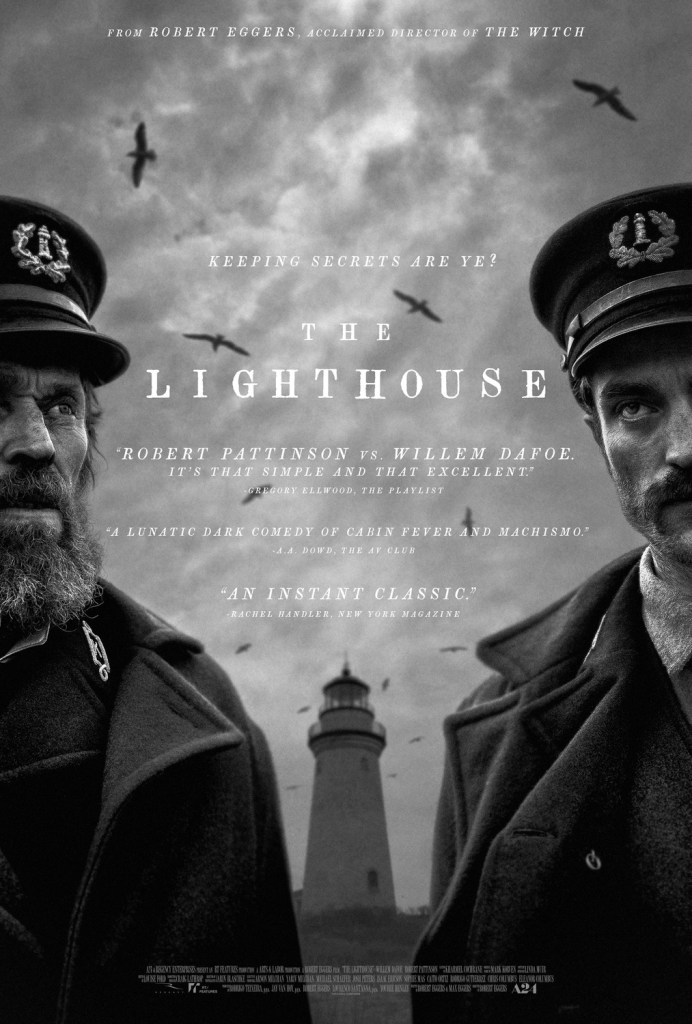
Who’d want to be a lighthouse keeper? Weeks on end, stuck on a rock, with nothing but sea gulls and your fellow keepers for company. The cabin fever might well start to make you feel your grip on reality shifting. You’d definitely think it was a strong chance watching Robert Eggers’ mesmeric, enthralling and undefinable masterpiece, a mix of everything from Victorian shlock to Greek Mythology via MR James and Edgar Allen Poe, by way of Freud and Jung. It’s impossible to work out, horrifyingly clear and deeply, unsettlingly brilliant.

Two ‘wickies’ (lighthouse keepers) in 1890s arrive on an island off the coast of New England. Thomas Wake (Willem Dafoe) is a (self-proclaimed?) salty-sea-dog and veteran wickie. He tends the light. His assistant, Ephraim Winslow (Robert Pattinson), is a former woodworker working on contract, seemingly on the run from something. He is the island’s dogsbody and tends the mechanisms that keep the light on and turning and the island’s fog-horn blaring. These two live cheek-by-jowl, a relationship that oscillates between distrust, resentment and strange warmth.

Things take an increasing turn for the bizarre, as a storm cuts them off from their scheduled relief. Slowly the isolation, supplies failure (gin and beans are seemingly the only food sources left) tap into the psychological flaws in the men themselves. Ephraim becomes ever more consumed by visions of a horrific but sensual mermaid. Wake obsessively guards his sole access to the lighthouse tower – and, Ephraim suspects, the mysteries it contains. Their relationship crosses boundaries of longing, violence and anger.

The Lighthouse is somewhere between parable, modern myth and psychological study. You could call it a horror film – I see it more as a classic ghost story – but you could just as easily call it a survivalist film, a character study or a psychological thriller. Egger’s insidiously unsettling film-making and the sublime acting from the two leads combine to make a film ripe for interpretation, and intensely rewarding on rewatch. It’s an explosion of artistic brilliance.

Shot in a superbly atmospheric black and white – and a claustrophobic academy ratio 4:3 – it’s a film that presents one striking, chilling, unforgettable visual image after another. Inspired by silent cinema – in particular Murnau, Lang and von Sternberg, although I spotted elements of Keaton – but as if moody German expressionism was used to shoot a Rorschach test. The inky blacks, and overwhelming bursts of blinding white light, suggest unimaginable horrors lurking out of sight, while its impressionistic imagery constantly pushes us to question the reality of the film.

It all builds on the superb feeling of isolation Eggers invokes. Rooms are small and crowded with furniture. The island is a bleak rock, shorn of any vegetation. The only wildlife is an army of seagulls. The blare of the island’s foghorn is continuous – sounding like a doom-laden rumble from Hell – that seeping into the viewer’s soul. Every corner of the lighthouse station becomes achingly familiar to the viewer and somewhere you can imagine not wanting to spend a second longer than you have to.

Stretching their vocal muscles around a script (written by Eggers and his brother Max) full of rich, chewy, Victoriania dialogue by way of Beckett and Pinter (in one compellingly funny sequence, the two actors basically shout “what” at each other over and over again) both are superb. Dafoe walks a fine line expertly between realism and Robert-Newton-esque parody, as the saltiest sea-dog imaginable, who can oscillate between surly admonitions and flights of myth-filled, metaphorical fancy. Pattinson dives head first into a man who we are never sure we fully understand: is he a frustrated time-server, a violent monster, a delusional schizophrenic, a little-boy lost? Either way it’s a truly brilliant performance of Day-Lewis level commitment and immersion.

You could have a lot of fun arguing that perhaps both men are two halves of the same fractured psyche (as if Wake is a future version of Ephraim, almost as if the film is him witnessing his own origins story). Certainly, as their film progresses, their personalities and histories begin to merge. It would help explain the curious emotional bond between them: at times they seem to almost hate each other, at another a drunken fight is only inches away from a sexual encounter. They laugh at and loath each other, are mutually dependent, plot each other’s destruction but then pathetically look at each other for reassurance and praise (Wake is heartbroken when Ephraim criticises his cooking, while Ephraim both resents and worships this hard-taskmaster father figure).

It’s a suspicion that could also be incited by the all-pervading weirdness on the island. Ephraim –carrying the burden of secret crimes on the mainland – see visions of a mermaid among logs, in which sexual encounters are mixed with the mermaid’s murderous attempts to drown him. His first-day searches of the house unearth a carving of a mermaid, which seems to fascinate and repel him – he takes to masturbating (joylessly) over it in the workshop. He seems to spy Wake worshiping, naked, the light during his long-night vigils up the tower (suspicious fluids drip down from here, along with half glimpses of mermaid tentacles). In any case, Wake guards his access to the light like a jealous lover, while his faith in sea mythology becomes increasingly less of a mantra and more of a framework to understand the world.

How much is real? Or is it a sign of Ephraim’s fractured, guilty, conscious? We see most of the events through his eyes – a man we know is a thief and, most likely, a killer. There is more than enough evidence that Ephraim is lying about his past as much to himself as he is Wake. Wake too is a liar – telling at least two versions of how he ended up with a gammy leg, enough to make you wonder how much his claims of being a sea-dog are true. As isolation and constant drink – the two spend most of the second half in various states of inebriation first from gin then turpentine – kick in, and they and their surroundings become increasingly dishevelled and fart-stenched.

There are dark powers at work on this island. Echoes of Greek Myths loom – Ephraim has traits of Prometheus, fascinated by a light horded by the Gods, the very light that Wake, Proteus like, is determined to keep to himself. Wake stresses that the gulls carry the souls of dead sailors – and the unsettling persistence these pester Ephraim with, is surpassed only by the violence with which he responds to them. Elements of Victorian ghost stories, hypnotism and gothic fiction combine in every corner of a film where we see very little but get a lot implied (powerful, Eisenstein and Bunuel-style, close-ups of faces and eyes imply powerful horrors out of shot).

The Lighthouse reminds me in many ways of the best of the BBC Ghost Stories of the 1970s in their unsettling, MR James-style unexplained (even unstated) horrors. There is a palpable air of horrific tension around the film, of an unexplained, unknowable force that could somewhere destroy both men – and has perhaps unsettled their minds. The film culminates in a superb, haunting shot as Ephraim comes face-to-face with something unknown that is pure MR James: we never see what caused the horror, only its terrible results. (It’s as terrifying as Whistle and I’ll Come to You or A Warning to the Curious where blind, over-confident curiosity leads to dreadful outcomes).

Eggers film is not a conventional horror film: I believe thinking of it as a deeply unsettling exploration of man’s vulnerability and weakness, ala MR James, is key. This is a story of unseen, imagined, unsettling horrors – but also a claustrophobic relationship drama, playing out like a psychological thriller as two men dance around destroying and seducing each other. It’s a complex Rubrik’s cube that rewards constant thought and attention. Beautifully filmed, superbly acted, compelling in every frame, it can claim to be one of the most unique and powerful American films of the 2010s.

The Curious Case of Benjamin Button (2008)

The Curious Case of Benjamin Button (2008)

Ageing, romance and sentiment in Fincher’s handsome shaggy dog story

Director: David Fincher

Cast: Brad Pitt (Benjamin Button), Cate Blanchett (Daisy Fuller), Taraji P Henson (Queenie), Julia Ormond (Caroline Button), Jason Flemyng (Thomas Button), Elias Koteas (Monsieur Gateau), Tilda Swinton (Elizabeth Abbott), Mahershala Ali (Tizzy Weathers), Jared Harris (Captain Mike Clark)

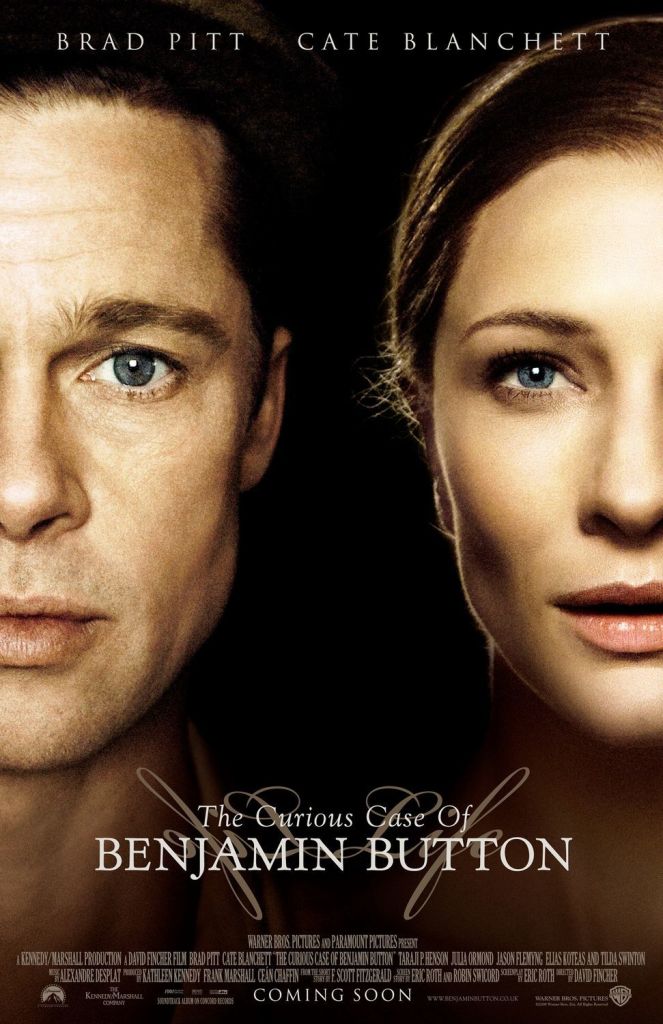
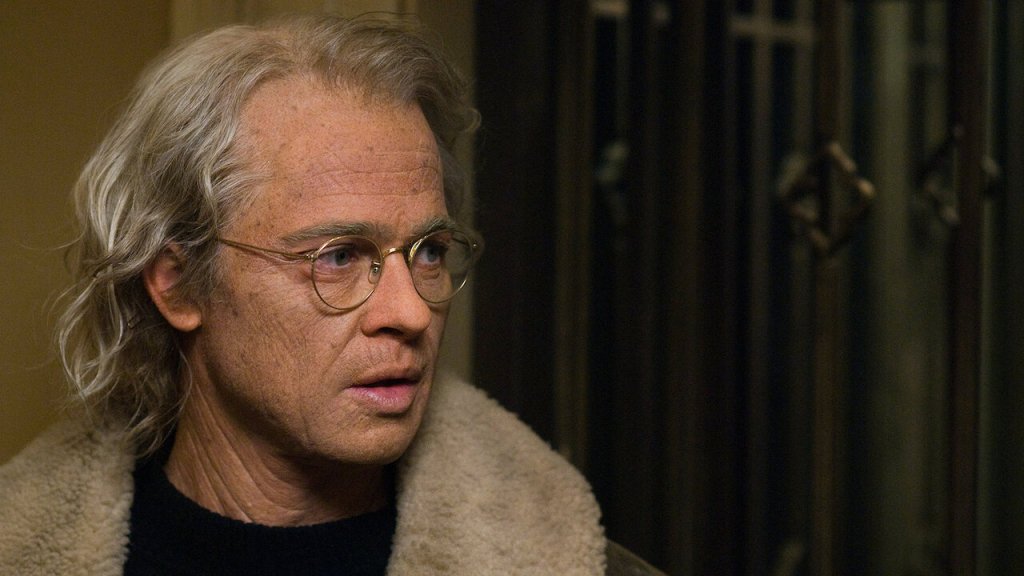
As the eleventh hour of the eleventh day of the eleventh month of 1918 strikes, a baby boy is born. A baby boy unlike any other, with the appearance and illnesses of a very old man. Discarded by his horrified father (Jason Flemyng), the boy is adopted by Queenie (Taraji P Henson), caretaker of a nursing home. There it becomes clear he is growing backwards: the older he gets, the younger he appears. Young Benjamin will eventually grow into Brad Pitt and spend his life watching those around him grow ever older as he grows ever younger. Most joyful, and painful, of all being his childhood friend Daisy (Cate Blanchett), the woman he will love his whole life.

Fincher’s film is a strange beast. A huge technical triumph, that uses cutting edge special effects and astonishing make-up to age – in both directions – Brad Pitt and Cate Blanchett throughout the course of the film (both taken from extreme old age to face-lifted youth), it’s also a whimsical shaggy dog story with elements of a fairy tale that does very little with its astonishing concept other than pepper the script with easily digestible homilies about the purity of the simple life, as if screenwriter Eric Roth was still gorging on the same box of chocolates from which he plucked Forrest Gump.

TCCoBB has a lot going for it: you can see why it was coated with technical Oscars. The ageing and deageing special effects are skilfully and even subtly done, the recreation of a host of periods – from the 1910s to the 1990s and beyond – flawlessly detailed. Claudio Miranda’s photography uses a host of film stocks – from sepia, to scratchy home movie footage style, to luscious technicolour beauty – to reflect time and era constantly. The assemblage of the film has been invested with huge care and attention and, despite its great length, Fincher cuts together (with Kirk Baxter and Angus Wall) an episodic film that manages to keep its momentum and drive going.

Also, it’s a far less vomit-inducing spectacle than the manipulative stylings that coat Forrest Gump. This is in part to Brad Pitt’s restrained and contemplative performance in the lead role: Pitt underplays with surprising effectiveness, capturing Benjamin’s “come what may” attitude and eagerness to go with the flow of the opportunities life offers him. He delivers the narration with an authority just the right side of portentous (for all his rather flat, uninteresting voice) and skilfully manages to invest his body with a physicality quite contrary to his physical appearance (his old body moves with a young man’s casualness, while his younger form carries a slightly world-weary hesitancy).

Benjamin’s mantra becomes one of living your life just as suits you best, not as others expect you to and never worrying about leaving it too late to take chances or make changes. Or at least something like that. To be honest, the weakest part by far of TCCoBB is the lightness and breeziness of its thematic impact. I’ve seen this film three times and, other than a slightly charming shaggy dog story, I’m not quite sure what point it is trying to make – other than straining for a star-cross’d romantic sadness.

This feels like a missed opportunity because there is so much that could be explored here. The film is a nearly unique opportunity to explore how much age – either physical or mental – defines us. A chance to see how our perceptions of a person are shaped as much by what they look like or how they sound, as by who they are. What sort of different perspective on humanity might Benjamin have? How might those around him evaluate, their own lives as they see this him getting younger?

Questions such as these are not touched, the film settling for Benjamin’s whimsical, first-do-no-harm philosophy crossed with a sort of saintly non-interference. The closest it gets to dealing with this is in Benjamin’s friendship and later relationship with Daisy. Old/young Benjamin is told off by Daisy’s grandmother for being a dirty old man, when they first met as children (or old man in his case). Later their lives will drift together and apart, until they form a relationship when both are “the same age” physically. But the film shirks really exploring the implications of this – and outright flees the idea of Benjamin as an increasingly younger man in a romantic relationship with an increasingly older Daisy.

Instead, it settles all too often for easy lessons, comforting parables and charming little vignettes. Benjamin grows up cared for by his adopted mother Queenie (an engaging, if straight forward, performance by Taraji P Henson) – but in the sort of 1920s New Orleans where a racial epithet is never even whispered. He travels the world with Jared Harris’ (rather good) salty sea-dog, falling in love briefly with Tilda Swinton’s lonely champion swimmer turned society wife. He reconnects happily with his father (after all it’s much easier to live a life of free choice if you are the heir to a massive button factory empire). Idyllic 1960s love hits Daisy and Benjamin – a brief shot of a cruise missile taking off is the only reference to those troubled times we see.

It’s all very easy, romantically toned, sweet and easily digestible. Even writing it down highlights how these are charming, eccentrically tinged, vignettes. All events and experiences come together with a vague “lessons learned” impact, as old Benjamin regresses into a teenager, a child and then an infant. But it could have been so much more. A real study of what makes us human, a real look at how events and perspectives define us. It isn’t. Heck, other than watching Pitt travel handsomely around the world on a motorbike in a late montage, we don’t really get much of a sense of how being young/old may impact him.

Which isn’t to say it’s not enjoyable. It all proceeds with a great deal of charm and love, much of which has clearly been invested in every inch of its making. The acting from (and chemistry between) Pitt and Blanchett is very effective. But it feels like a slightly missed opportunity, a film that settles for being a warm, reassuring cuddle when it could have sat you down and helped you understand your life. For all its slight air of importance, it’s a crowd-pleasing, if slightly sentimental, film.

Thor: Love and Thunder (2022)

Thor: Love and Thunder (2022)

Injokes, backslappery and smugness abound in this terrible Thor adventure

Director: Taika Waititi

Cast: Chris Hemsworth (Thor), Natalie Portman (Dr Jane Foster/Mighty Thor), Christian Bale (Gorr the God Butcher), Tessa Thompson (Valkyrie), Jaimie Alexander (Sif), Taika Waititi (Korg), Russell Crowe (Zeus), Kat Dennings (Dr Darcy Lewis)

Okay. Part way through this desperately unfunny tonal mess I wondered: if I had to choose would I watch this again, or Thor: The Dark World? I can’t quite believe it, but I’d rather watch that functional, forgettable, mundane film. At least it doesn’t make me angry as it drifts past my eyes. And I say that as someone who loved Thor: Ragnarok. Thor: Love and Thunder is terrible. So, unlike Star Trek, it looks like even numbered Thor films are awful – so at least Thor Five should be a doozy.

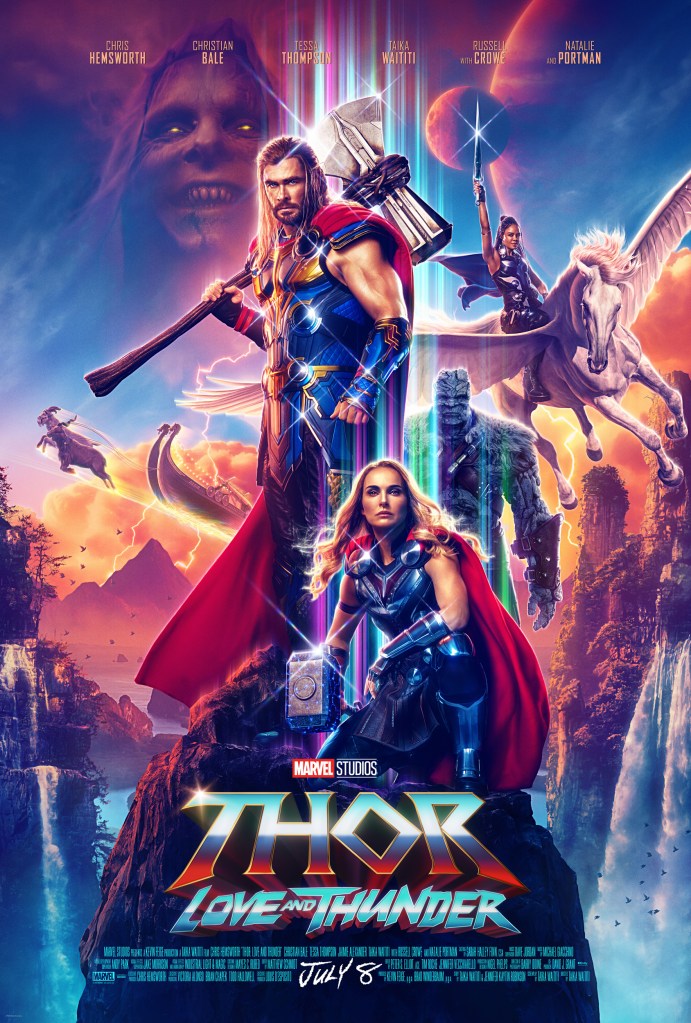
Thor (Chris Hemsworth) is in a state of ennui – although that doesn’t stop him restoring his buff form after we last saw him as a coach potato in Avengers: Endgame. He doesn’t know what to do with his life: he has (and I can’t believe the film doesn’t make this obvious joke considering its jukebox score) “lost that lovin’ feelin’”. Will the arrival of bereaved father Gorr (Christian Bale), and his mission to butcher all Gods because they don’t answer your prayers, give him meaning? Or will it be the chance to finally rekindle his love for Jane Foster (Natalie Portman) when she unexpectantly lands back in his life? However, it’s not the Jane he remembers: unknown to him, she’s dying from cancer, but his old hammer Mjolnir is keeping her alive, transforming her into a female version of Thor.

Thor: Love and Thunder is a bit like attending a victorious Thor: Ragnorak after-show party. Everyone there thinks everything they say is like the funniest thing ever and the air rings to the sound of backs being slapped. It takes everything that it believes worked best in that film and dials it up to eleventy thousand. Waititi doubles down on his quirky, off-the-cuff, shoulder shrugging humour at every turn and you get the feeling that no one once tapped him on the shoulder and said “you know that’s funny to us on set, but are we sure that will be funny in the audience?”

Because, based on the audience I saw it with, it wasn’t. I think I chuckled about three times in the film. Which considering it takes every single bloody opportunity to tell a joke, is damning. Perhaps it fails to land because, unlike in Ragnarok or other Waititi films, its like he’s surgically removed anything emotional or gives a weight to the gags. He’s also sacrificed much of his trademark sweetness. Instead, this is full of incredibly knowing, tip-the-wink gags at the audience, as if trying to say “hey it’s okay, we can’t take this seriously, comic books are all silly, silly shit”.

And you know, that’s fine many people take these things too seriously. But what worked about Thor: Ragnarok was it balanced a quirky sense of humour with genuine stakes and real emotional quandaries. This however is just a tonal mess. We have an opening scene dealing with child death, that shifts swiftly into knock-about farce. A leading character dying of cancer sitting alongside a pair of screaming goats. It is revealed Jane is effectively draining her life source using the hammer (that it is keeping her alive and killing her at the same time). Here’s a chance to explore the cost of heroism and finding a purpose in life (after all isn’t Thor supposed to be depressed? Wouldn’t Jane make a good contrast here?). instead, the film constantly retreats to playing the humour card (worst of all unfunny humour!), as if Waititi perhaps thinks this genre stuff is silly and slightly below him.

Ragnarok allowed moments of impact: this film shits all over any moment of potential emotional reality. Hemsworth’s Thor used to be a guy with a strong moral purpose and seriousness, but allowed to stretch his wings with comedic sharpness. Now he’s a buffoon who interrupts a speech to distraught parents with gags. Any attempt to build an arc of a hero who is internally lonely and searching for purpose is constantly smashed by self-consciously irreverent humour. It says a lot that Thor’s axe Stormbreaker feels as much a character as anyone else – although the film is overly pleased with the gag of the axe being jealous of Thor’s doe-eyes at his old hammer.

The entire film feels like it’s been plotted out in about four minutes. Presumably Waititi was confident “hilarious” off-the-cuff inspiration would solve any problems. Christian Bale struggles manfully with his villain – but it’s like no one gave him the memo that the film was a piss-take. Tedious detours fill the plot – like an un-funny Guardians of the Galaxy cameo at the start, a tiresome trip to an orgy-tastic God planet and the screeching giant goats which feels like a joke whose punchline has been cut. A major plot point about a wish granting Eternity God is suddenly introduced to establish a secret plan for the villain. It’s like no one gave a damn.

Waititi doubles down on funny stuff that worked in small doses in Ragnarok by stretching it past any point of humour here. Liked Neill, Damon and Lesser Hemsworth playing bad actors in that film? Well, you get bucket loads of it here with Melissa McCarthy as a Fat Hela (that’s the joke: she’s fat). Liked Korg’s overly literal asides? Well, he’s in seemingly every second of the bloody film here, including narrating it. Russell Crowe pops up for a cameo that everyone clearly feels was hilarious but really looks like a big-name actor amusing himself with a borderline racist Greek accent. The film is crammed with this crap.

Hemsworth does okay I suppose, but in many ways the film feels as much of an ego-trip for him as it does Waititi. Natalie Portman gets to do some some fun things, but comedy isn’t her natural forte and she struggles with getting the zing in the dialogue that Tessa Thompson manages. It builds towards a big ending where Thor weaponises children and then the film lands on an utterly unearned emotional ending at a secret place – as if Waititi suddenly remembered his films work best when they have a heart – at the centre of the universe that is so easy to reach you wonder why people didn’t go there much earlier in this franchise. Even the final explanation of the title feels thrown in at the last minute and I’ve no idea what we are supposed to make of Thor’s character arc in this film.

The lack of heart is what is missing here. There is nothing heartfelt or emotionally true really in this. Nothing to give you warm feelings or to make you say “ahh”. Instead there are just endless, endless smug insiderish-gags. This is a piece of shit and the silent reaction it got from the full audience I saw it with says it all. A smug, tonal mess by a director who is over-indulged and unrestrained and forgets that humour works best when grounded with some sense of drama. I’d definitely rather watch Thor: The Dark World again.