Category: Directors

Gaslight (1944)

Charles Boyer and Ingrid Bergman excel in Cukor’s cinematic staging of Gaslight

Director: George Cukor

Cast: Charles Boyer (Gregory Anton), Ingrid Bergman (Paula Alquist Anton), Joseph Cotton (Brian Cameron), May Whitty (Miss Bessie Thwaites), Angela Lansbury (Nancy Oliver), Barbara Everest (Elizabeth Tompkins), Emil Rameau (Maestro Guardi), Edmund Breon (General Huddleston), Halliwell Hobbes (Mr Mufflin), Heather Thatcher (Lady Mildred Dalroy), Lawrence Grossmith (Lord Freddie Dalroy)

Spoilers: Spoilers here in for Gaslight both film and play

Paula Alquist (Ingrid Bergman) has terrible memories of finding her aunt, a world-famous opera singer, murdered in their home on Thornton Square when Paula was just fourteen. Years later she falls in love with, and marries, the charming Gregory Anton (Charles Boyer) who suggests she returns to London and her old home. To save his wife’s nerves, Gregory has all her aunt’s property moved into the attic. But then Alice starts to lose items, Gregory tells her she moves things and has no memory of it and at night she sees the gaslight dim and hears strange creaks in the attic. Is she slowly going mad as her husband insists? Or is she – and this is where the word comes from – being gaslit into thinking so by a husband who isn’t as nice as he seems?

Adapted from Patrick Hamilton’s play, George Cukor’s bring a sumptuous version of the iconic story of a decent wife manipulated by a bad husband to the screen (MGM allegedly tried to destroy all copies of a British version from 1940 so this could be the ‘only’ adaptation). While the original play is a claustrophobic one-set affair, using minimal characters and taking part in a narrow window of time, the film expands and deepens the stories timeframe and uses a host of locations to build-up Paula’s isolation and mounting insecurity. It’s a subtle and extremely well-handled costume-noir thriller, that holds it cards close to the chest and is powered by excellent performances.

It also makes several genuine improvements to the original play. There, the villainous husband is trying to drive the wife mad so he is no longer constrained by her presence while he searches the house he has purchased for missing jewels. It’s not clear why the villain has saddled himself with a wife (when his life would be much easier if he was a single man). The film improves this immeasurably by making marriage to the wife an essential prerequisite to the villain gaining entry to the house. This one change unknots many problems with the original play and also raises the stakes considerably, by increasing the personal connection to events from the wife.

Giving a traumatic backstory to the re-named Paula (all the names are changed from the play), also gives Ingrid Bergman far richer material in her Oscar-winning role. Bergman’s Paula is already nervous and vulnerable from the start, and her desperate need for love and security draws her inevitably towards a man who, even before we work out he’s a wrong ‘un, offers her a sort of fatherly reassurance. Bergman’s heartfelt performance also contains a streak of independence and determination: she struggles painfully with knowing she isn’t insane, even while being told she might be. The film also gives her a greater sense of agency, and Paula’s final act payback works as well as it does, because Bergman has made her gentleness so under-stated earlier, that her sudden iron and fury are even more striking.

Opposite her is an equally fine performance from Charles Boyer. Boyer inverts his charm and suaveness into a ruthless opportunist, devoid of morals, who takes a sociopathic delight in his own cleverness, even as he semi-regretfully mentally tortures and manipulates his wife. He’s never less than charming – making it all the more unsurprising that Paula places as much faith in him as he does – but the little marks of danger and control are there throughout. Cukor uses a wonderful shot early on of Paula disembarking from a train, at which point a hand enters frame and grasps her arm – it’s revealed as Anton, but a brilliant indicator of his threat and controlling nature. Truth is, Gregory is insane, and Boyer subtly suggests this throughout: there is another lovely shot from Cukor late on where studio lights are reflected in Boyer’s eyes giving him an insanely intense gaze.

It all revolves around finding those diamonds. If there is one area that film is slightly weaker is that it doesn’t actually dedicate much time to that dimming gaslight or those creaking floorboards at night. It feels like a beat that should be hit more regularly (a montage would have helped no end), a more constant presence would have helped make it a more convincing continual dread for Paula.

But its counter-balanced by the expansion of the film to multiple locations where Gregory manipulates Paula to disgrace herself in public. From a lost broach in the Tower of London to an evening soiree where she is made to appear as if she has stolen a watch, it all helps to tip Paula more and more into believing she is losing her mind. Again, Cukor keeps the focus within all this finery very much on our two leads, reproducing for us as much as possible the growing claustrophobic fear that is consuming Paula that was as at the heart of the stage production.

The moments away from this are slightly less strong. Joseph Cotton has a thankless role (with an awkward mid-Atlantic accent) as a police inspector, who smells a rat or two. The ‘investigation’ moments around this are often heavy handed, and labour under the sort of exposition that the scenes between Gregory and Paula skilfully avoid. Basically, Inspector Cameron barely has a personality, meaning he never really develops beyond being just a plot device.

Conversely, a character who takes on a great deal more presence is Angela Lansbury’s star-making turn as a sultry, defiantly sexual maid, parachuted into the house for goodness-only-knows what reason (!) by Gregory, who takes every opportunity to undermine her mistress. It’s a brilliantly pointed little performance from Lansbury, full of sass and smirk (it got her an Oscar nomination in her first movie) that adds even more to the feeling of Paula being a stranger in her home.

Gaslight is all smartly directed with Cukor, brilliant as always with actors, adding more visual flair than he often does with his fog-filled London and noir-tinged Edwardian home. With strong performances and many changes that materially improve the original material, it’s a fine adaptation.

Short Cuts (1993)

Anne Archer and Jack Lemmon are just two of many intersecting lives in Altman’s Short Cuts

Director: Robert Altman

Cast: Andie MacDowell (Ann Finnigan), Bruce Davison (Howard Finnigan), Julianne Moore (Marian Wyman), Matthew Modine (Dr Ralph Wyman), Anne Archer (Claire Kane), Fred Ward (Stuart Kane), Jennifer Jason Leigh (Lois Kaiser), Chris Penn (Jerry Kaiser), Lili Taylor (Honey Bush), Robert Downey Jnr (Bill Bush), Madeleine Stowe (Sherri Shepard), Tim Robbins (Gene Shepard), Lily Tomlin (Doreen Piggot), Tom Waits (Earl Piggot), Frances McDormand (Betty Weathers), Peter Gallagher (Stormy Weathers), Annie Ross (Tess Trainer), Lori Singer (Zoe Trainer), Jack Lemmon (Paul Finnigan), Lyle Lovett (Andy Bitkower), Buck Henry (Gordon Johnson), Huey Lewis (Vern Miller)

Helicopters fly over Los Angeles, spraying against medflies. Beneath them, people’s lives entwine over the course of a couple of days. It could only be an Altman film. The man who turned the whole of Nashville into a set for, repeats the trick here with a brilliantly handled adaptation of a series of Raymond Carver short stories into one single inter-linked narrative, that explores a full gamut of emotions in that strange race we call humanity.

The son of TV commentator Howard (Bruce Davison) and his wife Anne (Andie MacDowell) is hospitalised after he is accidentally clipped by the car of waitress Doreen (Lily Tomlin). He’s treated by Dr Ralph Wyman (Matthew Modine), currently feuding with artist wife Marian (Julianne Moore). Marian befriends clown Claire (Anne Archer), who is horrified when her husband Stuart (Fred Ward) and his friends decide not to let finding a dead body spoil their fishing trip. Marian’s sister Sherri (Madeline Stowe) is becoming increasingly exasperated with philandering cop husband Gene (Tim Robbins), who is having an affair with Betty (Frances McDormand) estranged wife of Stormy Weathers (Peter Gallagher) who flew one of those helicopters spraying medflies. That’s not even mentioning a furious baker (Lyle Lovett), a sexually frustrated pool cleaner (Chris Penn) and his phone-sex worker wife (Jennifer Jason Leigh) or Howard’s unreliable father Paul (Jack Lemmon).

There aren’t many directors in Hollywood who could throw this many plates onto sticks and keep them spinning. Certainly very few who could make it look as easy as Altman does. With no less than twenty leading characters spread out across at least nine storylines, many of which intersect but without those taking part of them being aware of it, this is such a carefully woven tapestry even a single loose thread could have led to the entire image unravelling into a sorry collection of fabric. The fact it doesn’t, and the film moves so confidently and vibrantly from place-to-place, shifting from perspective to perspective without ever once confusing or alienating the audience, demonstrates this is the work of a master at the top of his game.
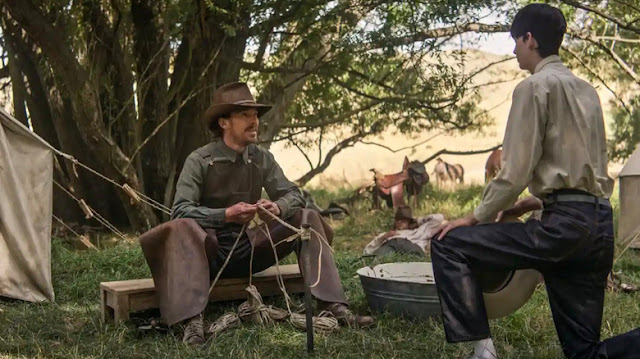
Altman’s verité style is at its best here. There is no need for flash or intrusive cinematic tricks, when the entire film is a brilliant expression of the potential of cinematic narrative. Altman’s camera, with its observational stillness, is perfectly matched with masterful editing (the film is superbly assembled by Geraldine Peroni) that not only makes this a coherent whole, but also finds every trace of reaction and nuance from the characters. Time and time again the camera (and the editing) searches out and finds that little moment of reaction that adds a whole world of depth to the story.

Because, like some of Altman’s best films, this is all about a cascade of little moments that combine into one beautifully enlightening whole. Each story demonstrates a different facet of the human experience, but what they all have in common is the unpredictability of how events many turn out and how people may react to them. There is a wonderful unknowability about people which the film captures. Just when we think we have a person sussed, they will do or say something we don’t expect. A philanderer’s wife will be amused by his cheating than horrified. An abusive baker will have depths of kindness. Feuding couples will find they have more in common than not.

There’s also darkness and sadness. The film is largely anchored by the increasingly heart-string tugging collapse of Howard and Ann’s son – and the pain that can lie in parent-child relationships is also seen in the dysfunctional relationship between jazz singer Tess (Annie Ross) and her talented but depressed celloist daughter Zoe (Lori Singer). As Ann, Andie MacDowell gives one of her finest performances as a powerless mother desperate to do the right thing, her fear and vulnerability as touching as her pain is devastating. Somehow, it’s all the more affecting by knowing how distraught Lily Tomlin’s Doreen would be if she knew the terrible impact of her very minor accident was.

That’s another beauty of this tapestry. As characters ‘guest’ in each other’s stories, we don’t see them in black-and-white but as ordinary people doing their best. Tim Robbins’ cop would probably seem a selfish rogue agent in the eyes of several characters, but as we see more of his home life (dysfunctional but strangely loving), it’s hard not to warm to him. We understand why Ralph (Matthew Modine) is a bit distant with the Finnegans, because he’s distracted by concerns that his wife is having an affair. We can’t be angry at Doreen, because we know she’s such a decent person.

The film doesn’t shy away from the darkness of people, not less the slow bubble of sad-eyed depression in the eyes of Chris Penn, jealous of the people his wife (a very good Jennifer Jason Leigh) talks dirty to down a phoneline – a bubble that will burst before the film’s end. Peter Gallagher’s cocksure and charming pilot has the potential in him to do something quite unpleasant to his wife. Even Tim Robbins’ cop seems only a few degrees from potentially taking the law into his own hands.

Short Cuts is wonderfully constructed – and never feels overbearing or overlong despite its great length – but it’s not perfect. It’s very hard not to notice today that it’s view of the great melting pot of Los Angeles is overwhelmingly white. Nearly every single woman takes her clothes off at some point (Julianne Moore famously does an entire domestic argument nude from the waist down, which is making a point about the impact of long-term marriage but still Modine is fully clothed). Altman at times lets his cynicism (and even slight condescension) for some characters show a little too clearly.

But, despite those flaws, Short Cuts is an almost perfect example of smorgasbord story-telling in cinema. And no one else could surely have done it with such ease and wit as Altman did.

Blonde Venus (1932)

Marlene Dietrich can only save her husband…by cheating on him in Blonde Venus

Director: Josef von Sternberg

Cast: Marlene Dietrich (Helen Faraday/Blonde Venus), Herbert Marshall (Ned Faraday), Cary Grant (Nick Townsend), Dickie Moore (Johnny Faraday), Gene Morgan (Ben Smith), Rita La Roy (‘Taxi Belle’ Hooper), Robert Emmett O’Connor (Dan O’Connor)

For their fourth outing together, von Sternberg and Dietrich made for the first time a film set in the modern era. Not that it mattered – von Sternberg would still turn the setting into his typical fever-dream of hyper-reality. It works as always though, because von Sternberg is a master of style and Dietrich is a true superstar. There might not be much more to it than that – and there isn’t really in this melodrama – but that’s still more than enough.

Ned Faraday (Herbert Marshall) is an American chemist (although he sounds more plummy than King George) suffering from radiation poisoning. Fortunately, there’s a cure (this was a simpler time, before we knew there wasn’t any dusting yourself off from a deadly dose of radium) but it will cost. Ned’s German wife Helen (Marlene Dietrich) has to take to the stage again to earn the money to pay for it – but finally finds the real money is in essentially prostituting herself to playboy businessman Nick Townsend (Cary Grant). When Ned finds out his life has been saved due to his wife becoming a kept woman he is furious – and she heads on the run with son Johnny (Dickie Moore) as she’s terrified of losing custody of him.

The Blonde Venus of the title is Helen herself, that being her stage name. Blonde Venus is frequently punctuated by prolonged musical performances by Dietrich, filmed with a flowingly smooth camera by von Sternberg, now firmly able to marry movement and dialogue in his films (in a way Morocco fails to do). The most bizarre of these is “Hot Voodoo” which features exotic African-American dances and Dietrich emerging from a huge gorilla suit wearing a blonde afro. This sort of stuff is so strange that it still works as entertainment, and it strangely fits with von Sternberg’s dreamy approach to story-telling where everything feels a few degrees off reality.

Blonde Venus riffs on this fable like atmosphere pretty openly. It starts with Helen telling a story of how Ned and her first met. This opening shows Helen and several German women skinny-dipping in a pool in the days after the First World War (oh, those pre-Code days!) when they are approached by a group of American GIs, led by the completely un-American sounding Ned. They flirt, and the entire meeting feels very much like a fairy tale – which is exactly how Johnny takes it. The film will end with revisiting this story, this time the son wanting to use it as a comforting romantic vision to escape to. It’s all part though of how Blonde Venus is very consciously framing itself as fairy tale, a group of people living in a heightened reality that’s just outside of logic.

Pretty fitting as the plot leads into an almost bizarre sequence of Helen and Johnny on the run – Ned wants paternity (since his wife is now a floozy) so Helen and Johnny had down South into a Southern States of America which are bizarrely so unspecific in their setting they could be anywhere and later a Texas that looks like it’s come straight out of the Chinese market-place of Shanghai Express. Throughout the journey, like a Princess on the run from a wicked stepmother, Helen is pursed by policeman looking to find Johnny for a reward. Like an old morality tale, she is tipped into destitution (eventually arrested for vagrancy) but then almost as suddenly decides to turn her life around – literally the next scene she is in Paris, the belle of the French night club scene. This is the sort of rapid logic of a dream, and about as likely as a fairy tale would be in real life.

Alongside this fascinating narrative dreaminess, the film also carries a proto-feminist message. It sympathetically sides with Helen, a woman who has no choice but to prostitute herself in an attempt to save her husband’s life – only to be roundly condemned for it by the old stick-in-the-mud the moment he returns. Blonde Venus hardly warms either to Nick Townsend – played by a very raw Cary Grant, still years away from creating his persona in The Awful Truth – a selfish playboy who seems uninterested in consequences. By contrast, Helen is a martyr who consistently puts other people first and as a reward is branded a harlot and a bad mother. You can’t win.

As Helen, Marlene Dietrich gives another fine performance. By this stage, she was highly experienced before the camera and knew exactly how to achieve an impact on the audience. As Helen she is continually sympathetic but also a bright, confident and determined woman with a deep love and loyalty for her family. Dietrich works extremely well with her two male stars – although she rather overshadows both of them – and has an excellent chemistry with the kid. She nails the song and dance moments and her slight air of other-worldly mysticism lends itself very well to the fairy-tale feel of much of the film.

Blonde Venus is of course crammed with beautiful images and transitions. There is a lovely opening transition from that flashback to Ned and Helen’s first meeting to the modern day, where Helen’s body thrashing through the water slowly turns into Johnny beating water in his bath with his feet. The other worldly beauty of Helen’s run from Ned is beautifully presented, and von Sternberg draws some very good performances from his leads. It’s a very slight story – a classic melodrama – but its told with an artful skill that makes it a very rewarding watch.

No Country for Old Men (2007)

Javier Bardem is terrifying in the Coen’s Oscar-winning No Country for Old Men

Director: Joel & Ethan Coen

Cast: Tommy Lee Jones (Sheriff Ed Tom Bell), Javier Bardem (Anton Chigurh), Josh Brolin (Llewelyn Moss), Woody Harrelson (Carson Wells), Kelly Macdonald (Carla Jean Moss), Garret Dillahunt (Deputy Wendell), Tess Harper (Loretta Bell), Barry Corbin (Ellis), Stephen Root (Wells’ Hirer)

The borderlands of America. A vast panoramic countryside, where times may change but the underlying violence and savagery continues to lurk just under those dusty plains. It’s ground the Coens have explored before, but perhaps never with such mastery as in No Country For Old Men, a film that mixes the style of a classic Western with the nihilism and bleakness of their most challenging work, all capped with just a hint of their incomparable quirky black humour. A pitch-perfect adaptation of Cormac McCarthy, No Country For Old Men scooped four Oscars, including Best Picture.

In the border Terrell County in Texas in 1980, a Vietnam-vet and welder Llewelyn Moss (Josh Brolin) stumbles across a drug deal gone wrong in the desert: several dead men, a truck full of drugs and a suitcase containing $2 million. Taking the case, Moss sends his wife Carla Jean (Kelly MacDonald) to her mother’s for safety and flees first to Del Rio then Mexico to try and keep the money. Unfortunately, he’s being followed by relentless, psychotic hitman Anton Chigurh (Javier Bardem) who will stop at nothing to fulfil his contract – and heaven help anyone who gets in the way. Trailing in their wake is worn-out Sheriff Ed Tom Bell (Tommy Lee Jones), who feels increasingly adrift in a violent world he no longer understands.

The Coen’s film is a bleak, pessimistic and doom-laden look at man’s inhumanity to man – all of it watched with a weary sadness by Jones’ tired Sheriff, in a hauntingly gentle performance. The vision the Coens present is a world that may have moved on in decades from the Wild West, but still has that era’s cavalier regard for life. Life is very cheap in No Country For Old Men and even the slightest mistake, hesitation or act of kindness can have horrific consequences. It’s a film where death is a constant, terrible surprise – so much so it claims the life of one significant character entirely off-screen and can be handed out on the basis of a coin toss.

That coin toss will come at the prompting of Chigurh. Played with an Oscar-winning calm voidness, by an unworldly Javier Bardem, Chigurh is relentless, merciless and completely detached from humanity. Emotion is a complete stranger to him, other than a pride in his work and a capability for being irritated by a non-co-operative target. Chigurh sees himself as an instrument as fate, a nihilistic view where individual choice is removed from the equation. In one chillingly memorable scene, he relentlessly but with a terrifying calm gets a gas station attendant to call a coin toss: the attendant struggles to understand what he’s wagering, but it’s all too clear to us – and in case we miss the point, Chigurh urges him to keep the coin afterwards as it’s a momentously lucky object.

There’s a possibility that this is how Chigurh rationalises the world to himself. He is absolved of all moral consequences for his actions, as everything is pre-ordained, objects and people travelling to predetermined outcomes. It’s a viewpoint another character invited to toss a coin late in the film will firmly reject, saying all Chigurh’s actions are a choice. They’re probably also right. Chigurh kills throughout the film partly because it’s the most expedient way to get what he needs – from a car, to escaping a police station – but also because of the pride he takes in his work being the best, and anything obstructing that should be punished. He has no regard or interest in the money or even for his employers, all of them disposable in the pursuit of doing his job well. It’s perhaps not a surprise that a survey by psychologists named him the purest psychopath caught on film.

Pity those who cross his path. Compared to him, Woody Harrelson’s professional hitman is just that: a guy doing a job rather than an elemental, unstoppable force of nature (Harrelson is superb as a charming, slightly cocky pro, who accidentally gets in over his head). In many ways, it makes it even easier to root for Josh Brolin’s Llewelyn Moss as he tries to stay one step ahead of him with his ill-gotten gains. In a breakout role, Brolin makes Moss the quintessential everyman, with just enough touches of grace and decency to make us overlook the fact that he’s an opportunist putting himself and his family at risk to steal drug money. Moss is such an underdog – but also so ingenious and determined – he becomes the perfect person to root for.

The film largely chronicles the battle of wits between Llewelyn and Chigurh across Texas and Mexico, the two of them carrying out a hunter-tracker dance that has echoes of similar duels from directors like Leone. In one set-piece moment after another, we see their coolness under fire, as well as their focused determination to get what they want, regardless of cost. Brolin’s performance is a superb slice of taciturn Texan-ness, with just enough decency to get him in trouble: from protecting his wife, to taking water back for an injured man, to rejecting the advances of a poolside floozy. It’s interesting that he invariably ends up in more trouble when he tries to do something good – but such behaviour sets him aside from Chigurh and lets us know he’s one of us.

All this bleakness is followed with sad-sack sorrow by Tommy Lee Jones’ sheriff, whose eyes speak of endless, uncountable horrors that fresh ones don’t even seem to shock him anymore. Jones bookends the film with two superb monologues, that reflect on what seems like the increasing brutality of the modern world. But the Coens are smart enough to know that this sentimentality is misleading – Bell’s uncle Ellis (a fine cameo by Barry Corbin) tells him frankly that the world was ever thus and its naïve to think otherwise. This is also one of Jones’ finest performances, a tragic Homer, totally ineffective, reduced to following around and picking up the pieces.

All of this plays out without hardly any trace of a music score – Carter Burwell’s scant score makes use of everyday sound and hints of music at a few dry moments – hammering home the coldness and bleakness of it all. Excellently shot by Roger Deakins, whose classic, restrained, pictorially beautiful presentation of the West brings back a truckload of cinematic memories, the Coen’s film still finds room for dashes of dry humour. Sure, it ends with a nihilistic comment on the horrors of the world and our hopelessness in them, but there are small shoots of hope growing in there if you look closely. They are well hidden, but they are there.

No Country for Old Men is perhaps the Coens’ most fully rounded, morally complex, intriguing and dynamic film, a wonderful mix of the style of their earlier work with the bleakness of Fargo and just some touches of the wit they displayed elsewhere. Cormac McCarthy is the perfect match for two masters, whose direction is as faultless as their script. It’s a film that rewords constant viewing and is constantly shrewd and terrifying in its analysis of the human condition. Essential watching.

Dune (2021)

Timothée Chalamet and Rebecca Ferguson excel in Denis Villeneuve’s marvellous Dune

Director: Denis Villeneuve

Cast: Timothée Chalamet (Paul Atreides), Rebecca Ferguson (Lady Jessica), Oscar Isaac (Duke Leto Atreides), Josh Brolin (Gurney Halleck), Stellan Skarsgard (Baron Valdimir Harkonnen), Dave Bautista (Glossu Rabban), Charlotte Rampling (Gaius Helen Mohiam), Jason Momoa (Duncan Idaho), Javier Bardem (Stilgar), Stephen McKinley Henderson (Thufir Hawat), Zendaya (Chani), Sharon Duncan-Brewster (Dr Liet-Kynes), David Dastmalchian (Piter De Vries), Chang Chen (Dr Wellington Yueh)

In the history of “unfilmable novels”, few are perhaps as “unfilmable” as Frank Herbert’s epic science-fiction novel Dune. In fact, in case we were in any doubt, we even have the evidence with David Lynch’s curiosity Dune (either a noble attempt or an egregious mess, depending on who you talk to – I fall between the two camps depending on the time of day). Denis Villeneuve – fresh from his glorious reinvention of Blade Runner – is one of the few directors with the vision and the clout needed to bring this fictional universe to the screen. He delivers a visually stunning slice of cinematic story-telling, that remains faithful to the novel while carefully calculating how much of the story to focus on. It makes for a sweeping, spectacular film.

The set-up in Herbert’s books is labyrinthine, but one of the film’s great skills is to boil it down to something digestible and understandable. It helps as well that, unlike Lynch’s film, this focuses on roughly the first half of the novel only. 10,000 years in the future, mankind travels through space – but space travel is dependent on a spice that can only be mined on a sand-covered planet called Arrakis, populated by colossal worms and a race of mysterious sand-dwellers called the Fremen. Control of the mining operation of the planet is taken from the brutal House Harkonnen, and its patriarch (Stellan Skarsgard), and granted to the more moderate House Atreides and its head Duke Leto (Oscar Isaac). However, this is just a ruse to trap and destroy House Atreides, whose popularity endangers the Emperor. On arrival on the planet, Leto’s son Paul (Timothée Chalamet) is believed by the Fremen to be a long-promised messiah – and Paul is plagued with strange visions of his future. Can he, and his mother Jessica (Rebecca Ferguson), survive and fulfil their destinies?

Dune is a complex, sprawling piece of world-building – the sort of book so stuffed with unique words, concepts and language that it includes a full glossary to help the reader work out what’s going on. Villeneuve’s genius here is to work out exactly how much of that world building to build into the script, and how much to leave out. Where the Lynch Dune tried to cover everything in this universe and seemed to introduce new characters and concepts in every scene (right up to the end), Villeneuve’s Dune is far more focused. It gives enough tips of the hat to readers of the book to be faithful, but doesn’t bother the more casual viewer with what, say, a mentat is or who the Space Guild exactly are. The overload of information that crushed Lynch’s Dune is skilfully avoided here.

What we get instead is a wonderfully focused, coming-of-age story that places the young hero front-and-centre – and filters our experience through his eyes. This not only helps give us a very clear human engagement with this world, it also makes for a highly relatable central arc to build the rest of the world building around. After all, we understand the “chosen-one-finds-his-destiny” story: using that as a very clear framework, allows the wider universe to be slowly and carefully drip-fed around that. It also plays very well to the reader (who will know the unspoken detail and enjoy subtle references to it on screen) and to the initiate (who won’t need to know every last detail of every last character’s background and won’t be overwhelmed by those references).

On top of which, Dune is, in itself, a sumptuous and visually beautiful example of expansive world-building. Fitting a series that has spawned dozens of novels and an entire universe of expanded storylines, endless care and loving attention has gone into creating every inch of this world. Jacqueline West’s costumes brilliantly capture the mix of medieval and space-punk futurism in the world’s design (this is after all a universe which is effectively Game of Thrones in space – one of many franchises to owe a huge debt to Dune) and Patrice Vermette’s set design superbly contrasts the different planets aesthetics. The imagery carefully contrasts the greens and blues (and water!) of the other worlds with the striking yellows and dryness of Arrakis – it’s beautifully filmed by Grieg Fraser – and the scale is epic, re-enforced by Zimmer’s gothic choir inspired music.

Villeneuve marshals this all into a story that is part world-building set-up, part conspiracy thriller and eventually becomes a full-on chase movie. Each shift in story-telling style flows naturally into the next, and Villeneuve keeps the pace and sense of intrigue up highly effectively. He also understands that films like this need a touch of wit and human warmth: Herbert’s book, for all its strengths, is also a po-faced and slightly pretentious read, with every event and character consciously carrying a massive sense of importance. Dune recognises this, and makes sure to mix lightness and touches of humour to avoid the operatic seriousness tipping into being a little silly (as it did in Lynch’s version).

Villeneuve is helped in this by a well-chosen cast. Chalamet is perfectly cast as the naïve Paul, growing in statue and wisdom as the film progresses: he is effectively vulnerable but also a determined and mentally strong hero, one we can have faith in but still feel concerned about. Ferguson is the film’s stand-out performance as his conflicted mother, determined to protect her family. Isaac is perfect as the charismatic and noble Leto, as is Skarsgard as the viciously bloated Vladimir. Sharon Duncan-Brewster is terrific as an official with split loyalties. Charlotte Rampling has a highly effective cameo as a mysterious priest while Jason Momoa gives possibly his finest performance (certainly his warmest and wittiest) as a larger-than-life warrior.

The film glosses over certain elements – in particular the plot against House Artreides, and Leto’s suspicions of it are wisely simplified and stream-lined – and wisely revises or avoids elements of the book that have dated (most notably the slight stench of homophobia around the bloated, predatory Vladimir). In some ways it’s a beautiful coffee-table version of the story, but it’s careful enough to suggest anything we are not seeing from the book is still happening, just off-camera (I await the inevitable Director’s Cut with even more Mentats, Conditioning and Weirding!). However – based on the cinema I sat in – this has worked a treat to win converts over to the story.

A sweeping, impressive and epic version of a huge novel, it’s a triumph of directorial vision and skilful compression and adaptation. By trying to make Dune work for a larger audience, without sacrificing its heart, rather than laboriously include everything and everyone, it successfully makes it into a crowd-pleasing space opera with depth. Catch it on the big screen!

Schindler's List (1993)

Liam Neeson and Ben Kingsley excel in Spielberg’s masterpiece Schindler’s List

Director: Steven Spielberg

Cast: Liam Neeson (Oskar Schindler), Ben Kingsley (Itzhak Stern), Ralph Fiennes (Amon Goth), Caroline Goodall (Emilie Schindler), Jonathan Sagall (Poldek Pfefferberg), Embeth Davidtz (Helen Hirsch), Malgorzata Gebel (Wiktoria Klonowska), Mark Ivanir (Marcel Goldberg), Beatrice Macola (Ingrid), Andrzej Seweryn (Julian Scherner), Friedrich von Thun (Rolf Czurda)

It was the film Spielberg spent over a decade building up the courage to make. Schindler’s List not only marked a new era for him as a film-maker, it also helped a wider audience directly confront the horrors of the Holocaust. At a time when Holocaust denial was starting to rise, Schindler’s List straight-forwardly but powerfully placed the reality of this crime firmly in the eyes of the world. Schindler’s List today remains one of the most emotionally powerful Holocaust movies, the standard to which all others are judged – and peerless example of committed and passionate film-making.

Based on Thomas Keneally’s Booker-prize winning “non-fiction novel” Schindler’s Ark, the film is set in Krakow during the Second World War. As the German occupying force crowds the Jews into the overcrowded Ghetto in the first step of what will become systematic extermination, Oskar Schindler (Liam Neeson) arrives in town looking to make his fortune. Charming, gregarious and quick with a bribe, Schindler soon makes friends with senior SS members. Setting up an enamelware factory to supply the Wehrmacht, it is staffed entirely by cheap Jewish labour (supplied by the SS) and run by skilled Jewish accountant Itzhak Stern (Ben Kingsley) while Schindler handles ‘public relations’ (bribes and schmoozing) with the SS. But, over time, Schindler struggles more and more to close his eyes to the murder of the Jews – a fact made even more prominent with the arrival of brutal SS commander Amon Goth (Ralph Fiennes).

Schindler’s List is chillingly, shockingly honest in its depiction of the horrors of the Holocaust. But it’s easy to forget how cunningly and gently it eases you into the nightmare you are about to watch. This is after all a film that uses Schindler as its POV character. What we are experiencing is his perception of the Holocaust, and through that trying to grasp what could potentially have made this opportunist and profiteer into a humanitarian. As such, the film is careful to give a slow build to the monstrous genocidal fury of Nazism.

In fact, much of the first thirty minutes could almost play out as a sort of triumphant against-the-odds success of a morally flexible charmer. There are a surprising number of laughs in that opening thirty minutes, at Schindler’s chutzpah and weakness for a pretty face. The opening sequence is a delightful demonstration of his confidence: we know he has nothing but the clothes he stands up in and what cash he can scrape together when he enters a nightclub frequented by the SS bigwigs we needs to impress. When he walks in no-one knows who he is: by the end of the evening a waiter is dumbfounded another guest doesn’t know who Oscar Schindler is. Much of the first act is a chronicle of Schindler playing the angles, crossing the right palms with silver and charming left right and centre to make himself a somebody from nothing.

Imagine you didn’t know what the Holocaust was. You’d think this could be a very different film. There are clues: the unspoken loathing Ben Kingsley’s Itzhak Stern clearly feels for this man who smilingly hires cheap Jewish workers from the SS (the workers get nothing) to staff his factory. The fear any Jewish character expresses when confronted with a German officer. The desperation and dirt of the Ghetto. But, like Schindler, there is enough there for you to think “yeah, it’s tough on the Jews, but it’s could be worse, it’s not my problem”.

Schindler wants to be thought of as a good man, but deep down he knows he isn’t: you can see his discomfort when he’s thanked by a one-armed man Stern has inveigled into working in the factory. He already knows he doesn’t deserve thanks – guilt that expresses itself at anger against Stern for hiring a one-armed ‘machinist’ in the first place. After all he’s running a business here.

That one-armed man is the first death we see, executed at a roadside for not being able to shovel snow from the road. Any chance of turning your face away again is lost with the arrival of Amon Goth to liquidate the Krakow Ghetto and build a new concentration camp. Played with a bloated, dead-eyed sadistic sadness by Ralph Fiennes (Goth bitches constantly about his workload, drinks to excess and is as desperate to be liked as he is uncaringly brutal), Goth oversees acts of inhumanity that leave the viewer shocked and appalled.

Spielberg films the liquidation of the Krakow Ghetto like a documentary observer and doesn’t flinch from the brutality: summary executions, dead bodies left in the street, the late night slaughter of any hiding in the Ghetto. Doctors euthanise their patients (who drink the poison with thanks in their eyes) before SS guards can machine gun them in their beds. Spielberg embodies this in a single red-coated girl (one of the few splashes of colour in the film), who walks through this nightmareish hell, witnessed from a hill by the horrified Schindler. Later the same red-headed girl will be wheeled on a cart of twisted, exhumed bodies to be thrown onto a bonfire of rotting corpses.

It’s but an entrée into the nightmare of Goth’s camp and the later hell of Auschwitz. In the camp, Goth snipers those not ‘working’ from the balcony of his hilltop villa. Anyone can be executed at any time. Selections see naked inhabitants of the camp running in circles, the weak pulled out to be dispatched to the death camps. Mountains of corpses are burnt, their ashes falling like snow on Krakow. Later, a misdirected train of Schindler Jews arrives in Auschwitz where human ashes form a constant mist. Terrified the women are stripped, their hair removed and herded into a shower room: the terror of this sequence alleviated only when water not gas falls from the shower heads. Spielberg shoots all this with a careful but horrific immersiveness, which never lingers on horrors but always acknowledges them while moving you onto the next terror.

You can criticise Schindler’s List for focusing on the few thousand who survived this senseless barbarism rather than the millions of dead – but the film offers a cause for hope. That, even when things are at their worst, people can decide to do good. Itzhak Stern (a beautifully judged, deeply humane performance from Ben Kingsley) calls the list “an ultimate good”, with everything around it evil. Faced with such horrors, perhaps we need to know that a man like Oscar Schindler can turn the skills he used to enrich himself towards saving lives: bribing officials, spinning stories, presenting a front to his SS partners of an uncaring businessmen while saving as many lives as he can.

Played with huge charm and authority, mixed with a fascinatingly unknowability by Liam Neeson, the film bravely never offers a definitive answer as to what turned Schindler into a man dedicated to others rather than himself. There is no single moment where he makes the conscious turn, instead the film presents the shift as a gradual but inevitable change: as the real-life Schindler himself said, in such a situation there was no other choice.

Schindler’s List isn’t perfect. Despite his best efforts, Spielberg’s sentimentality creeps in. Neeson’s final scene takes things too far, culminating in a blatantly manipulative breakdown, weeping that he did not do more – as if Spielberg is worried we didn’t get the point. Some moments lean into Hollywood convention, from Goth’s gun repeatedly misfiring when attempting to execute a worker (who survives) to Goth and Schindler cutting cards to decide the fate of Goth’s brutalised maid Helene (a sensitive and heartfelt Embeth Davidtz). But what it gets right far outweighs this.

Spielberg presents the Holocaust with unflinching emotion and a carefully controlled sense of moral outrage. Beautifully (some argued too beautifully) filmed by Janusz Kaminski in cool black-and-white with a sensitive score from John Williams, it introduced the Holocaust to an entire generation. No other director could perhaps have done that.

In a sense Spielberg’s career was building towards this, his mastery of cinematic language (this is a superbly edited film by Michael Kahn) utilised not for thrills but to illuminate one of the darkest hours of history. But with that, it also provides hope for humanity, perhaps the key to its emotional impact. The acting is sensational – Neeson has never been better, Fiennes is extraordinary, Kingsley far too easily overlooked as the film’s heart. Traumatising, horrifying but vital and essential, Schindler’s List brings to life with deep respect the worst of history.

The Awful Truth (1937)

Irene Dunne and Cary Grant flex their comic muscles to outstanding effect in The Awful Truth

Director: Leo McCarey

Cast: Irene Dunne (Lucy Warriner), Cary Grant (Jerry Warriner), Ralph Bellamy (Dan Leeson), Alexander D’Arcy (Armand Duvalle), Cecil Cunningham (Aunt Patsy), Molly Lamont (Babara Vance), Esther Dale (Mrs Leeson), Joyce Compton (Dixie Belle Lee), Robert Allen (Frank Randall), Robert Warwick (Mr Vance), Mary Forbes (Mrs Vance), Skippy (Mr Smith)

Lucy (Irene Dunne) and Johnny (Cary Grant) Warriner divorce because both of them are constitutionally incapable of being faithful. But yet, they also pretty much can’t stand the idea of the other being with anyone else. Can they face The Awful Truth that they are, in fact, perfect for each other? This is a feuding husband and wife who enjoy the horrified looks on the faces of other people as much as they enjoy seeing how far they can push each other.

When winning the Oscar for Best Director for this film, Leo McCarey believed he actually deserved it for his more serious melodrama about the struggles of the elderly, Make Way for Tomorrow. While Make Way for Tomorrow might well be a more serious work, and not the souffle of The Awful Truth, I’m pretty sure far fewer people over the past 80 odd years have found revisiting it such a delight as going back into The Awful Truth. Perhaps the eponymous truth for McCarey was that we are never the best judges of our own work.

The Awful Truth is possibly the best, funniest, remarriage comedy ever made. It was pulled together almost from nothing onset. Nominally an adaptation of a play by Arthur Richman, McCarey effectively dumped almost the entire plot and instead largely improvised the film and its plot on set as he went, throwing in jokes, plot developments and bits of business depending on what worked with the actors on the day. Producer Harry Cohn would arrive on set to find McCarey plinking on a piano, swopping stories and coming up with ideas for what they would shoot that day. From this the director would decide on the structure of the scene, the jokes and most of the dialogue. No wonder Cohn was pulling his hair out.

Sounds like chaos right? The stars certainly thought so. Grant was terrified. Prior to this a reliable Studio actor, used to being given the lines and standing where he was told. Finding out here that McCarey wanted something loose and improvisational, at first he was all at sea – even offering instead to buy himself out of the film. But McCarey saw something in him: in fact what he saw was “Cary Grant”. The Awful Truth is the moment the Grant we all know came to be: sophisticated, arch and a masterfully relaxed light comedian (rumour has it, at least partly based on McCarey himself). From hating the experience, Grant suddenly realised it was inspired. The same went for his co-stars: Dunne, Bellamy and the rest all excitedly contributed their own ideas and business into what became one of the greatest comedies of all time.

The Awful Truth is frequently laugh-out loud funny, a perfect combination of witty lines delivered with pin-point perfection. Many of the best lines fall to Irene Dunne’s Lucy, from denying an affair with her latest beau (“That’s right Armand. No one could ever accuse you of being a great lover. That is, I mean to say…”), to archly responding to Jerry’s “I know how I’d feel if I was sitting her with a girl and her husband walked in” with a “I’ll bet you do”. Grant though gets plenty of his own – “The car broke down? People stopped believe that one before cars started breaking down.” – and only he could make “I only just met her” a laugh-out loud moment. Nearly every scene has a perfect bon mot, brilliantly delivered.

McCarey’s direction also adds hugely to the comic effect. The Awful Truth is so smooth, polished and assured you can overlook how skilfully and brilliantly it’s been put together to accentuate the comic effect. From cuts that reinforce or set up gags, to characters entering and leaving at the edges of frames at the perfect moment for a laugh, the entire film is a masterclass in how to shoot and frame comic business. The film is a triumph of reaction shots: watch Grant, Dunne and Bellamy respond to the appalling singing of Jerry’s new girlfriend Dixie Bell (Lucy: “I guess it was easier for her to change her name than her whole family to change theirs”). Best of all a superb sequence where we hear Jerry and Armand fight off screen (with crashes aplenty) while Lucy attempts to maintain a banal ‘nothing to see here’ conversation with Daniel and his mother.

The entire film is a triumph of comic set-pieces, with Grant and Dunne sparking off each other like two whirligigs of static electricity. Both actors are absolutely sublime. Grant manages to make everything not only funny, but also effortlessly cool and his archness and confidence are hilarious. Dunne throws herself comedy with a full-blooded commitment and a total willingness to look silly. Like Grant, she also has the ability to tip the wink to the camera and flag up just how ridiculous many of these situations are. Ralph Bellamy, on paper, has the dullest role as the straight man but as well as being winningly naïve, he also has two show-stopping moments, most strikingly his hilariously enthusiastic dancing (made even funnier by Dunne’s increasingly uncomfortable efforts to keep up with him).

It’s all wrapped up in a plot light as air, perfect for the jokes to latch themselves onto. You’ll laugh almost from the first, but you’ll also care about these two dotty eccentrics who are clearly perfect for each other. With Grant creating his entire screen persona in front of your eyes and Dunne absolutely radiantly hilarious, The Awful Truth will carry on entertaining the masses for decades to come. Hopefully McCarey doesn’t regret that Oscar decision too much.

The Manchurian Candidate (1962)

Frank Sinatra and Laurence Harvey are brainwashed in The Manchurian Candidate

Director: John Frankenheimer

Cast: Frank Sinatra (Major Bennett Marco), Laurence Harvey (Raymond Shaw), Janet Leigh (Eugenie Rose Cheyney), Angela Lansbury (Eleanor Shaw Iselin), James Gregory (Senator John Yerkes Iselin), Henry Silva (Chun-jin), Leslie Parish (Jocelyn Jordan), John McGiver (Senator Thomas Jordan), Khigh Dhiegh (Dr Yen Lo), James Edwards (Cpl Allen Melvin)

Spoilers: Herein the biggest twist in The Manchurian Candidate is revealed

Korean War hero Raymond Shaw (Laurence Harvey) is cold, uncommunicative, reserved and difficult. So why, when asked, does everyone in his platoon say “Raymond Shaw is the kindest, bravest, warmest, most wonderful human being I’ve ever known in my life”? Welcome to the world of sinister brainwashing and mind-control. Welcome to The Manchurian Candidate.

Shaw returns from the war in Korea as a Medal of Honour winner. He saved his entire platoon – with the exception of two casualties – under heavy fire and is America’s blue-eyed-boy, already being hijacked by his ambitious mother Eleanor (Angela Lansbury) as a prop for the Presidential campaign of her second husband, her McCarthy-like puppet Senator John Iselin (James Gregory). But if things are fine and dandy, why does Shaw’s commanding officer Major Marco (Frank Sinatra) keep having a recurring nightmare of a hypnotised Shaw calmly murdering those two casualties in front of an audience of Russian and Chinese officers? Can Shaw be all he seems – or is he the new secret weapon in a deadly Cold War?

A film born at the heart of the paranoia of the sixties – it premiered shortly after the Cuban Missile and would be followed a year later by the assassination of JFK by the Shaw-esque Lee Harvey Oswald – The Manchurian Candidate captures the mood of its time in a way few other films have done. On top of which, it’s a brilliant, edge-of-your-seat ride, crammed with complex psychology and chillingly cold-hearted violence, directed with a more than a splash of cinema verité and plenty of panache by John Frankenheimer at the top-of-his-game. Touches of satire on politics and the media, are mixed with a terrifying fantasia on the powers of mind control. There is no other film that drips with as much sweat as this one (just look at some of those faces!) or plays more brilliantly into our own fevered nightmares of how we can be turned against ourselves.

The action in the film is dealt with all the expertise of a card sharp. The opening scene already tips us the wink about the lies in the memories of our heroes: not only do the soldiers clearly despise Shaw, as he plucks them out of a seedy bar in Korea, but we later see them bundled up by Commie soldiers into waiting helicopters. So, we’ve already got a pretty good idea why Sinatra’s Major Marco is as twitchy and sweaty as he is – and we’re immediately suspicious of just how Shaw managed to get his hands on the Medal of Honour (and why, perhaps, he doesn’t seem that happy about it – as if he already subconsciously knows he doesn’t deserve it).

The truth is revealed to us in an extended sequence that’s a tour-de-force or imaginative visual technique, that Frankenheimer doesn’t get enough credit for. Marco’s dream starts in a genteel hotel in America’s South, with a polite middle-class lady giving a talk about flowers on stage, surrounded by the platoon. The camera moves from the stage in a smoothly uninterrupted 360 turn looking at the audience of similarly middle-class, middle-age belles, before returning to the stage where the hotel backdrop has been replaced by huge banners of Stalin and Mao and our genteel lady has turned into a sinisterly jovial Chinese scientist.

During the sequence that follows, the camera shifts constantly from the subjective (Marco’s false memory of the hotel and ladies) and the objective (a surgical observatory pit with watching Communist apparatchiks), while never interrupting the chilling scientific explanation from Khigh Dhiegh’s (brilliant in every way) scientist. During this inspired barrage of false and true memories, spliced with alarming moments of violence, we witness just how far Shaw’s brainwashing programming has gone as, with complete politeness, he goes about shooting one soldier in the head and quietly strangling another. No wonder Marco – and the other soldiers who all share versions of the same nightmare – wakes up screaming every morning.

And why did they pick Shaw? Well obviously, his mother-fixation already makes him more than susceptible to external control (under hypnosis he describes Marco as his best friend – something that, Dr Lo points out, speaks volumes for his inclination to prostrate himself to authority). Played with an austere distance by Laurence Harvey – the film expertly uses Harvey’s prickly air of patrician woodenness – Shaw is desperately weak-willed and a natural follower, who has never escaped his mother’s influence. He’s already a lonely man, nursing heart-break, loathing the brashness around him with an elitist hauteur, but lacking the force of character to do anything about it. No wonder he’s ready to be reprogrammed.

And of course, there is no controller he is more likely to follow than his mother. Angela Lansbury excels in her finest, most iconic screen role, as Shaw’s ambitious, deadly, controlling and manipulative mother. Is there a finest reveal, than her sudden invitation at a fancy-dress party for Shaw to “pass the time by playing a little Solitaire”? The film skilfully suggests that it is power rather than ideology that motivates Eleanor – even before the reveal she’s clearly the brains in the marriage with her dull husband, and a forceful, overbearing presence to her son. It’s revealed she’s already wrecked poor Shaw’s life – forcing him to jilt his true love Jocelyn (Leslie Parish), because marriage to the daughter of a political rival ain’t part of the plan. Maybe as well she’s motivated by the unsettling air of incest between the two of them.

No wonder Marco starts to feel sorry for him. Sinatra is very good in this film, striking a perfect balance between twitchy unease and a growing fatherly concern for Shaw. Notoriously a one-take actor (a key scene where Sinatra appears slightly out-of-focus – an effect that suggests we are seeing him from the screwed up Shaw’s perspective – was in fact because Sinatra was most effective in the first take, but the camera was incorrectly set-up), Frankenheimer uses his presence extremely well. He has a brutal fight scene that uses every inch of his energy, while he’s not afraid to add a touch of vulnerability into his burgeoning relationship with Janet Leigh’s stranger on a train (despite an initial scene that suggests all sorts of intriguing possibilities, this is a rather thankless part for Leigh, which she still performs expertly). Like Harvey, his face is frequently studied dripping with sweat.

It’s all shot with a brilliantly immediacy. A press conference – where Iselin (the McCarthy satire is hilariously wicked) rants about Commies in the State Department – is shot with such observatory skill, it feels alarmingly real. Moments of lightness – the slightly dreamy flashbacks of Shaw and Jocelyn running playfully together near the sea – are immediately punctured by terrifying moments of unsensational suddenness, none more so than when a programmed Shaw assassinates Jocelyn and her father (the bullet passing through a carton of milk in his hand, which pours out across the floor). It culminates in a race-against time that’s played out with a hair-raising tension.

The Manchurian Candidate combines skilful acting with real cinematic force and invention from Frankenheimer. It creeps into the darkest corners of our mind and invites our nightmares to come out to play. Dark, at times even blackly comic, it’s possibly the finest and most influential conspiracy thriller ever made.

The Lord of the Rings: The Return of the King (2003)

The Fellowship face one final battle in the conclusion of Jackson’s stunning trilogy

Director: Peter Jackson

Cast: Elijah Wood (Frodo Baggins), Ian McKellen (Gandalf), Viggo Mortensen (Aragorn), Sean Astin (Samwise Gamgee), Andy Serkis (Gollum), Billy Boyd (Peregrin Took), Dominic Monaghan (Meriadoc Brandybuck), John Rhys-Davies (Gimli), Orlando Bloom (Legolas), Bernard Hill (Theoden), Miranda Otto (Eowyn), David Wenham (Faramir), Karl Urban (Eomer), Hugo Weaving (Elrond), Liv Tyler (Arwen), Cate Blanchett (Galadriel), John Noble (Denethor), Ian Holm (Bilbo), Christopher Lee (Saruman), Brad Dourif (Grima Wormtongue), Sean Bean (Boromir)

By the time the third film in Jackson’s Lord of the Rings trilogy came out, we all knew this was something very special. Readers of Empiremagazine voted it the 9th Best Film Ever Made the month it was released. It was showered with awards, winning every Oscar it was nominated for (11, including three for Jackson) and grossed over a billion dollars worldwide. The Return of the King is a landmark – and it’s a stunning sign-off for a triumphant trilogy.

Frodo (Elijah Wood) and Sam (Sean Astin) are even closer now to Mount Doom, guided by the treacherous former ring-bearer Gollum (Andy Serkis). While they must negotiate the dangers of Mordor, Sauron has sent his forces out to conquer Middle Earth. The city of Minas Tirith is his target. Facing an army of thousands of orcs, the city’s only hope is if Gandalf (Ian McKellen) can defend it long enough to allow Aragorn (Viggo Mortensen) – the man destined to become king of Gondor – to lead a relief force. Will Frodo resist temptation and destroy the ring? And will Aragorn be able to defend the city and become its king?

I think it’s fair to say, with books as widely loved as this, no one is going to agree with every single decision Jackson and fellow writers Fran Walsh and Phillipa Boyens made. Here again, changes have been made – famously the scouring of the Shire that closes the novel has been cut (with Saruman dispatched in the opening scenes of the extended edition). What the screenplay seeks to do is increase the pace and tension – it’s probably why Denethor, leader of Gondor, is reinvented as an antagonist (of which more later) and events charge ahead with a relentless forward motion. There is no stopping to catch breath here: there is always a new crisis to solve.

Where changes have been made, they largely have a positive impact. For example, the film takes the decision to introduce conflict between Frodo and Sam – as well as increasing further the scheming malice of Gollum – by having the disturbed ring-addict manipulate the two hobbits into a falling out. This allows Frodo to enter the lair of the giant spider Shelob (a disgustingly visceral creation) alone. Not only does this make Frodo more vulnerable, it also increases the bravery and nobility of Sam, by having him return to save the day (and allow for a classic Hollywood nick-of-time entrance).

The change also adds to the devious brilliance of Gollum, once again superbly played by Andy Serkis. After spending much of The Two Towers bringing out the depth and sadness in this fragile character, The Return of the King carefully shows how this doesn’t excuse his fundamental ruthlessness. The film opens with a flashback showing Smeagol finding the ring, serving as a neat reminder of the Ring’s fundamental wickedness: within seconds its pushes Smeagol to murder his best friend. The sequence following Smeagol’s moral and physical collapse neatly reminds us of its danger and also how close Frodo is to all this happening to him.

Frodo’s suffering and painful growing maturity is more central here. Wood brilliantly charts Frodo’s continuing moral and emotional decline under the Ring’s influence. Increasingly a physical wreck, Jackson carefully lets the suspicion grow that Frodo’s not going to be capable of chucking the ring away. Balancing this, Astin’s Sam Gamgee (the most heartfelt and affecting performance) becomes the moral centre, self-sacrificing, optimistic and fundamentally decent – a beacon of light in the grimness of Mordor.

Again, Jackson ups the stakes, with TROK taking place on the grandest scale you could imagine. The battle sequences are breath-taking in their depth and ambition. But, as with the other films, Jackson knows the scale counts for nothing if you didn’t care about the characters at its heart. So, while the events are epically earth-shattering, the film always brings us back to simple emotion. Even in the siege of Gondor, it finds time for a quiet moment of humanity between Gandalf and Pippin.

But those battle scenes are still stunning. The orc armies are terrifyingly vast, while the strafing run of the airborne Nazgul (soldiers snatched from towers are thrown hundreds of feet to their deaths) adds to the sense that victory is hopeless. Soldiers fight desperately for their, and others, lives. The film even tops the Two Towers’ charge of the Rohirrim with a stunningly rousing charge involving thousands of horses into the massed ranks of Orc (and tops that minutes later with a second change accompanied by a sweeping camera movement and swelling musical cue that is just about perfect).

Jackson brilliantly communicates how much the stakes are against our heroes. We really feel their bravery and desperation as they take on impossible odds – and it’s that which really gives the scenes their power, not the scale or the special effects. No moment is lost without bringing us back to moments of bravery and vulnerability from our leads. There are powerful moments of warmth, kindness, loyalty and generosity throughout. It’s finally what makes the film so effective – it’s a tribute to the power of friendship.

It’s all powered with a beautifully operatic score by Howard Shore. Shore’s music captures perfectly the world of Tolkien. A few years after this, an ill-fated musical version of LOTR was launched – and flopped. Because, essentially, Shore has already turned these novels into a sort of opera-slash-concerto, with perfect themes for everything from martial orcs to whimsical hobbits. Some of the musical cues are so luscious and stirring, they make you want to stand and applaud. The music accompanying Gandalf’s rescue of the retreat from Osgiliath is a wonderful highlight, the triumphant and tense music for the Rohirrim charge is stunning, the score for our heroes leaving for the Undying Lands beautiful. LOTR is so beautifully scored, Shore’s work so gorgeous, LOTRis a film you could certainly watch with just the music playing and still understand it perfectly.

Of course, there are things you can criticise. Denethor – in the novel a portrait of corrupted nobility, his intelligence and pride turned to despair – is repositioned here as a sort of heartless WW1 General, gobbling food while his soldiers die and embracing a nihilistic death wish (although this change does allow for the absolutely beautiful Gandalf/Pippin beacon lighting sequence, in defiance of Denethor). It’s not helped by Noble’s lip-smacking performance, stripping the character of nuance. It’s gives Gandalf more to struggle against, but it’s a crude approach for a character who would have worked better as a mis-guided elitist rather than a crass, hissable villain.

Lots of people have had a pop at the multiple endings as well. Jackson certainly teases us a little too much with fades to black. But I’d argue the lack of a definitive full stop adds greater depth to the story. Tolkien was partly inspired by his experiences in WW1. In that war, the hell of the trenches came to an end, but people’s lives didn’t end with a triumphant parade. Instead, they needed to return home and adjust back into civilian life. I think it’s powerfully affecting that the hobbits return to an unscoured Shire, which hasn’t changed at all while they (and us) have seen Middle Earth torn apart. And it adds real force to why Frodo, in particular, can’t return to “life as normal”.

It gives a powerfully moving, bitter-sweet ending and, I think, brings out a rich, emotional message from Tolkien’s story often missed: Frodo and his friends are fighting to protect their home, but find that they have changed so much they can never settle back into that home in the same way again. It’s something soldiers serving in WW1 experienced, and it feels fitting echoed in Jackson’s LOTR.

Jackson’s LOTR will always spark conversations around faithfulness and otherwise to the source material. Not everyone will agree with every choice. But surely no one can argue with the majesty, scale and wonder of these films, the sublimely perfect casting choices, or the loving detail in every touch of the design. When I first saw Return of the King in the cinema, the audience got to their feet and applauded. You can’t blame them: watch this and you are watching something very special, a true landmark in cinema.

Les Misérables (2012)

Hugh Jackman runs for years in Tom Hooper’s controversial Les Misérables adaptation

Director: Tom Hooper

Cast: Hugh Jackman (Jean Valjean), Russell Crowe (Inspector Javert), Anne Hathaway (Fantine), Amanda Seyfried (Cosette), Eddie Redmayne (Marius), Helena Bonham Carter (Madame Thenadier), Sacha Baron Cohen (Thenardier), Samantha Barks (Eponine), Aaron Tveit (Enjolras), Daniel Huttlestone (Gavroche)

Of all the behemoth musicals of the 1980s, Les Misérables may just be the best. An entirely sung adaptation of Victor Hugo’s door-stop novel, it’s been thrilling sold-out global audiences ever since 1985. It ran on Broadway for 16 years and never stopped playing in the West End. Plans to turn it into a film have took decades, with its scale always the problem (not least since musicals spent a large chunk of the 1990s as far from sure bets at the Box Office). Finally, it came to the screen, with an Oscar-winning director who supplied the ‘fresh new vision’ a show that had been staged literally thousands of times needed. That vision has its merits, but it’s also divisive.

The story follows Jean Valjean (Hugh Jackman), a convict imprisoned for nineteen-years for stealing a loaf of bread. He is persecuted by his nemesis Javert (Russell Crowe), a rigid policeman who believes a man can never change. On parole, Valjean is an outcast but his life is changed forever after encountering a Bishop (played by original West End Valjean, Colm Wilkinson) who claims he had gifted the silverware Valjean had in fact tried to steal. The Bishop charges Valjean to live his life for the good of others. Eight years later he has become a respected mayor of a small town. But his past starts to catch up with him as Javert arrives as the new chief of police. Will helping Fantine (Anne Hathaway), the mother of illegitimate child Cosette (growing up to become Amanda Seyfried), lead to his secret being revealed?

Tom Hooper has a difficult challenge taking on Les Misérables. There can be few people around who haven’t heard at least some of the songs – and no musicals fan who probably hasn’t at a minimum watched a concert version, if not the show itself. How do you even begin to make one of the most famous musicals of all time fresh? Hooper chose a new approach that would up the intimacy and drama, fore-fronting emotion over scale. It also allowed him to fuse his unconventional framing with the raw, hand-held camera work of John Adams, his hit HBO miniseries.

So, Les Misérables, unlike many other musicals was to be all-sung live by the actors, rather than separately recorded and lip-synched on set. The camera would fly into their faces and almost interrogate the actors as they performed, capturing every emotion passing across their face. It would be up-close and intimate. What in the theatre works as a series of powerful, theatre-filling, ballads would be repackaged into something very personal. At times it works extremely effectively.

Having the actors sing live, means all the power of the performances they gave in the moment are captured. Emotions are dialled up, with songs often delivered through cracking voices or snot-filled nose sniffs. This has a particularly huge benefit for Anne Hathaway, whose deeply heartfelt, devastating rendition of I Dreamed a Dream is delivered in a single shot close-up that turns the song into a powerfully raw song about trauma (this sequence alone probably ensured Hathaway won every major gong going). It’s the same with Jackman: Valjean’s Soliloquy in particular plays off the raw guilt, shame and self-disgust Jackman lets play across his face while later Who Am I gains even more impact from the fear, hesitation, regret and moral determination Jackman injects into it, cracked voice and all. Perhaps not a surprise the two most confident performers benefit the most.

The downside is that, repeating the same visual technique for every single song, does make the film at times rather visually oppressive and repetitive. Even the large group numbers sees the camera drill into the faces of the individual singers, rather than offer us any wide shots. In fact, the wide shots in the film are so few you can almost count them on one hand. While Hooper’s approach uses the close-up to present the songs in ways theatre never could (good), it does mean he sacrifices the scale and beauty cinema can bring (less good).

You actually begin to think perhaps Hooper doesn’t really like musicals that much. His vision here is to turn Les Misérables into more of an indie film than an adaptation of West End musical. Choreography isn’t, to be fair, a major part of the stage production, but theatrical spectacle is, and that’s almost completely missing. Some of the most powerful, hairs-on-the-back of the neck power of the big numbers has been sacrificed for grinding the emotion out (Jackman at points speaks some of the lines rather than singing them). Musically, Samantha Barks’ marvellous rendition of On My Own is the only song in the film I would listen to out of context. It makes the show different – but more variety and more willingness to embrace the spectacle of the show – mixed with the intimacy of the solo numbers might have added more.

Les Misérables is still however very entertaining: after all it can’t not be when it has some of the best songs in the business. The acting is extremely strong. Jackman is perfectly cast: he not only has the vocal range and strength, but also the acting chops to bring to life a character who goes from red-eyed fugitive to caring and dutiful surrogate father. Hathaway is hugely affecting as Fantine, vulnerable but also with a deep resentment. Redmayne is hugely engaging and charismatic as Marius. Barks is excellent, Seyfried gives a lot of sensitivity to Cosette and Carter and Cohen are fun as the Thenadiers. The only mis-step is Crowe, who has the presence for the role but notably lacks the vocal strength for a notoriously difficult role.

They all provide some of the most intimate renditions of these songs you’ll ever see and the film unarguably offers a take you will have never seen before, even if you had sat through every single one of the thousands of stagings. It works better for solos than group numbers (which, with their kaleidoscope of voices all in different locations are hard to replicate on screen anyway), and it’s a well the film dips into far too often, but when it works, it really does. Les Misérables divides some – and on repeated viewings its repetitive visuals make it feel longer, with the second half in particular flagging – but Hooper does something a West End show can’t do. It might well have been better if it has used more of the things cinema cando (scale, sets, mise-en-scene – it’s hard to picture an actual image from the film that isn’t a close-up) but a film with actors as good as this and songs as affected as these will always work, no matter what.