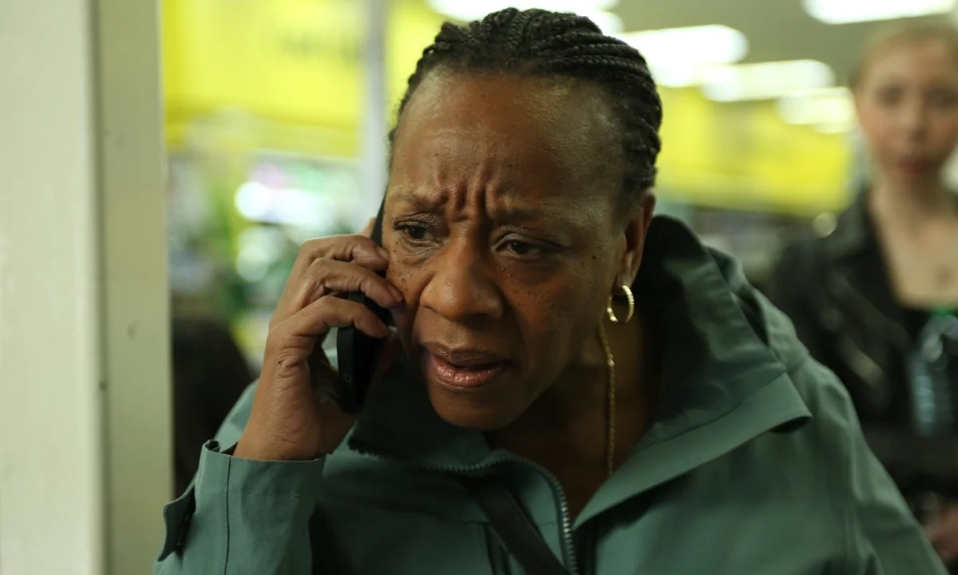
Category: Female led film

Civil War (2024)

Civil War (2024)

An eye-catching concept disguises a film more about journalistic ethics than politics

Director: Alex Garland

Cast: Kirsten Dunst (Lee Smith), Wagner Moura (Joel), Cailee Spaeny (Jessie Cullen), Stephen McKinley Henderson (Sammy), Nick Offerman (President of the United States), Sonoya Mizuno (Anya), Jefferson White (Dave), Nelson Lee (Tony), Evan Lai (Bohai), Jesse Plemons (Militant)

A third-term President (Nick Offerman) speaks to an America torn apart by Civil War. It’s an attention-grabbing opening but actually, in many ways, politics is not the primary focus of Civil War. Rather than a state-of-the-nation piece, Garland’s punchy work is a study of journalism ethics. Should journalists have any moral restraint around the news they report? Civil War covers the final days of its fictional civil war, as four journalists – celebrated photo-journalist Lee Smith (Kirsten Dunst) and her reporter colleague Joel (Wagner Moura), veteran correspondent Sammy (Stephen McKinley Henderson) and would-be war photography who idealises Lee, Jessie (Cailee Spaeny) – travel to Washington in the hopes of capturing the photo (and interview) with the President before his defeat.

Perhaps worried about accusations of political bias, Civil War keeps the causes of its war – and, often, even which sides we are interacting with at any given moment – deliberately vague. There is a throwaway reference to Lee having gained fame for a photo of “the Antifa massacre”, phrasing which doesn’t tell us if Antifa were victims or perpetrators. California and Texas – unlikely bedfellows to say the least – have allied to form the Western Federation. We learn nothing about the President, other than casual name-checks comparing him to Gaddafi (he does vaguely resemble vocally, in his brief appearances, Trump). But so universal are the politics of Civil War it could, without changing a thing (other than wifi access) be as easily set in the time of Clinton or Reagan as Trump and Biden.

Instead, Garland’s point seems to be more if there was a civil war in the Land of the Free, the chaos we could expect to see would be no different than the chaos that has occurred in any number of other locations. On their journey, the journalists encounter UN-run refugee camps, lynch mobs, summary executions, street-by-street fighting, mass graves of civilians and a collapse of anything resembling normal life. We’ve seen the same sort of images countless times on TV, and it matters not a jot that the backdrop now are the streets of DC rather than, say, Mogadishu.

Instead, Civil War becomes the sort of ethical discussion you could imagine in a journalism school seminar. Lee is plagued with troubling memories of conflicts passed, where we see her photographing at intimate range, war crimes, atrocities and shootings without a flicker of emotion. It doesn’t take long for the viewer to find this passive observation of death uncomfortable. It’s something I already felt, watching Lee in the film’s opening photograph a riot over a water truck, camera clicking mere centimetres from civilians laid low by truncheons. When an explosion occurs, her first instinct (after pushing Jessie down to avoid the blast) is to reach for her camera, not to help.

Although showing journalists as brave – putting themselves in harm’s way to bring the readers and viewers at home the truth – Civil War subtly questions the profession of war reporter, people often excitedly pounding the streets alongside killers. Lee’s mentoring of Jessie seems focused less on camera skills, and more on drilling into her the need to disconnect with the world around her. To see herself an observer, whose duty is to record events not to intercede. This boils down to a central idea that Civil War will repeat: if I was killed, Jessie asks, would Lee take the photo? This question becomes the dark heart of Civil War.

We increasingly realise many of the journalists are adrenalin junkies, hooked on the buzz from following in soldier immediate footsteps. “What a rush!” screams Joel after they drive away from a battle that ended with a series of summary executions. Many of the journalists don’t consider they hold any moral connection at all for what happens in front of them. It never occurs to them to attempt to prevent an act of violence or argue against something they see. You start to get the chilling feeling that some of them would as unprotestingly followed the Wehrmacht through the Eastern Front and recorded mass executions with the same emotional disconnection.

The journalists also have a cast-iron belief in their own inviolability, believing the simple waving of their press badge will be guarantee them safety. This delusion is seriously shaken by an encounter with a terrifying, mass-grave filling soldier played by a dead-eyed chill by Jesse Plemons. Even in the tragic aftermath of this, Joel’s grief at the loss of friends and colleagues is also tinged with regret that their potential missing of a crucial story means it was also all for nothing.

Only Lee – an excellently subtle performance by Kirsten Dunst, with the flowering of doubt and regret behind her eyes growing in every scene – shows any growing sense of the ghastly moral compromises (and even collaboration with the grisly things they witness) the journalists have made. It makes an excellent contrast with the increasingly gung-ho and risk-taking Jessie (an equally fine Cailee Spaeny), who becomes as hooked on the adrenalin rush of combat as Joel is.

Garland explores all this rather well under his flashy eye-catching concept. The film is shot with a grimy, visceral intensity – punctuated frequently with black-and-white freeze frames showing Lee and Jessie’s photos, which reaches a heart-wrenching climax for one pivotal scene. Interestingly it’s the dialogue and plotting that sometimes lets Civil War down: its character arcs verge on the predictable and the characters have a tendency to fill themselves in on events with on-the-nose journalism speak.

Civil War culminates in a well-staged gun battle towards the White House in Washington that, like much of Civil War’s America-based concept is about the shock of seeing these things “happening here” rather than in a land far away “of which we know nothing”. But this teasing of a political comment disguises the film’s real intent, a careful study of the moral complexities of reporting horrors rather than stopping them, of becoming so deadened to violence a friend’s death becomes a photo op. Civil War might be one of the most subtle questioning of journalistic ethics ever made, presenting it not as an unquestionably noble profession but one of moral compromise and dark excitement-by-proxy at death and slaughter.

Scoop (2024)

Scoop (2024)

Interview dramatisation which mostly fails to turn news into drama, making empty points

Director: Philip Martin

Cast: Gillian Anderson (Emily Maitlis), Keeley Hawes (Amanda Thirsk), Billie Piper (Sam McAlister), Rufus Sewell (Prince Andrew), Romola Garai (Esme Wren), Richard Goulding (Stewart MacLean), Amanda Redman (Netta McAlister), Connor Swindells (Jae Donnelly), Lia Williams (Fran Unsworth), Charity Wakefield (Princess Beatrice)

It was one of those interviews that shook the world – largely because it was such car-crash TV. Prince Andrew (played, under layers of effective make-up, by Rufus Sewell) desperately wanted to distance himself from the Jeffrey Epstein scandal and BBC’s Newsnight was seen as the most appropriate outlet for a reputation-restoring chat with a proper journalist, Emily Maitlis (Gillian Anderson). The interview was booked by producer Sam McAlister (Billie Piper) – whose book Scoops inspired this – and advocated for by Andrew’s senior advisor Amanda Thirsk (Keeley Hawes). The revelation of Andrew’s priceless mix of out-of-touch privilege and shallow dimness, combined with his inability to understand the impact on anyone but himself, consigned him to royal oblivion.

Scoop tries its best to turn the behind-the-scenes story into drama – but, to be honest, it comes across as a hugely underwhelming Frost/Nixon-lite. It’s hard not to feel an episode of Netflix’s The Crown would have dealt with this with more depth and interest than this manages. Scoop commits the cardinal sin of any “plucked-from-the-TV-headlines” biopic: all its most interesting parts are pitch-perfect recreations of an interview you can watch at your leisure on YouTube. Once you’ve got over how well Anderson and Sewell have captured their subjects, that’s basically it.

That’s Scoop all over. It’s a film that’s all flash and no substance. Martin and screenwriter Peter Moffat work overtime to suggest that this interview was a seismic piece of journalism, a sort of David-v-Goliath reveal. It ends with the Newsnight team giving themselves a self-congratulatory round-of-applause for “having given a voice to the victims” – a bit rich considering neither the interview or this film gives them much more than a second or two. Maitlis and co are shown to be trembling with nerves before interviewing this Royal Spare who no-one ever took particularly seriously (as McAlister bluntly tells him at one point), something which feels a bit odd since we are repeatedly told Maitlis has quizzed Bill Clinton among a score of other names.

There is a Spotlight-ish attempt to show the Newsnight team verifying some facts before the interview takes place – Scoop is one of the few films you’ll see where a paparazzi photographer, played as a cheeky wideboy by Connor Swindells, presented as a noble crusader for the truth – but it never rings true. No real facts about the Andrew-Epstein case were either unknown, in dispute or revealed during the interview. Andrew wasn’t even undone because of “gotcha” questions: it was because he performed so catastrophically badly, painting himself as the “real victim” and revealing he existed in a reality no ordinary person could begin to recognise.

There is very little drama in Scoop. Based on McAlister’s book, Scoop is duty-bound to place her as centrally as possible. Problem is the slogging hard-work of building trust over time to land big interviews is quite undramatic. Instead, the film boils McAlister’s work down into a chance email, a pub chat and a bit of Hollywoodish-straight-talking from McAlister during a meeting with the prince. This sells her skills short. In fact, unlike Frost/Nixon which got chunks of drama out of the will-they-won’t-they dance to set-up the interview, Scoop gives the impression everyone wanted it to happen. In fact, it makes it look so straight-forward, you end up thinking McAllister’s bitter colleague might be right – how highly skilled is her job?

The desire to centralise McAllister creates further problems: their nominal lead’s key involvement ends before the stuff the film is really interested in (the interview) even begins prepping. Scoop falls back on plucky outsider to keep her involved, retrofitting McAllister (a producer with nine year’s experience with world leaders) into a working-class outsider, who needs to force herself into “the room where it happens”. Problem is as soon as she’s in the room, McAlister has nothing to say or do (one suspects the whispered legal battles connected with a rival mini-series on the same subject stopped the writing of any McAllister-ish insight here, for fear it would be promptly denied by the Maitlis-backed rival production).

McAlister becomes a side-bar, a largely silent background character in her own story. Not quite the message that the film wants to promote on female empowerment (even if her bosses are all women). There are similar odd notes in here. Amanda Thisk’s colleague, an aggressive male we are clearly not meant to sympathise with, resigns when the interview is agreed saying it’s a terrible idea. Scoop paints him as a chauvinist bully, furious at being over-ruled by a woman – problem is he’s right. The most effective moment on this subject is arguably more about privilege in general, as Andrew demeans a female cleaner for incorrectly sorting his teddy bear collection. As mentioned the actual victims remain voiceless and nameless on the margins, barely meriting even a post-credits mention.

Perhaps the real problem with Scoop is it wants to be an All the President’s Men style journalism film but the interview was really a soapish showbiz story. There is not investigation, no wrongs bought to light. There is no gladiatorial duel (compare to Frost/Nixon). Andrew essentially commits reputational suicide in front of his stunned opponents, when confronted with fairly routine, fact-based questions. It’s not like toppling someone really important – and the film is so careful about legal implications it avoids putting any stance on what Andrew may or may not have done, knowingly or otherwise.

What the film doesn’t want to say is that Newsnight landed a big hit by giving us exactly the sort of easy-to-digest, car-crash, celeb news it’s staff start the film scorning. Now a film embracing that would be interesting! In the film McAlister says they need to rejuvenate the programme, to stop talking in an echo-chamber to the Metropolitan elite on subjects like Brexit but focus on the things people really care about and challenge its viewers with positions that differ from their own. Was this story about Prince Andrew in any way at all an answer to that challenge? No. Did it change the world? No. Did it really deserve a film – and that rival three-part series? Scoop never suggests it does.

Poor Things (2023)

Poor Things (2023)

Distinctive, challenging and hilarious film that mixes social issues with quotable dialogue

Director: Yorgos Lanthimos

Cast: Emma Stone (Bella Baxter/Victoria Blessington), Mark Ruffalo (Duncan Wedderburn), Willem Dafoe (Dr Godwin Baxter), Ramy Youssef (Max McCandles), Christopher Abbott (Alfie Blessington), Kathryn Hunter (Madame Swiney), Jerrod Carmichael (Harry Astley), Hanna Schygulla (Martha von Kurtzroc), Margaret Qualley (Felicity), Vicki Pepperdine (Mrs Prim), Suzy Bemba (Toinette)

“It’s Alive!” cries Frankenstein as his creation is sparked to life before abandoning it to become a revenging monster. Yorgos Lanthimos’ Poor Things imagines a different creature – nurtured (admittedly as part of an eccentric experiment), maturing at an accelerated rate, discovering physical and intellectual stimulation and deciding they can’t get enough of either of them. Adapted from Alastair Gray’s novel, Poor Things is a vibrant and challenging film that, for all its sex, is a feminism-tinged Frankenstein that says no to societally enforced ideas of shame and conformity.

In Victorian London, Bella Baxter (Emma Stone) is the creature, a stumbling, barely articulate young woman when she is introduced to trainee doctor Max McCandles (Ramy Youssef) by her guardian (her “God”) Dr Godwin Baxter (Willem Dafoe). “Bella” is resurrected corpse – the body of a suicidal pregnant woman, the brain of the child she carried. Developing at an accelerated rate, Bella is both Godwin’s experiment and his surrogate child. But as Bella discovers the pleasures of the body and the wonders of the world around her, she wants to experience life outside of the house. Eloping – with the agreement of her guardian – with roguish lawyer Duncan Wedderburn (Mark Ruffalo), Bella discovers not only sensual pleasures but deeply engaging intellectual pleasures across Europe, determined to become her own woman defined by no-one.

Poor Things is practically a dictionary definition of a Lanthimos epic (fish-eyed lenses, spidery text captions, a jarring mix of period and modern) and is almost impossible to categorise. It is, in turn, serious and thought-provoking, laugh-out-loud funny, uncomfortable and challenging. Shot in a deliberately artificial manner, its cinematography and sets reminiscent of Bram Stoker’s Dracula, it’s Victorian but also a remix of everything from Metropolis to the mansion at the heart of Sunset Boulevard, here turned into a Dr Moreau style den of freakishly spliced animals. It makes for something wildly, unpredictably unique visually, a smorgasbord of the real, the overblown and plain weird.

With a sharp script by Tony MacNamara, crammed with quotable lines (sometimes Lanthimos has a bit too much of an eye on creating GIF moments) Poor Things reinvents itself as constantly as its hero. Opening in rich black-and-white to chronicle Bella’s early years, it explodes into a gorgeously expressive Powell and Pressburger colours as she experiences the world. It superbly mixes the real with the weird, shaping its collection of bizarre characters into living-breathing people while keeping the world around them a melting-pot of styles and genres.

Poor Things has been attacked by some as semi-pornographic or exploitative. In fact, it’s a complex and daring look at female empowerment. On first discovering the pleasures of, well, self-pleasure (with a selection of vegetables), Bella is immediately told such things are not done in polite society. But Bella refuses to see “furious jumping” as shameful, but just a source of pleasure and experience like any other. If she takes pleasure in the act with someone, why should be ashamed? And if she makes all the decisions about what does and doesn’t happen with her body, who should judge her?

Bella is a curious hybrid her whole life: the body and feelings of an adult, with a swiftly developing brain, absorbing understanding of the world around her swiftly. Like a child she lashes out at the rules Godwin and his protégé Max place over her (partly for her protection, partly to continue their psychological development experiment). But this comes from her increasing frustration at having her horizons limited by these men, deciding what and who she can see. Lanthimos takes clear from the start Bella can take as much sensual pleasure in feeling fallen leaves under her body or watching fireworks in the sky as anything else and doesn’t feel she should be denied it.

Poor Things sees Bella demanding, and then making, her own decisions – and to hell with expectations. Whether throwing plates at dinner because she wants to leave or choosing to run away to Europe with caddish Duncan for the experience of it, she shall make her own choices. Decisions being made for her, infuriate her: Max’s refusal to let her leave or Duncan’s decision to take her, unannounced, on a cruise. Bella will talk to who she wants and experience anything she finds curious. If she decides to go on the game in Paris in a high-class brothel (on the basis that she enjoys sex, the hours are short and it pays well) who gives a damn if Duncan is appalled. He doesn’t – for all he might like to think so – own her.

These are complex and challenging ideas, as Bella jokes she has become “the means of her own production”. But Bella believes the only thing in the world should make us ashamed is the suffering of others: witnessing a slum in Alexandria she is moved to tears at the indifference that lets children die in poverty, with only platitudes for these “poor things”. And you can see her point: why flinch at personal misconduct but not even blush at the idea of others dying because of our inaction. That’s why she doesn’t want to be constrained by societies ideal, be that enjoying sex, reading Marxism, dancing all night long or wanting to punch a baby that won’t stop crying in a restaurant.

All these complex ideas are brilliantly captured in Emma Stone’s extraordinary performance. It is, of course, a physical marvel, her body slowly, jerkily, developing, but also a rivetingly complex embodiment of a hugely complex personality, absorbing everything around her, processing it and then shaping it into her own world view. It’s reflected in the gorgeous eccentricity of her dialogue – she is “a changeable feast” of views, peppering her sentences with astute (and funny) unique metaphors “finding being alive fascinating”. She makes Bella determined, naïve, exceptionally wise and insightful, uncertain, kind and unforgiving. It sits perfectly at the heart of a film about a woman refusing to be ashamed and determined to better the world around her. It’s a brilliant creation.

One of many in the film. Godwin, a hideously disfigured famous surgeon, was the subject of his own father’s experiments (Godwin describes with matter-of-fact scientific curiosity a series of repugnant surgical experiments, including the removal of organs to discover if the body needs them – “turns out we do”). Godwin seems at first a blinkered mad scientist, but in Dafoe’s brilliantly layered performance, a humanitarian with a sense of fair play is revealed, who genuinely cares for his creation and refuses to stand in her way. Although she calls him “God” he is far from a messianic tyrant, instead refusing to repeat the mistakes of his own tyrannical parent.

He contrasts neatly with Ruffalo’s rake. Ruffalo has a whale of a time in a ‘leave nothing in the locker room’ performance of comedic excess. Duncan seems at first a threatening rake, but becomes infatuated with the mysterious Bella (something she finds more and more wearing), crumbling from worldly-wise playboy to a spoilt schoolboy whining about things he can’t have. Ruffalo inverts Bella’s development: as she becomes more mature, he degenerates into a dependent child.

Which fits because Poor Things is a Frankenstein-in-reverse story of a woman not being defined by men. Those who try fail, left to choose either to support her or flail against her rights. Lanthimos’ work is striking, original and hugely dynamic, brilliantly mixing striking visuals with searching questions. Why shouldn’t women feel the same lack of shame in their bodies and accomplishments as Bella does? It’s an urgent question – that’s getting lost in discussions about the films. Often as wildly funny as it is freakily weird, its deliberate artificiality and anachronisms help create a film that is a playground of ideas. I’m still working out what I feel about it all now – and how refreshing to have a film as bold as that to consider?

Hello Dolly! (1969)

Hello Dolly! (1969)

Bloated, miscast and over-produced musical that nearly sank the genre and studio

Director: Gene Kelly

Cast: Barbra Streisand (Dolly Levi), Walter Matthau (Horace Vandergelder), Michael Crawford (Cornelius Hackl), Marianne McAndrew (Irene Molloy), EJ Peaker (Minnie Fay), Danny Lockin (Barnaby Tucker), Joyce Ames (Ermengarde Vandergelder), Tommy Tune (Ambrose Kemper), Judy Knaiz (Gussie Grander), David Hurst (Rudolph Reisenweber), Louis Armstrong (Band leader)

The old-fashioned musical had always been a winner for Hollywood. So, I guess it made perfect sense to pump $25 million (just over $200 million in today’s money) into Hello Dolly!. Reality didn’t agree though. Hello Dolly! was a massive box-office bomb which, despite its seven Oscar nominations (including Best Picture, due to intense studio lobbying) pretty much killed the traditional, Freed-style musical stone-dead. After this, musicals would have drama at their heart (like Fiddler on the Roof or Cabaret) and scale down the production numbers.

It also didn’t help that the mega-budget, colossal production values across its bum-numbing two-and-a-half hour run time ruthlessly exposed Hello Dolly! as a perilously slight story, in a way its years playing on Broadway hadn’t. Dolly Levi (Barbra Streisand) is a widowed matchmaker, hired by grumpy “half-a-millionaire” Horace Vandergelder (Walter Matthau) to find him a wife. However, Dolly rather fancies getting back into the game with Horace herself. Around them other parties flirt, such as Horace’s niece Ermengarde (Joyce Ames) with artist Ambrose Kemper (Tommy Tune) and his clerks Corenlius Hackl (Michael Crawford) and Barnaby Tucker (Danny Luckin) with fashion store owner Irene Molloy (Marianne McAndrew) and her assistant Minnie Fay (EJ Peaker).

I’ll grant the scale and sets are impressive. Whole streets and parks were built. Grand, elaborate costumes (some of Streisand’s costumes cost thousands and thousands of dollars by themselves) add wow factor. If you believe “more is more” Hello Dolly! is for you, it’s Oscar for set design well deserved. But as you watch Streisand hit a high note in long shot while an entire parade of thousands takes place around her, you start to realise you’ve not formed a bond with the characters. When we finally get them all in one place (a crowded restaurant in New York) the best part of thirty minutes is taken up with three massive numbers (Dancing waiters! Streisand’s entrance number! Comedy foot-tapping from Crawford! Louis Armstrong cameo!) that piles so much stuff on, that you almost forget what the scene was meant to be about in the first place.

What this probably needed to be is a tighter, American in Paris style romantic comedy, the sort of stuff Arthur Freed would have run out in 100 minutes with a few set pieces. Instead, it’s a bloated mega-production with colossal sets, 12,000 extras, widescreen soaking up the action and vast, never-ending dance numbers that fail to progress either story or emotion. After being bludgeoned by balletic leaps, you suddenly realise not only has nothing much happened, but you are being asked to invest in the future happiness of characters you barely know and often hardly even like.

It’s not helped by the chronic miscasting of the leads. Barbra Streisand was the hottest star in town – the studio was (correctly) convinced mega-stardom was inevitable after watching the rushes of Funny Girl – but she is wrong on almost every level for Dolly Levi. A part intended for a slightly-over-the-hill widower in her late 40s, was barely retrofitted for a glamourous diva aged 26. Streisand, clearly painfully aware she was wrong for the part, struggles to work out how to play it. Sometimes she’s coquetteish, other times she goes for a mother-in-law largeness, most of the time she ends up channelling Mae West sauciness. While her singing is (of course) outstanding, she never looks comfortable. Equally out-of-place is Walter Matthau, whose grouchy comedy style never meshes with the tone of the film (although he has a great bit of business with a walking stick which he hammers down onto a table with such irritated force it almost rebounds and hits him in the face).

It also doesn’t help that Matthau and Streisand all-too-clearly can’t stand each other (their closing kiss is hilariously awkward – try replicating their physical positions to see how unnatural and unromantic it is). On set Matthau felt Streisand was too big for her newcomer boots while Streisand saw him as envious of her star quality. The two frequently fell into heated rows: this at least meant they fitted in naturally on a set where almost no-one got on. Streisand and Kelly’s working styles (both being demanding perfectionists) proved incompatible, Kelly stopped speaking to the official choreographer who also stopped speaking to the costume designer.

With the leads struggling, most of the film’s charm actually relies on its secondary leads. Hello Dolly! is, actually, an effective showcase for Michael Crawford’s physical dexterity (some would say recklessness) and his sweet romance with Marianne McAndrew’s charming Irene Molloy is the film’s emotional heart. It’s a shame both their film careers effectively ended here (though Crawford would go on to greater things on stage). Their dance number Elegance is one of the film’s most engaging while their duet It Only Takes a Moment is the simplest filmed and most moving moment in the film.

Bloat and bombast overwhelms the rest. Although Kelly knows how to shoot dancing – effective camera moves and having the dancers move towards the camera, increasing their dynamism is very well done – he’s far less suited to the character moments which Stanley Donen and Vincente Minnelli excelled at. The gags very rarely land, either because the timing is off or the camera is so focused on getting the mammoth sets in that the bits of business look like minor irrelevances.

Fundamentally, Hello Dolly! bet the house on throwing all the budget on the screen to wow audiences the way something like The Great Ziegfeld had over thirty years ago. But audiences needed an emotional connection with what they were watching. Hello Dolly spectacularly fails to deliver on this. What we were left with is a very slight story about matchmaking, basically a chamber piece with about six characters, transposed onto the sort of epic backdrop that makes Gone with the Wind look humble. The mismatch never works and the entire enterprise eventually collapses under its own gravitational pull. A box office dud that nearly sank the studio, the musical would never be the same again.

Nyad (2023)

Nyad (2023)

Swimming biopic relies on strong performances as it delivers expected strokes

Director: Elizabeth Chair Vasarhelyi, Jimmy Chin

Cast: Annette Bening (Diana Nyad), Jodie Foster (Bonnie Stoll), Rhys Ifans (John Bartlett), Karly Rothenberg (Dee Brady), Jeena Yi (Angel Yanagihara), Luke Cosgrove (Luke Tipple), Eric T Miller (Jack Nelson)

Diana Nyad was a champion endurance swimmer in the 1970s, but one major achievement eluded her: the 110-mile swim from Cuba to the tip of Florida at Key West. Estimated to take about 60 hours, it involves wild currents, difficult weather conditions and wild sea creatures with a support crew who can do nothing to help other than advise, keep her on course and provide food. The swim must be completed unassisted and without rest. A failed attempt in 1978 aged 28 was one of her last swimming feats for almost 30 years. Turning 60, Diana decides to dive back into the water and attempt it once again.

Nyad brings this story to the screen, refashioned into a comfortably feel-good sports biopic that presents Diana’s story within the expected framework of the cliches of the genre. There is almost nothing in Nyad that you haven’t seen before. Lessons are learned, people walk from the swimming campaign only to return for “one more adventure”, we discover there is no I in team and no solitary athlete ever truly works alone. Settle down for seeing the same sort of material you’ve seen in many other films before, and you won’t be disappointed.

The thing that makes Nyad different is the performances at its heart. Annette Bening (Oscar-nominated) trained for a year in preparation for this role, large chunks of which are spent watching Nyad charge forward through choppy open waters. On land, Bening skilfully balances Nyad’s prickly self-obsession with a vulnerability and fear of defeat. A demanding perfectionist who accepts no compromise, Nyad frequently rubs her team up the wrong way, but Bening never makes her unsympathetic. She’s a woman keen to prove something to the world and to herself, not least that age doesn’t define our horizons.

Our warmth to the tunnel-focused Nyad largely comes from the delightful chemistry between Nyad and her coach, ex-girlfriend and best friend Bonnie Stoll, delightfully played by the Oscar-nominated Jodie Foster. This is some of Foster’s finest work in years, an exuberant, playful, incredibly natural performance of a woman who is, in her way, as driven as Nyad, determined to protect her charge. It’s Bonnie who frequently needs to salve the wounds left by Nyad, hold the team together and make the difficult calls to continue or abort Nyad’s attempts. Foster’s performance is a burst of life in the film, providing its real heart.

The two dominate much of the film, although there is a room for a fine performance of curmudgeonly decency from Rhys Ifans as late navigator John Bartlett. But this is film that works best when focused on the two leads, be it Bonnie surprising Nyad with a birthday party, the two unashamedly celebrating watching a competitor’s attempt fail on television, Bonnie tending Nyad’s injuries, or the two arguing with the honesty that platonic life partners have. All of the film’s most memorable moments feature Foster and Bening bouncing off each other on land.

So, it’s a bit of a shame that a large part of the film takes place in the water. One of Nyad’s major failings is that it never really finds a way to make the act of swimming either truly dramatic of visually interesting. It is a tough challenge – after all, marathon solo swimming is (by its very nature) silent, monotonous, and in long stretches not exactly compelling to watch. But Nyad falls back too often into sequences that feel either artificial – look out there are sharks in the water! – or reliant on Life of Pi style visuals (no coincidence surely that film’s Claudio Miranda also shoots this one) to try and bring to life the hallucinations long-distance swimmers can suffer from after over 50 hours of non-stop physical effort. We get Bening swimming through magical light shows and an underwater Taj Mahal, but this feels like an attempt to give us something to look at rather than a flourish that gives insight into theme or character.

It’s a common theme of the film. Nyad often has watery-framed flashbacks to her younger self, pushed to achieve great things at an early age and suffering sexual abuse from her coach as a teenager. But, again, these revelations feel unconnected with the drama we are watching, making the repeated flashbacks to it feel unnecessary. The only time the subject comes up in the main plot line, Nyad brusquely closes the conversation down, insisting she has not been made into a victim and briskly moving on.  The film concurs in wanting to avoid defining Nyad in any way by this abuse. But it does leave you wondering why in that case the film so frequently returns to the issue.

At times it feels like Nyad has struggled to turn the act of someone swimming into drama. Instead, it relies on those standard sporting movie events. The initial success, the struggle, the break-up, the lessons, the heart-warming triumph. Nyad doesn’t find any time to explore the on-going debate around Nyad’s achievement (her poor record-keeping led to Guinness Book of Records refusing to recognise it) but that would get in the way of the triumphant ending. It’s a middlebrow film that relies pretty much exclusively on its actors for spark: fortunately, especially in Foster’s case, they provide it.

What’s Love Got to Do With It? (1993)

What’s Love Got to Do With It? (1993)

Tina Turner biopic sails into dark marital waters in a hard-hitting film

Director: Brian Gibson

Cast: Angela Bassett (Tina Turner), Laurence Fishburne (Ike Turner), Vanessa Bell Calloway (Jackie), Jenifer Lewis (Zelma Bullock), Penny Johnson Jerald (Lorraine Taylor), Phyllis Yvonne Stickney (Alline Bullock), Chi McBride (Fross), Jame Reyne (Roger Davies) Richard T Jones (Ike Turner Jnr)

How did Tina Turner become the Queen of Rock ‘n’ Roll? The hard way. Possibly the hardest. Tina Turner’s relationship (and marriage) to her initial discoverer, Ike Turner, lasted almost twenty years after their first meeting in 1956. During that time, Ike helped form her style – and viciously beat and assaulted her on a regular basis, increasingly in drug-fuelled bouts of jealousy as her talent and fame surpassed his own. What’s Love Got to Do with It? sees Angela Bassett and Laurence Fishburne bring this biopic and spousal abuse drama to the screen.

Well directed by Brian Gibson, with neat mixture of mock-documentary and home video footage carefully spliced into the film, What’s Love Got to Do with It? is practically the dictionary definition of a tough watch. It doesn’t flinch in showing the escalating violence in the Turner marriage. Bleeding noses, black eyes, furious fists and a rape scene in a recording studio that is almost unbearably visceral, What’s Love Got to Do with It? indeed: this is marriage as Dantean hell.

Tina Turner later felt the film went too far in depicting her as victim, but also not far enough in showing the violence in their marriag[AN1] e. (Ike Turner, needless to say, was equally unhappy – but who cares.) What she praised though was Angela Bassett’s performance. Cast at short notice, Bassett worked overtime to master Turner’s vocal and physical mannerisms. It’s a nailed-on performance, but Bassett also completely drills down into the heart of a woman who finds herself lost in a situation outside of her control, terrified but discovering the inner strength needed to lead her own life.

It’s a hugely emotional performance. Bassett makes Tina fiery, determined and talented – but even the strongest person can find themselves trapped in (and defending) destructive relationships. Despite the early example of Ike’s previous girlfriend Lorraine (a very good Penny Johnson), driven to a suicide attempt by Ike, despite his vanity and jealousy being clear early on, (as well as his control freak desire to dictate every inch of her life ,including changing her name to Tina Turner without her agreement), Tina is captivated by Ike.

As their relationship deteriorates, for all his vileness, Bassett’s Turner defends and excuses her husband. Whether he beats her up at home in front of the kids (and brings a dress home later as an apology) or smashes a cake into her face in a restaurant, it’s never quite his fault. He’s fragile, he’s an artist, sometimes she just makes him mad. Bassett brilliantly shows how this Orwellian double think can settle in, so that a woman like Turnerstays with her abuser for 16 years of marriage, until she realises she can break free.

Bassett’s electric performance is perfectly complemented by Laurence Fishburne’s burning, self-pitying performance of weakness and insecurity masked by anger and fury. Fishburne turned down the film five times (it was Bassett’s presence that eventually persuaded him). He felt the film didn’t do enough to show why Turner became the man he did. To be fair, he’s probably right. Turner has an early scene where he speaks of his childhood trauma (a fig leaf for his bullying) which Fishburne gives a real humanity, and he invests the early sequences with charm and charisma.

But Fishburne, like Bassett, doesn’t slack on the energy. As cocaine and envy eat Ike up, his body language becomes more bear-like, his speech ever more mumbled. His eyes cloud over with a look of hate. Only actors who trust each other completely could play these appalling scenes of domestic violence with such complete and utter commitment. Both Bassett and Fishburne give a horrible life to these shocking and sickening moments of hurt and pain.

Both actors essentially elevate material that, at heart, is standard biopic stuff, built around the usual obstacles – albeit the obstacle this time is hideous domestic violence. We see the roots of Turner’s career, the early hits, the terrible turmoil, so appalling that the final act triumph really moves. Gibson recreates Turner performances with expertise, each packing a real punch. Bassett’s capturing of Turner’s performance style is spot-on and her lip synching is flawlessly convincing.

What’s Love Got to Do with It demonstrates how hard it is to escape abusive relationships. But, the film though doesn’t quite manage to fully build the real life behind the characters. I can get why Tina Turner felt the film positioned her as too much of a victim, as it prioritises this aspect of her life before all others. While it’s made clear that Ike lived a life in which he victimised a series of women, the film’s focus on this issue diminishes the other aspects of Tina’s life and the building of her own career, making her for a large part of the film a punching bag for an abuser.

So, the survival makes for deeply affecting viewing. To see Tina return the punches and flee from a hotel in LA to find refuge in another hotel (she was granted a free room by a deeply sympathetic hotel manager who can read between the lines). Her refusal to be scared when, like all bullies, Ike comes crawling back begging forgiveness and then switches smoothly to threats when that doesn’t work. And above all the triumph of her career. The only thing she wanted from the divorce was the name “Tina Turner” – she had bled for it. And we saw it. What’s Love Got to Do with It might be, in many ways, a standard biopic but with two such forceful performances it has special moments.

Persona (1966)

Persona (1966)

Bergman’s masterpiece, a fascinatingly brilliant Rorschach test that challenges and rewards the viewer

Director: Ingmar Bergman

Cast: Bibi Andersson (Alma), Liv Ullman (Elizabet Volger), Margareta Krook (Doctor), Gunnar Björnstrand (Herr Volger), Jorgen Lindstrom (Boy)

Even Bergman considered Persona a moment he “had gone as far as I could go…touched wordless secrets that only cinema can discover”. Persona, Bergman’s most consciously artistic and psychologically challenging work is a mass of contradictions and puzzles that defies easy categorisation (even Bergman claimed to be only half sure what definitively was happening). A whirling mix of themes, haunting moments and unknowable incidents all within a framework that constantly reminds us we are watching a film, Persona has been influencing, challenging and fascinating viewers for over 60 years. If cinema’s Everest is Citizen Kane, Persona is its K2.

The plot seems simple. Famed actress Elizabet Volger (Liv Ullman) fell silent for a minute during a production of Electra, then carried on. A day later she stopped speaking and hasn’t spoken since. Her doctors can’t find an answer so she is sent to an island to recuperate, with the support of a nurse, Alma (Bibi Andersson). On the island, Alma fills the silence with long monologues that become more and more confessional, intimate and personal. Does Elizabet betray these confidences in a letter to her doctor? Does Alma plot revenge? Are these events even happening? As the personalities of the two women blur, merge, swop and consume each other the film fractures (at one point literally so) until we are left as uncertain of who and what is real as perhaps the women themselves.

There is, in some ways, no understanding Persona. It perhaps best resembles a cinematic Rorschach test. I’d argue it’s a fool’s journey to stare at it for a definitive answer. Different days, different moods, different conditions will make the picture re-shape and resemble something else. Bergman has created a film devoid of traditional ‘clues’, that provides no trace of an ‘answer’, but instead asks – demands? – us to take away only what we choose.

Throughout, Bergman makes it vitally clear film is a constructed, artificial representation of reality. Persona starts and ends with film literally spooling through a projector, the arc lights cranking up to project a reality. The opening prologue is a host of suggestive images which may, or may not, relate to what we are about to watch. Their meaning is almost deliberately vague – much as the epilogue’s brief shot of Bergman and crew shooting the film is – but it lets us know beyond doubt this is a subjective presentation of a series of images, not real life. Perhaps reading meaning into it is as impossible a task as trying to interpret the contents of a library from the page of a single book.

Which is to say, I think Bergman is both inviting us to interpret the film but also warning us that this isn’t a jigsaw, but a deliberately obtuse and open-ended work, our experience of it controlled by the director. Film is after all a dream – a world where we think we move freely, but in fact we never do. Which might make you think Persona is Bergman’s punking the world, a Thermot’s Last Theorem designed to infuriate. It isn’t because it’s made with such grace, humanity and honesty.

To understand Persona you can only discuss – and wonder – at the complex, multi-layered themes and decide which speaks most to you on the day. A lot of this boils down to how you are affected by the breathtaking, seismic performances from Andersson and Ullman. Playing two characters whose identities merge, shift, mirror and absorb each other both performers give outstandingly intelligent, infinitely challenging and unreadable performances. For Andersson the film is virtually a monologue, where the more Alma talks, the more our grasp on who (or what?) she is slips through our fingers. Ullman’s impassive face, awash with micro-expressions (caught in scintillating close-ups) constantly disorientates – is that a sneer or a smile? Is that head-turn impatience or a desire to know more?

At several points I find myself falling into the trap Bergman lays of wanting to categorise the film, as I became convinced first one than the other of these women was just an element of the psyche of the other. It’s not as simple as that. They are both the same and different, two people and one. Bergman frequently frames their bodies overlapping and, in one horrifying moment, their face literally merged half-and-half. Elizabet, we think at first, is a near vampiric figure sucking the life out of Alma, drawing confessions from Alma to restore herself. Then Elizabet becomes a ghostly figure, moving in the margins of Alma’s life, a horrific silent figure from her subconscious holding her back. Then you feel Alma to be nothing more than Elizabet’s id, demanding her right to be independent.

The unreadability of the film becomes ever more acute at the half-way point. After an enraged Alma deliberately leaves Elizabet to cut her foot on glass, the film pauses, burns away and then restarts with an echo of its earlier montage. Has the story restarted? Did all or any of what went before actually happen? Or is everything from this point a cinematic fantasy? Later in the film Bergman throws in a sequence with Alma and Elizabet back in the hospital before returning to the island – is this a flashback or a dream or a vision or something else entirely?

Bergman’s mastery of horror comes to the fore. The haunting repeated shot of Elizabet embracing Alma from behind, the two of them starring into a mirror (and the camera) at times seems sexually charged, at others disturbingly possessive at others supernaturally controlling. Is Bergman’s point that the context of an image can change its meaning? These hazy definitions of truth and reality lie throughout. The confrontations between the two taking on an increasingly surreal nature.

In a stunning sequence, Bergman repeats the same Alma monologue twice, one focused solely on Elizabet (her face contorted with pain as she hears of her rejection of a child), the second on Alma (now dressed identically to Elizabet), Alma’s bitterness now taking on a totally different light. Alma, back in nurses’ outfit, confronts Elizabet screaming that she is her own person even as her words collapses into an incoherence that might as well match Elizabet’s silence. Which is projection and which reality? When they leave at the film’s end, do they go their separate ways or merge? Does Alma imagine herself with Elizabet’s husband, or when Elizabet’s husband recognises Alma as his wife is he tipping the nod to us?

Bergman gives no clear reasons for Elizabet’s silence. It could be connected to horror at the world’s terrors (Vietnam and the Holocaust are referenced). It could be shame at her own post-natal depression. It could be that the silent Elizabet is a projection of the Alma-Elizabet’s own turmoil and isn’t real in the first place. After all the hospital we are introduced to Elizabet in doesn’t feel like a real place but a sparsely dressed film set (and shot like it).

Sex weaves it’s way tellingly through the film. The sexual bond between Alma and Elizabeth, physically, seductively close and possibly sleeping together is clear. Alma relates a hugely erotic monologue about an orgy she and a friend initiated on a beach, the only time she describes herself a purely happy and content. Is this her memory or a fantasy of Elizabet’s? If Alma is Elizabet, is this what she longs for or the thing she finds missing now from her own life? Alma talks of wanting a family – but in a haphazard, casual way and has already had an abortion. Elizabet has a son but doesn’t want him – is Alma what she dreams she could be, or is Elizabet the truth Alma doesn’t want to face? At various points both, all or nothing of the above could be true.

The film opens with a mysterious boy starring at a blurred series of images of female faces. We never learn who he is (theories abound from Elizabet’s son to Bergman himself). He wakes seemingly from the dead, but perhaps he is given life by the film. Perhaps, Bergman is saying, Alma and Elizabet are themselves given life only by the film. That both of them are fictious illusions, as unreal as the blurred pictures on the wall. Persona is the sort of film only a director of pure courage could have made. An object that fascinates and frustrates but always leaves you wanting to reconsider and reposition it to see if the picture becomes clearer or if new truths are presented if you look at it from a different angle. Maybe Elizabet is a succubus. Maybe Alma is an angry inner self, longing to escape and liver her own life. Maybe Alma is the silent actress. Maybe Elizabet longs for the simpler life of the nurse. Perhaps every single idea is true and perhaps none of them are. That’s part of the mystery that makes Persona one of the greatest films ever made.

Past Lives (2023)

Past Lives (2023)

Lost opportunities and the path not taken carries real emotional force in this fabulous debut

Director: Celine Song

Cast: Greta Lee (Nora), Teo Yoo (Hae Sung), John Magaro (Arthur), Seung Ah Moon (Young Nora), Seung Min Yim (Young Hae Sung), Ji Hye Yoon (Nora’s mum), Min Young Ahn (Hae Sung’s mum)

Few things carry such mystique and indestructible promise as the paths not taken. We can invest choices we didn’t make with overpowering possibilities. In them, every moment can be perfect, every outcome joyful, every conclusion perfect. But when we look back at who we were when we made those choices, our past lives can feel like exactly that: other lives of different people. The passions, desires and dreams of those people can feel completely foreign to us today, while at the same time carrying a strong nostalgic pull.

The mystique of the past is a key theme in Celine Song’s debut. Partially inspired by events in her own life, Past Lives covers 24 years in the lives of Nora (Greta Lee) and Hae Sung (Ted Yoo). Childhood sweethearts in Seoul in the late 90s, Nora migrates to Canada with her family and the two lose touch, reconnecting in their early 20s. Nora is now a writer-in-training in New York, Hae Sung an engineering student in Seoul. Communicating by Skype, they recapture some of their closeness but never meet in person before Nora cuts off contact to focus on her writing career. Twelve years later, Nora is a playwright married to novelist Arthur (John Magaro), living in the East Side of New York, when Hae Sung visits the city, looking for he-knows-not-what from Nora, who is herself torn between the pull of her past, the happiness of her present and her plans for future.

Past Lives is a romance devoid of contact, features no words of love and built on unspoken feelings and distance (a distance that covers metres in person, continents online and years in understanding). Gentle, poetic and full of lingering moments, it’s wistful and quietly involving. In many ways very little happens, but everything is at stake for all of the film’s characters and their future happiness. Song gives the dialogue a poetic naturalness, but also knows when silence speaks volumes. It’s particularly striking that nearly half the film – and 24 years – pass by before Nora and Hae Sung actually meet in person and the extent to which they recognise the differences between who they are and who they were is one of Song’s central themes.

Nora is key to this. Beautifully played by Greta Lee, she is a mix of unspoken desires and determined ambition, focused and driven but with a deep vein of romantic nostalgia in her. An immigrant who has moved from Seoul to Toronto to New York, she has a career in English but (as her husband tells her) dreams in Korean. She is also a woman who has effectively remade herself at several junctures: from the child who dreams of the Nobel Prize, to the trainee writer who wishes to win the Pulitzer Prize for journalism, to the playwright cracking Broadway. She moves forward at every point.

This contrasts sharply with Hae Sung. Ted Yoo is wonderful as this quiet, polite, romantic soul whose ambitions are simpler and desires more homespun. He’s the sensitive boy reduced to sullen, hurt silence when Nora leaves for Canada. He supports his parents, forms friendships for life (he has a core group of three university friends who remain his closest friends 12 years later – they are, by the way, a wonderful portrait of male supportiveness) and remains unspokenly devoted to Nora all his life. While she can compartmentalise him away for a decade, it’s clear her image stays with him every day, the pain of that tearful goodbye over Skype lingering through his future relationships.

He arrives in New York to see if there may be something there, to see if in-person those long-distance Skype calls (at dawn in New York and dusk in Seoul) can turn into something real. It relates to a Korean idea of In-Yun – that over several lives, an invisible force can bring people together by destiny. In-Yun is what Nora and Hae Sung both wonder may join them together: play-dates in a park in Seoul, Skype calls in their twenties, walks along the banks of the East River in their thirties. These are like different lives, but yet they keep returning to each other. Could this mean they are meant to be together? Or could this all just be groundwork for a future life to come?

The characters don’t know. Perhaps they will never know. But as Nora and Hae Sung stroll through New York – surrounded by canoodling couples at every turn – it’s hard to escape the pull of that possibility. It’s recognised by Nora’s husband Arthur, a difficult part well-played by John Maguro. In many ways, Arthur is patience embodied. Arthur, who recognises that part of the groundwork of their marriage is the pragmatism of Nora needing a green card, doesn’t complain. He sits quietly (admittedly with flashes of pain in his eyes) while they chat in Korean at a bar and makes every effort to be welcoming. But the obvious bond makes him ask, does he have the same bond with Nora? Could he affect her life, the way Hae Sung has – and the way Nora has affected his own. In a bedroom chat, he playfully (but with a tinge of passive aggressiveness) suggests she might be happier with Hae Sung. Maybe Arthur sees a lot of himself in Hae Sung – it’s not a stretch to imagine Arthur flying halfway around the world on the off-chance of a date with Nora.

If Past Lives has a fault, it is that it doesn’t do enough of really using this relationship-that-never-was as a way to delve into the immigrant experience. Nora has a passing wistfulness for Seoul and Korean culture, but Song relies a little too much on Nora bluntly telling us this. Any sense of conflict, between the pull of these two cultural heritages doesn’t really come to life in the film. Past Lives doesn’t really delve into the alienation and lack of understanding Nora now has for parts of her Korean culture – for instance she is stunned to hear Hae Sung lives with his parents and about his sense of financial obligation before marriage, but the film treats these as more personal eccentricities rather than insights into a cultural divide that has grown up.

Past Lives though builds – in a year that feels very French New Wave and inspired by Richard Linklater – into a masterful single-shot sequence that plays out a fateful wait for a taxi in real time that carries devastating emotional force, where every possible outcome guarantees pain. It uses the slightly awkward, self-conscious distance between two people who never touch but want to, to extraordinary effect and creates an atmosphere replete with longing, sadness and inevitability. With superb performances from the three leads – who are all in turns both wonderfully patient and desperately needy – it’s a simple but universal tale that grows rich in the telling.

Barbie (2023)

Barbie (2023)

Fabulously pink comedy with serious – and very earnest – things to say on sexism and gender

Director: Greta Gerwig

Cast: Margot Robbie (Barbie), Ryan Gosling (Ken), America Ferrera (Gloria), Will Ferrell (Mattel CEO), Ariana Greenblatt (Sasha), Kate McKinnon (Weird Barbie), Issa Rae (President Barbie), Alexandria Shipp (Writer Barbie), Emma Mackey (Physicist Barbie), Hari Nef (Dr Barbie), Sharon Rooney (Lawyer Barbie), Kingsley Ben-Adir (Basketball Ken), Simu Liu (Tourist Ken), Ncuti Gatwa (Artist Ken), Michael Cera (Alan), Rhea Pearlman (Ruth Handler), Helen Mirren (Narrator)

Who knew that the film which sparked the most conversation in 2023 about the roles of men and women would be one launched by a toy company, with the goal of selling toys? Barbie feels a little like a project happily hijacked. In another world this could have been a straight-forward, Adventures of Barbie flick, designed only to get kids crying out for that Margot Robbie Barbie to be appearing under the Christmas tree. Instead, thanks to the team of Gerwig and Robbie, this is a self-reverential, witty, smart and highly engaging look at gender politics which also manages to be a fun, gag-filled evening out at the cinema.

Stereotypical Barbie (Margot Robbie) leads a blissful life in Barbie-Land, where every day is the best day ever. Every Barbie knows they’ve inspired change for the better for women in the Real World. Everything is perfect until one day Barbie starts thinking about Death. Before she knows it, she has flat feet, cellulite and a crisis of confidence. The only way to fix this? A journey to that Real World to meet with the child who’s playing with her. But Barbie and Ken (Ryan Gosling) find the Real World very different from what they expected: all women’s problems are not solved and Ken discovers The Patriarchy, a wonder he is determined to bring back with him to Barbie-Land. Can Barbie save Barbie-Land and help rebuild a relationship between moody teenager Sasha (Ariana Greenblatt) and her mother Gloria (America Ferrera) in the real world?

Barbie’s sharp playfulness mixes heartfelt messages on gender politics with the sort of joyful fish-out-of-water stuff beloved of family films where a naïve figure from our childhoods finds the real world a much harsher, more cynical place than they expected. Barbie’s expects our world to reflect of the female-dominated  Barbie-Land is immediately exploded. Arriving in California, the reaction to an attractive woman roller-skating along a beach is remarkably different to what she’s used to. Wolf whistles, a parade of sexualised comments from construction workers (not a woman among them, to her shock) and a world where nearly all the top jobs are held by men.

Barbie addresses head-on whether a doll can really be an aspirational figure. In a surprisingly complex manner, Gerwig’s film looks at the pros and cons. Teenage Sasha doesn’t think Barbie has shown her world of possibilities, but instead sees her as a puppet of corporate America presenting a veneer of opportunity to women, while pushing them back into a box marked “pretty woman”. (This deadpan tirade provokes one the film’s many laugh-out loud lines as Barbie bemoans she can’t be a fascist as “I don’t control the railways!”.) Barbie may be able to do any job under the sun but this encourages attainment and also piles expectations on young women. If you can be almost anything at all, doesn’t that make it even the obligation to be something even more of a burden?

The real world is also a revelation – in a different way – to Ken. In our world, Ken discovers men (and possibly horses, Ken isn’t sure) rule though a marvellous thing called “the patriarchy”. Watching the Kens become infected by toxic masculinity, becoming high-fiveing bros who down beers, mansplain and call all the shots, is both funny and also a continuation of the film’s earnest exploration of gender politics. You can see, unpleasant as he becomes, that Ken might well want a piece of that action, coming from a world where men are so marginal they don’t even have homes (after all Mattel never made “Ken’s Dream House”). It’s also a neat gag that the other Barbies are easily brain-washed into accepting demeaning Stepfordish roles (dressed almost uniformly as French maids or in bikinis) because the confidence with which the Kens express their rightful place as masters-of-the-universe is literally mesmerising.

It’s also a neat part of Gerwig’s commentary here that the crucial factor to breaking out of this state is all about embracing the pressures of being expected to do it all: of being clever but not a know-it-all, ambitious but not a monster, raising a family but also having a career etc. If Barbie-Land in its beginning is a sort of vision of utopian feminism, then its salvation lies in accepting and embracing the struggle of marrying together a raft of contradictions and expectations. Sure, this isn’t exactly reimagining the wheel and its fairly easily digestible stuff – but it also rings true and you can’t argue with the connection its made with people.

All of which might make you think ­Barbie might be a po-faced political lecture. Fortunately, not the case when every point is filled with laugh-out-loud, irreverent humour expertly delivered by a cast clearly having the time of their lives. They are led by Margot Robbie, sensational in bringing to life a character who begins the film feeling like a doll made flesh and ends it as a three-dimensional character who embraces the contradictions of life. Robbie, who produced and set out much of the film’s agenda, is fabulous – funny, endearing, heartbreakingly vulnerable and extraordinarily sweet, mixing light comedy with genuine moments of pathos.

Equally good is Gosling playing the almost preternaturally stupid Ken with a winning sense of self-mockery, walking a brilliant line presenting a character who is (at times) the nominal villain but also a lost soul. Barbie also employs him and Robbie in some outstanding song-and-dance routines, deliciously performed and exquisitely funny. The other Barbies and Kens are uniformly excellent in their winning mix of initial shallowness and growing emotional depth while America Ferrera and Ariana Greenblatt are immensely winning as a mother and daughter overcoming a divide.

Barbie is also an explosion of delightful design and superb eye-for-detail, in its pitch-perfect recreation of a host of Barbie toys and props in real-life size, all thrown together with the perfect level of pink presentationalism. Drily narrated by an unseen Helen Mirren, every scene has a winning gag or laugh-inducing piece of business, especially when poking fun at the naïve optimism and artificiality of the Barbie world. Saying that, the film stumbles when it blurs the lines in the real world, which is half presented straight, half as a weirdly Wes-Andersonish oddity, particularly in the Mattel building and its corporate board, who are played as even more cartoonish than the actual toys populating Barbie-Land.

Barbie though generally works because it successfully mixes a heartfelt, earnest look at gender politics and the pressures on women with great gags, winning performances and a bouncy sense of off-the-wall fun that ensures nothing gets too serious. From its 2001 style opening, through its pink-led-primary colour settings, to its song-and-dance and larger-than-life-but-grounded performances, it’s a treat and in particular a triumph for its originator, producer and star Margot Robbie.

Agnes of God (1985)

Agnes of God (1985)

A chamber piece play is expanded into something less enigmatic or satisfying

Director: Norman Jewison

Cast: Jane Fonda (Dr Martha Livingston), Anne Bancroft (Mother Miriam Ruth), Meg Tilly (Sister Agnes Devereaux), Anne Pitoniak (Mrs Livingston), Winston Rekert (Detective Langevin), Guy Hoffman (Justice Joseph Leveau)

In a Montreal convent a naïve, other-worldly young novice, Sister Agnes Devereaux (Meg Tilly), has given bloody birth to a baby, that now lies strangled in a waste paper bin. The courts must decide if Sister Agnes is fit and capable of standing trial. That decision will be based on the recommendation of hard-smoking psychiatrist and atheist Dr Martha Livingston (Jane Fonda). Spending time with the devout young woman, Dr Livingston finds herself drawn to her and determined to discover why this girl who knows nothing of sex became pregnant. But she also butts heads with Mother Miriam (Anne Bancroft), the stern head of the convent, equally determined to protect Sister Agnes.

Jewison’s film – adapted by original playwright John Pielmeier – is a not entirely successful transfer of a three-hander chamber piece into cinema. The play, at its best as a series of monologues and duologues, deliberately left events open to interpretation: we have only their words and recollections to base conclusions on, all within an increasingly claustrophobic single-room set. Much of that pressure is lost in this film version, exposing instead the play’s flaws.

The “opening out” of the play focuses on introducing new characters and scenes. Unfortunately, these tend to stick out like sore thumbs. They invariably involve Dr Livingston talking to thinly sketched characters outside of the convent, who deliver stilted and dull dialogue that feels like clumsy padding. Members of the Canadian court take her on and off the case. A priest suggests she has an anti-Church bias. A brief visit to her Alzheimer’s suffering mother. A detective boyfriend passes her the odd file. All of these encounters feel exactly like what they are: scenes introduced solely so that we can see people other than the three principals.

They contrast greatly with the weightier and more engaging scenes between the three women, the meat of which is carried across from the stage play. Played with a high-pitched, breathless naivety by Meg Tilly (Oscar-nominated), Agnes is almost child-like in her interpretation of what the Lord demands of her and seems barely capable of understanding the adult world she finds herself in. She is enthralled by the ringing of bells and the sound of birds. She wants to make herself the perfect image of what she believes God wants.

It demands every inch of Dr Livingston’s professional expertise and ability to draw confidences and make psychological leaps to begin to understand this godly young woman’s psyche. Fonda is very good in a part that demands hard work with none of the flashy histrionics the other two roles have. Fonda makes Livingston a consummate professional, with a touch (not least in her constant parade of cigarettes) of the maverick to her, someone who never takes no for an answer and constantly drills deeper and deeper.

In many ways this makes her a kindred spirit for Anne Bancroft’s (also Oscar-nominated) Mother Miriam. Late to her calling, Bancroft brilliantly embraces a big, chewy part as a seemingly stern, slightly exasperated stereotypical head nun who reveals reservoirs of humanity and a strong sense of duty of care for her charges. It’s a standard twist on the grouchy older character who hides an affectionate smile, but Bancroft performs it with gusto and cements her clashes with Livingston in genuine resentment at the doctor’s initially glib assumptions about life in the convent.

The debates and confrontations between Miriam and Martha – and their attempts to both protect and draw truths from Sister Agnes – are the dramatic meat of the film and by far its most engaging moments. The problem is, the film’s attempt to expand these points with flashbacks and the grim reality of the camera undermines the suggestiveness of the original play,.

Like Equus – which demonstrated how real horses and a graphic horse-blinding scene can make a thoughtful play crude and clumsy on filmAgnes of God falls back into a POV flashback of choral singing, flying doves and undefined shadows to try and picture how Sister Agnes became pregnant. The implication seems clear that this was therefore something supernatural in this. (The film’s unsubtle love of stigmata blood smeared on various white clothes and walls hammer this home further.) What on earth does the film want us to take from that?

Especially as it ends with a confused up-beat ending, with an idyllic looking Sister Agnes (very different from the play’s bleak final monologue for Dr Livingston). If, as Sister Agnes (and maybe a part of Mother Miriam) believes, this child was conceived by God, what on earth does the film want us to make of Sister Agnes murdering (presumably) the second coming? When Sister Agnes, under hypnosis, rants and raves about her hatred for God, is she talking literally – or are we meant to think it is because the Lord has let a bad thing happen to her?

It ends up feeling incredibly unsatisfying, raising questions around faith and divinity, but pointedly running away from them and any implications they might raise. A braver film would have either kept the original’s inscrutability, or it would have dived into a truly critical look at religion and a world where God (at the very least) allows suffering. Agnes of God does neither. Despite good performances, it substitutes unsubtle bluntness for suggestion and insinuation.