Category: Films about disability

Amour (2012)

Amour (2012)

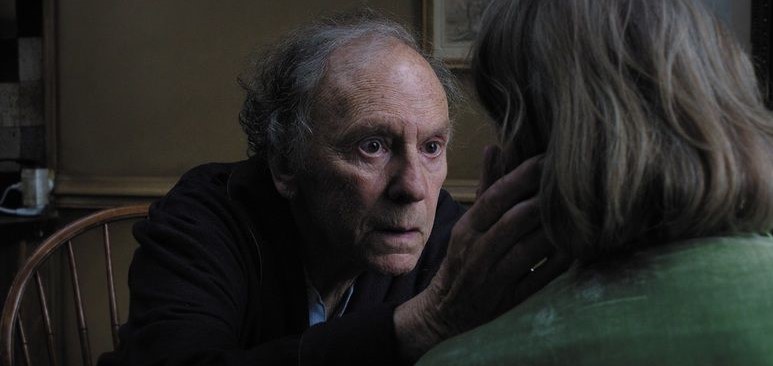
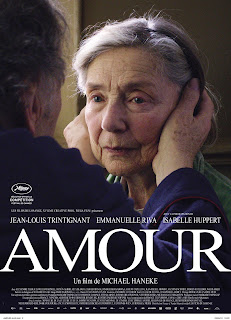
A couple struggle with an unbearable burden in Haneke’s extraordinary and moving film

Director: Michael Haneke

Cast: Jean-Louis Trintignant (Georges Laurent), Emmanuelle Riva (Anne Laurent), Isabelle Huppert (Eva Laurent), Alexandre Tharaud (Alexandre), Rita Blanco (Concierge), Carole Franck (Nurse), Dinara Droukarova (Nurse), William Shimell (Geoff)

Think of Haneke, and you tend to a picture a rather cold philosopher, starring at humanity through a microscope. Some of his best works are chilling explorations of man’s capacity for inhumanity and cruelty. But Haneke’s work is based on a brilliant understanding of what makes people tick, and that insight applies as much to love as it does to cruelty. Amour is Haneke’s searching exploration of what love can be like, and how it can make us behave, in the worst situation possible: one where we are helpless to ease the suffering of someone we love.

Georges (Jean-Louis Trintignant) an Anne (Emmanuelle Riva) are retired piano teachers, married for almost forty years. The life is one of relaxing calm, enjoying the success of former pupils. All that changes when Anne has a silent stroke, the effects of which leave her paralysed on her left side. Georges resolves to care for her, dedicating himself to seeing to her every need, even as Anne’s body and mind (and desire to keep living) swiftly decline and a second stroke brings on even greater helplessness and dementia.

We know it won’t have a happy ending. It’s told in flashback, the film opening with the door to Georges and Anne’s apartment being broken down by the police, discovering Anne’s body laid out on the bed, surrounded by flowers. We know from the moment of Anne’s first stroke, where this story is heading. And none of it should be a surprise. Haneke based the story on an experience in his own family, where he was left helplessly watching a person he loved suffer, powerless to do anything other than offer brief comforts. Amour asks if there can be anything harder for to bear than being unable to help (or even, in the end, really communicate) with someone we love?

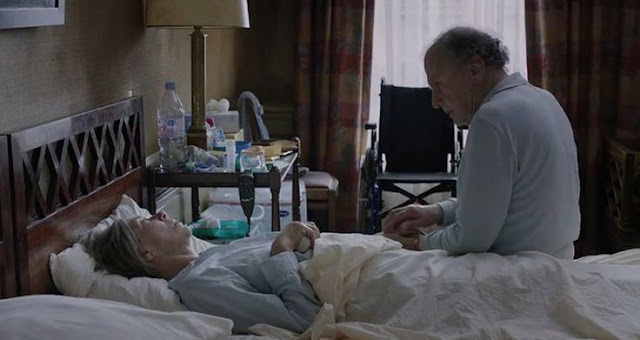
Georges devotion to Anne is clear. He obeys to the letter one of her first wishes when returning from the hospital: she does not wish to leave her home. So, they stay in their apartment (the film leaves this apartment only once, in our introduction to the leads) and Georges cuts up her food, helps her in and out of bed, fetches and carries and helps her get dressed. Steadily Anne’s ability to do things independently declines; and after her second stroke evaporates entirely. She’s incontinent (reliant on a nappy), delirious and incapable of coherent speech, unable to leave the bed and getting her to eat her mashed-up food and water is a daily struggle. Slowly, any trace of the real Anne only exists in Georges memories, which he clings to tightly.

In some ways, this is a horror film: the horror of powerlessness as someone literally wilts away in front of us, a new part of their personality disappearing every day. It frequently plays out in an austere silence – tellingly for two people whose whole life has been music, there is precious little of it in the film. The Anne at the film’s end – frightened, childlike, tempestuous and able to utter only a few words (like “Hurts”) over and over again in an incoherent refrain – bares no resemblance to the intelligent, witty and engaging woman at the film’s start. In every line of Trintignant’s face there is the weary, numbed pain of a man unable to do anything other than gently try to apply the brakes.

But it’s love that keeps him refusing to give-up, and the film is an exploration of the never-ending lengths we will go to for those who mean the most to us. Georges entire life becomes Anne – by the end there is a barely a waking hour that isn’t consumed with her needs. From the start, even the smallest tasks are challenging for Anne: we see her struggle to put on her glasses and turn the pages of a heavy book one-handed in bed. This only gets worse – and the loss of dignity a person feels as they become incapable of controlling any part of their body, including their bladder, is presented by Haneke with a horrific matter-of-factness.

But, what I think is particularly interesting about Amour– and I think Haneke’s stroke of genius – is the flip side of love. Because it also makes us selfish: and you can argue it makes both Anne and Georges selfish. Georges, in particular, begins to horde Anne, as if he was so desperate to keep some vestige of his life with her alive, that he wants to keep her all to himself. He consistently turns down offers of help. He reacts with anger to their daughter Eva (a sensitive Isabella Huppert), telling her that he and Anne should be left to their own privacy. He takes a perverse pride of taking on an impossible burden and refuses to consider any suggestions to reduce his burden (with only great reluctance does he hire a day nurse). Love has made him greedy, to keep Anne to himself.

Part of this comes from his desire to preserve Anne’s dignity: he even locks Anne’s bedroom during one of Eva’s visits as he feels Anne wouldn’t want her daughter to see her like this. Georges dismisses one nurse as he feels she is mistreating Anne. This is fascinating scene: we see no evidence of this – all we see is the nurse showering Anne like a child and later combing her hair and showing Anne her reflection (and she’s furious at Georges accusation). The film suggests, perhaps what Georges can’t bear is the nurse’s infantilising of Anne in her dementia. It can’t be squared with his own desperate attempt to keep some of his memory of her unaffected by what she has become.

Anne knows early where this is going. When Georges returns early from a funeral, he finds her sitting outside an open window. Nothing is said in the following conversation, but it’s clear that Anne was in the midst of attempting suicide. Later she talks bitterly about the point of carrying on. In her later dementia state, she frequently refuses food and water as if determined to try and bring her own life to an end. It’s a cry Georges isn’t interested in hearing: he bolts it away in his mind and battles to the end to try and preserve what life she is, even once striking her with frustration after she spits out her food once again.

Amour can be seen as a pro-Euthanasia film. But I think it’s more complex than that. It’s about love, and how it can drive us to undertake super-human efforts for another person that are also, in a way, about ourselves. That’s what Georges does: a burden that damages his own health and well-being, which he takes on because he will not let go and whatever small parts of Anne are left, he doesn’t want to share with anyone else (not even their daughter). When he takes his fateful decision – and one we’ve been expecting from the film’s first frame – it’s as horrifying as anything Haneke has filmed, both on Georges’ despair and Anne’s instinctive terror.

Amour is blessed with two stunning performances. Emmanuelle Riva won a BAFTA and an Oscar-nomination for her superb performance, a technical masterclass combined with huge emotional depth as Anne moves through fear, anger, self-loathing and finally into a deep, dark well where her understanding of what is happening to her slowly fades away in a babble of incoherent words. Jean-Louis Trintignant, lured out of semi-retirement, is sensational: a shambling, devoted, cantankerous, heart-broken, stubborn man dealing with a profound, never-ending grief and loss.

Haneke films it with a stately calmness and leaves a myriad of possible interpretations open to the viewer. But above all, he invests the film with a humanity, warmth and compassion that will speak to anyone who has had a loved one succumb to the infirmity and fear of old age. Amour is deeply moving, profoundly insightful and achingly beautiful.

Sound of Metal (2020)

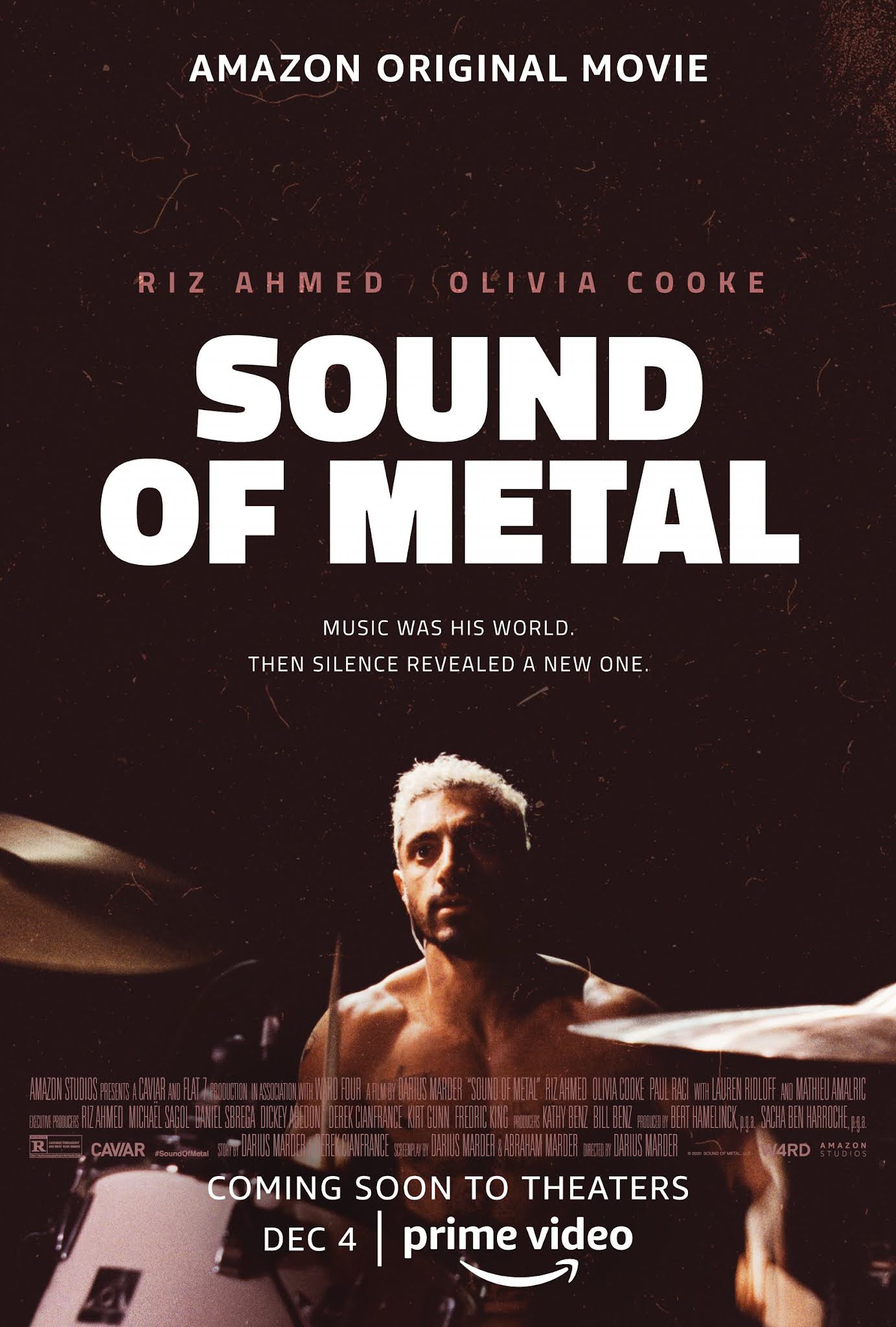
Riz Ahmed as sudden deafness means he can no longer hear the Sound of Metal

Director: Darius Marder

Cast: Riz Ahmed (Ruben Stone), Olivia Cooke (Lou Berger), Paul Raci (Joe), Lauren Ridloff (Diane), Mathieu Amalric (Richard Berger)

Spoiler Warning: Much of the end resolution of Sound of Metal is discussed here – so watch it first!

Ruben Stone (Riz Ahmed) is a recovering drug addict and drummer in heavy metal duo Blackgammon with his singer girlfriend Lou (Olivia Cooke). Touring together, their life is made up of performing gigs across the States. That changes overnight when Ruben suddenly loses his hearing, with a diagnosis confirming 80% of his hearing is gone and what’s left may only disintegrate further. With Ruben sliding into depression, Lou helps him find a place in a deaf recovering drug addict camp run by Joe (Paul Raci). There Ruben must learn to adjust to a life without hearing – and decide whether or not he will undertake a hugely expensive ocular implant surgery to try and restore some vestige of his hearing.

Sound of Metal is an extremely thought-provoking and highly immersive piece of cinema. It’s extraordinarily well-edited and shot and its sound design is faultless. I can think of few other films that so successfully throws the viewers into its main character’s experience. Much of the opening Act is a stressful, tense and even terrifying, watch as Ruben’s isolation, fear and frustration is powerfully communicated to the audience. An early morning routine is shown first from a “hearing” perspective then the next day in chilling silence. Sign language goes untranslated onscreen until Ruben has learnt it, we can barely see the notes Lou is forced to scribble to communicate with him. It all gives a powerful sense of the terror and loneliness of Ruben’s isolation.

The film also skilfully enters the debate around the treatment of disability. Joe’s colony is founded on the principle that deafness should not be ‘treated’ as an illness or a problem to be fixed, but instead as a part of a person’s identity, with presents challenges which can be rewardingly overcome. It’s an attractive and admirable idea, and the points the films make about removing the stigma and shame of disability (a perverse shame consumes Ruben about his deafness). But on the flip side, if you had lost your hearing wouldn’t you be attracted to a surgery that might help restore part of that? Is that wrong – even if it’s a betrayal of what Joe believes in?

The real issue is Ruben’s motivation for continuing to pursue surgery: because he is ashamed of being deaf. One of the beauties of the film is how it avoids straight forward and trite solutions to its problems. There are no simple answers and no Hollywood endings in Sound of Metal. All the characters make mistakes, and many remain unresolved. Obvious narrative tropes are side-stepped: it looks like Ruben is travelling the familiar arc of self-loathing into evangelical convert. This predictable narrative is avoided. Someone can still be a warm supporter of other people and yet also lie and cheat to make improvements in their own lives.

It’s the secondary plot in Sound of Metal: Ruben, an addict, becomes addicted to the idea of hearing again. Told early by a doctor – and the film is a damning indictment of the money-first nature of American healthcare – that a treatment might cure him, Ruben fixates on this. He ignores the risks (it will destroy his remaining hearing) and negatives (it will never be like actually hearing again) and disregards and ignores any other options. In turn, you can argue Joe – so concerned with his evangelical stance and maybe even a little smug in his purity – fails to identify Ruben’s personality flaws and places undue pressure on him to swiftly follow directly in Joe’s footsteps.

All of which makes Sound of Metal sound rather depressing. But it truthfully isn’t. It’s just a film that’s beautifully in tune with real life. It understands that relationships and friendships can change and drift apart over time, due to changes of circumstances, without heartbreak or resentment. That the person we need at a particular point in our life, might not be the person we need later in life. Ruben is a complex, troubled person, but he’s also a decent, good one quick to offer acts of great generosity and kindness. It’s the part of his personality that would make a good teacher of deaf children (a role he engages in with delight while living in Joe’s camp). But it sits alongside an addict’s tendency to put his own desires first and assume others will fit in with them.

In some ways the film is a dramatization of mourning. Ruben must learn to mourn the loss of his hearing and this ending of his dreams of becoming a star – even with his implants he will never have the same affinity for music as he had before. We see him go through shock, pain, anger, depression and the film shows him just beginning the process of acceptance and hope at its conclusion. But the film doesn’t lie about this being a difficult and challenging journey – and one where mistakes will litter the path.

As Ruben, Riz Ahmed gives an outstanding performance. Fully committed – he spent months learning to drum and speak ASL – Ahmed is powerfully emotional, and much of the film’s success in immersing us in the horror of finding yourself suddenly isolated, scared and confused is due to the rawness of his performance. Ruben is a man of strong feelings and loyalties, loving and caring but also angry and defiant. You understand every inch of his frustration, even if you sometimes want to slap him for being selfish. Just as good is Olivia Cooke as Ruben’s supportive and fragile girlfriend Lou. Paul Raci – son of death parents, playing a character heavily derived from his personal story – is superbly genuine as the caring but overly evangelical Joe, a mentor who blinds himself to things in his protégé he doesn’t want to see.

Sound of Metal is beautifully shot and filmed by Marder. It expertly builds our empathy with Ruben and his situation – helped hugely by Ahmed’s superb performance – and allows us to feel an uncomfortable fraction of what it must be like to find yourself suddenly isolated in the world. It enters with fascinating points on both side, into a very even-handed debate on disability and its treatment (or not), but never forgets it is also telling a very real, human and emotional story. Side-swiping conventional narrative tricks, it’s highly engaging, a superb piece of technical film-making and brilliantly done.

The Aviator (2004)

Leonardo DiCaprio excels as Howard Hughes in The Aviator

Director: Martin Scorsese

Cast: Leonardo DiCaprio (Howard Hughes), Cate Blanchett (Katharine Hepburn), John C Reilly (Noah Dietrich), Kate Beckinsale (Ava Gardner), Alec Baldwin (Juan Trippe), Alan Alda (Senator Owen Brewster), Ian Holm (Professor Fitz), Danny Huston (Jack Frye), Gwen Stefani (Jean Harlow), Jude Law (Errol Flynn), Willem Dafoe (Roland Sweet), Adam Scott (Johnny Meyer), Matt Ross (Glen Odekrik), Kevin O’Rourke (Spencer Tracy), Kelli Garner (Faith Domergue), Frances Conroy (Katharine Houghton), Brent Spiner (Robert E Gross), Edward Herrmann (Joseph Breen)

Howard Hughes grew up wanting to make the biggest movies in the world, fly the greatest plans and be the richest man in the world. He achieved all of this. He ended his life a wild-haired long-nailed recluse, terrified of stepping outside his controlled zone, a victim to crippling OCD. Martin Scorsese’s The Aviator is a triumphant, brilliantly engrossing, sumptuous exploration of Hughes’ years of triumph, where everything seemed to go right publicly – even while everything was beginning to go wrong internally.

It’s Scorsese’s second teaming with Leonardo DiCaprio – and while DiCaprio’s boyish good looks don’t really relate to what the real Hughes looked like, his charismatic enthusiasm, passion and determination brings Hughes triumphantly to life. It’s a brilliant performance, which dominates the movie. DiCaprio seems to completely understand power of driving ambition, who will mortgage everything he has time and time again to achieve his dream – and also the force of personality needed to turn those dreams into success. But obsession drives both success and eventual personal disaster. There is always something slightly fragile about DiCaprio – maybe its those boyish good looks – and here he brilliantly captures the tragedy of a man clinging to his sense of self, struggling with the demons within him.

Scorsese’s film gloriously balances the epic with the personal. It so brilliantly relates to the irrational but very convincing fears of those suffering from OCD, that scenes featuring Hughes obsessively plucking tissues from boxes, or stuck in restrooms scared of touching the door carry a real sense of threat. The grandness of much of the rest of the film – and the sense we get have how much more Hughes could have achieved – means the demons he carries are even more affecting. Imagine what he could have done, if he wasn’t terrified of even the smallest germ, or was able to put aside his destructive urge to control every inch of his environment and the people in it.

All this tragedy works because the grandness is so impressive. Scorsese’s film looks beautiful. The filming was inspired by replicating the visual and colour styles of contemporary Hollywood. The early 1930s-set section of the film apes the toned look of early-colour (green appears blue, most strikingly at a golf course) with full colour only appearing when the film hits the years of technicolour. The 1940s sequences are inspired by touches of film noir, leaning into the early days of epic technicolour by the end. It looks striking and also amazing. The production design is similarly breathtaking, while the film is shot and assembled with a wonderfully vibrant energy.

It’s also got plenty of wit. John Logan’s fast-paced script captures the sense of a fun of a man who was determined to turn his dreams into reality. John C Reilly is a lot of a fun as the weary number 2, constantly performing financial gymnastics to keep his bosses dreams afloat. Compulsion and obsession makes Hughes the sort of guy who will rebuild an aeroplane from scratch because of a minor flaw, or will reshoot a film because it will work better with sound. During the shooting of Hell’s Angels he keeps a private fleet of planes on the ground while waiting for clouds that will make the scene work. Frequently thousands of dollars a day are spent keeping projects ticking over, while Hughes waits for perfection. He’s not a man to compromise – and you can see why an artist like Scorsese would relate to that. While the film never lets you forget this obsessive perfectionism cuts both ways – and is as much a symptom of OCD as obsessive handwashing.

Scorsese’s passion for classic Hollywood clearly informs much of the first half of the film, that covers the shooting of Hell’s Angels and Hughes’ relationship with Katharine Hepburn. There are delightful cameos from Hollywood icons like Errol Flynn and Louis B Mayer. Playful references abound. The film’s emotional heart is the bond between the two larger-than-life ambitious figures Hughes and Hepburn. Cate Blanchett (Oscar-winning) is fantastic as Hepburn, a pitch-perfect impersonation that also captures her gsharp, uncompromising intelligence and no-nonsense energy. The chemistry between the two is spot-on.

The film’s second half covers more the aviation of the title, with Hughes’ struggle to break the near-monopoly of the skies owned by PanAm, with his own airline TWA. With Hughes starting to teeter on the edge of OCD collapse, even while energetically setting records in the air and fighting battles in the senate, its perhaps even stronger. It also introduces nemesis in Alec Baldwin’s smoothly manipulative Pan Am chairman Juan Trippe and, most delightfully, an Oscar-nominated Alan Alda as a hypocritically corrupt Senator Brewster. The dinner and senate clashes between Alda and DiCaprio provide glorious energy to power the film’s final act.

It also serves as a last hurrah for Hughes. It’s DiCaprio that really makes the film work as this star burns itself out, finally succumbing to the compulsions that we know will see him end his days locked into a room at the top of a Las Vegas hotel. Moments carry a suggestion of fantasy – is Hughes imagining some of the shady figures he sees at the edges of frames? Are oddly toned late meetings with Ava Gardner (an underpowered Kate Beckinsale) an illusion? It’s all part of the the powerful sense of tragedy of seeing him end, wild-haired, peeing into milk bottles and stuck into loops of repeating phrases over and over again. Scorsese’s film superbly captures the immense sense of lost opportunities.

The Aviator is undeniably grand and triumphant film-making, that looks a million dollars. But it also manages – in thanks to a superb performance from DiCaprio – to capture a tragic sense of a man who burnt himself out at the height of fame and success. It tells two parallel stories without us realising it: a man achieving his dreams, even while his nightmares consume him. With Scorsese’s perfectly judged direction and some wonderful performances, this is both a sprawling epic and a very personal story of loss. While it seems very different from the films we might expect from the master, I think it might be one of his finest works.

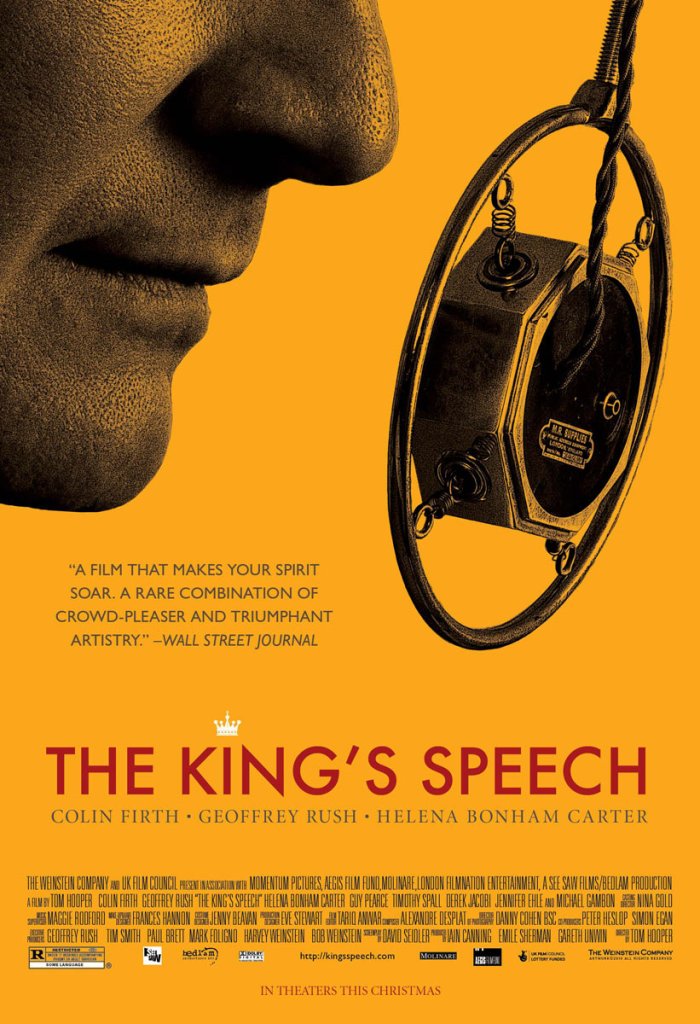
The King's Speech (2010)

The King's Speech (2010)

A King struggles to speak in this Oscar-winning heart-warmer that really works

Director: Tom Hooper

Cast: Colin Firth (King George VI), Geoffrey Rush (Lionel Logue), Helena Bonham Carter (Queen Elizabeth), Guy Pearce (King Edward VIII), Timothy Spall (Winston Churchill), Derek Jacobi (Archbishop Cosmo Lang), Jennifer Ehle (Myrtle Logue), Michael Gambon (King George V), Freya Wilson (Princess Elizabeth), Ramona Marquez (Princess Margaret), Anthony Andrews (Stanley Baldwin), Eve Best (Wallis Simpson)

It can be very hard to imagine the fear and pressure of not being able to trust your own voice. In a world where communication is valued so highly, what terror can it bring if you can’t easily express the thoughts in your own head? It’s a fear perfectly captured in the Oscar-winning The King’s Speech. Because in a constitutional monarchy, what purpose does the King have, but to be a voice for his people? And if the King can’t speak, how can he hope to fulfil his duty? The King’s Speech uses its empathy for those struggling with a condition many find easy to mock and belittle, to create an emotionally compelling and deeply moving story that is a triumph not of overcoming an affliction, but learning how it can be managed and lived with.

In the 1930’s Prince Albert, Duke of York (Colin Firth) is second-in-line for the throne. But unlike his charismatic brother David (Guy Pearce), he’s a tense man uncomfortable in the spotlight, whose life has been blighted by his stammer. As pressure grows from his father George V (Michael Gambon) to take on a more public role, he and his wife Elizabeth (Helena Bonham Carter) begin the process of consulting doctors for “a cure”. But the answer might lie with a former actor turned speech therapist Lionel Logue (Geoffrey Rush), whose techniques are as much psychological as they are practical. As he and the future George VI begin to work together, a tentative friendship forms as the taciturn king begins to open up about his feelings and find real friendship for the first time in his life.

The King’s Speech delivers a well-paced, beautifully written (an Oscar winning script from David Seidler) moving story of two unlikely outsiders who find themselves as unlikely kindred spirits. While it’s easy to see its Oscar win for Best Picture as a triumph of the academy’s conservatism (and there is a case to make, with the film’s heritage style and rather conventional structure and story-telling), but that would be to overlook the emotional impact it carries. I’ve seen the film several times now, and each time I find a lump forming in my throat as it sensitively and intelligently tackles themes of depression, isolation and fear and builds towards the heart-warming achievement of a man who learns his afflictions don’t have to define him.

Hooper (who scooped the Oscar for Best Director) draws superb performances from his actors, as well as bringing his own distinctive style to the film. He had already shown with his TV miniseries John Adams that he could shoot period material with all the immediacy and energy of more modern subjects, and it’s what he does here. His unique framing – with the actor’s often at the edges of the frame, in front of strikingly character-filled surfaces – not only grounds the drama in reality, but also captures a sense of the characters own personal isolation, helped by the frequent intimately-close shots. It helps the film avoid throughout from falling into the “heritage” trap, and instead feel (for all its royal family trappings) like a personal, intimate and real story.

And the intimacy is what makes it work so well – especially since so many of the scenes are made up of two characters sitting and talking, gently but with a slowly peeling honesty, about their own thoughts and feelings. The film is hugely successful in building up our empathy for the often over-looked struggles those who stammer go through. The terror that everyday events can bring. The burden of not mastering your own voice. The anger not being able to express yourself can bring. The resentment of how others can perceive your condition as anything from an irritation to a joke to something that with just a bit of help and effort you could brush aside like a sore toe.

The film has drawn praise for its depiction of stammering – although I am reliably told by an friend with an expertise in such things that the film’s connection of stammering with psychological trauma is old-fashioned and far from proven. But it realistically shows the burdens both it, and a troubled childhood, can bring and draws attention and sympathy to the condition in the best possible way.

A lot of this is helped by Colin Firth’s outstanding, Oscar-winning, performance in the lead role. From first seeing him, his George VI is a buttoned-up man with tension pouring out of every pore, who has chosen taciturn aggression as a defensive alternative to actually having to speak. Firth’s observance of mechanics of stammering is spot on (I wonder if he consulted Jacobi, who has had more than his own experience acting a stammer!), but above all he captures the deep pain, frustration and fear it can bring to a person. Firth’s King is a man who has lived a life feeling coldly shunned by most of his family – an upbringing he is clearly working hard to correct with his sweetly loving relationship with his own children. He’s bitter and angry – not only struggling to understand and express these emotions, but allowing them to crowd out his natural warmth, kindness and generosity which emerge as he opens up to Logue, and experiences genuine friendship for the first time.

Firth sparks beautifully with Geoffrey Rush who is at his playful and eccentric best as Logue. A warm, witty and caring man with a sharp antipodean wit and playful lack of regard for authority (the film mines a lot of fun from Logue’s playful teasing of the stuffed shirt nature of monarchy and the British class system), Rush’s performance is excellent. Just as the King has been dismissed by others for his stammer, so Logue has been dismissed as an actor for his Aussie accent and is scorned by his colleagues for his unconventional methods and lack of qualifications. But, by simply listening to a man who has been lectured to his whole life, who is frightened of himself and his situations, he helps him find a voice (in, of course more ways than one). Rush’s performance is essential to the success of the film, both as the audience surrogate and also a character with his own burdens to overcome.

Backing these two is a superbly judged performance of emotional honesty, matched with that take-no-prisoners bluntness we grew to know in the Queen Mother, from Helena Bonham Carter. The rest of the cast is equally strong. Pearce offers a neat cameo as a bullyingly selfish Edward VIII. Jacobi is overbearingly pompous as the face of the establishment. Jennifer Ehle is wonderfully playful as Logue’s put-upon wife. Andrews contributes a neat little turn as Stanley Baldwin.

Historically the film telescopes events for dramatic purposes. In fact, the future King’s therapy had started almost a decade earlier. Timothy Spall’s Winston Churchill – a rather cliched performance – is converted here into an early supporter of George VI during the abdication crisis (in fact Churchill’s outspoken support for Edward VIII nearly destroyed his career). Baldwin has been partly combined with Chamberlain. Other events are simplified. But it doesn’t really matter too much. Because the emotional heart of the story is true – and the relationship between these two men, and the positive impact they had on each other’s life is what make the film so moving.

Culminating in a near real-time reconstruction of the King’s speech announcing the outbreak of the Second World War – a brilliantly handled, marvellously edited and shot sequence with masterful performances from Firth and Rush – the film is an emotional triumph. Sure, it hardly re-events the wheel, with its struggle to overcome adversity story line and tale of royalty bonding with commoner – but it hardly matters when the rewards are as rich as this. With superb performances all round, in particular from Firth, Rush and Carter and sharp direction of a very good script, this is a treat.

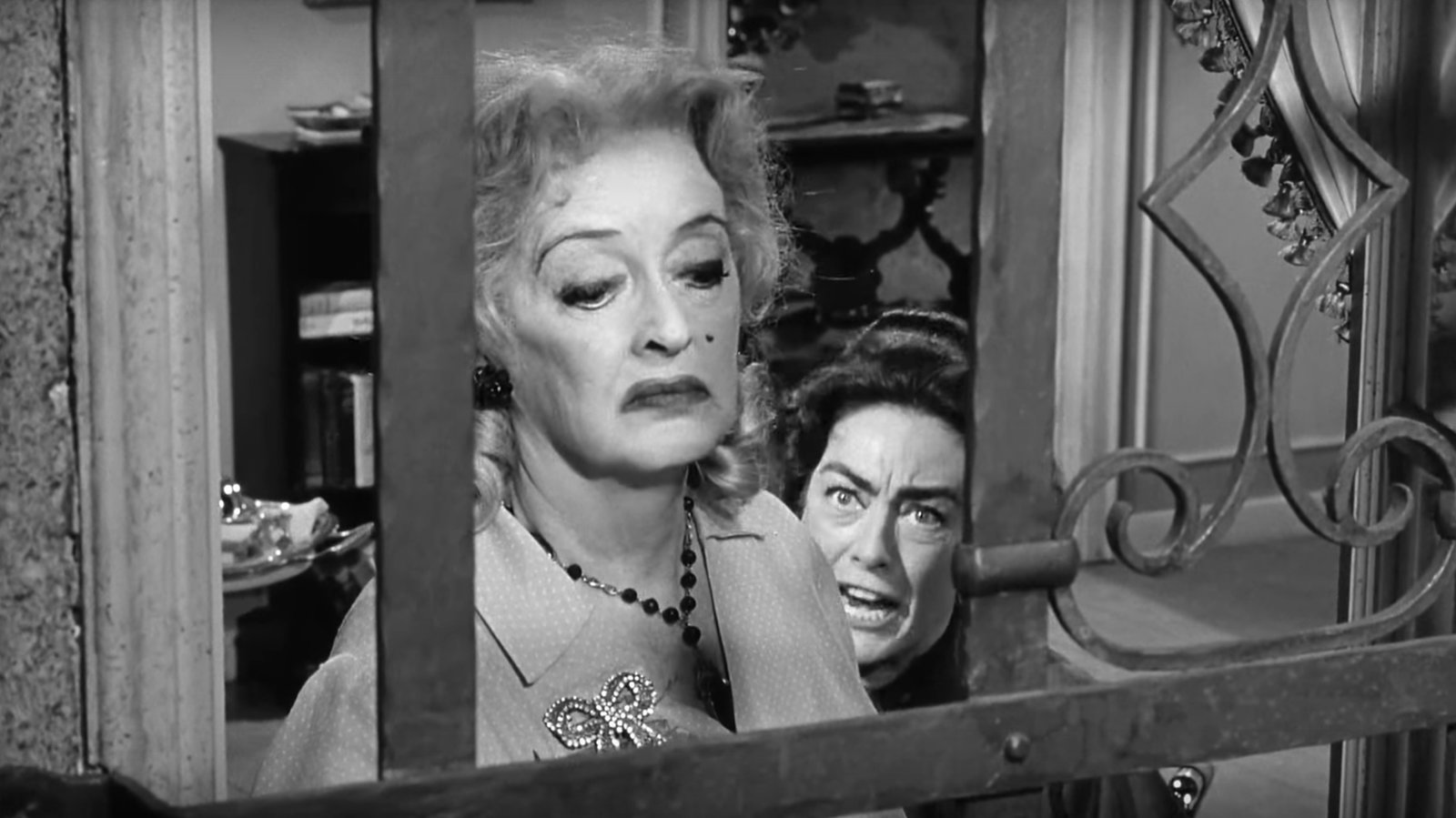
Whatever Happened to Baby Jane? (1962)

Bette Davis and Joan Crawford rant and rage in Whatever Happened to Baby Jane?

Director: Robert Aldrich

Cast: Bette Davis (Jane Hudson), Joan Crawford (Blanche Hudson), Victor Buono (Edwin Flagg), Marjorie Bennett (Dehlia Flagg), Maidie Norman (Elvira Stitt), Anna Lee (Mrs Bates), BD Merrill (Liza Bates)

Age isn’t kind on the careers of Hollywood actresses. Move into your 40s and the part offered quickly becomes “the grandmother”. It’s a fate that saw the careers of some of the greatest actresses of the Golden Years of Hollywood crash screeching to a halt. However, these actresses remained popular with many cinema goers. So it occurred to Robert Aldrich, why not throw a couple of them into the sort of roles that can riff on their careers and public images? Match that up with jumping on the bandwagon of films like Psycho and you could have a hit on your hands.

That’s what he got as well with Whatever Happened to Baby Jane. Jane Hudson (Bette Davis) is a former “infant phenomenon” on the stage, whose career fell apart as soon as she hit puberty. Her sister Blanche (Joan Crawford), on the other hand, grew up to have a promising career in Hollywood – which then collapsed when a late-night driving accident (which Baby Jane is widely believed to be responsible for) left her paralysed from the waist down. Now in middle age, Jane and Blanche live in domestic disharmony, Blanche trapped upstairs at the mercy of Baby Jane, whose longing to rebuild her career sees her head down an ever steeper spiral of insanity.

Whatever Happened to Baby Jane started a new genre in Hollywood – the freak hag-horror or psycho-biddy genre (those names alone show that at its heart this genre was basically demeaning) which saw Hollywood Grande Dames (frequently Davis and Crawford, though others got a look-in as well) parley their reputations into ever more formulaic riffs. Films like this quickly became cult viewing. Their extremes of make-up and performance, matched with the arch camp of the leading ladies hamming it up, made the genre extremely popular – and left films like Whatever Happened… far more fondly remembered than they deserve.

It’s popular to see Sunset Boulevard as a sort of precursor to this genre, a first try-out in taking an older era of Hollywood and turning it into a ghastly waxwork show. But Sunset still has affection  for what it shows (and above all captures the tragedy of the death of Silent Hollywood, treating its characters as people rather than freaks), while Whatever Happened has none, basically seeing the past as a parade of monsters, and these relics as waxworks to be mocked. There is no affection here for the past successes and glories of either star, instead we are invited to sit back and wonder at how far they might be willing to go to see bums on seats again. All of this to make money for the producers. Far from the art of Sunset Boulevard, this feels more like the exploitation of screen greats.

Although of course both stars were more than happy to get involved, even if they were less than happy working with each other. The background to the film, to be honest, often carries more interest than the very long, often slow, horror/black comedy during the film’s over-extended run time. Famously Davis and Crawford were long-standing rivals and their relationship over the course of making and promoting the film disintegrated into cheap one-upmanship and bitter recrimination. While the feud does probably give some edge to the screen antics, the very fact that it’s nearly the first thing people remember about the film probably tells you how memorable the actual experience is.

Davis throws herself into all this with creditable abandon. (She was Oscar nominated and Crawford wasn’t – although Crawford got the last laugh, having arranged on the night to collect the Oscar on behalf of eventual winner Anne Bancroft, performing on Broadway that night.) Davis designed the freakish but iconic look of Baby Jane, all painted face and little girl mannerisms, and her demented attempts to recreate her childhood act in her 50s (culminating in a bizarre and skin-crawling “Writing a Letter to Daddy” dance which was weird enough watching a 12 year old perform) can’t be faulted for commitment. Davis also manages to invest the bullying and cruel Jane with a deep sense of loss, regret and guilt (for her sister’s accident) that frequently bubbles over into resentment. It’s certainly a larger-than-life performance and Davis frequently dominates the film, even if the role is basically a cartoon invested with Davis’ own grace and glamour.

It doesn’t leave much for Crawford, whose Blanche is frequently left with the more po-faced, dull and reactive lines. Crawford doesn’t often make Blanche as sympathetic as you feel she should be – although the part plays into one of her strong suits of playing the martyr – and the film saddles her with a late act twist that doesn’t have enough time and development to really make much sense. However again you can’t fault her commitment, either to screams or to a scene where she attempts to climb down the bannisters of the stairs from her trap on the upper floor, where the effort, strain and pain on Crawford’s face are astonishingly real.

Those stairs dominate many of the shots of Aldrich’s serviceable and efficient direction – although he lacks any sense of the mix of cruel poetry and dynamite sensationalism that Hitchcock bought to similar material in Psycho. But it works nicely to give a sense of Blanche’s confinement and as a visual metaphor for the trap the house feels like. Aldrich also throws in a couple of other decent flourishes, not least as Davis’ lounge turns into a proscenium stage as she imagines returning to the big time.

But the film itself is, despite it all, lacking in any sense of kindness or warmth really for either its stars or old Hollywood. We are instead invited to gasp at them in horror, while the film drags on at great lengths, stretching a very thin plot (barely a novella) into over two hours of screen time. There are effective moments, but it’s a film that seems barely serviceable today.

A Quiet Place (2018)

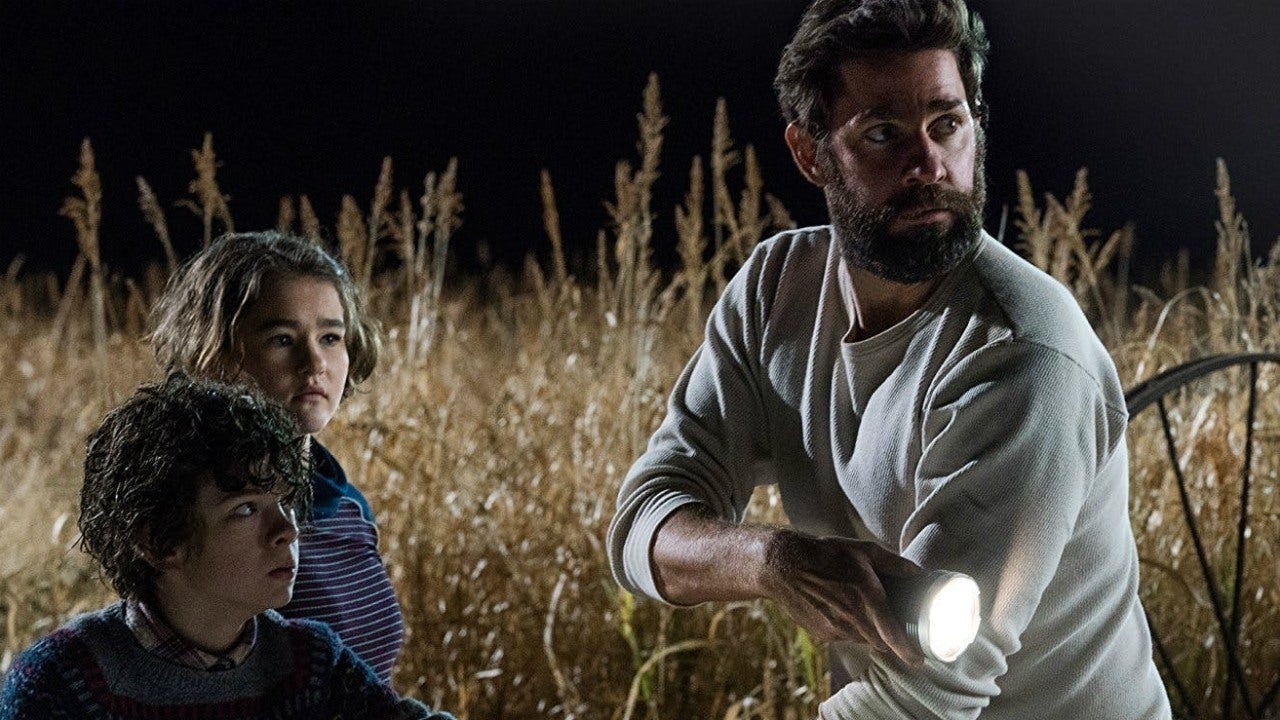
John Krasinski needs absolute silence in A Quiet Place

Director: John Krasinski

Cast: John Krasinski (Lee Abbott), Emily Blunt (Evelyn Abbott), Millicent Simmonds (Regan Abbott), Noah Jupe (Marcus Abbott), Cade Woodward (Beau Abbott)

I think we can all agree that 2020 has not been a good year. But it could have been worse: in A Quiet Place, by 2020 mankind has been almost completely wiped out by blind extra-terrestrial alien predators who use their super-sensitive hearing to hunt down survivors. Even Covid-19 doesn’t sound quite as bad as that. To survive demands absolute silence as even the slightest noise could lead to a pack of the ruthless, seemingly invulnerable, aliens descending.

The few survivors include the Abbott family, on an isolated farm somewhere in the American countryside. Father Lee (John Krasinski) has painstakingly converted the house as much as possible into a silent place, with sand on every walking surface outside, sound proofed rooms, batteries out of everything that could make a noise, light and camera warning systems and strict rules on no shoes and no talking – nearly all communication is done in sign language, which the family is fluent in because daughter Regan (Millicent Simmonds) is deaf. But there are troubles on the horizon – not least because Lee’s wife Evelyn (Emily Blunt) is heavily pregnant, and the chances of childbirth – and a new-born baby – happening in silence is dangerously low.

A Quiet Place takes a fresh and ingenious concept and lays it on top of a story that otherwise hits a fair number of expected tropes. But that doesn’t matter too much when the story is told with such freshness and confidence by Krasinski and the idea at its heart genuinely feels like something we’ve never seen before. This is a film where just the very prospect of sound is tense, and noise is the principle villain. And for anyone who’s ever tried sneaking past anything silently, you’ll know how hard it is to say absolutely silent.

The concept means that even the sight of things we know could cause sound builds tension. A nail sticking out of a step to the basement causes huge worry (because we know standing on that barefoot is really going to hurt). The running through a field of wheat suddenly feels like a terrible risk. Just a glass falling off a table could lead to death for everyone. As for the tension you feel at the possibility Evelyn could go into labour and need to deliver a baby in total silence…

It’s the skilful use of everyday concepts like this that gives the film a special sense of dread. This is added to by putting a very clear family unit at the heart of this drama. At root, this is a film about the lengths that parents will go to in order to protect their children and to try and build a safe world for them. Lee is determined to pass on as many of his survival skills to his son, while Evelyn struggles to keep some form of normality going in their home. The family is also coping with deep-rooted grief and unspoken tensions, falling out from the tragic loss of one of their members early in the invasion.

This adds a further generational tension, with the father struggling (on some level) with feelings of guilt at his own failure to protect his family and shamefully feeling some blame towards his daughter for partially causing the events that led to this death. The daughter in turn fears she has lost her father’s love, and can never be forgiven by anyone (including herself) for her mistakes. While there is nothing earth-shatteringly original about this, it helps us to invest solidly in the family and to care deeply about what happens with them.

Krasinski’s direction is sharply acute and brilliantly detailed and his own performance extremely humane and engaging. He also gets an equally fine performance of tenderness and determination from (his real-life wife) Emily Blunt, while the work from Simmonds and Jupe as their children is equally well-judged and excellent. This work is particularly impressive since most of the film takes place in near silence – there isn’t a clearly spoken word of dialogue until almost 45 minutes in and no verbal conversation until nearly the hour mark.

This involving family drama sits very comfortably in the middle of a horror concept. So well in fact that it doesn’t matter that much of it pretty unoriginal or even a little predictable. After a first reel shock, the film settles into more expected rhythms. There are certain gaps that raise questions – I had to wonder how Lee and his family managed to build so much in this collection of theme houses while making no sound at all? While the weakness of the creatures seems so obvious, I’m amazed that it was never stumbled upon while governments and the military fought against them.

But that doesn’t matter too much when A Quiet Place is largely an involving thrill ride with emotive characters whom you care deeply about. And on that score, Krasinski has made a fine horror thriller with a concept that will make it stand out in the memory from other genre pics.

Still Alice (2014)

Julianne Moore excels in Alzheimer’s drama Still Alice

Director: Richard Glatzer, Wash Westmoreland

Cast: Julianne Moore (Alice Howland), Alec Baldwin (John Howland), Kristen Stewart (Lydia Howland), Kate Bosworth (Anne Howland-Jones), Hunter Parrish (Tom Howland), Shane McRae (Charlie Jones), Stephen Kunken (Dr Benjamin)

Can we imagine a more difficult illness to deal with than Alzheimer’s? Alice Howland (Julianne Moore) is a linguistics professor at Columbia, diagnosed with early onset Alzheimer’s and slowly finds her capacity to use language – and her memories – slowly fade away. At one point Alice, as her ability to function begins to disappear, wishes she had cancer instead – not only because the illness is easy for others to understand, but it offers some form of treatment however fatal the disease may prove. Westmoreland and Glatzer’s heart-rending film covers the slow decline of Alice’s abilities – from forgetting words in lectures, to getting lost in her own house searching for the bathroom, to struggling to recognise her children.

Julianne Moore is at the centre of this emotionally devastating – but tender and moving film – dominating every scene as Alice. Moore’s sharp intelligence and focus as an actress is perfect for the professor, but her dedication really comes to the fore for the sensitive and truth-laden way she explores the decline that follows for Alice. It’s a performance – like the film – that works hard to avoid sentimentality, and instead follows the heart-rending sadness of slowly feeling your personality disappear. Because what are we really but the collection of our memories and experiences – and when these are gone from us, what is really left? 

Moore’s work is superb here – she won virtually every prize going, including the Oscar – and the film is told entirely from her point-of-view. Meaning that jumps in time come as a surprise to us, as they would be for Alice. At one point a distressed Alice wakes up at 2am to try and find her phone, before being coaxed back to bed by her husband John (a carefully nuanced and realistic performance from Alec Baldwin). The next scene, the phone is found in the freezer. Alice laughs and says she was looking for that last night – “that was a month ago” John quietly tells their daughter. It’s sudden moments like that, using the language of film, that hammer home the impact of this disease. It turns a whole life into a choppily edited film, where see the highlights but never recall the day-to-day detail.

The film is clear on the burden – and the struggle for us to comprehend what will happen to us. Early in her diagnosis – while recording a series of questions (such as when is your birthday and what is your daughter’s name) – Alice secretly records a video, giving instructions for her suicide when those questions become impossible to answer. It never occurs to her that, when that moment is reached, she will struggle to comprehend the message, let alone recall the 3-4 instructions to find a secret pill stash without multiple referrals to the video. But this is part of the horror of a disease that changes our ability to be who we are. 

Westmoreland and Glatzer (who tragically died from complications from ALS shortly after the film’s completion) bought a personal connection to the material, and the difficulty of a family to watch a loved one slowly succumb to an illness in front of you. Alice’s family are supportive – but they also have their own lives to live. Her husband Jack does his best – but must continue with his career to fund Alice’s medical treatment, plus dealing with the walking death of a woman he has loved all his life. Her elder daughter, Anna, has her own family to raise. The illness does bring Alice closer to her youngest actress daughter Lydia (very sensitively played by Kristen Stewart), but that doesn’t stop Alice failing to recognise her after watching her performing in a play. There is no judgement here, just a recognition of how powerless family members can feel at times to really help those they love – particularly as they watch parts of their personality disappear in front of their eyes.

The film avoids the sentimentality of a hopeful ending. Two thirds of the way through the film has an uplifting moment of triumph – Alice successfully makes a highly personal speech to an Alzheimer’s conference (carefully highlighting her typewritten speech as she goes to be sure she doesn’t repeat herself). Many films would have stopped there, but Still Alice doesn’t avert its eyes from what comes next, as Alice continues to slowly regress, unable to dress herself or recognise even central elements from her life, language and words disappearing from her altogether.

So why Still Alice? Because deep down it’s still her, no matter if the ideas and words have been lost. In the moment – such as greeting her new grandchildren, even if she has forgotten that her daughter was pregnant – she becomes the woman she was. The film’s final conclusion shows that there is still, in there, the loving and warm woman she was – even if she can no longer use words or able to fully shape ideas in her head. 

It makes for a wonderfully involving, realistic, but also warmly realistic and genuine film that avoids sentimental and obvious answers, but instead presents the cold truth and realism of dealing with a condition. With Julianne Moore superb in the lead role, expertly charting the condition, and also capturing the mixture of frustration and agony at the knowledge of what’s being lost to mix slowly in with a more contented placidity. It’s wonderful work in a film that will provoke tears and thoughts.

The Theory of Everything (2014)

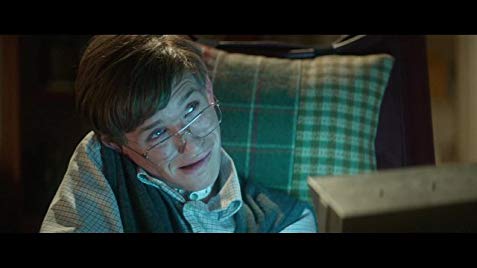
Felicity Jones and  Eddie Redmayne bring to the screen the life of Stephen Hawking

Director: James Marsh

Cast: Eddie Redmayne (Stephen Hawking), Felicity Jones (Jane Hawking), Charlie Cox (Jonathan Jones), David Thewlis (Dennis Sciama), Simon McBurney (Frank Hawking), Emily Watson (Beryl Wilde), Maxine Peake (Elaine Mason), Harry Lloyd (Brian), Guy Oliver-Watts (George Wilde), Abigail Cruttenden (Isobel Hawking), Christian McKay (Roger Penrose), Enzo Cilenti (Kip Thorne)

If you want a story of a triumph over adversity, there are few where adversity was faced off so successfully and publicly than the life of Stephen Hawking. Diagnosed with motor-neurone disease while still a postgraduate, Hawing defied the diagnosis that gave him little more than a few years to live, to shape a life and career that would have a profound impact on the world and make him probably the most famous scientist alive. Not bad for a man who spent a large part of his life confined to a wheelchair, only able to communicate through a synthesised computer voice.

But his life was not just a story where he was the only character. Many of his accomplishments came about because of the unflagging support of his wife Jane. This film takes as its source the book Jane wrote about their life together. And while it arguably sugar-coats or plays down some of the more uncomfortable or divisive elements of their marriage (a marriage that was eventually to end in divorce and several years where they did not speak), it also serves as a warm tribute to the many years they spent together where their support for each other was total and offered with no agenda or demands.

Here in James Marsh’s inventive and well-made film, which manages to more-or-less transcend its “movie of the week” roots, Hawking and Jane are played by Eddie Redmayne and Felicity Jones in performances that scooped an Oscar and a nomination respectively. Both are deserved, as these are rich, dedicated and empathetic performances, crammed with admiration for their subjects. It all fits perfectly well in Marsh’s moving if (at times) rather conventional film, which he directs with a lack of flash and plenty of heart. 

It’s a film that sometimes avoids delving too deeply into the emotional heartlands of its lead characters, and the frequently messy situations that life throws you into (the end of this relationship comes with a remarkably calm sadness, which contrasts heavily with the furious argument Jane describes in her book). It’s also a film that has a very clear agenda of framing Jane as a near saint in her devotion and patience, and Stephen as a brave soul with a superhuman perseverance and regard for his wife. So the introduction of choir leader Jonathan Jones (played with a sweet charm by Charlie Cox) into their domestic life as a surrogate father to the Hawking children and friend to Jane (very definitely not a lover, the film is eager to make clear) is very much something accepted by both without a hint of doubt or recrimination. Similarly, Hawking’s later divorce of Jane is set in a context of “setting her free” rather than the more (allegedly) definitive break it was in real life.

Real life, you suspect, was messier than this. The film does mine some excellent emotional honesty from Jane’s decision to marry Stephen being, at least partly, based on her belief that this man she loves only has a few years to live. From the start she doesn’t anticipate signing up for a lifetime of providing care and abandoning her own aspirations to support Stephen’s (the film makes no real mention of her own dreams of becoming a translator) – but Jane does so with a decided willingness and sense of duty. Similarly, Stephen does not anticipate a life essentially trapped in a wheelchair – finally speechless – and the film allows beats of frustration from him, alongside the determination to not let these problems prevent him from achieving his potential.

The film revolves around Eddie Redmayne’s performance as Hawking. Needless to say it’s a technical marvel, a stunning accomplishment not only in its physical mastery (especially as it was all shot out of sequence, so in each scene Redmayne needed to carefully map how far the symptoms had progressed) and commitment, but also in its searing emotionality. Hawking’s brightness, his bashful playfulness, his intelligence and sense of cheeky charm are all there – and they’re later married with a pained, just-controlled bitterness mixed with stern mouthed resentment and gutsy determination to deal with the hand he has been given. Redmayne’s performance is a superb capturing of the all-consuming feelings of being betrayed by your own body, of no longer being the master of your own frame and being forced to adjust your plans and expectations to meet the limits nature has put on you.

Felicity Jones is equally good in a superbly heartfelt performance as Jane, a woman who gifts Stephen the determination and will to see past the limits the disease places on him. But it’s also a performance that acknowledges the draining burden of having to support someone this ill, of having to constantly be the strong member of the marriage, the one who must always be as ready to save her husband from choking at dinner as she must be to drop everything and fly across Europe to take life-saving medical decisions about him. Jones’ performance never slips into self-pity, but mines a rich vein of willing sacrifice powered by love.

Marsh’s film is largely unflinching around the everyday miseries and sorrow of the terminally ill and restrictingly disabled. We are confronted in every scene with the limits that Hawking’s body places upon him, from deteriorating handwriting and clumsiness to the loss of all speech and movement. This progression is presented with a detail uncoloured by maudlin sentimentality. Doctors are sympathetic but bluntly clear about the dangers and risks of treatment, each adversity is met with a quiet determination to carry on.

The Theory of Everything is a heart-warming watch – and features two superb performances. The portrait of a marriage that works, for the most part of their lives together, despite all obstacles is inspiring. While the film glosses over well-publicised issues over the end of the relationship – and perhaps downplays the emotional strains on both towards its end – it still succeeds in making a largely unsentimental picture of a genius who overcame all, and the brave woman who gave him the dedication he needed to do it.

Amores Perros (2000)

Dogs, love and car crashes in Alejandro González Iñárritu’s debut feature Amores Perros

Director: Alejandro González Iñárritu

Cast: Emilio Echevarría (El Chivo), Gael García Bernal (Octavio), Goya Toledo (Valeria), Álvaro Guerrero (Daniel), Vanessa Bauche (Susana), Jorge Salinas (Luis), Adriana Barraza (Octavio’s mother), Marco Pérez (Ramiro)

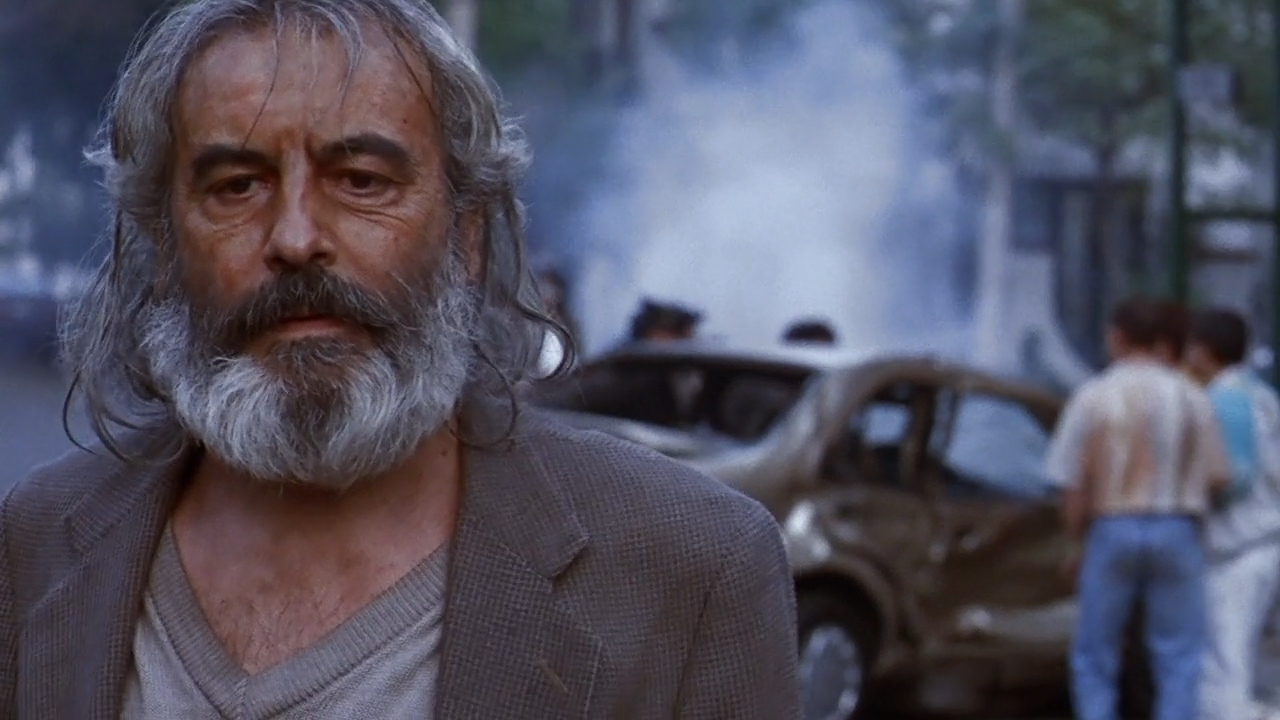
What links playboy kid Octavio (Gael García Bernal), model Valeria (Goya Toledo) whose career is so high it can only go downhill, and El Chivo (Emilio Echevarría) a hitman who lives like a scruffy hobo? Love of course! Well that and a near-fatal car accident that has life-changing effects for all three of them. And dogs too. They all love dogs. Iñárritu’s debut film plays like a mixture of Altman and Tarantino, throwing together three small-scale stories into something that feels electric and fast, but also strangely empty, as if it is skirting the surface of its characters without really delving into them.

Its interesting re-watching this film now, after Iñárritu has become a double Oscar winner and one of the world’s leading directors. The mastery of technique is all there in Amores Perros. Iñárritu’s style with the camera is fluid, intense and engrossing, and he uses a wide combination of fast-cut editing tricks, stylish camera work and handheld cameras that immerses the audience in the seedy underworld of Mexico City. As part of a wave of Latin American films made at the time, Amores Perros perhaps comes second only to City of God as an example of how to bring the danger and reality of the streets to the screen. Shot with a drained out style that makes everything feel even more grim, dirty and depressing than it probably is, Amores Perros is as sharp a dog bite of cinema as you could expect. 

Within this brilliant evocation of urban cinema work, Iñárritu crafts a series of three morality tales so universal in their structure and themes that they could just as easily been pulled from Chaucer or Boccaccio. It works as well, these three short films linked by common themes, cleverly structured narratively so that we learn more about each story as the other two unfold. Iñárritu structures the pivot of the story being the car crash that opens the film. The causes leading up to it are covered in the first story, with the events of the second story hinging on its effect on model Valeria in the other car, and the third spinning out the change of lifestyle it helps push on hitman El Chivo. Each story starts at different places in relation to others and each expands and deepens the overall picture we get of Mexico.

And it’s a place with its own underworld economy, powered by everything from murder and robbery to dog fighting. Octavio is a low-rent criminal (as is his brother) who ends up sucked into pitching his vicious Rottweiler into dog fighting. El Chivo lives in filth and dirt and takes commissions from corrupt cops to knock off targets. Both these stories hinge on inequality and desperation: Octavio and his family are working-class and have remarkably little. El Chivo is literally a tramp, a man who has turned his back on his old affluent life in disgust. The people they deal with are hoodlums and criminals and the few middle-class people who intrude into their lives do so with contempt. It’s all particularly obvious when, in the middle chapter, we head into the world of model Valeria and her lover, magazine editor Daniel – although even they are struggling to make ends meet.

It’s this middle story that actually makes for a fascinating centre point in the story. Valeria is crippled in the car accident, bed-ridden and disabled in the very week that Daniel has finally left his wife and children to be with her. Daniel (well played with a growing frustration and disappointment by Álvaro Guerrero) increasingly finds it hard to keep his patience with the disappointed and increasingly despairing Valeria (affecting work by Goya Toledo). This story of romantic, illicit love turned far too quickly into a burdensome marriage filled with dependencies has a universal tragedy to it. Their problems hinge around the disappearance of Valeria’s beloved dog, which may or may not be trapped under the damaged floorboards of the flat, a despair that becomes an obsession for Valeria and a constant burden for Daniel.

Valeria’s love for a dog becomes a substitute for the disappointing, passion-free relationship that she and Daniel find themselves locked into (Daniel even takes to calling his ex-wife to hear her voice). Dogs are more of a tool to Octavio. His vicious Rottweiler is his route to the money he needs to get his brother’s wife to elope with him. Gael Garcia Bernal plays Octavio with the edgy, simmering energy that powered so many Latin American films of the era, his face a mixture of surly resentment and romantic ambition. Octavio’s passionate flings with his sister-in-law have a youthful immaturity to them, that even she seems to recognise (his brother, while a somewhat absent husband, is clearly someone she relates to far more than the sexy Octavio). Discovering his dog’s capability for violence, he moves into the underworld of dog fighting, opening himself up to a world of trouble.

This use of dogs as a tool for greed and ambition perhaps reflects Octavio’s lack of emotional maturity and understanding of the impact of building a future with his sister-in-law, no matter how much he may wish to run away. For hitman El Chivo surprisingly, dogs are instead surrogate loves and emotional partners who have replaced the family (and indeed his regard for people in general) that he gave up long ago. Played with an expert anger masking deep sadness and self-loathing by Emilio Echevarría, El Chivo loves his dogs with all the intensity and care that is lacking from his relationship with humans. It’s this that gives El Chivo the self-regard that allows him to begin to change and rebuild his life.

Iñárritu’s primal film handles these universal themes of love and despair with intelligence and energy, even if it’s essentially three tales that play out more or less as you might expect. Because this film is essentially a collection of age-old morality tales, handsomely mounted but fundamentally predictable. What might you really learn about human nature from this film? I’m not sure. Because this is a pretty standard, even narratively safe drama, for all the minor tricks it plays with timelines. I’m not joking when I say this would not look out of place in The Canterbury Tales – and the moral issues it presents are lacking in shades of grey. Adulterers are punished, cheaters do not prosper, the “bad” are generally punished and for all that one of our characters is a hitman, he’s repeatedly shown to have more depth and hinterland than most of the rest of the characters in there.

It’s an interesting reflection on Iñárritu. He is without a doubt a major director of cinema, whose skills with the camera and editing are flawless. He creates here a film that is absolutely striking in its vibrancy and cinematic technique and its immediacy. But is it also a film that is a little too much about the mechanics of the stories rather than really invested in the stories themselves? I think it might be. Iñárritu is a master showman, but not necessarily a great storyteller and I think Amores Perros is a great example of that.

Reach for the Sky (1956)

Kenneth More fights disabilities and the Gerries in Reach for the Sky

Director: Lewis Gilbert

Cast: Kenneth More (Douglas Bader), Muriel Pavlow (Thelma Bader), Lyndon Brook (Johnny Sanderson), Lee Patterson (Stan Turner), Alexander Knox (Dr Leonard Joyce), Dorothy Alison (Nurse Brace), Michael Warre (Harry Day), Sydney Tafler (Robert Desoutter)

There are few stories of the Battle of Britain that captured the public imagination than Douglas Bader, fighter pilot ace whose exploits in the battle – and later in Nazi captivity – were all the more extraordinary because he had no legs. It’s one of the best examples around of good old fashioned British pluck helping overcome something – and Bader is without doubt a stirring hero, whose inspiration was so great he still frequently pops up in longlists of Greatest Ever Brits.

At least part of that continued inspiration is probably connected to this film. In fact Bader himself said his own public persona had been almost completely consumed in the public perception by Kenneth More’s performance of him. Needless to say Bader’s foul mouthed real personality (which left the briefing room littered with f-bombs) and abrasive difficultness (he refused to watch the film for almost ten years after a trivial dispute during its making about whether he would be allowed to double for More in long shots) was largely forgotten.

Indeed, the real Bader is washed away in Reach for the Sky by Kenneth More at his most charming, rogeuish and light. More (by his own admission) was not the actor with the greatest range in the world, but he was perfect for the sort of maverick, plucky, never-say-die Brit Bader was presented as in the film. Reach for the Sky ticks all the boxes of the events in Bader’s life as you might expect. From initial accident, to learning to walk again, to getting back in the sky, More plays it all with a brash bonhomie and British character that makes Bader charming and engaging – rather than the difficult egotist he reportedly was in real life. So much so that you kind of forget that Bader’s initial accident is largely caused by his own arrogance and stupidity attempting a dangerous manoeuvre to show off to a range of new pilots. 

But then that’s because Bader’s ruthless determination to get back in the sky is inspiring. Reach for the Sky isn’t the film that’s going to make you question anything to do with the war or the dangers or costs of the work we do. Putting it simply, this is practically an advert for the British war effort made ten years after the war finished. It actually feels a bit odd that this film hit the cinemas and because a smash hit in the same year as Suez showed Brits that all the Empire-first, Britannia rules the wavesness the film celebrates was a pile of outdated guff. 

But that isn’t to say that what that this film tries to do, it does badly. It lacks the sense of narrative adventure as stuff like, say, The Dam Busters or the importance of working together like Ice Cold in Alex or the bitter cost of war like The Cruel Sea. But as a portrait of a maverick doing his own thing and keeping the British end up its pretty much bang on. There isn’t really room for any other characters in the film’s narrative. It’s nominally narrated by a training colleague of Bader, but he’s barely a presence – the film zeroes in on Bader alone.

It makes for some decent scenes and there is a fair bit of inspirational feeling from watching Bader persevere – while never losing his temper – with walking again or taking up golf with a bullish determination. More’s Bader never shows a flash of anger or bitterness at things that have happened to him, instead carrying on with a jolly “Britain can take it” matey-ness. It makes him an entertaining person to follow around, even if the film itself isn’t particularly dramatic and offers a fairly safe version of an age-old “overcoming all odds” plot. Certainly enough to explain the films continued popularity and lifespan on Sunday afternoon TV. 

And it touches a nerve because, even if he was a fully paid up member of the awkward squad in real-life, what Bader did – and the force of personality required to do it – were extraordinary, the sort of thing only 1 in a hundred could even consider doing. To not only walk again having lost both legs, but to fly – and to become a decorated war hero – is way beyond (thankfully!) the imagining of almost everyone watching the film. And, for all the weaknesses of the film, you can’t ignore or disregard the fact that Bader is an inspiration. More is excellent in a lead role tailored completely to his strengths, and the film has a charming boys-own adventure feel to it. It’s not a smart film, but it’s a crowd pleaser and nothing wrong with that.