Category: Films about finance

Blackberry (2023)

Blackberry (2023)

Comic-drama about business collapse wants to The Social Network but lacks its deft touch and humanity

Director: Matt Johnson

Cast: Jay Baruchel (Mike Lazaridis), Glenn Howerton (Jim Balsillie), Matt Johnson (Doug Fregin), Rich Sommer (Paul Stannos), Michael Ironside (Charles Purdy), Martin Donovan (Rick Brock), Michelle Giroux (Dara Frankel), Saul Rubinek (John Woodman), Cary Elwes (Carl Yankowski)

“We’ll be the phone people had before they had an iPhone!” I’ve always found successful products that collapsed overnight fascinating. The Blackberry tapped into something people didn’t even realise they wanted: a phone that combines a computer and pager, a status symbol that told everyone you were a Master of the Universe. It was the product everyone wanted – until Steve Jobs announced the iPhone that did everything the Blackberry did better. It should be material for an entertaining film – but Blackberry isn’t quite it.

The film is set up as a classic Faust story. Our Faust is Mike Lazaridis (Jay Baruchel), co-founder and CEO of Research in Motion, a tiny Canadian business with an idea for lovingly crafted cellular devices. Our Mephistopheles is Jim Balsille (Glenn Howerton), an aggressive blowhard businessman who sees the potential – and knows he can sell it the way the timid Lazaridis never could. The angel on Faust’s shoulder is co-founder Doug Fregin (Matt Johnson), who worries the quality-and-fun parts of the business will be sacrificed. Nevertheless, Mephistopheles tempts Faust into partnership and they turn Blackberry into a huge business destined to all fall apart.

Blackberry desperately wants to be The Social Network. What it lacks is both that film’s wit and sense of humanity. It’s a film trying too hard all the time, always straining to be edgy. You can see it in its hand-held, deliberately soft-focus filming style, the camera constantly shifting in and out of blur. (Watching after a while I genuinely started to feel uncomfortable, with a wave of motion sickness nausea.) It goes at everything at one hundred miles an hour, but never manages to make its depiction of a company bought low by arrogance and unwillingness to adapt either funny or moving. It’s aiming to capture the chaos, but instead feels slightly like a student film.

It’s Faustian theme of selling out your principles for glory is just too familiar a story – and the dialogue isn’t funny enough to make the film move with the zingy outrageousness it’s aiming for. It also lacks momentum, the woozy hand-held camerawork actually slowing things down, a very shot lurches into focus. It’s a film crying out for speedy montage and jump-cuts to turn it into a sort of cinematic farce, as the business makes ever more sudden, chancy calls which switch at the mid-point from paying off to unravelling. Instead, it stumbles around like a drunken sailor.

At the centre, Jay Baruchel delivers the most complex work as the awkward and timid Lazaridis who slowly absorbs more and more smart business styling and ruthlessness over the film. But the film fumbles his corruption. His opening mantras – that “good enough is the enemy of humanity”, that Chinese mass production equals low quality because the workers aren’t paid enough to care about the product, that companies should focus on human needs – are all-too obviously dominos set up to get knocked over as Lazaridis gets corrupted and cashes out his principles to turn out exactly the sort of bug-filled mass-produced crap he railed against at the start – but this makes the character himself feel more like a human domino himself rather than living, breathing person.

The other performances all verge on cartoonish. Glenn Howerton channels Gordon Gekko and The Thick of It’s Malcolm Tucker as abusive, sweary, would-be Master-of-the-Universe, only-interested-in-the-bottom-line Jim Balsille. Balsille will do everything Lazaridis won’t do: he’ll cut corners and browbeat his way into meetings. A smarter film would make clear Balsille is in many ways more effective than Lazaridis – that without him Research in Motion would have gone bust years ago. It could also have looked with more sympathy at a guy who so believed in his one shot at glory he re-mortgaged his house to pay for it. But the film leans into Howerton’s skill at explosive outburst and never really humanises him, constantly shoving him into the role of villain.

The film also fails with its more human element. Director Matt Johnnson plays Doug Fregin, Lazaridis’ best friend and business partner. Fregin is set-up as the angel in Lazaridis shoulder, the decent guy against selling out. But Johnson’s performance lacks charm or likeability. Fregin – like many of the other workers of the company – is a geek-bro, his veins pumping with fratboy passions, who thinks the best way to get people working is to throw a string of parties. He’s, in a way, as wrong as Balsille is on what makes long-term business success. Crucially as well, the friendship between him and Lazaridis never really rings true, not least because Fregin browbeats and bullies the timid Lazaridis as much as Balsille does.

With no-one to really care for, the tragedy of this business never hits home. It does capture the sense of desperation as the once-mighty company collapses in the face of Apple – Lazaridis ramming his head into the sand and refusing to believe anyone would want a phone sans keyboard – but it fails to successfully illustrate why an innovator lost his ‘magic’ touch. The script fails to land much of its humour, and tiptoes around positioning Lazaridis as increasingly corrupted, even as starts hiring brash businessmen (epitomised by Michael Ironside’s sergeant-major fixer) to say the thing to his underlings that he’s too scared to. The financial shenanigans that land Blackberry in trouble with the SEC aren’t properly explained, and the actual reasons the iPhone finally put Blackberry in the dust bin of history are hand-waved away (“minutes… data… look just accept it ok”)

Blackberry would, in the end, have been better as an hour-long documentary, with dramatic reconstructions supported by informative talking heads. The film we have fails to deliver on a concept that bursts with comic and dramatic potential.
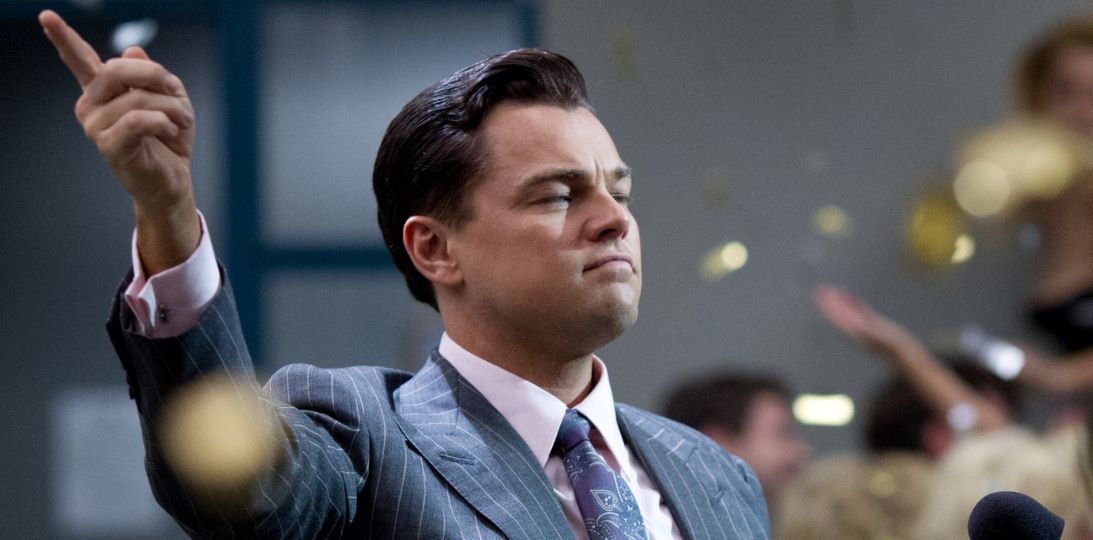
The Wolf of Wall Street (2013)

The Wolf of Wall Street (2013)

Greed is Good? Scorsese’s masterpiece is a heady deconstruction of the excess of white collar criminals

Director: Martin Scorsese

Cast: Leonardo DiCaprio (Jordon Belfort), Jonah Hill (Donnie Azoff), Margot Robbie (Naomi Lapaglia), Kyle Chandler (FBI Agent Patrick Denham), Rob Reiner (Max Belfort), Jon Bernthal (Brad Brodnick), Matthew McConaughey (Mark Hanna), Jon Favreau (Manny Riskin), Jean Dujardin (Jean-Jacques Saurel), Joanna Lumley (Aunt Emma), Cristin Milioti (Teresa Patrillo), Christine Eberle (Leah Belfort), Kenneth Choi (Chester Ming), Brian Sacca (Robbie Feinberg), Henry Zebrowski (Alden Kupferberg)

All The Wolf of Wall Street is really missing is an early freeze frame of a coke-fuelled banker slamming the phone down on a closed deal and a wistful voiceover from Jordan Belfort: “As far back as I can remember, I always wanted to be Wall Street trader”. If Goodfellas was Scorsese’s exploration of the attractions – and dangers – of a life in blue collar crime, then The Wolf of Wall Street is its white collar companion piece. The fact that so many viewers find the behaviour of Belfort morally outrageous in a way that no one ever objects about Henry Hill is, for me, an indication of how much we loath these masters-of-the-universe. For all their faults, we’d still rather see a violent criminal as one of us.

Based on Jordan Belfort’s (Leonardo DiCaprio) autobiography, The Wolf of Wall Street follows his time building a dodgy trading empire and a large fortune. Not that he can remember most of it, as he seems to be on a permanent intoxicated binge of drinks, hookers and every drug you can ever imagine (and some you can’t). The FBI catches up with him eventually, but Belfort learns precious little from his experiences. Other than, perhaps, that so long as you are rich and white in America, you can basically get away with anything.

That’s perhaps the key to Wolf of Wall Street. Scorsese may not shy away from the delicious dark comedy of Belfort’s life of excess, but it doesn’t blind him to the shallow awfulness of the man or his unthinking, instinctive greed and self-obsession. You would need to be a pretty shallow person to look at Belfort’s greed, moral emptiness and self-destructive binges and want to ape him. If you think watching DiCaprio literally paralytic on quaaludes is the life you want, frankly there is something wrong with you.

What perhaps made some feel Wolf of Wall Street was oddly in love with Belfort is its electric pace. The film is a brilliant reminder of Scorsese’s faultless understanding of pace. Or one who matches unparalleled cinematic skill with the rambunctious energy of a first-timer allowed to play with his movie toys for the first time. Brilliantly assembled, this is a superb collection of cinematic techniques, from jump cuts to fluid transitions that power through a series of increasingly bacchanalian parties and isn’t afraid to admit that, in the moment, this stuff can be fun (rather like getting the best table in Goodfellas) but ultimately self-destructive. (After all, few know the dangers of drugs like Scorsese.)

At the centre of this whirlwind is a stunning performance from Leonardo DiCaprio. With his still youthful, charismatic handsomeness, DiCaprio only needed to tweak his screen persona to provoke the sort of perverted idolatry Belfort receives from his co-workers. But he goes above and beyond in his transformation in this role. He makes Belfort simultaneously oddly childlike and revoltingly corrupted, someone whom we enjoy spending time with while finding repulsive. He rips through Belfort’s trademark, drug-fuelled motivational speeches, monologues of insanely eye-popping intensity, explosions of off-the-chain wildness. At other times he’ll sulk and whine like a spoilt child. DiCaprio struts across the screen with an unpredictable physicality – his embodying of the physical effects of mind-altering drugs is hilarious and horrifying –in possibly his finest ever performance.

DiCaprio is the raw energy source that helps power the rest of the film. Scorsese matches him blow-by-blow with this dynamic expose of white-collar corruption. Using Belfort as a narrator – which serves to further expose his shallowness, greed and utter inability to learn any sustained messages from the depths he plummets to – the entire film is all about how the flip side of the American Dream tacitly promotes and encourages this sort of behaviour.

Belfort is the rash the system has come out as. In a highly effective early cameo, McConaughey plays Belfort’s first mentor, a coke-fuelled hedonist hooked on the buzz of closing deals, who pushes Belfort towards a career of success (including introducing a brilliant breathing exercise – improvised by McConaughey based on his own warm-up exercises – that becomes a mantra in the film). DiCaprio’s eyes have already lit up at watching a deal closing. Drugs and sex are just an attempt for Belfort to replicate the buzz of the real addiction: money.

Scorsese recognises that we don’t need to know the details of Belfort’s illegal dealings. (In his voiceover Belfort literally tells us it doesn’t matter, all that does is the shitload of cash they were bringing in.) We learn enough about the huge mark-ups (50% of the deal’s value) he can make from selling penny stocks (trades of small public companies) and “pump and dump” tactics to know it’s wrong. I will admit the film does little to show the victims – but then Belfort never cares either, proudly stating at one point he has no guilt fleecing his clients out of cash, because he knows how to spend it, better than they do.

It all pours into a hedonistic, alpha-male environment where the air is as littered with fucks (the film held a record for most use of the word) as the floors and desks of Belfort’s offices are during his hooker-filled end-of-week parties. Wolf of Wall Street is also an expose of toxic alpha-maledom. Bullying, abuse and screaming are ripe, women are basically commodities traded as easily as shares. The only exceptions are those allowed into the boys’ club as either surrogate-male fellow traders or trophies to adorn the arm. Margot Robbie (superb in a star-making role) plays Belfort’s glamourous wife, who knows she needs to use her physical assets to make her way in this world.

The film rips along through a party-deal-party structure. Belfort goes from wowing his fellow penny stock traders by making $2k in two minutes to wrapping the trading floor of his fake-old-school Wall Street firm around his finger in excess filled speeches. He also goes from a charming party animal to an incoherent, rambling, deeply unpleasant and dangerous drunk and drug addict. But crucially, he learns nothing . There is no life-and-soul shattering payback like Henry Hill undergoes. Fault, guilt and consequences roll off his rich, spoilt back. He ends the film still winning the adulation of would-be millionaires, his conscience (if it exists) untroubled by any impact his actions have had on others.

Perhaps Scorsese could have allowed more space to victims – and to Kyle Chandler’s dutiful and dedicated FBI agent who brings him down (our final shot of this character stresses his humble, low-paid status – echoing back to his confession to at times regretting leaving a trading career for a law one). But that’s to criticise the film for not being obvious enough. Of course parties are fun. But each party becomes wilder, more orgiastic and uncomfortable as the film goes on. But if we didn’t understand the fun, we couldn’t understand how people get hooked on this adrenalin fuelled life.

Wolf of Wall Street though is a warning to the curious – if you are smart enough to look. Belfort’s soulless, horrible life is not one to aspire to, and his moral emptiness not one to wish to have. It’s a funny film, but it’s also a dark one. DiCaprio is brilliant beyond belief, Jonah Hill funny and pathetic as his best friend, Margot Robbie becomes a star and Scorsese rips through the film with the energy, passion and dynamism of a much younger director. An outstanding tentpole film in his CV.

Working Girl (1988)

Working Girl (1988)

Wall Street gets the Cinderella treatment in this romantic comedy of sexual politics and mega-hair

Director: Mike Nichols

Cast: Melanie Griffith (Tess McGill), Harrison Ford (Jack Trainer), Sigourney Weaver (Katherine Parker), Alec Baldwin (Mick Dugan), Joan Cusack (Cynthia), Philip Bosco (Oren Trask), Nora Dunn (Ginny), Oliver Platt (Jack Lutz), Kevin Spacey (Bob Speck), Robert Easton (Armbrister), Olympia Dukakis (Personnel Director), Amy Aquino (Alice Baxter)

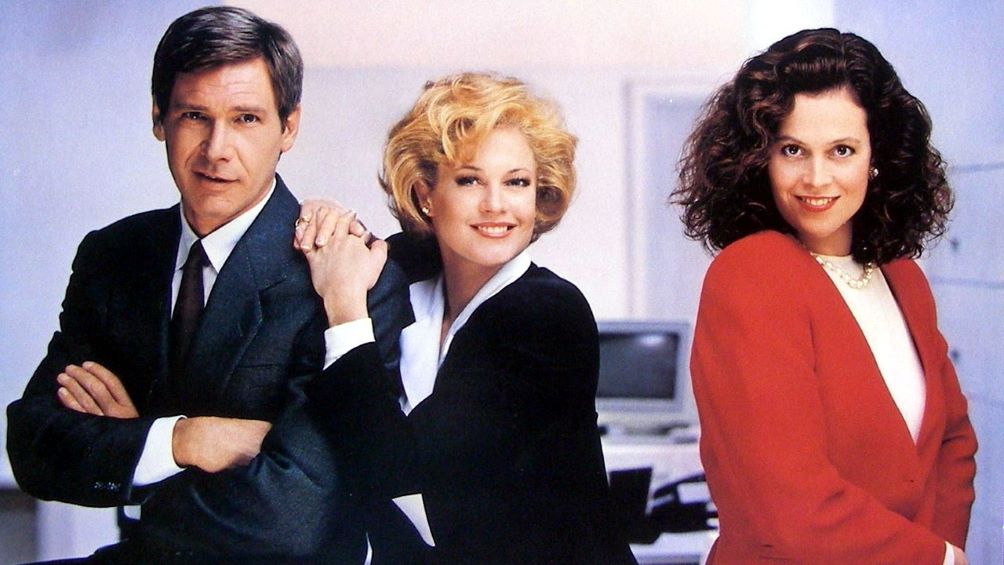
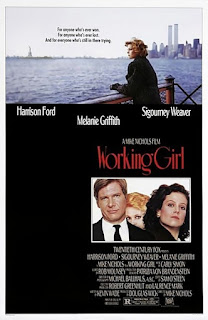
Is there a more 80s film in existence? It’s got the hair, the fashion, the attitudes, the Reagonite go-getting celebration of the guts and glory of Wall Street. Tess McGill (Melanie Griffith) looks and sounds like a dumb secretary, but she’s got the brains for business (but also, as she says, a bod for sin) – just never the opportunity to prove it. It looks like that might change under new boss Katherine Parker (Sigourney Weaver), who’s all smiles and talk of the sisterhood – but pinches Tess’ ideas and passes them off as her own. When Katherine is injured on a ski trip, Tess takes the chance to prove she’s got it by passing herself off as Katherine’s colleague and enlisting the help of mergers expert Jack Trainer (Harrison Ford) to put together a mega-bucks media merger. But what will happen when Katherine finds out?

Working Girl is really a great big Wall Street fairy tale, with Tess as the Cinderella invited to the ball only to have to run away leaving the business equivalent of her glass slipper behind. Katherine is a wicked stepmother, and Jack the handsome prince. It’s the sort of film where the heads of corporations are cuddly figures who place fair-play and honesty above making a buck and goodness, wins out in the end. Basically, it’s about as much a slice of business realism as Pretty Woman (this film could almost be a dress rehearsal for that).

Nichols directs the entire thing with confidence and pizzazz and draws some good performances from the actors, while keeping the entire thing light, frothy and entertaining. He had to fight tooth and nail to cast Melanie Griffith – but it was a battle worth winning as the role is perfect for her. Griffith always finds it hard to get good roles – her light, airy voice has condemned her to a string of airheads and bimbos – but here it’s perfect for a woman everyone assumes is dumb the second she opens her mouth. She’s even thinks of herself as not that bright, accepting her lot in life is settling for second best.

That’s personally and professionally. Her boyfriend, played with a wonderful smarm by Alec Baldwin, is a rat (she walks in to her flat to discover him mid-coitus – “This isn’t what it looks like!” he protests with an unabashed grin), who constantly reminds her that she’s punching above her weight dating him. Tess is at the bottom of an ocean of sexism on Wall Street: traders see her as little better than a perk, slapping her bum or stopping to stare at her behind when she walks past them. She barely avoids sexual assault from a coke-addled trader in the back of a limo (a piece of presciently perfect casting for Kevin Spacey). Her first boss (a puffed-up Oliver Platt) routinely humiliates her.

Oh my God! The Hair!

To be fair, the film makes clear that much of this is a woman’s lot in this poisonous world of Wall Street. Even her boss Katherine has to patiently remove groping hands from parts of her body, and wearily tells Tess that it doesn’t do to kick up a fuss when you never know who might become a vital contact in the future. Working Girl makes some pretty gentle points about workplace sexism – you can’t fail but notice Katherine and Tess are the only two women in the office who aren’t secretaries or HR people, and even Tess is pretending not to be – and the casual objectification of women.

Sadly, it blows a few of those points by still getting Griffith and Weaver to perform scenes in lingerie. Griffith even has a brief scene where she hoovers Weaver’s empty apartment topless. Sure, it’s a bit progressive on women’s rights in the workplace: but still, phroah, look at that.

Nichols gets one of his most relaxed and loose performances from Harrison Ford. Even if Ford at times looks a little abashed, working against such forceful performers as Griffith and Weaver (like a shy teenager in a school play), Nichols helps him feel light and funny without relying on the cool machismo that served him well as Indy or Han. Jack Trainer (such a Harrison Ford character name!), becomes giddy and playful under Tess’ influence and there is a sweet innocence about his courtship of her. It’s one of Ford’s funniest, most naturally instinctive performances.

Equally essential to the film’s success is Weaver, who plays up to perfection her glacial distance as a woman who is all smiles and “us, us, us” in person, but selfish looks and “me, me, me” in private. Weaver is very funny as a ruthless, amoral businesswoman masquerading as a campaigner for her sex and completely recognises that the role is essentially a wicked stepmother, pitching it just right between arch comedy and realism. She was Oscar-nominated, as was Griffith, and Joan Cusack who is triumphantly ditzy and warm as Tess’ best friend.

Working Girl pulls together all the tropes we expect. Tess is made up to look like the professional businesswoman she is aspiring to become, there is a neat bit of low-key farce as she passes off Katherine’s office for her own to Jack, a sweet bit of business chicanery as she Jack sneak into a wedding (the sort of thing that in real life would get you a restraining order) and it all leads into a “love and truth conquers all” resolution with a satisfying coda scene as Tess starts a new life. There is a lovely song by Carly Simon (over-used on the soundtrack – and fans should check out Michael Ball’s cover of it) and plenty of chuckles. It’s a fairy tale of New York.

Hustlers (2019)

Constance Wu and Jennifer Lopez head out to get what they want in Hustlers

Director: Lorene Scarfaria

Cast: Constance Wu (Destiny), Jennifer Lopez (Ramona Vega), Julia Stiles (Elizabeth), Keke Palmer (Mercedes), Lili Reinhart (Annabelle), Lizzo (Liz), Cardi B (Diamond), Mercedes Ruehl (Mama), Wai Ching Ho (Destiny’s grandmother)

Greed. To many people, it’s what powers society. Those at the top believe anything can be bought, that they can have anything and everything they want simply because they have the money to pay for it. Hustlers suggests that nowhere is this more true, than in a New York strip club. The rich and the powerful, the masters of the universe, descend on these clubs for their after-hours play and assume their ocean-like wallets will open every door for them. Can we blame the strippers if they decide to exploit this for their own gain?

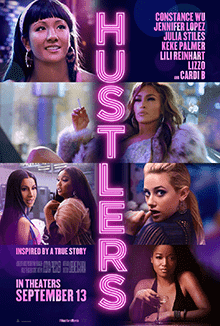
Opening in the build-up to the financial crash of 2008, Dorothy aka Destiny (Constance Wu) arrives at Moves, a prominent New York strip club, the night-time spot of choice for the super-rich from Wall Street. Money flows liberally in return for the strippers’ performances and their stroking of these masculine egos. Destiny comes under the wing of the club’s star, Ramona Vega (Jennifer Lopez), who teaches her how to manipulate men for cold hard cash. But when that financial crash comes, both women find themselves out of work. In the new atmosphere, the clubs are now staffed by dancers from Russia willing to go further with the men for money. Thrown back together, Destiny and Ramona start a new hustle – target rich men in clubs, get them drunk (and later just simply drug them), drag them to Moves and max out their cards (with the ex-dancers taking a healthy cut). But as the strippers themselves become rich, they start to get greedy. Things aren’t going to end well…

Sharply and wittily directed, Lorene Scarfaria’s film is an excellent crime movie with a little bit of social commentary thrown in. Fast paced and done with just the right amount of flash, it brilliantly rejigs the usual lens that we see strippers through in Hollywood movies. Rather than clichés, hookers with hearts of gold or props for the male characters, here the strippers are real, rounded people working a job – a job that just so happens to involve taking their clothes off. There may be fun to be had at times, but it’s a performance, a show – and a large part of Ramona’s skill is to effectively and convincingly play what she knows the men want to see.

That’s what Scarfaria’s film shows – it’s all a careful hustle, a clever series of tricks and techniques used by strippers to minimise the amount of contact with the customers (and the indignities of their lecherous hands) and maximise cash return, over the longest period of time possible. And these rich Wall Street types are too arrogant and convinced of their own excellence to even notice. The men come out spectacularly badly, a bunch of leering assholes who believe money gives them the right to do anything they like. Scarfaria shoots this with a snazzy Scorsese-ish zing which makes the entire film bounce along like a light version of Goodfellas and Wolf of Wall Street.

And the film has a great deal of admiration for these women who decided to turn the tables – who dealt with the fact that they were basically trapped into a certain role by society by using their skills to steal from the rich. The scheme of conning men is perfect at first – after all what powerful man is going to want to say that he was drugged and fleeced by a gang of attractive women? What is interesting is that the greed that corrupted the men, is gradually the thing the corrupts the women as well: the more successful their scam is, the richer they become, the more they become obsessed with status symbols, just as the men treated them. It doesn’t take long for crime to start moving on from its original Robin Hood targets into something far more indiscriminate.

Leading that charge into hitting any and every target for as much as they can get (rather than a careful but continual fleecing of a select group) is Jennifer Lopez’s Ramona. This is the role Lopez has been waiting almost twenty years for, a charismatic woman so firmly in control of her own life she doesn’t even notice when it starts to hit the skids. It’s the sort of scene stealing role that demands the energy and personality Lopez can bring to it, Ramona being part mentor and mother and part greedy livewire. If you forgot what a promising actress she was in the 90s, this is a great reminder. Ramona is a force of nature, the woman who demonstrates sex is a tool that can produce fabulous, fortune making results. But she’s arrogant enough to let greed and her innate belief in her own infallibility guide many of her decisions.

Lopez also forms a wonderful partnership with Constance Wu in the “Ray Liotta” part of the young naïve innocent, drawn under the mentor’s wings who eventually has to turn against her. Wu draws a lot of charm out of the young stripper learning the ropes, but crosses this really well with an ambition and ruthlessness that only late on finds its limits. 

Hustlers bounds along telling a winning, crowd pleasing story with a depth and emotional force that produces great results. We root completely for its female leads, keeping them relatable even when their actions become less sympathetic. Strikingly directed by Lorene Scarfaria, it’s a film about women that makes themselves firmly the authors of their own destinies – and their own mistakes.

Moneyball (2011)

Brad Pitt and Jonah Hill take on maths and baseball (in that order) in Moneyball

Director: Bennett Miller

Cast: Brad Pitt (Billy Beane), Jonah Hill (Peter Brand), Philip Seymour Hoffman (Art Howe), Robin Wright (Sharon), Chris Pratt (Scott Hatteberg), Stephen Bishop (David Justice), Reed Diamond (Mark Shapiro), Brent Jennings (Ron Washington)

Chances are, if I tell you this is a film (a) about baseball and (b) also about sabermetric economics, I’ll lose a lot of you before a single second of the film has rolled. Which would be a shame in this case, as Moneyball is an entertaining, rather affecting yarn that manages to turn subjects that really feel like they should be impossibly dull into a sprightly against-the-odds drama.

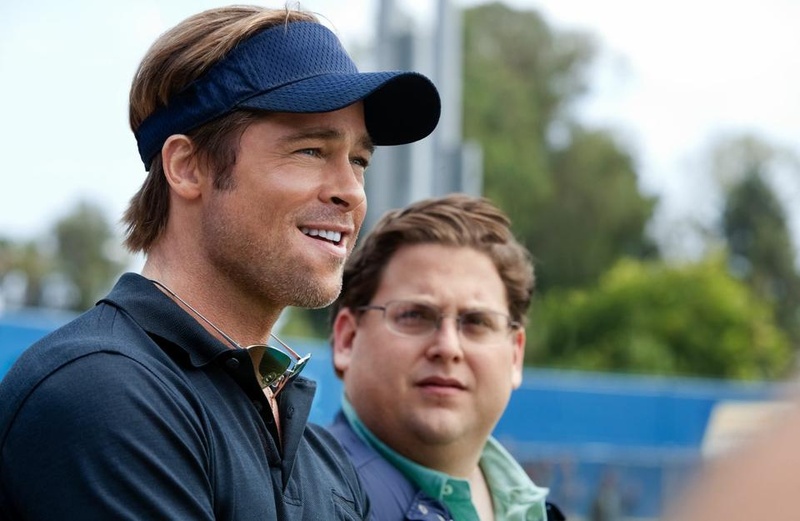
In 2002, Oakland A’s general manager Billy Beane (Brad Pitt) has a problem. The As are struggling to pull together a competitive team for the new season, with their best players having been cherry picked away by the larger (and crucially richer) teams, and the money to buy replacements proving incredibly sparse. But after a chance meeting at the Cleveland Indians with young Harvard economics graduate Peter Brand (Jonah Hill), Beane stumbles across another way of building a team. Realising that if he tries to compete on finances with the bigger teams he will always lose, Beane is persuaded by Brand to research player statistics to unearth players undervalued by the big teams. By focusing on specific playing statistics – crucially their on-base percentage – rather than more showy skills, Beane starts to build a successful team, despite the push-back from the more conservative scouts and coaches at the club.

Yes it’s the backroom side of sports, the boardroom politics and business dealings, that come to the fore in this film. But rather than bore, it actually zings along very effectively due, in no small part, to some cracking trademark rat-a-tat dialogue from Aaron Sorkin (polishing a script by Steven Zallian), which elevates conversations about percentages and statistics into something so entertaining you don’t even notice you barely see any actual playing of baseball. 

But then the film comes into shape because who hasn’t wanted to be the visionary, to be the one who tells a stuffy room of old-timers that they are out of date and hell fire I don’t care what you say we’re going to do it the new way or be damned? Based on Michael Lewis’ book, written in heavy collaboration with Billy Beane, the film may well (as some have claimed) play up the conservative prejudices of the follow-your-gut scout and coaches (in particular its portrayal of coach Art Howe as some sort of lumbering dinosaur) but it does make for some damn fine scenes.

And there is a point in there that these coaches feel – perhaps slightly justifiably – that their experience is being disregarded in favour of burying your nose into an online almanac. Crucially, they are proved right (although the film plays it down) when they identify one of the Beane’s signings in advance as a party-hard troublemaker. The film also shows that, while numbers help recruit the players, what actually makes them perform is Beane’s reluctantly taking on the mantle of man-management: talking to the players, explaining what he is doing and motivating them personally. While it’s a film about pushing the boundaries, it also takes moments to show that we can’t junk everything that’s past to build our future.

Moneyball largely manages to make scenes like this dramatic, which is pretty damn good going

A lot of this comes out of Beane’s own personality. It’s a gift of a part for Brad Pitt, who is excellent, mining the deep vein of loneliness and isolation in Beane, whose past is littered with regrets and mistakes. His own baseball career flamed out after early promise, due to his inability to adapt to a higher level of play (Brand wins Beane’s trust by telling him that, based on statistics, he would have picked him very late in the draft not first). It’s an experience that gives Beane a ready-made scepticism for “gut instinct”, but also explains his own unwillingness to get to know the players who (if he needs to) he’ll need to trade in an instant for the good of the club.

Pitt gives Beane this inner sadness, but also a level of warmth fired by competitive zeal. He’s unable to watch the games (so driven is he to win) and he treats his negotiations with other teams and managers with the sort of no-holds barred testosterone that you’d expect he played with. He’s a passionate man who loses his temper and has no time for fools. But he has a deep love for his daughter (of course!), keeps on good terms with his ex-wife and understands deep down that making life decisions is based on a lot more than money.

This also adds a level of bravery to his decision to fly in the face of decades of baseball knowledge – get this wrong and his head will be on the block. This brings added tensions to heated discussions with scouts, frenzied phone calls to secure at the right price the most statistically advantageous players, and clashes with coaches about how to pick a team that has been selected for very specific skills. It adds a human element and guts to the drama.

With super dialogue, a fine performance from Brad Pitt and some good supporting work from Jonah Hill as the (semi-fictionalised) numbers-guy slowly building in confidence, Moneyball has more than enough to recommend it. Sure not much concession is made to baseball muggles, but there’s more than enough heart and drama here to overcome the lack of explanation of how baseball works and what these percentages actually mean – the fact is it works.

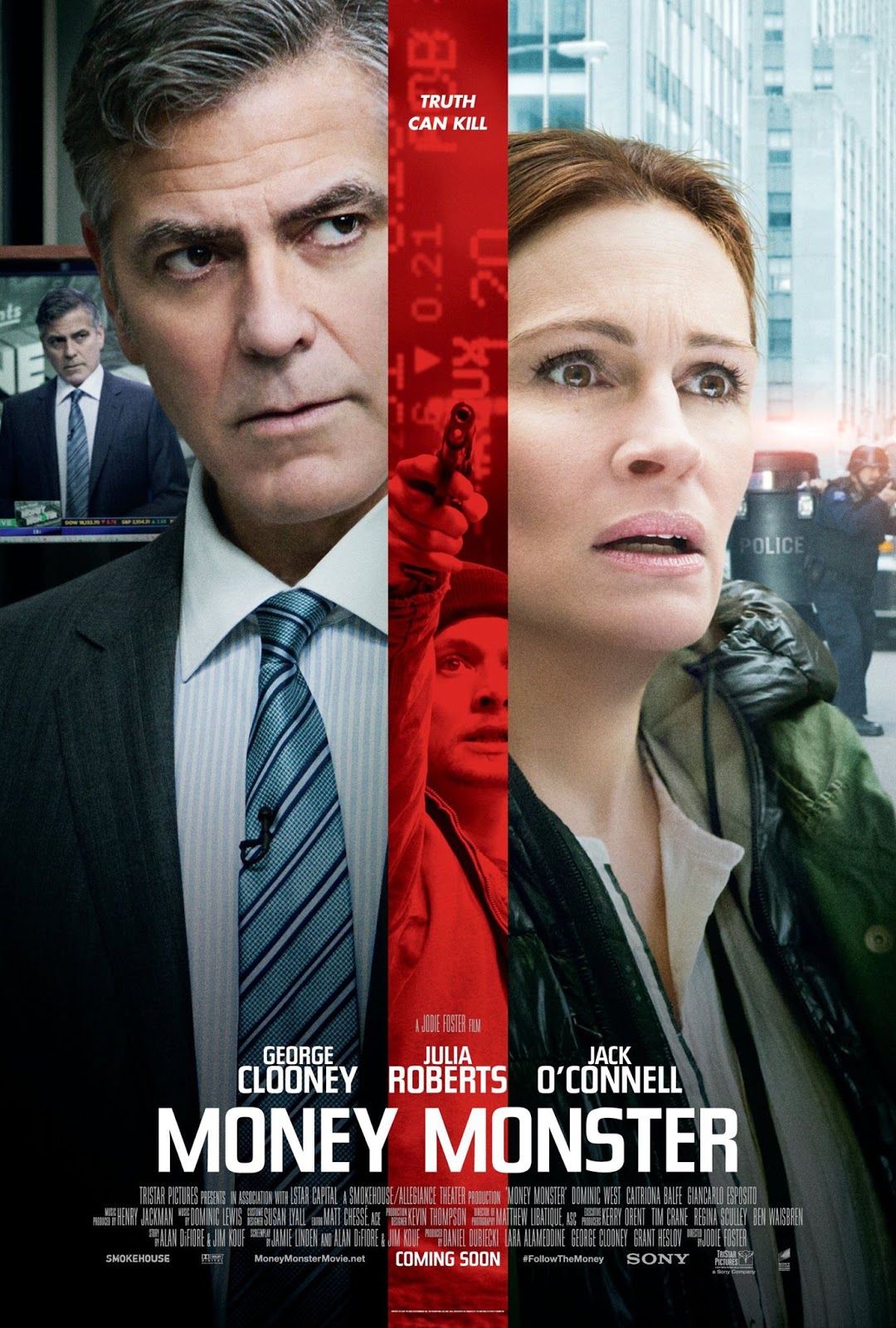
Money Monster (2016)


A bad day at the office was ahead for George Clooney

Director: Jodie Foster

Cast: George Clooney (Lee Gates), Julia Roberts (Patty Fenn), Jack O’Connell (Kyle Budwell), Dominic West (Walt Camby), Caitriona Balfe (Diane Lester), Giancarlo Esposito (Captain Marcus Powell)

For as long as there has been TV, then the world of Film has looked down its nose at the mass market medium. “It’s in your homes! It makes you dumber! It stops you caring!” Set a film in a TV studio and it’s a fair bet that, before long, some shallow media types will appear, a dramatic on-air event will take place, a shallow man will rediscover his soul and the camera will cut back to punters at home watching the drama as if they it was just part of the show.

All this is exhibited to its full in Money Monster, a passably entertaining hostage drama set in the studio of a fictional Wall Street themed entertainment and “news” show. Lee Gates (George Clooney) is a shallow, image and money-obsessed TV personality taken hostage after a desperate grief-stricken viewer Kyle Budwell (Jack O’Connell) loses his life savings on one of Gates’ tips. However, with the prodding of his director Patty (Julia Roberts), Gates slowly begins to rediscover his journalistic integrity.

Watching the film when it rather heavy-handedly enters into the world of media satire, it’s pretty hard not to remember better films in the same genre. Network covered much of this ground so well 40 years ago, it’s almost not been necessary to watch another film about the manipulation of the media. The Truman Show so successfully skewered the thoughtless collaboration of the watcher at home, that this film’s attempt feels like a rather mundane repeat.

Saying that, George Clooney does a grand job of portraying the shallow, media man re-discovering his depths – although lord knows he’s played this sort of part often enough to do it standing on his head. But he gets the dark comedy of it, and he is also able to deliver on the growing decency and integrity of the character. Julia Roberts is pretty good as a confident professional who has allowed her principles to slide for too long. In this illustrious company, Jack O’Connell more than holds his own, delivering brilliantly as a desperate and angry man.

The hostage taking sequences are quite well done, and threaded in well with the general satirical air of the film. At two key moments during the crisis, the film successfully pulls the rug out from under the feet of the viewer by delivering a different outcome than we might have expected. It’s probably when the film is most effective. It also does a good job threading many of the themes, locations and characters that will become important by the end of the film into its opening moments – many of them done so gently, you won’t even notice until they become important later.

The dark satire around the uncaring nature of big business and its lack of principles also hits more than a few familiar beats (big business being another thing multi-million film companies love to lay into), but this side of the plot is interesting enough – and I didn’t quite work out how the dodgy dealing had worked out. The final reveal and confrontation around this is well staged. It doesn’t tell you anything new, or present its old points in a unique or intriguing new way, but it does it in an entertaining way.

The film generally deserves some congratulation for its staging – Foster directs with a tightness and the flimsy conception of the film is delivered in a taut 85 minutes (almost in real time) which certainly means it doesn’t outstay its welcome. The acting is decent and the points it makes are well delivered, no matter how familiar they are. The film effectively plays with and changes your views on its characters over the course of its runtime. Honestly there are worse ways you can spend an hour and a half. It’s just not something that is going to stick with you for long.