Category: Films about obsession

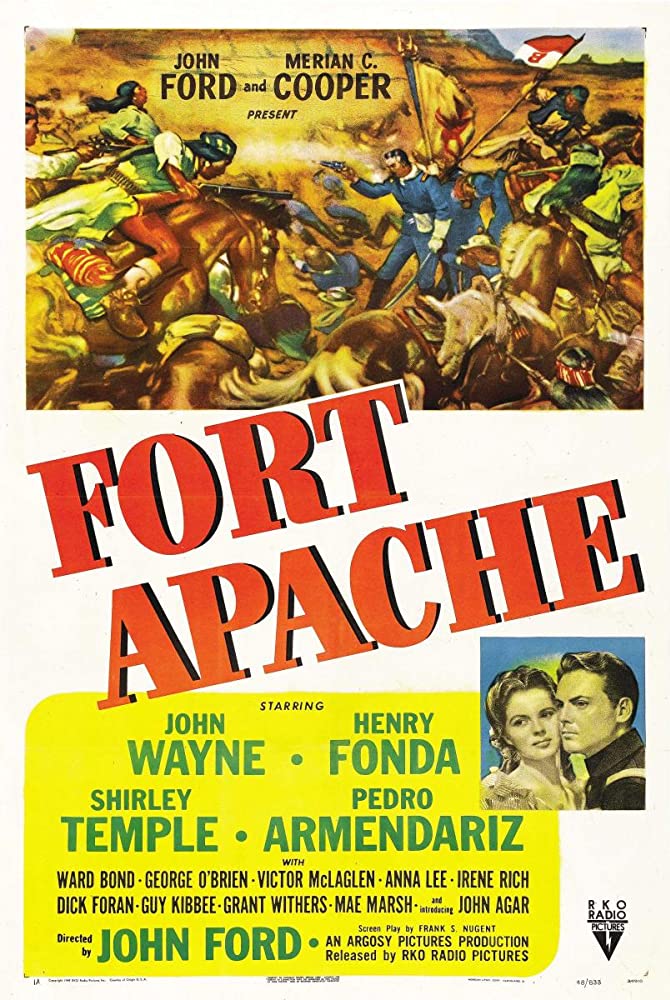
Fort Apache (1948)

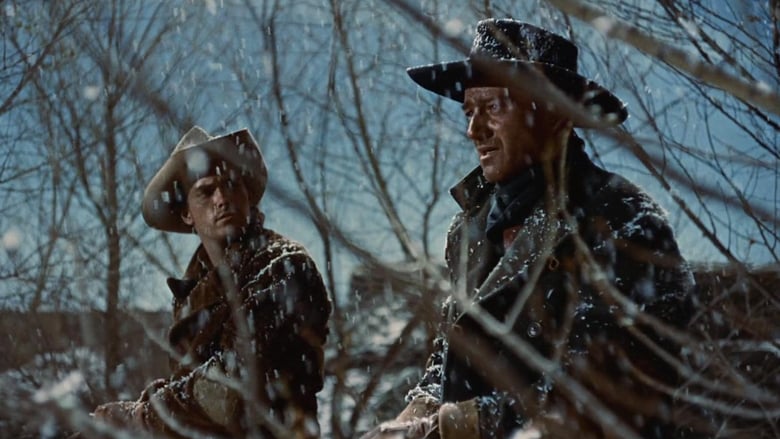
Henry Fonda and John Wayne face off in John Ford’s Fort Apache

Director: John Ford

Cast: John Wayne (Captain Kirby York), Henry Fonda (Lt Colonel Owen Thursday), Ward Bond (Sgt Major Michael O’Rourke), Shirley Temple (Miss Philadelphia Thursday), John Agar (Lt Michael O’Rourke), Dick Foran (Sgt Quincannon), Pedro Armendariz (Sgt Beaufort), Miguel Inclan (Cochise), Victor McLaglen (Sgt Festus Mulcahy), Guy Kibbee (Captain Wilkens), George O’Brien (Captain Sam Collingwood), Anna Lee (Emily Collingwood)

Fort Apache was the first of Ford’s “cavalry trilogy”, exploring problems and personality clashes of remote cavalry posts in the middle of what used to Native American territory. Contrary to what you might expect, this is a complex, intriguing film that brilliantly explores tensions between very different ways of thinking and issues of class in America, which are so often overlooked. If it sells some of the tensions of clashing ideals down the river with an ending that fully endorses the myth over the reality, the fact the film makes clear that the idea of a well-meaning army all pulling together is a myth says a lot.

John Wayne is Captain Kirby York experienced, more liberal minded acting commander of Fort Apache. Aware of the difficult balance of maintaining good relations with the Apache tribe while protecting American expansionist interests, he’s perfectly suited for keeping the peace in the West. Unfortunately he’s replaced by Lt Col Owen Thursday (Henry Fonda), an arrogant, class-conscious – if polite and honourable man – who applies the letter of the law to all his dealings, so obsessed with rules (he protests “I’m not a martinet” while bemoaning the lack of proper uniform in the dust filled heat of the West) that he sees no reason to moderate even the most corrupt of the local officials who have driven the Apache to revolt, instead demanding the Apache submit. Disaster is on the cards.

Ford’s film revolves around the personality clash between York and Thursday. While both dutifully respect the chain of command, it’s clear that York has a closer bond and understanding with both the men under them and the complex considerations to balance when dealing with the Apache. Thursday, on the other hand, is an arrogant, prickly character, bemoaning his “demotion” from a field rank of General in the Civil War, to an “obscure” fort. A posting he is determined to escape from with an honour laden victory as soon as possible. 

With Ford’s romantic regard for the ordinary soldier and regular Joe, the sort of posh New-Englandish Thursday is a clear stand-out. A stiff-backed martinet, he never listens to others (he constantly needs to be reminded about names) and has a snobbish disregard for Lt O’Rourke (a callow John Agar) whose father, far from being officer class, is an Irish Sgt Major at Fort Apache. Thursday is notably uncomfortable at such Fordesque events as a NCO ball, or when talking with the men – he even looks unsettled in the desert, wearing full uniform and avoiding a hat in favour of an army cap with a dust-sheet attached at the back (no Ford hero would be seen dead wearing such a thing). 

The character works so effectively because he is played so delicately and skilfully by Henry Fonda. Cast against type – and looking older – Fonda plays Thursday as a frustrated man, terrified of failure who simply lacks the flexibility to adjust to situations. Rules instead are there to be followed in detail, regardless of his personal feeling. Corrupt government agent Meacham he treats with contempt, but he will defend his incompetent regime in Apache land to the death. With the Apache he can’t see past his own inbred ideas of superiority, treating them with a paternal disappointment, certain that they are no match for American cavalry might (spoiler, they certainly are). Fonda however keeps Thursday human, a flawed, rigid man dropped into a role he is ill-suited to and struggling to adjust.

John Wayne offers an equally careful performance as York. Unlike Thursday, York adjusts his actions and decisions based on situations and personalities, rather than enforcement of rules. Army regulations can be respected but applied with sense. Meacham to him should be hounded out of town as the root cause of all the problems. Cochise, the Apache chief, he treats with respect and honour – abiding by deals and attempting to compromise with him to find a peaceful solution (a negotiation Thursday of course torpedoes with his arrogance and intransigence). Wayne is often thought of as the action hero, but here Ford starts to explore his elder statesman quality, as well as his underlying decency and honour as an actor.

Other sub plots interweave neatly around this. John Agar’s young O’Rourke flirts with Thursday’s more liberal daughter (played brightly by Shirley Temple) – needless to say this relationship meets with no approval from Thursday. Thursday’s old colleague Sam Collingwood – now a time-serving captain at the Fort – is paralleled with him and York, as a time-server and mediocrity, a decent family man but lacking the will to do what he knows is right. Ward Bond provides both comedy and also a warm fatherly quality as Sgt Major O’Rourke, proud of his son and re-enforcing discipline on his (mostly Irish of course!) soldiers. 

And of course the action is handled extremely well. A chase sequence with Apache, cavalry and a wagon (under-manned and out-gunned, because Thursday believes a few men and rounds of ammunition should be enough to see off the Apache) is filled with excitement. And, of course, the film builds towards the inevitable disaster Thursday’s rigid mismanagement was always heading towards: a suicide charge against a well defended Apache position, fighting to defend a corrupt agent who Thursday and York both know should be replaced.

It’s a film that quite daringly shows that American’s “mission” in the West was often founded on corrupt officials, and that the military leaders were sometimes rigid, incompetent martinets who led their men to avoidable disaster. It’s shame then that the York – and the film – chooses in a flash forward at the films end to promote the idea of Thursday’s charge being a glorious defeat, rather than an avoidable disaster. And that, this printing of the legend, is important to protect the “why we fight” idea of America. It’s the downside of Ford’s love of the past, of the mythology of the West, that even in the end of a film about incompetence, it’s still seen as noble and important to protect people from the truth and promote the legend, than tell the truth. But then for Ford, protecting the memory of the ordinary soldiers who died is the key – and if that means never questioning the how or why, well then that’s a price worth paying. It’s an idea we perhaps have far less sympathy with today.

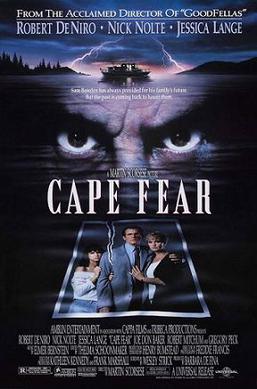
Cape Fear (1991)

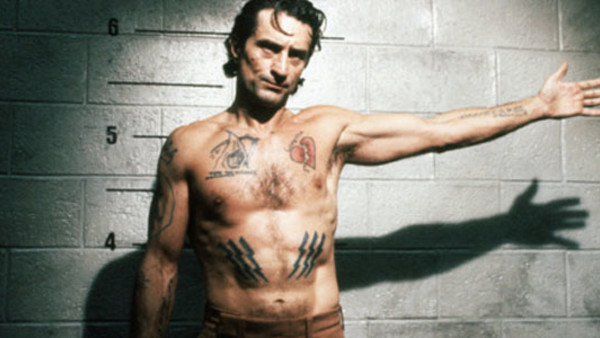
Robert De Niro terrorises his lawyer’s family in Cape Fear

Director: Martin Scorsese

Cast: Robert De Niro (Max Cady), Nick Nolte (Sam Bowden), Jessica Lange (Leigh Bowden), Juliette Lewis (Danielle Bowden), Joe Don Baker (Claude Kersek), Robert Mitchum (Lt Elgart), Gregory Peck (Lee Heller), Illeana Douglas (Lori Davis), Fred Dalton Thompson (Tom Broadbent), Martin Balsam (Judge)

Max Cady (Robert De Niro) is out of prison after 14 years. He went in as an ill-educated psychotic bum, sent down for the rape and assault of a young woman after his appalled lawyer Sam Bowden (Nick Nolte) buried evidence on her sexual history that might have lightened his sentence. He comes out as a self-educated, articulate and psychotic force of nature, not sorry for one minute and intent on making Sam and his wife Leigh (Jessica Lange) and daughter Danielle (Juliette Lewis) pay. 

Scorsese’s remake of J. Lee-Thompson’s deliberately Hitchcock-esque thriller sees the great director go one better by trying to channel Hitchcock’s style as closely as possible. Framing and editing decisions echo Hitchcock, its design apes as much as possible cinematographer Robert Burk’s lensing, Elmer Bernstein remixes the original film’s Bernard Herrmann score into something even more Hitchcockesque than the original. Scorsese throws in several of the master’s favourite themes, with sexual obsession and frustrated, working men forced to defend themselves in extreme situations. Combined with the sort of lavish violence and extreme imagery Hitchcock couldn’t use, we end up with something like an odd film-school experiment, by film students who have watched too many slashers. It’s grim, tasteless, overlong and troubling – and not in a good way.

The film adjusts Nolte’s character from a lawyer and witness against Cady into his corrupt lawyer (no matter that his corruption in this case was well intentioned). The film has a slightly unpleasant concern with modern worries about masculinity, with Bowden now concerned he is not “man enough” to defend his home – the film constantly passes subtle judgement against Bowden’s lack of physical prowess. It also readjusts Bowden into a weasel, corrupt at work and having an affair with a young attorney (whom Cady then beats and rapes later in the film, with a slightly queasy air that she is at least partly culpable by allowing Cady to pick her up in a bar beforehand). To be honest Bowden is hard to sympathise with, and his quest to assert his masculinity rather than rely on the law or hiring others to do his dirty work not really that pleasant. Frankly Nolte was never the actor to engage sympathies in the way original choice Harrison Ford (he wanted to play Cady) would do.

Cady himself is played by Robert De Niro, channelling heavily the original’s star Robert Mitchum (with lashings of The Night of the Hunter) as the sort of articulate psychopath so beloved by film. It’s fun to watch De Niro grandstanding as this sort of violent Tyrannosaur, weaving both psychological and shockingly violent games to unnerve and panic Bowden and his family. The film doesn’t give much scope to make Cady much more than a sort of comic-book monster, but De Niro does at least have moments of reflection in amongst his insanity. And there is a sort of admirable emotional intelligence in Cady’s knack of detecting the underlying tensions in the Bowden’s marriage and family life and exploiting these to torment the family.

The film’s most effective moments are the quieter ones, none more so than Cady’s quiet befriending/seduction of Bowden’s daughter Danielle behind her parents’ back. This culminates in a deeply unsettlingly seduction scene in Danielle’s school hall, where Juliette Lewis (extremely good) fascinatingly and bashfully becomes entranced with Cady’s interest in her teenage reading list and problems with her parents. The sexuality of the scene is possibly even more unnerving today and a highlight of the film – not least, ending as it does, with Danielle sucking Cady’s thumb before kissing him and leaving with the giddy, confused excitement of someone both scared and fascinated. Few other things in the film match this moment for psychological complexity – or the unsettling exploration of teenage sexuality overlapping with rebellion against domineering parents. 

Least of all the film’s overblown and final confrontation between the Bowden family and Cady, in which Cady rises from death no  less than three times and which stretches on forever, jettisoning all the small stock of goodwill the film had built up in its quieter moments. But then this is just part of a film that chooses the graphic and the overblown over calculated and chilling, every chance it gets. It’s a shame as there is a more chilling, psychological terror film – with Cady as a demonically clever opponent – struggling to come out here, but which keeps tripping into slasher territory with Cady as an invulnerable Michael Myers.

Perhaps Scorsese just thought of the whole thing as a sort of cineaste’s private joke? All the Hitchcock references, the careful apeing of styles, even the casting of the original’s leads in small roles (a joke further amplified by casting Mitchum as the police officer, while ultimate straight arrow Gregory Peck plays a lawyer even more corrupt than Bowden). But jokes like this don’t really make for long-term entertaining films, and Cape Fear is so full of basically horrible people doing horrible things to each other (in an increasingly Grand Guignol fashion) that after a while you more than cease caring about it. You start getting actively annoyed by it.

The Treasure of the Sierra Madre (1948)

Three men go in search of The Treasure of the Sierra Madre

Director: John Huston

Cast: Humphrey Bogart (Fred C Dobbs), Walter Huston (Howard), Tim Holt (Bob Curtin), Bruce Bennett (James Cody), Barton MacLane (Pat McCormick), Alfonso Bedoya (Gold Hat)

Is there anything that warps the human character more than greed? Humanity sometimes seems driven only by the desire for more, to fill our pockets with cash and leave the rest behind. It’s greed that becomes the subject of John Huston’s masterful The Treasure of the Sierra Madre – and specifically the effect it has on Humphrey Bogart’s Fred C Dobbs. If you can pick up as much gold as you want off the ground around you, why does it become so difficult to watch others take it away?

Dobbs and Bob Curtin (Tim Holt) are down-on-their-luck drifters in Mexico, bumming spare change off American businessmen and struggling on hand-to-mouth jobs for shady businessmen. So how could they resist the chance to team up with fast-talking old-timer Howard (Walter Huston) who knows that there’s gold in dem da hills? Heading into the wilderness – partly financed by Dobbs’ lucky small lottery win – the three men strike lucky and start pulling the gold from the ground. Problem is as the piles grow, so slowly does the men’s suspicion each other – not least Dobbs, who grows increasingly paranoid and unbalanced at the thought of any danger to his gold. In the wilderness of Mexico, with bandits across the countryside can the men’s growing suspicion of each other be held off long enough to get the gold back home?

Based on a novel by B Traven – an author so notoriously private that even today no one knows who he was – John Huston’s classic is part adventure story, part treatise on the human condition. It’s also gloriously entertaining at every turn. One of the first major Hollywood films to be shot largely on location, it drips with the sultry heat of Mexico, beautifully filmed by Huston. Huston’s masterful script also packs the film with a punch, from quotable titbits (most famously the oft-misquoted “Badges? I don’t have to show you any stinkin’ badges!”) to its Shakespearean touches as a rambling, mad, paranoid Dobbs walking alone through the desert wilderness like a cut-price Lear.

Dobbs is the heart of the film – and there is perhaps no anti-hero more ‘anti’ in the whole of Hollywood than this ruthlessly selfish, obsessive paranoiac. Bogart probably gives his finest performance ever as the scruffy, sweaty, unshaven and bitter drifter who finds he can’t abide the idea of having to give away any of what he sees as his share of the loot. And, worse than that, becomes convinced that the whole world is out to take it from him. 

Bogart digs deep into the weasily, rat-like greed of this man. Bogart fought long and hard to play who he called “the worst shit you ever saw”. Dobbs has a strange moral code and sense of honour that’s entirely personal. Having his character impugned by others is an affront he can’t abide – though murder and violence are perfectly acceptable. He’s the sort of guy who will savagely beat a man who stiffs him for wages and then precisely take only what he’s owed from the guy’s wallet. Bogart is perfect as the cold-eyed loner who talks big at first about partnership, but later whines about how he staked most of the starter capital so should be getting a larger share of the profits. Bogart, in perhaps one of the biggest snubs in Hollywood history, missed out on an Oscar nomination in a notoriously weak year for Best Actor. Perhaps, the vision of Rick Blaine bitterly muttering to himself, covered in flies and filth, while plotting the murder of his friends in the Mexican outback was too much for the voters to take. Either way, Bogart’s late mental collapse into near-Shakespearean envy, jealousy and twitchy paranoia is as effective as it is subtly done.

More fortunate at the Oscars were the Huston family. John had written the part of Howard for his father Walter. It bought Huston Snr the Oscar for Best Supporting Actor. Walter Huston is wonderful as this fast-talking eccentric, rocketing through his dialogue at a hundred miles an hour, as if he has lived so long through the events he is talking about that he barely has the time or patience to tell the story at a normal pace. Huston adds touches of wonderful eccentricity, to Howard’s insane jig of joy when finally finding the site of the gold, to his infectiously unrestrained cackling laughter. 

Eccentric as he is though, Howard is a decent and honourable man who has every intention of sharing the gold and is well aware of its corrupting influence. The wily Howard is also the only essential member of the crew – the only one with the experience to survive in the wilderness, the only one who can recognise and knows how to mine for gold. The most loyal to the fellowship, he’s the good angel to Dobb’s bad. In the middle of this moral spectrum, John Huston places Tim Holt’s Bob, a plain-speaking, more naïve figure who has elements of both characters in his pride and hunger for gold, matched with his sense of honour and loyalty. The film partly becomes an unspoken struggle for the soul of Holt’s Bob, as we wait to see which way he will fall. 

Not that any of these men are angels. They are all determined to protect what they have. Struggling in shoot-outs with bandits is fine. They even vote on whether or not to execute a fellow drifter (played by Bruce Bennett) who encounters their stake and enquires about joining them for a share. Bennett’s Cody is, by the way, the smartest character in the film, who sees with pathetic ease through the nervy lies told by the three men, as well as acutely analysing their situation and options with a sharpness that seems beyond all of them. 

Of course by that point suspicion between them – specifically Dobbs and Bob – has already grown dramatically. Dobbs takes to spying on his fellows and digs a separate hiding place to which he carefully takes his own share (Curtin takes to doing the same). John Huston includes a marvellous sequence where the three men each wake up in turn during the night – and react with suspicion on noting the absence from the tent of the others. Later Bob will think long and hard before saving Dobbs from a mining cave-in. Only Howard seems less affected about the gold – although with his talk of the corruption he has seen in the past, perhaps he was a Dobbs himself in the past, now grown wiser and more accepting of the easy-come-easy-go nature of gold. 

Huston’s Oscar winning script (he also lifted the Oscar for Best Director, although Best Picture went to Laurence Olivier’s Hamlet) keeps the rich vein of irony running throughout the script, even while it shows how susceptible men are to corruption. The film’s final act – and the eventual fate of the gold – is a treat, a natural extension of the films theme of mankind being a dog-eat-dog world. What else can you do but sit in the dust and laugh at it all? 

There are no heroes really in The Treasure of the Sierra Madre – even the mountain remains named only in the title of the film – just three men, scruffy, seedy and not that smart, struggling to grab what they can from the earth. Life becomes more and more cheap as the film goes on – Dobbs and Curtin are like brothers at the start, but increasingly come to see both other people and each other as expendable rivals. With Dobbs like some scruffy Smaug, the film boils down to each man confronting his own emptiness. The only character with any emotional hinterland is the drifter Cody, looking for gold for his wife and kids (his story has real impact on Curtin), the rest are just living from moment to moment.

John Huston’s classic is a marvellous musing on the nature of greed and humanity, superbly filmed by Huston with not a single false note in acting or writing. Perfectly placed, it mixes a western vibe with a Shakespearean grandness – and has a simply wonderful performance by Bogart. A classic that really delivers.

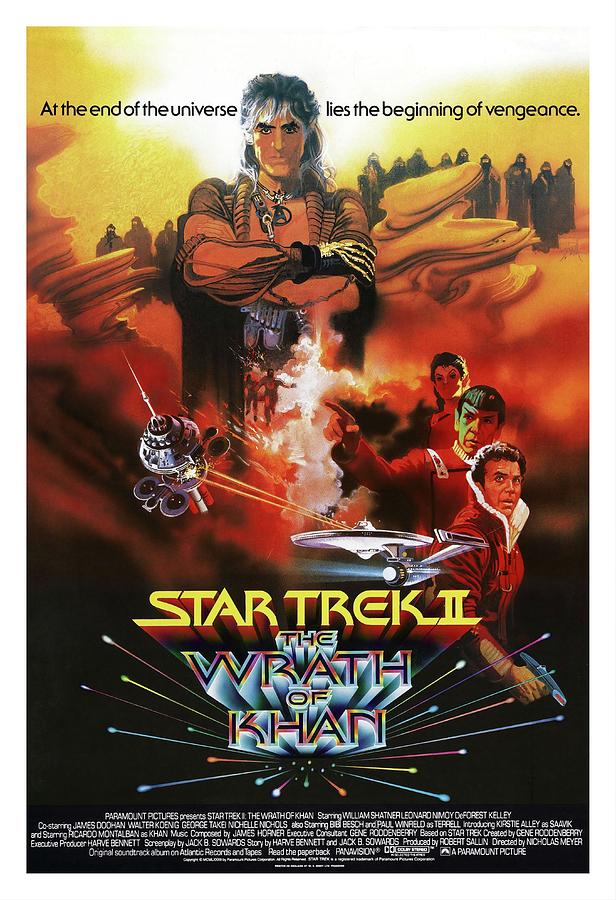
Star Trek II: The Wrath of Khan (1982)

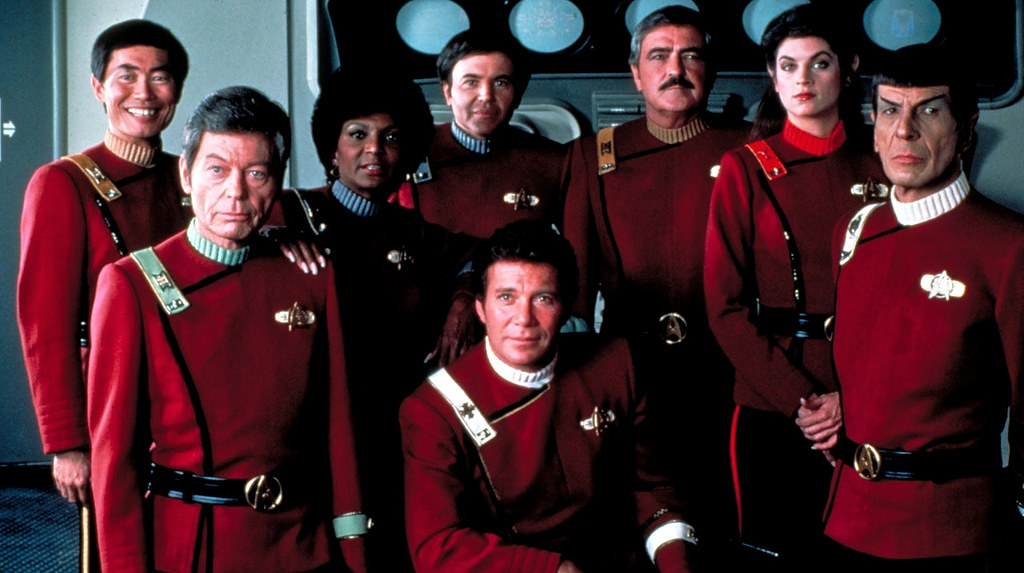
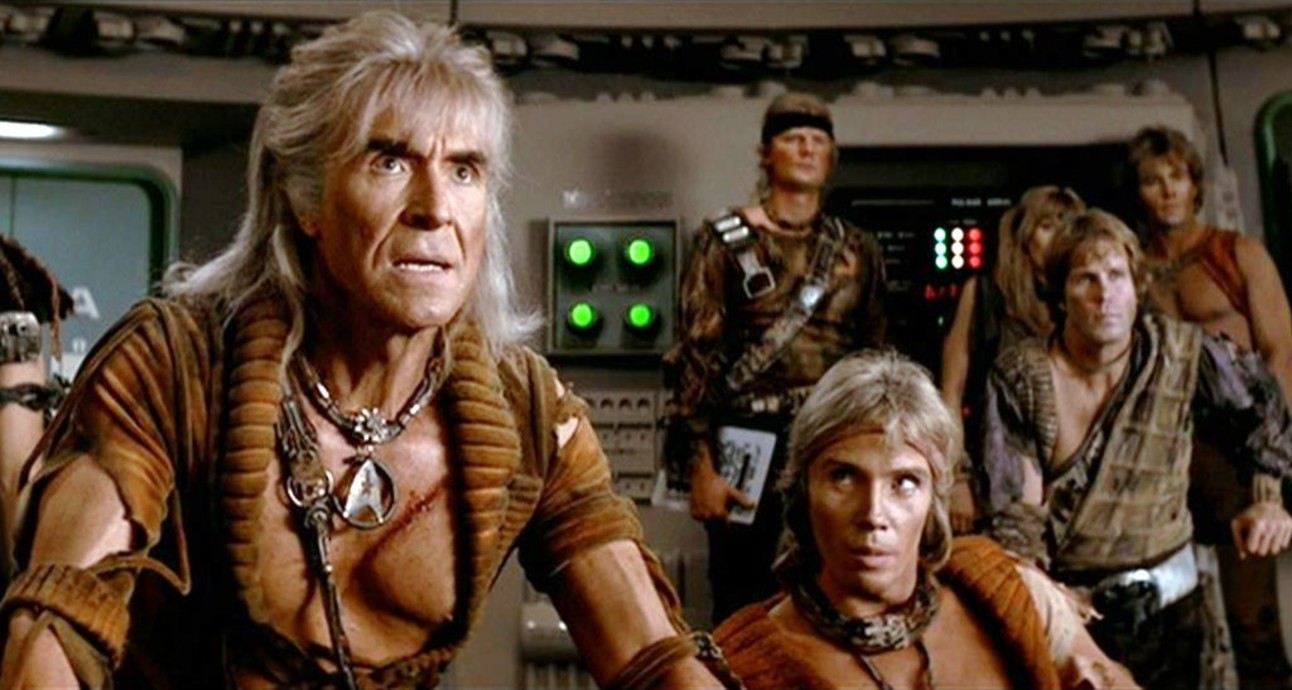
The Enterprise crew re-unite to face The Wrath of Khan

Director: Nicholas Meyer

Cast: William Shatner (Admiral James T Kirk), Leonard Nimoy (Spock), DeForest Kelley (Dr Leonard McCoy), Ricardo Montalban (Khan Noonien Singh), James Doohan (Montgomery Scott), George Takei (Hikary Sulu), Walter Koenig (Pavel Chekov), Nichelle Nichols (Uhura), Bibi Besch (Dr Carol Marcus), Merritt Butrick (Dr David Marcus), Paul Winfield (Captain Terrell), Kirstie Alley (Saavik)

After the overblown, slow and tedious The Motion Picture, you’d have been forgiven for thinking that we had seen the Enterprise crew boldly go for the very last time. If there was going to be a sequel Paramount had very clear guidelines for what it wanted: more entertaining, exciting, don’t involve Gene Roddenberry and above all make it for a fraction of the price. I think it’s fair to say that the decision to bring producer Harve (“I could make three movies for the cost of that first one!”) Bennett and above all writer and director Nicholas Meyer on board, saved the franchise.

Neither Meyer or Bennett were familiar with the franchise in advance. But they did what those involved in the first film should have considered doing (looking at you Robert Wise!) – they went back and rewatched all the previous episodes and tried to work out exactly what people enjoyed about the show to begin with. And then tried to make a movie based around that. So first and foremost they decided they needed a villain – so after running through all the previous episodes they decided genetically-engineered superman Khan Noonien Singh, left abandoned on a planet with his followers after the episode Space Seed – was the best pick. Giving the film a simple “revenge” structure, it became a taught battle of minds and wills between Khan and the man he blames for all his problems – Admiral James T Kirk (William Shatner).

Star Trek II opens with an ageing Kirk, unsure of his place in the world while stuck in a desk job and scared about getting old. Running a cadet training voyage with his old crew, Kirk is called back into action after Starfleet loses touch with Federation scientists working on the Genesis device, a terraforming rocket that will help the Federation build new worlds and civilisations. The problems with Genesis are directly linked – without Kirk’s knowledge – with Khan’s (Ricardo Montalban) hijacking of the USS Reliantafter brainwashing the ship’s captain Terrell (Paul Winfield) and his first officer Chekov (Walter Koenig). Khan blames Kirk for the disasters that have taken place on the planet he was marooned on – and is determined to exact revenge on Kirk no matter the cost.

Unlike the dry Motion Picture, Wrath of Khan builds is action around a compelling, emotionally charged, story that gives each character a clear and relatable motive for their actions. Building a film about revenge may not exactly be in Roddenberry’s ideal for the 23rdcentury: but by heck it makes for a much better film. Because, if nothing else, while we may struggle to understand what the hell V’Ger wanted in the first film, everyone understands the dangerous obsession of revenge. It helps that the film has an excellent villain – a scowling, unbalanced but still strangely honourable and decent Khan, played with a grandstanding relish by Montalban who is clearly having a whale of a time. Despite never sharing the screen (or even being on set at the same time) Montalban and Shatner go at the rivalry and its impact on both characters with a real intensity that makes for compelling viewing.

Meyer also tightened and refocused the entire franchise. Roddenberry may have struggled with the increasingly naval view of Starfleet in this film – it’s at least twice referred to explicitly as the military – but Meyer recognised that if the franchise was partly Hornblower in Space, then why not redesign the film with that in mind. The ship is run with naval precision, including yeoman whistling to signal shifts and orders, uniforms that have a stylish naval formality to them, a greater focus on the ship’s movements being described in strictly naval terms – even the photon torpedo bays are prepped by enlisted men in what Meyer called his “running out the guns” sequences. This makes the entire operation not only easier to relate to, but interesting and entertaining in its own right.

It also adds huge tension to the duel that develops between the Reliant and the Enterprise that plays out part naval battle and late on – when battle turns to the Mutara nebula where systems and sensors work only intermittedly – part classic submarine drama, with Meyer practically throwing in depth charges. The battle scenes are filmed with simplicity and economy – but because the personal clashes between Kirk and Khan are so compelling and involving, they absolutely drip with tension, as these two go through move and counter move.

Meyer’s film is lean, engrossing and thrilling, and superbly well directed. It goes from skilled set-piece to set-piece, and never for a moment overlooks character. Unlike the first film, we get the moments of Kirk-Spock-McCoy discussing key themes together so beloved from the series, while most of the main cast also get their moment in the sun, most especially Walter Koenig who, as a brainwashed Chekov, gets more to work with here than he got in the whole original series. 

But this isn’t just an action adventure in space. Meyer’s literate and intelligent script has far more depth and thematic interest in it than the faux intellectualism of The Motion Picture. Taking as its starting point Kirk’s fear of on-setting age (the film opens with his 50th birthday, and McCoy’s gift of antique spectacles), it expands into an engrossing mediation of how we react to the impacts of our actions and lose-lose situations. Kirk has also to face the mortality of age and the impact of past actions – like his son (Merritt Butrick channelling Shatner’s impulsiveness) – coming back to bite him. All this while flying a ship of young cadets round – who need to shepherded into the risks of conflict. Khan meanwhile is confronted time and again with the damaging impact of his choices to follow revenge and obsession rather than settling for a winning hand.

Meyer gets his best work ever out of Shatner (allegedly after realising Shatner over committed to early takes, he made Shatner take multiple takes in order to focus his energy). This is a Kirk getting old, dealing with inner resentments and made to face up to the consequences of his actions – both with Khan and meeting the son he fathered. Shatner tackles all this with a world-weary resignation and touch of sadness that many felt were beyond him, while still making room for the fireworks that are his calling card (I suppose the famous “Khan!” was Meyer’s one major indulgence of Shatner’s exuberance).

However the other element the film is well known for is of course it’s tragic ending – the sacrifice of Leonard Nimoy’s Spock. Lured back to the film, but not convinced about ever returning, Nimoy agreed to the final reel shocker (although he enjoyed making the film so much he willingly agreed to leave the door open for Spock’s resurrection). It gives the film an emotional heft that none of the others in the franchise has. For the first time, our heroes would not magically escape unharmed to fly off onto the next adventure. Just as the film started with the cadets learning that sacrifice and facing a lose-lose scenario is a part of command (a lesson Kirk cheated on in his day, and a situation he has never faced or understood, as the film teaches him), so the film ends on the same beat. The ship can escape – but only if Spock takes a fatal radiation dose to restart the engine.

Both Nimoy and Shatner play the heck out of these scenes, probably the most emotional in the franchise – a low-key but deeply affecting moments of two old friends sharing their last moments together. It’s this successful switch into showing the real cost and loss associated with adventures like this that cap the thematic depth Meyer bought to the film.

Star Trek II succeeds on every count. Meyer’s intelligent script quotes and riffs everything from CS Forrester to Dickens via Moby Dick, while giving both heroes and villains deep and rich character arcs. It’s grippingly filmed – you wouldn’t believe how much cheaper it was than the first film, as it looks ten-times better with not a penny gone to waste – and hugely exciting. It carries real emotional force, and it’s hugely benefited by a fantastic score by a young James Horner. Even now it’s still the high point of Star Trek on screen – and probably a highlight of the franchise as a whole.

Orphée (1950)

Jean Marais is in love with Death in Cocteau’s poetic Orphée

Director:  Jean Cocteau

Cast: Jean Marais (Orphée), François Périer (Heurtebise), María Casares (The Princess), Marie Déa (Eurydice), Henri Crémieux (L’éditeur), Juliette Gréco (Aglaonice), Roger Blin (The Poet), Édouard Dermit (Cégeste), René Worms (Judge)

Cocteau is perhaps the only major poet who became a filmmaker. His films introduced, naturally, a poetic beauty into the French New Wave – something that has led many to overlook their embracing of the techniques of modern cinema. Orphée is his most successful work, a beautiful re-imagining of the Orpheus myth, set in a smashed up post-war France, with the afterlife a bombed-out industrial wasteland. It’s a beautifully made, inventive and hugely impressive film, not without flaws, that allows you to see the potential magic and inventive sleight-of-hand in cinema. It’s a treat.

Orphée (Jean Marais, Cocteau’s real life-partner) is a poet who attracts the attention of a mysterious Princess (María Casares) during a poets’ café brawl that leaves her current protegee Cégeste (Édouard Dermit) wounded after he is hit by speeding motorcycle riders.  He helps her “transport him to the hospital” only to find that Cégeste is dead and that the Princess is some sort of manifestation of Death, transporting artists to the afterlife. The mysterious motorcycle riders are her assistants, while her driver Heurtebise (François Périer) also has some sort of role in carrying souls to the afterlife. Orphée wakes the next morning obsessed with Princess and the cryptic messages he heard on her car radio, that echo the seemingly meaningless messages of the Free France radio. His obsession distracts him from his wife Eurydice (Marie Déa), but when the Princess’ assistants claim her life, Orphée with the help of Heurtebise (who has fallen in love with Eurydice) feels compelled to journey to the afterlife to rescue her.

Cocteau’s film captures the poetic beauty of a dream, many of the events happening with a strange logic in a world that feels a few degrees askew from ours. It’s a film in love with the personal interpretation of great poetry, presenting a series of events we are invited to form our own impressions of. Cocteau’s film also suggests the ever-present link between the dead and the living – the dead still yearn, in their way, for life (some wander the afterlife unaware that they are even dead) while the poet Orphée falls in love with the mystical immortality of death, the all-encompassing love-affair our soul can have with the afterlife. The Princess is herself drawn towards poets, whose grace and beauty she can help promote to their own immortality.

To present this strange and unsettling world, Cocteau uses a host of inventive cinematic tricks that constantly surprise and delight. The Princess’ helpers feel like they invented the cosplay aesthetic with their burly short-sleeve shirts, helmets, dark glasses and machine guns. The afterlife is a blasted, burnt-out factory with ruined homes and houses around it and vital meetings and trials taking apart in worn-out rooms with cracked and decaying walls. The characters move through this afterlife depending on their status – Orphée crawls through it like treacle, battling against his own brain struggling to understand where he is, while Heurtebise glides through it seemingly without moving his feet. 

The afterlife is accessed by moving through mirrors. Cocteau uses reflections intriguingly throughout the film – after all mirrors show us only a version of our world, not the real thing. Mirrors are moved through either as if they are not there, or melt into liquid that souls can pass through. Cocteau uses film in reverse to show mirrors smashing and then reforming themselves, a brilliant effect that looks disconcertingly wrong. He uses the same technique to show dead souls rising under the Princess’ influence, standing with a bizarre disjointedness (the actors were filmed falling and the film reversed). The rubber gloves that must be used to move through mirrors are also shown being put on using reverse photography – the actors were filmed taking them off and the film is reversed making the gloves seem like they fly onto the hands. It’s a simple effect but brilliantly done.

Cocteau continues this inventiveness in the afterlife. Some sets are built on an angle, meaning Orphée at one point crawls along one wall before sliding impossibly down the next wall. Back projection is brilliantly used to show Heurtebise manipulating the afterlife around him. It’s a feast of inventive and imaginative angles, ideas and concepts brilliantly shot. And mirrors are always the key, the doorway to death and a world like ours but not.

And behind that door, Cocteau presents a fascinating afterlife. Is the Princess Death? Or just one of many functionaries? Heurtebise too seems to have some sort of role as Death – and the functionaries of the afterlife operate under a series of rules that suggest they barely understand the world of the living any more. Orphée is allowed to take Eurydice home – on condition he never looks at her, a condition nearly impossible to meet in the real world, despite Heurtebise’s best efforts. Meanwhile Orphée is fixated on Death, chasing the Princess through cloisters and a marketplace in the real world, drawn towards the ghostly messages on the radio (their echoing of French Resistance messages indicating their link to a deathly past of destruction). 

The film throws in a love triangle with Death as the third wheel. Orphée is moved by the desire for the immortality death can bring, while the Princess herself perhaps causes Eurydice’s death out of envy and bends the rules anyway she can to bring herself closer to Orphée. Orphée’s quest for inspiration and immortality distract him from the everyday love of his wife – and her pregnancy. Only Heurtebise still seems to yearn for the quiet normality of everyday life.

The film’s main flaw is that it often fails to invest the relationship of Orphée and Eurydice with any real emotional depth. Part of this is the fault of Jean Marais, who delivers a performance that is aiming for brooding but instead generally comes across as sour and sulky, making him hard to warm to or invest in, while Marie Déa is given very little to do. The real interest is in the figures from the afterlife, and María Casares is superb as a cold, almost dominatrix like Death who slowly finds in herself great longing (perhaps in part for her previous life on earth). François Périer is similarly superb as Heurtebise, desperate to feel again as he did when alive.

Despite the film’s lack of real heart and warmth among (of all things!) it’s living characters, there is so much depth, inventiveness and bizarre longing in the afterlife that you can more than forget this. Cocteau’s film is a wonderful dream, an immersive, brilliantly created feast for the imagination that marries art and cinematic techniques in a way few others have managed before or since.

Parasite (2019)

The Kim family juggle poverty with dreams of improvement in the brilliant Parasite

Director: Bong Joon-Ho

Cast: Song Kang-Ho (Kim Ki-taek), Choi Woo-shik (Kim Ki-woo), Park So-dam (Kim Ki-jeong), Jang Hye-jin (Kim Chung-sook), Lee Sun-kyun (Park Dong-ik), Cho Yeo-jeung (Park Yeon-gyo), Jung Ji-so (Park Da-hye), Jung Hyeon-jun (Park Da-song), Lee Jung-eun (Gook Moon-gwang), Park Geun-rok (Yoon), Park Seo-joon (Min-hyuk)

I’m writing this in the glorious after-glow of Parasite’s shock win for Best Picture, finally breaking (after 92 years!) the taboo on foreign language films lifting the Big One at the Hollywood’s annual love in. So let’s just say: not only is it a delight to see Hollywood breaking “the 1-inch barrier of subtitles” (to quote Bong from his Best Director at the Golden Globes), but also it’s a thrill to see the Oscar go to something that can make a legitimate claim to being the Best Picture of the Year – not to mention a film that speaks to the modern world in a way very few nominees have done since Get Out.

Bong’s superb picture has found such universal appeal perhaps because it so completely understands questions of class and wealth in our modern world. Set in an unnamed South Korean city, we are introduced to both the extreme poor and the extreme rich. At the bottom end of the scale – living in a half-basement apartment – are the Kim family. At the top – almost literally, living in a sprawling, modernist apartment bathed in sun with a large private garden at the top of a hill – are the Park family. When son Kim Ki-woo (Choi Woo-Shik) lands a job at the Parks’ teaching English to their daughter, he quickly begins to work with sister Ki-jeong (Park So-dam) to manipulate Park Yeon-gyo (Cho Yeo-jeung) to hire each member of the family in turn in a job in the household. But from there, the best laid plans spiral firmly out of control.

The less you know about the structure and events of Parasite going into it, the more you will gain from the film. What Bong has created here is a superb medley of genres, developing from a black-comedy-heist-caper into thriller territory, with a splash of horror and lashings of intelligently subtle social commentary. This is a film for the modern age, addressing questions of class, cultural resentment, societal divisions and the damaging impact of the super-rich and super-poor living side-by-side in ways that are profoundly insightful and fundamentally universal. 

Who are the parasites in Parasite? You could argue its society itself. At first it seems obvious on the surface that the Kims – living half beneath the surface of the city itself, inveigling their way into homes and roles, ruthless in acquiring their aims – fit the bill. But what about the Parks? So sheltered by money (“She can afford to be nice” says Kim dismissively of Mrs Park) they seem barely able to organise their own lives without the aid of an army of employees, placing no real value on them as people, only as extensions of their own house.

It’s all part of Bong’s skilful shift of perceptions throughout the film: the Kims are in some ways sympathetic (for the extreme poverty and desperation) but also they have no concern about hurting other people or manipulating them to get what they want. At the same time, we invest in seeing the well laid plans come to fruition, despite the impact it has on other people affected by their schemes. But as the film progresses, the innate selfishness and thoughtlessness of the Parks, their assumptions that their problems are of more concern than other people’s, that the world should revolve around them, makes them less sympathetic and the Kims more rounded and human.

Bong’s film brilliantly outlines this class war, every frame enforcing the insane split between such completely different worlds all rammed into the same city. The Parks’ apartment is a triumph of modernist design, the Kims’ flat a lightless dive with a regular tramp who pisses just outside their window. The Kims scurry to distant corners of the apartment to gain access to roving free wifi and stretch limited food supplies and their few pennies to the absolute limit. The family takes menial jobs to make ends meet, including folding a never ending pile of pizza boxes (boxes that seem to grow to dominate their flat).

At one point the camera follows the progress of the Kims as they leave the Park house and scamper, in an almost surreal series of long shots, down a never-ending parade of steps and streets, literally descending further down-and-down into the gutters of the city. It’s superb moments like this in Bong’s intricately designed film that constantly show us the divides between these people, the Parks living practically on Olympus with the Kims in Tartarus. These are problems that infect every society in the world, and the difficulty of making both rich and poor actually understand each other and find common ground to relate on are the problems we all see around us every day.

That’s even leaving aside the triumphs of Bong’s directing confidence, his mastery of tone and genre. The first half of the film is very funny – with Bong even leaning on this by having his characters drop dialogue that subtly refers to the ease with which the Kims’ plans come together – and has a delightful heist movie vibe. But the bubbling barriers between class hint at the tensions and danger that we feel lie in wait in the film, and threaten to break out. Korea is a volcano with the Kims and Parks sitting on the top, but it’s a volcano that the whole world can recognise. As Bong makes the film darker, leaner and even more menacing with hints of tragedy, it feels like the world correcting itself.

The acting is superb across the board with Song Kang-Ho hilarious and then deeply affecting as Mr Kim, a man slowly pushed beyond what he can bear. Cho Yeo-jeung is terrifically endearing and frustratingly thoughtless as the naïve Mrs Park. Park So-dam is brilliant as a super-smart Ki-jeong Kim, brilliantly manipulating left-right-and-centre. There is not a false note in the cast, the entire ensemble perfectly combining to create the class-conscious world of the film. To say too much more would be spoil it!

Bong Joon-ho’s film is Western break-through but really it’s a universal condemnation of the dangerous influence of class. And with Bong’s mastery of cinema – this is such a well directed film, both in terms of tone and every single shot contributing brilliantly to the whole – this has produced a film that feels like a very modern, prescient and profound masterpiece, a film that speaks to and almost defines the problems of the modern world. While at the same time being immensely entertaining and unpreaching. Thank goodness that 1 inch barrier came tumbling down.

Ford v Ferrari (Le Mans '66) (2019)

Christian Bale as maverick driver Ken Miles in the functional but fun Ford v Ferrari

Director: James Mangold

Cast: Matt Damon (Caroll Shelby), Christian Bale (Ken Miles), Jon Bernthal (Lee Iacocca), Caitriona Balfe (Mollie Miles), Tracy Letts (Henry Ford II), Josh Lucas (Leo Beebe), Noah Jupe (Peter Miles), Remo Girone (Enzo Ferrari), Ray McKinnon (Phil Remington), JJ Feild (Roy Lunn), Jack McMullen (Charlie Agapiou)

There are few more exhilarating things than going really, really damn fast. It’s a primal glee that James Mangold’s racing film Ford v Ferrari (or Le Mans ’66 as it seems to be known over here) taps into, roaring with exciting, fast-paced energy lashed onto a good old buddy movie as two plucky underdogs get the chance to overturn the champs and claim the title. It’s the story of any number of sports movies, but it still works here. It ain’t broke, after all.

It’s the early 1960s and the sales of the Ford Company are down: the baby boomers don’t want to be driving the dull, safe cars of their parents. They want something super sexy. Despite his hesitation Henry Ford II (Tracy Letts) is persuaded the best way to get that sexy image is to get a racing car – and if he can’t buy Enzo Ferrari’s (Remo Girone) company, then by hell he’ll spend whatever it takes to give Ford the best racing team in the world. Targeting the Le Mans 24 hour race, he recruits retired-driver-turned-designer Caroll Shelby (Matt Damon) to mastermind building a car – and Shelby recruits demanding, prickly, maverick Brit driver Ken Miles (Christian Bale) to help him design it and then drive the thing. But what to do when Miles’ blunt plain-speaking and individuality looks like it won’t make him the best spokesman for selling Ford cars?

On the surface Ford v Ferrari is pretty much your standard Sports film. Two teams, an underdog and a champion, a pair of mavericks who think outside the box, the struggle for success – met with initial failure before victory – all told through a familiar structure of brothers-in-arms, obstructing suits, supportive wives at home and plenty of carefully detailed expert recreation of sporting events. It’s a collection of familiar ingredients, but very well mixed together by Mangold (one of Hollywood’s finest middle-rank directors, a sort of heir to Lumet).

The real twist however is that the rivalry is not really about Ford and Ferrari. In fact the film might have been better titled Ford vs Ford. Because the main thing standing in the way of Shelby and Miles isn’t Ferrari – with whom they actually have a rivalry built on mutual respect – but with the bottom-line, sales-first suits who are backing them. It’s a parallel with everything where sales and the buck count more than anything, but you feel Mangold might well have related it most to Hollywood producers. What is Ken Miles, but the genius auteur director who the money-men just won’t trust to churn out the mass-market product they need to lift the share price? Henry Ford (very drily played by Tracy Letts) may have one visceral moment of excitement when placed in the passenger seat of a fast car – but fundamentally he doesn’t give a damn about the sport at all, except how it could help him shift a few more Mustangs.

Shelby and Miles’ struggles are not with the car, the engineering problems or Ferrari – they’re with the Ford VPS (in particular Josh Lucas’ incomparably smarmy Leo Beebe, a corporate man to his fingertips who probably bleeds stock tips) who want a product they can sell, far more than a product that can win. Obstacles are constantly thrown towards Shelby and Miles from their bosses – everything from engine design to race strategy receives a series of notes, comments and instructions from the Ford hierarchy. The choice of driver is most important of all – and they don’t want the demanding Ken Miles behind the wheel of their car. Because mavericks like that don’t sell Mustangs.

As Miles, Christian Bale gives a performance of pure enjoyment. Juggling a version of his own natural accent (which sounds odd – part cockney, part scouse – but works brilliantly) Bale gives the part just the right amount of that peculiar chippy Britishness, that resentment of people in authority, that hostile reaction to the stench of bullshit. Driven, determined but totally unwilling to suffer fools – exhibited almost immediately with him dressing down a prat who isn’t a good enough driver to handle the sports car he’s purchased – Miles is clearly never going to be the company man Ford wants. But with his passion for “that perfect lap”, his determination to work night and day to achieve that and – in a nice change – his warmth for his family and equal decision making with his wife (a slightly thankless part for Catriona Balfe) he’s a character you quickly take to your heart. It’s a great, charisma-led performance from Bale, who also gets nearly all the best lines.

It does suck a bit of the oxygen from Damon, who plays the straight-man as Shelby who is just as passionate but can (just about) speak Corporatese. With a Texan drawl, Damon does the legwork of the movie extremely generously, quietly driving many of the scenes and handling much of the more emotional arc of the movie. The two actors form a superb chemistry – peaking with a hilarious fight scene, your chance to see Batman clobber Jason Bourne with a loaf of bread (both actors, famous for muscular fight scenes, clearly enjoy a fight scene straight out of Bridget Jones). It’s a bromance that really works – and carries at certain points a genuine emotional force.

Mangold packages this material perfectly – and the racing sequences are brilliantly done, engrossing, speaker-shaking displays of racing, fabulously edited. The film itself is probably too long, and the sections away from the race track are sometimes so familiar in their structure and tone that they sometimes drag a little bit, as if the fierce momentum of the racing scenes can’t carry across to the rest of the film. But with fine performances and expert handling, this is certainly a number you’ll be happy to test drive.

Ad Astra (2019)

Brad Pitt goes out to the stars in Ad Astra

Director: James Gray

Cast: Brad Pitt (Roy McBride), Tommy Lee Jones (H. Clifford McBride), Ruth Negga (Helen Lantos), Liv Tyler (Eve McBride), Donald Sutherland (Colonel Pruitt), John Ortiz (Lt General Rivas

Man has looked up at the stars for as long as we can remember and imagined what lies out there. From Gods to other intelligent life form, every culture has been drawn to imagine beyond the bounds of Earth and dream of finding what is out there. It’s a dream that powers the life of leading US Astronaut H. Clifford McBride (Tommy Lee Jones), who in “the near future” led “The Lima Project” to Neptune to try and find intelligent life beyond the Solar System. Now missing 17 years, Clifford’s son Roy (Brad Pitt) has become a leading astronaut, tasked with leading efforts to find his father after a series of devastating power surges damaging the planet and killing thousands are traced back to the Lima. So Roy embarks on an epic voyage, from Earth to mankind’s bases on the Moon and Mars to Neptune in quest of his father.

James Gray’s artfully made film yearns for a moral and thematic depth that it doesn’t quite manage to achieve. Its structure is heavily inspired by Hearts of Darkness, with Marlow and Kurtz twisted into a Son-Father dynamic and many of the stop offs on the way McBride encounters eerily reminiscent of the adventures of Marlow. Is there a longer trek down the river than crossing the Solar System? 

Within this framework, Gray throws in an earnest meditation on the nature of mankind’s yearnings and how our instincts collide between our dreams for an unattainable unknown and the world around us. All of this accompanied by Pitt’s Conradesque voiceover, as McBride muses over his own internal struggles, doubts, inadequacies, frustrations and sorry all bubbling beneath his calmly controlled exterior.

Its Pitt’s film and Ad Astra is a reminder that he is an actor who looks to push himself to his absolute limits. Here he carries the whole film, for long stretches alone, his eyes conveying the cool professionalism and self-control of McBride, along with his own far-more-fragile-than-appears psyche. Carrying burdens of loss and regret, McBride seems to see crises that he encounters in space as relief from his own internal struggles. Whenever the shit hits the fan, McBride is the coolest man in the room (his commanding officers admiringly state his pulse rate never seems to go above about 80 in even the most life-threatening situations) and from tumbling from the outer atmosphere, evading pirates in a moon buggy in space or manually landing a spacecraft, he never fails at his professional duty. Only when confronted with the emotions of his own life is he left with his composure fractured.

Pitt conveys the isolation and pain of McBride extremely well, with acting and expressions so subtle they carry all the more emotional force. It’s a controlled and perfectly judged performance that powers the entire film, and bears a lot of the thematic weight of Gray’s invention. 

Gray’s direction is powered by clear memories of 2001 and Solaris (although I also felt echoes of Danny Boyle’s space horror Sunshine in its fascination with the dread and danger of the vastness of space not to mention Christopher Nolan’s Interstellar). It looks fantastic with a wonderful score, ambitiously grasping for importance.

Episodic as it moves from location to location, Gray’s film creates a convincing world of the future, where mankind has disputed colonies on the moon (space pirates roam between bases, taking hostages like Somalian pirates), space travel is commercialised (by Virgin of course) and people live and die on a far-flung underground base on Mars. While I did briefly think about the enormous cost of all this space travel with its huge fuel consumption and debris of discarded rocket sections (how on earth is this commercially viable?), not to mention the trouble that would be involved in erecting giant neon cowboys on the Moon, it’s convincing.

Gray’s film wants to delve into the mysteries of humanity, and McBride Snr’s entire life has been dedicated to the quest for finding out that we are part of something larger than ourselves, that we are not alone. Gray wonders perhaps if this shark-like desire we have for moving forward, the ruthlessness we display in leaving the past behind in quest for the future, perhaps mars us as a species, prevents us from finding contentment around us and leads to us damaging this world we have been given in our search to make it larger.

But the more Gray’s film closes its grip, the more themes seem to slip through its fingers. The journey is compelling in its creation of a series of worlds, Brad Pitt’s dedicated performance, and the sense of danger and the array of questions that the film throws up. But while 2001 in many ways manages to feel like it is about everything and nothing, so wonderfully engrained is the magical poetry in its soul, here it feels like the film gets less and less engaging the further the journey goes. The destination sadly cannot match the voyage, however beautifully filmed that voyage is.

Instead when the film arrives, we find it becoming more and more bogged down in father-son issues that feel just cheaper and less interesting than the more spiritual and enigmatic concerns the film has for much of the rest of its running time. Not helped by a disengaged performance from Tommy Lee Jones, the more the film heads into this territory the more it seems to lose the depth it aimed for earlier. Late attempts to restore the enigma, mystery and universality don’t succeed to completely restore the feeling that this is classic science-fiction poetry. It’s a shame as Gray’s film as many wonderful moments, beautiful craft in its making and a wonderful performance by Pitt – but it feels in the end as about much less than it could have been. But for all this, there is a magic unknowingness about it that could have it hailed as a classic in years to come.

Blue Jasmine (2013)

Cate Blanchett dominates the screen in Blue Jasmine

Director: Woody Allen

Cast: Cate Blanchett (Jasmine Francis), Sally Hawkins (Ginger), Alec Baldwin (Hal Francis), Peter Sarsgaard (Dwight Westlake), Louis CK (Al Munsinger), Andrew Dice Clay (Augie), Bobby Cannavale (Chili), Michael Stuhlbarg (Dr Flicker), Aldren Ehrenreich (Danny Francis)

Every so often an actor intersects with a director and, such is the actor’s brilliance, they seem to take the film by the scruff of the neck and almost carry the director along to success. Such is the case with Blue Jasmine, a film so seized upon, so wonderfully played and brilliantly observed by a truly phenomenal (she won every award going) Cate Blanchett, you feel Woody Allen just let the camera record her work and carefully built the film around her.

Allen’s film, easily one of his best of his troubled later years, is a modernised remix of Streetcar Named Desire. After a Ponzi scheme scandal leads to her husband Hal’s (Alec Baldwin) arrest and suicide, Jasmine (Cate Blanchett) finds herself landing in the poor end of San Francisco and sharing a house with her sister Ginger (Sally Hawkins). Ginger’s marriage to Augie (Andrew Dice Clay) collapsed after Hal’s dirty dealings destroyed their lottery win landfall. Jasmine, teetering on the edge of a nervous breakdown, living half in the present and half in an imagined version of her own past, soon clashes with Ginger’s new boyfriend Chili (Bobby Cannavale) and eventually finds hope for a second chance with diplomat Dwight (Peter Sarsgaard) who is oblivious to her background.

The parallels between Blue Jasmine and Streetcar should be pretty clear to anyone reading that summary, and Allen draws some neat modernisation parallels (and thankfully, and wisely, drops the rape plotline that ends that play) between the two. Placing Blanche/Jasmine as the trophy wife of a corrupt businessman, who has shut her eyes to his dealings and let her own intellect drain away in shallow frippery, works really well. Not least dramatizing very well the cultural shift from this extreme wealth (detailed in a series of cleverly interwoven flashbacks) to the relative poverty of normal life.

But the film really works from the super-intelligent, hyper-brilliant, eye-catching wonderfulness of Cate Blanchett in the lead role. This is one of those performances for the ages, a tour-de-force of fragility, self-pity, self-deception, hostility, undirected anger, desperation and pain that dominates and shapes the entire movie. Blanchett is particularly effective because she never, ever overplays the role, but let’s these complex, contradictory emotions play constantly behind her eyes and slowly seem to dribble out until they dominate her entire body. Several times, Allen plants the camera and allows us to simply watch Blanchett go through various stages of mental collapse in front of our very eyes, with this amazing actress able to seemingly fall apart in slow motion in front of us.

Jasmine is a complex and fascinating character, in some ways hugely unsympathetic. She’s a massive snob, she certainly feels the world owes her something (she flies into San Francisco first class complaining she has had to sell everything just to make ends meet, while dragging Louis Vuitton luggage behind her), she lies when she needs to and treats everyone around her with a slight air of condescension. But she’s also  incredibly vulnerable, and carrying a great deal of guilt and pain, as well as only barely able to deal not only with the loss of her privileged lifestyle, but also her growing (but denied) realisation that the price of the lifestyle wasn’t worth the having it. 

The film throws her into a series of contexts that show her at her best and worst, as victim and as fantasist. Getting a job at a dentist’s reception desk – a job she seems to only barely have the patience or aptitude for – she is forced to see off the unwelcome advances of her creepy boss (played with a passive aggressive sleaziness by Michael Stuhlbarg) with horror. Later though, she wilfully deceives Dwight (a fine performance of assured arrogance by Peter Sarsgaard) about her background and character. She is partly right in her assessment of her sister Ginger having a very low opinion of herself, so only pairing herself with men who treat her badly; but Chili is also right about her having no regard or time for her sister when she was wealthy.

The use of flashbacks throughout the film works very well to show us Jasmine before and after her economic crash. What’s fascinating is that her fragility is an ever-present, kept suppressed under a shower of gifts, but quickly coming to the fore when Hal’s (has there been a better role for Baldwin than this jovial, greedy cheat?) serial infidelity is bought to her attention. It also serves to remind us to keep Jasmine at a certain distance, her own evaluations of what her past life was like frequently not squaring with the version we see.

All of this hinges on Blanchett’s brilliant work, but she’s not alone in delivering a fine performance. As her blousy sister, moving like a weathervane from person to person, changing her opinions quickly depending on her recent experiences, Sally Hawkins is possibly at her best here as well. Andrew Dice Clay is excellent as an honest Joe who hovers over the film like an object of destiny. Bobby Cannavale does some very good work as a feckless but sort-of honest Stanley Kowalski.

Allen’s direction is calm and almost in awe of Blanchett, and that’s fair enough because whatever you look at, it comes back to her striking genius in the film. Blue Jasmine may remove some of the depth that Blanche has (with her life of pain and guilt in the play’s backstory) but it substitutes that with a gripping exploration of a long-running mental collapse that is so movingly and superbly brought to life by Blanchett you can’t help but be engrossed by it.

Notes on a Scandal (2006)

Cate Blanchett and Judi Dench battle with obsession in Notes on a Scandal

Director: Richard Eyre

Cast: Judi Dench (Barbara Covett), Cate Blanchett (Sheba Hart), Bill Nighy (Richard Hart), Andrew Simpson (Steven Connolly), Phil Davis (Brian Bangs), Michael Maloney (Sandy Pabblem), Joanna Scanlan (Sue Hodge), Tom Georgeson (Ted Mawson), Shaun Parkes (Bill Rumer), Emma Williams (Linda), Julia McKenzie (Marjorie), Juno Temple (Polly Hart)

Zoe Heller’s novel Notes on a Scandal makes superb use of an increasingly unreliable narrator to reveal the complications in the affair between a female art teacher and a young male student. It’s a device that doesn’t always carry across as well to film, but Richard Eyre and screenwriter Patrick Marber have still crafted a fine story about obsession and envy in all its different ways.

In an inner-city school, bohemian art teacher Sheba Hart (Cate Blanchett) is a new arrival, struggling to learn how to control her students. It’s a skill long-since mastered by jaded and bitter history teacher Barbara Covett (Judi Dench), who soon finds herself fascinated by the attractive and engaging Sheba. This relationship is complicated when she discovers that Sheba has begun a sexual relationship with one of her 15-year old students, Steven Connolly (Andrew Simpson), a student with a difficult record who has shown a surprising interest in art. As Barbara positions herself as Sheba’s only trusted confidant, the danger of discovery begins to become ever more likely as Sheba’s behaviour becomes more and more reckless.

The real strength of Eyre’s film are the two lead performances from Dench and Blanchett, a match-up surely made in casting heaven. Dench is superb in one of her best film roles, turning Barbara Covett into exactly the sort of shrivelled up, bitter spinster you are not surprised to learn has led a life of loneliness. Dench laces the performance with a sharp nastiness, masked behind a chilly professionalism, but she also makes clear the aching loneliness, the desperation and the ability to deceive herself that Barbara has, the longing to be loved but also the possessive obsession that drives love away.

She’s equally well-matched by Blanchett, at her most glamourous and natural as Sheba. One of the film’s strengths is the way it avoids giving spurious psychological reasons for Sheba’s obsession for this basically fairly unpleasant young lout. Blanchett identifies this sense of being trapped in Sheba, this desire to rebel and taste a little bit of freedom (in every home scene she is shown undertaking most if not all the housework and childcaring duties), feelings that mutate into a sexual obsession with Connolly. Blanchett is desperate, self-deceiving and hugely tragic, unable to fully express the reasons for her feelings herself, but unable to let go of her addiction to a new wildness and danger in her life that you feel she has never really felt before.

These two performances power a film that explores obsession and envy, with Barbara obsessed (to a scarily possessive and manipulative degree) with Sheba, exploiting Sheba’s own reckless and sexual obsession with Connolly. These feelings are shown to be often beyond the understanding of other characters, and both women ret-con events and reactions from the target of their obsessions to build elaborate fantasy worlds. It’s the danger of obsession here, the way we shape the facts to meet our desired preconceptions. It doesn’t matter what reality, or what anyone else, says – you want to believe what you want to believe.

And it’s these obsessions that lead people both to take unbelievable risks and also to feel a crushing sense of envy and possession. Both Barbara and Sheba can barely tolerate the idea of their loves focusing attention elsewhere, and despite seeming to have so much control in their relationships are helpless victims. Sheba is reduced to begging tears when it feels like her relationship with Connolly is burning out. After all is revealed, Barbara’s efforts to take control of Sheba’s life are revealed to be powered by an almost desperately sad need to believe that Sheba and she are starting a new life together. So deep is Barbara’s denial about her own lesbianism (and so extreme her unhappiness about herself), it’s a romantic vision she is so deep in denial feels unable to even begin to put any sexual dimension onto.

Envy and human frailty run through the whole film. Most of the teaching staff, especially Phil Davis’ sad-sack maths teacher in love with Sheba, carry their own small obsessions and envies. Sheba’s husband himself left his first wife for Sheba when she was one of his students. The students have more than enough rivalries to deal with. 

It’s a deadly circle, with contact breeding obsession, breeding envy. To get such an effect, Marber’s adaptation needs to streamline the book. The biggest loss as a result is the book’s slow, creeping, realisation that Barbara is a deeply arrogant, bitter, unlikeable person who views most of the people around her with contempt. Here Dench’s waspish voiceover immediately makes it clear to the viewer that she is not that nice a person. It’s a shame, as it rather signposts for the viewer where the film may be heading. 

The storyline also races through the book (the film is less than 90 minutes) which means it often feels more like a melodrama. While I think it’s a strength that the film doesn’t try and give a real reason for Sheba’s decision to seduce (or be seduced) by her student, other than to hint at her own sense of bohemian freedom being lost at home, I can see how others will find the reasons for why the radiant Sheba is so drawn to such a surly kid rather hard to accept.

But it still works, because the film is so well-played. With Dench and Blanchett at their best (and excellent support from Bill Nighy, quietly superb as Sheba’s husband, a decent guy who can’t believe his luck that he is married to such a wonderful woman, and whose world falls apart in bitter recrimination), it’s a film that gives more than enough rewards. The film gives us a decent ending from the book, with more hope for Sheba – but the balance suggests that for Barbara the cycle of obsession will only continue. Heaven help anyone who sits down on a park bench next to her.