Category: Films about racism

Blue Collar (1978)

Yaphet Kotto, Harvey Keitel and Richard Pryor are working joes who want to stick it to the man in Blue Collar

Director: Paul Schrader

Cast: Richard Pryor (Zeke Brown), Harvey Keitel (Jerry Bartowski), Yaphet Kotto (Smokey James), Ed Begley Jnr (Bobby Joe), Harry Bellaver (Eddie Johnson), George Memmoli (Jenkins), Lane Smith (Calrence Hill), Cliff DeYoung (John Burrows), Lucy Saroyan (Arlene Bartowski), Chip Fields (Caroline Brown)

America doesn’t really have a director like Ken Loach. It’s one of the points raised on Indicator’s excellent (and essential) blu-ray release of Paul Schrader’s near Marxist drama about blue-collar car workers in Detriot. There aren’t many (or indeed nearly any) American films I can think of that take the stance of the working man like this one – or as angry, pissed off, furious and, in the end, as lacking in hope as this one. Which makes it sound like the sort of film you’d run a mile from actually seeing. Well you’d be wrong: this is a blistering, intelligent, witty drama crammed with brilliant scenes and great performances. On so many levels it’s something really quite special. It’s a shame no one saw it (I blame the publicity campaign – I mean look at that rubbish poster that basically suggests you are in for Pryor stand up routine).

In a car factory in Detriot, our heroes work in varying jobs on the production line. All of them are unhappy with their lot and feel they get precious little support (or concern) from the union that runs the shop floor. Zeke (Richard Pryor) is furious at the lack of equality and opportunity, as well as defrauding the inland revenue with a (literally) childish scheme to try and make ends meet. Jerry (Harvey Keitel) is drifting through his life, unable to afford the dentistry bills to give his daughter the braces she needs. “Smokey” (Yaphet Kotto) is an angry proto-anarchist who just wants to stick it to the man. When the three of them realise there is a safe (probably) full of cash in the union office, they decide to steal it. However, rather than cash, they find the safe full of accountancy records of the union’s dodgy money laundering arrangements with organised crime. The men decide to offer to sell it back to the union – and open up for themselves a world of trouble…

Blue Collar is a hard to categorise film. It’s a brilliant hotch-potch of several genres. It opens like a workers film, crammed with an angry wit (the opening half hour is very funny) with several scenes that acutely skewer the petty clashes of working life as well as the corner-cutting financial desperation of men trying to make ends meet. The opening scenes have the edge of a raw black comedy to them, mixed with observational realism. Then the film subtly changes over, becoming first through near-caper (the hilariously bungled attempt to steal the safe), into politics as the union and the men begin to shift alliances, into a straight classic 1970s conspiracy thriller (complete with late car chase and an outre death for one of the characters) before finally wheeling back round into a tub-thumbing condemnation of the “divide and conquer” plans of the ruling classes. 

That’s a lot for any one film to try and squeeze into a less-than-two-hour runtime, but Schrader manages it with aplomb, juggling this mix of styles and genres with such effective skill that you almost don’t even notice as the film grows increasingly darker and more dangerous as it progresses. The eye it has for the rhythms of factory life seems perfectly judged, and the mixture of hacks, place men, agitators and uncaring union men feels absolutely perfect. It also brilliantly captures, in his dialogue, the natural force (and crudeness!) of working men’s conversation, with a brilliant ear for the semi-articulate astuteness and poetry it can reveal. 

Schrader builds the pressures up in the film subtly and brilliantly, so that it seems both sudden and perfectly natural as the three men begin to buckle and turn on each other. This is where the Marxist message of the film starts to come in: even when working men have the whip-hand, their superiors will find a way to make them turn on each other, to make them unable to throw off the shackles that bind them as they are unable to work together. On top of this Schrader throws in a brilliant analysis of everyday racism and racial tension (all the union reps and their foremen are of course white), and there is an unspoken edge of racial divide in every conversation – indeed racism is just one of many weapons, the film argues, used to turn working men against each other. This really comes out in the film’s final scene, where two characters who had only warmth and affection for each other at the start are driven to turn on each other with an onslaught of racist fury.

Of course that clash probably carries a lot of its force from the fact that the three leads couldn’t stand each other on set. Pryor, Keitel and Kotto were each told that they were effectively playing the lead in the film and were unaware until signing on of the presence of the other actors. This billing tension was fuelled by their incompatible working methods: in particular Keitel, a theatre trained actor, preferred multiple rehearsals before takes while Pryor, a stand up comedian, preferred minimal or no rehearsal – and usually peaked on the second or third take. Throw in the drugs (that Pryor certainly was indulging in) on set and the three actors reached the point where they could barely stand to be in the same room together (one of the film’s best sequences, a single shot where they sit on the sofa for a long take and plan their next move, was only filmed because the three actors arrived separately, didn’t speak until the camera rolled, and then immediately left).

Did this edgy fury boil over into their performances and give them an extra fire? Certainly I don’t think any of them were better than they were here. Kotto has such an electric, bubbling fury to him, an anarchist’s delight at danger, that he feels like a force of nature. Keitel hadn’t been so gentle, reserved and bemused by the world for years, as an oppressed everyman. But the real electricity comes from Richard Pryor is a goddamn revelation as Zeke. What Schrader did so brilliantly here was to capture all the fire, energy and angry of a typical Pryor stand-up performance and channel it into a dramatic structure. An early Zeke rant against the unions is essentially a Pryor stand-up performance, and Pryor’s whole performance buzzes with an improvisational energy.

Zeke is the film’s key character. At first he seems the weakest and most desperate of the three men, the one most likely to fall into the role of victim. But as the events take hold of the three men, his character deepens and develops to reveal a shrewdness, a realism and even a coldness that the other men don’t possess. Unlike them, he sees events not as a chance to make a quick buck but as a genuine moment to change his life for the long term. And, underneath this, an understanding that as a black man opportunities for him are going to be few and far between. An electric confrontation between him and Jerry late in the film on Zeke’s porch hums with his fury driven realpolitik, Zeke’s understanding that opportunities are there to be seized and that sometimes the price paid is high.

Blue Collar gave Schrader a break-down when he made it. But its’ a masterpiece of political cinema, largely because it never really feels like a political film. Instead it feels above all like a domestic drama of friendship marred that explodes into a thriller., But it’s the understanding of the social situation of these men, of the reasons behind their actions and the intelligent analysis behind it, that makes it really work. It also gives you characters who feel real and in whom you invest, blessed as well (for all their clashes) with three career-best performances from the leads. It’s a brilliant film and in a just world should be seen as a landmark piece of film making.

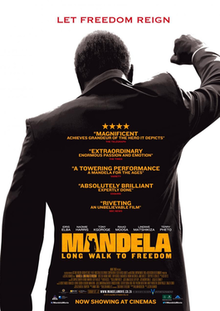
Mandela: Long Walk to Freedom (2013)

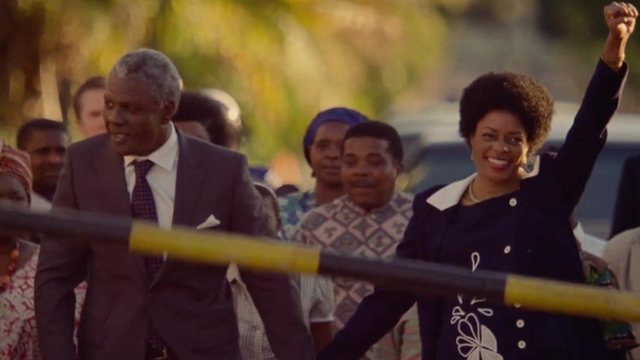
Idris Elba and Naomie Harris reconstruct the life of Nelson Mandela in illustrated slide-show movie Mandela: Long Walk to Freedom

Director: Justin Chadwick

Cast: Idris Elba (Nelson Mandela), Naomie Harris (Winnie Mandela), Tony Kgoroge (Walter Sisulu), S’Thandiwe Kgoroge (Albertina Sisulu), Riaad Moosa (Ahmed Kathada), Zolani Mkiva (Raymond Mhlaba), Jamie Bartlett (James Gregory), Simo Mogwaza (Andrew Mlangeni)

In the 1980s, hagiographic epic biopics that aimed to tell the story of the subject’s whole life were all the rage. In fact they were frequent Oscar behemoths. It’s easy to imagine that, if it had been released 20 years earlier, Mandela: Long Walk to Freedom would have been garlanded with awards for its attempt to capture every major moment in Nelson Mandela’s life from birth to his becoming President of South Africa. Sadly for the film, it wasn’t.

The fashion nowadays, for biographical films about major figures like Mandela, is to make a focused story about one key incident in their lives and from that build up an understanding of what made the man. Spielberg’s Lincoln focused on the immediate struggle to get the abolition bill passed. Du Vernay’s Selma looked at Martin Luther King’s involvement in the Selma marches. Eastwood’s Invictus looked at a newly-elected Mandela trying to use the Rugby World Cup to bring a nation together. Mandela: Long Walk to Freedom ironically goes the opposite way and tries to sprint through every single event of Mandela’s life. Doing so, it manages to be a less affecting, less involving and less engaging film than Invictus.

The rush is so intense to get through events that every scene feels like it has been cut down to deliver the vital bullet points and nothing more. Scenes rarely go over a couple of minutes, and most are comfortably under a minute. The general structure of most of them is roughly the same: a character will argue with Mandela (if black) or say something distasteful or racist (if white), Mandela will say something wise and inspiring that sounds like a direct quote from the book. Cut to the next scene.

This means that events fly by with little context and no real understanding. In fact, it feels like without having read the book and boned up on South African history in advance, most of it will mean nothing to you. Years can go by with a single snip of the editor’s scissors. Clashes and riots – particularly in the final third of the film – take place, but we are given no idea why or what the root causes of them were. 

Other events skim by so quickly that they lose all meaning or dramatic impact – in about 15 minutes of the film we cover Mandela arriving at Robben island, ill treatment and contempt from the guards, Mandela’s resolution that they will gain the right to wear proper trousers as a step towards being treated as humans, abuse from the prison governor, Mandela learning to control his anger, the prison governor leaving, a new governor arriving off camera, the regime lightening and finally the prisoners celebrating getting their trousers. If you think that sounds rushed here, imagine what it feels like watching it. All the narrative links between the scenes are severed – how did Mandela win the right to wear trousers? We have no idea. It sounds like a little thing, but it’s symptomatic of the problems of the film. 

This is despite a promising start, with a young Mandela fighting for justice and against prejudice in the courts of South Africa (winning cases because the racist whites refuse to be questioned by a black lawyer). The film is quite daring in showing the warts and all of the younger Mandela – his affairs, his ill-treatment of his first wife, his flirtations with violence – and there are flashes later on in the increasingly troubled relationship with his second wife, Winnie. But it soon loses these humanising touches under the pressure of ticking off events.

Justin Chadwick’s direction is largely flat – hamstrung as well by the film being cut so tightly to the bone. He fails to add any real epic sweep to the story, and largely struggles to convey the huge social and political issues that were tearing South Africa apart. As such, he’s often forced into holding a largely static camera in place to capture the four or five speeches that form each scene.

The  main bright spark in the film is the two lead performances. Idris Elba captures Mandela’s mannerisms and voice perfectly, but also brings a real humanity and empathy to the role – he largely manages to defy the film’s attempt to turn Mandela into a lofty marble carving of a man, not letting the human realism of his story escape. It’s a performance that feels very real and human – which is a far harder achievement than it sounds. Naomie Harris is all fiery radicalism and growing fury as Winnie (even more striking since she starts so young and naïve). One of the film’s real disappointments is that it rushes so fast through events that we never get a real, clear picture of the turbulent ups and downs of their marriage (the film is reduced to throwing some Mandela dialogue on his feelings into voiceover).

When the film finally ends it feels more like a sprinter with a stitch, too worn out to run any further through more years, than because it feels like it has made a point. It really wants to be Gandhi – but that film, despite its school-boy history faults, was patient, well paced, more focused and (crucially) an hour-plus longer. Mandela: Long Walk to Freedom compounds its feeling of being old-fashioned with being rushed and confused. For all Idris Elba’s admirable efforts, Mandela deserved better.

Guess Who's Coming to Dinner (1967)

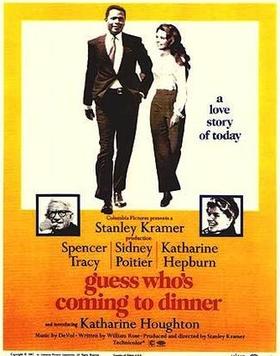
Hepburn, Tracy, Poitier and one awkward meal: Guess Who’s Coming to Dinner

Director: Stanley Kramer

Cast: Spencer Tracy (Matt Drayton), Sidney Poitier (John Prentice), Katharine Heburn (Christina Drayton), Katharine Houghton (Joey Drayton), Cecil Kellaway (Monsignor Mike Ryan), Beah Richards (Mrs Prentice), Roy E Glenn (Mr Prentice), Isabel Sanford (Tillie)

Stanley Kramer’s films today are quite easy to knock. In fact, to be honest, they were pretty easy to bash back then. Kramer was a man with immense social conscience, and his films carry the same liberal agenda. They were about “Big Themes” and they had a “Message” that they very much wanted the viewer to take home with them. You can see why so many of them were littered with Oscar nominations. Guess Who’s Coming to Dinner is perhaps the most famous of his liberal films, and while we’d love to think the theme it covers today – interracial marriage – isn’t still an issue, I  think many people would say it still was.

Joey Drayton (Katharine Houghton) returns to the home of her liberal parents – Matt (Spencer Tracy) a newspaper editor and Christina (Katharine Hepburn) an art gallery owner – with Dr John Prentice (Sidney Poitier) whom she announces as her new fiancé, after a whirlwind romance in Hawaii over the past two weeks. Her parents, Matt in particular, are hit for six – and their doubts are shared by John’s parents (Beah Richards and Roy E Glenn). Can the older generation overcome their concerns to celebrate the happiness of the younger? 

Guess Who’s Coming to Dinner is a sensitive, very carefully handled film, whose liberal earnestness practically drips off the film. It’s so hand-wringingly liberal in its outlook it’s almost impossible not to mock it a little bit. Not least because John is so ridiculously overqualified – a professor of medicine, one of the world’s leading experts on tropical diseases, a nominee for the Nobel Prize – that you can’t help but wonder what he sees in her not vice versa.

This over-qualification was, by the way, an intentional move by Kramer, who was keen that the onlypossible objections to John could be the haste of the engagement and the colour of his skin. It’s the latter point that becomes the main discussion point, with some hand-wringing concerns around the attitudes of the wider world, and Matt Drayton in particular being moved to question whether he can practise the liberal agenda he preaches. It’s no real surprise to say that eventually all the characters sit down to the eponymous dinner in blissful harmony, but the film is delivering a positive message here.

You could say that it would have been more daring to make John, at the very least, a middle ranking accountant or something at least. But, let’s be honest, at the time this film was made interracial marriages were literally illegal in 17 US states (as the film name checks). Saying that though, the possibility that a BAME male may feel uncomfortably out of place in liberal White America has hardly gone away. It’s one of the reasons why I think the film still works and carries a message today – because if we want to think that these problems have gone away completely today, we are kidding ourselves.

Therefore, however right-on the film may be, it’s still relevant today and it’s still got something to teach us. The world we live in now may well have pushed some of the views and issues expressed in this film underground – we certainly don’t (I hope!) bandy around the word “Negro” as often this film does – but they are still there. So Kramer’s hopeful message of reconciliation and overcoming knee-jerk prejudice is still one that packs a punch. It’s that message that brought such an amazing cast on board, not least Spencer Tracy and Katharine Hepburn as the Drayton parents. Tracy was extremely ill at the time of the film’s production – he died 17 days after filming completed. Tracy was so fragile – as can be clearly seen at several points – that he could only film for three hours in the morning, and only on intermittent days. The film was only made with him because Kramer, Hepburn and Tracy agreed to take no up-front fee, as Tracy could not be insured to finish the film. Hepburn in particular – Tracy’s partner for over 20 years – nursed him through the film, helping with his lines and carefully watching to make sure he was not overcommitted. Not a single shot of Tracy was taken on location due to his ill-health, and a number of scenes were cleverly shot to avoid Tracy having to be on set as often as possible.

Despite all this, Tracy is magnificent. His underlying warmth and humanity work so well for the part that you constantly warm to him, even while you are as frustrated as many of the other characters  with his lukewarm reaction (bordering on hostility) to the wedding. You totally feel empathy for his situation, while at the same time wanting to give him a slap in the face. And man Tracy knows how to react – he is marvellous in a scene with Richards, where all he does is stand, half turned away from the camera and listen. But in this scene you see Drayton think and reassess everything he has considered in the last 24 hours.

But the whole film is building towards the final 10 minutes, which is nearly a complete Tracy monologue – and this is extremely emotional, not least as we are watching a great actor, aware he is dying, knowing that this is his last acting moment, talking emotionally of his love for his fictional wife, while his real life partner of 26 years sits tearfully in shot. It’s that extra level that really creates the emotional force.

Very good as Hepburn in, it’s clear in many scenes that her mind is more on Tracy than her performance – but she still has many wonderful moments, with similar emotional force. She also has one of the film’s funniest moments, where she imperiously dismisses a gallery colleague for barely hiding her racist disgust. Hepburn won the Oscar but stated she had never watched the film, finding the memory of making it far too raw.

The rest of the cast are also good – you can tell their commitment to the film – with Poitier conveying both human decency and firmness of character. Kellaway is very good as the only person in the film who expresses open-minded joy at the union. Richards has a wonderful emotional speech about the value of love, while Glenn conveys all the awkward frustration of a father who cannot understand his son. 

Guess Who’s Coming to Dinner is a very worthy film – and boy it knows it – but it’s got a sort of innocent idealistic purity about it. Its makers clearly believed that they were making a film that would contribute towards changing attitudes in society. And for all its heavy-handed liberalism, you can say it did to a certain extent – but not as much as it would like to. For that reason, there is a sort of additional poignancy to watching it, knowing that an issue the film makers clearly hoped would be gone for good in 30 years would in fact still be with us 50 years on. So for all its flaws, you can’t help but respect and even feel affection for it.

Crash (2005)

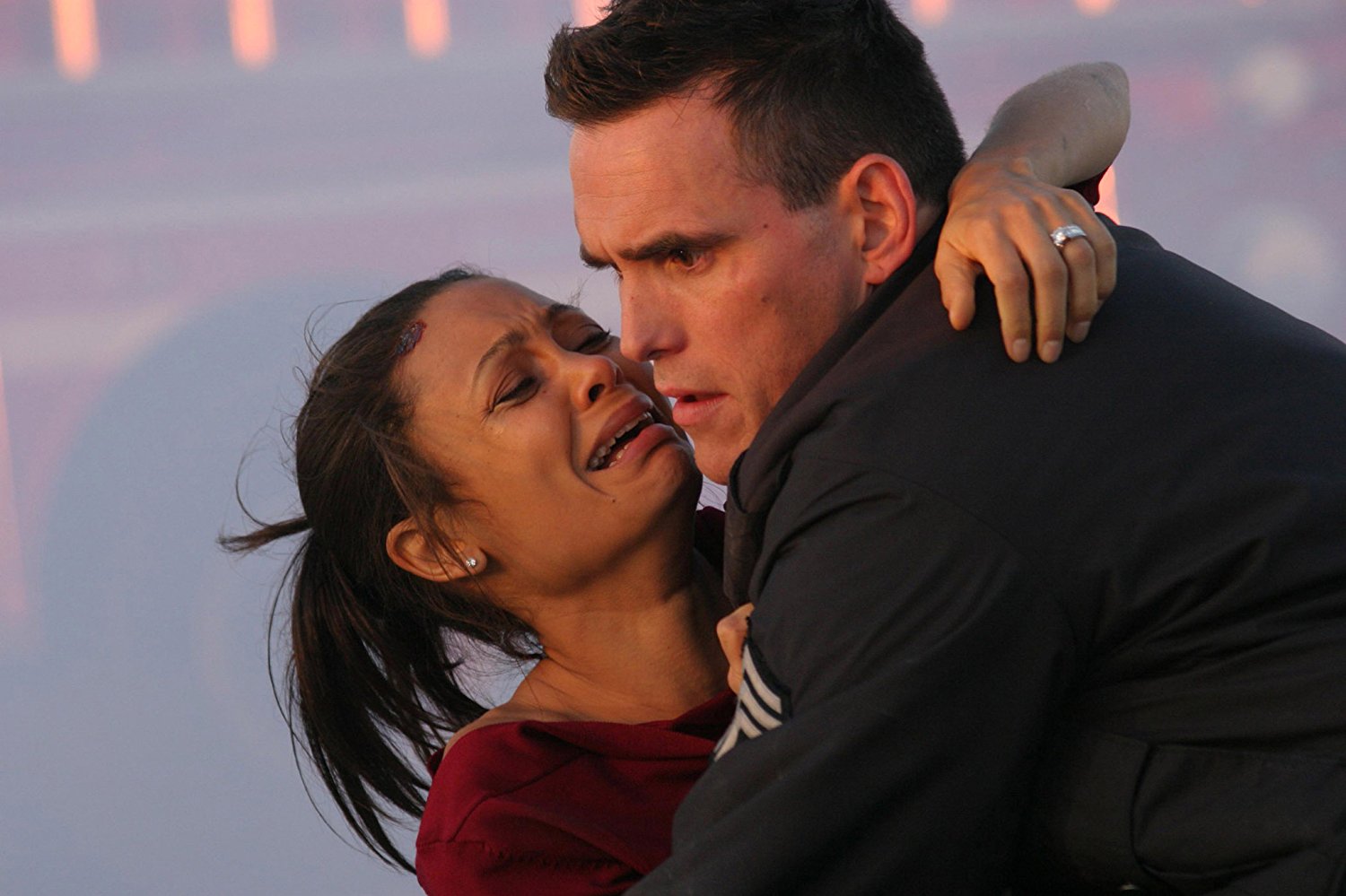
Matt Dillon and Thandie Newton deal with racism in tedious best picture disaster Crash

Director: Paul Haggis

Cast: Sanda Bullock (Jean Cabot), Don Cheadle (Detective Graham Walters), Matt Dillon (Sgt John Ryan), Jennifer Esposito (Ria), Brendan Fraser (DA Rick Cabot), Terrence Howard (Cameron Thayer), Ludacris (Anthony), Thandie Newton (Christine Thayer), Michael Peña (Daniel Ruiz), Ryan Phillippe (Officer Tom Hansen), Larenz Tate (Peter), Shaun Toub (Farhad), Bahar Soomekh (Dorri), William Fichtner (Flanagan), Keith David (Lt Dixon), Bruce Kirby (‘Pop’ Ryan), Beverly Todd (Mrs Waters)

If you had to name the least popular Best Picture winner, there is a fair chance the name you’d come up with Crash. Crash was a surprise winner in 2005, beating out Ang Lee’s tender gay-cowboy classic Brokeback Mountain. Crash was a little independent movie, filmed in and around Los Angeles, that seemed to be tackling big themes – racism, humanity, fate, blah blah blah. To be fair, Paul Haggis’ film is giving it a go. But what you get is just hugely, well, average. It’s not a film that has aged well, and it’s not a film that has enough depth to it to overcome the general cynicism towards it.

The film follows a kaleidoscope of events in Los Angeles, each of which revolves around clashes between different races, with stories that are shown to interlink. So we have an ambitious DA (a miscast Brendan Fraser) and his wife (a pretty good Sandra Bullock) carjacked by two gangbangers (Ludacris and Larenz Tate). A TV director (Terrence Howard) and his wife (Thandie Newton) are pulled over then assaulted by a bigoted cop (Matt Dillon), despite the fears of his nervous liberal partner (Ryan Phillippe). A locksmith (Michael Peña) deals with racial suspicions from the DA’s wife, and from a Persian shop owner (Shaun Toub), who is himself the victim of racial abuse. A cop (Don Cheadle) and his partner (Jennifer Esposito) investigate two undercover cops who shot each other, monitored by the DA. And so it goes on.

Crash could be pretty much relabelled Racism Actually. In fact, it shares a lot of traits with Richard Curtis’ loosely assembled series of shaggy dog stories, feeling as they do like off-cuts and half assembled scraps of ideas from Haggis’ writing desk. But what he ends up wheeling out here is a manipulative, cliché-filled pile of earnest claptrap, in which basically a series of unpleasant characters behave unpleasantly towards each other. You can see why the ageing academy might have warmed to it – it’s a film that looks at racism, by exploring how, gosh darn it don’t you know “everybody is a little bit racist” sometimes. 

On top of that, Haggis’ film relies overwhelmingly on coincidence and the tired “we are all linked together” clichés. It wants to try and make big statements about the prejudices and victimisation that we all suffer in our different ways – but it delivers them in such a clumsy and manipulative way your nose ends bruised by the number of points hit on it. For starters, do people really throw around racial slurs as readily and immediately as the characters in this film do? Surely the real danger of racism is not the people who shout racist nicknames and get angry immediately – isn’t the real danger of racism its incipient nature, the quiet whispers behind closed doors or the barriers gently but firmly put in the way? 

This film turns racism into something loud, obvious and crass. And then it produces a film that does the same thing. The script is full of scenes which never feel real, – every conversation in the piece turns into a clumsy series of “we all hold prejudiced views” or “I’ve got more depths than you think” statements that always feel fake. Not once do the characters sound like real people. It’s the sort of clumsy, crappy, thuddingly worthy film-making that ostentatiously believes itself to be great film-making, when in fact it’s as average as cornflakes.

Even the more effective moments only work because they are so manipulative: the confrontation at gunpoint between the locksmith and shop owner, and the rescue of Thandie Newton from a burning car by Matt Dillon’s brutish cop. When they are happening, these moments are strangely gripping – but literally the instant they finish, you are struck by how Haggis has filmed them in such an operatic, balls-to-the-wall way you would have to work pretty hard not to be swept up in them. Effective manipulation is still manipulation – and manipulation really shouldn’t be this easy to spot. Certainly not within seconds of it happening.

But nearly all the characters are so simple and cookie-cutter that, despite the quality of the acting, you never connect with them. It doesn’t help that Haggis’ unsubtle screenplay is desperate to point up “surprise” personality twists – the “you think they are like this, but look: here they behaving totally differently. People are more complex than you think!” card is played so often it starts getting worn out. All of this serves to boil down to a trite message that when we try and get along with each other everything eventually might work its way out. Oh please, give me a break.

The acting, though, is actually pretty good. Sure Brenda Fraser is horribly miscast, and Don Cheadle is stuck with a terrifically boring cop who has to hold some of the narrative threads together, but there are plenty of decent performances. Sandra Bullock gets to show she has some solid dramatic chops, Thandie Newton is a pretty much a revelation as a seemingly shrewish wife, Terrence Howard mines a lot out of a clichéd middle-class black man going through a mid-life crisis. Ludacris and Lorenz Tate are excellent as the two gangbangers, although their dialogue and actions never feel real at all. Michael Peña is very endearing as just about the only outright likeable character. Dillon got a lot of praise (and an Oscar nomination) as the racist cop and he is fine (though dozens of actors could do what he does here), even though the character is thin as paper and relies on having the two of the best impact scenes.

Dillon’s character is a good example of the film’s moral shallowness. Perhaps it’s the #MeToo era, but do I think that Dillon’s clearly racist manner and his sexual assault on Newton’s character is cancelled out because he saves her from a fire and treats his dying Dad well? I mean, what is this sort of laziness? The film says “ah ha look viewer you thought he was a bad guy, but look at his depth”. So forget the sexual assault because he saved his victim’s life the next day. Wow. Don’t get me started on the contrived weighting of the scales the film puts together so that our opinion is shifted on Phillipe’s good cop. The film is full of this sort of clumsy, ham-fisted, chin stoking, liberal garbage that feels overwhelmingly patronising.

But then this is a film that doesn’t trust you to think. It is the ultimate middle-class, hand-wringing exercise in “oh if only we could fix the world through good things” nonsense. It shouts and shouts and shouts at you about racism, but never really tells you anything other than that bad-tempered, ignorant people will do bad-tempered ignorant things. It smugly says “of course we are better, but guess what viewer, this sort of thing does happen”. Only of course the script is so thin, the general film-making so thuddingly average and unsubtle, the story and morality so shallow, that its preachy hectoring only really serves to turn you off.  Anyone with a brain will get the message within the first 10 minutes. The film takes another hour and a half to catch up with you. The worst Best Picture winner ever? It’s gotta be up there.

Selma (2014)

Martin Luther King fights the good fight

Director: Ava DuVernay
Cast: David Oyelowo (Martin Luther King), Tom Wilkinson (President Lyndon B. Johnson), Carmen Ejogo (Coretta Scott King), Andre Holland (Andrew Young), Tessa Thompson (Diane Nash), Giovanni Ribisi (Lee C. White), Lorraine Toussaint (Amelia Boynton Robinson), Stephan James (John Lewis), Wendell Pierce (Hosea Williams), Common (James Bevel), Alessandro Nivola (John Doar), Tim Roth (George Wallace), Oprah Winfrey (Annie Lee Cooper)

Tragically, for a while this film seemed to be most famous for being the poster child for “Oscar-Gate” or hashtag oscarssowhite (sorry hashtags are not my thing). Selma was the film that should have been littered with nominations. Instead it got just two – one for Picture, one for Best Song. Of the many, many snubs the most shocking were Ava DuVernay and David Oyelowo, particularly as other contenders up for the awards had certainly done inferior work that year . This film, however, categorically demands to be remembered in its own right – it is a fine, very moving piece of work, a dynamic history lesson that avoids preaching from a pulpit.

A lot of this comes down to the breathtaking work from David Oyelowo, who delivers one of those performances where the actor seems to transcend his skin, not just imitating Martin Luther King but inhabiting him, exploring and expressing every depth and shade. It’s a performance that stands comparison with Daniel Day-Lewis’ Abraham Lincoln. Oyelowo’s King is a big hearted, patient man but also a shrewd political player, a family man who betrays his wife, a political campaigner who holds the big picture and the small in his mind. It’s a totally committed performance that is intensely respectful without ever feeling hagiographic.

Oyelowo’s performance also immeasurably helps the film’s structure, as this is a biography that focuses on one single key moment in its subject’s life, rather than attempting to cover the whole lot in one 2-3 hour sitting. I rather like this, as the important thing about these biopics is to understand the person at the centre, not just to tick off events in their life. Anyway this film focuses on three months in 1965: King is campaigning for equal voting rights, and planning a high-profile march across Alabama from Selma and Montgomery to pressure President Lyndon B Johnson to promote the Voting Rights Act.

This is a very powerful film, humming with a constant sense of the deep rooted injustice and oppression in America at this time. It makes no compromises in showing the violence meted out to Black Americans, but it’s the day-to-day injustice that DuVernay shows particularly well: in the opening scene, Annie Lee Cooper (played by producer Oprah Winfrey) has her carefully prepared application to vote cruelly dismissed by a smalltown clerk, gleefully and casually exploiting a succession of legal loopholes to thwart her. It’s a simple scene but amazingly powerful in its casual (unspoken) racism, and it brings to life in a few strokes the day-to-day experience of millions of people at this time.

It’s also a beautifully shot film, that uses the real-life location of the Selma bridge spectacularly. An assault on the first attempted march by mounted policeman, shrouded in tear gas, is deeply moving in its simplicity, the camera catching the brutal overreaction of the police with a journalistic eye (Wendell Pierce as Hosea Williams is particularly impressive in the build-up to, and aftermath of, this sequence). Other moments of violence are equally shocking, but DuVernay never over-eggs the moment, allowing the events and the story to speak for themselves. We know how terrible some of these events are, and how disgusting the treatment of Black Americans was – the film never uses music or editing to hammer it home to us.

The film ends on the kind of high note you can only feel when injustice has been overcome and decent people triumph (punctured, DuVernay acknowledges, by the fates of some of the characters,  revealed at the end of the film. More than one of these is a gut punch – not least the death of King himself three years later). But it’s never twee, preachy or a history lesson. Instead it’s a living, breathing expression of a moment in history that wraps you up in its story. Oyelowo is of course outstanding, but there is some excellent support, not least from Carmen Ejogo as his wife Coretta (overlooked at the time, but outstanding), Andre Holland, Stephen James, Lorraine Toussaint and Common as King’s fellow Civil Rights leaders. Tom Wilkinson adds a lot of depth to a sometimes thinly written Johnson, while Tim Roth translates his contempt for George Wallace in a performance of slappable vileness. A beautiful and marvellous film.