Category: Films about theatre

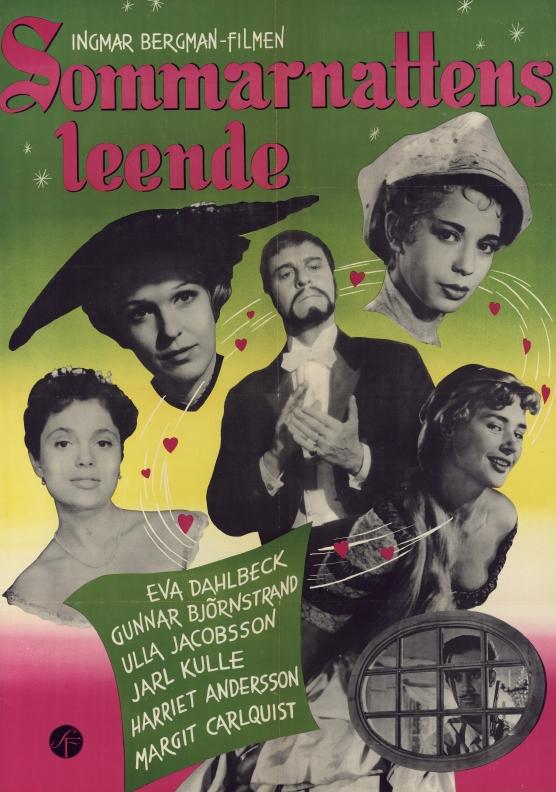
Smiles of a Summer Night (1955)

Smiles of a Summer Night (1955)

Sexual and romantic comeuppances abound in Bergman’s landmark comedy of manners

Director: Ingmar Bergman

Cast: Eva Dahlbeck (Desirée Armfeldt), Gunnar Björnstrand (Fredrik Egerman), Ulla Jacobsson (Anne Egerman), Björn Bjelfvenstam (Henrik Egerman), Harriet Andersson (Petra), Margit Carlqvist (Countess Charlotte Malcolm), Jarl Kulle (Count Carl-Magnus Malcolm), Åke Fridell (Frid), Naima Wifstrand (Mrs. Armfeldt), Jullan Kindahl (Beata), Gull Natorp (Malla), Gunnar Nielsen (Niklas), Birgitta Valberg (Actress), Bibi Andersson (Actress)

An Ingmar Bergman comedy? Surely a contradiction in terms, right? Like Da Vinci spraypainting graffiti or Austen writing a jingle. The Swedish master is near synonymous with glacial, Scandi-misery, not material that will be transformed into a Sondheim musical. But yet: Smiles of a Summer Night was the big smash-hit that guaranteed Bergman lifetime artistic independence (he followed it with the one-two punch of The Seventh Seal and Wild Strawberries that made him untouchable as Sweden’s premiere Artist). A Bergman comedy was never going to be a Ray Cooney farce, and while there are pratfalls and farce here, this film is an exploration of manners with more than hint of Shaw and Wilde, mixed with echoes of filmic greats like Ophüls and Renoir.

Set in turn-of-the-last-century Sweden, the film follows the romantic and sexual entanglements of a series of would-be couples. Fredrik Egerman (Gunnar Björnstrand) is a respected middle-aged solicitor, who hasn’t consummated his two-year marriage with 19-year old Anne (Ulla Jacobssen). This is partly due to her anxiety about sex. But really both of them are in love with someone else. Fredrik with his old mistress, celebrated actress Desirée Armfeldt (Eva Dahlbeck). Anne with Fredrik’s young son Henrik (Björn Bjelfvenstam) who is also in love with her. Henrik is flirting with house maid Petra (Harriet Andersson), who doesn’t seem averse to a relationship with any member of the Egerman family. Desirée is having an affair with Count Malcolm (Jarl Kulle), whose wife Charlotte (Margit Carlqvist) is considering infidelities of her own just to get his attention.

All of these potential couples merge, swop and work out their feelings overnight at the country house of Desirée’s mother (Naima Wifstrand) during one of the longest days of the year, where the sun hardly sets and people traditionally stay up until dawn. There is more than a touch of the theatrical about all of this – particularly with Bergman’s arch, intelligent dialogue – with the country house as a setting beautifully formal and strangely other-wordly. You can sense the theatrical influences here – Bergman had just directed a production of The Merry Widow – with the characters riffing with Wildean wit and insight, in typically Shavian set-ups.

What we get is a high comedy of manners, that’s also coated in a rich, insightful poetry that gives it a great deal of meaning. There is farce here – including a room with a switch that drags a bed from a neighbouring room (with occupant!) into it. There are several funny lines – many from Jarl Kulle’s hilarious heartless count, who doesn’t care who flirts with his wife until someone actually takes him at his word. There are pratfalls – Henrik has a superbly bleak bit of pure farce near the end that tips into erotic joy (“If the world is full of sin, then I want to sin”). The pompous Fredrik is constantly humiliated, from falling in a puddle to being thrown out of Desirée’s apartment in nothing but a borrowed nightshirt and a pair of slippers. There is no end of sexual suggestiveness, from Harriet Andersson’s gorgeously flirtatious maid (“Hurrah for vice!”) to hints about Mrs Armfeldt’s past (“I was given this estate for promising not to write my memoirs”).

Being Bergman though, this is the sort of romantic comedy that ends with a duelling game of Russian roulette and where we learn as much about human nature as we enjoy the scripted bon mots. Namely, that people – especially men – never seem to know what they want. Fredrik spends a huge chunk of the film persuading himself he is deeply in lust with Anne – although its pretty clear that he’s barely interested. Marriage and relationships in this case are gilded cages that lock people into things they barely want. They don’t even lend themselves to communication – the Malcolm’s marriage doesn’t seem to be based on any communication at all.

So, no wonder it needs a bit of Midsummer Night’s Dream style madness to try and sort it all out. Before that short night, the characters all down a particularly intoxicating wine that they are warned will bring down all their restraining impulses (whether that’s true or not, it certainly does). It’s part of a plot by Desirée – a superb Eva Dahlbeck, serene and glamourous, but also a battle-axe force-of-nature who knows exactly what she wants and how to get it – to resolve all complications for the (her) best, carried out in partnership with Caroline, a woman she’s far to savvy to let something petty like sleeping with her husband get in the way of useful friendship.

Contrasted with all these slightly restrained middle-class people who struggle to understand or express their real feelings, or (like the Egermans) seem to feel a slight guilt at sex anyway, we have the more earthy and free Petra, radiantly played by Harriet Andersson. Andersson gives Petra a flirtatiousness that sees her go from unbuttoning her top to attempt to seduce Henrik, to rolling in a bed with Anna. While the upper classes engage in a formal dance, she seizes life and opportunities – and ends up well-matched with the equally down-to-earth chauffeur Frid (an exuberant Åke Fridell), who like her doesn’t muck around when there is a chance to grab a bit of joy.

Not like the Egermans. Fredrik – a beautifully reserved Gunnar Björnstrand – should want Anna, but all the starring at her photos in the world won’t stop him muttering Desirée’s name while he sleeps. Not that it will allow him to try and rekindle his past relationship with her. Anna (a luminous Ulla Jacobsson), nervous about sex or rather nervous about her feelings with Hendrik, channels her feelings into jealous criticisms of his clothing after catching him naively succumbing to Petra’s flirting. Henrik (Björn Bjelfvenstam, very funny in his bemused wetness) is so inept in his romance of either woman, he barely seems to know what he wants.

Perhaps Desirée recognises all this is a bit of prime, Theatrical nonsense and tries to solve it all accordingly. After all her whole life is the theatre – from treading the boards, to singing and dancing while walking late at night with Fredrik. And it was for Bergman – that and film, which is why perhaps the film has echoes of Jean Renoir’s Le Regle de Jue with its country house romantic intrigues and Max Ophüls partner swopping La Ronde. And Smiles of a Summer Night is a beautifully mounted film, shot with a luscious, poetic beauty by Gunnar Fischer.

The whole film is a complex dance – you can see why it was ripe for Sondheim – that also explores profoundly the romantic and gender clashes between men and women. Men who are in a position to take what they want, but have no idea what that is. Women who know far more, but must be smart about how to achieve their goal – or like Petra willing to embrace a wild abandon to live in the moment. It may be a theatrical, drawing-room, sex comedy of sorts: but it’s also a film about humanity and people’s fates, all under the eyes the suggestively supernatural power of a smiling summer night. Perhaps its not such a contradiction of Bergman terms after all.

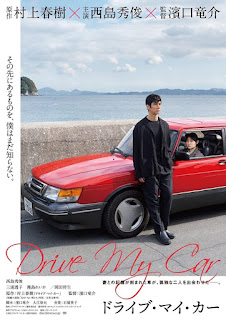
Drive My Car (2021)

Drive My Car (2021)

Time struggles to heal wounds in Hamaguchi’s meditative, carefully paced and exquisite film

Director: Ryûsuke Hamaguchi

Cast: Hidetoshi Nishijima (Yūsuke Kafuku), Tōko Miura (Misaki Watari), Masaki Okada (Kōji Takatsuki), Reika Kirishima (Oto Kafuku), Park Yoo-rim (Lee Yoo-na), Satoko Abe (Yuhara), Jin Dae-yeon (Gong Yoon-soo), Sonia Yuan (Janice Chang)

They say time heals all wounds: that’s not always the case. It’s certainly something you begin to appreciate in Hamaguchi’s beautiful elaboration of Ozu-style classicism, Drive My Car. Grief and loss do not adjust and correct themselves after the elapse of many months and years. Instead, they can allow pain to fester, ferment and bubble with further questions, regrets, resentments and sorrows. The world becomes a loop, we drive endlessly through, hoping to maintain some semblance of control over ourselves and our feelings.

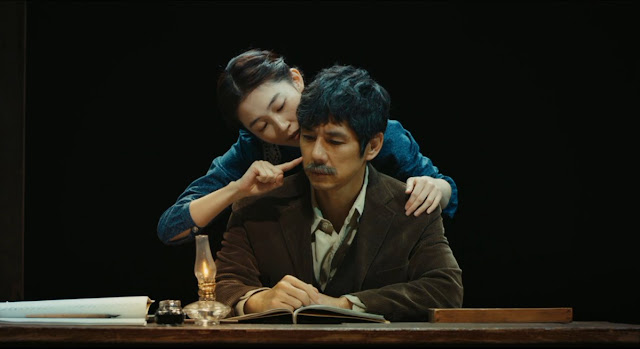
That echoes the loops through Hiroshima the car of the title drives in this delicate, throught-provoking and mesmerising film, that expands a Murakami short story into three hours of meditative screentime. Yūsuke Kafuku (Hidetoshi Nishijima) is a celebrated theatre director, specialising in multi-lingual productions of classic Western plays. One day when his flight is delayed, he returns home unannounced to find his wife, screenwriter Oto (Reika Kirishima), making love to an unseen man. Unnoticed, Kafuku quietly leaves and says nothing. Their relationship seems to continue unchanged for a few weeks, with Oto clearly distressed and concerned when Kafuku is in an accident. But she seems to notice a new reticence in Kafuku and, one day, asks that they have a conversation when he returns home for work. When he does, he finds Oto has died from a sudden brain haemorrhage. What was she going to say to him?

Marking the leisurely pace of Hamaguchi’s film, this takes up the opening 40 minutes at which point the opening credits roll. It’s sprinkled with the details of an elaborate backstory: we discover the couple lost a child aged 5 several years ago and decided to not have another (though Kafuku may regret this). There is a suspicion her lover may have been young actor Takatsuki (Masaki Okada). Two years later, Kafuku agrees to direct a production of Uncle Vanya at a Hiroshima theatre festival. Events there will lead him to confront his conflicted feelings about the loss of his wife he both still adores and also, on some level, resents.

Kafuku has carefully constructed his life to maximise his control. He seems to have abandoned acting his signature role of Vanya. Later in the film Kafuku states that Chekhov’s words reveal our true selves – and its clear, from the snatch we see of his performance shortly after Oto’s death, that true self is one Kafuku is in no position to face. Vanya’s grief, resentment, pain at his lost love, anger at the chances in life he has missed – all of these bring to the surface Kafuku’s feelings about his own life. Hamaguchi’s choice of play is a masterstroke: as we listen to Chekhov’s words they shade and deepen the themes in the film: Chekhov’s autumnal sadness is a perfect reflection of the film.

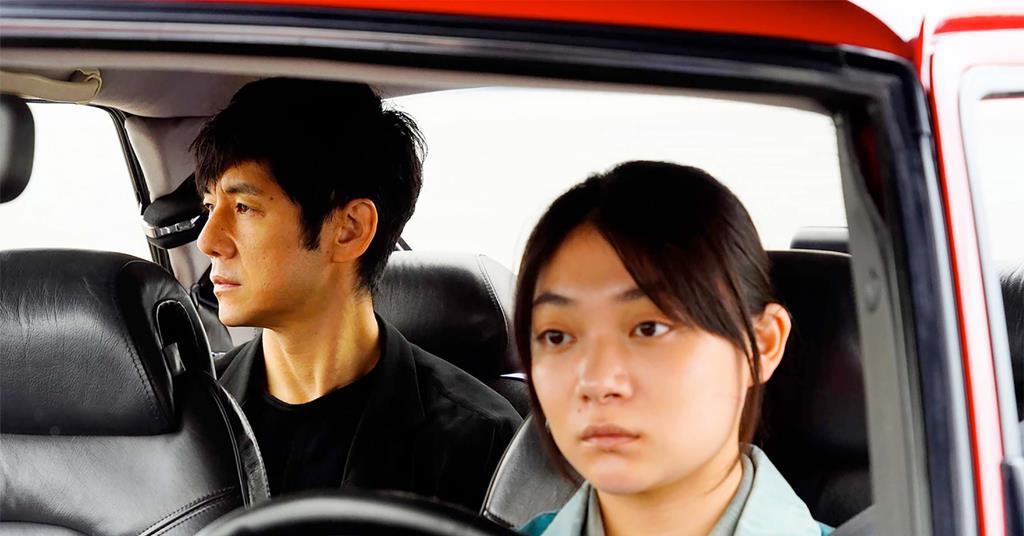
We hear a lot of Uncle Vanya, as Kafuku’s last link to his wife is a cassette recording she made of the dialogue for Kafuku to play in the car (there are gaps for Vanya’s lines, which he fills with a monotonous flatness). He plays this constantly in his car, an aged Saab he has kept beautifully conditioned for fifteen years (meaning he purchased it at the time of his child’s death, adding to its emotional importance). A key part of his sense of control over his life, is the driving and reciting of these lines: hence his request for a hotel an hour’s drive from the theatre.

The isolation and control of driving the car is so important, that it’s a major shock for Kafuku to discover that, for insurance reasons, he has to have a driver for the duration of the production. This is a young woman, Misaki Watari (Tōko Miura), who prides herself on her driving skills (she states it is the only thing she can do well) and who Kafuku reluctantly agrees to hand the keys over to. She wins his eventual trust by her competence and skill – she cares for the car just as he does – and her willingness to sit in silence and let Kafuku continue his ritual of reciting the lines from Vanya.

The growing closeness of these two characters becomes the engine (if you can call it that for a film that luxuriates so much in taking its time) of this thought-provoking and eventually very affecting masterpiece. Both characters find similarities and contrasts in each other: both are dealing with processing the loss of a loved one and, most painfully of all, the questions about who they truly were and what they truly felt that can now never be answered. This plays out in almost the exact opposite of heartfelt conversations: instead long, patient scenes as trust grows not always through words but through mutual comfort, the sharing of a cigarette, discussion of other issues and the impact of time spent in each other’s company.

Time is vital to this. The barriers both these characters have built in themselves to process their feelings would never come down quickly. Hamaguchi’s patience is vital for us to understand how tightly they have wound up their emotions. Kafuku directs with a rigid control, his multi-lingual technique (with at least five languages in the company) demands clarity and long sessions of reading around a table so that actors absorb the flow of the play. It does not allow for flexibility and improvisation. Similarly, Misaki’s driving follows pre-ordained routes and a schedule, that seems to prevent her thinking about other things.

Throughout Hamaguchi avoids sign-posting. Kafuku’s feelings about his wife seem confused and conflicting from scene-to-scene – the Chekov dialogue reflects this, sometimes tinged with intense sorrow and regret, at others bitterness and fury. Kafuku recruits the man he thinks his wife’s lover for the play – casting him in his signature role of Vanya. But why? Does he even know? It could be to accuse him, to control him, to destroy him, to get closer to his wife – or it could be parts of all of them. Definitive answers are kept to a minimum – but then that reflects life.

The relationship between the two comes to a head (such as it is in a film where long conversations slowly reveal buried emotional truth) in a long, late-night car journey shot by Hamaguchi in a carefully controlled one-shot/two-shot that has a classic simplicity that lets the emotion and acting come to the fore. Drive My Car is as unflashy a film as you can get, but its restraint, beautiful but serene imagery and gentle pace add to its slow-burn effect. The moments of emotional catharsis, when they come, are all the more affecting for it – and truly carry a sense of life-changing impact.

The performances are beautiful. Nishijima is quiet, reserved but conveys oceans of conflicted emotion below the surface which he keeps patiently bottled-up. It’s a low-key, highly expressive and tenderly gentle performance. He plays exquisitely with Tōko Miura who at first makes Misaki seem like any number of slightly-surly hirelings, but in turn unveils emotional depths and pain that constantly surprise. Reika Kirishima is both radiant, tender and unknowable as Oto. Masaki Okada is perfect as the lost Takatsuki. Park Yoo-rim is a stand-out among the ensemble as a mute Korean actress communicating through sign language (her acting in the play-within-the-play is stunning).

Originally intended to be filmed in Korea, there is a beautiful serendipity about the pandemic forcing a location change to Hiroshima. No other city on Earth carries such an association with pain and the slow recovery over time. Drive My Car takes the time it needs to explore how grief seeps into us and is only addressed through great care and strength. It’s profoundly engrossing and moving for all of its length – you wouldn’t want to change a thing about it.

Tick…Tick…Boom! (2021)

Tick…Tick…Boom! (2021)

Joy and tragedy intermix in this extremely affectionate tribute to a musical theatre talent and his whole genre

Director: Lin-Manuel Miranda

Cast: Andrew Garfield (Jonathan Larson), Alexandra Shipp (Susan Wilson), Robin de Jesús (Michael), Joshua Henry (Roger Bart), Vanessa Hudgens (Karessa Johnson), Bradley Whitford (Stephen Sondheim), Jonathan Marc Sherman (Ira Weitzman), MJ Rodriguez (Carolyn), Ben Levi Ross (Freddy), Judith Light (Rosa Stevens)

When an artist dies young, you also mourn the loss of all the art still to come. There is an added tragedy when – like van Gogh – the artist dies on the cusp of achieving the recognition and respect they have toiled for so long to achieve. Jonathan Larsen spent over a decade struggling to get his work performed on Broadway – only to die of an undiagnosed heart condition the night before the previews for Rent (the musical that would win him a stack of posthumous awards, including a Pulitzer and a Tony) opened. Miranda’s film is a heartfelt, joyful celebration of Larsen’s life based on Larsen’s own autobiographical one-man rock musical.

Tick, Tick…Boom is all about the counting clock Larsen (Andrew Garfield) fears as his life starts to catch up with his own mapped out timetable for success. It’s 1990 and he’s turning 30, with his rock musical Superbia still only a glint in a workshop’s eye. As he keeps reminding us, at 27 Sondheim had already staged West Side Story. Is Larsen’s chance of making a success of writing musicals ticking away? Should he build a business career, like his school friend Michael (Robin de Jesús) has in advertising? Should he accept the offer of his girlfriend Susan (Alexandra Shipp) to give up on New York and start teaching in Massachusetts? Or should he keep powering away at his dream?

Lin Manuel Miranda has talked openly about how Larsen’s revolutionary work on Rent changed his understanding of what musicals could be. To him – and many others – Larsen is a key figure in the history of the American musical, paving the way to some of the great landmarks of the 21st century. Miranda’s film is soaked in a deep love for both the work of Larsen and musical theatre itself. This is a film made by a man who defines himself by his love for everything musicals – and it’s a love that echoes in every single frame of his film.

Miranda was the perfect man to direct the film – after all, perhaps only Hamilton has had as much revolutionary impact since Rent (just like Larsen, Miranda spent years toiling to get it staged). Working with screenwriter Steven Levenson, Miranda expands the original one-man musical (later versioned into a three-actor piece after Larsen’s death) into a beautifully assembled testament to a crucial few months in the life of its subject, as he subconsciously starts the inspiration that will lead (eventually) to Rent. The film takes the original score for Tick, Tick…Boom and complements it with other Larsen songs and material from Superbia to develop a rich, emotionally moving tapestry that brings Larsen storming vividly to life.

And a lot of that life comes from Andrew Garfield’s revelatory performance. Bearing a striking resemblance to Larsen, Garfield’s performance has an energy, litheness and openness to it, to a degree we’ve not seen before. His singing and dancing are graceful, dynamic and impassioned. He’s emotionally open, tender, delicate – but also, as so many artists must be, sometimes selfish, demanding and self-obsessed. It’s a performance of great joy and humour, making it even more moving to remember that ticking clock is literally counting down Larsen’s life. But this is not a tragic performance: instead it is a vibrant celebration, performed by an actor at the top of his game.

Garfield delivers wonderfully in the many songs, most of them unfamiliar. Tick, Tick…Boom is a little known musical – but Larsen’s sudden death gives it a prescient tragedy he was totally unaware of when he wrote it: he meant it was a clock counting down the end of his youth, but we know it’s actually knocking down the seconds of his life. Miranda stages the songs with all the scintillating freshness of a Broadway musical, with imaginative choreography, energetically engaged performances and at times a powerful emotional intimacy that delivers real impact.

It all works so well because of that love for musical theatre that it is dipped in. The cast is stuffed with cameos from Broadway actors – the song Sunday uses a virtual Who’s Who of the cream of Broadway – and Miranda places Larsen’s music at the very heart of the movie. It’s a film directed with a great deal of skill, but not a showy or flashy distraction. Instead, creative decisions in scenes are subordinate to the songs – so some take place in a realistic setting, some in a staged recreation of Larsen’s original performance of Tick, Tick…Boom, others in a heightened reality somewhere between a dream and a fantasy. Miranda’s trick is to make these contrasted styles all feel part of the same whole – and the joy with which all are filmed (even the sadder moments) is essential to this.

And there are some powerful moments of emotion here. Bubbling throughout the story is the AIDS crisis, which has literally destroyed the lives of several of Larsen’s friends. It is to have a very personal impact on his best friend Michael (a heartfelt Robin de Jesús). Larsen’s dwelling on this plague, where many blamed the victims, sees him scribble notes for key lines that will build Rent (Miranda has these appear on screen in hand-written text). Part of the self-criticism of Tick, Tick…Boom is Larsen acknowledging that his selfish desire for success as a protégé blinded him to the suffering of some of those closest to him. While I would have liked more direct tying of Rent into the film’s conclusion, this deconstruction of Larsen’s laser focus is well done.

Above all, Tick, Tick…Boom works because it is made so clearly by people who love musical theatre, for people who love musical theatre. The performances are sublime, especially Garfield who has never been better or more engaging, with de Jesús and Alexandra Shipp also excellent and Vanessa Hudgens standing out among the rest. Miranda’s film is a strikingly well-made and heartfelt labour of love, that will reward rewatching and uncovers the overlooked work of a major talent who died way too young.

Yankee Doodle Dandy (1942)

Yankee Doodle Dandy (1942)

Cagney proves there is more far more to him than guns, in this cracking musical

Director: Michael Curtiz

Cast: James Cagney (George M Cohan), Joan Leslie (Mary Cohan), Walter Huston (Jerry Cohan), Richard Whorf (Sam Harris), Irene Manning (Fay Templeton), George Tobias (Dietz), Rosemary DeCamp (Nellie Cohan), Jeanne Cagney (Josie Cohan), Eddie Foy Jnr (Eddie Foy)

To many James Cagney was the definitive gangster. But Cagney wanted to be known as more than just another heavy: at heart he was a song-and-dance man. He got few chances to show it, so when the right film came along, doggone it he didn’t plan to leave anything in the dressing room. Cagney dominates George M Cohan biopic Yankee Doodle Dandy (at times its almost a one-man show with guests). He’s in almost every scene, doing his twist on Cohan’s stiff-legged dancing style with such energy and enthusiasm it leaves you quite exhausted watching it (Cagney sprained his ankle twice making it). It was a massive hit and won Cagney a much-deserved Oscar.

George M Cohan came from a family vaudeville troupe and became “the man who owned Broadway”. An accomplished performer, he was also a prolific writer (banging out more than 50 shows and 300 songs, including nation-defining tunes like Over There, The Yankee Doodle Boy and You’re a Grand Old Flag). The film uses his awarding of the Congressional Gold Medal from President Franklin D Roosevelt (Cohan arrives at the White House fresh from playing an all-singing, all-dancing version of the wheelchair-confined President in I’d Rather Be Right) as a framing device. Naturally, the President wants to know all about this Broadway legend’s life. Cue Cohan settling back to tell him his entire life story: from birth to childhood stardom, knock-backs and a string of successes.

It’s odd to think Cagney wasn’t keen at first. A leading union man – one of the founder members of the Screen Actor’s Guild – Cagney was not an admirer of Cohan, who had taken a strong stand against the 1919 actor’s union strike. What changed Cagney’s mind was accusations of communism from the House of Un-American Activities in 1940: he was cleared but his producer-brother William told him he needed “to make the goddamndest patriotic picture that’s ever been made.” They certainly succeeded with Yankee Doodle Dandy, such an all-singing, all-dancing celebration of the American way it must surely be Sam the Eagle’s favourite film.

Yankee Doodle Dandy is nothing more-or-less than a grand slice of entertainment. It’s very much cut from the same cloth as The Great Ziegfeld, another cradle-to-grave rundown of the life of a Broadway mover-and-shaker. Like that film, Cohan’s rough edges are comprehensively shaved off: his hostility to the actor’s union goes unmentioned as does his divorce and remarriage (instead his two wives are amalgamated into a new fictional wife, conveniently called Mary so that his song Mary’s a Grand Old Name can be named after her). Several events are telescoped or shifted to a new date for dramatic impact. Cohan emerges thoroughly charming (if proud), decent and honest all-round entertainer, overflowing with bonhomie.

Narratively the film does nothing Hollywood hadn’t done before. The big difference here to The Great Ziegfeld is that Curtiz keeps the story moving with real pace and a certain flair (it’s a solid two hours, and never outstays its welcome) and the musical numbers are dynamic and entertaining. A great deal of that is due to Cagney, outstanding in a part that demands an overabundance of personality. Cagney’s dancing and singing doesn’t have the grace of Fred Astaire (the original choice), but it has a gloriously entertaining and breath-taking energy. Cagney studied Cohan’s stiff-legged-marionette dancing style, and used his physical exuberance to bring to life his numerous dance routines with a spectacular stand-and-applaud skill and energy. (Curtiz uses a highly mobile camera to film most of these in single shots, to really capture the skill and energy of Cagney). His singing also follows the Cohan style – the sort of half-singing, half recital style Rex Harrison would later make his own. His impersonation is uncanny and performance superb.

Cagney is gloriously entertaining and makes every single one of his numerous songs thrum with glee. It’s a real reminder of what a modern performer Cagney was: he’s fast-paced, lacks any sense of staginess and has a real emotional honesty. His comic moments are very funny: in Cohan’s first meeting with Mary, still in old-man make-up (fresh from playing father to his own mother on stage), Cagney lets a little moment of glee move across his face as he realises Mary thinks he really is an old-man in his 70s – a confusion he plays up to, before launching into an impromptu tap dance routine. When tragedy strikes he is just as moving: his heart-broken repeat of his mantra “My mother thanks you. My father thanks you. My sister thanks you. And I thank you” at his father’s death-bed not only moves the audience, it also made the stony Curtiz weep on set.

No wonder, when a dying Cohan watched the film, he said “My God, what an act to follow!” Cagney’s performance, with its playful energy, encouraged a greater spontaneity in Curtiz’s disciplined directorial style. The famous sequence, where Cagney walks down the steps inside the White House before bursting into a joyful bout of tap-dancing was improvised on the spot (and a glorious summary of the playful joy of the movie it is). Curtiz uses montage very effectively at several points (a sequence of early knock-backs for Cohan is a wonderful collection of shots of signs, producer refusals and walking feet). He often uses high and low angles to imaginatively shoot the action, and the fluid camera for the musical numbers finds a neat middle ground between theatrical performance and cinema.

Of course, it is damned patriotic. The film recreates several of Cohan’s most stirring numbers in all their pomp. The explosion of Americana (Washington! Lincoln! Teddy Roosevelt!) that is You’re a Grand Old Flag (with hundreds of Stars and Stripes). The cheek and charm of Yankee Doodle Boy. The rousing marvel of Over There. The film plays up Cohan’s determination to do his bit in the First World War – turned down for service as too old, he carries out a full tap-dance routine to show he’s as limber as the next man. But it also has time for finding a way of staging creativity: there is a marvellous little sequence – beautifully shot by James Wong Howe – of Cohan finding the tune for Over There, tinkling experimentally with a piano on an empty stage.

The narrative of the play doesn’t reinvent the wheel, but it delivers a traditional structure with plenty of energy and some good scenes. (I enjoyed Cohan’s mother, struggling to find something nice to say about one of Cohan’s rare-flops, a music-free melodrama, left weakly praising the set). Though Cagney dominates the film, Walter Huston is very fine as his supportive and experienced dad and Joan Leslie charming as his loyal wife Mary (so supportive she’s happy to gift her song to stage star Fay Templeton, because the show needs her more). The balance between standard biopic scenes and musical numbers is very nicely handled.

Yankee Doodle Dandy offers up a familiar package, but one of the most professionally assembled and enjoyable of its type ever made. With Cagney in joyful, dominant form, you’d genuinely be quite happy just sitting and watching him go through as many vaudeville acts as he likes. Shot with flair by Curtiz, Yankee Doodle Dandy is catchy and highly entertaining.

All About Eve (1950)

Anne Baxter and Bette Davis become deadly rivals in All About Eve

Director: Joseph L Mankiewicz

Cast: Bette Davis (Margo Channing), Anne Baxter (Eve Harrington), George Sanders (Addison DeWitt), Celeste Holm (Karen Richards), Gary Merill (Bill Sampson), Hugh Marlowe (Lloyd Richards), Thelma Ritter (Birdie), Gregory Ratoff (Max Fabian), Marilyn Monroe (Claudia Casswell)

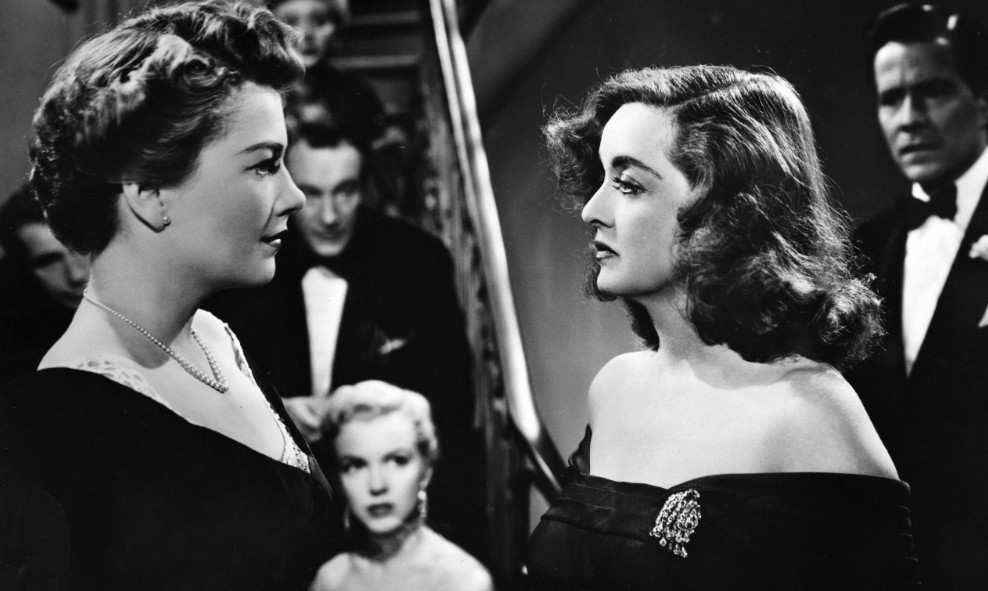
At a theatre awards ceremony, a table of people watch Eve Harrington (Anne Baxter) collect the Sarah Siddons Award for Distinguished Achievement. She thanks them all effusively. They stare at her with mute loathing. I guess that’s show business. Mankiewicz’s biting and witty film boasts possibly one of the greatest scripts for the movies ever written, a biting expose of rivalries and backstage politics, that also manages to find a lot of warmth for its characters. Arch, but in its own strange way tender hearted and hopeful, its Mankiewciz’s greatest achievement.

Margo Channing (Bette Davis) is a gifted actress and one of the leading lights of Broadway, as well as the on-stage muse of playwright Lloyd Richards (Hugh Marlowe), close friends with his wife Karen (Celeste Holm) and in love with her director Bill Sampson (Gary Merill). But Margo is just beginning to worry, now she has reached her forties, that her parts are drying up. Into her world arrives Eve (Anne Baxter), a besotted fan who swiftly becomes first her assistant then her understudy and eventual replacement. Despite her sweet exterior, Eve is fiercely ambitious determined to find fame and success – and only cynical theatre critic Addison DeWitt (George Sanders) seems to notice.

All About Eve cemented Mankiewicz as Hollywood’s go-to for high-brow literary entertainment. Which is odd when you think about it, because what makes All About Eve work – and enduringly popular – is that it’s a fantastically quotable soap, played with relish. It’s not a million miles away from a ten-part, cliff-hangers aplenty Netflix drama. But it stands out because of Mankiewicz’s craft – when you pen lines as cutting, acerbic, tender and true as those in All About Eve, is it any wonder that Hollywood sees you as the next Fitzgerald?

And the dialogue is sparkling, from start to finish. From a cuttingly dry opening voiceover from George Sander’s Addison DeWitt – beautifully delivered, crammed with cynicism, cattiness, pride and purring contempt (“Minor awards are for such as the writer and director since their function is merely to construct a tower so that the world can applaud a light which flashes on top of it.”) that it sets the tone for a film where dialogue is king. Mankiewicz is not much of a visual stylist – only the final shot, a besotted fan starring into an endless series of mirrors – sticks in the mind, and his approach as a director is intensely theatrical, but it doesn’t matter when his dialogue sings.

All About Eve works as both a supremely entertaining peek behind the curtain and also a neat parable about ageing, change and relevance. Perhaps there are few better examples of the changing of the guard, than the impact of growing old on a woman in theatre: from girlfriend to mother, with hardly a role in between. It’s the change Margo is dreading. And as she grows too old for her leading lady roles, what has she actually to show for it? Not much in the way of family or happiness.

If Eve looked closer, perhaps she’d wonder if it was worth it. As Margo makes clear in her dressing room and at a party thrown for Bill, she’s not got much to look forward to. (It’s not often commented on that the film’s most famous line, “Fasten your seatbelts it’s going to be a bumpy night”, is followed by an evening of Margo’s maudlin self-pity). For all her glamour and fame, it’s clear Margo is unhappy: “So many people know me. I wish I did” she says at one point, and for all the whirlwind of her life, she’s not exactly over-burdened by close friends.

It’s easy to forget, because All About Eve is so well known for being a bitchfest – and Mankiewicz’s cutting one-liners are genius – that you forget its lead is a sad and lonely figure, and the film presents a conservative view of motherhood being a crucial role for a woman. We don’t automatically remember this speech’ but it’s crucial for Margo: “There’s one career all females have in common – whether we like it or not: being a woman. Sooner or later, we’ve got to work at it, no matter how many other careers we’ve had or wanted. And, in the last analysis, nothing is any good unless you can look up just before dinner or turn around in bed – and there he is.”

Margo is the signature part for Bette Davis, but memory has distorted it. You can expect it to be a parade of sharply barbed attacks, but it is much more than this. Yes, she does these with aplomb (“I wouldn’t worry too much about your heart. You can always put that award where your heart ought to be”), but under the regal grande dame, there is a rather vulnerable woman, scared about where her life is going and terrified of being unloved. For all the Davis fireworks, it’s an affecting – and perhaps this is why it became such a gay icon, during those years of people forced into the closet –vulnerable and lonely performance.

That vulnerability contributes to the sense of vampire story. Eve arrives in the dead of night, inveigles her way into Margo’s life and then slowly takes that life over. Eve is almost draining Margo’s life force, leaving her even more aware of the lonely impact of her choices. There’s the suggestion of sexual obsession in Eve – standing on stage, holding Margo’s costume in front of her and imagining the applause, Eve seems as much besotted with Margo as she does with becoming her. And of course Eve is a unknowable fake. Anne Baxter’s gentle, butter-wouldn’t-melt sweetness is just the right side of phoney. Only Thelma Ritter’s (very funny) bitchy dresser detects dictates her invented backstory about a deceased husband is baloney (“What a story! Everything but the bloodhounds snappin’ at her rear end.”).

Later Birdie will comment Eve is studying to become Margo – and that’s spot on. As Eve moves further up the ladder, Baxter drops her gentleness and becomes increasingly steely. “A contempt for humanity, an inability to love and be loved, insatiable ambition – and talent. We deserve each other” Addison will tell her – and he’s spot on. Eve’s driving motivation is ambition, and anyone is fair game if it will help her move up the greasy ladder of theatrical success.

Eve uses everyone. She manipulates Karen into making Margo missing a performance – then invites the press in advance to her performance, which is met with raves. Afterwards Eve gives an interview in which she lacerates Margo as a bitter has-been holding her back. It’s enough for Karen – and Celeste Holm is very good as this gently supportive woman, with the firmest principles of anyone on show here – but the men can’t let go. It takes an attempted seduction to drive away Bill, but the weaker Lloyd seems to be sucked into her web (the film is coy about the implied affair). It should be clear that Eve is a force draining energy out of everything she can, determined to get to the top.

And we know she gets there: after all we’ve seen her win the Sarah Siddons prize! But Eve has none of Margo’s soul. The film ends with her meeting the even more vainly empty Phoebe, who Addison immediately recognises is intent on the same scheme as Eve was. And so, the whirligig of time brings in its revenges. Eve has learnt everything from Margo, except how to be a human: she has all her technique and none of her heart. The film even manages to feel a bit sorry for her – a woman who has achieved everything she wants, and finds it makes her neither happy nor popular.

It’s the heart of Mankiewicz’s film, perhaps even its warning message. What is the point of all this greatness, if all you have to show for it are false-friendships with poisonous pals like Addison? It’s the moral message behind a film filled with one-liners and wonderful speeches, a masterclass in theatrical writing for cinema. Bette Davis is superb, funny and heartfelt. Baxter is quietly terrifying. Ritter and Holm are superb and Sanders is so well case in this role, you wonder if Mankiewicz somehow invented him specially for it. All About Eve may be grand, soapy entertainment – but soap has never been smarter than this.

The Philadelphia Story (1940)

The Philadelphia Story (1940)

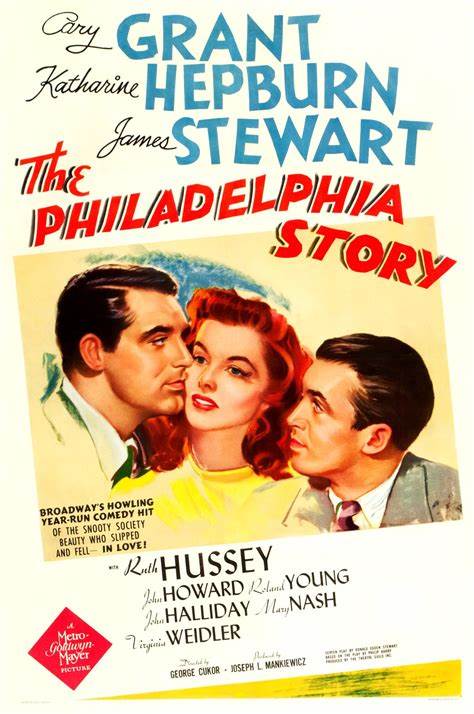
Three stars are at the top of their game in this classic screwball-style comedy

Director: George Cukor

Cast: Katharine Hepburn (Tracy Lord), Cary Grant (C.K. Dexter Haven), James Stewart (Mike Connor), Ruth Hussey (Elizabeth Imbrie), John Howard (George Kittredge), Roland Young (Uncle Willie), John Halliday (Seth Lord), Mary Nash (Margaret Lord), Virginia Weidler (Dinah Lord), Henry Daniell (Sidney Kidd)

In 1938 Katharine Hepburn’s career was over. After the flop of some now forgotten (wait, hang on…) screwball comedy called Bringing Up Baby, she took centre place on the Independent Theatre Owners list of “Box Office Poison”. Flops after flop hit Hepburn (all of them are classics today of course), and the studios did their damnedest to drop her. So, Hepburn returned to the stage, developing The Philadelphia Story with Philip Barry – and creating a lead role for herself that would play to all her strengths and help win back public affection. And which (with a little help from Howard Hughes) she would own the rights for: so, if and when they wanted to make a film, she could insist she starred. The rest is history.

The Philadelphia Story is perhaps the best example of the Code-approved genre, the “remarriage comedy” (because the code wouldn’t countenance the idea of a couple cheating). Daughter of a rich Philadelphia family, Tracy Lord (Katharine Hepburn) is to marry her dull fiancée George Kittredge (John Howard). George’s main attraction is he’s the complete opposite of her charismatic ex-husband C.K. Dexter Haven (Cary Grant). Dexter crashes the build-up to the wedding, bringing along reluctant society journalist (he’s really a renowned short-story writer) Mike Connor (James Stewart) and press photographer Elizabeth (Ruth Hussey), promising to introduce them as distant friends of the family so they can report on the wedding. But then Tracy finds herself drawn to Dexter and Mike and George as well – who will she end-up walking down the aisle with?

Perhaps the best thing about The Philadelphia Story is that you really don’t know who it will be – and the film successfully keeps the question both up-in-the-air and deeply entertaining. There even seems a chance (unlikely as it is) that Tracy really will stick with George (a tedious nouveau riche businessman with priggish middle-class morals who can’t even mount a house – imagine!). Directed with the sort of unfussy smoothness Cukor excelled in – and helped get the best out of actors – it’s a superb comic treat, with a sparkling adaptation by Donald Ogden Stewart.

At the heart of it, Hepburn is superb in a role that riffs considerably off her own public personality. Hepburn was smart enough to know most audiences saw her as far too clever by half. Her sharpness, acidity and no-nonsense unwillingness to suffer fools had made her hard to relate to. Quite correctly, she felt she needed a role where she could “fall flat on her face”. Which , by the way, is more or less the first thing she does – a hilarious prat fall while throwing Cary Grant’s Dexter out, him responding to her snapping his golf clubs by gently putting his hand on her face and pushing her off-balance (only Grant could have got away with that by the way).

Tracy Lord is a version of the Hepburn many people felt they knew. Tracy genuinely believes she’s smarter and better than anyone else, with unquestionable judgment and superior morals. The film is a gentle exercise in pricking her balloon, showing her she is as prone to mistakes, prejudice and, above all, getting giddy and silly in love, as anyone else. This is a fiercely practical woman, who sets high standards for those around her, suddenly finding herself falling in love with three men at once. It’s the exact flighty lack of commitment she spent years condemning her estranged father for.

This is all scintillatingly played by Hepburn, at her absolute best. The rat-a-tat dialogue (with its classic, Wildean comedy of errors and mis-identification) is under her complete control. She’s delightful when, under the influence, she flirts with Mike – Hepburn showing the world (clearly they missed it in Bringing Up Baby) that she could be as silly and vulnerable as the next girl. Hepburn knew people wanted to see her personae deconstructed, and for her character to learn that (in the words of another comedy) nobody’s perfect. It works a treat – and this remained one of her greatest (and funniest) performances.

It helps she had two of the greatest to riff off. Cary Grant is at his light-comedic best here, turning Dexter – a manipulative reformed alcoholic it would be easy to dislike – into the embodiment of sophistication, charm and playful wit, who we adore as much Tracy’s family does. James Stewart won an Oscar and matches Grant gag-for-gag in a comedic masterclass. He’s a master of hilarious comedic and physical reactions – and lovable enough to turn a chippy newspaperman into a sort of hilariously droll sage. His ‘drunk’ acting is also some of the funniest you’ll see on film (even Grant can be spotted cracking up just a little as Stewart hiccups his way through a scene).

Hepburn’s chemistry with both actors is sublime. Her romancing scenes – both the worst for wear for drink, but also empowered to say things they’ve clearly been burying all day – with Stewart are not hugely romantic, but also rather sexy (Cukor’s direction here is also exquisitely spot-on). It’s a masterclass in on-screen flirtation – and you can see why George gets as pissed off as he is. Hepburn and Grant meanwhile bicker and taunt each other with all the chemistry of a match and a fire.

Each scene has a bounce that teeters between heart-felt and farcical. The set-ups are frequently silly – but they work because they hinge on characters that feel immensely real. Every performer is spot on – credit also goes to a superb Ruth Hussey, one of the few grown-ups in this weekend of flirting, feuding children. Set in a sumptuously rich Philadelphian mansion, for all of Mike’s chippy criticism it’s a celebration of the smooth upper classes over hard-working, dull prigs like George. Its sole fault might be it’s too long (at just under 2 hours, a few scenes and set-ups outstay their welcome). But, as a classic Hollywood comedy, it’s pretty much the top of the class. Box-office poison no more.

The Great Ziegfeld (1936)

Luise Rainer and William Powell bring the life of The Great Ziegfeld to life in this decent-but-not-great Best Picture winner

Director: Robert Z Leonard

Cast: William Powell (Florenz Ziegfeld Jnr), Myrna Loy (Billie Burke), Luise Rainer (Anna Held), Frank Morgan (Jack Billings), Fannie Brice (Herself), Virginia Bruce (Audrey Dane), Reginald Owen (Sampson), Ray Bolger (Himself), Ernest Coassart (Sidney), Joseph Cawthorn (Dr Ziegfeld), Nat Pendleton (The Great Sandow)

I’d always been led to believe The Great Ziegfeld was one of the low points in Best Picture history – that the Oscar had gone to a plotless, over-long, empty mess. So, watching this film for the first time, I was pleasantly surprised. The Great Ziegfeld may be flawed, but it’s not as bad as all that. In some places it’s even pretty good.

Florenz Ziegfeld Jnr (William Powell) is a showman with big dreams. From the Chicago World Fair of 1893, where his show features strong-man The Great Sandow (Nat Pendleton) – lifting a massive pair of dumb bells inside of each is a “Dumb Belle” (geddit?!) – Ziegfeld heads towards New York. There he puts on a series of variety shows, The Ziegfeld Follies, crammed with popular entertainers and gorgeous babes. Along the way he spends money like water, marries star Anna Held (Luise Rainer), cheats on her a lot (although the film handles this coyly) and finds love with star Billie Burke (Myrna Loy – the real Burke grudgingly agreed she was too old to play herself).

Watching The Great Ziegfeld you can see how it influenced so many later films. A witty, show-piece crammed crowd-pleaser about a impresario, its essentially the grandfather of The Greatest Showman. It’s unpretentious and easy-going – but also impossibly long, far too long for its slight story. It’s sprawling, puffed-up and the musical numbers are often mundane and tedious – but it, just about, manages to stay entertaining.

In real life Ziegfeld was a chancer with a roving eye. He left a mountain of debt and his genius was at least as much about promotion as it was art. You can see why Hollywood has a soft-spot for him: he was all about spectacle (a running gag has him always wanting “higher steps”, a neat short-hand for making things bigger). His rough edges (the affairs and the financial chicanery) are filed down as the film’s Ziegfeld is a charmer with a Wodehousian wit, cheeky and naughty but always a gentleman.

William Powell is perfect casting, and a big part of the film’s charm is tied up in his winningly (and deceptively) casual performance. Powell turns the role into a personality part, smoothly underplaying with a wink to the camera. He delivers the various bon mots with a real skill and provides nearly all the film’s pace and energy and a big barrel of its sense of fun.

He sits at the centre of a film that has genuine moments of directorial flair from Robert Z Leonard. There are some great tracking shots and he handles the ‘acting’ scenes very well – a scene with Ziegfeld chatting with Will Rogers and Fanny Brice (playing herself) is worth the price of admission alone. The performers mostly bounce effectively off each other.

Leonard also gets emotional impact from Ziegfeld’s late romance with Burke (a sequence of the two of them chatting, coyly holding hands is very well done) and creates a superb series of visuals to close the film (a shot of the ageing Ziegfeld sitting in his chair, staring at his name in lights over his theatre, is a wonderful summary of the man’s life – and maybe, when his hand drops down releasing a flower, it even gave Welles a bit of inspiration for Kane’s death five years later).

When The Great Ziegfeld focuses on Powell’s lightness of touch, and character-led moments (Frank Morgan is also great fun as Ziegfeld’s bombastic, long-suffering rival) it works really well. What has suffered over time – and today feel like its weakest parts – are those heavily praised in 1936.

MGM marketed this as the most expensive film ever made, the money splurged on those massive musical numbers, with scores of extras and enormous sets. The centre-piece is the “A Pretty Girl is Like a Melody” number, featuring countless extras on a massive rotating “wedding-cake” set, 175 spiral steps high. Like Ziegfeld’s shows it’s all about the cost, spectacle and size. And they are not even 1% as interesting as watching Astaire and Rogers tap dance in a marquee in Top Hat.

The film’s numerous musical numbers often feel like dull products of yesteryear. Over-long, over-extended, shot to squeeze the set into frame rather than focusing on skill or grace. These numbers – some of which I admit I fast-forwarded through – pad out the running time but contribute nothing to either story or entertainment factor. If anything, you are desperate to get back to Powell’s skilled playing of the biographical scenes, rather than sitting through another over-ripe number.

Similarly much of the acting has aged less well. Myrna Loy is strangely uncomfortable as Burke (perhaps all to aware the real Burke was just off camera). Luise Rainer won the first of her two consecutive Oscars – but her performance is extremely over-played, utterly lacking in nuance. Her famous “telephone” scene (heartbroken, she calls Ziegfeld to congratulate him on his new marriage) was hailed as great acting, but today looks mannered and overblown.

But despite all these flaws – mundane and boring musical numbers, a lack of spark and pace – there is actually a fair bit of wit and charm. Its early sequences – which focus on Powell and Nat Pendleton’s witty turn as Sandow – are surprisingly light and engaging. The moments where the film relaxes and isn’t straining to impress are engaging and fun. There is a decent 90-minute Astaire-Rogers film straining to get out here, crushed under the weight of the Ziegfeld/MGM grandeur. It’s entertaining – better than you might have heard – but can’t hold a candle to the great Hollywood musicals of yesteryear, its charm spread very thin.

Shakespeare in Love (1998)

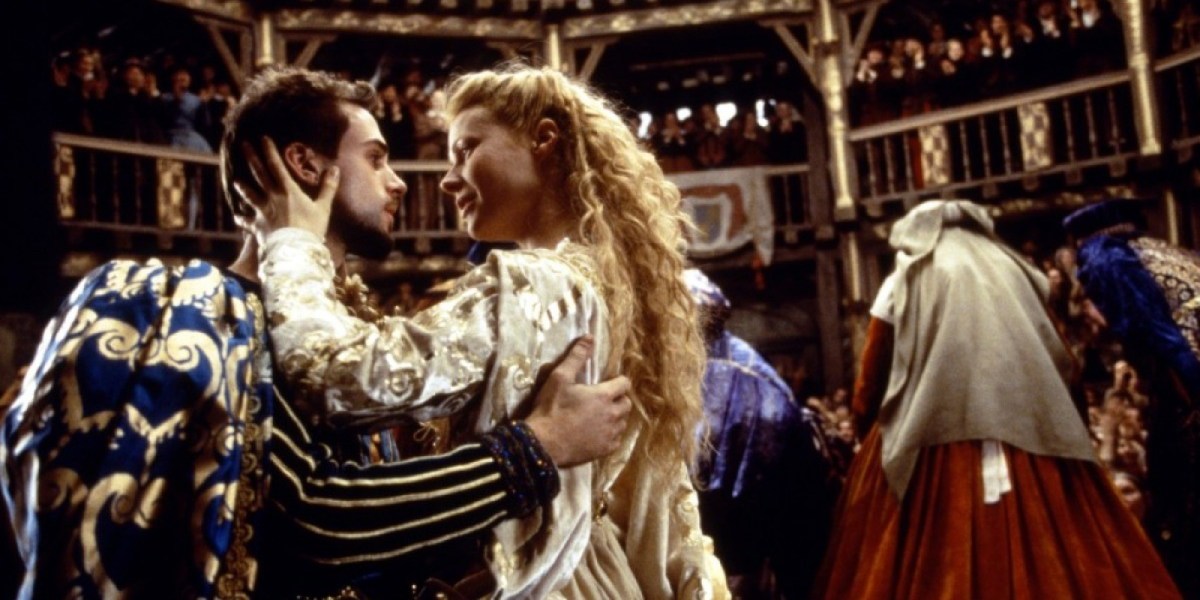
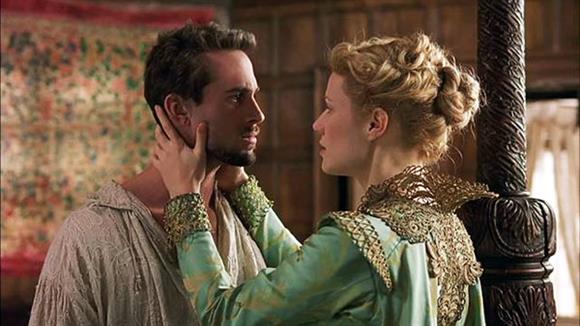
Joseph Fiennes and Gwyneth Paltrow juggle love and inspiration in the delightful Shakespeare in Love

Director: John Madden

Cast: Gwyneth Paltrow (Viola de Lessops), Joseph Fiennes (William Shakespeare), Geoffrey Rush (Philip Henslowe), Colin Firth (Lord Wessex), Ben Affleck (Ned Alleyn), Judi Dench (Queen Elizabeth I), Simon Callow (Edmund Tilney), Jim Carter (Ralph), Martin Clunes (Richard Burbage), Antony Sher (Dr Moth), Imelda Staunton (Nurse), Tom Wilkinson (Hugh Fennyman), Mark Williams (Wabash)

It’s become fashionable since 1998 to criticize Shakespeare in Love. It’s one of those films that the Oscar has diminished –you’ll swiftly find someone who’ll say “can you believe it beat Saving Private Ryan?” It doesn’t help that the film become a poster-child for Harvey Weinstein’s Oscar success, his tireless and canny promotion campaign for the film being credited for its sweeping the board. All that buzz is unfair, as it distracts from a hugely enjoyable, very funny, heartfelt and charming film, stacked with scenes that will make you laugh or let out a sad little sigh.

It’s 1593 and Will Shakespeare (Joseph Fiennes) has writer’s block. His latest play, Romeo and Ethel the Pirate’s Daughter just can’t get started despite the fact he’s promised theatre manager Philip Henslowe (Geoffrey Rush) that he’ll have it ready in a few days. Will only begins to find inspiration when he falls in love with Viola de Lessops (Gwyneth Paltrow) – little realising that Viola and the promising young actor in his company, Thomas Kent, are one-and-the-same. Viola, passionate about the theatre, dreams of acting on the stage and falls in love with Shakespeare (while keeping her Thomas Kent identity secret) – but her wealthy parents want her to marry the noble Lord Wessex (Colin Firth). Will these two star-crossed lovers find happiness? Or will their destiny follow the lines of the increasingly dark play about two young Verona lovers, that Romeo and Ethel is morphing into?

The largest part of Shakespeare in Love’s success rests with its script. The original idea had been doing the rounds in Hollywood for several years (Julia Roberts was determined to do it at one point, but only with Daniel Day-Lewis as Shakespeare, who was not interested). Marc Norman developed the concept and a plotline (originally much darker). But the film’s captivating wit and playfulness only really cemented itself when Tom Stoppard adapted the script into the frothy, super-smart comedy it became, crammed with riffs and gags about the Bard, Elizabethan theatre and show business. It’s also got a very funny – and humanising – idea of the world’s most famous writer suffering from writer’s block and then falling in love like he’s in one of his own plays.

Stoppard’s other trick was to repackage the concept into a delightful romantic comedy, centring the love story and downplaying other elements (such as Shakespeare’s quest to go solo and build his theatre career). With that, and the plot brilliantly refracting and reflecting Romeo and Juliet in tone and structure (just like that play, the first half is pure comedy, the second half darker in tone). In particular, the film is crammed with Shakespearean plot points and themes (from cross-dressing to plays-within-plays, mistaken identities, ghosts etc etc) all of which playfully  appear, cramming the film with delightful easter eggs.

It’s a celebration of the joy and magic of theatre – but it also hit big in Hollywood, because it’s essentially a Hollywood-studio comedy transmuted into the 1590s. Henslowe feels like a chancing B-movie producer, in debt who feels that with the idea of promising a share of profits (“there never are any”) instead of a salary, that his financial backer “may have hit on something”. There are puns about the unimportance of writers, billing on posters, the neurosis of creative people (even including an Elizabethan psychiatrist), oversized production credits, forced “happy endings” and sticking to tried-and-tested formulas. Gags call back to show-biz staples (“The show must…” “Go on!”). While it may be set in a theatre, there is a lot of the Hollywood studio in this.

But, with Stoppard at the pen, it was never going to be anything other than a loving tribute to the power of theatre to change lives. Shakespeare’s Romeo and Juliet is presented as a landmark in theatre history, a shift towards putting real-life emotion on stage instead of a few cheeky laughs and “a bit with a dog”. There is a wonderful plotline for Tom Wilkinson’s at-first all-business moneylender Fennyman, who discovers in himself a sense of wonder and delight for the theatre that melts his heart. (Wilkinson is outstanding here, a brutal man turned teary-eyed spectator, thrilled to be playing the apothecary). It weaves its charms so well about the delights of theatre, that you’ll even forgive the cliché of the stammering actor who finds his confidence on the first night. You even get a belting performance of Romeo and Juliet(with all the dull bits removed).

What really sucks in audiences through is the love-story – and Shakespeare in Love has a belter of a romantic plot. Riffing on Twelfth Night, As You Like It and of course Romeo and Juliet among many others, it’s a delightful series of misunderstandings, confusions and then passion, that eventually builds to an ending that’s bittersweet but true. It’s also beautifully played by the actors. Joseph Fiennes is so good here, a masterful display of light comedy tinged with sadness, so quick and electric with inspiration that I’m still amazed he didn’t go onto to better things.

Paltrow’s teary Oscar-acceptance has rather blighted the memory of her performance, but she has an earnestness and innocence that is deeply endearing and brings with it a radiant intelligence and emotional maturity that sees her turn into a realist. Wisely, the film’s ending sheds the other, minor plots, to hone in on an ending that is both sad and hopeful, that reflects real life (Shakespeare was after all, a real man married to someone else in Stratford) and sets up a thematic idea of love and inspiration being a life-long romance, that touches every moment of our lives, even when the loved person themselves is far away.

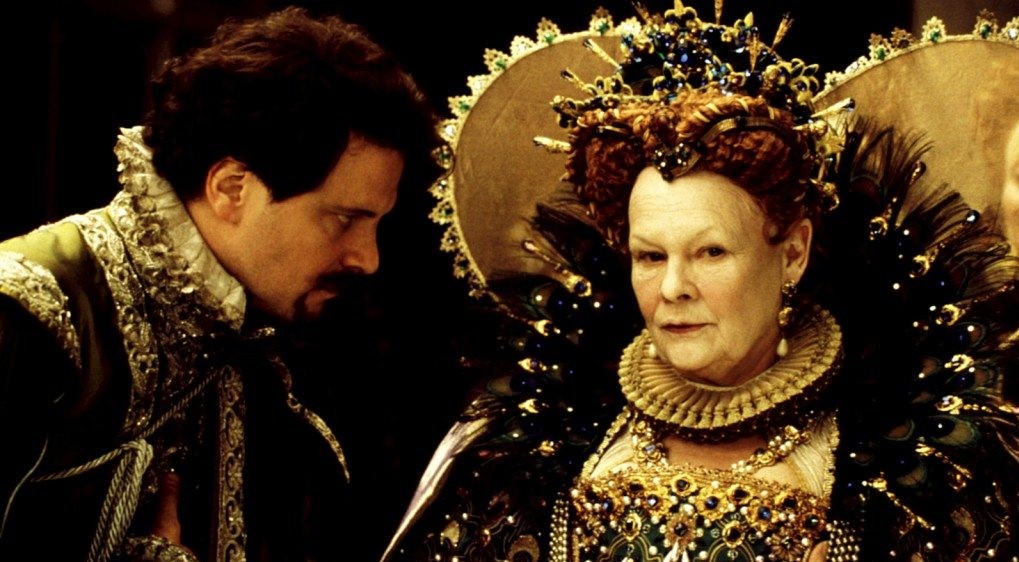
Directed with a smooth, professional sense of pace and joy by John Madden, it becomes a sweeping, surprisingly epic film, with a brilliant reconstruction of Elizabethan England and a luscious musical score by Stephen Warbeck heightening each scene’s emotional impact. The leads are marvellous, and there isn’t a weak-link in the strong cast. Judi Dench famously won an Oscar for her 8 minutes, but then its quality not quantity that matters and Dench’s archness is perfect for the role. Rush is hilarious as the grubby Henslowe, Affleck never better than his grand-actor parody, Colin Firth scowls expertly as “the other man” and Rupert Everett is dry and witty in a brief cameo as Christopher Marlowe, feeding Shakespeare suggestions.

You could say that Shakespeare in Love is just a romantic comedy. In many ways that would be fair. It doesn’t re-invent a genre, like Saving Private Ryan did. But, it’s a brilliantly mounted, intelligent and extremely funny one, with a superb script, some brilliant performances and wonderfully mounted. While it makes some good riffs on theatre, Shakespeare and the nature of love, it’s principle mission is to entertain – a big cinematic entertainment about the greatest playwright ever. And don’t we always say that comedy is exactly what the academy is biased against?

Moulin Rouge! (2001)

Nicole Kidman and Ewan McGregor make a love story for the ages in Luhrmann’s electric Moulin Rouge!

Director: Baz Luhrmann

Cast: Nicole Kidman (Satine), Ewan McGregor (Christian), Jim Broadbent (Harold Zidler), Richard Roxburgh (Duke of Monroth), John Leguizamo (Henri de Toulouse-Lautrec), Jacek Koman (The Unconscious Argentinian), Caroline O’Connor (Nini), Kerry Walker (Marie), David Wenham (Audrey)

It’s 20 years old now and I still don’t think there has been anything quite like Moulin Rouge! Believe me it’s not for want of trying. Baz Luhrmann’s hugely inventive, uniquely stylistic musical is cinematic marmite: either loved or reviled (not sure I’ve ever met anyone who had a meh attitude to it). One of the pioneering inventors of the juke-box musical, Moulin Rouge! mixes pop songs with inspiration from opera to Greek myth and comes up with something Spectacular, Spectacular.

It’s the turn of the century, and Christian (Ewan McGregor) arrives in Paris looking for truth, inspiration and above all: love. Arriving at Montmartre, he and courtesan Satine (Nicole Kidman) fall in love. Satine is the star at Harold Zidler’s (Jim Broadbent) Moulin Rouge and also the star of Zidler’s planned stage show. She has been promised to his wealthy backer the Duke (Richard Roxburgh). With Christian commissioned to write the script, can he and Satine hide their love from the Duke and make sure the Show Goes On? Or will tragedy strike?

Fast paced and electric, Moulin Rouge! could inspire motion sickness, especially in its opening 15 minutes which throw us deep into its unconventional medley of styles, tones and inspirations. Did that first 15 minutes lose a lot of people? You can imagine it as the earliest scenes featuring Christian’s meeting with Toulouse-Lautrec and the other Bohemians are by far its weakest. If your irritation grows at these shrill scenes (crudely over-acted with an overbearing Keaton-ish energy), I can well imagine thousands of viewers checked out in Luhrmann’s music inspired Moulin Rouge can-can musical with its explosion of rap, Nirvana, Lady Marmalade and insanely quick cutting. It’s a statement opening – and throws you straight into its heightened reality. A tone that continues for much of the opening 40 minutes.

Luhrmann leaves nothing in the locker room here. Only a director of such exuberance, playfulness – but also deep skill and understanding of high and low culture – could have balanced it as well as he does. Go with it and you’ll love it. It’s pure operatic entertainment. Luhrmann’s master-stroke is to shoot a period musical in the style of the high-velocity music-video pop that excited people in 2001 – finally you get a sense of why the Moulin Rouge and can-can seemed so exciting and sexy back then. It’s a night-club of 1999, thrown into 1899.

But what makes the film work after that initial explosion of energy – and I’ll agree that the first 15 minutes tries too hard to grab your attention – is that Luhrmann mixes the styles up so effectively. There is everything here, from Busby Berkeley numbers to heartfelt love ballads to dreamy duets to a sexual tango to a classic theatrical set-piece, tinged with a spot of tragedy. Every musical number seems inspired by a different genre and style of musical theatre. And the use of modern pop music is fun, entertaining and mines the emotional connection we all feel for the best pop songs.

It’s an MTV pop musical, mixed with Gene Kelly, lashes of camp, cheeky humour and finally tragedy and suffering. It’s got a million cuts in it, but Luhrmann successfully makes the film darker, slower and more intimate as the film progresses. From the electric dynamism of the opening, this becomes an increasingly personal tragedy revolving around five key characters. It never loses that sense of showmanship – Zidler’s planned production is an overblown Bollywood inspired extravaganza that delights in recreating the joy and brashness of that genre – but the final hour is a more adult, foreboding movie with plenty of heart.

Moulin Rouge! is all about Luhrmann’s gadfly brilliance to discover inspiration from a host of sources, pulling it together into something brilliantly original, from the plot – which is inspired by La Boheme by way of Orpheus and Eurydice – to brilliant montage songs like the Elephant Love Song Medley, which takes snippets from nearly every popular love song you’ve ever heard. Very few films can switch so effortlessly from cheeky, end-of-the-pier humour to gut-wrenching tragedy. It’s energy effectively and brilliantly applied, and that comes from the director (who was, of course, inexplicably not among the films eight Oscar nominations).

Luhrmann also gets the actors to perform with the sort of energetic, fully-committed exuberance the film needs. The principals go at every single scene with no hesitations at all – bless them, none have any concern with appearing silly at all. McGregor reveals a sweetness and earnestness (as well as very strong singing voice) he hadn’t shown before. Kidman was an absolute revelation as a woman hiding doubt, insecurity and fear under an exterior of pure confidence. Broadbent’s comedic brilliance is matched with his dramatic flair. Roxburgh is hilarious, and also vile, as the selfish Duke. Luhrmann recognises their strength – after the first 10 minutes every scene features at least two of these performers.

Things have clearly been cut here and there. Motivations and even characterisations of some of the other members of the Moulin Rouge troupe change from scene-to-scene. Sometimes it tries too hard to be inventive. But it works so often that it hardly matters. And the remixes of the songs for performance are outstanding. The “Like a Virgin” Busby Berkely number is hilarious, the “Roxanne Tango” breath-takingly influential. “The Show Must Go On” is powerfully doom-laden and “Your Song” beautifully romantic. “Come What May” – the only original number – is an iconic ballad.

There’s not been anything quite like Moulin Rouge! – and Luhrmann has never managed to match it again since. Electric, dynamic, exciting, heartfelt, moving and above all extremely joyful, it has some brilliantly judged performances from its lead actors. There hasn’t been anything like it since – and I’m pretty sure we won’t see it’s like again.

Topsy-Turvy (1999)

Allan Corduner and Jim Broadbent excel as the Gilbert and Sullivan’s in Mike Leigh’s superb Topsy-Turvy

Director: Mike Leigh

Cast: Jim Broadbent (WS Gilbert), Allan Corduner (Sir Arthur Sullivan), Lesley Manville (Lucy “Kitty” Gilbert), Ron Cook (Richard D’Oyly Carte), Eleanor David (Fanny Ronalds), Wendy Nottingham (Helen Lenoir), Timothy Spall (Richard Temple), Vincent Franklin (Rutland Barrington), Martin Savage (George Grossmith), Dorothy Atkinson (Jessie Bond), Shirley Henderson (Leonara Braham), Kevin McKidd (Durward Lely), Louise Gold (Rosina Brandham), Andy Serkis (John D’Auborn), Dexter Fletcher (Louis), Sam Kelly (Richard Barker)

It seems an odd-fit: Mike Leigh, auteur of working class drama, prestige period films and the music of the middle-class in Gilbert and Sullivan. But that’s to forget Gilbert and Sullivan were among the masters of theatre – and Leigh himself is a theatrical great. Topsy-Turvy, from seeing the most uncharacteristic of the director’s works, in fact perhaps an examination of the creative process Leigh has made his life. It’s a wonderfully made, superbly executed tribute to the struggles and rewards of artistic creation. A celebration of how disparate personalities come together to create something bigger than themselves. Affectionate, heartfelt, at times quietly moving, Topsy-Turvy is both one of Leigh’s most enjoyable films and one of his most tender.

It’s 1884 and the creative partnership between WS Gilbert (Jim Broadbent) and Arthur Sullivan (Allan Corduner) is at a turning point. With their latest, Princess Ida, hardly setting the box-office alight. Sullivan feels the partnership has gone stale – and also feels under pressure to turn his attention towards more ‘serious’ composing. Gilbert refuses to change his next libretto, which Sullivan feels is effectively more of the same. Things change though when Gilbert is intrigued by an exhibition of Japanese arts and crafts, quickly creating a new libretto: The Mikado. The two geniuses, finally in unison, work together to bring the production to the stage.

Topsy-Turvy is probably Leigh’s most purely entertaining film. For anyone who has ever been involved in theatre or the arts, you’ll certainly recognise more than a few moments in this film, which is practically Leigh’s love letter to the arts. Leigh’s aim was to pay tribute to the difficulties of creativity and the demand of having to constantly refresh and reinvent your work to stay relevant and fulfilled. He succeeded: few films have so beautifully captured the struggle, pain, satisfaction and joy of creation or the strange anti-climax artistic success can bring.

Most of the second half of the film is a fascinating look at every step required to bring a production to life. From casting and contract negotiations, to costume fittings, staging and work in the rehearsal room. We get a fascinating insight into the complex backstage politics and squabbles in this small world. From actors bitching about the management (always incompetent, regardless of the situation) to the delight and playfulness of rehearsals as different opportunities are explored, it’s a wonderfully true insight into the theatre. Matched with the intricate and extraordinary detail of the reconstruction of the original production – and you have an enthralling insight into theatre. It also very appropriate for Leigh, whose organic methods of creating a film through copious rehearsal and improvisation remains very similar to theatre.

Alongside this though, the film has plenty of sympathy for the cost of creative exertion. Many of the actors lead sad and even lonely lives. Shirley Henderson’s Leonara Braham struggles with drink, Martin Savage’s George Grossmith is a drug addict (the company is too polite to mention it, but he’s clearly struggling with withdrawal at the dress rehearsal), Dorothy Atkinson’s Jessie Bond has constant pains from an unhealed ulcer. WS Gilbert and his wife lead a chaste life, he as terrified of intimacy and connection as he is of watching first nights. Sullivan juggles health problems and a long-running, regular-abortion marked, affair with Fanny Ronalds with a lingering sense of shame at not having exploited his talents more fully. These are lives that come to life when doused with creation, for all the off-stage world reveals trouble and strife.

Much of the first half is a wonderfully judged contrast between the extraverted Sullivan, keen to stretch himself but lacking the application and drive, and the repressed Gilbert, doggedly ploughing on with his (stale-sounding) original idea and unable to comprehend Sullivan’s reluctance. Leigh’s film could easily have manifested itself as a clash between two mis-matched partners. However, while the film expertly draws the parallels between the two, it also shows how much their energy comes from mutual respect. Sullivan is, after all, right that Gilbert’s first idea is a limp retread. But Gilbert’s Mikado idea is so good we don’t need a scene showing Sullivan change his mind – the simple contrast of Sullivan’s chuckles and animated striding while Gilbert reads him The Mikado’s libretto with his boredom and constant questions to the abandoned libretto speaks volumes.

Jim Broadbent is outstanding as Gilbert. He has the repressed distance, the grumpy-old-man bluntness but he mixes it with small flashes of excitement and rapture that speak volumes. His fascinated glances at the Japanese exhibition – soaking up inspiration – are beautifully judged, while his later excited larking around with a samurai sword (the very next scene sees him with a first draft) is perfect. Broadbent is both supremely funny, with several perfectly judged mon-bots, and also heartbreakingly, unknowingly lonely in his distance and fear of emotional contact. Allan Corduner makes a perfect contrast as the brash Sullivan, enjoying fame in a way Gilbert never can, but sharing with him a tortured sense of his need to fulfil his artistic potential.

The rest of the cast – a delightful mix of Leigh regulars and familiar faces – are also fabulous. Lesley Manville is wonderful as Gilbert’s wife, a gentle, eager-to-please woman who we discover has carefully buried deep regret about her emotionally repressed marriage and lack of children (Gilbert’s own difficult relationships with his parents have had a long reach on his life). Timothy Spall is wonderfully entertaining as bitchy leading actor who reacts with quiet despair when his big number is cut. Shirley Henderson’s fragility is perfect for a woman whose stage presence masks her emotional vulnerability and drink dependence. Dorothy Atkinson and Martin Savage are marvellous as two actors whose willingness to carry on under all conditions is skilfully contrasted.

Leigh’s film is also a brilliant reconstruction of time and era (rarely can a researcher be so highly billed on a film’s credits). There is a delight taken in showing how the characters react to new inventions, from Gilbert’s bellowing phone calls (“I am hanging up the phone now!”) to Sullivan’s wonder at a fountain pen (“What will they think of next?”). The design from Eve Stewart, the glorious photography of Dick Pope and the Oscar-winning costumes Lindy Hemming all are perfectly judged. The film though never becomes buried in “prestige costume drama” trappings: it’s eye for history is to acute. From alcoholism to drug addiction, broken families to the seamier streets of London, this is a film that never succumbs to easy nostalgia.

What it remains is a loving tribute to the strange families the build up around theatre. When Temple’s song is cut from the play, the chorus come together humbly but selflessly to beg for the song to be retained, because of their affection and regard for Temple. There may be disagreements, but everyone pulls together to stage the show when the time comes. Leigh’s film is full of wit, affection and a deep, loving regard for those who have chosen a life of creativity. While the film can show the cost of such a life – and the contrasting emptiness and regret away from the stage, in a life which can doesn’t always provide satisfaction – it also celebrates art in a way few other films can. One of the greatest films about the theatre ever made.