
 |
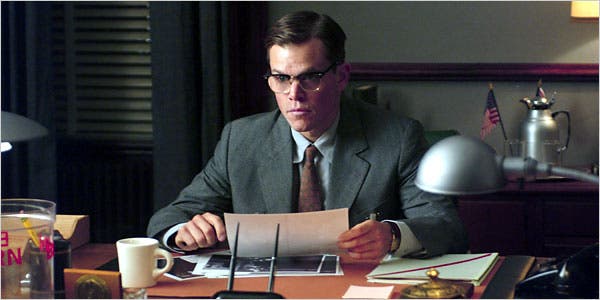
Matt Damon struggles to bring any interest to a rather feeble fake history of the CIA, The Good Shepherd |
Director: Robert De Niro
In depth, personal and opinionated reviews across the whole of film history. Old and new, classic and turkey I review them all: some you might agree with, some I'll sure will infuriate you!
Category: Historical biography
|
Matt Damon struggles to bring any interest to a rather feeble fake history of the CIA, The Good Shepherd |
Director: Robert De Niro
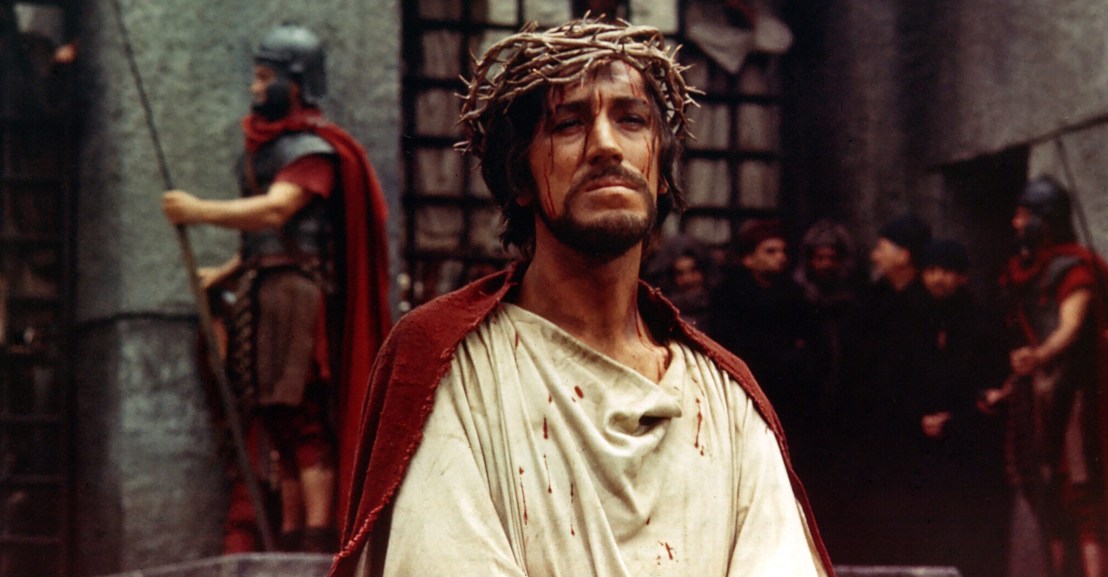 |
Max von Sydow carries a heavy burden in Steven’s far-from The Greatest Story Ever Told |
Director: George Stevens
Cast: Max von Sydow (Jesus), Dorothy McGuire (The Virgin Mary), Charlton Heston (John the Baptist), Claude Rains (Herod the Great), José Ferrer (Herod Antipas), Telly Savalas (Pontius Pilate), Martin Landau (Caiaphas), David McCallum (Judas Iscariot), Donald Pleasance (“The Dark Hermit”), Michael Anderson Jnr (James the Less), Roddy McDowell (Matthew), Gary Raymond (Peter), Joanna Dunham (Mary Magdalene), Ed Wynn (Old Aram), Angela Lansbury (Claudia), Sal Mineo (Uriah), Sidney Poitier (Simon of Cyrene), John Wayne (Centurion)
You could make a case to prosecute The Greatest Story Ever Told under the Trade Descriptions Act. In a world where we are blessed (cursed?) with a plethora of Biblical epics, few are as long, worthy, turgid or dull as George Stevens’ misguided epic. Just like Jesus in the film is plagued by a Dark Hermit representing Satan, did Stevens have a wicked angel whispering in his ear “More wide shots George, and even more Handel’s Messiah. And yes, The Duke is natural casting for a Roman Centurion…”. The Greatest Story Ever Told has some of the worst reviews Christianity has ever had – and it’s had some bad ones.
The plot covers the whole life of the Saviour so should be familiar to anyone who has ever seen a Gideon’s Bible. It was a passion project for Stevens, who spent almost five years raising the cash to bring it to the screen. When he started, the fad for self-important Biblical epics was starting to teeter. When it hit the screen, it had flat-lined. It didn’t help that The Greatest Story Ever Told was first released as an over four-hour snooze fest, laboriously paced, that managed to drain any fire or passion from one of (no matter what you believe) the most tumultuous and significant lives anyone on the planet has ever led. The film was cut down to about two hours (making it incomprehensible) and today exists as a little over three-hour epic that genuinely still feels like it’s four hours long.
Stevens gets almost nothing right here whatsoever. Self-importance permeates the entire project. The film cost $20million, double the largest amount the studio had ever spent. Ordinary storyboards were not good enough: Stevens commissioned 350 oil paintings (that’s right, an entire art gallery’s worth) to plan the picture (which probably explains why the film feels at times like a slide show of second-rate devotional imagery). The Pope was consulted on the script (wisely he didn’t take a screen credit). Stevens decided the American West made a better Holy Land than the actual Holy Land, so shot it all in Arizona, Nevada and California. It took so long to film, Joseph Schildkraut and original cinematographer William C Mellor both died while making it, while Joanna Durham (playing Mary Magdalene!) became pregnant and gave birth. Stevens shot 1,136 miles of film, enough to wrap around the Moon.
There’s something a little sad about all that effort so completely wasted. But the film is a complete dud. It’s terminally slow, not helped by its stately shooting style where the influence of all those paintings can be seen. Everything is treated with crushing import – Jesus can’t draw breath without a heavenly choir kicking in to add spiritual import to whatever he is about to say. Stevens equates grandeur with long shots so a lot of stuff happens in the widest framing possible, most ridiculously the resurrection of Lazarus which takes place in a small part of a screen consumed with a vast cliff panorama. Bizarrely, most of the miracles take place off-screen, as if Stevens worried that seeing a man walk on water, feed the five thousand or turn water into wine would stretch credulity (which surely can’t be the case for a film as genuflecting as this one).
What we get instead is Ed Wynn, Sal Mineo and Van Heflin euphorically running up a hilltop and shouting out loud the various miracles the Lamb of God has bashfully performed off-screen. Everything takes a very long time to happen and a large portion of the film is given over to a lot of Christ walking, talking at people but not really doing anything. For all the vast length, no real idea is given at all about what people were drawn to or found magnetic about Him. It’s as if Stevens is so concerned to show He was better than this world, that the film forgets to show that He was actually part of this world. Instead, we have to kept being told what a charismatic guy He is and how profound His message is: we never get to see or hear these qualities from His own lips.
For a film designed to celebrate the Greatest, the film strips out much of the awe and wonder in Him. It’s not helped by the chronic miscasting of Max von Sydow. Selected because he was a great actor who would be unfamiliar to the mid-West masses (presumably considered to be unlikely to be au fait with the work of Ingmar Bergman), von Sydow is just plain wrong for the role. His sonorous seriousness and restrained internal firmness help make the Son of God a crushing, distant bore. He’s not helped by his dialogue being entirely made-up of Bible quotes or the fact that Stevens directs him to be so stationary and granite, with much middle-distance staring, he could have been replaced with an Orthodox Icon with very little noticeable difference.
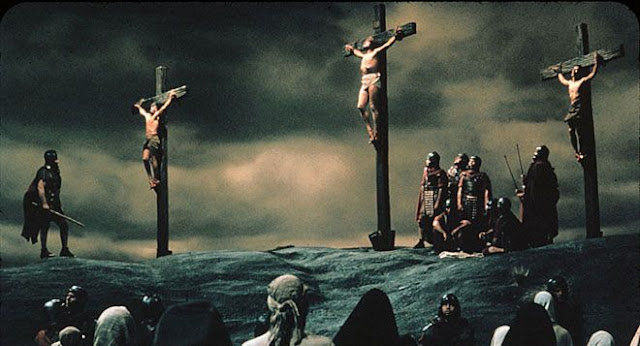
Around von Sydow, Stevens followed the norm by hiring as many star actors as possible, some of whom pop up for a few seconds. The most famous of these is of course John Wayne as the Centurion who crucifies Jesus. This cameo has entered the realms of Filmic Myth (the legendary “More Awe!”exchange). Actually, Stevens shoots Wayne with embarrassment, as if knowing getting this Western legend in is ridiculous – you can hardly spot Wayne (if you didn’t know it was him, you wouldn’t) and his line is clearly a voiceover. In a way just as egregious is Sidney Poitier’s wordless super-star appearance as Simon, distracting you from feeling the pain of Jesus’ sacrifice by saying “Oh look that’s Sidney Poitier” as he dips into frame to help carry the cross.
Of the actors who are in it long enough to make an impression, they fall into three camps: the OTT, the “staring with reverence” and the genuinely good. Of the OTT crowd, Rains and Ferrer set the bar early as various Herods but Heston steals the film as a rug-chested, manly John the Baptist, ducking heads under water in a Nevada lake, bellowing scripture to the heavens. Of the reverent, McDowell does some hard thinking as Matthew, although I have a certain fondness for Gary Raymond’s decent but chronically unreliable Peter (the scene where he bitches endlessly about a stolen cloak is possibly the only chuckle in the movie).
It’s a sad state of affairs that the Genuinely Good actors all play the Genuinely Bad characters – poor old Jesus, even in the story of his life the Devil gets all the best scenes. That’s literally true here as Donald Pleasence is head-and-shoulders best-in-show as a softly spoken, insinuating but deeply sinister “Dark Hermit” who tempts Jesus in the wilderness and then follows Him throughout the Holy Land, turning others against Him. Also good are David McCallum as a conflicted Judas, Telly Savalas as weary Pilate (he shaved his head for the role, loved the look and never went back) and Martin Landau, good value as a corrupt Caiaphas (“This will all be forgotten in a week” he signs the film off with saying).
That’s about all there is to enjoy about a film that probably did more to reduce attendance at Sunday School than the introduction of Sunday opening hours and football being played all day. A passion project from Stevens where he forgot to put any of that passion on the screen, it really is as long and boring as you heard, a film made with such reverent skill that no one seemed to have thought about stopping and saying “well, yes, but is it good?”. I doubt anyone is watching it up in Heaven.
 |
Warren Beatty brings his passion to life in Ken Loachesque Reds |
Director: Warren Beatty
Cast: Warren Beatty (John Reed), Diane Keaton (Louise Bryant), Edward Herrmann (Max Eastman), Jerzy Kosinski (Grigory Zinoviev), Jack Nicholson (Eugene O’Neill), Paul Sorvino (Louis C Farina), Maureen Stapleton (Emma Goldman), Nicolas Coster (Paul Trullinger), William Daniels (Julius Gerber), Jan Triska (Karl Rodek), Gene Hackman (Pete van Wherry)

Reds is the film only Warren Beatty could have made. Imagine the pitch meeting: I want to make a three hour long biopic about American communists, with the hero being the only American buried in the Kremlin, and I need $30million dollars to do it. Only Beatty had the force of personality to get major companies to invest greenbacks into a film celebrating a man who would have happily cheered their demise. Reds is a tribute above all to the dedication of its multi-titled director and his refusal to compromise. It’s a big piece of serious minded, educational but also dramatic and romantic storytelling. Not many people could have pulled it off.
In 1915 Louise Bryant (Diane Keaton), a young would-be journalist and suffragette, meets and falls in love with left-wing journalist John Reed (Warren Beatty). The two of them tun off together to Reed’s bohemian circle in Greenwich Village, New York then to Massachusetts, becoming the centre of a community of anarchists, socialists and artists. Their mutual love is damaged by affairs – in particular Bryant’s heartfelt affair with the sensitive Eugene O’Neill (Jack Nicholson) and Reed’s own (off-screen) infidelities – but is rekindled as they are swept up in the Russian Revolution, an event that motivates Reed to try and build a similar communist party in America (with very little success). But, when Reed is trapped in Soviet Russia, how far will Bryant go to reunite with him?
Beatty’s dream of making a film on Reed’s life had been knocking around in his head since the 1960s, but it took the success of Heaven Can Wait in 1978 for him to finally have the muscle to get the film made (when Studio execs, having signed the deal, begged him to consider another subject Beatty stuck to his guns). He originally planned only to produce: that quickly expanded into also writing the script (with Marxist British playwright Trevor Griffiths, a hilarious personality mismatch with the Virginian millionaire Beatty), then directing it and finally, to be completely sure the project went where he wanted it to go, playing Reed as well. It would result in Beatty joining the short list of people nominated in four different categories for one film at the Oscars (but he won only Best Director, Reds losing out the big one to Chariots of Fire).

The real strength of Reds is probably Beatty’s producing. This is a huge epic, filmed across multiple countries in Europe (standing in for each other and for America), marshalling a vast number of sets and locations. Much like Attenborough’s Gandhi, it’s a film directed with a smooth, professional competence, but stage-managed to the screen with the flair of a master producer. Each department was staffed by an expert: Vittorio Storaro shot the film with a Golden Age beauty; Stephen Sondheim contributed to the score; Dede Allen assembled thousands of hours of footage, and dozens and dozens of takes of every scene, into a coherent, pacey movie that effectively balances politics and romance.
In many ways, Reds is like the mirror image of Lean’s Doctor Zhivago (it even has a late train ambush set-piece, chugging through the Spanish wheat fields, that could have come out of Lean’s epic). That film was a romance-for-the-ages that used politics and revolution as a backdrop. Reds uses romance and personal stories as a context-setting background, to push to the forefront politics and revolution. This is perhaps the most earnest and impassioned exploration of the history of American left-wing politics in film history. Giving a lot of time – particularly in its second half – to scenes made-up entirely of impassioned socialists sitting in a room arguing at each other over the minutia of party rules and ideology, this is the sort of epic Ken Loach would have been proud of making.
The politics are also genuinely interesting, quite a feat in itself. Beatty is unafraid to look at the fundamental weaknesses of Western left-wing politics: its own worst enemy is always itself. People who agree on 90% of the issues, swear themselves to become life-long enemies because of differences over the remaining 10%. In one dynamically filmed sequence, Bryant is a frustrated and resigned observer as Reed oversees the split of the American Socialist Party into no less than three factions, two of which set up rival claims to be the “official” Communist party of America.
Not that Reds has any sentiment for Russia: Beatty is savvy enough to know (I wonder if Griffiths was?) that the USSR is about a million miles away from ideal. Factionalism is just as prevalent there, with the difference being the main faction happily uses, suppresses and crushes the others. Reed’s time in Russia sees him becoming increasingly disillusioned and homesick, as he realises a dictatorship isn’t made palatable just because it’s a Communist Dictatorship. As the representative of that system, author Jerzy Kosinski makes for a grippingly stone-faced and ruthless Zinoviev, brow-beating any deviation from the party line.
Beatty makes all this political theorising and left-wing political infighting palatable, by framing it carefully around a genuine romance between Bryant and Reed. For all the unconventionality of their open-ish relationship (their feelings on this change from infidelity to infidelity), these are two people who share a deep and lasting bond on both an emotional and a political level. Both skilled writers, we are shown time and again that they bring out their best work from the other and that when they are focused on each other, they have a mutual understanding few can hope to match.

As Bryant, Beatty (who was in a relationship with her at the time – which didn‘t survive the epic shooting schedule) cast Diane Keaton. It’s a stroke of genius – and this is certainly Keaton’s finest performance. In a way no other role has allowed her, this looks past Keaton’s comedic skills and allows her to match her intelligence and spark with a woman who challenged norms, as a skilled writer and journalist. Keaton can play heart-rending emotion just as well – her breakdown fury at discovering Reed’s infidelity is fully-committed without being OTT – and she’s perfect as the increasingly disillusioned observer of left-wing failures. She believably flourishes from a woman uncertain of who she is to become a determined intellectual willing to cross continents to find what she wants. It’s a brilliant performance, smart, sharp and moving.
Beatty fronts-and-centres her so much, he slightly short-changes himself – playing Reed he doubles down on the boyish charm and enthusiasm (and he feels really young here), making Reed an enthusiastic, vulnerable, naïve figure. We just don’t quite get a real sense of who he is beyond that. You can’t say the same for Nicholson’s Eugene O’Neill, delivering a remarkably low-key, restrained and sensitive performance. He’s loving, emotionally vulnerable and eventually devastated, in one of his finest acting performances. Maureen Stapleton won the Best Supporting Actress for her Earth-mother anarchist Emma Goldman, the cuddly aunt of firey, confrontational anarchic politics.
Reds is marshalled by Beatty into an epic that powers along effectively. The first half of the film gets its narrative balance right: contrasting personal and political growth with a backdrop of War and Revolution. The second half leaves a little too much to chew, a vast amount of political debate rushed through with a series of increasingly short and sometimes disconnected scenes. Beatty balances the narrative with extensive “witness” interviews, from real-life contemporaries of the characters. (These are never identified, which is a bit of shame as it never allows to really know what their perspective was). It adds a feeling of earnestness to a project that gets an effective balance between politics and the personal, between showmanship and details and between scale and intimacy. While it is more of a producer’s film – and rushed in its second half – than a triumph of directorial imagination, it’s still an impressive – and informative – achievement.
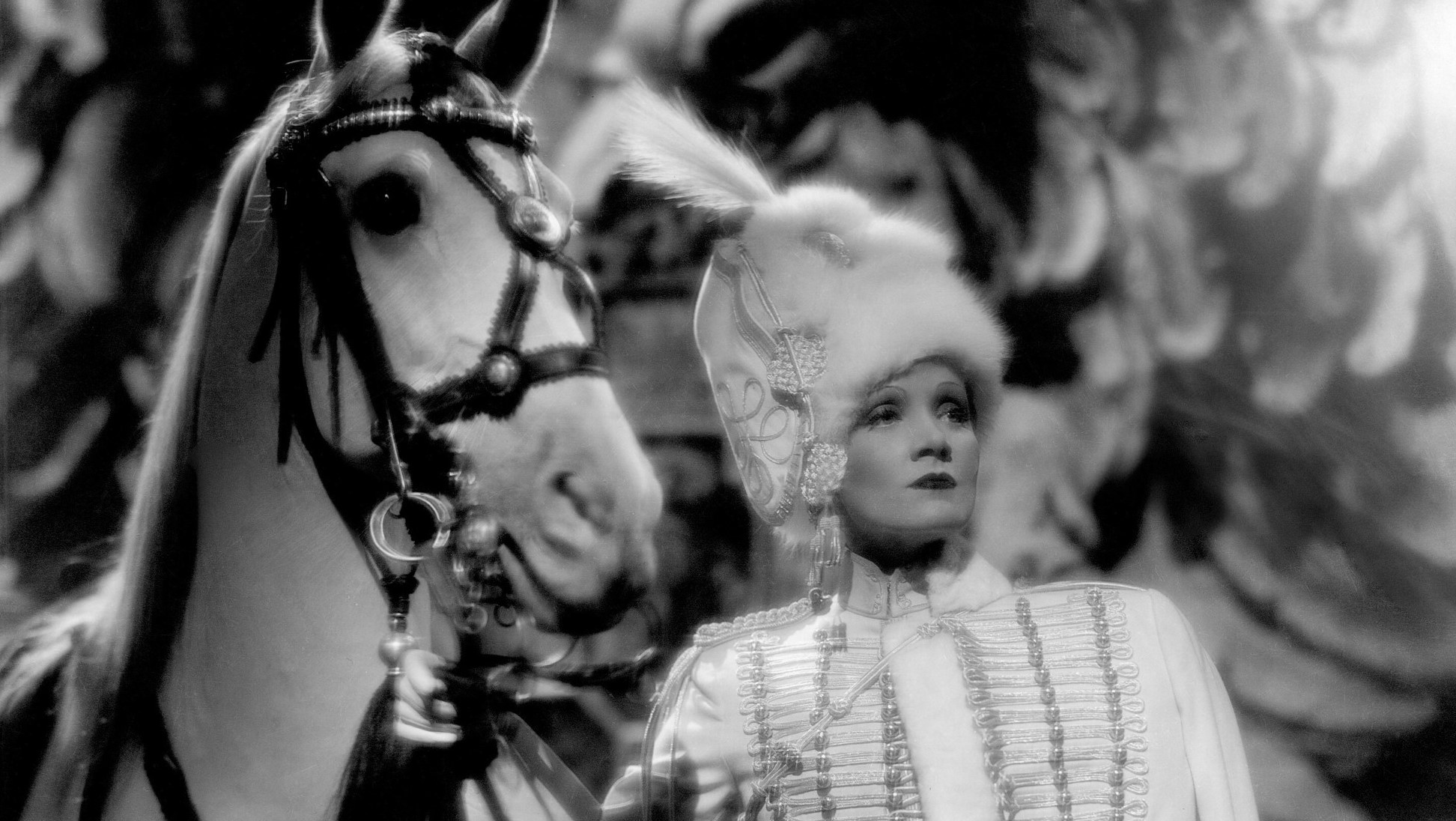 |
Marlene Dietrich with a beloved friend (and the film has fun with that rumour) in The Scarlet Empress |
Director: Josef von Sternberg
Cast: Marlene Dietrich (Empress Catherine), John Lodge (Count Alexey Razumovsky), Sam Jaffe (Emperor Peter III), Louise Dresser (Empress Elizaveta Petrovna), C. Aubrey Smith (Prince Christian August), Gavin Gordon (Captain Orlov), Olive Tell (Joanna Elizabeth), Ruthelma Stevens (Countess Elizaveta), Davison Calrk (Arch Episcopope), Erville Anderson (Chancellor Bestuzhev-Ryumin)

Did von Sternberg have a bet on when he made this film? “Hey Josef, what’s the maddest film you think you could make and get away with?” Either that, or perhaps he didn’t care anymore and decided his own obsessions with visuals, sexuality and Dietrich were more important than anything else. Regardless, he made The Scarlet Empress, perhaps one of the most bizarre major releases from a 1930s Studio, a sort of camp masterpiece that contains things you just won’t see any in other film, but at the same time is a disjointed, barely plotted ramble through a fable-tinged version of Russian history. Either way, it’s a truly unique film – and how many films can you say that about?
The plot loosely follows the rise of Catherine the Great (Marlene Dietrich) to power, but any resemblance to real people (living or dead) seems to be purely coincidental. Catherine arrives in Russia to power the heir to the throne, Grand Duke Peter (Sam Jaffe), a gurning simpleton more interested in his soldiers (both toys and real ones) and his mistress Elizaveta (Ruthelma Stevens) than Catherine. Russia is ruled by his mother Empress Elizaveta (Louise Dresser), a domineering matriarch. The (initially) innocent Catherine is admired by the rakeish Count Alexey (John Lodge), but must learn to master the skills of the court – and the sensuality of her own body – to take power.

The Scarlet Empress is pretty crazy. If you are coming here for a history lesson on Catherine the Great, keep on walking. Josef von Sternberg called it “a relentless excursion into style” and that’s a pretty good description. It’s a parade of his fascinations (and obsessions), set in a Russia that never really existed but I suspect Sternberg would argue ‘shouldhave done’. This is Russia as a medieval backwater, built entirely from Cossacks, icons and gargoyles, with the Russian court a ramshackle wooden palace with a throne that wouldn’t look out of place in Game of Thrones. Much of the sense of time and place is buried under this and huge chunks of the film may as well be silent cinema, so little does dialogue matter and so skilfully are emotions and events communicated visually.
However, grab this in the right mood and this is a film it’s impossible not to admire and even fall in love with a little bit. There really is nothing like this, and like much of Sternberg’s work there is a visual sweep and drama here that few other filmmakers can match. There are some truly striking images, from Cossacks riding through the palace, to Sam Jaffe’s gargoyle like face as Grand Duke Peter, to a giant drill bit punching through the eye of a wooden icon. The jaw dropping production design – sets that dwarf the actors – is mixed with misty lighting for romantic assignations and deep shadows for (literally) backstairs court intrigue.
In all this, the story counts for very little, with the primary focus being Sternberg’s obsessions. Many of those seem to be sexual. The Scarlet Empress was released right on the cusp of the Production Code being enforced in Hollywood – and it’s hard to imagine it could ever have been passed once the code was fully enforced. The film lays it’s hand out early with an S&M tinged Russian torture montage (with naked women in iron maidens, whippings, beheadings and a giant bell with the clapper replaced by a human being) and hardly stops from there. Later montages feature explosions of Peter’s soldiers, looting, shooting and orgying across Russia.
The primary lesson Catherine needs to learn in Russia is to use the power of her own sexuality. The idea of politics is even openly rejected by Catherine in favour of mastering her seductive powers. Initially a blushing, mousy innocent, she becomes increasingly coquettish and seductive as the film unfolds. In an early scene she nervously fingers a riding crop – by later in the film she’s bending it in her hands with all the confidence of a Dominatrix. Lovers come and go, as she wins supporters over to her side (she “added the army to her list of conquests” a caption deadpans at one point). Trysts grow in confidence, as Dietrich’s performance progresses from innocence to dominant knowingness.

Dietrich is as close as she’s been to a prop here, striking a series of poses in a performance that’s largely campily two dimensional. For the first 70 minutes she’s given almost nothing to do other than strike a bemused face: for the remaining 40 minutes she’s like Sternberg’s wet dream of a sexually aggressive domineering woman. Basic notes are what most of the cast are kept to, fitting the impression that they are just props in a silent film. John Lodge scowls and poses as Count Alexey and is as wooden as most of the set. Sam Jaffe is one of the gargoyles made flesh. Louise Dresser is an older version of the sexual kingpin Catherine becomes.
But that’s because it’s all about the mood and the style. The Scarlet Empress has that in absolute spades. It’s as close as you can get in the 1930s to a director of a major Hollywood studio film, pouring money into something that maybe only he will like. It’s silent film roots can be seen not only in its vast impressionistic sets, but also in the steady parade of title cards that dance across the screen to communicate what passes for the story. Acting and story are very much secondary to the mood of sexual exuberance and craziness that dominates nearly every frame of the action. The film was a massive bomb on release – perhaps because no one else could quite work out what it was – and it’s taken decades for its overblown mad genius to be recognised. But it’s a film unlike any other and for that alone you should see it.
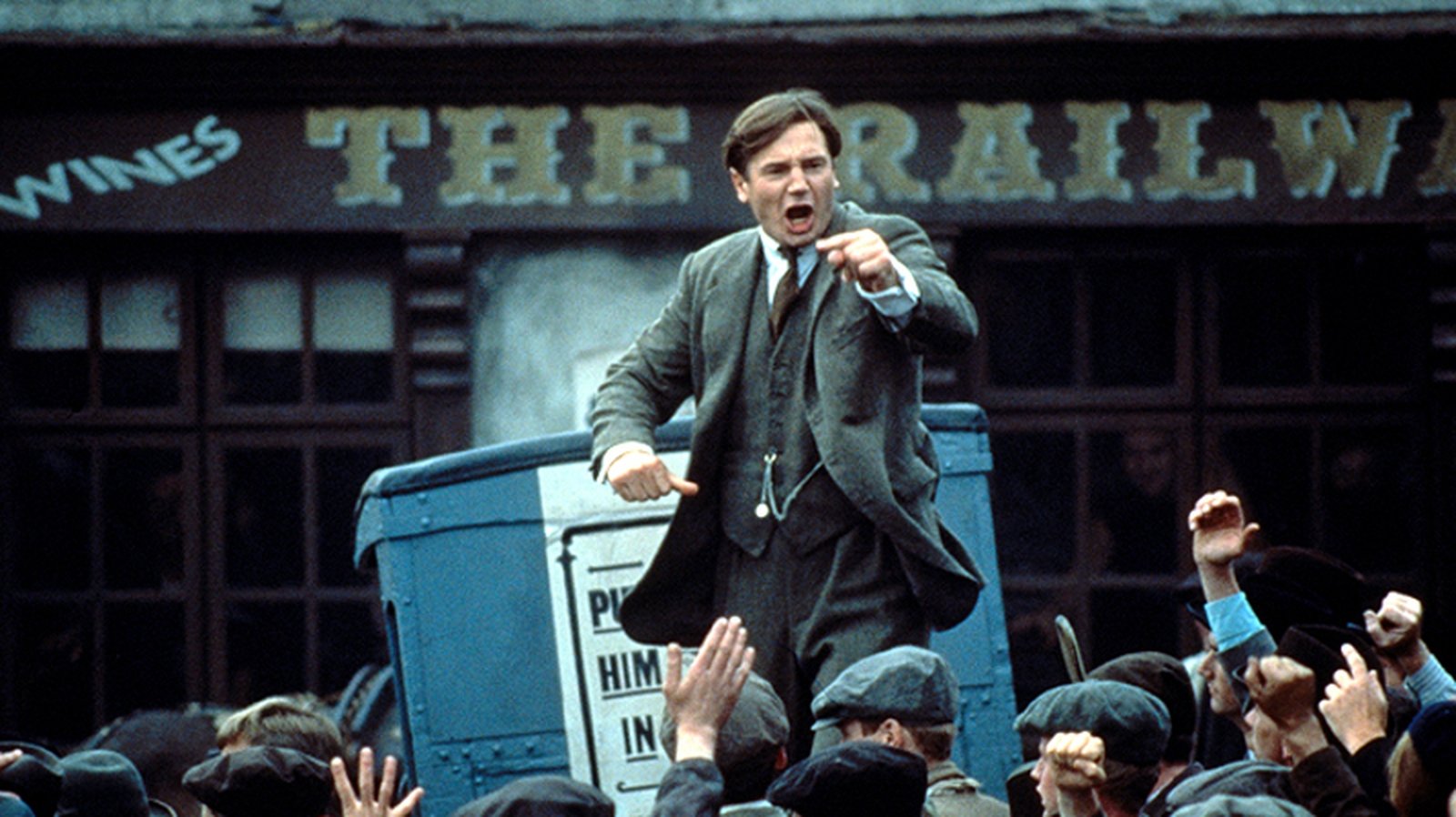 |
Liam Neeson is outstanding as Irish revolutionary leader Michael Collins |
Director: Neil Jordan
Cast: Liam Neeson (Michael Collins), Aidan Quinn (Harry Boland), Stephen Rea (Ned Broy), Alan Rickman (Eamon de Valera), Julia Roberts (Kitty Kiernan), Ian Hart (Joe O’Reilly), Brendan Gleeson (Liam Tobin), Sean McGinley (Smith), Gerard McSorley (Cathal Brugha), Owen O’Neill (Rory O’Connor), Charles Dance (Soames), Jonathan Rhys Meyers (Assassin), Ian McElhinney (Belfast cop)

Britain’s colonisation of Ireland left a poisonous historical legacy that blighted much of the twentieth century. The story of Irish independence, is also one of guerrilla and political brutality, civil war and terrible lost opportunities. Jordan’s biopic of Michael Collins is a study of the man who did more than any other to turn the IRA into an effective guerrilla fighting force – only to be consumed by the very same uncompromising ruthlessness he had set in motion. It’s a powerful and beautifully made film that seeks to explore just how and why violence and politics ended up hand-in-hand in Ireland for almost 100 years.
It opens with the 1916 Easter Uprising, an ignominious failure which the British managed to turn into a glorious one by executing rather than imprisoning its leadership. It’s one of many misjudgements in our occupation. It also the impetus for the young Michael Collins (Liam Neeson) to realise that playing by conventional military roles simply means defeat for the Irish time and again. Put simply, the IRA needs to stop trying to be a field army and instead become a guerrilla army, launching targeted hit-and-run terrorist attacks on the British. It’s a hugely successful campaign – despite the doubts of Sinn Fein leader Eamon de Valera (Alan Rickman), who favours more conventional conflict (“They call us murderers!” he cries, with some justification). But after the British agree a Treaty that divides Ireland, the IRA splinters into pro- and anti Treaty factions. Can Collins put the cork back in the bottle of violence, before the country tears itself apart?
Of course, anyone with a passing knowledge of history knows that he can’t. Hanging over the entire film is the knowledge that Collins’ new methods of political assassination, plainclothes soldiers, bombs and bullets in the middle of the night will eventually expand into the indiscriminate bombing and shooting that consumed Ireland for decades. Not that Collins will live to see it, as he was assassinated aged 31 attempting to negotiate an end to Civil War. What makes Collins such an engaging and intriguing figure is that he (or at least the version we see in this film) was a man forced into methods he knew were wrong, to achieve an end he knew was right.
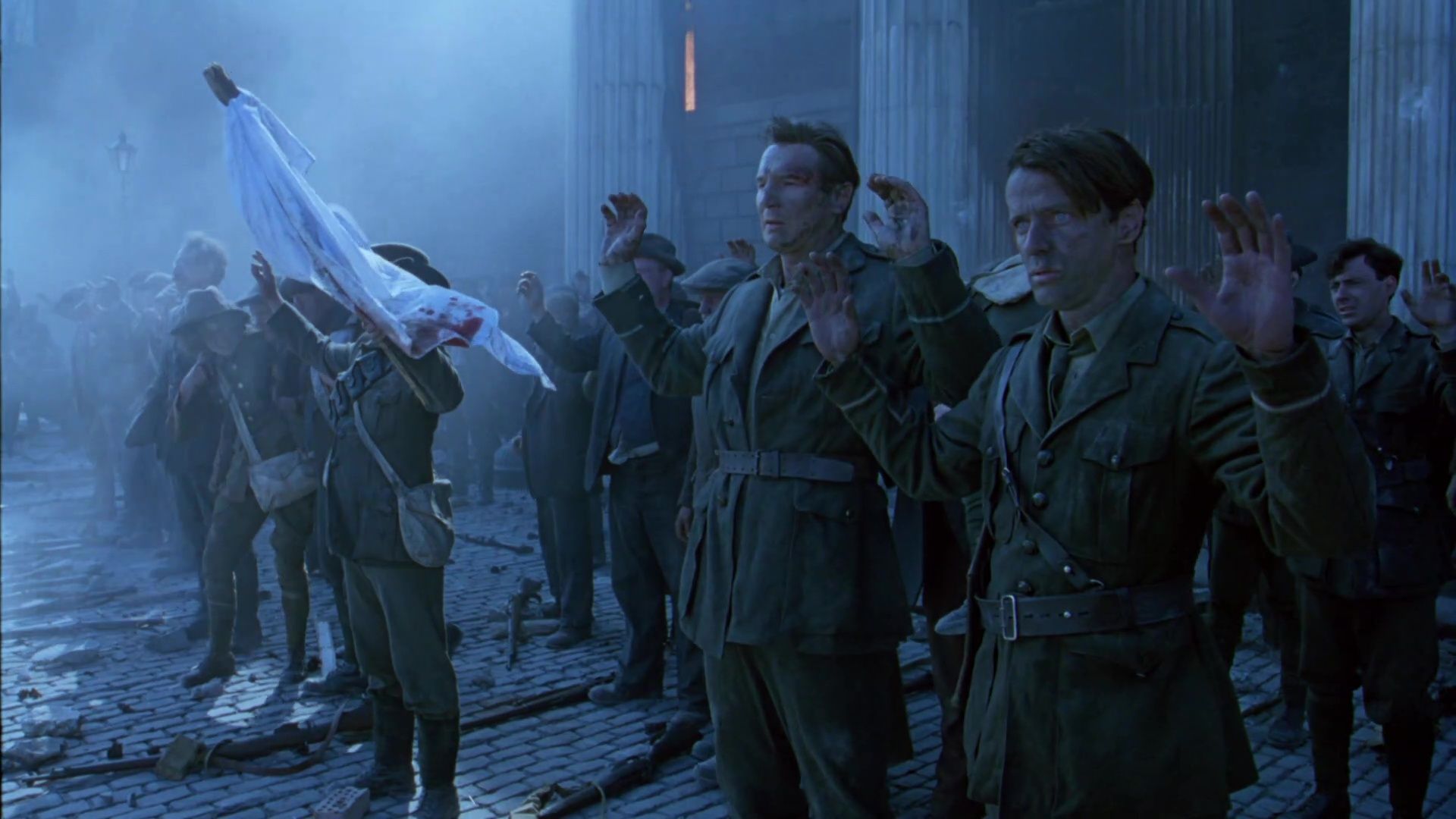
Neeson is superb as the charismatic, blunt yet poetic Collins who is noble enough to know that training young men to quickly and efficiently commit murder is an ignoble legacy. Jordan’s film doesn’t condone Collins use of violence, but establishes why it was necessary. Playing by more conventional rules simply wasn’t going to work – and Ireland didn’t see why they had to wait for British politics to shift. Unlike, say Gandhi in India (and Michael Collins makes a dark companion piece with Attenborough’s Gandhi, two charismatic campaigners choosing radically different paths to independence), Collins believed Britain had to be forced to see holding Ireland wasn’t worth the blood sacrifice and emotional cost. (Jordan’s film is also clear that Britain’s hands were equally dirty, the British conducting their own counter-campaign of assassination and violence).
The tragedy that Jordan finds in all of this is that, when the British were gone, Ireland had become so used to dealing with political problems with violence that they couldn’t imagine solving their disagreements with anything else. Collins is in fact too successful: and the film demonstrates that in radicalising his followers, he’s unable to gearshift them towards compromise. His attempts to get Sinn Fein to accept a Treaty that offers a workable compromise (as opposed to an unwinnable full-scale war), leads to him becoming a victim of exactly the sort of insurgency he pioneered in the first place. To Jordan he is a man trapped in a world of his own making, unable to remove the gun from Irish politics.
Michael Collins makes some compromises with history – something that was bound to get it attacked when dealing with events of such earth-shattering controversy – but it always feel spiritually accurate. The British Black and Tans really were as brutal as they seem, and while they didn’t use an armoured car on the pitch at the “Bloody Sunday” massacre at Croke Park, they did shoot indiscriminately at the crowd and fire at the stadium from an armoured car outside causing 14 fatalities (including two children) and 80 serious injuries. Similarly, in the aftermath of Collin’s assassination of most of the British intelligence operation in Dublin, three IRA leaders were “killed while trying to escape” (even if these were different men than the one who suffers this fate in the film). Just as IRA killings in the street were swift and brutal, so interrogations in Dublin Castle could stretch way beyond what the Geneva Convention would suggest was acceptable.
Much of the first half of the film is structured in the style of an old-fashioned gangster film, with hits and street gangs. Plucky IRA under-dogs (and Neeson’s Collins is so charming, you immediately root for him), take-on the more hissable baddies in British intelligence (led first by a bullying Sean McGinley and then a suavely ruthless Charles Dance). But the romance slowly drains out of this as lifeless bodies hit the floor – and Jordan always gives the focus to the dead after they fall, regardless of their ‘side’. The film has an infectious momentum, which makes its final acts, with their air of tragedy, even more sad and moving. It’s all also quite beautifully shot by Chris Menges, the film bathed in some of the most luscious blues you’ll see.
While Michael Collins is more sympathetic to the Irish (as you would expect), it clearly shows the psychological damage of killing. Hesitant shooters become increasingly ruthless at the cost of their humanity. Collins spends a ‘dark night of the soul’ openly confessing that he hates what he is making young men do and knows it is morally wrong. In the end this explains why methods were chosen, but doesn’t praise them – just as it doesn’t outright condemn them, considering what the Irish were up against. It’s a difficult balance, but very well walked.
There are flaws. Excellent as Liam Neeson (at the time 15 years older than Collins was when he died) and Aidan Quinn as his number two Harry Boland are, the film’s insertion of a love triangle between them and Collin’s eventual fiancée Kitty Kiernan often descends into weaker “Hollywoodese”. It’s not helped by having Kitty played by an egregious Julia Roberts, who struggles gamely with the Irish accent, and who never transcends her star status.

Additionally, while the film has an excellent performance by Alan Rickman (in a pitch perfect vocal and physical impersonation) as Eamon de Valera, it also repositions de Valera as an antagonist. Although de Valera certainly was a prima donna who associated his interests and Ireland’s as being one and the same, the film implies that de Valera’s actions are motivated as much by jealousy as principle and lays most of the blame for the civil war on him. Not to mention implying de Valera’s complicity in Collins eventual death (a heavily disputed assertion, strongly denied by de Valera).
Michael Collins though is a thoughtful, complex and engaging film that brings a tumultuous period of history successfully to life. Jordan’s film manages to wrestle an enthusiastic admiration for Collins, with a questioning exploration of how his actions (however well motivated) led to a legacy of violence. But it doesn’t lose sight of how Collins was aware he was using wicked methods for a noble aim, or that his goal was to bring peace. Wonderfully acted by a great cast (every Irish actor alive seems to be in it), with Neeson sensational, it’s an essential watch for anyone interested in this period of history.
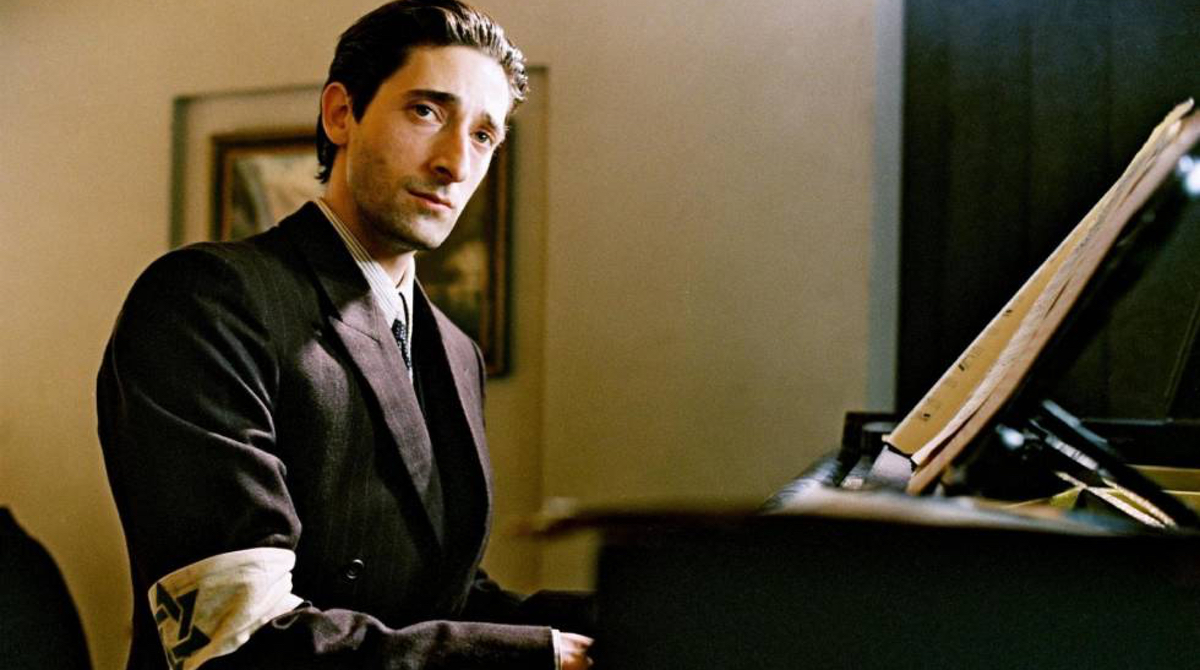 |
Adrien Brody is outstanding in the compelling The Pianist |
Director: Roman Polanski
Cast: Adrien Brody (Wladyslaw Szpilman), Thomas Kretschmann (Captain Wilm Hosenfeld), Frank Finlay (Samuel Szpilman), Maureen Lipman (Edwarda Szpilman), Emilia Fox (Dorota), Ed Stoppard (Henryk Szpilman), Julia Raynor (Regina Szpilman), Jessica Kate Meyer (Halina Szpilman), Ronan Vibert (Andrzek Bogucki), Ruth Platt (Janina Bogucki), Andrew Tiernan (Szalas)

Few directors have as personal a link with the Holocaust as Roman Polanski. As a boy, he witnessed his parents deported to their deaths, surviving only by chance, escaped the Krakow Ghetto and was sheltered by a Catholic family. The lasting impact is clear to anyone who has seen a Polanski film and he avoided Holocaust projects for decades (including Spielberg’s offer to direct Schindler’s List). The Pianist was the film he made on this trauma. Perhaps because the experience of Wladyslaw Szpilman was, in many ways, similar to his own.
Wladyslaw Szpilman (Adrien Brody) is a famous Polish concert pianist. As the German occupation begins, Szpilman and his family face the cruel downward spiral of the new regime’s anti-Semitic policies. Very quickly, laws move from a ban on Jews in public places, to wearing Star of David badges to herded into ghettos. In the ghettos, life is a terrifying struggle, as the German occupiers shift from simple bullying to acts of random, indiscriminate murder. The whim of a German soldier decides whether you live or die. Szpilman’s family are eventually deported to Treblinka, but by a twist of fate Szpilman escapes – and finds himself hiding in Warsaw for years, sheltered by the Polish resistance, desperately trying to survive until the war ends.
Polanski’s film is heart-breakingly sincere and the documentary matter-of-factness it presents appalling, unjustifiable crimes gives great power to the whole film. It never blinks or looks away, and never offers false hope or sentiment. Only the terrible realisation that nothing can have any impact on whether you live or die: death could come from as little a thing as dropping a brick. People are plucked from lines and shot, speaking at the wrong moment is a death sentence and people in wheelchairs are tipped out of fifth storey windows.
There are moments where Polanski seems to be commenting on Schindler’s List’s touches of melodrama: that film featured a Jewish man saved from death by a German officer’s gun jamming – when the same thing happens in here, the German officer calmly stops, carefully reloads the gun, checks it and shoots his victim in the head. That’s the reality. The Pianist tracks all this with a traditionalist, stable camera and a marked restraint. There is no flair, or immersion, to any of this film. Instead, it grimly and calmly shows you each horror.
There is also no sense of fate or destiny. Szpilman survives – while every other Jewish character he encounters does not – not because of things he does himself, but because of chance, luck and risks taken by others. There is a powerful will to survive in Szpilman, but you can say the same for thousands of others. And, as the film demonstrates time and again, determination and desire to live won’t save you if a German officer decides to make an example of you.

Polanski’s film is honest and shocking in its presentation of the descent into brutality in the ghetto. The film chillingly presents the viciousness of what starts as bullying – the German officers who smack Szpilman’s father (a dignified Frank Finlay) around and force him to walk in the gutter – into killing-for-sport. Literally so: German officers turf out the occupants of a building, just for the ‘fun’ of shooting them down like rabbits in their car headlights as they run away.
While the first half of the film covers the horrors of the Ghetto – from over-crowding, to deportations to the increasingly open and random violence – the second half becomes a survival tale that owes a lot to the unsettling horror films of Polanski’s early career. Hiding in a series of apartments, knowing discovery will lead to instant death, Szpilman find himself in a terrifying city where the slightest sound will condemn him. After the noise of the ghetto, the silence of these apartments – and the long periods of silence from Szpilman himself – become increasingly overbearing, while also helping build the dread of discovery.
The only sound we hear are the piano concertos Szpilman is reduced to playing in his head. Frequently Szpilman’s hands move to play an imaginary piano. In one apartment, there sits a piano he can never play: nevertheless his first act is to open it and let his hands dance perfectly above the keys, imagining the music they produce. It’s a brilliant reminder of the ordinary life he has been forced to leave behind – and how, even when things are at their worst, we cling to the things that make us human.
As Szpilman weakens and grows pale in his apartment prisons, he witnesses both the Ghetto uprising of 1943 and the Warsaw uprising of 1944. Polanski treats this urban war with the same chilling matter-of-factness as the rest. From Szpilman’s window we see bodies fall and buildings burn. People slump dead in unusual, un-cinematic positions – a woman, shot in the back, falls to her knees and slumps forward – and with an abrupt, horrible finality. Only someone who has seen death in war, could film it like this.
When Szpilman finally emerges into Warsaw – a city Polanski has only let us see as Szpilman sees it, a few buildings, a street or two – he finds the city a burned-out ruin. It’s the first crane shot of the whole film, that until then has kept its formal angles down at the level Szpilman has experienced. The wreck of the city also matches Szpilman, now an emaciated, mute Beckettian tramp, clutching his only food, a can of pickles.
Despite all this, the film is full of good, brave people who help Szpilman, many of them in the Polish resistance. Most affectingly of all is the touch of hope the story offers – the last to help is a German pfficer (affectingly played by Thomas Kretschmann). The motives of this character are left vague – is it kindness, weariness with war, disgust at Nazism or just another whim – perhaps because all we know is this man, who helped many others as well, died in 1952 in a Soviet prison camp. For all that, seeing a good man in a uniform worn by so many murderers, gives you hope something can come out of this wreckage.

At the heart is Adrien Brody, who gives a transformatively superb performance as Szpilman. Wry and dry at first, the film sees him being hollowed out into someone scared, desperate and finally emaciated and traumatised. Brody’s brilliance is in stressing there is nothing out of the ordinary to Szpilman beyond his piano playing. He has to learn to bear the guilt of having no choice but to walk away while his family are killed. But he never loses his humanity and dignity – even as a frazzled tramp, when finally allowed to play a piano, after a pause he launches into a performance of breath-taking cathartic release. It’s a superb performance.
The Pianist showcases the sadistic whim that drove the Holocaust. Death is not operatic, but functional, everyday and comes without warning. The film is unflashy, almost classical in its approach, carefully paced and un-melodramatic. But that reflects the lack of romance in war and the grinding terror and suffering of just surviving. By focusing on a single man’s story and experience, it helps us begin to appreciate that his story was just one of millions. That helps make The Pianist one of the most compelling, moving and brilliant Holocaust dramas ever made.
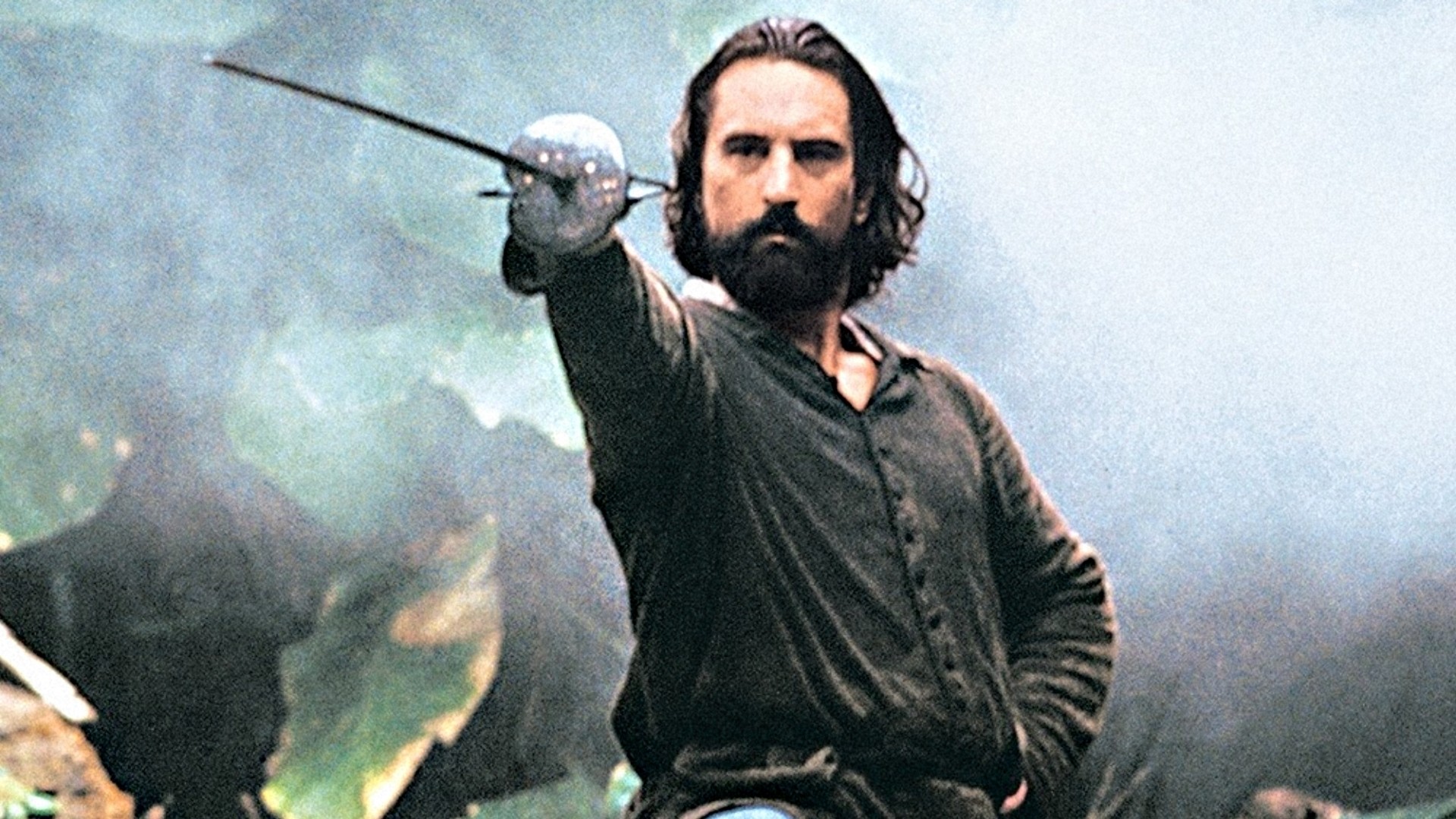 |
Robert de Niro turns aside from the Jesuit rule to fight for right in The Mission |
Director: Roland Joffé
Cast: Robert de Niro (Rodrigo Mendoza), Jeremy Irons (Father Gabriel), Ray McAnally (Cardinal Altamirano), Aidan Quinn (Felipe Mendoza), Cherie Lunghi (Carlotta), Ronald Pickup (Hontar), Chuck Low (Don Cabeza), Liam Neeson (Father John Fielding)
Spoilers: The incredibly grim and depressing ending of The Mission is discussed in detail.
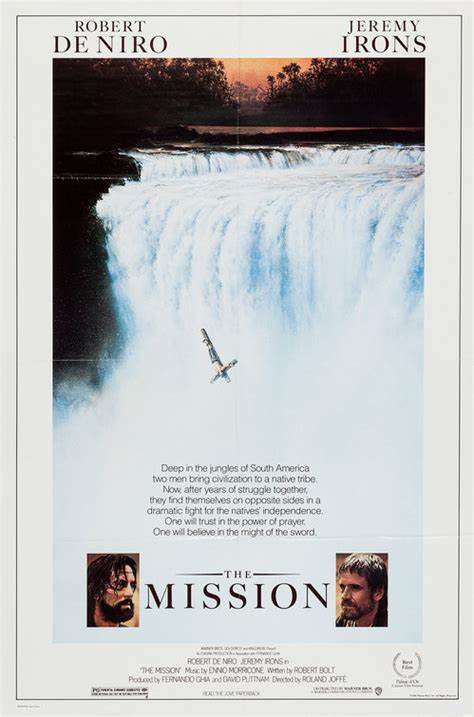
When the world is run by men, how much of a voice does God have? Roland Joffé’s film explores colonial politics and religious duty in Spanish and Portuguese controlled South America. Needless to say, God doesn’t get that much of a vote when questions of land ownership, slavery and money are in play – and no noble stand from Jesuit priests is going to make a jot of difference. Joffé’s beautifully made and moving epic might be slightly self-important, but it won the Palme d’Or. With powerful imagery and sequences but some under-explored themes and characters, its one of those films that probably would have benefited from being at least an hour longer.
In the Paraguayan jungle in the 1750s, Jesuit priest Father Gabriel (Jeremy Irons) successfully converts a Guarani community at his mission. Problem is to the Spanish and Portuguese empires the Guarani are fit only for exploitation and slavery. Mercenary slaver Rodrigo Mendoza (Robert de Niro) is one of them – but his world collapses after he murders his brother (Aidan Quinn) in a dispute over the woman (Cherie Lunghi) they both love. Mendoza makes his penance with the Jesuits, and the forgiveness he receives from the Guarani changes his life, leading to his conversion. But when a treaty – with the reluctant agreement of papal legate Cardinal Altamirano (Ray McAnally) – calls for an end to the mission, Gabriel and Mendoza resolve to fight: one with prayers the other with the weapons he has sworn off. Can they help the Guarani defend themselves from colonialism?
I don’t think its too much of a spoiler to say, no they can’t. The Mission may occasionally muddle itself by trying to say a lot in a short run-time, but on one thing it’s clear: the world is what men have made it, and they’ve made it a pretty dreadful place. The final quarter of the film is entirely given over to the spirited fight to protect the mission, as Mendoza and the other priests take up arms to help these people defend their homes. Joffé doesn’t gloss over the hideous cost of this, with a staggeringly high body count. The Europeans don’t differentiate between combatants and non-combatants, and the killed (and everyone is killed) fall with a sickening finality.
Watching the senseless destruction of this entire community for no purpose other than stripping the Guarani people of anything of value and shipping it back to Europe, you can only agree with Cardinal Altamirano that perhaps it would have been better for all concerned if ships had never crossed the Atlantic. When the dreams of bringing Christian civilisation end with Father Gabriel leading a march of peaceful converts into a hail of bullets, something has gone badly amiss in the world. Hammering home how helpless decency is, Mendoza is fatally wounded (and the village finally doomed) when he is distracted from destroying the bridge into the village, by running to safe a wounded child. No good deed goes unpunished in The Mission.
All of this is, by the way, immensely moving. It’s a tribute to Joffé’s quiet, coldly realistic eye for violence among the natural world that the final half hour is a hard watch. The European invaders may be faceless, scruffy monsters, but even they are briefly halted by the sound of prayer from the village (before they burn it down and kill everyone). The Mission is a profoundly beautiful film, which strains hard for spiritual meaning, and this final sequence is almost impossibly tragic to watch. Just as he had done in The Killing Fields, Joffé’s ability to report without sensationalism on real life tragedy, amongst scenery of great beauty, makes for powerful viewing.

There is so much right about The Mission, it feels harsh criticising it. The film was shot entirely on location (at times the cast show clear signs of the jungle-tummy that spread like wildfire through the cast and crew) and Chris Menges’ (Oscar-winning) cinematography captures the exotic beauty of the jungle, with a powerful visual sense of the spiritual and the sublime. It’s an effect built on immeasurably by Ennio Morricone’s extraordinary score (one of the greatest ever recorded), every single note perfectly chosen to communicate the holy serenity of the Jesuits and the dark flaws of mankind.
Its in exploring those flaws that the film feels a tad rushed. I dearly wish this was an hour longer, if for no other reason that it could bring greater focus to the balance between faith and realpolitik in greater depth. Although the Cardinal gets a few moments to reflect on this, and explicitly question the self-appointed right the Europeans have given themselves as masters of the world, the film never quite manages to dive into these. (McAnally however is excellent as this tortured and ashamed man). Too often these ideas are boiled down into “worldly men bad, priests good”.
The role of the Missionaries themselves also goes unquestioned – these are, after all, people who have crossed the seas with the same sort of imperialist missions as anyone else, finding the indigenous tribes and aiming to make them (no matter how decent their motives) as much like the Europeans as they can. Instead there are presented as purely good and holy. Just think what another hour could have done for expanding the insight into the role of the Church here.
There is a few too many blunt statements of intentions and plot information, rather then real insight. You come out of it still with only a most basic idea of why Gabriel and Mendoza make the decisions they do – or what they hope the outcomes might be. More of a dive into the characters could have given more context to their holy intentions.
In the end the film’s main aim is pushing a message of peace. It’s the message Mendoza must learn. The film’s other most successful sequence covers his extraordinary penance, dragging a huge bundle of armour and weapons up a mountain to the mission. De Niro sells the anguish as beautifully as he does Mendoza’s shamed gratitude when he is greeted warmly by the very people he had enslaved. Its moments like this where The Mission achieves its aim of grappling with something close to how spirituality can move and change us – which often gets bogged down elsewhere in ticking off plot.
The message of peace is embodied by Irons’ profound and generous performance as Gabriel, a man who believes the world should be simpler than it is. I just wish the film had given itself more room to delve into its themes. In trying to cover imperialism, religion, spirituality and native rights, all in two hours (the Guarani draw a short story, with not one of them really being given a character) its too much. A richer, more textured film would make for a richer overall experience. It’s a film of great beauty in score and photography, often moving, but doesn’t make its message much more than give peace a chance.
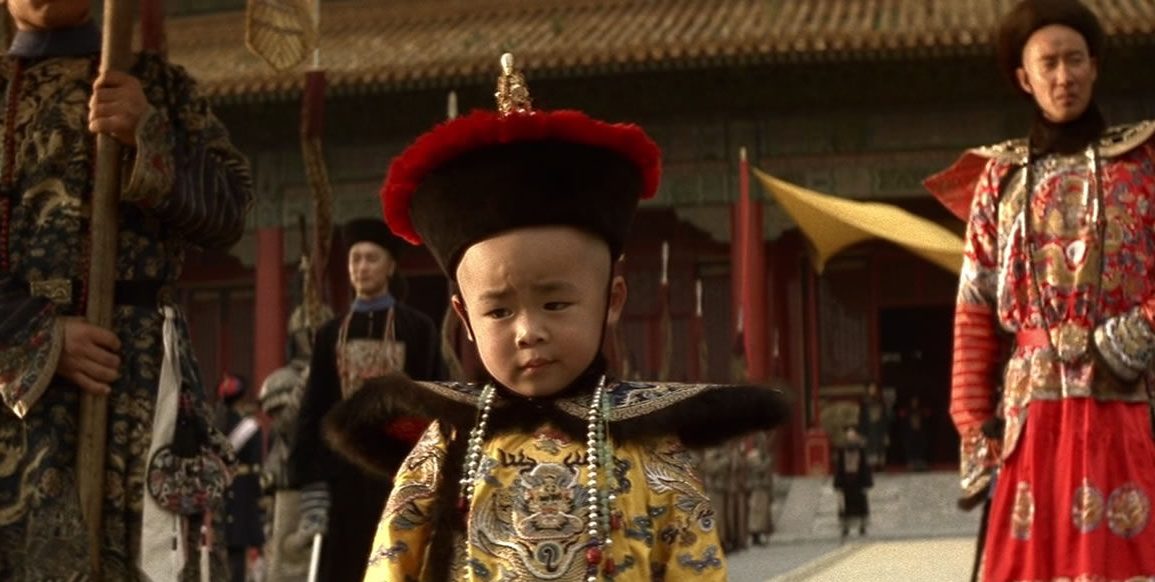 |
Bernardo Bertolucci directs the epic, intriguing but slightly hollow The Last Emperor |
Director: Bernardo Bertolucci
Cast: John Lone (Puyi), Joan Chen (Wanrong), Peter O’Toole (Reginald Johnston), Ying Roucheng (Prison Camp Governor), Victor Wong (Chen Baochen), Dennis Dun (Big Li), Ryuichi Sakamoto (Masahiko Amakasu), Maggie Han (Yoshiko Kawashima), Ric Young (Interrogator), Wu Junmei (Wenxiu), Cary-Hiroyuki Tagawa (Chang), Jade Go (Ar Mo), Henry O (Lord Chamberlain)

In 1908 a toddler, Puyi, became the last Emperor of China – but in 1912, revolution made China a Republic and he was reduced to only being Emperor of The Forbidden City, a place he has never left since 1908 and will not leave until 1924 when he is expelled from the city. As an adult Puyi (John Lone) remains a puppet, becoming Emperor of the Japanese puppet state of Manchukuo, where he is again largely confined to his palace, his Empress Wanrong (Joan Chen) becoming an opium addict. After World War II, Puyi is imprisoned for ten years by the Maoist government, being re-educated into becoming an ordinary citizen of China.
Bertolucci’s film explores the life of this slight historical figure. I say slight, as Puyi is always and forever a puppet, buffeted by history. He owes whatever prominence he has to a quirk of fate, but never truly learns who he is or his purpose, only slowly realising his power is an illusion. It’s the main flaw of The Last Emperor – otherwise a sumptuous epic – that it is such a grand film about such a shallow person. Puyi is not particularly interesting in himself, and the film largely fails to turn him into an intriguing enigma. The Last Emperor – which hoovered up 9 Oscars, including Best Picture – is brilliantly made, frequently fascinating and breath-taking, but also strangely lifeless.
Bertolucci and producer Jeremy Thomas spent years raising the money and negotiating with the Chinese government to have unrestricted, exclusive access to the Forbidden City. It’s that which really makes the film effective. The first half of the film is set almost exclusively in The Forbidden City (flash forwards see the adult Puyi in post-war captivity, being questioned by his guards). The scale is stunning and is shot by Vittoro Storaro with a breath-taking opulence and fascinating eye for Chinese culture. Storaro also carefully distinguishes with colours each section of Puyi’s life, from the reds and golds of his childhood to the washed-out greens of his adulthood. The impact of this on screen remains impressive today – and Chinese co-operation produced almost 19,000 extras to populate it.
These early sections are the film’s strongest. Bertolucci was frequently intrigued with complex coming-of-age tales, balanced with leftish politics. The film is fascinated with the power/non-power of this child. He leads a strange dance of being a puppet and figurehead, who can still order his servants to obey his every whim. It’s an upbringing that would pervert any child – and Bertolucci shows it creates a man who lacks any sense of emotional awareness and maturity; not cruel as such, but unable to fully understand what it is to be human because he has never known anyone who is an equal.
His ‘power’ expresses itself in petulance, selfishness and sometimes acts of cruelty – and he becomes a man drifting through life, aware that he should feel more of a connection with people, but lacking the emotional self-awareness forming connections with people requires. It’s not helped by Puyi’s weak personality. Growing up effectively imprisoned – but all-powerful – in a single city means he constantly gravitates towards similar situations, be that a puppet ruler signing whatever he is told to in Manchukuo or expecting his servants to continue to dress him in prison (how is prison different really from the rest of his life?)
Bertolucci films this with an acute emotional understanding that counterpoints the wonderfully luscious scale of the film. All those expansive costumes, the gorgeous filming and the awe-inspiring location shooting helps us to understand the smallness and meekness of Puyi and his stunted emotional world. Only the arrival of an English tutor – played with an expressive playfulness by Peter O’Toole – shakes up this world and offers Puyi the chance of some sort of personality development. Sadly, his influence is all too short – and Puyi seems to take mostly the wrong lessons from it, of English exceptionalism and ‘doing your duty’ that convince him he’s got to try and maintain his position.
The first half of the film is breath-takingly, with Bertolucci carefully interweaving grace notes around Puyi’s lack of true parental love (his beloved wet nurse is expelled), his growing sexual awakening – from suckling at a late age to taking both a wife and a consort (and, for Bertolucci, the inevitable threesome scene – tastefully done). The bizarreness of this world, a tiny kingdom with its own rules and an empty figurehead living in a fantasy land are striking.

It’s after Puyi leaves that the film weakens. Perhaps knowing the Forbidden City sequences were the finest – and most gorgeous – parts of the film, most of Puyi’s life after is shunted into the final hour. This makes for rushed scenes and a number of “tell not show” moments, where characters bluntly (and swiftly) fill in various political and social events or openly state their thoughts and feelings. Puyi’s reasons for becoming Emperor of Manchukuo are only briefly sketched, but not as briefly of the characters of his new Japanese masters (Ryuichi Sakamoto – also the Oscar-winning composer – and Maggie Han, a seductive collaborator) as scenes race by as the film rushes towards its conclusion.
Perhaps also not surprisingly for an old Marxist (and with that need to secure the Chinese co-operation) the Maoist government gets a fairly easy ride, with the main representative of Maoist authority being a genial, supportive chap and the re-education camp treated as a genuine programme of self-improvement rather than indoctrination. But then you can also say it’s a sign of the film’s relative even-handedness – and it does touch on the Cultural Revolution (and its random denunciations) late, albeit with a gentle eye.
It’s a shame the second half of the film doesn’t hold up as well as the first half (a longer Director’s Cut fixes some of these problems), but the first half is intriguing, dynamically made and full of emotional insight. John Lone does a fine job in a rather thanklessly bland role as Puyi and Joan Chen moves from austere to depressed as his wife, but to be honest few other members of the cast make an impact (it’s one of the few modern Best Picture winners with no acting nominations).
Bertolucci’s film is superbly made, beautiful to look at, intriguing – and you can see its influence on Farewell My Concubine among others (Chen Kaige has a small role in the film, as does Zhang Yimou) – but it suffers slightly from being about such a non-person. You wonder how it might have worked better if it had kept a tighter focus – or skimmed over more of Puyi’s life rather than hurriedly trying to cover the whole lot – but what we end up with mixes the rushed with the extraordinary.
 |
Robert Redford and Meryl Streep in this sweepingly empty romance Out of Africa |
Director: Sydney Pollack
Cast: Robert Redford (Denys Finch Hatton), Meryl Streep (Karen von Blixen), Klaus Maria Brandauer (Bror von Blixen), Michael Kitchen (Berkeley Cole), Michael Gough (Lord Delamere), Suzanne Hamilton (Felicity Spurway), Rachel Kempson (Lady Belfield), Shane Rimmer (Belknap), Malick Bowens (Farah Aden), Joseph Thiaka (Kamante), Donal McCann (Doctor), Leslie Phillips (Sir Joseph Byrne)

In the 1980s Hollywood faced an identity crisis. Throughout the 1970s, the films the Oscars honoured and those that topped the box office were often one and the same. The industry saw itself as the purveyor of classy, intelligent, popular entertainment. But in the 1980s, people flocked to see the latest Rocky or Rambo film, instead of the likes of Kramer vs Kramer. Hollywood wanted to carry on feeling good about itself: so it honoured as “Best Picture” the sort of sumptuous, prestige products it wanted to shout from the rooftops about, even if people weren’t flocking to see them at the cinema in the same way. So something as mundane, average, tasteful and empty as Out of Africa hoovered up eight Oscars.
Based on Karen Blixen’s memoir of her 17 years (from 1913) owning and running a coffee farm among the British community in Kenya, the film reorganises a deliberately non-linear memoir (full of impressions and reflections, thematically arranged) into a simpler narrative, and throws in content from at least two biographies of Blixen (played by Meryl Streep). As such, the film charts her life, specifically her relationship with philandering and unreliable husband Bror (Klaus Maria Brandauer) and love affair with British game-hunter Denys Finch Hatton (Robert Redford).
Pollack directs this epic with a clean, smooth, professional and lifeless tastefulness that makes it a long film full of pretty things, but a fundamentally empty experience. At the film’s conclusion, Karen is invited into the Men Only club for a drink where she is toasted. It feels like it should be the culmination of plot threads running throughout the film. But instead, its under-explored and unfocused, struggling for any attention. Rather than a culmination of a nearly three-hour experience, the moment feels unearned.
That’s about par for the course for a film ticking all the boxes of “prestige” movie making, but which tells us nothing at all. It’s clear Pollack has only a limited understanding of the intricate rules of the British upper-class community. We learn nothing about Africa, or the role of Empire there or the impact this had on the Kenyan people. Instead, the Kenyan people are seen as exotics or charming superstitious eccentrics.
The film is only interested in how beautiful colonial Britain was – the lovely clothes, the sumptuous set-design, the detailed props – and the gorgeous scenery. There is some focus given to the Kenyans – particularly Karen’s relationship with her servant Farah, very well played by a stern but wise Malick Bowens – but it is always defined as Karen visiting them, encouraging their education and pleading for their rights. There is more than a touch of the white saviour, and the film fails to really give us a sense of Karen gaining an understanding of the Kenyan people on their own terms, rather than hers.
That might be because the film is determined to turn the story into a straight-forward romance, giving most of its focus to Karen’s relationship with Denys. This is the root cause of most of the film’s problems, as Pollack casts two fundamentally unconnected actors. Streep gives a performance of such technical detail, you find yourself admiring the work while never really connecting with the character. Her Danish accent is perfectly studied, she has clearly read everything on Blixen she can find, and every single beat is perfectly observed. You can’t miss she is acting in every frame: there is nothing relaxed or truly intimate in the performance. It’s the work of a master craftsman.
This detailed excellence literally feels like it is happening in a different movie to the one Redford is in. Redford looks like he just stepped off the plane and started shooting. Pollack was convinced no English actor could play Denys in the sweeping romance he had in mind (Charles Dance anyone? Michael Kitchen – very good as Denys’ best friend – is far closer to what the part actually required, and would have been excellent). Redford was parachuted in and encouraged to play the role with his natural accent (is he still meant to be British? No idea).
The two performances never click together, and Redford’s Californian approach feels totally wrong for the Houseman-quoting, Mozart-playing, Great White Hunter he is meant to be. Not for one second can you forget this is the Sundance Kid – making it nearly impossible to buy into this relationship the film is trying to sell you, as well as making Streep’s Danish accent sound out of place (I mean why is she going to so much trouble when Redford can’t be arsed?).
All the romantic hair washing in the world can’t make these two stop being a chemistry free, jarring couple. Take away the sort of epic romance the film needs – the sort of thing The English Patient would do so right 11 years later – and all you really have left are two handsome actors in a very picturesque setting. Out of Africa looks lovely – but in a National Geographic way. The African Plains look wonderful, you’d have to do a poor job to make them look bad. Really the film is visually dull.
Pollack’s limitations as a director are revealed – he can’t give this the sweep and sense of the epic it needs and he can’t find depth in this canvas. Instead, everything is painted in the broadest brush strokes and any sense of romance it gets is from John Barry’s exquisite, luscious score. The film crams in as many shots of Africa as possible – but is bored witless by the story-telling and poetry that are supposed to be at the heart of Denys and Karen’s relationship. It rips the heart out of these two characters and their romance.
Out of Africa won all those Oscars – but feels like a box-tick exercise. Like the voters just thought everything in it musthave been Oscar-worthy. 1985 was a poor year for movies – perhaps only Ran, Brazil and Back to the Future have really grown in stature – but Out of Africa feels like the emptiest, least interesting, least effective prestige picture that ever scooped the Oscar. Nothing sticks in the memory – other than the repeated “I had a farm in Africa” line in Streep’s tongue rolling accent. Kitchen, Suzanne Hamilton and Brandaurer (charming and likeable as Blixen’s husband, despite playing a complete shit) are good, but nearly nothing else really works beneath its surface impact. Middle-brow, tasteful and pointless.
 |
Ioan Gruffudd in full flight in the conventional but charming Amazing Grace |
Director: Michael Apted
Cast: Ioan Gruffudd (William Wilberforce), Romola Garai (Barbara Spooner), Benedict Cumberbatch (William Pitt the Younger), Ciaran Hinds (Banastre Tarleton), Albert Finney (John Newton), Michael Gambon (Charles James Fox), Rufus Sewell (Thomas Clarkson), Youssou N’Dour (Olaudah Equiano), Toby Jones (Duke of Clarence), Nicholas Farrell (Henry Thornton), Sylvestra Le Touzel (Marianne Thornton), Stephen Campbell Moore (James Stephen), Bill Paterson (Heny Dundas), Jeremy Swift (Richard)
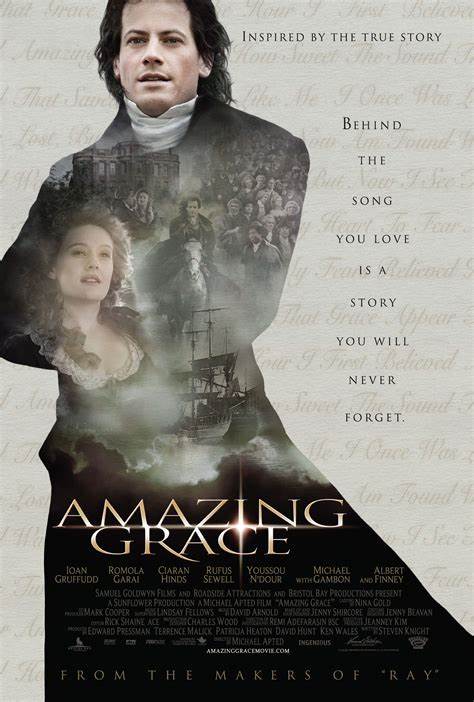
From 1782 to 1807 William Wilberforce (Ioan Gruffudd) fought a long – sometimes lonely – campaign to end the slave trade (and eventually slavery – the film confuses the two, with slavery continuing in much of the Empire for over twenty more years) in the British Empire. During that time, he competed with vested interests, parliamentary rivals and accusations of being a radical at a time when Britain was at war with Revolutionary France.
Michael Apted’s old-fashioned film covers this, hitting every beat you would expect for a biographical drama. It uses a traditional framing device of starting in the middle of the story: Wilberforce in 1797, depressed, hooked on laudanum and out of hope, revitalised by meeting Barbara Spooner (Romola Garai) who will become his wife. This makes for a perfect narrative tool as it means she can ask him questions like “tell me what happened” which serves as a neat entrée into a whole host of flashbacks sketching out in the swiftest means possible the history of abolitionism.
Amazing Grace could have been made in the 1930s, so closely does it hue to the classic rules of biopics. It’s practically a structural brother to The Life of Emile Zola, a hagiographical portrait of an (admittedly outstanding) man which shows the expected arc of moral awakening, early success, tricky mid-point, the sad years, getting the band back together for one final big push ending in friends and foes alike coming together to hail his accomplishments. It’s all threaded together with a script that carefully moves through every event, simplifies history down and sometimes wears its research rather heavily.
You can’t argue that it isn’t well-meaning and heartfelt, but its simplicity (and the careful traditionalism of its shooting) makes it look more like a well-made TV special than an actual movie. But if you are a sucker for such things, as I am, it has more than enough to engage you. It also makes a compelling case about the horrors of the slavery and allows a few moments of spotlight to fall on former slave turned abolitionist Olaudah Equiano (well played by Youssou N’Dour). It certainly has its heart in the right place, its passionate liberalism and sense of moral outrage very clear.
Gruffudd – his skill for playing reluctant moral authority and duty honed from playing Hornblower – is good as Wilberforce, his obvious investment in the subject matter clear. Garai doesn’t have much to do other than tee up flashbacks, but does it with charm. Many of the rest veer on the side of fruity: Hinds and Jones scowl effectively as slave-owning senior lords (for some reason they sit in the House of Commons; Jones is even playing a Duke for goodness sake!). Gambon twinkles as only he can as Charles James Fox. Finney hams up lustily as the blind John Newton. Best of all though are Sewell as an eccentric Thomas Clarkson and Benedict Cumberbatch in an early sign of star-quality as the morally divided, reserved but decent Pitt the Younger.
It all comes together into something that seems tailor-made for Sunday afternoons. Nothing wrong with that – and not every film needs to reinvent the wheel – and since it wears its heart so openly on its sleeve, you can’t help feeling warmth towards it. It’s a Spark notes look at history – and glosses over the fact that slavery itself continued for decades – but as hagiography it’s endearing and as a feel-good biopic it succeeds at what it sets out to do.
 Movie Musings