Category: Holocaust films

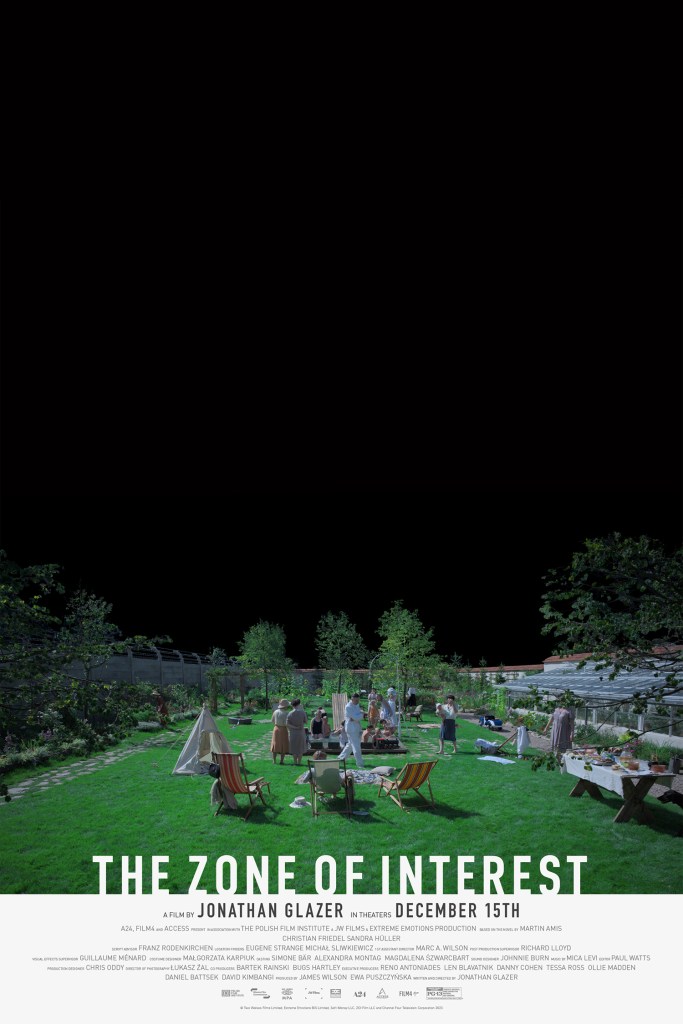
The Zone of Interest (2023)

The Zone of Interest (2023)

Chilling Holocaust film, its unseen horrors only overheard give it supreme power

Director: Jonathan Glazer

Cast: Christian Friedel (Rudolf Höss), Sandra Hüller (Hedwig Höss), Ralph Herforth (Oswald Pohl), Daniel Holzberg (Gerard Maurer), Sascha Maaz (Arthur Liebehenschel), Freya Kreutzkam (Elenore Pohl), Imogen Kogge (Linna Hensel), Johann Karthaus (Klaus Höss), Lilli Falk (Heidetraut Höss), Louis Noah Wite (Hans-Jurgen Höss)

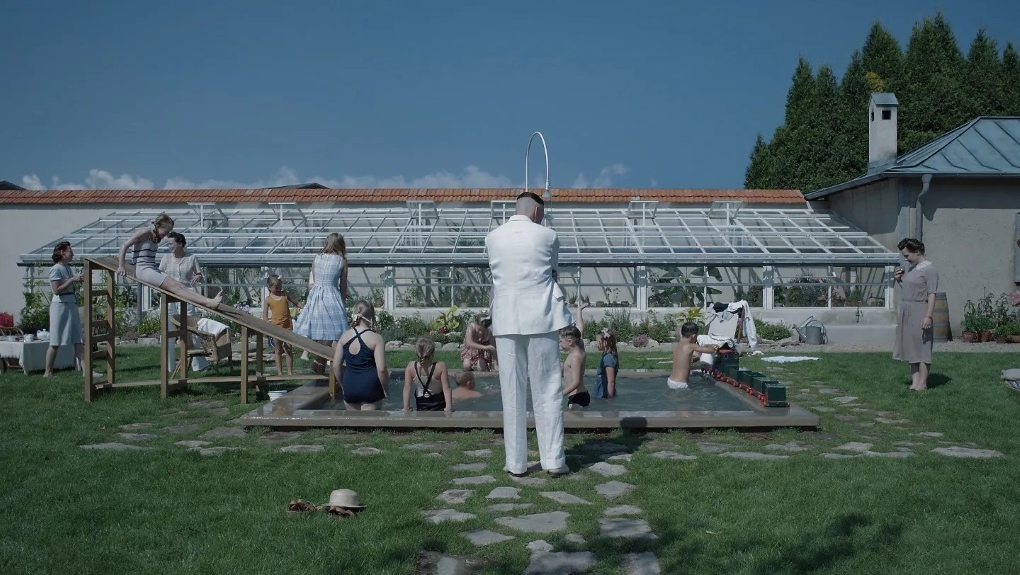
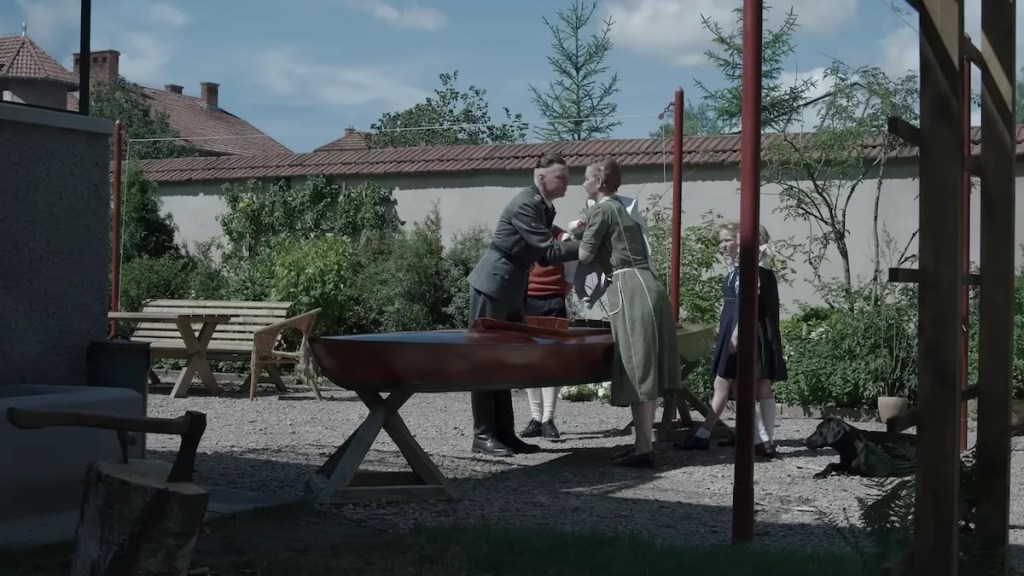
A family enjoys the delights of a summer day beside the river. They laugh, splash each other with water and amble home to their villa, next to where father works. They tune out the all-too-familiar sounds of that workplace to enjoy a family dinner. They are living the dream, out of the city, with a home and beautiful, landscaped garden. The family is Rudolf Höss’. The workplace is Auschwitz. The sounds are of the unimaginable horrors that make their life possible.

Jonathan Glazer’s Holocaust movie is unlike any other ever made. Taking a Martin Amis novel as inspiration, Glazer creates a hauntingly observant film where the plot is simple (Höss works at Auschwitz, the family enjoys a series of everyday events, Höss gets re-posted, his wife remains in their home, Höss later returns to continue his work) but every single frame implies never-seen horrifying events. While the family are indifferent to the distant sounds of trains arriving, industrial churn, gunshots and screams, we can’t be. The only thing that separates the Höss’ heaven of their intricate garden and charming home from the hell of Auschwitz is a single wall.

Glazer’s film never leaves the house for the camp, meaning what we hear is our only clue to what is happening. The Zone of Interest uses sound like almost no other film I’ve seen. Sound designer Johnnie Burns creates an overwhelming soundscape that suggests horrors. The low rumble of industrial sound, the background hum of screams and cracks of gunshot, ignored by the family as white noise. It’s brilliant and sickeningly immersive that never for an instant lets you forget where we are. Glazer complements this with half-seen sights, the most striking the steam of a train arriving visible over the wall of the house, that add to our grim knowledge of what’s happening out of shot.

Glazer lets events play out with a chilling naturalism. Shot on concealed digital cameras with no artificial lighting, there is very little studied here at all. Instead, everything plays out with a terrifyingly low-key sense of reality. Conversations are at times mumbled, movements have a mix of casual and procedural and everything is kept determinedly undramatic. What emerges is the mundane, character-less nature of the Hösses. These people are evil in the sense that the wickedness of their deeds hasn’t even crossed their minds. Two sociopaths who pride themselves on their respectability, presiding over an industrial killing machine.

The film brilliantly balances a lack of overt events with acres of horrific implication. Fishing with his children, Höss steps on a half-seen jaw-bone and suddenly plucks them from the lake, running home with them to practically bleach them clean with the servants left to scrub the bathroom – it’s never stated that human remains are being washed from them, but the look on the face of these servants speaks volumes. (Höss later records a coded memo chastising his team for their lack of care, like a middle manager furious at an untidy storage room.) Hedwig’s mother wakes at night with her room flooded with red light. Opening a curtain to investigate, the camera sees her look of horror, a handkerchief covering her nose, while we only see the faint reflection of flames on the window. Moments like this fill the film, the implications of horrors out of shot.

At its heart, Zone of Interest brings startlingly to life Rudolf Höss, a man who admitted to murdering millions but wanted it known he did not tolerate overt cruelty to his victims. Played with a precise blankness by Christian Friedel, you realise if Hitler had charged him with organising the Reich’s stationary he would have gone about it with the same commitment and passion-free precision as he does mass murder. Does Höss have any idea, deep down, of his vileness? As he carefully, obsessively marches around the house every night shutting off lights and closing doors, is he subconsciously trying to defend his family and shut out reality, bury his knowledge of his evil in household procedure, or is he just as obsessive about this as he is in everything else?

His wife, played with a middle-class, aspirational coldness by Sandra Hüller, seems to have convinced herself she can enjoy all the benefits of the life of an Auschwitz camp commandant, without needing to think seriously about where it comes from. She tries on luscious clothing, brought to her from the camp, and obsessively tends and cares for her garden. Not that it stops her from lashing out at her servants like a petty tyrant. So devoted to her home is she, she refuses to leave it on Höss’ transfer back to Berlin, believing it to be the perfect place to raise her children.

It’s the children that subtly bear the brunt. As the film progresses, the damage to them becomes more and more clear, especially after Höss is reassigned and his attempts to control the environment are ignored by his successor. The daughter who cannot sleep at night, constantly walking the house. The younger son who overhears the forced drowning of a victim and mimics the guard’s cruel authoritarian “humour”. The older son who locks his brother in the greenhouse and mimics the hissing noise of gas. The Höss family are laying the roots to destroy their family in their obsessive desire to build a blinkered perfect home for them.

There is only one note of true kindness in The Zone of Interest. During his research, Glazer discovered a young Polish girl made it her mission to leave fruit at night for the inmates, hidden throughout the camp. Glazer captures this with thermal imaging cameras (eager to maintain his “rule” of no artificial light), giving this girl a sort of mystical, fairy-tale quality (we once even see her while hearing Höss read to his children at night). However, even this act of kindness is corrupted – the forced drowning is caused by a fight over an apple, presumably left by this child.

The Zone of Interest does lose some of its impact when it follows Höss to Berlin – it’s a film that flourishes best as a claustrophobic piece, focused on the house and its grounds. You could argue that The Zone of Interest is effectively a short film, expanded into feature length, making the same point over again. But, on reflection, part of the point is the power of the thudding repetition of that message, the overwhelming impact of people indifferently carrying on in the face of pure evil.

Does Höss realise this on some level? The Zone of Interest concludes with Höss dry-retching on the stairs – he’s such a shell he doesn’t even have enough in him to vomit up – before seeming to stare right out at us into the darkness. Glazer then finally takes us into the camp – to see the museum it is today, quiet, still, tended to with care by the staff. Höss’ life’s work is to create a memorial to his barbarity, where dedicated staff will make sure the picture of evil remains unblemished by dirt. It’s the first-time sound really drains out of the film and it makes for a powerful moment.

The Zone of Interest really lingers with the viewer. Glazer’s subtle and unflashy work builds the film into a powerful experience piece that leaves a lasting impact. It’s a film that grows even more powerful as you unpack the subtleties of its exploration of the banal nature of cruelty and the lasting impact of inhumanity on ourselves and others. A truly unique and important film.

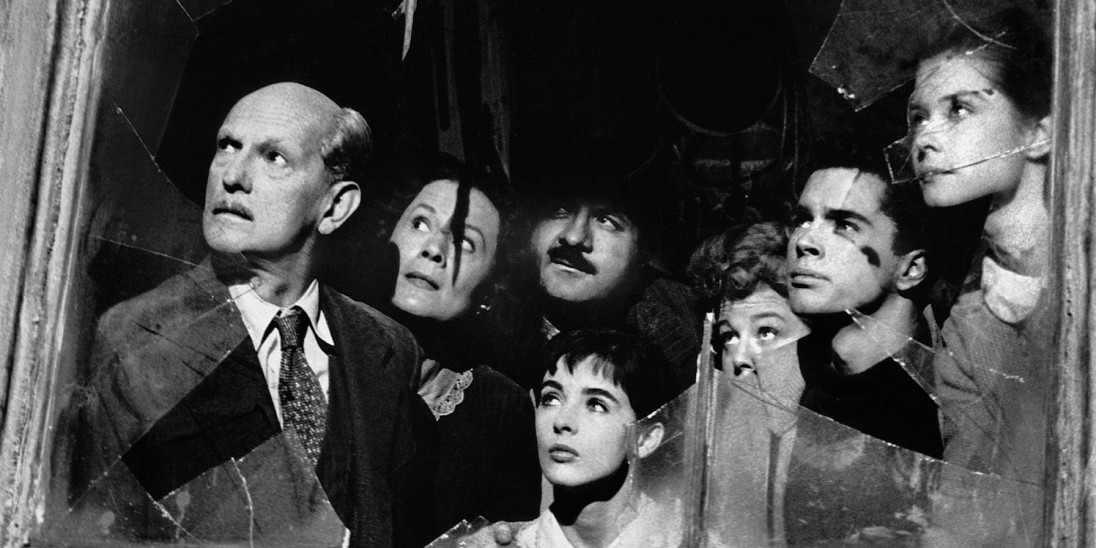
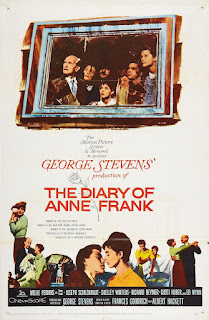
The Diary of Anne Frank (1959)

The Diary of Anne Frank (1959)

Reverent adaptation of the most famous diary ever written, that drains it of any sense of life or drama

Director: George Stevens

Cast: Millie Perkins (Anne Frank), Joseph Schildkaut (Otto Frank), Shelley Winters (Petronella Van Daan), Richard Beymer (Peter Van Daan), Gusti Huber (Edith Frank), Lou Jacobi (Hans Van Daan), Diane Baker (Margot Frank), Ed Wynn (Albert Dussell), Douglas Spencer (Kraler), Dodie Heath (Miep Gies)

Few personal stories have had such a huge impact on so many people’s lives than Anne Frank’s diary. This literary marvel, written by a teenager who mixed profound insight with teenage obsessions, was a world-wide sensation when it was published after the war. The diary covers the over two years Anne, her family and their friends spent in hiding in a secret annexe in her father’s warehouse in Amsterdam. For Jews hiding from the barbaric persecution of the Nazi occupying forces, every day was a struggle between trying to lead as normal a life as possible and the terror of discovery and deportation to a concentration camp. Of course, we know, tragically, they were discovered – and only Anne’s father Otto survived the war.

Otto discovered the diary when he returned to Amsterdam after the liberation of Auschwitz. Moved by the diary’s mix of maturity and youth, Otto had it published first for friends and then more widely. At various points, parts of the diary were edited to remove more “personal” content (Anne wrote freely at points on her growing sexuality and was sometimes less than kind to the other occupants of the annexe). More modern editions have embraced a less edited, fuller diary that really allows us to see what a brilliant, challenging, sometimes judgemental, fully rounded teenager Anne was. The Diary of Anne Frank hails from an era that framed a more sanitised diary. The worst you can say for it is that I think there is a good chance the real Anne Frank would have found it a bit dull.

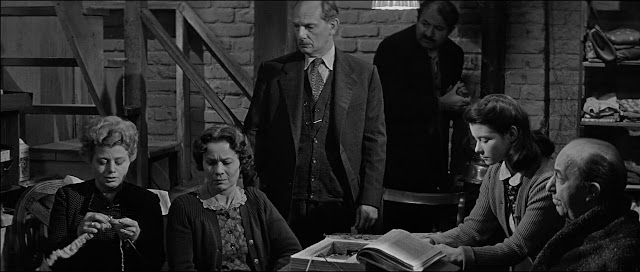
Adapted from a Pulitzer Prize winning play by Frances Goodrich and Albert Hackett, George Steven’s film is reverent, noble and very worthy. It also frequently lacks any pace or life, and is so concerned with being life-affirming that it filters out nearly all sense of tension or conflict that these eight people felt (which they often did living, as they did, in a few small rooms for over two years, with very little food). The film also centres a romantic relationship between Anne and Peter – one that, according to Anne’s own diary, was already coming to an end at their discovery (in reality, she felt they had little in common other than living in the annexe together).

But Stevens’ film is so concerned with framing someone as fascinating as Anne as a secular saint that it removes much of the vibrancy that gives the diary such impact. It also doesn’t help that Stevens shoots the film in a luscious black-and-white, in detailed sets – but also in the widest possible cinemascope. This does allow for some lovely shots – an image of Anne and Peter kissing in a monochrome shadow, before a door opens to bathe them in light is striking – but it sacrifices the most essential fact of the setting: its cramped smallness.

The widescreen frequently makes the annexe seem larger than it is

Who decided that a location defined by its claustrophobia and smallness was best captured in super-widescreen, I don’t know. But the wide angles make the annexe look a heck of a lot larger than it actually is (I’ve been there, I know it was more cramped than this!) and Stevens frequently frames the whole cast in shots which makes the annexe look positively cavernous.

The lack of claustrophobia has a serious impact on the story’s sense of drama. It also helps to filter out the tension. The script removes, or minimises, most of the key personal tensions in the annexe. We have moments of disagreement, but generally the inhabitants are shown to get on extremely well, with Anne herself practically perfect. This doesn’t really square with the diary, which is pretty open in Anne’s difficult relationship with her mother (with whom she felt no affinity), the clashes with the Van Daans and Mr Dussell (not their real names – Dussell basically translates as idiot, which gives a better impression of Anne’s difficult relationship with this unwanted roommate) or her later arguments with her father. Instead, things are smoothed out and nothing that could detract for a moment from the optimistic and hopeful message of the film is allowed.

The film also replicates several changes that the play made for dramatic effect. This most especially affects the character of Dussell (real name Fritz Pfeffer). In real life a respected dentist and pillar of the Jewish community, Dussell/Pfeffer here is a complacent, panicking imbecile, utterly ignorant of the Jewish faith and claims to have lived his whole life in Amsterdam with no idea he was a Jew. The real-life Pfeffer had in fact fled Germany to escape Nazi persecution. Played with a self-satisfied whininess by Ed Wynn (a famous TV comic, Oscar-nominated here for showing he could do drama), Dussell/Pfeffer is a joke. Pfeffer’s family cut ties with the Franks after the play was released.

Wynn’s nomination reflects how the broader performances in this film gained the most attention. Shelley Winters won an Oscar for her role as the blowsy Mrs van Daan – both van Daans are larger-than-life and obsessed with their status. More restrained and effective performances come from Gusti Huber as Anne’s shy and nervous mother and above all by Joseph Schildkraut as her wisely patient father. Richard Beymer gives an effective performance as a young Peter, straining against the leash of being stuck in a sort of suspended childhood.

As Anne, Millie Perkins looks the part in many ways – apart from the fact she is clearly too old. But there is something a little neutered and frankly a little too perfect about her performance. Her voice has a flat American twang to it that makes much of her voiceover a little wearing to listen to, especially as the tweeness is dialled up. I’m not sure she has the presence for the role – although she is not helped by the sanitised, earnest script.

Criticising The Diary of Anne Frank feels almost sacrilegious, like criticising the lives of the real people who went through something unimaginable to try and survive in a world of horror. But Stevens’ film is straining so hard to be reverent – and shaves the edges of its characters so much – that it turns them and their story into something much more easily digestible than it should be. It becomes a feelgood story, rather than something vibrant and alive. And that vibrancy is what has made Anne Frank live for so long after her murder. To create a film that captures so little of that, instead turning her into a conventional romantic heroine, just feels like it misses what made her unique.

The Pawnbroker (1965)

The Pawnbroker Header
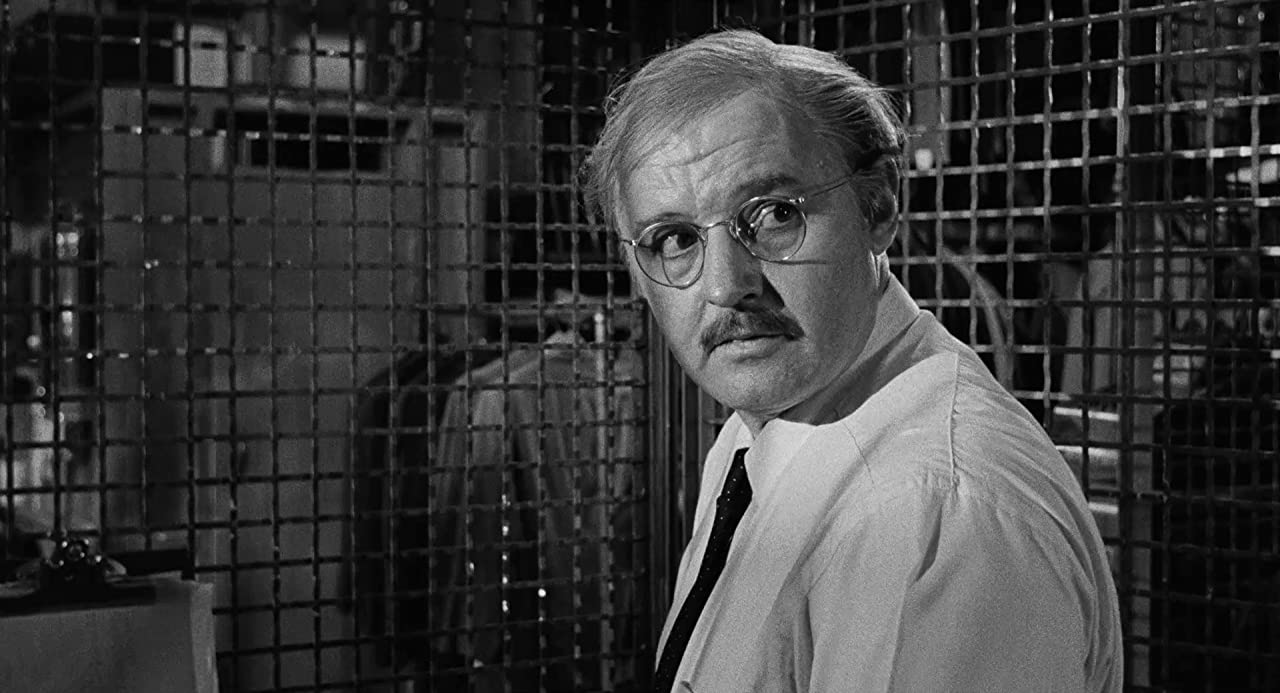
Rod Steiger is superb in Lumet’s drama of grief, The Pawnbroker

Director: Sidney Lumet

Cast: Rod Steiger (Sol Nazerman), Geraldine Fitzgerald (Marilyn Birchfield), Brock Peters (Rodriguez), Jaime Sanchez (Jesus Ortiz), Thelma Oliver (Ortiz’s girl), Eusebia Cosme (Mrs Ortiz), Marketa Kimbrell (Tessie), Baruch Lumet (Mendel), Linda Geiser (Ruth Nazerman)

Sol Nazerman (Rod Steiger) lost his entire family – including his wife and two children – in the Holocaust. Previously a University professor, he has now cut himself off from engaging with life by burying himself in a dingy pawnbroker’s shop in Harlem, where he treats his desperate customers like “scum”, offering them nickels for their goods. On the anniversary of his wife’s death, Sol confronts his own grief, tensions from local crime boss Rodriguez (Brock Peters), the offer of a friendly ear from new neighbour Marilyn (Geraldine Fitzgerald) and the unwanted friendship of his assistant Ortiz (Jaime Sanchez).

It’s probably not a spoiler to say that all of this does not end well. The Pawnbroker is almost unrelentingly grim and bleak. Shot in a harsh black-and-white – superbly lensed by Boris Kaufman – it mixes French New Wave realism with a punishingly cold New York aesthetic that catches every grain of dirt on the streets. The past is virtually a character in the film, the events of over twenty years ago having far more importance than many of the trivial events Sol encounters in the present.

The constant presence of the Holocaust, and the scars it has left, are kept in our mind by the film’s constant use of quick – almost subliminal – cuts from current day events to snippets of Sol’s past. Hands pressed against windows turn briefly into hands against barbed wire. A young lady flicks back and forth into Sol’s wife. The sounds of a train inevitably transform into a transport train. Lumet makes it clear to us that everything Sol sees and encounters in the modern world, no matter how small, is just a continual reminder of the horrors of the Holocaust that defined his life.

This isn’t something as ‘simple’ as survivor’s guilt. It’s clear that, while his body survived, Sol effectively died in the camps and what we are seeing is his walking corpse. He’s deliberately alienated himself from the world and his concern, with no real desire to live but also no will for self-destruction. Perhaps he sees his continued existence as a punishment for failing to save his family. This has developed into a loathing for the melting pot of Harlem, a stubborn, conscious refusal to feel any empathy for anyone living there. Instead, he works hard to loath them as much as he loathes himself. Trapped by guilt and grief, Sol slaps away any offers of friendship, pity or warmth.

The film’s greatest strength is Rod Steiger’s towering performance. Normally Steiger was an actor who never shied away from the possibility of over-playing. Here, he’s so buttoned down and spiritually dead, every single movement like he’s walking around in a physical and spiritual straitjacket. Sol scuttles around the cages of his pawnshop, like a guy who has never left the camps. His performance is a masterclass in precision, of carefully restrained movement, gruff speech and eyes that stare into a dread a thousand miles away. Every step Steiger takes is weighted down by an impossible burden of grief, anger, despair and self-loathing.

It also avoids completely easy sentiment. For all that we see the suffering slowly revealed of Sol’s past, Steiger isn’t afraid to show Sol as a difficult, arrogant, even unpleasant character. The defence mechanism of hostility and non-engagement of the world has only increased his prickly aggressiveness. But yet, he remains sympathetic as Steiger also conveys the deep pain Sol spends every single minute of his life suppressing and controlling to stop it overwhelming him.

If there is a fault with the film, it’s that it goes about its carefully bleak and hopeless journey through a few days in Sol’s life with slightly too much precision. The Pawnbroker sometimes mistakes grim, hard-hitting and misery for emotional investment. For all that the film is a difficult, searing watch – and the terrors of the flashbacks are ghastly – it’s somehow not quite as moving as it should be. Perhaps this is because the present-day plot never quite takes off and the other characters – with the exception of Peter’s chillingly ebullient but dangerously violent Rodriguez – don’t quite connect. Fitzgerald’s social worker Marilyn is a character we don’t quite get to know. Not quite enough time is spent with Sol’s in-laws (despite good performances from Marketa Kimbrell and Lumet’s father Baruch Lumet) for their story arc to move us in its own right.

Similarly, the Holocaust sequences – brief and interspersed as they are – sometimes overplay their hand, particularly the rather heavy-handed opening sequences showing the Nazerman family playing in the field minutes before the Germans arrive (accompanied by a thudding musical score – and Quincy Jones’ score sometimes tries to do much work for the viewer). It would be hard not to make The Pawnbroker at least a little bit moving, but Lumet’s film bludgeons us with misery so heavily, that there is no sense of the lightness or warmth of life that has been lost. Scenes of the Holocaust of course are hard to watch, but The Pawnbroker bashes us with them to make us feel things. It’s a film that’s tough and leaves you in no doubt of the horror, but doesn’t always make you feel for individual. You need a touch of what was lost to be truly moved: with no real sense of that, we can’t grieve with the characters.

But, The Pawnbroker is still a daring film that leaves a lasting impression. Lumet’s direction has a New Wave freshness and an immersive sense of the New York Streets. Steiger is fantastic in the lead role – his most restrained (and greatest) performance ever. The film broke new ground for sexuality – including making Rodriguez a non-camp, intimidating homosexual – and while the final beats of inevitable tragedy aren’t quite earned by the events we see, it’s still a grim and powerful look at the lasting damage the past causes the present and the crushing legacy of grief.

The Pianist (2002)

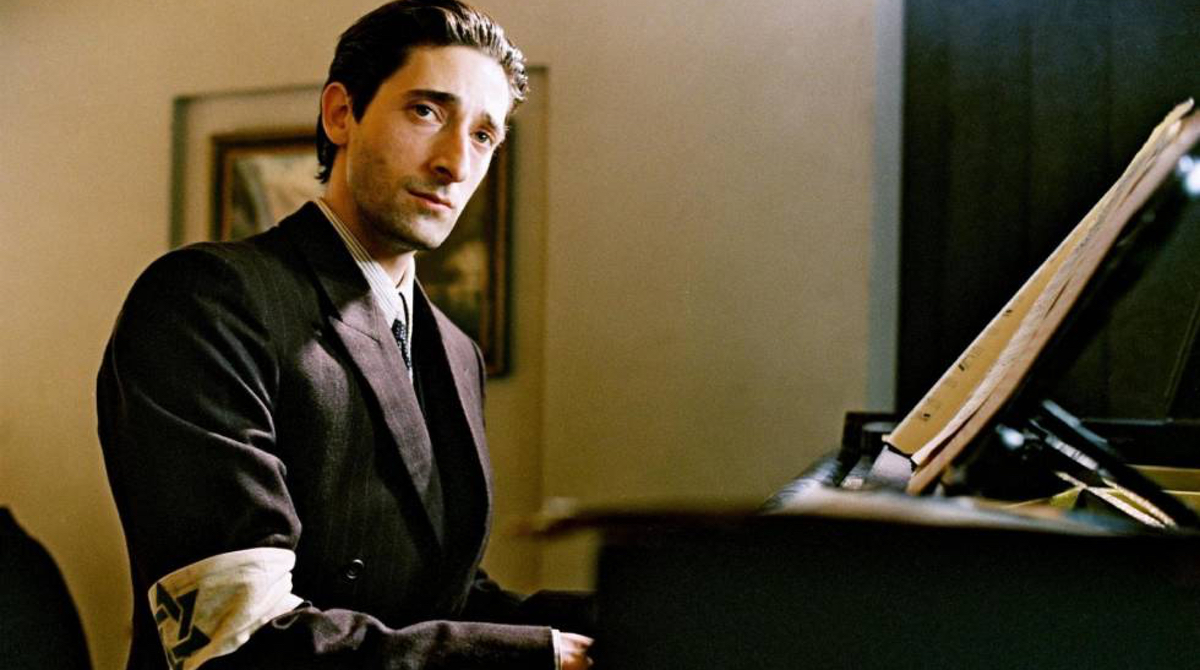
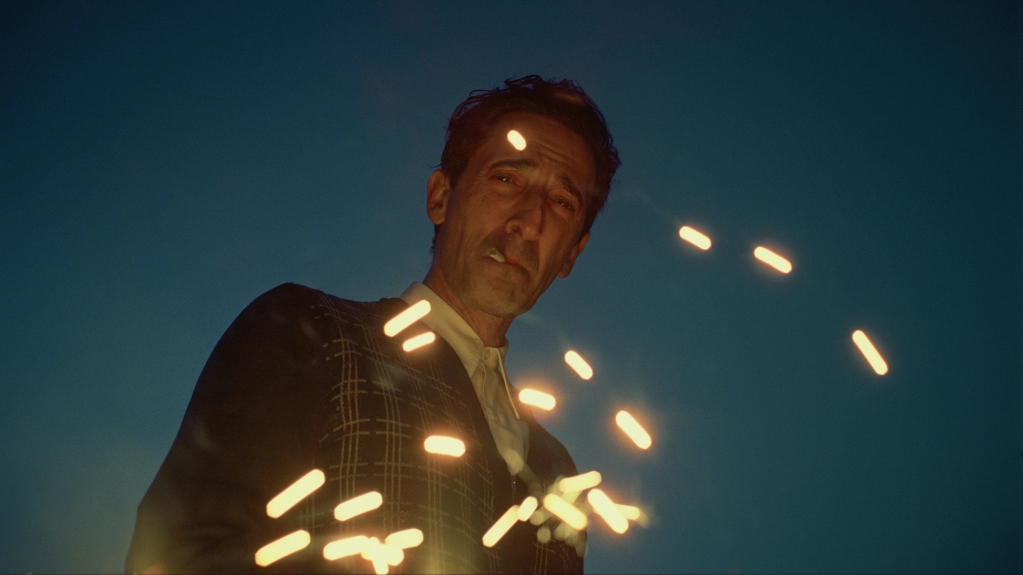
Adrien Brody is outstanding in the compelling The Pianist

Director: Roman Polanski

Cast: Adrien Brody (Wladyslaw Szpilman), Thomas Kretschmann (Captain Wilm Hosenfeld), Frank Finlay (Samuel Szpilman), Maureen Lipman (Edwarda Szpilman), Emilia Fox (Dorota), Ed Stoppard (Henryk Szpilman), Julia Raynor (Regina Szpilman), Jessica Kate Meyer (Halina Szpilman), Ronan Vibert (Andrzek Bogucki), Ruth Platt (Janina Bogucki), Andrew Tiernan (Szalas)

Few directors have as personal a link with the Holocaust as Roman Polanski. As a boy, he witnessed his parents deported to their deaths, surviving only by chance, escaped the Krakow Ghetto and was sheltered by a Catholic family. The lasting impact is clear to anyone who has seen a Polanski film and he avoided Holocaust projects for decades (including Spielberg’s offer to direct Schindler’s List). The Pianist was the film he made on this trauma. Perhaps because the experience of Wladyslaw Szpilman was, in many ways, similar to his own.

Wladyslaw Szpilman (Adrien Brody) is a famous Polish concert pianist. As the German occupation begins, Szpilman and his family face the cruel downward spiral of the new regime’s anti-Semitic policies. Very quickly, laws move from a ban on Jews in public places, to wearing Star of David badges to herded into ghettos. In the ghettos, life is a terrifying struggle, as the German occupiers shift from simple bullying to acts of random, indiscriminate murder. The whim of a German soldier decides whether you live or die. Szpilman’s family are eventually deported to Treblinka, but by a twist of fate Szpilman escapes – and finds himself hiding in Warsaw for years, sheltered by the Polish resistance, desperately trying to survive until the war ends.

Polanski’s film is heart-breakingly sincere and the documentary matter-of-factness it presents appalling, unjustifiable crimes gives great power to the whole film. It never blinks or looks away, and never offers false hope or sentiment. Only the terrible realisation that nothing can have any impact on whether you live or die: death could come from as little a thing as dropping a brick. People are plucked from lines and shot, speaking at the wrong moment is a death sentence and people in wheelchairs are tipped out of fifth storey windows.

There are moments where Polanski seems to be commenting on Schindler’s List’s touches of melodrama: that film featured a Jewish man saved from death by a German officer’s gun jamming – when the same thing happens in here, the German officer calmly stops, carefully reloads the gun, checks it and shoots his victim in the head. That’s the reality. The Pianist tracks all this with a traditionalist, stable camera and a marked restraint. There is no flair, or immersion, to any of this film. Instead, it grimly and calmly shows you each horror.

There is also no sense of fate or destiny. Szpilman survives – while every other Jewish character he encounters does not – not because of things he does himself, but because of chance, luck and risks taken by others. There is a powerful will to survive in Szpilman, but you can say the same for thousands of others. And, as the film demonstrates time and again, determination and desire to live won’t save you if a German officer decides to make an example of you.

Polanski’s film is honest and shocking in its presentation of the descent into brutality in the ghetto. The film chillingly presents the viciousness of what starts as bullying – the German officers who smack Szpilman’s father (a dignified Frank Finlay) around and force him to walk in the gutter – into killing-for-sport. Literally so: German officers turf out the occupants of a building, just for the ‘fun’ of shooting them down like rabbits in their car headlights as they run away.

While the first half of the film covers the horrors of the Ghetto – from over-crowding, to deportations to the increasingly open and random violence – the second half becomes a survival tale that owes a lot to the unsettling horror films of Polanski’s early career. Hiding in a series of apartments, knowing discovery will lead to instant death, Szpilman find himself in a terrifying city where the slightest sound will condemn him. After the noise of the ghetto, the silence of these apartments – and the long periods of silence from Szpilman himself – become increasingly overbearing, while also helping build the dread of discovery.

The only sound we hear are the piano concertos Szpilman is reduced to playing in his head. Frequently Szpilman’s hands move to play an imaginary piano. In one apartment, there sits a piano he can never play: nevertheless his first act is to open it and let his hands dance perfectly above the keys, imagining the music they produce. It’s a brilliant reminder of the ordinary life he has been forced to leave behind – and how, even when things are at their worst, we cling to the things that make us human.

As Szpilman weakens and grows pale in his apartment prisons, he witnesses both the Ghetto uprising of 1943 and the Warsaw uprising of 1944. Polanski treats this urban war with the same chilling matter-of-factness as the rest. From Szpilman’s window we see bodies fall and buildings burn. People slump dead in unusual, un-cinematic positions – a woman, shot in the back, falls to her knees and slumps forward – and with an abrupt, horrible finality. Only someone who has seen death in war, could film it like this.

When Szpilman finally emerges into Warsaw – a city Polanski has only let us see as Szpilman sees it, a few buildings, a street or two – he finds the city a burned-out ruin. It’s the first crane shot of the whole film, that until then has kept its formal angles down at the level Szpilman has experienced. The wreck of the city also matches Szpilman, now an emaciated, mute Beckettian tramp, clutching his only food, a can of pickles.

Despite all this, the film is full of good, brave people who help Szpilman, many of them in the Polish resistance. Most affectingly of all is the touch of hope the story offers – the last to help is a German pfficer (affectingly played by Thomas Kretschmann). The motives of this character are left vague – is it kindness, weariness with war, disgust at Nazism or just another whim – perhaps because all we know is this man, who helped many others as well, died in 1952 in a Soviet prison camp. For all that, seeing a good man in a uniform worn by so many murderers,  gives you hope something can come out of this wreckage.

At the heart is Adrien Brody, who gives a transformatively superb performance as Szpilman. Wry and dry at first, the film sees him being hollowed out into someone scared, desperate and finally emaciated and traumatised. Brody’s brilliance is in stressing there is nothing out of the ordinary to Szpilman beyond his piano playing. He has to learn to bear the guilt of having no choice but to walk away while his family are killed. But he never loses his humanity and dignity – even as a frazzled tramp, when finally allowed to play a piano, after a pause he launches into a performance of breath-taking cathartic release. It’s a superb performance.

The Pianist showcases the sadistic whim that drove the Holocaust. Death is not operatic, but functional, everyday and comes without warning. The film is unflashy, almost classical in its approach, carefully paced and un-melodramatic. But that reflects the lack of romance in war and the grinding terror and suffering of just surviving. By focusing on a single man’s story and experience, it helps us begin to appreciate that his story was just one of millions. That helps make The Pianist one of the most compelling, moving and brilliant Holocaust dramas ever made.

The Reader (2008)

Kate Winslet and David Kross in the vomit-inducing The Reader

Director: Stephen Daldry

Cast: Kate Winslet (Hanna Schmitz), Ralph Fiennes (Michael Berg), David Kross (Younger Michael Berg), Bruno Ganz (Professor Rohl), Alexandra Maria Lara (Ilana Mather), Lena Olin (Rose Mather/Older Ilana Mather), Linda Bassett (Mrs Brenner)

In 1960s Germany, teenage Michael Berg (David Kross) falls in love with an older woman, Hanna Schmitz (Kate Winslet), a tram conductor who seduces him and asks him to read classic novels to her in between bouts of passionate love making. As an adult (Ralph Fiennes), Michael has never got over the effect the affair had on him. But that’s largely because, as a law student, he sat in on a trial where he discovered Hanna was a guard at Auschwitz, responsible for the gas chamber selections and later locking 300 Jewish women into a burning church.

Her co-defendants turn on Hanna – but Michael realises that Hanna is illiterate so cannot possibly be the author of the reports that her co-defendants says she wrote. Hanna is imprisoned – but years after the trial, Michael rekindles a distant contact with her, sending her recordings of books he has read, which she uses to teach herself to read. Will these embodiments of new and old Germany manage to come to terms with their shared past?

There is no way round this: The Reader is a truly dreadful film. It might be the worst film nominated for Best Picture this century (the backlash over its inclusion over The Dark Knight led to a radical change in nomination rules). It is sentimental, trite, insulting, empty, vainglorious awards-bait, shot with a heritage-stylishness. It utterly fails at almost every single thing it attempts to do: from coming-of-age drama, to questions of moral responsibility in a police state, to a country reconciling with its traumatic and criminal past. In fact, it fails so utterly and completely, you are more likely to be left open-mouthed at its crude tone-deafness than remotely moved by its emotional manipulation. It is a truly dreadful film.

Daldry’s highly average direction (Oscar-frigging-nominated!) is sickeningly twee, using a number of carefully staged moments to tweak heart-strings and point our sympathies the right way. It’s the sort of Holocaust film where the only direct engagement with the subject is a beautifully framed, poetically-scored, insultingly-genteel scene of the hero visiting Auschwitz and starring sadly at collections of shoes and the gas chambers. Presumably because, any shots of the actual Holocaust – or the crimes of Hanna, who happily confesses to selecting thousands of women and children for death – would end any chance of us feeling sorry for her.

Because this is indeed a film that feels it is challenging us to say “look again” – as if Daldry and screenwriter David Hare are sitting on our shoulder saying “Ah you think it’s all black-and-white, but see how things are more complex than that”. So we are shown a concentration camp worker whose defence really is that she was just following orders – and we are asked to sympathise! She only voluntarily signs up for the SS because, you know, it was a better job than the factories. In a crudely empty moment she asks the judges at her trial “what would you do?”. Daldry shoots like this as a “Gotcha” moment – we are clearly meant to come away from that moment feeling “ah yes, there but for the grace of God go all of us”.

Only that is, for want of a better word, bullshit. Turning your back on Jewish neighbours being taken away out of fear for your own safety would be one thing, but taking a job in a death camp, selecting people for death and then watching 300 people burn to death in front of you but doing nothing? That is quite another. And the film knows this deep down, which is why we never get a flashback, or a photo, or anything that might make us sit up and go, “hell I don’t care how much you were just a foot soldier, what you did was just wrong”. To really top it off, the film even makes it clear Hanna took this job freely (not under duress, or because she was poor and starving, or any other extenuating circumstance that might prompt complex questions about what “normal” people do under evil governments) – and she’s not sorry. Not even a little bit. Not ever at any point.

These muddied morals carry over to the vomit-inducing idea that we should feel sorry for Hanna because she is fascinated by literature but deeply ashamed of her illiteracy. So ashamed in fact that she would rather be seen as the ring-leader of a mass murder than illiterate. That very sentence alone should really give you an insight into her perverted psychology. And I love books, but I don’t think that would be much of a mitigating factor if I was also Jack the Ripper.

That’s not to mention that the film doesn’t even want to engage with the fact we are told Hanna selected sensitive, vulnerable children in the camp to read for her (and then had them killed) – and doesn’t draw a connecting line between that and her using the same tactics with Michael, seducing a vulnerable 15 year old child to control him so that he will read to her. Her behaviour is clearly not some secret shame, the product of an isolated set of circumstances that will never come again – it’s who she is, and she has made no effort to change it. Hanna is worse than a child abuser, she’s a sociopathic monster and the film’s attempt to paint her as something else is appalling.

I suppose it could have just about worked if it the film had managed to make some decent material out of its theme of Germany’s struggle with its history. But even that gets fudged. There is one decent scene, as Michael and his fellow students discuss morality with the professor (a cuddily Bruno Ganz), but other than that the idea gets lost in the cut. Instead it settles for “what would you do” confrontations and clumsy parallels between Michael’s distress about finding out the truth and his trauma and guilt leading to a struggle to emotionally connect with people.

But then he’s only matching the film which has no emotional understanding of people. It sees nothing wrong with what I am about to describe. After Hanna’s death, Michael follows the request of her will to take her life savings to the daughter of one of her victims. Not only is Michael emotionally illiterate enough to carry out this shockingly tone-deaf request, but (amazingly) the woman not only sees him in her home but keeps as a souvenir the tin Hanna kept her cash in and then puts the tin next to a her picture of her family murdered in the Holocaust. Even writing it I can hardly believe I saw it. It’s the film’s attempt to say “look there is hope” but not in any universe does any of this behaviour seem even remotely real.

The Reader instead wants to try and juggle a big theme (the Holocaust) with a cliched one (a coming-of-age for a young man) and throw in an airport-novel faux big theme (isn’t reading great!) into a syrupy, awards-winning piece of prestige cinema. It probably deserves some sort of award for getting everything about this catastrophically wrong. By the time Hanna climbs on a pile of books she has made to hang herself, you’ll be desperate to give her a shove.

Oh, Kate Winslet won an Oscar. She’s does her usual excellent job. But the film is utter dogshit.

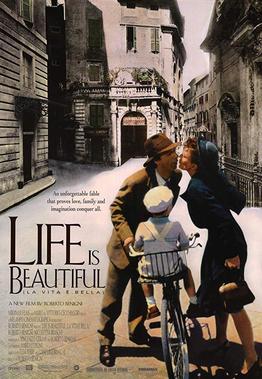
Life is Beautiful (1998)

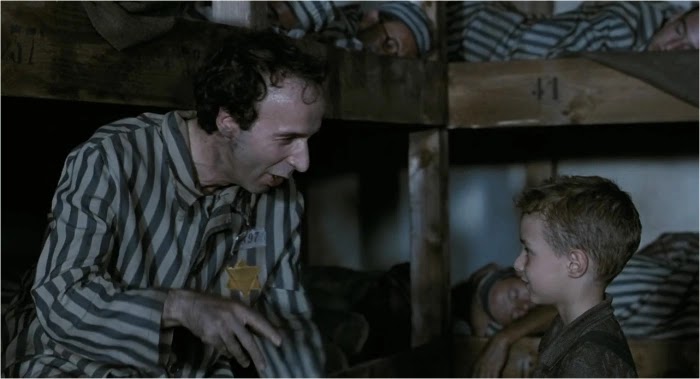
Roberto Benigni uses humour to hide the horrors of the Holocaust from his son in Life is Beautiful

Director: Roberto Benigni

Cast: Roberto Benigni (Guido Orefice), Nicoletta Braschi (Dora Orefice), Giorgio Cantarini (Giosue Orefice), Giustino Durano (Uncle Eliseo), Horst Buchhoolz (Dr Lessing), Marisa Paredes (Dora’s mother), Sergio Bustric (Ferruccio)

How can we confront the dark facts of our past? It’s a question that perhaps feels more relevant with each passing day. History is full of horrors and terrible deeds. And it’s easy to think of those who lived through terrible events as merely victims, a single homogenous mass of the suffering. Life is Beautiful however tries to look at perhaps the most terrible of events, the Holocaust, with an eye that acknowledges the terror but also suggests that love and hope can exist alongside the worst parts of humanity.

In Tuscany in 1939, Guido Orefice (Roberto Benigni) is a sharp-witted, if accident-prone, waiter who dreams of setting himself up as a bookshop owner. He falls in love with Dora (Nicoletta Braschi) and, after a courtship involving “accidental” meetings, comic interludes and finally Dora leaving her engagement party (where she is due to marry a brutish bully), they marry. A few years later they have a son, Giosue (Giogio Cantarini). But the war has gone against Italy, and now Guido and Giosue, as Jews, are arrested and sent to a concentration camp. There Guido does everything he can to try and protect his son from the horrors around him, by pretending the camp is an elaborate game to win a tank, with points won if he can hide from the guards and not cry. Guido spins his own forced labour, and danger of execution, to Giosue as part of the same game.

Directed by and starring Roberto Benigni, Life is Beautiful was Benigni’s statement that events as terrible as the Holocaust cannot drive hope and love from a father’s heart, and that both tears and laughter can come from the same beautiful place in the human spirit. It’s been called a comedy about the Holocaust, but that’s unfair. Guido may use comedy and try to turn everything that happens to them into a camp an elaborate game for his son – but that’s to stop a 5-year-old child from being traumatised. For us watching, we know the terrible place Guido and his son are in – and we know the appalling things that are happening around them.

Life is Beautiful is really two films, and only one of them is a comedy. The first half is a Chaplain-esque love story, a clumsy but good-hearted and comic scruff-pot winning the heart of a decent and loving woman. It’s full of the sort of slapstick and comic routines you could expect from the masters of classic American silent comedy. It hits every expected beat, from our hero being the sort of wily but honest and kind little guy we can root for, to all his opponents being sharp-suited bullies while his love is charming and tender. For the first half of the film there is little that, really, stands this film out from the ordinary. Benigni is a charming performer – with just the right mix of bashfulness and bombast – but it’s nothing you’ve not seen before.

But then that half of the film exists to give the second half of the film its power. As soon as the time-jump happens, it’s like watching the Little Tramp wander into a horrific tragedy. From the moment Guido closes the shutters on his shop – to reveal the words “Jewish Store” graffitied across it – the sunny Tuscan world around our heroes grows darker and darker. 

Benigni deliberately avoided a sense of realism to his Holocaust imagery – he felt only documentary could really do it justice, so avoided making his death camp look or feel anything like a real camp – but the audience is more than capable of filling in the blanks. The second half of the film, with Guido and his son in the camp, is not funny at all. But that doesn’t stop Guido busting a gut to entertain his son at every moment – or prevent us building a deep emotional connection with a father who is suppressing his own pain and fear in order to try and protect his son. The father who knows the business of this camp is death, who knows that Dora has also been arrested and placed in the women’s camp. Who knows their only hope is to pray the war ends before they die. It’s bleak stuff, and the fact that Guido keeps up a front of humour doesn’t make the film a comedy.

It’s why it the second half of the film carries such impact. Not only have we invested in the comedic warmth of these characters in the first half, but seeing them trying to keep hope alive in their own way in the bleakest of situations is completely moving. Sure there are funny moments – the most notable being Guido’s improvised interpretation of the guard’s explanation of the camp rules into an explanation of the rules of the game he is trying to get his son to believe in – but really it’s not a comedy because we know too well the dangers that surround them.

Sure the film is sentimental and in many ways manipulative. It would be hard pressed to not create emotional moments from such material, and from the sacrifices of Benigni’s character. But it still works and the film has a few shrewd moments of personal insight, not least from the introduction of Horst Buchholz’s German doctor. Dr Lessing knows Guido from his days as a waiter in Tuscany – but encountering him in the camp waiting tables at the officers’ mess, it doesn’t even begin to occur to him that Guido’s position has changed or his family’s lives are in mortal danger. The dehumanising of this extermination system doesn’t just turn people into murderers, it turns decent people into thoughtless observers.

Life is Beautiful does carry a real emotion wallop towards its end. It was famous as “the Holocaust comedy”, but it uses comedy and the conventions of Hollywood romance to build our empathy for characters who then find themselves in a Holocaust movie. And it treats the Holocaust itself with a deep reverence and respect, never making the deaths of millions anything like a joke. Sure, you could argue that it still downplays the terrors of the Holocaust – but then we know the background so well, do we need the gaps all filled in? And while you might say hope from such a terrible setting is not the message that should come out, sometimes it feels like the message we need.

The Book Thief (2013)

Sophie Nelisse is The Book Thief in this worthy, dull adaptation

Director: Brian Percival

Cast: Geoffrey Rush (Hans Hubermann), Sophie Nélisse (Liesel Meminger), Emily Watson (Rosa Hubermann), Nico Liersch (Rudy Steiner), Ben Schnetzer (Max Vanderberg), Heike Makatsch (Liesel’s mother), Barbara Auer (Ilsa Hermann), Roger Allam (Death)

Every year you get prestigious film versions of novels that have soared up the bestseller lists. Some of these are good or even great films. Other are so lifeless, listless and lacking in spirit they leave you wondering what on earth people got so fussed about the original for. That’s the case here with The Book Thief.

In late 1930s Munich, young Liesel (Sophie Nélisse) is fostered with a local decorator Hans (Geoffrey Rush) and his wife Rosa (Emily Watson). Liesel has a fascination with books – despite not being able to read and write – and soon Hans is teaching her literacy. Liesel has a compulsion to “borrow” books – first from a burning pile of Nazi forbidden tomes, then from the library of the wife of the local mayor. But it’s dangerous to draw too much attention to the family, particularly when they are hiding a young Jewish man, Max (Ben Schnetzer). 

I’ve not read The Book Thief. I can’t say that I feel the need to dash out and do so after this bland, middle of the road picture that makes Fascist Germany seem very picturesque. The film largely fails, like so many films before it, to translate the joy of reading into a visual language so the whole “book thief” concept of the title quickly gets pushed to the margins in favour of a series of episodic events based around Nazi Germany and Second World War tropes that already feel a bit tired. 

Percival’s award-baiting film doesn’t seem like it wants to bring (or is capable of bringing) something unique or interesting to the setting, instead going through the motions as prettily as possible. And the film does look great, I will give it that. It also sounds pretty damn good, not least through a playful and rich score from John Williams (his first original score for a non-Spielberg film for decades). But it never really gets anything special from the content. In fact, that very chocolate-box beauty of the film seems to run contrary to the setting of Nazi Germany. The awards-friendly beauty envelops the film like treacle.

The book was written from the prospective of Death, but, the film seems to drop this unique aspect as soon as it possibly can. Again, it’s a sign that the film cannot reproduce what worked in the book – by stripping out its most unique and interesting point, it makes the film feel as generic as it possibly can. Roger Allam is a wonderful choice as the richly voiced narrator – but he’s so rarely used in the film that when Death talks about how fascinating he found Liesel you are simply left wondering why. 

In fact that why is a real problem with the film – it’s what you’ll be asking all the way through. Why? Why is anything really happening? Why is Death telling us how different and striking this story is when everything we see in the film feels pretty familiar? What is the point of this film or the message it is trying to give us? For a film that tackles war, fascism, persecution of the Jews, and childhood innocence, it seems empty all the time.

And that’s the problem with the film. It’s all about the pretty presentation. The characters speak with forced German accents that make it feel even more like a pretty Hollywood Golden Age film. (By the way the bad Germans, like the Nazis, they speak only in German. Make of that what you will.) The acting is pretty good, Sophie Nélisse is a great find as the heroine. But there is nothing special about it at all. It’s seemingly made entirely as a prestige product for potentially winning Oscars. Any of the depths of uniqueness of the book seems to have been shaved off in service of that, and we’ve been left with a chocolate box that feels like it’s lacking the sweet richness you’d expect to find in it.

Denial (2016)


Timothy Spall as Holocaust denier David Irving in this misfiring courtroom drama

Director: Mick Jackson

Cast: Rachel Weisz (Deborah Lipstadt), Tom Wilkinson (Richard Rampton), Timothy Spall (David Irving), Andrew Scott (Anthony Julius), Jack Lowden (James Libson), Caren Pistorius (Laura Tyler), Alex Jennings (Sir Charles Gray), Mark Gatiss (Professor Robert Jan van Pelt), Harriet Walter (Vera Reich), John Sessions (Professor Richard J. Evans)

In 2000, historian David Irving (here played by Timothy Spall) was exposed as a Holocaust denier who forged and distorted historical records to help his pro-Hitler agenda. This came after his unsuccessful attempt to sue American historian Deborah Lipstadt (Rachel Weisz) for accusing him of Holocaust denial in her book Denying the Holocaust. The decision led to the destruction of Irving’s reputation, career and financial wealth. This film tells the story of this case. Lipstadt’s legal team are played by Andrew Scott (solicitor Anthony Julius), and Tom Wilkinson (barrister Richard Rampton). The publicity-hungry Irving famously acted as his own lawyer.

Denial has a fascinating story at its core, but bungles it by getting the focus wrong. Now I’ll admit I might know more about this trial than the regular guy-on-the-street. But the drama here was in the detail of the debunking of Irving’s denier bullshit. The film benches most of this, reducing Irving’s career of historical re-adjustments into a few simple sound bites. The fascination of this trial was the dissection of denier myths – but the film aims for more conventionally “drama”, by introducing a series of “could Irving win?” moments that never ring true. Not only does this detract from the drama – it also, arguably, makes it easier for Holocaust deniers out there to claim the film doesn’t give the appallingIrving a fair crack of the whip.

It’s a shame, as when the focus is on the facts of the case, it’s very good. Tom Wilkinson is excellent as the maverick Rampton, whose abrasiveness hides his humanitarianism. The drama skirts over the trial’s cut and thrust, but when it does tackle these moments it’s very interesting. The sequence where Rampton pins Irving to the floor over theories that the gas chambers were de-lousing stations for dead bodies (“then why are there bolts on the outside of the doors?”) or air raid shelters (“are we to imagine the SS running 2.5 miles from their barracks to a shelter in an air raid?”) are compelling, and far more interesting than anything else in the film. Even the Cliff’s Notes version of Irving and his views in this film is enough to repulse any sane viewer, and watching him skewered on the witness stand is fascinating and satisfying. There just isn’t enough of it.

One of the film’s greatest problems is pushing Lipstadt front and centre. This seems logical on paper but, as her lawyer says, “this trial is happening to you, it’s not about you”. Lipstadt was deliberately not part of the trial strategy, to keep the focus on Irving. But the film can’t accepts her “story” was to do nothing. It keeps wanting to give her a ‘Hollywood moment’, but the facts can’t provide one – so we get lots of scenes of Lipstadt jogging, or feeding her dog, or watching news reports – time that could have been much better spent elsewhere.

Despite this, Weisz’s performance is very good –she bravely makes Lipstadt prickly and hard to like . Similarly, Andrew Scott is excellent as Julius, but his character is poorly explained (“He’s using you for the publicity” Lipstadt is told – we see no indication for this anywhere) and his decision to exclude Holocaust survivors from the witness list to prevent them being harangued by Irving is botchily explained, the film not wanting to admit that this was a wise decision.

I feel a lot of the film ended up on the cutting room floor. Short scenes pop up now and again around paralegal Laura making you feel she must have been a more important character at some point. I feel huge parts of courtroom reconstruction got trimmed. I suspect there was more around Harriet Walter’s Holocaust survivor. Even Irving feels heavily trimmed – Spall is very good (and subtly vile, but with a persuasive old school charm) as the faux-historian, but the film needs more of him, if only to explore his views more, rather than just treating him like a demon.

That sums the film up: it’s ham fisted. Too much dialogue thunkingly introduces historical events or legal procedures. The film talks about the importance of research, but relies on characters “cracking the case” with flashes of inspiration. It handles the research trip at Auschwitz sensitively (and daringly, shows Rampton taking an aggressive questioning stance of the guides to prepare for the case) – but then the film can’t help throwing in Lipstadt imagining victims clawing at the gas chamber door for escape. I hated the final shot, lingering on the disputed holes in the gas chamber roof used to drop in Xyklon-B, as if we needed this to be confident that, yes, the Holocaust did happen.

I really wanted to like Denial, but it’s no more than an adequate dramatisation of a fascinating court case. It’s brilliantly acted, in particular the four principles. There is an interesting film to be made here about the increasing struggle we have with the abuse of free speech to give equal importance to views that are offensive or just plain wrong. But Denial never really becomes that film – instead it turns its fascinating historical event into a run-of-the-mill Hollywood tale of a plucky heroine vanquishing the bad guy.