Category: LGBTQ+ films

Mulholland Dr (2001)

Mulholland Dr (2001)

Surrealist, dream-like images fill a film that’s wilfully complex, perplexing and probably Lynch’s masterpiece

Director: David Lynch

Cast: Naomi Watts (Betty Elms/Diane Selwyn), Laura Harring (Rita/Camilla Rhodes), Justin Theroux (Adam Kesher), Ann Miller (Coco), Mark Pellegrino (Joe), Patrick Fischler (Dan), Michael Cooke (Herb), Dan Hedaya (Vincenzo Castigliane), Angelo Badalamenti (Luigi Castigliane), Michael J Anderson (Mr Roque), Monty Montgomery (The Cowboy), Lee Grant (Louise Bonner), James Karen (Wally Brown), Chad Everett (Jimmy Katz), Melissa George (Camilla Rhodes), Billy Ray Cyrus (Gene), Lori Heuring (Lorainne Kesher)

Spoilers: I’ll be discussing in detail the plot (if you can call it that) including its final act reveals which are crucial for understanding the film. So watch it first!

Where do you begin? Mulholland Drive feels like the culmination of Lynch’s work, a perfect boiling down of Twin Peaks, Lost Highway, Wild at Heart and Blue Velvet into a surrealistic meditation on Hollywood, wish-fulfilment, dreams and reality. It’s both wilfully inaccessible and surprisingly clear, both coldly cruel and achingly tender, full of hope and devoid of happiness. It’s tough, cryptic, engrossing viewing and unpeels like an onion (and likely to have the same effect on you as that vegetable). Every scene may mean everything or nothing, but there is not a moment of it that isn’t darkly, thrillingly engrossing.

It starts with a car crash on Mulholland Drive – but not before a stream of seemingly disconnected images that only later reveal their importance, including a women on a bed and a dizzying array of disconnected jittybug dancers drifting across the screen like paper cut-outs before a purple background. The car crash involves a mysterious woman ‘Rita’ (Laura Harring) who narrowly escapes being murdered but is left with amnesia. She stumbles to the house of Betty (Naomi Watts), a newly arrived girl in Hollywood, eager to become an actress. With only a bag of money and a mysterious blue key to go on, Rita and Betty search to find out who Rita is. Meanwhile, director Adam Kesher (Justin Theroux) finds his film (which Betty wants to audition for) being taken over by gangsters. Did I also mention an incompetent-but-brutal hitman, a supernaturally omniscient albino cowboy and a monstrous goblin-like hobo who lives behind a diner and can kill on sight?

Mulholland Drive grew out of Lynch’s plans for a new Twin Peaks style TV series. He shot a pilot, the footage from which takes up much of the first two thirds. Like Twin Peaks it was full of mysterious alleyways to be explored: it’s amnesiac lead, mysterious money and blue key, shadowy gangsters (even led by Twin Peaks veteran Michael J Anderson, here in a Red Room style hide-away, his head attached to a prosthetic body), creepy supernatural nightmare elements. Alas, the executives hated it (it wasn’t exactly Desperate Housewives), but French investors stepped in to fund Lynch turning it into a surrealist movie, with an additional half an hour of footage to an ending (of a sort).

A sort of ending is what we get. Mulholland Drive is a famously confusing, impenetrable film. But to me it seems clear. Lynch’s solution was to turn all the pilot footage into a bizarre and terrible dream – and latch on an ending set in the ‘real world’ which re-presents characters, events and throwaway moments in surprising new lights, leading us to radically reinterpret everything. Effectively, the first two-thirds are the guilt-ridden nightmare of Diane (Watts again), a failed actress in Hollywood who paid for a hit on a star actress Camilla (Harring again) who she believes seduced and spurned her. In her dream, Diane reimagines both herself and Camilla exactly as she wishes they were: herself unspoilt by Hollywood with preternatural talent, Camilla as an amnesiac utterly reliant on her.

What we have here is dreams as wish fulfilment: and what city is more about that, than Hollywood? Mulholland Drive plays as the dark underbelly of Sunset Boulevard (pretty dark and bitter already!). Lynch’s Hollywood is a vicious, heartless, bloody place, where cruelty and death are commonplace. In ‘the dream’ the gangsters – terrifying cameos from Hedaya and composer Badalamenti, the latter dribbling inadequate coffee from his mouth during a meeting in a grotesque power play – call the shots. Reality might be worse. This heartless factory of dreams chews up and spits out innocents like Diane, turning her from naïve and optimistic into  bitter, twisted shell, emotionally maladjusted, locked in her apartment tearily in thrall to her worst instincts.

It makes sense in a way that the film is dominated (probably) by a dream. Hollywood is the town of stories, and it’s perversely logical that the unreality should feel so detailed, engrossing and narratively compelling while what is (probably) reality is fragmented, mundane and laced with cruelty. To the people of films, stories are richer and more freeing than anything that happens in real life and infinitely more comforting.

Comfort is what our dreamer wants. Naomi Watt’s Betty seems like a cliché of a small-town girl, swept up in the big city. Full of aw-shucks charm, the eagle-eyed will spot little moments of strength that feel out of character. There are micro-flashes of anger and she’s determined to break into a mysterious, abandoned house to find a clue when Rita runs. She’s a gifted actress, turning a mundane script in an audition (a script she and Rita laugh at) into a simmering performance of sexual control that stuns the room. But this is a multi-layed performance, just one facet of a whole.

Because Betty’s talent is recognised in the way her ‘real-world’ counterpart Diane – stuck in small supporting roles, gifts from Camilla – never is. There are touches of this in that audition: the director is the least involved and speaks only in vague bullshit. Its not just that talent recognition: in the dream she can turn her lover Camilla, an independent and (perhaps) selfish figure, into someone so dependent on her that she literally doesn’t even know who she is. She even turns the man Camilla leaves her for, into a deluded, humiliated cuckold in thrall to gangsters.

Lynch’s crafting of this dream is flawless. He can mine tension from even the smallest moments. Innocuous events – two men sitting in a diner, a kind old couple in a cab, a business meeting, a singing audition – drip with menace and unknown horror. His camera frequently, almost imperceptibly weaves, as if held floating in space. Logic jumps and sudden transitions abound. Lights flicker and time never obeys rules. He is also a master of black humour: a hit-job gone wrong (with bodies and a vacuum cleaner joining the carnage) is hilarious, as is Kesher’s unexpected arrival home to find his wife in bed with a muscular pool cleaner.

Mulholland Drive is also a sensitive and highly emotional romance story between two lost souls. Betty, naïve and helpful and Rita, who clings with gratitude and adoration to the woman who helps her. Moments of sexual tenderness between these two are shot with erotic beauty: contrasted sharply with the more sordid, aggressive couplings between them in ‘reality’.

But these mix with moments of chilling, unspeakable horror. The hideous goblin living behind a diner, an embodiment of all that is cruel, evil and twisted, later clutching a box the releases the furies themselves seem to leap from. Is this a dark expression of the dreamer’s own guilt (which seems to be transferred to “Dan” a man we see literally dying of fright in a diner that becomes crucial later)? The Cowboy, who may or may not be of this world, glanced at two dreadful moments (just as he promises) seems to guides the dream. And the Silencio club, a theatre of the bizarre, disturbing auditory and visual twists and turns that serves as the gateway between dream and reality – something Betty subconsciously knows, vibrating in terror in her seat, knowing this fantasy she has crafted is under siege from dark elements of the truth demanding she acknowledge them.

Mulholland Drive deconstructs itself at every turn, aided by Lynch’s wonderful, hypnotic surrealistic touches. What’s beautiful about it, perhaps, is it leaves it very much up to you. For me, the desire for dreams to be fulfilled is crucial. It’s all captured in Watts and Harring’s multi-layered performances, their versions of the same women contrasting and complementing each other. Lynch allows their personalities to blur both in character and in visuals (Rita ends up in a matching wig in touches of Vertigo while the film’s blurring of two personalities echoes Bergman’s Persona, including a homage via a shot where both faces seem to merge into one).

An intense, fascinating dream-like exploration of several classic Lynchian themes, Mulholland Drive is his finest, most rewarding film. One which, whatever interpretation you place on its events, grips and challenges you at every moment, full of scenes which spark a mixture of imagination, horror and intrigue. Powered by two wonderful performances at its lead, both with just the right mix of reality and fantasy about them, it’s an extraordinary film.

The Conformist (1970)

The Conformist (1970)

Freud mixes with politics in Bertolucci’s stunning political-psychological thriller, one of the greatest films ever made

Director: Bernardo Bertolucci

Cast: Jean-Louis Trintignant (Marcello Clerici), Stefania Sandrelli (Guilia), Dominique Sanda (Anna Quadri/Minister’s Lover/Prostitute), Gastone Moschin (Manganiello), Enzo Tarascio (Professor Luca Quadri), Fosco Giachetti (Colonel), José Quaglio (Italo Montanari), Pierre Clémenti (Lino Semirama), Yvonne Sanson (Guila’s mother), Milly (Marcello’s mother)

At age 29, Bertolucci made one of the greatest films of the 20th century. The Conformist is a film of uncertain illusions, half-seen shadows dancing on the wall of a cave. Each viewing unfolds new perspectives and interpretations. But each is rewarding, such is the magisterial grace the story is told with, and the radiant beauty of the film itself (a clear, massive, visible influence on Coppola’s Godfather films).

In 1938, a young Fascist Marcello Clerici (Jean-Louis Trintignant) is commissioned by Mussolini’s government to arrange the assassination of his former philosophy professor, dissident intellectual Luca Quadri (Enzo Tarascio) in Paris. Marcello longs for a “normal life”, obsessed with the fear that personal flaws, rooted in childhood trauma, will expose him. He marries the unexpected woman – the garrulous and ingenuous Guilia (a superb, guileless Stefania Sandrelli) – and joins the Fascists. But he is shaken by his fascination with Quadri’s wife Anna (Dominique Sanda).

Bertolucci’s film is nominally a political thriller. It exposes the brutality of fascism, but its alleged heroes are ineffective, bourgeoise left-wing dissidents. But really this is a Freudian deep dive into the character of Marcello and how he has sought to “conform” his whole life.

The Conformist is like sitting in on a prolonged psychotherapy session, Marcello’s past, present and future stripped down to their components, with the viewer invited to theorise how they assembled in the way they have. The film’s non-linear structure is crucial for this – and Bertolucci was vocal on the vital wisdom of editor Franco Arcalli. The narrative was reconstructed around the day of the assassination and Marcello’s car journey to it – with flashbacks inspired by events along the way.

The film is a revue of Marcello remembering his recruitment, the days before his marriage and the childhood trauma of sexual awakening and murder that haunts his inner fears. Most of all we see unspool the events that directly brought him to sitting in this car, on this day, driving towards the site of an assassination. These component parts shift and rearrange themselves to form new patterns about how we understand Marcello and the choices he makes.

The film’s theological pivot is Marcello and Quadri’s discussion of Plato’s cave (read about it here), where men chained in a cave understand the world only from the shadows of objects outside which they watch on its walls. But there are no easy conclusions. Are the fascists the chained men? Or has Marcello chained himself away and only interprets the world through shadows? Is Marcello so disjointed he can only interpret emotions based on his understanding of shadows of them?

Or is this pushing us to consider we are watching a film: a thing made of light and shadows. Imagery constantly reminds us of this fact. Light streams through trees, pillars and windows like light from a projector. Views outside of train windows resemble back projection. Marcello watches a radio performance from a recording booth, the window of which literally resembles a cinema screen. Constructed realities are the language of this medium – and Marcello is perhaps applying the same phraseology to his life. He builds a narrative, just as we all do, making himself bland and forgettable.

Marcello dreads the discovery not only of his crime, as a 13-year-old, of shooting and killing a seductive chauffer (played by Pierre Clémenti), but also the sexual longing it awakened in him. This horror of homosexual yearnings – and fear at being caught for murder – has, perhaps, led to a reflexive desire to hide in the crowd: to conform. Understanding this leads to us seeing Marcello, for all his coldness, as a strangely tragic, repressed figure, hiding from himself and others. His face is often obscured, or seen behind glass and mirrors. He’s always slightly distant from us.

This void is beautifully captured in Trintignant’s compelling performance. He bottles genuine emotions within himself, that at rare moments are released like small explosions. He clings to a hat that hides his face and seems barely aware of his desires. Sensuality and nakedness fascinate and alarm him. Fascism is a large, empty illusion he clings to. In the film’s only touch of heavy-handedness Italo, who recruits him, is blind. You feel something for Marcello, but are also repelled by his studied artificiality. His whole life is a carefully framed pose, like those he strikes when handed a gun before stroking his hair (a repeated gesture) and running off to find his hat.

The one thing that seems to affect him is the fascination – attraction seems too strong a word – he feels for Anna Quadri. Laying the groundwork for the sudden impact she has on Marcello, Dominique Sanda appears twice earlier as unconnected characters (both prostitutes). Anna, smart, bisexual, knowing herself and others far more than anyone else, sees straight through Marcello. How much is her seduction of Guilia an attempt to titillate and neutralise Marcello? At one point, she seductively touches the laughing Guilia, while staring at the door where Marcello (and the camera) stand in the shadows, knowing he is watching. Does Marcello long for her sexually, spiritually or because it feels like he should do? Answers are myriad.

These are expanded by the constructed beauty of Storaro’s photography. Bertolucci’s mastery of camera movements is clear (there are tracking shots of breathtaking grace, including a long drift along wind-blown leaves that Coppola outright pinched) and he knows when to use angles that unsettle (including a Dutch angle that suddenly, stunningly rights itself) or feel voyeuristic. Storaro’s shoots with ravishing beauty that subtly colour codes emotions, moods and locations and stresses the constructed nature of film narratives.

Italy is a land of imperious, grandiose Fascist architecture: towering modernist rooms, cold marble and neo-classicism, shot with whites and striking starkness. Paris is awash in softer – but also cold and damaging – blues that feel more natural but unsettling. Moments where Marcello touches on his longings (or at least persuades himself he does) drip with yellows. It looks gorgeous, but also fits with themes of invented kaleidoscopes, being re-shaken to construct a world.

The film builds towards a scene of genuine horror. The assassination is a bleak nightmare in the snow. You can never forget the image of Sanda – her face contorted with panic, desperation and hate – clawing and screaming at the window of Marcello’s car while he just sits. Is he torn between indecision and fear, or does he feel nothing? Your ideas will change, but your horror at Anna’s desperate, hand-held-shot, futile flight through the woods like a deer pursued by hounds never will.

The film’s final coda re-opens mysteries. Marcello discovers things that make him question if his life of conformity (and the price he has paid for it) was even necessary. The final shot sees him sitting, a flame behind him, starring at a wall (of course!) before turning to – well to look at us? Or is he looking, at last, at the world he has only studied from it shadows? It’s unclear. Deliberately so.

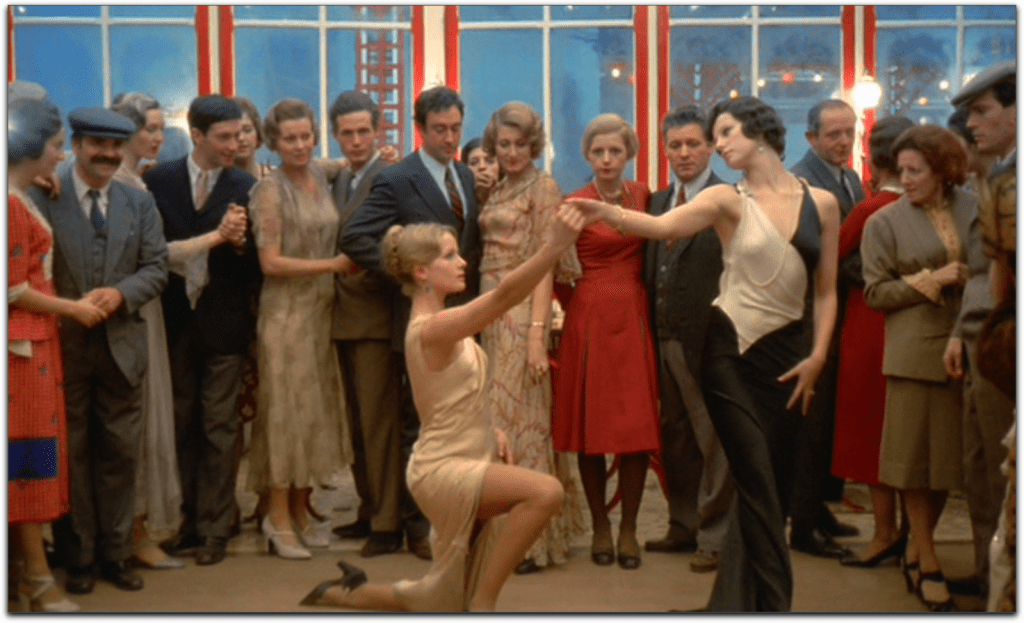
What’s clear is that The Conformist is crammed with truly extraordinary images (from that haunting assassination to a beautiful Brueghelesque late-night dance between Anna and Guilia, everything sticks with you) and challenging ideas that carry no easy answers. Bertolucci’s film invites deep examination and analysis and presents possible suggestions, but no answers. It’s what makes it an extraordinary classic, a fascinating study of psychology and humanity.

Milk (2008)

Milk (2008)

A political pioneer is lovingly paid tribute to in van Sant’s heartfelt biopic

Director: Gus van Sant

Cast: Sean Penn (Harvey Milk), Emile Hirsch (Cleve Jones), Josh Brolin (Dan White), Diego Luna (Jack Lira), James Franco (Scott Smith), Alison Pill (Anne Kronenberg), Victor Garber (Major George Mascone), Denis O’Hare (State Senator John Briggs), Joseph Cross (Dick Pabich), Stephen Spinella (Rick Stokes), Lucas Grabeel (Danny Nicoletta)

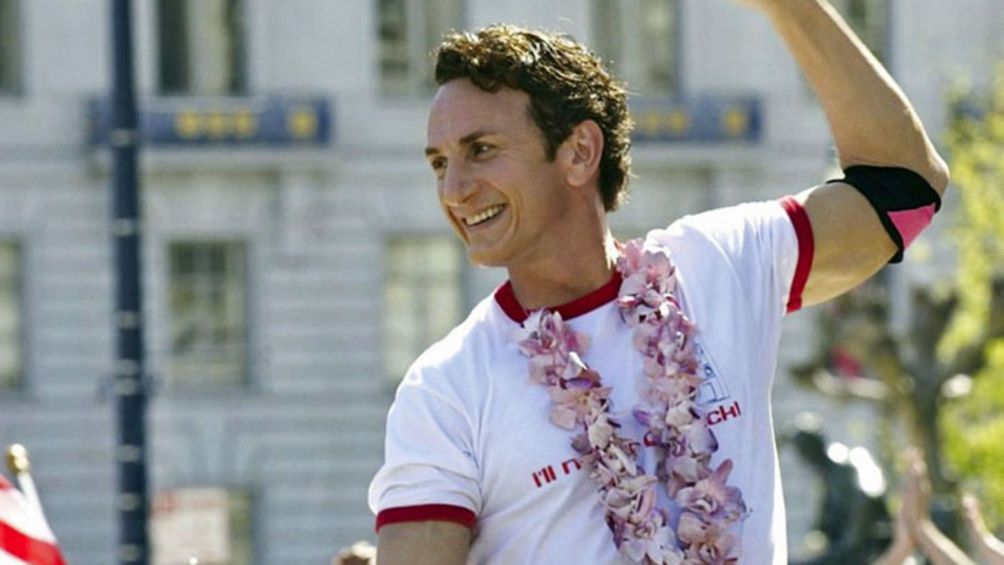
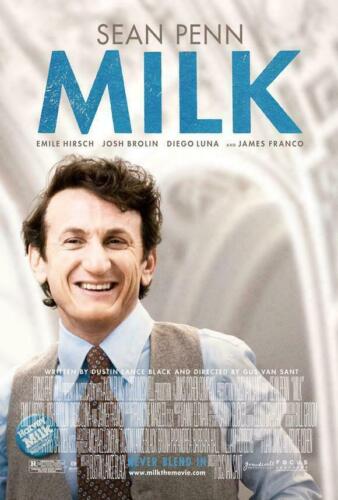
Harvey Milk was the first openly gay man elected to public office in the United States. Milk is a passionate, accessible and lovingly crafted biopic from Gus van Sant, which aims to restore this crucial figure back to the heart of public consciousness. van Sant covers a lot, but he crafts a film that hums with respect and a great deal of life. It also gains a huge amount from Sean Penn’s extraordinary and compassionate Oscar-winning performance, which embodies the spirit of this political pioneer.

Milk, in many ways, takes a traditional biopic approach, attempting to capture all the major events of Milk’s life in just over two hours. We follow Milk (Sean Penn) from closeted office worker, starting a relationship with Scott Smith (James Franco) to San Francisco and becoming part of a vibrant gay community – although one still facing an onslaught of discrimination and persecution from the authorities. Milk determines to change things, eventually elected as City Supervisor in 1977. From there he fights against the anti-gay Proposition 6 and pushes for change, until his murder by fellow City Supervisor Dan White (Josh Brolin) in November 1978.

Milk makes a strong statement about the dangers faced by the gay community in this period of American history. It opens with a montage of newsreel footage showing the impact of raids and the reaction to Milk’s murder. It explores in detail the vicious backlash against gay rights across America, with Florida among several states passing legislation to repeal rights. There is a creeping sense of danger throughout, from Milk walking down a dark street looking over his shoulder, to the everyday prejudice characters encounter on the streets. Above all perhaps, it strongly demonstrates the powerful sense of shame people were driven into about their sexuality, most powerfully in a young man who cold-calls Milk begging for help. Milk fascinatingly explores the tensions within the gay community and its representatives – split between radicals, like Milk and his friends, and the more traditional elite worried someone “too gay” will alienate people.

It’s a beautifully shot, loving recreation of 1970s San Francisco, fast-paced, insightful and informative. As Harvey Milk, Sean Penn gives an extraordinary, transformative performance. Penn’s careful study has beautifully reproduced Milk’s mannerisms and vocal tics, but above all he has captured a sense of the man’s soul. Penn presents Milk as fiery but caring, loving but sometimes selfish, passionate but reasoned, both an activist and a politician. He’s a man determined to make life better, so young men don’t feel the shame he felt growing up – not a hero or a superman, just someone who feels he can (and should) make a difference. Penn’s energetic performance mixes gentleness with a justified vein of anger at injustice.

And he has a lot to be angry about. The film’s finest sequence is Milk’s duel with Senator John Briggs (waspishly played by Denis O’Hare) over Proposition 6. van Sant skilfully re-constructs the debate, but also carefully elucidates the high stakes and the impact its passing would have had. van Sant’s film is frequently strong not only at reconstruction but also in using drama to inform and, above all, to bring to life the sense of hope people had that the struggle could lead to change.

The film grounds Milk firmly within his relationships and friendships, while exploring clearly the issues that motivated him so strongly. To do this, the film shies away from Milk’s polyamorous relationships, grounding him in a series of long-term relationships, some functional and some not. It presents Scott Smith (sensitively played by James Franco) as Milk’s lost “soul-mate” (the couple split over Milk’s all-consuming focus on campaigning) – perhaps van Sant’s attempt to keep the film as accessible as possible by introducing a more traditional element. Smith is contrasted with Jack Lira (Diego Luna), a sulky and immature man equally alienated by Milk’s focus.

Those personal relationships are extended to explore the tensions and fractured friendship between Milk and his eventual murderer Dan White. You’d expect the film to recraft White as a homophobic killer. Instead, it acknowledges White’s crime was largely motivated by factors other than gay rights, primarily his mental collapse and his sense of aggrievement over a workplace dispute. Sensitively played by Josh Brolin, White is presented as a man’s man suffering from a deep sense of inadequacy and insecurity (the film openly suggests he may have been closeted himself). Milk’s mistake is misunderstanding the depths of this man’s insecurities and never imagining the lengths they might drive him to. Brolin is very good as this troubled, if finally unsympathetic, man.

Milk of course fully anticipated being murdered – it was just he expected a homophobic slaying at a rally, rather than an office shooting by an aggrieved co-worker. One of the clumsier devices used in the film is its framing device of Milk recording his will a few days before his unexpected murder, a device that seems to exist solely to allow Penn to pop up and explain things more fully at points the film can’t find another way to expand. But again, it might be another deliberate attempt by van Sant and writer Dustin Lance Black to make a film as accessible as possible, by falling back on traditional biopic devices (including its semi-cradle-to-grave structure), just as he aims to shoot the film in a vibrant but linear and visually clear style, avoiding overt flash and snappy camera and editing tricks.

Perhaps that’s because the film generally knows it doesn’t need to overplay its hand to capture emotion (when it does, it’s less effective: you could argue its slow-mo murder of Milk to the sound of Tosca is far less affecting than the look of shock and horror that crosses Penn’s face a moment earlier when he realises what is about to happen – a cut to black might have worked more effectively here). Actual footage of the candlelit vigil after his murder, mixed with reconstruction, is simple but carries real impact. Throughout the film, real-life stories pop-up time and again of prejudice and pain, which move with their honesty. Above all, it becomes a beautiful tribute to a passionate, brave and extraordinary man who left the world a better place than he found it.

A Single Man (2009)

A Single Man (2009)

Grief is at the heart of this moving, beautifully made debut from Tom Ford

Director: Tom Ford

Cast: Colin Firth (George Falconer), Julianne Moore (Charley Roberts), Nicholas Hoult (Kenny Potter), Matthew Goode (Jim), Jon Kortajarena (Carlos), Paulette Lamori (Alva), Ryan Simpkins (Jennifer Strunk), Ginnifer Goodwin (Mrs Strunk), Teddy Sears (Mr Strunk), Lee Pace (Grant Lefanu)

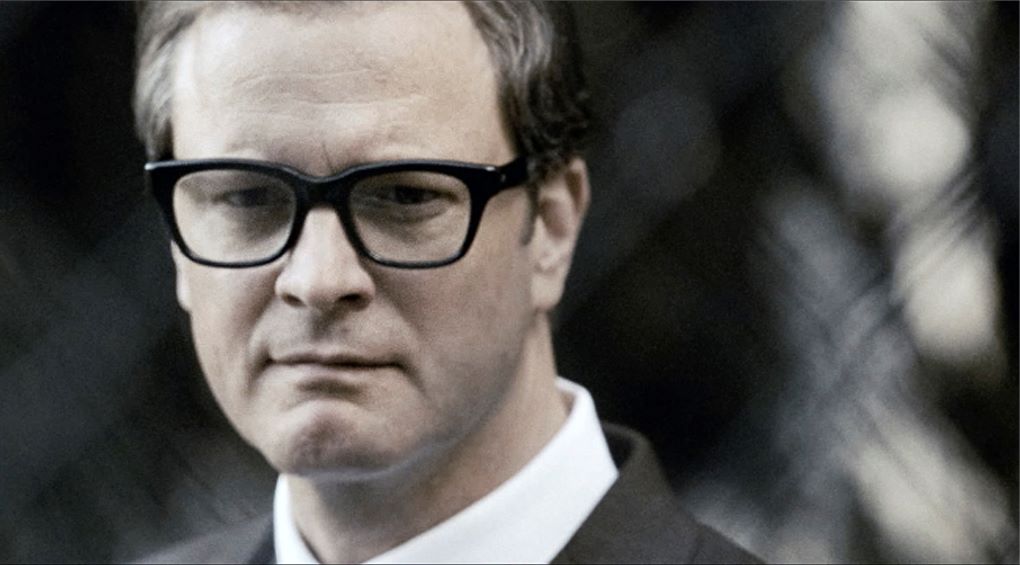
Grief is like a gaping wound that never heals. It’s an unbearable burden LA-based English professor George Falconer (Colin Firth) can’t bear any longer. Distraught after the death of his partner of sixteen years Jim (Matthew Goode), George decides November 30th 1962 will be the last day of his life. He will spend the day putting his affairs in order, soaking up the isolated intensity of moments, have dinner at his oldest friend Charley’s (Julianne Moore) house, then take his life. Adapted from Christopher Isherwood’s novel, A Single Man follows that one day.

The universal pain of grief and vibrancy of love shines out of one of the most tender gay-love stories ever made (strikingly shot and acted by a straight director and leads). A Single Man is a film that aches in every frame with the desolation of loss and the agony of moments that can never be claimed, touches that can never be made and conversations that can never be had. It studies how empty and overbearing life can feel when we know we must face it alone, without the person who made the world make sense to us.

It is of course a double burden when that loss cannot be acknowledged. George learns of the death of Jim via an awkward phone call from Jim’s brother (a vocal cameo from Jon Hamm) who can’t bring himself to openly acknowledge the love between the two men and tells him it’s a “family only” funeral. George himself can only convey repressed English regret during the phone call, before collapsing into lurching emotional hysteria after it. His loneliness and cool distance from others is all a side effect of man who must always hide his true feelings and who and what he is.

The film gains a huge amount from Colin Firth’s extraordinary performance in the lead role, hiding a seething, raw pain under a genteel and refined exterior. This seemingly cold, precise man – who dresses like a fashion model and is polite to a fault – is a tempest below the surface of loss that cannot be expressed. It’s as much the burden of putting on one face to the world, knowing there is another below the surface, that has crushed George’s spirit over the past years, as the loss of Jim. All of this is captured by Firth with exquisite sensitivity, in a perfectly judged performance.

Even George’s closest confidante Charley – his best friend, and one-time experimental romantic fling, now a depressed divorcee – can’t quite understand George’s feelings for Jim. Played with a wonderful air of domestic, middle-aged tragedy by Julianne Moore, Charley still can’t quite believe a homosexual love can ever really be the “equal” of a heterosexual one – that some part of George would have been happier if he had accepted a ‘normal’ relationship and family with her rather than the more ‘exotic’ relationship he chose. If even those closest to George can’t really see his relationship as legitimate, what chance does his apple-pie neighbourhood have of doing so?

It’s the intense loneliness – no one to share his pain with, no way to really mourn his love – that has finally beaten the will to carry on for George. Ford’s direction reflects his sense of ennui by presenting the world as coldly drained out, rich colours replaced with greyscale-tinged greys and blues. Warm colours only intrude in those moments where George consciously decides to engage, one final time, with the wonders the world has to offer, the frame filling with warmth and colour.

Ford’s elegiac film doesn’t shy away from the coldness of pain and loss. Opening with a (literally) chilling scene, as George imagines encountering Jim’s dead body in the snows, it conveys the functional distance the world can seem to have when we are dealing with life changing internal feelings. George is entrapped into tired conversations about university politics (his gaze drifts to two male tennis players, the screen momentarily filling with colour). Reflecting his fastidious nature, he carefully puts his affairs in order at the bank and catalogues keys, account details and suicide notes on his desk. All of it feels irrelevant compared to the pain within.

But A Single Man is also a hopeful film. Even when the world seems at its bleakest – when we have decided we can’t go on – there is still hope. It’s represented here by Nicholas Hoult, warm, open and honest as George’s student Kenny who intuitively identifies something is wrong with George and goes to huge lengths to try and find out what. The tenderness between the two – and the protectiveness as well as genuine smiles Kenny can promote in George – is a beat that suggests there may still be some chance of happiness in this world where we least expect it.

It’s part of the same warmth and humanity that underlies Ford’s heartfelt film, wonderfully directed. If it was a parade of bleakness, it would have far less effect. But flashbacks to George and Jim together show the joy and comfort of their lives, while the small moments of warmth and humanity in the present constantly remind us of what George’s decision will cost him.

The film’s final dark splash of irony may well be a little too on the nose, sign posted as a possibility a little too heavily earlier in the film. But, in its exploration of grief and intelligent, intense character study it’s a wonderful debut from Ford. And Firth’s extraordinary, career defining role (a year later, after winning the Oscar for The King’s Speech he thanked Tom Ford as being someone who owed a piece of the award to) is one for the ages that speaks to anyone who has ever known loss.

The Kids Are All Right (2010)

The Kids Are All Right (2010)

Questions of family, up-bringing and sexuality are explored with tenderness and a great deal of wit in this thought-provoking family drama

Director: Lisa Cholodenko

Cast: Annette Bening (Nic Allgood), Julianne Moore (Jules Allgood), Mark Ruffalo (Paul Hatfield), Mia Wasikowska (Joni Algood), Josh Hutcherson (Laser Allgood), Yaya DaCosta (Tanya), Eddie Hassell (Clay), Zosia Mamet (Sasha)

Nic (Annette Bening) and Jules (Julianne Moore) Allgood are just like any other married couple after years of living together and raising two children: seemingly contented, settled in their ways and routines, missing some of the passion they had in the beginning, locked into their designated roles in the marriage. Nic is the dedicated doctor (with a slight drink problem) whose alpha personality dictates much of how the household is run; Jules is the more relaxed, more bohemian figure, who has rotated through several possible careers while raising their children.

Those children are inadvertently about to shake things up. Both mothers have each given birth to one of the children, using sperm from the same anonymous donor. Older daughter – straight A high-school graduating Joni (Mia Wasikowska) – is Nic’s child; slightly slacker, sports-fixated son Laser (Josh Hutcherson) is Jules’. But both children are curious about who their father is: and, with Joni now old enough to request the information, they discover him to be local bohemian restauranteur Paul (Mark Ruffalo). Meeting Paul – and bringing him into their family life – opens up cracks in their parents’ marriage which will have far-reaching consequences.

Some from the LGBTQ community criticised Lisa Cholodenko’ film on its release for presenting a lesbian marriage in such a largely conventional way. In many ways though that is in fact its strength. This engaging dramady doesn’t see anything unusual or unworldly about a lesbian marriage: in fact it shows that the problems that can beset long-term heterosexual marriages are just as likely to happen in homosexual ones. Nic and Jules are essentially – even if they don’t realise it at first – stuck in a rut. The passion has largely gone after years, the knowledge that you need to make an effort has evaporated, too many conversations are about household and parental duties. Jules quietly, almost unknowingly, resents what she sees as Nic’s dominance in their lives, while Nic privately feels she pulls much more weight in keeping things running. Not that they consciously realise this at first, in conversations that drip with in-jokes and a very casual familiarity (both Bening and Moore are superb at embodying a relationship that has become so long-term it has developed its own language).

But into this drops a bombshell in Paul. Wonderfully played by Mark Ruffalo, Paul is relaxed, playful, optimistic and upbeat. To some in the family – in particular Jules and Joni – he is everything that the more uptight and regimented Nic is not. No wonder these two both find themselves drawn to him. Unfortunately, nice guy that he is, Paul is also superbly unruffled by consequences. Events roll off his back. At first this seems like a great thing. He’s patient, understanding and thoughtful when talking to the kids. He helps the uptight Joni to relax. He gives helpful advice to Laser about his unpleasant friend Clay. But his lack of thought about his actions is there from the start (Laser, astutely, is disappointed in his first impression of Paul as self-obsessed). His advice for Joni openly encourages her to defy Nic’s boundaries. He accompanies Laser to watch Clay attempt a dangerous skating stunt like he’s a bro not a dad. And then there is Jules.

The film also drew fire from the LGBTQ community for presenting one half of its normalised lesbian couple entering into an affair with a man. But for Jules, it’s clear, the relationship is really about getting the sort of attention, focus and (to be honest) sexual interest that Nic seemed to stop giving her a long time ago (at one point, Nic prepares a luxurious bath for Jules – but then takes a phone call from work and abandons the promised massage for work). Paul is flirty, sensual and horny: sure he’s a man, but he can give her the sort of sexual pleasure that absent-minded fondlings with Nic late at night no longer even begin to give.

But that’s all it really is to Jules – a sudden, unexpected craving. There is no doubt that her heart belongs to Nic – just as there is no doubt that both she and Nic will be devastated when the affair comes out. (Cholodenko shoots Nic’s realisation beautifully. During a “family dinner” with Paul, the sound drains out during a fixed shot on Bening’s face which pained, heartbroken realisation and anger crosses across. It’s a tour-de-force for Bening that probably went a long way to securing her Oscar nomination). Paul, conversely, seems supremely unaware of the likely impact of his actions – during that family dinner he shows no compunction about bonding for the first time with Nic (who relaxes as we have never seen before until the truth is revealed) over a mutual love for Joni Mitchell.

Paul is, unknowingly, the serpent in the garden that will unbalance the careful equilibrium in the family. Nic is hostile to him from the start, his presence seeming to play into deep rooted insecurities and a fear of being supplanted. For Jules he presents an exotic alternative chance – a relationship with someone who feels accommodating and deferential to her. It blows open the comfortable but familiar rut the two of them are in. In the cracks, Jules becomes distracted and selfish, Nic doubles down on drinking and demands for obedience to her family rules.

If it sounds heavy going, it surprisingly isn’t. Cholodenko (sharing script writing with Stuart Blomberg) throws in plenty of jokes and moments of sweetness. Bening and Moore are both incredibly good in the lead roles: Moore is bubbly, relaxed, sexy but sad deep down dissatisfied and surprisingly selfish. Bening seems at first merely a domineering control freak with a drink problem, but she is revealed as deeply fragile, loving and devoted, a woman whose love is expressed in ways the objects can find overbearing, however well meaning they are. (Wasikowska and Hutcherson are both also great as their kids.)

The Kids Are All Right bubbles with some well judged moments of comedy, drama and tragedy. This is a film, eventually, about the strength of family. Paul may tempt with his care-free optimism and consequence-free thinking. But this film sides, overwhelmingly, with people like Nic who may sometimes make you want to tear your hair out, but will be there time and again, day-after-day, offering love in a way people like Paul never can. Laser and Joni may tease her, may bridle at her rules – but they love her unconditionally, in a way the film shows us with gestures small and large time and again. So, for that matter, does Jules: her actions grow from wanting a more overt return on the affection she more naturally gives.

It’s a film that wears its heart firmly and shamelessly on its sleeve, as it urges us to both recognise and empathise with this fundamentally loving marriage going through a rough patch. And by normalising families like this, it sends a strong message of inclusivity: after all, if we all share the same problems, doesn’t that all help us realise we are the same?

As Good As It Gets (1997)

As Good As It Gets (1997)

Sparks fly in this straight-forward sitcom set up from James L. Brooks

Director: James L Brooks

Cast: Jack Nicholson (Melvin Udall), Helen Hunt (Carol Connelly), Greg Kinnear (Simon Bishop), Cuba Gooding Jnr (Frank Sachs), Skeet Ulrich (Vincent Lopiano), Shirley Knight (Beverly Connelly), Jesse James (Spencer Connelly), Yeardley Smith (Jackie Simpson), Harold Ramis (Dr Martin Bettes)

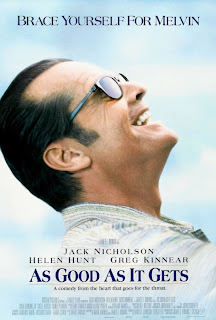
Melvin Udall (Jack Nicholson) is the rude, misanthropic writer of Mills and Boon style novels who suffers from an OCD that sees him keep to a strict series of routines. One of the most important is always having breakfast at the same table of the same restaurant, where the only waitress who will serve him is Carol Connelly (Helen Hunt). Carol is caring for her young son Spencer, who suffers from chronic asthma. All starts to change when the homophobic Melvin is persuaded to look after the dog of his neighbour, gay artist Simon Bishop (Greg Kinnear), after he is assaulted during a robbery. Melvin finds himself getting closer to the dog – and before he knows it, starts to reluctantly build a friendship with Simon and a romantic relationship with Carol.

If you thought that sounds rather like the set-up for a sitcom… you’d basically be right. James L Brooks demonstrates his TV roots again with what could almost be an extended pilot for a TV series, shot with his characteristic functionality. While its an attempt to show how different people can struggle to overcome barriers to connect with each other – be those psychological, social or health – it squeezes this into a trope-filled plot set-up, that swims in sentimentality and gives opportunities for actors to enjoy scenery-chewing, attention-grabbing parts.

None more so than Jack Nicholson, winning his third Oscar as Melvin. To be honest, what Nicholson does he is essentially portray a less complex version of Victor Meldrew from One Foot in the Grave. Melvin is a man who doesn’t suffer fools gladly, and delights in using his wealth to excuse him from saying a host of unacceptable things about everyone he meets (not a single gender, sexuality or race escapes his quick-witted bile).

Of course, the audiences know that it’s alright because it’s Jack, and while he might be a rogue he’s basically got his heart in the right place. Discovering that is basically the purpose of the film: of course, all that rudeness and cruelty is a front to protect an insecure man from the dangers of emotional commitment. Not to mention that the first thing to melt his shell is that most familiar (and sweet) of Hollywood props, a dog. Brooks does manage to demonstrate that Jack’s acts of kindness are at first partly about making life easy for himself – securing an expensive doctor for Carol’s son is about ensuring she doesn’t leave his restaurant and agrees to keep talking to him – but the film is determined to show everyone is basically “decent” and “kind” even if they don’t know it.

Inevitably, the best way of doing this is for that familiar old development, the road trip: for contrived reasons connected to Simon needing to ask his parents in Baltimore for help with medical bills, Melvin, Carol and Simon climb into a car for a cross-country drive. Needless to say, the predictable clashes, confessions, break-ups and reconciliations take place. It being a Brooks movie, this all takes place over an extended two and a half hour run time (indulgent for such a traditional set-up).

What makes it work is that the acting of the three principles is fiercely committed. Oscar-winning Nicholson eats up the cutting dialogue but also manages to mine a lot of “little boy lost” vulnerability from Melvin, a man who throws up barriers of rudeness, aggression and misanthropy to protect himself from getting hurt. Helen Hunt (who won another Oscar) hones years of experience in delivering fast-paced, witty dialogue from Mad About You, also shows real depth making Carol a similarly guarded person, using sass and cynicism as a shield against a world she expects to bite her. Greg Kinnear is a fragile artist, hiding behind his art, tortured by denial about his problems and desperate for an emotional connection.

That theme of the defensive barriers – and crippling effects of our own mental hang-ups – is the deeper message that Brooks manages to bring to the film. Melvin might seem, on the surface, the most obviously maladjusted but at least he’s vaguely happy in his skin at the start of the film. The other characters wear smiles of contentment, but only to hide deep stress and turmoil. It’s Brooks’ TV roots that turns all this into a series of “learning” lessons, where every scene in the final act is accompanied by someone making a profound choice, making a new start or letting something go.

As Good As It Gets is about making the best of things. And Brooks makes a pretty good fist of making this a decent (overlong) romantic comedy with a touch of depth. But its still mired in predictable tropes. Melvin’s OCD expresses itself in the most amusing filmic way possible, essentially as a form of charming eccentricity rather than the crippling disease it can actually be (it ticks all the predictable boxes, from light-switches, to compulsive hand cleaning to not stepping on cracks in the pavement). The film also, rather worryingly, suggests OCD can be overcome just like any other personality problem, simply by opening your heart and learning those lessons.

It’s fine, but you can watch it now and wonder how a film that’s essentially an over-extended dramedy TV-show pilot ended up scooping so many prizes. Entertaining, with some interesting perspectives, with committed acting, but very little that’s new and a lot that’s rather tired.

Some Like It Hot (1959)

Some Like It Hot header
Tony Curtis, Jack Lemmon and Marilyn Monroe make comedy gold in Some Like It Hot

Director: Billy Wilder

Cast: Marilyn Monroe (Sugar “Kane” Kowalczyk), Tony Curtis (Joe/“Josephine/“Shell Oil Jnr”), Jack Lemmon (Jerry/“Daphne”), George Raft (“Spats” Colombo), Pat O’Brien (Agent Mulligan), Joe E Brown (Osgood Fielding III), Nehemiah Persoff (“Little Bonaparte”), Joan Shawlee (Sweet Sue), Dave Berry (Mr Bienstock), Grace Lee Whitney (Rosella), George E Stone (“Toothpick” Charlie)

It’s the funniest comedy that ever started in a hail of bullets. It’s the best chick flick to stare two men. It’s probably Billy Wilder’s sweetest comedy and it’s almost certainly its most beloved. They say Nobody’s Perfect, but you can be pretty sure this film gets as close to it as possible.

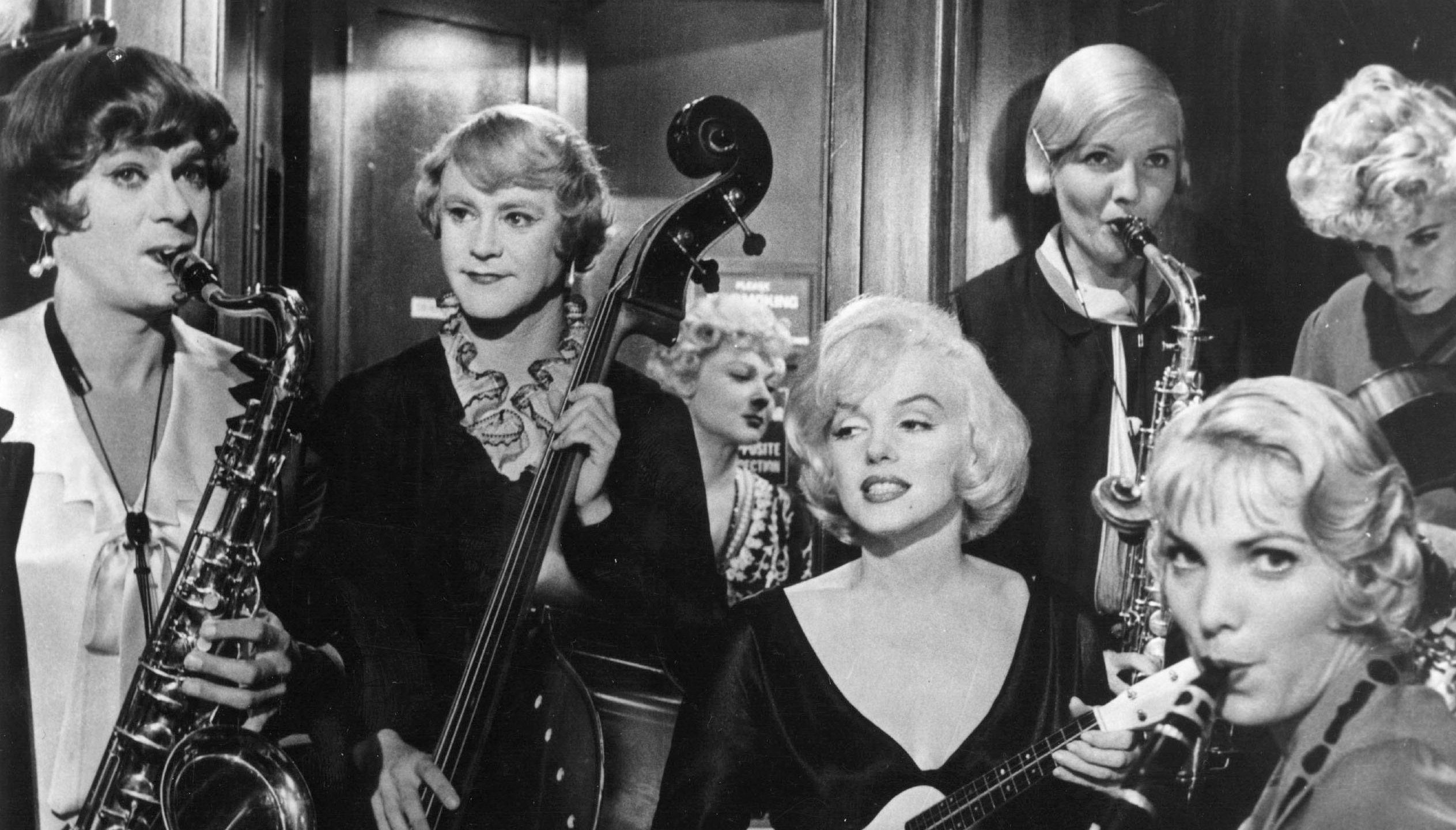
In 1929 in Prohibition Chicago, down-on-their-luck musicians saxophonist Joe (Tony Curtis) and double bass Jerry (Jack Lemmon) can’t get a break. First the speakeasy they are playing gets busted by the feds. They’ve lost all their money at the dog track. And, oh yeah, they accidentally witness gangster “Spats” (George Raft) eliminate his competition in a hail of bullets. They’ve got to get out of town incognito and quick – so what better option but joining an all-female band as “Josephine” and “Daphne”? Problem is, playing at a hotel in Florida, Joe and Jerry find themselves in all-sorts of romantic entanglements: Joe is wooing lead singer Sugar (Marilyn Monroe) in the guise of heir to an Oil fortune, while Jerry is wooed by smitten millionaire Osgood Fielding III (Joe E Brown). And if that’s not bad enough – guess which hotel the mob are having their annual convention at?

Wilder’s comedy is a fast-moving, brilliantly written (by Wilder and IAL Diamond) buddy comedy with a twist that dives into a whole world of gender and identity concepts that puts it way ahead of its time. Shot in luscious black-and-white (Wilder’s preferred style, and colour exposed all too strikingly the drag act look of Curtis and Lemmon), every scene has at a zinger and our heroes fall into one a string of madcap situation through misfortune and rank incompetence.

But the film’s real interest is in how far ahead of its time its gender awareness was. When they first appear disguised at the train station, the camera pans up their legs and behinds in just the way you would expect it to do (and indeed it does seconds later with Monroe) to ogle the women, only to reveal it’s the men striding their way down the platform. Both of them comment (and complain) on the objectification and unwanted physical attention (from slapped bums upwards) from men – “it’s like a red rag to a bull” Joe describes their feminine appearance, before he and Jerry complain they can’t wait to get back to being the bull again. It’s part of the fine tight-walk the film works, where the men are both men and women, victims and hypocrites, open-minded and conservative.

Dressing as women seems to give both of them a new perspective on things. Lothario Joe seems to gain a new sympathy for women – while at the same time, passing himself off as a millionaire to seduce Sugar with a string of lies – and comes to see himself as exactly the sort of lousy bum he probably has been. For Jerry the whole experience is a revelation. It’s part of as fascinating debate as to how much this film is aware of transgender and homosexual urges, and how much it’s just a very wittily delivered joke that’s so respectfully done it can be embraced by one and all. But for Jerry, the whole experience seems to redefine his own internal perception of himself.

It’s there from when he first glances Monroe at the train station: after tripping in his heels, he’s stunned when she works past, not by her looks, but by the ease she moves, his eyes not starring at her behind with lust (as Joe’s does) but with envious admiration. On the train he takes the blame for Sugar’s illicit bourbon – is it a sense of fellowship, or a bizarre way of making a pass at her? This leads to a slumber party in his bunk with the whole band, all in their nightwear – through which he constantly forces himself to remember he’s a boy (seemingly out of sexual excitement). But we very rarely see Jerry out of some layer of feminine disguise: and later confusion seems to abound during his courtship from Osgood, where he delights in the dancing, the jewels and the engagement and has to disappointingly remind himself that he’s a boy. After initial doubts Jerry finds a sort of freedom in dressing as a woman, that Joe never does.

How much is Some Like It Hot aware that it is playing around with fluid gender perceptions, and how much is it a stunningly well delivered joke? It’s not clear – and I doubt any film-maker in 1959 would even have the vocabulary to begin to conceive the sort of conversation the film provokes today.

But does it really matter when the jokes are this good and the performances so brilliant? Jack Lemmon is superb here, the sort of career-defining performance actors dream about. Anxious, fussy, slightly whiny, Jerry becomes the more playful, sassy Daphne – and what Lemmon does brilliantly is make both personalities fully-formed yet existing consistently within the same character. That’s not mentioning his verbal and physical comedic gifts and consistently perfect timing, his performance comedic but not a broad drag act. He makes Jerry/Daphne a living, breathing person anda comedic character, someone we can never imagine meeting in real life but also would not be surprised to sit down next to on a bus. This is skilful acting on another level.

Which is not to do down Tony Curtis, who is very funny as the lothario Joe uncomfortably squeezed into feminine attire. While Jerry comes to relish some of the accoutrements of ladies clothing, Joe is never as comfortable – for him it is practical solution. That doesn’t change Curtis’ hilarious comic timing – or his wicked Cary Grant impersonation (“No one talks like that!” Jerry complains) when taking on a third disguise as a Shell Oil heir, which also seems like a sly parody of Henry Fonda in The Lady Eve. Curtis’ comic timing is as faultless as Lemmon’s, and the two actors produce such a sparkling double act, it’s a shame they didn’t work together again.

As the third wheel, Monroe was never so radiant, culturally iconic and luminous than she was here. Reports are rife of the troubles she caused on set – the hours waiting for her to turn up, the lines she couldn’t or wouldn’t learn, the dozens and dozens of talks she demanded for the even the simplest scenes (this in particular drove Curtis – an instinctive actor whose performance declined with retakes – up the wall – it’s fun to spot how little they actually share the same shot during the film). Wilder later commented she was a terrible actor to work with – but a God-given talent up on the screen. Can’t argue with that, and she turns a character who, on paper, could be a dumb blonde joke into someone very sweet, endearing and lovable, who we never laugh at (Monroe is a generous enough performer to never worry about making it clear to the audience that she is smarter than her character is, or treat her with contempt).

Wilder brings it all together with his genius behind the camera. He cuts the film with superb comic timing – the intercutting between the seductions of Joe/Sugar and Jerry/Osgood are masterfully done – his sense of the momentum is spot-on and he is as skilled with flat-out farce as sophisticated word-play. That’s not to mention the wonder of the tone – he makes a concept that had the suits sweating in 1959, easy to swallow without ever once treating the idea as a revolting perversion, making it funny but never humiliating. The film’s sweetness is partly why its become so loved.

Possibly the funniest film ever made – and it’s also littered with gags about old-school gangster films, taking advantage of its inclusion in the cast of the likes of Raft and O’Brien enjoyably sending themselves up – it’s won a place in the hearts of film buffs and casual moviegoers for generations. And it’s going to continue to do so. With one of the greatest closing scenes ever, it’s always going to leave you wanting to come back for more.

The Happy Prince (2018)

The Happy Prince header
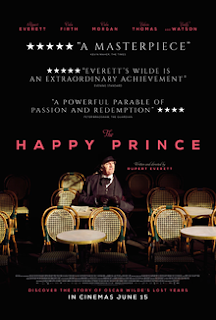
Rupert Everett excels as Oscar Wilde in his passion project The Happy Prince

Director: Rupert Everett

Cast: Rupert Everett (Oscar Wilde), Colin Firth (Reggie Turner), Colin Morgan (Lord Alfred “Bosie” Douglas), Emily Watson (Constance Lloyd), Tom Wilkinson (Father Dunne), Anna Chancellor (Mrs Arbuthnot), Edwin Thomas (Robbie Ross), Beatrice Dalle (Café manager), Julian Wadham (Mr Arbuthnot), John Standing (Dr Tucker)

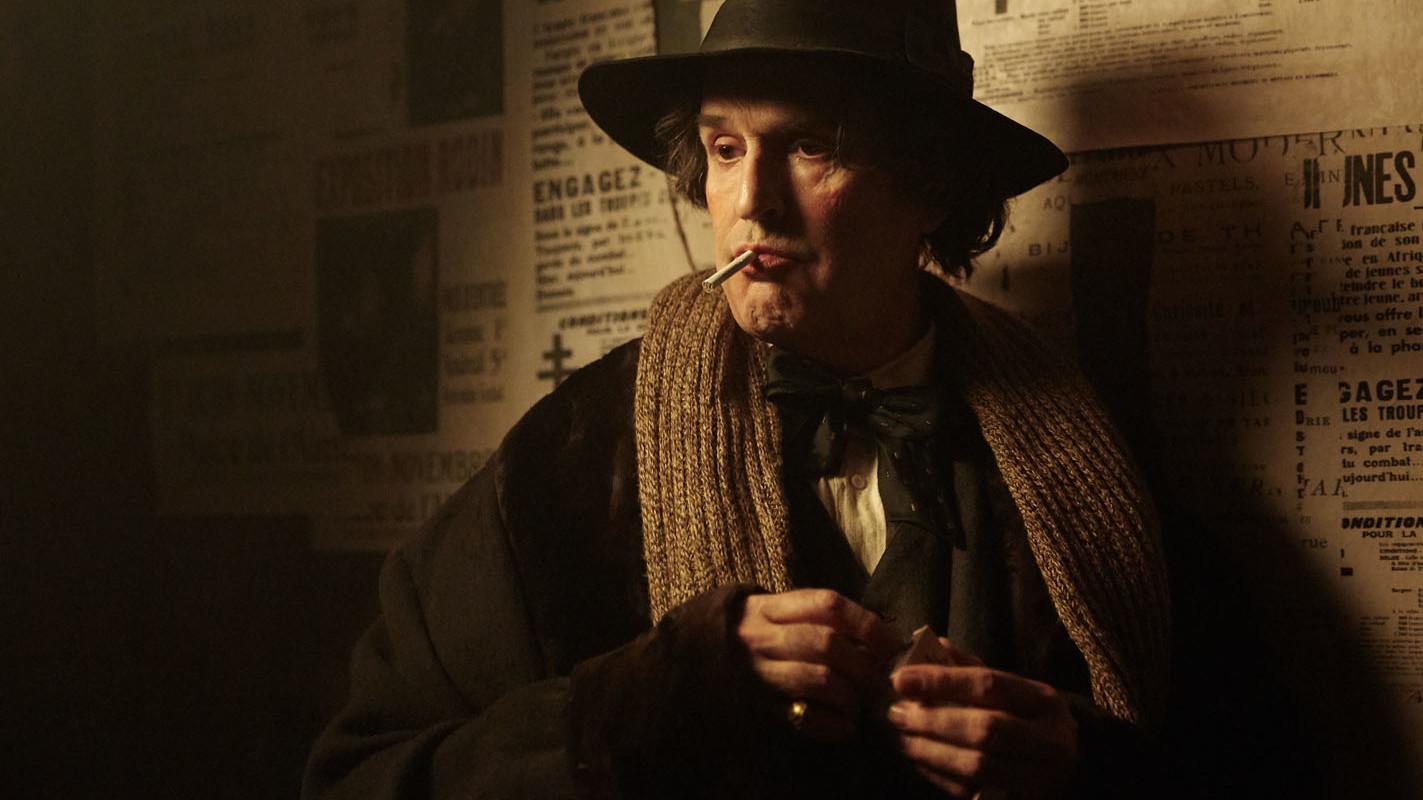
Rupert Everett has long felt an affinity for Oscar Wilde. He saw Wilde as one of the first great martyrs of the gay community, sacrificed early to the hypocrisy of conventional society (who loved everything about this flamboyantly camp, witty man right up until they found out what he got up to in bed). He spent ten years trying to find the money to film his script about Wilde’s final days in exile in Europe. (Everett eventually recounted all this in a book, To the Ends of the Earth).

The final end result is a well-made, interesting, decent film that doesn’t reinvent the wheel or radically change our perceptions or knowledge of Wilde – but does plenty of credit to Everett. He directs with an assurance and a surprising amount of visual flair. The film is attractive and uses urgent, hand-held camerawork with a great deal of skill, giving even the most basic scenes a real spark of life. There are some intelligent and intriguing visual cuts and transitions and he gets good work from the cast (Firth, an old friend, loyally did the film for nothing to help it get made). There is enough here to make you keen to see Everett have a go at another film (although I suspect, from reading the book, that’s highly unlikely to happen).

Everett also plays the lead role, and that’s the film’s main interest. He honed his performance as Wilde after the best part of a year on stage (to huge acclaim) in David Hare’s The Judas Kiss. Not to mention Everett has a natural affinity for Wildean dialogue, having proven on several occasions that maybe no actor alive better captures Wilde’s wit and pathos. His Wilde is a shattered husk, slowly realising over the course of the film that his life is effectively over. This happens not so much as a raging against the light, but the slow deflation of a man who died at a very early age (barely mid 40s), collapsing into depression, alcoholism and repeating the same mistakes over and over again.

The most prominent of those mistakes being taking up again with his lover (and root cause of his disgrace the first time) Bosie, played here with preening, incandescent selfishness by Colin Morgan. During a long sojourn in Naples, these two flirt, fight and fuck until the money runs out – like an appalling unfunny screwball comedy couple who keep being dragged back together because fighting each other is better than talking to anyone else. Bosie then turns up in floods of tears at Wilde’s grave – having cut all ties with him or face disinheritance, fobbing him off with a few hundred quid of “thank but piss off” money.

Wilde’s loyal friends stick by him – but in that typical blinkered way we sometimes behave when we are in love, Wilde oscillates between being sickeningly dependent and dismissive of them. Everett isn’t afraid to make Wilde often preening, sponging, selfish and deluded or to stress how easily his wit and intelligence could be turned cruel. Edwin Thomas is heart-breakingly earnest as Wilde’s devoted friend Robbie Ross while Firth gives sterling support as the equally loyal Reggie Turner.

The film follows Wilde into some pretty dark places and plays some quite daring cards when exploring Wilde’s psyche. Everett plainly shows Wilde deeply regretted the end of his relationship with his children, and the damage he caused them. But he isn’t afraid to show him taking on potential substitutes for them in a teenage boy and his prepubescent brother – while still paying for sex with the older brother (eagerly pimped by his street-smart younger brother). Despite this there’s something very sad about Wilde settling down to tell these kids the same stories he told his own. Or his gentle longing for the family he left behind that we hear in his voice when he sees them.

Where the film is strongest is in showing the prejudice and rage Wilde met and the suffering he endured. Wilde is spat at, chased through the street by drunken poshboys on tour (finally physically confronting them in a church with a foul-mouthed fury), threatened and generally treated like dirt by nearly everyone of any social standing. Scenes of him at his pomp show the same traits now treated as disgusting signs of his sexual preference, were celebrated as evidence of his charm. The Happy Prince has an angry and rage to it that I almost wish Everett had committed to more.

Saying that, it’s shot and edited with such pace and urgency that the film still works. If at the end it never quite coalesces into a clear message, it’s still a fine tribute to Everett’s efforts to bring it to the screen. And his own performance is a marvel – beautifully judged, empathetic but not hagiographic, critical but sympathetic, funny and also moving, angry but gentle. Its best legacy is the opportunity Everett the actor is given by Everett the director (as he confesses in the book one of his principle reasons for writing the script in the first place) and if the film is a little too much of a one-man showcase, it still has plenty of interest to it.

The Power of the Dog (2021)

Power of the Dog header
Benedict Cumberbatch rules his ranch with an iron fist in Jane Campion’s extraordinary The Power of the Dog

Director: Jane Campion

Cast: Benedict Cumberbatch (Phil Burbank), Kirsten Dunst (Rose Gordon), Jesse Plemons (George Burbank), Kodi Smit-McPhee (Peter Gordon), Thomasin McKenzie (Lola), Genevieve Lemon (Mrs Lewis), Keith Carradine (Governor Edward), Frances Conroy (Old Lady), Peter Carroll (Old Gent)

At one point in The Power of the Dog, Phil Burbank, monstrously domineering Montana Rancher, stares out at his beloved hills. Where others see only rocks and peaks, Phil sees how (like a cloud) they form themselves into looking like a howling dog. Seeing things others do not is something Phil prides himself on. It’s also something The Power of the Dog excels out: it’s a continually genre- and tone-shifting film that starts as a gothic, du Maurier-like dance among the plains and ends as something so radically different, with such unexpected character shifts and revelations, you’ll be desperate to go back and watch it again and see if you can see the image of a dog among its rocks.

In Montana in 1925, two brothers run a ranch. George (Jesse Plemons) is polite, formal and quiet, seemingly under the thumb of his aggressively macho, bullying brother Phil (Benedict Cumberbatch). Phil is fully “hands-on” on the ranch, priding himself on being able to perform every task, from rope weaving to bull skinning, all of which he learned from his deceased mentor “Bronco” Henry. Things change though when George marries Rose (Kirsten Dunst). Phil takes an immediate dislike to Rose, engaging into a campaign of psychological bullying that drives Rose to drink. However, at the same time a strange bond develops between Phil and Rose’s student son Peter (Kodi Smit-McPhee) – is Phil’s interest in the boy part of a campaign to destroy Rose or are there other forces at work?

Campion’s film (her first in over ten years) is a fascinating series of narrative turns and genre shifts. It opens like a gothic Western. The ranch is a huge, isolated house surrounded by rolling fields and its own rules. Phil is an awe-inspiring, still-living Rebecca with Rose a Second Mrs de Winter having to share a bathroom with the perfect first wife. The psychological war Phil launches against Rose, like a hyper-masculine Mrs Danvers, seems at first to be heading towards a plot where we will see a vulnerable woman either crushed or fighting back. Then Campion shifts gears with incredible professional ease; the kaleidoscope shifts and suddenly our perceptions change along with the film’s genre, which becomes something strikingly different.

This all revolves around the character of Phil. Excellently played (way against type) by Benedict Cumberbatch, in a hugely complex performance, Phil at first seems an obvious character. A bully and alpha male who mocks George as “Fatso”, hurls homophobic slurs at Rose’s sensitive, artistic son and would-be doctor Pete, and treats his duties with such masculine reverence that the idea of wearing gloves to skin a cow or washing the dirt of his labour from him is anathema.

But look at Phil another way and you see his vulnerability. The opening scenes play as a torrent of abuse to George. But look again and you see this is a man desperately trying multiple angles to clumsily engage his brother in joint reminiscences. His emotional dependence on George is so great that they still share a single bedroom in their giant house (and even a bed in a guest house, like Morecambe and Wise) and he weeps on their first night apart. Despite his brutish appearance, his conversation is littered with classical and literary allusions (we discover later he is a Yale Classics graduate). His life is devoid of emotional and physical contact and he maintains a hidden retreat in the woods, a private den the only place we see him relax.

He’s a man clinging desperately to the past. At first it feels like he has never grown up, that he is still a boy at heart. But Campion slowly reveals his emotional bonds to his deceased mentor Bronco (whom he refers to almost constantly in conversation) to be far deeper and more complex than first anticipated. He treats Bronco’s remaining belongings with reverence, maintaining a shrine to him in the barn and cleaning his saddle with more tenderness and care than he feels able to show any human being. The depths of this relationship are crucial to understanding Phil’s character and the emotional barriers he has constructed. His gruff aggression hides a deep isolation and loneliness, feelings Campion explores with profound empathy in the film’s second half.

That doesn’t change the monstrousness of the bullying Phil enacts on Rose. Played with fragile timidity by Kirsten Dunst, Rose becomes so grimly aware of Phil’s loathing that is too paralysed by intimidation to even play Strauss on her newly purchased piano in front of George’s distinguished guests (Phil pointedly plays the music far better on his banjo and takes to whistling in in Rose’s presence) and later tips into alcoholic incoherence.

Despite Dunst’s strong performance, if the film has a flaw it is that we don’t quite invest in Rose enough to empathise fully with her emotional collapse. Both she and George (a fine performance of not-too-bright-decency from Plemons, in the least flashy role) disappear for stretches and play out parts of their relationship off camera, making it harder to bond with them (a bond the earlier part of the film needs). It perhaps might have been more effective to centre the film’s opening act on Rose rather than Phil, allowing us to relate to her better and feel her decline more.

Dunst however nails Rose’s growing fear, desperation and depression while her status as an unwelcome guest is constantly forced on her. Her panic only deepens with the return of her son Peter. This is where the film takes a series of unexpected shifts. To the surprise of all Phil offers to take the sensitive, quiet Pete under his wing: perhaps he’s impressed by Pete’s indifference to the homophobic abuse from the ranch-hands, perhaps he sees a chance to spiritually resurrect his mentor by playing the same role himself to Phil (pointedly, the film implies the younger Phil may not have been dissimilar from Pete). Either way, Campion’s film heads into its extraordinary and deeply impactful second half as an unsettling and uncertain personal drama between two men who seem totally different but may perhaps have more similarities than expected.

As Peter, Kodi Smit-McPhee gives a wonderfully judged performance of inscrutability and reserve. He’s an artistic boy who creates detailed paper flowers and keeps artistic scrapbooks, but can dissect animals without a flinch and snaps the neck of an injured rabbit with ease. He seems alternately devoted to his mother then queasily distant from her, calling her Rose and unsettled by her drunken inappropriateness. His motivations remain enigmatic, just as Phil’s motivations for befriending this isolated and very different boy could fall either way. Smit-McPhee and Cumberbatch are both extraordinarily good in the scenes between this unlikely partnership, and Campion’s artful film keeps us on our toes as to precisely what they want from this friendship. The result is haunting.

It leads into a stunning final act which demands we re-evaluate all we have seen and leaves such a lasting impression I was still re-living the film in my mind days later. Campion’s film is masterfully shot and carries a wonderful atmosphere of intimidation and unease, helped hugely by Johnny Greenwood’s brilliant score with its unsettling piano-inspired cadences. It reinvents itself constantly, Campion’s direction shifting tone and genre masterfully. It’s quite brilliantly acted and provides Cumberbatch in particular with an opportunity he seizes upon to slowly reveal depths of emotion and vulnerability an outwardly straight-forward monster. There won’t be many finer films released in 2021: and this will be a classic to sit alongside The Piano in Campion’s work.

Disobedience (2017)

Rachel Weisz and Rachel McAdams deal with love and faith in Disobedience

Director: Sebastian Lelio

Cast: Rachel Weisz (Ronit Krushka), Rachel McAdams (Esti Kuperman), Alessandro Nivola (Dovid Kuperman), Allan Corduner (Moshe Hartog), Bernice Stegers (Fruma Hartog), Anton Lesser (Rav Krushka), Nicholas Woodeson (Rabbi Goldfarb), Liza Sadoby (Rebbetzin Goldfarb)

After the death of her father, a highly respected member of a Jewish Orthodox community in London, photographer Ronit (Rachel Weisz) returns from New York for his funeral. Estranged from her father, due to her rejection of Orthodoxy, Ronit has been quietly forgotten by her community. She stays with old childhood friends, now married, Dovid (Alessandro Nivola) and Esti (Rachel McAdams) Kuperman. Dovid, her father’s chosen disciple, has been offered his place in the synagogue. Esti is a teacher at the local primary school. However, Ronit and Esti are more than just friends – their love for each other being the unspoken reason for Ronit’s departure.

Disobedience is a tender, thought-provoking exploration of the struggles between faith and love – or rather the longing to be a part of a community, that rejects a big part of who you are. While Ronit is our entry point into this world, the real tragedy here is Esti. Both a believer in Jewish Orthodoxy and a lesbian, Esti has struggled her whole life to find a balance between these two. While Ronit has, to a certain extent, chosen – deciding to leave her family life behind to allow some personal freedom for her bisexuality – Esti has remained and tried to reconcile the contradictions in her life.

What works really well about Disobedience is that it avoids moral judgements. The Orthodox community is never condemned or hold up backward or wicked. Those who live in it may be traditional, but they are not cruel. Ronit felt she had to leave, and there is an awkwardness around her return (and she is not mentioned in her father’s obituary), but apart from a few individuals, the community acknowledges her. This proves especially effectively as it allows the film to focus on a very tenderly drawn love-and-relationship triangle between the three leads, rather than scoring easier political or religious points.

It becomes a beautifully acted depiction of a three close childhood friends who are torn between affection, bitterness and longing for each other. In particular, the love between Ronit and Esti is immediately apparent, but also the tensions of confusion, missed opportunities and confused messages. These are two women deeply in love, but held apart by pressures of their community and conflicts in themselves. Between them falls Dovid, the loyal scholar of Orthodoxy, desperate to make his marriage to Esti work but also feeling a genuine affection to his adopted sister Ronit.

There is no easy answers to this mess – and the film looks carefully at questions of freedom, choice and free will. How can you reconcile your faith and the pressures of your community with the things you want in your heart? How do you compress the guilt when you feel you are forcing choices onto someone you love? How willing are we to sacrifice everything we have grown up with to make our own choices? You’d expect the answers to come down on the obvious sides, but instead Disobedience frequently operates in shades of grey and complex, messy realities. Its endings are open, its conclusions emotionally strong but not clear-cut. It reflects the ambiguity of life in its refusal to supply simple, reassuring endings.

The film is directed, in a muted palette, with great sensitivity and restraint by Sebastian Leilo. The camera has a wonderful eye for passing moments, for suppressed looks of affection. He uses long takes to allow his actors to relax into their performances, helping them create characters who feel extremely natural. The moment when Esti and Ronit finally surrender to their feelings to each other is shot with an urgency and intimacy – which then makes the restraint of much of the rest of the film all the more striking, as reality returns.

He also constantly surprises us, skilfully shifting perceptions from character to character. At first we feel that this is the story of the rebellious Ronit, but as the story progresses Esti emerges as a truly tragic figure, while Dovid is a man holding back huge waves of doubt and uncertainty about the rules that have defined his life.

The three lead actors are wonderful. Weisz is edgy, cagey and unapologetic about the air of rebelliousness she outwardly displays – but its clear that underneath she is full of regret, grief and a powerful sense of loss about the family and love she left behind. McAdams grows in statue from scene to scene as a woman who seems naïve but actually is all-too-aware of the compromises life demands – and has struggled all her life with sexual feelings alien to her culture. Nivola superbly turns a character who could have been an obstructive bore into a man who knows suffering deep down with the knowledge that his functional marriage based on duty will never bring him (or Esti) the happiness he desires.

Disobedience balances these three characters wonderfully. At times it luxuriates too much in its languid pace and stolen, lingering glances – a sense of urgency is often missing. But intelligent, sensitive, respectful and with a respect for faith that many other films would have avoided, it’s brilliantly played and sensitively directed.