Category: Media satire

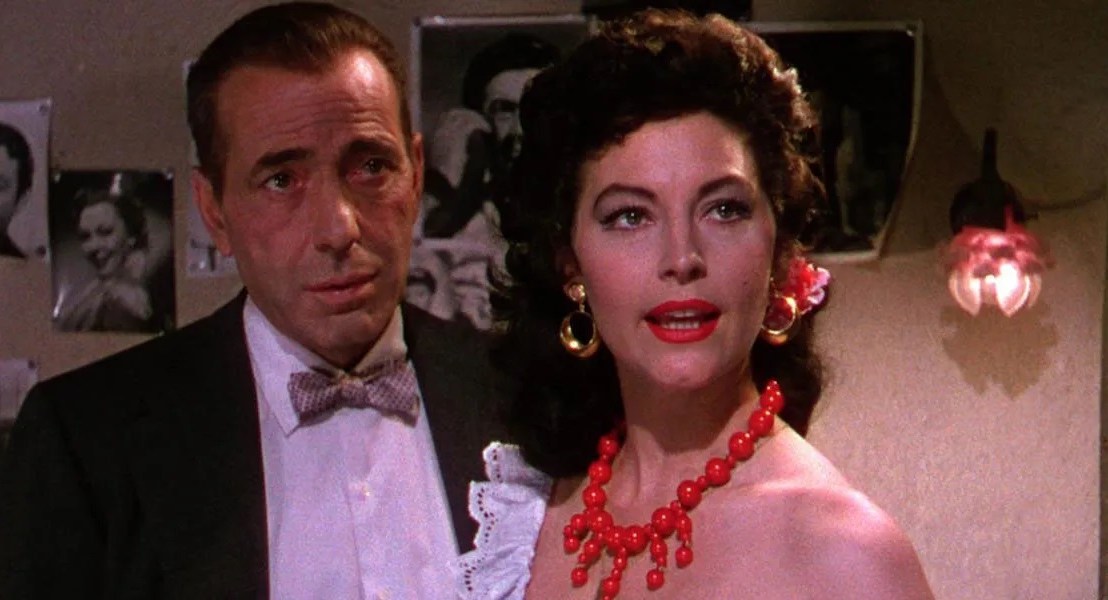
The Barefoot Contessa (1954)

The Barefoot Contessa (1954)

An enigmatic beauty finds fame but not happiness in Hollywood in Mankiewicz’ slightly muddled mix of satire, romance and tragedy

Director: Joseph L Mankiewicz

Cast: Humphrey Bogart (Harry Dawes), Ava Gardner (Maria Vargas), Edmond O’Brien (Oscar Muldoon), Marius Goring (Alberto Bravano), Valentina Cortese (Eleanora Torlato-Favrini), Rossano Brazzi (Count Vincenzo Torlato-Favrini), Elizabeth Sellers (Jerry Dawes), Warren Stevens (Kirk Edwards), Franco Interlenghi (Pedro Vargas)

Rain hammers down on a funeral in the Italian Rivera. A group of (mostly) men gather to pay their respects to deceased film star Maria Vargas (Ava Gardner). In flashback, two of the men who discovered her as an exotic dancer in a Madrid nightclub, remember her. Harry Dawes (Humphrey Bogart) is the world-weary writer-director and her friend and mentor, Oscar Muldoon (Edmond O’Brien) a publicist to power-mad producers and self-satisfied millionaires who wanted to use Maria for their own ends. Maria’s success goes with a growing loneliness and ennui: marriage to Count Vincenzo Torlato-Favrini (Rossano Brazzi) feels like a fresh start but leads only to further tragedy.

Mankiewicz’s The Barefoot Contessa was an attempt to do for Hollywood what he so superbly did for theatre in All About Eve. What’s fascinating is that it’s clear Mankiewicz loved the theatre – for all its bitchy acidness – but clearly didn’t like Hollywood that much. The Barefoot Contessa is a cold, cynical film where Hollywood is a shallow, selfish place with no loyalty and where people are only commodities.

The only exceptions are Dawes and Maria. Dawes – an obvious Mankiewicz stand-in (and who hasn’t wished they could be Humphrey Bogart?) – is an artist, with an abashed guilt about wasting his talents on shallow films. Played with a quiet, observational languor by Bogart (so ashen faced at times, he seems almost grey), Dawes narrates with a dry distance, seeing but avoiding involvement, an arched eyebrow for every event. He’s also got a level of principle and integrity largely missing from the other Hollywood figures.

What we see of them is often hard to like – could Mankiewicz already be so bitter about his profession, just a few years after dominating the Oscars? Maria’s first producer, Warren Stevens, is a spoilt millionaire (inspired by Howard Hughes), played with a stroppy greed by Kirk Edwards. Stevens humiliates underlings in restaurants, treats Dawes like a bellboy, demands total devotion from Maria (sulkily ordering her to stay away from a potential rival at a dinner party) and has not a shred of interest in art. Under his control, Dawes directs films which sound formulaic (Black Dawn!) and which he clearly despises. A screen-test for Maria is gate-crashed by a series of European producers who gossip about money, stars, finance and never art.

Maria rises above all this as a true romantic ideal, her tendency to go barefoot part of her defining characteristic as a natural free-spirit in touch with the Mother Nature (“I feel safe with my feet in the dirt”). Ava Gardner is perfectly cast as this romantic but enigmatic figure, an idealised figure we never quite understand. Introduced as curiously indifferent about auditioning for Hollywood (partly due to her instinctive dislike for Stevens), Maria almost drifts into stardom but finds little contentment. She lives the ultimate Cinderella story (as she comments on with Dawes) but never find a satisfying fairy tale ending after her rags-to-riches story.

The Barefoot Contessa starts as a Hollywood expose, but becomes an ill-focused study of this almost unknowable glamour figure. Gardner is, of course, nothing like what a Madrid dancer from the slums would look or act like, but she is perfectly cast as the idealised figure Mankiewicz wants for his Maugham-ish exploration of ennui and shallowness among the jet-set of Europe. They’re not that different from Hollywood producers: obsessed with status and class, and uninterested in truth and art. Marius Goring’s Italian millionaire turns out (for all his Euro-charm) to be as much a stroppy ass as Stevens (humiliatingly blaming Maria for his gambling losses). Her husband, the Count, seems to be her salvation, but turns out to be as much a deceptive empty-suit as anyone else.

I suppose it’s part of the point that we never get to hear Maria’s own voice, only the perceptions of the men around her. You could say the same about All About Eve’s Eve and Margo, but they were such rich characters our understanding of them was always clear. But Maria is never quite compelling enough and Mankiewicz never escapes from making her feel a variation on a fantasy figure (between sex bomb and earth mother). Mankiewicz was forced to compromise on his central conceit (rather than gay, her husband is cursed with ludicrous war-wound induced impotency) of Maria marrying the man least suited to giving her the family-life purpose she seeks.

The Barefoot Contessa – strangely for a film from a director whose best work was with women – eventually becomes a film about men, fascinated with a woman they can never really understand. Dawes gets the closest, the only man free of sexual desire for her, but to the others she is often seen as an unobtainable sexual figure (on a yacht, she defiantly confronts the lecherous stares of the men on board). When we finally see her dance, she has a freedom and naturalness you feel has been crushed by the circles she now moves in.

It feels like two films pushed together: one a Hollywood expose about a newly-grown star (that film is a broader, farcical one where Edmond O’Brien’s hammy Oscar-winning turn as a wild-eyed, famously sweaty publicist seems to fit); the other a novelistic musing on ennui in the moneyed jet-set classes, where an unobtainable woman is at last obtained by a man who can do nothing with her.

Mankiewicz’s weakness is not pulling these two narratives together into a coherent thematic whole. He himself was later critical of the films structure. It’s beautifully written of course – Mankiewicz is a master of theatrical pose – and Jack Cardiff’s technicolour beauty is outstanding. The Barefoot Contessa sits in the shadow, both of In a Lonely Place (Bogart’s vicious 1950 Hollywood expose) and films that loosely followed in its ennui-exploring footsteps, like La Dolce Vita. But it’s as if Mankiewicz got a bit lost (like Dawes) about what his intentions were in the first place.

Don’t Look Up (2021)

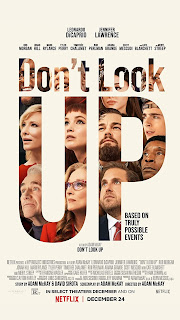
Don’t Look Up (2021)

A host of stars tell us the world us coming to an end in this self-satisfied film

Director: Adam McKay

Cast: Leonardo DiCaprio (Dr Randall Mindy), Jennifer Lawrence (Kate Diabiasky), Rob Morgan (Dr Teddy Oglethorpe), Meryl Streep (President Janie Orlean), Cate Blanchett (Brie Evantree), Jonah Hill (Jason Orlean), Mark Rylance (Peter Isherwell), Tyler Perry (Jack Bremmer), Timothée Chalamet (Yule), Ron Perlman (Colonel Benedict Drask), Ariana Grande (Riley Bina), Scott Mescudi (DJ Chello), Himesh Patel (Philip Kaj), Melanie Lynsky (June Mindy), Michael Chiklis (Dan Pawketty)

Climate Change. It’s the impending disaster where we stick our head in the sand and pretend it’s not incoming. Governments have been told for decades our carefree use of fossil fuels and slicing down of rainforests will have a cataclysmic impact. But it’s always easiest for governments and people to just say “nah” and not let those thoughts get in the way of our everyday lives. Adam McKay’s satire Don’t Look Now takes these trends of indifference, disbelief and denial climate scientists have faced their whole careers and reapplies them to a comet-hits-the-Earth disaster movie.

So, when Michigan State University astronomers Dr Randall Mindy (Leonardo DiCaprio) and Kate Diabiasky (Jennifer Lawrence) spot a hunk of ruck the size of Everest on a collision course with the Earth they are met with a chorus of… yawns, memes and flat-out denials. The Trumpian President (Meryl Streep) is only interested in her donors, the mid-terms and dodging the fall-out from a host of scandals. The media – represented by Fox News style anchors Brie Evantree (Cate Blanchett) and Jack Bremmer (Tyler Perry) – aren’t interested in a story they can’t process down into a feel-good social media meme. And even when people start to listen, plans to destroy the comet are benched in favour of a wildly risky scheme, dreamed up by Steve Jobs/Elon Musk style tech billionaire Peter Isherwell (Mark Rylance) to mine the rare ores it contains for money. What could go wrong?

I can see what Adam McKay is aiming for here, to create a sort of Dr Strangelove for climate change, where the great and the good we are counting on to get us through a crisis, turn out to be the blinkered morons who end up causing it. There are moments where it sort-of hits on a rich mixture of farce and genuine anger. Moments where first Kate then Mindy – thelatter with lashings of Howard Beale – melt down on National TV, apoplectic at the comet-denying indifference of millions of people stand out as both hilarious and also compelling.

But, like a lot of McKay’s would-be satirical attacks over the last year, on finance and politics, the message sometimes fails to land because of the heavy-handed, self-satisfied, smug tone of the delivery. Don’t Look Up frequently isn’t very funny – and yes I know it ends with the world being destroyed due to everyone’s indifference and incompetence – and it ladles most of the blame on obvious targets. It’s takedown of Trump – here represented by Meryl Streep – is basic, it hits open goals with the agenda-driven bias of American news reporters and takes pot-shots at messianic tech billionaires. A real punch would perhaps have focused in more on how all the mindless, unfocused greed and ambition of these people is fed by the bland, social media focused, sound-bite obsessed shallowness of the masses. But Don’t Look Up remains focused on the big people.

So focused in fact that, even in this satire, only America has the wherewithal to launch a mission against the comet. A joint Russian, Chinese and Indian mission fails to get off the ground and other world leaders are noticeable by their absence. We never really spend time with any normal people. While much of the blame does lie with governments not taking a lead, we do live in a world where normal people are radicalised by reading about nonsensical mush like QAnon through chat rooms. Imagine a satire that looked at how ordinary people can be made to believe wild theories rather than the evidence of their own eyes as a comet heads towards Earth? Instead Don’t Look Up wants to stick with something vaguely comforting – that there are big, selfish, elites running us who act out of greed and stupidity and they carry all the danger (and the blame).

Where the film is strongest is the doubt and nonsense thrown at scientists. Mindy and Diabasky are first ignored by the administration because they aren’t Ivy League. Attempting to leak their findings on the TV, they are overshadowed by an on-air-proposal of a celebrity DJ to his singer girlfriend and when they hit the news, the only takeaway is that Mindy is ‘cute’, while Diabasky is a freaky angry woman, ranting about the world ending (she’s a meme in minutes). At every point the science is questioned or put on the same level as gut feelings and political agendas. Even their campaign to encourage the world to “Just Look Up” to see the impending catastrophe is countered by the President’s “Don’t Look Up” campaign that persuades millions of people the comet isn’t real.

Really rule by social media and the dumbing down of humanity should be the main target here. A comet isn’t even a great metaphor for climate change – which is gradual, can’t be just blown up and needs to be prevented by society making changes to the way we live. In some ways, by replacing climate change with a comet, even the film is acknowledging its not sexy or exciting enough – and that it doesn’t want to turn its critical fire on millions of people who would rather turn the heating up or drive to the corner shop rather than push to make changes in their lives.

So, it’s easier and simple for McKay to create a cartoon freak show of easy targets and bash them rather than tackle the underlying causes of climate change – that our world and its population wants to have its cake and eat it, and governments for generations have been too focused on the here and now to ever worry about the years to come. So funny as it can be to see Streep Trump it up, or Rylance channel his softness into insanity, or Hill play another of his mindless frat boys turned power brokers, the film doesn’t feel like it really goes for the real causes of climate change: our own culture. It takes hits at our social media simpleness, but not at our short sightedness.

McKay does at least direct without much of the fourth-wall leaning flashiness of his earlier works, and there are committed – if not exactly stretching – performances from Lawrence (whose characters checks out in despair at the shallowness) and DiCaprio (who is seduced by fame, power and Blanchett into becoming an apologetic mouthpiece for the administration). But Don’t Look Up is a little too pleased with itself, a little too focused on easy targets and doesn’t do enough to spread the blame wider. It stills see many of us as victims or mislead – when really we are as to blame a everyone else.

Broadcast News (1987)

Broadcast News header
Albert Brooks, Holly Hunter and William Hurt struggle with the news and love in James L Brooks not very funny or insightful romantic media satire

Director: James L Brooks

Cast: William Hurt (Tom Grunick), Holly Hunter (Jane Craig), Albert Brooks (Aaron Altman), Robert Prosky (Ernie Merriman), Lois Chiles (Jennifer Mack), Joan Cusack (Blair Litton), Peter Hackes (Paul Moore), Christian Clemenson (Bobby), Jack Nicholson (Bill Rorish)

TV news – what is it for? To inform or entertain? It’s a debate James L Brooks tries to explore in his inconsistently toned hybrid rom-com and satire. At the end you very much intended to come out with the view that it should be about one, but is more about the other.

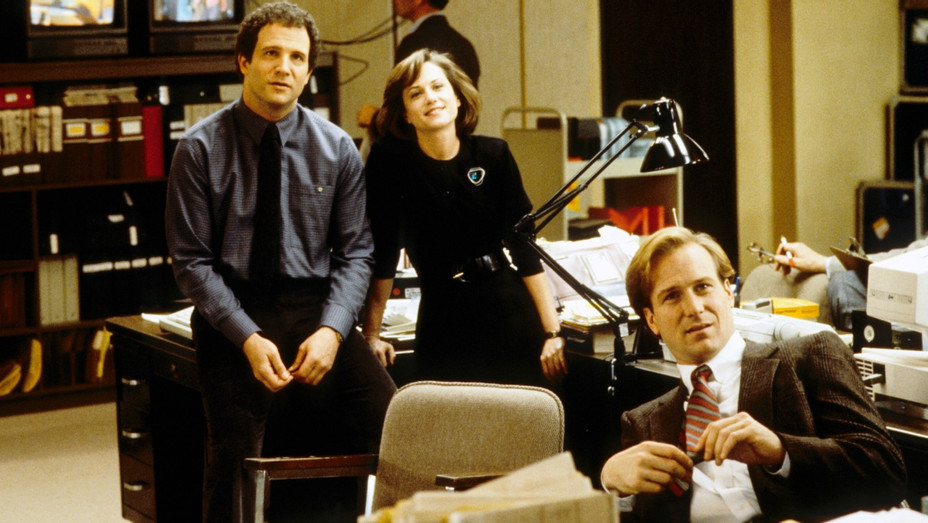
In the Washington branch of an unnamed network, Jane Craig (Holly Hunter) is a rising star producer, prone to daily emotional breakdowns. Her best friend is brilliant, committed reporter Aaron Altman (Albert Brooks), who longs to be the anchorman but lacks social skills. Arriving in their branch is Tom Grunick (William Hurt), handsome and full of TV savvy, set to become an anchor but lacking any real knowledge of either journalism or current affairs. Naturally a romantic triangle develops between these three, along with all sorts of debate about the purpose of TV news.

The film stacks the deck firmly in favour of the view that news should be a comment-free recitation of facts. Brooks’ film bemoans – often in heavy-handed ways – the intrusion of human interest, soft stories and puff pieces in place of hard-hitting questions and challenging coverage. Tom Grunick is the embodiment of this: charming, friendly, reassuring – and totally uninformed, interested in “selling” a story rather than telling it. Meanwhile, to the film’s disgust, the higher-ups at the network frequently value appearances and popularity over tough analysis, and looking good on TV counts for more than journalistic skills. Pity the film: if it feels this network is bad, imagine how it’d feel about Fox News today.

Of course what the film isn’t interested in is acknowledging a certain level of showmanship is an important tool in making the news accessible, engaging and interesting for the audience – making them more likely to pick up the important things in the content. It also overlooks that purists Aaron and Jane may avoid stage-manging their stories as overtly as others – but they’re more than happy to fill them with heart-string-tugging references and shots to get the audience reactions they want. In fact, you can see Tom’s point – what’s really wrong with him interjecting a shot of his own teary face while interviewing a rape victim (a moment he recreates)? Isn’t that basically the same?

Broadcast News tries to outline the difference, but I’m not sure it goes the full distance – or makes the debate accessible or interesting. That might be partly because the film can’t decide whether to give more attention to the satire or the romance – Jane is attracted to Tom (who returns her feelings), but is extremely close with Aaron, who carries a not-even-concealed passion for her. Both plots sit awkwardly side-by-side, getting in each other’s way and not adding insight to each other.

But then the film is fairly shrill. That partly stems from the two characters we are meant to relate to being tough to like. Holly Hunter is dynamic as the forceful, passionate Jane, but she’s also a rather tiresome character. Her purist demands are slightly holier-than-thou and while there are nice touches of humanity (on a date with Tom, she doesn’t want her handbag opened at a security check because she’s put a pack of condoms in it)  the film doesn’t manage to warm this control freak (so domineering she can’t get in a taxi without dictating the route). Jane also has a tendency to burst into tears – a suggestion of some underlying emotional problems the film instead treats as a joke.

That’s nothing compared to Albert Brooks’ Aaron Altman. This is exactly the sort of character beloved by film-makers, but who if you met in real life would come across an an unbearable creep. Like Jane, he’s an uncompromising idealist whose pious self-importance quickly grates. The film doesn’t appreciate the irony that its champion of professional reporting yearns to be the pretty-boy face of the network and resents that he’s neverbeen the popular kid.

His tantrums and rudeness are meant to be signs of his genuineness and the film leaves no doubt that his love for Jane should be requited because he knows what’s best for her. He’s the Nice Guy who doesn’t get the girls even though he really deserves them.  A scene where he furiously berates Jane when she confesses her feelings for Tom, then demands she leaves, then demands she stays so he can lecture her on his pain and why her feelings are wrong smacks of a thousand male script writers who didn’t get the girl they wanted and it was so unfair.

The film’s view of women is often questionable. Today, Aaron looks more like a Proto-Incel, one emotional snap away from strangling Jane because she won’t love him when she SHOULD. The film sees him as a relatable, principled hero. Jane may be smart and principled, but she’s hysterically over-emotional for no given reason (Women! They’re so crazy!), domineering and controlling. The film’s only other female character is Joan Cusack’s production assistant who spends her time either shrieking in shrill panic or talking with nervous incoherence.

So, it might be a fault of the film that the character I related to most was the one we were meant to condemn. William Hurt’s Tom is nice-but-dim, superficial but polite, supportive, hard-working and honest, self-aware enough to feel guilty that he’s not really qualified to do the job. He tolerates being mucked around by Jane far more than many others would and despite being constantly abused by Aaron, offers him no end of support. If Tom is the nightmare shape of TV news, you end up thinking “well heck, is it really that bad?”

Broadcast News overall is an underwhelming experience, not funny or romantic enough to be a comedy, or insightful enough about journalism to be thought-provoking. Brooks directs with his usual televisual lack of flair, but there are some decent comedic set pieces: Cusack has a mad-cap dash through a TV studio to deliver a taped report for a deadline that is a masterclass in physical comedy, while the film’s best set-piece is Aaron’s sweat-laden anchor appearance on a weekend news bulletin. But the film gives too many characters a pass and avoids asking itself the tough questions. It ends up a bit of a slog that probably has more appeal to insiders than audiences.

The Square (2017)

The Square header
Art goes wrong in Ruben Östlund’s scattergun satire The Square

Director: Ruben Östlund

Cast: Claes Bang (Christian), Elizabeth Moss (Anne), Dominic West (Julian), Terry Notary (Oleg Rogozjin), Christopher Læssø (Michael), Lise Stephenson Engström (Daughter), Lilianne Mardon (Daughter), Marina Schiptjenko (Elna), Annica Liljeblad (Sonja), Elijandro Edouard (Boy with Letter)

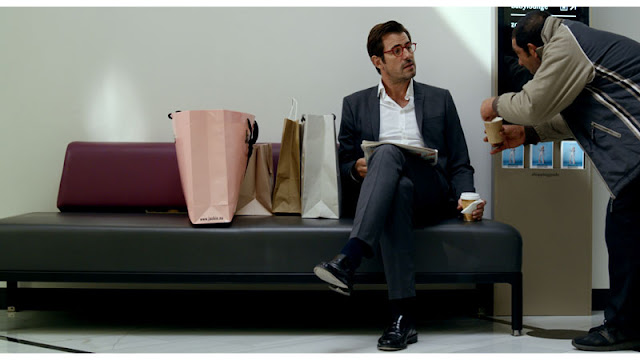
Christian (Claes Bang) has it all. The respected director of a celebrated Swedish Modern Art Gallery, he’s rich, handsome and highly thought of by all. That all fractures when his phone and wallet are stolen in a confidence trick. Using the phone’s tracker, Christian identifies the working-class apartment building its in. In a burst of late-night energy, he writes a threatening letter to the thieves and posts a copy through every single apartment door demanding it’s return. It is: but Christian’s letter has a negative impact on an innocent young boy (Elijandro Edouard) whose parents now believe he must be a thief. Christian is so preoccupied with this he fails to pay attention to a YouTube video created to promote his new exhibition: the video of a homeless child being blown up outside the museum leads to national condemnation.

And that exhibit? It’s called The Square (you see!). Its main feature is a literal square on the floor, marking a safe space where everyone is equal. The exhibit is themed around trust, mutual respect and altruism. Traits which Östlund’s film reminds us time-and-time again his central characters are all sadly lacking in. It’s part of a broad-ranging satire on the self-importance of the Art World and the self-obsession of the upper classes that, while beautifully filmed, comes across as rather scattergun. Putting it bluntly, most of its targets are so obvious, the entire film might as well be footage of fish being shot in barrels.

A film like this, hinges on Christian’s self-perception being clearly shown to be very different from his reality. In effect, we need to see how Christian believes himself to be a decent, upstanding, noble fellow but also be shown he is in fact prejudiced, self-obsessed and vain. While the film does very well to show how shallow Christian’s “nice-guy” image is – he basks in the adulation of colleagues and museum patrons and carefully prepares his ‘spontaneous’ presentations for maximum effect – we never get quite enough of a sense of how he sees himself. His mystique is punctured so early, that the sense of events forcing an awkward confrontation with his true character is not developed.

This takes nothing away from the exceptional performance of Claes Bang, a charismatic and gifted actor who can pivot on a sixpence from huge charm to bullying menace. He’s completely believable as the red-spectacled, scarf wearing aesthete just as he is the sort of bully who’ll push a troublesome kid over. Matey and jovial with his employees, he’s also hesitant on their names and berates assistant Michael (Christopher Læssø) when he gets cold feet about executing his letter drop plan (on top of which, he naturally assumes as Michael is black, he’ll be better at carrying out the plan than Christian). His life is a careful performance, with every moment scripted by him, that fractures into something much messier the instant he loses control.

It’s just a shame that Östlund doesn’t delve into the opportunities this presents. He’s more interested in obvious characters like Elizabeth Moss’ Anne, a preening journalist (she inexplicably lives with a Chimp) with whom Christian enjoys a one-night stand, culminating in the two of them bickering over a used condom. (Christian seems worried she’ll pinch his sperm).

Too often Östlund contents himself with simply stating that the upper clases are vain and pre-occupied with their own needs instead of the lives of others. In case we miss this point, the film is littered with shots of beggars. It even opens with the camera focused on a beggar sleeping on the street in broad daylight while, off camera, a passionate student pushes leaflets urging people to do more to help the homeless while passers-by express irritation or disinterest to them. You see! Even the campaigner is more interested in virtue signalling than actually helping people! Interactions with beggars pepper the film: Christian is annoyed by one beggar not being grateful enough when he condescendingly offers to buy them dinner to get out of an awkward conversation with them and then later pays another to guard his shopping when he takes a phone call.

This social satire runs in parallel with a scathing-but-rather-obvious series of jokes at the expense of the preening self-importance of the Art World. The exhibition, The Square, is treated as if it’s the second coming but, other than parroting the Artist’s written vision, no one (not even Christian) seems interested in engaging in it or really has a clue what it is trying to do. The most important part of Christian’s role is in fact attracting money from rich patrons, who ooh and ahh over the art but have nothing whatsoever to say about it. The art itself is a parade of cliches – although there is a very funny recurring joke of an installation that is a series or piles of ash on the floor which the museum cleaners inadvertently slowly reduce each night.

The unwillingness of people to rock the boat in social situations is also parodied. Dominic West cameos as an American artist whose Q&A is constantly disrupted by a man with Tourettes – the discussion collapses but no one knows how to even to begin to manage the situation. This culminates in the film’s showpiece (and best scene). A Russian artist whose ‘art’ is to impersonate a monkey (played by motion-capture guru Terry Notary), performs an installation at a fund raiser dinner. The guests (and Christian) sit in increasingly awkward silence, no one willing to take the first step to intervene, as the artist progresses from humorous monkey noises to increasing acts of intimidation, violence and finally sexual assault.

It’s all interesting stuff, but it all feels a little too obvious. The advertising reps bought into design the video are such cliched social media obsessives they feel like sitcom characters. The juxtaposition of The Square’s idea that “everyone inside the square is equal” with the reality of no one being equal is made time and time and again with reduced impact.

Östlund finds a host of squares (stairways, windows etc) to frame Christian in visually to hammer this home. He makes frequent use of one-sided two shot set ups (meaning we only focus on one character during a conversation or exchange) which helps further drill down into that character’s psyche and stress their distance from whoever they are talking to. But it’s a lot of flash on an otherwise rather obvious and self-satisfied film, which never makes as many new and original points as it thinks.

If it’s a stunning realisation to you that people have a tendency to be self-obsessed, that the Art world is as much about posing and money as it is art and that social awkwardness will stop people intervening in the most disastrous circumstances, this is the film for you. Otherwise, you might find little real insight here.

Crimes and Misdemeanors (1989)

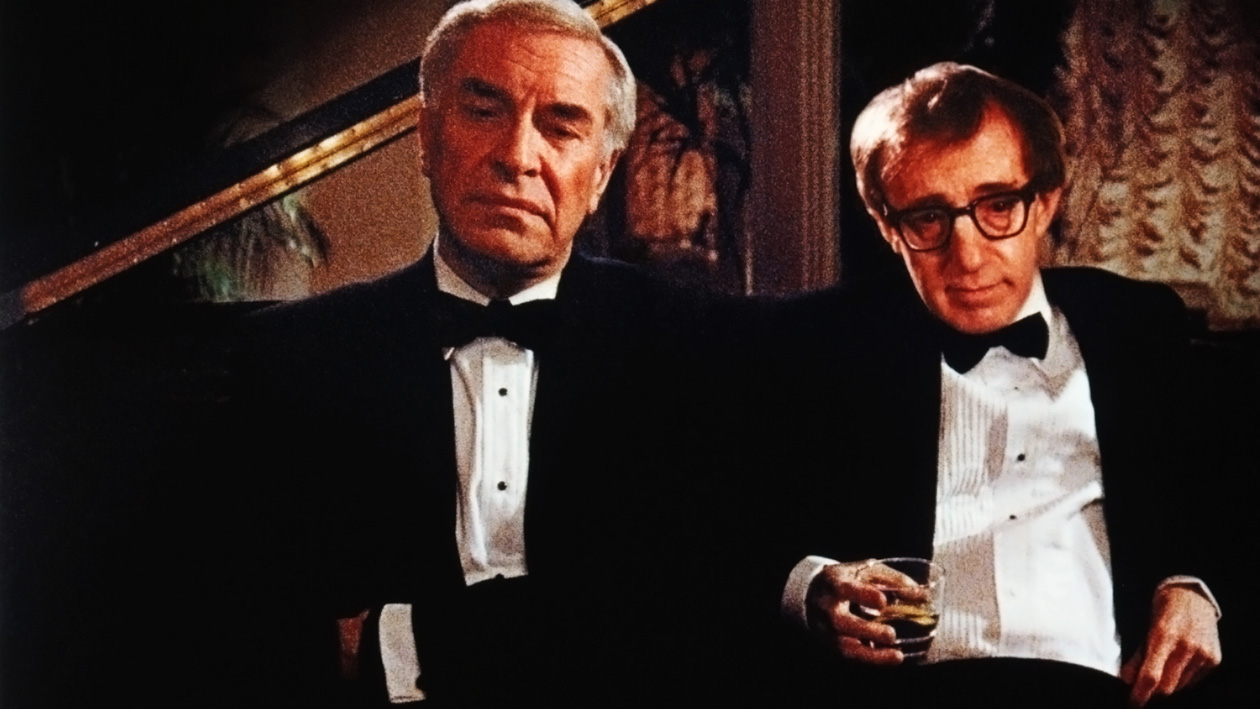
Martin Landau and Woody Allen reflect on Crimes and Misdemeanors

Director: Woody Allen

Cast: Caroline Aaron (Barbara), Alan Alda (Lester), Woody Allen (Cliff Stern), Claire Bloom (Miriam Rosenthal), Mia Farrow (Halley Reed), Joanna Gleason (Wendy Stern), Anjelica Huston (Dolores Paley), Martin Landau (Judah Rosenthal), Jerry Orbach (Jack Rosenthal), Sam Waterston (Ben)

Successful ophthalmologist Judah Rosenthal (Martin Landau) has it all: respect, fortune, a loving family…and a mistress. That mistress, Dolores (Anjelica Huston), won’t play ball and disappear but actually wants Judah to deliver on his half promises of leaving his wife. Should Judah confess all, as his rabbi friend Ben (Sam Waterston) suggests? Or should he follow the advice of his gangster brother Jack (Jerry Orbach) and remove Dolores permanently? Meanwhile, documentary film-maker Cliff (Woody Allen) has been hired by his brother-in-law, pompously successful TV producer Lester (Alan Alda), to shoot a film celebrating Lester’s life. During the shooting, Cliff can barely hide his irritation – or his growing attraction to Halley (Mia Farrow), the associate producer both he and Lester are romancing. Who will she end up with?

Dostoyevsky – could you live with a murder? – gets the Woody Allen treatment in one of Allen’s most highly respected, but troubling films. To be honest, I didn’t much care for Crimes and Misdemeanors. I have moral qualms about it – and, I will hasten to add, these qualms have nothing to do with the lack of punishment for Judah. Crimes and Misdemeanors hides its blatant cynicism and loathing for people, underneath some fine acting and good jokes. But its possibly one of Allen’s most unlikeable works, where his sympathies seem hideously astray.

It wants to be an exploration of the guilt that follows a crime. But to be honest, aside from some expert furrowing of brow and distressed line deliveries from Landau, I’m not sure Woody has much to say about guilt. Furthermore, I think he is inviting us to sympathise with Judah not because he feels bad (and even then, so what?), but for various extenuating circumstances. Namely, he’s a good man (he has all but funded a new hospital wing by himself) with a loving family and is a dedicated doctor. Furthermore, his mistress is presented almost exclusively as a demanding and difficult floozy (Anjelica Huston in an unflattering part – although at least she gets more to do than Claire Bloom in the thankless part of Judah’s wife, an almost non-existent role).

Frankly, the film suggests Judah’s motives are more complex than just removing a self-caused problem and since he feels shock (sorrow for Dolores or the crime seems noticeable absent, and it feels like Allen mistakes the one for the other) and is a nice guy, we should think again about our knee-jerk reactions of right and wrong. Problem is, Judah is not a nice guy – he’s shallow, self-pitying and self-justifying – and watching a character with, it turns out, no real morals go through a moral quandary doesn’t make for engaging viewing.

Judah’s moral reaction to the murder is insubstantial. Essentially guilt makes him wonder where there is in fact a God after all – before deciding that, on balance, the probability is that the universe will not punish him. Other than that, I’m not sure Allen has much more to add to the discussions of right and wrong. Dostoyevsky made hundreds of pages of conscious and guilt shattering a man’s equilibrium. Allen can’t manage more than about ten minutes of screen time, let alone 90 minutes.

Perhaps that’s why Crimes and Misdemeanors is padded out with a second, almost as long, unconnected secondary plot. It’s a one-sided rivalry between Allen’s film-maker and Alda’s pompous producer, with Mia Farrow as an artistic waif who serves as the prize for this unspoken competition. (This is perhaps one of the worst Allen films for female characters: we have two cold, personality-free wives for the main characters, a shrill mistress, a bland artistic waif and Woody’s character has a sister who is tied to a bed and defecated on. How did the same guy write Hannah and Her Sisters?)

Again, Allen’s sympathies lie with the idealistic, uncompromising Cliff, even more so because his interest in making films people don’t want to see makes him, in Allen’s eyes, noble. Compare and contrast with the film’s loathing for Lester – hilariously played by Alan Alda as a neat self-parody. Lester is everything Cliff isn’t, but secretly wants to be (though I’m not sure Allen realises this): successful, well-regarded, admired, rich and gets all the girls. No wonder the film hates him – even though, to be honest, he doesn’t seem the bad. After all, the sort of drive and ambition that Lester has is exactly what makes a man successful.

It wouldn’t matter so much if Cliff wasn’t remarkably similar to him, but considerably less charming. Just like Lester, Cliff is a self-important bore, cuddling his lack of success as proof of his genuineness. Cliff has no problem with effectively creepily stalking Halley (despite being married – fine though as Allen thinks she’s a bitch). Cliff’s passive aggressive assertions that Halley deserves someone like him rather than someone like Lester aren’t romantic, they’re creepy. (Needless to say, Halley ends up with Lester, to Cliff’s shock, horror and disappointment – while his wife plans to leave him).

Now I get it, there are people reading this who will think “well yes you just don’t like it because you want a simple ending where the baddies are punished – well life isn’t like that”. That’s not the case: I’m fine with films where murderers escape scot-free: but I generally want the film to know they are bad people. Crimes and Misdemeanors doesn’t. And it doesn’t really have anything of interest to say. It’s one of Allen’s films where his cynicism about humanity is exposed too heavily. You long for a bit more critical insight into Cliff, or for a more acute exposing of Judah’s self-interested excuses. You get neither, instead Allen ending on the note that the universe is dark and indifferent and only love can change things. There’s lots of the first two and precious little of the third here.

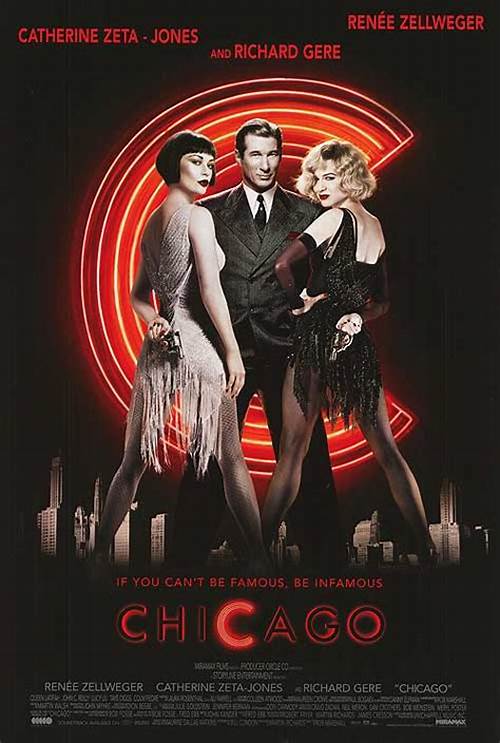
Chicago (2002)

Catherine Zeta-Jones struts her stuff in Rob Marshall’s fabulous Oscar winner Chicago

Director: Rob Marshall

Cast: Renée Zellweger (Roxie Hart), Catherine Zeta-Jones (Velma Kelly), Richard Gere (Billy Flynn), Queen Latifah (“Mama” Morton), John C. Reilly (Amos Hart), Christine Baranski (Mary Sunshine), Taye Diggs (The Bandleader), Colm Feore (Martin Harrison), Lucy Liu (Kitty Baxter), Dominic West (Fred Casely), Mya (Mona), Susan Misner (Liz), Denise Faye (Annie), Deidre Goodwin (June)

It’s become quite the fashion to knock Chicago. Heck I’ve done it myself. How did this mere musical win Best Picture? It’s not even as if the original production was much more than an entertainment. It’s another of those films diminished by whispers that it doesn’t deserve the title of Best Picture. But, look at the film with an unprejudiced eye, and you’ll see that this is the best stage-to-screen musical theatre adaptation since Cabaret. Chicago is such dynamic, high octane entertainment, you would have to a really cold heart not to enjoy it.

A heart as cold, perhaps, as most of the characters. Its set in a 1920s Chicago where it doesn’t matter what you are famous for, so long as you are famous. Who are the bigger stars? The people on stage of the infamous on death row? Roxie Hart (Renée Zellweger) is a wannabe who guns down her conman lover Fred Casely (Dominic West) when his promises of the stage career she’s dreaming of turns out to be all hot air. Roxie works out that she can turn her infamy into just plain fame – following the inspiration of vaudeville-star-turned-accused-murderer Velma Kelly (Catherine Zeta-Jones), who is now more famous than ever. With amoral lawyer Billy Flynn (Richard Gere) in their corner, can they play all sides against the middle and find freedom and fame?

Chicago’s debt to Bob Fosse is in almost every single frame. Rob Marshall’s brilliant choreography is inspired by Fosse’s own work for the original production. It means the entire film drips with the passionate sexiness of Fosse’s best work. It’s also inspired by Fosse’s Cabaret in its use of the musical numbers. There all the musical numbers were kept within the nightclub, acting as a subtle commentary on the events of the film. Here they occur in Roxie’s imagination, staged in a shadowy empty theatre with a mysterious band leader (a charismatic Taye Diggs) introducing each song. It’s a brilliant concept, that allows them to be staged with the sort of exuberance and theatricality that would look plain odd in a ‘real’ setting.

And what musical numbers they are! These are toe-tappingly, finger-clickingly fun, that will make you want to jump up and join in. Marshall’s choreography and direction is not only faultless, but also covers a range of styles. From the sultry opening of All That Jazz performed by Catherine Zeta-Jones, we get burlesque (When You’re Good to Mama), sensual sexiness (Cell Block Tango), knock-about farce (We Both Reached for the Gun), classic 1930s Astaire and Rogers (Roxie) and surreal madness (Razzle Dazzle). The one thing they all have in common is the high-octane energy they are performed with (no wonder all those dancers are so slim!), with no one leaving anything in the dressing room.

Chicago is possibly one of the best edited musicals ever made. Marshall gets a superb balance between camera movements, cutting and the dance numbers. We can appreciate – and see – every step of the intricate choreography, with clear camera movements and angles. But the film is also edited practically on the beat. Cuts accentuate changes in the tempo and even marry up with the exact movements of the dancers. Not only that, the numbers frequently cut from reality to fantasy and back again – and this parallel montage is superbly done, with perfectly timed transitions. The cutting complements each number so well, it actually makes them more exciting and dynamic. It’s a masterclass in using the language of cinema to accentuate the impact of dancing.

But Marshall manages to make Chicago not just a collection of amazing dances and fabulous tunes. In our celebrity worship age, Chicago feels increasingly more relevant – you can imagine Roxie would love to be on reality TV and would never be off Twitter. It doesn’t matter that she’s got no real talent (in fact it makes the fact that all the musical numbers are fantasies even more witty), she’s just desperate to be known. Shooting her lover is the best thing that’s ever happened to her and she’ll do anything to stay in the newspapers, from a fake pregnancy to playing the timid ingenue.

Everyone in Chicago is just playing the game. Velma is just as desperate to cling to fame – and her growing desperation at losing the limelight to Roxie is almost touching. Mama Morton, the quietly corrupt prison warden, lives vicariously through her inmates (she even dyes her hair to match Roxie’s). The media lap up the details of every killing, turning the trials into huge soap operas. And at the heart you have Billy Flynn, as much a showman as he is a lawyer, playing every angle and knowing its all about telling a good story rather than truth or justice.

Chicago is played with absolute commitment. Renée Zellweger is excellent as the fiercely ambitious, amoral Roxie, her fragile softness perfect for the image Roxie likes to project, just as she is able to twist her face into selfish meanness. Zeta-Jones clearly hadn’t forgotten her years of musical theatre, demonstrating she is a superb singer and dancer, her vampish glamour perfect for Velma’s dark ambition. Richard Gere (in a role turned down by Travolta, as he ‘didn’t get’ the framing device) channels his natural charisma and good natured smirk into a role that could have been made for him. Reilly is surprisingly sweet and effective as Roxie’s put-upon husband and Latifah hugely entertaining as the knowingly manipulative Mama.

Chicago may be “just a musical” – but you’d be hard pressed to find a better entertainment. The song and dance numbers are superb and the film still manages to land some blows on celebrity culture. Hollywood has always loved musicals – can you imagine how the viewers of Broadway Melody would have responded if they had seen this? – and with Chicago we get something we’ve not seen since the golden days of Bob Fosse. There are few Oscar winners as straight forwardly entertaining as this.

The Player (1992)

Tim Robbins is the ultimate heartless Hollywood exec in Altman’s vicious satire The Player

Director: Robert Altman

Cast: Tim Robbins (Griffin Mill), Greta Scacchi (June Gudmundsdottir), Fred Ward (Walter Stuckel), Whoopi Goldberg (Detective Susan Avery), Peter Gallagher (Larry Levy), Brion James (Joel Levison), Cynthia Stevenson (Bonnie Sherow), Vincent D’Onofrio (David Kahane), Dean Stockwell (Andy Sivella), Richard E. Grant (Tom Oakley), Sydney Pollack (Dick Mellon), Lyle Lovett (Detective Paul DeLongpre), Gina Gershon (Whitney Gersh), Jeremy Piven (Steve Reeves)

Hollywood: it’s a hell of a place. Sharks ain’t got nothing on studio power-brokers, hunting product to sell. After all, not a single letter of “Art” appears in “Hollywood”. Griffin Mill (Tim Robbins) hears 50,000 pitches a year and gives the green light to ten or twelve. Mill is plagued with death threats. Confronting the writer (Vincent D’Onofrio) he believes responsible, he kills him in a fight. Can he get away with murder and successfully romance the writer’s artist girlfriend June (Greta Scacchi)? And, even more importantly, can he protect his job from hotshot executive Larry Levy (Peter Gallagher)?

Robert Altman had been working outside of the studios for well over two decades after negative experiences creating his critically acclaimed but hard-to-digest masterpieces (including McCabe and Mrs Miller and The Long Goodbye, the sort of films only Altman could make). His career had drifted during the 1980s, as his edgy, ‘disciplined ill-discipline’ approach (with overlapping sound and roving cameras) moved out of fashion. The Player was not only his payback expose on the studio system, with the exec a sociopath, but also his triumphant comeback to the frontline of film-making (he earned several awards, including a nomination for Best Director).

The Player is nominally a comedy, but in the way of Altman it also fits half a dozen other labels: from film noir to corporate satire. Above all it’s a maverick’s view of a system designed to produce product (Mill constantly speak of his films like this – he would love our modern age of “content”). The studio’s offices are lined with posters from classic Hollywood – but the studio produces the most crowd-pleasing cookie cutter movies you can imagine. It’s all about squeezing in all the ideal elements a film must have: “Suspense, laughter, violence. Hope, heart, nudity, sex. Happy endings. Mainly happy endings.” (In a neat subversive twist, these are of course all present in The Player – but then it’s to be expected when what we are seeing might actually be a film within a film).

Film pitches all have an air of desperation, every idea boiled down to simple, easily digestible slogans. It’s nearly always a combination of two other films – “Out of Africa meets Pretty Woman!” – or involves the biggest stars (“Julia” and “Bruce” were those two stars – and both actors hilariously spoof themselves in the film’s climactic sequence). Ahead of its time, the film even features a pitch (from a cameoing Buck Henry) for The Graduate 2, a nostalgia tinted exploitation of the IP with all the original cast, that basically sounds like the sort of thing they’d actually make today.

There is no place for film-making as an art – any idea that can’t be compressed into 30 seconds is worthless. Mill’s knowledge of film is patchy at best, his attempt to make small talk about Bicycle Thieves boiling down to “Perhaps we should remake it?”. The film (possibly the film within a film within a film), Habeas Corpus, pitched by Richard E Grant’s pretentious writer (“No stars! No pat Hollywood endings!”) is only attractive because it has the wisp of Oscar about it (and Oscars mean Big Bucks). Even then, Mill plans to rework the whole film into exactly the sort of pat-Hollywood romantic thriller Grant’s character claims to hate (no character will support this decision more than Grant’s sellout writer). The only person who seems to actually watch films is Fred Ward’s studio head-of-security – and at least half of his references are met with blank incomprehension. When Griffin makes a speech donating the studio’s old films to a cultural library, his words about art and culture are incredibly hollow.

This vicious satire of the shallow culture of Hollywood – Larry Levy’s up and coming executive attends AA solely to network, not because he has a drink problem – is wrapped up in a beautiful noir framework, that’s brilliantly a few degrees off reality (for reasons that later become clear). Deluged by death threats from (he surmises) a disgruntled writer, Griffin meets the man he suspects – a pretentious holier-than-thou wannabe, played with chippy fury by Vincent D’Onofrio – who he beats to death in a neon-lit carpark, after a dig too far about Mill’s job security (as nothing threatens these guys more than the prospect of being drummed out of town).

Altman’s film wonderfully echoes the neon lit shadows of classic noir, while building a homage filled trap around Mill, desperate to escape punishment. Mill of course has killed the wrong man – and his stalker knows it – and his own heartless-but-effortlessly-cool business dealings are contrasted with his efforts to avoid the dogged pursuit of a police department (led, in a curious but just-about-effective piece of casting, by Whoopi Goldberg) correctly convinced he is guilty. The film asks, how much does morality intrude on Mill, when he’s led his whole life trampling people: isn’t literally killing someone only the next step up from all that metaphorical killing he’s been doing?

His one weakness is falling in love with his victim’s girlfriend, an artist played with a breezy sexiness by Greta Scacchi. Scacchi’s June is intriguingly unknowable – how much does she suspect Mill, and how much does she even care? – and the dance of seduction and suspicion between them is highly effective, culminating in a tastefully, imaginatively but highly sensually shot sex scene (built from Scacchi’s refusal to do a nude scene – instead the nudity comes from a full frontal of Robbins emerging from a mud bath).

Scacchi’s June feels like halfway between a real person and a movie construct – and that’s a deliberate effect in a film which, the ending suggests, may well have been a movie within a movie. Mill takes a pitch in the final moments from his actual blackmailer, who outlines the very film we have been watching, a pitch Mill accepts on condition the film (he?) gets a happy ending: cue Mill arriving home to June and the two of them using the same pat Hollywood pay-off lines to greet each other, we just saw Bruce Willis and Julia Roberts mouth in Mill’s happy-ending for Habeas Corpus. Apply the logic of a film to all the action and it suddenly makes sense on a whole new level, as a beautifully judged exploration of the very crowd-pleasing elements Mills praises, repackaged in a sharp and bitter satire.

Tim Robbins performance of restrained amorality is vital to the film’s success. In his career, any weakness is deadly – a mantra he applies to his interactions with the police and with June. Mill is so eerily controlled – fear is the only emotion he categorically shows, guilt never crosses his mind – you start to wonder if he even has a real personality. But, in the movie’s structure, he’s both a real person and also a construct whose life echoes scenes from the movies whose posters fill his office.

Altman balances these ideas of truth and reality perfectly within the studio satire. The film is astonishingly well-made, all Altman’s trademarks of overlapping dialogue and roving camera present and correct. It opens with a hugely confident seven-minute tracking shot around the studio, which feels like a real “I’m back!” statement – and is beautifully and wittily done. The film is crammed with dozens of celebrities playing themselves (they were given no dialogue and encouraged to improvise scenes), all of them keen to show they were in on the joke.

The Player is dark, witty and very clever, one of Altman’s sharpest and most enjoyable films. Crammed with echoes of film noir and a brutal expose of Hollywood business practice, it’s very well performed and keeps just enough lightness and humanity (it encourages to empathise, but not sympathise, with Mill, for all his amorality) to also be entertaining. One of the great films about Hollywood.

The Truman Show (1998)

Jim Carrey starts to wonder if there is more to his life than meets the eye in The Truman Show

Director: Peter Weir

Cast: Jim Carrey (Truman Burbank), Ed Harris (Christof), Laura Linney (Hannah Gill/Meryl Burbank), Noah Emmerich (Louis Coltrane/Marlon), Natascha McElhone (Sylvia/Lauren Garland), Holland Taylor (Alanis Montclair/Angela Burbank), Brian Delate (Walter Moore/Kirk Burbank), Paul Giamatti (Simeon), Peter Krause (Truman’s boss), Harry Shearer (Mike Michaelson), Philip Baker Hall (Network executive), John Pleshette (Network executive)

Have you ever fantasised that your whole life was a movie? It would be great wouldn’t it? You’re the star of every scene, the story lines always have a happy ending and you always emerge as the hero. But what if your life really was a massive TV series? What if everyone you had ever met was an actor playing a role? What if every experience in your life had been carefully scripted? What if nothing you knew was a real or even remotely true? That’s no-where near as fun.

Of course the odd thing today is that I suspect there are more than a few people out there who would still consider that a decent pay-off – even if they couldn’t know that they were on television, at least they would be on it. The Truman Show predated much of the surge of reality TV that was to come in the 00s, when shows like Big Brother made putting everyday (at least at first) people into situations and simply watching what happens became TV gold. Truman Burbank (Jim Carrey) is approaching his 30th birthday. Little does he know that his entire life he’s been at the centre of an elaborate TV show and that the hometown he has never left is a giant self-contained film studio. But as incidents begin to pile up, Truman suddenly questions his reality – while the show’s cast and production team work to keep him in ignorance. After all, we can’t let this ratings cash cow die!

With a precise, sharp and intelligent script by Andrew Niccol, Peter Weir’s film is a triumph. It’s partway between drama and satire, but never lets the one compromise another. It could have become a lumpen message film about the intrusion of media into our lives. Instead it’s an acute satire of TV gone mad, with a very real, sympathetic character who we invest in. Effectively the movie works on the same premise as the fictional TV show: the viewers know the world they are seeing is larger than life, but they know the character of Truman is grounded and true. It works as it bases its satirical attacks around a heartfelt story of a man (unwittingly at first) on a quest for freedom.

It’s two horses the film rides extraordinarily well – and even effectively comments on. Throughout the action we cut to the same regular joes watching the show: people in a bar, security cops, a pair of old ladies on a sofa. These people are aware they are watching a show – and watching a man effectively imprisoned – but have their emotions manipulated with ease, first by the producers then by the excitement of Truman’s very real quest. As they gasp and cheer as Truman works his way out of his prison, there is not a shred of acknowledgement to them that buy ‘booing’ the TV network they should also be booing themselves for watching in the first place. Instead they treat it just as another episode of their favourite show, the celebrations as transient and hollow as their tears of joy as the producers reintroducing Truman’s long-lost father in an attempt to ‘explain’ the strange circumstances he’s seen.
The Truman Show itself takes place in a perfect, unintimidating slice of 50’s inspired nostalgia. It’s a perfect picture of Americana – and its conservatism is itself a satire. Of course the producers set the show in the most cosy, comforting setting they could imagine. The rose-tinted past is always something we turn to for comfort viewing (take a look at the success of Downton Abbey). Alongside that, it’s a world run by advertising: Truman’s wife frequently stops to deliver scripted adverts, singing the praises of household products; a pair of old buffers have the job of pushing Truman up against a different advert hoarding every day; Truman’s friend Marlon praises their beer with every sip.

And in the sky: we have the studio itself, run by the shows creator Christof. Superbly played by Ed Harris, as part hipster artist, part messianic genius (“I am the creator” he tells Truman near the end, his voice coming through a beam of skylight, adding after a half-beat “of a television show”), Christof has carefully plotted Truman’s entire life from birth. He partly sees himself as Truman’s father – but he as much sees Truman as a tool he can manipulate for his own ends. A hands-on show-runner, Christof believes himself a genius whose will cannot be questioned. This softly-spoken dictator is a terrifying insight into what happens when self-appointed artistic geniuses can explore their ideas with no regard for morality and no restraints.

Truman himself is a charming, sweet, decent fellow – I suppose if nothing else Christof has done a superb job of bringing him up. But his entire life is a manipulated lie. The whole town is full of subconscious messages encouraging him to stay – as is the advice from his wife and best friend. Most cruelly of all, he has been deliberately traumatised into a terror of water by being made to feel responsible as a boy for the drowning of his father. Christof even boasts of his ingenuity in this “plot line” to help insure Truman would be too scared to ever consider leaving his home.

Jim Carrey was a revelation as Truman – Weir was the first director to refocus his comic mania into something more intimate and true. The part still makes a lot of hay from Carrey’s rubbery comedic chops – its part of Truman’s charm – but he matches it with a Jimmy Stewartish decency and earnestness. As the illusion begins to crack, his bemusement turns to something between disbelief and anger, but never compromises his humanity. You can see why billions of people watched him – and also understand why a man so accommodating and decent has not questioned his life before. Witty, gentle and human it’s a great performance.

But perhaps the film’s greatest strength is Weir’s sharp, clear-eyed, largely unobtrusive direction. The film makes nifty use of all the thousands of cameras contained in Truman’s world – with shots taken from button cams, CCTV, dashboards and all sorts. Its intermixed with normal camera angles, but gives us a beautiful sense of Truman’s world, and the TV world coming together throughout. The pace of the film is perfect and its slow reveal of information delicately done. Weir’s intercutting between ‘fictional’ and real world is superbly judged and the film wears its satire very lightly as well superbly mixing what could have been a dark film of imprisonment and abuse with a lightness and charm. Above all, it manages to both be a compelling story with a sympathetic hero and a sharp-pronged criticism of the shallowness of media and its viewing public.

It might well have been far too ahead of its time when it was released. It looks smarter and smarter each passing year. Truman’s world is an Instagram paradise, and with social media we’ve got even more used to spending our leisure time looking through other people’s lives rather than our own. It’s all part of what helps make Niccol’s script so sharp and prescient. Directed superbly by Weir and wonderfully acted – perhaps most of all by Harris’ Warhol turned dictator – it keeps you entertained, invested and leaves you cheering. Just like the viewers watching Truman being manipulated. Which makes you realise: is the film attacking its audience as much as anyone else? After all, we’d all watch this stuff in real life: look at how we rubberneck at accidents. What’s wrong with us eh?

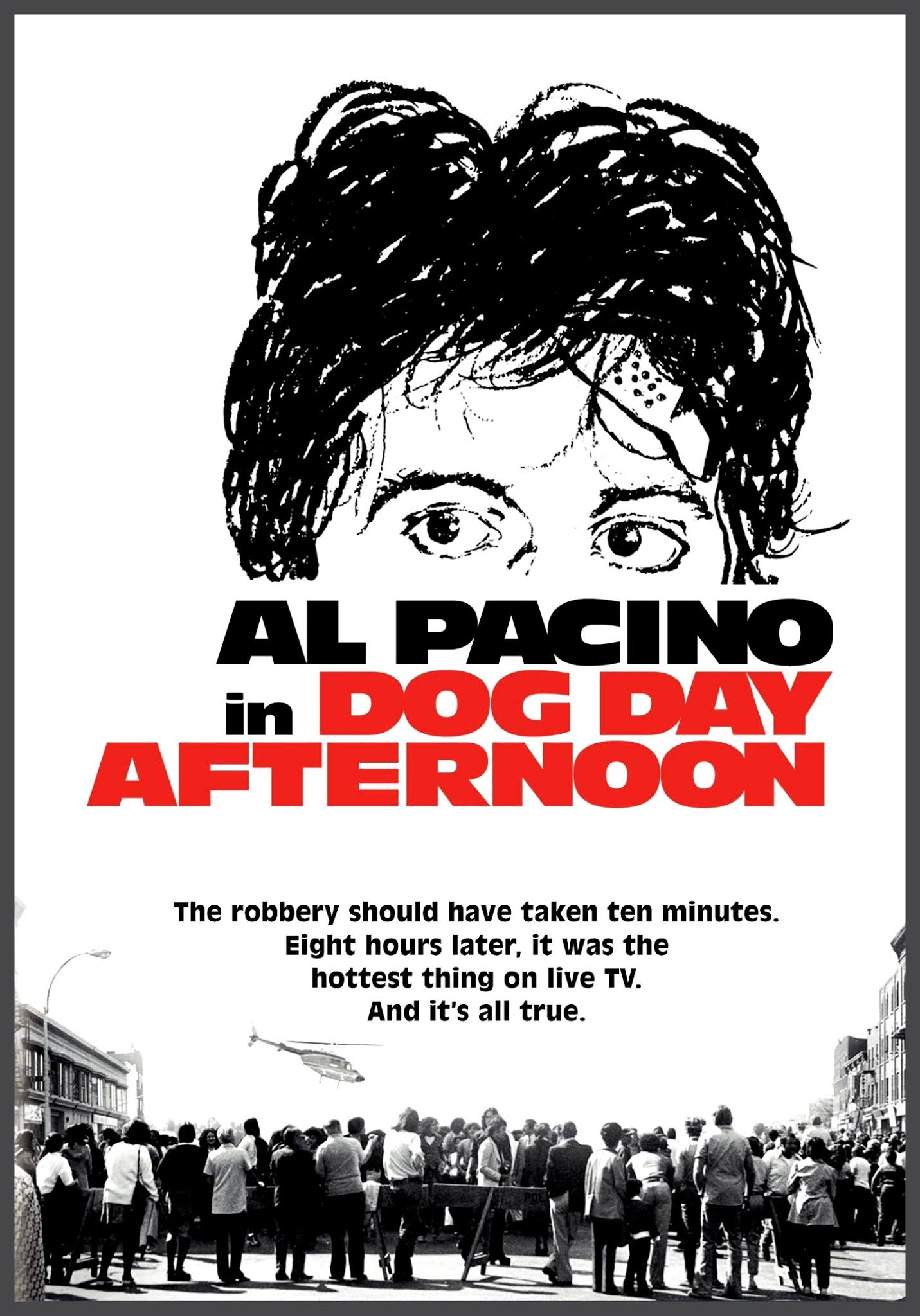
Dog Day Afternoon (1975)

Al Pacino takes a bank hostage in Dog Day Afternoon

Director: Sidney Lumet

Cast: Al Pacino (Sonny Wortzik), John Cazale (Sal Naturile), Charles Durning (Sgt Eugene Moretti), Chris Sarandon (Leon Sharmer), James Broderick (Agent Sheldon), Lance Henriksen (Agent Murphy), Penelope Allen (Sylvia), Sully Boyer (Mulvaney), Susan Peretz (Angie Wortzik), Carol Kane (Jenny)

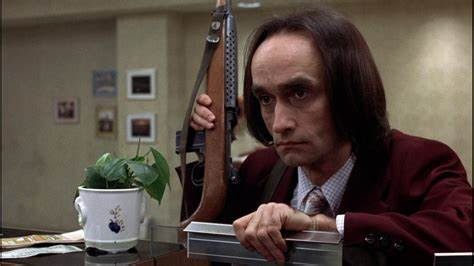
Perhaps only in the 70s could a failed bank robber have been turned over-night into a counter-culture folk-hero. It’s the subject of Sidney Lumet’s thrilling, heist-gone-wrong movie, set on one sweltering day in New York when Sonny Wortzik (Al Pacino) tried to rob a bank to fund the sex-change operation of his boyfriend Leon (Chris Sarandon). He ends up taking the co-operative bank staff hostage while a media and public firestorm takes place outside the bank, mixed in amongst an army of trigger-happy cops. And it’s all based on a true story.

Sonny is far from your hardened criminal. He doesn’t want anyone to get hurt. He takes care of the hostages, who all become immensely fond of him and his less confident partner-in-crime Sal (John Cazale). When the police and media turn up, Sonny is outraged at the trigger-happy police presence and quickly wins the support of the crowd with his honesty, bluntness and quick wit. With the police incapable of controlling the situation, soon he is actively playing to the crowd, taking phone calls from the press in the bank. He becomes a counter-culture icon, sticking it to the man (his famous chant of “Attica!”, refers to the famous prison riots, where prisoners rioted to secure their rights).

It’s the key topic that fascinates Sidney Lumet, in this brilliantly frentic, edgy and dynamic film, that captures the tension in New York, where it felt like the careful balance between law and order could disintegrate any time. Lumet’s improvisational feel with the crowds, the edgy, raw performances – particularly from Pacino and Durning, both of whom are sensational – and the sense that anything could happen at any time. Dog Day Afternoon is about a city on the edge, combined with the ability of the media to turn regular people into stars. There was little faith in the authorities, and even a little bit of nose thumbing in their direction could sway the crowds.

At the centre of all this is Sonny, a fascinatingly flawed person, partly absorbed with being the centre of attention, part desperately trying to work out what his best move is among an increasingly narrowing number of options. Al Pacino nearly didn’t take the role, after suffering a near nervous collapse from the pressure of Godfather Part II – but, after committing to the film, he gave one of his most extraordinary performances of an era he and a small group of actors dominated.

Sonny feels increasingly trapped in his predicament. The robbery of the bank is hilariously cack-handed from the start – one of the robbers bails in minutes and has to be begged not to go home in the get-away car – and it becomes clear that for Sonny this is all a last desperate throw of the dice. Both of his relationships – with his first wife and his second marriage to Leon – are relationships on the brink of disaster, destabilised by Sonny’s desperate need for prove of love and affection. He’s a man uncertain in his own skin, smart enough to know the world isn’t fair, but not smart enough to know what to do with it. Fundamentally decent, but forced into illegal actions. Pacino delivers this with the expected fireworks, but when we see Sonny away from the public gaze, he’s a sad, broken-down, isolated man who genuinely doesn’t know where his life is going.

Dog Day Afternoon was radical at the time for how it deals with homosexuality. Neither Sonny nor Leon are presented – as might have been expected at the time – as limp-wristed or fey, but just regular guys who happen to want different things from life. Chris Sarandon (Oscar nominated) is strikingly tender, low-key and world-weary as a man resigned to what the world is throwing at him, from the emotional pressure of meeting Sonny’s needs for affection, to spending every day feeling trapped in his body and facing suspicious stares from all around him. Pacino presents Sonny as a masculine, dynamic figure whose sexuality is just part of his personality. It’s a film not afraid to acknowledge the love between men, and never considers this anything other than entirely normal – something extremely unlikely in 70s cinema. Indeed, you can see the mood of the time in the way the crowd changes once the motivations behind Sonny’s actions becomes clear. Hostility grows – through many gay rights activists quickly arrive to bolster the crowd. The films normalising of homosexuality, also serves as a critique for the assumptions and reduced options many identifying as gay had at the time.

Of course, this all makes the entire siege even more attractive to the media. The film is a neat satire of the way the press can turn events like this into entertainment. A pizza delivery guy, sent to feed the hostages, can barely contain his excitement, screaming “I’m a star!”. At least two hostages refuse offers to leave the siege – at least partly, it’s suggested, because there is nowhere better to be than at the centre of the show. Pacino’s electric playing to the crowd demonstrates how Sonny’s firecracker sense of the turmoil of the period – the violence of the authorities and the lack of justice for the regular guy – helps feed this. The media’s eagerness to sensationalise the events, do turn them from real life into entertainment – and the way so many characters and on-lookers yearn to be part of a real-life drama – is sharply critiqued, with truth and humanity sacrificed for prime-time ratings (ideas Lumet would explore even more deeply in his next film Network).

It’s also fascinating to watch the cack-handed police inexperience at handling sieges like this, from the lack of central control to the trigger-happy cops, to allowing public and the media to get within a few metres of the bank entrance. Charles Durning is superb as a frazzled police sergeant, out of his depth, unable to control his colleagues and totally lacking the calm and control needed for hostage negotiations. He’s replaced in the operation by FBI agent Sheldon – played with a chilling distance by James Broderick – who represents the other side of the law at the time: ruthless, cold and very ready to switch from negotiation to execution.

Sonny may look is in control of things, but it’s quickly clear no-one really is. Even Sonny feels this, Pacino delivering with a resigned calm a scene where Sonny asks one of the bank tellers to record his final will. Dog Day Afternoon is also a tragedy, with the real victim being Sal, Sonny’s partner in the robbery. He’s played with an almost childish innocence by John Cazale, as a not very-bright man completely out of his depth, whose idea of a foreign country to escape to is Wyoming (a hilarious piece of improvisation by Cazale). While Sonny is the public face of the situation – and someone law officials figure they can work with – Sal becomes a dangerous unknown quantity for them that they feel needs to be disposed with. An offer they openly make to Sonny, who furiously rejects it (but, tellingly perhaps, doesn’t tell Sal about).

Poor Sal sweetly chats with the staff. He quietly warns about the dangers of smoking. He sweats and timidly waits to be told what to do. He bravely tells Sonny that he is completely ready to shoot the hostages, while clearly having no idea about the emotional reality of doing this. He meekly follows instructions and is responds with panic to almost every situation. Cazale’s flawless performance turns him into the real victim here, completely unprepared in every way for the situation he is in (he whiningly complains about being called gay on the news, and is terrified at the idea of flying with the hostages to a foreign country, having never been in a plane before). It’s a wonderful personal tragedy that plays in the background of the film.

Lumet’s film has the dynamic vibe of a fly-on-the-wall documentary turned drama. Pacino is the perfect actor for this, his performance (Oscar-nominated) sensational, high-octane and demonstrative mixed with confused, vulnerable and eventually traumatised and guilt-ridden. The film brilliantly balances questions of politics, media and sexuality, offering seering critiques of attitudes around all three. Wrapped into a fire-cracker film, this is a brilliant piece of social commentary, personal tragedy and street theatre. Overlooked more than it deserved, it’s a masterpiece of 70s film making.

Citizen Kane (1941)

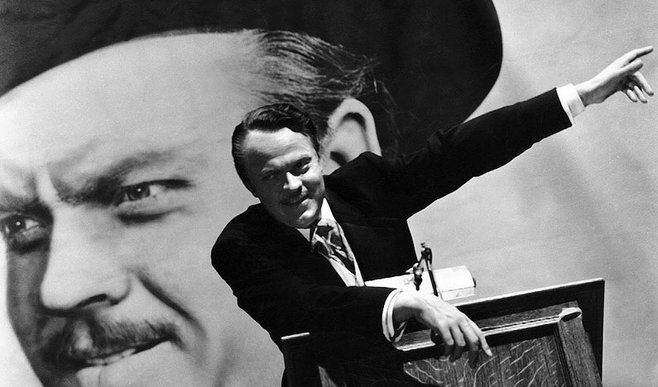
Orson Welles changes film history as Citizen Kane

Director: Orson Welles

Cast: Orson Welles (Charles Foster Kane), Joseph Cotton (Jedediah Leland), Dorothy Comingore (Susan Alexander Kane), Agnes Moorehead (Mary Kane), Ruth Warwick (Emily Monroe Norton Kane), Ray Collins (Jim W Gettys), Erskine Sanford (Herbert Carter), Everett Sloane (Mr Bernstein), William Alland (Jerry Thompson), Paul Stewart (Raymond), George Coulouris (Walter Parks Thatcher), Fortunio Bonanova (Signor Matiste), Harry Shannon (Kane’s father)

Writing about Citizen Kane is rather like writing about the Mona Lisa. Both are works of art so famous and influential that you are intimately familiar with them even if you’ve never seen them. But what makes them such constant delights is that, leaving everything else aside, the Mona Lisa is beautiful to look at – and Citizen Kane is hugely enjoyable to watch. Welles’ masterpiece – frequently hailed as the greatest film ever made – is about as close to perfection as you can get.

Entire books have been written about seemingly every aspect of the film’s creation. Welles’ original intention was to call the film American. It’s a fitting title. Citizen Kane is perhaps the finest film ever made on the corruption that ambition, money and power bring to the American spirit. Kane starts out as a pioneering idealist, but his fatal flaw his is need for power. That need to seize control of everything extends from buying all the art he can find in Europe to controlling the lives of all around him. It’s the mentality that will force his second wife into an opera career she is hopelessly unsuited for. It will eventually leave him sitting alone in his huge mansion, surrounded by wealth but bereft of friends. A large part of the American Dream is about “making it big” – and few make it bigger than Kane, and have so little to show for it at the end.

The film is a character study of ambition and power, using a framing device of the late Kane’s final word: “Rosebud”. What did he mean? Will finding out provide the key to understanding this powerful, elliptical man? A reporter (William Alland) aims to find out by interviewing key people from Kane’s life. From their recollections, the story of Kane’s life slowly comes together in a non-linear style. Charles Foster Kane (Orson Welles) as a young child inherits one of the world’s largest gold mines. Coming of age, Kane decides to use his wealth to become a press baron. He builds a news empire and runs for Governor – but the public revelation of his affair with amateur singer Susan (Dorothy Comingore) ruins his campaign. He builds a mansion on a man-made mountain, Xanadu, but is isolated and friendless in the echoing rooms of his own mausoleum.

You can argue the same thing happened to Welles himself. Citizen Kane is his own mausoleum, the only time in his life when everything went right. Also, probably the only time Welles’ attention stuck to something long enough to deliver. Welles memorably called working on a film set “the biggest electric train set any boy ever had”, and the entire film is saturated in his creative glee at trying so many new tricks. Citizen Kane bought to the forefront so many methods of film-making, its influence has been so pervasive on film today, that it’s hard to see how revolutionary it appeared at the time.

Welles worked with cameraman Gregg Toland to push the film into a whole new visual language, deeply influenced by German expressionistic film. It’s a beautiful film to look at, and each shot is covered with meaning, Welles’ eye for the theatrical image matched with Toland’s genius for visual language.

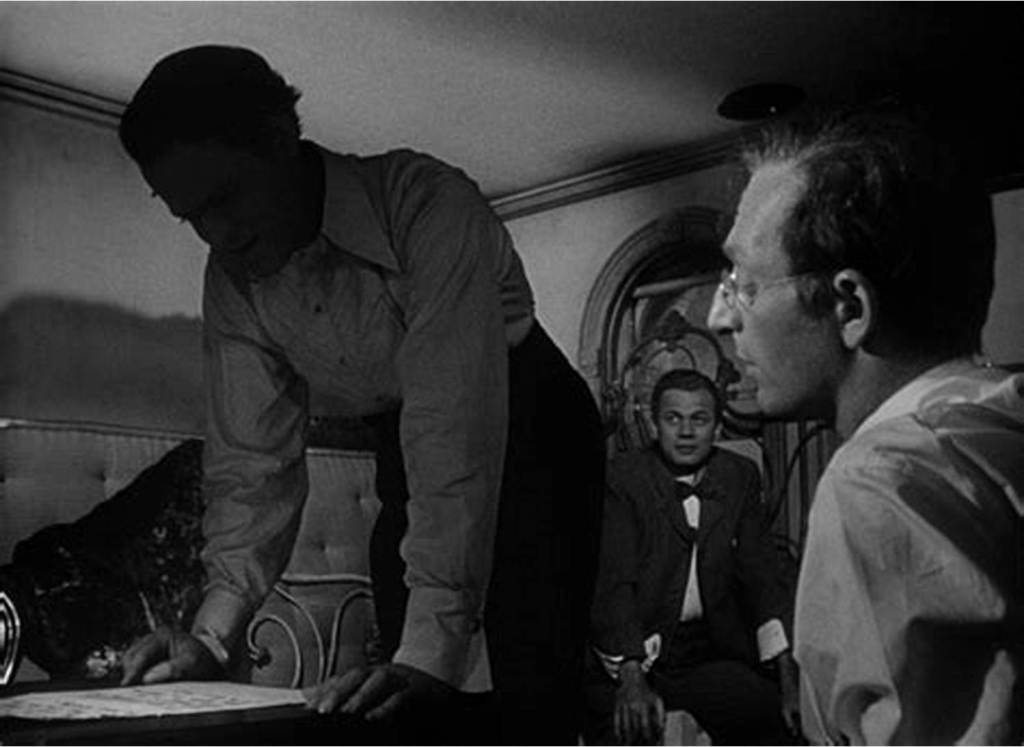
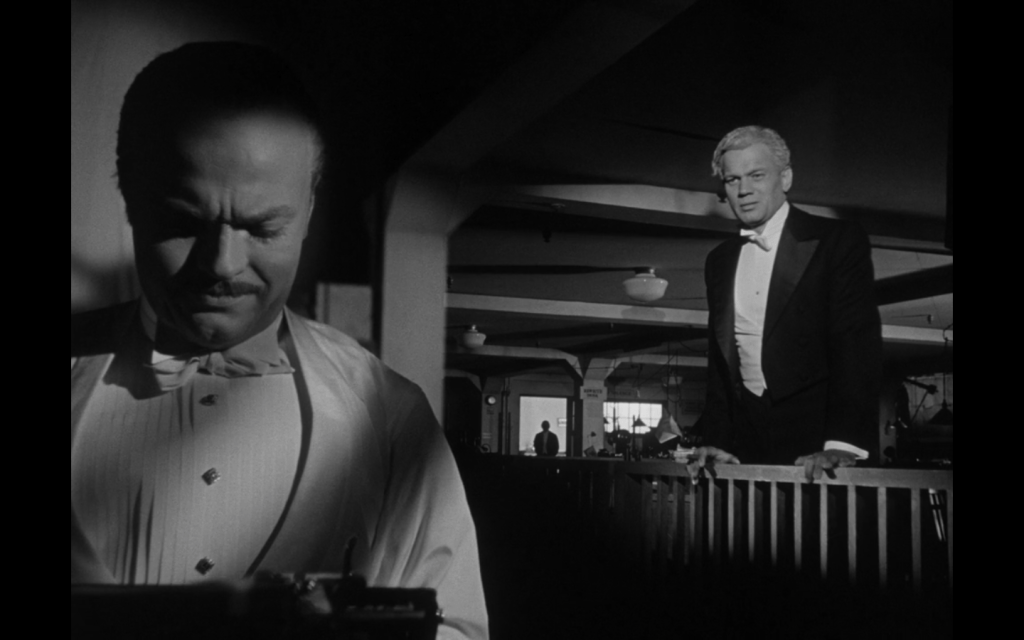
Citizen Kane is rarely thought of as a noir film, but it’s possibly the most noirish film you’ll ever see. Watching it again I was struck with how often shadows dominate the screen. Faces are frequently obscured, most famously in the projection room scene, where Thompson receives his instructions to find out what “Rosebud” means. But at key moments, faces disappear into black – while preparing his “Statement of principles” that will fill the front page of Kane’s first edition at the Inquirer, his face is lost in murky darkness. We hear what he is saying, but what is he thinking at this moment? It’s impossible to tell. Long shadows and inky black segments fill the frame frequently – it’s a film that gives a true feeling of darkness and unknowability at its heart.

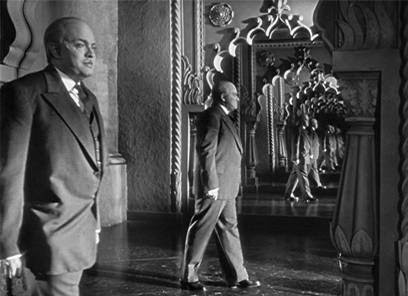
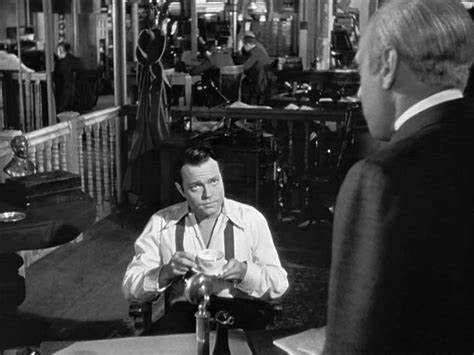
This is mixed with the theatrical flourish of its constant deep focus. Almost unheard of at the time, every shot of Kane is in perfect focus. It makes for visual compositions inspired by theatre, and ripe with dramatic meaning. Kane’s parents and his guardian William Parks Thatcher (George Coulouris) organise the future of the young Kane in the foreground, while we see the child playing outside in the show through a window. The deep focus turns Xanadu into a museum of lost chances and dreams, and the Inquirer newspaper office into an increasingly dark corridor of ambition, with people’s fates decided in foreground while we see them trapped in the background.

If that wasn’t enough, Toland uses angles Hollywood films hadn’t dreamed of. For some scenes, trenches were dug into the set and the camera placed in it, allowing the camera to stare up, with the actors towering over us. Citizen Kane is often claimed to be the first film where ceilings needed to build for the sets, as Toland’s angles and camerawork frequently made them visible. It’s not completely true, but it speaks to the visual impact of the film. Nothing really like this had been widely seen before. And I’ve not even mentioned the soaring, swooping tracking shots that pass through signs and buildings, the sort of inspired movement of the camera so many directors before had avoided in favour of stationary recording of the story. It’s visionary stuff.

The same was true for the film’s sound and music. Welles used his experience from radio to turn the soundscape of the film into something truly different. In radio, all cuts are managed by sound, but film had traditionally used only visuals to mark edits. Here, sound is used as often as visuals. When Kane runs for Governor, the sound and vision cut seamlessly from Leland on the stump for Kane to Kane finishing the same speech at a cavernous rally. Early in the film, the words “Happy Christmas” are skilfully cut together to leap forward years. Bernard Herrmann’s spare but perfect score, rather than laid over every scene, only comes in (as on radio) where emotional or transitional change is needed.

But then this is a film that uses editing as a way to tell story that few films before had tried. The sequence showing the collapse of Kane’s marriage to President’s niece Emily Monroe Norton (Ruth Warwick) is the perfect example. Over about two minutes of screen time we see several short scenes, all set at the breakfast table. Each scene shows a progressive step in their relationship collapsing, from loving exasperation to annoyance to anger to mute loathing. The scenes are no more than 20-30 seconds each, but the film perfectly moves from one to the other. The music slowly changes from a romantic waltz to a cold discordant rhythm. Transitions are marked by wipes. In each scene the actors move further apart at their breakfast table, the dialogue becomes harsher, sharper and more confrontational as the room they sit in becomes grander. In a few moments, an entire marriage story is told. It’s quite simply marvellous. The sequence is bookended by matching camera movements, gliding in and then out from the room.

You could speak for pages and pages (as indeed people have) about what a marvel Kane is. Welles’ vision and willingness to push the boundaries created an environment where all his collaborators worked to achieve their best, set free from the restrictions of more traditional moviemaking to stretch themselves as artists in a way rarely allowed. But it’s easy to forget what a marvellous story Citizen Kane is, what an entertaining and brilliantly constructed film it is and how every scene has something that delights and enthrals.

There’s controversy over who wrote the script. Welles and Herman J Mankiewicz are credited – although arguments have been made that each deserved the lion’s share. Whoever did create it, the script is quite simply superb. Economic, but packed with wonderful lines and some extraordinary speeches (Mr Bernstein’s speech about a powerful memory of a young woman he saw once from a distance is quite simply one of the best small-scale speeches you’ll see). Every scene is brilliantly assembled, and gives fabulous material to an extraordinary cast of actors.

It makes for a compelling character study, wrapped into a series of brilliantly done vignettes. Each set of recollections – from Thatcher, business manager Mr Bernstein (Everett Sloane), old friend Jedidah (Joseph Cotton) and ex-wife Susan (Dorothy Comingore) – makes for a fabulous series of self-contained scenes, each gaining richer and deeper meaning with every subsequent reflection that follows. There are so many sensational scenes I hardly know where to begin: you could write an essay about each one. Thatcher’s serio-comic reflections of the roguishly cheeky Kane are wonderful. Bernstein’s memories of the chancer coming good – with a brilliantly playful celebration scene – wonderfully entertaining. Jedidah and Susan’s far more tainted reflections of the man’s flaws make for wonderfully constructed drama, presenting a corrupted and bullying Kane. In every scene there is a beautiful moment of dialogue or drama which sticks in the memory.

The acting is equally good. Cotton settles into the groove many of his finest roles would fit into – the never-quite-grew-up schoolboy, who slowly realises his hero has feet of clay. Comingore is wonderfully fragile and then increasingly bitter as Kane’s ill-used second wife, forced into a humiliating career because Kane won’t be married to a failure. Sloane is charmingly loyal, with beautiful moments of profound sadness, as Bernstein. Coulouris is brilliantly funny as the exasperated Thatcher. Ray Collins’ is smooth and unabashed as Kane’s political rival. Agnes Moorehead is tinged with sadness and ambition for her son as Kane‘s mother.

But at the heart of Citizen Kane – in every sense – is Welles. His handpicked crew was some of the best in the business – but it was Welles’ inspiration, his willingness to imagine techniques and approaches un-attempted before, that encouraged them to their finest work here. With the magnetic force of personality that was his hallmark, he inspired everyone to give their very best. And he led from the front. The film is a triumph of drama, tragedy and comedy, directed with sublime grace. Welles the actor is perfectly cast, the part almost a riff on his own cult of personality, the mix of pride and overweening ambition and little-boy cheek crossed with self-destructive laziness. Welles’ performance is faultless in the film, taking Kane from the smirking chap happy to lose a million dollars a year (“at the rate of a million dollars a year I’ll need to close this place…in 60 years”) to the bloated old man, trashing his wife’s room after she walks out. Perfect.

The only tragic note about Citizen Kane is that this wasn’t the first in a career of non-stop genius from Welles. Instead, flaws in his own personality, combined with his ability to make enemies and lack of ability to focus on the task in hand, increasingly consumed Welles, making him eventually a lost great, a man wandering from film set to film set, taking on small roles for cheques that might one day help him make a film. But he’ll always have Kane, the sort of film that is a marvel which can never, ever disappoint. With every scene a classic, every moment compelling, every beat in it perfectly judged, its influence stretching to almost every film made since the late 1940s – it deserves its place as the greatest film of all time.