Category: Movies about movies

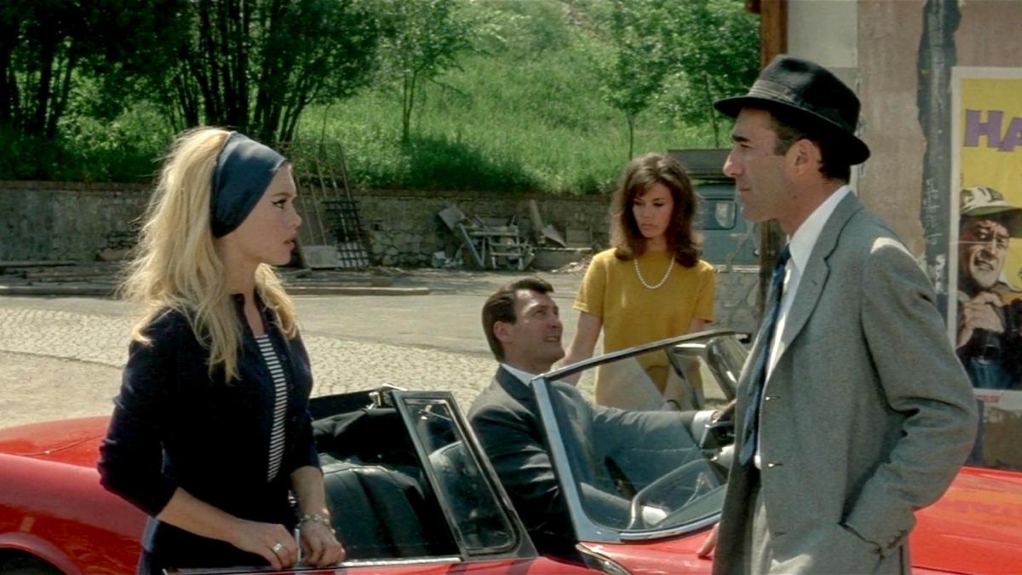
Le Mépris (1963)

Le Mépris (1963)

Godard’s film mixes virtuoso film-making with what feels a hard contempt for audience and characte

Director: Jean-Luc Godard

Cast: Brigitte Bardot (Camille Javal), Michel Piccoli (as Paul Javal), Jack Palance (Jeremiah Prokosch), Giorgia Moll (Francesca Vanini), Fritz Lang (Himself), Jean-Luc Godard (Lang’s assistant director), Linda Veras (Siren)

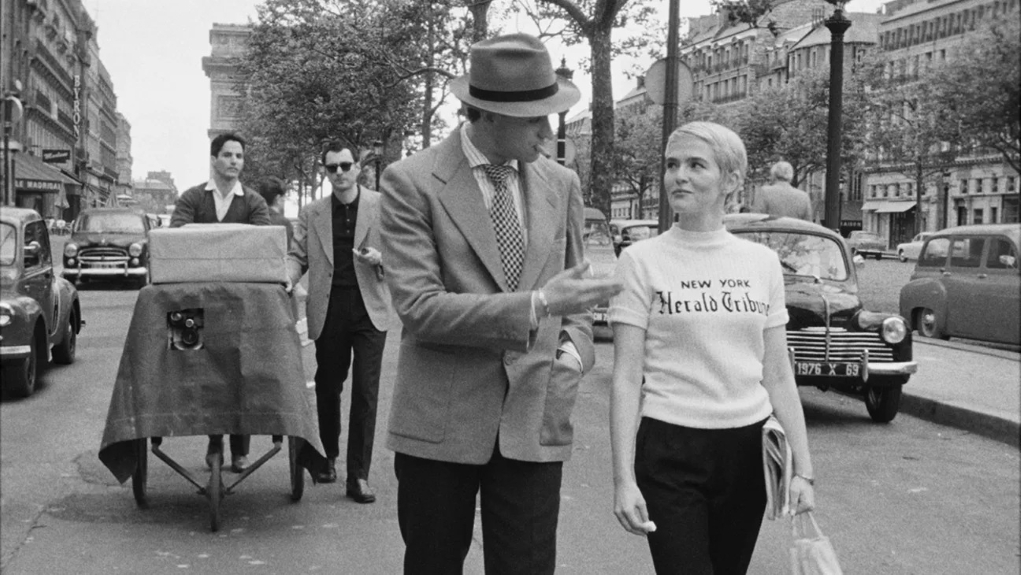
The title translates as Contempt and, to be honest, it’s hard not to feel a bit of the contempt when watching. Of all the Great Directors, the one I find the hardest to like is Godard. When you settle down to watch Godard, it’s hard not to escape the feeling you are steeling yourself to be looked down on. Godard wants you to know he’s watched more, read more and thought more than you about everything. Godard is playing out his fantasy of being a Hollywood director and a Great Artiste and wants you to know it. In fact, the further you move away from his debut À Bout de Souffle, the more his films become (for me) overly pleased-with-themselves statements rather than actual films.

Paul Javal (Michel Piccoli) is a writer, who wishes he could be producing great novels or plays, but is actually banging out crapola dialogue to fill American producer Jeremiah Prokosch’s (Jack Palance) Odyssey-opus, a film its director (Fritz Lang, one of Godard’s idols, playing himself) is trying to turn into art rather than the cheap sword-and-sandals epic Prokosch wants. But by taking the shilling, Paul earns the contempt of his glamourous wife Camille (Brigitte Bardot), who sleepwalks her way into an affair with Prokosch. Things come to head (as such) at Prokosch’s villa on Capri.

It was shot with a larger budget and a more controlling producer than any previous (or subsequent Godard film). God alone knows what they made of this – one suspects them reacting rather like Palance’s tantrum-filled producer when he inspects the arty dailies of statues and coastlines Lang has shot (“You lied to me Fritz!”). On some level Le Mépris is Godard playing a joke on his money men. The want a steamy relationship film, with plenty of Bardot on display? Have a slow series of elliptical conversations, a languid (but wonderfully filmed) argument scene in which Piccoli takes both a bath and a crap, and here are some deliberately functional shots of Bardot’s naked back on the bed while she and Piccoli intone empty dialogue. For a film that involves extra-marital sex, groping, a gun and a fatal car crash it’s deliberately unsensational – as if Godard was showing the money men he could ram anything they demanded into the film and still make it feels like a ticking-off.

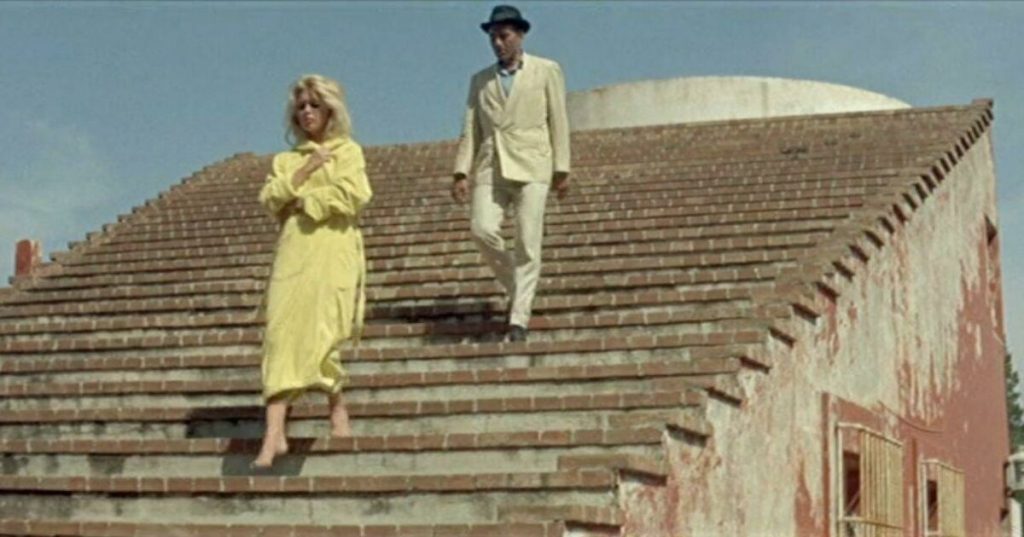
To be honest, there’s also in Le Mépris a bit of Godard’s contempt for himself for selling out, as if he realised part way through he’d made a terrible mistake by taking the money and wanted everyone to know it. You can see it in the film’s visuals, that turn the demanded cinemascope wideness (which Godard loathed) into a series of pan-and-scan shots and tight close-ups that wipe-out the impact of the grand visuals. Godard may appear in the film himself, but is real substitute is his hero Lang, here a visionary polygot (the only person who can speak the full hodgepodge of languages the characters communicate in), who gives voice to Godard’s most closely held views about cinema and the only person completely assured and comfortable with what he is doing.

Not that there isn’t an awful lot to admire in Godard’s work here. As fits a director steeped in a love of film, Le Mépris drips with homages to cinema technique. Godard speaks the credits – Welles in Magnificent Amberson’s style – over an opening shot which is itself of an opening shot filming a crew filming the opening tracking shot of Le Mépris. There are touches of Ford, Hawks and Lang in the stylistic love of Godard’s heroes. Paul dresses like a mix of Sam Spade and Dean Martin and loves chatter about old movies (he’s very excited about the prospect of catching an old Hawks film). The tattered film studio is lined with film posters (including those depicting Godard’s former wife Anna Karina). We see the intricate procedures of film-making and post-production and Bardot even reads books about cinema in her downtime.

There is some astonishing film-making – Godard may be self-important, but he can shoot a film with grace. The tracking shots through the seemingly abandoned Cinecittà studios in Italy are beautifully done, as is the intriguing framework of the unique Capri villa and its striking staircase. The film’s highlight (and finest sequence by far, as well as its most human) is its middle act, a virtuoso choreographed sequence in the Javal’s under construction apartment (including French doors without glass, bathrooms without doors and intermittent furniture). The camera moves, brilliantly at a distance, to constantly frame these two characters interspersed between doorways, or kept apart by walls in the centre of the frame, barely ever managing to ever be in the frame together, the disjointed visual language perfect for communicating a conversation where they are never on the same page. It’s a superb way of filming partly an argument, partly a drifting out of love, partly a fumbling attempt to find common ground. There is a real emotional reality to this scene, something that isn’t present anywhere else in the film.

Even there though, it works because of its distance. Le Mépris is a strikingly distant film, Godard presenting a deliberately cold, hostile film that lacks any real warmth, empathy, wit or lightness, like he’s challenging us to swallow down this filmic medicine of cinematic inspiration and beautiful framing. Le Mépris also seems to despise its characters. Palance’s film producer (and this is a deeply uncomfortable performance from Palance, who constantly looks like he’s woken up suddenly and doesn’t know where he is) is a boorish philistine and an idiot. Piccoli’s writer is a shallow, preening  lightweight who wants to be a Godard but is a hack with pretensions.

Interestingly the most intriguing character in it is Bardot – but she remains elliptical, perhaps because part of Godard can only see her as some sort of trophy or status symbol, something Paul fails to ‘deserve’ because he can’t maintain his principles. Her motivations remain a mystery and one wonders if there is much place for them in Godard’s masculine view of the world, where women are either secretaries or muses. Camille herself seems to see herself as sort of property, suspecting her husband of pimping her to a producer but then seemingly embracing that in any case (despite her contempt for Prokosch). There is an air in Le Mépris that Godard can’t really imagine either Bardot or Giorgia Moll’s Francesca (a striking presence, who has the best running joke with her rudimentary translations of Javal’s dialogue for Prokosch) as collaborators or equals to either the brutish producer or the tortured men, but people who can only be defined by their attitudes towards them.

Above all, Le Mépris wants you to know your place when watching it. To admire it, but also to know that you wishes for something more dramatic or humane are shallow, base desires. That really you should be seeking out the sort of arty stuff Fritz Lang is shooting on the island, not the page-turning nonsense the executives wanted. It’s an attitude that pours out of the film, and after a while its one that makes you want to spend your time elsewhere. Godard may be a clever guy, but he can be very poor company.

A Star is Born (1937)

A Star is Born (1937)

One of the first iterations of the tale, and with two winning performances one of the best

Director: William A Wellman

Cast: Janet Gaynor (Esther Blodgett/Vicki Lester), Fredric March (Norman Maine), Adolphe Menjou (Oliver Niles), May Robson (Lettie Blodgett), Andy Devine (Danny McGuire), Lionel Stander (Matt Libby), Owen Moore (Casey Burke), Peggy Wood (Miss Phillips), Elizabeth Jenns (Anita Regis), Edgar Kennedy (Pop Randall)

A Star is Born wasn’t the first time this story was told and it certainly wasn’t the last. Each generation in Hollywood has produced its own version of the story, not to mention a gallery of other culture creating their own unofficial and otherwise remakes. What Price Hollywood had even effectively told the same story five years earlier, and the entire concept has the air of a medieval ‘fortune’s wheel’ – two souls bound together, one goes up as the other goes down. There may in fact not be nothing new about A Star is Born at all but gave such a bright new polish to the familiar, that we’ve been inspired to come back to it again and again.

In the farmyard sticks, Esther Blodgett (Janet Gaynor) has a dream:  to become one of those stars of Hollywood’s silver screen. With grandma’s (May Robson) money in her pocket (‘What have I got to spend it on?’) she heads to Los Angeles, only to find the city is awash with similarly starry-eyed dreamers desperate for a big break. Esther gets hers in an unusual manner: serving drinks at a Hollywood party she strikes up conversation with famous star Norman Maine (Fredric March). Norman is very taken with Esther – in fact he’s almost immediately in love with her – and arranges a screen test. Soon Esther has a new career, a new name – Vicki Lester – and a new marriage to Norman. Problem is, as her star rises and she becomes the next big thing, Norman stops letting “his acting get in the way of his drinking” and his career slides into oblivion.

It’s high romance, very effectively filmed by Wellman, that requires – and gets – two very strong, highly relatable performances from its leads. Wellman’s film carefully gives both of them the space to grow a relationship that begins shyly and becomes deep and tender. Gaynor is bright, naïve and gentle with just enough ambition and determination to impress. She’s eager to please, but also firm and knows her own mind, far from a pushover in this town of press releases and media spin. Gaynor never lets us forget that under ‘Vicki Lester’ there’s that ordinary Esther Blodgett (could there be a more grounded, less starry name than Blodgett?), a woman with principles in a world of fakes.

Perhaps even better though is Fredric March (it’s the first indication, borne out by nearly all the remakes, that Norman is the better part). March is charismatic, engaging, funny, down-to-earth and everything you would want from a star – while also being a mean drunk with anger management issues. He’s introduced getting into a drunken scuffle at the Hollywood Bowl, and his love of booze makes him just as likely to laugh and flirt with Esther as it can make him take a slug at a guy who looks at him the wrong way. March’s drunk acting is very effectively restrained and he captures extremely well the self-disgust behind Norman at his weakness. March makes him a star who burns away his career through appalling choices, who fervently believes he can stay on the wagon until he can’t. In his hands it becomes a classic tragic piece, a Greek hero destroyed by his fatal flaw, his inability to escape the bottle.

This rich romantic tragedy builds wonderfully, Wellman keeping us deeply invested in this couple. The good times are really endearing: it’s hard not to grin along as they laugh and joke in a camper van after their elopement, or as they cover each other with encouragement and support for their careers. It makes the bad times unbearably painful: Norman’s drunken crashing of Esther’s Oscar win, a shambling monologue of self-pity and resentment, both heartbreaking and excruciatingly embarrassing. Norman’s fateful final decision is full of romantic imagery, as he smiling walks towards a sun-kissed beach, a beautifully staged inversion of a romantic ending.

A Star is Born’s other most interesting feature is its inside glimpse at Hollywood: or at least the version Hollywood was willing to present of itself to people. It even has a meta-theatrical element to it, the film book-marked by images of the shooting script describing the action immediately following or preceding it. Here Hollywood is a ruthless machine, chewing up the dreams of wannabes. An agent bluntly shows Esther the vast numbers of phone calls of wannabe extras they receive every day. Esther struggles just as much as assistant director Danny (Andy Devine) to find regular work. Careers are made and broken by chance, whims or the reaction of the audience to your face on screen. Names in lights one month and being pasted over the next.

Hollywood loves to be cynical about itself. A Star is Born delightedly shows its spin operation as ruthless, cut throat and controlling, planting stories about stars, covering up their misdemeanours (a regular requirement for the drunken Norman) and repackaging their lives into saleable commodities. Lionel Stander, as a heartlessly controlling press agent, is the heart of this, and the film doesn’t hold back on showing the dark powers of these studio fixers in action. But this is just a version of Hollywood: its telling that in A Star is Born while the middle management are condemned, the studio heads are absolved completely. Adolphe Menjou’s Selznick-like producer is an avuncular, uncle-like figure, endlessly caring and supportive of his stars who wouldn’t dream of any funny games to earn some money. This is a portrait of Hollywood where the top man is an affectionate saint – exposure only goes so far.

A Star is Born is also an interesting time capsule. Esther stares in admiration at a host of Hollywood Avenue stars of people must of the viewing public today would struggle to name (Norman Cantor anyone?). Seeking to impress while serving at a dinner party she’ll do impersonations of Garbo, Hepburn, Crawford and Mae West (the last even named). It’s a world where the continual production of content is even more on-going than on Netflix and the studios can start or end careers instantly. It’s a fascinating extra piece of interest in a highly effective, well-staged film. Even with its slightly murky early colour photography (it looks like a colourised black and white film), it’s a well-staged, effective romance with two very winning performances from its leads. Possibly one of the best versions of the story.

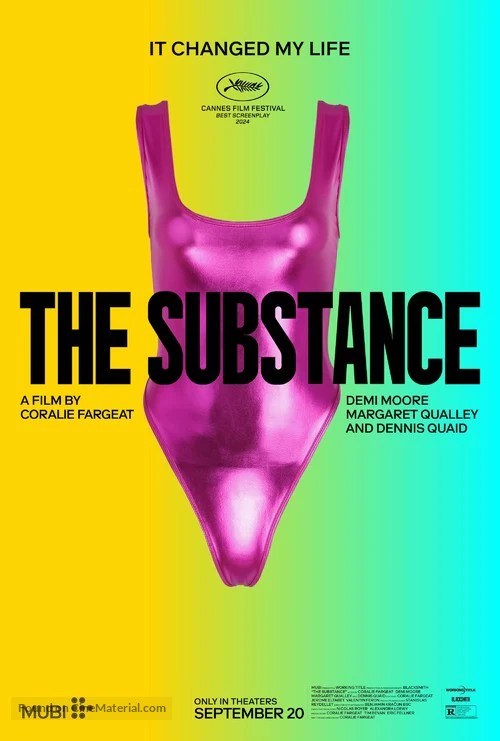
The Substance (2024)

The Substance (2024)

Twisted body horror isn’t quite the feminist statement it thinks it is, but still a unique film

Director: Coralie Fargeat

Cast: Demi Moore (Elizabeth Sparkle), Margaret Qualley (Sue), Dennis Quaid (Harvey), Edward Hamilton (Fred), Gore Abrams (Oliver), Oscar Lesage (Troy), Christian Erickson (Man at diner)

Getting old in Hollywood is not kind. Particularly for women. Elizabeth Sparkle (Demi Moore), a big star of the 90s, now eeks out a living as exercise queen for a daytime TV show. But TV exec Harvey (Dennis Quaid) decides people don’t want to watch a woman in her 50s and unceremoniously gives her the boot. Fearing a life of lonely irrelevance, miles from the limelight, Elizabeth accepts an invitation to try ‘The Substance’. This black-market drug creates a ‘younger, more beautiful, more perfect’ version of you – birthed from your spine. Taking the drug, Elizabeth spawns Sue (Margaret Qualley), a 20s version of herself who promptly lands her old job on the exercise show.

The two must swop places every week, one living their life (either in obscurity or vicariously enjoying much-lusted after career success) the other lying comatose on the bathroom floor. At first the balance works, but they soon grow to resent each other: Sue despises Elizabeth’s self-loathing bitterness while Elizabeth becomes consumed with envy at Sue’s hedonistic success. Quickly the balanced life between the two collapses, leading to inevitable disaster.

The Substance is one of those films you can pretty much guarantee people will remember about 2024. Pretty much everything in it is dialled up to eleven, a crazy mix of The Picture of Dorian Gray and Cronenberg-body horror (particularly The Fly) by way of David Lynch. Fargeat shoots it with a deliberate grindhouse intensity, revelling in the vast amounts of icky body horror, gallons of blood and guts, often filmed in a mix of dream-like drifting and trashy exploitation.

It’s a sharply directed, extremely intense film from Coralie Fargeat (who also scripts), punchy, vicious and darkly hilarious. It’s also been shot to be almost as uncomfortable to watch as possible. The camerawork is frequently disjointed, full of disconcerting jerky close-up. Nightmare Lynch-style dream horror images pop-up, along with haunting Mulholland Dr style floating heads and Kubrickian homages. Every moment of body horror is accompanied with revolting, squelching sound-effects. You’ve rarely seen anything as intensely, bizarrely OTT as this, the film carefully designed to get audiences either screaming “fucking hell!” or hiding their eyes behind their popcorn.

The film’s most successful moments are these moments of shocking body horror. Created from a host of ingenious practical effects (The Substance surely is destined for a make-up Oscar), the film superbly creates everything from green-fluid soaked birthing scenes to the grim disintegration of various body parts that slowly ages Demi Moore into a wizened babushka to the final hellish Elephant Man by way of the The Fly inspired ending. It’s superbly done, deeply unsettling, but blackly entertaining in its extremity. And The Substance is incredibly extreme, pulling absolutely no punches in this blood-soaked, Angela Carteresque fairy-tale horror.

Fargeat draws an extremely committed performances from Demi Moore, given the sort of acting challenge she never got when she was the biggest star in Hollywood, playing a woman so consumed with ingrained self-loathing and disgust (having so completely swallowed the ideology that your personal value is directly connected to your appearance) that she would rather live as a recluse in the shadow of another version of herself than build a new life. There is an extraordinary scene where a panic stricken Elizabeth prepares for a date with an old schoolfriend (possibly her last chance at a normal life) but is so consumed by self-loathing and doubt about her appearance (painfully ironic, since she of course looks great) that she goes through multiple attempts at make-up up in the movie, each time rubbing it off with such increasing fury that by the end she’s virtually sand-papering her face as if trying to erase herself from existence.

Just as fine is Margaret Qualley as the ‘perfect’ version of Elizabeth, but who has just the same self-loathing and insecurity as the original. It’s a similarly committed performance by Qualley, a carefully studied, surprisingly vulnerable performance while also being ruthlessly ambitious and self-indulgent, which embraces the hyper-sexualised expectations of young women in Hollywood. Dennis Quaid also throws in a fun cameo as a lasciviously camp, OTT executive full of ruthless, heartless bonhomie who sees women only as window-dressing for perverts. After all it’s an industry that forgets: from the opening montage of Elizabeth’s Hollywood star going from eagerly photographed to forgotten, through to the insultingly trivial gift stuffed in her hands as she is dismissed.

But The Substance’s satire is often rather forced and obvious (right down to Quaid’s exec being called Harvey). It feels like it misses a trick by having its only female character being a woman who has so swallowed the ageist views of Hollywood, she literally can’t imagine questioning it. So much so, her clone equally embraces life as a sex object. While The Substance invites us to understand the poison of this world independently, there is virtually no commentary on the unjust sexism within the film. In fact, The Substance so echoes the leering camera angles and pervy shots of the worst kinds of sexist cinema that sometimes it’s a bit hard to see it as satire and (as the camera stares at Qualley’s butt or down her top) more as just reality.

At no point do Elizabeth or Sue make any form of realisation about how they have been indoctrinated to only understand themselves as being worth something so long as they look like a pin-up. While The Picture of Dorian Gray understood the temptations of a selfish hedonism even when we know its wrong and The Fly was all about the damaging impact of ambition, for all its pointed smirking fun The Substance is at heart more of a pulpy gore-show revelling in extreme than a sort of social satire.

In fact the more you watch The Substance the more you think it’s real inspiration is Whatever Happened to Baby Jane and the ‘hag-horror’ of the 60s. A star name of yesteryear, takes on a role that riffs on their loss of youth and beauty, throwing them into an ever more twisted tale of obsession and revenge. You could argue The Substance trusts us to see for ourselves that all this rampant sexism is wrong: but you could also quite happily watch the film and assume it was Elizabeth’s vanity that caused all the problems, not the system that inoculated it in her.

There is another version of The Substance that could match its pulpy love of horror thrills with a bit more of an insightful commentary on gender politics. But the fact the film ends in an explosion of blood that makes The Shining look positively restrained (a sequence that goes on too long in an overlong film), you suspect its real heart is actually in creating shocking images rather than really exploring the issues it wants you to think it is addressing.

The Fall Guy (2024)

The Fall Guy (2024)

Very enjoyable action caper and also a rather sweet tribute to the unsung heroes of filmmaking

Director: David Leitch

Cast: Ryan Gosling (Colt Seavers), Emily Blunt (Judy Moreno), Aaron Taylor-Johnson (Tom Ryder), Hannah Waddingham (Gail Meyer), Teresa Palmer (Iggy Starr), Stephanie Hsu (Alma Milan), Winston Duke (Dan Tucker), Ben Knight (Dressler)

I’ve seen every single Hollywood Superstar I’ve ever heard of perform miraculous acts of derring-do in front of my very eyes. That all happened right? The camera doesn’t lie! Alas what we saw wasn’t the Legendary Star but instead a well-trained guy, dressed in the same costume, putting life and limb on the line for the big shot. And they don’t even get Oscars for it! The Fall Guy is a witty, exciting and rather sweet tribute to the unsung hero of the movies, the stunt guy, all wrapped up in a pulsating, tongue-in-cheek action-adventure that showcases two likeable stars and, of course, their similarly costumed fall guys.

Our hero is Colt Seavers (Ryan Gosling), stuntman of choice for superstar Tom Ryder (Aaron Taylor-Johnson), a spoilt man-child who brags he does his own stunts but can’t cross a road without a double. Colt is riding high, in a promising relationship with cinematographer Jody Moreno (Emily Blunt), until a stunt goes wrong leaving him badly injured. Colt disappears, breaking-up with Jody and wallowing in depression for eighteen months. However, he comes storming back when summoned to Australia by producer Gail Meyer (Hannah Waddingham) who claims Jody personally asked him to double for Tom on her directorial debut, Mad-Max-meets-Independence-Day sci-fi epic Metalstorm. Only turns out she didn’t ask: Colt is in fact tasked by Gail to find the missing Ryder or she’ll be forced to cancel the film and end Judy’s career. Colt soon gets bogged down in drug lords, dead bodies, hitmen who don’t quit and imaginary unicorns. Can he find Ryder and make amends with Judy?

The Fall Guy is fast-paced, loose and funny with a script of punchy Drew Pearce jokes, focused overwhelmingly on giving the viewer a cracking night out at the movies. It leaves very little in the locker room which is fitting for a film is all about celebrating the joy of doing things for real. The Fall Guy pushes the envelope for stunts, be it stupendously high falls, multiple barrel roll cars, furious fisticuffs that use everything going and car chases that leave burnt rubber skid marks on every surface. Basically, it’s a celebration of the art of stunt work, no more than you would expect from Leitch, a former stunt co-ordinator and champion of doing it for real.

It very successfully mixes giddy action thrills with a engaging romantic comedy that uses its two stars to great success. Gosling is relaxed, witty and above all extremely cool, his obvious enjoyment of the material very infectious. Blunt’s comic timing is immaculate. Together their chemistry not only creates plenty of laughs, but makes us invest in wanting them to be together. But The Fall Guy doesn’t just settle for rom-com conventions. A focus of the film is watching Colt get in touch with his feelings (how many other action films feature their stars quietly crying in a car, listening to Taylor Swift?) and accepting his stuntman bravado (it’s the profession where you stick your thumb up at the end of the stunt, regardless what happens) led him to drive Judy away out of twisted shame.

Of course, on the way to getting in touch with his findings, Colt doesn’t half stumble through more than his fair share of brawls. You couldn’t make a film about a stuntman without packing in more death-defying thrills than you can shake a stick at. The Fall Guy delivers two types of stunt thrills. One is the behind-the-scenes on-set stunts Colt executes – death-defying falls, flipping and rolling cars, people being thrown across a field into a rock – where we get to see a few tricks of the trade behind the magic. And then we also get genuine ‘real world’ stunts of epic, popcorn-munching excitement as Colt goes about his search. This is some of the most impressive stuff you’ll see (and its expertly deconstructed in the behind-the-scenes clips that festoon the end-credits), from Colt being hurled and smashed through every inch of Ryder’s apartment to a stunning car-chase that turns into a bare-knuckle dumper-truck fight that’s the film’s mid-act calling card.

The action is somehow even more enjoyable because of the world-weary comedy Ryan Gosling plays it with. After all, being thrown into situations like this is bread-and-butter for Colt, so whether its spending a fight protecting an elusive jet-lag-defeating espresso or working out exactly when he to jump into the road to collide with a car, everything is met with a semi-resigned shrug. He also gets some excellent partners-in-crime, trading stunt-movie facts with colleague Dan (a very funny Winston Duke, shouting the name of the Hollywood stars whose signature moves he’s replicating during fights) and, perhaps best-of-all, a French speaking stunt dog called Jean-Claude who Colt treats like a friend (a dog that bites people in the groin shouldn’t be as funny as this, but I must have been in the right mood). The final battle also sees Colt call on an army of fellow stunt-people.

It makes sense in a film that celebrates this brotherhood. When Colt and the team are working on set, The Fall Guy centralises their creativity and commitment. The shooting of a Metalstorm battle scene is hugely improved by Colt and the team pushing the envelope with suggestions and improvements to the rudimentary script and the whole crew is scrupulously dedicated, professional and committed.

The real threats in The Fall Guy are the things that work against this. Special effects and deep fakes (whch plays into the film’s neat double-meaning title) are the tools of the villains and, in a wider sense, kill the flesh-and-blood of film-making. Hollywood stars and bottom-line Hollywood suits with no respect for the craft are the baddies. Aaron Taylor-Johnson has a lot of fun in a role that parodies almost every star you can think of (Tom Cruise is twice specifically named in the film, as if to stress for the laywers Tom Ryder is not him) while Hannah Waddingham is a smilingly heartless producer, never seen without clutching an oversized diet coke.

The Fall Guy is, above all, a film designed to cheer you up no-end. Crammed with sharp one-liners, expert sight gags and thrilling stunts with a cast having an absolute ball in their roles, it’s the sort of treat that will be remembered long after its slightly disappointing box-office haul has been forgotten.

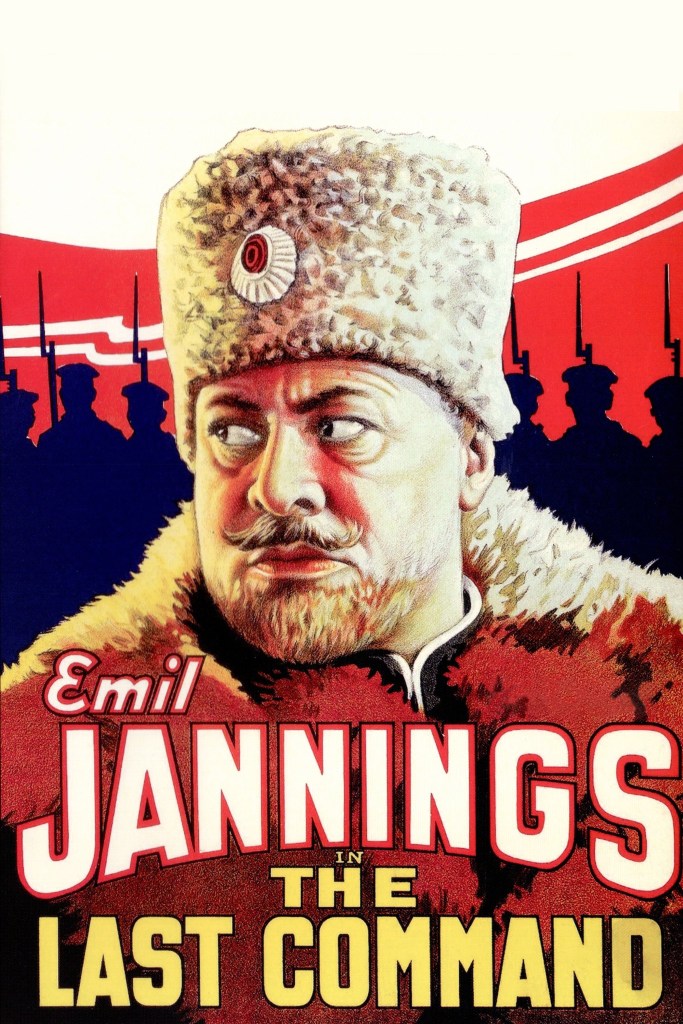
The Last Command (1928)

The Last Command (1928)

Hollywood and the revolution meet in von Sternberg’s sympathetic look at White Russians

Director: Josef von Sternberg

Cast: Emil Jannings (Grand Duke Sergius Alexander), Evelyn Brent (Natalie Dabrova), William Powell (Lev Andreyev), Jack Raymond (Assistant director), Nicholas Soussanin (Adjutant), Michael Visaroff (Serge)

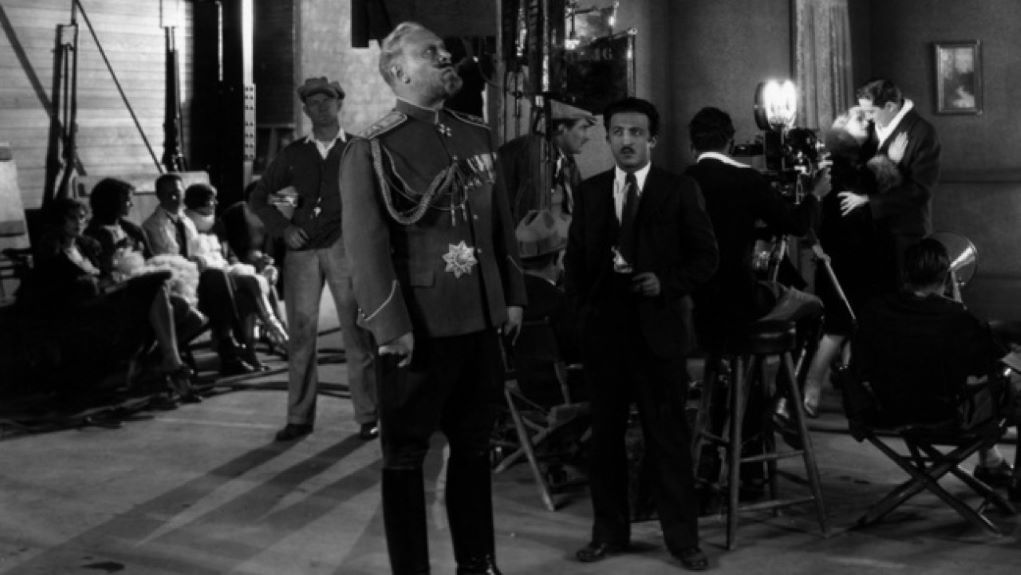
Hollywood director Lev Andreyev (William Powell) flicks through photos of extras, searching for someone to play the Russian General in his WW1 epic. His eyes light up – the perfect face! Sergius Alexander (Emil Jannings) is summoned. But Andreyev has ulterior motives: Sergius Alexander is a former Grand Duke who clashed with the revolutionary Andreyev in Russia ten years ago and this is the chance for revenge Andreyev has longed for. A cousin of the Tsar, Sergius Alexander was commander of the Western Front. Imperious but noble, deeply patriotic, he gave everything for Russia, despite falling in love with revolutionary Natalie Dabrov (Evelyn Brent). The revolution turned Sergius into a traumatised shell and kitting him out in uniform again impacts his sanity.

Von Sternberg’s The Last Command is two films mixed into one. It’s partly a satire on Hollywood, a machine specialising in creating artificiality that chews extras up and spits them out with little regard for their well-being (rather like the trench system the film is set in). The other – and more dominant – part is a classic melodrama of a noble Russian lost and powerless as his world collapses around him. It’s this second part that dominates the film, almost an hour of its ninety-minute run-time being taken up with its Russian flashback sequence. Like many von Sternberg films it’s charged with a mix of sex and sadomasochism, while also being a sympathetic, white-Russian look at the revolution.

Emil Jannings received the first ever Best Actor Oscar for this (and the now lost The Way of all Flesh). At the time Jannings was seen as one-of (if not the) greatest actor in the world, based on his mastery of the expressive arts of silent cinema. Janning’s physicality, his emotion-filled piercing gaze is duly showcased. Jannings effectively plays two parts: the Sergius Alexander of the Russian era, the Russian aristocrat who emerges as a man of honour, dignity and patriotism; and the Sergius Alexander of the present day, a timid, broken man, forever twitching, scared to look people in the eye. In both cases, von Sternberg’s camera constantly pulls back to Jannings whose ability to transform and twist his body – from ram-rod officer to broken husk – is executed perfectly.

Von Sternberg’s gives the bulk of the film’s run-time over to the build-up of the Russian revolution. While The Last Command gives some criticism to the ancién regime – our first shot is of a poverty-stricken mother and baby sitting in the snow, while the Tsar is a paper king more interested in parades than reality – von Sternberg’s affection is clearly for the decent nobles trying to make the system work. The revolutionaries are largely violent or shadowy manipulators (we get a brief scene with obvious Lenin and Trotsky stand-ins, presented as hypocritical middle-class looking schemers focused on power). On the contrary Sergius Alexander is interested only in the good of Russia.

It’s that which wins him the unexpected respect of feared revolutionary Natalie Dabrova, well played by Evelyn Brent. Dabrova is a power-keg whose fire and passion seizes the fascination of Sergius. Their initial meeting is the only time von Sternberg presents him as a tyrannical figure, sitting in an office questioning potential revolutionaries for his own amusement (including a whip across the face for Andreyev). But from there Sergius’ essential decency emerges – his politeness, his old-school chivalry. He treats her like a lady and (eventually) courts her with a Victorian gentility.

That contributes to Natalie’s shift towards seeing Sergius as a man trying his best in difficult circumstances rather than the ogre she assumed. Von Sternberg masterfully shoots the pomp and pageantry of the old Russia, full of military parades, fine dining and smart uniforms using this pageantry to show how it disguised the real threat facing the country. There are also elements of the sado-masochistic in the relationship between Natalie and Sergius. This bastion of the system is attracted to this woman who wants to burn the whole thing down. Visiting her in her bedroom, spotting a hidden pistol, is there an air of debased excitement when he turns his back on her and all but invites her to shoot him? In turn, Brent is almost a prototype of the classic Dietrich character, a strong, imperious woman, who dominates men, torn between conflicting desires.

There is a neat series of contrasts and contradictions in all the characters in The Last Command. Sergius is both a Tsarist bully, a decent man interested only in his country and a shattered husk in Hollywood. Lev is a firebrand revolutionary and an aristocratic Hollywood director. Natalie is a fascinating mix: a banner-waving anarchist who fits neatly into Sergius’ cocktail parties, who despises and loves the General. Duality and hidden identities hints at hidden desires within all the characters in a world tearing itself apart.

That collapse of order is the stunning heart of von Sternberg’s film. The seizure of Sergius’ train by revolutionaries, the final act before his exile, is superb in its vibrant tracking shots and Eisenstein-inspired energy. Jannings is placed at the heart of the crowd in a series of tracking-shot marches through baying crowds all pulling, spitting, pushing and abusing him that is part walk to calvary, part fantasy of humiliation. There are moments of understanding for the masses – a scene shows Tsarist soldiers machine-gun down a mob – though it’s balanced by the ruthless shooting they carry out on wounded soldiers. Sergius is reduced to the lowest-of-the-low, a humiliated figure shovelling coal for his revolutionary masters while they conduct (what looks like) an orgy in his state compartment.

Humiliation is also the name of the game in Hollywood. While The Last Command is more about its sympathetic look at good White Russians let down by the system (fitting von Sternberg’s imperialist sympathies), it throws in to its first and final act an uncomfortable look at Hollywood. Extras crowd at the studio door as another sea of desperate humanity (Sergius’ buffeting here in this crowd, must remind him of that humiliating walk through the mob in Russia). Costumes are flung at people identified only by tickets. Assistant directors treat people like dirt and extras are seen only as props.

But the satire is blunted by the fact that the treatment on set is motived by personal animosity. After all this is Lev – William Powell, rather good and clearly channelling von Sternberg – living out his own revenge fantasy. A sharper satire would have had no link between director and extra, merely seen the heartless system exploit a past trauma for its own benefit – with terrible consequences.

The Last Command is less a satire on Hollywood and more a rose-tinted look at the decent figures in the Tsarist system, with touches of satire on revolutionaries who are either power-mad middle-classes or working-class simpletons seduced by the temptations of drink and sex. It’s also a subtle smuggling in of the director’s own sexual fascinations, with Jannings a superb vehicle for this fantasy of humiliation with Brent shot with the sultry imperiousness of a potential dominatrix. For all this it’s a fine film, a visual marvel and a fascinating character study.

Sherlock Jr (1924)

Sherlock Jr (1924)

Keaton invents Looney Tunes in this master-class in both cinema and comedy

Director: Buster Keaton

Cast: Buster Keaton (Projectionist/Sherlock Jr), Kathryn McGuire (The Girl), Joe Keaton (The Girl’s Father), Erwin Connelly (The Hired Man/The Butler), Ward Crane (The Local Sheik/The Villain), Ford West (Theatre Manager/Gillette)

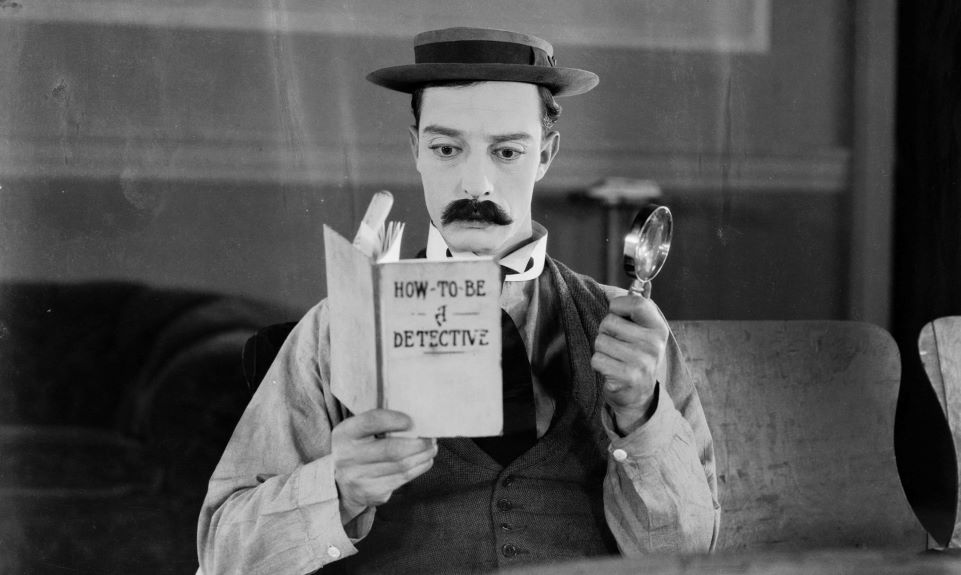
If there is one thing you learn from watching Keaton’s masterpiece, Sherlock Jr, it’s this: all Looney Tunes cartoons are Buster Keaton films. The level of astounding, frantic, comic genius in Sherlock Jr hits new heights and its mix of slapstick, improbable stunts, chases and poker-faced reactions basically makes it resemble nothing less than the world’s greatest cartoon made real. There is something either delightful or double-takingly how-did-they-do-that impressive in every scene and the entire film is assembled and designed with invention dripping from every pore.

Buster is an absent-minded, day-dreaming projectionist in a local theatre. But what he really wants to be is a detective. He gets his chance when he discovers that the father (Joe Keaton) of the girl (Kathyn McGuire) he’s in love with has had his watch stolen. We know it’s her villainous suitor (Ward Crane), but Buster’s clumsy investigation only ends up getting himself framed, with only the Girl to clear his name. Back in the theatre, Buster daydreams himself into the film he’s projecting, where he is the famed Sherlock Jr, master-detective besting scheming villains and winning the heart of the Girl, all of whom now look like the people he encountered in the real world.

Sherlock Jnr resolves almost its entire plot in the opening fifteen minutes after Buster fails to prove his mettle as a detective. Bless, he goes about his investigation with a robotic lack of imagination, slavishly following the steps in his How to be a Detective book right down to following his suspect by almost literally dogging his footsteps (requiring a parade of sudden jerks, turns and dodges to avoid being seen). Fortunately, the Girl solves the crime for him, clears his name and heads to the theatre to tell him while he drifts off to sleep. What this means is that we can enjoy Buster’s day-dream of the movies without ever worrying about how he will solve the pickle he is in in real life.

Sherlock Jr can focus on its delightful fantasy sequence. In an oft-imitated stroke of double exposure shooting, the dream Buster emerges from the body of the sleeping Buster, picks up his (dream) hat and walks out of the projection room to the theatre where he is flabbergasted to see people he knows playing roles in the film. Why shouldn’t he be tempted to walk down the aisle and try to climb into the picture? Of course, the villain responds by tossing him out of the frame and back into the auditorium (just to reassure us again, Keaton cuts to the sleeping Buster in the projection room).

Keaton’s film has hugely inventive, creative fun with the medium as Buster re-enters the movie only to find – with the power of editing – his location changing with dizzying speed, without his position changing from shot-to-shot. He steps down a flight of stairs to find it turn immediately into a bench. He tries to sit on the bench but lands in a busy road. He walks down the road to find himself on a cliff edge. He peers off the edge to find himself among lions, then crawling through the desert, sitting on the shore, diving into a snow drift. This whole sequence is effortlessly, brilliantly assembled with Keaton’s position seemingly never changing but the location changing almost a dozen times. Think that cartoon when Daffy Duck goes to war with the cartoonist. No one before had understood the comic potential of editing, shifting locations and changed perspectives.

It’s perhaps the stroke of defining genius in a film crammed with moments from here to the end that leave you breathless with their chutzpah, daring and invention. From here, Sherlock Jr is full to the brim with hilarious comic stunts that Keaton makes look effortless but required such complex planning (and endless repetition on set to get right) that your admiration for their humour is matched only by the wonder at the dedication and sweat it took to deliver them.

In the dream-film, Sherlock Jr has just enough of Keaton’s comic clumsiness to be amusingly recognisable, but every detecting trick he plays turns up trumps. He tails suspects successfully, locates stolen jewels, unmasks criminals and he is never outwitted by the criminals (saying that he can also ride on the handlebars of a motorbike for miles not noticing that the driver has long since fallen off). Through it all, Keaton gives every set-piece the sort of physical commitment Hollywood wouldn’t see again until Tom Cruise started to embark on Impossible Missions.

All of this needed time. Imagine, if you will, the innumerable takes Keaton needed to execute a deluge of seemingly impossible trick shots in a game of pool, where every ball is pocketed except the number 13 (which has been replaced by a bomb). This is the sort of Newtonian logic of a Bugs Bunny cartoon but done for real. It’s doubly funny later when you realise Sherlock Jr wasn’t being phenomenally lucky but was in fact aware the ball was a bomb and was missing deliberately. Even without that knowledge, watching balls bend round the number 13 or divide perfectly so that two balls pass by without contact is breath-taking.

Equally so a stunt which sees Keaton fold up a disguise dress in a window, head into the room, then dive out of the window, straight into the dress, and walk away. The stunt is so incredible, Keaton even dissolves part of the wall of the building so we can see it done in one take. If that’s not enough, moments later he will seemingly dive into a wall through the chest of an accomplice who will then walk away – all in one take. Keaton wanted these magic tricks to seem impossible, to leave the audience helplessly trying to work out what they have seen. The answer, in every case, was endless attempts and vaudeville expertise. Just as Keaton worked out the comic potential of editing could transport him, in a single step, hundreds of miles – so he also worked out it could make impossible events look effortless by removing all the failed attempts.

The film culminates in a chase scene the Looney Tunes cartoons would riff on endlessly (the entire Wile-E-Coyote/Road Runner series is effectively a long version of the end of Sherlock Jr). Sherlock Jr races to rescue a girl, on the handles of a rider-less motorbike, racing over roads, blockages, train tracks and all sorts then switches with her to a car, that similarly does a series of improbably manoeuvres before it crashes into a lake and turns into a slowly sinking boat. All hilarious, all directed and played with a super abundant energy.

And then he wakes into a romantic reconciliation where our hero, slavishly, follows the romantic gestures of the man in the movie he is watching to win a kiss from the Girl. We knew the happy ending was coming – that’s why we enjoyed, pressure-free, the fantasy sequence where nothing was at stake. Sherlock Jr delivers a comic tour-de-force so packed with delightful tricks, committed stunts and joyous invention that it feels like it sails by even quicker than its 45 minutes. It’s a perfectly sustained and balanced series of gags all wrapped up in something that uses the medium perfectly. It’s the first and best Looney Tunes cartoon ever made.

Watch it now!

The Front (1976)

The Front (1976)

The Blacklist is skewered in this heartfelt comedy that turns tragedy

Director: Martin Ritt

Cast: Woody Allen (Howard Prince), Zero Mostel (Hecky Brown), Herschel Bernardi (Phil Sussman), Michael Murphy (Alfred Miller), Andrea Marcovicci (Florence Barrett), Remak Ramsey (Francis X Hennessey), Lloyd Gough (Herbert Delaney), David Marguiles (William Phelps), Danny Aiello (Danny LaGattuta), Josef Summer (Committee chairman)

The first Hollywood drama about the “the Blacklist”, the shamefully unconstitutional banning of left-leaning Hollywood figures from working as a result of the House of Un-American Activities Committee’s investigation into alleged communist subversion. If there was any doubt how personal the film was to its makers, the credits scroll with the Blacklisting dates of many of its makers including Ritt, screenwriter Walter Bernstein, Mostel, Bernardi, Gough and Delaney. The Front is a tragedy told with a wry comic grin. Perhaps the makers knew that if they didn’t laugh they’d cry.

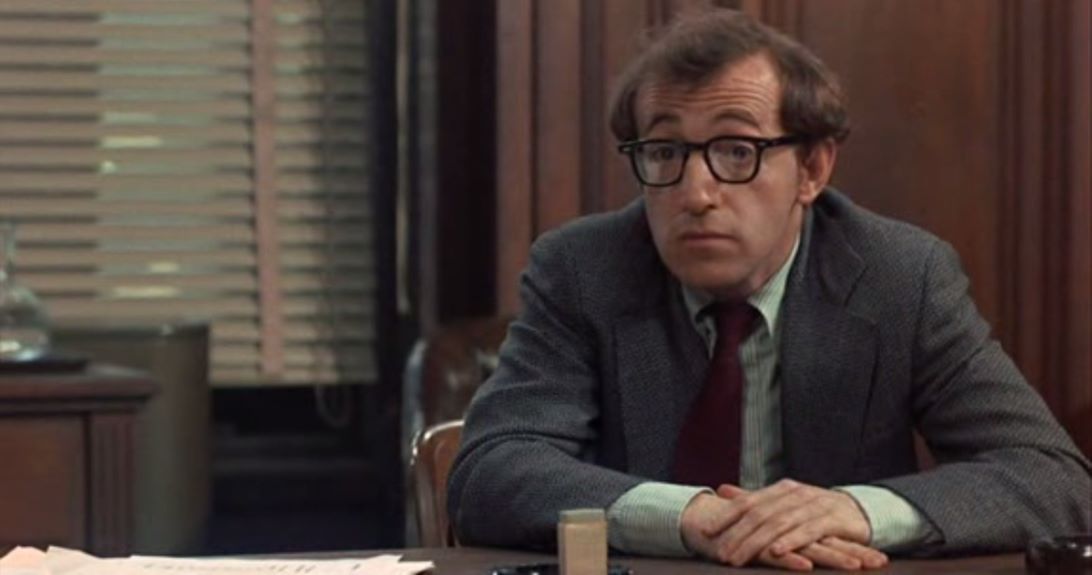
When screenwriter Alfred Miller (Michael Murphy) is blacklisted he asks an old friend, small-time bookie and cashier Howard Prince (Woody Allen) to attach his name to Miller’s scripts and submit them. In return Prince will keep 10% of all payments. The scheme is so successful Prince becomes “the Front” for two other writers and the quality and volume of Howard’s ‘output’ wins him a lucrative job as lead writer on a successful TV show, while his ‘genius’ wins the love of idealistic script editor Florence (Andrea Marcovicci). But, as the Blacklist takes hold – driving out of work actors with tenuous links to Communism like the show’s star Hecky Brown (Zero Mostel) – will Howard take any sort of moral stand about what’s happening in America?

The Front took a bit of flak at the time for not being more overtly angry about the Blacklist – as if the only response possible was spittle-flecked fury. However, today, its mix of comedy and real, visceral tragedy looks like the perfect response. The Front embraces the Kafkaesque ridiculousness the Blacklist created. Howard locked in an office at his studio to do an emergency re-write, calling Miller who taxies round replacement pages. Howard’s general ignorance of writing in general and his desperate mugging up on Eugene O’Neill and Dostoyevsky to pass them off as ‘influences’. The fact the list hasn’t done anything to stop these writers’ work from getting out there.

It’s also strong on the sense of underground community that grew among the banished writers. As veterans themselves, Ritt and Bernstein could be nostalgic about the sense of ‘all being in it together’ that the unemployed scribblers had.That vibe comes across well form Miller, Delaney and Phelps meeting in restaurants, libraries and hospital rooms to knock ideas around. There is the espionage-tinged excitement of watching script pages being palmed across to Howard like dead-drops. The film never forgets the gut-wrenching difficulty, stress and pain of not being able to work openly. But it also remembers the family feeling of a support network, giving people the courage to keep going.

But then the Kafkaesque comedy slowly drains away, as the punishing injustice creeps to the fore. Studio fixer – and vetting officer – Hennessy (played with self-satisfied relish by Remak Ramsey) calmly pressures creatives to turn on each other. Sure, there is comedy in him telling a victim of mistaken identity that there is nothing he can do to help him as the guy has nothing to confess to – that’s Kafka – but Ritt doesn’t miss the desperation and fear in the victim’s eyes. To Hennessy everyone is guilty, innocence is something that needs to be proved – and it’s a lot less funny when he strips people of their livelihoods because their personal views don’t fit.

The film’s true tragedy is actor Hecky Brown. Beautifully played by Zero Mostel, in a performance of a jovial front placed over ever-growing bitterness, anger, self-loathing and despair, Hecky can’t work quietly behind a front. As an actor, once he’s under suspicion, he’s unemployable. Despite his jokey pleas that he only marched on May Day and subscribed to the Socialist Worker (six years ago, when as he points out the USSR were our allies) to impress a girl, he’s goes from star to begging for work at the Catskills. There the manager is all smiles and pays him $250 for a gig worth thousands (based on a real life incident that happened to Mostel – and the pain and anger of it is still in his eyes).

Mostel’s performance is the heart-and-soul of the film which follows his increasingly bleak tip into despair. He scuffles with that Catskills manager over his hypocritical sorrow. Staying in Howard’s apartment, he despises himself as he searches through Howard’s desk for incriminating evidence. In a striking scene, he berates “Henry Brownstein” (Hecky’s real name) for stopping him turning state’s evidence. It’s a sad, moving picture of the real human cost of this injustice that helps moves the film past comedy and into dark drama.

And to get an even better of how serious this human cost, what could be better than placing a self-interested, politically disengaged chancer at its heart and seeing how he responds. The casting of Woody Allen – in one of the few films he appeared in and didn’t write – is perfect. There is no-one more politically disengaged and full of pinickity obsession that Allen. Howard Prince is a decent guy but his main interests are money (his eyes light up at earning 10% for nothing), his fancy apartment, seducing Florence and the adulation from fawning producers.

What better way to show the impact of the Blacklist injustice, than to see how Howard slowly shifts from a man so disinterested he doesn’t even know what the Fifth Amendment is, to someone who feels compelled to make a stand. Slowly he finds he can’t ignore the injustice – there is a beautiful moment when Howard embarrassedly drinks and stares at a poster on the office wall at the back of the frame while Hecky begs for $500 from that Catskill’s manager. He gradually realises a fun ride for him is a dystopian nightmare for others – his self-satisfied shrugs turning into real principle.

Because, he will learn, HUAC doesn’t care for names – they care about breaking people. Being as ignorant and disinterested in politics as Howard won’t save you. That’s what Ritt and Bernstein have been driving to: this wasn’t Kafka, it was Orwell, it wasn’t about the obstructive indifference of bureaucracy but Big Brother’s ruthless rooting out of thought crime. So, when Allen tells them – in the final lines of the film – to go fuck themselves, and the film freezes so he can walk out of it, you really understand why this is a glorious cry of wish fulfilment straight from the heart of the film-makers.

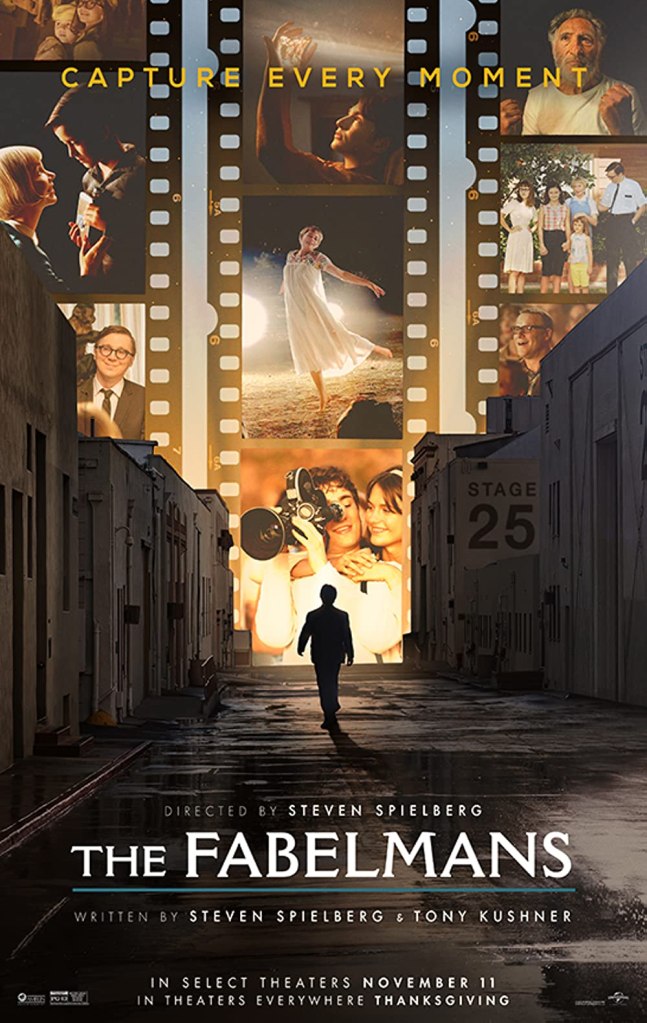
The Fabelmans (2022)

The Fabelmans (2022)

Spielberg explores his childhood in this warm but honest look at the triumph and pain of movie-making and family

Director: Steven Spielberg

Cast: Gabriel LaBelle (Samuel Fabelman), Michelle Williams (Mitzi Schildkraut-Fabelman), Paul Dano (Burt Fabelman), Seth Rogan (Bennie Loewy), John Butters (Regina Fabelman), Keeley Karsten (Natalie Fabelman), Sophia Kopera (Lisa Fabelman), Mateo Zoryan Francis DeFord (Young Sammy), Judd Hirsch (Boris Schildkraut), Jeannie Berlin (Hadassah Fabelman), Robin Bartlett (Tina Schildkraut), David Lynch (John Ford)

Perhaps no director is more associated with cinema’s magic than Steven Spielberg. And watching The Fabelmans, a thinly fictionalised story about his childhood, clearly few directors have as much of that cinematic magic in their blood. The Fabelmans joins a long line of post-Covid films about auteur directors reflecting on their roots (clearly a lot of soul searching took place in 2020). Surprisingly from Spielberg, The Fabelmans emerges as a film that balances sentiment with moments of pain and a love of cinema’s tricks with the suggestion of its darker powers rewrite reality according to the eye of the director (or rather the editor).

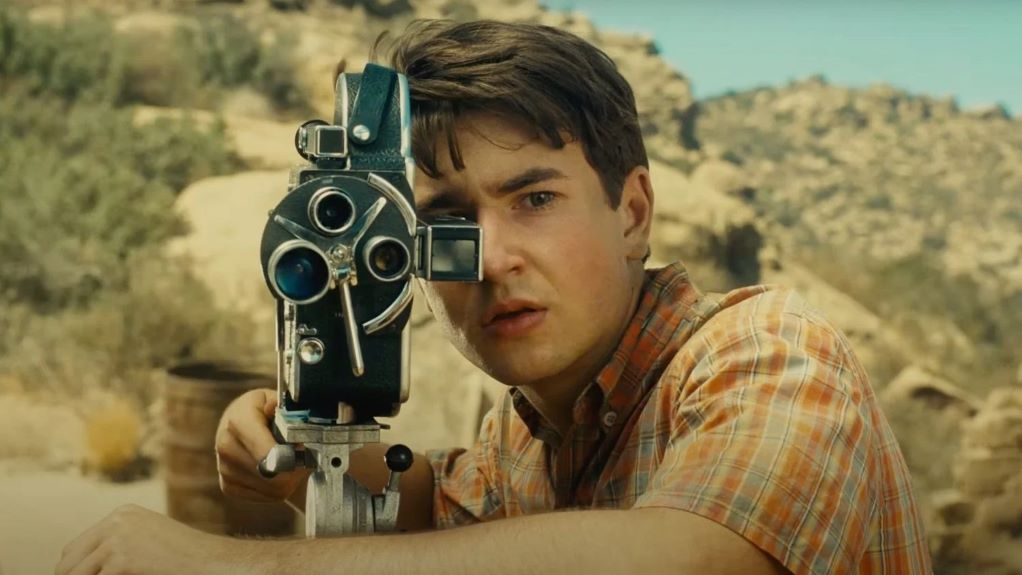
The film follows thirteen years in the life of the young Spielberg, here reimagined as Samuel Fabelman (Gabriel LaBelle, by way of Mateo Zoryan Francis-DeFord). His father Burt (Paul Dano) is an electrical engineer with a startling insight into the way computers will shape the modern world. His mother Mitzi (Michelle Williams) is a former concert pianist turned full-time Mom. The family moves from New Jersey to Phoenix and finally California, as Burt’s career grows. From a young age Samuel is enchanted by cinema, filming startling narrative home movies, packed full of camera and editing tricks. But he and the family are torn between art and science, just as Mitzi’s friendship with “Uncle” Bennie (Seth Rogan), Burt’s best friend, is revealed to go far deeper.

The Fabelmans is both a love letter to cinema and to family. But it’s a more honest one than you expect. It’s got an open eye to the delights and the dangers of both, the pain and joy that they can bring you. The film’s theme – expertly expressed in (effectively) a sustained monologue brilliantly delivered by Judd Hirsch in a brief, Oscar-nominated, cameo as Samuel’s granduncle a former circus lion tamer turned Hollywood crew worker – is how these two things will tear you apart. The creation of art makes demands on you, both in terms of time and dedication, but also a willingness to make reality and (sometimes) morality bend to its needs. And family are both the people who give you the greatest joy, and the ones that can hurt you the most.

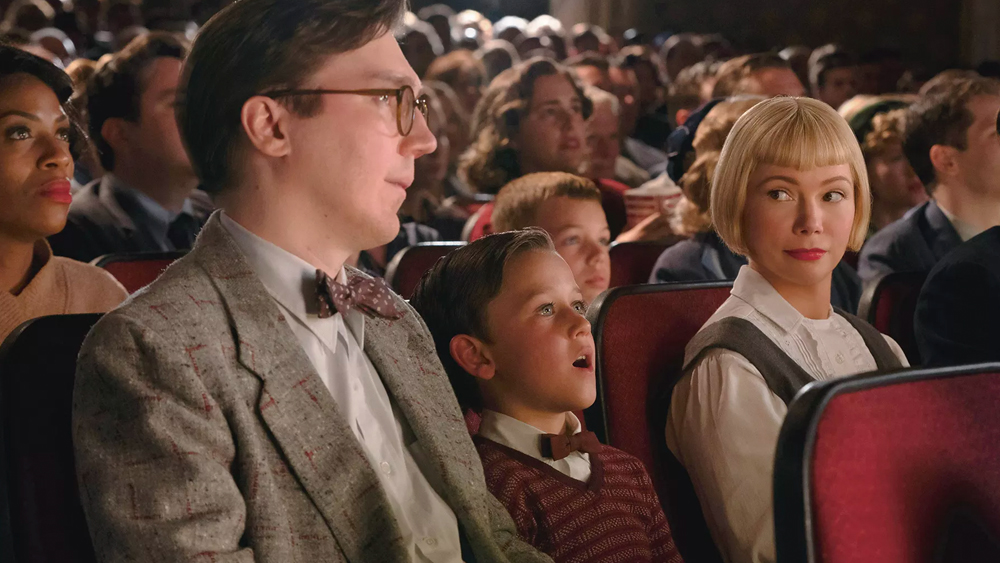
Spielberg’s film tackles these ideas with depth but also freshness, lightness and exuberant joy. Nowhere is this clearer than the film’s reflection of Spielberg’s deep, all-consuming love for the art of cinema. Its opening scene shows the young Samuel – an endearingly warm and gentle performance from Francis-DeFord – transfixed during his first cinema visit by the train crash the concludes DeMille’s The Greatest Show on Earth. So much so he feels compelled to recreate it – much to his father’s annoyance – with an expensive gift trainset, before his mother suggests filming it. Even this 10-year olds film, shows a natural understanding for perspective and composition.

The young Samuel – in an inspired moment of Truffautesque brilliance – is so enraptured with his resulting film, that he plays it repeatedly, projecting it onto his hands, as if holding the magic. No wonder he becomes a teenager obsessed with movie-making, who talks about film stocks and editing machines at a hundred miles an hour, locking himself away for hours carefully snipping and editing footage. The film this young auteur directs – very close recreations of Spielberg’s actual movies – are breath-taking in their invention and the joy. A western with real gun flashes – Burt is astounded at the effect, achieved by punching holes in the film – an epic war film crammed with tracking shots and stunningly filmed action.  This is a boy who loves the medium, excited to uncover what it can do, who finds it an expression for his imagination.

He’s clearly the son of both his parents. Burt, played with quiet, loving dignity by Paul Dano (torn between holding his family together and the knowledge he can’t do that), is a quintessential man of science. It’s from him, Samuel gets his love for the nitty-gritty mechanics of film-making, its machinery and precision. But to Burt it’s only a “hobby” – real work is the creation of something practical. So his artistic sensibility films comes from his mother Mitzi, gloriously played by Michelle Williams as a women in a constant struggle to keep her unhappiness at bay by telling everyone (and herself) its all fine. She needs a world filled with laughter and joy.

It’s what she gets from Uncle Bennie (Seth Rogan, cuddly and kind). It’s also where the darkness of both family and film-making touches on this bright, hopeful world. Creating a film of a camping trip the extended family have taken, its impossible for Samuel not to notice at the edge of the frames that Bennie and his mother are more than just friends. His solution? Snip this out of the film he shows the family, then assemble an “alternative cut” which he shows his mother, showcasing the tell-tale signs of her emotional (if not yet physical, she swears) infidelity. The Fabelmans skirts gently however, over how Spielberg’s teenage fear of sexuality in his mother and the association of sex with betrayal may have affected the bashful presentation of sex in many of his movies.

Samuel’s camping film works best as a reassuring lie. He’ll repeat the trick a few years later, turning his jock bully (who flings anti-Semitic insults and punches) into the super-star of his high-school graduation film, a track superstar who is made to look like a superman. Confronted about it, Samuel acknowledges it’s not real – but maybe it just worked better for the picture. It’s as close as Spielberg has ever come to acknowledging the dark underbelly of cinematic fantasy: it can mask the pain and torment of real life and it can turn villains into heroes. His unfaithful Mum becomes a paragon of virtue, his school bully a matinee idol.

Why does he do it? Is it to gain revenge by confronting those who have let him down with idealised versions the know they can’t live up to? Even he is not sure. Perhaps, The Fabelmans is about the young Spielberg reconciling that even if the movies are lies, they can also be joyful, exciting lies that we need: and that there is more than enough reason to continue making them. Just as, angry as we might get with our parents, we still love them.

The film is held together by a sensational performance by Gabriel LaBelle, who captures every light and shade in this journey as well as being uncannily reminiscent of Spielberg. It’s a beautifully made film, with a gorgeous score by John Williams that mixes classical music with little touches of the scores from Spielberg classics. And it has a final sequence dripping with cineaste joy, from a film deeply (and knowledgably) in love with cinema. Who else but David Lynch to play John Ford, handing out foul-mouthed composition tips? And how else to end, but Spielberg adjusting the final shot to match the advice, tipping the hat to the legend?

The Fabelmans creeps up on you – but its love for film and family, its honesty about the manipulations and flaws of both and its mix of stardust memories and tear-stained snapshots feels like a beautiful summation of Spielberg’s career.

Judy (2019)

Judy (2019)

A star turn is the only thing of note in this empty, uninsightful biopic

Director: Rupert Goold

Cast: Renée Zellweger (Judy Garland), Jessie Buckley (Rosalyn Wilder), Finn Wittrock (Mickey Deans), Rufus Sewell (Sid Luft), Michael Gambon (Bernard Delfont), Richard Cordery (Louis B Mayer), Darci Shaw (Young Judy Garland), Bella Ramsey (Lorna Luft), Royce Pierreson (Burt Rhodes), Andy Nyman (Dan), Daniel Cerqueira (Stan), Gemma-Leah Devereux (Liza Minnelli)

By 1969 Judy Garland (Renée Zellweger) was homeless, broke and stuck in a pill-and-alcohol fuelled depression. Desperate to provide a home for her children, she flew to London for a five-week booking at the Talk of the Town nightclub. Judy sees her, pushed beyond her physical and emotional limits, as she struggles to complete the run – or even get on stage – marrying the feckless young Mickey Deans (Finn Wittrock) and flashbacks to her memories as a Hollywood child star (Darci Shaw), under the punishing “mentorship” of studio head Louis B Mayer (Richard Cordery).

All this gets mixed together in Goold’s uninspired, sentimental and rather empty biopic that never really gets to grips with Garland’s personality, so desperate is it to shoe-horn her into a bog-standard narrative of redemption mixed with personal tragedy. Garland, I’m sure, would have hated it: she always pushed back against the idea that her life had been tragic (which this film whole-heartedly embraces) and the portrayal of her as a constantly misunderstood victim, generously one-sided as it is, boils her down into someone with no agency or control at all in her life.

As such, the most effective parts of this film are the flashbacks to her childhood, filming Wizard of Oz, living off diet pills so she can’t put on weight and working 18-hour days. All under the direction of a monstrously calm Louis B Mayer – a terrific performance of amiable, grandfatherly menace from Richard Cordery – who pleasantly tells her she is a dumpy child who must work like a dog to get ahead and owes everything to him. If the film gets anywhere to understanding Garland’s psychology, it’s in these scenes – I’d rather they’d made it about this than her swan song in England.

In the 1969 sections, the film continues to try and communicate that a life of constant work and pressure left Garland an emotional, physical (and possibly mental) wreck. It puts us on her side, stressing her vulnerability and desperation which she covers with brittle, demanding behaviour. But it’s too squeamish to show too much of her popping pills and downing more than the odd glass of vodka – despite the fact she’s clearly intoxicated for large parts of the film. It only briefly looks at how crippling anxiety affected her unwillingness to rehearse and implies her time in London was a lengthy period of unending servitude rather than a five-week booking singing her greatest hits (the film is hugely vague about timelines to increase the feeling of Garland’s powerlessness).

The film isn’t even smart enough to give us moments where other characters get a glimpse of the fragility under Garland’s prima donnai-sh petulance. Despite her treating both of them as a mix of underlings and informers, Jessie Buckley’s minder and Royce Pierreson’s pianist inexplicably become friends to the star part-way through the film. There is no scene to transition this, no moment of fragile tenderness they witness that makes them understand there is more to this demanding person than they initially thought. Instead, it feels like the narrative requires them to like her just as the audience is supposed to, so whoosh they like her.

The one affecting sequence sees a lonely Garland bumping into two gay fans (Andy Nyman and Daniel Cerqueira) and rather sweetly asking if they would have dinner with her (they are of course thrilled). Back at their apartment, they cook a disgusting looking omelette, play the piano and she listens as they are tearfully talk about their life of persecution in homophobic Britain. It’s gentle, sweet and the only time we (or she) get a real sense of what Garland means to people – these fans idolise her as a symbol of hope. Even this scene is undermined by (a) it not having any lasting impact on Garland as soon as it finishes and (b) these characters being shoe-horned into a blatantly emotionally manipulative ending almost unwatchable in its cloying feel-good-ish-ness.

The one thing the film has going for it is a committed, pitch-perfect performance by Renée Zellweger who captures the vocal and physical mannerisms perfectly. She won every award going including the Oscar. It’s an impressive study and she plays the moments of pain as committedly and rawly as the gentle, tender moments. She does everything the film asks of her, and it’s not her fault that it asks so little of her. There is no dive into Garland’s personality, no questioning that any of her ills were self-inflicted, no criticism for her not turning up for gigs where customers have paid a fortune to see her, no attempt to explore other perspectives on the impact of her actions or how she has become the woman she is.

Instead, Judy meanders towards its semi-feelgood ending without ever really letting us feel we’ve understood much about either this woman or her difficult life, other than framing her as a victim from a life of exhausting show-biz exploitation. Told within a story that is low on drama, pathos or humour, you end up wondering what point it was trying to make in the first place.

Empire of Light (2022)

Empire of Light (2022)

Mendes passion project is strangely free of passion in a film that misses the targets it aims for

Director: Sam Mendes

Cast: Olivia Colman (Hilary Small), Micheal Ward (Stephen Murray), Tom Brooke (Neil), Toby Jones (Norman), Colin Firth (Donald Ellis), Tanya Moodie (Delia), Hannah Onslow (Janine), Crystal Clarke (Ruby), Monica Dolan (Rosemary Bates), Sara Stewart (Brenda Ellis)

In 1981, Hilary Small (Oliva Colman) is the duty manager of grand, old-fashioned, Margate sea-front cinema The Empire. A quiet, lonely spinster who’s never seen any of the cinema’s movies, she carefully performs her duties at work which include servicing the sexual needs of owner Mr Ellis (Colin Firth). However, her life changes when young Black man Stephen Murray (Micheal Ward) starts as an usher. The two strike up a friendship that becomes a relationship – but runs into conflict as Stephen struggles with growing racism and Hilary suffers a relapse into schizophrenia.

Empire of Light has been described as personal passion project by Sam Mendes. Bizarrely it feels like a film which all passion has been strained out of. It’s a functional and safe film, scripted with little inspiration and given life largely by the charisma of its two leads.

Empire of Light partially frames itself as a love-letter to cinema-going and film. Strangely it hardly engages with either of these. In fact, it could (with minor script changes) be set just as easily in a department store, petrol station or bingo hall. This is a film where no-one talks about cinema, watches a film or even seems interested. Toby Jones’ projectionist explains the mechanics of his trade in what feels like a carefully scripted explanation of the workings of a machine the writer knows nothing about. For all the beauty of Roger Deakins’ photography, there is no moment of magic that you might expect from a director who claims to be enamoured with the medium.

Hilary finally decides to watch a film for the first time: “pick any one you like” she tells Jones. He tees up Being There – a film I’m wondering if Mendes has seen. For starters, would I show a film about mental health featuring a racist cartoon in the middle to a woman struggling with her own mental health who has just watched a close friend being beaten up by the National Front? You’re left feeling Norman simply teed up whatever film was in the machine. But then, as he says, he doesn’t really watch the films anyway. Afterwards Hilary and Stephen chat about Peter Sellers – but never once mention he has only just died.

Empire of Light fails at most other things it attempts to do. Its heart is in the coming-of-age, second-chance-at-life romance at its centre. There is fine chemistry between Colman and Ward, and their bashful coming together works as a meeting of two spiritually similar people who feel life is passing them by. Their unspoken courtship early on – rescuing a wounded pigeon together in the abandoned upper-storey of the Empire or watching the New Years fireworks on the roof – has a pleasant innocence. But fundamentally, these characters feel ill-defined and go through personal crises that feel pat and under-developed.

Colman gives her all as Hilary – although this sort of dumpy, frumpy, tragic, timid woman is becoming a little too much of a calling card – but this is a thin character. We slowly realise Hilary is a woman struggling with mental health – making her sexual exploitation by Firth’s smug, sleazy, manager even more unpleasant. She carefully goes about her work, stares down at the ground and wouldn’t even dream of intruding on the cinema-goer by actually watching the film. Colman masters the little touches of glee she gets at the presence of Stephen, Hilary’s simultaneous enjoyment and bashfulness about what she assumes is a hopeless crush.

Where the film fails though is in finding any depth in Hilary’s struggles with schizophrenia. Colman’s character is inspired, in many ways, by Mendes’ own mother. The film aims for a sympathetic presentation of mental health, which it manages but without providing any insight. While many aspects of mental health were not discussed at the time, a film made today really should have more to say than Empire of Light musters.  Instead, Hilary’s condition feels like a dramatic shorthand. For a passion project that’s not good enough – the film even falls back on the age-old “stops taking her meds” plotline. For all the gusto and commitment Colman brings to Hilary’s mental collapse – a furious destruction of a sandcastle, or ranting, drunk, in an apartment where the walls are strewn with self-penned graffiti – it never feels insightful enough.

It’s sadly the same with Micheal Ward’s Stephen. For all Ward is hugely charming as this saintly young man – and for all he expertly suggests Stephen’s anger at the growing tide of racism in Britain – the issues he deals with feel like window-dressing. The most interesting moment is his confrontation with an angry, racist customer who is appeased by Hilary rather than challenged – much to Stephen’s justified fury. But name-checking Brixton and New Cross and saying “it’s getting worse” doesn’t really feel like getting to grips with the dilemmas he, and young men like him, were facing. Particularly when Stephen responds to a deadly beating with something approaching a shrug of the shoulders. You can’t argue with Mendes’ genuine feelings, but there is never enough depth.

Instead, these major social issues are benched by the film’s end, making them feel like discussion points to make Hilary feel better about her life and for Stephen to resolve to move on with his. It has less to say about these issues than an episode of Call the Midwife. Just as it has nothing to say about the magic of cinema going, turning it into a retro back-drop of posters and old sweeties. Far from making a case for cinema, it makes the building as irrelevant as some worry it is becoming today.